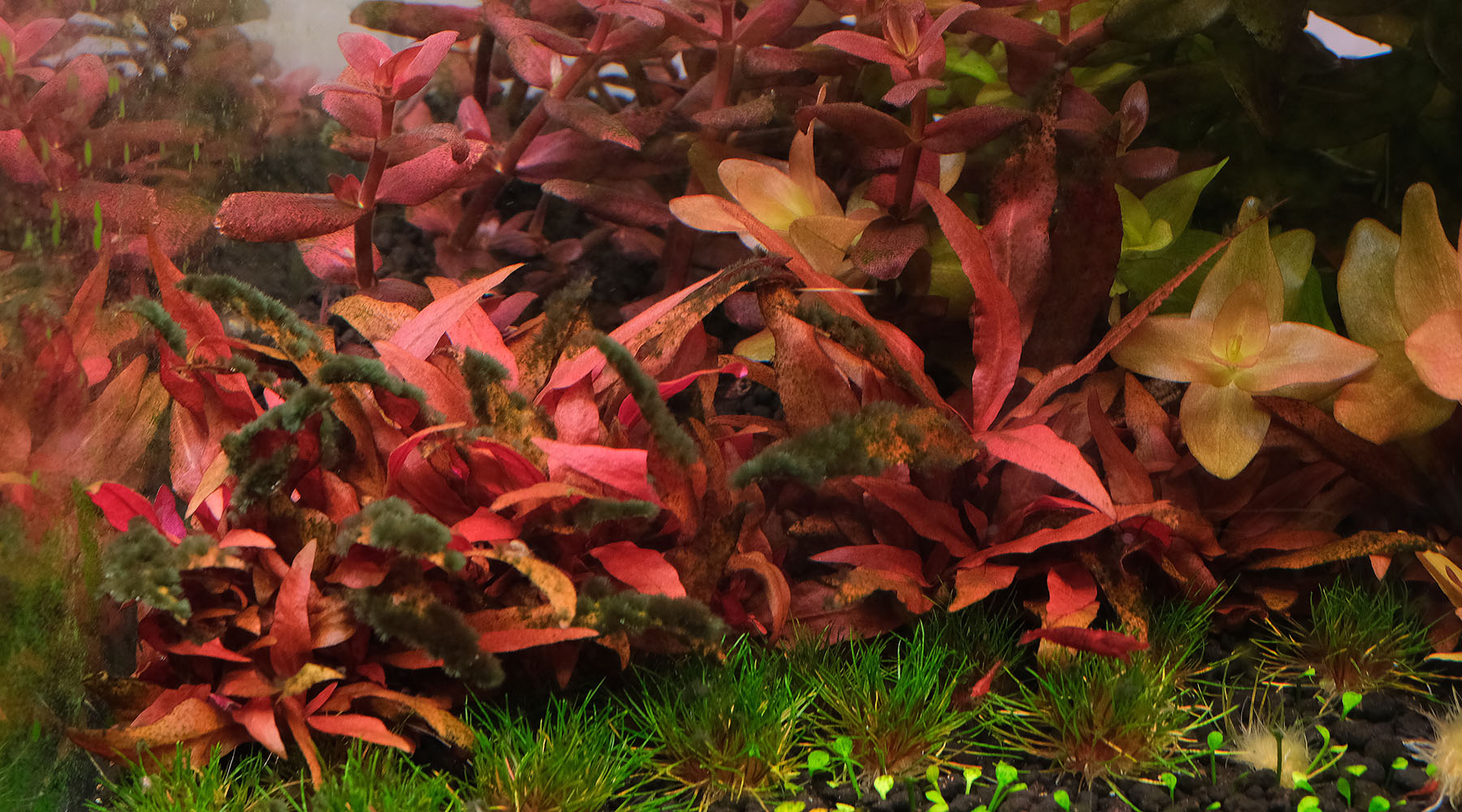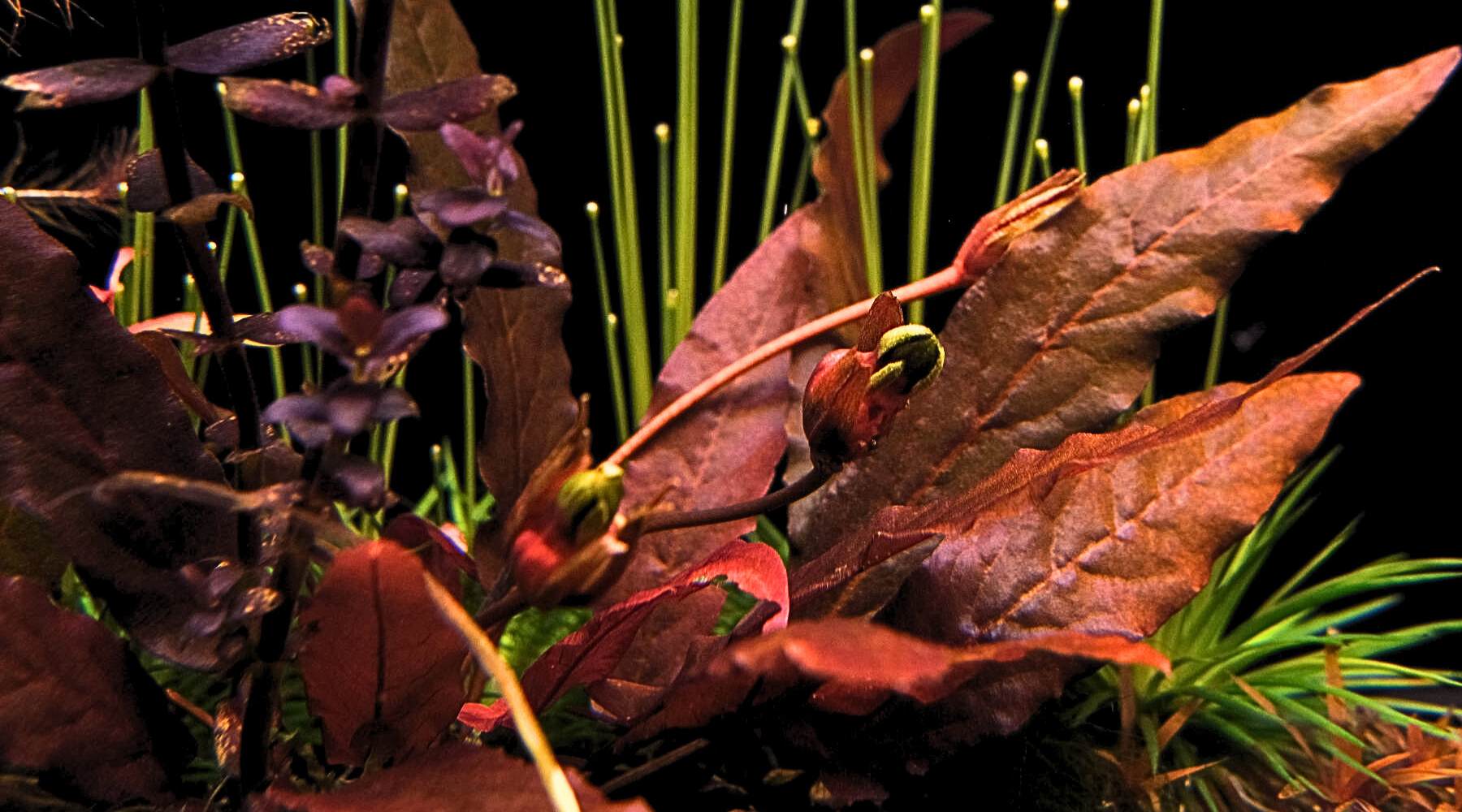

Regular water changes are extremely beneficial. It keeps algae at bay by removing organic waste, most of which cannot be measured by hobbyist test kits. And fresh water rebalances the buildup of minerals and supplements that have been added over time. For a fast-growing tank with a lively fish population, we recommend weekly water changes. For a slow-growing tank with very light stocking, we can get away with water changes every 2-4 weeks.

One distinction first, because it causes a lot of confusion. Everything below is about routine maintenance on an established tank. A brand-new tank on fresh aquasoil is a different problem - there the goal is stripping out ammonia and algae spores before the microbial system catches up, and the protocol is far more aggressive. That is covered in starting a new aquasoil tank.

But how much water should I change?

This is a good question and we will go through the considerations.

50%-100% Water Change

If you have perfect tap water parameters, it is fine to regularly change 100% of the water in the tank. Many breeders do this on a daily basis because they feed the fry heavily to accelerate growth. Complete water changes are necessary in such setups just to maintain water quality.

In general, 100% water change is OK if your tap water:

  • Is very close to tank water in terms of water hardness & temperature
  • Does not contain ammonia or heavy metals
  • Is not saturated with carbon dioxide

Most of the bacteria in a mature tank are found in the substrate and filter, so losing a small amount through a large water change is insignificant.
Large water changes have many advantages. Large water changes are great at removing both dissolved organic waste and particulate waste. It also removes algae spores and allows us to rebalance water parameters that may have shifted during the week. The benefit of removing organic debris far outweighs the small fluctuations caused by the large water change.

Sensitive animals, such as spawning fish or shrimp, can be stressed by the disturbance of frequent large water changes. This is definitely a factor to be concerned about, but it is more related to the emptying of the tank than the water change itself.

But remember, unless you are certain that your tap water has zero or very little chlorine and chloramines, always use a dechlorinator/water conditioner.
Dennis wong planted tank

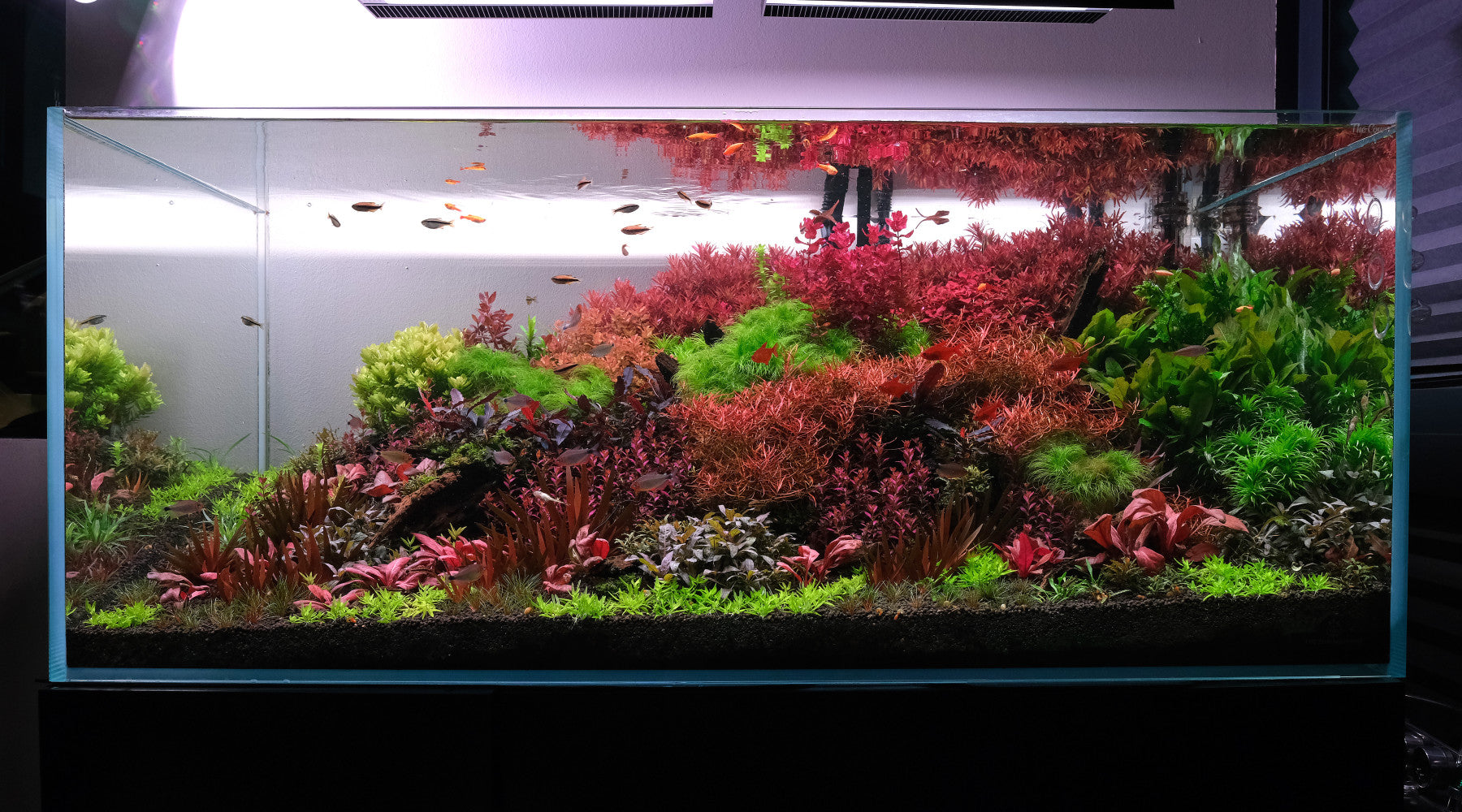
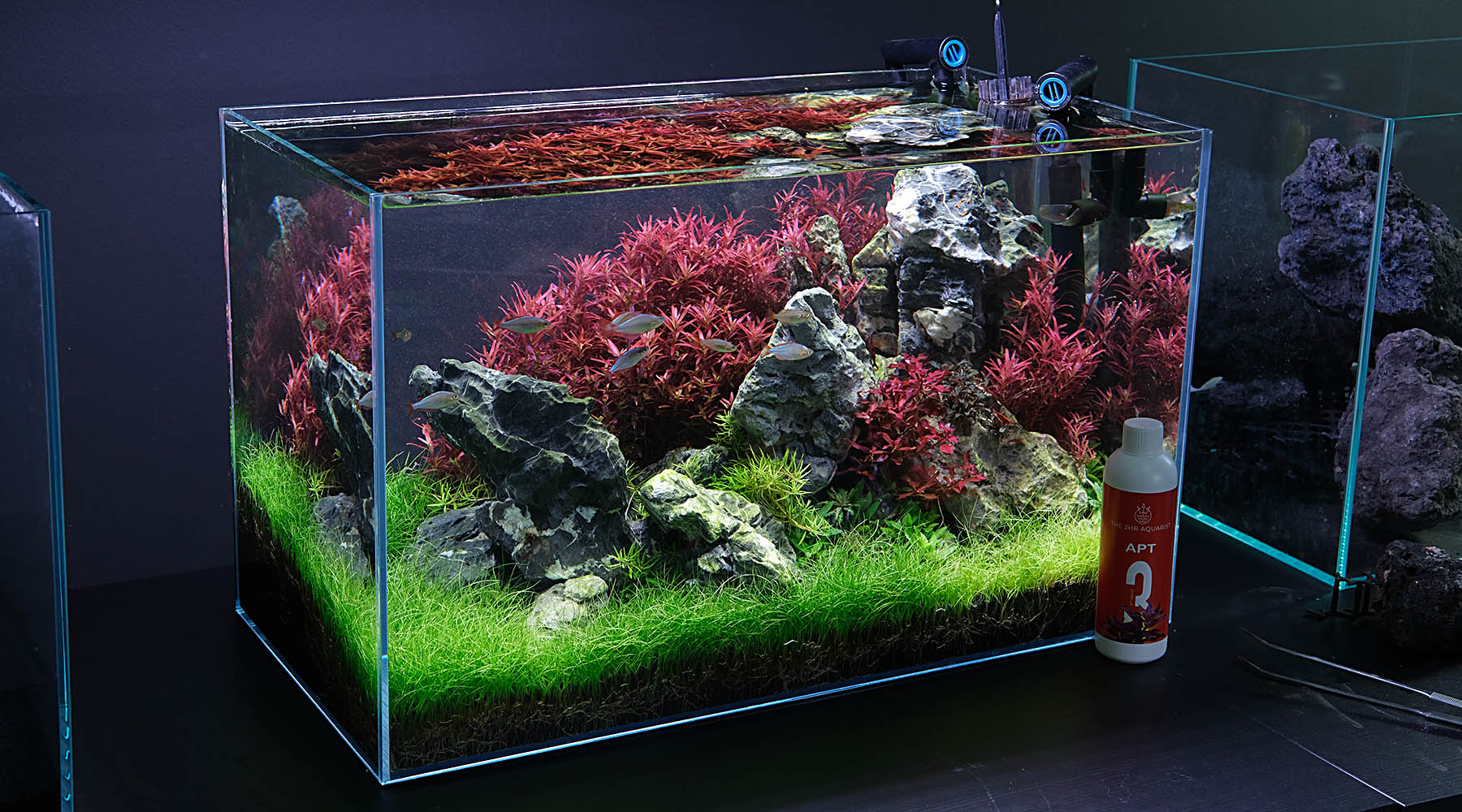
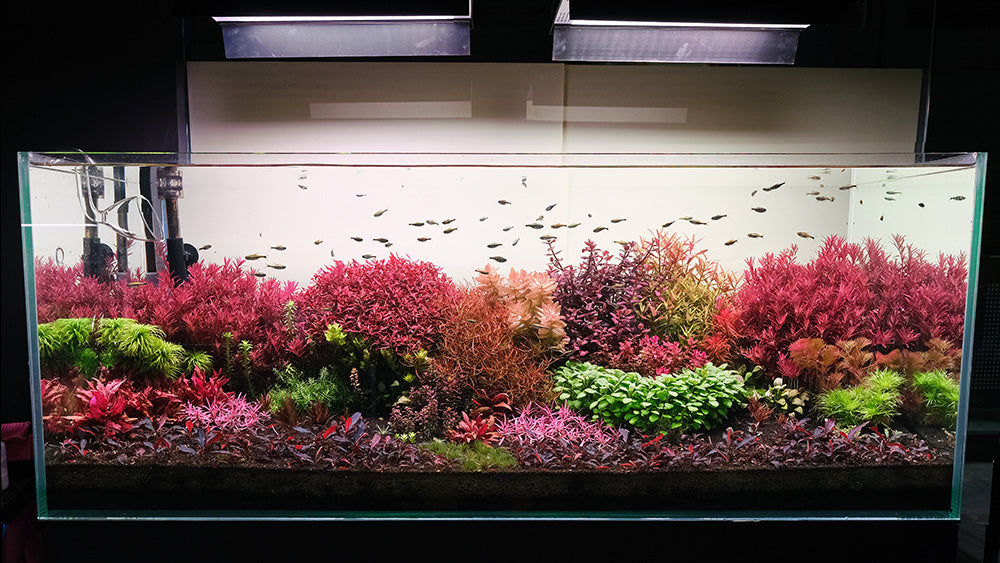
This aquarium at the 2hr Aquarist gallery has a 50-70% water change done every week without fail. Tank is powered by APT Complete and APT Jazz

30%

The tank at the top of the page shows a common scenario where hobbyists use Seiryu stone for its attractive texture. However, Seiryu is a form of limestone and increases KH (carbonate hardness). The tank shown above is a classic 2 hr hard water tank (4-7 dKH) due to the amount of Seiryu (and CO2) used. In this case, with neutral tap water (0 dKH), it is better to limit the water change to ~30% to avoid a large flux in water hardness every time we change water.

Let's use another scenario, a new tank with Aquasoil in a place with slightly hard water, say 4dKH. Aquasoils will automatically soften the water. If your tap water is 4 dKH, an Aquasoil tank can reduce it to 1 dKH or less in a few days, especially if the Aquasoil substrate is new.

With a 4 dKH difference between tap water and tank water, a 100% water change will raise the KH a few degrees. Depending on how sensitive your animals and plants are, this may be a problem. In such cases, it is better to limit your water changes to about 30%. This is the main exception to the large-change protocol for new soil tanks: where tap water sits far from tank water, the swing in hardness costs you more than the extra dilution buys.

Finally, some animals, such as the coral red pencilfish below, are more sensitive to water parameters and disturbances. If you have more sensitive animals, it makes sense to limit water changes to 40% or less. In general, 30% is a sweet spot that works well for most tanks.


red pencil fish planted tank


10%-20%

For some folks with more problematic tap water, large water changes can sometimes present issues. For example, some tap water sources contains heavy metals. In matured tanks, plants and substrate absorb heavy metals from the water column. A large water change in such scenarios may spike heavy metal concentration high enough to affect sensitive livestock such as shrimps.

Some tap water may also contain ammonia - this coupled with a high pH can induce ammonia toxicity. In matured tanks, plants absorb ammonia and stabilise the environment. If your tap water is really poor, then doing smaller water changes may actually give better outcomes. In such cases, try a 10% to 20% water change, but continue to use this opportunity to vacuum detritus off the substrate, what we call Changing Water The 2Hr Way

This more conservative approach is also appropriate for folks keeping very delicate livestock, such as more delicate Cardina shrimp species.

caridina shrimp planted tank

In summary

If you don't have detailed information on your tap water, be aware that water parameters impact plant and livestock health significantly- it is worth the investment to find out more. 30% is a good general level. 

If you know your tap water, and it matches your tank and plant selection, use the luxury of regularly changing 50% or more. 

If you have reason to suspect that your tap water is not ideal, or not consistent, you can limit your water change to 10%-20%, but it will be a good ideal to not over-stock your tank with livestock.

For the technique we use at the 2hr Aquarist gallery, see water change the 2Hr Way.

For the long game, see maintaining aquarium substrates long term.
 

Explore

View all

Close up photo of algae on older aquatic plant leaves

Why do leaves deteriorate? Understanding the leaf renewal cycle in aquatic plants

This article delves into the topic of how plants continually renew themselves through the production of new leaves.
Read moreabout Why do leaves deteriorate? Understanding the leaf renewal cycle in aquatic plants

4ft Rotala florida community aquarium: Showcasing the 2hr Way

4ft Rotala florida community aquarium: Showcasing the 2hr Way

Full details of tank parameters, plants and fish species, and the maintenance regime of the 4ft Rotala florida aquascape are described here.

Read moreabout 4ft Rotala florida community aquarium: Showcasing the 2hr Way

Non-Aquatic Aquarium Plants: A Beginner's Buying Guide to Avoid Them

Non-Aquatic Aquarium Plants: A Beginner's Buying Guide to Avoid Them

Some of the most attractive plants on shop shelves are not aquatic at all. They persist for weeks, then rot and feed algae. This guide identifies the common non-aquatic species sold as aquarium plants, shows how genuine aquatics shift form above and below water, and lists what to check before buying..

Read moreabout Non-Aquatic Aquarium Plants: A Beginner's Buying Guide to Avoid Them

New Tank Journey | Ugly Duckling

New Tank Journey | Ugly Duckling

New tanks can be frustrating at the beginning. Here, we describe one important signal that things are actually progressing well, despite plants having algae. 

Read moreabout New Tank Journey | Ugly Duckling

When Less is More

When Less is More

How to get Rotala rotundifolia redder? Interestingly, less can be more in this case.

Read moreabout When Less is More

System Shocks

System Shocks

Sudden widespread algae infestation can take place when changes in environmental parameters induce adaptation stress that weaken plants which become vulnerable to algae.

Read moreabout System Shocks

Flowering Underwater?

Flowering Underwater?

Do aquatic plants flower underwater? Is flowering a sign of good health? Which plants can I grow that will flower easily in my aquarium?

Read moreabout Flowering Underwater?