
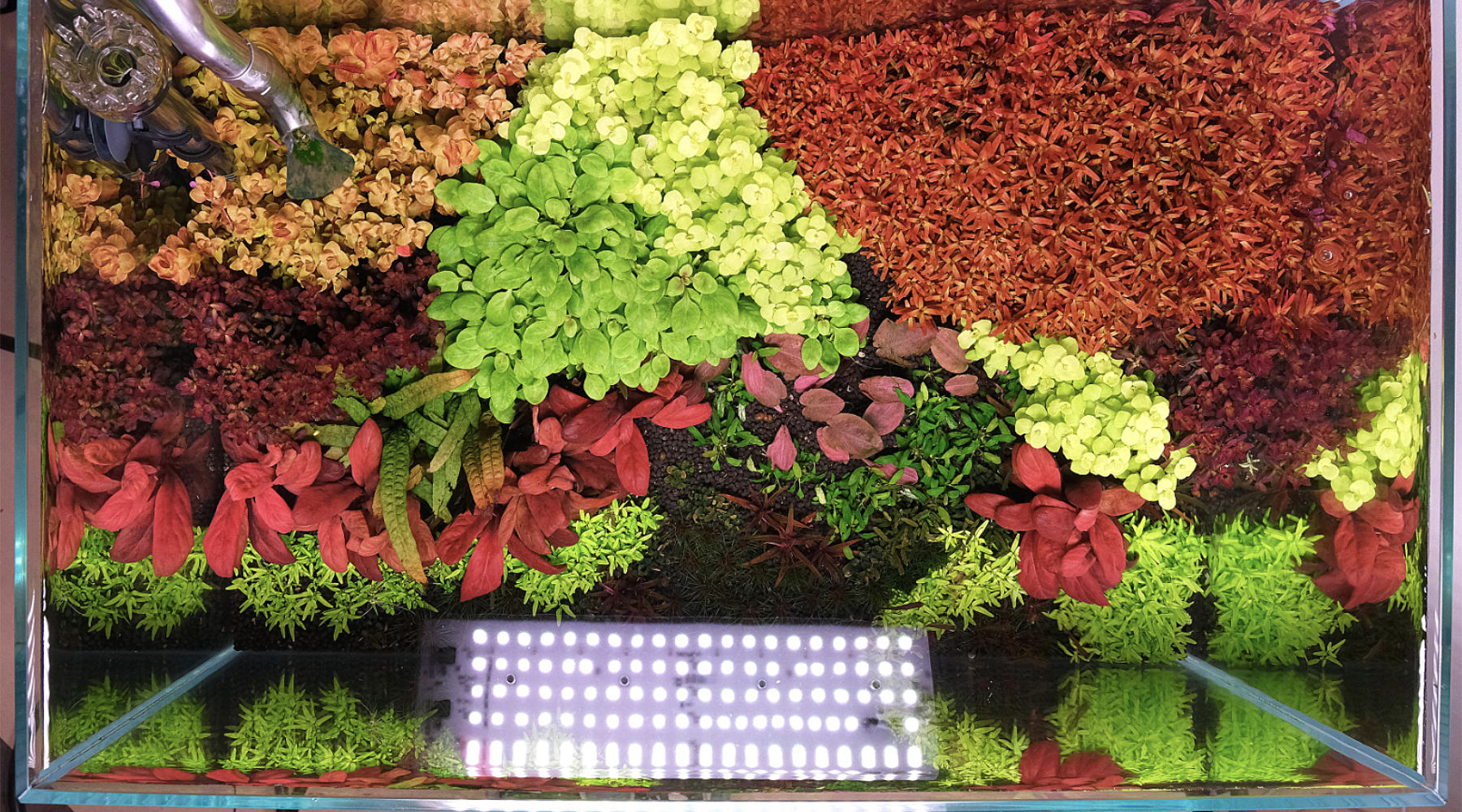
Most planted tanks do best on 5 to 9 hours of light per day, scaled to how established the tank is. New tanks and any tank fighting algae should sit at 5 to 6 hours. Stable low-tech tanks run well on 7 to 8 hours, and stable, well-planted, CO2-injected tanks on 8 to 9 hours. Beyond about 12 hours, you get steeply diminishing returns for plant growth at a higher risk of triggering algae growth. Light intensity and timing both shape how plants and algae respond in a planted aquarium; duration is only one lever.
Quick answer:
-
New tank (first 4 to 6 weeks): 5 to 6 hours, increasing gradually as plants establish.
-
Ideal lighting duration for stable planted tanks with minimal algae: 7 to 8 hours low-tech, 8 to 9 hours high-tech.
-
Aquarium facing algae issues: 5 to 6 hours.
-
Beyond 12 hours: wasted electricity and more algae, with no gain in plant growth.
-
How much light intensity to use is measured in umols of PAR (Photosynthetically Active Radiation). Certain plant species require more light intensity than others to grow well.
-
Use a timer: consistent artificial lighting maintains biological rhythms and helps prevent algae outbreaks.
-
A "siesta" (light off in the middle of the day) is not useful; pick a single window. The RuBisCO enzyme that fixes CO2 takes a lot of energy to ramp up, so splitting the light window is not optimal for plant growth.
-
Fish-only tanks require less light, generally 6–10 hours daily, to support their biological rhythms and at least 8 to 10 hours of night for them to rest. Too much light in a fish-only tank mostly creates algae, not "better fish".
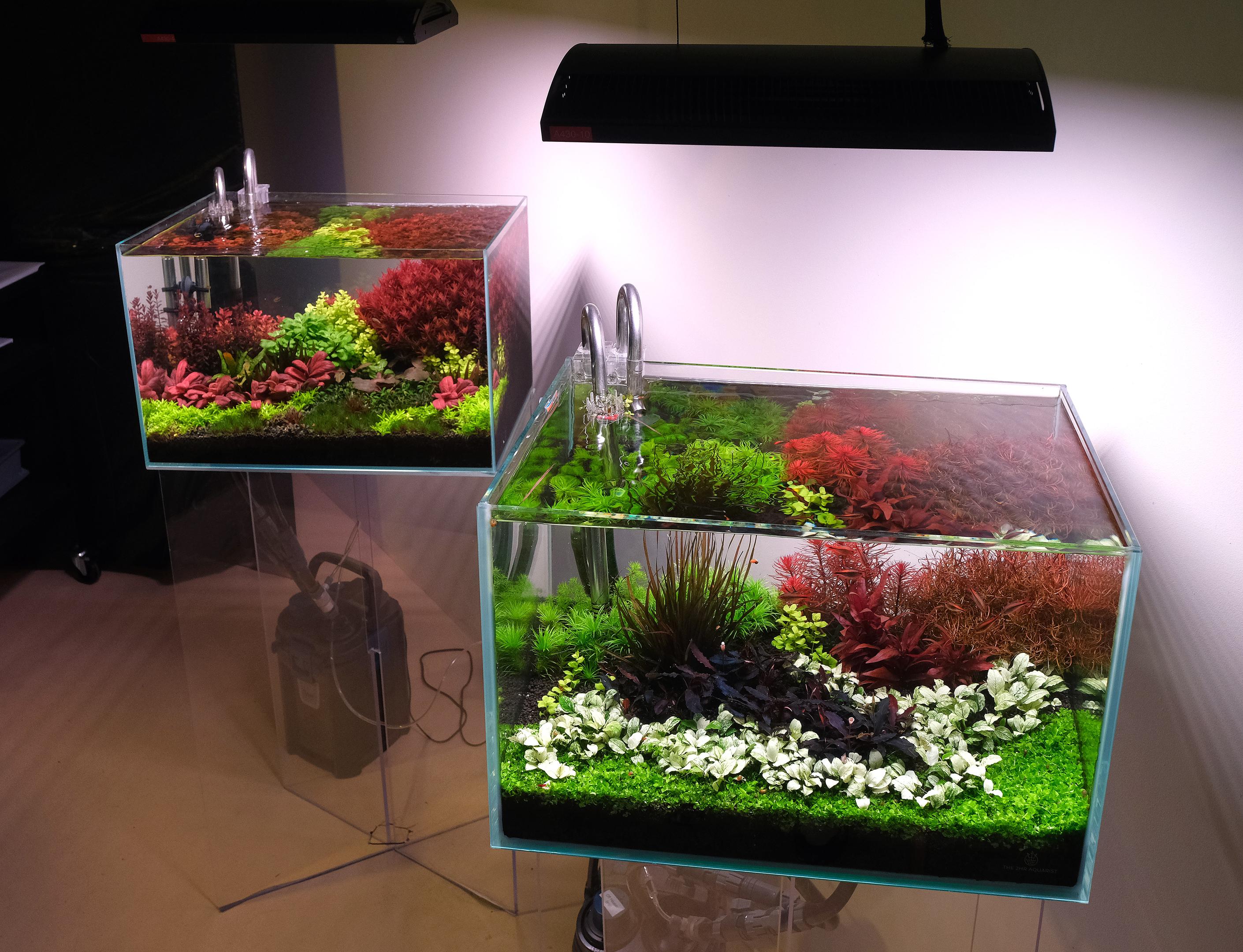
Does Reducing Light Hours Stop Aquarium Algae?
Lights set to 11 hours. Algae creeping along the back glass. You have already cut your photoperiod from 12 to 10, then 10 to 8, then 8 to 6, and the algae is still there. So now you are wondering if you should go to 4. Or run two short bursts. Or only light on weekends like some kind of plant-hating monk.
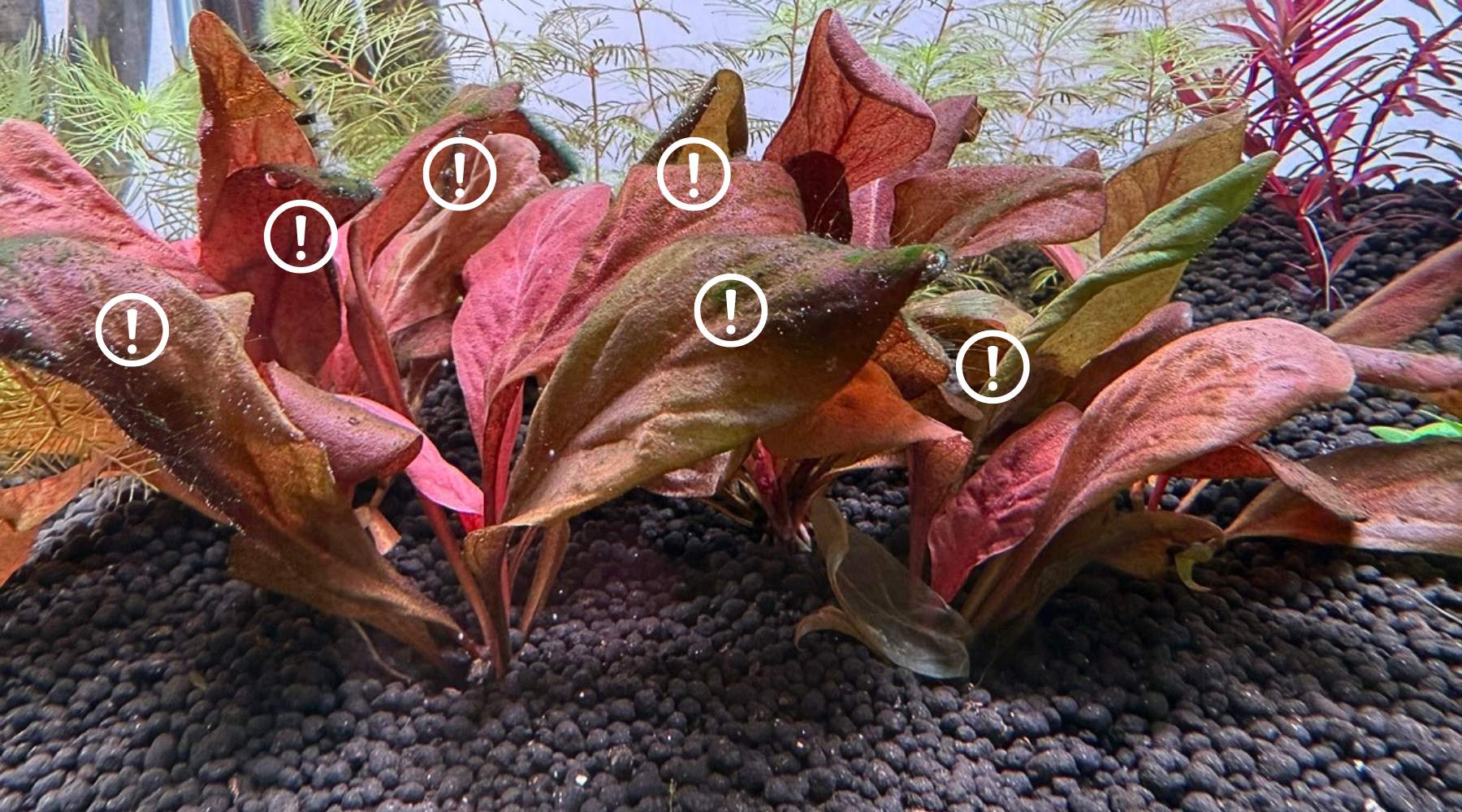
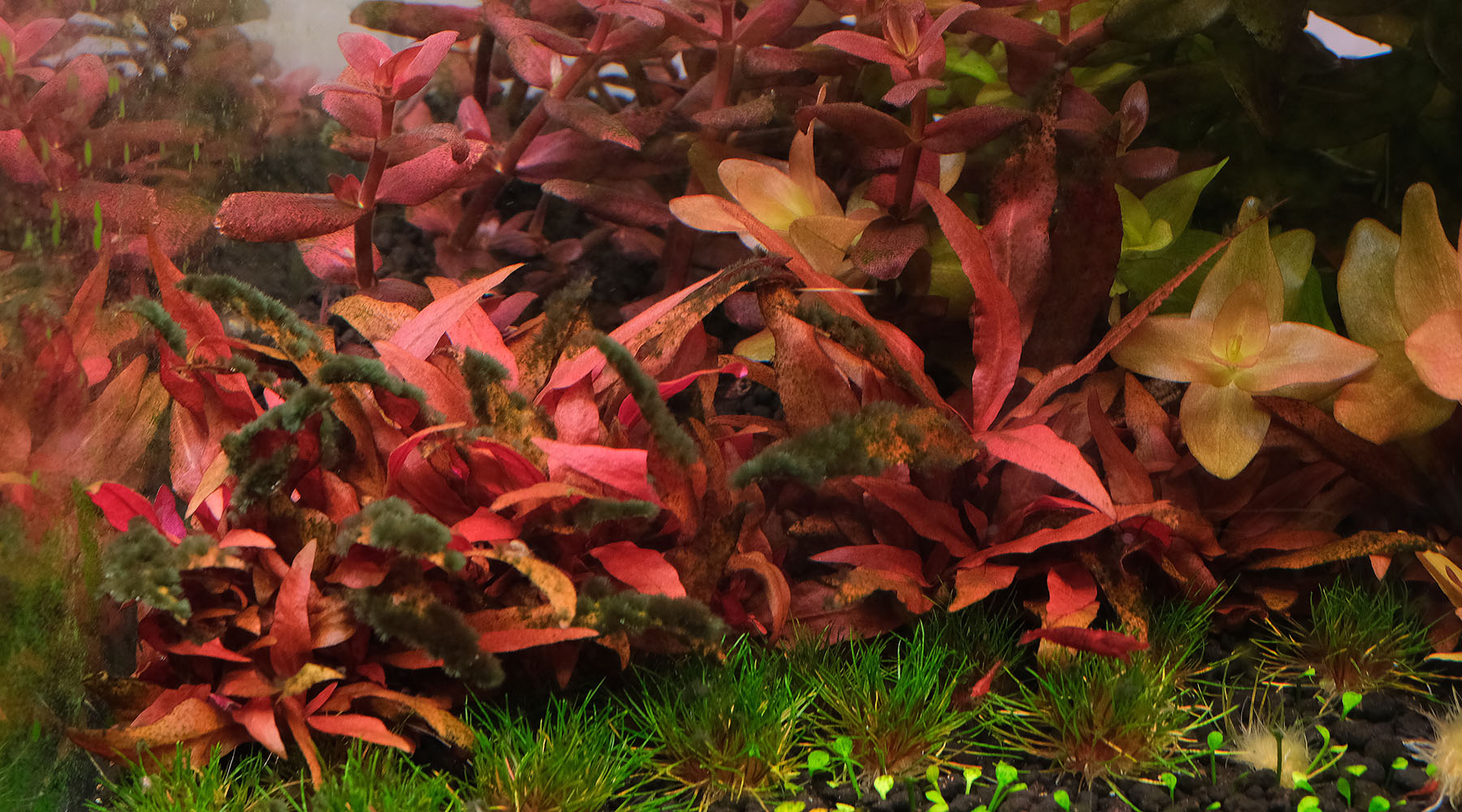
Watch what often happens in a high light aquarium. The tops of stem plants sit just under the light, hammered by 400+ µmols of PAR for 10 hours a day. Those tops stay clean. The algae, when it shows up, is on the older leaves at the bottom of the stems, on the slow-growing Anubias next to a struggling carpet. If light itself were the sole cause of algae, the brightest leaves would be the worst affected. They are often the cleanest.
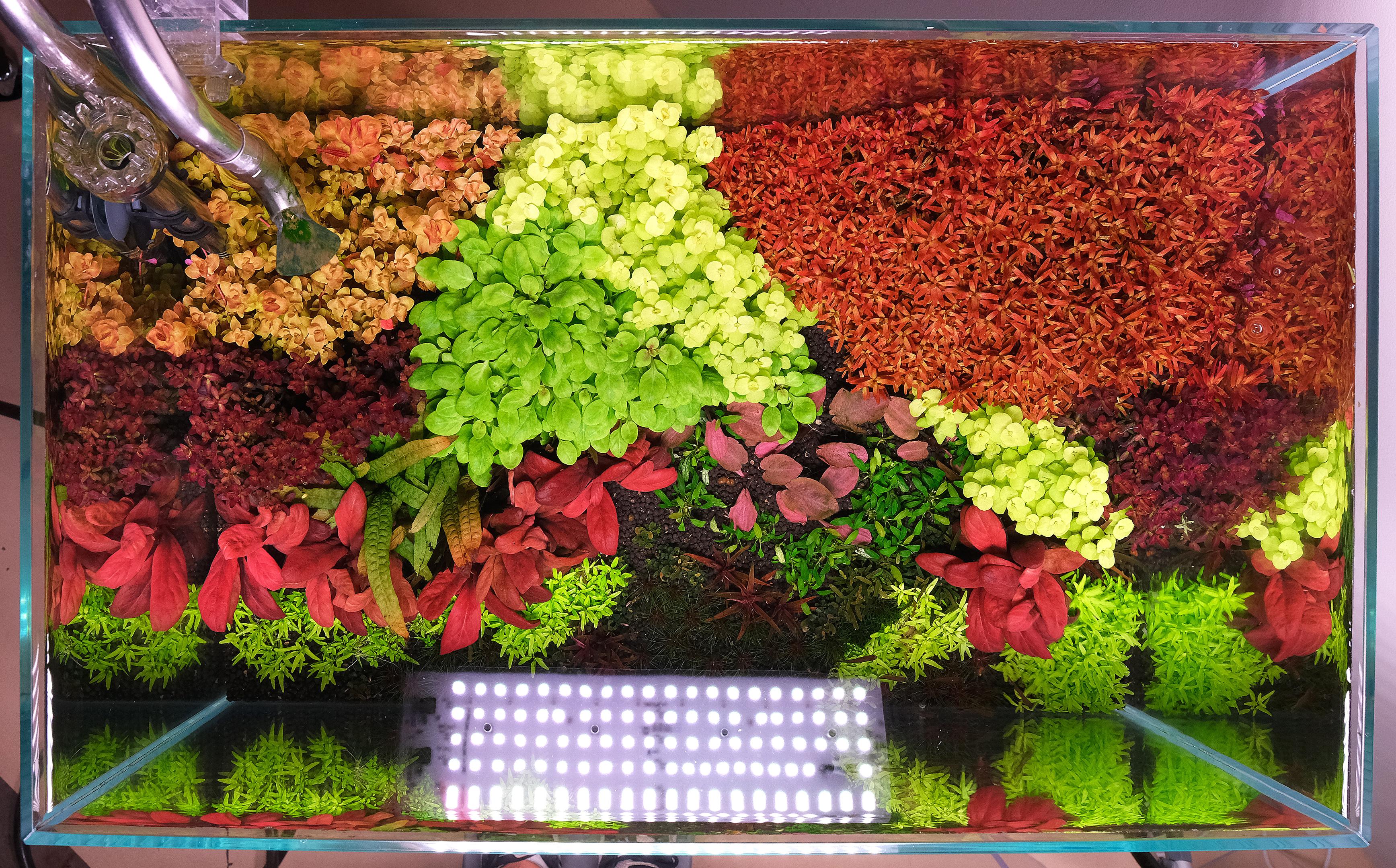
Fresh growth on healthy plants is algae resistant, while unhealthy plants and old growth that has been abandoned by the plant are algae magnets. Algae blooms when it senses a gap in the system: Strong light coupled with weak plants, decaying old leaves, organic waste in the water column, ammonia spikes, transition stress on newly planted stems.
Reducing the light intensity or duration does reduce one of the key trigger factors for algae. However, many algae types such as Black brush algae (BBA) can grow in low light levels as long as the other trigger factors persist. So light control itself is not a cure-all for algae issues. Trimming away older leaves and making space for new growth is important. In older bushes, uprooting and discarding old growth, replanting new growth is one of the key ways to rejuvenate plants in the aquarium. By maximizing new growth we create an algae resistant tank environment.

Clearing away organic debris from the substrate is equally important. In planted tanks, fish and shrimp feces and old leaves break down into organic detritus on the substrate. Many hobbyists believe that this provides a source of nutrients for the plants. While this is partly true, the decomposition process is not clean and the remaining organic waste, combined with high light levels, causes algae to bloom. Filters should be serviced to make sure they are not choked - filters need not be free from all organic debris, they just need to be in a well functioning state. These maintenance tasks have a big impact on algae outcomes, not just adjustments to light timing/periods.

How Much PAR Do Different Planted Tanks Need?
This is where different advice on "how many hours of aquarium light" comes from. People are arguing without telling you what system they are running. How does light intensity affect plant growth - and is your light source even adequate?
Duration is only half the equation. Light intensity is a critical factor for plant growth, because it directly determines how much energy is available for photosynthesis at any given moment. The correct unit here is PAR - Photosynthetically Active Radiation - measured in µmols per square metre per second. Different plants need different PAR levels:
-
Low light plants: 10 to 30 µmols at substrate level. This will grow shade plants well (Java Fern, Anubias, most Cryptocorynes, mosses, Bucephalandra species). Algae growth is greatly suppressed.
-
Medium light plants: 40-90umols at substrate level. Most common plants in the aquarium trade will do well in this band.
-
High light: 90-150umols on the substrate level. Good for red plants and more demanding species. Stem plants gain better density and grow more compact. Plants grow significantly faster. Good maintenance necessary to avoid algae.
-
Very high light: 200+ umols on the substrate. Gains are mainly on plant growth form. Plants grow with even greater density of leaves and coloration, at higher risk of triggering algae blooms.
-
As a comparison, full sun is around 2000umols of PAR. This is why direct sunlight hitting aquariums can introduce a huge amount of PAR, even if it is indirect sunlight.
Here is the part most hobbyists miss: light intensity decreases as it penetrates water. Deeper tanks require more powerful lighting to ensure adequate light reaches the substrate and the plants growing on it. A fixture that delivers excellent PAR at 25 cm depth may be delivering almost nothing at 45 cm depth. The glass also absorbs and reflects a fraction of the light, so keep your cover glass and tank glass clean.
The myth here is that you can compensate for low intensity by running more hours. You cannot. If your plant species are receiving 20 µmols when they need 70, running 12 hours instead of 8 does not close that gap. Poor plant growth caused by inadequate intensity will not be rescued by a longer photoperiod. Stop staring at the timer. Look at whether your plants receive enough light, not just how many hours they get.
Planted aquariums should use as little light as the selected plant species demand. Blasting shade plants with a lot of light invites algae with any lapse in tank maintenance.
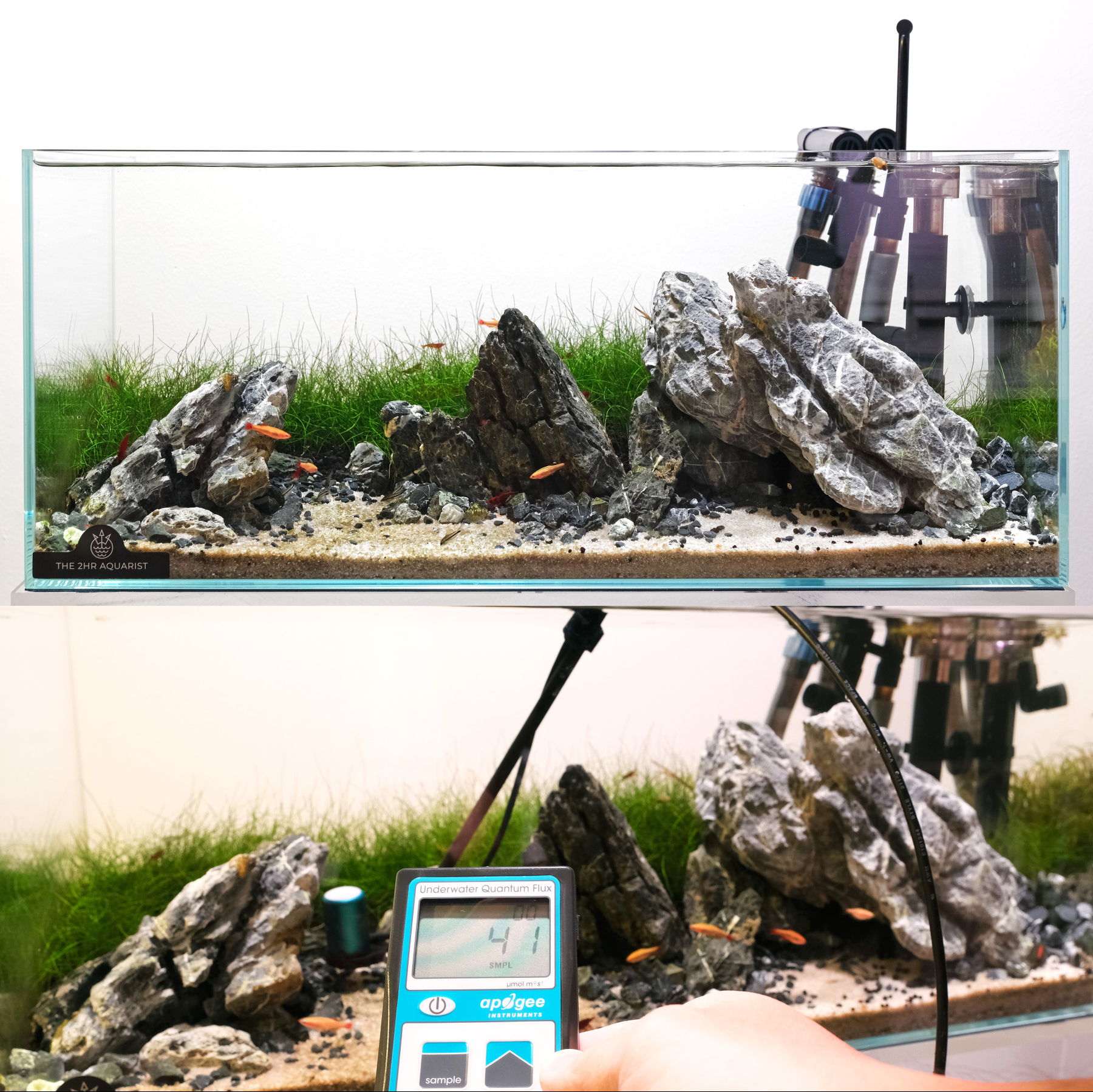
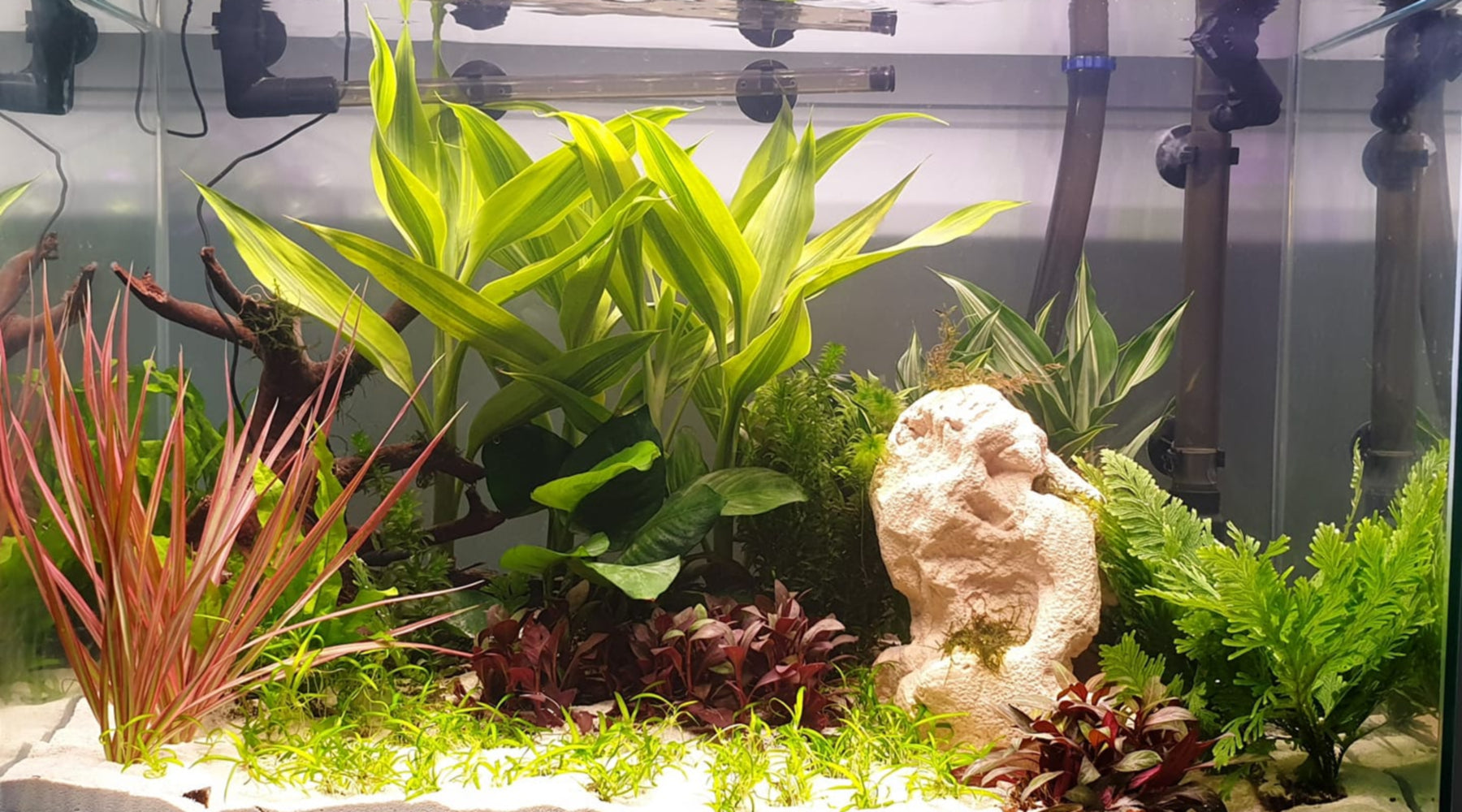
Contrary to popular belief, carpeting plants do not require a ton of light to spread. Low light coupled with sufficient CO2 allows carpeting plants to spread with 40-60umols of PAR.
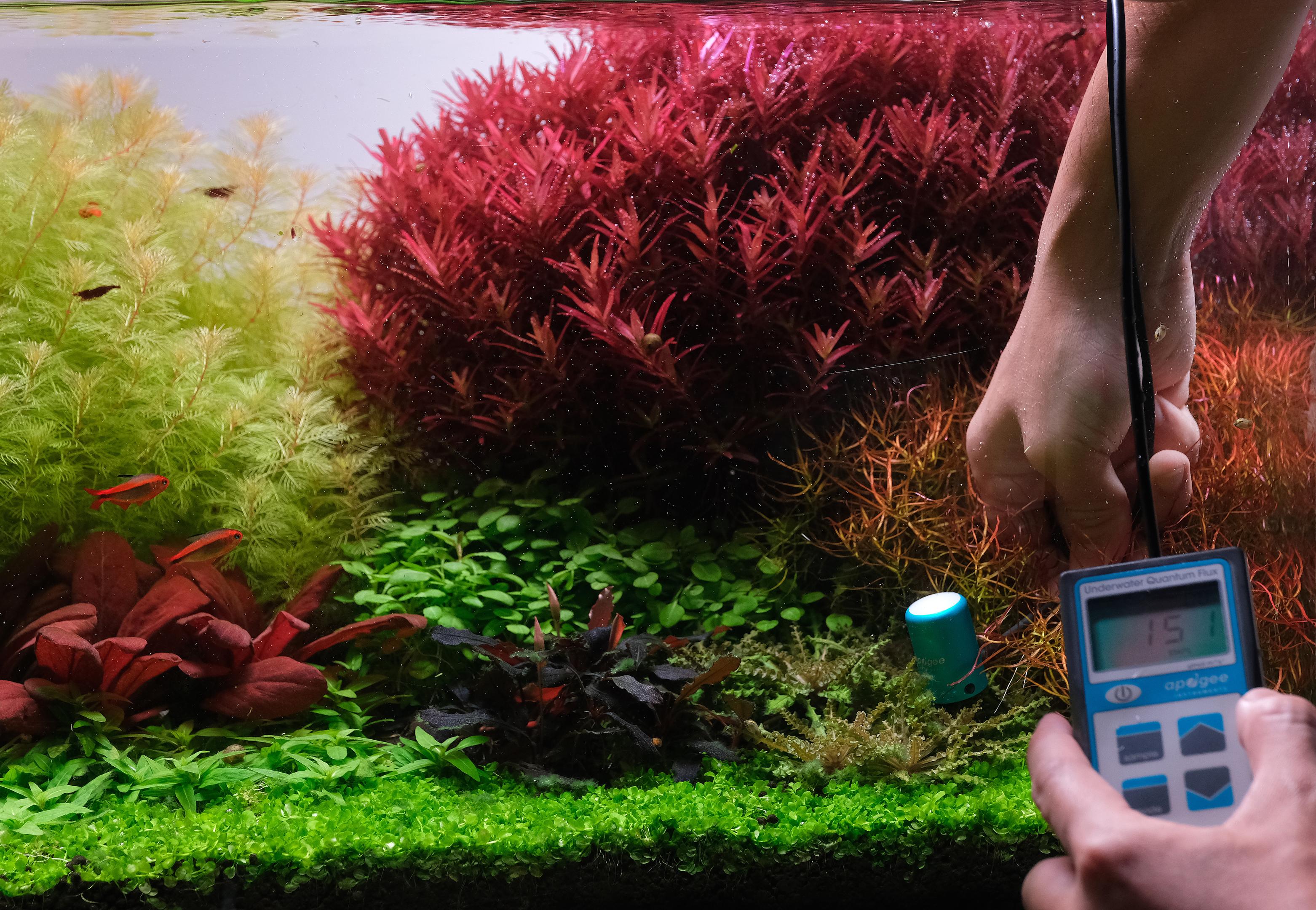
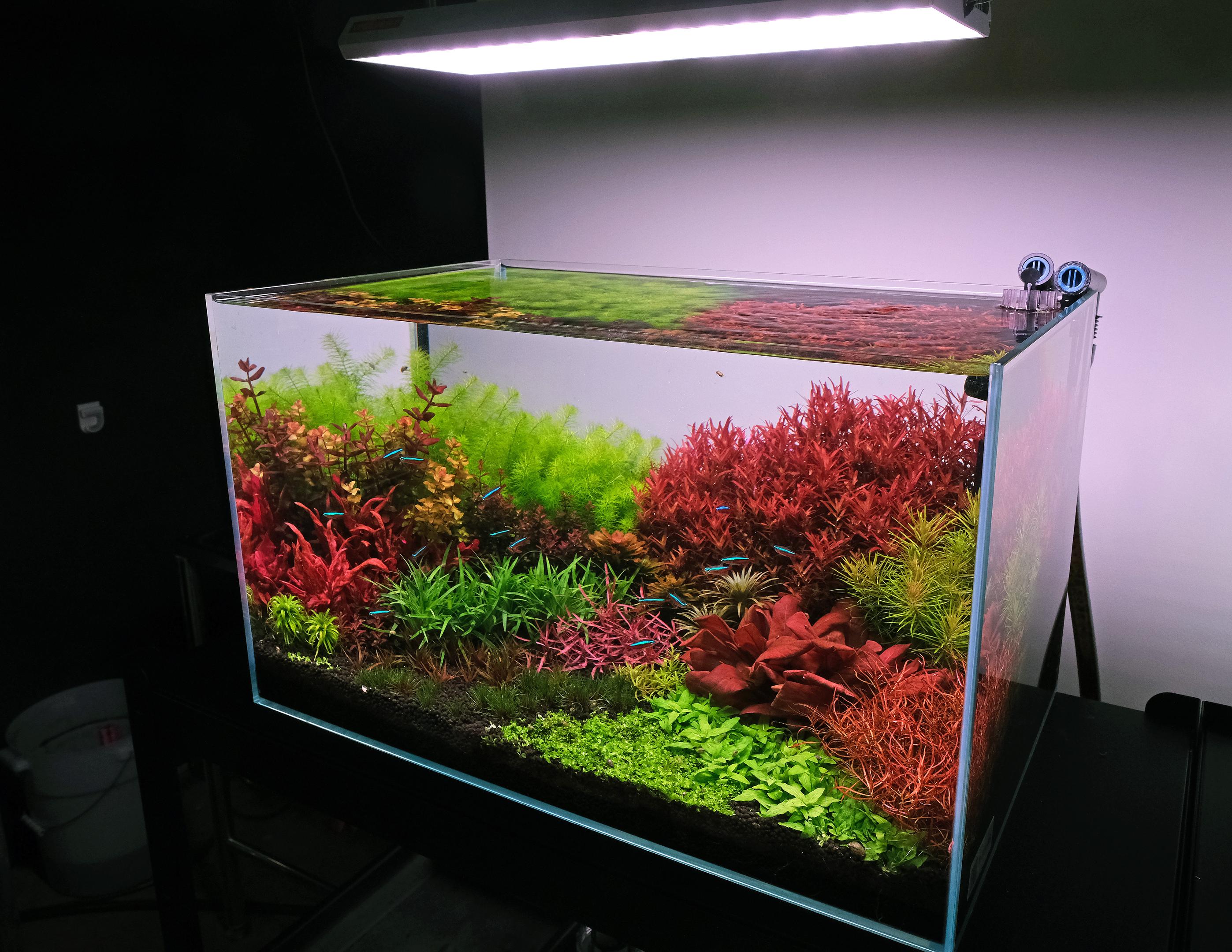
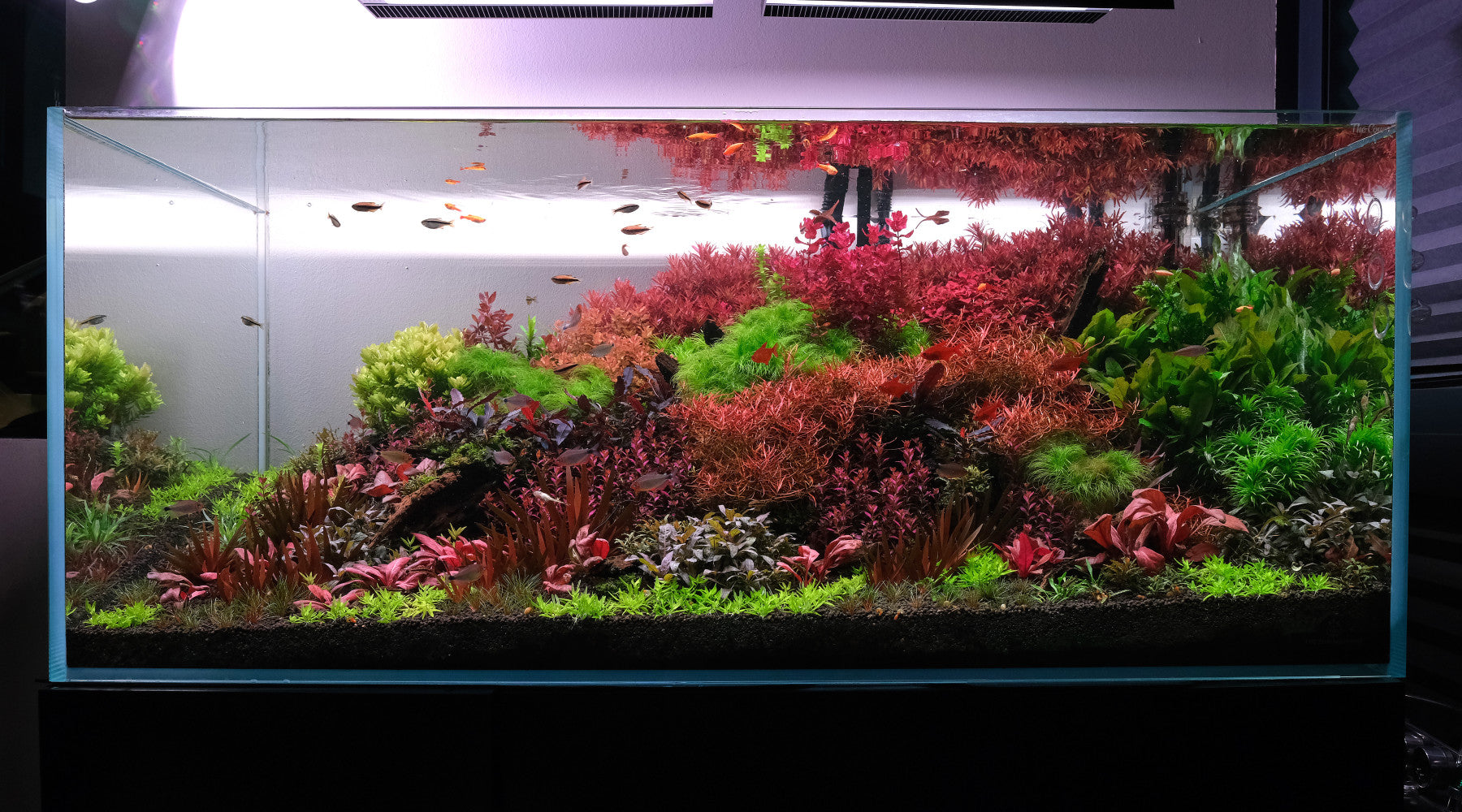
Stronger light levels give deeper coloration and denser growth to many stem plant species. This aquarium uses 150umols of PAR on the substrate level.
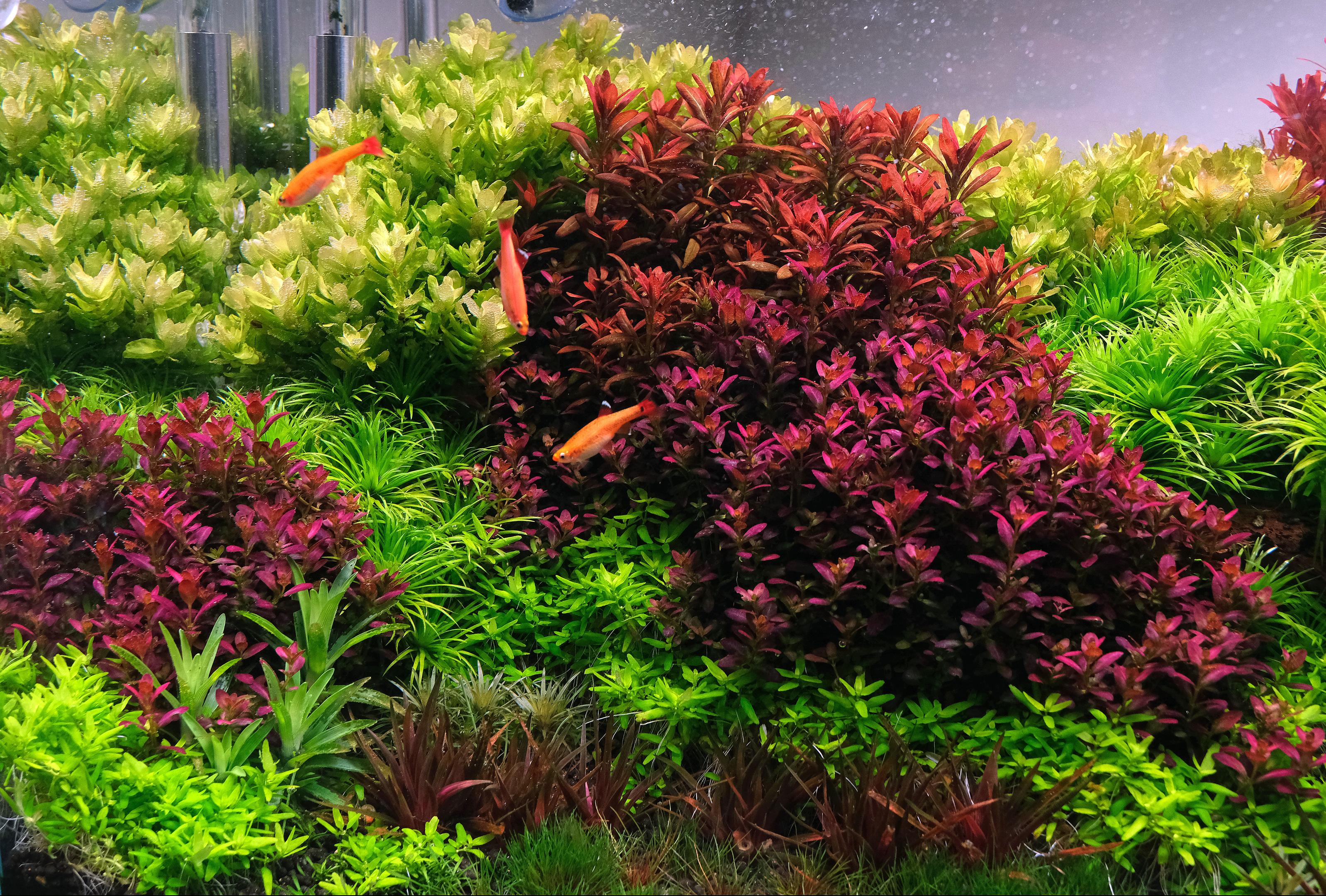
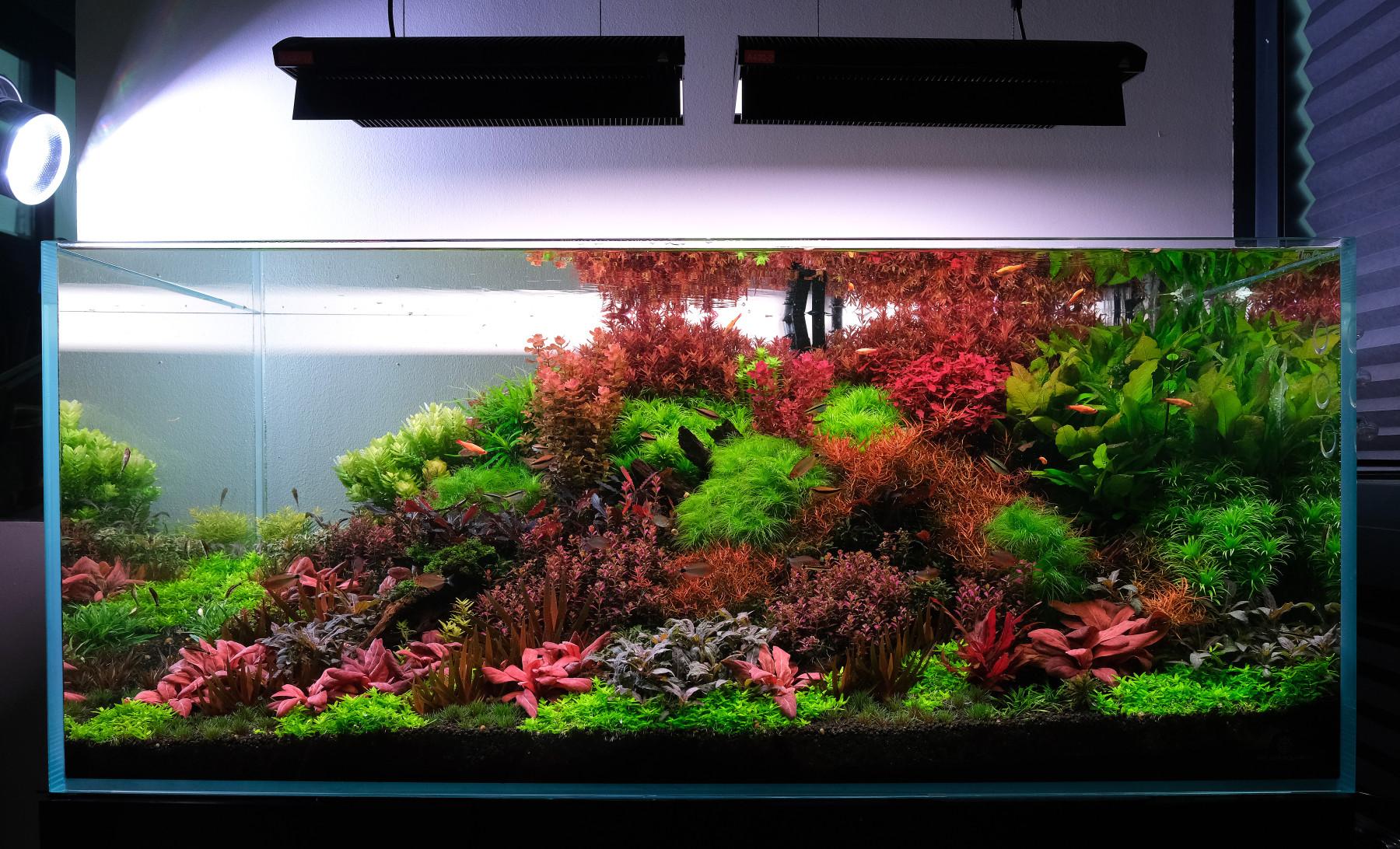
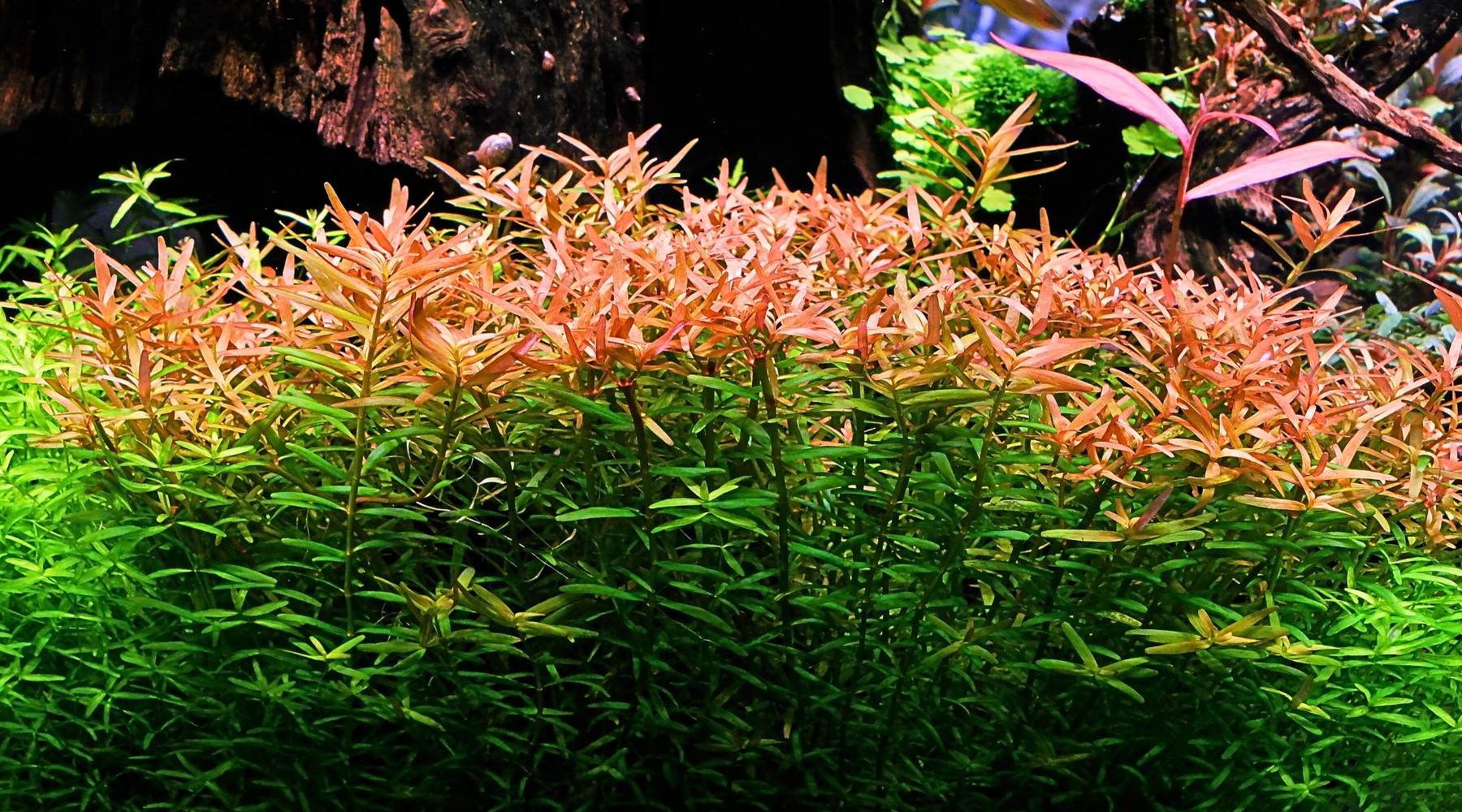
The above planted aquarium uses 300+umols of PAR to grow difficult aquatic plant species. Higher light levels also allow for greater plant density.
Does Kelvin (Color Temperature) Matter for Aquarium Plants?
LED lighting is the default choice for the modern planted aquarium. LED lamps have largely replaced older options like metal halide lamps and fluorescent tubes (T5 and T8) due to lower energy consumption, longer lifespan, adjustable output and better spectrum control options. They make it easier to create consistent artificial lighting you can control with a timer rather than guessing at daylight.
Three things matter when choosing a light: power (measured in PAR), spectral distribution, and coverage. The K rating - the colour temperature number printed on a lamp - tells you only the visual colour hue as perceived by the human eye. It says nothing about the lamp's spectral distribution or how well it grows plants. The 2Hr lab has grown excellent tanks under 4200K, 6500K and 12000K fixtures. K rating is a marketing shorthand, not a plant-growing specification. Any website claiming 6500K is ideal for plants is repeating a marketing gimmick.
Similarly, "full spectrum" is a marketing term, not a meaningful technical standard. Every white lamp contains red, green and blue wavelengths by default and qualifies as "full spectrum." Any light manufacturer can slap that term onto their product without any legal repercussions. High CRI (Colour Rendering Index) also does not meaningfully predict plant-growing performance - it measures colour accuracy for human vision, not the spectral peaks plants use.
What does affect both growth form and visual appeal is the red-blue balance of the spectral distribution. Fixtures using dedicated red, green and blue diodes - rather than purely white LEDs - tend to give better colour saturation and stronger pigmentation in coloured plants. Plain white LEDs often lack adequate red light, resulting in washed-out visuals and weaker pigmentation.
To choose a fixture properly: read the PAR chart, inspect the spectral distribution profile, and find photographs of real tanks running that unit. Ignore K rating, ignore "full spectrum" claims, and ignore CRI scores.
What you do not need: direct sunlight. It is uncontrollable, seasonally variable and almost always delivers too much intensity at the wrong angles. Use artificial lighting you can switch, dim and time.
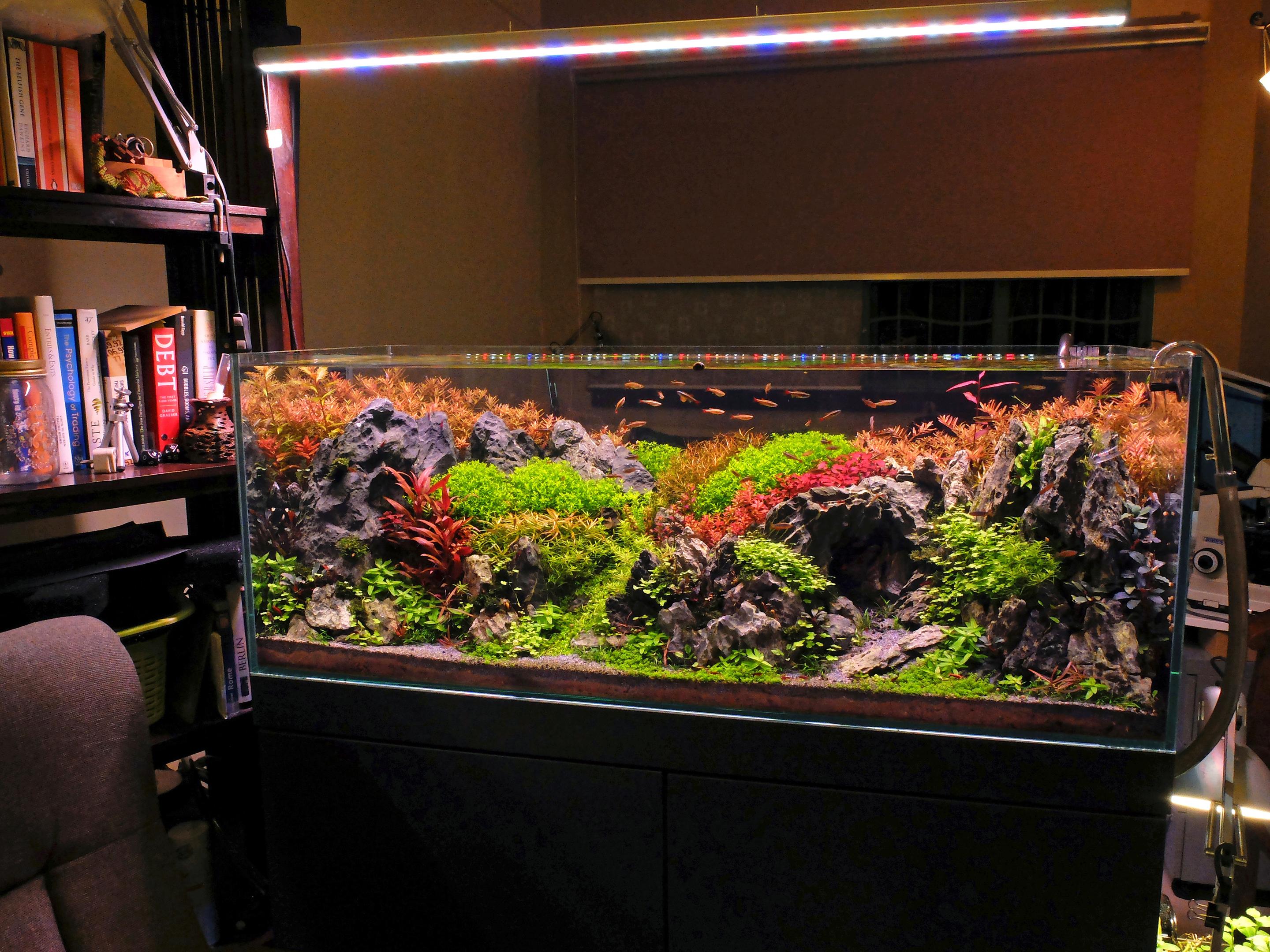
In the above example, the LED light is rated at 3600K, 78 CRI, but nonetheless the visual color rendition is excellent and plants grow well.
Modern aquarium specific LEDs make use of narrow RGB spectrum bands to give stronger visual contrast and saturation. These lights actually produce light in extremely narrow spectral bands (see below) which in combination looks white to human eyes. Light manufacturers attach the term "full spectrum" to their lights for marketing purposes. The spectrum is not actually full in any sense, but the lights still grow plants well.

The Fluval Plant 4.0 LED markets itself as a "Full spectrum" light with high CRI - however, it renders colors poorly compared to other LED brands such as Twinstar, Chihiros or Week aqua. The aquascape below is taken with the exact same camera settings, and the Fluval 4.0 shows washed out colors compared to the Twinstar S V. Even though the Fluval Plant 4.0 has spectrum tuning - it lacks red LED diodes and its spectrum curve will always be deficient in red no matter how it is tuned.

Does Blue Light Cause Algae?
The short answer is, no. High light intensity (high PAR) coupled with other trigger factors such as a spike in nutrient levels, organic waste levels and poor plant health trigger algae spores to bloom. Blue light alone in a balanced planted aquarium has no more impact on algae than red light. Both stimulate photosynthesis in both plants and algae. There are plenty of successful planted aquariums that make use of lights with bluish tints without algae problems.
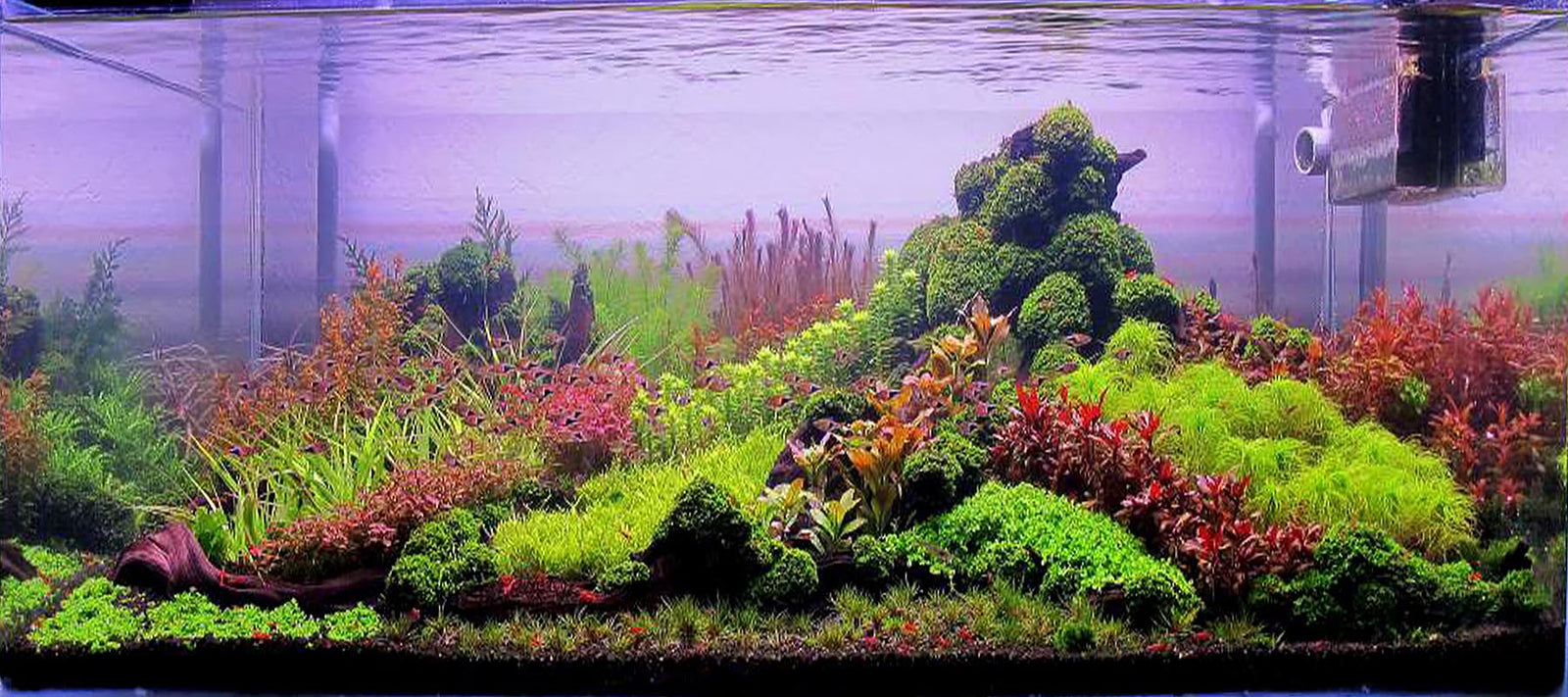
The above aquarium by Tom barr's uses a mix of red and blue T5 tubes.
New Tank Lighting Setup: Step-by-Step Action Plan
-
Pick one number and hold it for four weeks. Stop nudging the timer. New tanks: start at 5 to 6 hours. Stable low-tech: 7 to 8 hours. Stable high-tech with healthy growth: 8 to 9 hours. Whatever you pick, leave it alone. A tank punished by a different schedule every three days never stabilises and never tells you anything useful.
-
Use a timer. Every tank. No exceptions. Consistent lighting duration is not optional; it is the minimum condition for stable biology. Fish and plants calibrate their internal rhythms against the light cycle. Variability is stress. A simple plug-in timer or smart switch costs almost nothing and removes one variable from your troubleshooting for good.
-
Intensity and duration both matters. A new low-tech tank does not need 200 µmols of PAR for 9 hours. Most carpets and common plants grow well at 40 to 60 µmols if CO2 is optimal. Excessive intensity and excessive duration both drive up algae risk. This is especially when nutrient levels and CO2 are not dialed in.
-
Skip the siesta. A split photoperiod - lights on, off for 2 hours, lights on - does not "starve algae of CO2" in any meaningful way. The RuBisCO enzyme that fixes CO2 in plants takes a lot of energy to ramp up, so fragmented photoperiods are not optimal for plant growth.
-
There are many triggers to algae besides lighting. Check CO2 stability across the photoperiod, check filter flow and cleanliness, trim algae-coated old leaves, vacuum organic waste and do a proper water change.

Share:
Dispersion, Angles & Spread of light units
How to Choose Planted Aquarium LED Lighting