Your Cart is Empty


Fish-only tanks require minimal lighting, primarily for viewing pleasure. For a thriving planted aquarium, lights power plant photosynthesis. Choose a light by matching PAR at the substrate to your plant requirements, not by chasing wattage, lumens or “full spectrum” labels. The right aquarium light delivers enough photosynthetically active radiation (PAR) for your plants, spreads evenly across the tank, and has visually attractive color tones. Not all light sources are created equal; higher end lights offers in-build timers, spectrum and intensity control, while cheaper light sets simply turn on/off with fixed output.
Decide your plant group first: low light plants (Anubias, Java fern) vs medium plants vs demanding reds and carpets.
Aim roughly 20–40 µmol PAR for shade/low light plants, 40–90 for Nature style planted tanks, 90–150 if aiming for red plants and exotic species, 200+umols PAR is overkill for most setups.
Prioritise dimmable LED lighting that covers the full footprint of the aquarium; clip on lights or strip lights are fine if they deliver the right PAR.
Use spectrum and colour temperature mainly for how your fish and plants look. Plants are very flexible in utilizing the light spectrum that is available, and there is no need to optimize spectrum for photosynthesis - the growth outcomes are marginal compared to other optimizations that one can spend effort on (Carbon, nutrients, horticulture approaches).
Start with shorter photoperiods and moderate intensity to avoid algae growth, then ramp up carefully as the tank stabilises.
The ideal photoperiod for planted aquariums is typically 8 to 10 hours of light per day, as longer periods can encourage algae growth.
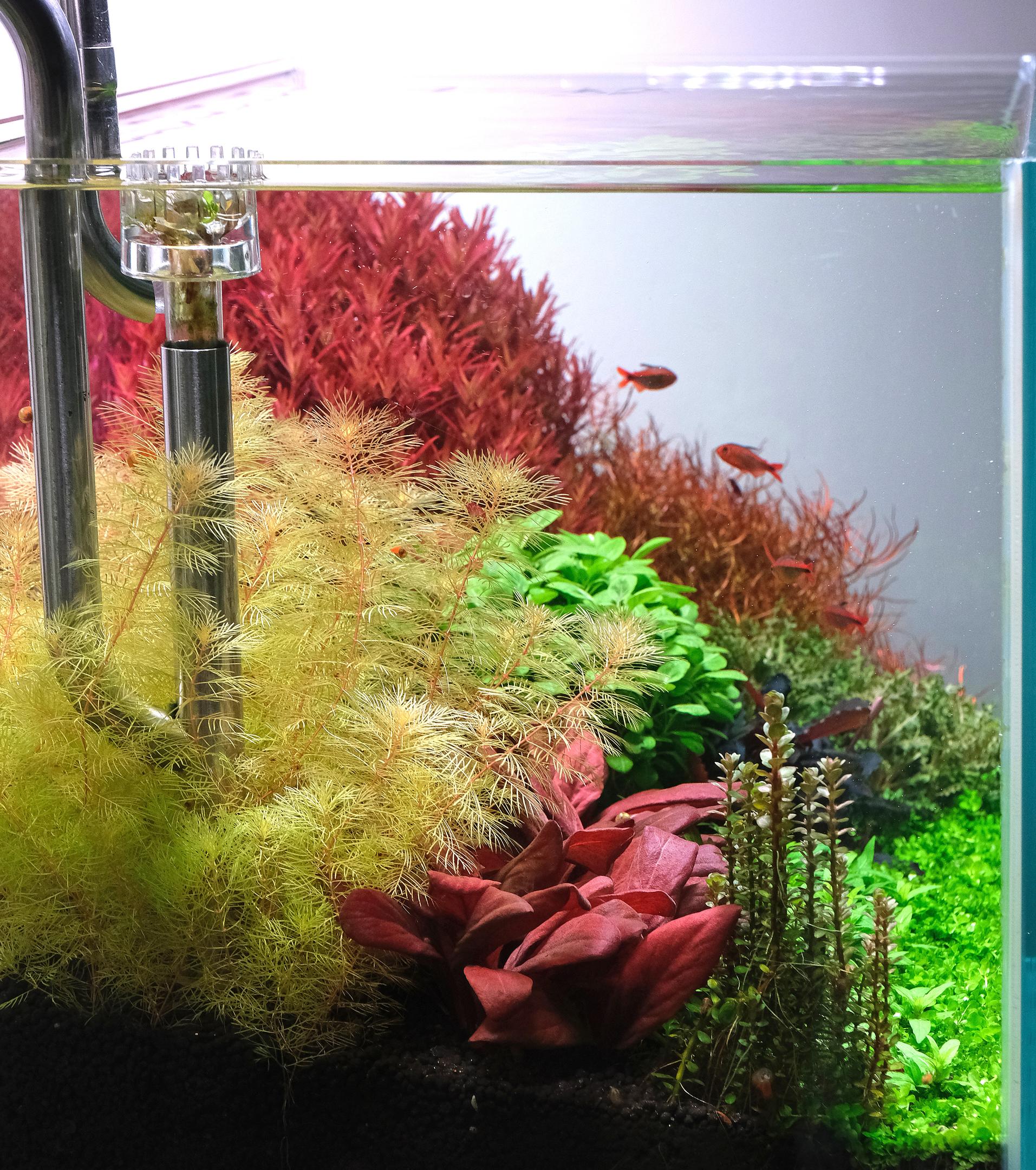
The right light not only grows plants well, but also renders visual colors of fish and plants attractively. Lights that cast an overly purplish tint are not necessary to have a thriving planted tank.
Most advice on “how to choose aquarium light” obsesses over watts per litre, lumens and Kelvin ratings. Optimizing the wrong factors delivers poor results. The 2Hr Way trims this down to three things: power, spectrum and coverage.
Power means PAR: photosynthetically active radiation, the photons between 400 and 700 nm that aquatic plants actually use for photosynthesis. PAR at substrate is the only meaningful intensity number because that is where your plants live. PAR drops with water depth and with distance from the light, so a powerful light on a deep tank might deliver the same substrate PAR as a weaker light on a shallow nano aquarium. PAR data can be found in manufacturer's charts as well as hobbyist data collected through PAR meters.
Spectrum is simply which wavelengths make up the beam: how much red light, how much blue light, how much in between. Many LED lights contain no white LEDs at all - they make use of a combination of Red, Blue and Green diodes to produce light that looks white to our eyes. Any sensible “white light” that contains Red, Blue, Green in its spectrum will grow plants just fine as long as it produces enough PAR; plant health does not depend on a magical label that says “plant light” or “full spectrum”. Red and blue light are indeed strong photosynthesis bands, but green light is also used by plants despite the popular myth that plants “do not use green light”.
Coveragedescribes how evenly that light output lands across the tank footprint: a narrow point source gives a bright hot spot in the centre and shadowy corners; a good strip light or a pair of smaller fixtures can spread light much more evenly.
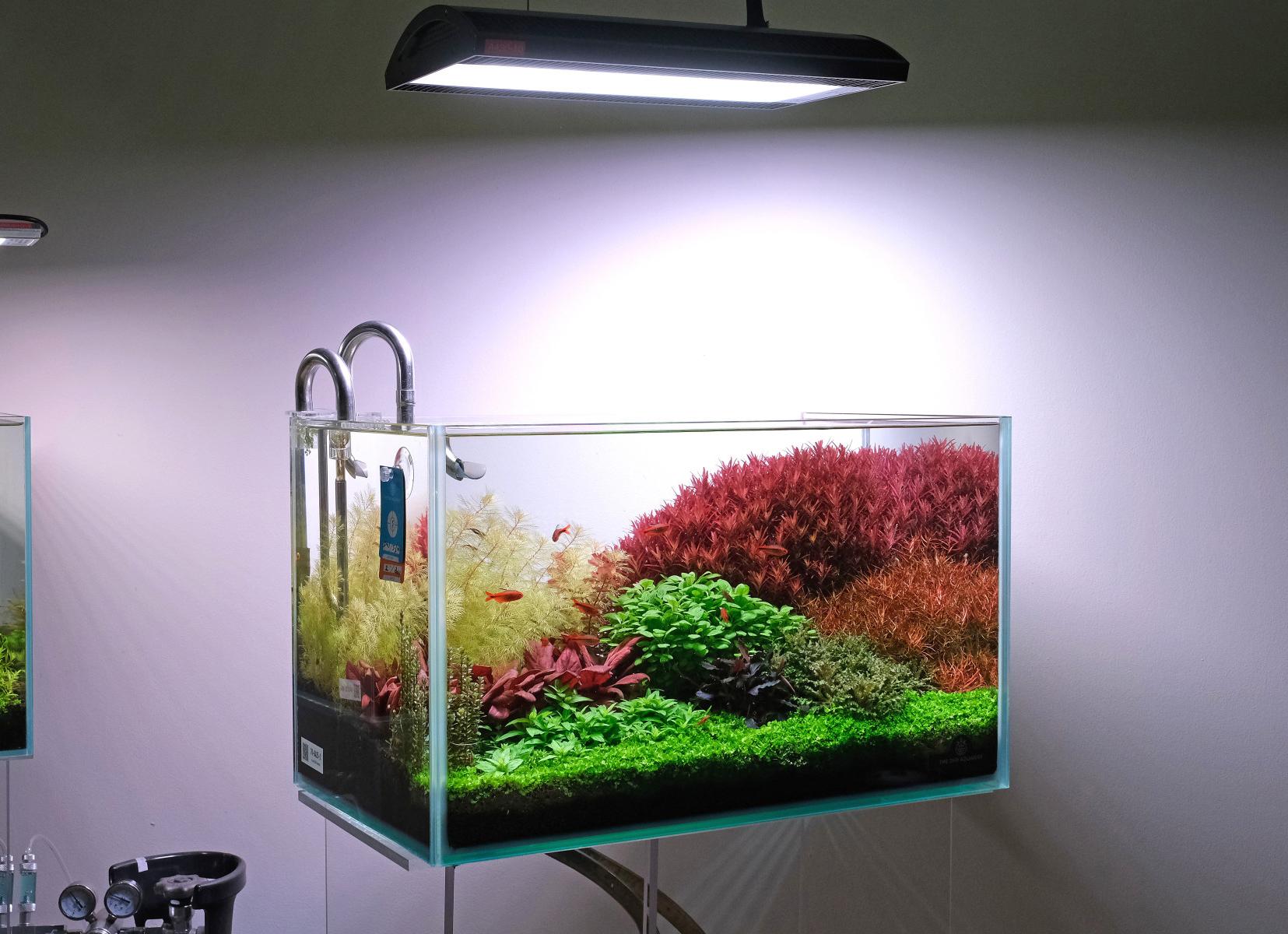
Aquarium above is lit by a Week aqua a430 LED. LED lights are rapidly becoming the most popular type of aquarium lighting due to their energy efficiency and long lifespan, making them ideal for planted aquariums.
You are curious about “how much light” or see charts telling you to hit specific lumen output or watts per litre numbers. These can be rough ballparks, but they ignore water depth, reflector efficiency and actual plant type. Plants do not read lumen ratings. They respond to PAR at their leaves.
Think in bands:
20-40umols of PAR: Low light plants and shade specialists like Anubias, Java fern, Bucephalandra and many Cryptocoryne grow happily at 20–40 µmol PAR at the substrate.
40-60umols of PAR: Sufficient to grow carpeting plants and most common green plants. This includes all common carpeting plants such as Monte carlo, Dwarf hair grass and Dwarf baby tears.
60-90umols PAR: Easier red plants such as Alternanthera reineckii and Ludwigia super red do well at this levels. Plants grow with more compact growth forms.
90–150µmols PAR: High demand stems and trickier species grow well in this range, these plant species would usually also require CO2 injection to grow optimally. Good level for most red plants and most common species grow with good form and density.
200+ µmols PAR - Used by experienced aquarists to get maximum density and coloration in picky species.
Going beyond 150 µmol turns your tank into expert territory where high light coupled with other algae triggers can quickly turn the tank into a nightmare. Remember: too much light does not merely “make plants grow faster”; it makes the system more sensitive to every instability.
Start on the lower side of your band and ramp up slowly. Your plants need time to rebuild their chlorophyll content and adjust leaf structure whenever light intensity changes. Jumping straight from low to high light in one day is system shock, not “helping plants grow”.
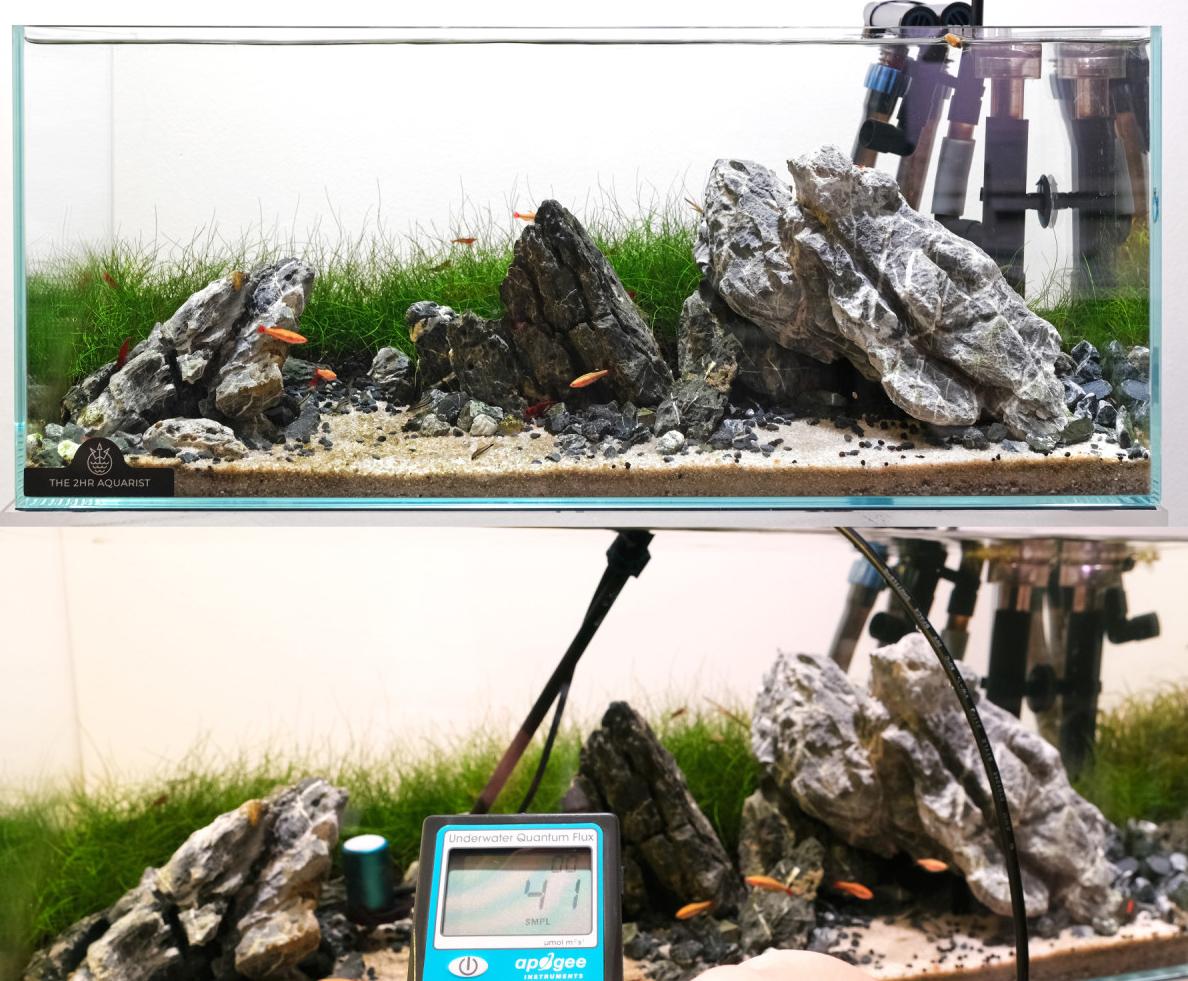
One of the most repeated myths in the planted aquarium hobby: That carpeting plants need high light.
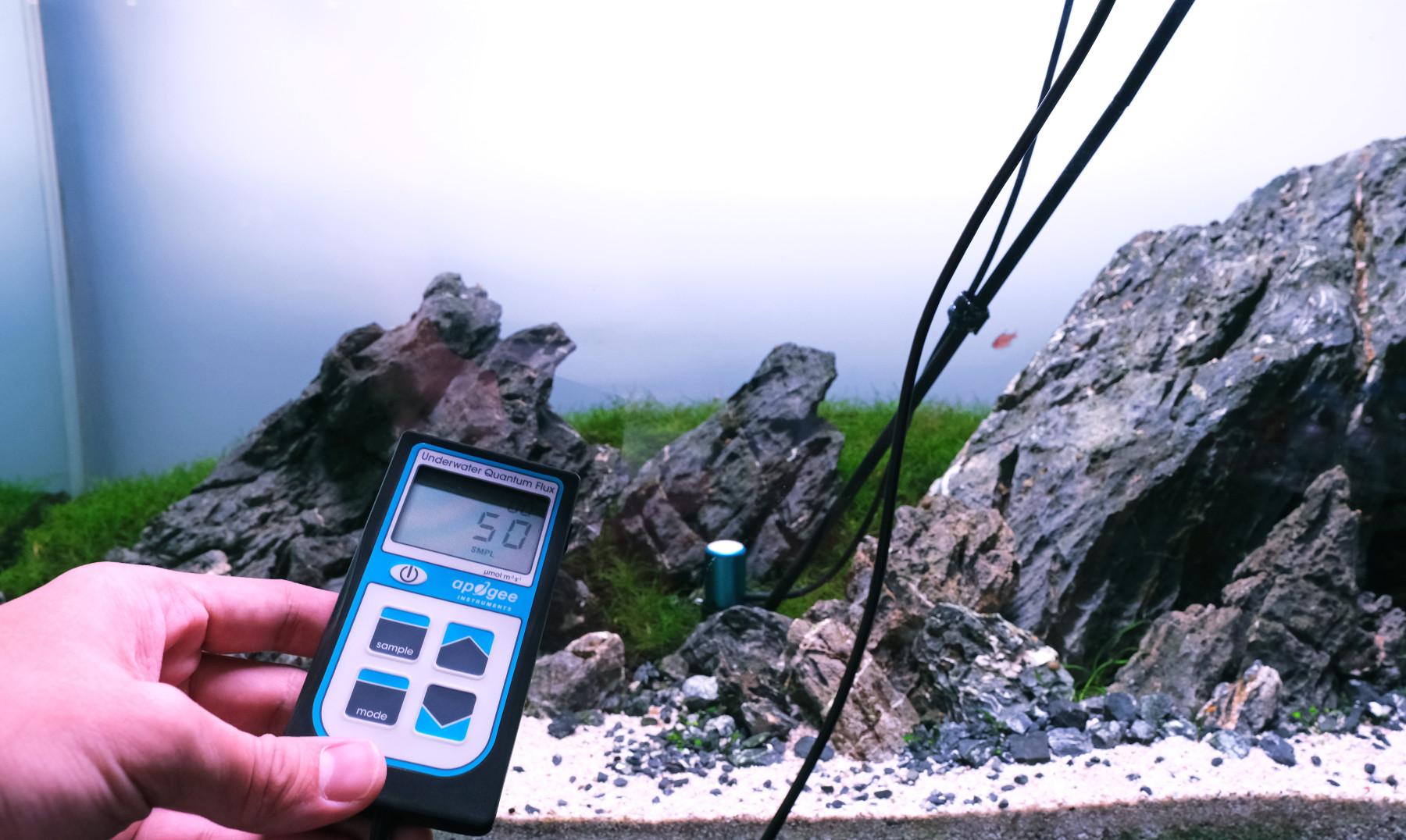
Using less light for Iwagumi aquascapes keeps the hardscape free from algae.
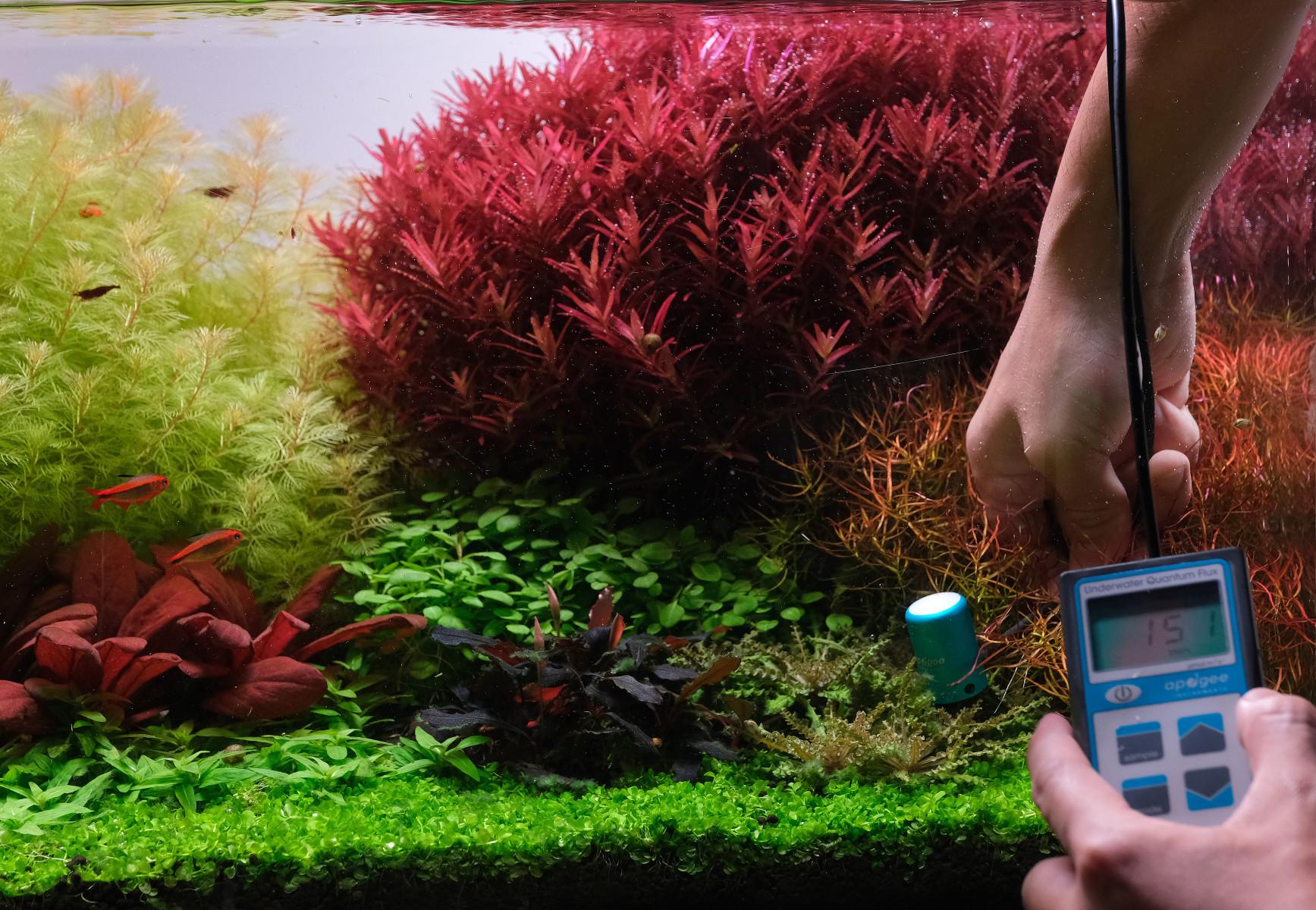
This aquarium using 150umols of PAR at the substrate level to grow higher density stem plant bushes.
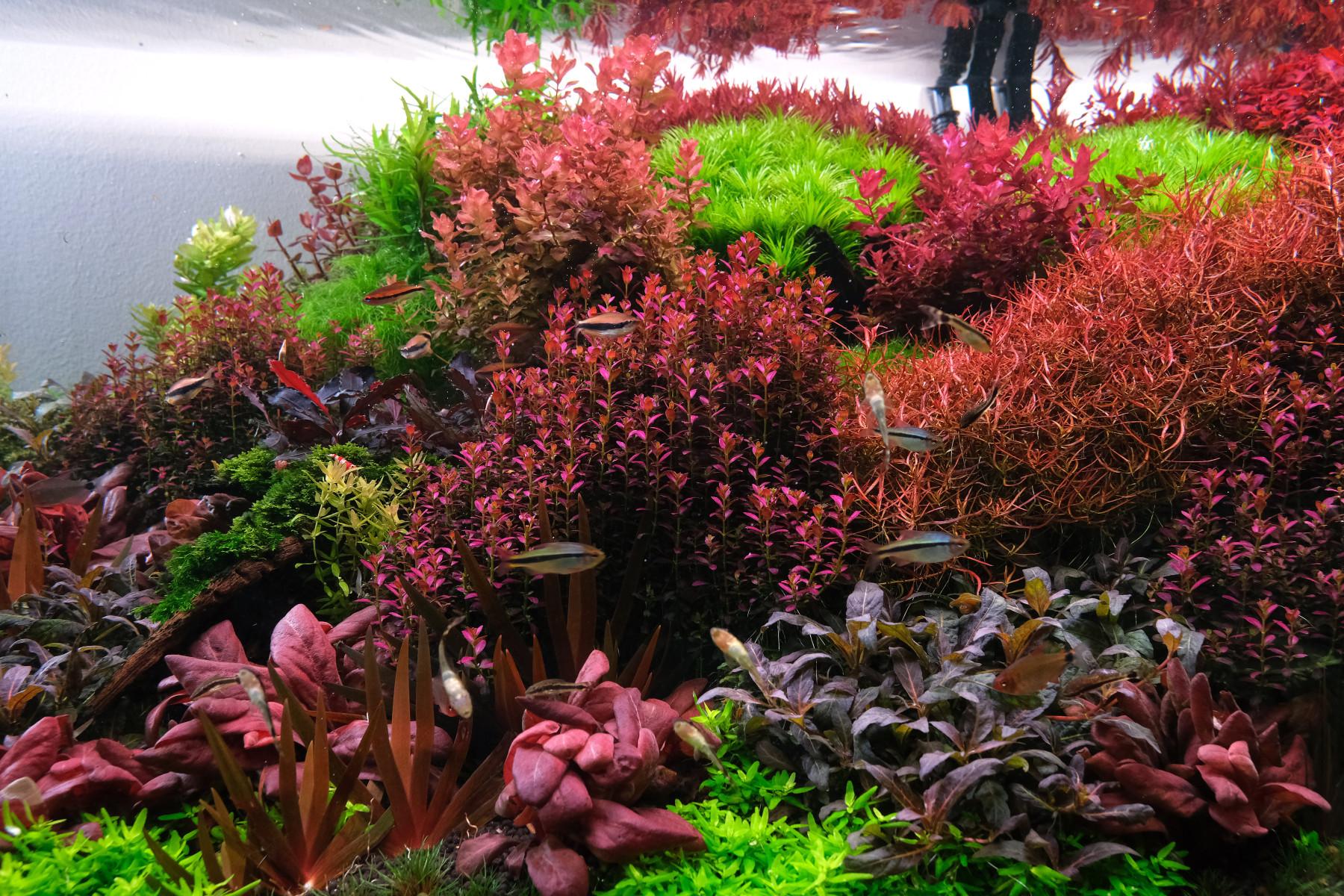
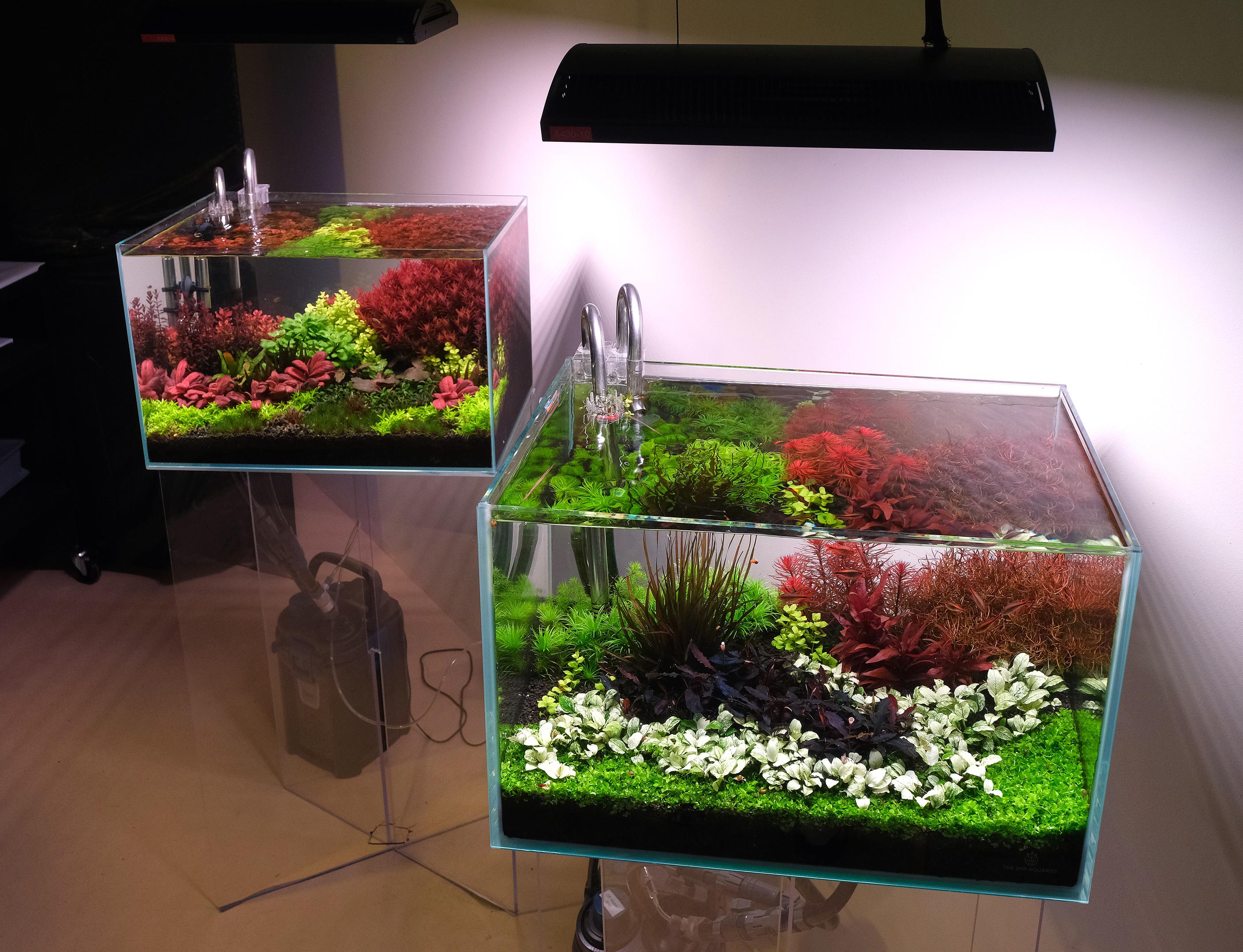
We use 200+ umols on this planted aquarium to get deep coloration and high density on picker to grow plant species.
If you walk into a fish room or browse an online store, every second product calls itself a full spectrum plant light or claims to mimic natural sunlight. It sounds reassuring, but the phrase “full spectrum” is not a regulated technical standard. It is more of a marketing gimmick.
In the earlier days of in door horticulture, LED lighting for growing plants focused on using only red and blue LED diodes as it was believed that Red/Blue light powered photosynthesis more strongly than Green light. As more studies were done, it was discovered that Green light contributed significantly to photosynthesis, and the efficiency of white LEDs (which produced a mix of blue, green and red wavelengths rather than just pure blue or red) made them great for growing live plants. Many horticulture light manufacturers began producing new fixtures that made use of these white LEDs, and labeled their grow lights "full spectrum" to separate them from fixtures that just used red/blue LEDs.
This trend bled into the aquarium industry. Any aquarium light that produces white light can claim to be "full spectrum" as it contains light spread across the spectrum - Red, Green, Blue. Even fixtures that have very narrow spectrum profiles using only red, green and blue diodes (and no white diodes) to produce white light, use the term "full spectrum" in their marketing.
The biological reality: Plants can grow fine in just red/blue light, or a mix of red/blue/green light. Using overly heavy red/blue spectrums do not grow plants any better in the aquarium context. The much higher impact factor for planted aquariums is how light spectrum affects the aquarium visually. Luckily for us, plants can grow perfectly well in visually attractive light spectrum profiles. One does not need to mimic sunlight to grow plants well.
The K rating - the colour temperature number printed on a lamp - tells you only the visual colour hue as perceived by the human eye. It says nothing about the lamp's actual spectral distribution or how well it grows plants. The 2Hr lab has grown excellent tanks under 4200K, 6500K and 12000K fixtures. K rating is a marketing shorthand, not a plant-growing specification. Any website claiming 6500K is ideal for plants is also repeating a marketing gimmick.
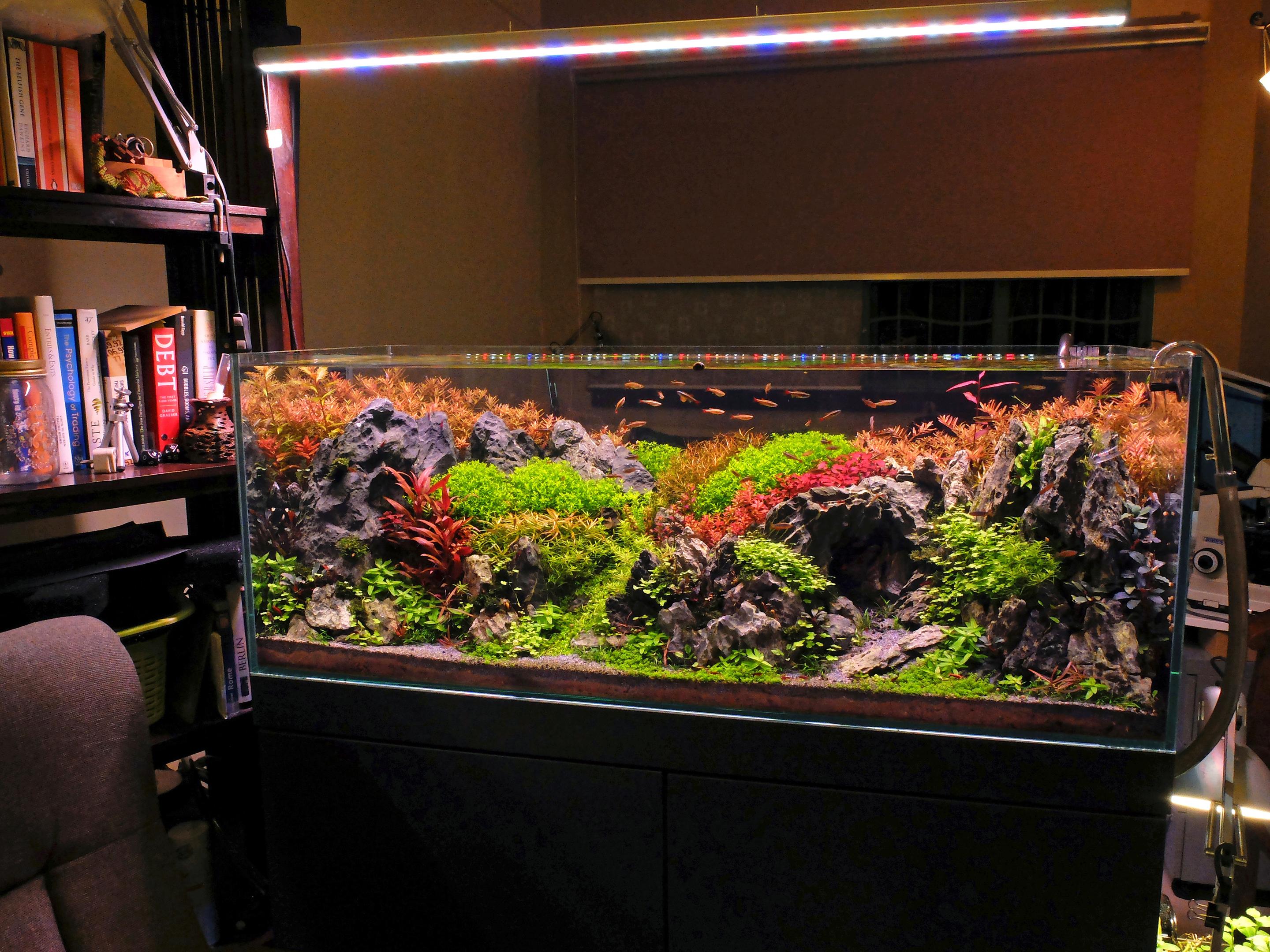
In the above example, the LED light is rated at 3600K, 78 CRI, but nonetheless the visual color rendition is excellent and plants grow well. It is a custom LED bar, with narrow beam lenses that focus light onto the tank's footprint from a great height. The owner's intention was to never have to worry about banging into the light when working on the aquarium.
When you look at planted aquarium lighting marketing, you will see a parade of charts about spectrum light, red and blue light peaks and “natural sunlight equivalents”. The frustrating truth is this: for plant growth, intensity beats spectrum every time, as long as you are somewhere in the broad white-light range.
The mechanism here is photosynthesis efficiency. At the cellular level, your aquatic plants care about how many usable photons arrive per second, not whether the LED manufacturer painted the housing “plant green”. If you meet the PAR target and provide basic nutrients and CO2, plants grow. If you miss the PAR target, no amount of spectral tinkering with extra blue light or added red LEDs will compensate. Plants inside a tank see the total photon budget, not the marketing graphic.
Spectrum does matter, because it impacts the visual look of a tank tremendously. A balanced spectrum with red and blue peaks plus a solid green mid-section makes red plants like Rotala 'blood red' and Ludwigia super red pop, while still keeping fish health and natural colours pleasant to the human eye. Looking at aquariums lit by the lights in real life gives a much better comparison of how different aquariums can look under different light spectrums.

Most tunable LEDs that make use of Red/Green/Blue diodes to simulate white light give the best visual color rendition for planted aquariums. Their typical spectrum chart (above) have 3 distinct spikes in Red/Blue/Green respectively.
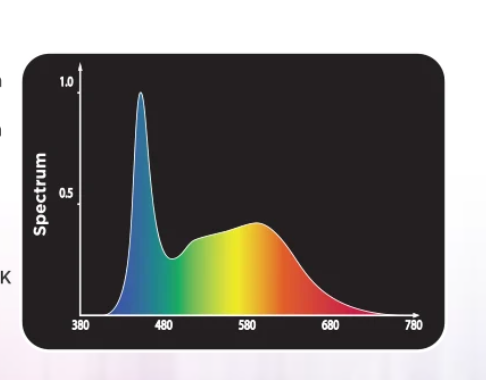
Aquarium fixtures that make use of mostly white LED diodes have a more spread-out spectrum curve, and often lack sufficient red spectrum (above). These lights render colors poorly.
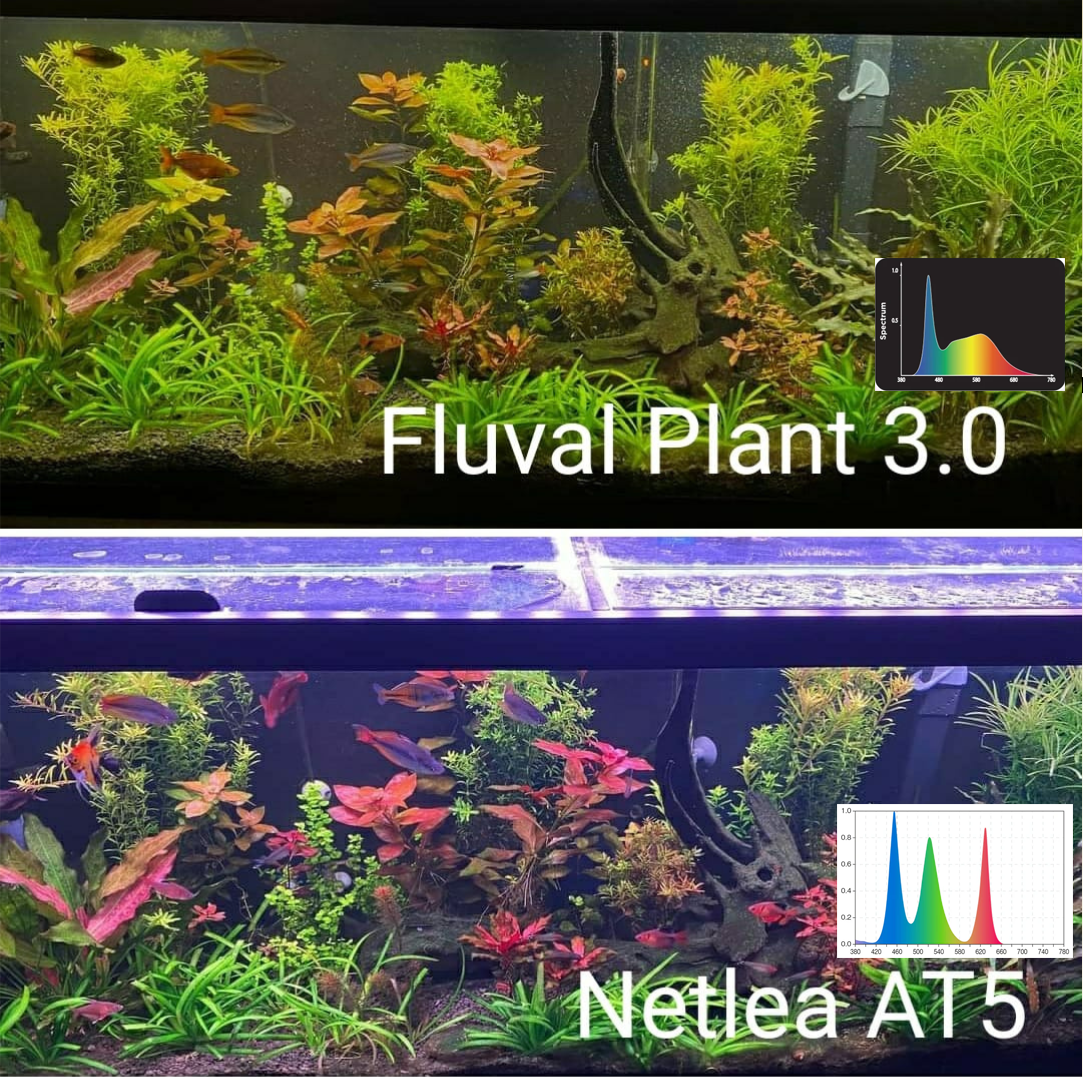
Fluval plant 3.0 is a well marketed fixture that suffers from really poor visual color rendition. Other popular fixtures that do not have great color rendering include EcoTech Freshwater Radions and Aqua illumination Freshwater Blade/Prime. All of these lights suffer from having poor visual color rendering despite their marketing claims.
The major differentation point between industrial/household lights vs planted aquarium specific fixtures is that well chosen aquarium lights have much better light spectrums visually. This is the same aquarium lit by different types of light sources.
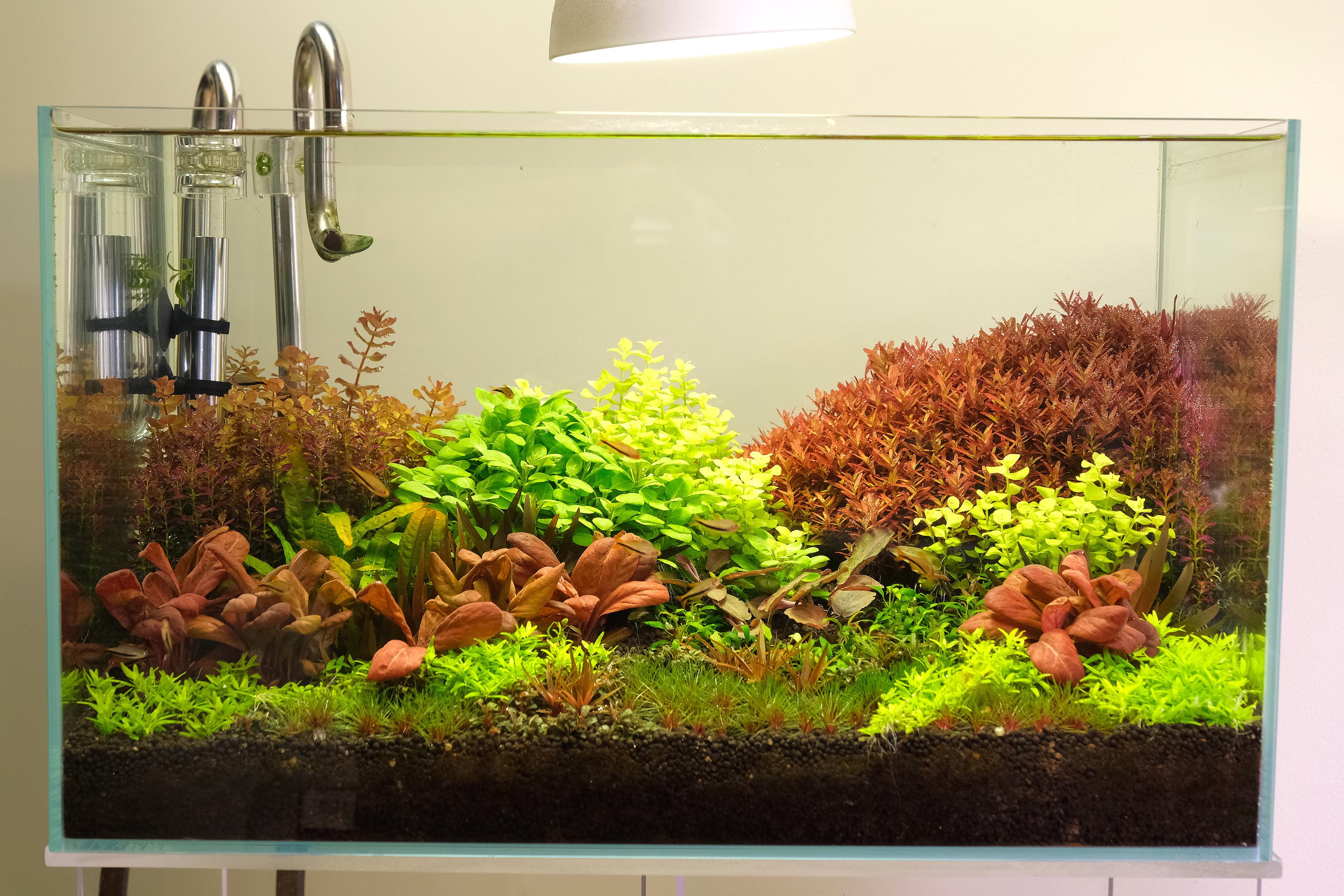
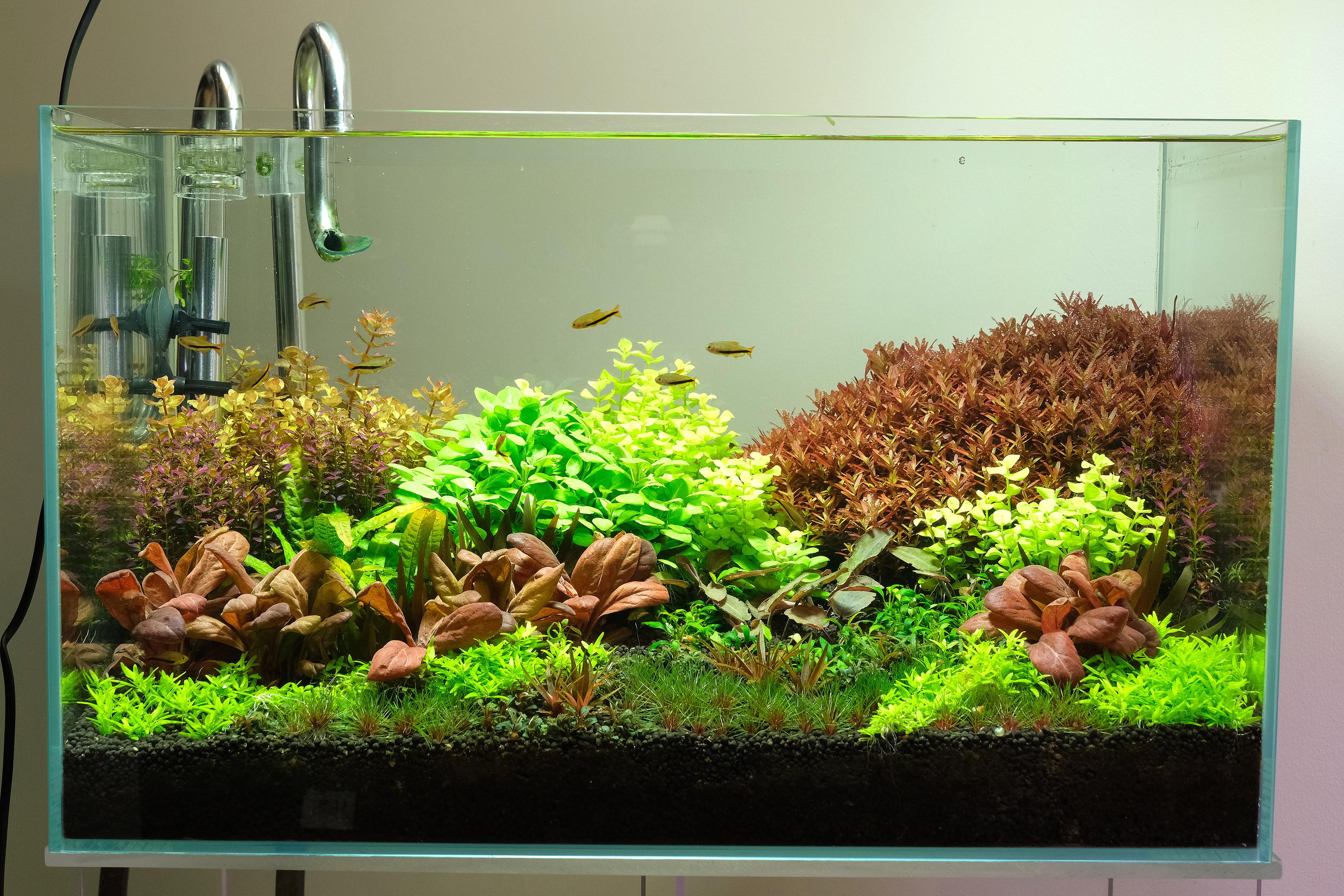
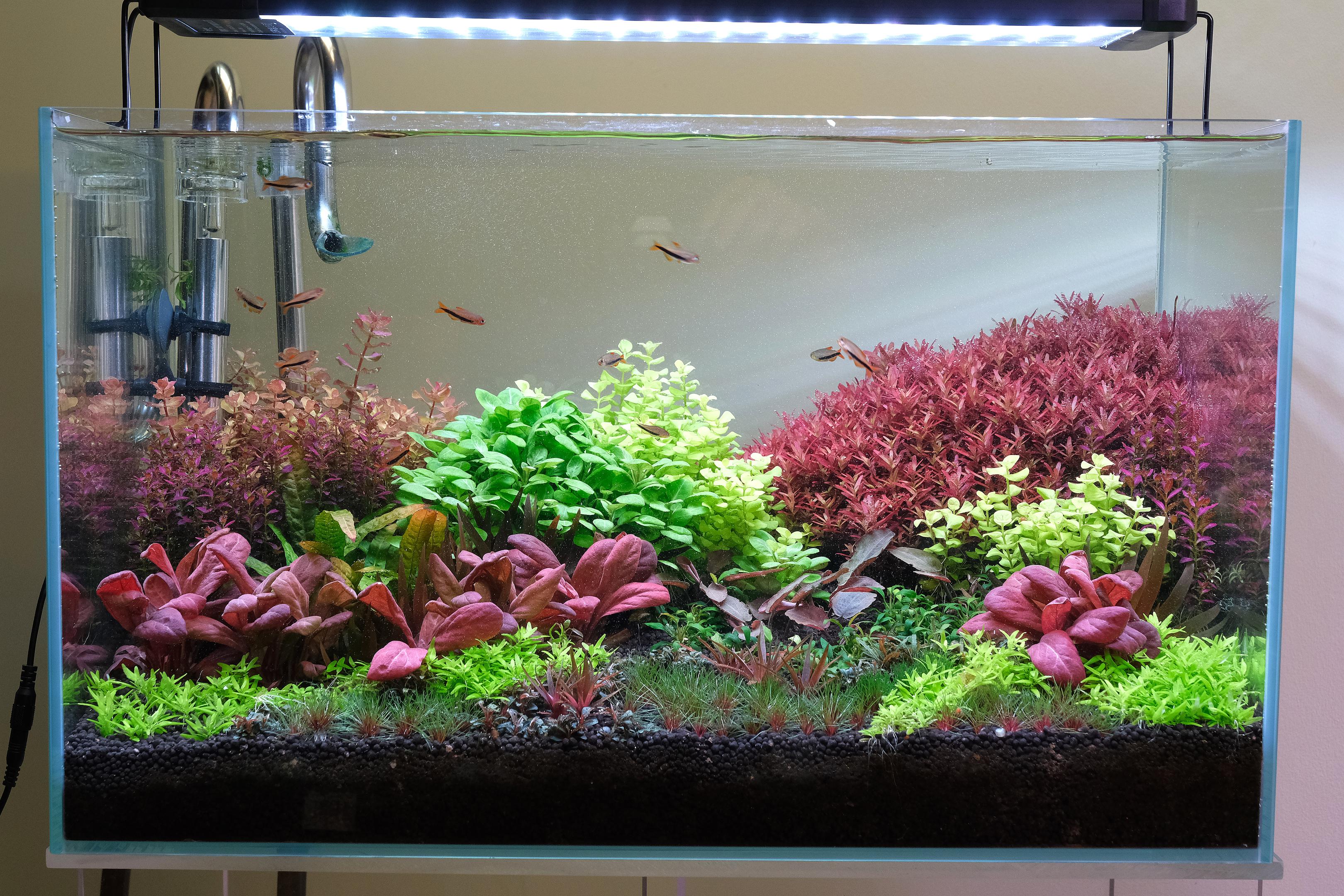
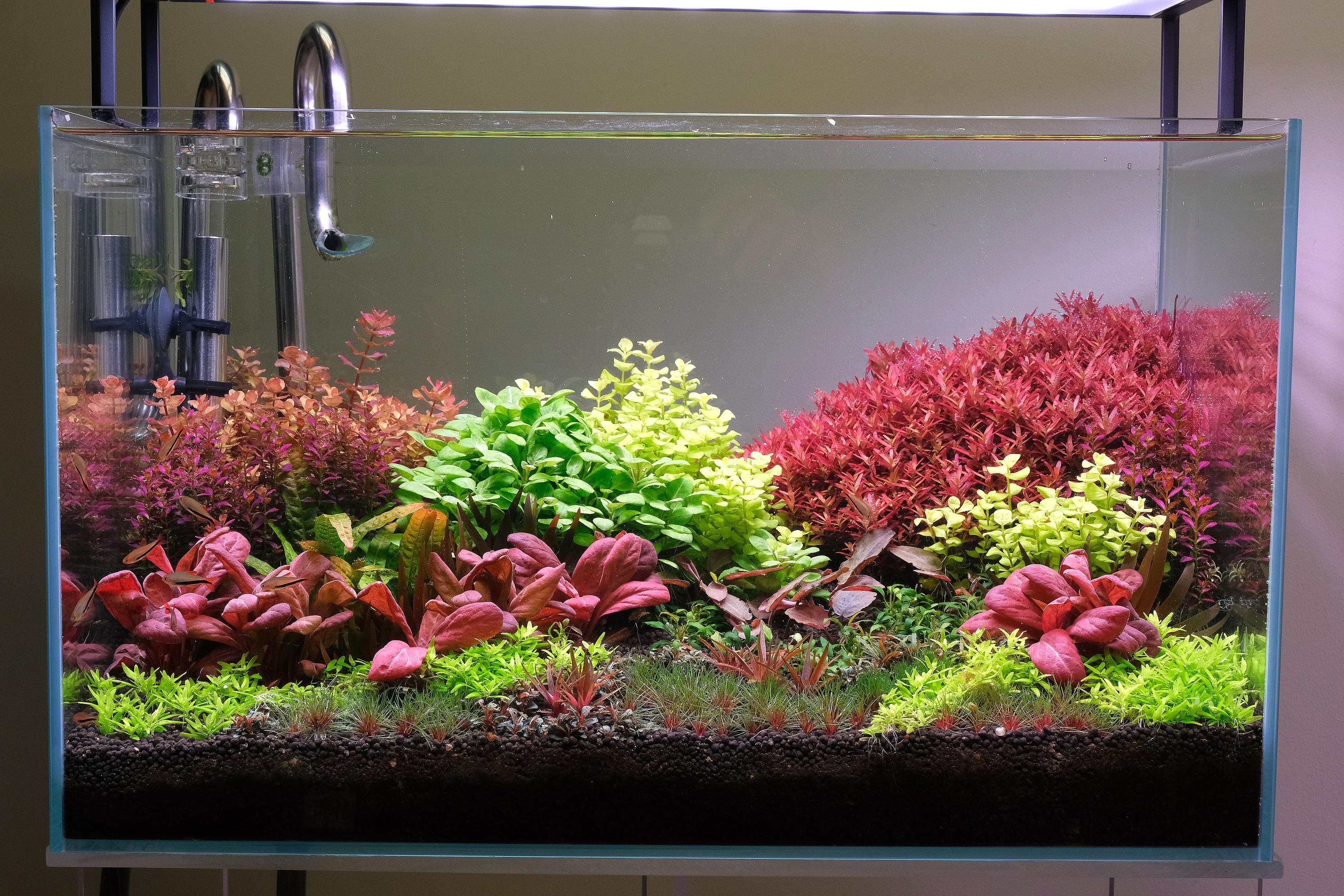
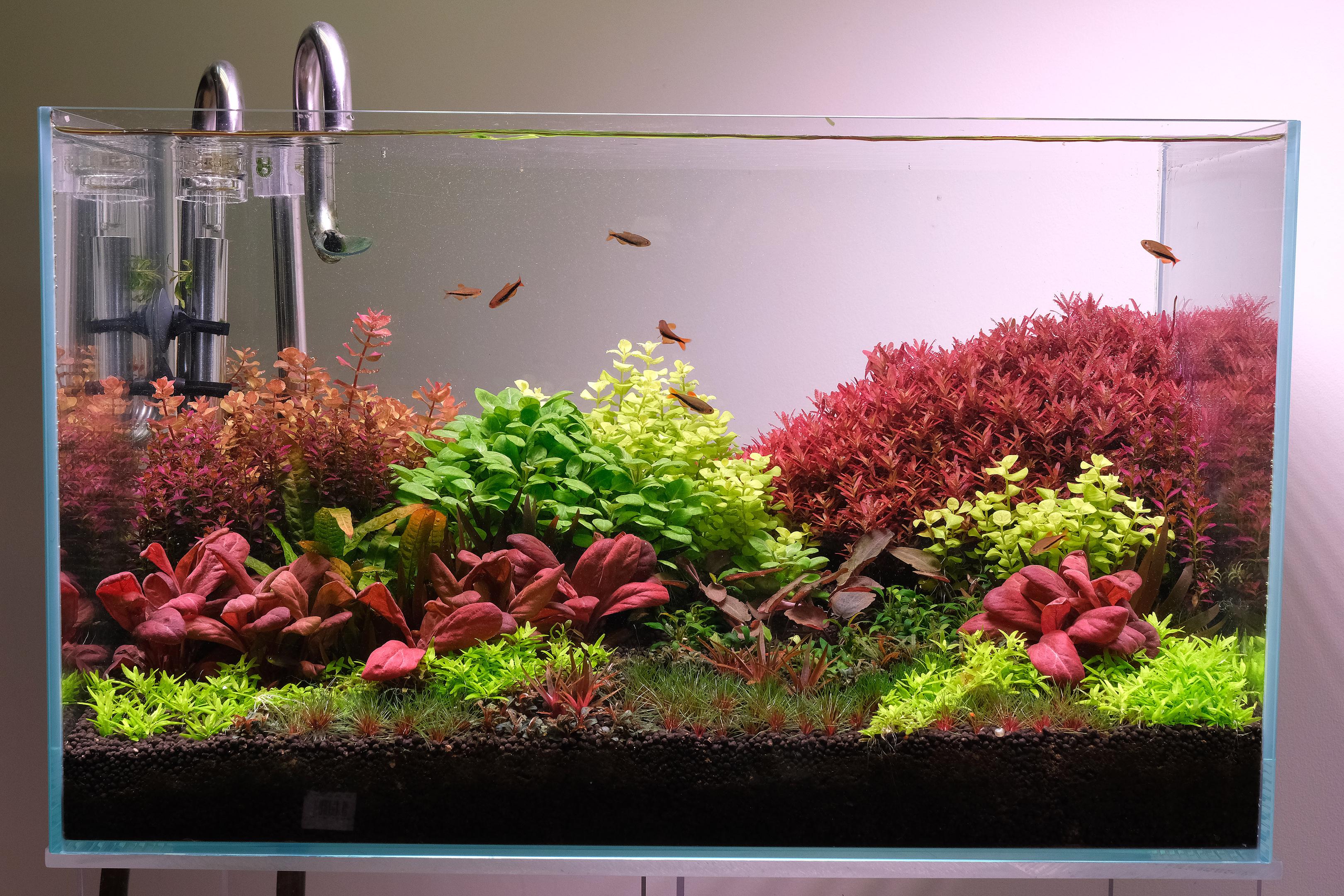
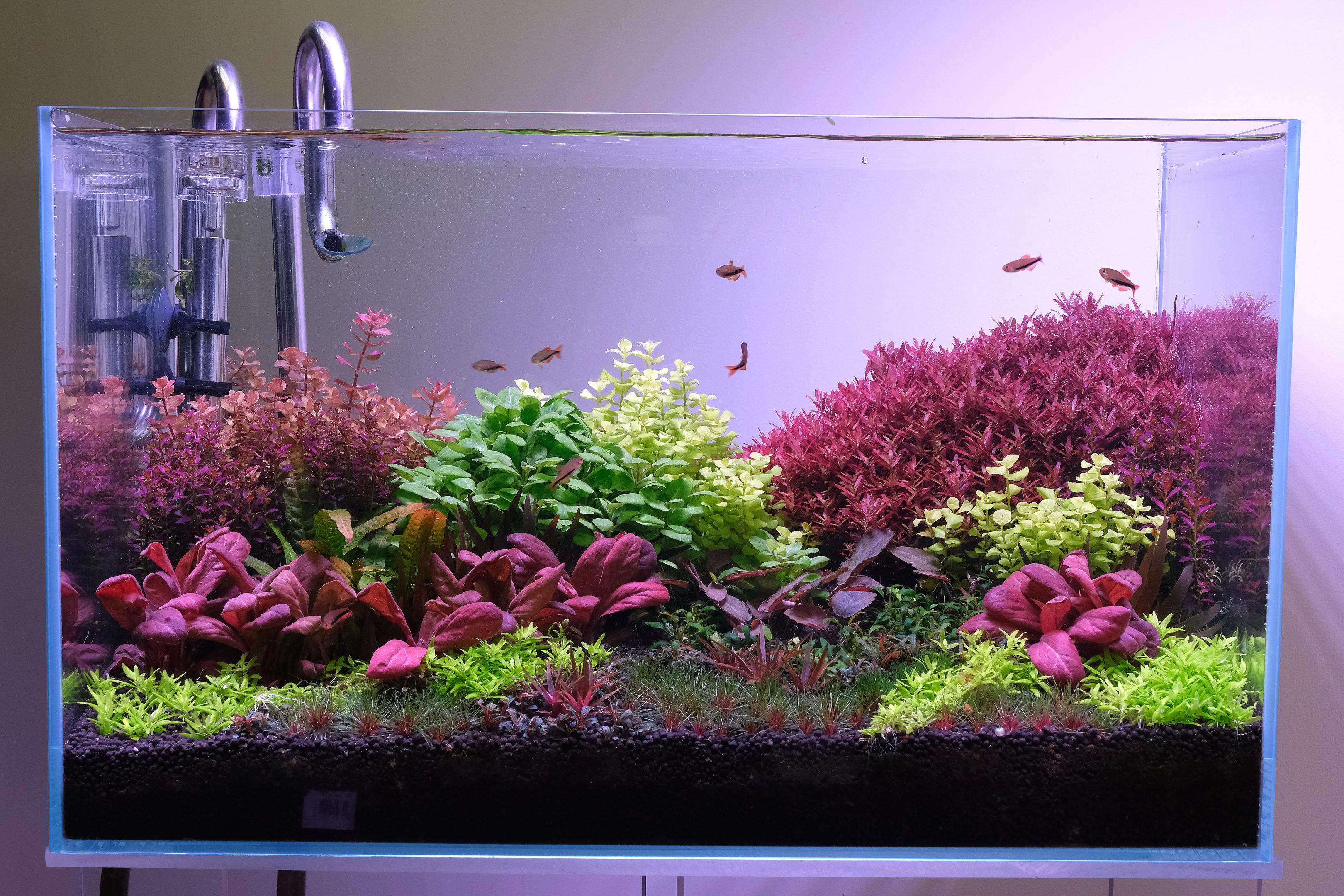
In tunable fixtures, light spectrum settings can change the visual look of the aquarium dramatically.
Beginner aquarists often ask how to choose aquarium light without blowing the budget or burning the plants. You do not need the most expensive LED lighting fixture with 19 app control modes and simulated lunar phases. You need something that provides reliable light intensity appropriate to your plant list, covers the tank, and gives you at least basic control.
All lights that produce enough PAR can grow plants, but there is significant guess work on how much PAR these lights produce over your aquarium. If there is no better data, use this as raw gauge for LED lights:
0.5 watts of power per gallon for low lighting, 1 watts per gallon for medium light levels, 2 watts per gallon for high light.
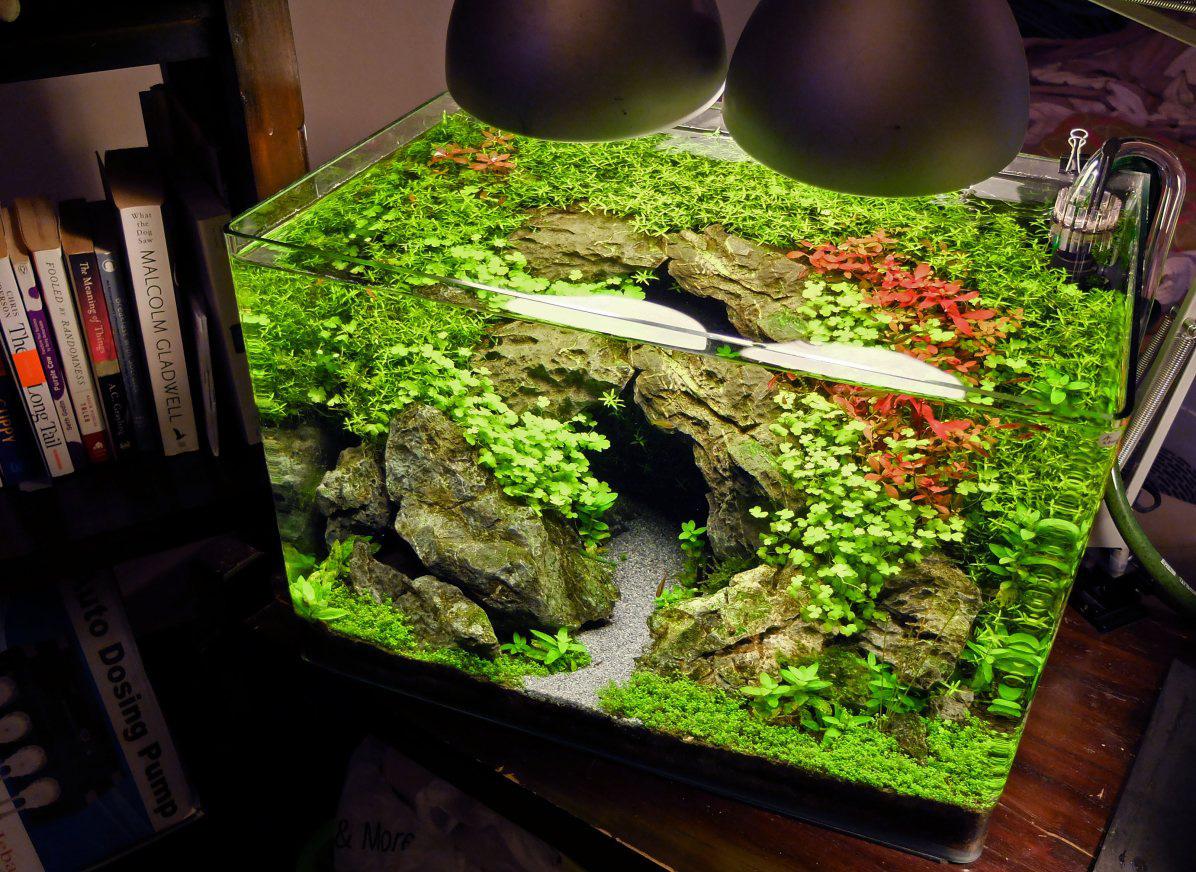
Two Ikea desk lamps are used to light this aquarium. CO2 injection ensures success for the HC carpet.
For aquariums that do not require high lighting, these work, but their spectrum is not as visually aesthetic compared to lights that cost slightly more. Works especially well for shallower/smaller aquariums below 20 gallons and low tech aquariums with mostly green plants.
These use the same RGB diodes as higher end aquarium fixtures so you get the same vivid visual colors. They still deliver very good PAR levels for their cost. Their maximum power is lower than more expensive fixtures - however, many folks do not run higher end fixtures at full power anyway.
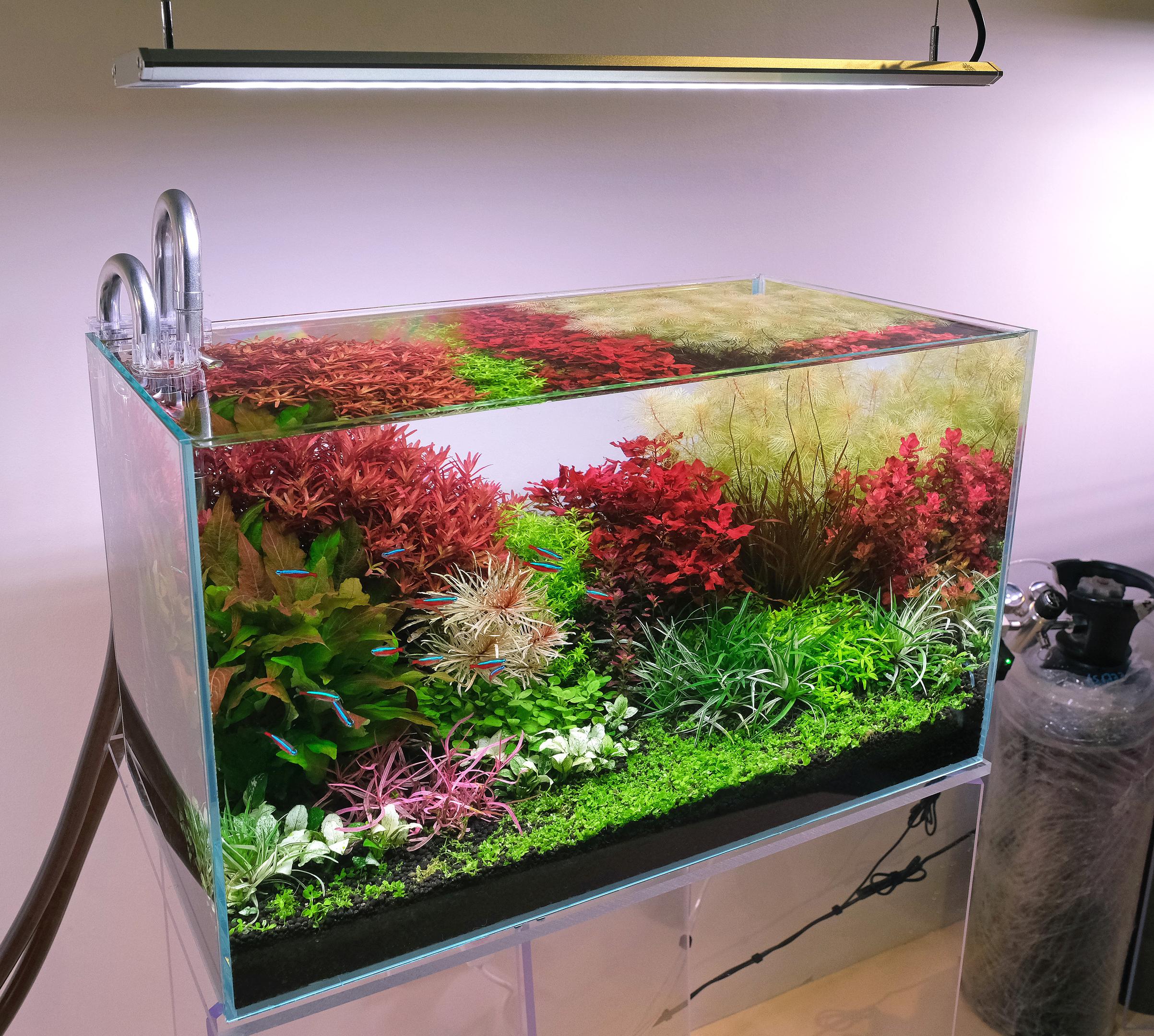
Week aqua M600 gives close to 200umols of PAR on the substrate, running at 100% power on this 60X31x36cm aquarium.
There is a lot of competition at the high price range. The difference is that different brands use different nanometer LEDs to make up RGB. ADA Solar RGB produces deeper greens/reds compared to Chihiros/ Netlea/Week aqua which have a brighter green/red tones. Hyperspot Skylight uses multiple point sources to give more shimmer in the aquarium. Most of the differences are harder to tell from photographs but are more obvious in real life.
Most of the higher priced fixtures produce a lot of light, which works well for larger aquariums, but are very bright for smaller sized tanks. This has lead to the phenomenon of folks running their LED lights at just 30-40% of their maximum power. Going for a cheaper light model, and running it at maximum power would have made more sense for a lot of folks.

Twinstar S Series (above)

Photo from Viktor Lantos, Green aqua, showing ADA solar RGB (above).
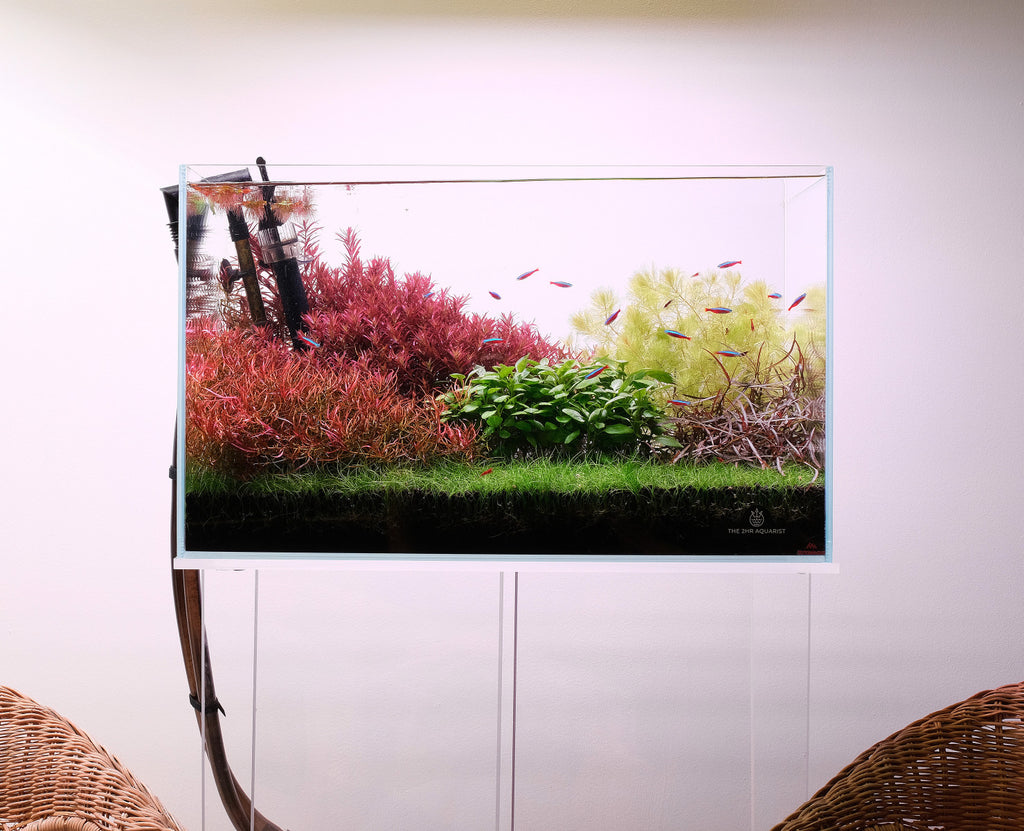
Week aqua a430 (above)
Algae growth is not a moral failing; it is your tank telling you which rule you broke. Too much light does not automatically cause algae blooms, but high intensity amplifies any existing imbalance in nutrients, CO2, or organic waste.
Poor/insufficient light levels:
A lack of growth in plants despite nutrient and CO2 availability.
Stretched petiole in rosette plant species, coupled with thin leaves.
Stem plants that stretch upwards with long internodes, and taller stems grow significantly better than shorter stems. Leaves at top grow significantly larger than shorter leaves/shoots. Failure of stem plants to maintain lower leaves even when CO2 was adequate.
A loss of leaves at lower stems is more closely related to a lack of Carbon availability than a lack of light in many aquariums - this is especially so in low tech aquariums. So failure to retain lower leaves alone cannot be interpreted as a lack of light.
Large difference in growth in open areas with more light vs slightly shaded areas.
Plants that should creep on the substrate grow upwards instead.
Excessive light levels:
Algae grows at a faster rate than one can control.
Filamentous green algae (such as Hair & thread algae) spreads aggressively in high light.
Green dust algae that appears on the glass within a day.
Plants "close up" their tops before its your light's time to turn off.
Healthy plants outcompete algae when light, CO2 and nutrients are balanced. The fix for algae is almost never “buy a more powerful light”; it is “align light output with plant mass and CO2, then keep parameters stable”.
Stop staring at algae on old leaves. Look at new growth tips and overall plant posture: that is where the truth about your lighting sits. Buy the smallest fixture that can hit your PAR target with room to dim, not the biggest one the shop will sell you.
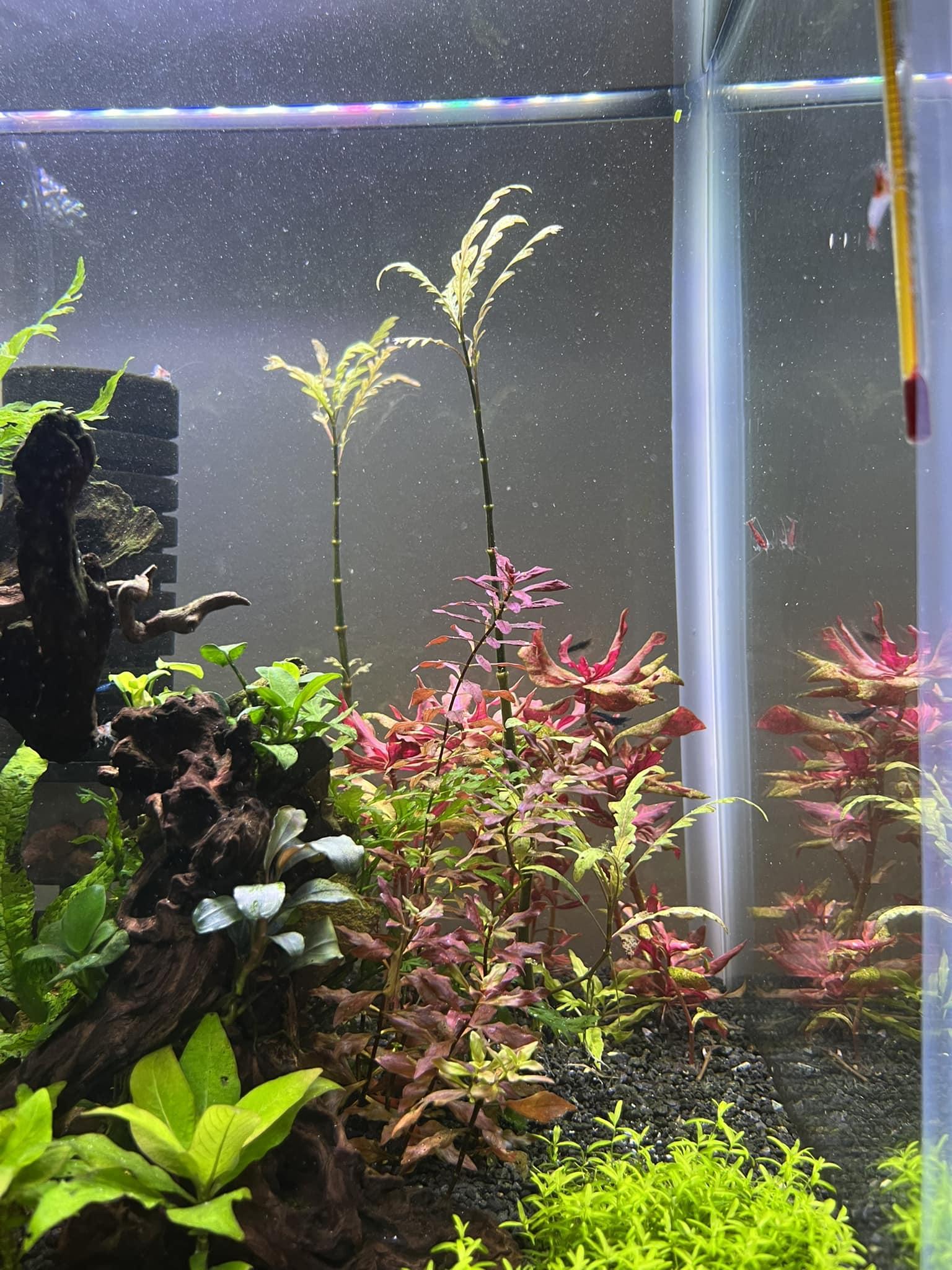
Deteriorating lower stems? This is caused by poor CO2 availability, not a lack of light.
Low tech and high tech tanks live under the same physics but play by different practical rules. Low tech tanks, with no injected CO2, are carbon-limited long before they are light-limited. Adding a very powerful light to a low tech tank mostly accelerates algae and plant stress, not growth. In these setups, you want modest PAR, shorter photoperiods and hardy plants that tolerate lower CO2: think Java fern, Anubias, Crypts and some easy stems. A simple, dimmable LED bar that delivers 20–60 µmol PAR at the substrate works perfectly.
High tech tanks with CO2 injection can safely use higher light levels, but only if CO2, fertiliser dosing, flow and plant mass are all dialled in. Here, good lighting can help you push red plants and denser growth. Start in the moderate range (60-90umols of PAR) even with CO2, then gradually increase intensity once the tank is stable and plants are clearly thriving. The glamour photos of intense, glowing high tech tanks hide a lot of rigorous maintenance behind the scenes.
Think of it this way: the more light you add, the narrower your margin for error becomes. Choose light intensity that matches your willingness to keep up with trimming, water changes and CO2 calibration.
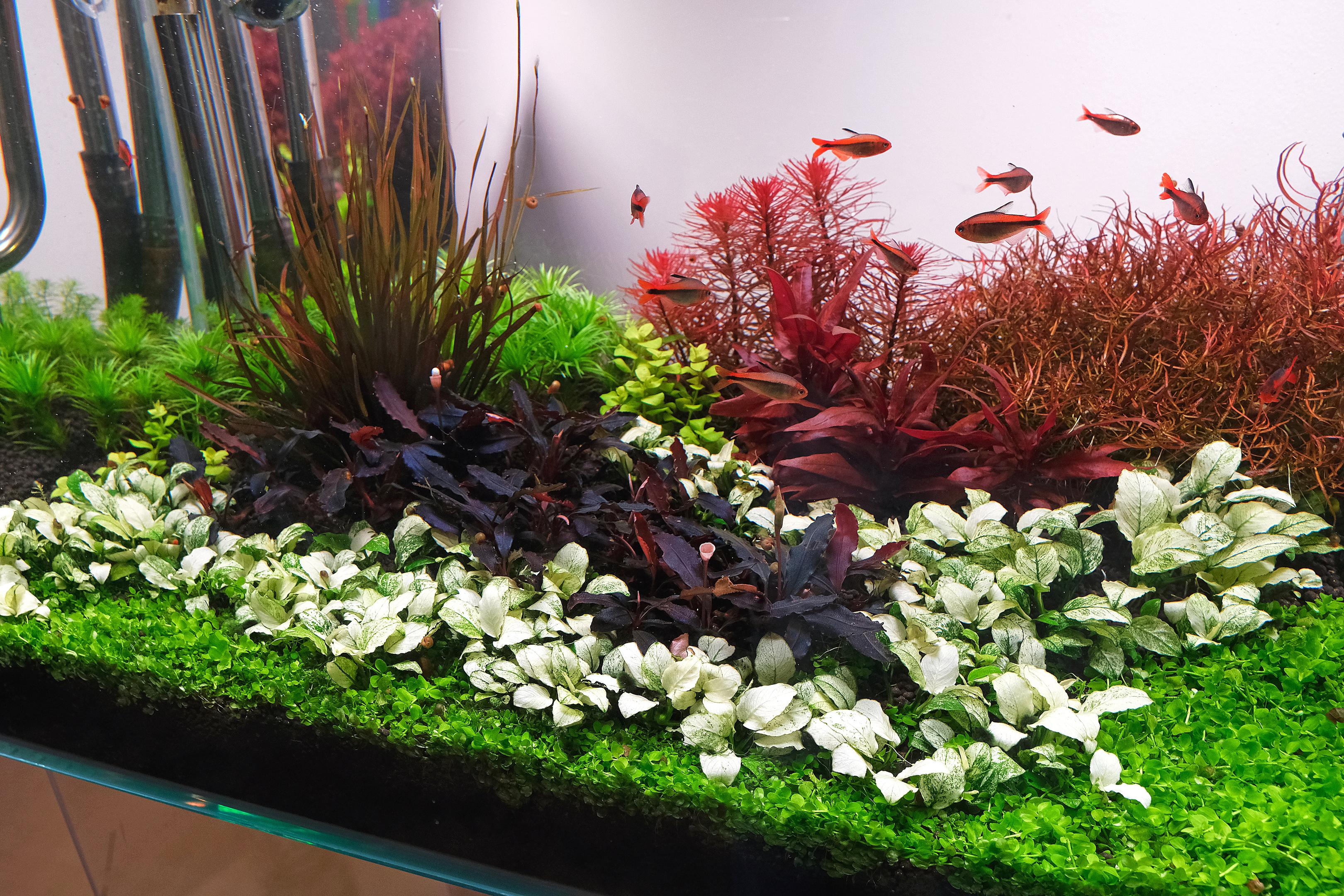
Can shade plants grow in high light (200+umols of PAR) without algae issues? Yes, but only if plant health is excellent, and maintenance is done to keep organic waste levels low.
Plan
Decide your plant list before shopping for aquarium lights. A tank of low light plants like Anubias and Cryptocoryne needs lower PAR and shorter photoperiods than a high tech stem jungle. This prevents you from overbuying light that your plants cannot safely use.
Leave the watt-per-litre myths in the past
Use PAR at substrate as your guiding metric, not watts, lumens or vague rules like “0.5 watts per litre”. Different fixtures convert watts to PAR very differently, and water depth changes everything. Aim for suitable PAR bands and adjust using dimming or mounting height.
Trim intensity, not just algae
When algae appears on slow leaves or hardscape, respond by trimming affected leaves and slightly reducing light intensity or photoperiod, not by adding more chemicals. The biological why: less light reduces the energy available to algae without starving plants if you stay in their PAR band.
Hold steady on photoperiod
Run 6–8 hours of main lighting during the early months and only extend if the tank is stable and plants are obviously thriving. Plants want consistency far more than they want endlessly tinkered timers, and shorter days give you a wider margin of error.
Choose dimmable, even coverage over flashy features
Prioritise programmable dimming, decent spread, and good build quality over gimmicks like disco-colour cycles. Dimming lets you match light intensity to your tank’s needs and ramp up slowly; even coverage prevents dark corners and burnt centres, which both lead to uneven plant health.
Every APT product we make - the liquid fertilisers, algae treatments, substrates and water care that together form a complete approach to the planted aquarium, all built on the same empirical method. If you already know what you're after, it's here. If you're not sure where to start, each product page explains exactly where it fits.