

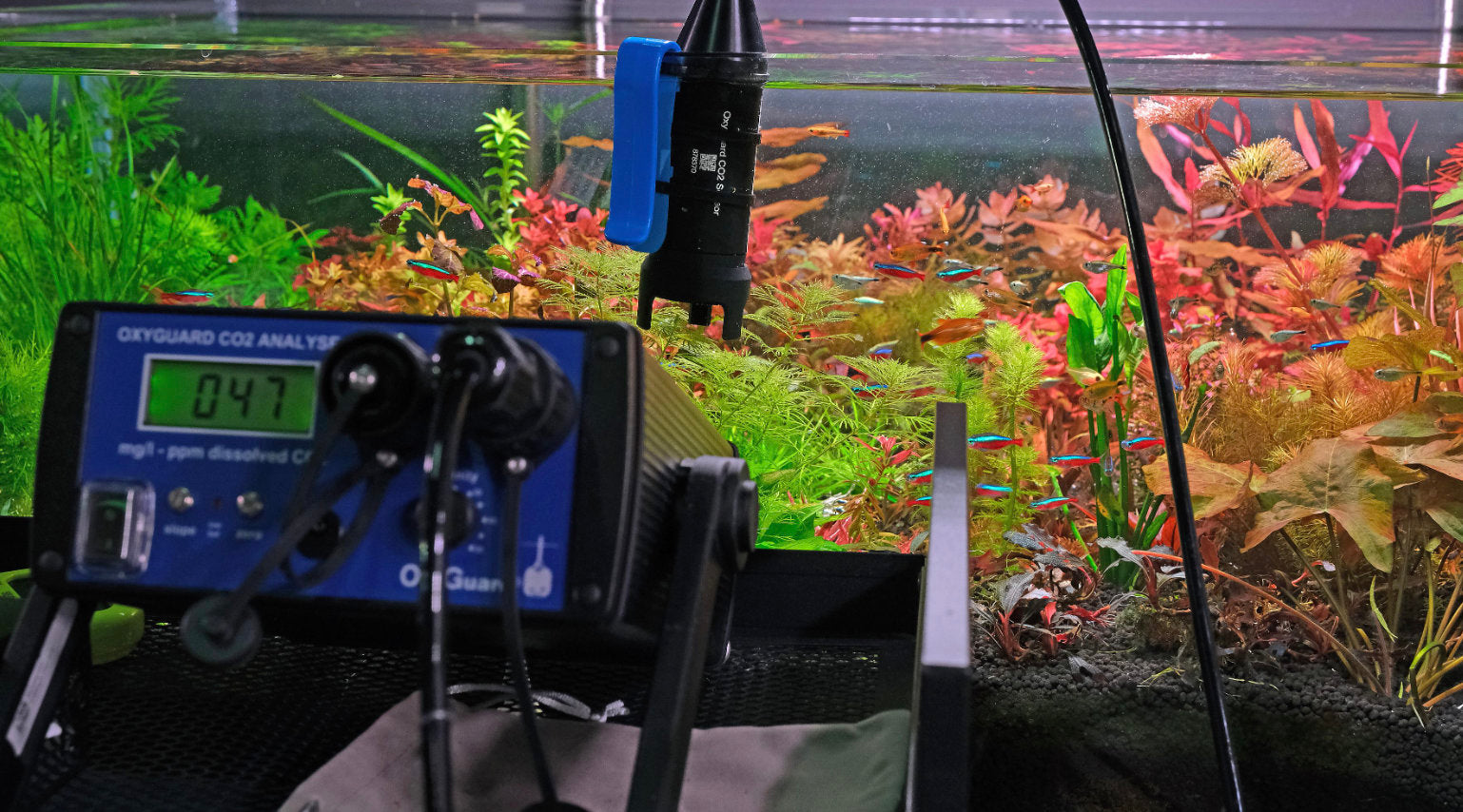
Do you need Carbon dioxide Injection to have a planted aquarium?
No – low tech planted tanks can grow a lot of aquatic plants on fish respiration and natural carbon dioxide generation alone. But if you want demanding carpets, vivid red plants and fast, dense plant growth under high lighting, then CO2 injection is the difference between “it survives” and “it looks like internet photos”. This articles examines the key impact that CO2 injection makes, and why Carbon is so critical in planted aquariums.
-
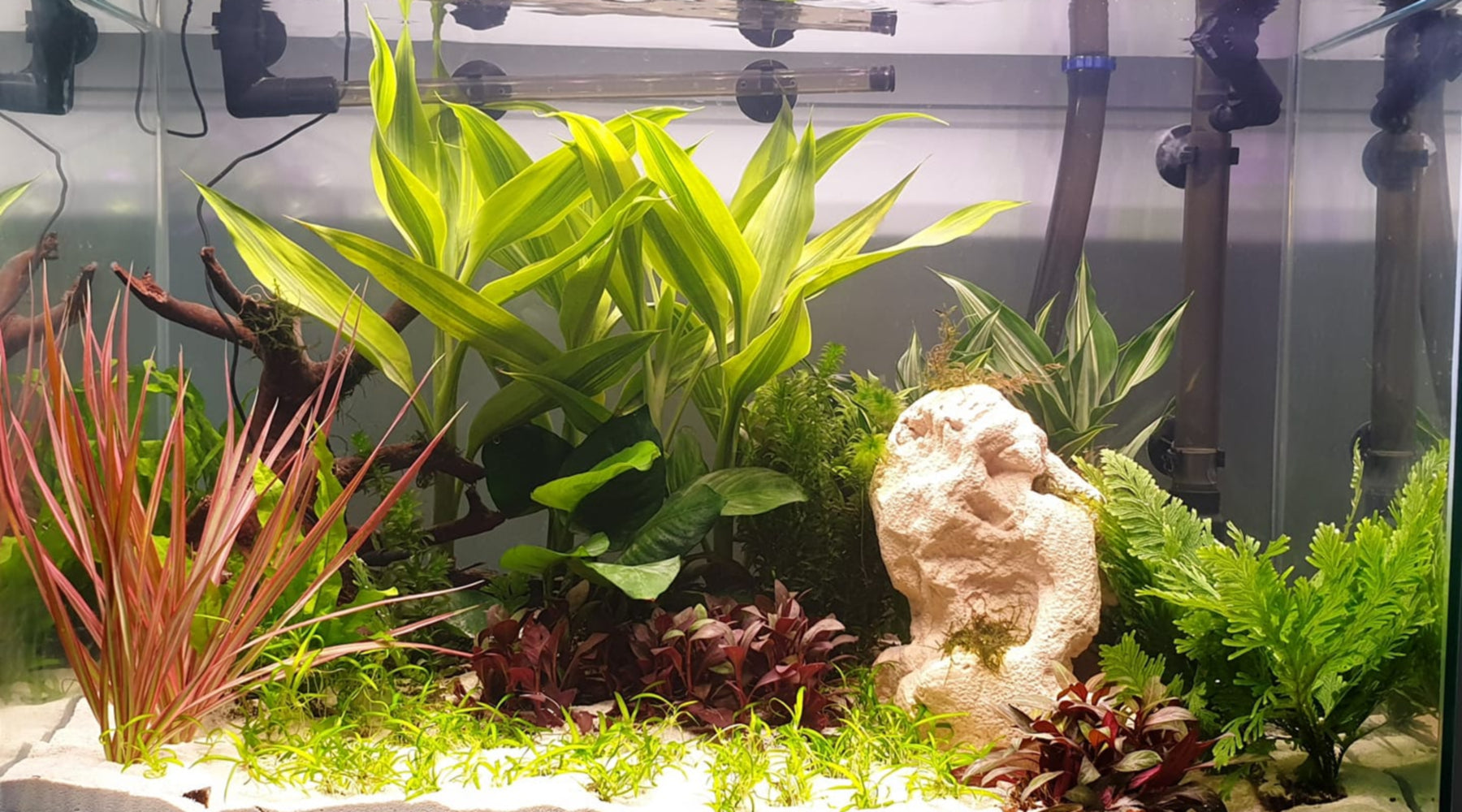
Low tech tanks: lower light, no CO2 injection, hardy plants like Java fern and Anubias, slow plant growth but simpler equipment and lower cost.
-
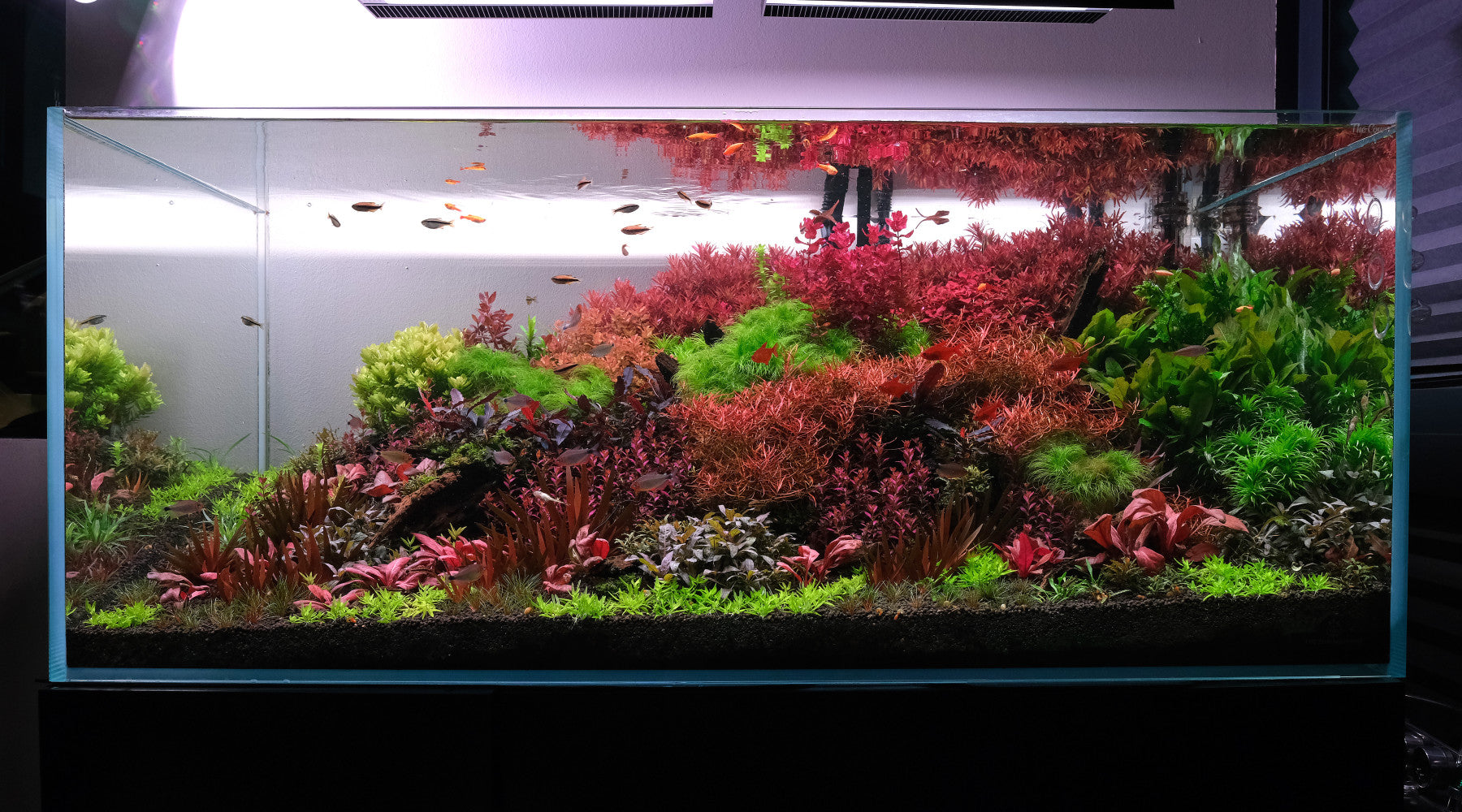
High tech planted tanks: pressurized CO2 injection, stronger light, regular fertilizer dosing, faster plant growth and more species options.
-
Natural CO2 levels in non CO2 injected aquariums often range between usually around 1–5 ppm (parts per million) of dissolved CO2 and special effort is need to increase it beyond that. Many habitats where lush aquatic plant growth is found run closer to 10–40ppm of CO2.
-
CO2 boosts photosynthesis and can increase growth 5–10×, this not only increases growth rates, but produces healthier plants, that are often larger and more colorful compared to those grown in low CO2 conditions.
-
CO2 injected aquariums often require more time to manage well, fast growing plants demands more pruning and monitoring.
-
You should choose your plants, light intensity and CO2 methods as one coherent system, not bolt‑on gadgets.
CO2 Levels in Nature
Natural environments that support thriving plant growth typically have carbon dioxide levels of 10 to 40+ ppm from organic decomposition and underground CO2 stores. In groundwater, where gas emissions are limited, CO2 saturation often accumulates to relatively high levels. This water reaches the surface as freshwater springs. At the headwaters of springs, CO2 saturation can be as high as 40-50ppm, decreasing with distance. Plant growth is densest at the headwaters, decreasing as distance from the source increases and CO2 levels decrease. Many commercially available aquatic plant species originate from areas with elevated CO2 levels.

This is Mimulus in California. The aquatic plants here grow permanently submerged all year round. The water contains about 30 ppm CO2, the source of which is a volcanic spring about 3 miles upstream. Photo credits: Tom Barr
Rainbow Springs State Park, Florida, USA. CO2 levels at this site are around 18 ppm. Massive flow coming out of this spring. Photo credits: Tom Barr

Giant springs, Montana. 25ppm of CO2 measured. Photo credits: Tom barr.
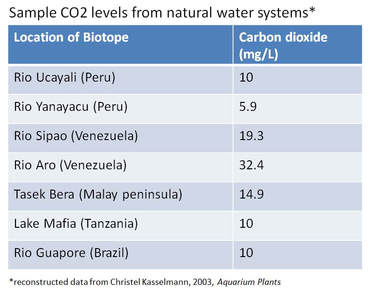
This table, reconstructed from data in Christel Kasselmann's book, gives CO2 saturation data from various other rivers from which commercial aquarium plant species are collected. The variation is significant, from 10+ppm to 30+ppm.
Can Low tech Planted Tanks Work?
If your question is “Do I need CO2 for aquarium plants to grow at all?”, the honest answer is no. Many aquarists run low tech planted tanks with no carbon dioxide gas injection, using only moderate light, a decent substrate and fish respiration plus microbial respiration as their CO2 source. In these tanks, plants grow slower, but that can actually make maintenance easier if your schedule is already fed to the brim.
CO2 levels from the atmosphere contributes very little to dissolved CO2 levels in the aquarium due to the way physics of gas solubility work. Though the atmosphere contains 400+ppm of CO2, a glass of water fully in equilibrium with atmospheric CO2 levels, will only contain 0.6ppm (parts per million )of CO2. This will be the same for an empty aquarium filled with just water.
In fish tanks, fish and microbial respiration can raise levels to between 1-5ppm (but it takes a significant fish load/thick microbial beds to reach this). Usage of soil/aquasoil substrates can push this further, through microbial decomposition of organic compounds in the substrate. Such aquariums can see CO2 saturation rates build up above 8ppm overnight. When lights turn on, carbon dioxide is quickly taken up by plants and CO2 levels drop to less than 1ppm in a few hours. Nonetheless the impact of starting the day with elevated CO2 levels is still extremely impactful for plants in a low tech aquarium.
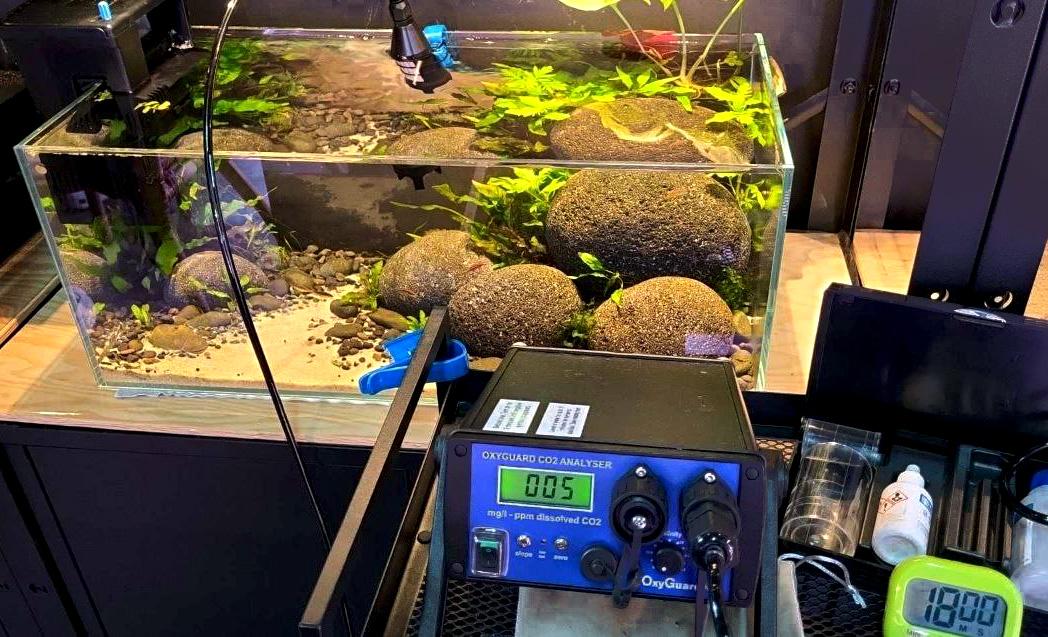
Using an Oxyguard CO2 analyzer - this low tech aquarium with aquasoil generates just 5ppm of CO2 overnight. This is sufficient to sustain easier aquatic plant species.
As plants use more carbon than all other nutrients combined, being able to generate CO2 naturally is key to success in low tech aquariums. This is why using aquasoil/soil based substrates that can generate CO2 through decomposition is such a high impact factor for low tech aquariums.
If your goals are:
-
hardy green aquatic plants,
-
simple layouts in smaller or larger aquariums,
-
minimal equipment and cost,
then you can absolutely let your plants grow without a CO2 bottle, needle valve or solenoid valve. You keep light modest, focus on species that tolerate low carbon availability (Java fern, Crypts, mosses, Anubias) and accept that plant growth will be measured in weeks and months, not days. Nutrients wise, these tanks require minimal fertilizer dosing, often just fish food, occasional liquid fertilizer and a decent substrate.
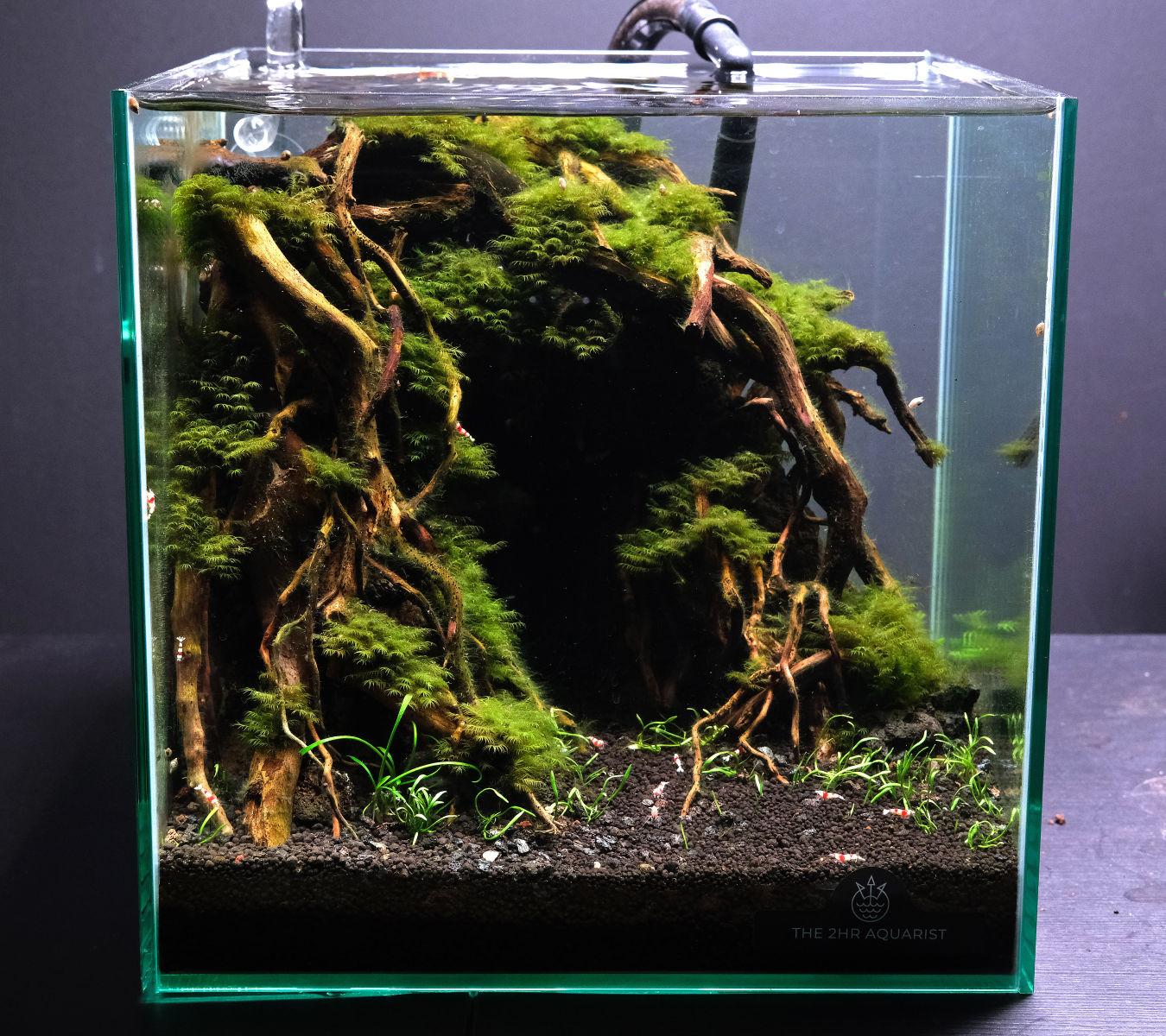
Low tech aquariums can use intricate hardscape work to do most of the heavy lifting. Mosses and other easy plants work well in such setups and have high success rates in low tech environments.
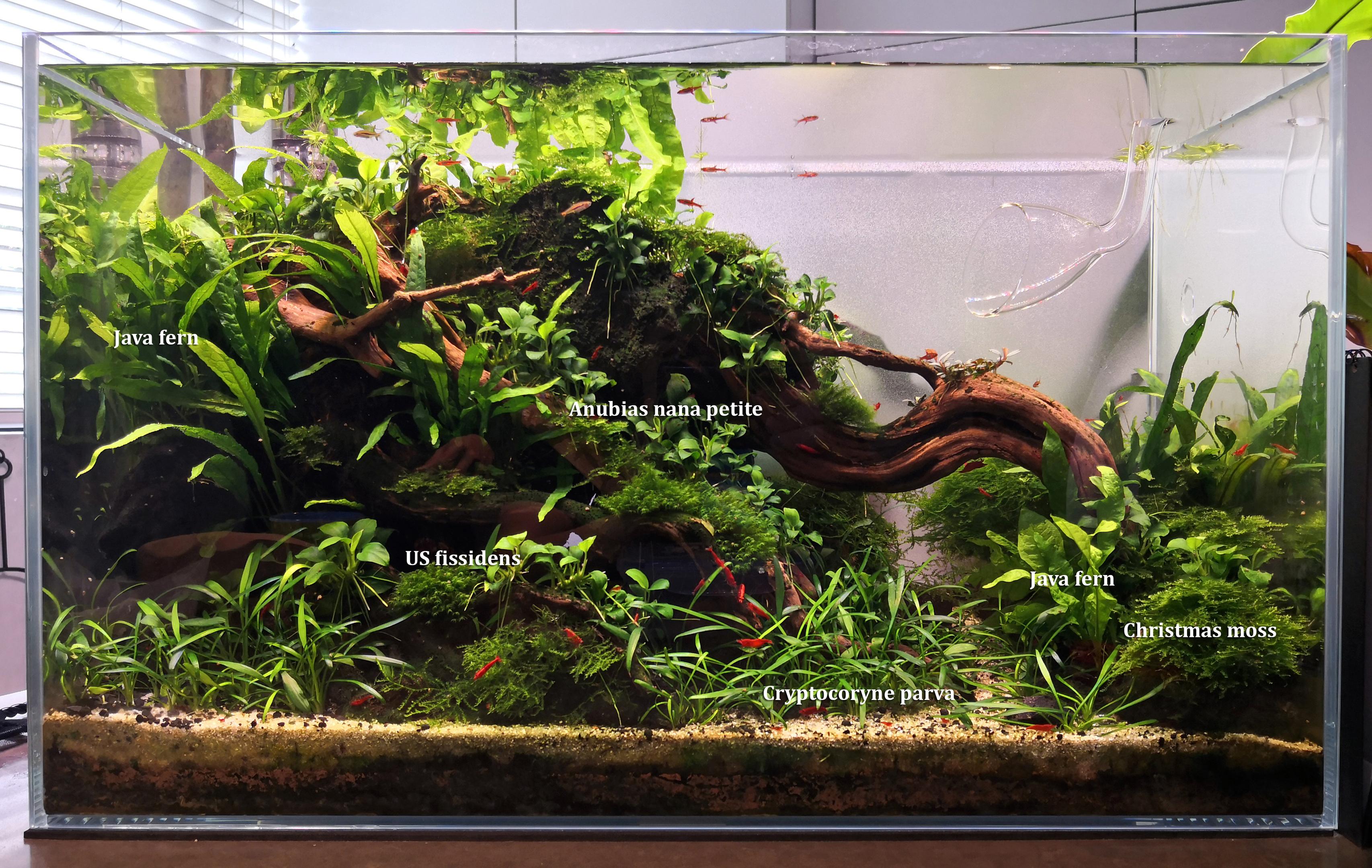
This low tech aquarium uses soil beneath a sand cap to generate CO2 naturally through decomposition.
How does CO2 Gas Actually Help Pants grow in a Planted Aquarium?
Carbon dioxide (CO2) is not a magic potion; it is the main carbon feedstock for photosynthesis. In a planted aquarium, aquatic plants use light energy to convert carbon dioxide, water and nutrients into sugars. Those sugars fuel plant metabolism and allows the plant to channel energy to producing new leaves, stems, roots, colour – the whole show. Carbon makes up roughly half of the plant’s dry mass, more than all the other macro nutrients combined.
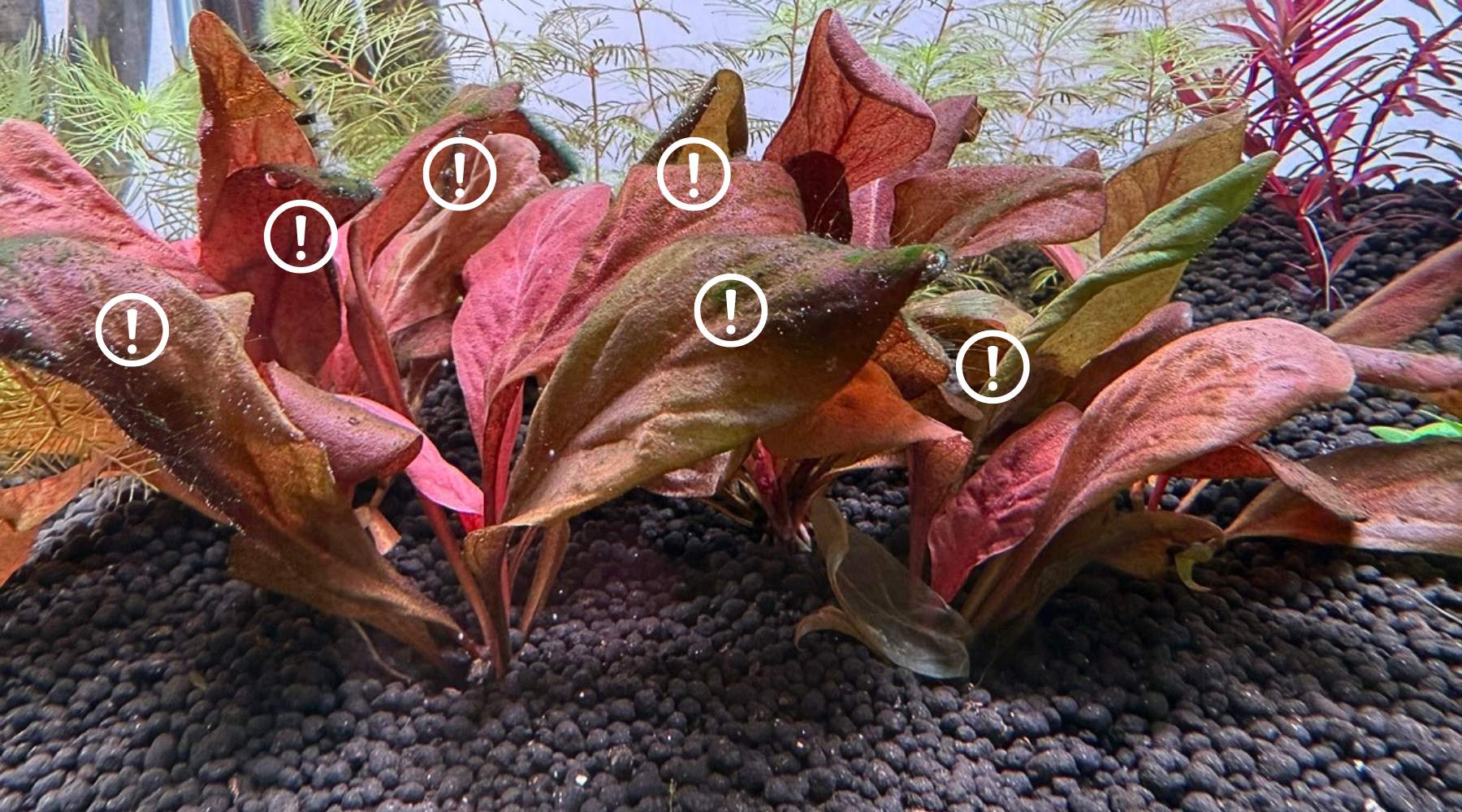
When carbon dioxide is scarce, plants hit a hard ceiling: more fertilizer and more light do not fix the bottleneck. Under weak CO2 supply, you see:
-
Thin stems and smaller new leaves.
-
Carpets that grow up instead of creeping.
-
Bare lower portions of stems as plants cannot produce enough energy to maintain older leaves.
-
More faded coloration and lower leaf density.
-
Increased vulnerability to algae as plants might not have sufficient energy to produce chemical defenses.
Injecting CO2 gas into aquarium water lifts that ceiling. Once you have a constant supply in the 15–30 ppm range during the light period, plants can:
-
Produce larger leaves and denser growth, longer persistence of older leaves.
-
Form low, compact bushes or carpets.
-
Show better colour, particularly in red and purple species.
-
Have higher resistance to algae, as healthy plants produce defensive chemicals on their leaves to deter algae attachment.
This is why high tech tanks with pressurized CO2, good flow and strong light can see plant growth rates 5–10 times higher than low tech systems. CO2 not only brings faster growth, but improves the overall health of plants. It also allows plants to grow with much higher density and coloration, which gives the aquarium an unmistakable "high tech" planted tank look.
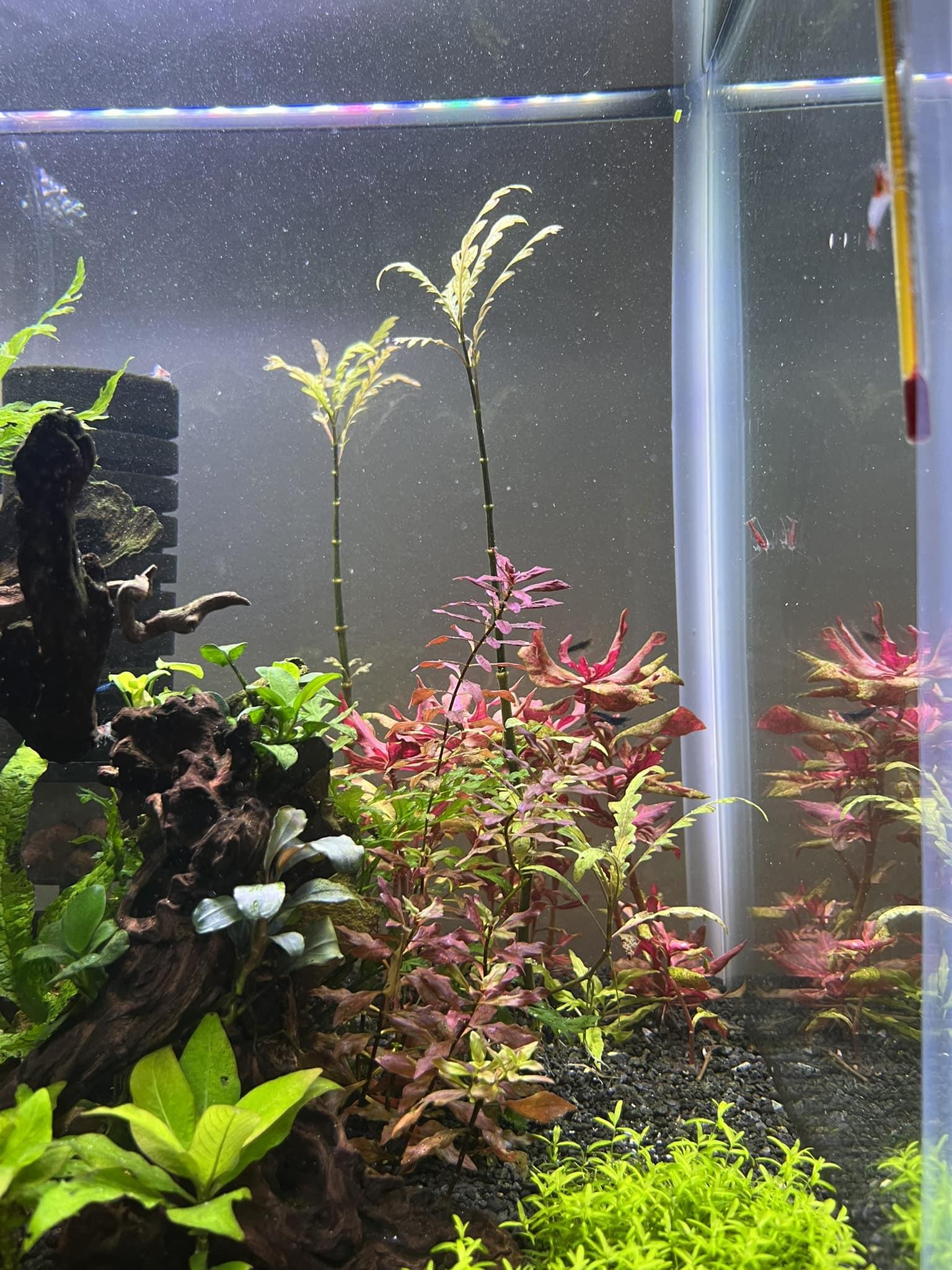
(Above) Bare lower stems in low tech aquariums are almost always caused by a lack of CO2, not a lack of light.
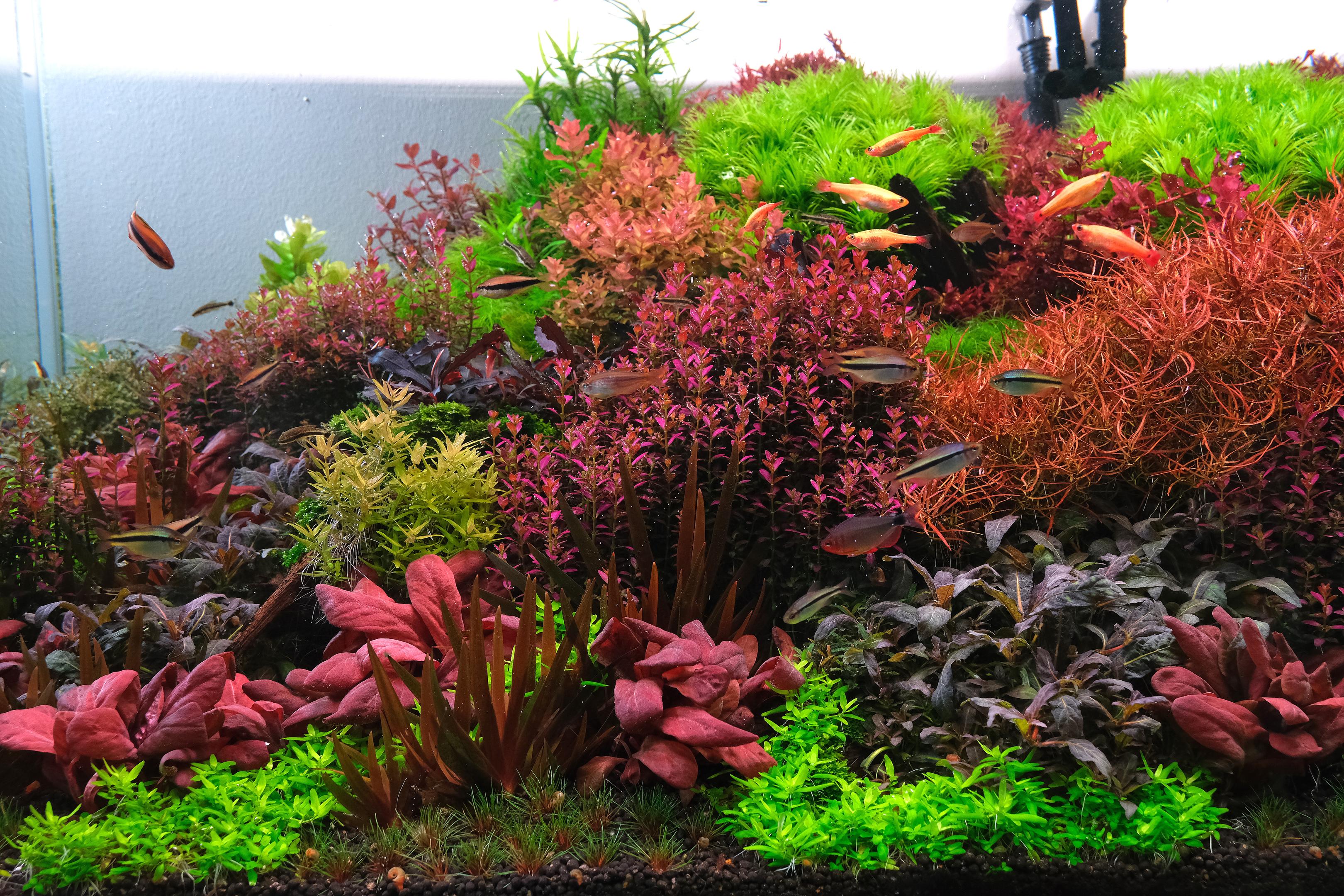
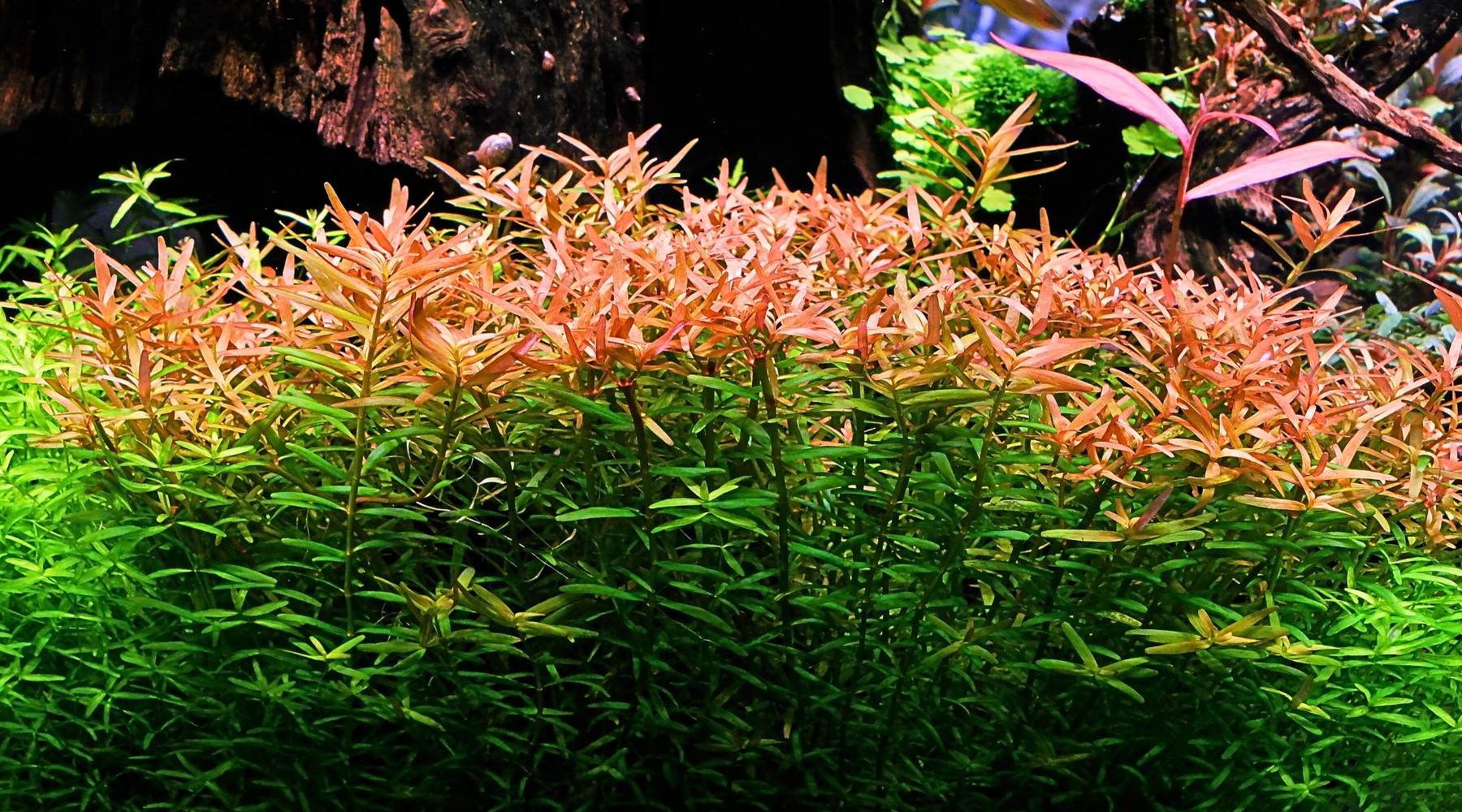
Optimal CO2 levels also induce profuse branching in stem plants, which allows higher density bushes and allows bushes to be shaped and landscaped.
What are the Other Differences Between Low Tech Tanks and High Tech Tanks?
Low tech planted tanks:
-
Lighting: low to moderate intensity, stock fixtures will often suffice to grow easier plants.
-
CO2 comes from fish respiration and organic breakdown in the substrate. CO2 levels vary very significantly from tank to tank as it is dependent on microbial decomposition.
-
Nutrients: minimal fertilizer dosing, often just fish food, occasional liquid fertilizer and a decent substrate.
-
Plants: hardy species that tolerate low CO2 and lower light – think Java fern, Anubias, Crypts, mosses, easy stems, and some forgiving carpets like Monte Carlo or hairgrass. Success rates with plants vary hugely across tanks due to differences in natural CO2 generation efficacy.
-
Maintenance: slower plant growth, less trimming, fewer adjustments, lower equipment cost.
-
Algae: Plants weakened by poor Carbon access can attract algae. Slower growth parameters as a whole mean that algae issues occur and dissipate more slowly.
High tech planted aquariums:
-
Lighting: low to high intensity. A CO2 injected aquarium does not need high light for plants to make use of the increased CO2 levels, but such aquariums can make full use of more powerful lights.
-
CO2 comes from mixing CO2 gas directly into aquarium water. This can give high, consistent CO2 saturation rates, ranging from 15-50ppm depending on the plant species grown.
-
Nutrients: regular dosing of liquid fertilizer in the water column and usually a nutrient‑rich substrate to match the higher growth rate of plants.
-
Plants: almost any aquatic plant you see online, including delicate carpeting plants and more exotic species can be grown. Stronger coloration and denser growth due to carbon availability.
-
Maintenance: plants grow quickly and need frequent trimming, parameters need more monitoring and higher equipment cost.
-
Algae: Plants stressed by fluctuating growth parameters attract algae. Algae issues can explode in a dramatic fashion in aquariums with high growth parameters.
High lighting without CO2 basically creates an environment at higher risk of algae. While this pairing is used by some advanced aquarists for growing more difficult species in low tech tanks, it only works well when the low tech system is designed to have a strong capacity for natural CO2 generation.
On the opposite end, low light paired with CO2 injection is a very common combination used for Iwagumi and Nature Style layouts. Carpeting plants and many slower growing species used in Nature Style layouts do not require high light levels to grow well when CO2 is ample.
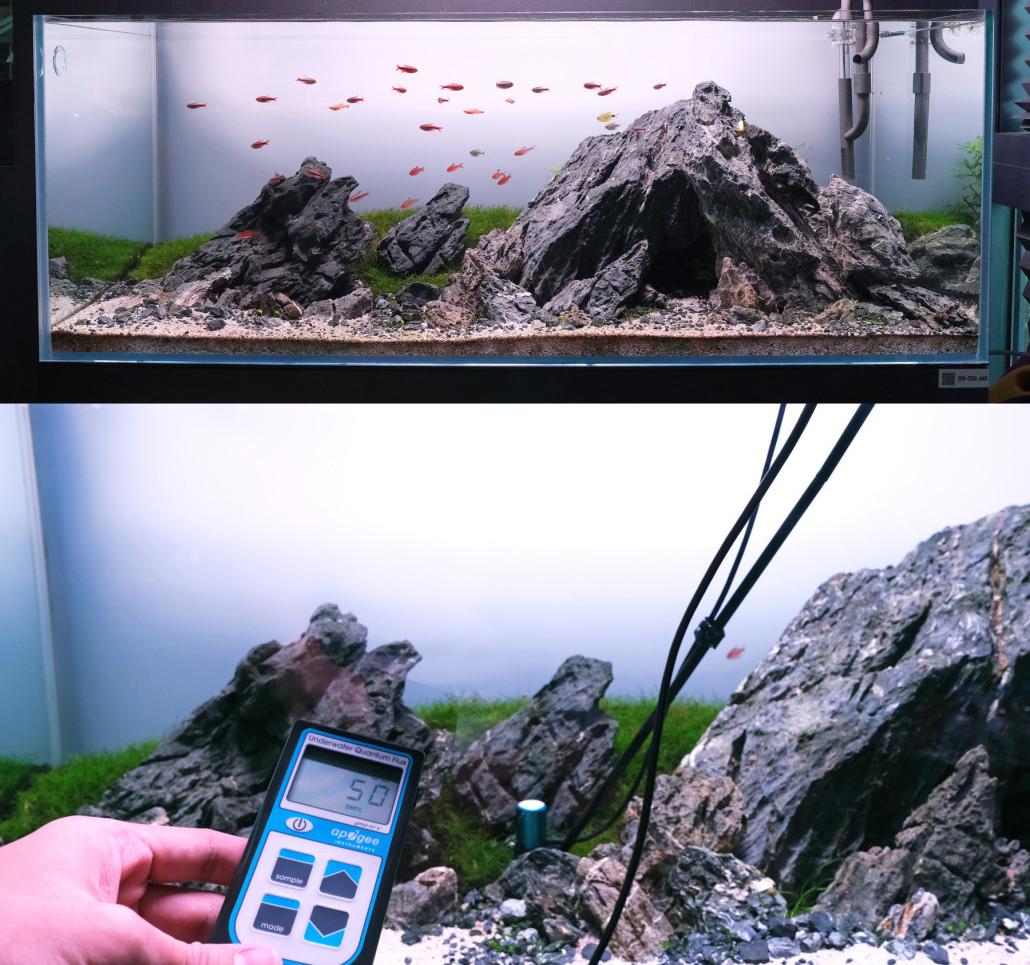
Contrary to popular belief, carpeting plants do not need high light levels to grow well when CO2 levels are optimized. Using lower light levels in Iwagumi aquariums keep the hardscape clean of algae. Substrate PAR in this Iwagumi layout measures just 50umols.
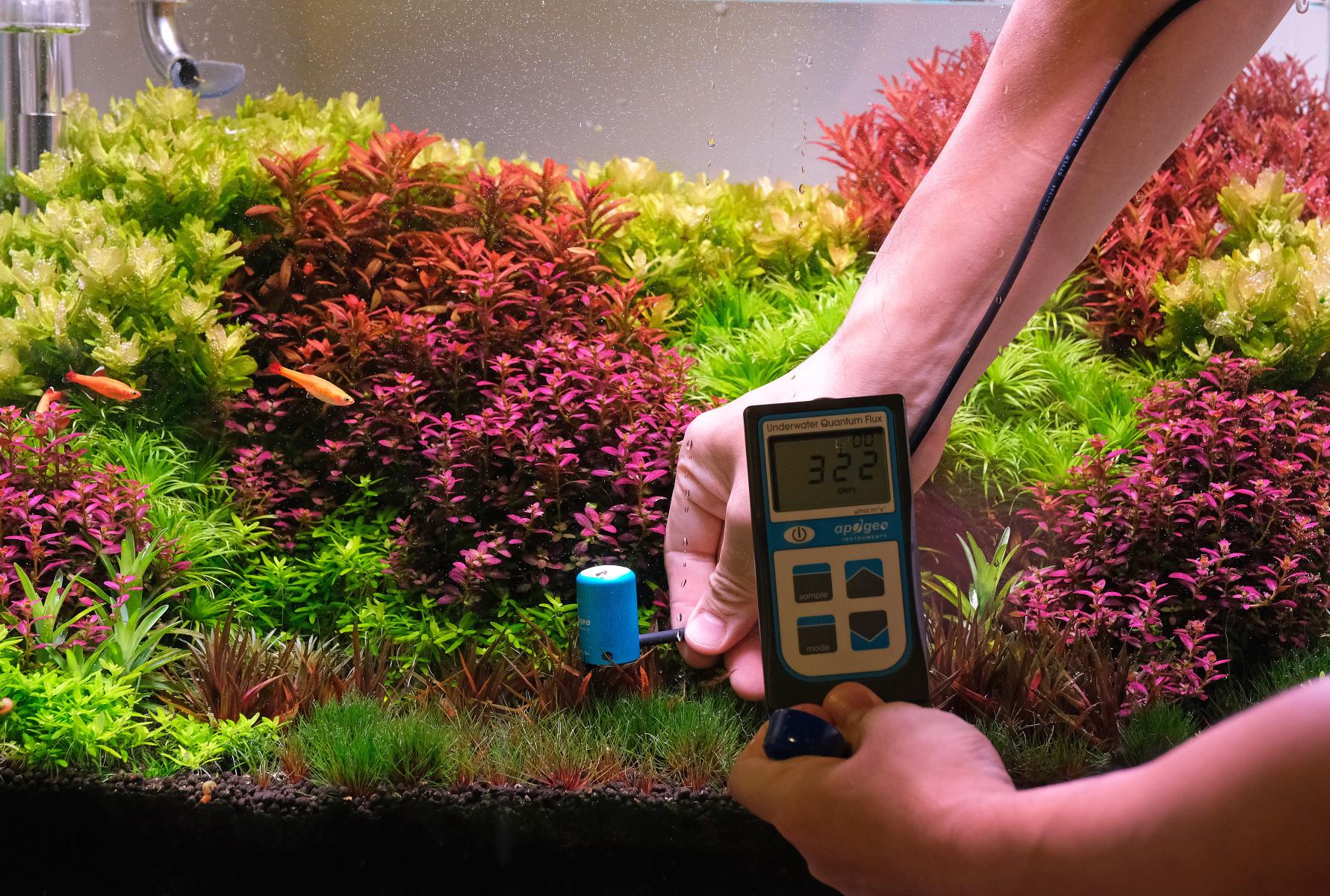
Very high light levels can be used in CO2 injected aquariums to create denser plant layouts and propagate more demanding plant species. Substrate PAR in this aquarium measures in at 300+umols.
Decide what kind of planted tank you actually want to live with week after week, then choose your CO2 strategy to fit that – not the other way around.
What are the Main CO2 Methods: Pressurized, DIY, Liquid Carbon and Which is Suitable?
-
Pressurized CO2 injection (high tech standard)
-
Uses a metal cylinder of CO2 gas, a regulator with a main valve and needle valve to release CO2 gas slowly into a diffuser or reactor.
-
A bubble counter allows one to check that CO2 is flowing and the needle valve allows one to adjust CO2 injection rates accurately.
-
The diffuser or reactor is a porous medium or device in the aquarium that breaks CO2 into fine bubbles and increases contact with water so more CO2 gas dissolves.
-
A solenoid valve, synced to your light timer, ensures CO2 flows only when the lights are on and shuts off at night, when plants respire and consume oxygen.
-
This method is precise, stable and effective, but comes at a higher initial cost.
Good for: Unlocking unlimited plant choices and aquascape styles.
Less good for: People allergic to initial equipment costs and tinkering with mechanical stuff. -
-
DIY biologically produced CO2 (yeast and sugar)
-
A plastic vessel is filled with warm water, sugar and yeast (or citric acid with baking soda), then connected via tubing to a simple diffuser or ladder.
-
Yeast fermentation process produces CO2 bubbles as it consumes sugar, feeding gas into the aquarium.
-
Output starts strong and then slowly turns weaker as sugar is used up; mixes typically last 15–30 days before needing replacement, depending on various parameters such as temperature and mixture composition.
Good for: Smaller tanks and giving CO2 a test run to see what it can deliver.
Less good for: precise control, larger aquariums, or high light tanks where stable CO2 is critical. -
-
Liquid carbon sources (“liquid CO2”)
-
These products are organic carbon sources dosed daily into the aquarium water; they are not gaseous carbon dioxide.
-
They seem to marginally boost plant growth and sometimes suppress certain algae species, but they do not raise CO2 concentration like gas injection.
-
The chemical make-up of such "liquid carbon" products is mildly toxic and has questionable impact on livestock, aquarium environment and users.
-
Costs more than gas CO2 injection in the long run.
Good for: Low tech planted tanks that want a small boost without pressurized equipment.
Less good for: Anyone expecting similar outcomes to actual CO2 injection. -
If you want compact, demanding plants in a high‑lighting planted tank, pressurized CO2 is the way to go.

Is a Drop Checker Accurate Enough to Monitor CO2 in a Planted Aquarium?
Here is where a lot of myths live.
When you inject carbon dioxide into aquarium water, some of it reacts with water to form a weak carbonic acid. This naturally lowers pH a bit, which is what happens in nature as well. The mistake is thinking “lower pH = unsafe” by default. The real safety issue is how much CO2 and how much oxygen is in the aquarium water.
Key control points:
-
Timing: CO2 should be on only during the light period. Plants produce oxygen and consume CO2 in the day, then switch to respiration at night, consuming oxygen and releasing CO2. Most aquariums spend more time with lights off than on. Use a solenoid valve linked to your light timer so bubbles start an hour or two before lights on, and shut off just before lights out.
-
Surface agitation and flow: Good surface agitation (from a filter outlet or air pump at night) helps maintain oxygen levels and prevents CO2 from building to dangerous levels. Flow inside the tank helps distribute CO2‑rich water so all plants get access and pockets of low oxygen do not form.
-
Safe level: Most planted tanks do well at roughly 20–30 ppm during the light window. Too little, and plants starve; too much, and fish start to show stress – heavy breathing, hanging at the surface, or hiding. Monitoring fish behaviour is as important as watching your bubble counter. Most smaller fish are actually quite resilient with regards to CO2 levels, and start showing stress closer to 60ppm of CO2. This gives plenty of room for error in CO2 optimization.
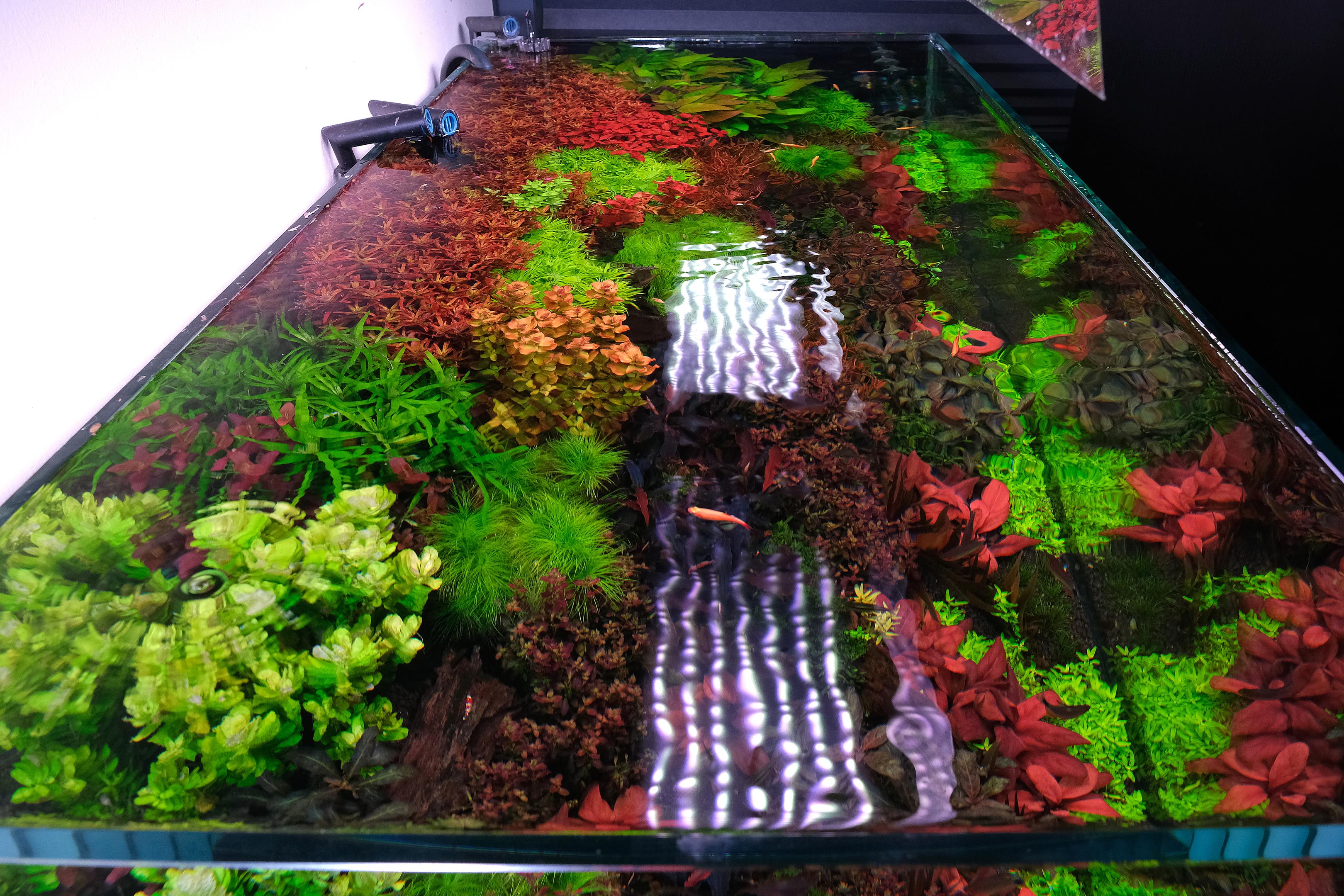
A clean water surface, and sufficient water turn over in the aquarium ensures that CO2 levels do not build up to excessive levels.
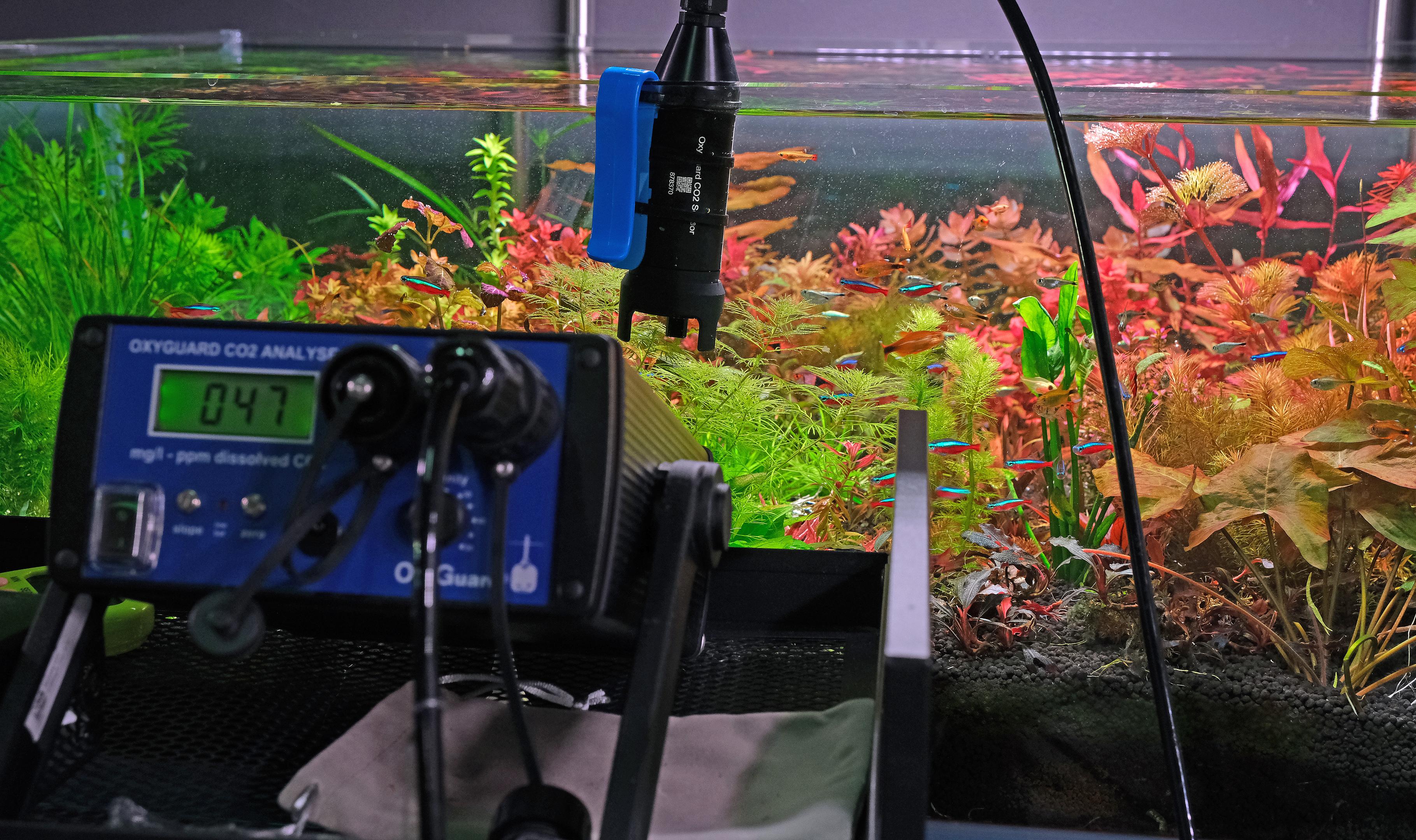
CO2 levels in this aquarium average at the 50ppm range. Higher CO2 levels benefit certain specially demanding plant species. However, the large majority of aquarium plants will do well in the 20-30ppm range.
On monitoring tools:
-
Drop checker: Many aquarists like the glass drop checker filled with indicator solution that shifts from blue to green to yellow depending on CO2 concentration in the chamber. The problem is that drop checkers do not require much CO2 saturation to turn green. Standard 4dKH drop checker solutions turn green in as little as 14ppm of CO2, not 30ppm. It is a useful visual “is there at least some CO2?” indicator, but does not work well for folks targeting higher saturation rates. Colour perception and response lag also means it is not a precision meter. Drop checker color changes have a lag time of around 45 mins to 1 hour.
-
pH‑based monitoring: A more precise approach is to measure the pH of your aquarium water when fully degassed (no extra CO2) and then measure pH when CO2 has been running for a few hours. A drop of about 1.0 pH unit usually indicates a rise from low single‑digit ppm to the ~30 ppm zone in many tanks. A simple pH pen and a glass of tank water left to degas (or stirred in air) are often more reliable than staring at the exact shade of green in a drop checker.
Critical myth to kill: “Using a drop checker is a precise way to measure CO2” The truth is uglier. A drop checker is easy but blunt and slow. pH methods can be very accurate if you understand degassing and do them correctly. Neither method is plug‑and‑play if you ignore water chemistry, surface gas exchange and fish feedback.


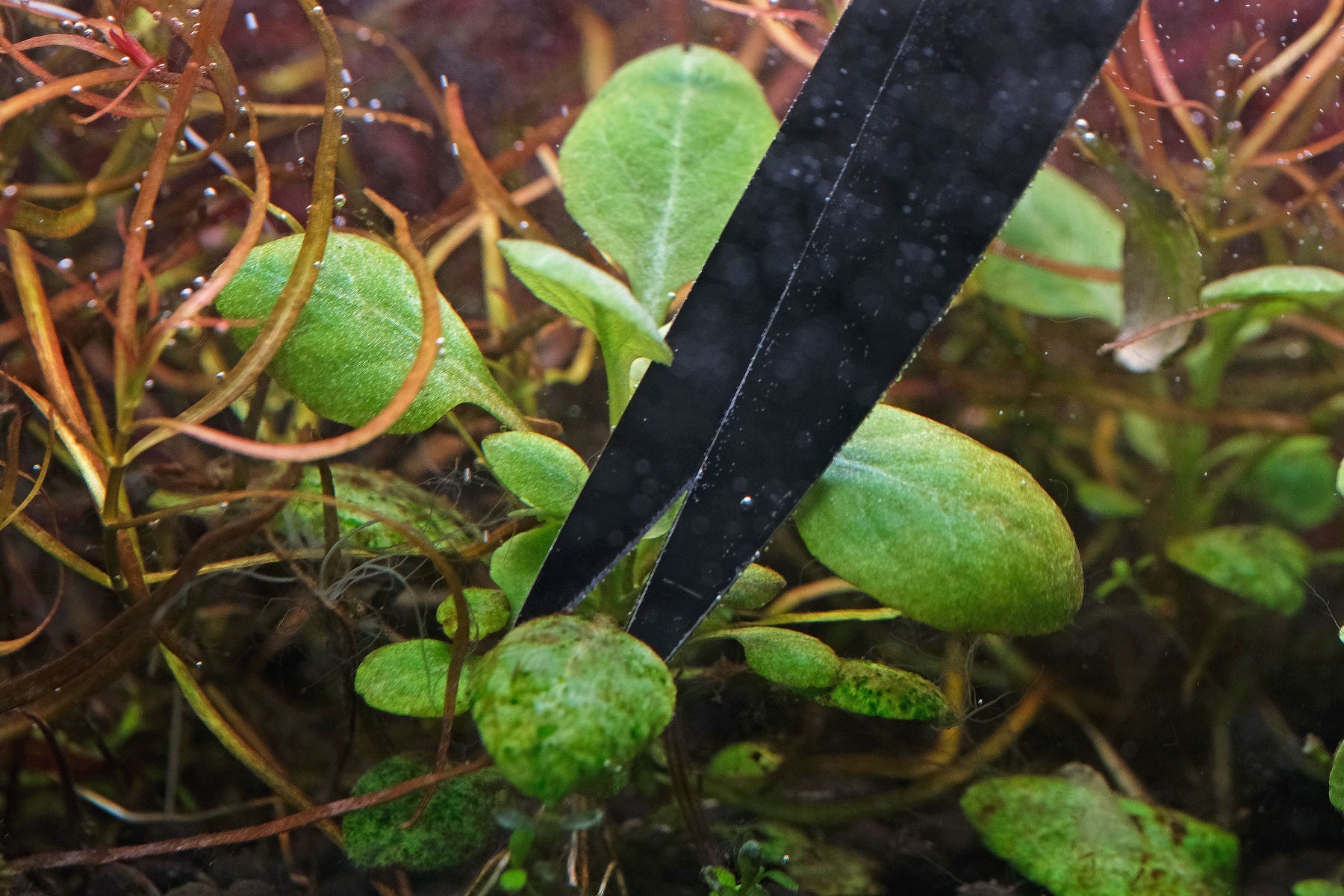
Color perception is a huge issue with using drop checkers.









Share:
Freshwater Aquarium Algae: How to Identify Types, Find the Cause, and Fix It
Your First Planted Tank Setup: Substrate, Lighting, Filtration and Plants