Your Cart is Empty


Diatoms, often called brown algae, form that yellow-brown dusty film on tank walls, plant leaves and substrate in a newly set or recently set fish tank, usually within the first 2 to 3 weeks. In a freshwater aquarium this diatom growth is not a sign of poisoned tap water, dirty city water or too much silicates; it is a normal stage of tank cycling that fades as beneficial bacteria, plants and other algivorous microbes establish. This article will describe what causes Diatoms to bloom in planted aquariums, and how aquarists can manage such blooms.
Quick answer:
Diatoms are single‑celled algae with glass-like silica cell walls, they show up as a dusty brown layer on glass, rocks and plant leaves in a new aquarium.
Diatoms feed on light, dissolved nutrients and silicates. Strong light, high ammonia and phosphate levels accelerate their propagation in new aquariums.
Diatoms are basic food for algivorous bacteria and microbes. In matured planted aquariums, beneficial microbes keep diatom populations in check, even in aquariums where nutrient and light levels are high.
In a newly set up aquarium, diatoms typically reach visible mass in about 2 to 3 weeks and disappear on their own within a few weeks as the algivorous microbial populations develop.
To reduce diatom spawn rates: Keep nutrient levels low during the first few weeks. Keep light levels low/moderate during the first few weeks. Start slow and give the microbial community time to develop.
To get rid of brown diatoms faster: Accelerate tank maturity by transfer mulm/filter media from another matured aquarium. Manually remove diatoms through large water changes. Speed up plant dominance by adding more plants.
Algae eaters like Otocinclus catfish, Amano shrimp and nerite snails will happily eat brown algae, but should only be added once the tank is stable, not as a shortcut for an immature system.

High light coupled with high nutrient levels can cause spectacular diatom blooms in new aquariums where algivorous microbial communities are not yet present to keep them in check. Photo from Nate B.
Diatoms are single-celled algae with glass-like cell walls made of silica that serve as foundational primary producers in global aquatic ecosystems. Diatoms are a crucial part of aquatic food webs, providing energy-rich long-chain fatty acids that serve as food for various organisms, from zooplankton to fish. Their rigid silica-based shells and unique metabolism give them extreme energy efficiency and a fast asexual reproduction cycle. Diatoms are classified into two geometries: centric (radially symmetrical) and pennate (bilaterally symmetrical). Diatoms multiply primarily through binary fission (asexual division), which can occur as quickly as once every 24 hours under optimal conditions of light and nutrient availability.
In nature, marine diatoms and freshwater diatoms together contribute a huge amount to global carbon fixation and oxygen generation: Diatoms produce 20-30% of the air we breathe by converting carbon dioxide into organic carbon and releasing oxygen through photosynthesis.
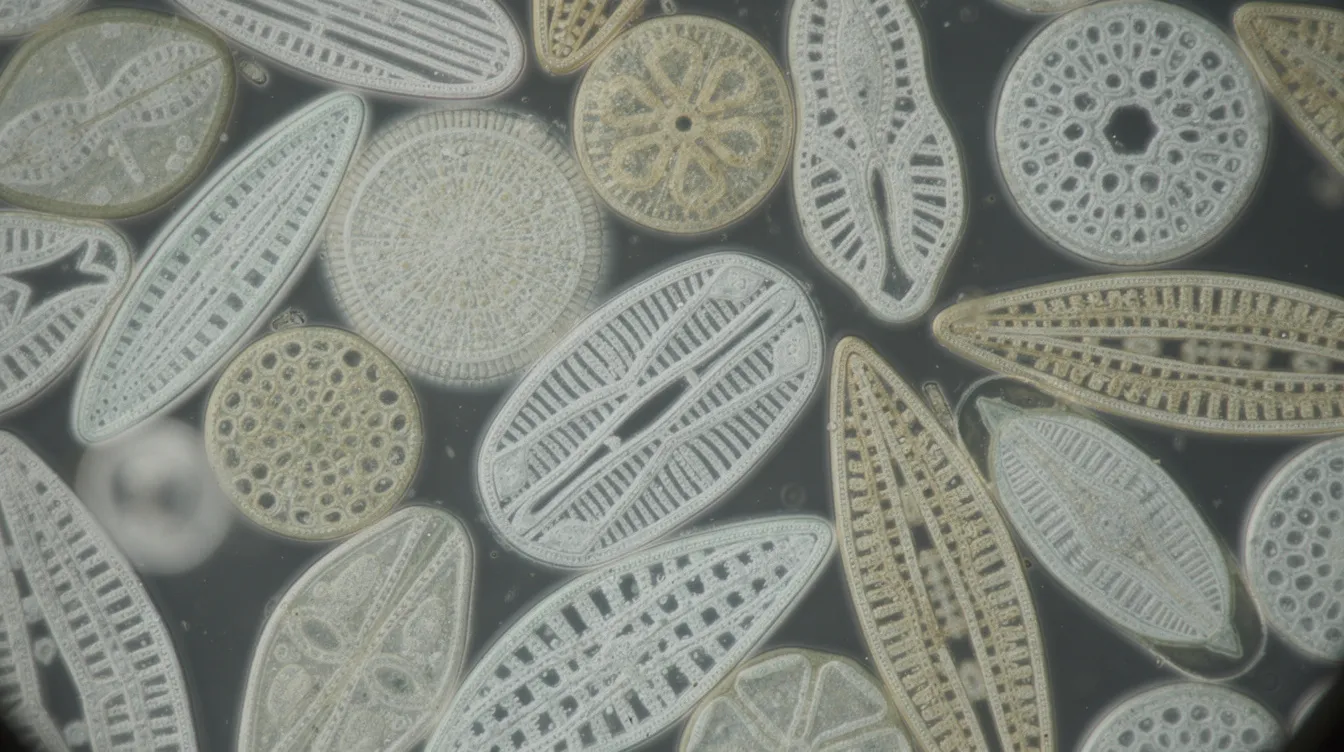
When diatoms die, their heavy glass shells sink to the ocean floor, insulating carbon for long periods and contributing to the global carbon cycle. Diatoms fossilize into sediment known as diatomaceous earth, which can be studied to reconstruct historical climate changes. Diatoms are vital tools for water quality monitoring due to their sensitivity to changes in nutrients, temperature, and salinity.
Picture this: you set up a beautiful new aquarium, fresh substrate, fresh glass, maybe reverse osmosis water carefully remineralised because the internet told you city water is evil. For a few days the tank walls look pristine. Then, as if someone sprayed cinnamon powder, brown algae layers creep over the glass and every slow plant leaf. The new tank smell has barely faded and it already looks like an abandoned fish shop. You are left wondering, why is the aquarium hobby so difficult.
This is not the tank “going wrong”; it is the tank announcing that the ecosystem is still under construction. Diatom algae are simply the first algae species to exploit bare territory in a recently set tank, racing ahead of green algae, biofilm and higher plants. Diatoms cells form quickly on any surface because they can double their biomass in roughly a day when conditions are favorable. A diatom bloom in a new tank is far more about tank maturity and microbiology life cycles than about a single bad parameter.
The core mechanism in a new aquarium is not “too much silicates” or “dirty tap water”. Online advice often frames brown diatoms as proof that you must switch to reverse osmosis water to remove silicates or that your city water is unusable without a silicate-removal resin. In practice, both low‑silicate and high‑silicate tap water tanks develop diatom growth in the first few weeks, as silicates are rarely the limiting factor in diatom growth in aquariums as they are one of the most common minerals in the world and are present in most tap water and substrates. You have silicates, I have silicates, everyone's tank has silicates.
In a newly set up tank it is often the availability of phosphates, ammonia and coupled with high light levels that accelerate diatom growth. Silicate levels alone does not dictate diatom growth.
In freshly planted aquariums, plants going through adaptation stress eject waste metabolites and ammonia directly from their leaf surfaces. This causes diatoms to attach to plants, forming a thin brown film. As plants adapt and produce healthy new leaves that contain defensive chemicals to deter algae growth, diatoms will be denied attachment sites.
In matured aquariums the population of algivorous bacteria and microbes have propagated to a degree that keeps diatom populations in check. These beneficial microbes operate invisibly in the background, and seldom get credit for their work. These microbes multiply slower than diatoms in new aquariums, so diatoms bloom in that gap.
This are the reasons why diatom blooms happen in most new aquariums, and why it often fades away by itself with time as the planted aquariums mature.
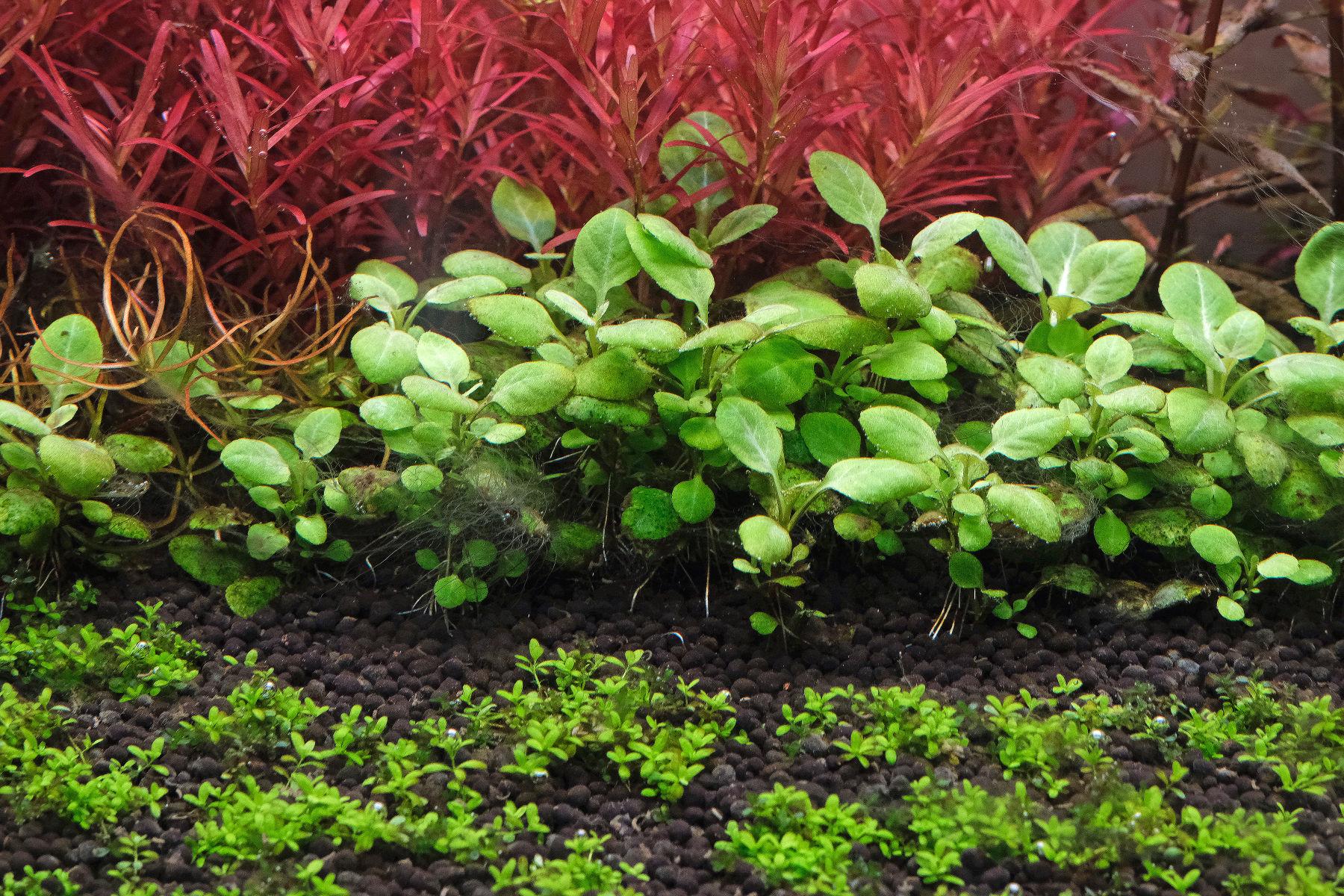
Diatoms attach to older leaves of the plant, while healthy new leaves are algae resistant. Just because plants are growing does not mean that they are not under going stress and shedding older leaves.
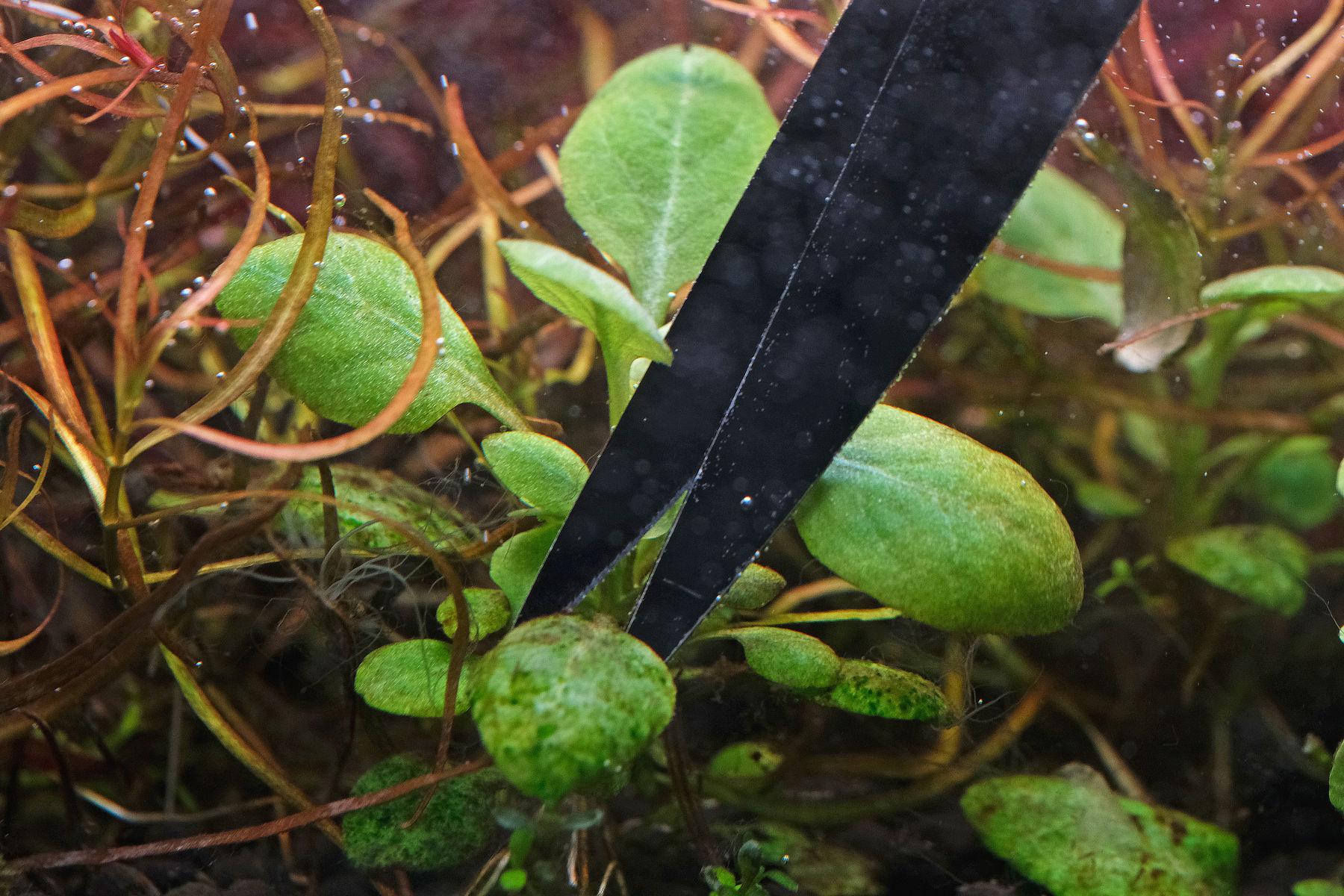
Removal of deteriorating older leaves allow new algae resistant leaves to populate the tank.
Seed the tank with microbes Reuse old filter media, a squeeze of mature sponge or a small handful of mulm from a stable aquarium into the filter or onto the new substrate. This jump‑starts the beneficial microbial population.
Run low/moderate light, not a solar flare Keep the photoperiod at 6 to 7 hours for the first few weeks, with sensible intensity rather than blasting the tank. High light plus an immature plant and bacterial community just accelerates algae growth without helping plants. You can always raise light levels later.
Keep nutrient levels low in a new planted aquariumPlant uptake rates for new planted aquariums is low. Having some nutrients in the water column help plant grow and settle in. Excessive levels accelerate algae blooms beyond control. When plants start gaining growth momentum, you can add more nutrients. Doing things slowly at the start allows faster results in the long run by avoiding algae blooms.
Perform large regular water changes and siphon away detritus Large water changes remove algae spores, excess nutrients, organic waste and other trigger factors. It is also a chance to manually siphon away clumps of diatoms and clear the way for plant growth. Beneficial microbes attach mostly to surfaces, and large water changes do not slow down tank maturity.
Add more plants Healthy plants create an algae resistance tank environment. More plants also mean stronger nutrient uptake from the water column, more oxygen production and more root exudates feeding the right microbial partners, so there are fewer unused nutrients for diatoms to feed on and fewer empty surfaces for them to form heavy brown algae layers.
Remove deteriorating older growth on plantsDeteriorating older leaves attract algae. Consistently removing deteriorating growth that attracts algae to make space for new growth is key to shift the aquarium environment to one that is plant dominant.
Leave the chemistry panic at the door Avoid knee‑jerk switches to reverse osmosis water or silicate‑absorbing resins just because diatoms appeared in the first few weeks. Those tools belong to edge cases, not standard practice. Focus on consistent CO2 if you use it, stable fertiliser dosing and an environment where plants, bacteria and microfauna can establish; when that happens, diatoms die back on their own and stop being a visible problem.
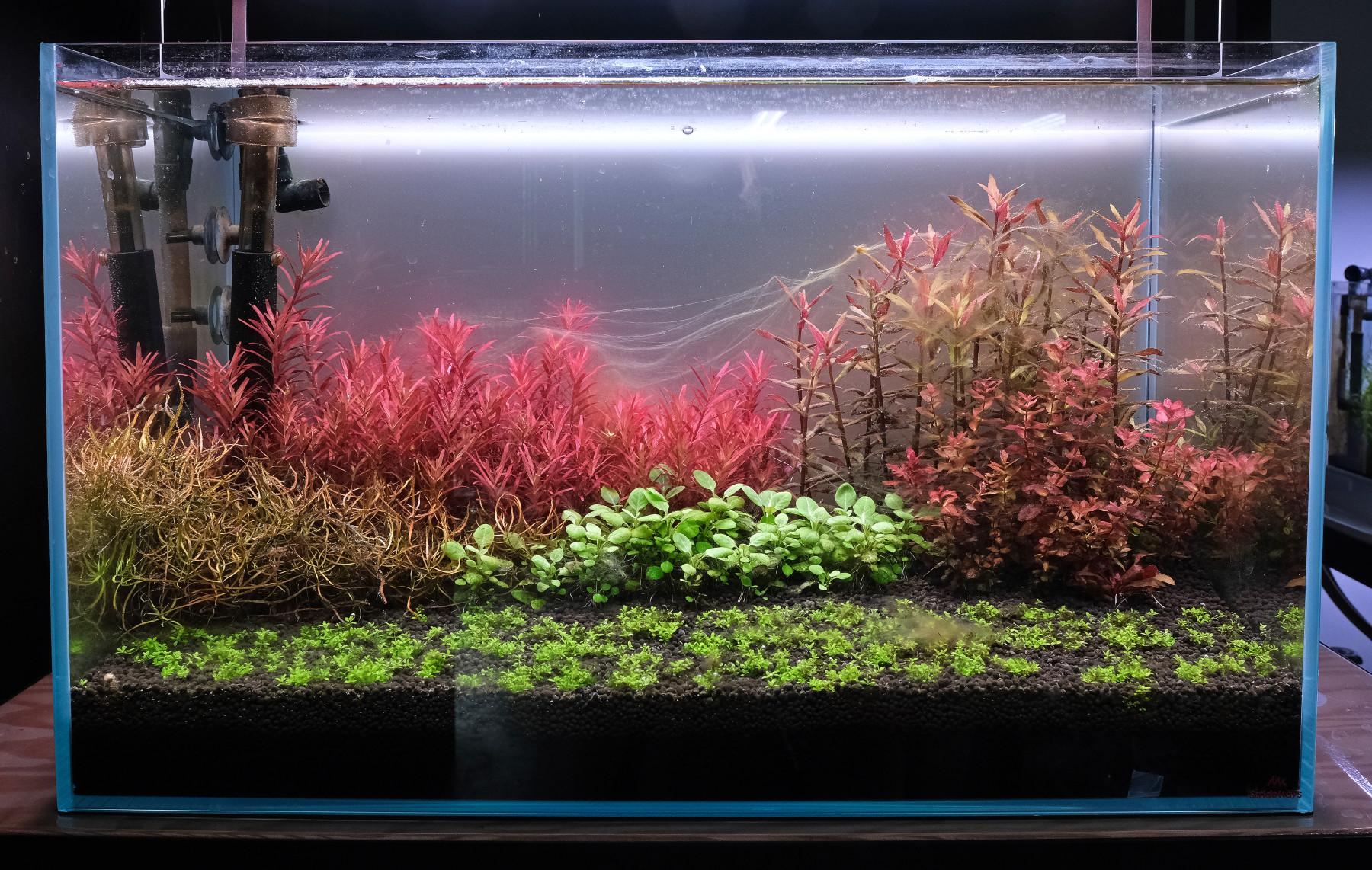
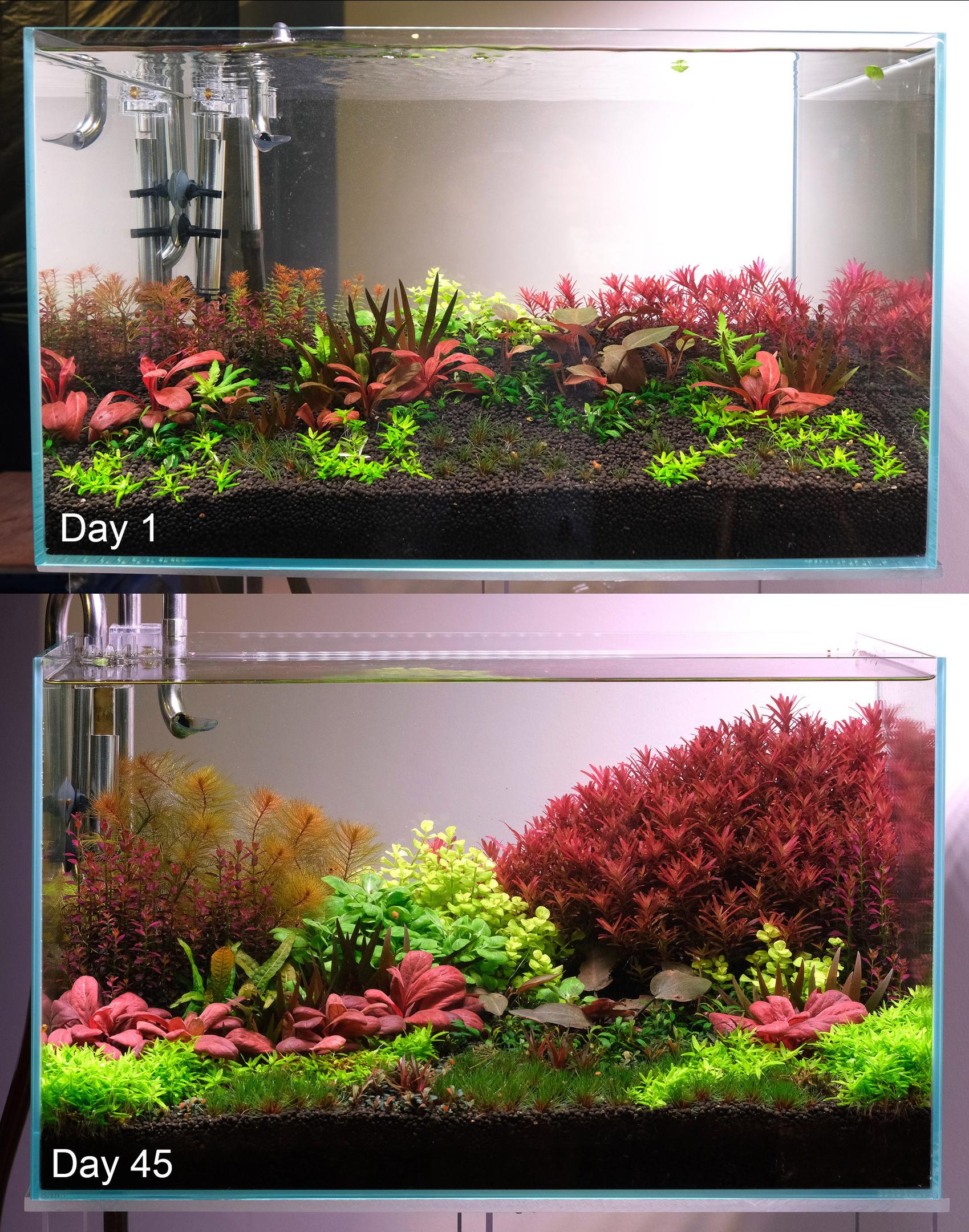
Diatom algae tend to freak newer aquarists out because of how bad it looks visually. However, when the biological balance shifts, diatom issues can also clear up very quickly. The difference between top and bottom picture is just 2 weeks. No algicides or other chemicals were used - just large water changes and trimming off old deteriorating growth. Planted aquariums constantly rejuvenate themselves with fresh algae resistant leaves. The aquarist's job is to work with this renewal cycle, not against it.
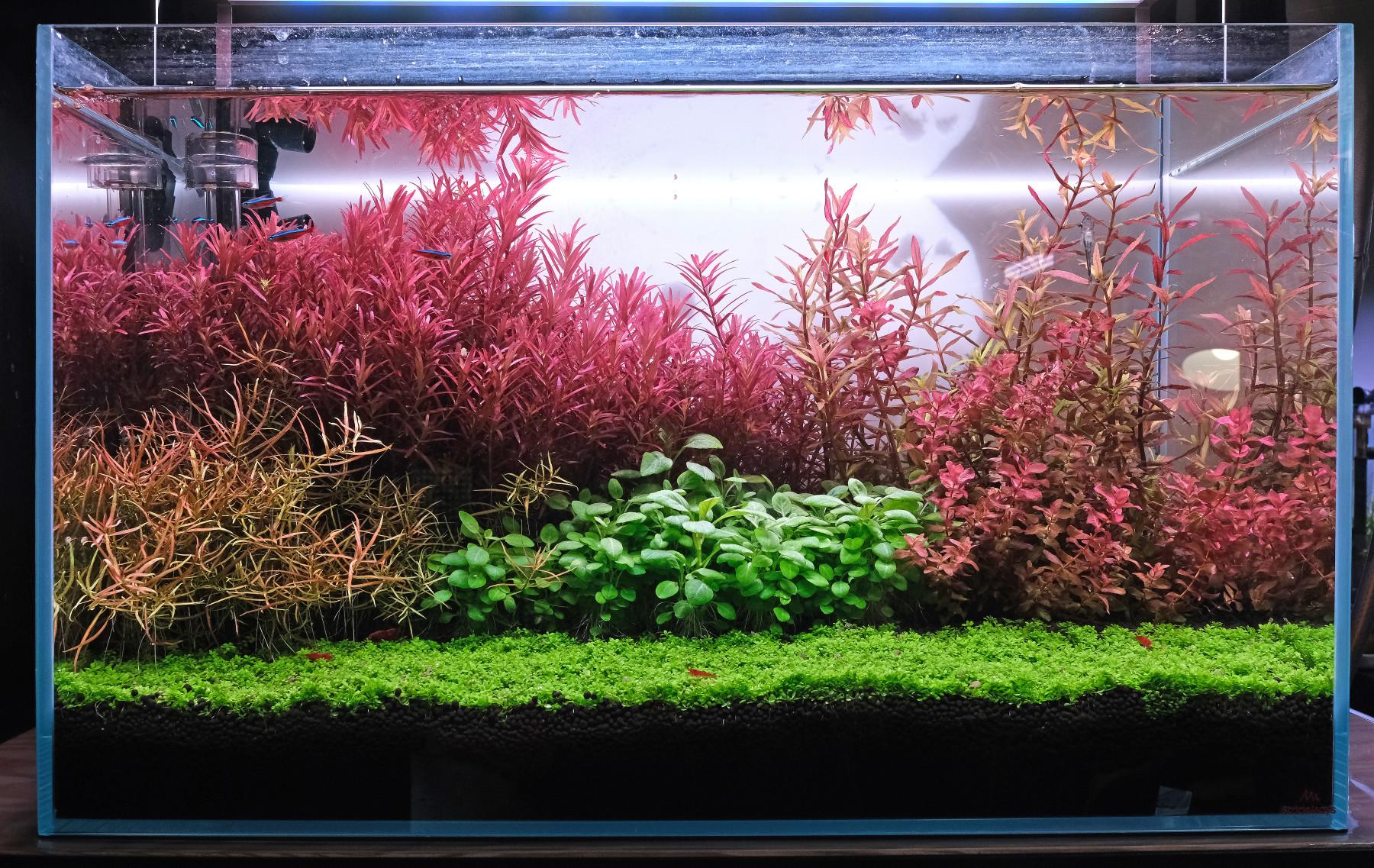
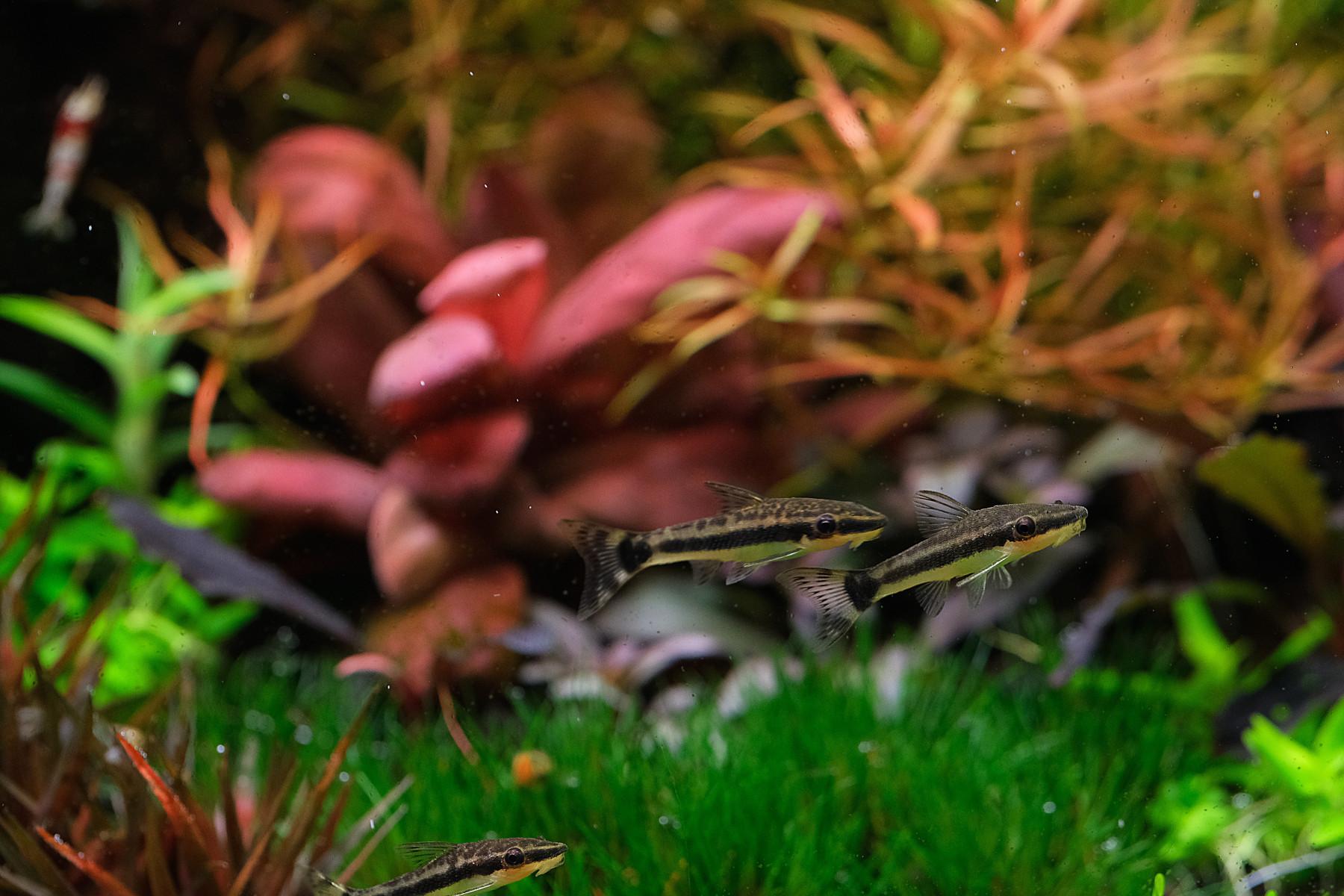
Everyone wants something that will eat brown algae so they do not have to look at it. Otocinclus catfish, different species of shrimp (Amano, Cherry etc) and nerite snails are all excellent algae eaters for diatom and other soft algae. However, a new aquarium with unstable parameters is a bad home for delicate species like Otocinclus, which prefer a more stable and matured biological environment.
Wait until the tank is at least a month old, where the plants are growing steadily and diatoms have already started to decline. At that point, an Otocinclus squad or a group of Amano shrimp can help polish the last traces of diatom growth from glass, rocks and leaves. In a very new aquarium, your best algae eater is still your own hand plus a sponge during weekly water changes.
Low‑tech freshwater tanks with lower light and no injected CO2 tend to have milder diatom layers that appear and then fade without drama. The lower energy input means diatoms grow, but not explosively, so a few weeks of regular water changes, gravel vacuuming and patient plant growth are usually enough to let the system mature and outcompete brown algae. Adding algae eaters like dwarf shrimp once the tank more matured can help start eating the remaining soft films without depending on them as the primary control method.
High‑tech planted tanks with strong light, CO2 injection and rich nutrients can see more dramatic brown diatoms in the second week, but this is primarily the case where excessive light is used. Here, the 2Hr way is to start lean on water‑column nutrients, keep light reasonable, pack the tank with plants from day one and allow a deliberate, stable ramp‑up rather than slamming the system with maximum light and fertiliser from day 1. High tech planted tank gain plant mass faster, and a lot of the stabilization of the system will be through work done to ease plant adaptation stress, and removal of deteriorating older leaves.
Want to skip Diatoms and Green dust algae phases entirely when setting up new aquarium? Follow our guide for managing new aquariums.
Every APT product we make - the liquid fertilisers, algae treatments, substrates and water care that together form a complete approach to the planted aquarium, all built on the same empirical method. If you already know what you're after, it's here. If you're not sure where to start, each product page explains exactly where it fits.