
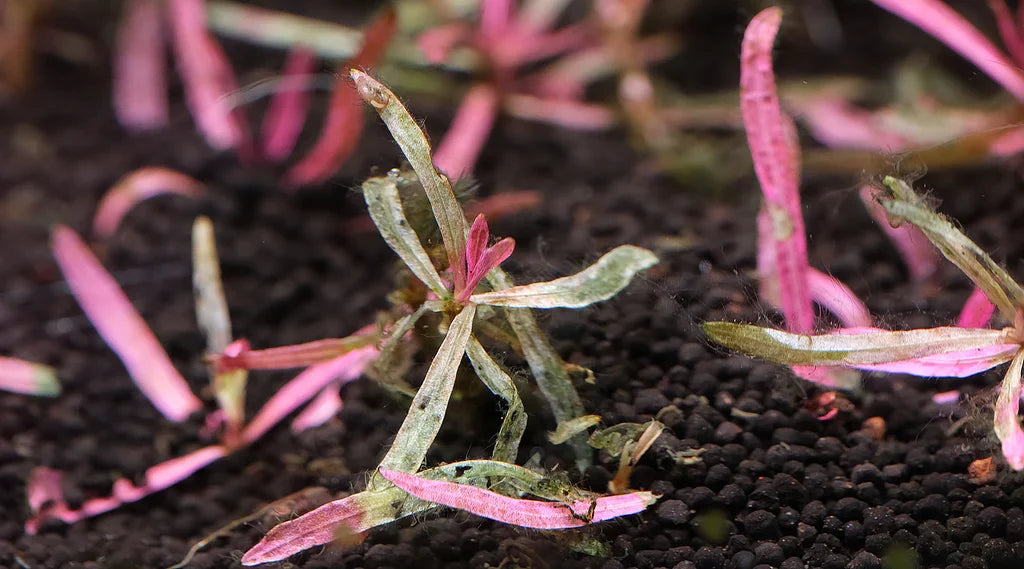
Most plant melt in a new planted tank comes from five directions: emersed-to-submerged transition, general transition stress, nutrient and CO2 issues, water quality problems from decay and ammonia, and a fifth culprit people hate to hear: the “aquarium plant” you bought was never an aquatic plant at all. This article examines why aquatic plants melt and how to handle plant melt when it occurs.
-
Emersed-to-submerged transition: emersed leaves cannot sustain submerged growth, so they melt while the plant rebuilds underwater foliage.
-
General transition stress: big changes to light, CO2, flow or substrate in a new environment cause system shock that looks like melt.
-
Nutrient and CO2 issues: missing essential nutrients or unstable carbon quietly weaken plants until a small change kills leaves.
-
Organics and ammonia: dead leaves, high ammonia and poor maintenance create water quality that kills plants, invites algae and harms fish.
-
Non-aquatic “aquarium plants”: some popular shop species are marsh or house plants that can sit wet for a while but cannot live fully submerged long term, so they always melt in the end.
Why do my Aquarium Plants Melt in a New Planted Tank?
You set up a new planted aquarium, buy all the plants online, spend an afternoon planting, and about a week later your aquatic plants look like they are dissolving on camera. Emersed leaves on crypts and stems are turning brown, transparent and mushy; lower leaves on stems are dropping off and leaving bare stems; a few “bushy” plants look fine for a month, then all the leaves melt away and attract algae.
What you are seeing is plant melt: leaves turning soft, translucent and mushy, then disintegrating or breaking off. That one symptom can be caused by several very different mechanisms. However, the key principle is that the plants are reprogramming their internal proteins and enzymes to adapt to the new environment. Energy is drawn from older leaves and channeled to new growth, so older leaves are often shed in the transition. However, when this transition does not go smoothly, it can lead to the melting off all the leaves or even the entire plant.
Once you know which bucket your plant melt falls into, you can decide whether to wait for new growth, change how you feed the tank, step up maintenance or pull out a doomed non-aquatic imposter.

Bucephalandra should only be added to matured aquariums as they are sensitive to fluctuation conditions in new aquariums. The old leaves often melt dramatically as the plant adjusts to the new tank environment.
How does Emersed-to-Submerged Transition Cause Plant Melt?
Most commercial aquarium plants are grown emersed: roots in wet soil, leaves above water in humid air, because emersed growth is faster, cleaner and cheaper to ship than fully submerged growth. Emersed leaves are structurally different: thicker, waxier, designed for air and for easy access to atmospheric CO2, not for scraping dissolved CO2 from the water column. When you plant them into your tank and flood them, those emersed leaves suddenly have to run submerged growth in low CO2 water, and they simply cannot.
So the plant makes a harsh but sensible decision:
-
It stops maintaining those emersed-grown leaves, which then become dying leaves that turn pale, then translucent, then rot.
-
It cannibalizes old leaves as food sources, pulling essential sugars and nutrients back into the roots, crown and stem nodes.
-
It uses stored energy to push out new submerged leaves, thinner and more flexible, that are adapted to submerged growth conditions.
Cryptocoryne melt is the textbook example. Crypts are usually grown emersed; when you submerge them or move them, they may drop almost all emersed leaves, then rebuild from the root system once they adapt to the new environment. Similar patterns show up in many potted plants and tissue culture plants: the emersed form melts, while new submerged leaves are produced.
In most cases:
-
Melt on emersed leaves starts about a week after planting, lasts 2 to 3 weeks, and then slows as submerged growth takes over.
-
The entire plant is not dead as long as the roots and crown remain intact and new growth appears.
If you rip off all the leaves at the first sign of melt, you deprive the plant of the stored energy it needs to build submerged growth. Leave functional emersed leaves on until you see new growth, then remove truly dead leaves so they do not decay and pollute the aquarium.

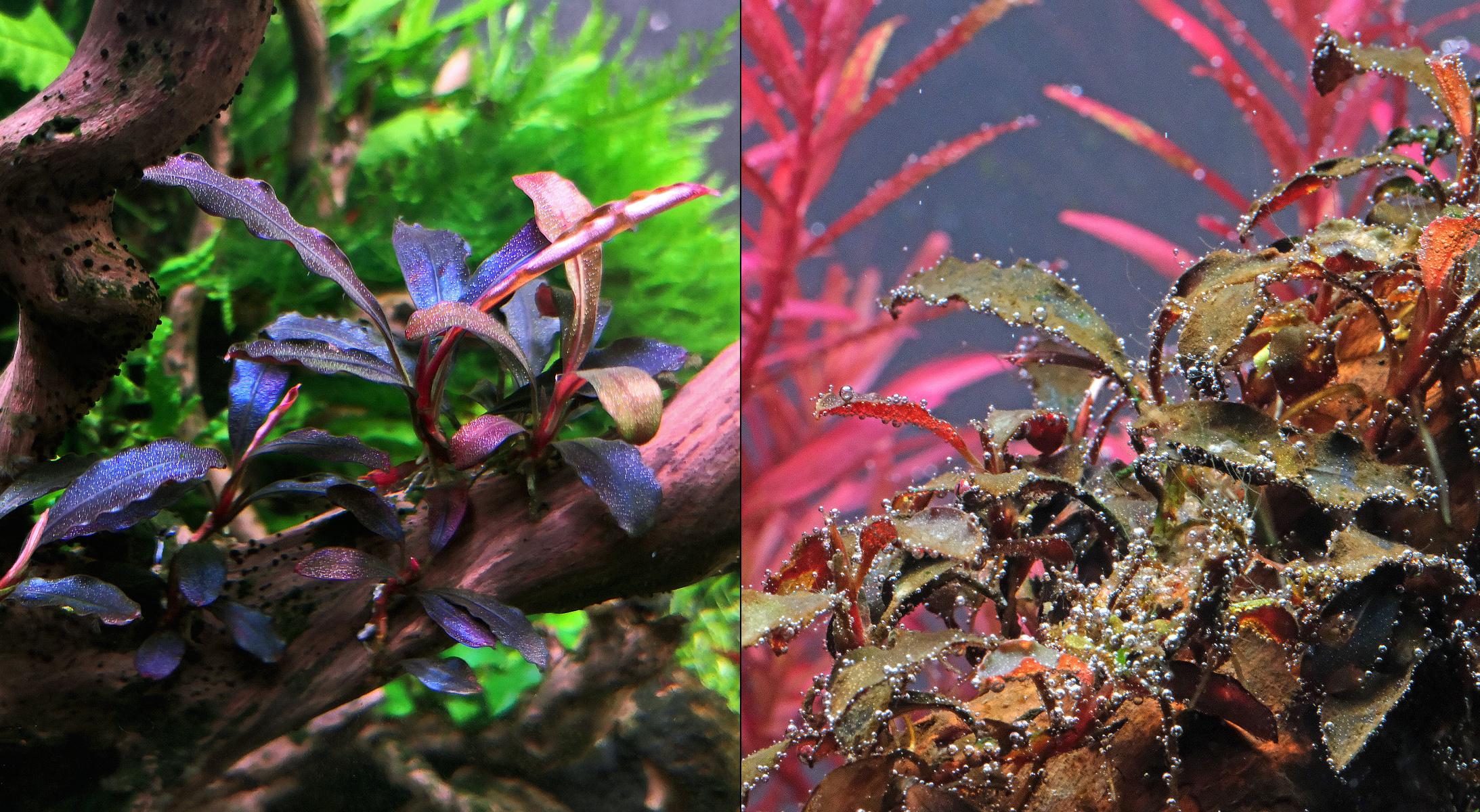
These batch of Bucephalandra have been recently introduced into this aquarium. The light green leaves (red arrows) are emersed grown, and the plant will slowly shed these while producing new submerged grown leaves that are more dark colored (blue arrows). Due to good growth conditions, the shedding process is gradual and melting can be avoided.
How Does Moving or Rescaping a Planted Tank Cause Plant Melt?
Plant melt also happens when already-submerged leaves are exposed to big environmental shifts that force the plant to reconfigure its internal machinery. A planted aquarium is a small, closed environment; a large change hits everything at once:
-
Turning CO2 off suddenly, starving the plant of access to carbon.
-
Temperature spikes - many aquatic plants show stress during summer heat spikes.
-
Large changes in alkalinity or water hardness.
-
Large changes in nutrient levels - both upwards and downwards.
-
Uprooting and replanting large areas, disturbing roots and substrate.
During this transition period:
-
Plants pause comfortable growth and enter a transition period where the plant draws energy from older leaves reallocates it to new growth.
-
You see leaves melting even on plants that were fully submerged in a previous tank, because their old leaf hardware was tuned to very different water parameters.
This transition stress is why even established stem plants and rosette plants can look terrible for a couple of weeks after a rescape or equipment change. If you keep changing parameters, CO2 and nutrient levels every few days in response to each ugly leaf, the plants never finish adapting. They stay stuck in a permanent transition period and you keep seeing melt.
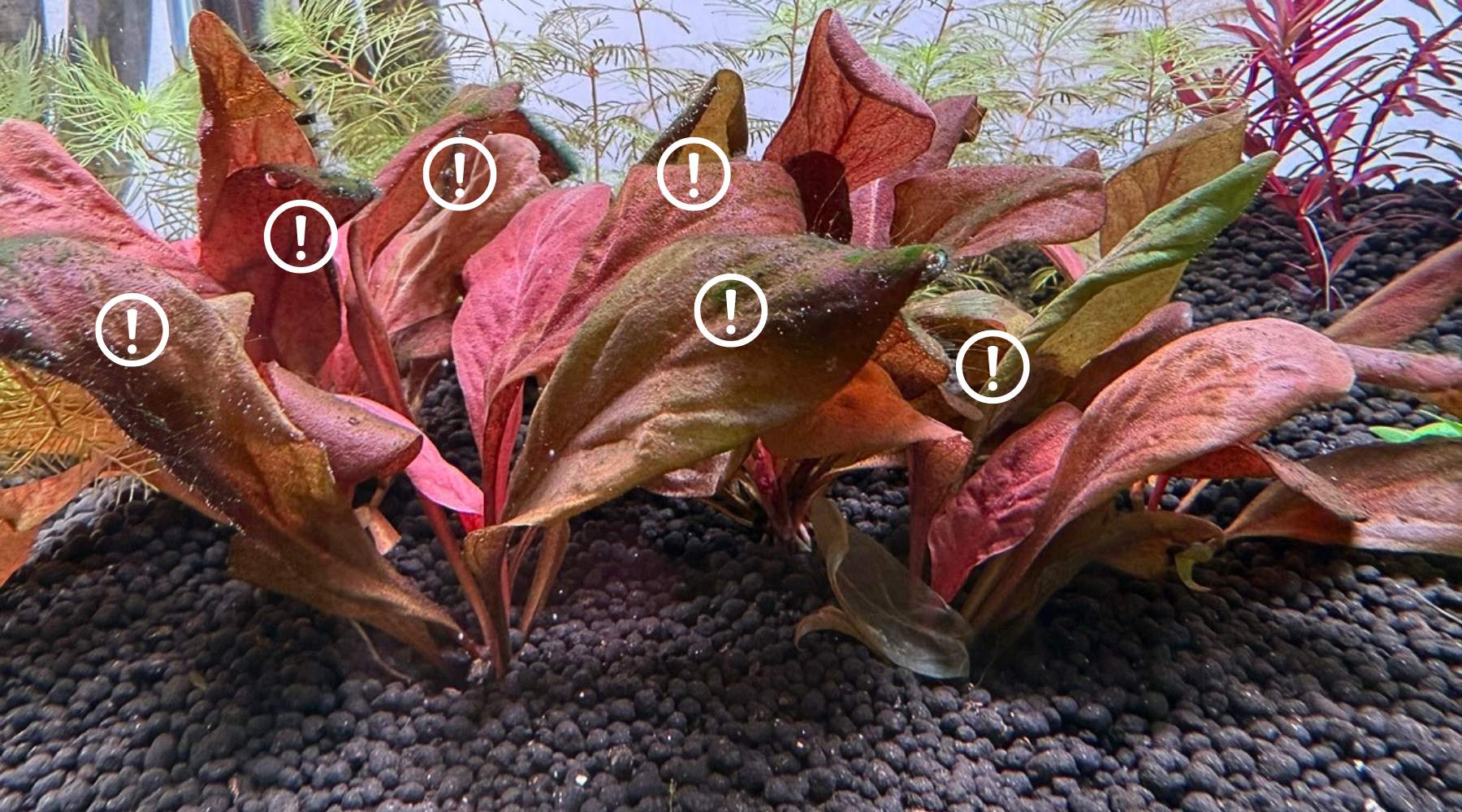
Plants can look very bad during a transition period. However, plants can recover from surprisingly bad states if they are provided enough Carbon and nutrients to complete their adaptation journey. Bucephalandra ghost 2011 above, getting hit by diatoms when added to a new tank (right), and recovering after 3 to 4 weeks (left).
Do Nutrient Deficiency and Low CO2 Cause the Same Plant Melt as Transition stress?
Yes, it looks like the same mush. No, the mechanism is not the same.
When key nutrients or carbon are missing from the water column, plants may survive for a while by draining stored energy reserves. New leaves can still be produced, so to your eyes they “look okay.” However, these starved plants are in a delicate state. Healthy plants produce defensive chemicals that keep algae and decomposer microbes away. Starved plants can only afford to defend the newest leaves, leaving older leaves to deteriorate. Then a small stress, a big trim, a temperature spike, pushes them over the edge. How it how the process typically happens:
-
Old leaves start showing pale patches, pinholes or transparent areas. Older growth becomes vulnerable to algae.
-
New leaves emerge small, twisted or pale, then fail; growth can stall completely when nutrients are severely lacking..
-
Unable to produce defensive chemicals that protect leaves from microbial decomposers, older leaves are attacked first and disintegrate quickly.
-
Melt ramps up and can consume the entire plant when the plant lacks sufficient energy to maintain leaf tissue.

Insufficient CO2 in a planted tank has a similar outcome. Carbon is a major component of plant biomass; plants use more Carbon than all nutrients combined. A lack of Carbon is the main reason many plants in low tech tanks do not grow well. Low tech tanks need to be set up to generate CO2 naturally to have long term success.
Signs include:
-
Bare lower stems on stem plants, with only the top few leaves looking decent. Plant channels all energy to vertical growth in an effort to break through the water surface and access atmospheric CO2.
-
Smaller leaves and vertical, weak growth in carpets that should creep.
-
Leaves that are easily infected by algae as the plant does not have sufficient energy to produce defensive chemicals that prevent algae from attaching.

The fix is provide nutrients and carbon dioxide in adequate amounts for plant growth.
-
Provide adequate Carbon. Low tech tanks can generate CO2 through decomposition and microbial action. Usage of soil/aquasoil substrates makes a tremendous difference in low tech tanks due to being able to naturally generate low levels of CO2.
-
For CO2 injected aquariums, tuning up CO2 levels have a huge impact on growth. Do not rely purely on drop checkers to gauge CO2 - learn to gauge CO2 levels through the pH drop method.
-
Provide a complete, balanced fertiliser so all essential nutrients are present, while avoiding wild dosing swings. Increase fertilizer dosage if plant growth is weak despite adequate CO2 levels.
-
For low tech aquariums, choosing species that can do well in low tech conditions make a huge difference. Java fern, Anubias and Cryptocoryne species tolerate low CO2 levels better than more demanding plant species.
Severe nutrient deficiency is not “true transition melt,” but to your eyes it can look very similar. The difference is that it does not resolve on its own; without correcting the deficiency, the entire plant will eventually die. A lack of Carbon is the number one cause of plant melting in non CO2 injected aquariums.

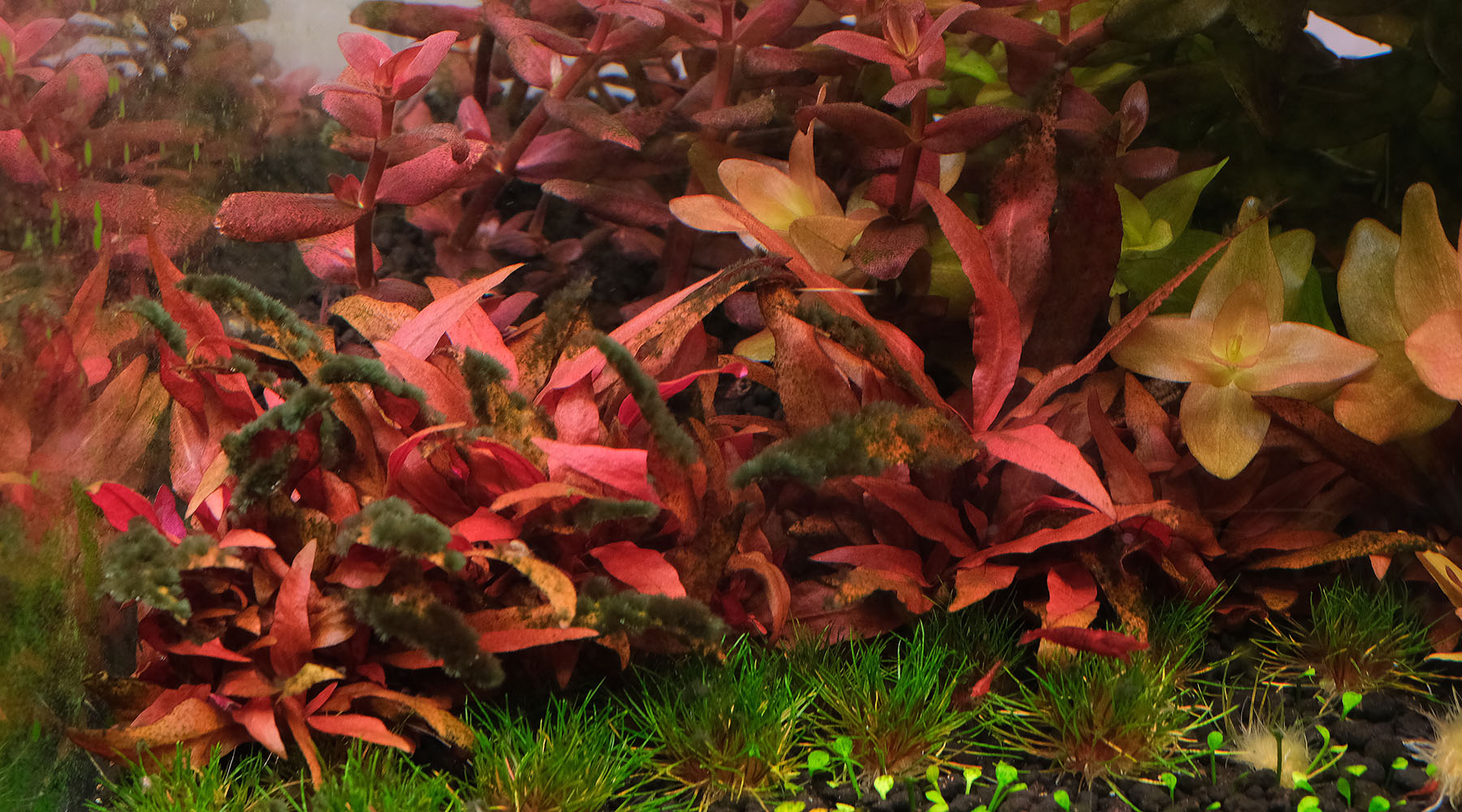
Even when nutrients and CO2 are adequate, it often take a few weeks for aquariums to recover. As plants recover their health, they naturally out-compete algae and shift the aquarium towards a plant dominant state. In the aquarium above, no algicide was used. Excess algae and old growth were cleared each week during water changes, and the aquarium was left to recover naturally across a month. As the plants grew stronger, algae naturally subsided.
How do Decaying Leaves, Ammonia Spikes and Poor Maintenance Turn Melt into a Crash?
Every melting leaf is a packet of organic waste that will decay and attract microbial decomposers. These microbes attack decomposing leaves, breaking them down for nutrients. This activity consumes oxygen and produces nitrogenous waste and ammonia as by products.
-
Bacteria break down dead leaves, consuming ammonia releasing ammonia and dissolved organic compounds.
This is the point where a normal transition period can turn into a full crash:
-
High ammonia and volatile organics stress fish and feed algae blooms. Algae blooms in turn affects plant growth when algae infect and smoother plant leaves. This becomes a feedback loop where melting leaves and organic waste leads to a bloom of microbial decomposers and algae. Then algae and microbes attack weakened leaves, leading to additional melt and more microbes being propagated. This feedback loop is what can lead to tank crashes.

Planted aquariums on the plant melting loop can lead to spectacular algae blooms.
The antidote:
-
Prune and siphon out dead leaves promptly before they become food for additional microbial decomposers, bacteria and algae.
-
Do large, frequent water changes in new aquariums or during heavy melt to remove dying leaves, pathogenic bacteria, ammonia and organic waste.
-
Add more healthy aquarium plants, especially fast-growing species, to shift the tank balance back into a state of plant dominance so that algae does not gain a foothold.

Clearing organic debris from the substrate using a water siphon and turkey baster to stir up organic debris makes a huge impact. This removes algae spores and excess microbial decomposers that can attack weakened plants.
Are Non-Aquatic Plants Being Sold as Aquarium Plants?
There is one more cause of plant melt that no amount of perfect CO2, nutrients, light or water changes can fix: the “aquarium plant” you bought is not an aquatic plant at all. Many shops, especially those that do not specialize in planted tanks, routinely sell terrarium and houseplants as aquarium plants. These non-aquatic species can handle wet roots or short flooding, but they are not adapted to long-term submerged growth and will always melt down over time.
Typical non-aquatic offenders include:
-
Alternanthera bettzickiana and some broadleaf Alternanthera, which have attractive red or variegated leaves but cannot stay fully submerged long term.
-
Alternanthera sessilis, often sold for its deep purple foliage, which deteriorates after a few weeks underwater, no matter how good your planted tank is.
-
Alternanthera ficoidea, easily confused with true aquatic plants like Staurogyne repens, but with hooked leaves and zero long-term submerged tolerance.
-
Hemigraphis species, Ophiopogon japonica, Dracaena and Cordyline species, plus some Cyperus species tied to wood that look like “exotic grass.” None of these belong underwater.
These non-aquatic plants:
-
Often look great for several weeks or even a couple of months, then gradually melt and rot.
-
Elongate towards the surface trying to get their leaves back into air, but never form healthy submerged growth.
-
Attract algae as their leaves weaken, and their slow decay pollutes the water rather than helping to clean it.
No amount of liquid carbon, root tabs or extra fertilizers will turn a Dracaena, Cordyline or Alternanthera sessilis into a true aquatic plant. They are not failing because your tank is wrong; they are failing because the plant species cannot do submerged growth at all. The only fix is to remove them from the aquarium, switch to real aquatic plants or amphibious marsh plants that are known to adapt to submerged growth, and in future only buy plants from sources that understand the difference.

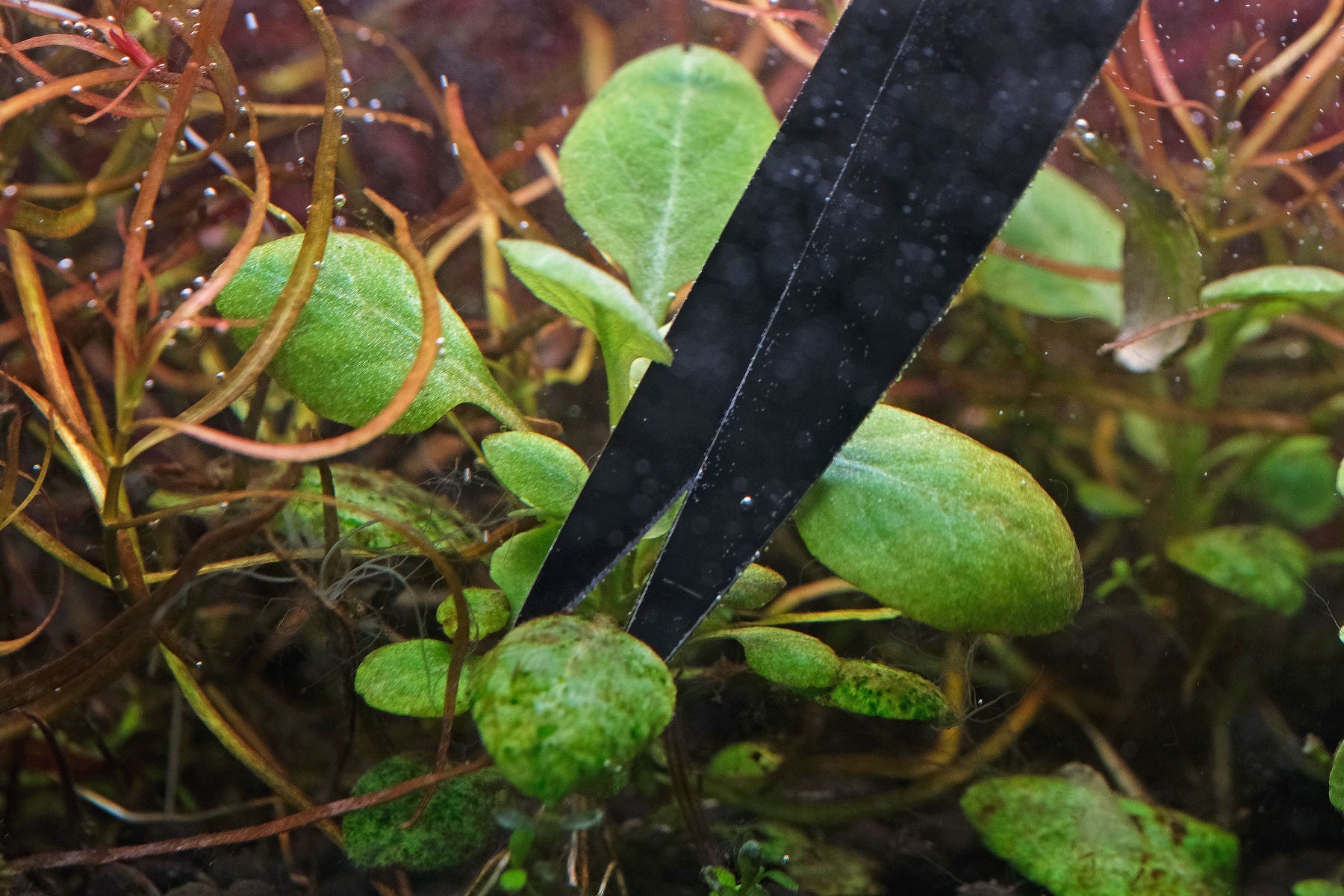
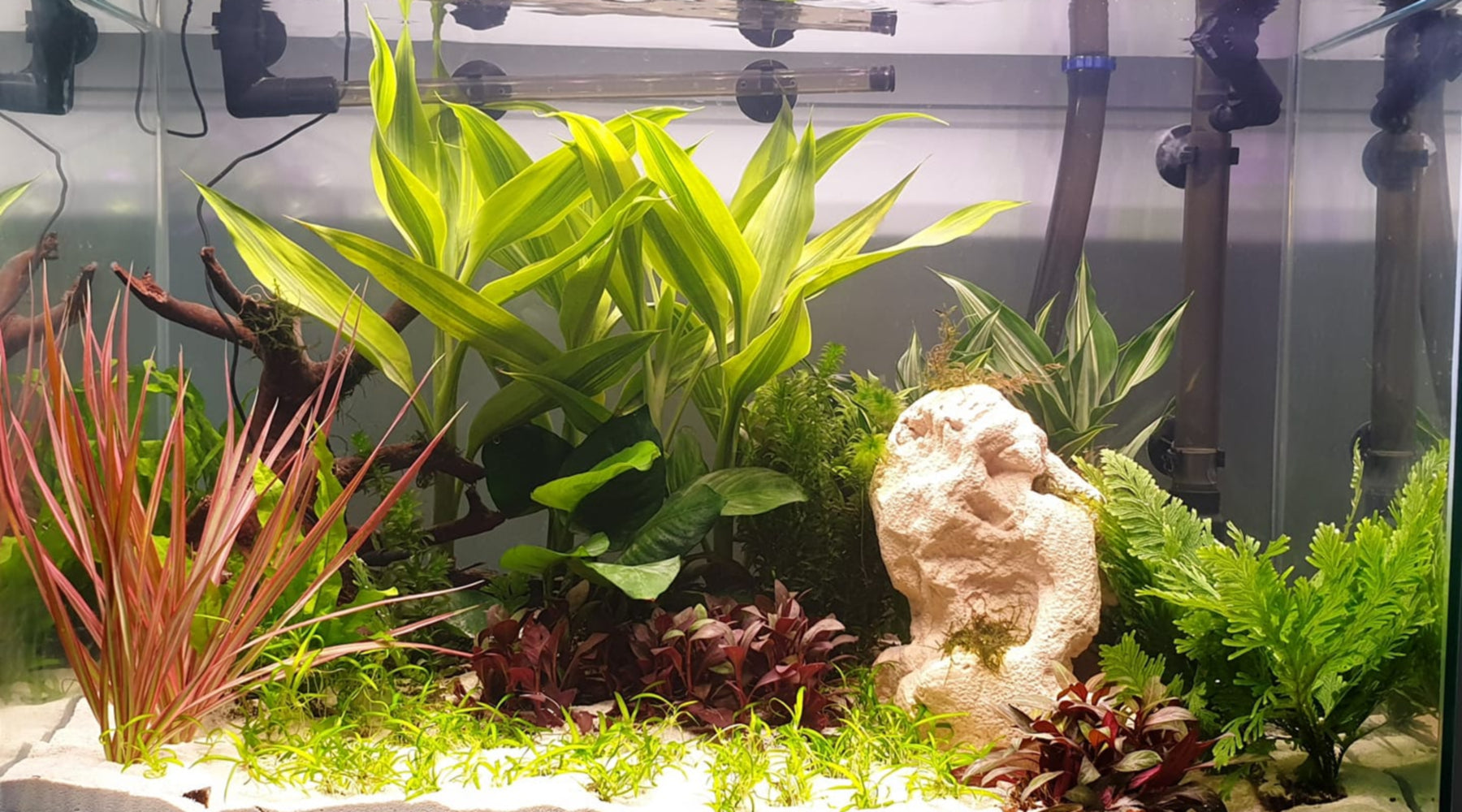
All the plants labeled above are non aquatic species that were sold at a local aquarium store.

Alternanthera ficoidea is another nonaquatic Alternanthera species. It looks very similar to Staurogyne repens, an aquatic plant. It has distinctively hooked shaped leaves, which is the easy way to identify it.

The picture above shows Alternanthera sessilis (left) beside Ludwigia glandulosa (right). Ludwigia glandulosa is an actual aquatic plant that can grow well long term in the aquarium. A. sessilis can be differentiated by its more rounded leaf tip compared to L. glandulosa. Ludwigia glandulosa has an alternate leaf arrangement, while A. sessilis has an opposite leaf arrangement.
How to Fix Plant Melt in a New Aquarium
-
Diagnose which kind of melt you are seeing. If emersed leaves on crypts, swords, stems or tissue culture plants are melting while new submerged leaves appear, you are looking at emersed-to-submerged transition. If submerged plants from another tank melt after big changes, suspect transition stress. If new growth is weak, and the plant cannot maintain its older leaves, suspect nutrients and CO2. If whole clumps of “plants” never produce real submerged growth and only rot, question whether they are aquatic at all.
-
Keep light, CO2 and nutrients levels stable. Run a consistent fertiliser routine tuned to your planted tank’s stocking and plant mass. Do not change three variables every time you see melting leaves; stability, measured across weeks, not just days, is crucial for plants to adapt.
-
Dose a complete fertiliser so plants have access to essential nutrients through the water column while their roots are still establishing in the substrate. Plants can take in nutrients directly from their leaves, and this is important when the rootzone is not yet developed.
-
Prune away dead leaves. Allow slightly ugly leaves to stay while they are still firm, so plants can scavenge them for energy and nutrients. Once leaves are fully dead or melting, trim and siphon them out to prevent ammonia spikes and algae surges.
-
Remove organic waste, pathogenetic microbes and ammonia through large water changes. Large water changes also reset water parameters, and remove algae spores. Exposing plants to air when the water level dips during large water changes fills leaf tissue with air, supplying the plant with gaseous oxygen/carbon dioxide and gives them a short term growth boost that helps distressed plants to adapt better.
-
Know that algae issues will accompany plant melt. They will dissipate naturally as plant vigor returns. However, this will take time and does not happen over night, even with all the right parameters. Focusing on plant growth will bring success in the long term.
-
Vet your plant list and sources. Cross-check any suspicious “bushy reds,” “dragons tongue,” “Ophiopogon-style grassy tufts” or cordyline/dracaena-looking stems against a good guide to non-aquatic plants. Buy plants from shop that specialises in planted aquariums and knows what is suitable for long term aquarium usage.
Plant melt is not your tank going wrong; it is your tank telling you which rule you broke: too drastic changes, missing nutrients or carbon, high organic waste levels or using the wrong plant species entirely. Fix the rule, not just the symptom.

Share:
Your First Planted Tank Setup: Substrate, Lighting, Filtration and Plants
Fish Tank to Planted Tank: What Actually Changes?