Your Cart is Empty


Black beard algae (BBA) is an algae that appears when plants are stressed, organic waste builds up, and the tank environment becomes unstable. In CO2-injected planted tanks, fluctuating CO2 levels is one of the biggest triggers for BBA to spawn. High organic waste, deteriorating leaves, and excessive high-flow zones all trigger BBA spores to bloom. This article describes the causes for BBA and how to get rid of it.
Quick answer:
Black beard algae, also called black brush algae or beard algae, shows up as dark green to black fuzzy tufts on plant leaves, hardscape, filter outlets, and CO2 diffusers.
Stressed plants eject waste proteins and organics directly from their leaf surfaces, and this triggers BBA to spawn. In planted aquariums, stressed plants or plants adapting to changes in the tank environment are a common trigger for BBA.
Perfectly grown plants are highly algae resistant.
Organic detritus build-up on the substrate level, stagnant water pockets, and filters choked with detritus encourages BBA to spawn.
How to get rid of black beard algae: trim badly affected leaves, spot treat healthy affected areas with algicide.
Hydrogen Peroxide (the 3% solution) is a common household item that can be used to remove black beard algae in the aquarium. However, it is not as effective as algicides such as APT Fix/Fixlite.
To prevent BBA from spawning: Stabilise CO2, reduce excessive flow, and do large weekly water changes. Remove excess organic debris from the substrate surface - this applies to aquasoil substrates as well.
Reduce light to 6-8 hours daily to limit growth, as high light promotes BBA.
Black beard algae is not directly harmful to fish or other aquatic creatures, but it can harm aquarium plants by covering leaves and weakening already stressed growth.
Algae eating fish like Florida flag fish and Siamese algae eater and Amano shrimps can snack on BBA, but they are not permanent solutions to underlying issues.
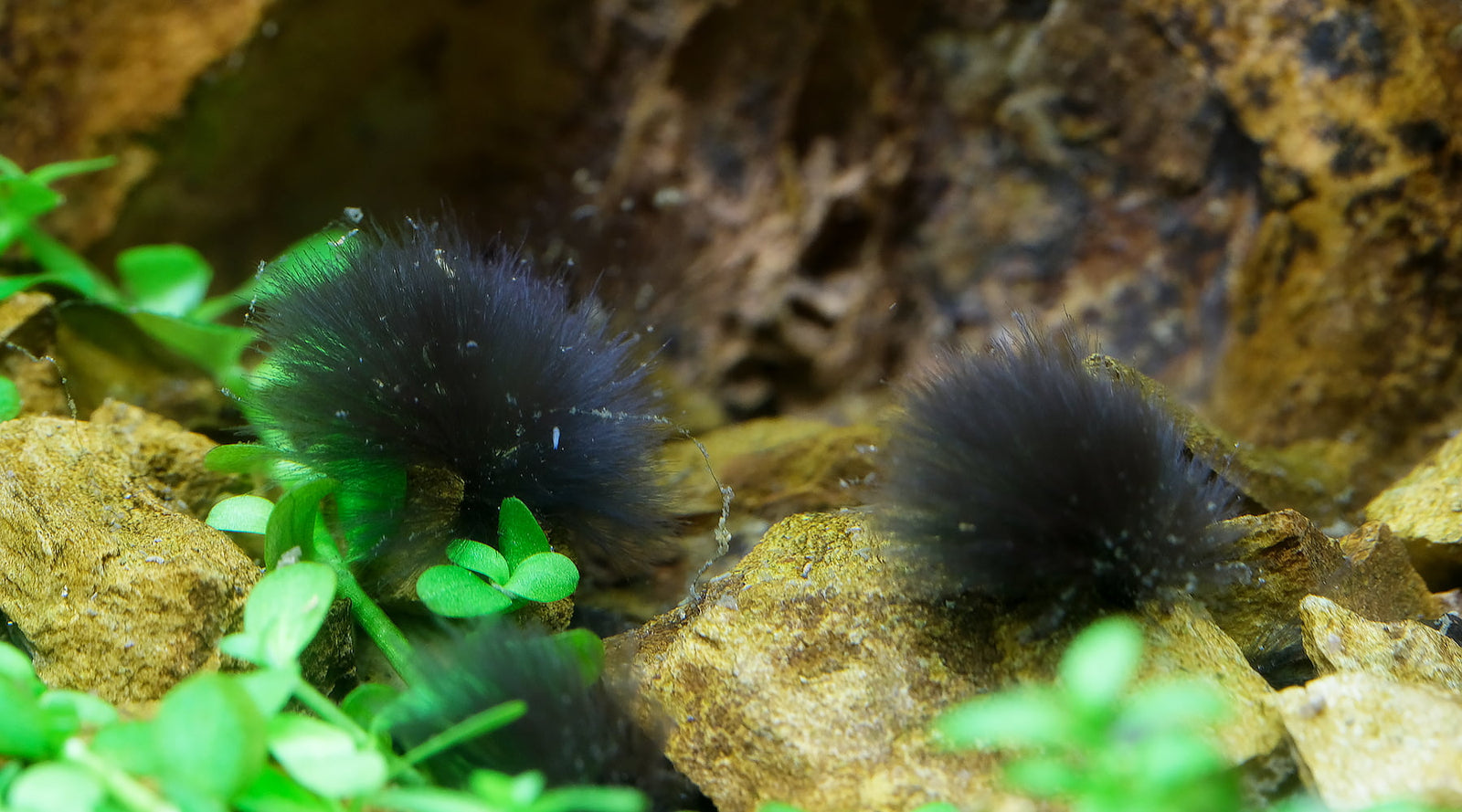
Healthy plants in a stable environment produce defensive chemicals that help prevent algae from attaching; stressed plants do the opposite - they become algae magnets. One of the key triggers of BBA in a planted aquarium are plants themselves. When aquatic plants face a significant change in the environment, they re-program their enzymes and proteins to suit the new conditions. In that process, they leak excess metabolites through their leaf edges. BBA spores use those leaks as a signal to attach and spawn. This leads to black tuffs lining up exactly where the leaf edges are.
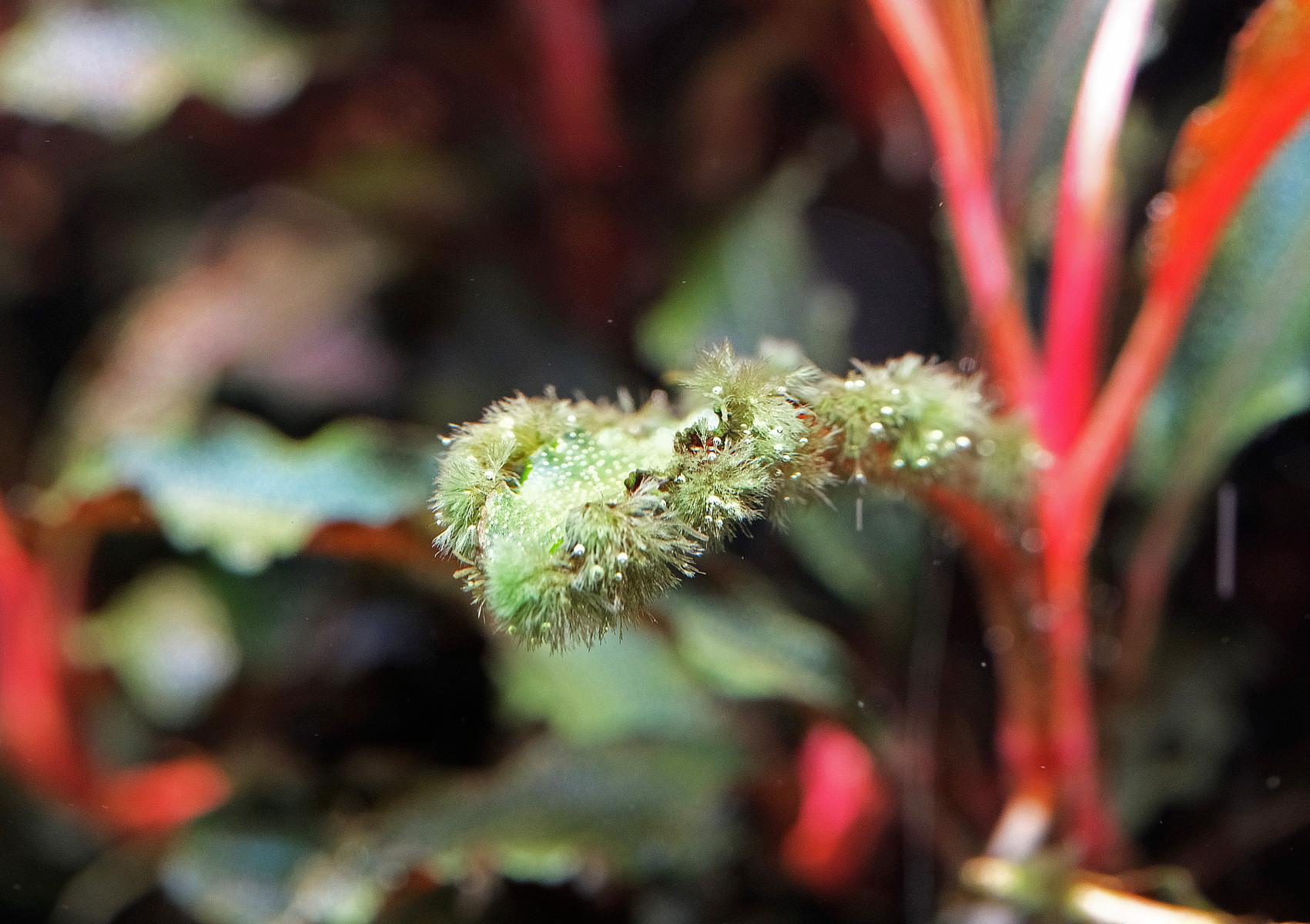
Older leaves abandoned during the leaf renewal cycle are especially vulnerable, which is why black beard often appears first on slow growers and aging leaves rather than new leaves. Slow growers such as Anubias and Bucephalandra are especially vulnerable.
However plant stress is not only caused by water parameters or nutrient/CO2 changes. Plant stress also occurs when plants get overcrowded, or when the rootzone gets compacted. It can happen when plants get mechanically stressed due to being beaten on by excessively strong current. This can be visually seen if BBA only affects plants in the path of strong current.
Organic waste is the other major trigger. Decaying leaves, uneaten food, and organic debris on the substrate create nitrogenous by products in the aquarium water and around the substrate surface. In tanks with too much light, poor water quality, or excess nutrients from waste accumulation, BBA spores bloom more readily.
In CO2 injected aquariums, fluctuating CO2 can be an additional catalyst. Fluctuating CO2 levels cause plants adaptation stress and there is evidence fluctuating CO2 levels itself can be a signal for BBA spores to bloom.
The causes of BBA work synergistically, having one trigger factor alone might not trigger a BBA bloom. However, if the planted aquarium has unhealthy plants, high amounts of organic debris on the substrate, and blasted with high light and unstable CO2, it creates prime conditions for Black beard algae to thrive.
Removing black beard algae is only the first part of solving the problem. You can scrub wood with a stiff toothbrush, gently remove dead algae, trim infested leaves, and spot treat stubborn algae, but if the underlying triggers remains, the beard algae comes right back. Yes, it looks dramatic. No, it is not unbeatable.

Yes, but not in the simplistic way the internet likes to shout about.
Too much light does not magically create black beard algae on its own, but higher light intensity and overly long lighting schedules accelerate algae growth once plant stress and organic waste are present. That is why reducing light to 6 to 7 hours daily is often useful, especially in tanks getting natural light or running far more light than the plant mass can handle. Light is an accelerant, not the whole crime scene.
High flow matters because black beard algae is commonly favors areas of high flow, especially near filter outlets and CO2 diffusers. If BBA is found in the path of high water flow, redirecting flow or making it more spread out often helps. You want even circulation, not a jet stream blasting one patch of Java fern like it owes you money. High flow beating down on plants can also cause mechanical stress, which further triggers BBA to attach to plants.
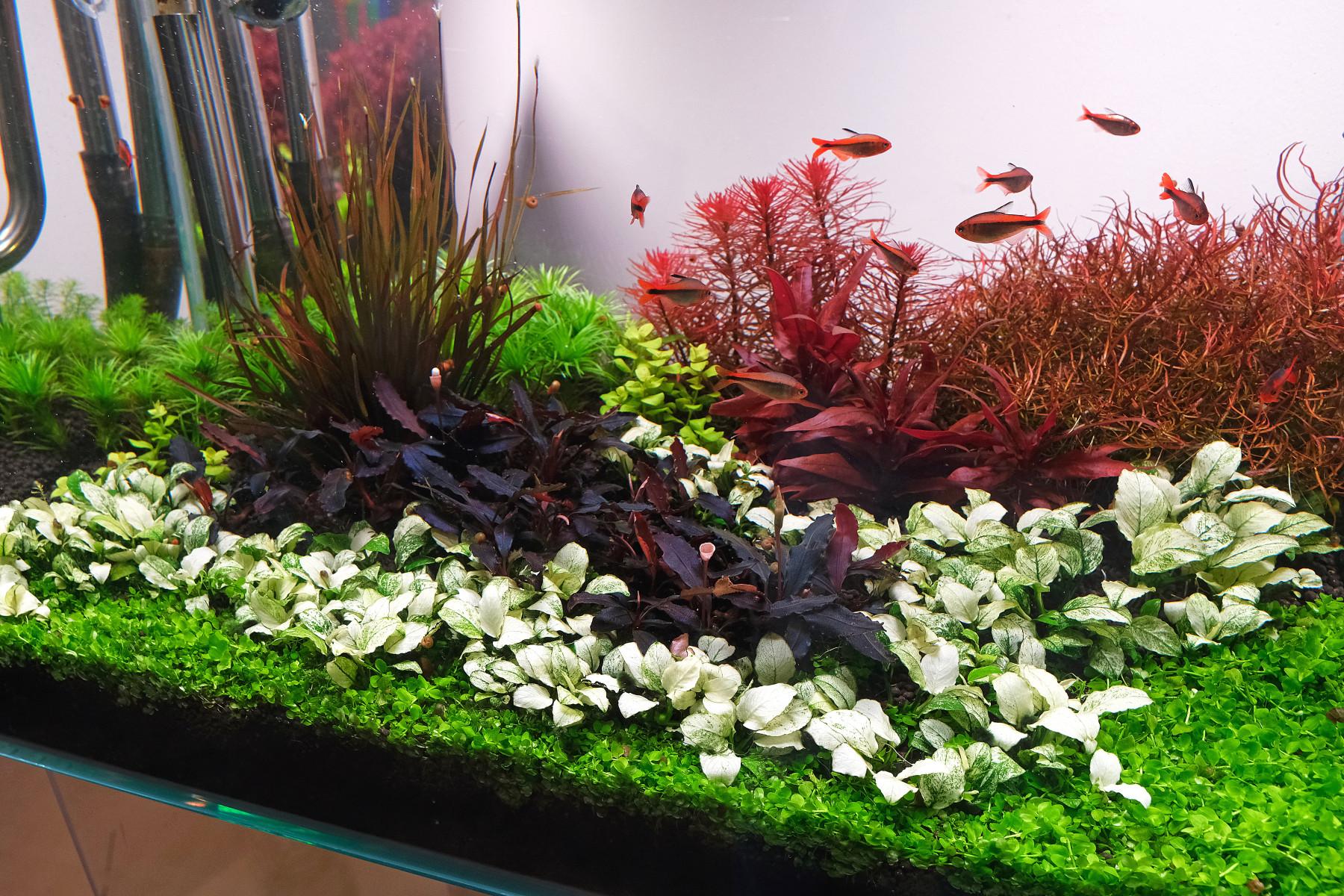
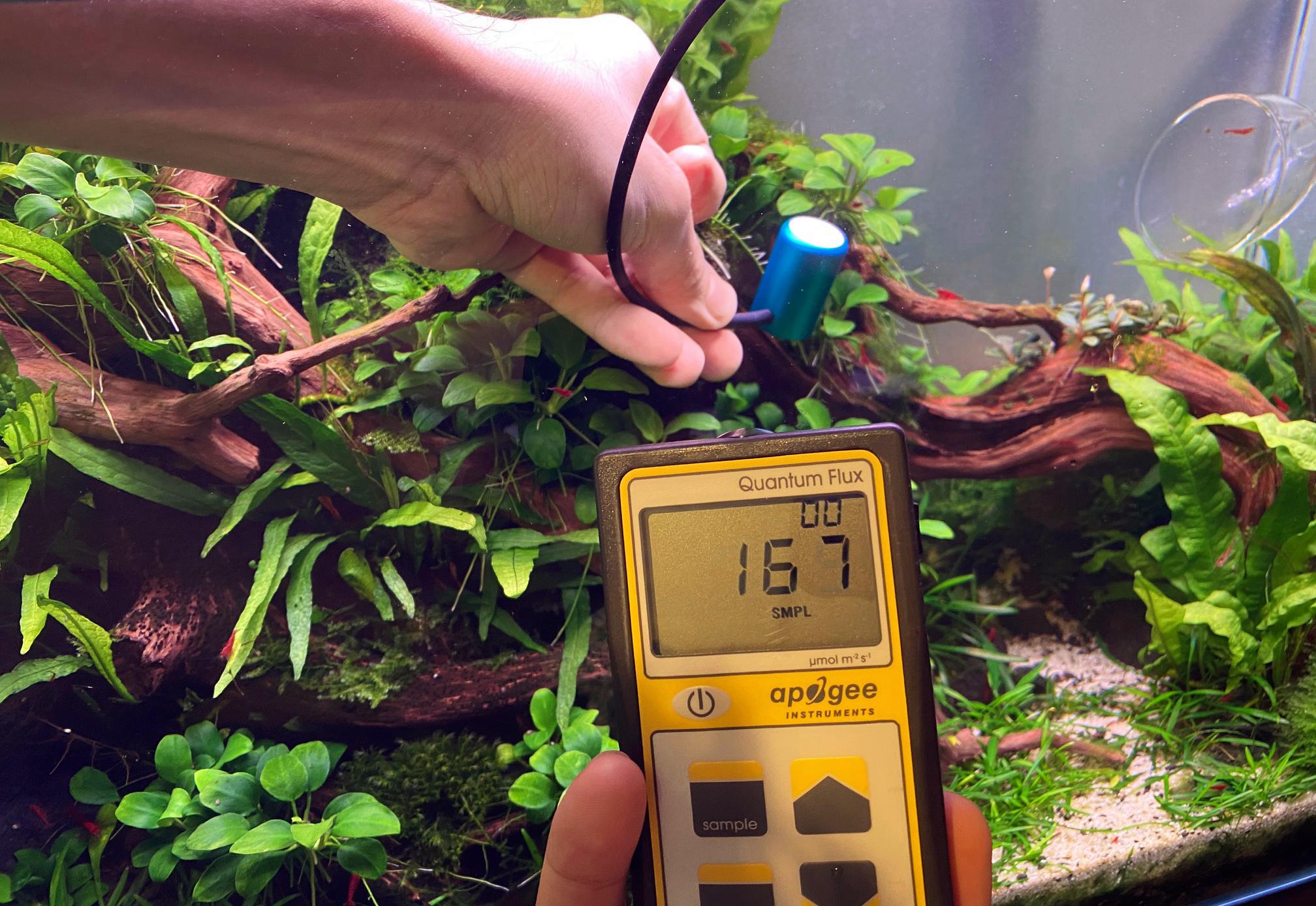
In this aquarium we grow mix of slow growers -Bucephalandra Brownie Ghost 2011 and Anubias white petite in a high light, high flow environment. Substrate PAR levels measure around 200 umols, which is a lot of light for growing shade plants. This fast growth environment brings out the vibrant bluish and white hues on the plants, which remain algae free due to a combination of good maintenance, low organic waste levels, stable CO2 and good plant health.
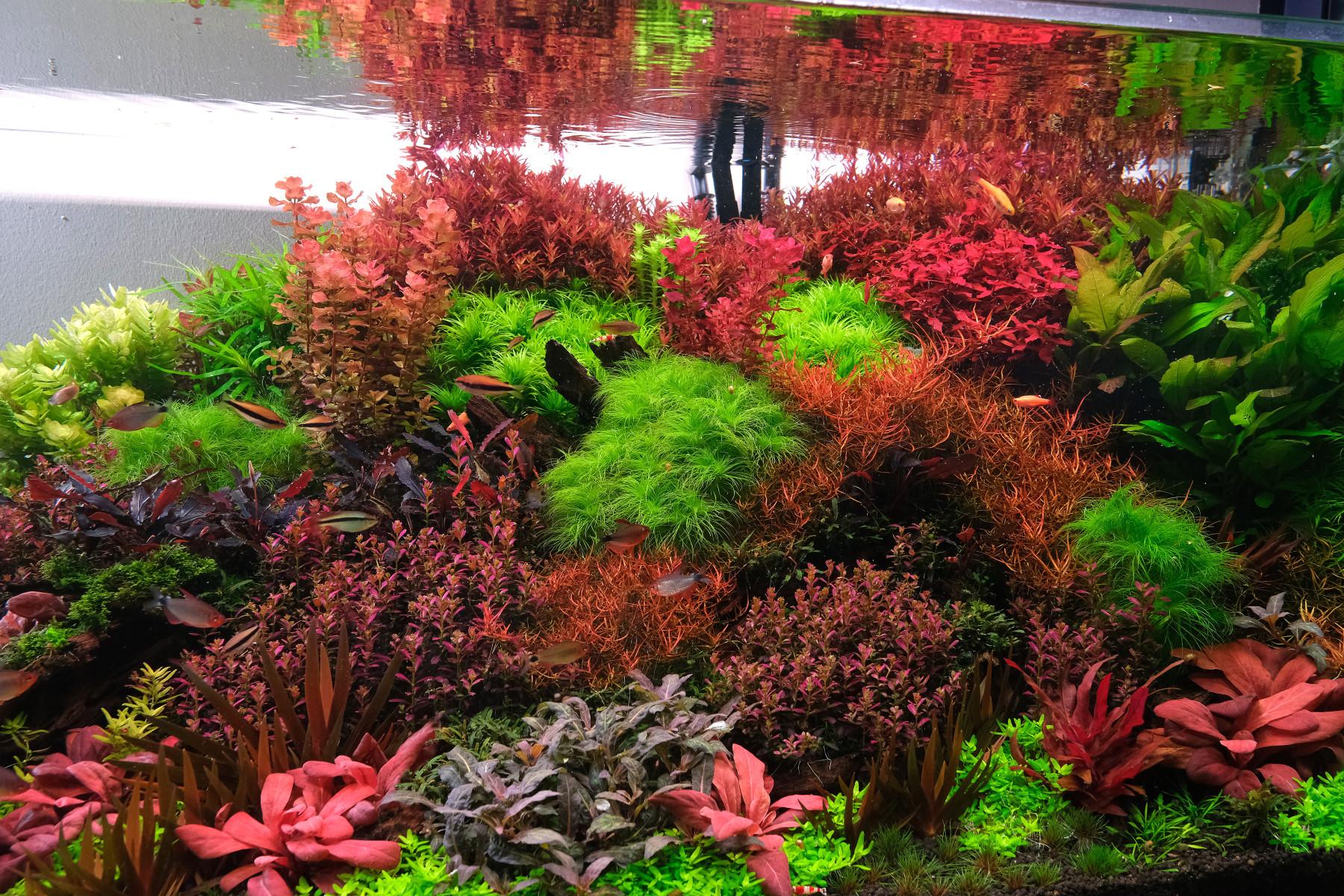
This low tech aquarium uses higher light levels to achieve higher plant density. Maintaining a clean tank environment and good plant health makes the aquarium algae resistant even under high light levels.
Similar to light and carbon dioxide, nutrients creates the foundation for both plant and algae growth. However, the mere presence of high levels of nutrients in the water column alone does not trigger black beard algae directly. In a clean, well maintained, plant dominant aquarium, high levels of both nitrates and phosphates can persist in the water column without any significant invasion of BBA. Healthy plant leaves produce defensive chemicals that deny BBA surfaces to attach to. Large water changes, and regular removal of organic debris from the substrate remove key BBA triggers. These factors work synergistically to make well maintained, well planted tanks algae resistant.
In the aquarium below, Nitrates never fall below 15ppm (parts per million), and Phosphates always measures around 4-5ppm. Despite the high availability of nutrients, BBA cannot gain a foothold.
Black beard algae is not harmful to fish, shrimp, snails, or other aquatic creatures in the direct sense. It does not poison them and it does not attack them. So no, black beard algae is not harmful to livestock.
The better question is whether it can harm aquarium plants. Yes, it can. Black Beard Algae can harm aquarium plants by covering their leaves and causing them to suffocate and die. When black algae covers plant leaves, it blocks light, interferes with gas exchange, and adds stress to already weakened plants. That is why affected plants, especially slow growers and sensitive plants, may stop growing well or lose older leaves faster. The algae is usually a symptom first, but left alone it becomes part of the problem.
The 2Hr Way is a multi-pronged approach: remove what is too far gone, treat what is worth saving, and correct the environment that invited BBA in the first place.
Physical removal matters. Trim heavily infested older leaves. Scrub hardscape and filter outlets with a toothbrush outside the tank if practical.

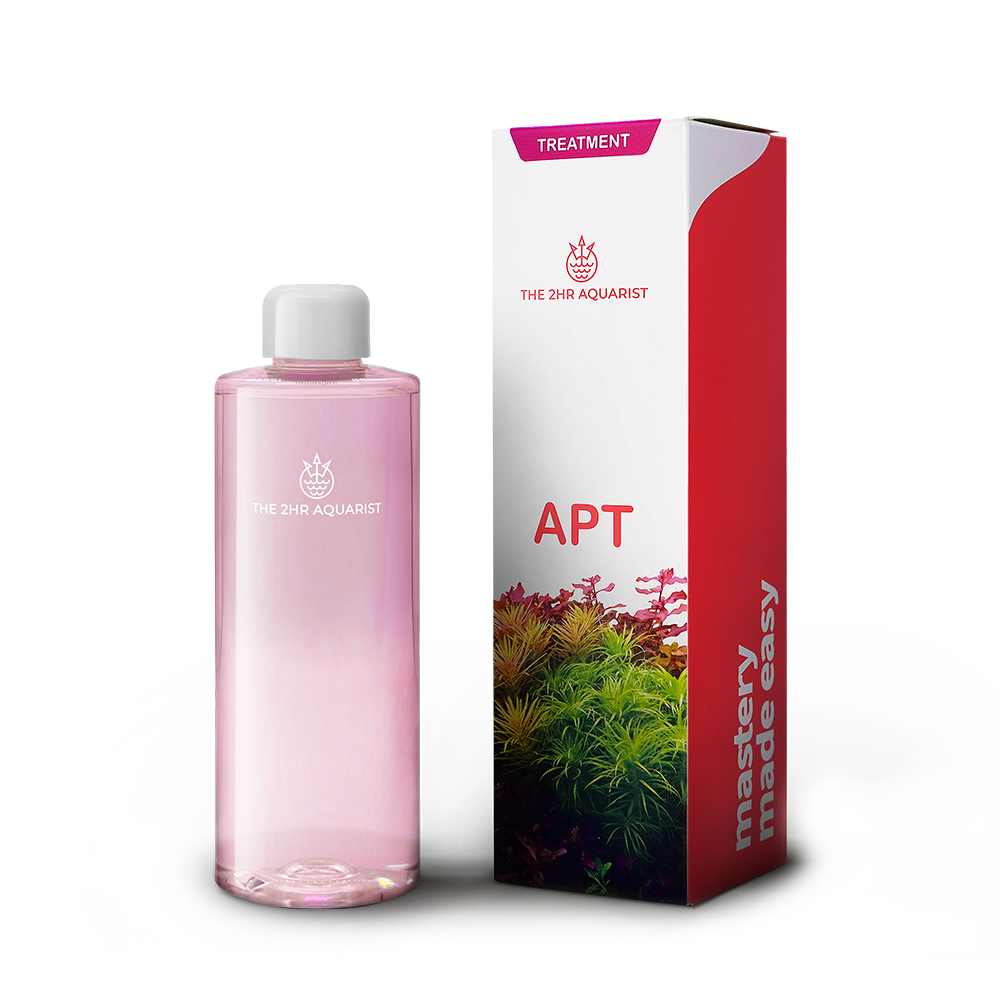
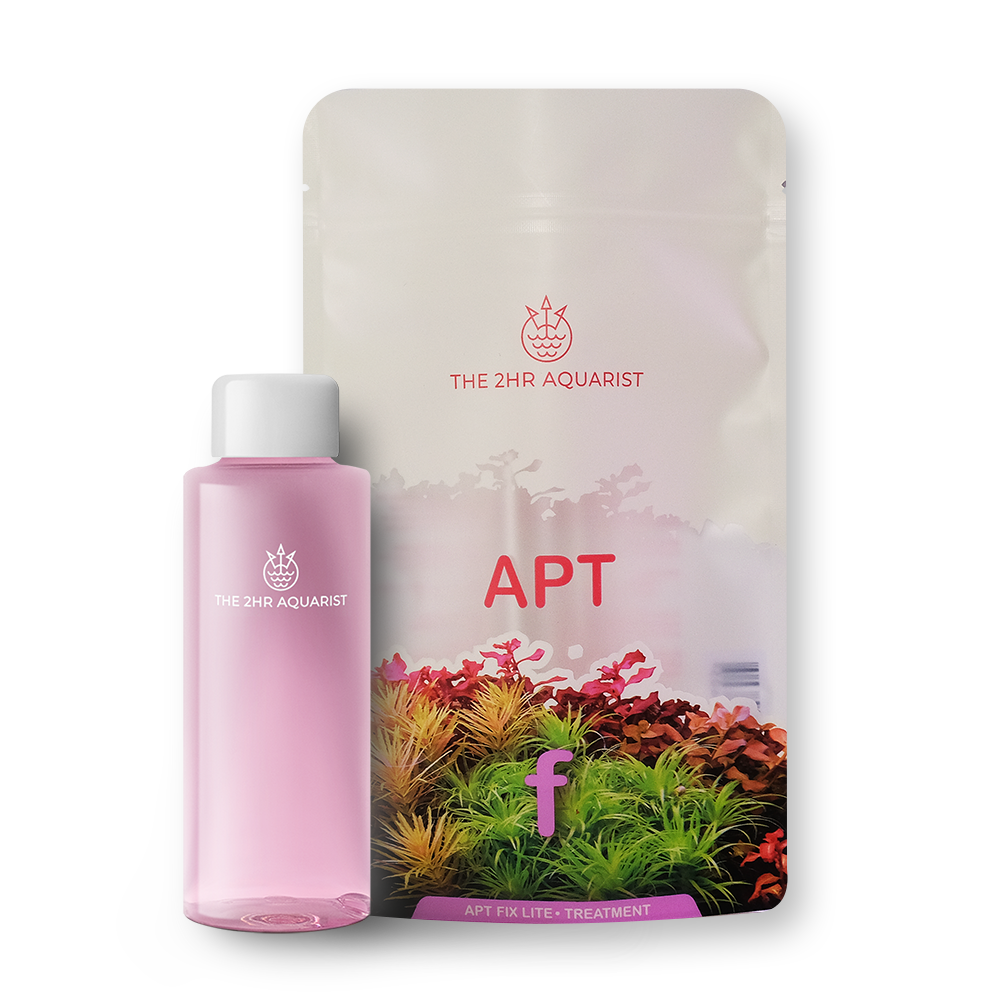
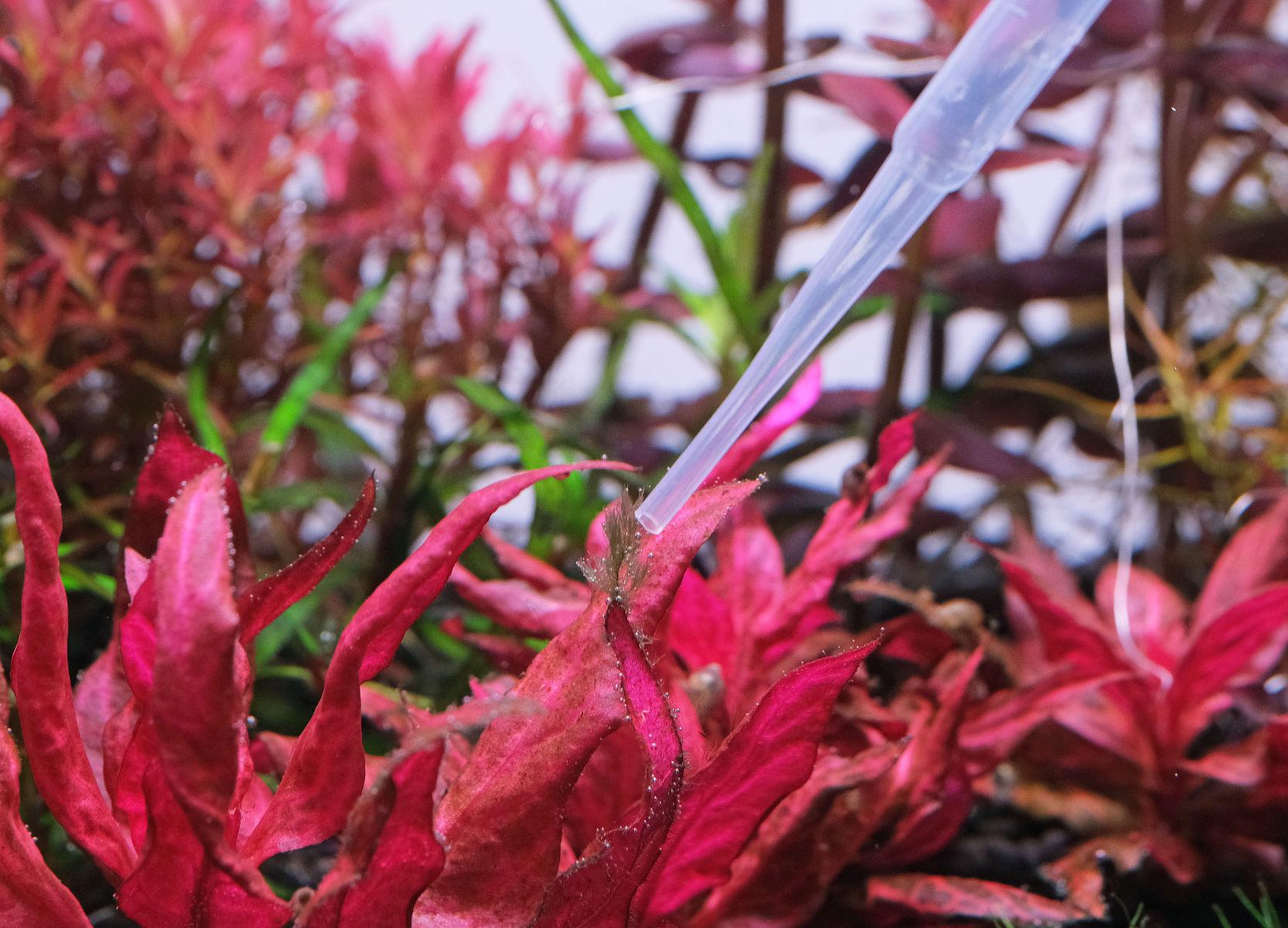
For healthy leaves with early BBA, spot treat instead of cutting blindly. APT FIX and APT FIX LITE are highly effective for spot treatment on affected areas. Turn off flow briefly, apply directly with a syringe or dropper, wait, then restore circulation. Existing black beard algae often turns reddish or pale as it dies back. If a high amount of algicide is used, do a large water change a couple of minutes after spot dosing is done.
Hydrogen peroxide, liquid carbon products, Flourish Excel, bleach dips, and assorted remover bottles are often recommended online. Some hobbyists use 3% hydrogen peroxide with a syringe, a spray bottle, or a separate container for hardscape; others use liquid carbon products such as Seachem Flourish Excel or bleach dipping for decorations. However, the 2Hr approach is to prioritise trimming, stabilising CO2, reducing organic waste, and managing flow first. Chemical treatment is support work, not the foundation.
Second step is the clean-up. Clear organic debris from the substrate zone if this has not been done. In planted tanks, fish and shrimp feces and old leaves break down into organic detritus on the substrate. Many hobbyists believe that this provides a source of nutrients for the plants. While this is partly true, the decomposition process is not clean and the remaining organic waste, combined with high light levels, causes algae to bloom. Filters should be serviced to make sure they are not choked - filters need not be free from all organic debris, they just need to be in a well functioning state.

Lastly is creating an environment that shifts the tank balance towards plant dominance. Growing plants with healthy leaves produce defensive chemicals that deter algae. When healthy leaves fill up the tank environment, the tank as an ecosystem deters algae spores from blooming. Patches of plants filled with deteriorating old growth should be replanted, and compacted rootzones should be cleared. This is often the most labor intensive step. Plants need space to grow, both above and below the substrate level.
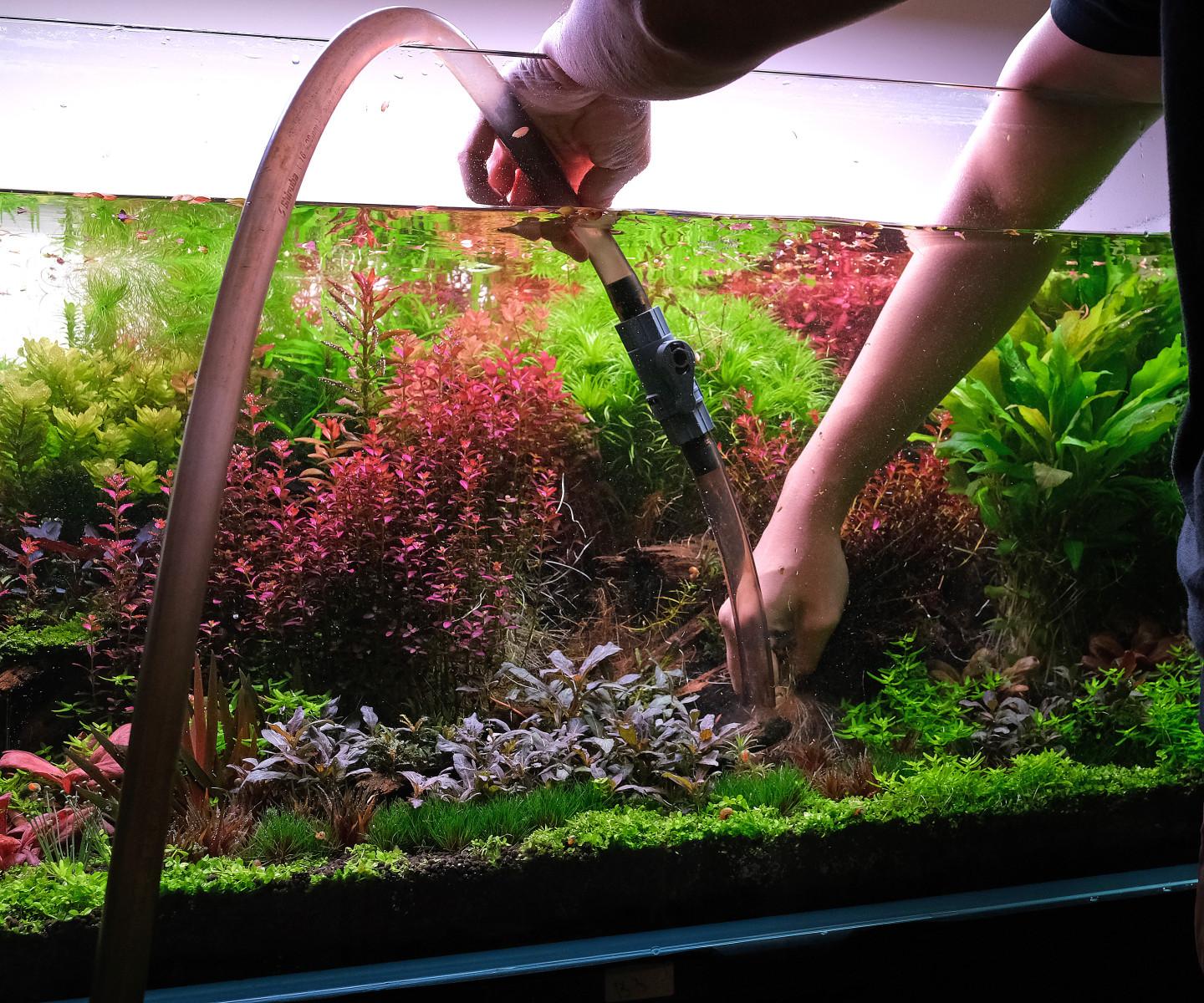
Clearing away old growth, including old rootzones and replanting fresh portions of the plants allows planted aquariums to rejuvenate with new growth. Merely trimming away top portions of plants is not sufficient.
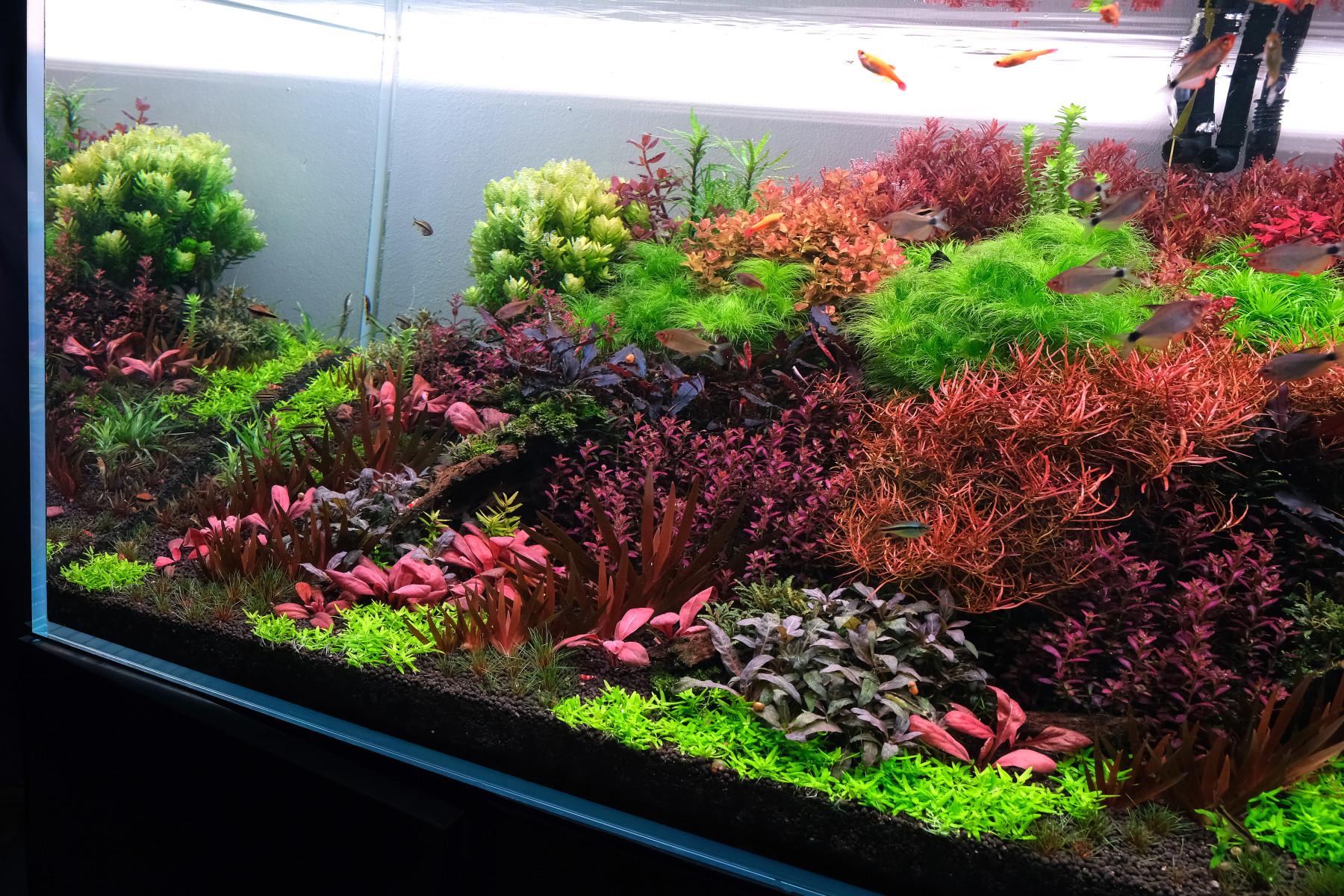
Lastly, tuning up growth parameters, by adding nutrients and CO2 can help. This sounds counter intuitive, however, this is often tremendously helpful in aquariums where poor plant growth is the trigger factor for algae. Remember, healthy plants are the key defense against algae growth of any kind.
When managing multiple tanks, spreading contaminated plants, dead algae, or spores from one aquarium to another is not a big deal. BBA spores are everywhere, and one cannot fully inoculate tanks from it. It is by creating an environment that deters algae that prevents BBA from infecting a tank.
Siamese algae eaters, American flag fish and Mollies pick at BBA, however, algae eaters are not a holistic solution for solving BBA issues.
Trim older leaves that are heavily covered in black beard algae. Old leaves are often abandoned by the plant and are easy targets for BBA.
Spot treat healthy leaves and hardscape with APT FIX or APT FIX LITE. If the leaf is still useful, treat black beard algae directly instead of cutting everything on sight.
Stabilise CO2 across the full photoperiod. Fluctuating CO2 forces plants to re-program enzymes, which increases metabolite leakage and invites BBA spores.
Redirect excessive high flow. If BBA appears mainly near filter outlets, CO2 diffusers, or other high flow areas, spread the flow out more evenly.
Do large weekly water changes and physically remove organic waste. Siphon the substrate, stir up debris with a turkey baster, and keep weekly water maintenance boringly consistent.
Uproot and clear compacted rootzones and remove old growth. Replant new growth and allow the aquarium to be repopulated with new leaves.
Add nutrients and CO2 to boost plant health.
Add more healthy plant mass if the tank is sparse. Fast growing plants and floating plants help compete for organics and make the aquarium less welcoming to algae.
In low-tech planted tanks, black beard algae is more often tied to organic waste, poor water quality, old leaves, and too much light relative to the number of plants. Here, weekly water changes, moderate light, more plants, and regular trimming do most of the heavy lifting.
In high-tech planted tanks, fluctuating CO2 levels is a major factor. Strong light, deteriorating old leaves, and poor CO2 stability can create the perfect setup for black brush algae to attach on leaf edges, hardscape, and in the path of misting. That is why the proven method is not just to treat black beard algae after it appears, but to prevent black beard algae by keeping CO2 stable, keeping the tank clean, and refusing to let your planted aquarium turn into a nutrient-rich swamp with expensive lighting.
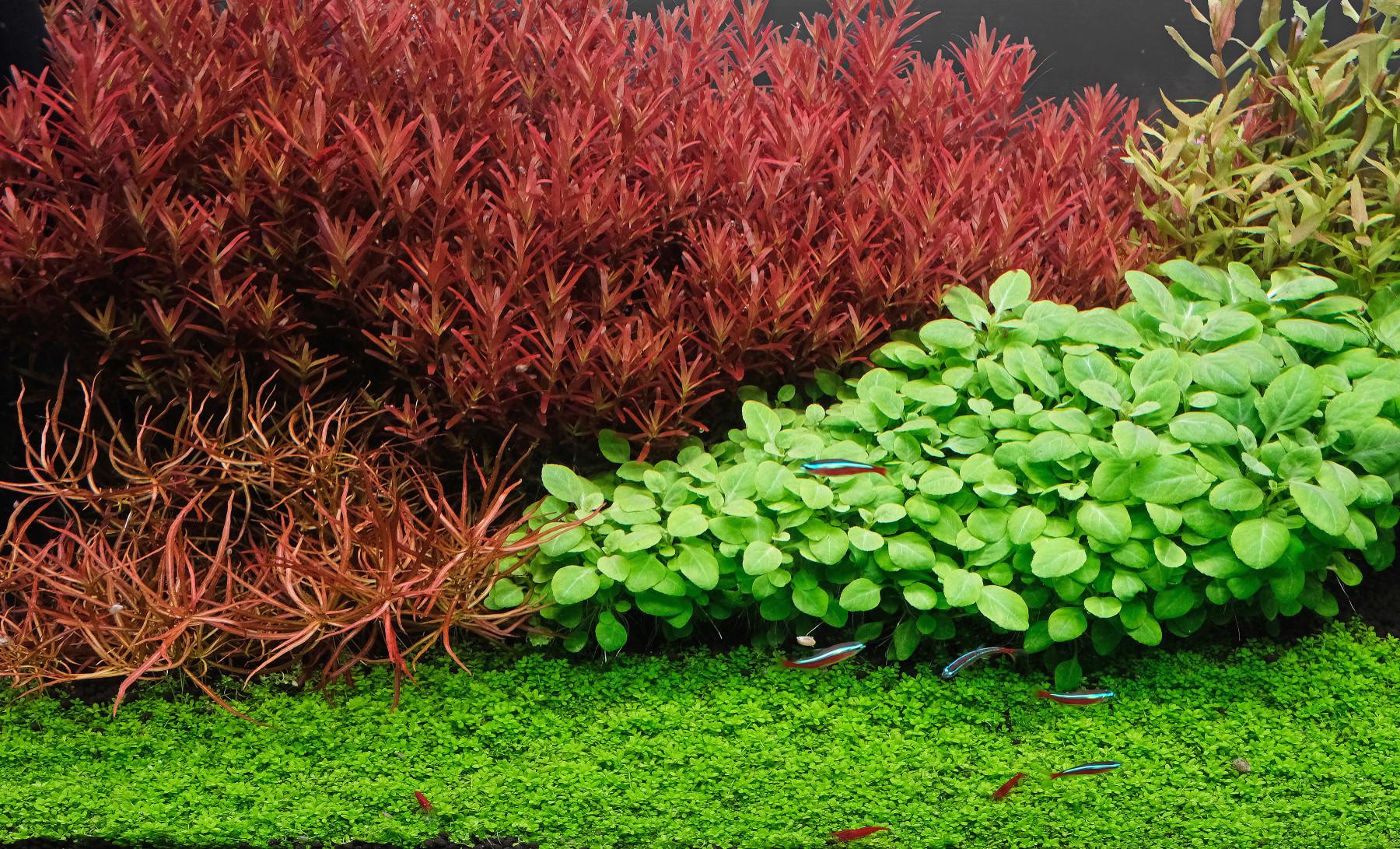
Tank cleanliness and absence of deteriorating plant growth makes a huge difference in whether BBA spawns in a planted aquarium or not.
Every APT product we make - the liquid fertilisers, algae treatments, substrates and water care that together form a complete approach to the planted aquarium, all built on the same empirical method. If you already know what you're after, it's here. If you're not sure where to start, each product page explains exactly where it fits.