
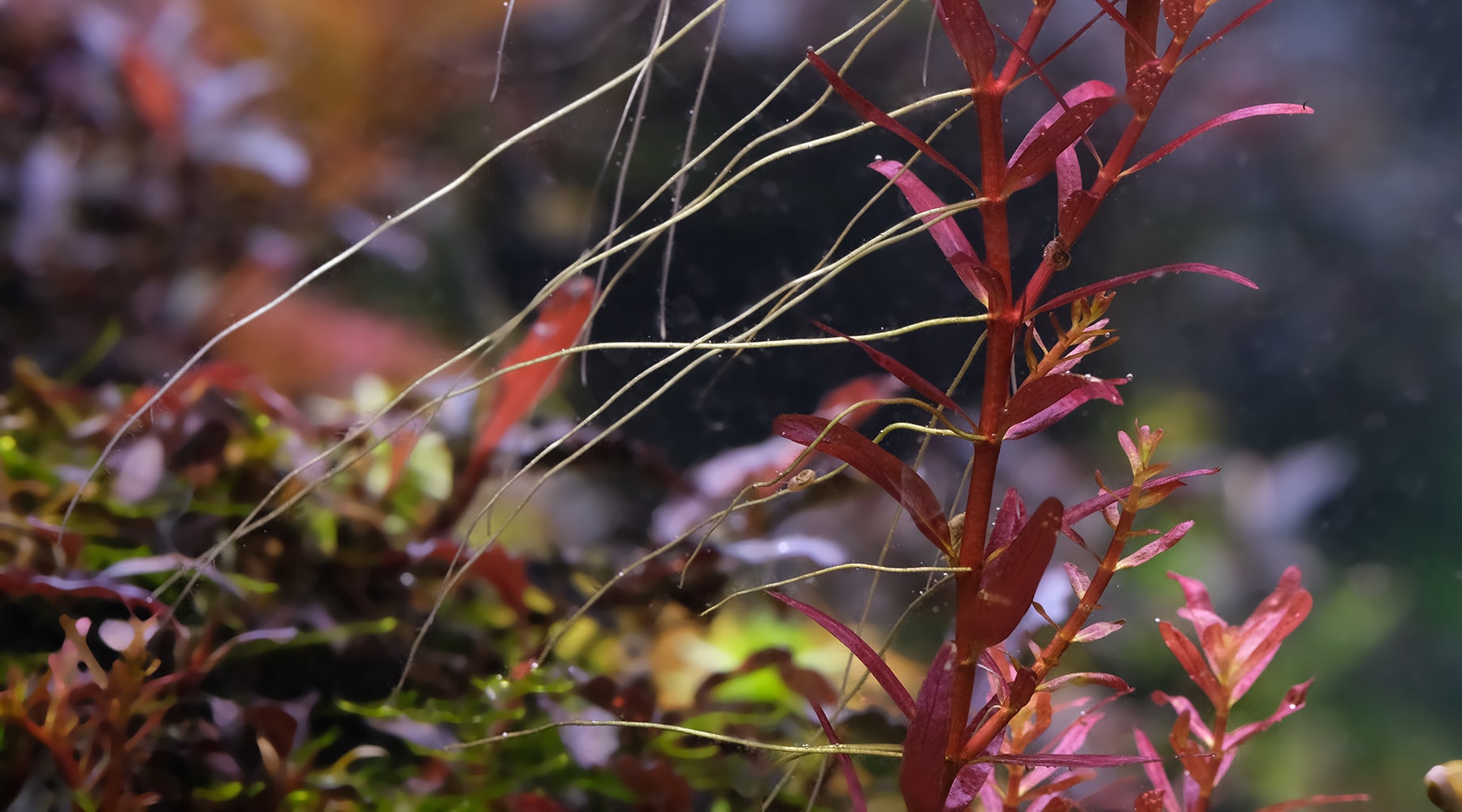
"Aerial roots are roots that often grow out of the internodes of stem plants midway up the stem, above the substrate.

Why do these roots appear? Are they a cause for concern? What can we do if we find them unsightly?

Territorial Instinct

Aerial roots are most common in sparse tanks or where there is a lot of space around the stem plants. In such environments, aerial roots develop naturally to support territorial expansion.

If they successfully root into the substrate, new stems can develop from the internodes.

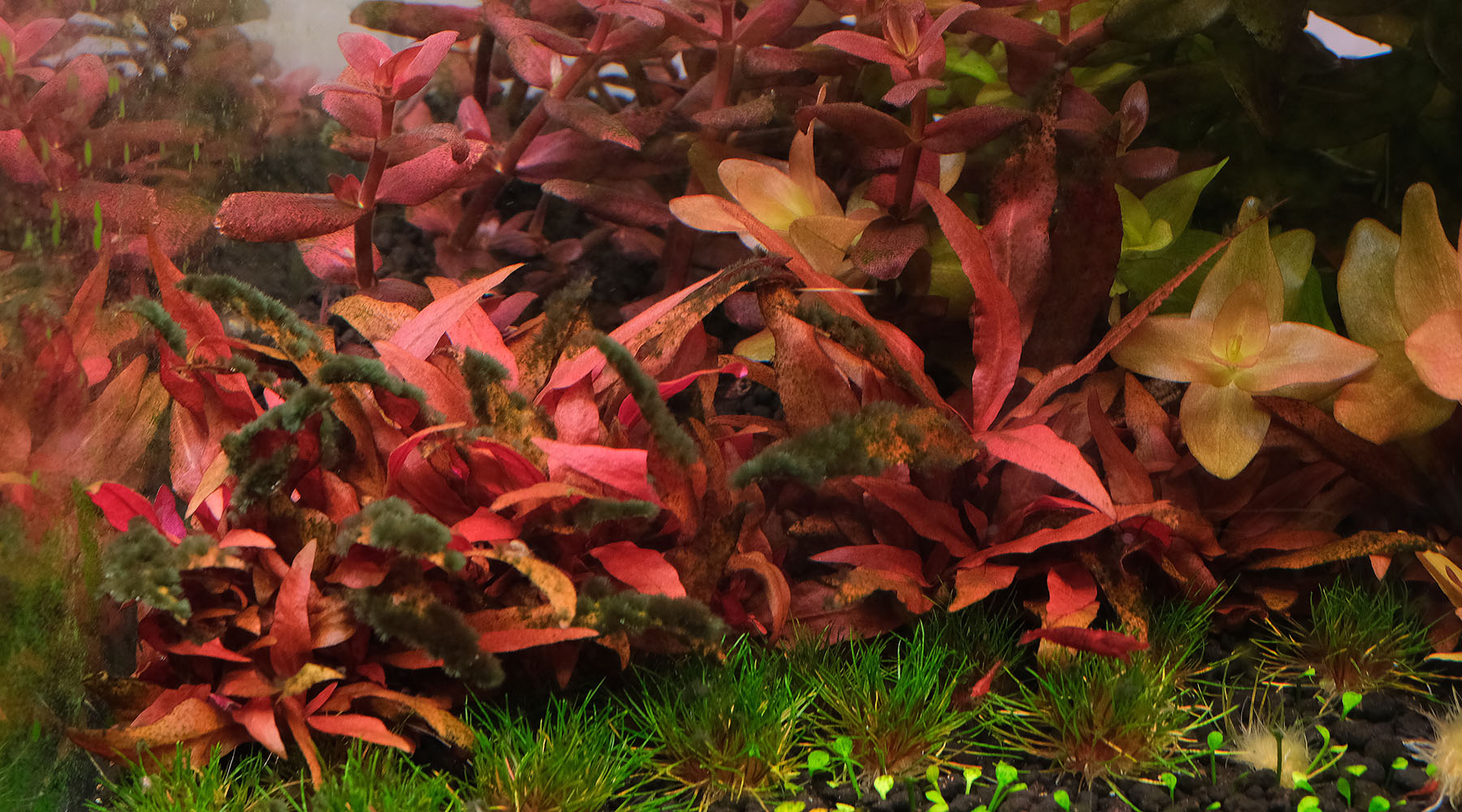
In the top picture above, a cutting of Rotala 'Blood Red' was placed as a single stem in a corner of the tank. It had plenty of space around it and began to branch and develop aerial roots.

2Hr Rotala blood red

Compare this with the same cuttings planted in a denser bush. In the 'bush' setting, the cuttings concentrated on growing upwards (to reach the light), had less branching and much less aerial root development.

Rotala Hra surface

Propagation Instinct

In general, when stem plants start to grow horizontally, often at the surface of the tank, the natural response is for serial roots to start to grow. In nature, this prepares the plant to colonise other areas when it is swept away by currents.

Bacopa side shoots

Branching Instinct

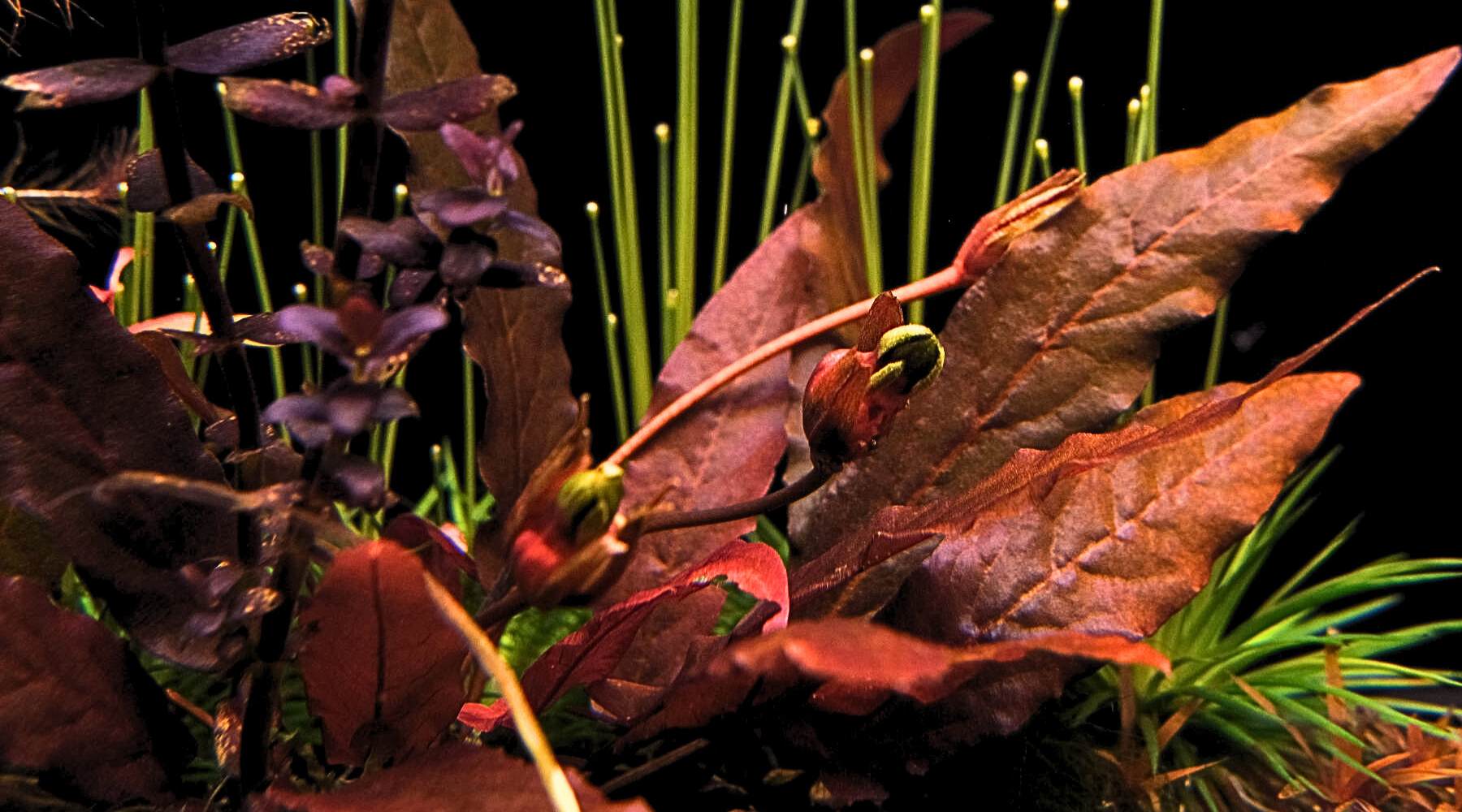
Aerial roots are usually associated with side shoots or branches. In many ways, the side shoot is a completely separate plant. When we prune (rather than replant) the tops of stem plants, this encourages side shoots (and therefore aerial roots) to grow. So over-pruning often results in an abundance of aerial roots.

Substrate Confusion

Coarse substrate (such as pea gravel or pebbles) or poor quality substrate can confuse the plants as to where the substrate really is. This can cause aerial roots to sprout in internodes lower down the stem before the stem has gained significant height. The plant is looking for a place to root but does not recognise the substrate as soil due to the large grain size or poor substrate quality.

Under-nutrition

Apart from the above examples, aerial roots can also occur in undernourished plants, where excessive roots are produced as the plant diverts more energy to nutrient-seeking functions. However, in such cases the plant would often show other signs of poor nutrient access: smaller or poorly formed leaves.

If you find them unsightly, you can take the following actions:

  1. Plant in denser clumps. This works for stem plants that take crowding well (Rotala rotundifolia and its variants, Ludwig arcuata etc.)

  2. Instead of simply trimming tall stem plants, replant the tops and discard the old stems and roots. This is routinely done for most Dutch Style Aquascapes.

  3. Trim plants before they get too close to the surface. Near the surface, stem plants will usually bend or grow sideways. They would start to branch and aerial roots will almost always develop.

  4. Use finer substrate. This is especially the case for carpets.
Explore

View all

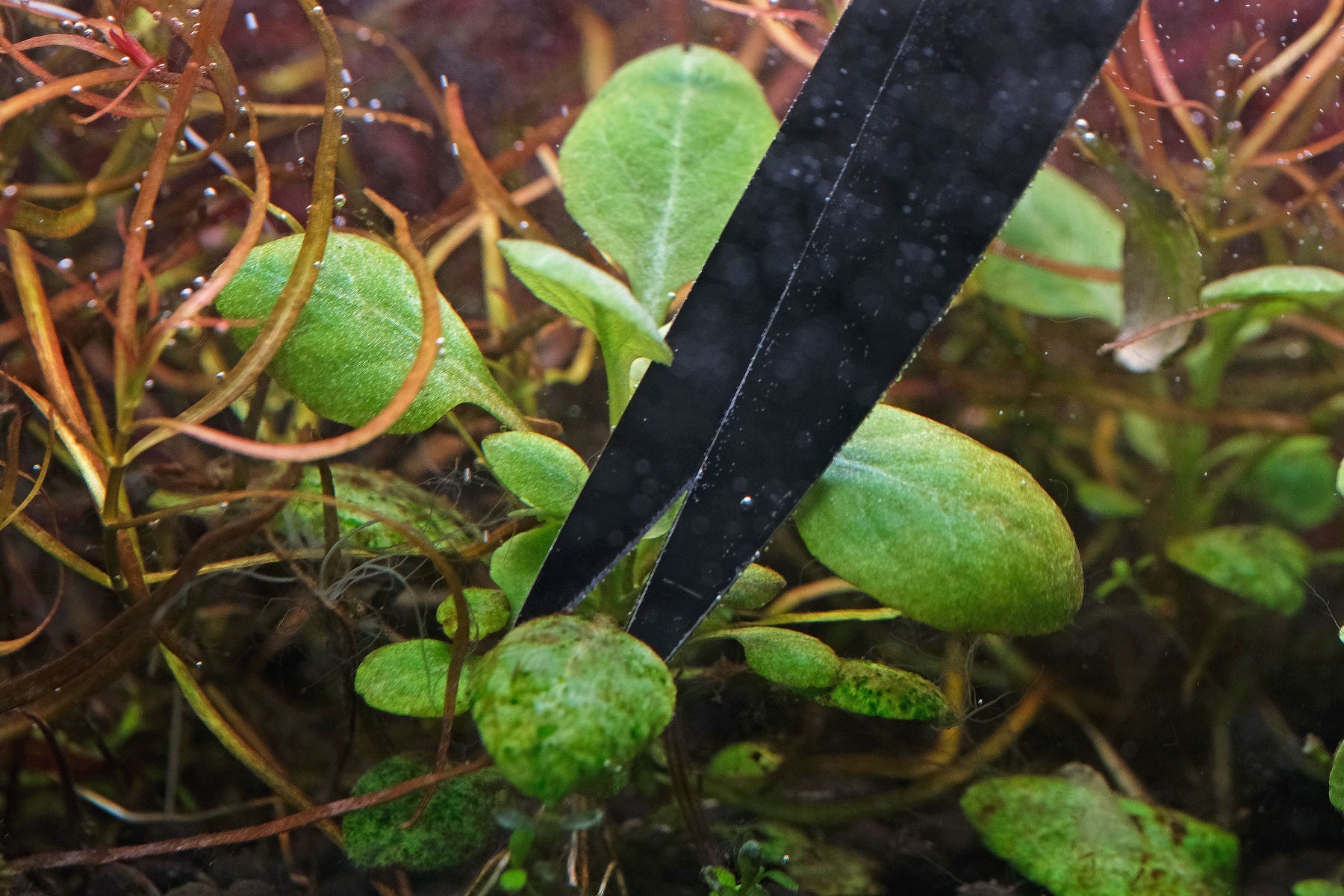
Close up photo of algae on older aquatic plant leaves

Why do leaves deteriorate? Understanding the leaf renewal cycle in aquatic plants

This article delves into the topic of how plants continually renew themselves through the production of new leaves.
Read moreabout Why do leaves deteriorate? Understanding the leaf renewal cycle in aquatic plants

4ft Rotala florida community aquarium: Showcasing the 2hr Way

4ft Rotala florida community aquarium: Showcasing the 2hr Way

Full details of tank parameters, plants and fish species, and the maintenance regime of the 4ft Rotala florida aquascape are described here.
Read moreabout 4ft Rotala florida community aquarium: Showcasing the 2hr Way

New Tank Journey | Ugly Duckling

New Tank Journey | Ugly Duckling

New tanks can be frustrating at the beginning. Here, we describe one important signal that things are actually progressing well, despite plants having algae. 

Read moreabout New Tank Journey | Ugly Duckling

When Less is More

When Less is More

How to get Rotala rotundifolia redder? Interestingly, less can be more in this case.

Read moreabout When Less is More

System Shocks

System Shocks

Sudden widespread algae infestation can take place when changes in environmental parameters induce adaptation stress that weaken plants which become vulnerable to algae.

Read moreabout System Shocks

Flowering Underwater?

Flowering Underwater?

Do aquatic plants flower underwater? Is flowering a sign of good health? Which plants can I grow that will flower easily in my aquarium?

Read moreabout Flowering Underwater?

Small Tanks- 3 Choices

Small Tanks- 3 Choices

3 Choices to maximise success in a small aquarium. We use a 1ft cube example- without CO2 injection.

Read moreabout Small Tanks- 3 Choices