

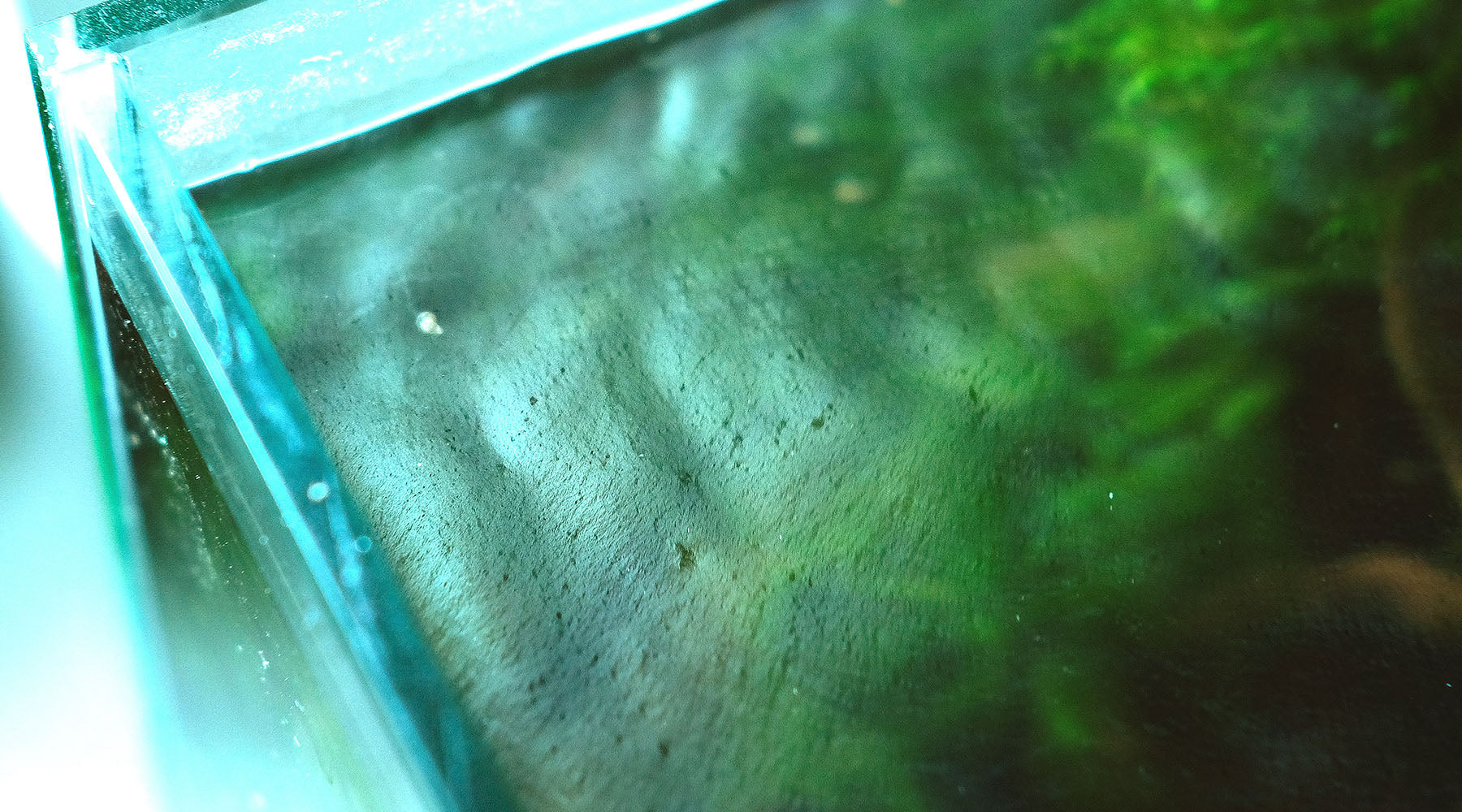
Surface scum appears as a white, oily or milky layer on the surface of the tank. Apart from its unsightly nature, the main reason it deserves attention is that its formation interferes with vital gas exchange and reduces the overall oxygen level in the tank.
Even in heavily planted tanks, plants only produce oxygen during the light window, which is around 7 to 8 hours for most tanks. However, organisms such as fish, bacteria and other microbes consume oxygen throughout the day. This means that for most of the time a tank is dependent on gas exchange at the surface for oxygen. Good oxygen levels are essential to support an active bacterial colony, which helps to break down organic waste and keep algae at bay.
So the seemingly harmless 'surface scum' of a tank can lead to a whole host of problems.

Above: 'surface scum' is common in new tanks. This is because as the plants adapt to a new environment, they release proteins that accumulate on the surface, often as an oily film.
But what exactly is it?
Most of the time, surface scum is a microbial bio-film. Put another way: a thriving, slimy colony of bacteria and other microorganisms.
5 main causes
- Excess organic waste. In new tanks that are not biologically mature, or tanks with an undersized filter, organic waste is often not digested quickly enough by the filter and accumulates on the surface where good oxygen levels support a thriving microbial colony that feeds on this excess waste.
- Change in plant growth parameters. This can be caused by new light levels, new fertiliser, new equipment, etc. As plants reprogramme their cells to adapt to the new tank conditions, they release proteins that accumulate on the surface, often as an oily film. So, interestingly, an 'improvement' in tank conditions can lead to a temporary increase in surface biofilm.
- Poor circulation. In a mature tank with already poor circulation and gas exchange, microbes will prefer to hang out on the surface where oxygen is plentiful. This is a vicious circle as the accumulated slime further reduces surface exchange.
- Excessive iron. In some tanks, excessive iron dosing can result in a viscous white film where bacteria feed on the rich iron.
- Constant flux. Many high light, high growth speed tanks with weekly replanting/trimming work will often be in a state of constant flux and have some surface film even if the tank is mature and has no other issues.
What can I do?
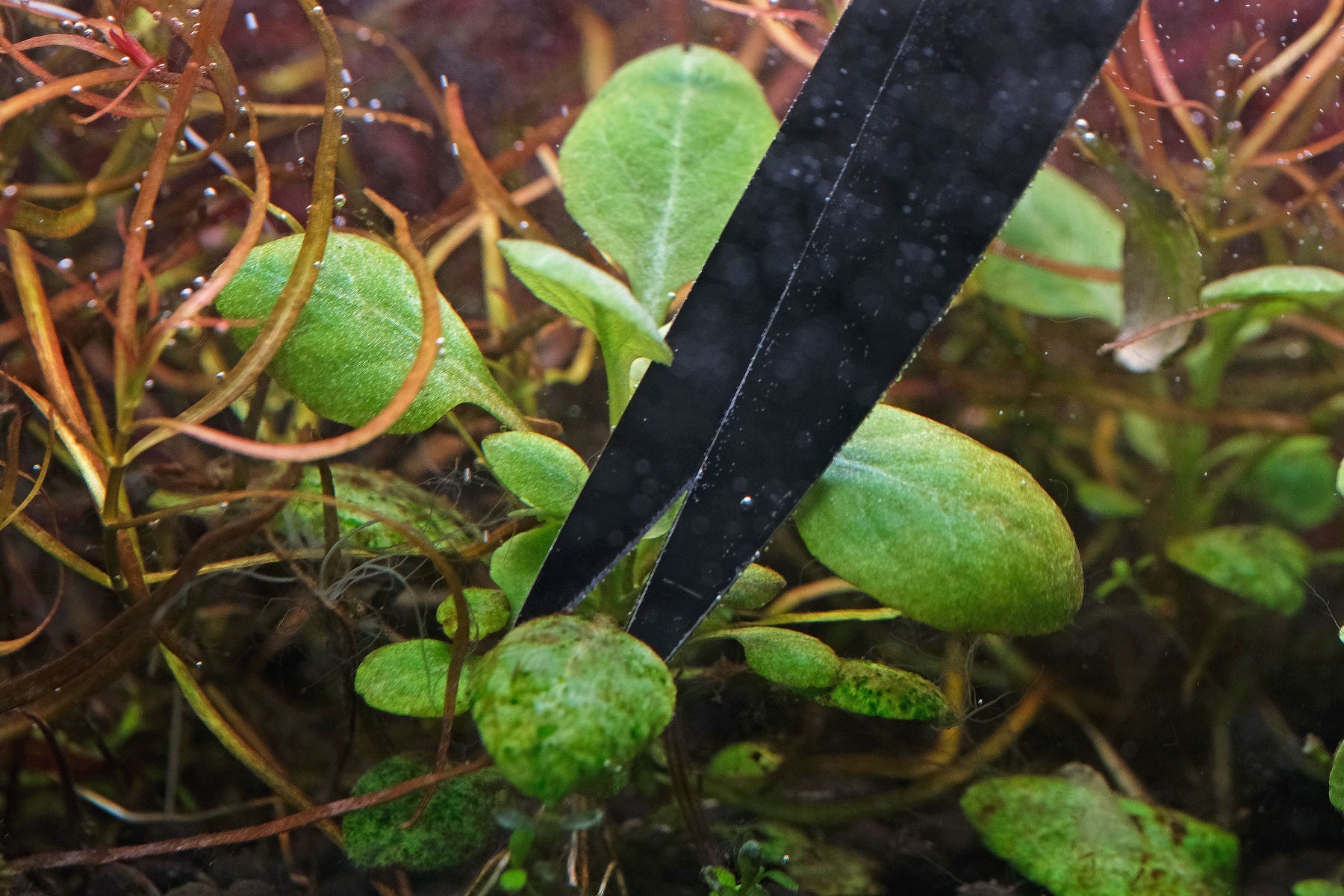
The simplest method is mechanical: use a surface skimmer (shown above) in the water intake. This is standard on all 2Hr tanks. This directs the surface biofilm to the filter where it is digested and gas exchange is greatly improved.
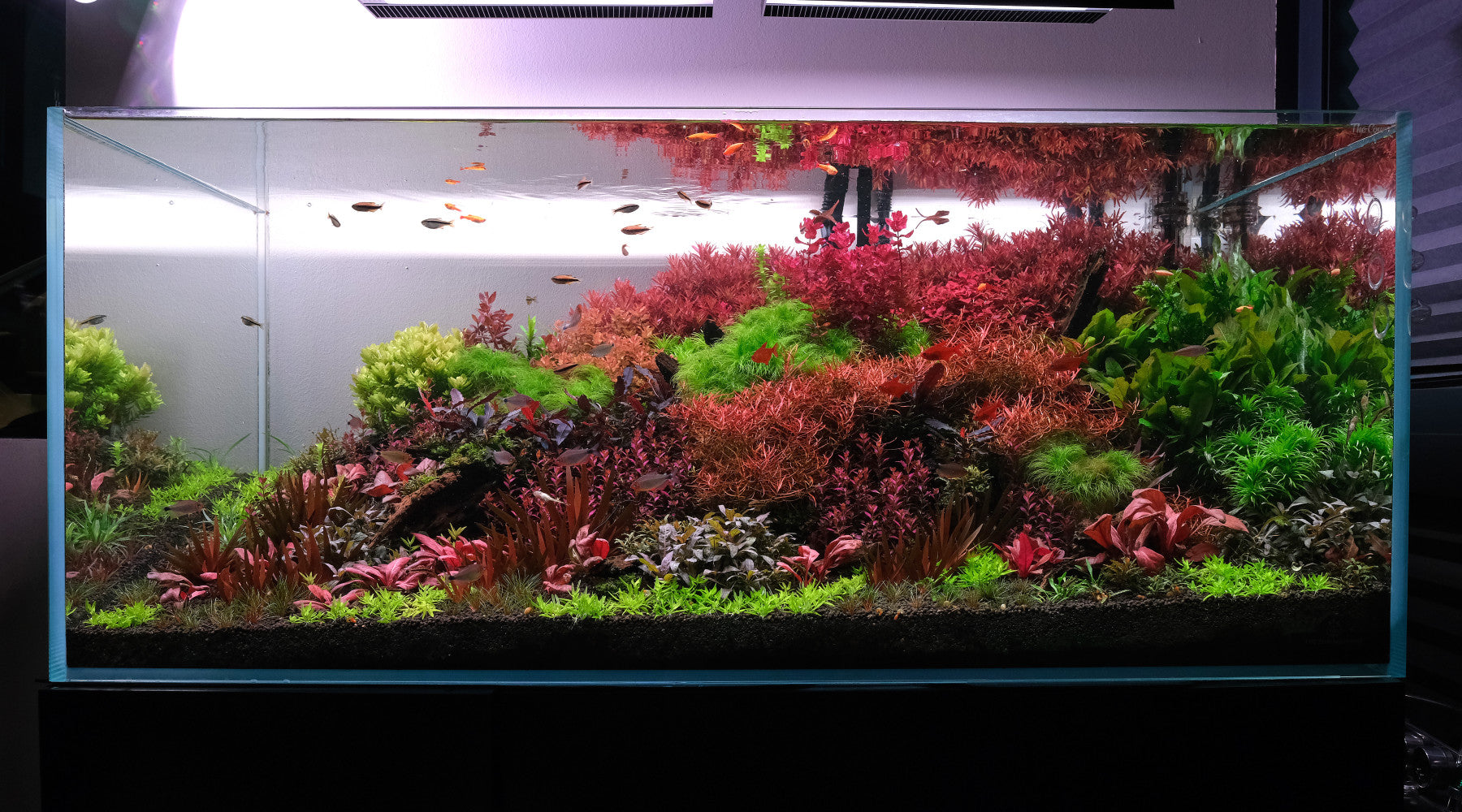
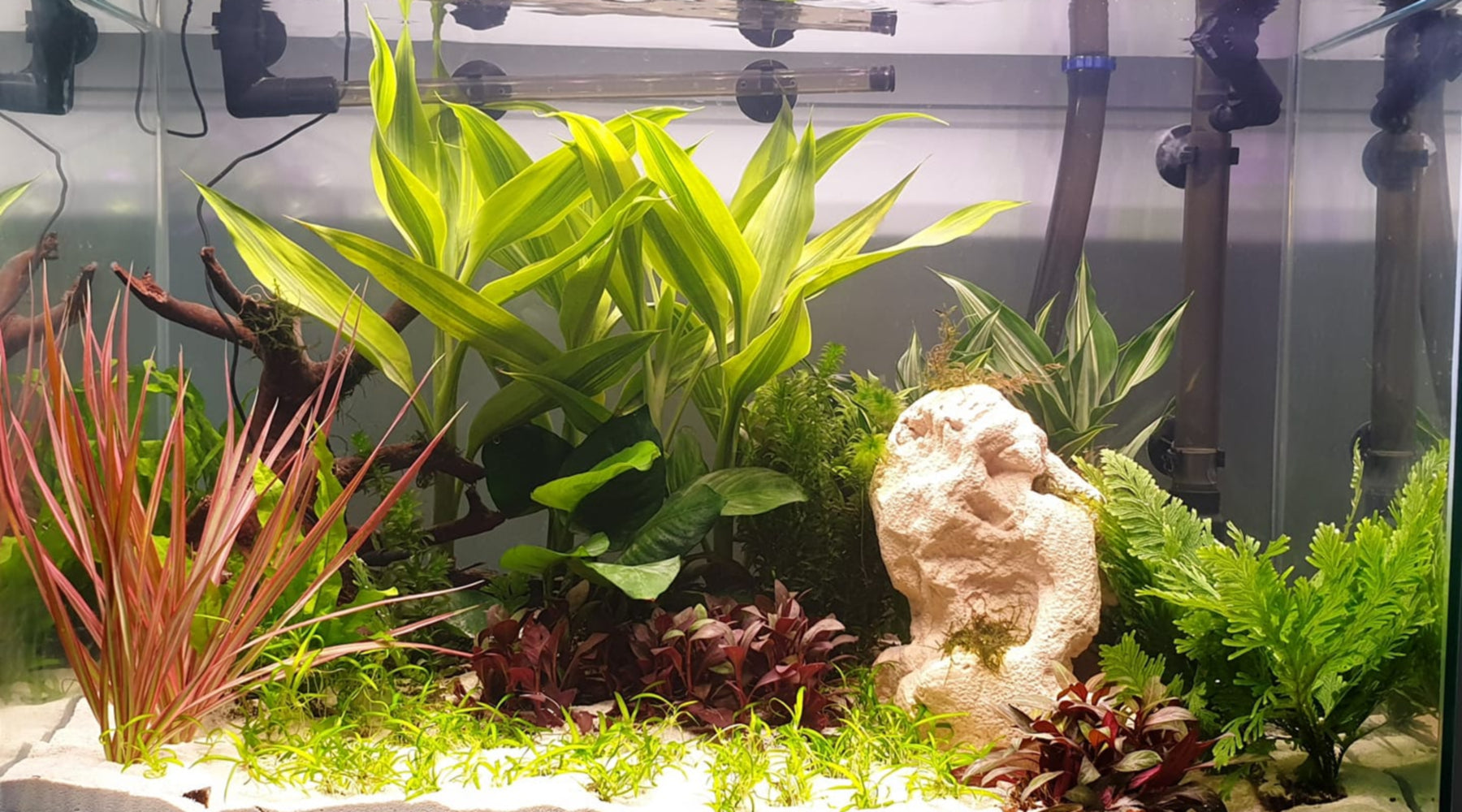
On a more fundamental level, 'surface scum' is not inevitable. Mature tanks with slower, stable plant growth often have no surface film, even without surface skimmers or mechanical surface agitation.



Share:
Messy aerial roots?
Floaters: a dangerous love affair?