
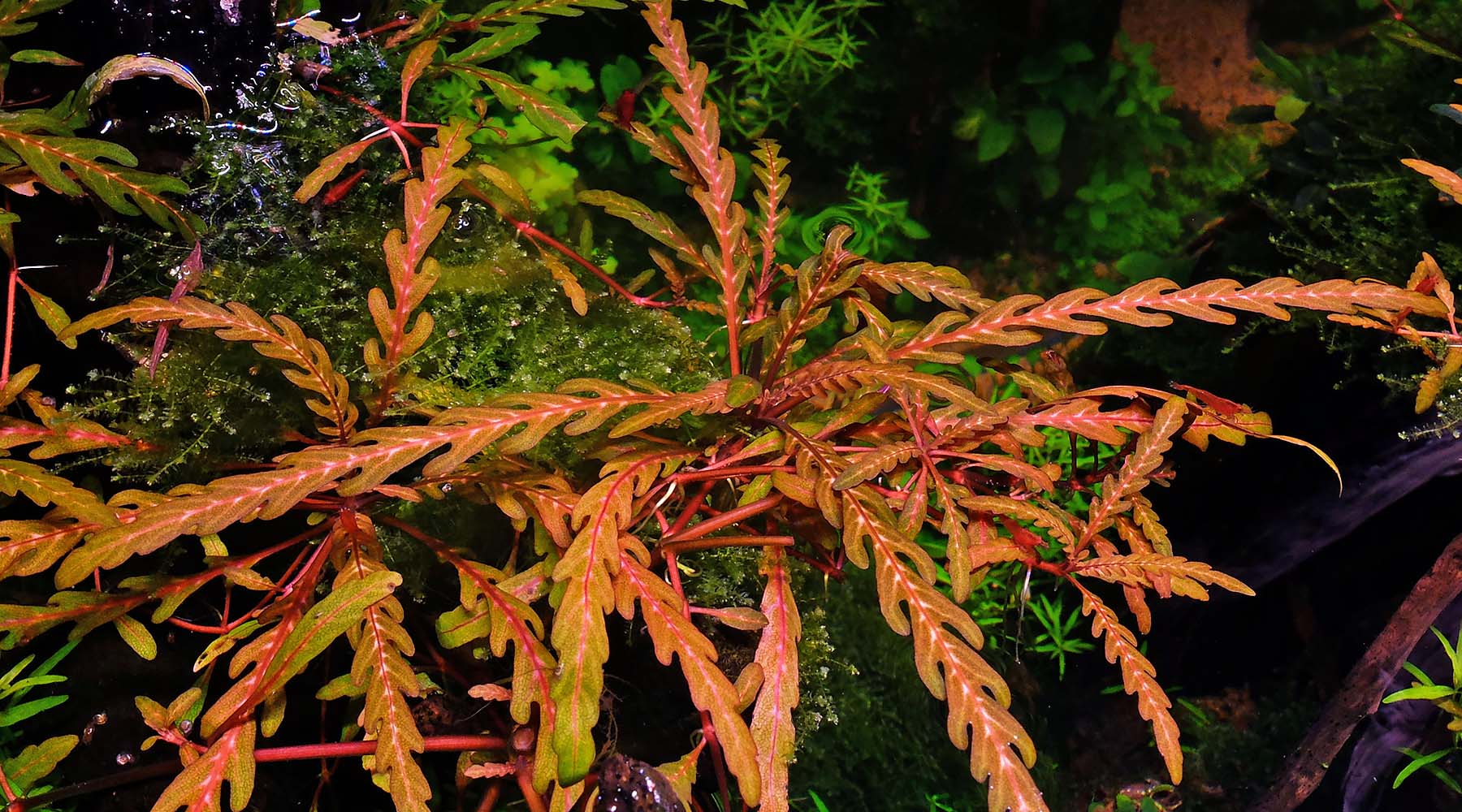
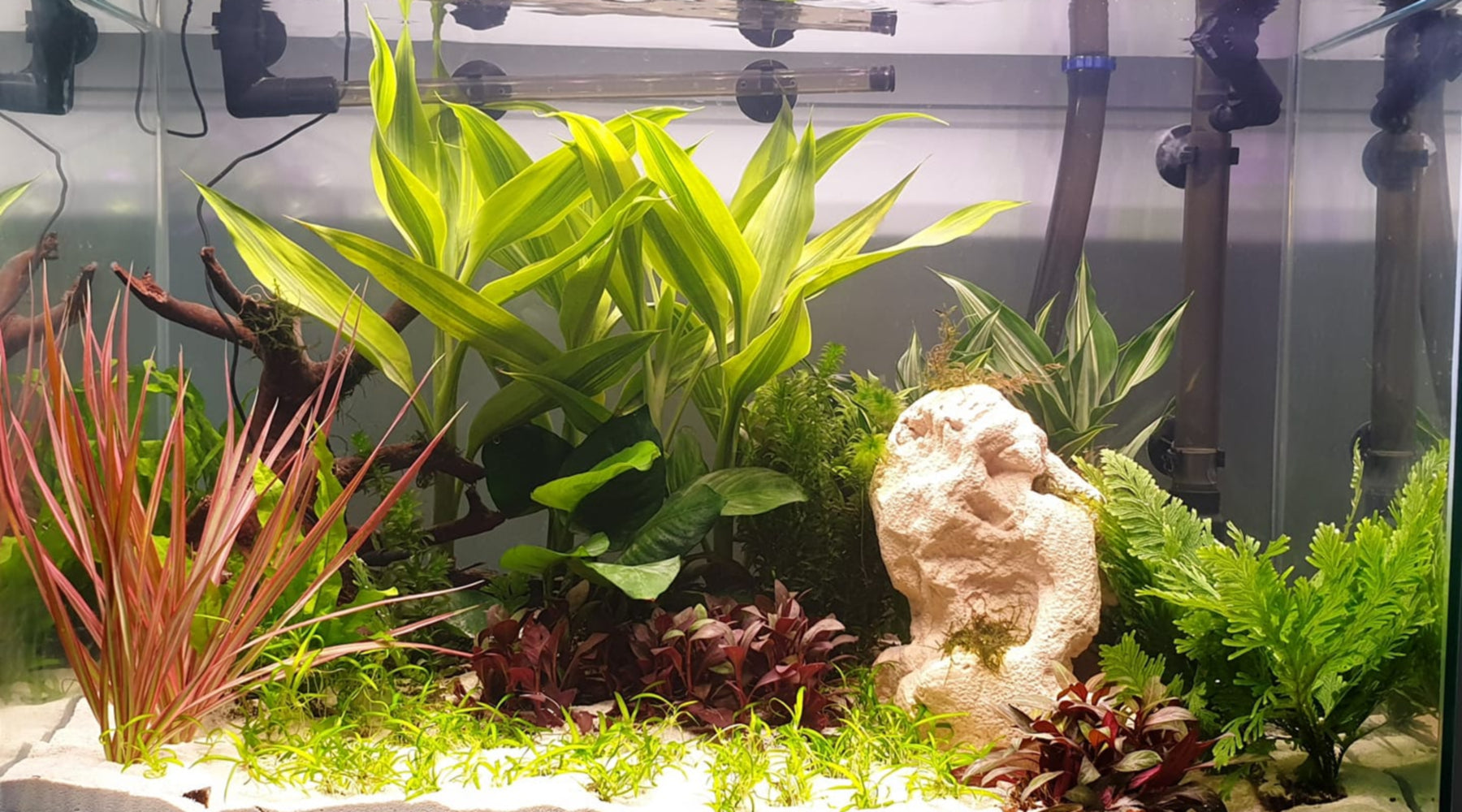
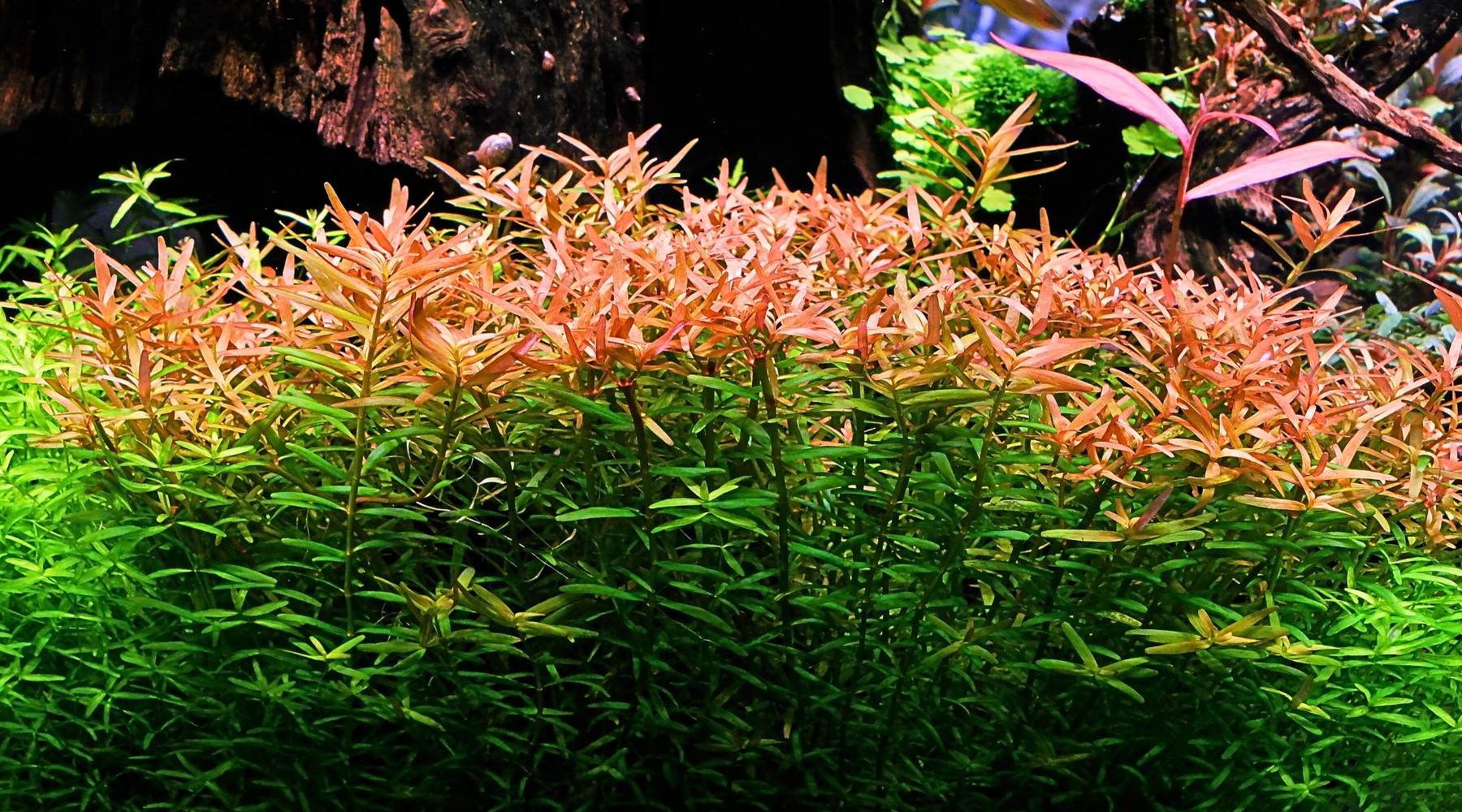
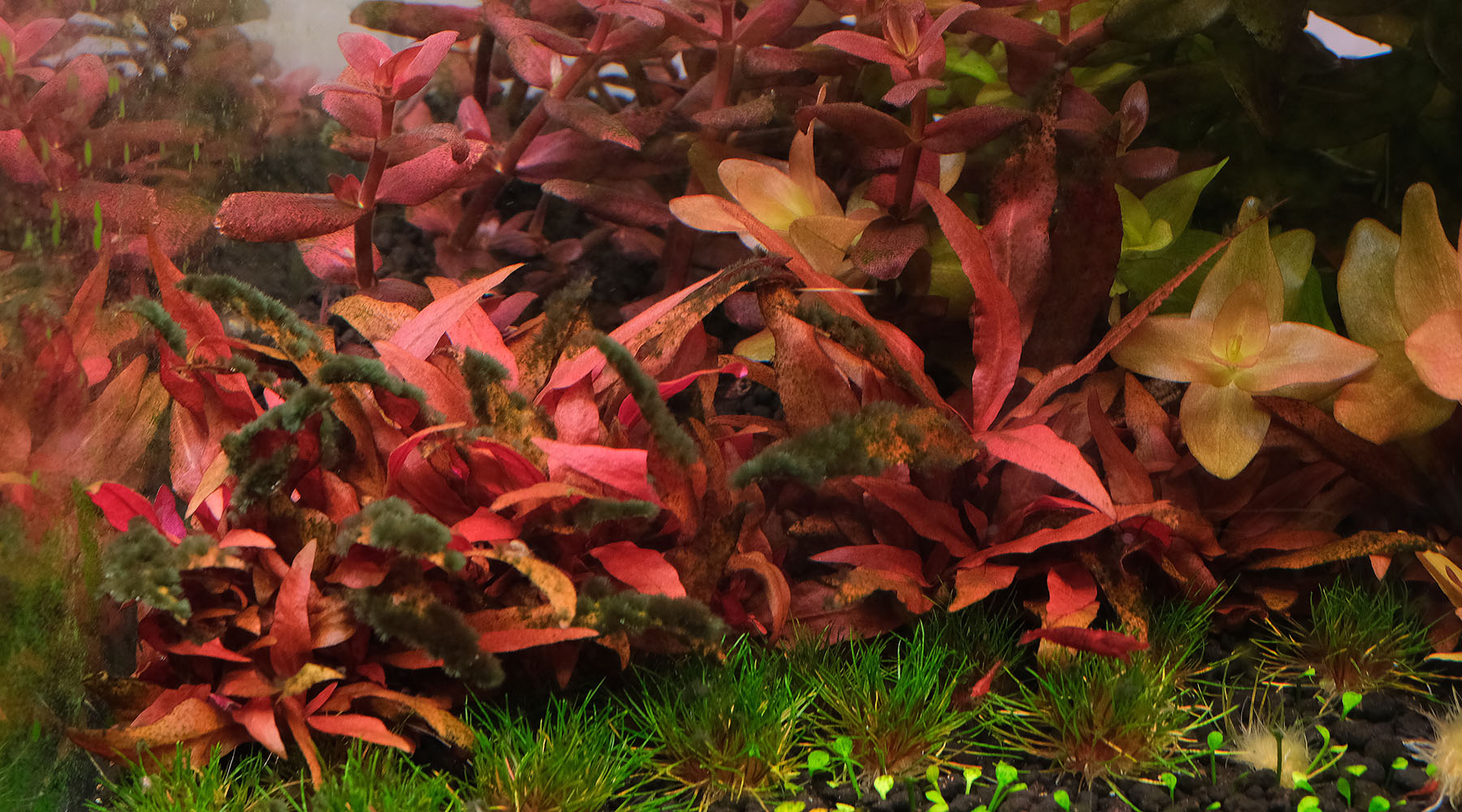
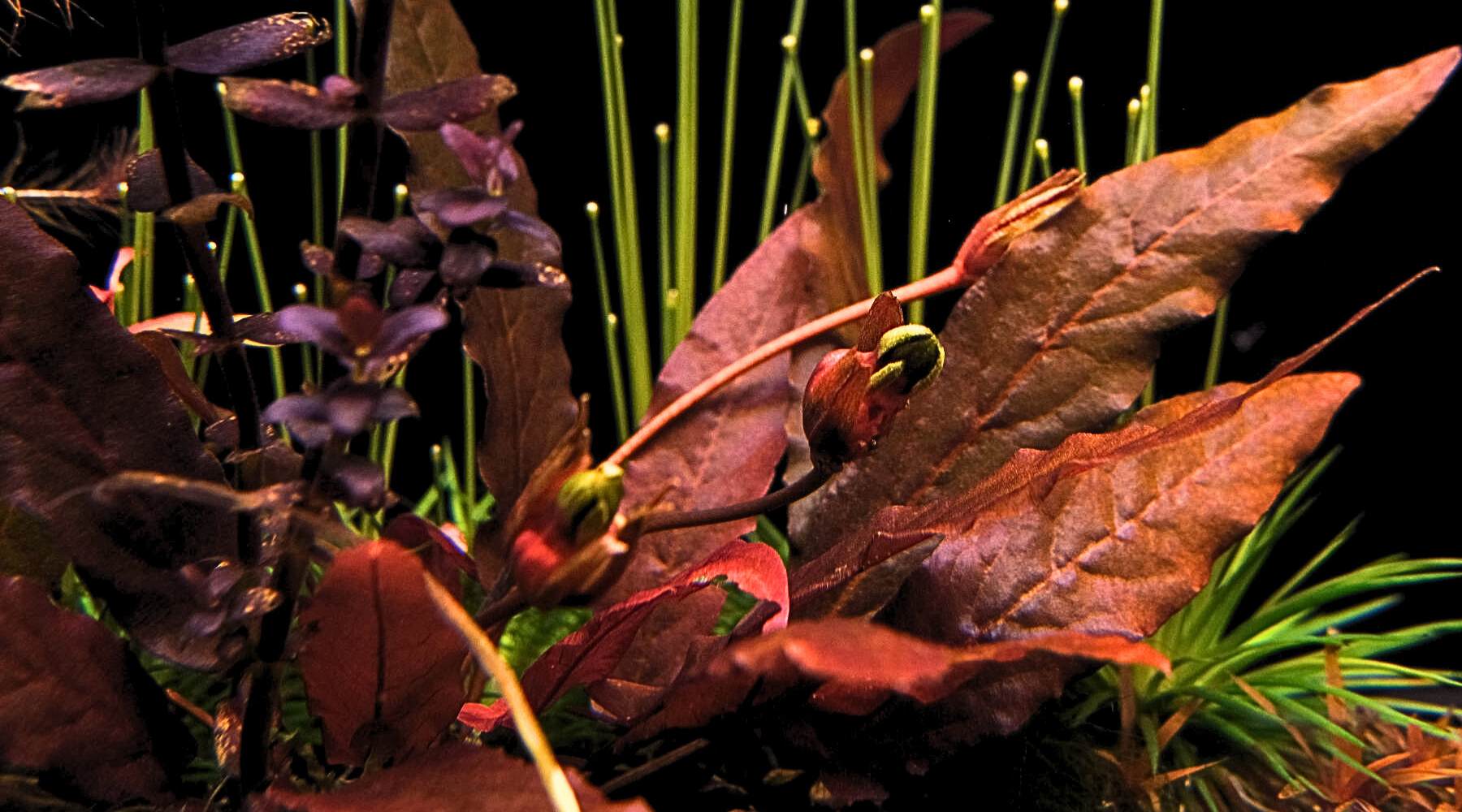
This plant originates from India and has become quite common in the hobby in recent years (2010+) as it is stocked and grown by most major aquatic plant nurseries. Hygrophila pinnatifida's fern-like appearance allows it to blend well with moss and wood. It requires very frequent pruning to prevent it from overshadowing the rest of the surrounding plants. This plant looks redder on the underside of the leaves. The photo above is the top view of the same clump of plants below. Because it doesn't need a substrate, it is often planted higher up on hard surfaces, which gives us the attractive underside of the leaves.

It is tolerant of a wide range of water parameters and is an easy plant to grow with CO2 injection, although it can be used reasonably well in low-tech tanks (but success is less certain). If you have tried buying emersed forms from dealers and they keep melting, try looking for submerged forms instead. The conversion process is where some people have problems with the plant - the submerged forms are stable and grow easily.

Hygrophila pinnatifida is a popular epiphyte in aquascaping circles because it grows well without being planted in substrate - it attaches easily to rocks and wood, and its reddish colour and unique leaf shape provide a good contrast to green plants. It can be used in clumps in the middle of the aquarium or attached to any type of hard substrate using superglue, thread or cable ties (which can be removed later as the plant attaches easily to surfaces).

The unique leaf shape and patterning is clearly visible in this close-up. Hygrophila pinnatifida is a stem plant that will grow continuously upwards towards the water surface. If it is allowed to reach the surface, it will eventually break through the surface and grow emersed leaves and small purple flowers.
It is an aggressive and fast grower, constantly sending out runners; it becomes very wild and can grow quite large with a width of 25cm+ if given plenty of CO2 and nutrients. This plant can be aggressively pruned to force it down to a smaller size and prevent it from shading other plants around it. The runners should be cut regularly if you do not want this plant to spread all over the tank.
Propagation is easy as the plant sends out runners very frequently. These will produce plantlets at regular intervals, which can be cut off and replanted elsewhere.
Key success factors
- Strong lighting gives better coloration.
- Avoid extreme water parameters.
- CO2 injection makes it much easier to grow this plant.
- Not super picky about nutrient levels but potassium levels should not be allowed. to bottom out. High tolerance for lean dosing.
How to get it redder
- Stronger light (higher PAR values)
- Low nitrates (5ppm & below)
This is one of the plants that will show much redder colours under nitrate limitation - meaning the plant will grow much redder when starved of nitrates. Overdo this and the plant will stunt. However, as it can tolerate much lower nutrient levels than other plants - other plants will usually stunt first.
How to trim
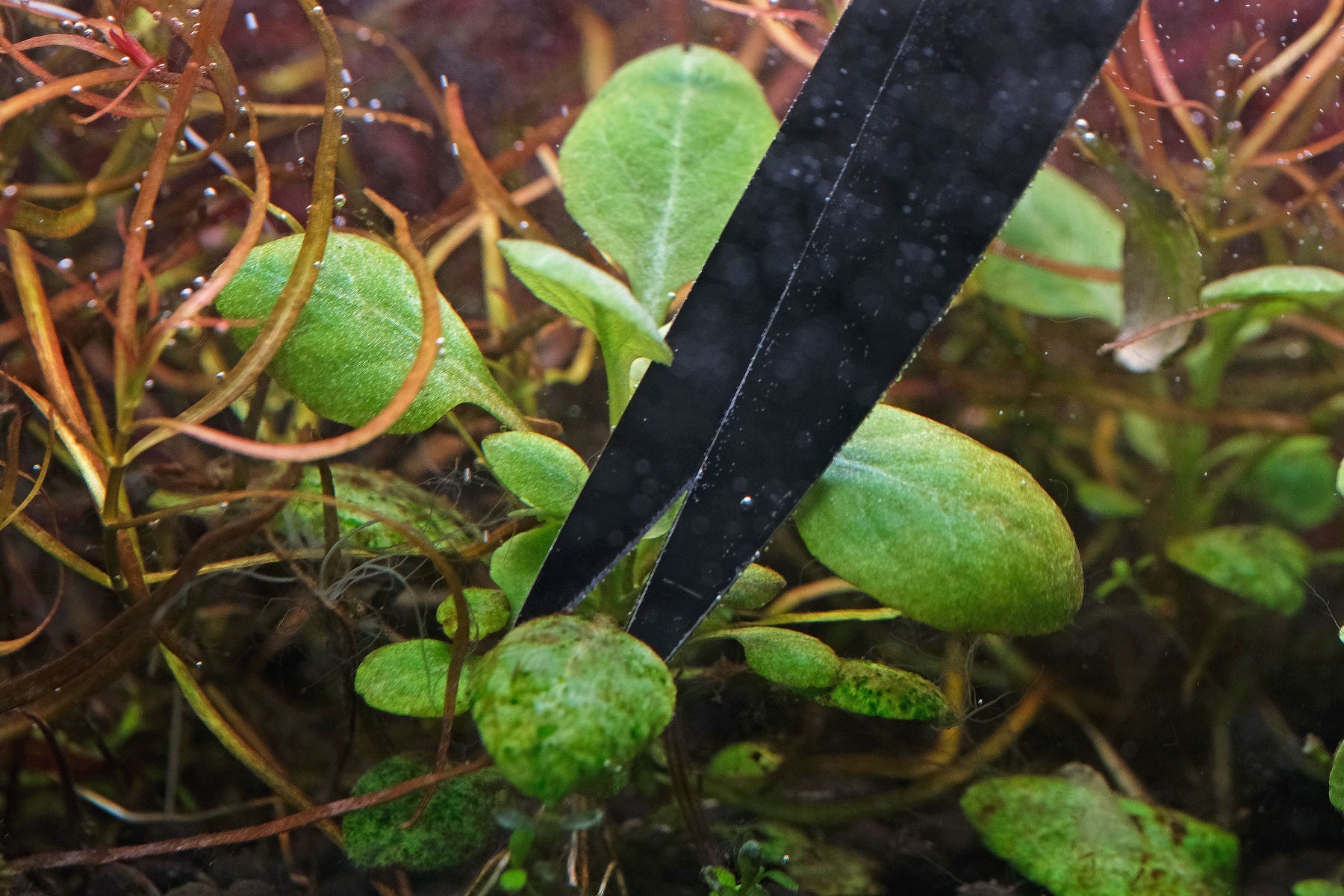
One of the easiest plants to prune. Cut the stem above one of the internodes and the plant will produce smaller plants from the remaining internodes. The runners should be cut regularly if you do not want the plant to grow all over the aquarium. Plantlets can be easily replanted even if they are small.
Pinhole problems?
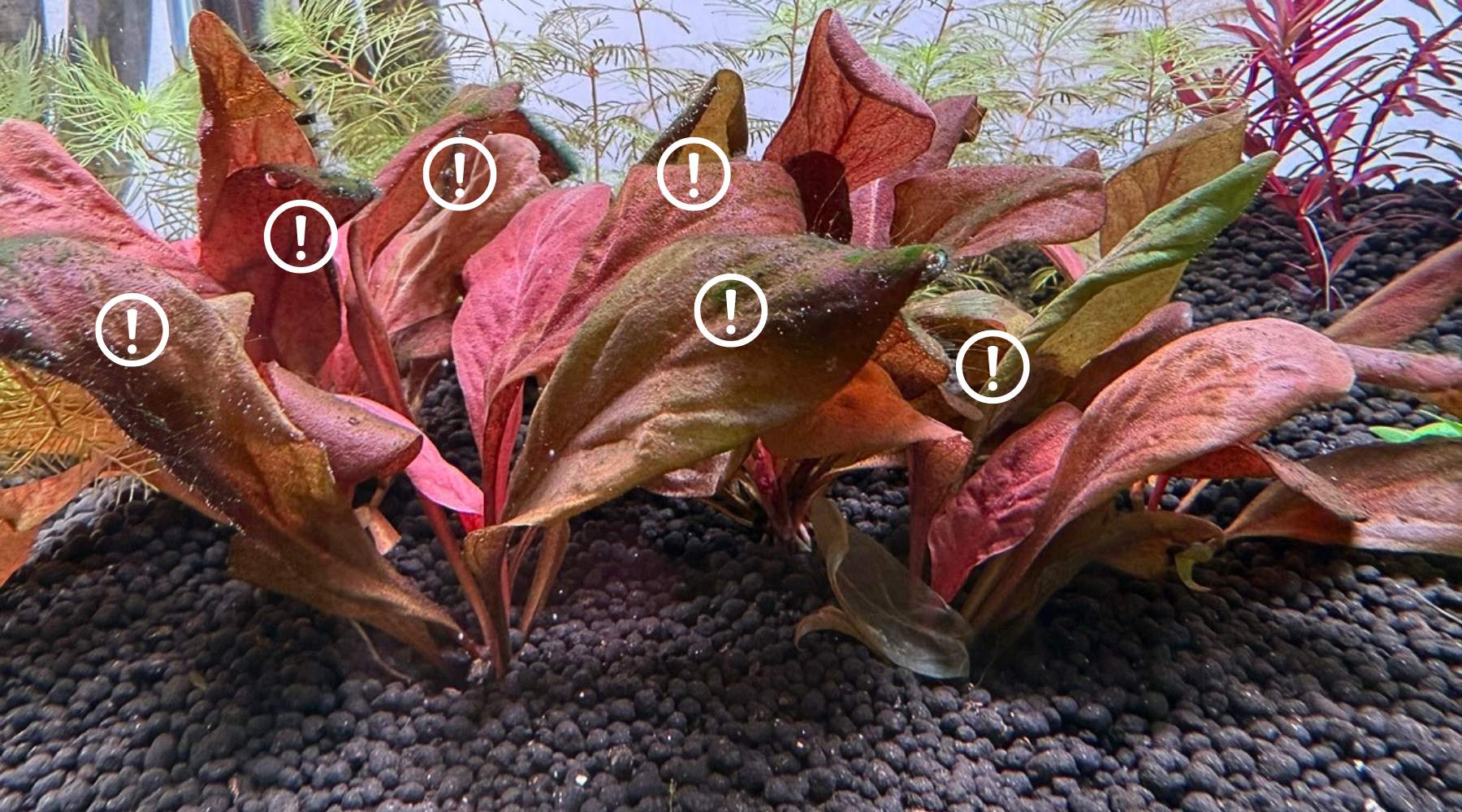
This is one of the more common problems with this plant. Some online forums refer to these plants as "potassium hogs" and typically diagnose these problems as potassium deficiency.
We find that while potassium is important (not only for hygrophilas, but for the general health of most aquatic plants), there is never a need for an extra high dosage of potassium just to maintain the health of this plant. It is not particularly demanding in terms of nutrients, contrary to what most people think.
If your plant is very pale in colour (as in the picture below) and has yellow edges around the pinholes, and you have not been dosing potassium regularly - it may well be a potassium deficiency. However, if you are already adding 20-25ppm potassium to your tank and you still have pinholes in your leaves, you should rule out potassium deficiency and look at other factors. Many factors contribute to the health of aquatic plants - the availability of CO2, as well as all other nutrients, and the presence of holes in older leaves can be related to a number of issues, not just potassium. Do not get caught up in nutrient tunnel vision.
Are you over dosing iron/trace elements just to get the plant to colour up? If so, you may be doing more harm than good - and more iron won't make it any redder. If you have twisted/curled leaves, this may well be the case. In all the examples above the plants were grown with no more than 0.05ppm Fe/trace per day. (that's 0.35ppm per week).

Click here to find out how to read PAR values.
Click here to find out more about water parameters for planted tank.
Click here to learn more about how to grow red aquarium plants.


Share:
How to grow Eriocaulon quinquangulare
How to grow Centrolepis drummondiana (blood vomit)