

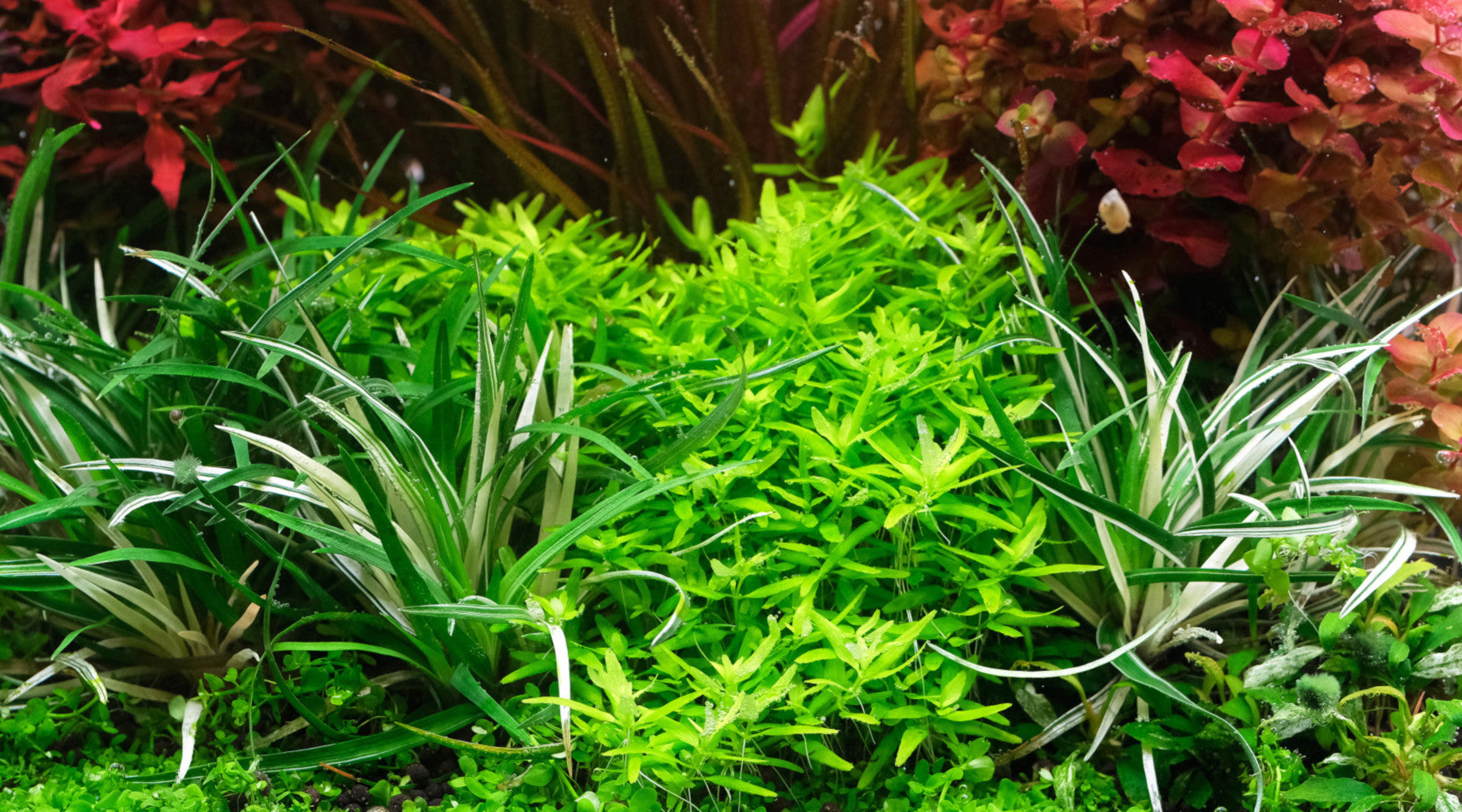
Eriocaulon sp. "Vietnam" stands as one of the most accessible species within the notoriously challenging Eriocaulon genus. Eriocaulon sp. "Vietnam" represents a medium-sized aquatic plant reaching heights of 10-12cm, characterized by its broad, medium-green, arching leaves that form distinct rosette patterns at the base. The plant exhibits a grass-like appearance with relatively broad dark green leaves compared to other Eriocaulon species. This species belongs to the Eriocaulaceae family and originates from the Vietnamese province of Thanh Hoa, where it was discovered growing in both stagnant and flowing waters.

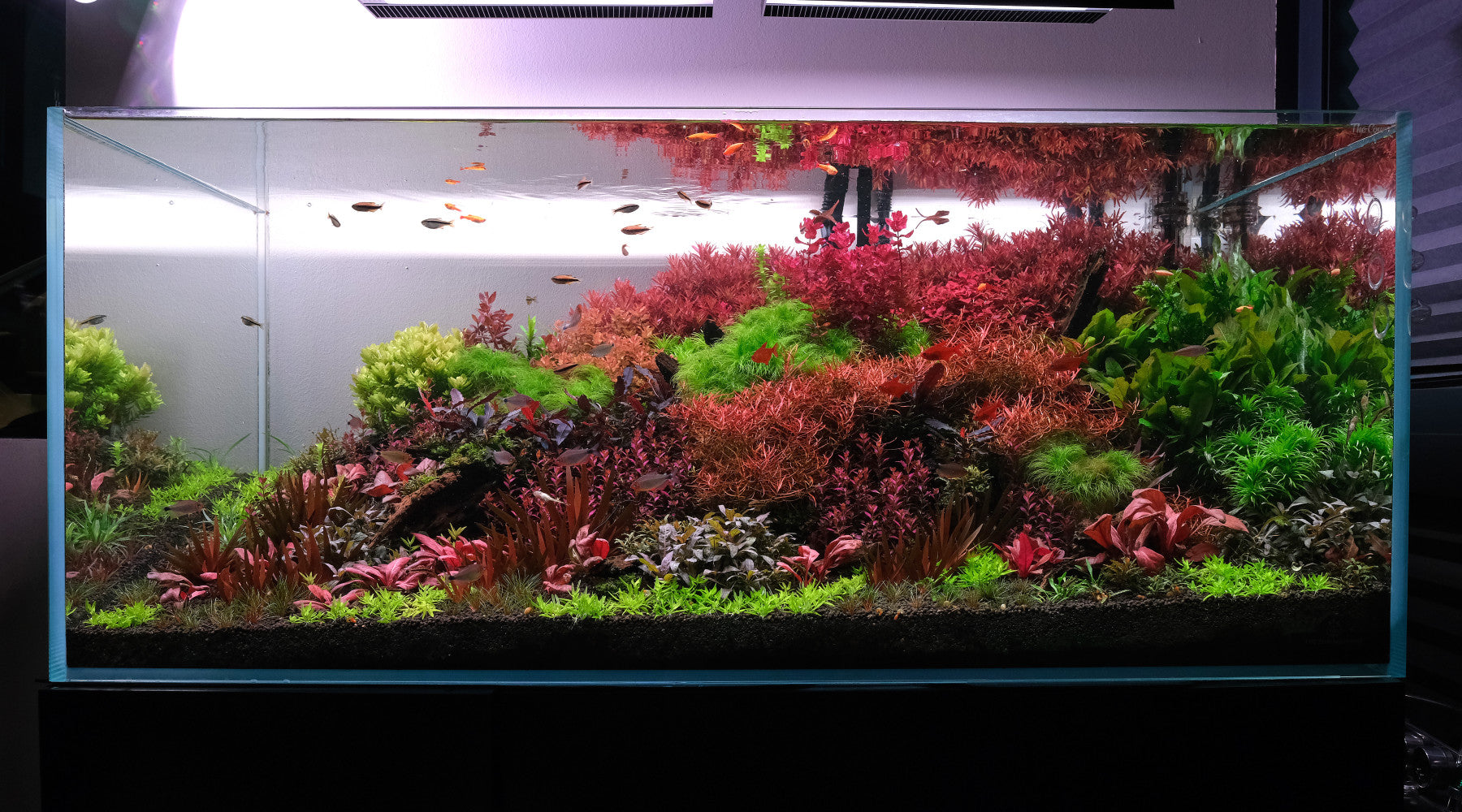
Eriocaulon vietnam is used on the middle left of this aquarium to separate the faster growing stem plant bushes from the more delicate shorter foreground plants here. Its darker green colouration also contrasts well with lighter green tones of other species.
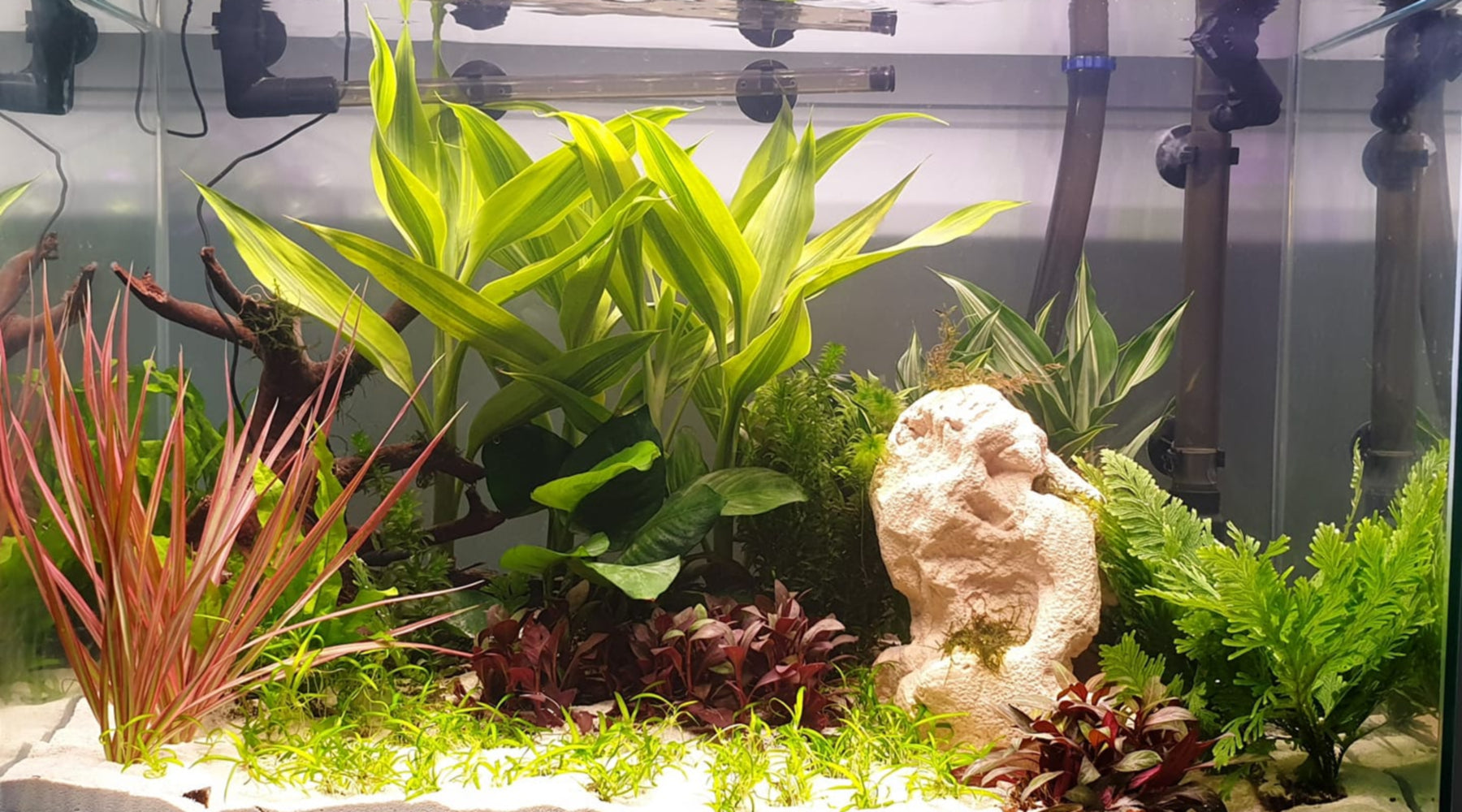
Variegated varietals of this plant exist which look similar to terrestrial spider plants. The variegated varietals are a tad more picky to cultivate.

The plant's unique morphological structure includes spiky foliage that radiates from a central crown, resembling broad pine needles in both texture and arrangement. What distinguishes this species from other aquatic plants is its ability to form dense clusters of multiple leaf rosettes over time, which makes it great as a midground bush.
It is much easier to grow compared to other Eriocaulon species, and is tolerant of moderately hard water unlike its more difficult peers. It is also more tolerant of sub-optimal growth parameters such as low CO2 levels and lower light levels. It is also tolerant of over-crowding, which allows it to be grown into dense bushes or beside taller plants that shade it. This makes its aquascaping usage much more flexible than other Eriocaulon species that are not shade tolerant and are more picky on growth conditions.

Similar Aquatic Plants
Comparing Eriocaulon sp. "Vietnam" to Blyxa japonica, the Eriocaulon Vietnam has broader leaves that will always stay completely green. Blyxa japonica has leaves that take on bronze/reddish tones in higher light levels. They both make great midground bushes and they grow similar in size though Blyxa japonica can grow taller given a long time horizon. Both species are tolerant of hard water and a wide range of tank conditions.
Unlike runner-producing plants such as Sagittaria subulata or Helanthium bolivianum, Eriocaulon Vietnam does not develop runners, making its placement and management considerably easier for aquascapers. This characteristic eliminates the need for constant trimming of unwanted shoots that can disrupt carefully planned aquascape layouts.
The plant looks similar to Acorus Gramineus, which does not grow well submerged. Eriocaulon vietnam has slightly sharper leaf tips. However, discerning the difference between these 2 plants is difficult for inexperienced folks.
Aquarium Placement and Aquascaping Applications
Eriocaulon Vietnam excels in midground placements. The plant creates effective transitions between background and foreground elements, linking tall background plants with low ground covers through its intermediate height range of 10-12cm. It can also be used as a barrier to hold back more aggressive stem plants and prevent them from shading shorter foreground species.
Its deep green colouration also contrasts well against lighter coloured plants.

How to grow
The plant is sometimes sold in emersed forms in aquarium shops. Transitional Melting occurs when emersed-grown plants adapt to submersed conditions. This process manifests as browning or yellowing of older leaves as the plant redirects energy toward developing underwater-adapted foliage. The solution is to remove melting leaves promptly to prevent water quality deterioration, maintain stable parameters, and allow 3-4 weeks for new submersed growth to establish.
Eriocaulon vietnam grows best in soft water, CO2 injected aquariums with at least a moderate level of lighting (60+ umols of PAR). Although the plant can grow under medium lighting conditions, higher intensity promotes compact growth. The plant is also tolerant of moderately alkaline water (8+ dKH) even though growth in alkaline water is slower compared to soft water. It tolerates a wide range of pH from pH 5.0 - 8.0.
As with many other Eriocaulon species, it grows well in a nutrient rich substrate base. While it can grow in low tech conditions, CO2 injection greatly improves bush density and plant health. As a slower growing plant, long term stability is important. Fluctuating parameters tend to result in algae attacking older leaves.

Trimming and propagation
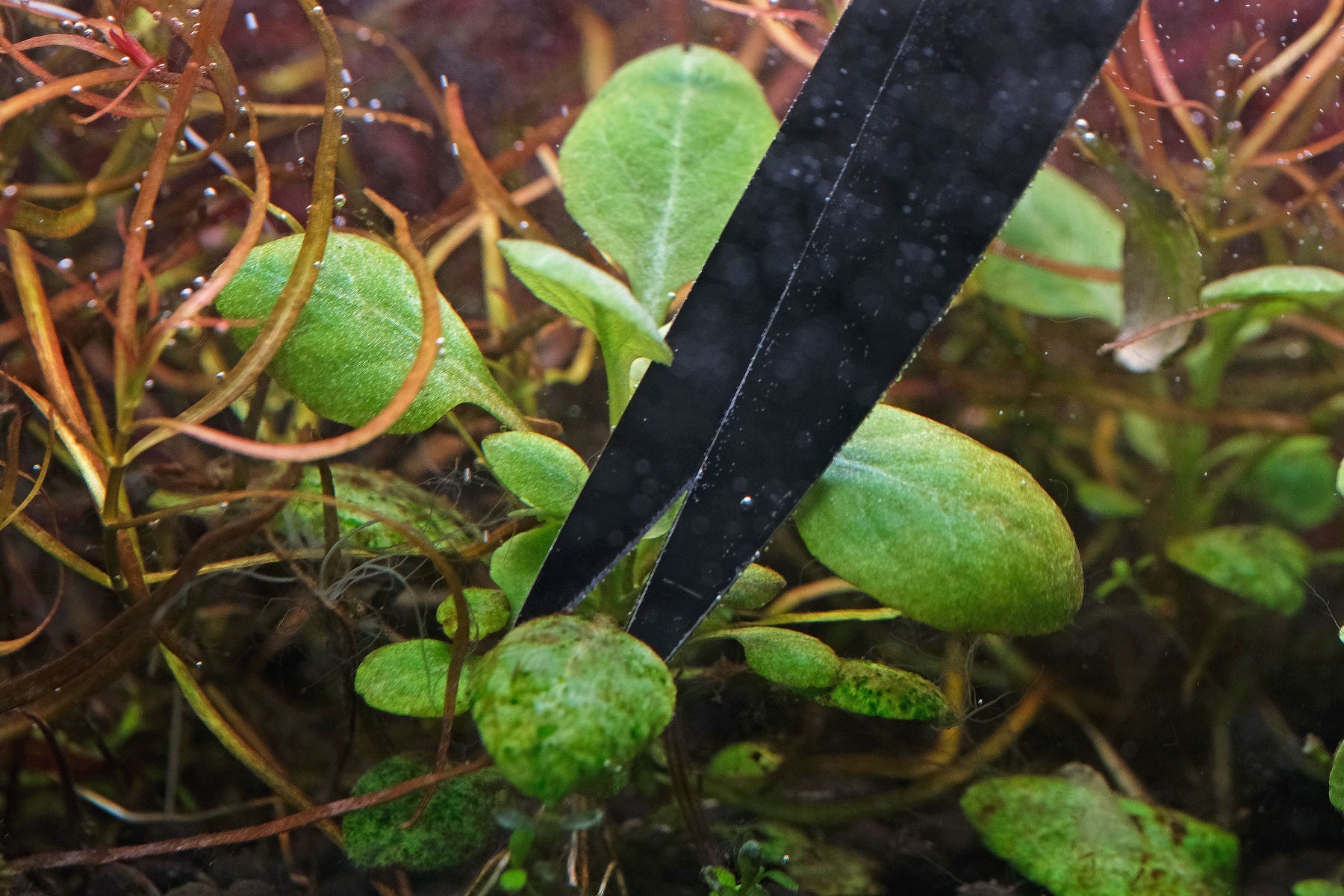
The plant can be trimmed by plucking off the oldest leaves one by one to reduce overall bush density. When there is a fluctuations in growth conditions it is common for the older leaves to get attacked by algae. These leaves should be cut or plucked off to make space for new growth.
The main rosette often produces a shower of baby plants attached to the main rosette contributing to the overall thickness of the bush. These baby plants can be cut and removed for replanting elsewhere.
Click here to find out how to grow red aquarium plants.
Click here to read on how to optimize CO2 levels
Click here to browse more plant growing profiles
Click here to read on how to stabilize a new planted tank




Share:
How to grow Eleocharis acicularis [Dwarf Hair grass]
How to grow Hygrophila difformis [Water wisteria]