

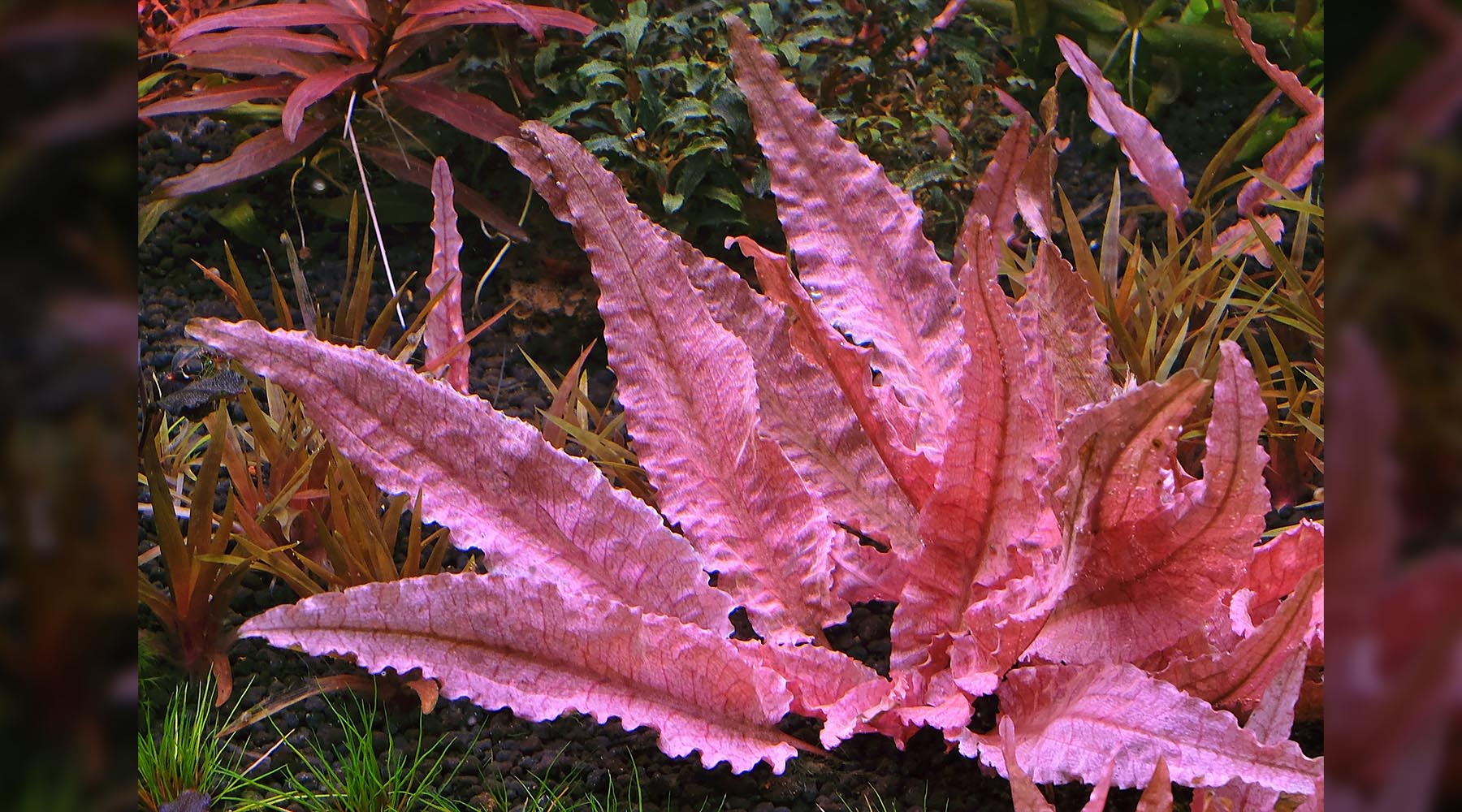
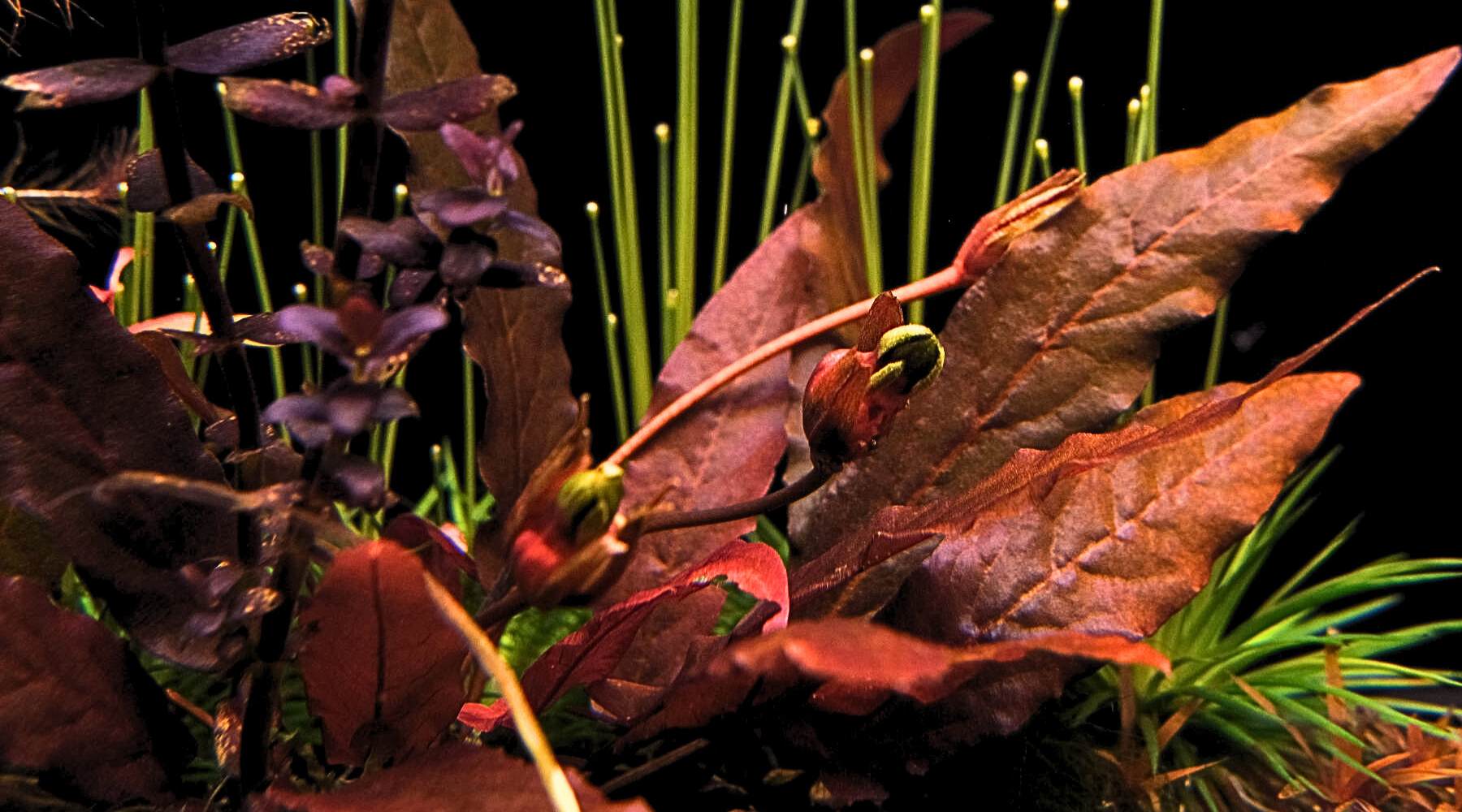
Cryptocoryne wendtii 'Flamingo' is a cultivar of Cryptocoryne wendtii. The leaves of the full grown plant are about 10cm long, which makes it great for mid/foreground placement. The leaves are a distinctive pink which makes it difficult to match in many aquascapes. It does stand out in most aquascapes and works well as a tonal contrast to clusters of red plants.
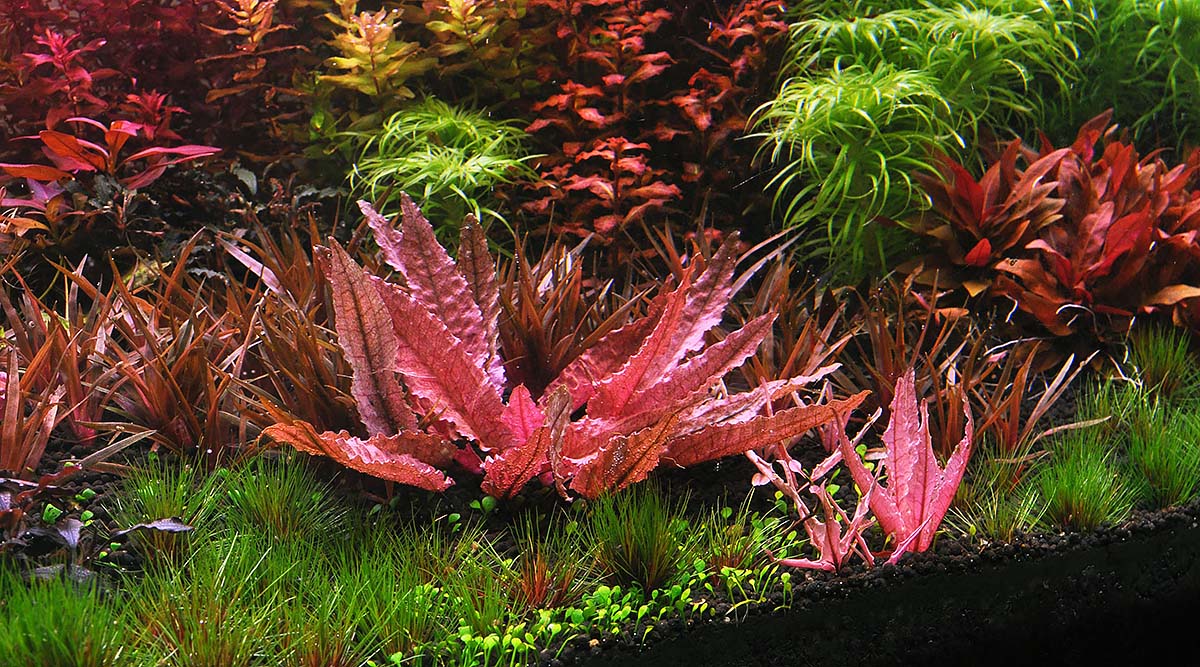
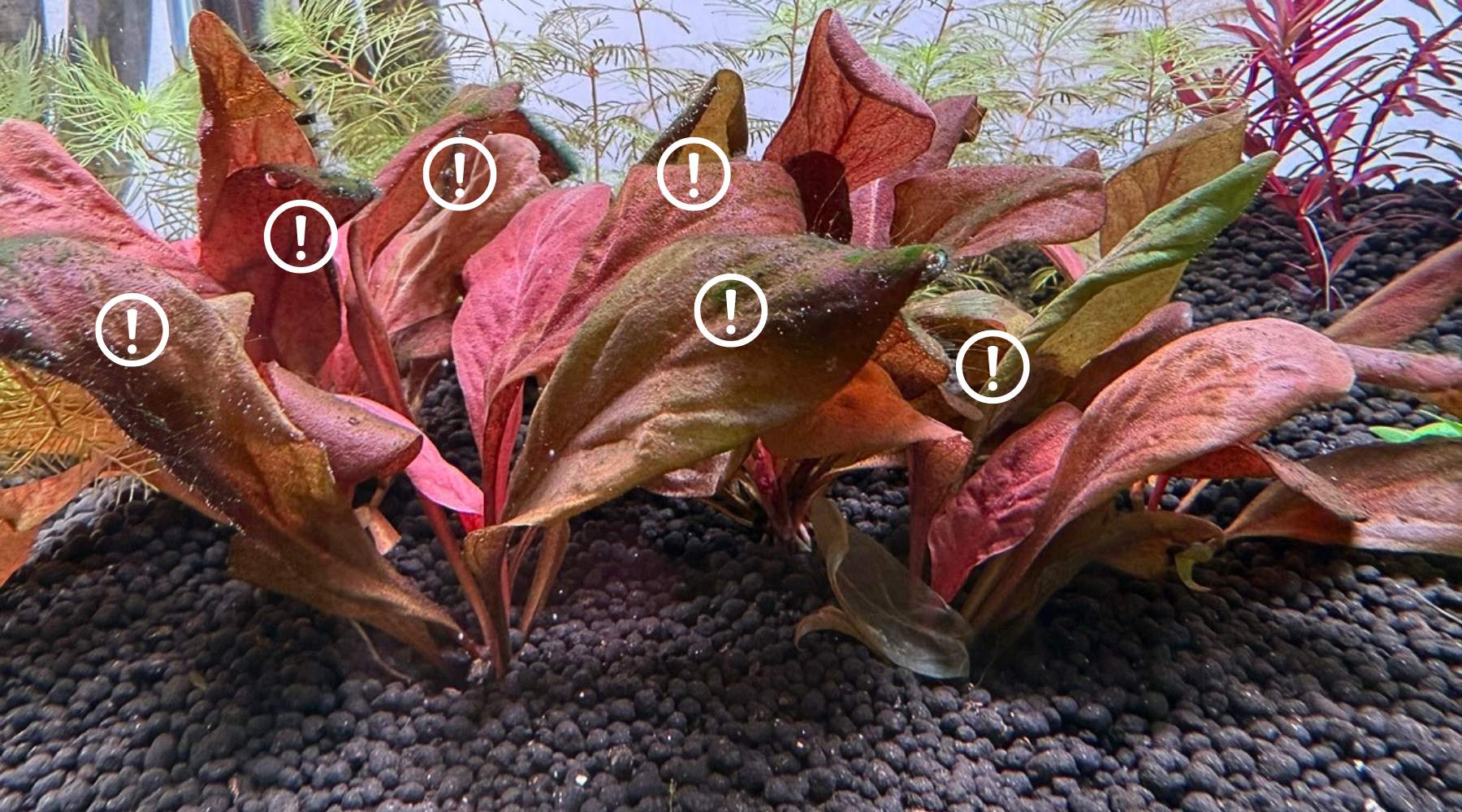
It is a slow growing plant that is relatively undemanding. However, the tissue culture form it often comes in is delicate and many hobbyists fail to adapt it in this form, hence its reputation for being difficult. It can take from 3 to 5 months for a baby plantlet to grow to full size. Once planted, it is best not to move it and let it get established - smaller plants are more fragile and prone to algae at first, and become more robust as they grow. It is important to leave them in one place for many weeks; once their root systems are established, growth accelerates and larger plants are more stable and resistant to environmental changes.
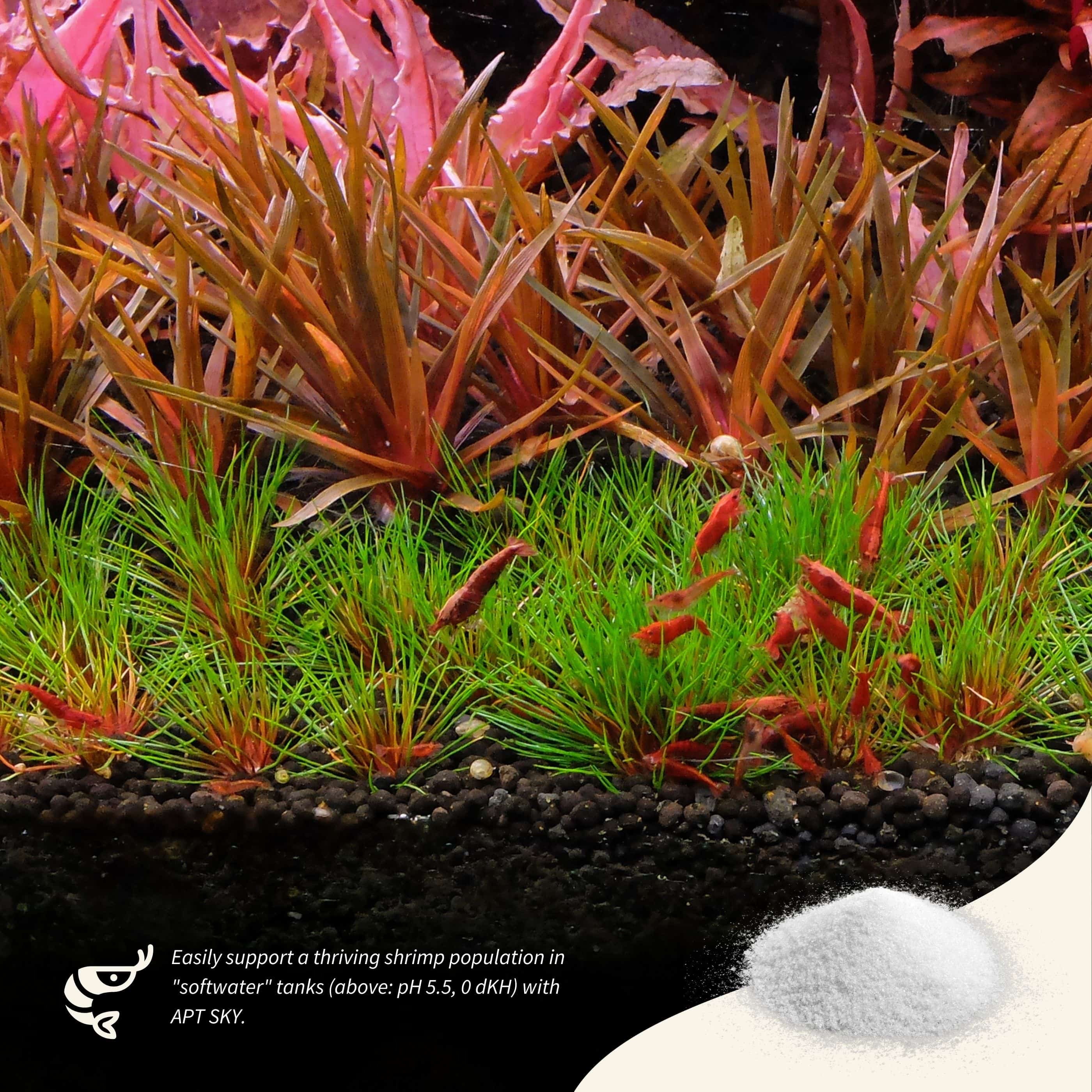
As a slow grower, the main factor for success with this plant is stable conditions over time. It grows faster and more stable with moderate and higher GH levels (4-5dGH and above), although it can be grown in very soft water.
Leaves will take on better coloration with stronger light and good all around fertilization (and yes, carbon dioxide injection). More red/blue spectrum helps with pigmentation. With less intense lighting or less than optimal growth conditions, some of the leaves may be olive instead of pink.
Key success factors
- Sufficient light (80 umols onwards) to get good coloration.
- Don't move smaller plants - let them grow in and they will reach full size in 4 to 6 months where they will easily start spawning smaller plants. Smaller plants, especially from tissue culture, need time to sit and grow undisturbed for a long period of time.
- Tolerant of higher alkalinity/ higher KH ranges.
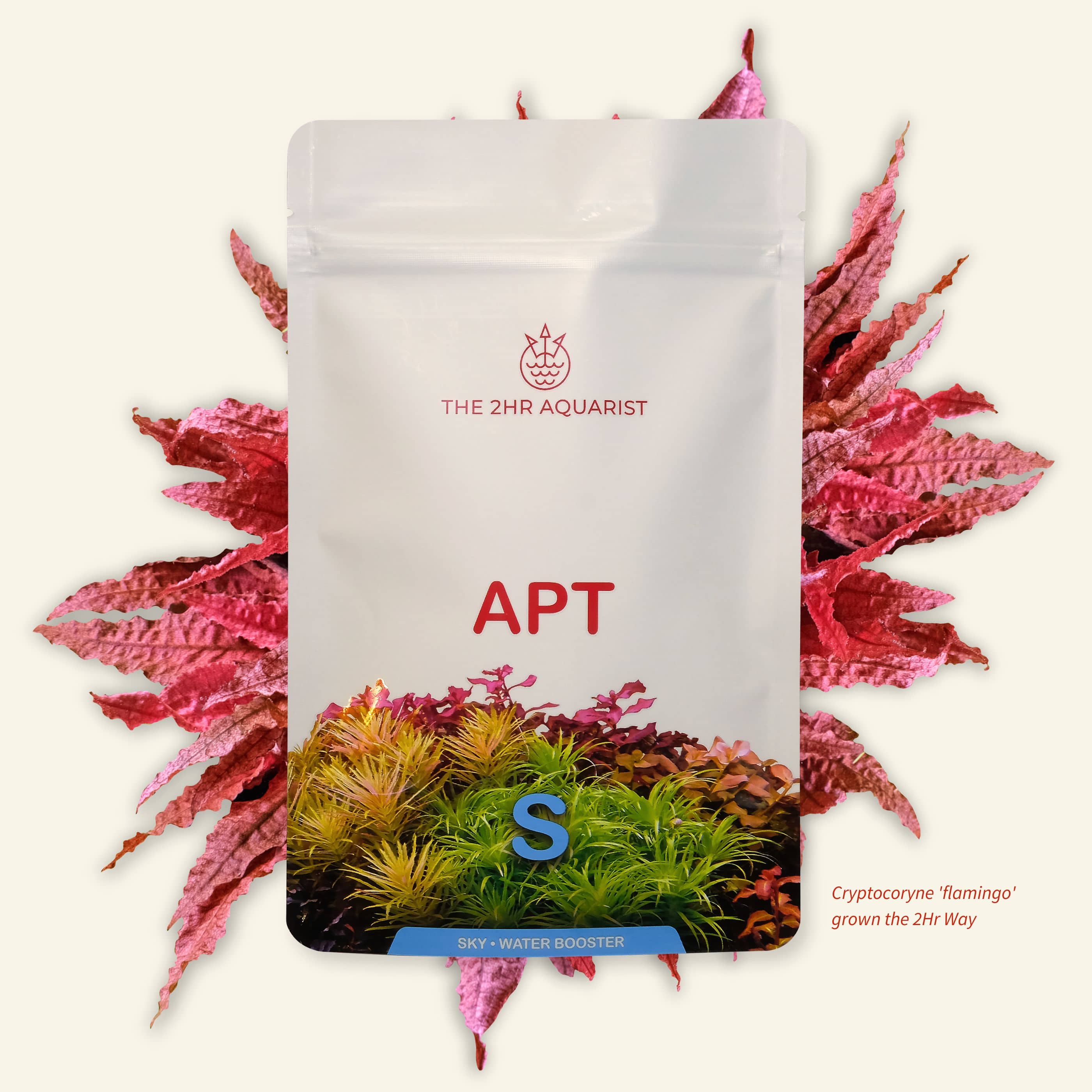
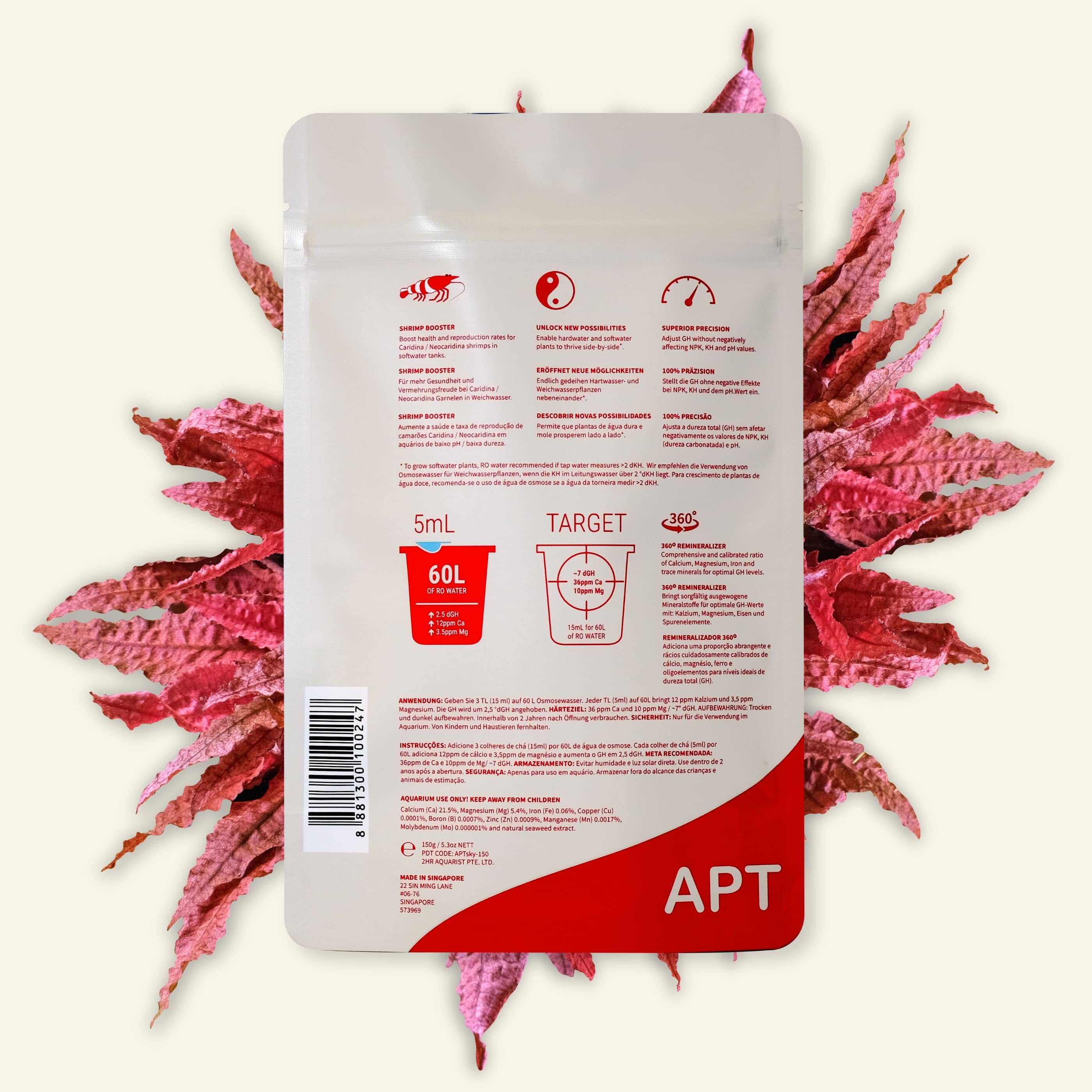
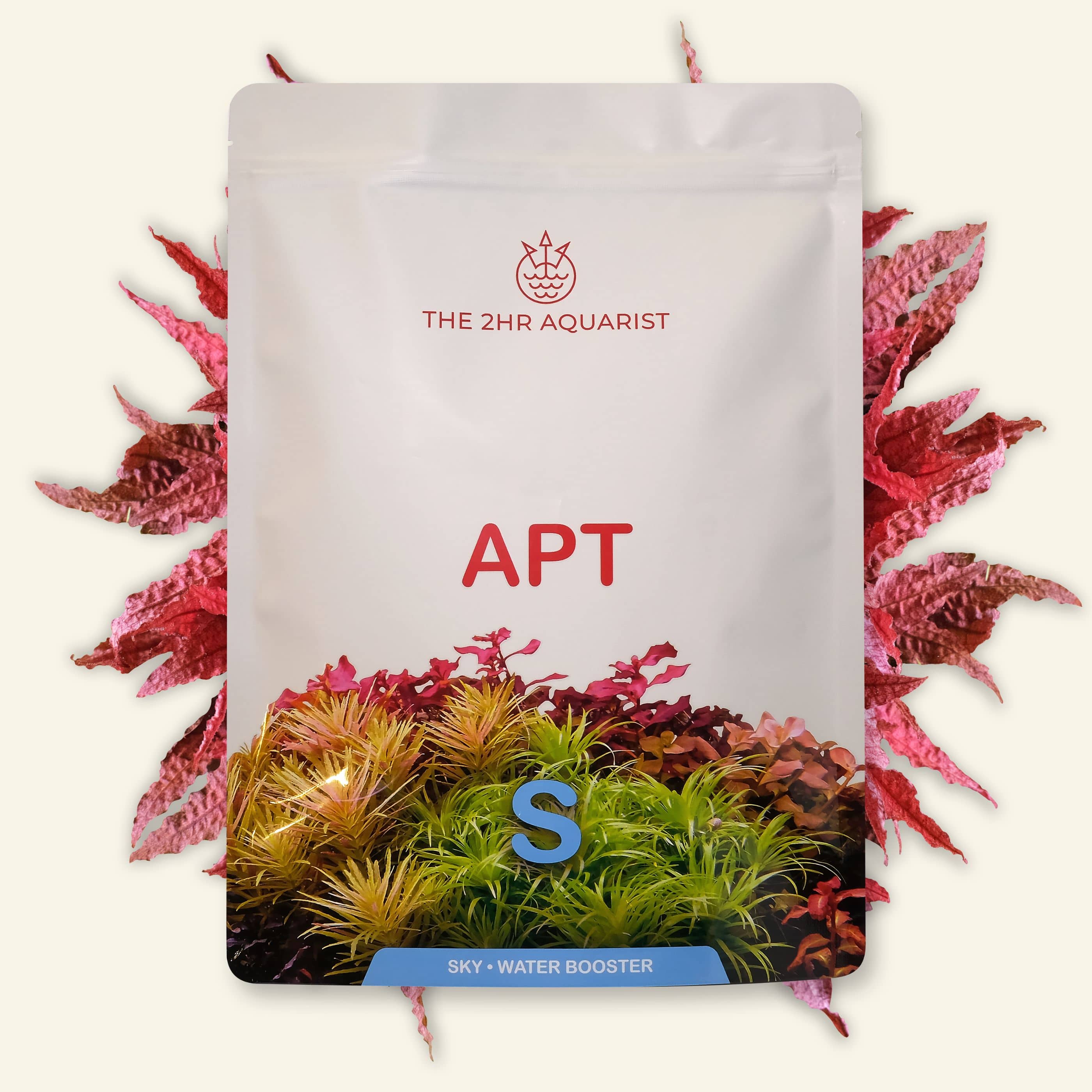
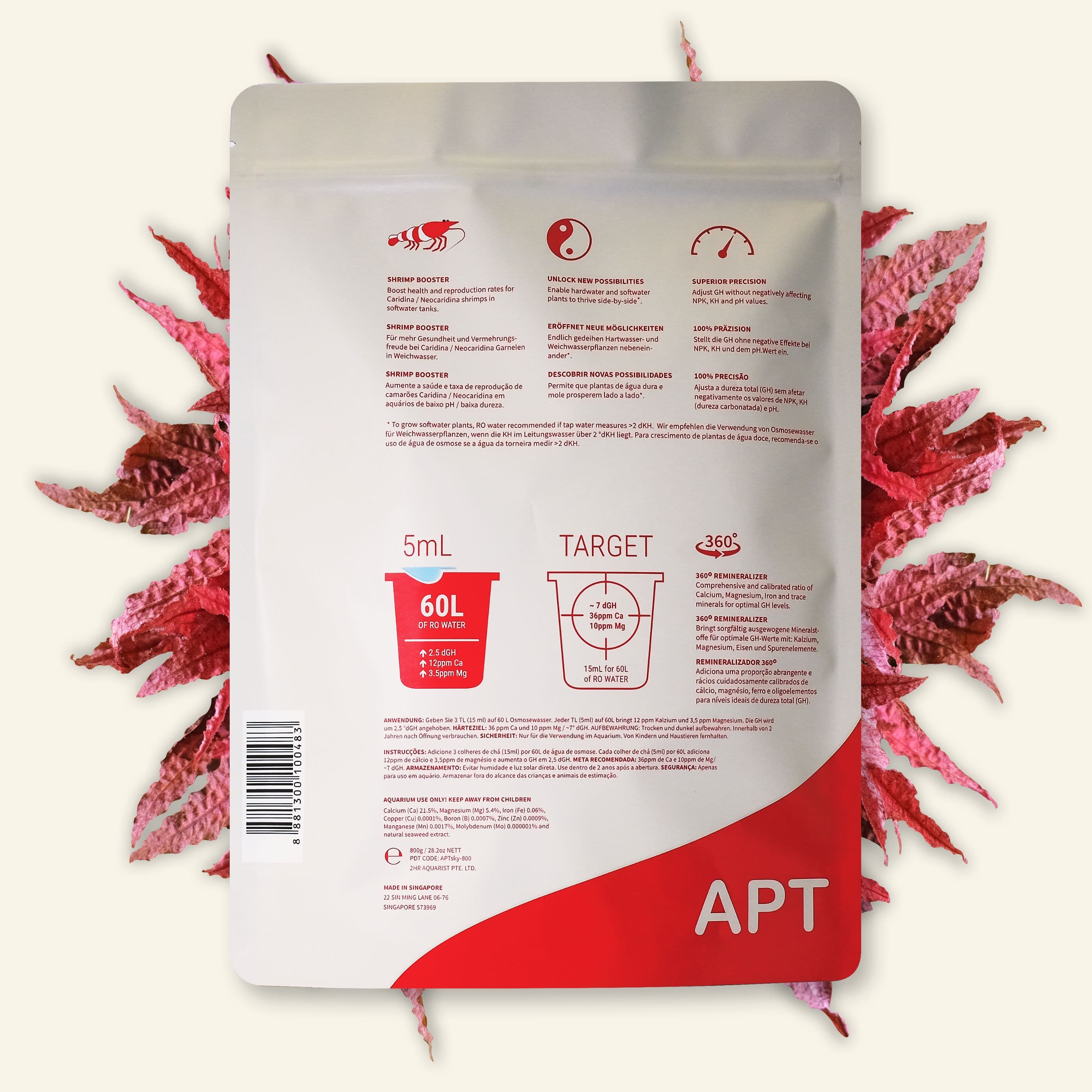
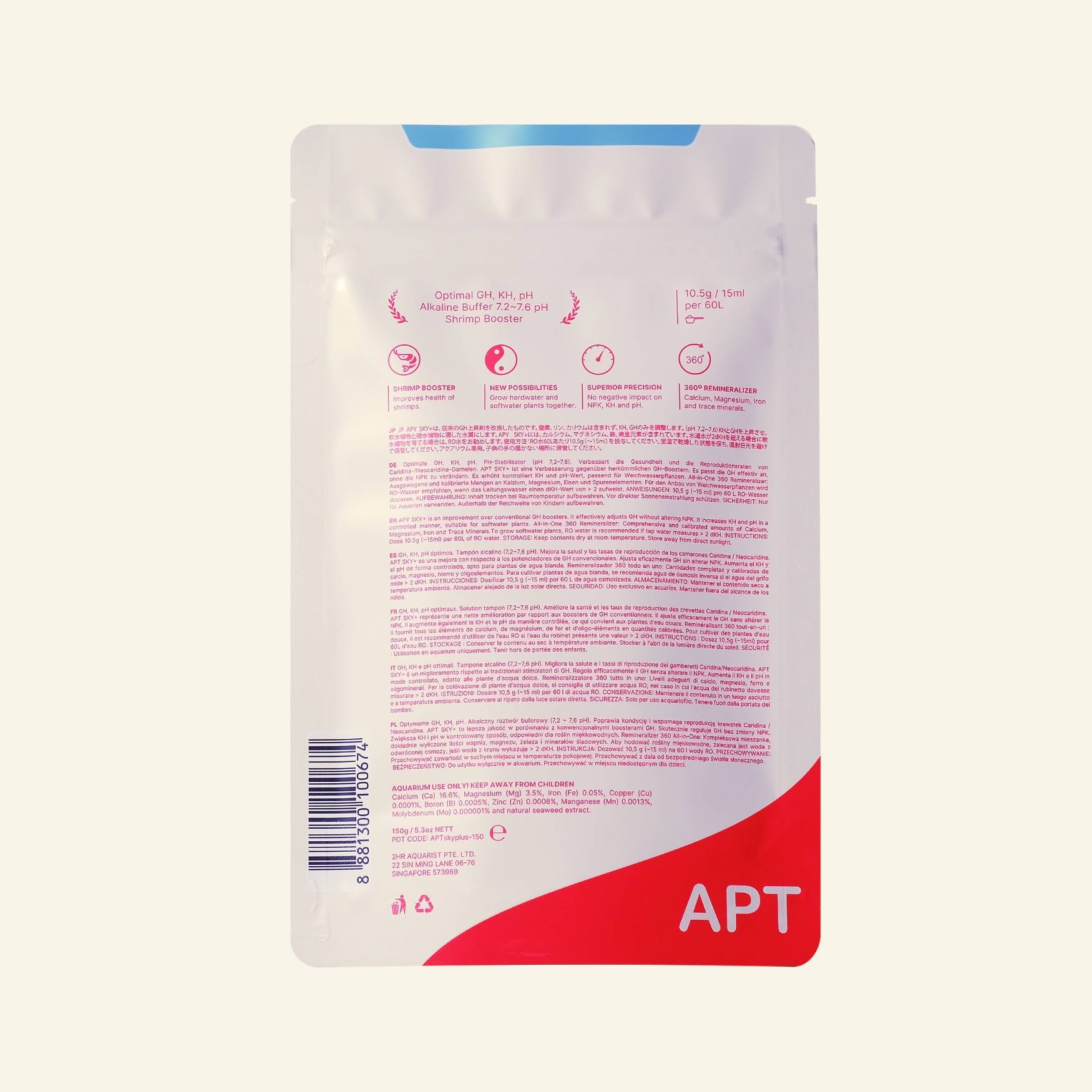
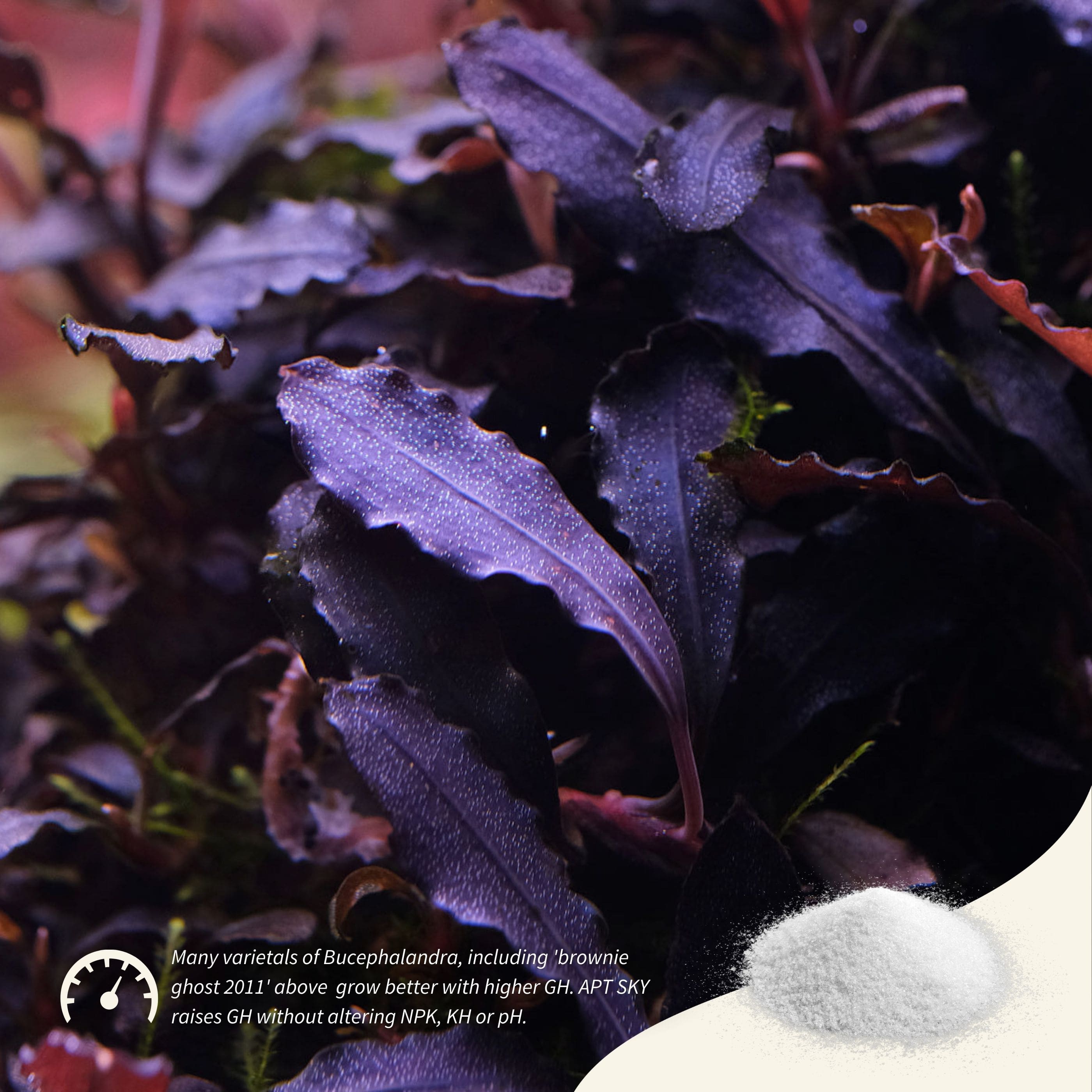
- Slightly higher GH values work better (4-5dGH and above). The easy way to reach this by adding APT SKY.
- Long term stability (probably the hardest aspect).
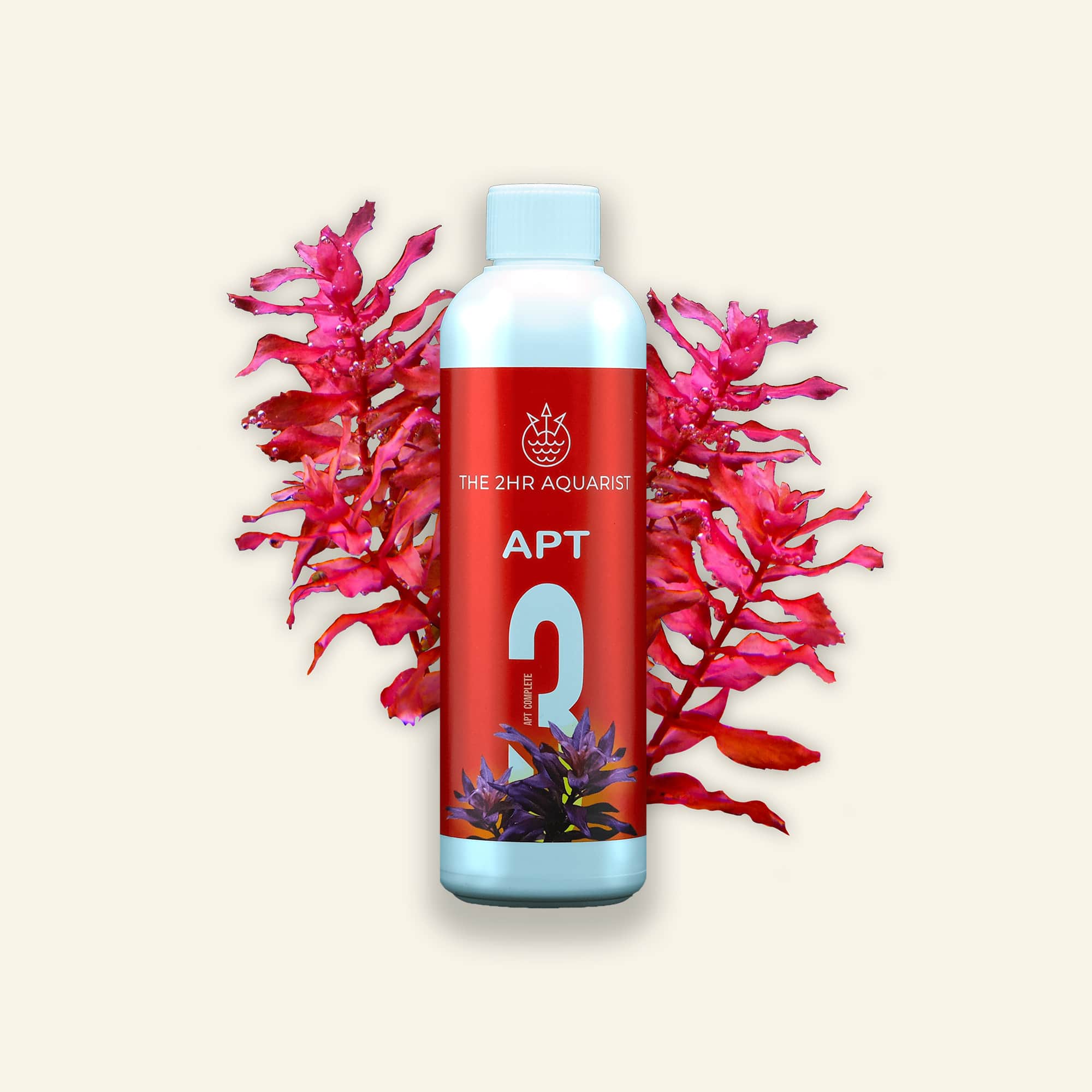
- Fertilization/CO2 levels need not be high, but needs to be consistent. We grow ours using APT 3 / Complete, with APT Jazz added to the root-zone.
How to get it redder
- Stronger light (higher PAR values, up to 150umols of PAR gives improved coloration).
- Better red/blue spectrum in light used.
- Consistent growth parameters over long term.
Trimming and propagation
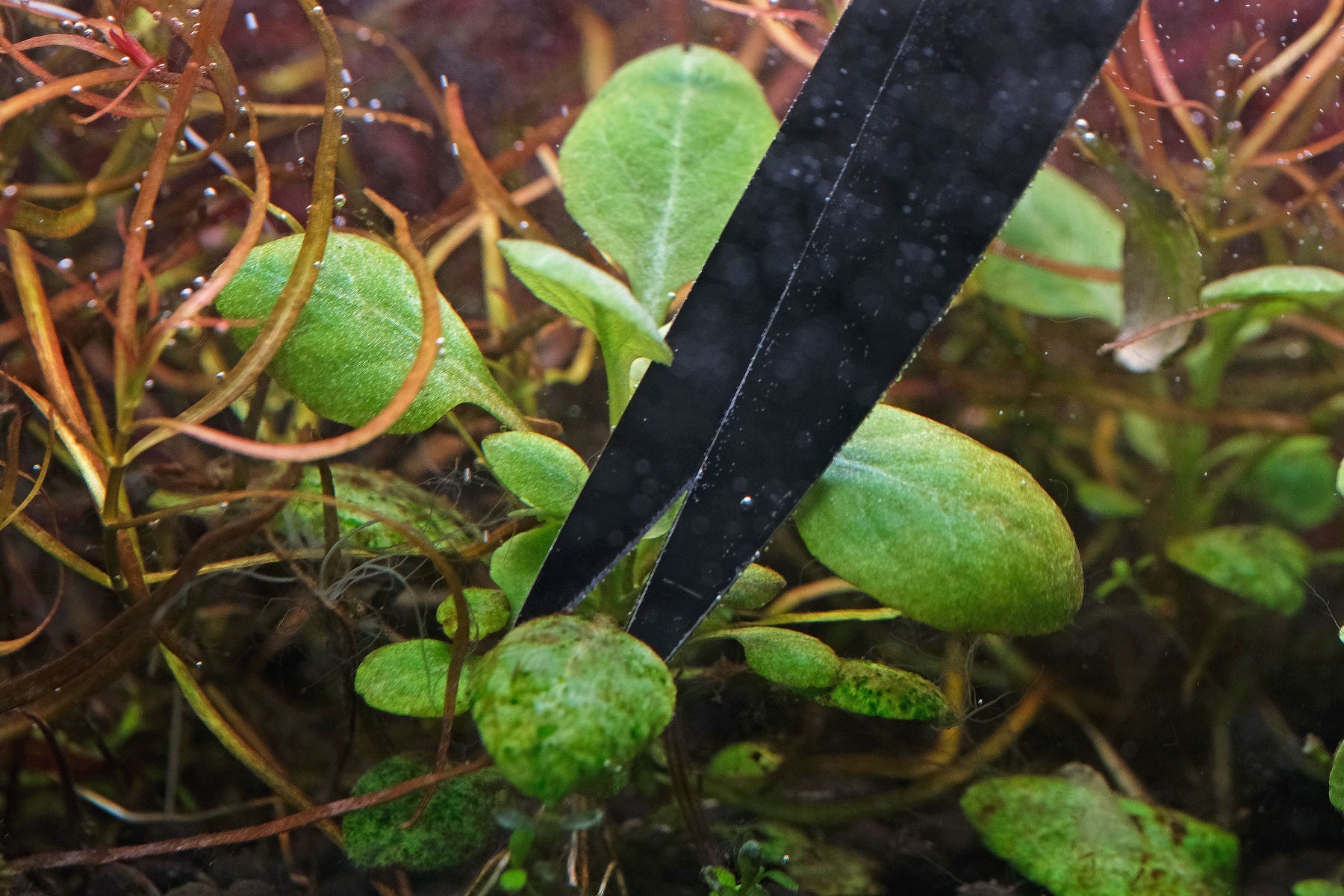
As the plant ages, old leaves can be cut off at the base of the plant. Adult plants will send out runners into the surrounding area and plantlets will begin to develop. These plantlets will grow faster if left attached to the mother plant. When they reach medium size (leaf size of 5 to 6 cm), the runners can be cut off and transplanted elsewhere.

Acclimatizing "Flamingo" tissue cultures
Tissue culture versions of this plant give tremendous bang for your buck (if you can get them to convert smoothly), as you can get more than 10 plants from a single cup. However, as with most TC plants, they are more delicate than adult plants.
To transition these small plants - only plant them in mature, fully cycled tanks. Avoid planting in fresh substrates (especially ammonia-rich aquasoil, which melts TC easily). Tank cleanliness is important - water changes and light vacuuming of the substrate surface is important to remove organic detritus and prevent algae.
We would also avoid herbivorous fish/aggressive shrimp that pick on tender plants. Avoid fish/animals that disturb the substrate.
It takes several months for the plantlets to reach adult size, so keeping the local conditions stable for a long period of time is necessary for success.

Click here to find out more about how to measure CO2 levels in planted tank.
Click here to find out how to read PAR values.
Click here to find out how to tune light spectrum in planted tank.

Share:
How to grow Lysimachia parvifolia (Samolus parviflorus red)
How to grow Staurogyne repens