
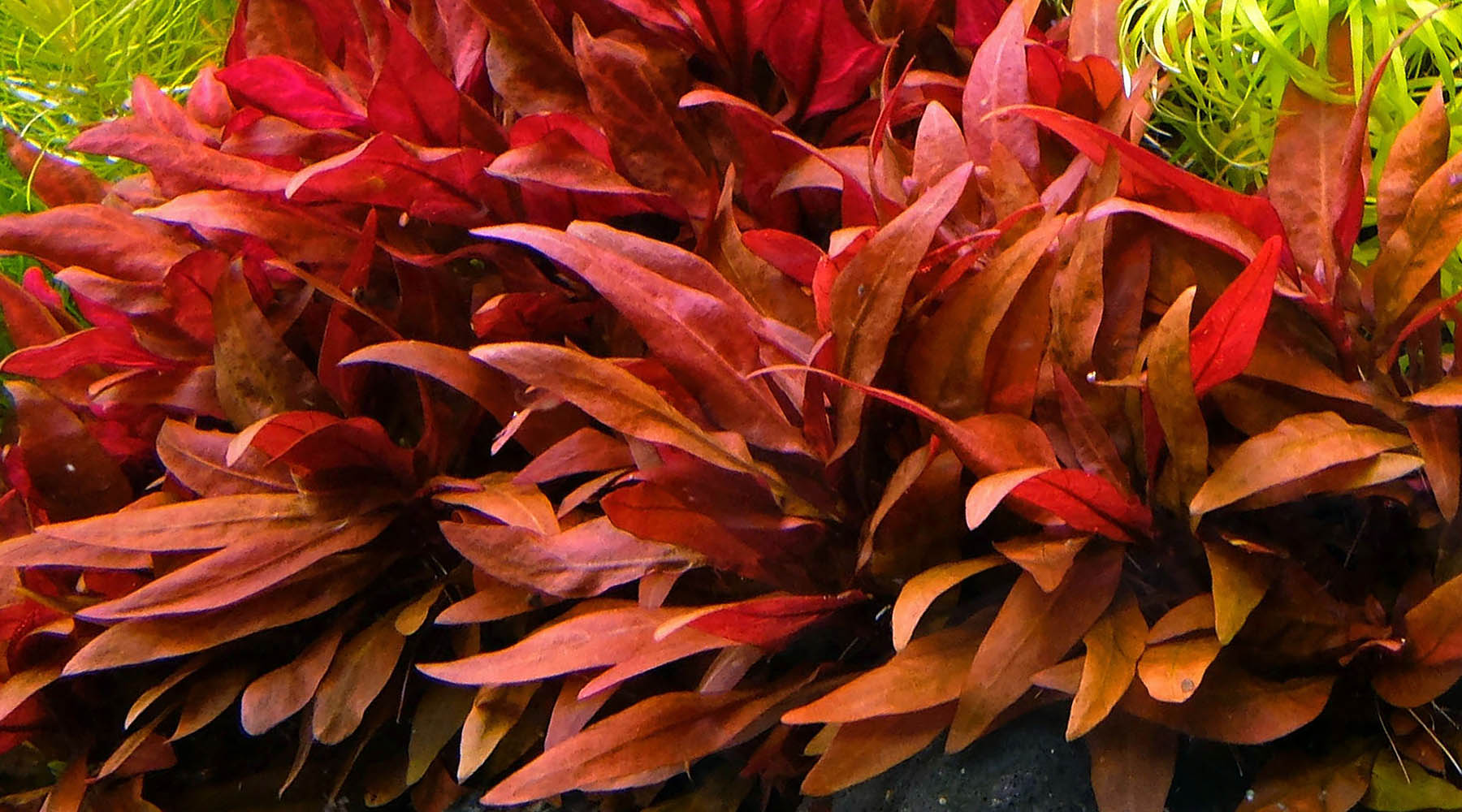
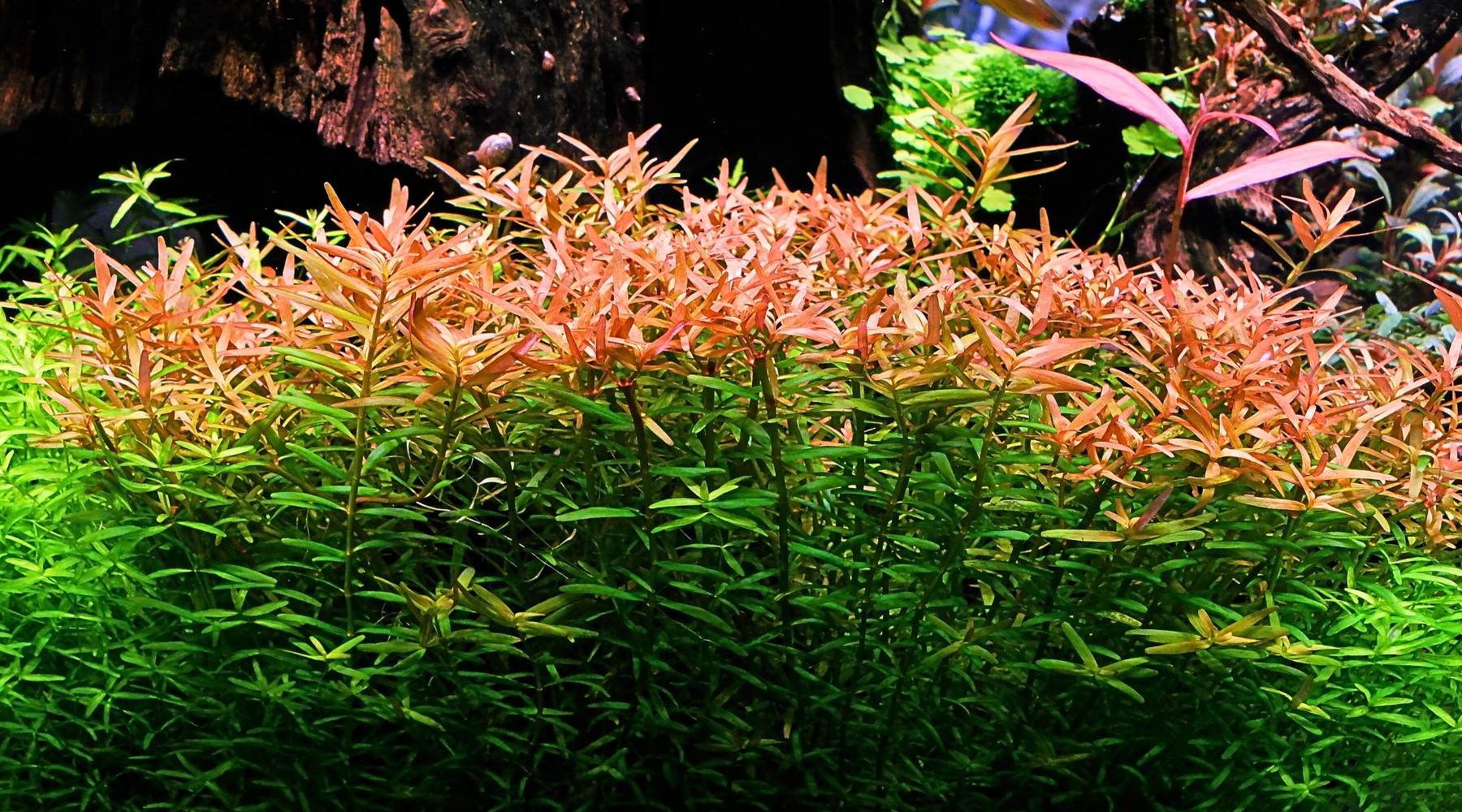
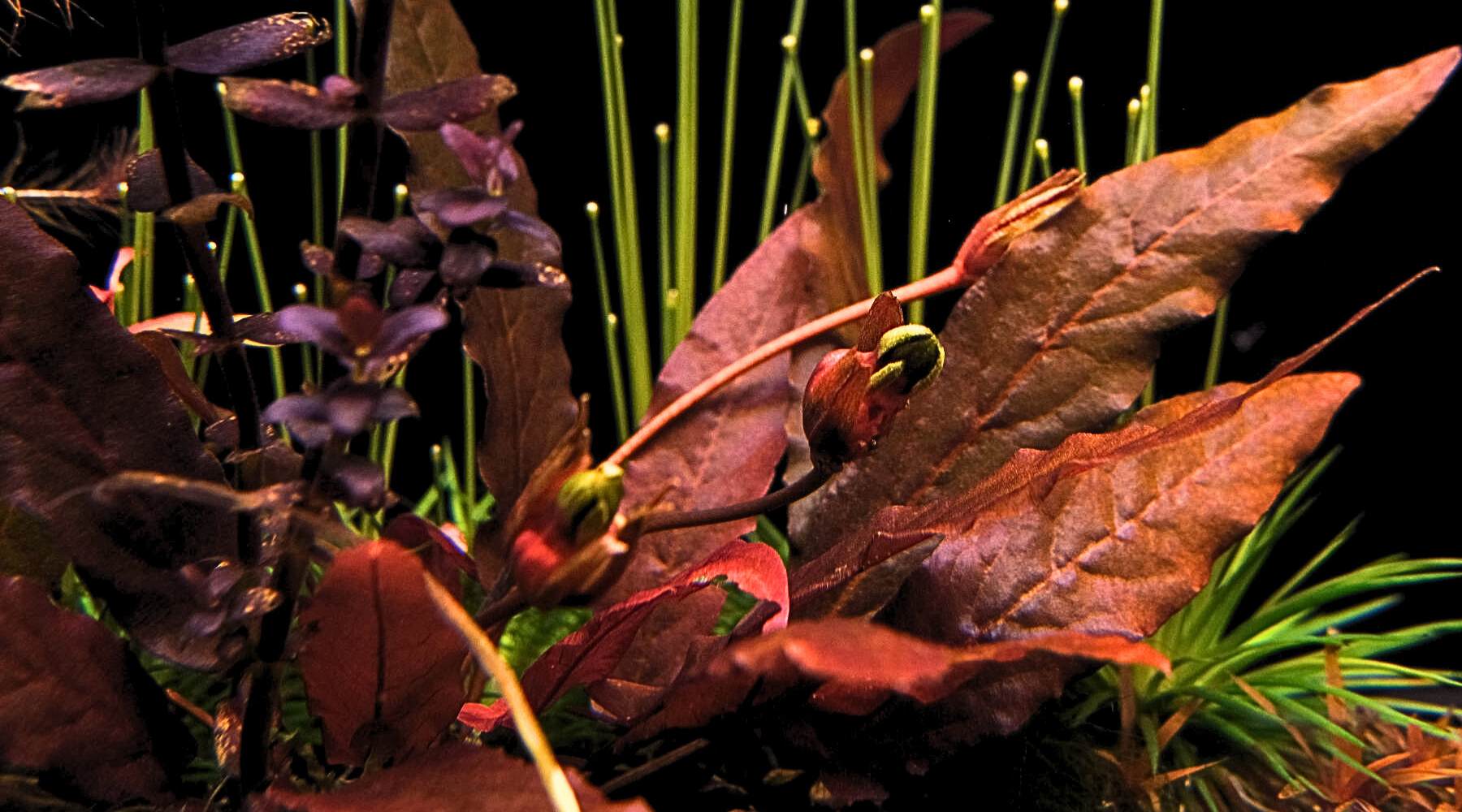
Alternanthera reneckii (AR) comes in several varieties, with the AR "mini" gaining popularity these days because it is shorter and redder than the other varieties. In the picture below we have the shorter 'mini' in the foreground and the slightly taller variegated 'Rosanervig' behind it. The 'mini' variety is a good foreground/middle ground plant, while the taller varieties such as 'rosaefolia' are suitable for backgrounds in a planted aquarium.
Alternanthera species are generally slow-growing compared to other stem plants and can tolerate a degree of overcrowding and shading, making them very easy to use in aquascaping.

Alternanthera reineckii can be fed either through the water column or substrate. In tanks where they are mainly root fed, they prefer not to be uprooted and replanted. This means that better results are obtained by cutting off the tall shoots and allowing new side shoots to sprout naturally from the remaining base. This technique is frightening to newer aquarists as it means you are cutting off the healthiest looking top parts of the plant, but it will produce a denser bush over time and the recovery time for this species is actually reduced. The cut top can be replanted elsewhere.
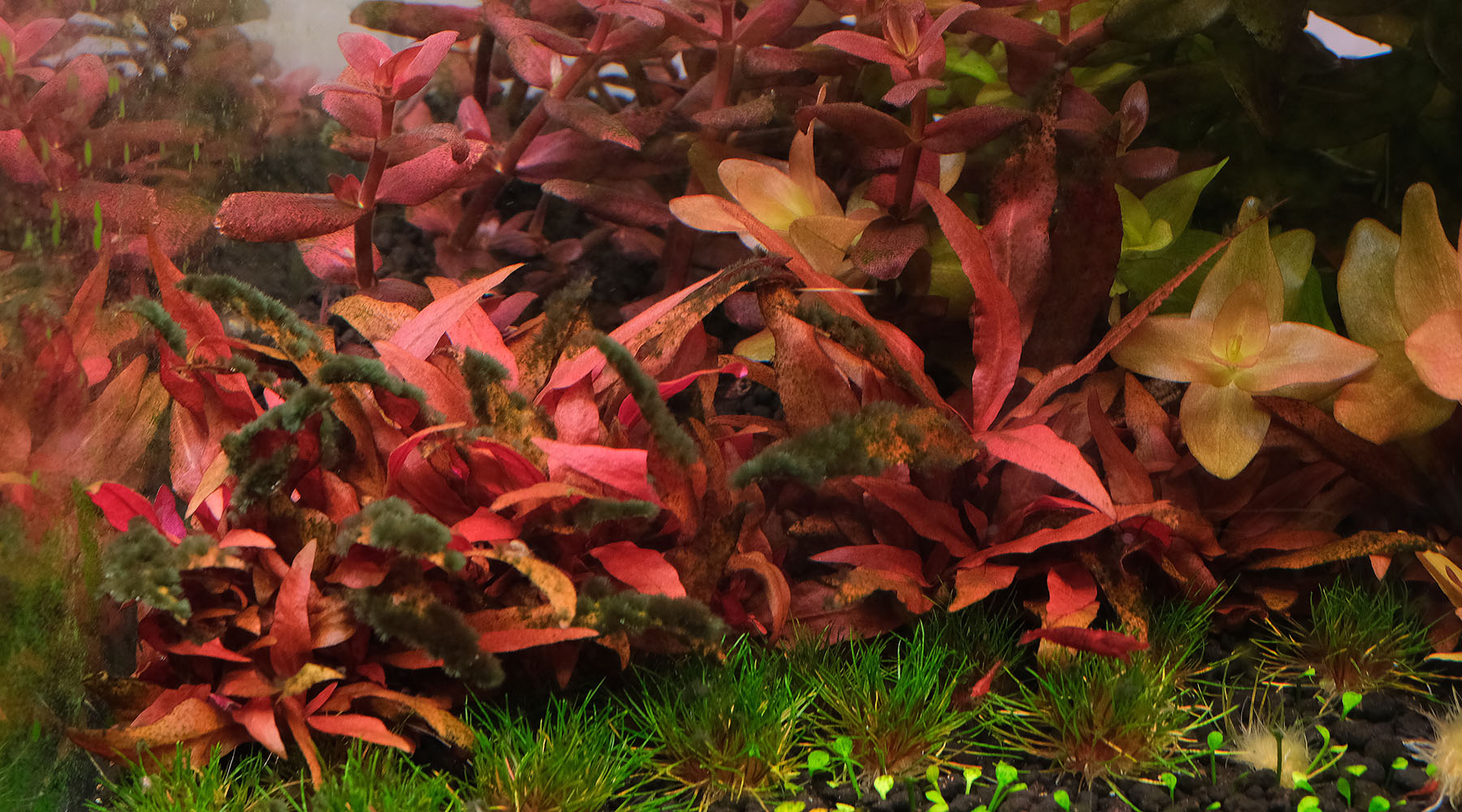
Good lighting will help with leaf colour, as is the case with most red plants. The ones in the pictures here have been grown in well over 100 umols (PAR) of light. Higher lighting also allows for greater density of leaves. The tricky part is keeping an algae free tank with more light. Alternanthera reineckii are slow growers and very susceptible to algae. The real test of keeping them well is often maintaining an algae free environment over the long term.

AR "mini" in the foreground and a variegated varietal behind it. The variegated version of Alternanthera reineckii has visible vein patterns and striking foliage.

Key success factors
- Stable tank parameters.
- Stable access to nutrients for continual growth.
- Vulnerable to algae - so having a clean tank helps.
- Flexible in terms of: temperature, water hardness/alkalinity, CO2 levels
How to get it redder
- Stronger lighting with higher red/blue spectrum
- Good fertilization regime
- Long term consistency
Common problems
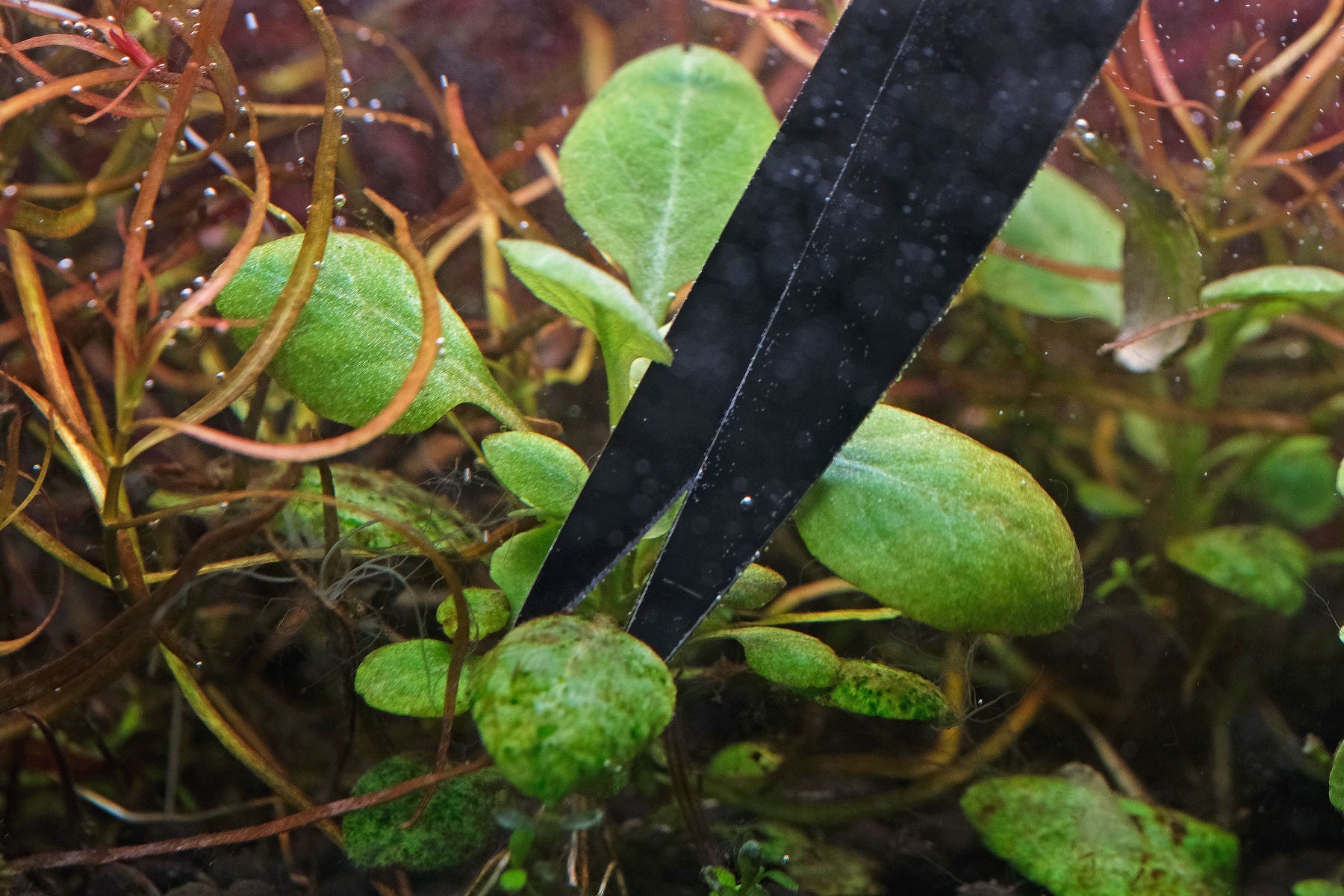
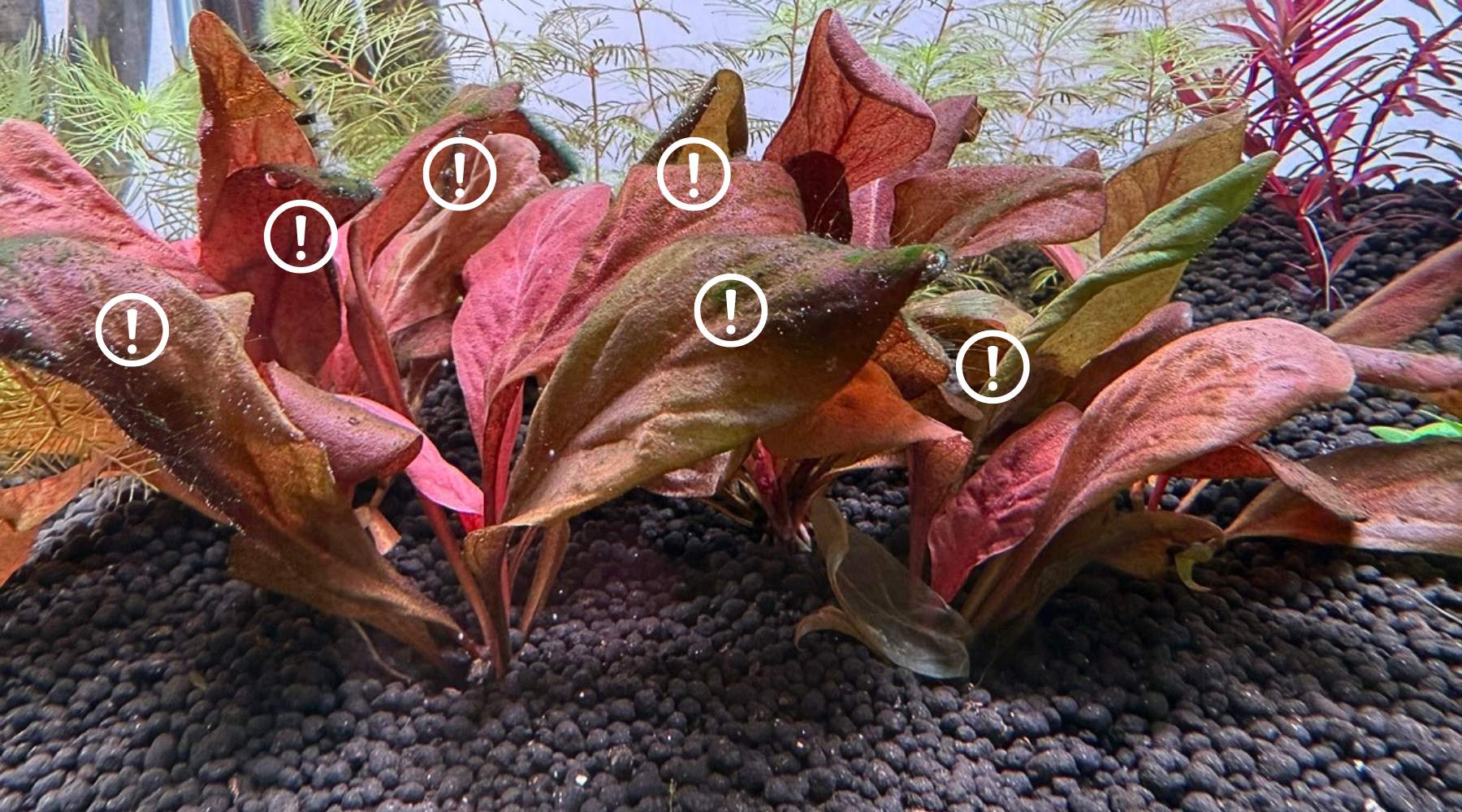
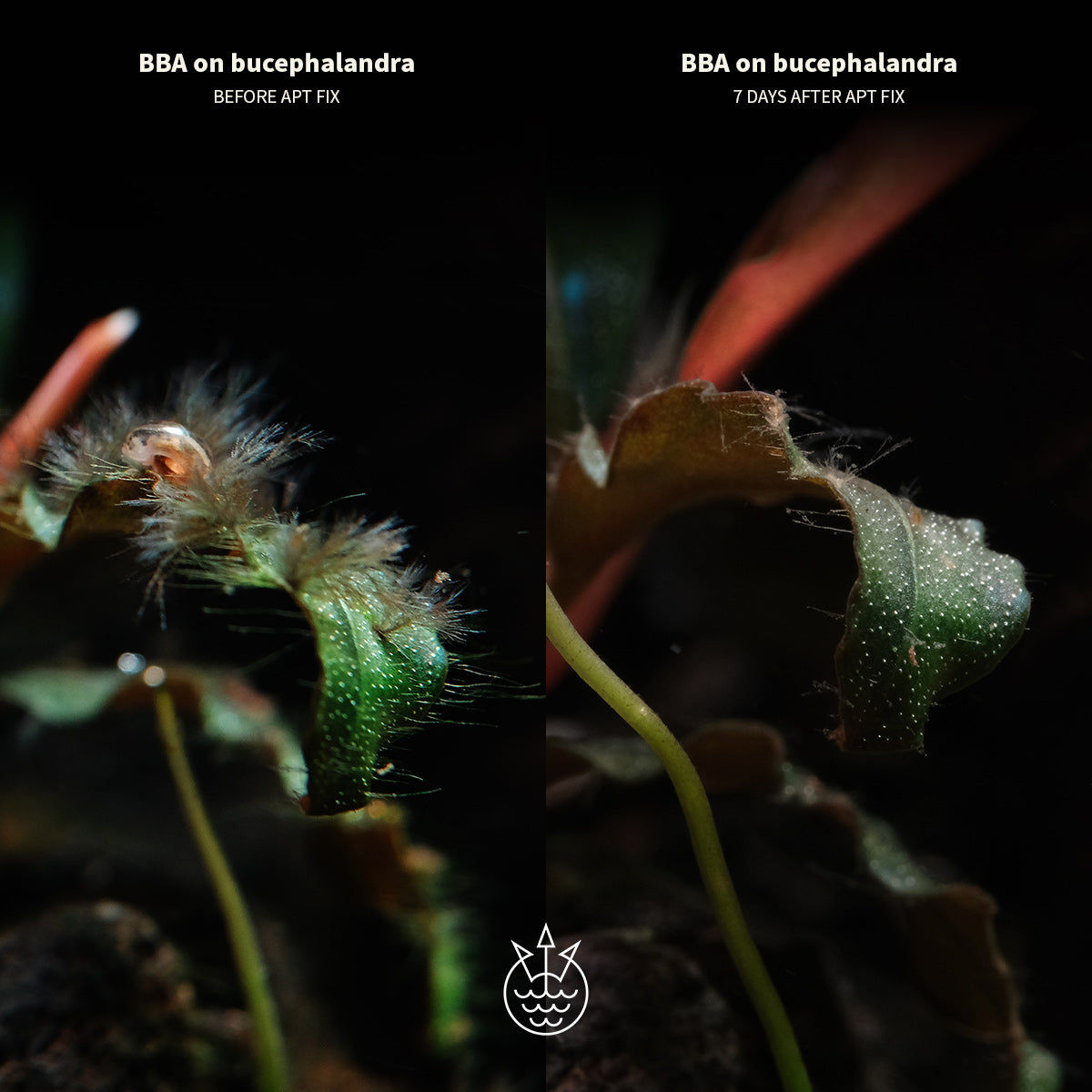
Far too often Alternanthera reineckii ends up looking like the sample below with twisted algae covered leaves.

This can be due to a variety of reasons:
- Too frequent uprooting - plant did not get chance to establish
- Poor growth parameters after transplanting- CO2/nutrients/light
- Unstable water parameters - ammonia, tank biologically immature
- Poor algae management
- Substrate issues (rarer)
Alternanthera reineckii is not a demanding plant - it often suffers from aquarists trying to do too much rather than too little, changing too many variables too often. Alternanthera reineckii needs a long period of stability to do well.
In rare cases it can be caused by over-zealous trace dosing (especially EI users). If this happens, reduce the trace dosage by 80% and observe.
If your plants are healthy (both new and old leaves) but the leaves are more curled than usual, try increasing the calcium level in the tank.
Here are some related articles for further reading.
Click here to find out how to grow red aquarium plants.
Click here to read on how to optimize CO2 levels
Click here to browse more plant growing profiles
Click here to read on how to stabilize a new planted tank


Share:
How to grow Mermaid weed (Proserpinaca palustris)
How to grow Mermaid weed (Proserpinaca palustris)