

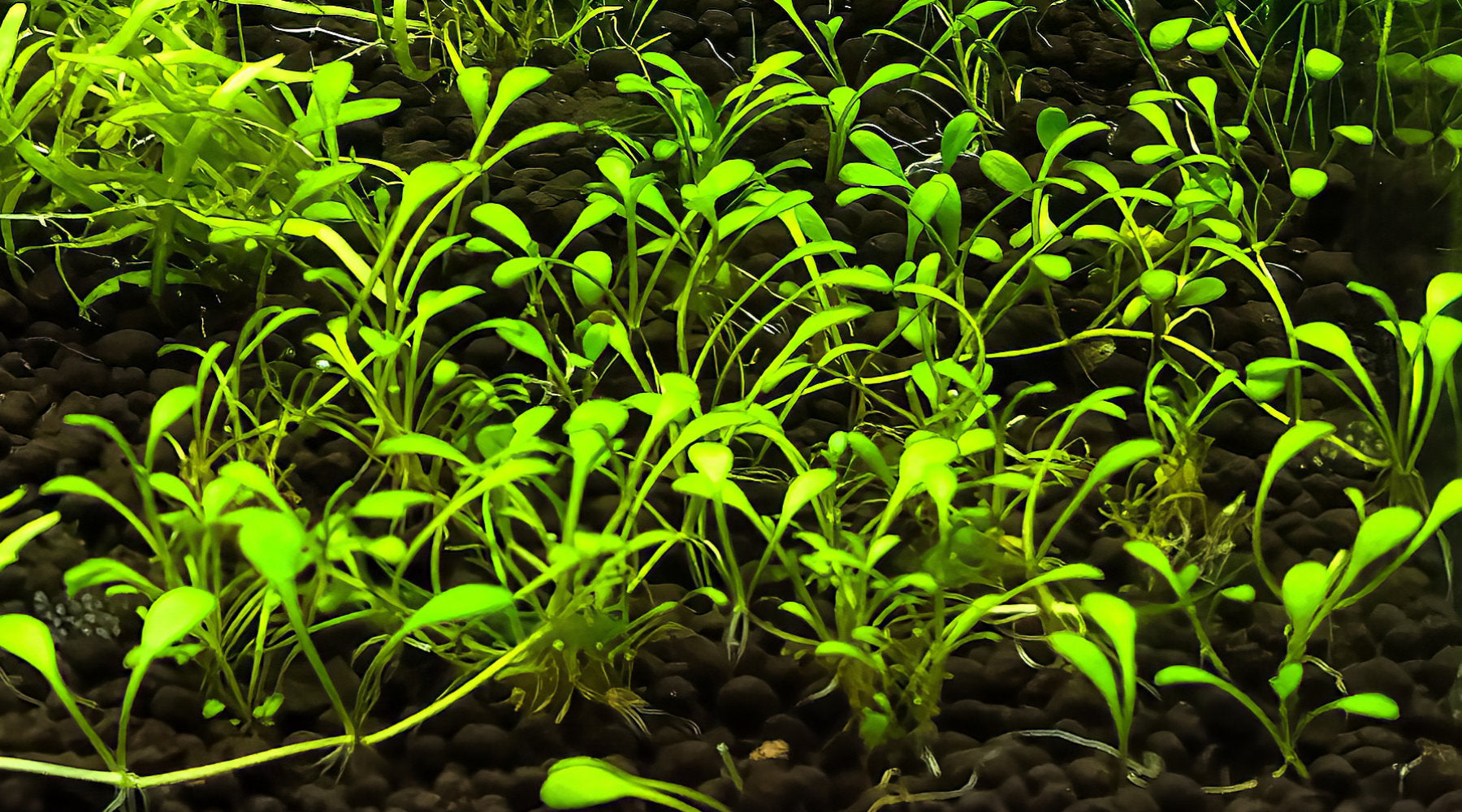
Glossostigma elatinoides is commonly called Glosso or Mud Mat. It is native to Australia, Tasmania, and New Zealand, where it grows in bogs, flood areas, river margins, and lakeshores. In the aquarium hobby it is much in demand because it has creeping runners and small, spoon-shaped leaves, usually around 5 to 15 mm long. The submersed leaves look similar to emersed grown leaves. It is one of the smaller aquarium plants available in the hobby. Under high light it often stays under 3 cm tall. It is a good foreground plant, but grows very fast when conditions are good.
Takashi Amano helped make glosso famous in Nature Aquarium layouts, and that history still shapes how the species is used today. It remains a very popular plant for Japanese-style Iwagumi layouts where sometimes it is mixed along side other aquatic plants such as Dwarf hair grass. This article will describe how to use Glossostigma elatinoides in a planted aquarium and what aquarists should look out for to grow a flat glosso carpet.
-
Easiest way to grow it is by using a nutrient-rich substrate, preferably aqua soil
-
It can grow in inert substrates, with water column dosing as well.
-
CO2 injection is the reliable method to grow the plant.
-
With CO2 injection, moderate light levels of 50-70umols of PAR is enough for the glosso carpet to spread. It is a myth that it needs a lot of light to carpet in a way that hugs the substrate.
-
Growing it low tech generally has low success rates - we recommend soil substrates paired with a shallower tank profile with high PAR levels (100+umols).
-
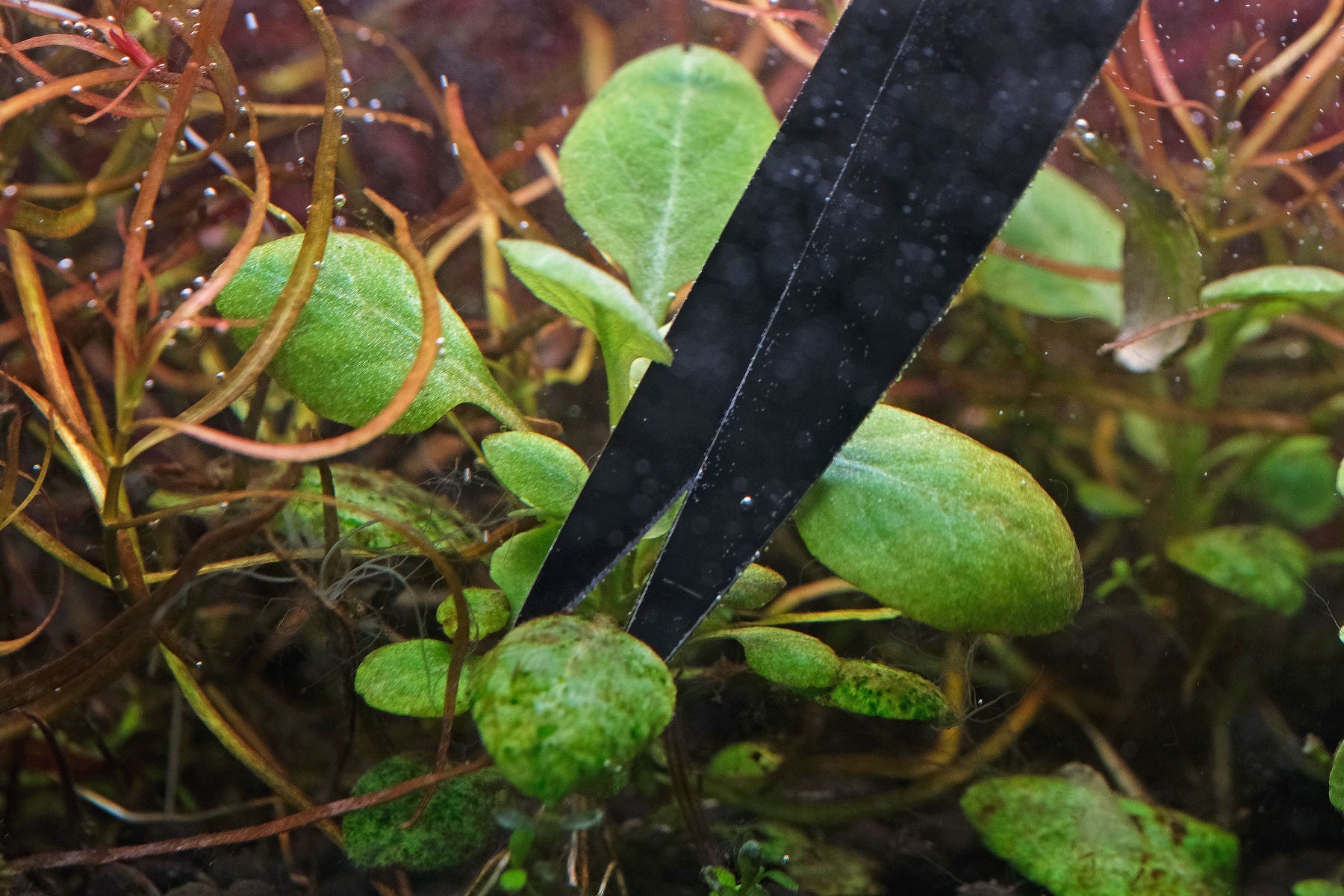
Split each pot into tiny pieces and plant as small clumps as you can manage a cm apart. Trim off shoots that grow upwards and replant them.
-
Trim early and regularly so the carpet stays low and dense.
-
Keep larger plants from casting shade.
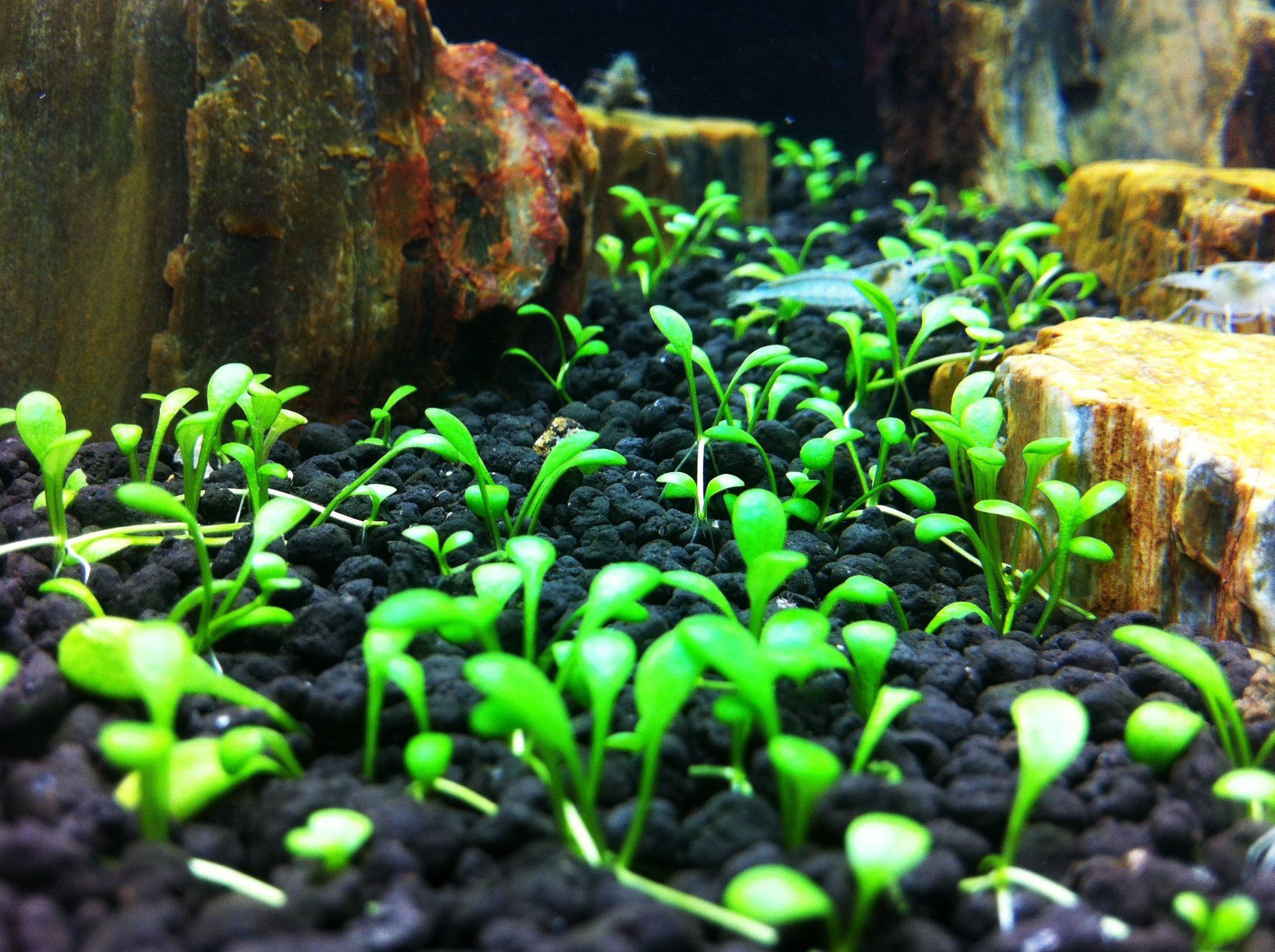
In Japanese inspired aquariums, few aquarium plants create that polished look so quickly: bare substrate disappears, the hardscape looks anchored, and the whole foreground snaps into focus.
How to Plant Glossostigma Elatinoides For a Dense Carpet
Do not stuff the whole pot into one big clump. Split the pot into many small pieces. For tissue culture or potted plants, divide it into tiny portions, down to individual plantlets of just a pair of connected leaves. For small clumps, you can plant in intervals of 1 to 2 centimetres.
Bury the pieces deeper. The leaves stay visible above the substrate, but the creeping stem and roots should have proper contact with the substrate. Proper rooting is what allows the carpet to creep flat rather than growing upwards. Planting small clumps is not superstition. It is how you reduce melting, floating, and self-shading from day one.
Water Parameters and Substrates for Glossostigma elatinoides
Glossostigma elatinoides grows best in slightly acidic to neutral water, roughly pH 5.0 to 7.5, with soft to moderate hardness. Soft water helps, and CO2 addition promotes growth significantly. Temperature between 20 and 30°C is workable, with 22 to 26°C being a very comfortable range for long-term growth. A nutrient-rich substrate such as aqua soil makes growing glosso easy.
Growth rate is fast when conditions are right. In a CO2 injected tank with enough light, glosso can spread quickly and create a dense mat in just a few weeks. That dense mat also helps absorb excess nutrients from the water and substrate, which is useful, but do not turn that into a fairy tale about it replacing maintenance. It is a biological helper, not a janitor with a mop.
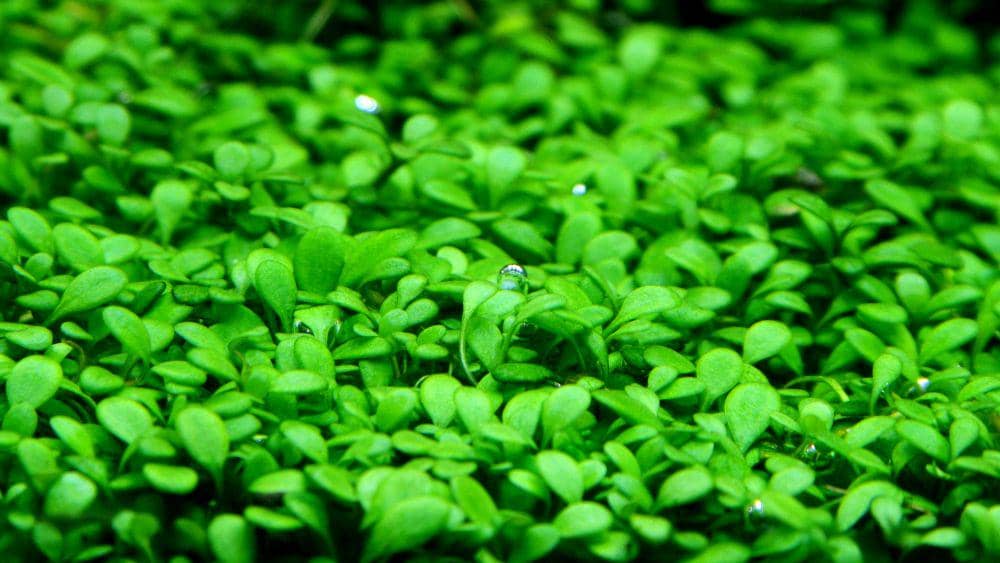
Why Does Glossostigma Grow Upward Instead of Spreading?
There are 3 reasons why Glossostigma elatinoides grows upwards instead of flat.
-
Poor planting approach - plants that do not root well cannot sense where the substrate level is, and produce runners that lift off the substrate level.
-
Insufficient light; make sure you have at least 50-70umols of PAR on the substrate, and that no floaters or larger plants are shading the plant.
-
Insufficient CO2. When aquatic plants are deprived of carbon, they are programmed to seek the water surface to gain access to atmospheric CO2.
Do I need to Increase Light Levels if Glosso is Growing Upwards?
Glossostigma elatinoides has a reputation as a difficult plant demanding high light intensity to grow well, but this is a myth. If you are in the zone of 50-70umols of PAR, you have plenty of light for glosso to carpet flat as long as your CO2 levels are good.
It can take awhile for freshly planted glossostigma elatinoides to take note of the substrate level and start creeping rather than producing runners that lift off the substrate. Planting individual plantlets deep enough impacts this significantly. Runners that lift off the substrate should be cut and replanted. As the plant grow and get properly rooted, the new runners produced will stick to the ground more closely as well. This can take a few weeks in new aquariums. Aquarists should not automatically think that more light is needed just because newly produced runners are lifted off the substrate.
How Do I Know If My Glosso Is Growing Correctly?
Healthy glosso spreads sideways. New leaves that are growing well will be larger in size as the plant acclimatizes. Seeing increasing larger leaves is a sure sign that growth conditions are good. In CO2 injected tanks, healthy Glossostigma elatinoides may even pearl, meaning it releases visible oxygen bubbles after photosynthesis ramps up. That is a sign the plant is running with a full tank of fuel.
Bad signals are easy to spot too. If new runners are produced with smaller and smaller leaves, it indicates growth conditions are poor. This is often caused by poor CO2 or nutrient levels. Growing upwards could indicate poor growth conditions, but it also depends heavily if Glosso was properly planted.
Another common myth is that every glosso problem is a nutrient deficiency. When Glossostigma elatinoides tends to grow upwards if light is poor, adding more potassium does not magically flatten it. Fix the light reaching the substrate. Fix CO2 stability. Then judge the plant again.
Regular trimming of Glossostigma elatinoides is necessary to maintain a low, dense mat and prevent upper leaves from smothering older leaves. Carpets that get overly thick will face quicker deterioration of lower growth.
How is Glossostigma elatinoides Different from HC Cuba, Monte Carlo, and Dwarf Hair Grass?
HC Cuba (Hemianthus callitrichoides 'Cuba' ) is even smaller in size and more delicate to grow and handle, its growth requirements are similar.
Monte carlo (Micranthemum tweediei 'Monte carlo') has slighter larger leaves that grow along a thick creeping stem that hugs the substrate tightly. It forms denser mats more easily, and is slightly easier to grow. It spreads much more slowly compared to Glossostigma elatinoides.
Dwarf hair grass (Eleocharis acicularis/parvula/pusilla) looks quite different, as it truly looks like thin strands of grass. It is easier to grow compared to Glosso.
Marsilea crenata is good alternative to Glosso. It looks similar but has deeper green leaves, and spreads much slower compared to Glosso. However, it is easier to grow, and more suitable for low tech aquariums. It is the best carpet plant for lower light low tech aquariums.
Glossostigma diandrum is another Glossostigma species that have thinner leaves compared to Glossostigma elatinoides.
Can You Grow Glossostigma Without CO2?
For low-tech tanks, glosso is possible but not the easy option. Per our 2Hr Aquarist approach, carpet plants without injected CO2 need a shallow tank, stronger light, good substrate, and reduced transition stress. Glossostigma may manage this, but Monte Carlo (Micranthemum monte carlo) and dwarf hairgrass are usually safer bets.
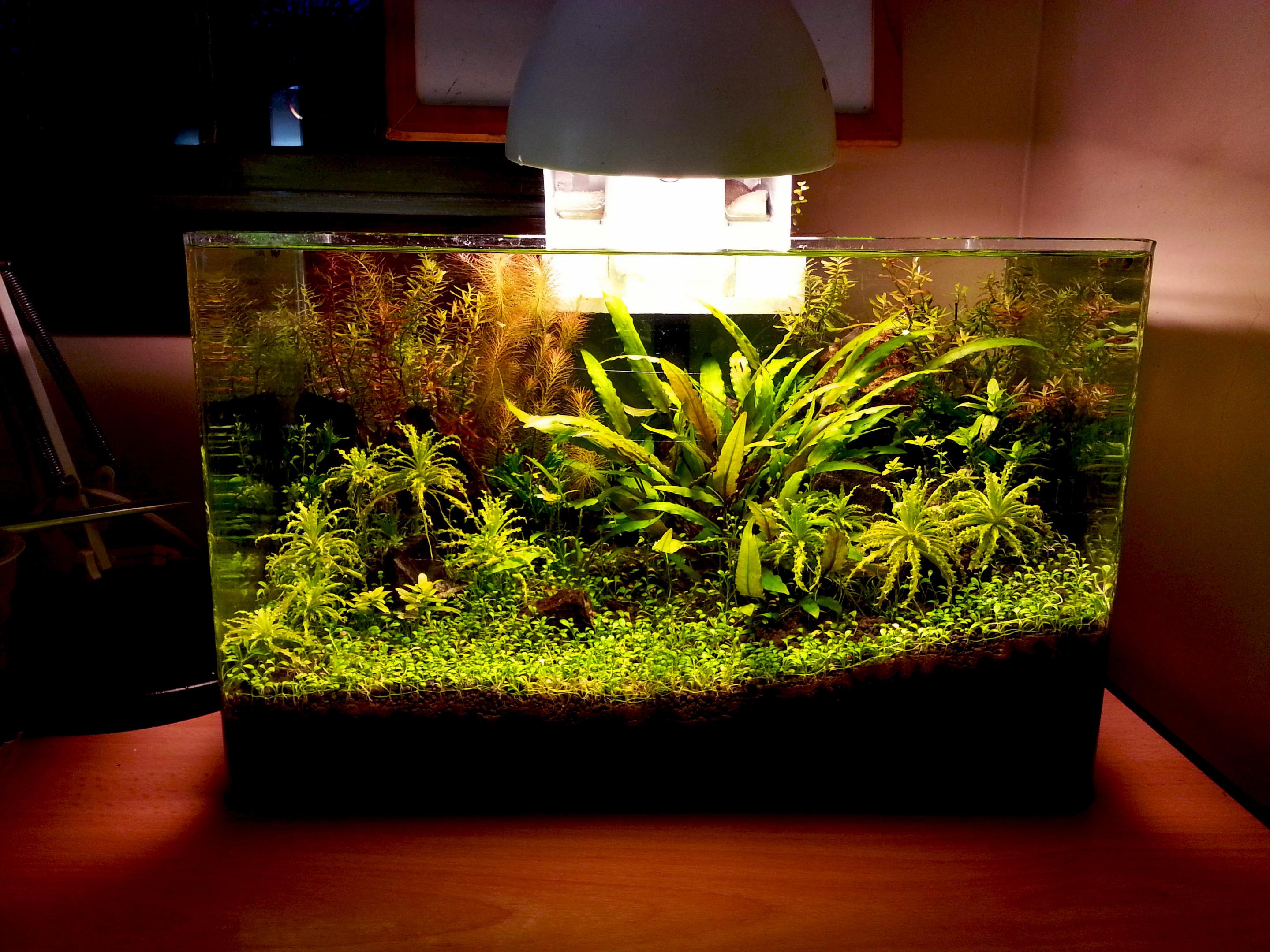
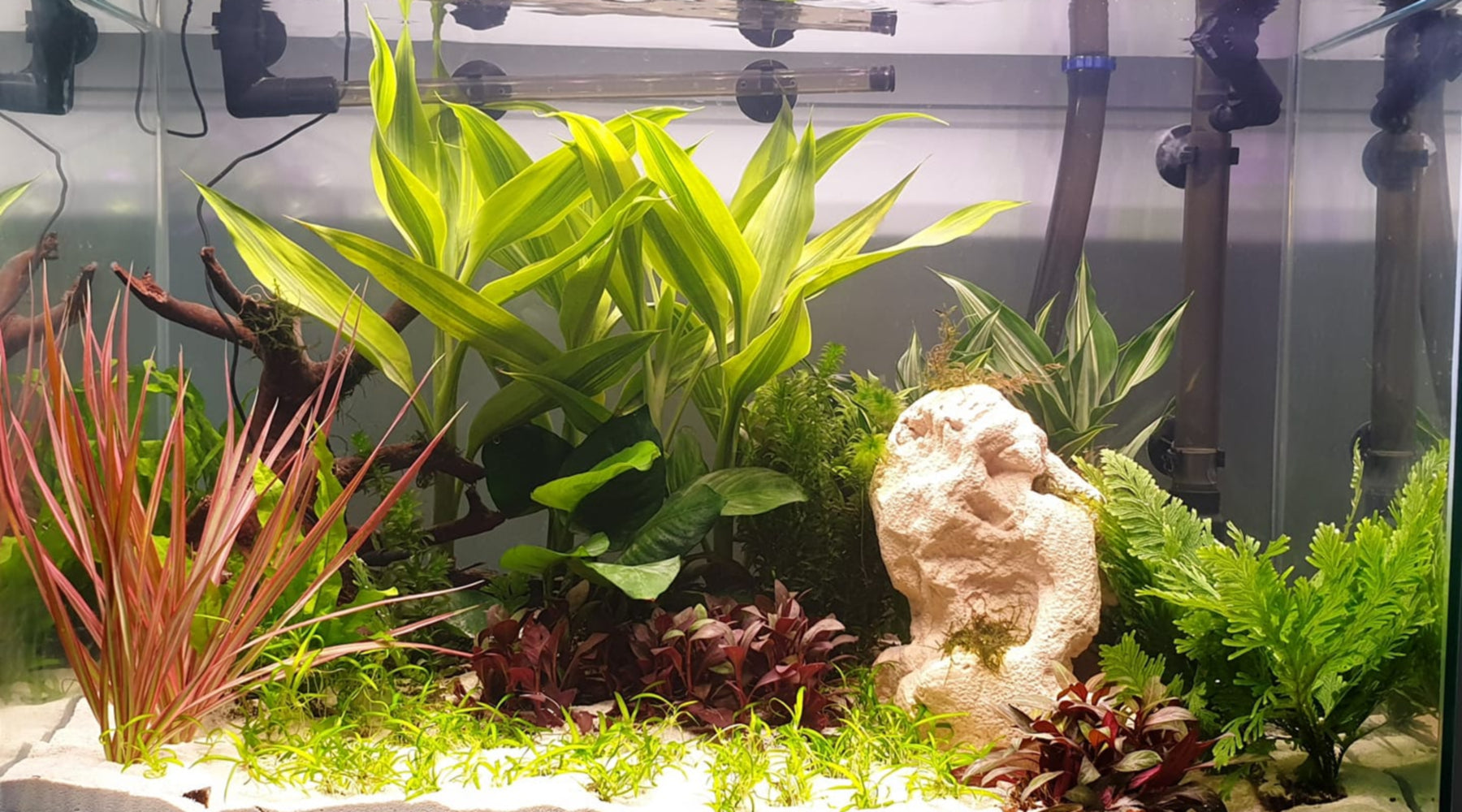
In this low tech aquarium, glosso is grown with soil is capped with aquasoil. The soil layers contribute CO2 through decomposition.
Next stop: the 2Hr Aquarist deep dives on carpeting plants, injected CO2, and Iwagumi layouts.




Share:
Bacopa caroliniana and Bacopa salzmannii 'Purple': different varietals, Care and Propagation
How to grow Rotala Rotundifolia