

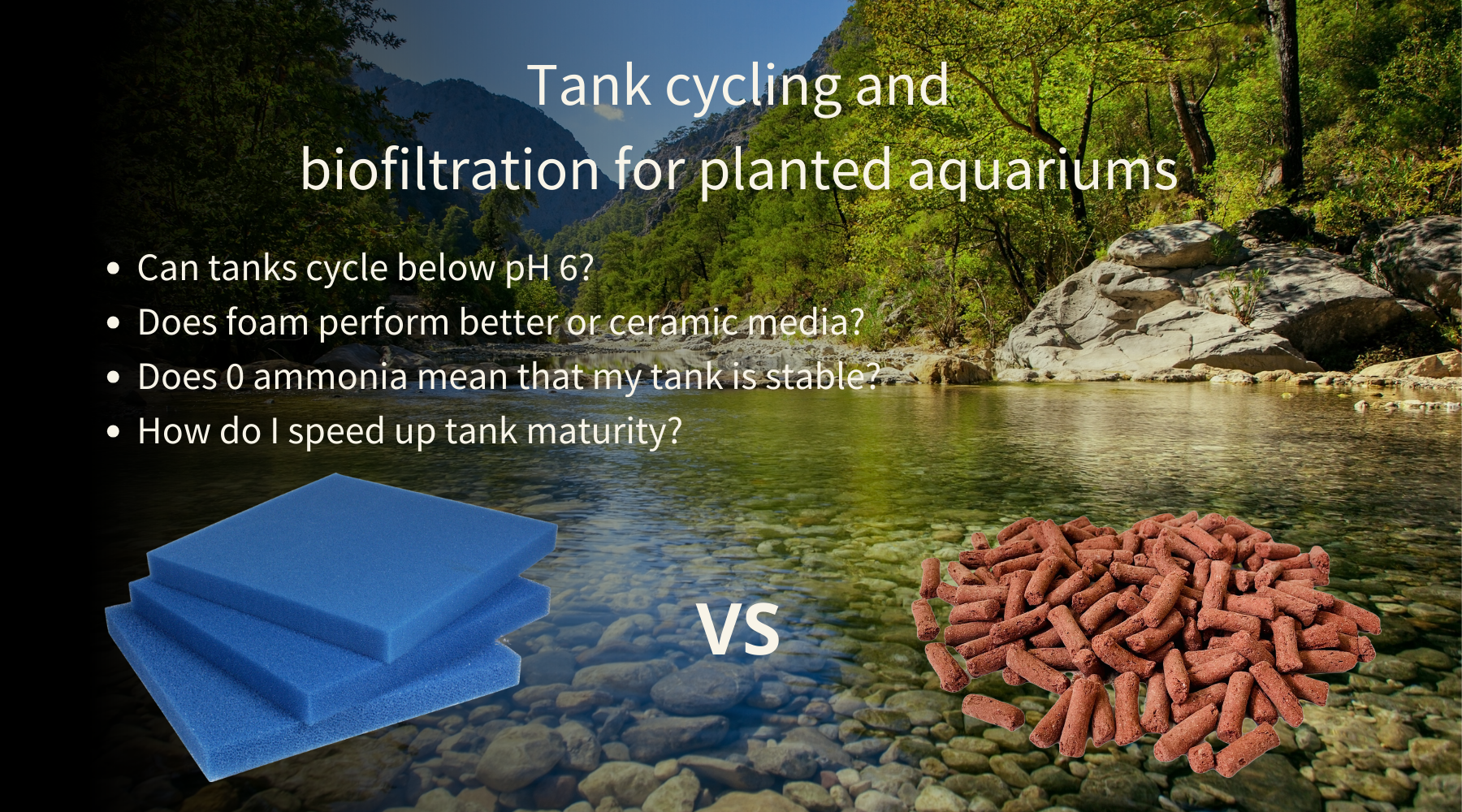
A cycled tank and a biologically mature tank are not the same thing. Cycling builds the bacteria that turn ammonia into nitrate, and a test kit tells you when it is done. Biological maturity is the wider microbial community that digests organic waste, clears the water and suppresses algae - and no hobbyist test kit measures it. Most "my parameters are perfect but nothing is working" problems live in that gap.
- Ammonia oxidation is only part of what a filter does; the amount of media needed for ammonia alone is surprisingly small.
- A zero ammonia reading does not mean the water is clean. Organic waste at earlier stages of decomposition is invisible to hobbyist test kits.
- Cycling does not stall below pH 6. Nitrosomonas slow down, but archaea and other ammonia oxidisers take over, so a low pH tank cycles more gradually, not never.
- Below pH 7 most ammonia sits as ammonium (NH4+), which is far less toxic. This is why aquasoil tanks tolerate ammonia levels that would harm fish in alkaline water.
- Filter media surface area is oversold. Fine pores clog with biofilm and debris; most of the tanks in our gallery run on plain 30ppi foam.
- Signs of maturity: water clears quickly after disturbance, dead animals disappear fast, no smell, and shrimp survive and breed.
Biofiltration 101: how aquarium waste becomes nitrate
The decomposition of waste products in a tank occurs in many stages. Fish and plants (yes, plants too, in the form of old leaves and old plant parts) excrete organic waste in the form of waste proteins, amino acids, cell membranes, dead cells, fibre, urea and other organic by-products.

Snails, shrimps and other detritivores also help by consuming detritus and breaking down organic material into smaller particles.
Shrimps, snails, isopoda and other small aquatic organisms mechanically break down larger fish faeces and feed on the microbes that live on them. Bacteria also produce a biofilm that traps particulate matter - this is very important in maintaining water clarity and clumping pollutants. Protozoa and larger microorganisms further break down the waste into simpler nitrogen compounds. Bacteria, fungi and archaea break these down further and much of the waste ends up as ammonia (NH3) and carbon dioxide (CO2). Bacteria and archaea further oxidise ammonia (NH3) to nitrite (NO2) and nitrates (NO3). If anaerobic bacteria are present in the ecosystem, nitrates can be further reduced to nitrogen gas (N2), completing the nitrogen cycle. Nitrates (NO3) or Nitrogen gas (N2) are the common endpoints of the decomposition chain for nitrogenous waste in an aquarium. Nitrogen gas is naturally released into the atmosphere in an open system, while nitrates are taken up by growing plants or removed during water changes.

Tiny micro-organisms are involved in the various stages of decomposition and these important processes are largely invisible to the naked eye.
Hobbyists have no established test methods for measuring organic waste levels at earlier stages of decomposition - other than visually observing fish faeces and organic detritus accumulation at substrate level, or observing that the water is cloudy due to particulate matter.
At the stage where ammonia (NH3) is produced, hobbyist test kits are readily available to test for ammonia (NH3), nitrites (NO2) and nitrates (NO3) in the water column. As elevated ammonia levels are toxic to livestock, most hobbyists are aware of the importance of keeping them at bay. The main way to do this is to have a mature filter that contains enough bacteria and archaea to quickly oxidise ammonia and nitrites as they are produced. The process of building up a filter of bacteria and other microbes is called tank cycling.
Cycling a planted tank means building up these colonies of bacteria before adding animals. The idea is that any toxic ammonia produced by the animals can then be rapidly converted into relatively harmless nitrates.
However, ammonia oxidation is not the only function of filtration. As mentioned above, while hobbyists can easily test for ammonia, they do not have good testing methods for measuring organic waste levels at earlier stages of decomposition - other than being able to visually see cloudy water or particulate matter floating around the tank. Having large amounts of organic waste and pathogenic microbes floating around in the water column is detrimental to fish and plant health. It is also the job of the filter to capture such particulate matter. A sure sign that the filter is not working optimally is if you notice that the tank water is cloudy.
Many hobbyists report that their water parameters are perfect - no measurable ammonia or nitrite - and yet they keep losing fish. Water quality can be poor and full of other contaminants even when ammonia and nitrate are undetectable.
 The substrate zone has a large surface area when aquasoil and smaller gravel are used. The substrate is an important collection point for debris and particulate matter.
How to create a good environment for microbial growth
The first step in aquarium cycling is to ensure that you are providing a favourable environment for microbial colonisation and growth. Most microbes live on surfaces, with the two most populated areas being the filter and substrate, as these two areas have a high surface area. However, surface area is not the only factor at play.
What is filter media actually for?
Bacteria (including Nitrosomonas and Nitrosococcus) & Archaea in the filter & substrate convert ammonia (NH3) to nitrite (NO2). Various strains of microbes (Nitrobacter and Nitrospira) convert nitrite (NO2) to nitrate (NO3). These bacteria are most abundant on the surface of the aquarium, where they form biofilms that act as a bacterial shelter, protecting them from external environmental conditions. They are most abundant in the substrate and filter - so the main objective of filter media is to provide good housing for bacterial colonies.
Filter media with a larger surface area theoretically provide more surface area for bacterial colonisation. However, ammonia oxidising bacteria also need access to water flow and oxygen to do their job. Good filter media strive to provide a balance of both. Common forms of filter media include sponge or ceramic type media.
Which media actually delivers that balance - sponge, ceramic, sintered glass - and what the surface-area claims are worth once a filter has been running for a month, is a buying decision rather than a biological one. We go through it in our guide to filter media.
What does a filter do besides oxidise ammonia?
Ammonia oxidation is not the only role played by filter media microbes. The amount of filter media required for ammonia oxidation alone is surprisingly small. In acidic aquarium environments where the pH is less than 7, most of the ammonia is in the ammonium form, which makes it non-toxic.
Ammonia is not the only form of pollutant in aquarium water. Large particles of organic waste give rise to pathogenic microbes if they are not broken down quickly, and it is the microbial bio-films in the filter - not the pore size of the media - that clump those contaminants together and keep a mature tank clear. Having more filter media is therefore important for maintaining good water quality. Why a tank can read zero ammonia and still be a poor place to keep fish is covered in why perfect parameters do not guarantee healthy fish.

Most of the tanks in the 2hr Aquarist gallery run on boring 30ppi filter foam, we do not use any branded filter media.
Does filter media layout matter?
Less than the range of media on sale would suggest - but the order does. Coarse mechanical media should come first so debris never reaches the fine pores of your bio-media, and the first layer should be the one you can service without disturbing the rest. Which of the four practical layouts suits you comes down to how often you are willing to open the filter, and that is set out in our guide to the best filter media layouts.
Why flow and oxygen decide how fast a tank cycles
Microbes need good oxygen levels to grow and break down waste. In an aquarium, a clean water surface and good water circulation are essential to maintain good oxygen levels. In aquariums, gas exchange only takes place at the surface of the water, so it is important to keep the surface free of oil and to ensure that surface water is constantly exchanged with deeper water in the tank.
Buying a good size filter to drive the flow, with the outlet/inlets well positioned to give good flow throughout the tank, will make a big difference. The flow arrangement should also take into account the position of the hardscape.
Wet/dry filters with chambers that have access to air flow are particularly effective where ammonia cycling is concerned. While aquatic plants can produce a lot of oxygen during the light window, most aquariums are only lit for 1/3 of the day or less. When plants are not photosynthesizing, they become net oxygen consumers. Good gas exchange and oxygen levels should be maintained consistently around the clock.
Simply seeding an empty aquarium with a bacteria culture and ammonia is not enough to start the cycle - ammonia oxidisers need several other things present as well, covered in the next section. In aquariums where soil substrates are used these are usually available; in tanks using inert substrates they may be lacking.
 A clean water surface with some surface agitation is important for maintaining oxygen levels. We use surface skimmer inlets for all tanks in the 2hr Aquarist gallery. This keeps the water surface clear and directs oxygen-rich surface water into the filter. Similarly, the filter outlet is positioned near the top of the tank to mix the oxygen-rich surface water with the rest of the tank water.
What ammonia-oxidising bacteria need besides ammonia
For ammonia-oxidising bacteria to work, they need other components besides pure ammonia; the bacteria also need carbonates (CO3), magnesium (Mg) and phosphates (PO4) to be present. These elements are often present in trace amounts in tap water and are also released from active substrates such as aquasoil. For commercially available strains of ammonia oxidising bacteria such as Nitrosomonas and Nitrosococcus, they function optimally in alkaline pH ranges between 7.5 - 8.0. In acidic tanks, particularly low pH aquasoil tanks below pH 6, thaumarchaeota or archaea may be the dominant ammonia oxidisers in the system rather than bacteria. (see more on this topic below).
Why ammonia is less toxic below pH 7
In biological systems, ammonia can occur in two forms - ionised (NH4+) and unionised (NH3). The amount of ammonia present in either form depends largely on the pH range of the aquarium. Ionised ammonia (NH4+) is much less toxic. Therefore, the toxicity of ammonia is greatly reduced in lower pH environments as most of the ammonia present will be in the form of ionised ammonium (NH4+). In aquasoil tanks where high levels of ammonia are emitted, one can escape most of the disadvantages of elevated ammonia due to the strong buffering capacity of the soil, which lowers the pH below 7.

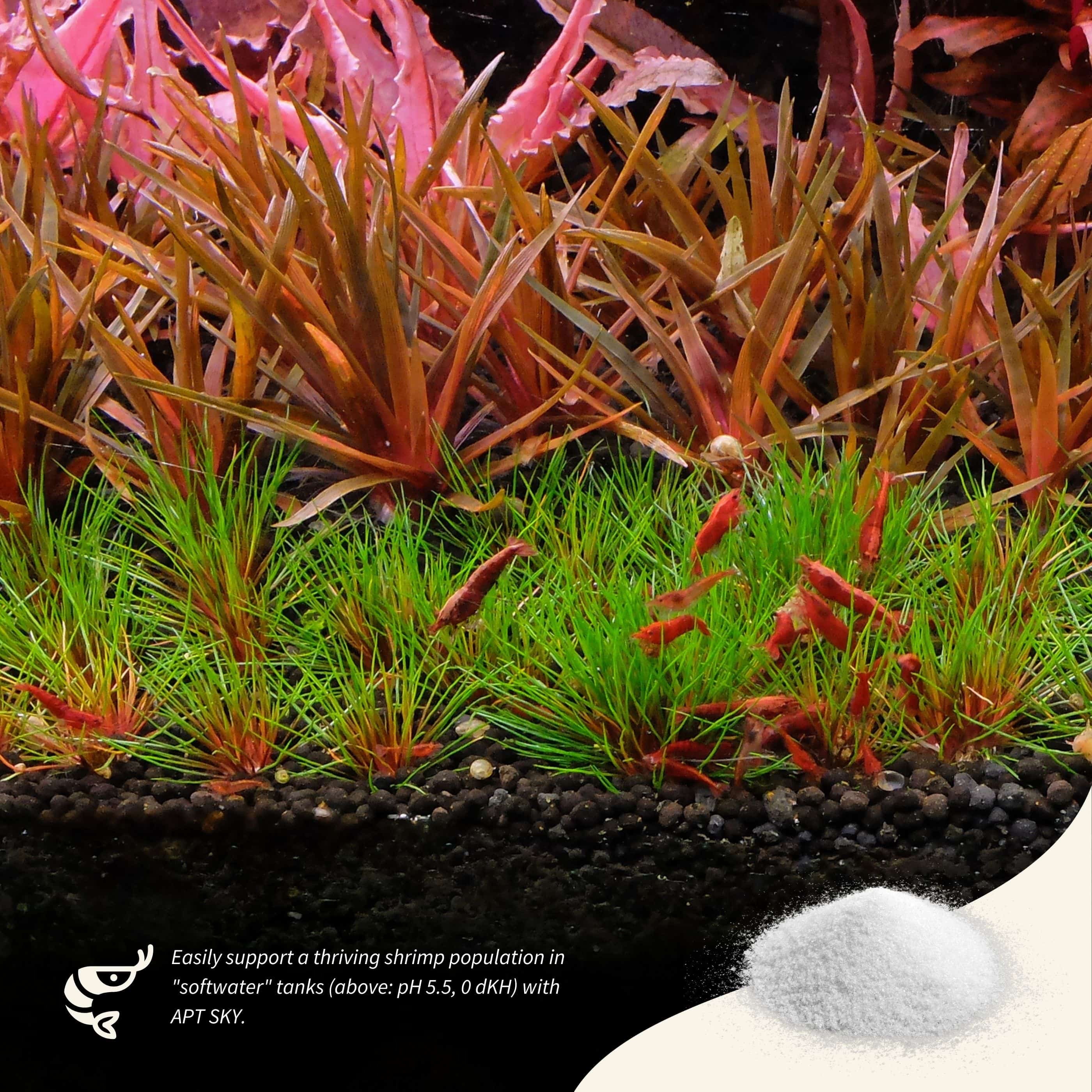
The majority of tanks in our 2hr Aquarist gallery run between pH 5 and pH 6, due to the combination of soft tap water and aquasoil.

Does cycling stall below pH 6?
Persistent anachronistic thinking in the aquarium hobby often spreads the rumour that tanks cannot be recirculated below pH 6, or that bacterial oxidation of ammonia stops when the pH drops below a certain level. While commonly known ammonia oxidising bacteria such as Nitrosomonas and Nitrosococcus function optimally at higher pH ranges, they are not the only ammonia oxidising organisms in aquatic systems. In acidic environments, archaea, thaumarchaeota and other organisms, rather than bacteria, may be the primary ammonia oxidisers in the system. Scientific studies such as this one also show that nitrification by bacteria still occurs in low pH environments because they form a protective biofilm where the microenvironment is conducive to their work.
Many natural lakes and rivers have pH ranges below 6 (some in the 3+ range) and they thrive with microbial life.
Cycling tanks in low pH environments entirely on the typical strains of Nitrosomonas and Nitrosococcus will be slower than in higher pH tanks, but other forms of microbial life will eventually develop to take over the ammonia oxidiser roles in such systems. If the natural pH of your aquarium is below 6, there is no need to change the water chemistry of your aquarium. However, tanks may take longer to fully cycle than those with more alkaline water. On the other hand, at lower pH ranges, almost all ammonia is present as ammonium (NH4+), which makes it non-toxic.

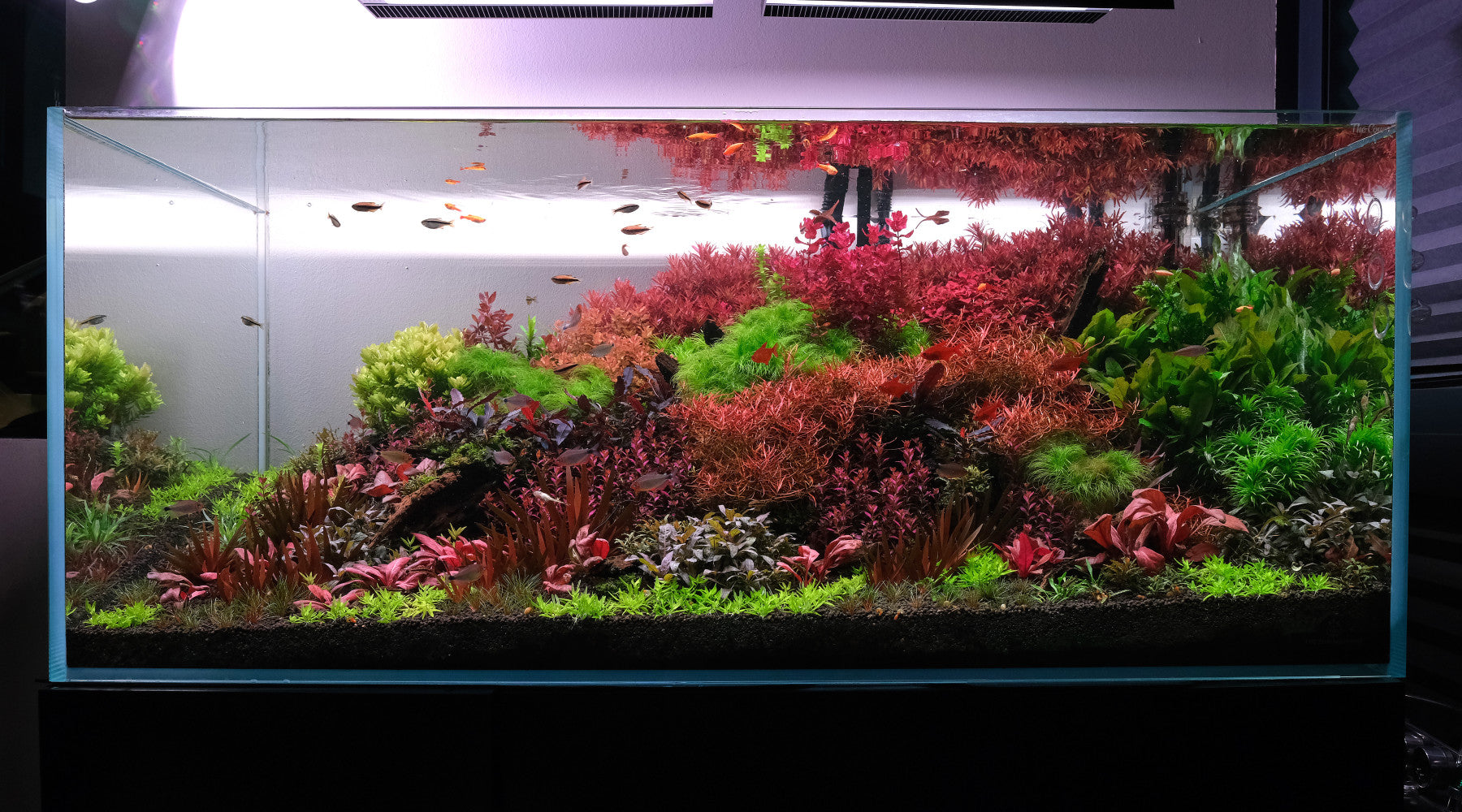
 Soft water tanks with Aquasoil often see very low pH ranges due to the combination of Aquasoil lowering the KH and CO2 injection lowering the pH. The tank above has a pH of 5.0 when CO2 is switched on.
How to seed a new tank with microbes
Once the filter and tank have been set up, the cycling process can begin ~.
New tanks are largely devoid of micro-fauna. Bacteria and other microbes enter the system by piggybacking on plants and fish that are added. Soil substrates tend to be seeded with more microbes than inert substrates. Below are some common ways to seed the system with micro-organisms to speed up tank cycling.
1. Introduce sludge/mature filter media from a mature tank into the new filter. This will quickly introduce a large amount of seed microbes. This can be done by siphoning mulm from the bottom of the substrate of a mature tank and transferring it directly to the substrate of the new tank. It can also be done by mixing aged substrate from an older tank with new substrate in a new set-up. Transferring aged filter sponges from an older filter to a newly installed filter will also work. Squeezing the organic detritus from older established filter sponges into a new tank and/or filter will also work. This is the best method of seeding a new tank as it introduces a wide variety of active microbes directly into the new tank system.
2. Dosing bottled or powered commercial bacteria into a new system will help seed the system with beneficial bacteria.
3.Adding sediment collected from a natural lake. This can introduce a large and diverse amount of micro-organisms. However, care must be taken to collect it from an uncontaminated location.
Once the first batch of microbes has been introduced, tank cycling can begin.
Fish-in cycling
The old approach was to add a few hardy fish and let their waste feed the bacteria, with large weekly water changes to keep ammonia down. It works, but it leaves waste load, ammonia and pH all moving at once, and it has been criticised as cruel. The method, and how much ammonia is actually tolerable, is covered in the cycling guide.
Why fishless cycling replaced the fish-in method
Fishless cycling became popular when folks realize that they do not need to risk fish health and that they can provide the ammonia necessary by other means.
The procedure itself - how much ammonia to dose, what to test for and when, and how long it takes - is set out step by step in the cycling guide.

In a tank where ammonia is added at a steady rate, ammonia-oxidising microbes will establish first, converting the ammonia into nitrites. As nitrites build up, microbes that oxidise nitrites to nitrates will proliferate and over time nitrites will be converted to nitrates. In most tanks, nitrate is the end product of microbial action, and excess nitrate is removed by large water changes. All three processes occur continuously in a mature aquarium. In a planted aquarium where other parameters are met, plants will take up ammonia and nitrates through the water column.
Cycling with aquasoil and the dark start
Aquasoil releases its own ammonia, so there is nothing to dose - you run the tank with the filter going and the lights off while the soil feeds the bacteria. This is the dark start, and the full protocol, including what to do when the soil dumps more ammonia than the bacteria can keep up with, is in the cycling guide.

How soon can plants and fish go in?
Which species can go in early and which have to wait depends on how much ammonia the substrate is still releasing and how low the pH sits. The cycling guide covers when to plant, and why sensitive species should wait.
Why a cycled tank is not yet a mature tank
Ammonia cycling is just one form of organic waste in the tank. However, it is the one that affects livestock and algae the most, so the first goal of tank cycling is to get ammonia cycling done.
Journey to the micro-cosmos has very good videos of microbes consuming algae.
Microbes and decomposers are also involved in the consumption of organic waste. A biologically mature system is one in which there is sufficient microbial life to rapidly break down harmful organic pollutants into harmless substances. This creates a more favourable environment for both animals and plants. The faster waste is broken down, the fewer triggers there are for algae to spawn. This is why biological maturity is important even in unstocked tanks. It takes time for a tank to become biologically mature (a few weeks), even though the ammonia cycle itself may be complete. Hobbyists have no established test methods for measuring organic waste levels at earlier stages of decomposition - other than visually observing fish faeces and the accumulation of organic detritus at substrate level. It is only when waste has decomposed into ammonia form that it will show up on hobbyist ammonia test kits. Therefore, a zero ammonia reading does not automatically mean that the water is free of other forms of organic pollutants.
The tank must be considered as a whole ecosystem. For planted aquariums, the system will stabilise more quickly if the majority of the aquarium is planted with healthy, growing plants. Healthy plants oxygenate the water, absorb harmful ammonia and provide a healthy habitat for microbes. Deteriorating plants pollute the environment by contributing detritus and organic waste. Allowing plants to establish and grow is an important part of stabilising the ecosystem of a planted aquarium.
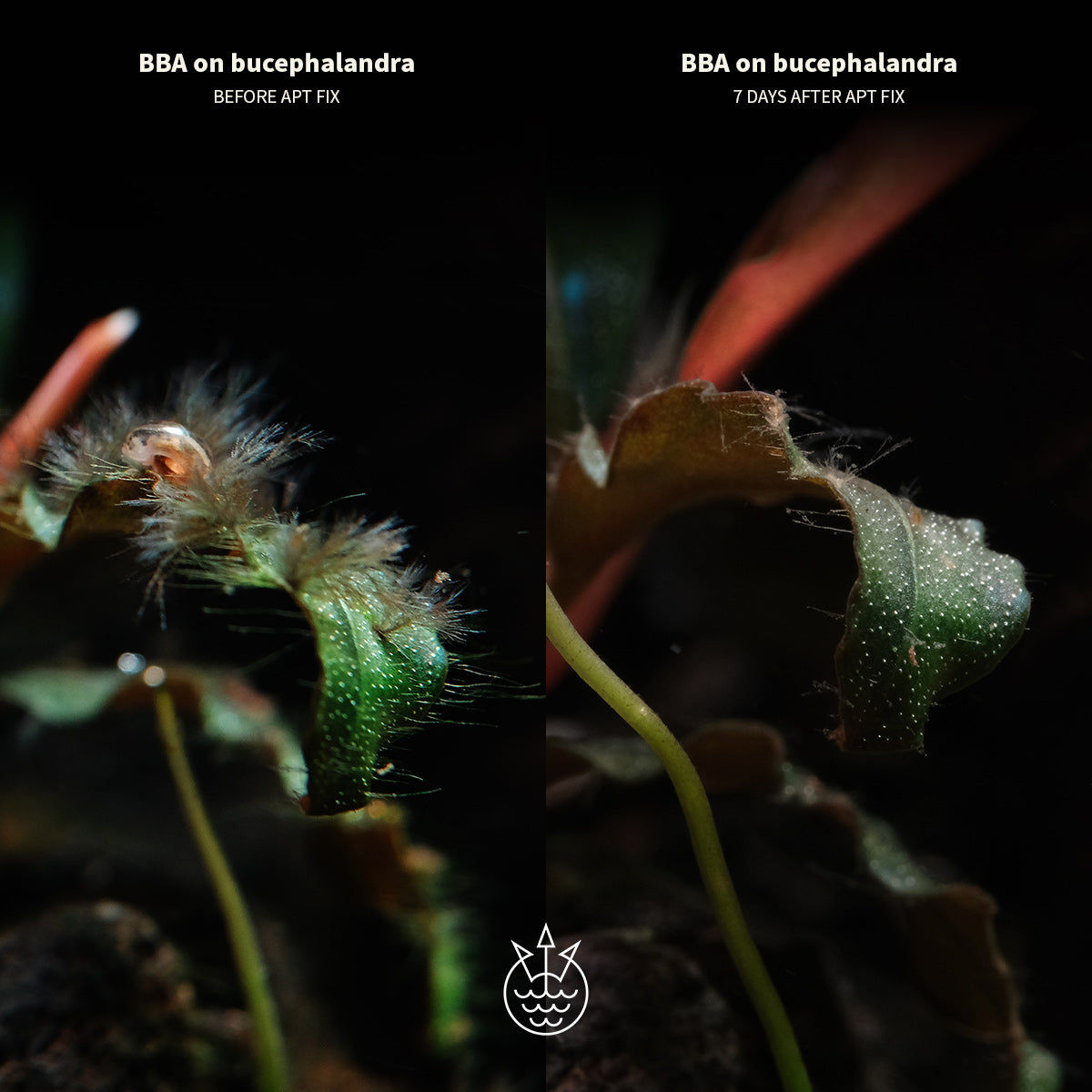
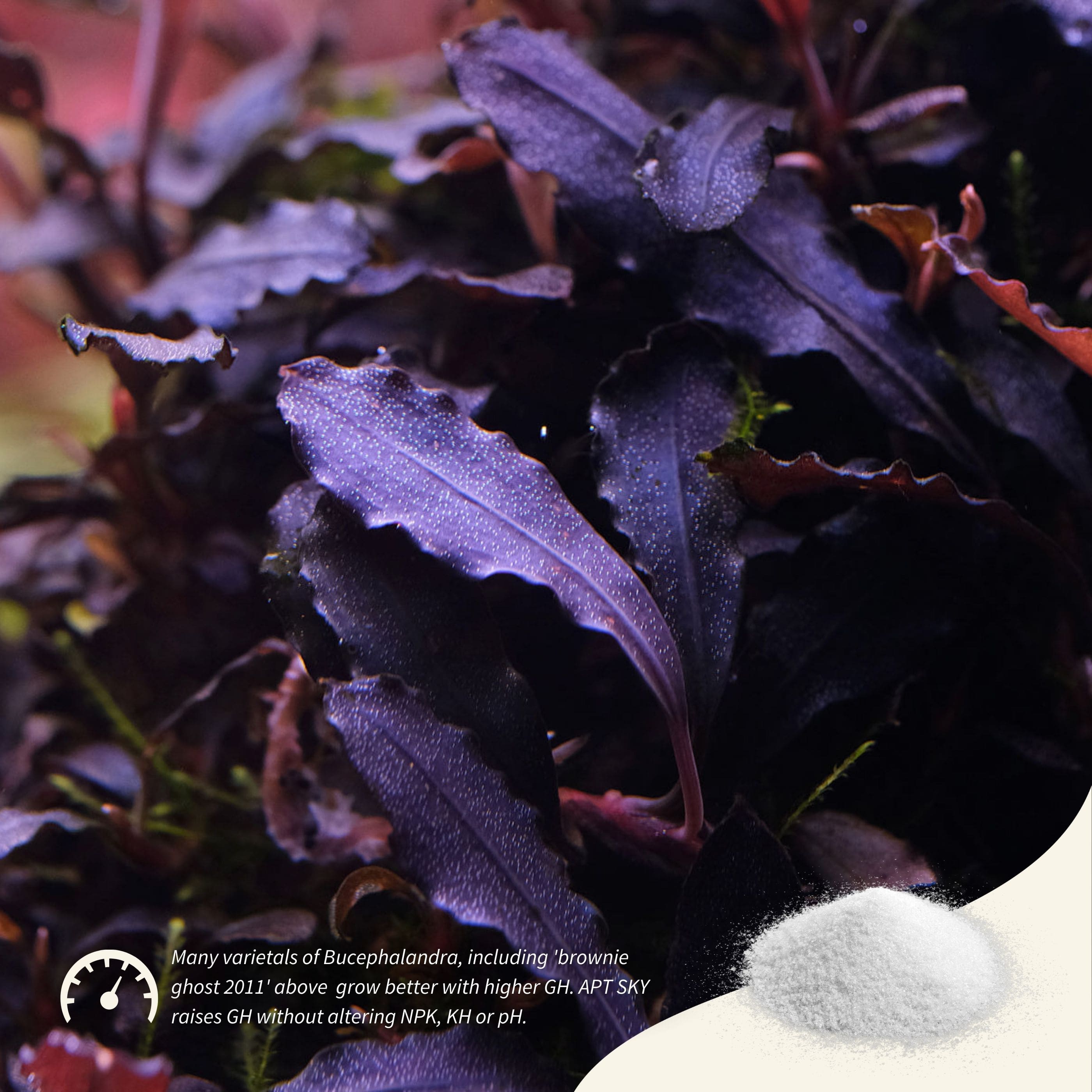
 Some plants such as Utricularia gramminifolia and Bucephalandra acclamate much more quietly in biologically mature tanks. These species should never be planted in a new aquarium. Both species have more problems with algae and melting in a new setup, although they do not have very demanding growth requirements.
Signs your tank is biologically mature
-
Ammonia tests are consistently 0.
-
Water clarifies quickly even after substrate disturbance.
-
Water is clear (micro-particles are clumped together by bio-film).
-
Dead animals disappear quickly (presence of larger detritivores such as shrimp).
-
Aquarium does not smell bad (larger organic molecules are broken down quickly).
-
Sensitive animals such as shrimps have a high survival rate and reproduce regularly.
Signs your tank is not biologically mature yet
-
Cloudy water in new tanks.
-
Positive ammonia readings.
-
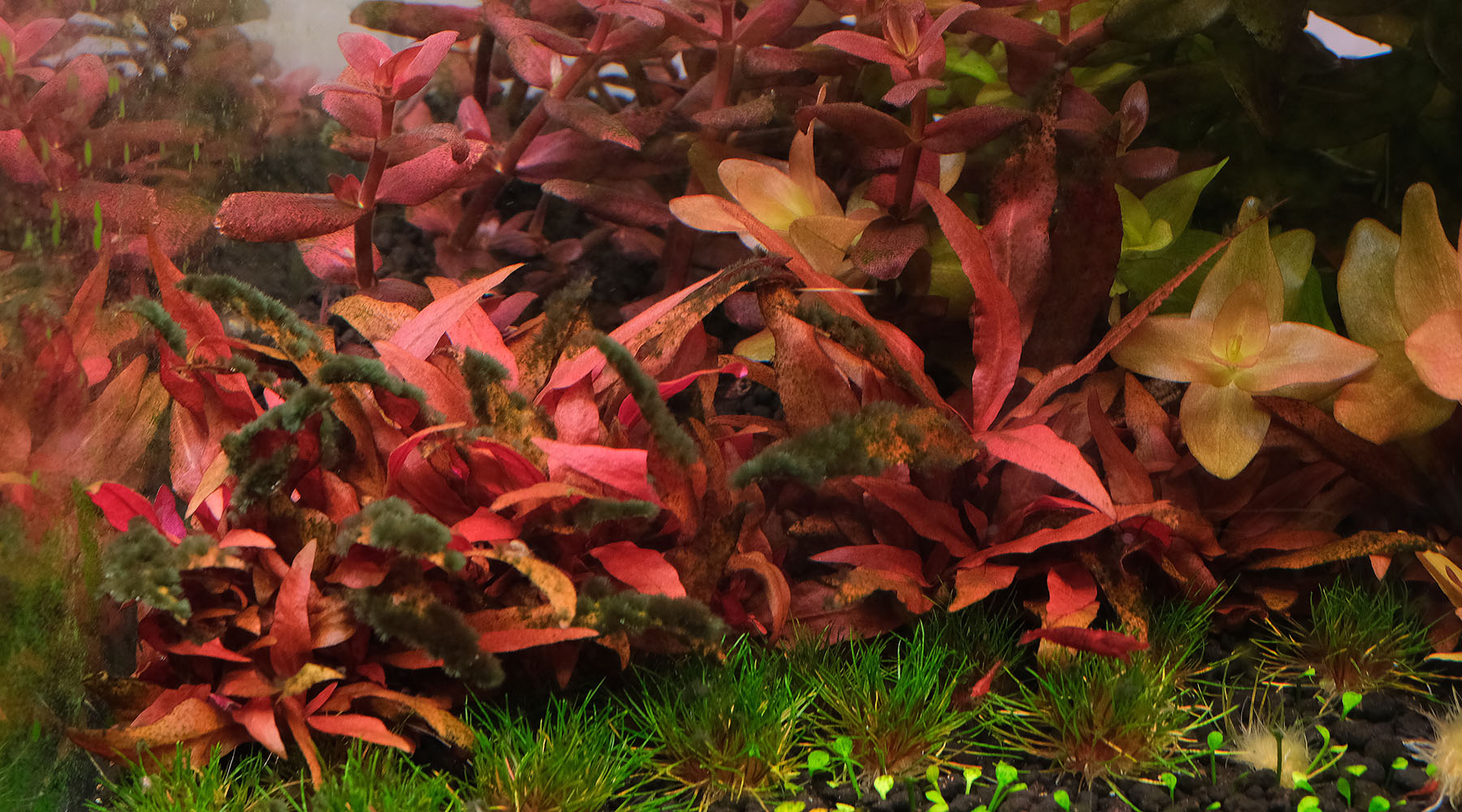
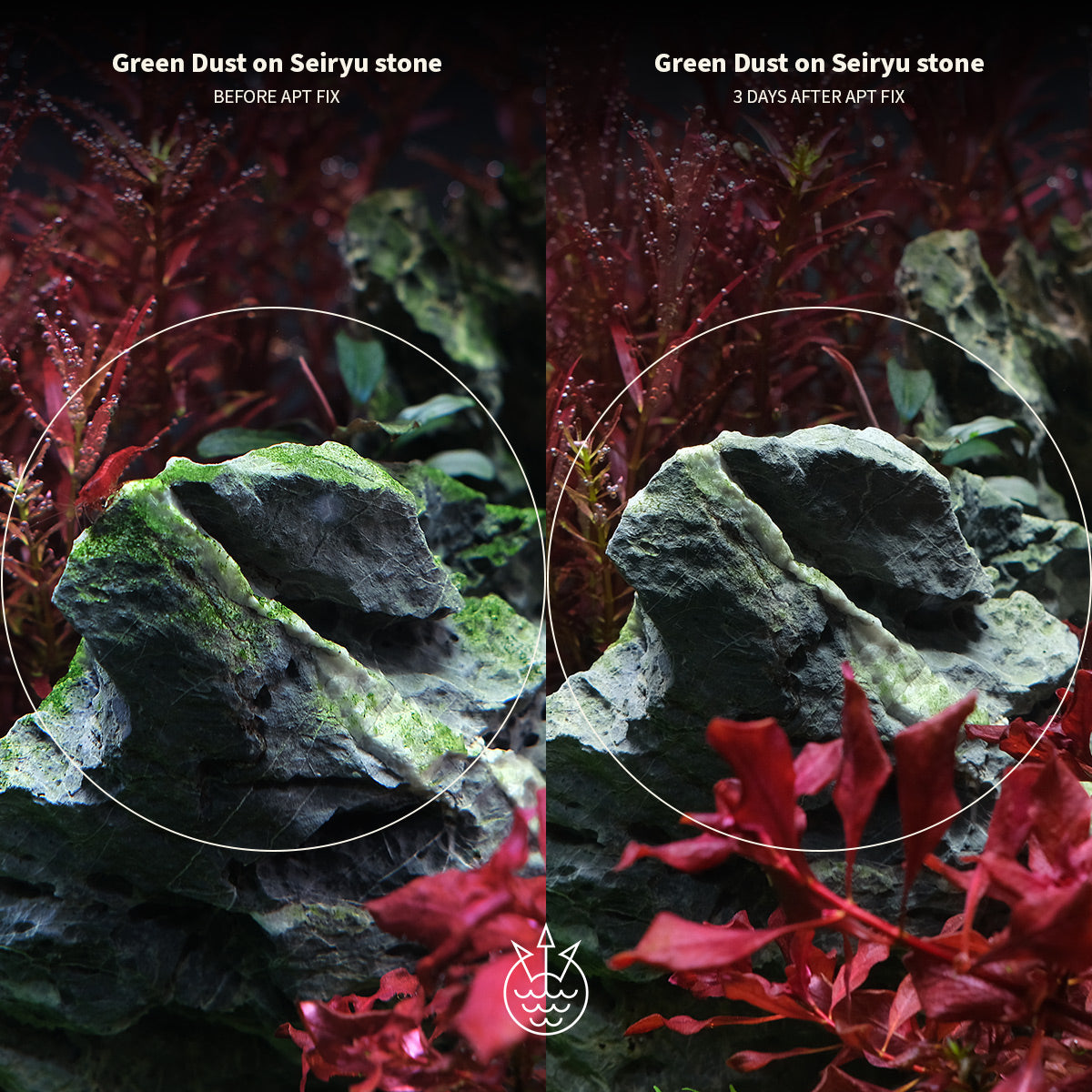
Frequent algae outbreaks; green dust algae and diatoms are particularly common.
-
Melting of plants although parameters appear to be fine.
-
Inability to keep sensitive animals alive (shrimps, sensitive fish).
If your tank is already planted and fighting diatoms, this guide covers how to stabilise it quickly.
 The presence of brown stringy diatoms in a new set-up is a strong indication that the tank is not biologically mature. In most healthy tanks, diatoms will disappear on their own over time without any intervention.
What disturbs the biofilter?
Tanks can easily have their bio-filter community disturbed. These microorganisms are fragile; as a good rule of thumb we would say that anything that can harm fragile fish or shrimp can also harm the microbial community. If you are consistently unable to keep shrimp alive in your aquarium - chances are you have a system that is not biologically stable.
-
Frequent use of harsh chemicals such as algaecides.
-
Washing the filter too often.
-
Ammonia spikes due to misuse of terrestrial fertilisers or poor tap water.
-
Heavy metals or poor quality tap water during water changes.
-
Large fluctuations in aquarium parameters such as alkalinity.
-
Failure to use a dechlorinator in tap water containing chloramines. (beginner's mistake)
The bio-filter will tend to grow to accommodate the amount of waste produced by the system, but it will not easily compensate for spikes in the system. For example, if you feed your fish an amount of food that produces 1ppm of ammonia per day, your tank's microbial community will grow to digest that amount on a regular basis. The day you triple the feed and get a spike of 3ppm ammonia - there will be a short term ammonia spike as the microbial community is not used to dealing with that amount of input. So whether you feed your fish more or less, it should be a relatively regular amount.
This concept also applies to water changes. In tanks that are run on a weekly water change schedule, skipping water changes will often result in algae blooms.
Go to here to learn how to control algae in a new tank setup.





Share:
Planted tank with no filter ?
Guide to filter media for planted tanks