

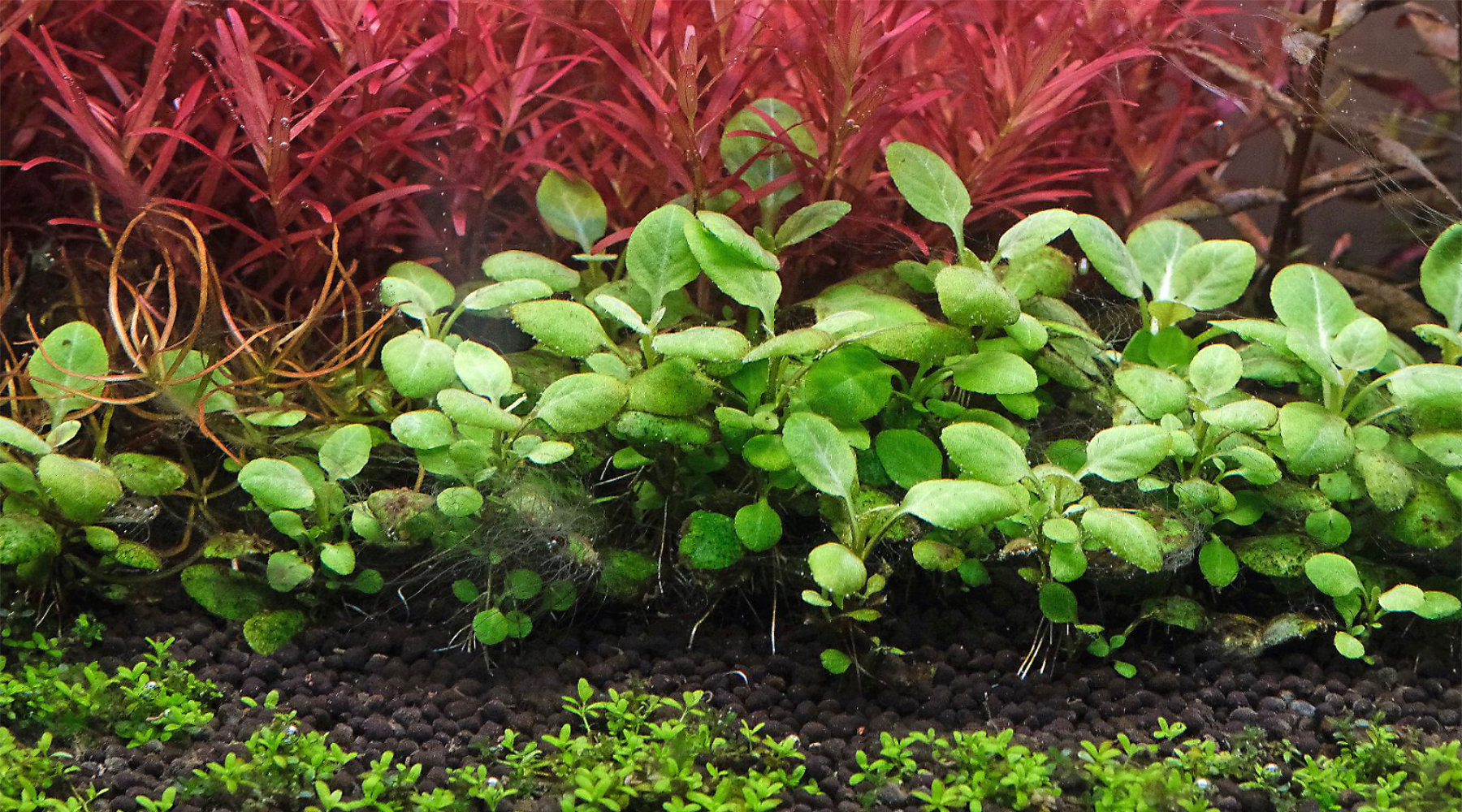
Algae in a new aquarium is a common temporary phase caused by biological immaturity and stressed aquatic plants trying to adapt, not a personal failing. New tanks see diatoms, hair algae, even green water because beneficial bacteria, plant mass, and water quality have not caught up yet; your job is to protect the system while it matures, not to nuke every algae spot. This article describes why algae blooms are so common in new planted aquariums, and what aquarists can do to keep algae at bay.
Quick answer for new aquarium algae:
-
Expect brown algae (diatoms) and hair/fuzz algae in the first 3 to 6 weeks of a newly set up aquarium, especially with nutrient-rich substrates and immature filters.
-
Algae outbreaks are mainly driven by a combination of factors - strong light and ammonia spikes, coupled with a lack of plant competition and algivorous microbes that take time to populate new tanks.
-
To prevent algae growth, plant heavily with fast-growing plants, keep a stable 6 to 7 hour light period, and do large, regular water changes to remove algae spores and excess nutrients.
-
Focus on strong plant growth and stable tank conditions; as the tank matures, most algae types retreat and you get back to clear tank walls, healthy plant leaves, and crystal clear water.
-
Using algae eaters like Amano shrimp and snails can help manage algae populations by consuming them, thus reducing their growth in the aquarium. Shrimps should only be added after the tank has matured.
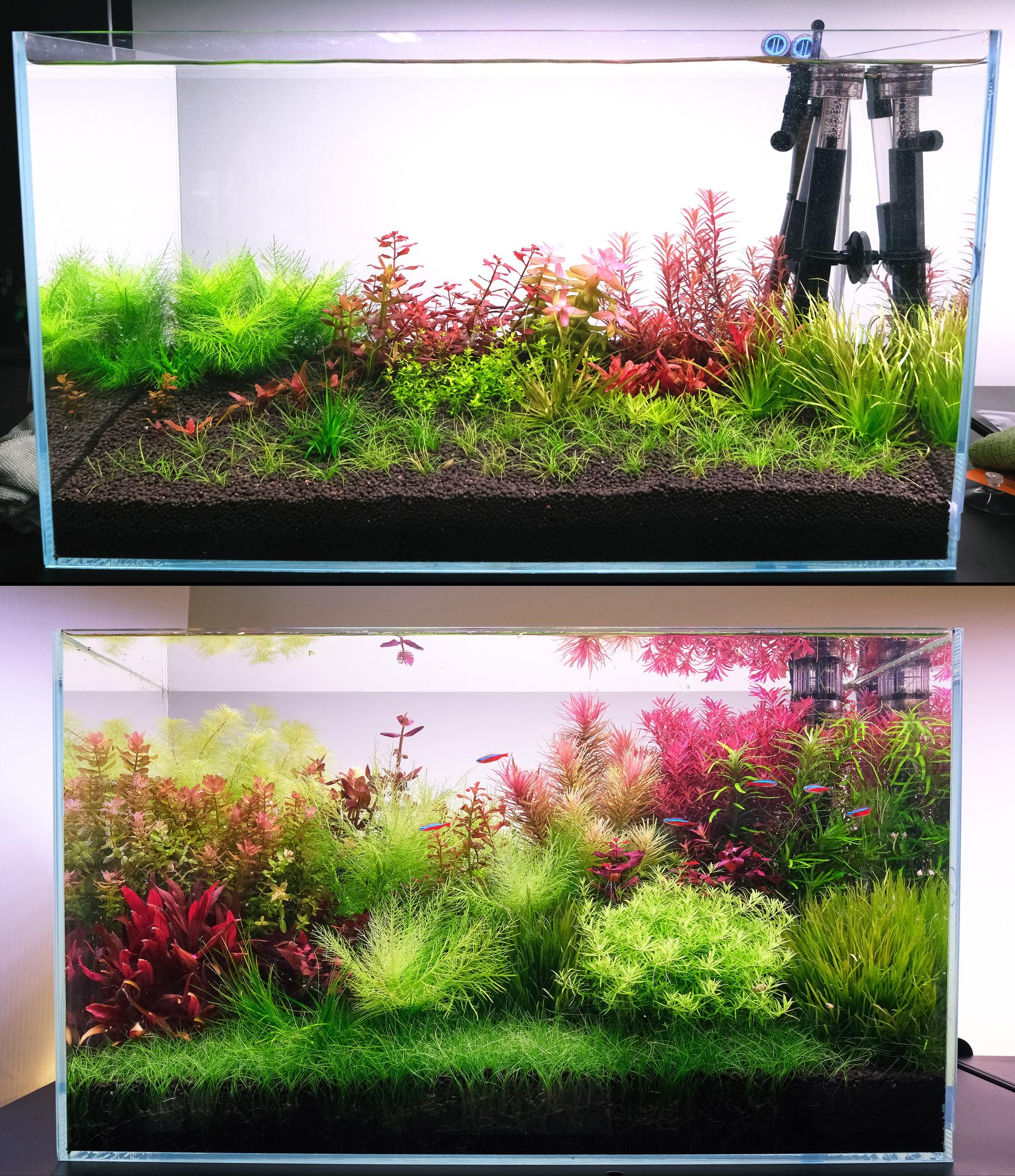
There are many steps to accelerate tank maturity and skip the algae phases in a new setup. Planted aquariums can be stable and biologically mature in less than 2 months if all the correct steps are taken.
How do Light, Nutrients, and Water Quality Issues Trigger Algae Blooms in a New Aquarium?
New tank algae is not a curse; it is your aquarium telling you that biology works on its own timetable. In a newly set up aquarium, every part of the system is negotiating who eats what and how fast, and algae spores are the first in line when there is chaos on the menu.
New aquasoil substrates leaks ammonia and other nitrogen compounds into the aquarium water. Too much light, whether from overly strong LED lights, long photoperiods, or direct sunlight falling on the tank, floods the system with unused energy. Algae spores read that combination of high light and high nutrient availability as a signal to party.
Nitrifying bacteria that convert toxic ammonia from fish waste and decaying organic material into less harmful nitrate need time to colonise filter media, substrate pores, driftwood and every square centimeter of available surface. Algivorous microbes that consume algae and keep algae in check in matured aquariums are missing in new aquariums.
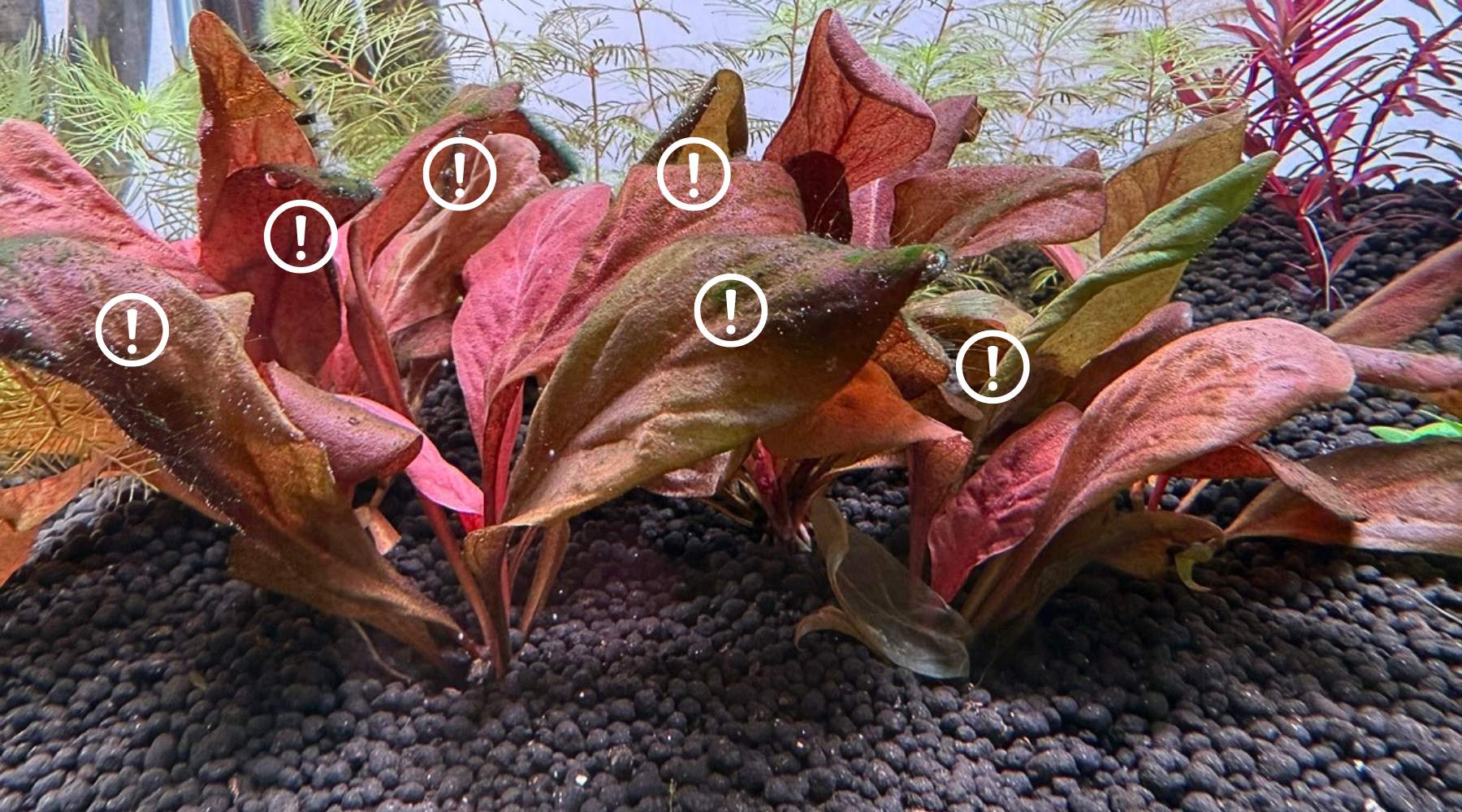
Your aquatic plants are mid-transition, tearing down old emersed leaves and growing new submerged foliage, so their nutrient uptake is weak right when nutrient levels are high. Deteriorating old leaves leak ammonia and other metabolites into the water column, triggering more algae spores to bloom. This can be seen when algae preferentially attaches to plants rather than hardscape or equipment.
This is not chaos; it is your system renegotiating its energy budget, and algae thrives in that gap.
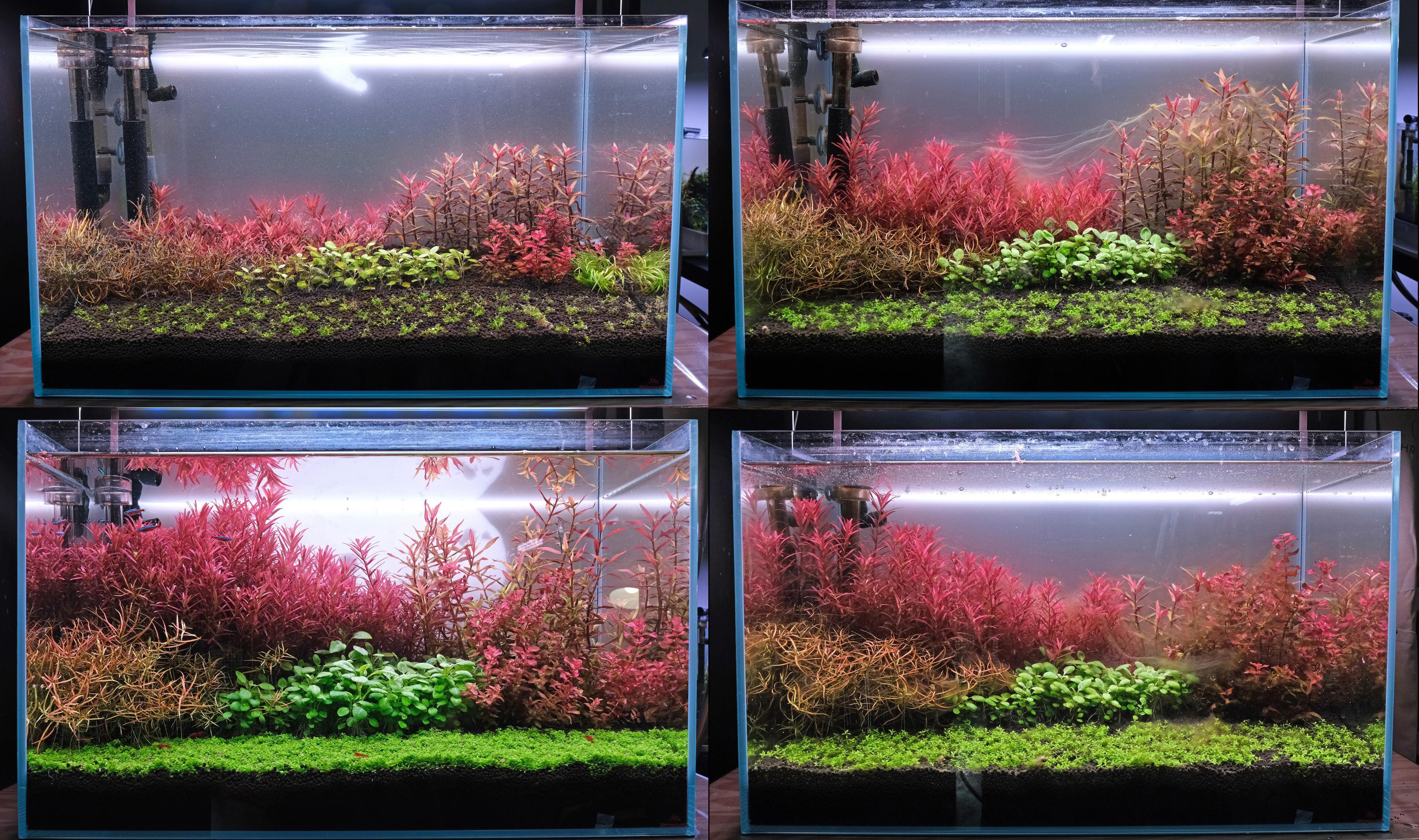
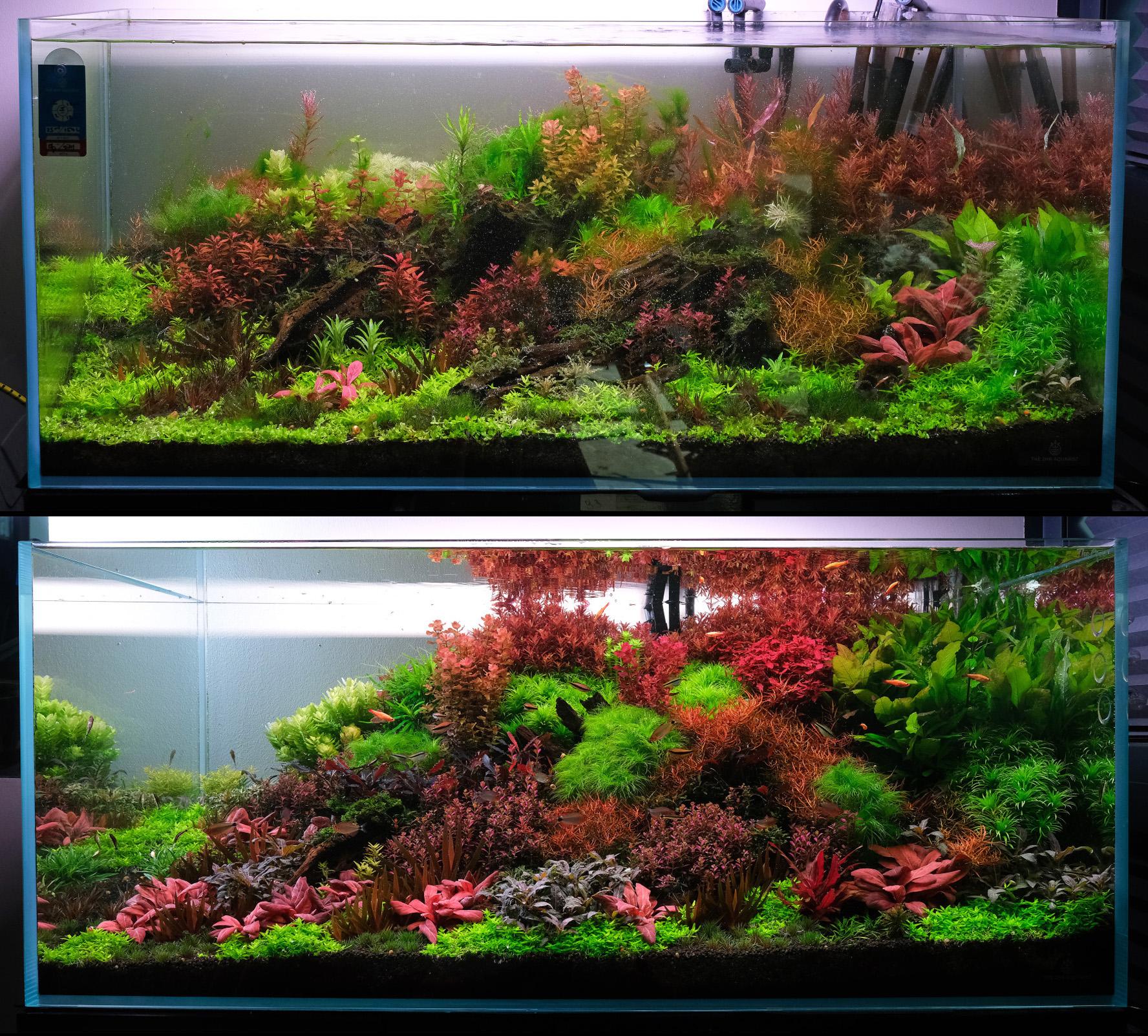
Diatoms are common in new aquariums. Things can look bad but planted aquariums can recover surprisingly quickly when the right factors are in place, so do not fret. The above picture shows the transformation of a tank over 4 weeks.
What is “Biological Maturity” and Why Aquarium Plants are the Baseline Defense against Algae?
Algae cells are smaller and simple. Their competitive advantage in nature is to replicates fast when light, space and nutrients are available. Higher order plants have larger structures that give them a competitive advantage in the long run - plants can grow towards the light, shading out surrounding areas, roots can reach nutrients deep in the substrate, and healthy leaves produce defensive chemicals on their surfaces that deter algae.
Plants can also store starch, letting them weather long blackouts that would otherwise kill off algae cells that have limited capacity to store energy. Many aquatic plants can grow emersed, allowing them to access atmospheric oxygen and carbon dioxide. All these give plants the long term advantage against algae, but they need time to adapt and grow.
Algae forms the basic food source of aquatic systems. Microscopic algae (phytoplankton) are eaten by microbes and other microscopic organisms, which are then eaten by larger predators, forming the backbone of nearly all aquatic ecosystems. This food chain takes time to develop in a new aquarium environment.
A biologically mature system is one where matured plants and microbial populations keep algae growth in check, by out-competing and consuming algae. Actions that speed up plant maturity and microbial populations will speed up the biological maturity of the aquarium.
Black Beard Algae, Blue Green Algae, etc, Which types of algae grow first in new tanks, and why?
Yes, it looks bad. No, it does not mean you have ruined everything. Different algae types show up at different stages of new tank syndrome, each pointing to a slightly different flavour of imbalance.
Brown algae, also known as diatoms, usually appears as a dusty brown film on plant leaves, tank walls, and hardscape in a new aquarium. It is common in new tanks because silicates and phosphorus from tap water, fresh substrates, and unfinished cycling create an ideal environment for these photosynthesizing organisms. In natural ecosystems, diatoms are at the bottom of the food chain, and are consumed readily by algivorous microbes. However, in new aquariums, they replicate at high speed unchecked.
Fuzz or Green hair algae and thread algae often follow as long, soft filaments clinging to plants going through adaptation stress. As plants under adaptation stress, they eject waste proteins and metabolites directly from their leaf surfaces, this acts as a chemical signal for certain algae spores to bloom and attach to the leaves. Ammonia spikes coupled with high light intensity or when lighting period is generous are also another common trigger.
Black beard algae tends to appear later as dark, fuzzy tufts on plant edges when plants are going through adaptation stress.
Blue green algae, or cyanobacteria, is not actually algae at all, but a bacterium that loves low flow, low oxygen levels, organic waste, and it can be often found in pockets of poor water circulation where detritus gather. This algae is not common to new aquariums, and its presence tends to indicate flaws in the system architecture in flow/oxygenation or excessive organic waste generation.

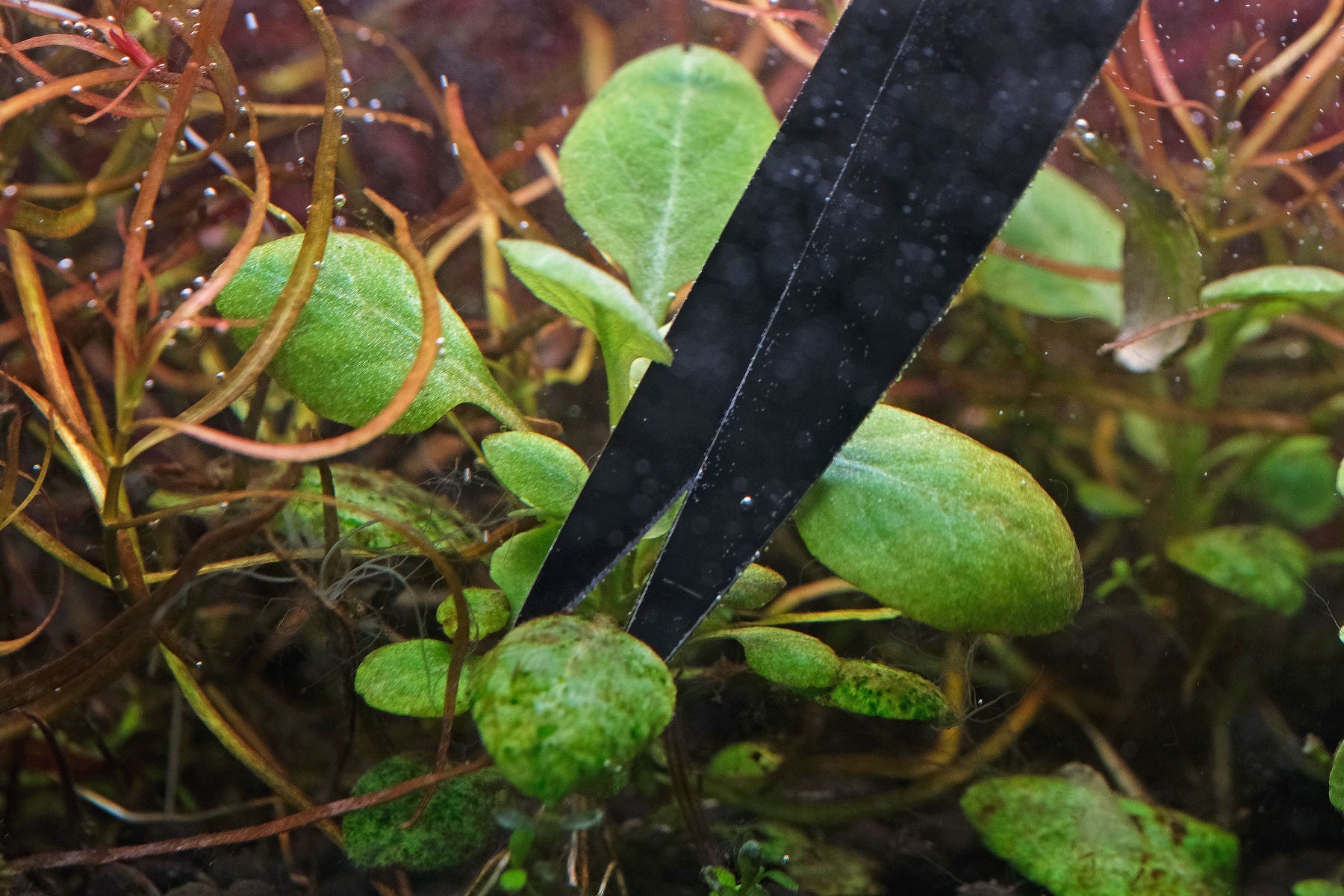
Algae in a new aquarium usually does not attack all leaves at once. It is common for algae to infect older growth, as the plant grow new leaves that are optimized for the current environment, and abandon old ones. Old leaves have limited plasticity to adapt to new conditions, and badly deteriorated leaves will never heal - these should be manually cut off, least they remain as algae magnets.
How to Control Algae Problems in a New Tank: The 4-Week Action Plan
-
Do big, boring water changes.
Leave the magic bottles on the shelf (i.e avoid algicides) and avoid adding fish to new aquariums. With no life stock, we can utilize aggressive water changes to mitigate most of new tank issues.-
Change 80-100% of the tank water every other day for the first week.
-
Change 80-100% of the tank water twice a week for the second and third week.
-
50-70% weekly water change for the fourth week onwards. More often if there are algae or plant growth issues.
Why such large water changes?
The impact is two fold. The first is that this gets rid of ammonia, excess nutrients, dissolved organic compounds and free-floating algae spores. Periphyton is also lifted off plant leaves when water levels dip enough to expose the plants to air. Conservative water changes (such as 50%) leave half of the problems behind. With no risk to stressing livestock, removing all the water is much more impactful. Bacteria and other beneficial microbes are concentrated on surfaces, and as long as the surfaces are not left to dry out, large water changes do not significantly impact their development in the aquarium.
The secondary effect of such large water changes is that it exposes plants to atmospheric air, which saturates their vacuoles with gaseous oxygen and carbon dioxide. This invigorates plant growth and allows plants to adapt faster to the new aquarium environment. Plants also channel the extra oxygen down to the rhizosphere, which in turn turbo-charges development of the microbial community in the substrate. These invisible interactions have an extremely strong anti-algae impact.
-
-
Seed the aquarium with bacteria/microbes from a matured aquarium As beneficial microbes are integral to tank maturity and algae control, seeding the aquarium with beneficial microbes from a matured aquarium can speed up ecological maturity significantly. Introduce mulm from a matured aquarium's substrate or filter. A good way to go about this is to reuse a filter media from a matured aquarium. Reusing a portion of old substrate can also work.
-
Clean up organics during water changes
Cut off algae infected and deteriorating old leaves, and siphon off detritus that accumulate on the substrate surface. Badly deteriorated leaves will never heal - the plant's strategy is to replace them with new growth. This applies to aquasoil substrates as well. Many hobbyists believe that organic detritus provides a source of nutrients for the plants. While this is partly true, the decomposition process is not clean and excess organic debris combined with high light levels triggers algae spores to bloom.
-
Start with less light and keep the fertilisation routine steady.
Set a fixed 6 to 8 hours of light daily on a timer and dose consistently; stable routines let plants adapt, while constant tinkering keeps them in permanent transition stress. Aquariums with high powered LEDs should start with more moderate light levels (40-80umols of PAR) till the aquarium matures. Most green aquarium plants (including all carpets) will grow well between 40-80umols of PAR. Higher light can be introduced later to induce more compact growth forms.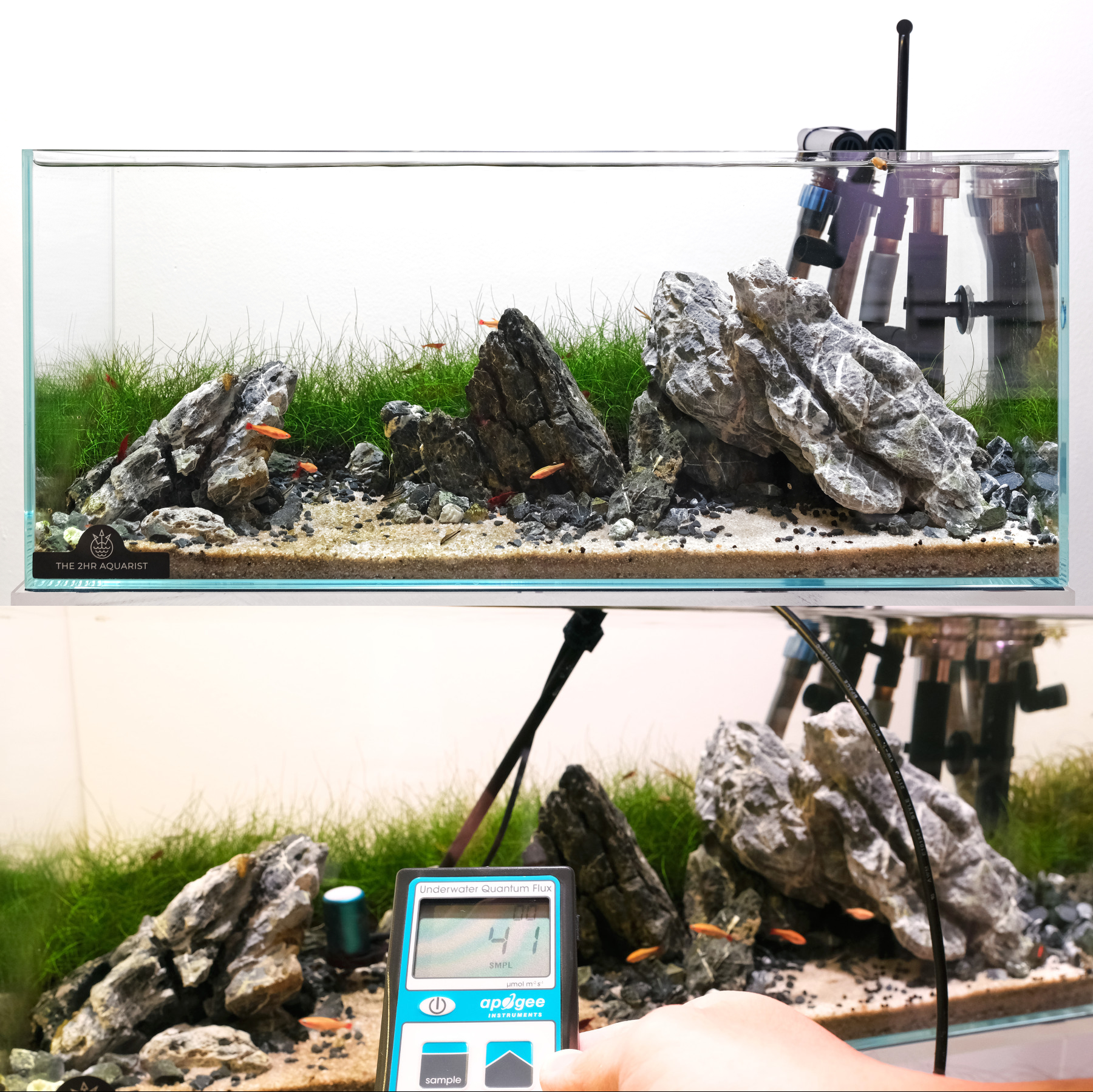
-
Plant heavy and use fast growers.
From day one, cover at least 70 percent of the substrate with live plants. The denser the plant mass, the less open real estate algae has on hardscape and substrate. The faster the aquarium reaches a state of plant dominance, the quicker the environment becomes algae resistant. Floating plants can provide shade and outcompete algae, but their spread needs to be monitored, as they can shade out the aquatic plants as well. -
Add algae eaters as support, not saviours.
Bring in dwarf shrimp, small snails and similar algae eaters as a clean up crew once the tank is cycled, but do not expect them to fix algae issues tied to plant growth problems, light or nutrient imbalance.
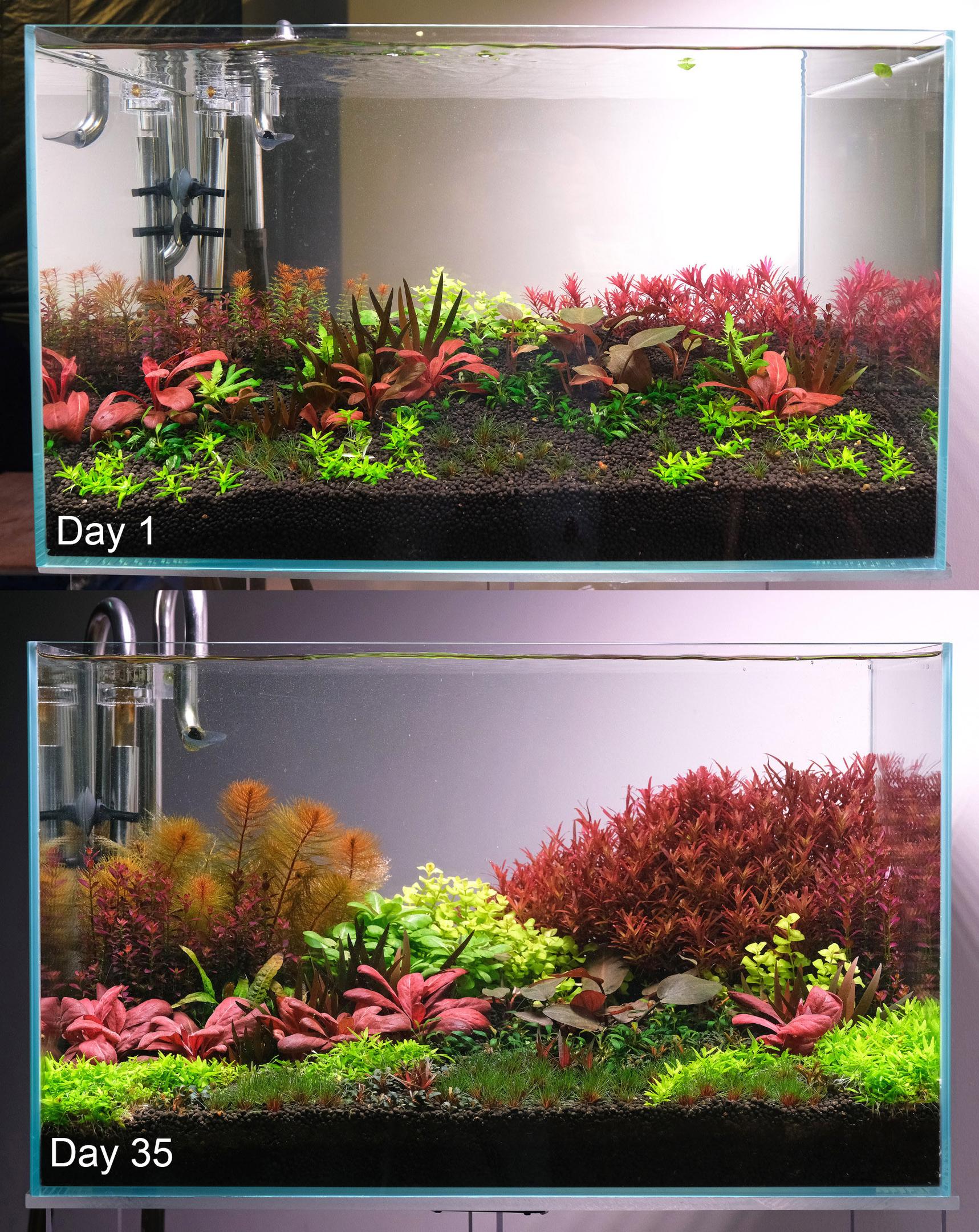
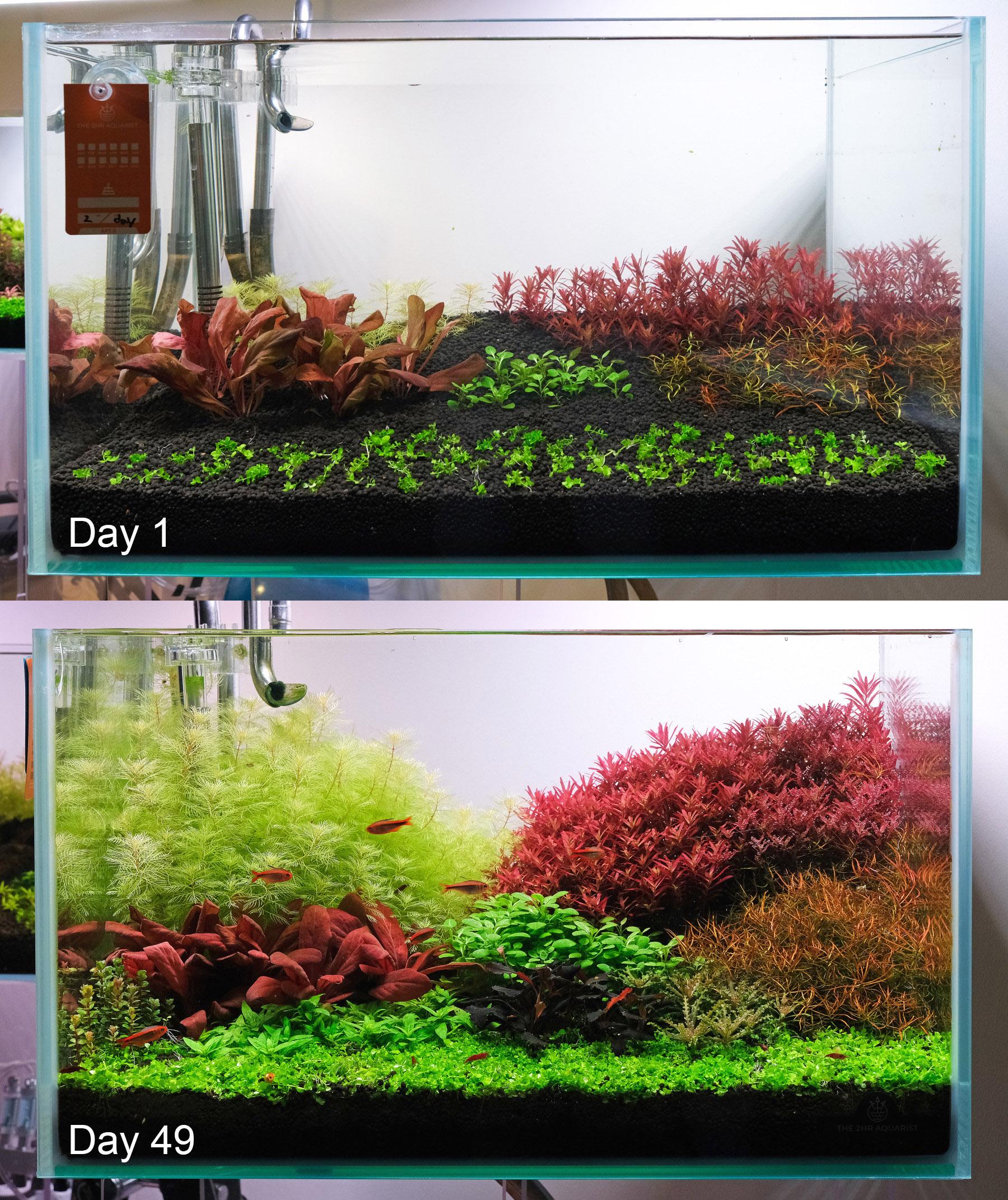
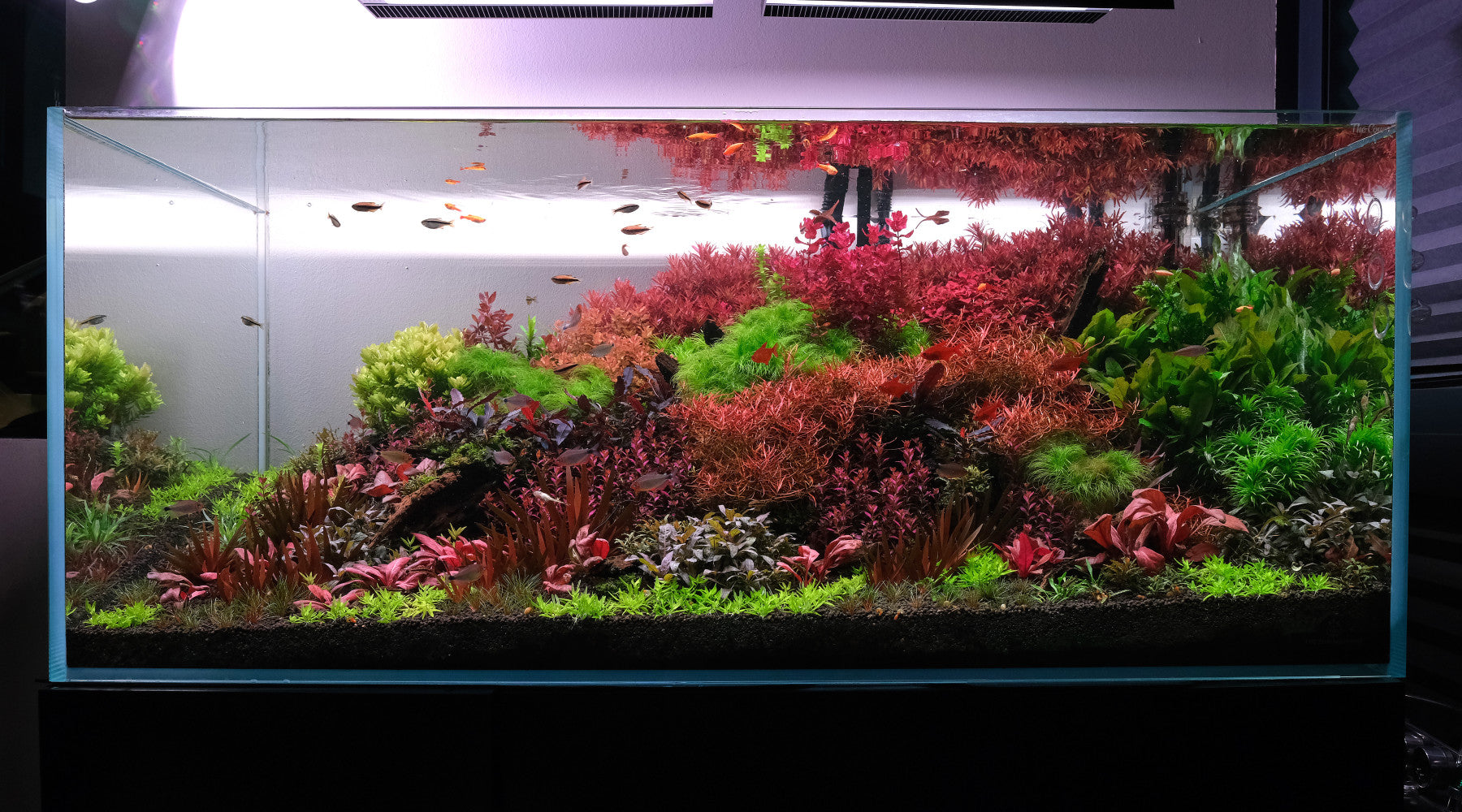
Using this protocol, planted tanks at the 2hr Aquarist gallery skip diatoms and green dust phases entirely, with minimum plant adjustment stress even when sensitive plant species are used.
What signs indicate that your planted aquarium is maturing rather than failing?
Stop staring at ugly leaves. Look at new growth instead. This is how you tell whether your planted aquarium is settling down or spiralling into an actual algae problem.
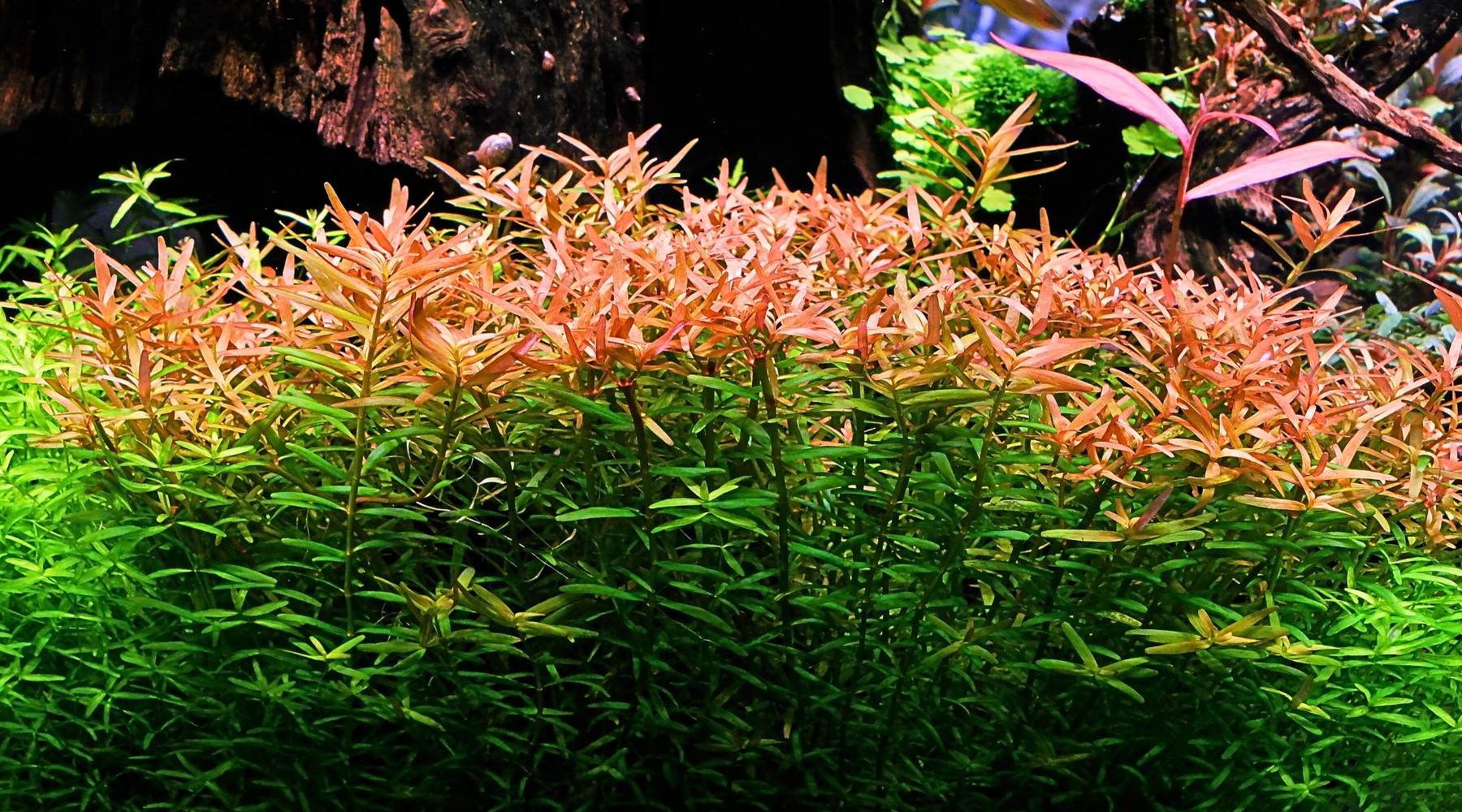
On fast-growing stem plants like Hygrophila difformis, Limnophila aromatica and Rotala rotundifolia, the newest shoots at the top should look clean, compact and slightly different in colour from the older store-grown leaves below them. Those fresh plant leaves are your scoreboard: if they are algae-free and standing upright, your nutrient levels and water quality are moving in the right direction even if the old leaves still wear green hair algae wigs.
On rosette aquarium plants like Cryptocoryne species and on slow-growing species like Bucephalandra and Anubias, focus on the central crown or rhizome; a steady rhythm of new leaves is the signal that the tank is maturing.
The water itself should also tell a story: early milky bacterial blooms usually give way to clear water as beneficial bacteria establish, and bacteria bio-films bind even small sized particulate matter. Persistent cloudy water hints at poor filtration choices, poor oxygen levels or other parameters that cause poor microbial colonization.
Finally, location matters: algae growing mainly on old leaves, tank walls and hardscape is typical for a newly set up aquarium; algae aggressively colonising the tips of new leaves or forming thick carpets on the substrate suggests a deeper imbalance in CO2, flow or maintenance that needs attention.
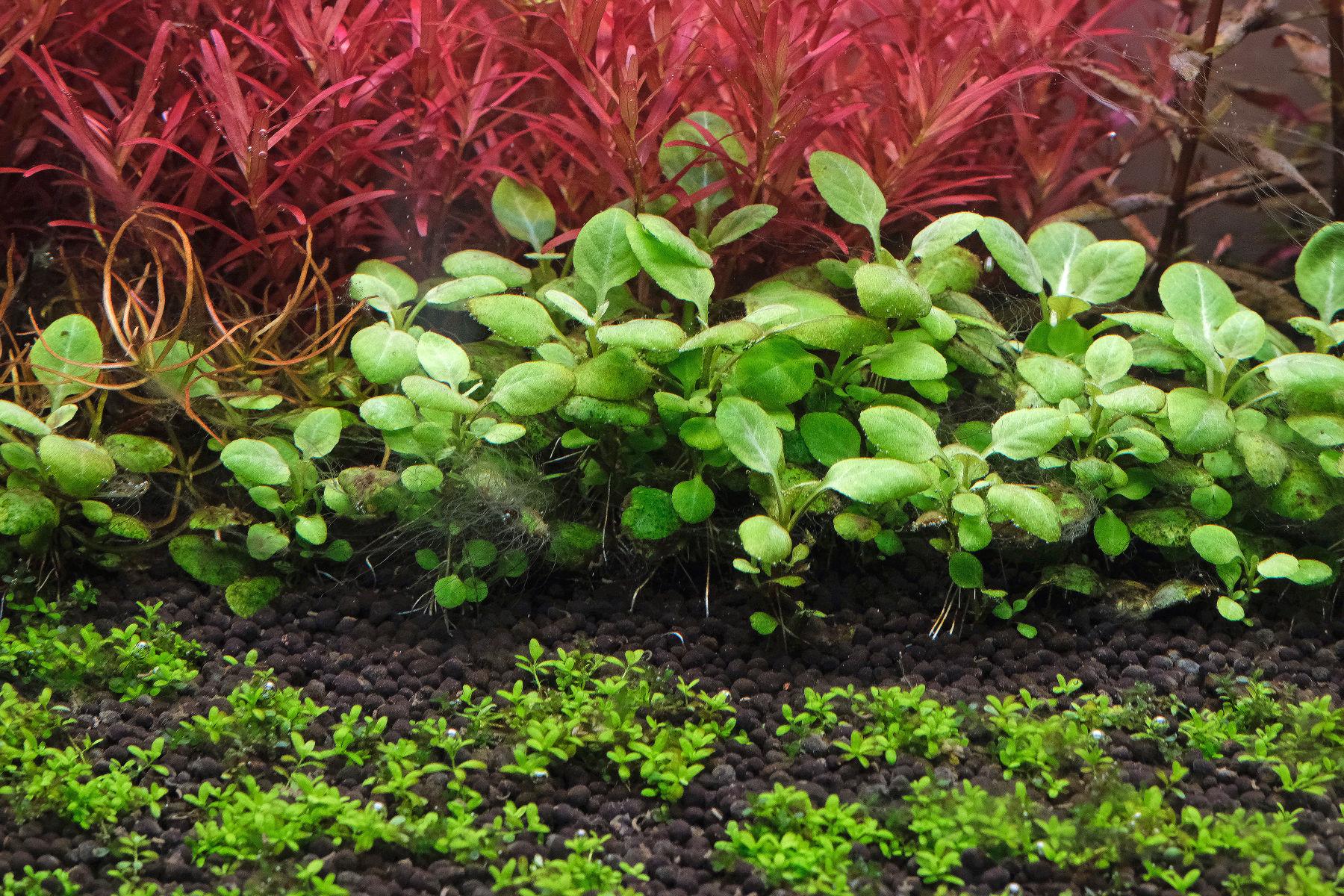
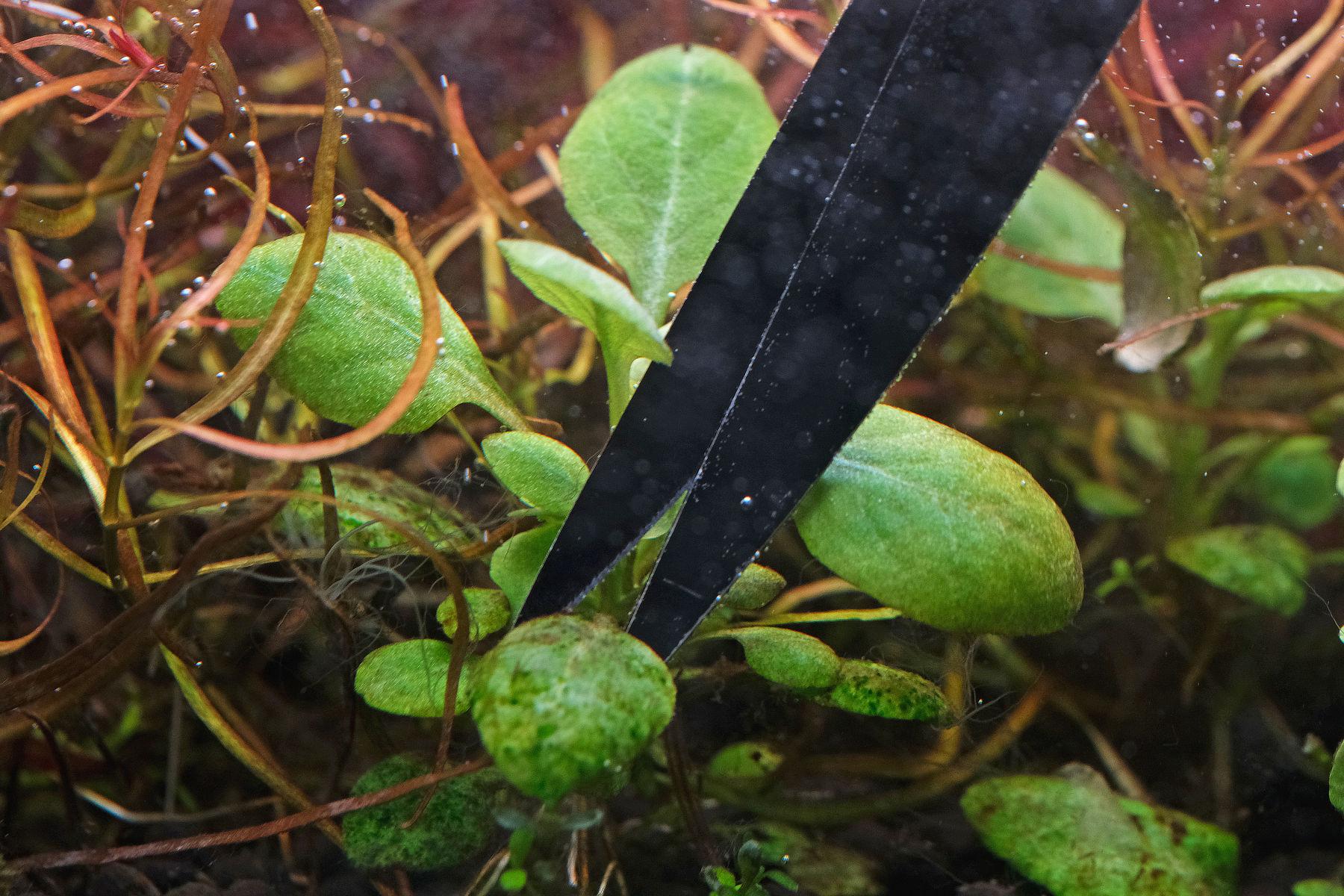
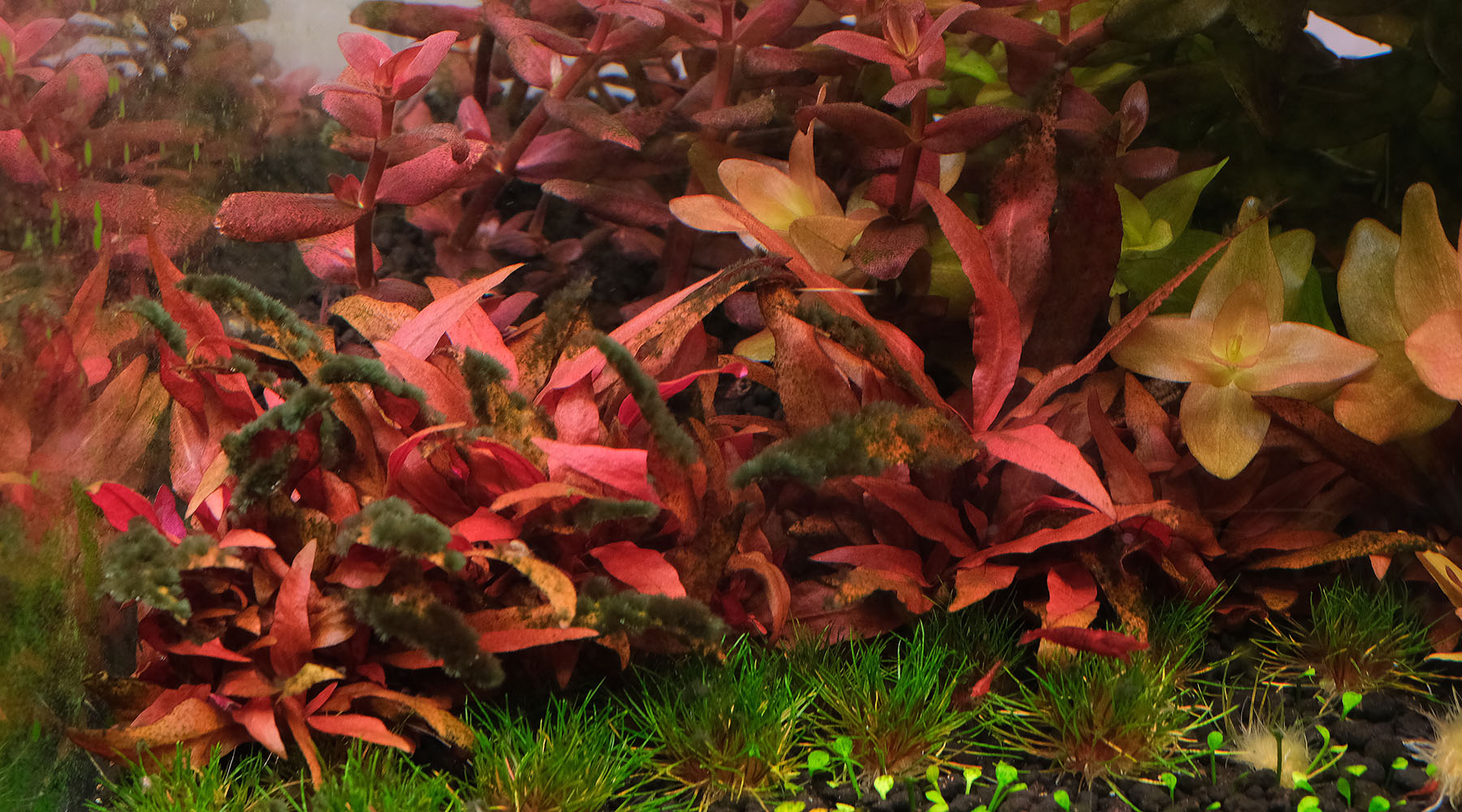
A less experienced aquarist will find it hard to interpret the scene above. Diatoms seem to be clumping around the base of plants, and there is quite a bit of algae on older leaves. However, we see well formed new leaves on the HC carpet, and on Lobelia cardinalis, and the new growth is algae free. These are hugely positive signs that the tank is on the right track. Old deteriorating growth should be removed over time as new growth spreads - this cycle of renewal is what moves the aquarium towards a state of plant dominance and algae resistance.
Does algae growth behave differently in low-tech and high-tech planted aquariums?
The engine driving algae is the same in both setups, but the speed and intensity of each phase differ.
In a low-tech aquarium without CO2 injection, everything moves more slowly: beneficial bacteria still build, but plant growth is modest. Brown algae and soft green growth are slower to spawn but can linger for 6 to 10 weeks or more before the tank matures. Here, choosing tough, undemanding plants, keeping light modest, and sticking to regular water changes is what carries you to the end of new tank syndrome without inviting more algae outbreaks than necessary. Either way, building a dense plant canopy and respecting biology beats chasing every new tank algae species with a different chemical.
In a high-tech planted tank with injected CO2 and stronger lighting, plant growth ramps up quickly, which means the ugly algae window is usually sharper and shorter. Hair algae, fuzz and diatoms may explode in weeks two to three, especially on new plant leaves and tank walls, but as soon as plant growth locks in and plant dominance set in, algae retreats. This does not happen because plants eat the same nutrients faster - it happens because healthy plants deny algae attachment sites, and the algivorous microbes communities have matured to keep algae in check. The catch is that CO2 fluctuations and intense lighting make black beard algae and stubborn filamentous algae more likely if you are sloppy with flow, gas levels or maintenance.
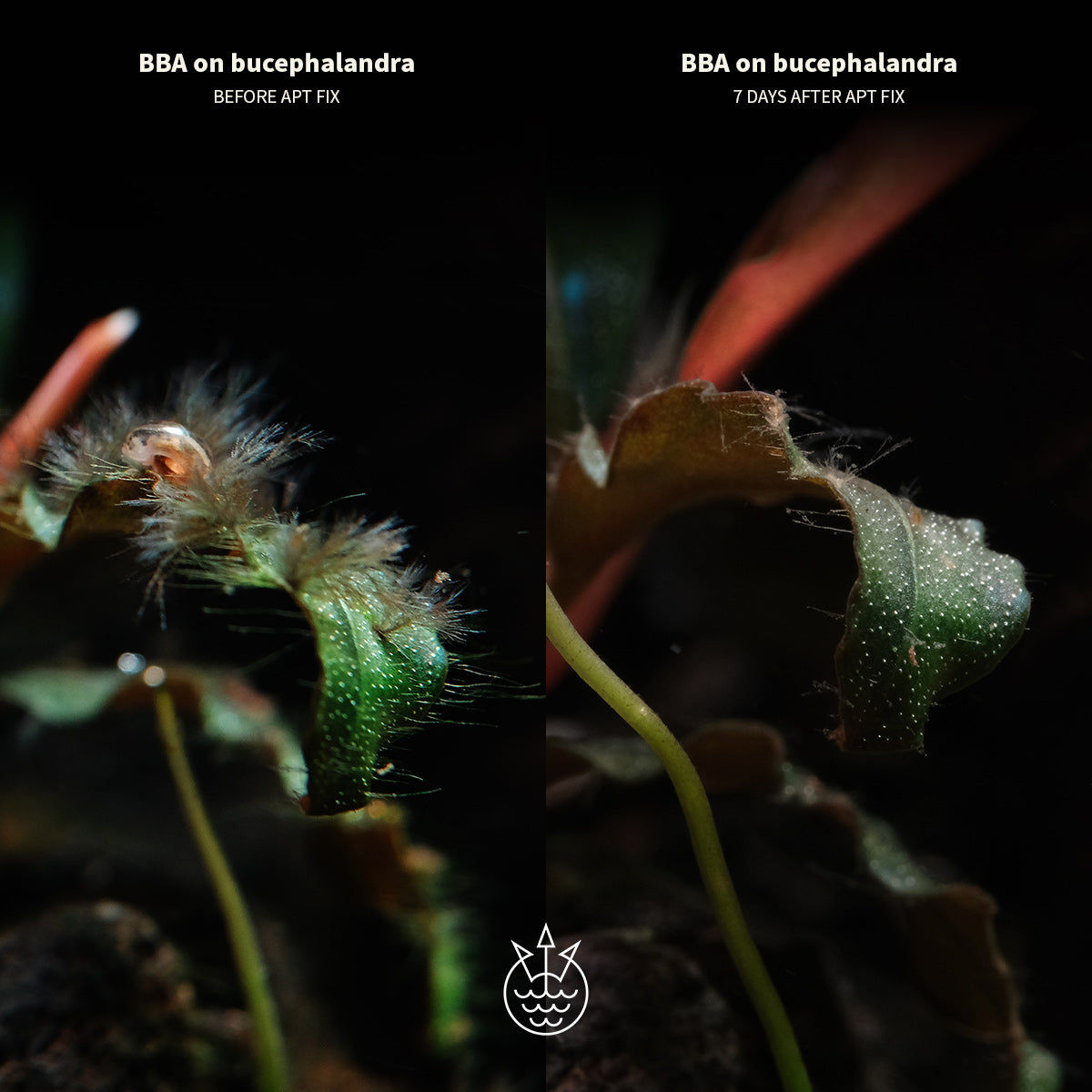
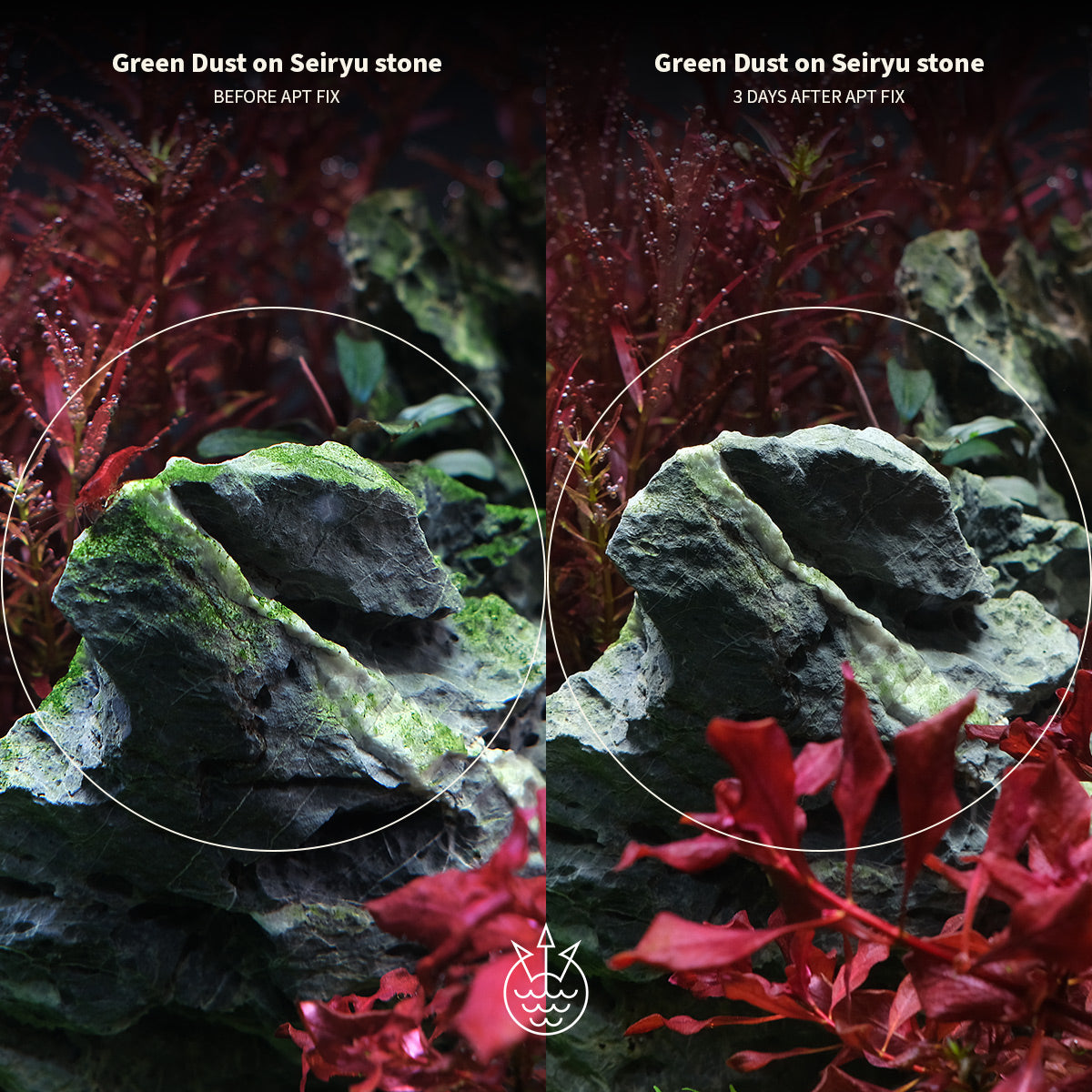
Managing algae is a critical skill set for all planted tank hobbyists. Recovery from algae issues is surprisingly fast when the right steps are taken.









Share:
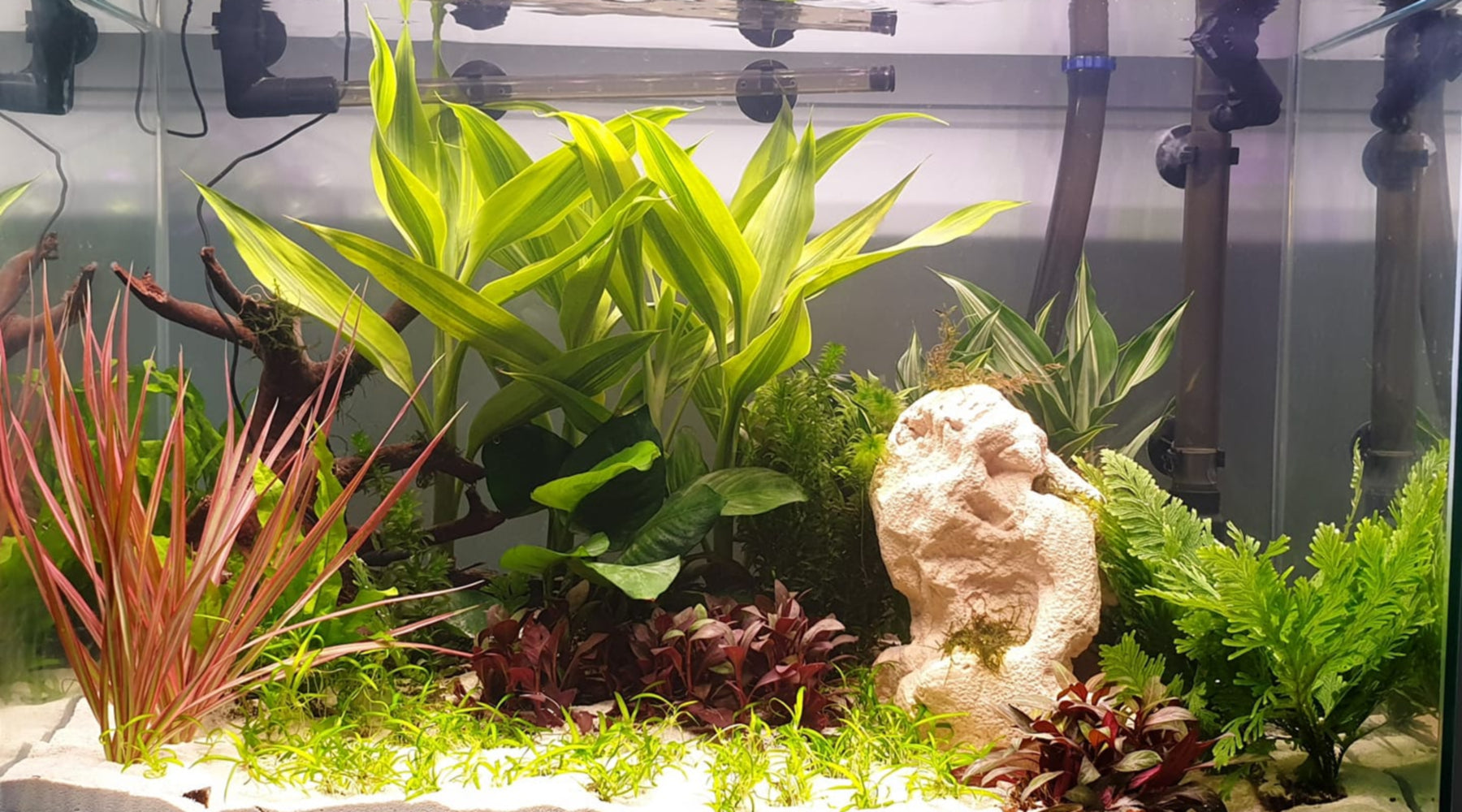
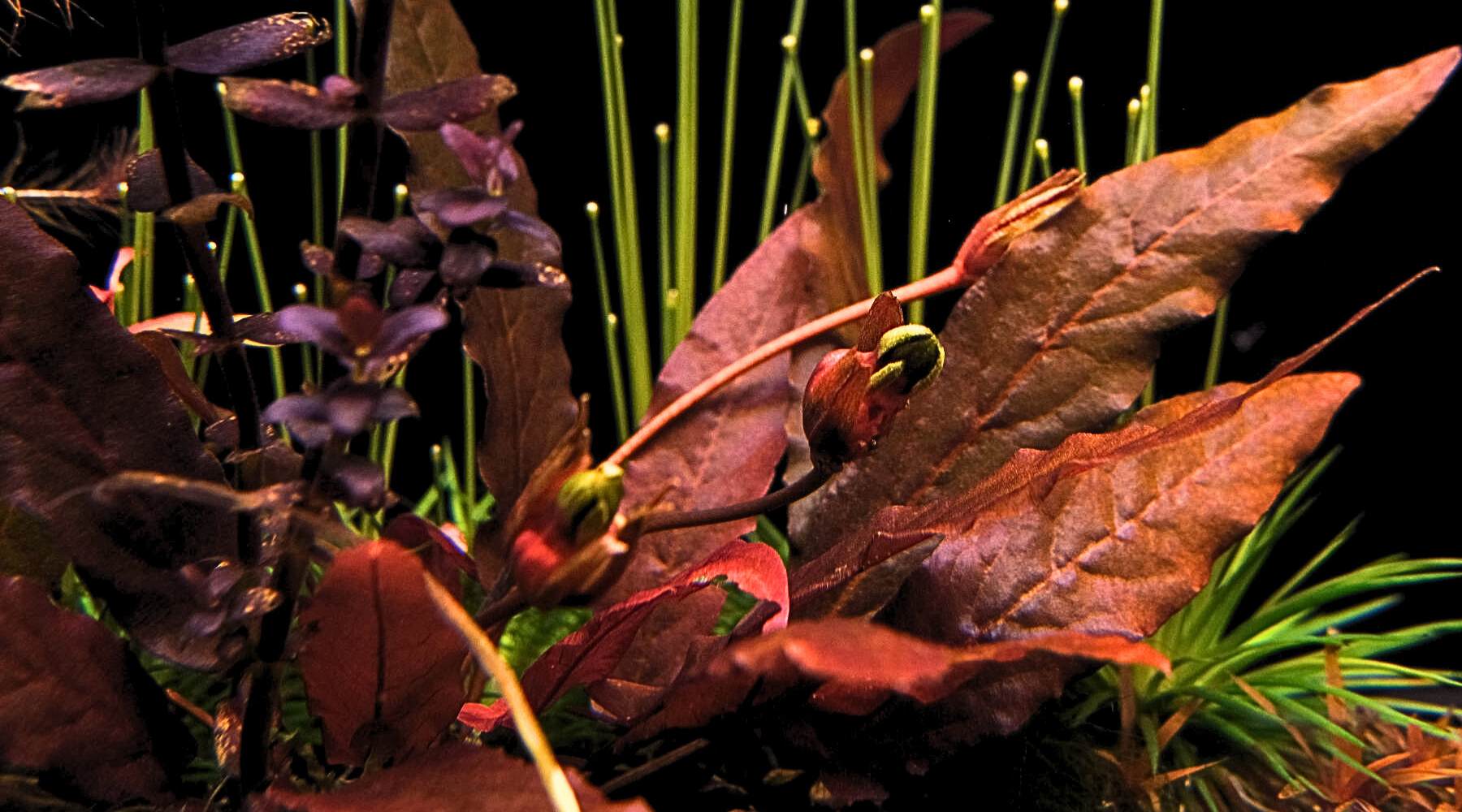
Clearing algae without algicides example 2