

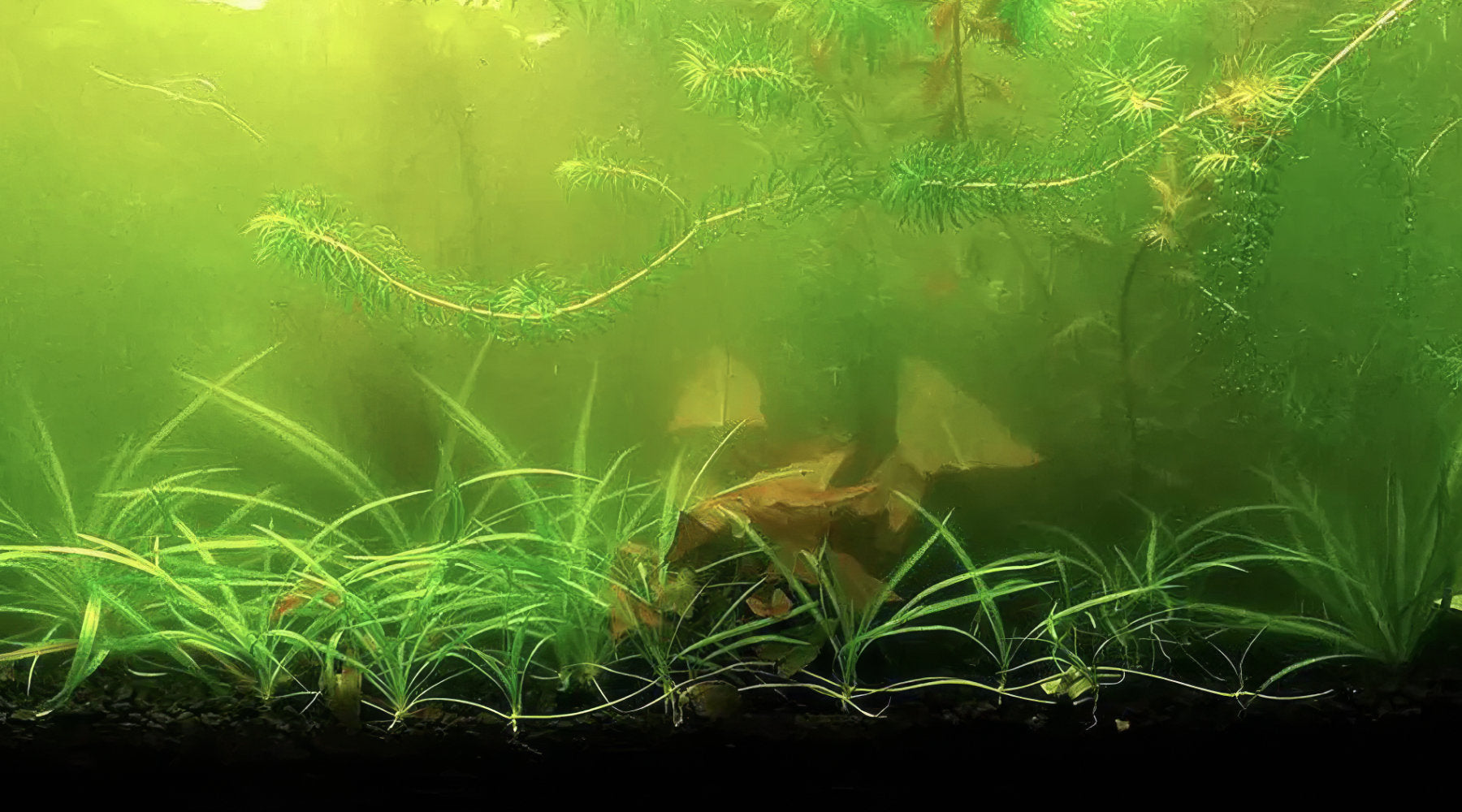
Aquariums with strong light can tip into a Green Water algae bloom with surprisingly little ammonia or dissolved waste in the water column, especially in young or under-filtered setups. Green Water itself is a bloom of free-floating algae that makes your aquarium look like pea soup, but it is usually harmless to fish. However, serious cases can be difficult to clear.
-
To fix aquarium Green Water fast: use a 5 day blackout or a correctly sized UV sterilizer to kill suspended algae cells in the water column. Diatom filters work as well. Very mild cases can be cured by dosing algicides, using flocculants and large water changes.
-
To prevent re-blooms: improve mechanical and biological filtration, avoid ammonia spikes from excess food and organic material, and keep aquarium light intensity and duration low until the biological system stabilizes.
-
To strengthen long-term balance: add more live aquatic plants to outcompete algae. Maintain biological stability and do regular water changes to remove organic detritus.
-
To avoid overreacting: remember that Green Water looks dramatic but is not directly toxic; focus on underlying issues, not just the unsightly green.
-
To choose tools wisely: use UV, blackout, and better filtration as primary levers, with clarifiers, diatom filters, or chemical media as optional polish, not the foundation of your algae control strategy.

What Actually Causes Green Water Algae to Bloom?
Your fish tank turns bright green when free-floating algae cells bloom in the aquarium water column, giving the classic "pea soup" look that hides your hardscape completely. The trigger is simple: dissolved nitrogenous waste - ammonia from fish waste, uneaten food, and decaying organic material - sitting in the water column at the same time as strong aquarium light or direct sun light from a window.
However, not every dirty tank with high light gets Green Water automatically. Matured microbial biofilm binds free floating particulate matter down, and algae is also food for bacteria and algivorous microbes. In biologically matured systems with adequate filtration, such microbes prevent free floating algae cells from fully blooming into a Green Water problem. Thus, Green Water is more common in aquariums that are new and in aquariums that suffer from poor filtration and biological stability.
It takes very strong light over long hours, coupled with a lack of counter balance from the microbial/filtration side of thing to induce a full Green Water algae bloom. Once the saturation of Green Water algae reaches a visible level, it often becomes a sticky problem as the algae replicates at a fast speed. Water changes seldom make impact it at all - in well lit aquariums, it often comes back within a day.
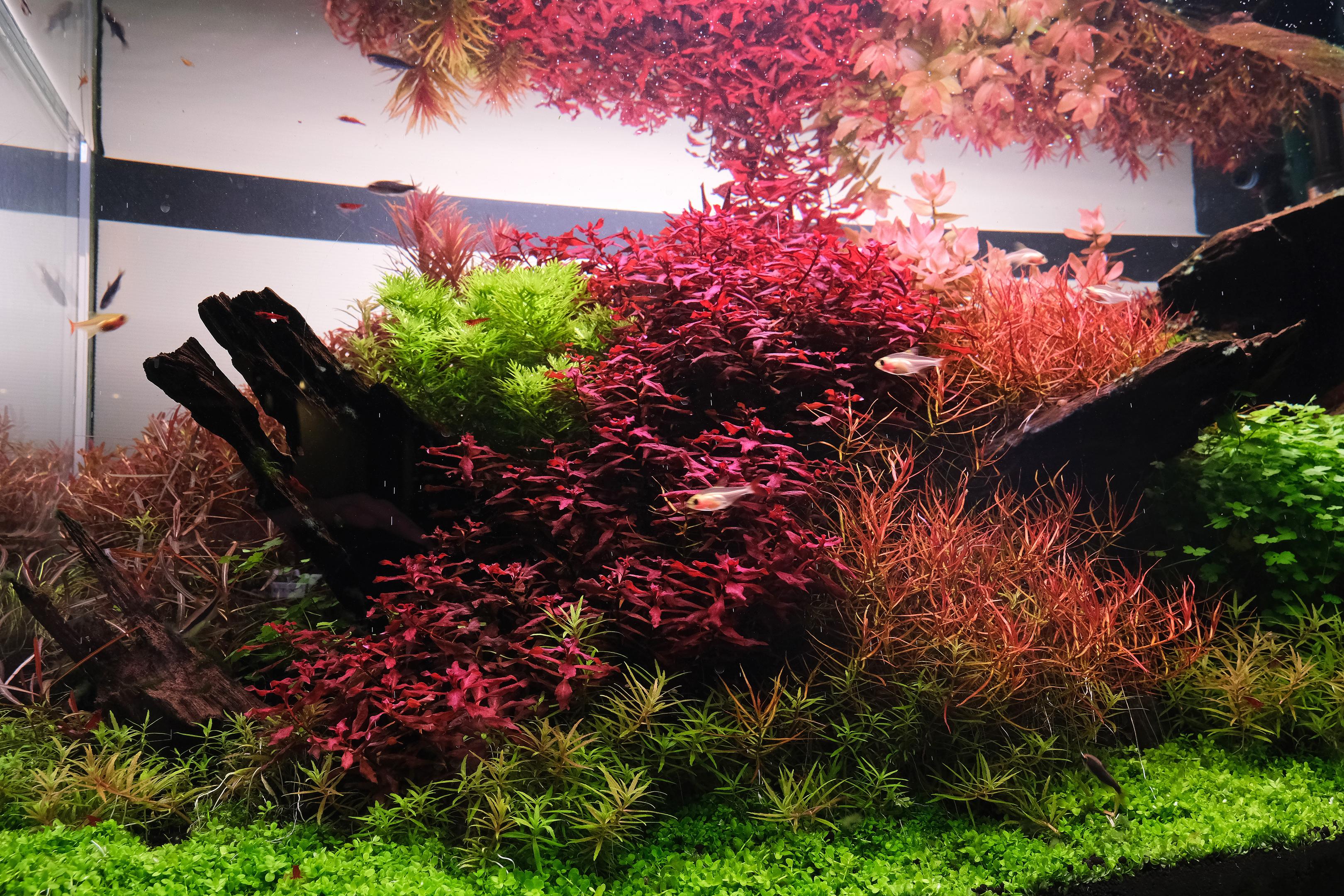
Good filtration is helpful in planted aquariums even though plants uptake waste such as ammonia and nitrates. Crystal clear water is a good sign of adequate filtration.
How does Excessive Light & Excess Nutrients Drive Green Water?
Green Water loves light. Excessive light is the primary accelerator; ammonia, high nitrate and phosphate levels provide the food source.
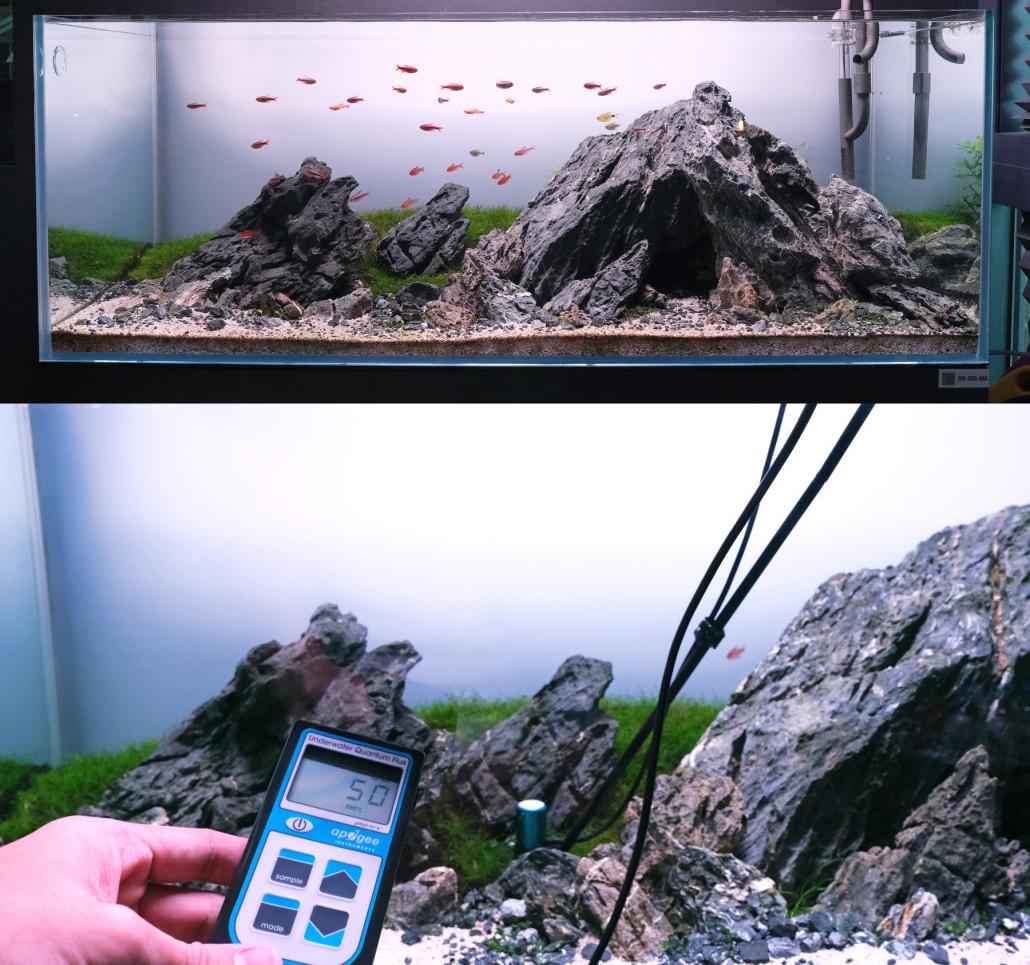
Direct light from a nearby window or a tank placed in a sunny location often tips a marginally stable system into full-blown pea soup, because the actual light hitting the water column is far higher than you think. Full sunlight measures 2000umols of PAR (Photosynthetically active radiation), while even high light aquariums seldom use more than 200umols of PAR. This is why even incident light rays from the sun can send a huge amount of light into the aquarium.
To prevent Green Water, limit aquarium lighting to 6–8 hours a day on a consistent schedule, use light intensity appropriate for your tank depth and plant selection, and avoid direct sunlight.
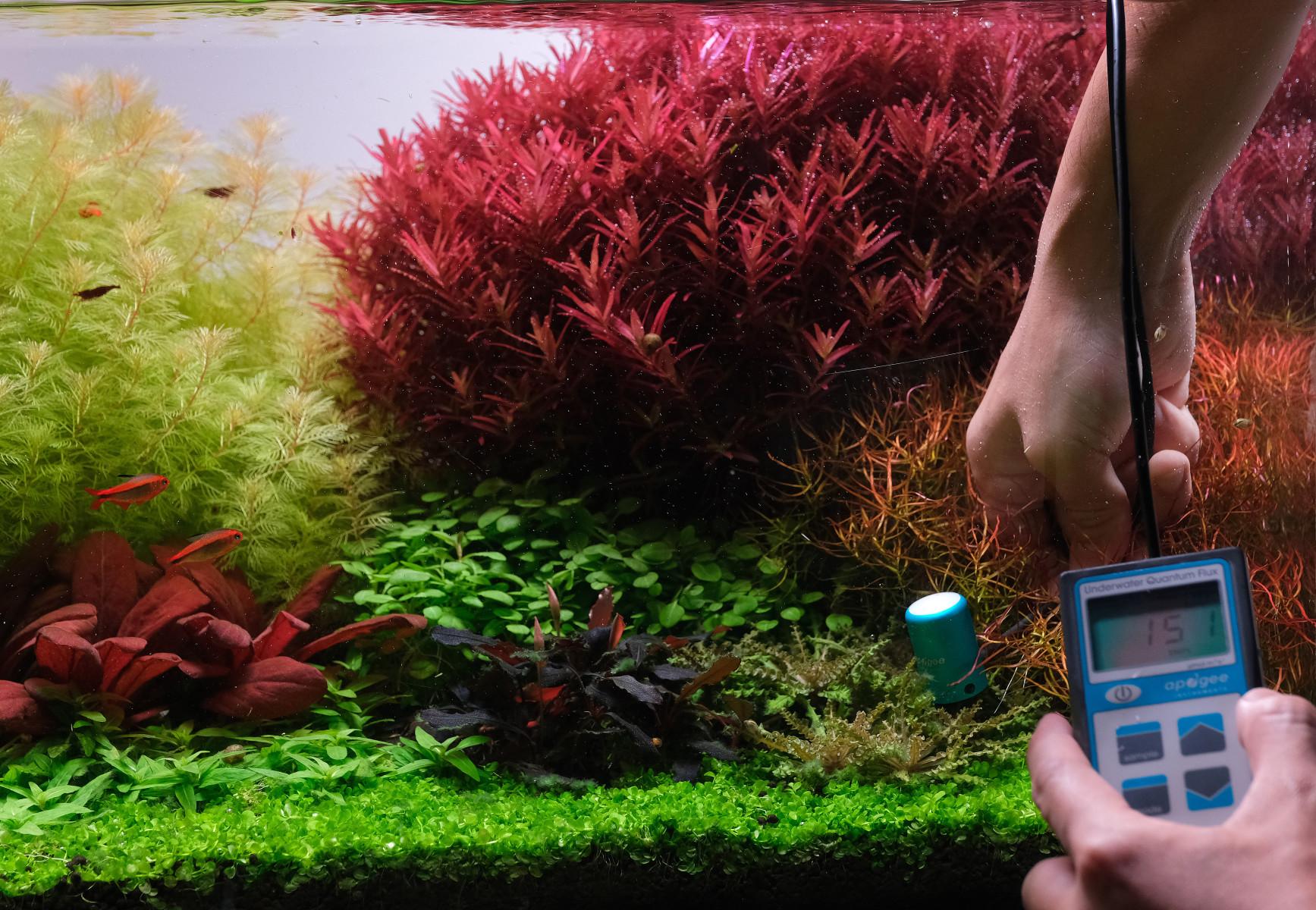
This high light aquarium uses 150umols of PAR. This is a fraction of the power of sunlight.
Can Cutting Fertiliser Get Rid of Green Water in a Planted Tank?
Once Green Water is present, and the free floating algae spores have already populated the water column to a degree that it is visible, it does not take much nutrients or light for the infestation to continue. Cutting fertilizer/nutrient levels at this stage will not get rid of the algae.
In very mild cases, Green Water can clear up on its own, but this is rare. Keeping light and nutrients level low to slow down propagation rates, while filtration catches up to get rid of the Green Water works sometimes, but is not a dependable method to clear Green Water. Only blackouts, Diatom filters or UV sterilizers work for more serious cases.
How do Blackouts, UV Sterilizers, Flocculants and Diatom Filters Work to Clear Green Water Algae Problems?
Algae cells are small and they do not have the ability to store as much food compared to more complex plants. A 5 day black out will drain and kill off algae cells, whereas plants will survive due to the starch stored in their tissues.
If blackout is the blunt instrument, UV is the scalpel. A UV sterilizer is one of the most reliable tools to eliminate green water in a fish tank because it kills suspended algae as aquarium water passes through the UV chamber - typically restoring clear or even crystal clear water within a few days when sized and plumbed correctly. Unlike algaecide "last resort" chemicals, UV does not rely on dosing the water column with toxins; it destroys the DNA of passing cells and lets your filter and water changes remove the corpses.
Chemical media such as clarifiers or flocculants can clump suspended algae and fine debris into larger particles that your mechanical filter can trap more easily. They can work for mild cases of Green Water, especially after the light is tuned down/turned off to stop further propagation.
A diatom filter loaded with diatomaceous earth can mechanically strip very fine suspended algae, producing crystal clear water in a matter of hours.
After Green Water has been eliminated, the biological filtration and microbial system still have to develop to prevent the problem from occurring again. Seeding the filter with mulm or media from other matured aquarium setups will speed up the biological maturity of the system. Running the aquarium light at reduced intensity & duration for a week or two will reduce chances of triggering another Green Water algae bloom.
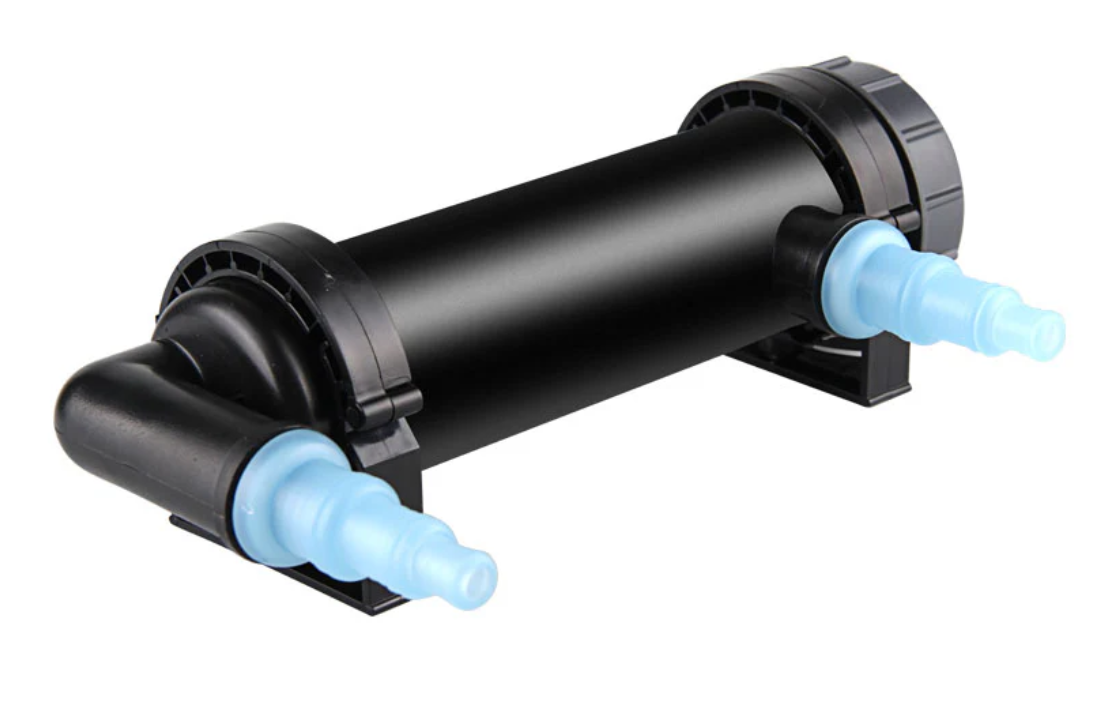
A Ultraviolet (UV) steriliser channels water through a chamber where a UV bulb destroys water borne algae and microbes through ultraviolet radiation.
Is Green Water Dangerous to Fish and Live Plants?
Green Water is unsightly but usually not directly harmful to fish in a normal-sized tank with decent oxygenation. The suspended algae can even function as a mild natural food source for tiny fry, shrimp, and micro-organisms.
Aside from algivorous microbes, Daphnia consume Green Water algae, and Green Water is used to sustain Daphnia cultures. However, unless one intends to change the aquarium setup into one tailored for culturing Daphnia, introducing Daphnia is not a cure for Green Water.
In planted aquariums, the real problem is visibility. Green Water blocks light and defeats the purpose of a display tank; you cannot see your fish, and your aquatic plants may struggle if the bloom is dense enough to shade them significantly. When Green Water algae dies off (when algicide or a UV sterilizer is used), it can also spike organic waste levels. Thus it is highly recommended to do a large water change to remove as much of the floating Green Water algae as possible, before running the UV sterilizer.
How Can I Tell the Difference Between Green Water and Bacteria Blooms?
-
Mild Green Water can be easily mistaken for bacteria blooms as they both can look greyish rather than a distinct green. This is especially when aquariums make use of purplish colored lights.
-
While bacteria blooms tend to resolve themselves over time, Green Water tends to be more stubborn.
-
Green Water tends to require high light levels to trigger, while bacteria blooms can occur in low light aquariums.
-
After a large water change, bacteria blooms can turn the water back to cloudy without lights, but Green Water require light to propagate.
How to Fix Aquarium Green Water: Step-by-Step Action Plan
-
Blackout: Cover the tank completely for 5 days
Leave the filter and heater running, stop feeding, and block all light — including room and direct light. Algae cells cannot photosynthesize without light and will burn through their reserves and die, while your plants survive on stored energy. -
Or deploy a UV sterilizer or diatom filter as the fast fix
Size the UV sterilizer to your tank volume, slow the flow rate so suspended algae cells get enough contact time with the UV light, and let it run for 3–4 days. This kills free-floating algae in the water column and usually delivers clear water within days. -
Improve water quality and filtration
Make sure the filter setup is running with adequate media for the tank size, consider a pre-filter sponge to trap suspended debris, and clean clogged media gently so beneficial bacteria survive. -
Transfer mulm/filter media from another matured aquarium setup This boosts the microbial population in the aquarium and speeds up development of beneficial microbes.
-
Add more live plants
Plant faster-growing stems and floating plants to consume excess nutrients in the water column. More plants mean more biological work and direct competition for light and nutrients — fewer chances for future algae blooms in your planted tank. -
Feed less and clean smarter
Reduce feeding so no food sits on gravel or rots in dead zones, lightly vacuum substrate during regular water changes to remove decaying organic material, and stop treating water clarifiers or chemical media as a first resort. They can polish, but they do not replace proper balance, regular water changes, and attentive maintenance.
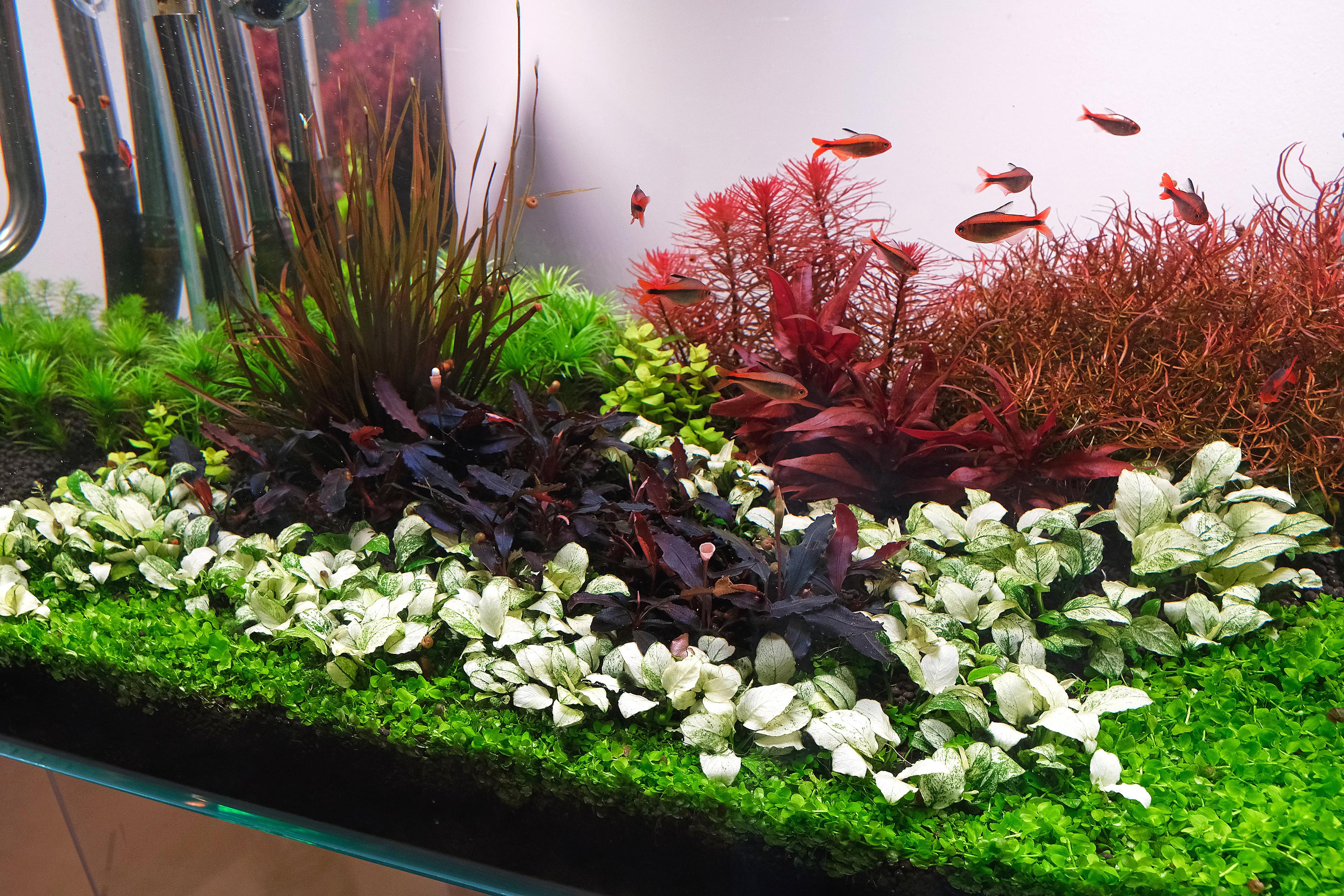
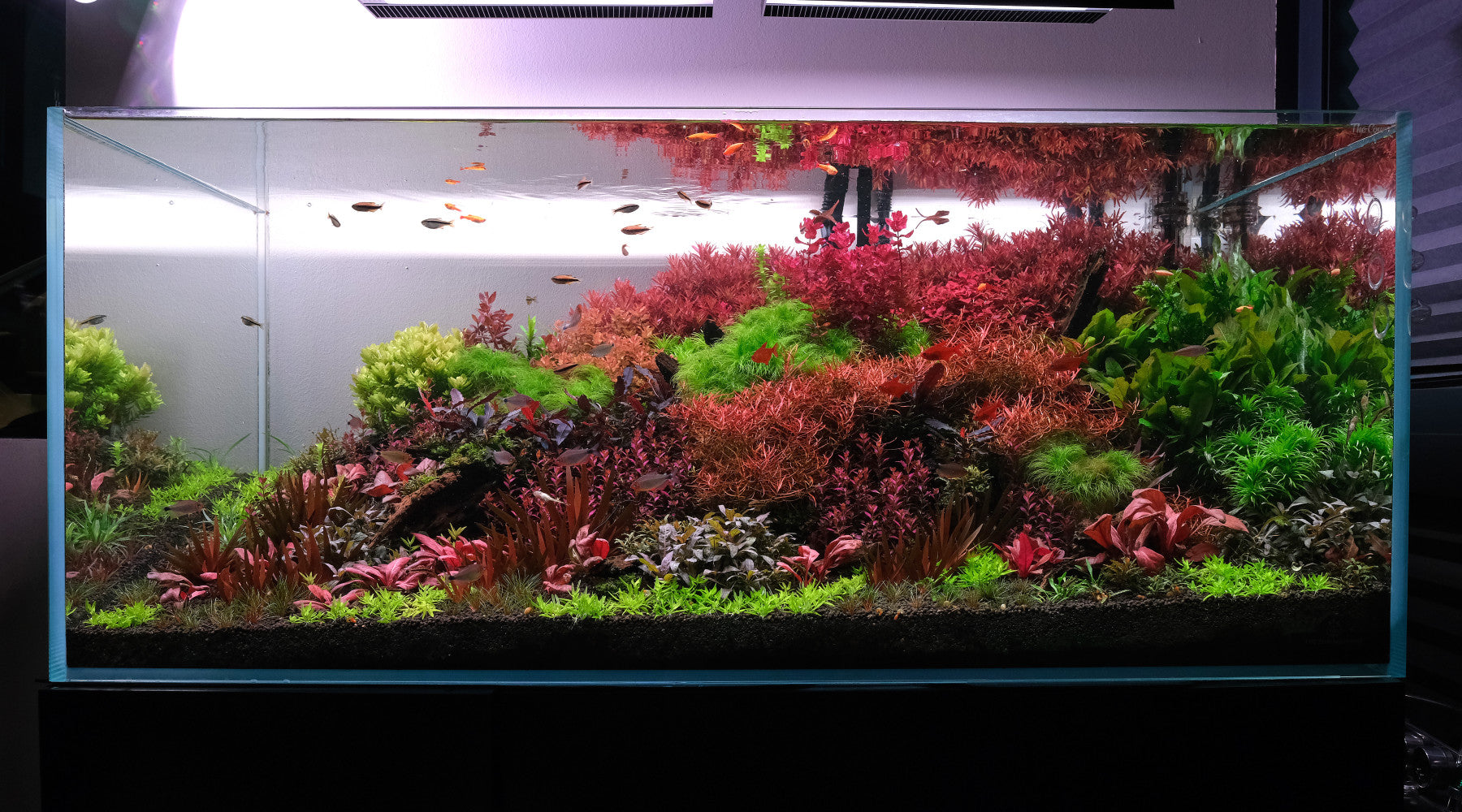
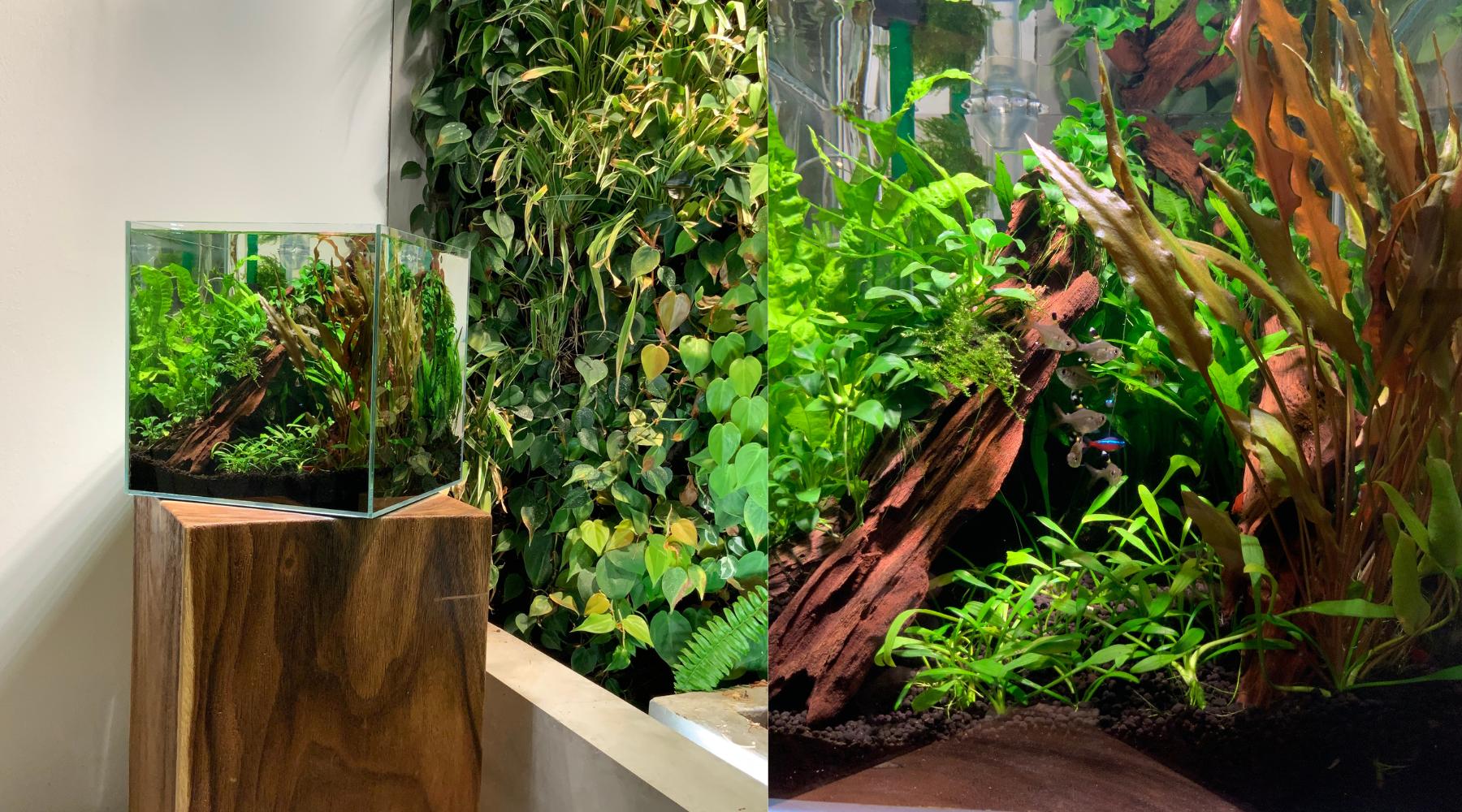
Crystal clear water can be achieved by sufficient filter media alone (without the use of other water polishers such as Purigen). Matured microbial bio-films in sufficient quantity binds even the finest particles. Our aquarium above runs 100% sponge media.
How should I Prevent Future Outbreaks of Algae Growth?
Start by matching your aquarium light to your plants, not your ego. If you are not running CO2 injection and dense planting, avoid blasting the tank with much light for 10 or 12 hours a day; that combination of too much light and modest plant mass is the classic recipe for every algae problem, green water included. Calibrate your light intensity levels to match your plant requirements. Most green plants in the aquarium hobby grow well in the range of 60-90umols of PAR. Carpeting plants do not actually require high light levels to grow well, just sufficient CO2.
Then fix the energy budget on the input side. "Too many fish" is not just a stocking-chart meme: heavy bioload in a small tank with shallow filtration means more fish waste and food entering the water column than bacteria and plants can process. Pair a realistic fish count and thoughtful, lighter feeding with fast-growing stems and floating plants - so biological filtration, plants, and proper maintenance share the load of keeping nutrient levels and control algae growth.


Share:
Green Spot Algae (GSA): What Causes It and How to Stop It
New Aquarium Algae: Why It Happens and How to Clear It