

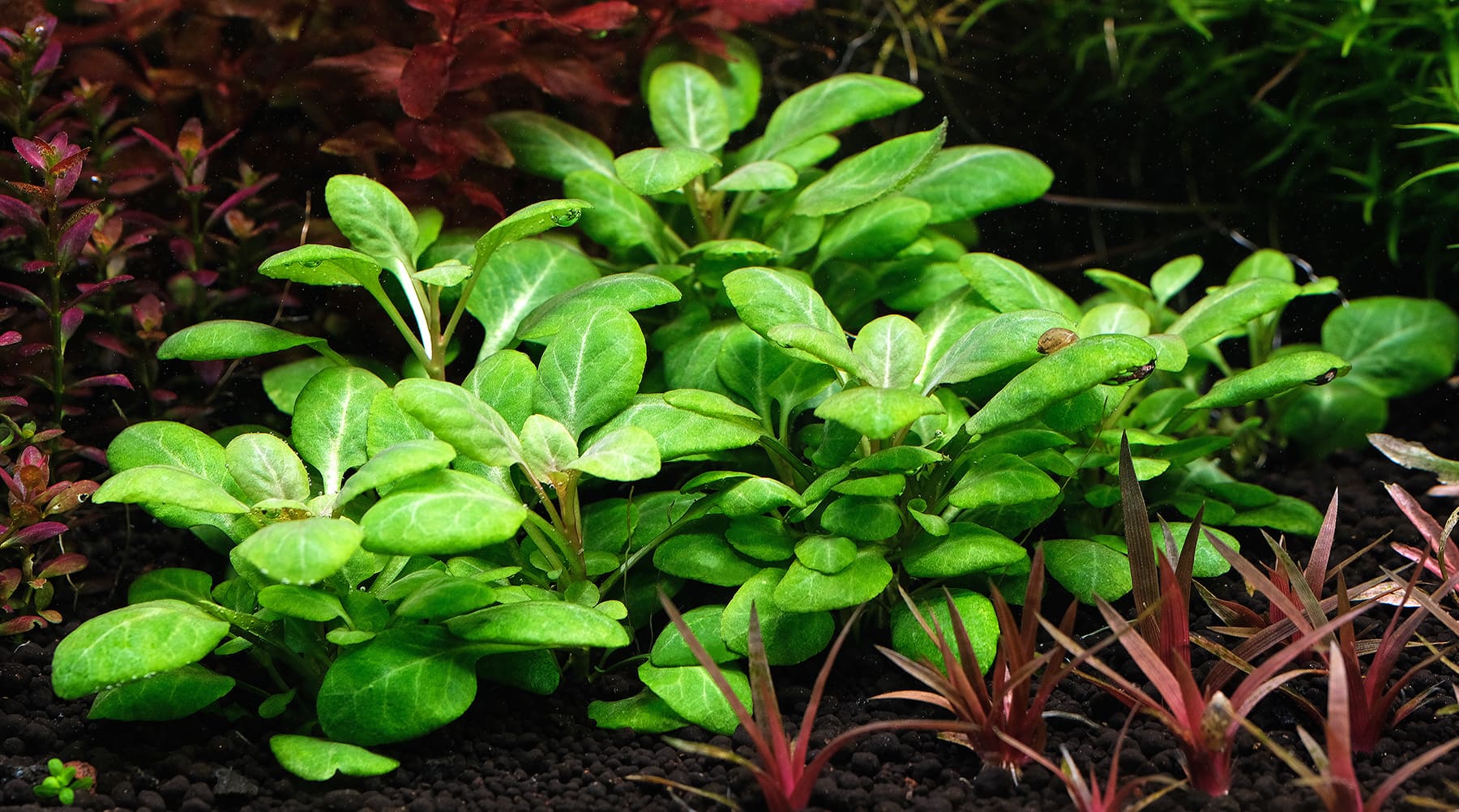
Lobelia cardinalis 'mini' above.
Introduction
Lobelia cardinalis is a light green stem plant with attractive lettuce-like leaves. While the leaves can be purple when grown emersed, the submerged leaves are usually completely light green, with the slightest hint of purple under very strong light. Native to America, it grows in damp soil along river banks and pond margins. The round-leaved 'mini' variety is becoming increasingly popular as its rounder leaves provide a good contrast to many plants. It is therefore very popular in Dutch style tank designs where contrast between leaf shapes and colours is important.
It takes pruning well and grows at a slower rate than most stem plants. This makes it very easy to control and shape. Its ability to form neat, dense bushes makes it ideal for foreground and midground placement, even though it is a stem plant.

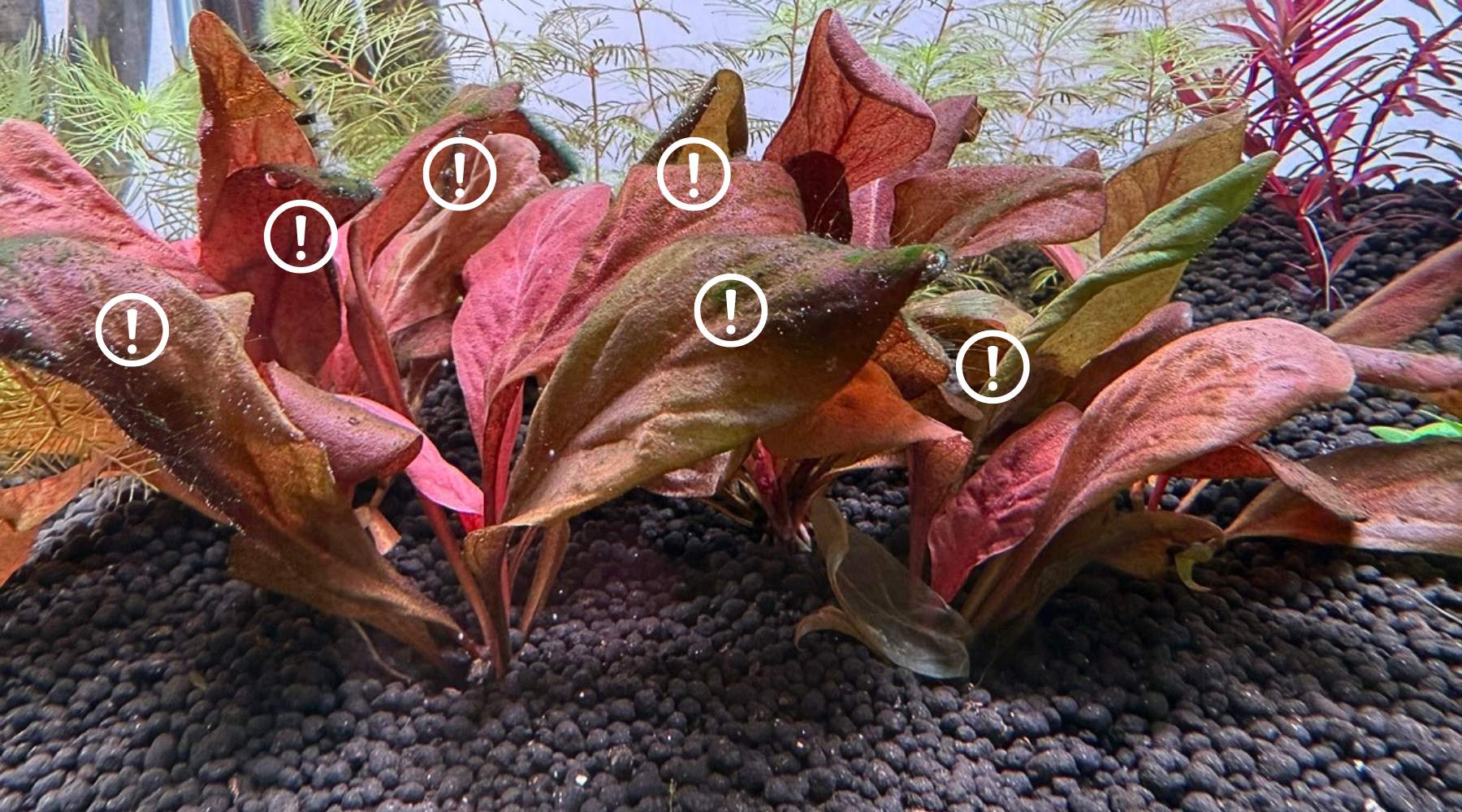
Higher light levels give it a more compact habit, although it will grow well in medium or even lower light levels. It does well with CO2 injection. In low tech tanks, it tends to have older growth and less compact forms. Due to its slower growth rates, it is a plant that favours stable tank conditions. At high light levels, its older leaves are prone to spot algae if conditions are unstable or organic waste levels are not controlled.
 Lobelia cardinalis have a hint of purple in their submerged leaves under high light. It is only their emersed leaves that can look very purple.
Key success factors
- Stable and clean tank environment helps prevent algae issues.
- Higher light levels (80 umols of PAR) give more compact and bushy growth.
- Regular fertilization required to maintain lush green leaf tones.
- Carbon dioxide injection greatly improves plant health.

Pruning and propagation
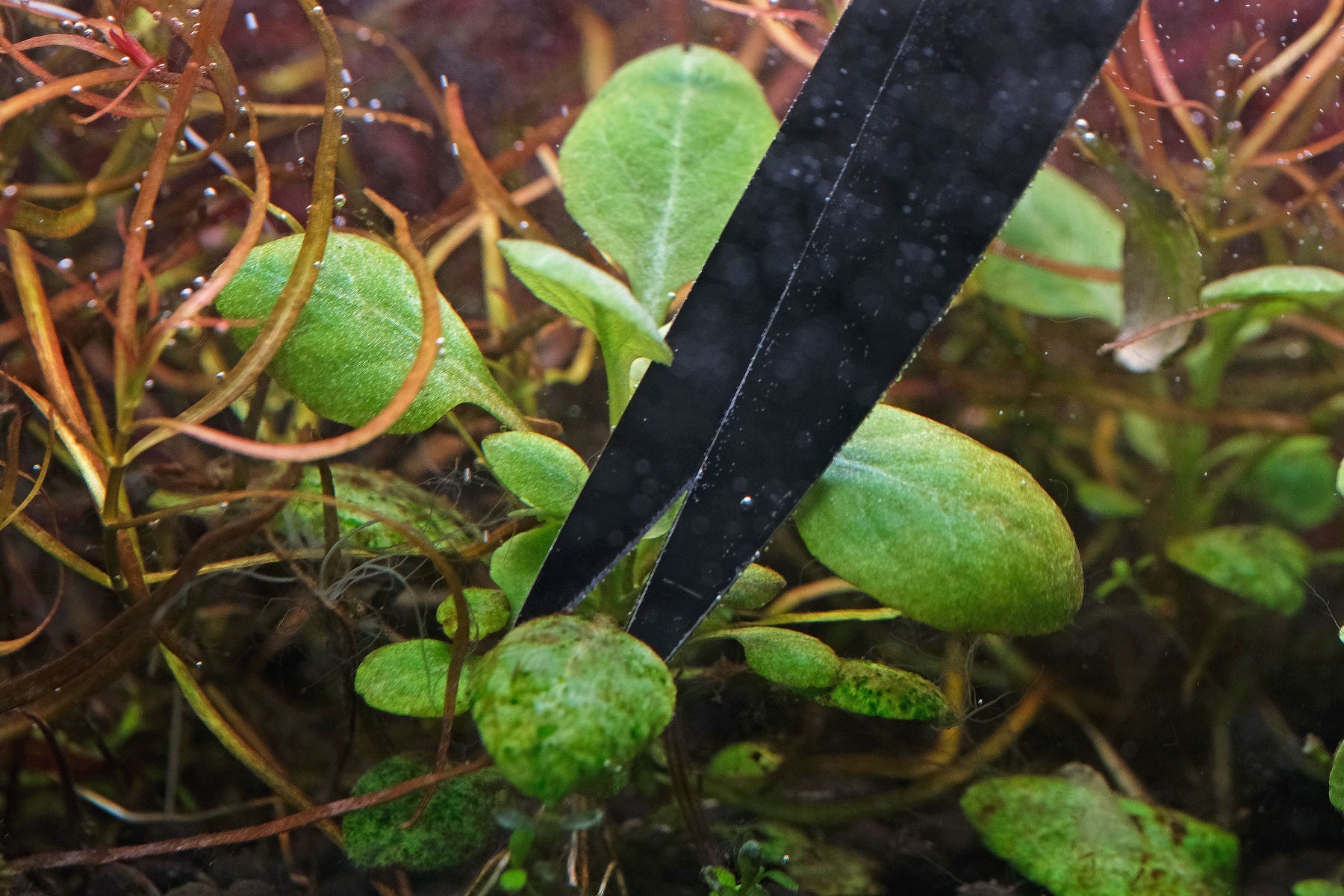
Lobelia cardinalis is actually a stem plant that branches easily, so it can be pruned in a similar way to other stem plants; just cut above an internode. The cut head can be replanted in substrate to produce a new plant. The remaining rooted part of the plant will easily regenerate new shoots and will become more bushy over time.
This plant is very tolerant of repeated pruning, so most tanks can be pruned for months without the need for replanting. However, if the lower part of the stem becomes severely affected, with smaller and smaller leaves being produced from the base, this is a sign that the plant needs to be topped and replanted.





Share:
How to grow Ludwigia sp. 'Super red'
How to grow Ludwigia sp. 'Super red'