

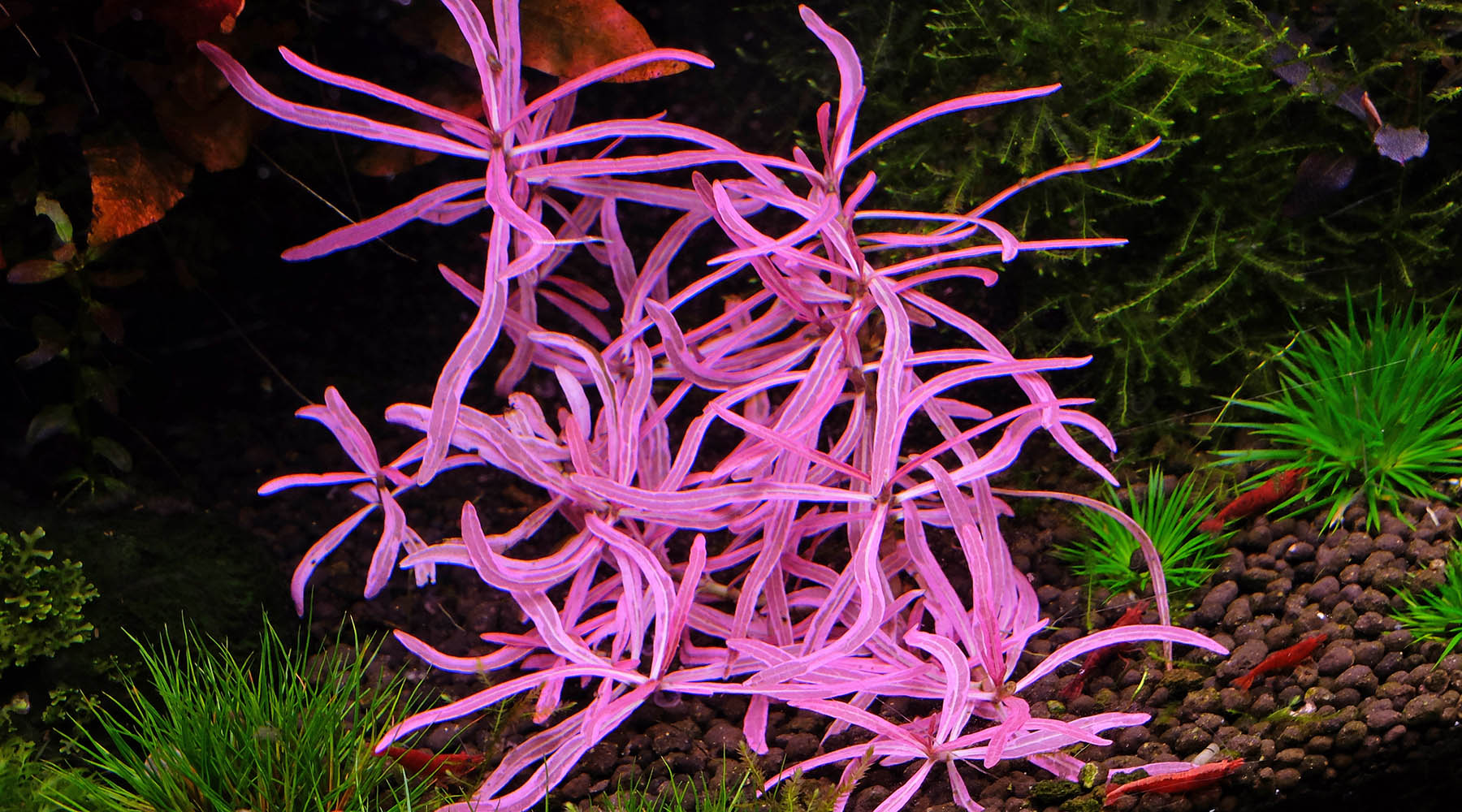
Hygrophila sp. chai is a mutation of Hygrophila araguaia that occurred in the South Island farm (Singapore). It has a distinctive pink colour with occasional white streaks. The growth habit is similar to that of Hygrophila araguaia - it is a stem plant but creeps along the substrate under high light levels. It is generally very slow growing and delicate.
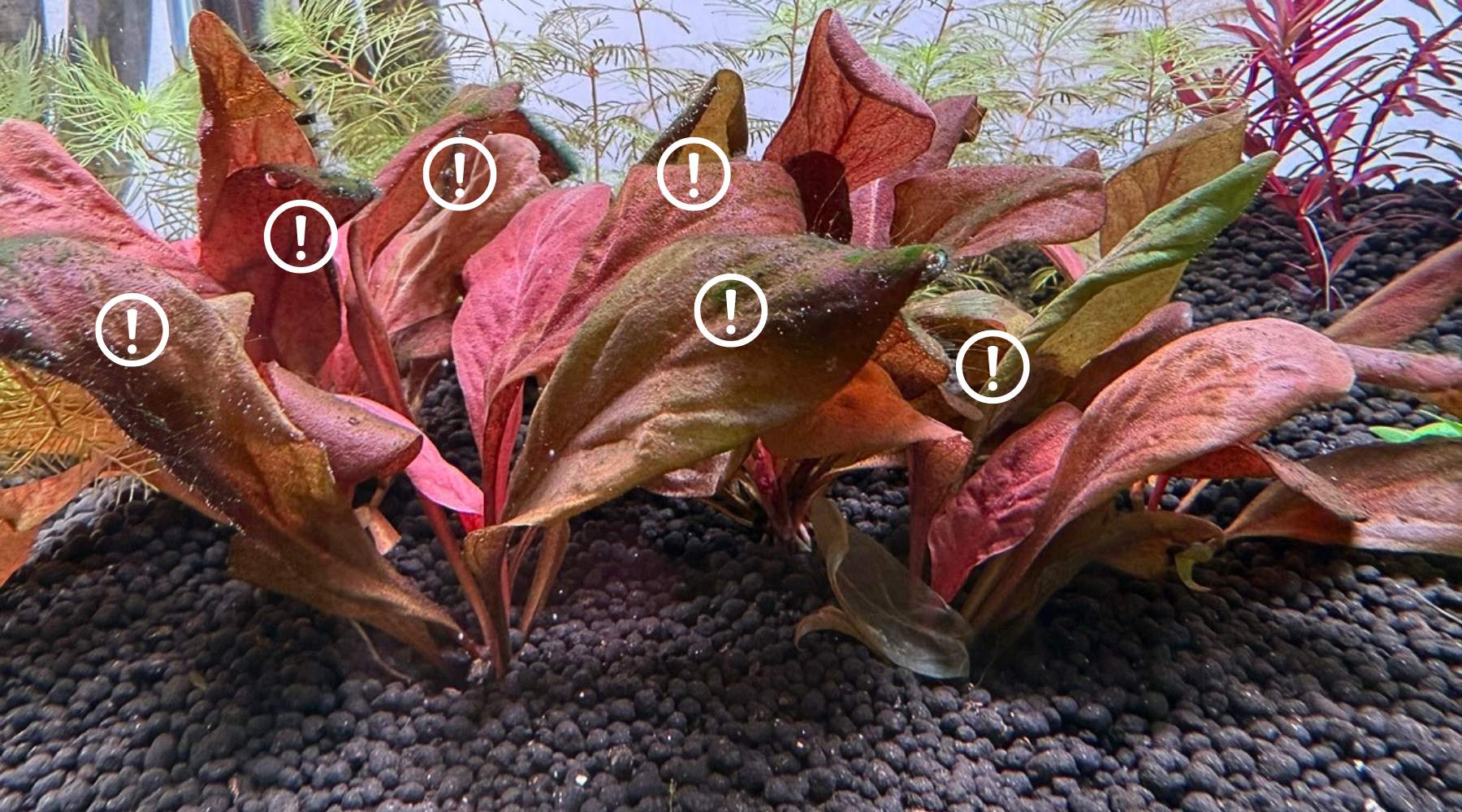
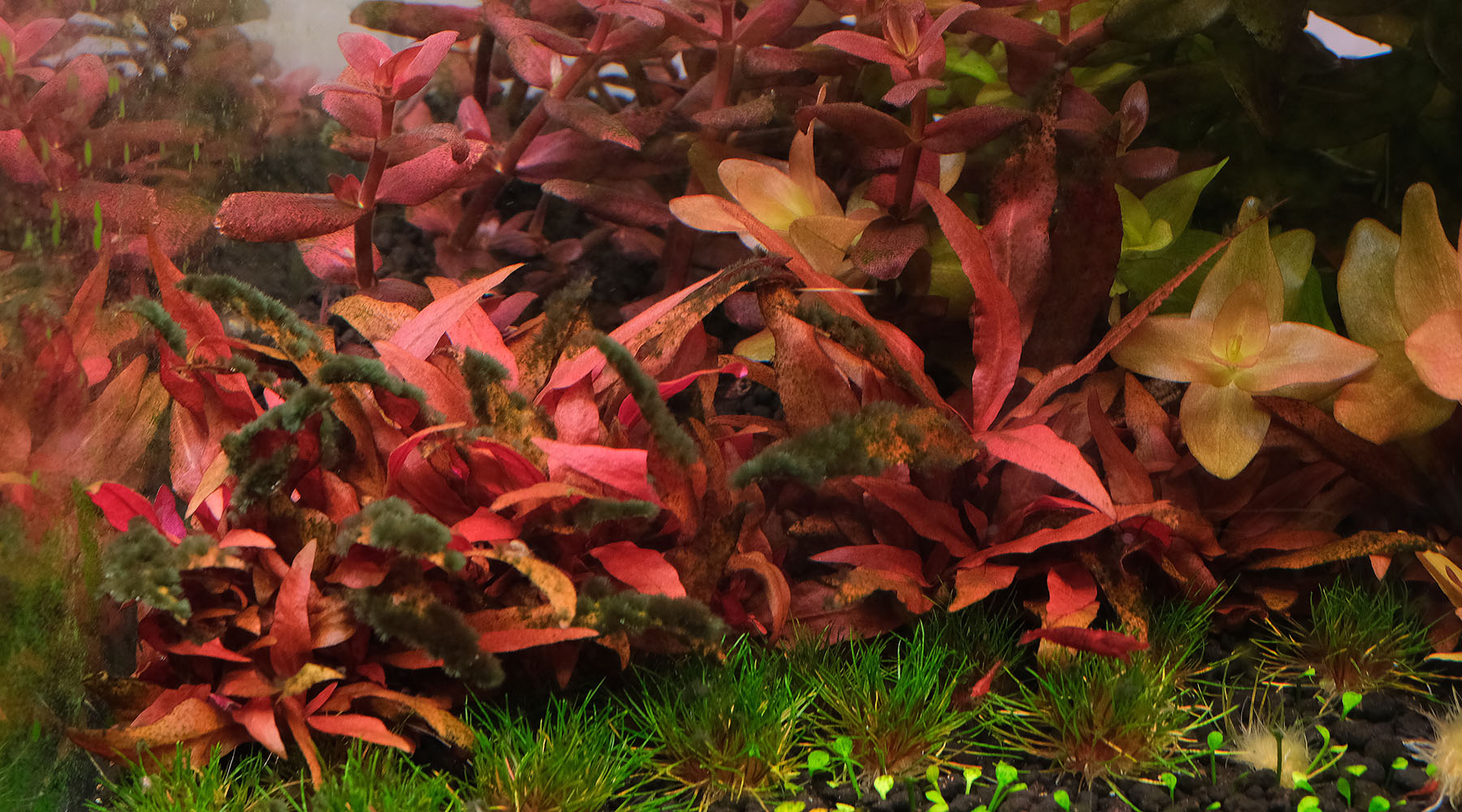
The older leaves are very susceptible to algae, so this plant needs a very clean tank to grow well. Gentle water flow, strong CO2 injection and bright light will speed up growth. It is therefore difficult to balance an algae free tank with high light levels. The samples grown on this page are below 200 umol PAR. Tank instability and dips in CO2/nutrient levels will also result in the loss of older leaves, so to have a larger bunch of these, tank conditions must be maintained at optimal levels for a longer period of time.
Higher CO2 levels than usual 40-50ppm, rather than the usual 30ppm target will greatly improve success rates with this plant.

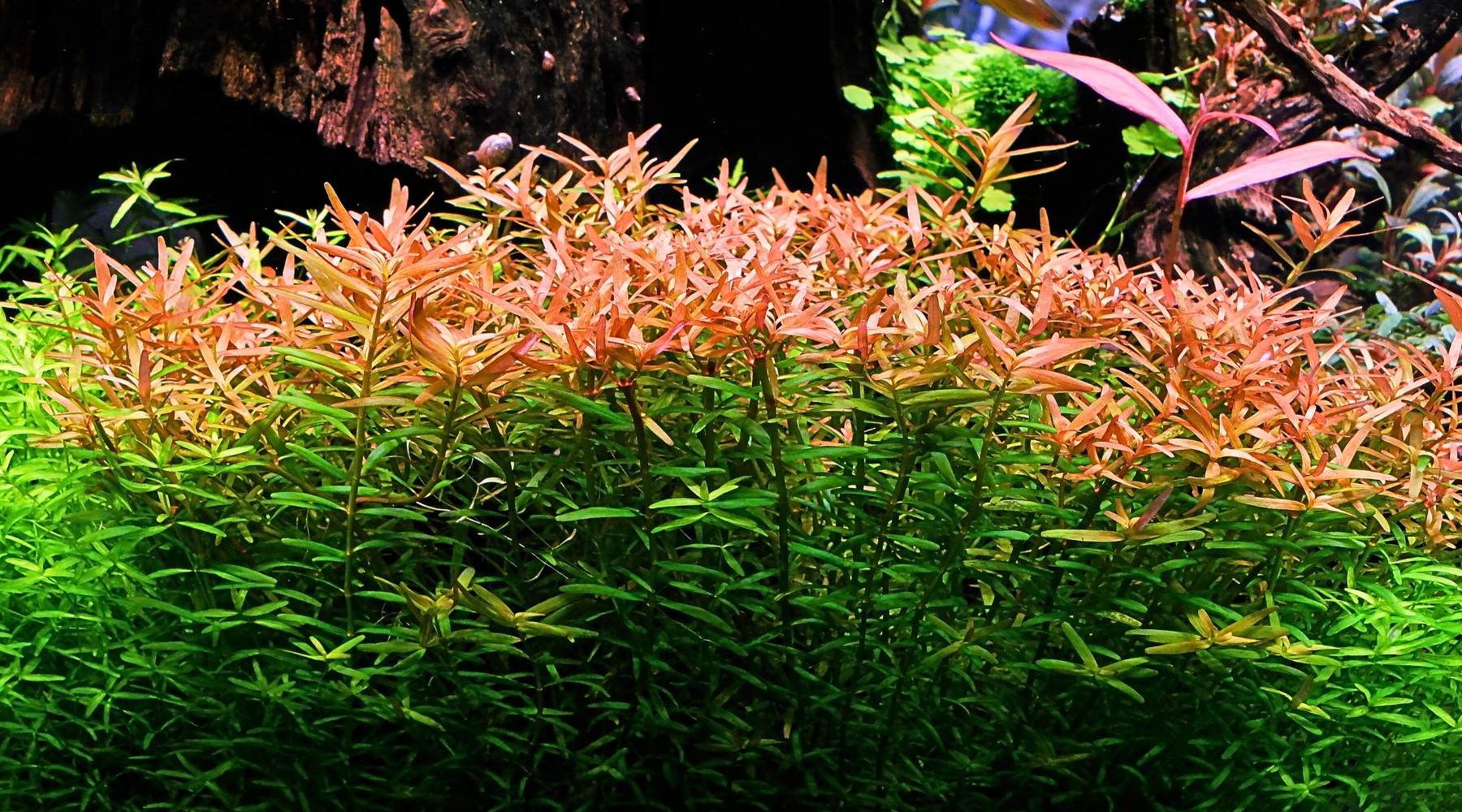
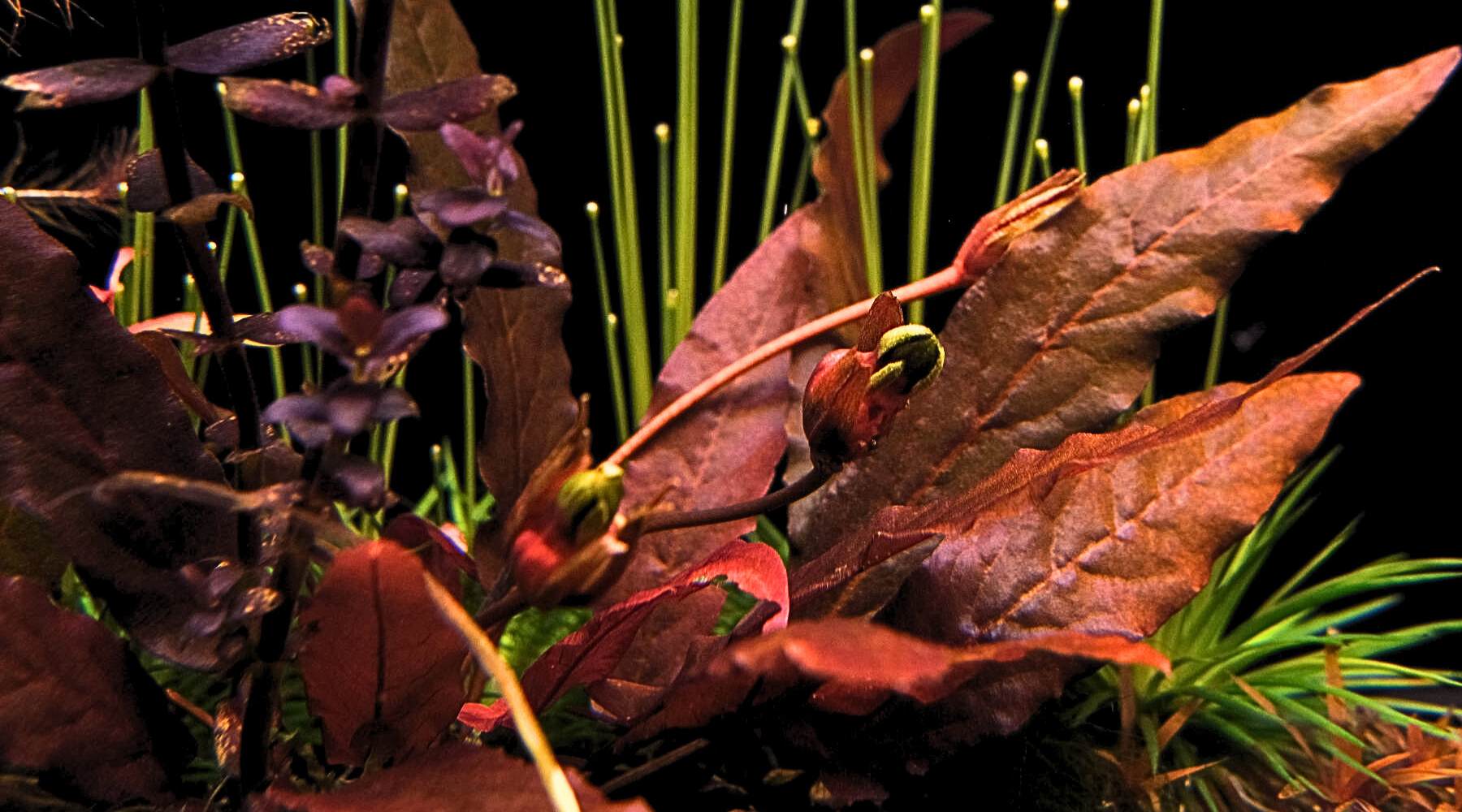
The picture above shows the relative size and colour of Hygrophila sp. chai compared to other plants. The information on this species is hardly complete because so few aquarists have successfully propagated it.
Converting it from tissue culture (the form in which it is most commonly sold) is the first hurdle. The TC as a whole is very delicate. It should be planted in mature, clean soil - excessive organic waste causes it to melt very easily. Good gas exchange is essential - this means running water, good oxygen and carbon dioxide levels. For this reason some people find success floating it in the first week to get some root growth; some of the TC samples can be very short, making it difficult to plant. It also seems to prefer quite a lot of light. In my farm tank example, the substrate PAR level is around 200 umols. As it is also very susceptible to algae, it is advisable to grow it in a mature tank where there is already a dominant plant mass to keep algae at bay.
Hardcore enthusiasts may wish to consider a shallower grow tank where gas exchange and access to light is generally better.
During the growth stage it is very slow growing and will be shaded/overcrowded by surrounding plants. Hygrophila sp. chai will grow more prostrate if the surrounding area is cleared.
It is important to keep the area around it clear. Once it has reached a certain size, it becomes much more stable and will grow steadily but slowly. The main parameters to maintain are high CO2 levels with good flow and unobstructed access to light.
Key success factors
- Clean, matured tank environment
- High CO2 levels 40-50ppm
- High light
- Avoid crowding by more aggressive growing plants
- Avoid extreme water parameters
- Cooler water (25C and below) generally helps with tank stability
- Low KH ranges/soft water makes it easier, but it can grow fine in moderately hard water also

Propagation
- Side shoots form naturally over time. Once it reaches a good size - about 2 inches, you can cut off the top part of the stem and replant it elsewhere.
Buying guide
- Emersed or submerged plants are much easier to acclimatise than tissue culture plants. Larger plants are easier to convert to tank conditions.
- When buying TC, look for larger shoots in the TC cup rather than the number of shoots - larger shoots have a much better chance of survival.
- Fresh TC always work better than old TC.
Reversion to base species

Under stress, fluctuating or unstable growing conditions, it is not uncommon for Hygrophila sp. chai to produce the brownish leaves typical of Hygrophila araguaia. If there are only a few offending leaves, remove them and let the plant continue to produce pink leaves.
If many leaves turn brown, this is a sign that the growth conditions in the tank are not ideal. This could be due to a number of reasons; irregular CO2/nutrient levels, disturbance to the planted area, algae, etc.
Click here to find out how to grow red aquarium plants.
Click here to read on how to optimize CO2 levels
Click here to browse more plant growing profiles
Click here to read on how to stabilize a new planted tank




Share:
Video: how to propagate Eriocaulons and "Blood Vomit"
How to grow mosses in the aquarium