

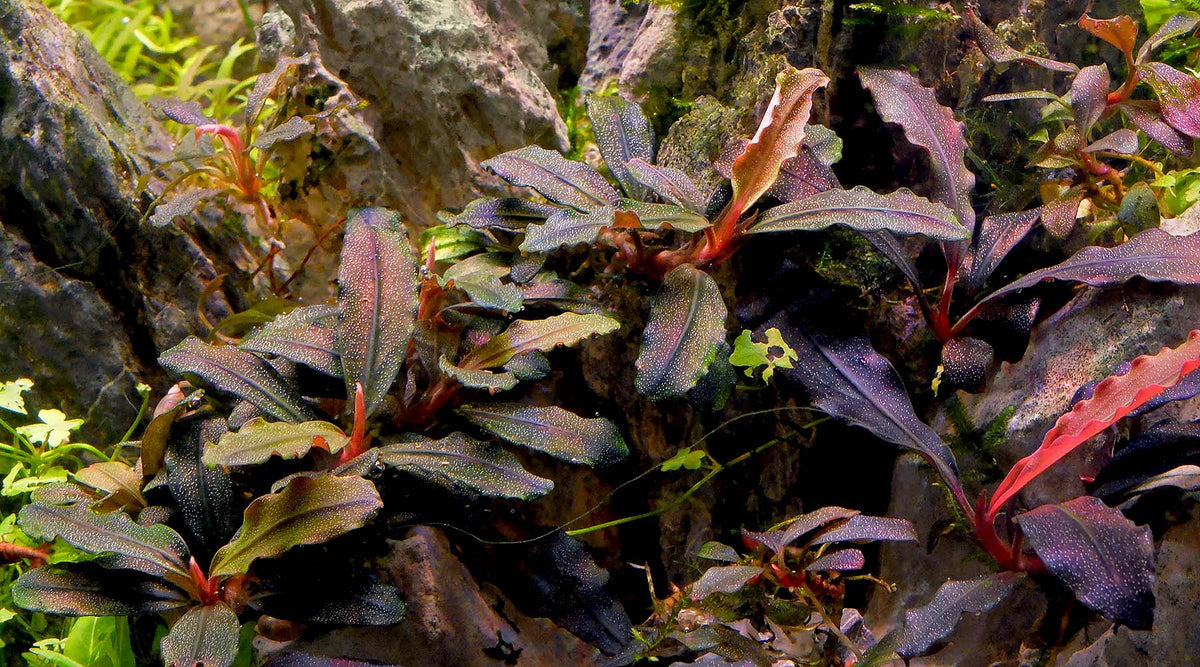
Bucephalandra, "buce" for short, are from the island of Borneo and come in a large variety of shapes and colors. They are easy aquarium plants to grow, with low requirements for light/CO2/nutrients. This makes them suitable for a large range of aquascapes and has made them very popular in the planted aquarium hobby. This article is for newer aquarium hobbyists looking for success with Bucephalandra species.
The genus offers a wide variety of leaf shapes and colours: wavy, compact, broad, oblong leaves and with colors ranging from greens to blue, red and purple. The distinctive feature most people notice first is the scatter of bright spots across the leaf, and many varieties have iridescent leaves, throwing off different colours depending on the angle you view them from.
Bucephalandra are not strictly rheophytes, they grow very well rooted in soils - however, being able to grow on rocks provide an ecological advantage over other plants. In nature, they can often be found growing on the rocky banks of fast-moving streams and rivers. They are flowering plants that spread by a creeping rhizome and are endemic to Borneo. Most of the aquarium trade's plants come out of West Kalimantan on the Indonesian side of the island. As of 2018, around 31 species had been formally described, though the number of names you see in the aquarium trade is far larger.
The majority of Bucephalandra species have not yet been described in an botanically accurate manner. Instead, various species trade under different trade names given by small farmers and traders. This inconsistency to Bucephalandra naming makes it difficult for hobbyists to accurately buy plants. Traders often pass off similar looking species as more expensive varietals.
A summary of their growth requirements:
-
A stable, biologically matured tank. Bucephalandra grow better in a biologically matured aquarium, not a fresh one. Add them after the aquarium has been growing in for a few weeks.
-
Grow them on hardscape or planted in clean substrate. If used in substrate, make sure the rhizome is not buried too deep, and that the substrate is not choked with organic waste. In well maintained nutrient rich substrates, Bucephalandra grow significantly faster compared to being grown on hardscape.
-
Growth is slow, from about 1 leaf every 3 weeks up to 2 leaves per week in good growth conditions. Long term stability is key to preserving the condition of older leaves. In unstable and poorly maintained aquariums, older leaves get attacked by algae easily.
-
They do best in low to medium light, cooler water (around 21 to 26°C), some general hardness (3dGH+), good flow, and a biologically matured aquarium environment.
-
Bucephalandra feed through both their roots and the water column, so both liquid column nutrient dosing and rich substrates work well for the plant. CO2 is not needed for survival, but plants grown in CO2 enriched environments are healthier, larger, with better growth forms and colors.
-
Most trade "species" are informal trade names. Finding a reliable sellor is important when attempting to purchase rarer species. Visual identification is difficult due to the similarities many species share.
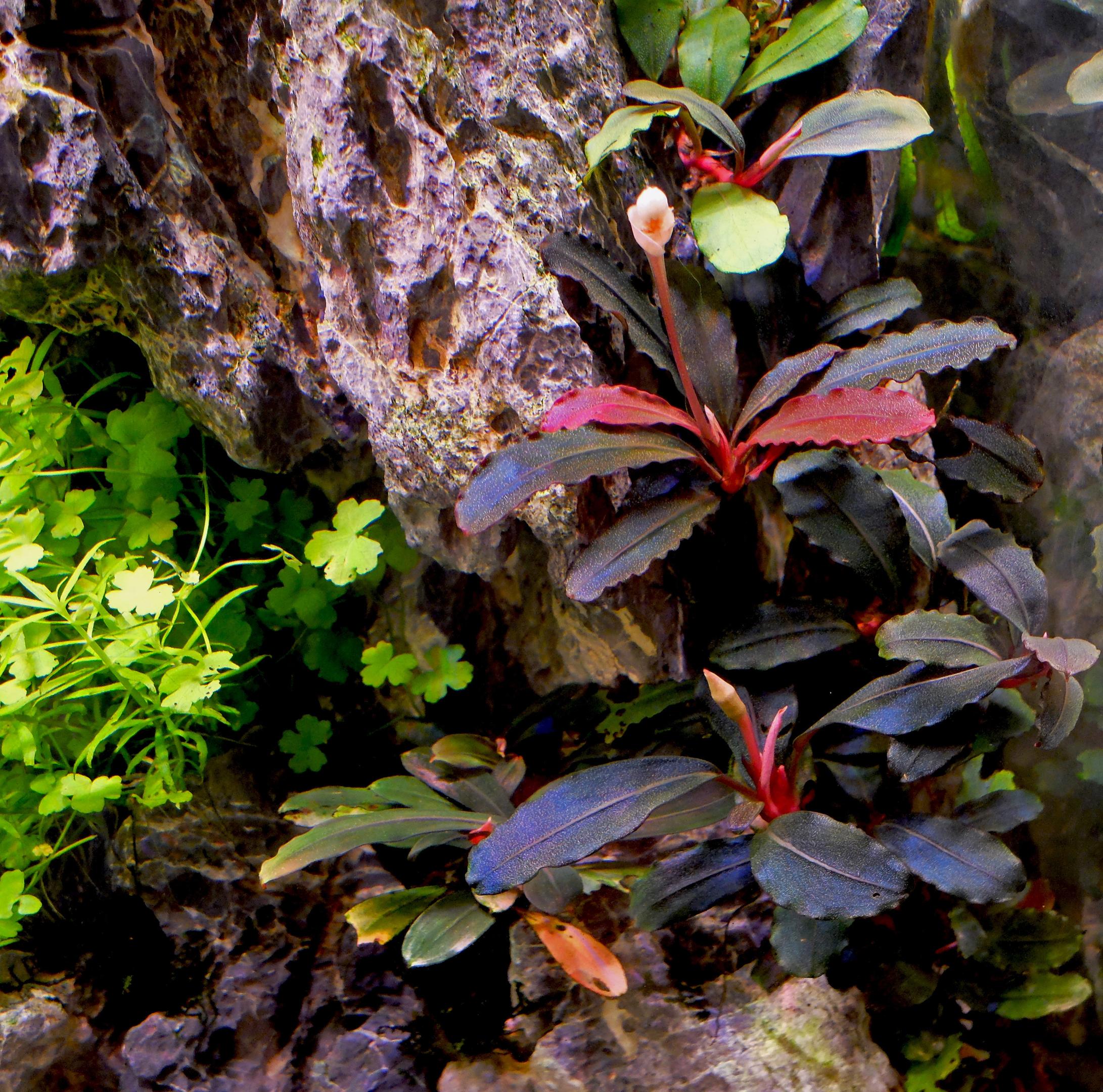
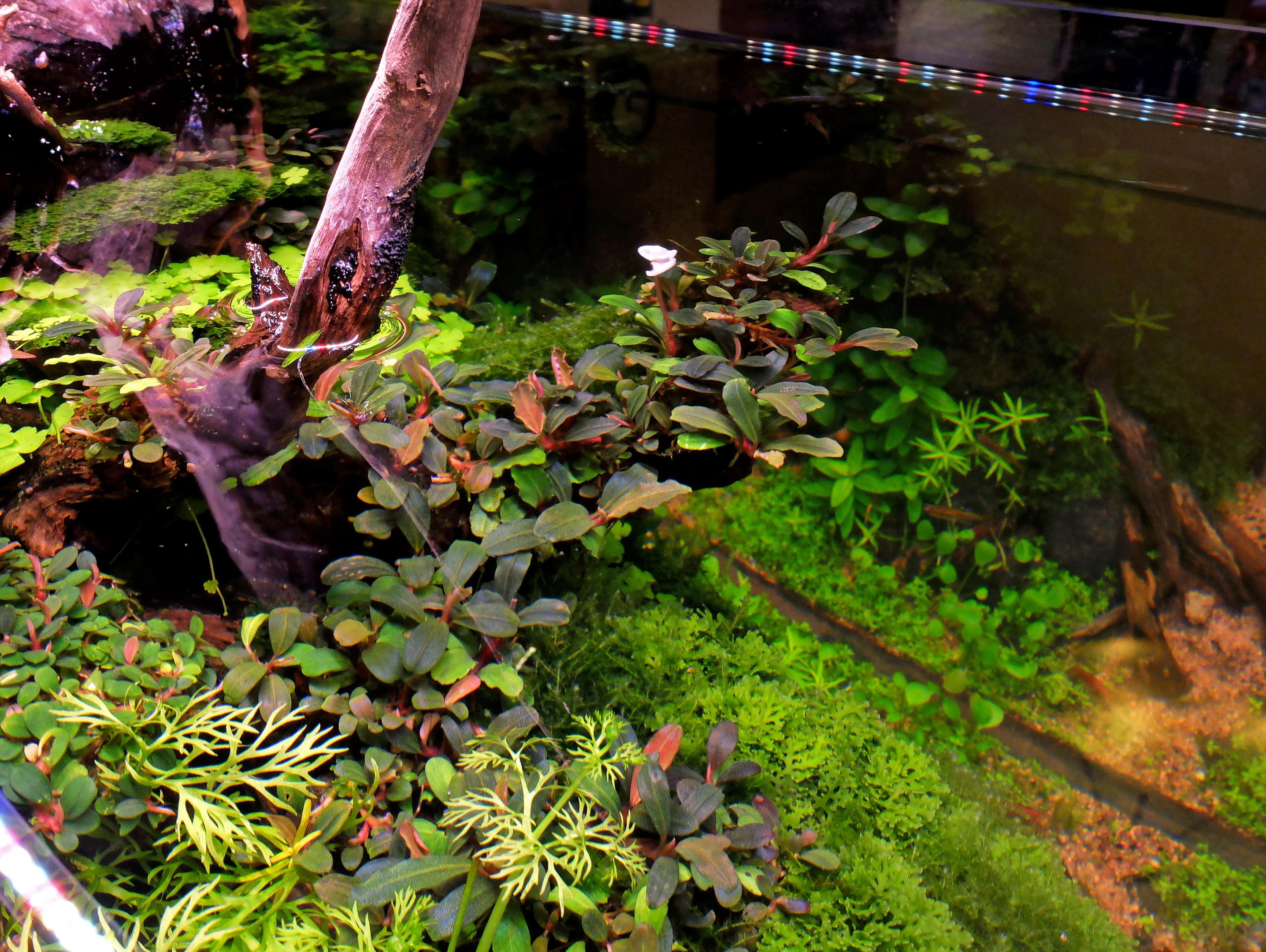
Bucephalandra is often attached to rock or wood in the aquarium, and matches well with mosses.
Are Bucephalandra hard to grow?
Bucephalandra are not demanding plants, but they are a slow one, and slow plants punish sloppy husbandry. Contrary to the common belief that their rhizome must be kept out of the substrate, Bucephalandra grow well both attached to hardscape (rock or wood) and planted in clean substrate, as long as the rhizome is not buried deep. Give them clean, stable, cool water with steady flow and modest light, and they grow reliably at their own unhurried pace. They tolerate a wide band of parameters: roughly 20 to 26°C, a pH anywhere from about 5.0 to 8.0, and most species top out between 2 and 20 cm tall, with most species growing sideways with a creeping stem if there is available room. Within those tolerances there is a clear preference: cooler water, some hardness, and clean water with flow.
They can survive without Carbon dioxide (CO2) injection, but get much better coloration, health and growth forms with CO2 injection.
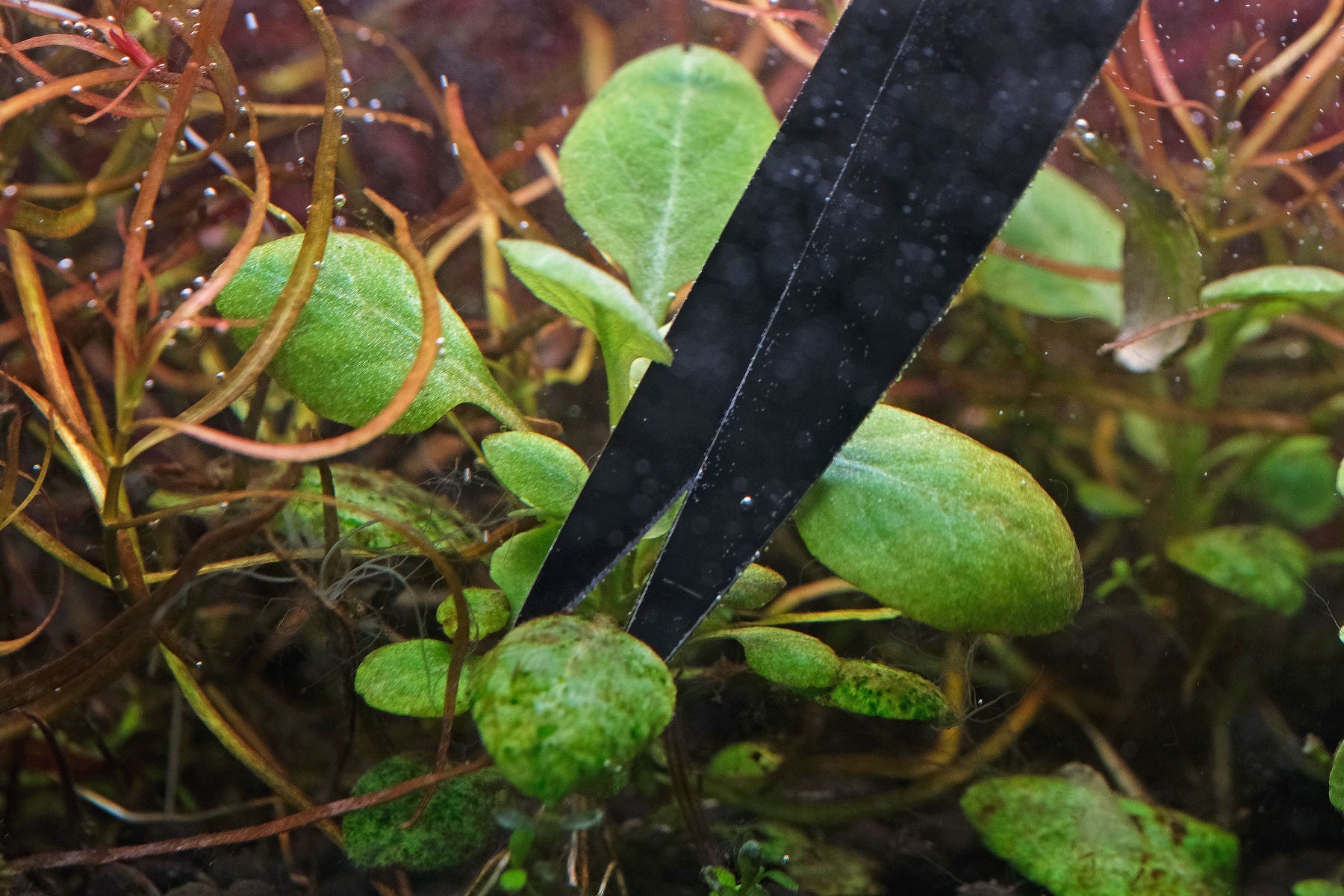
Propagation is simple, just divide longer rhizomes using scissors. If the rhizomes are healthy, even bare rhizomes will produce new leaves in time.
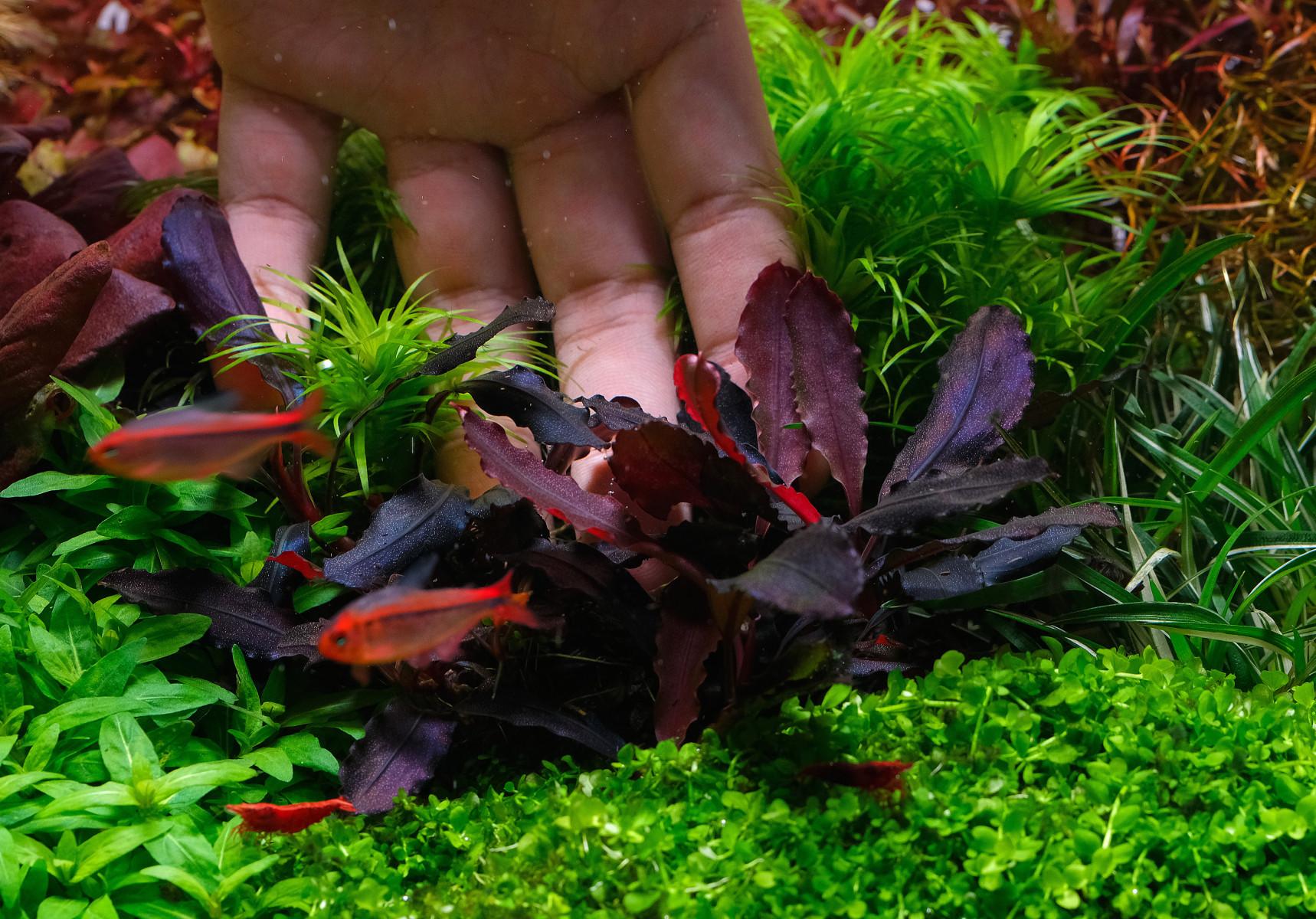
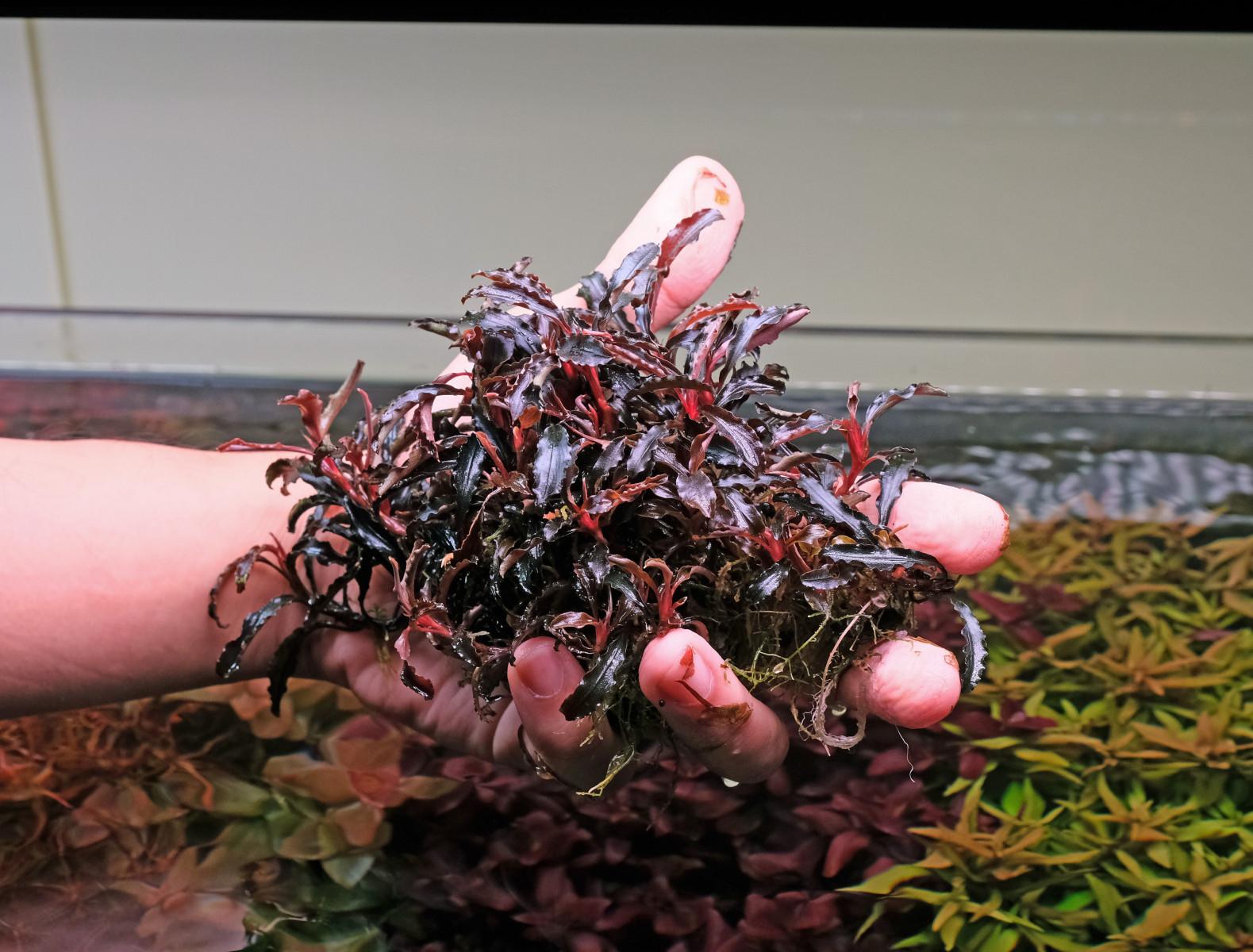
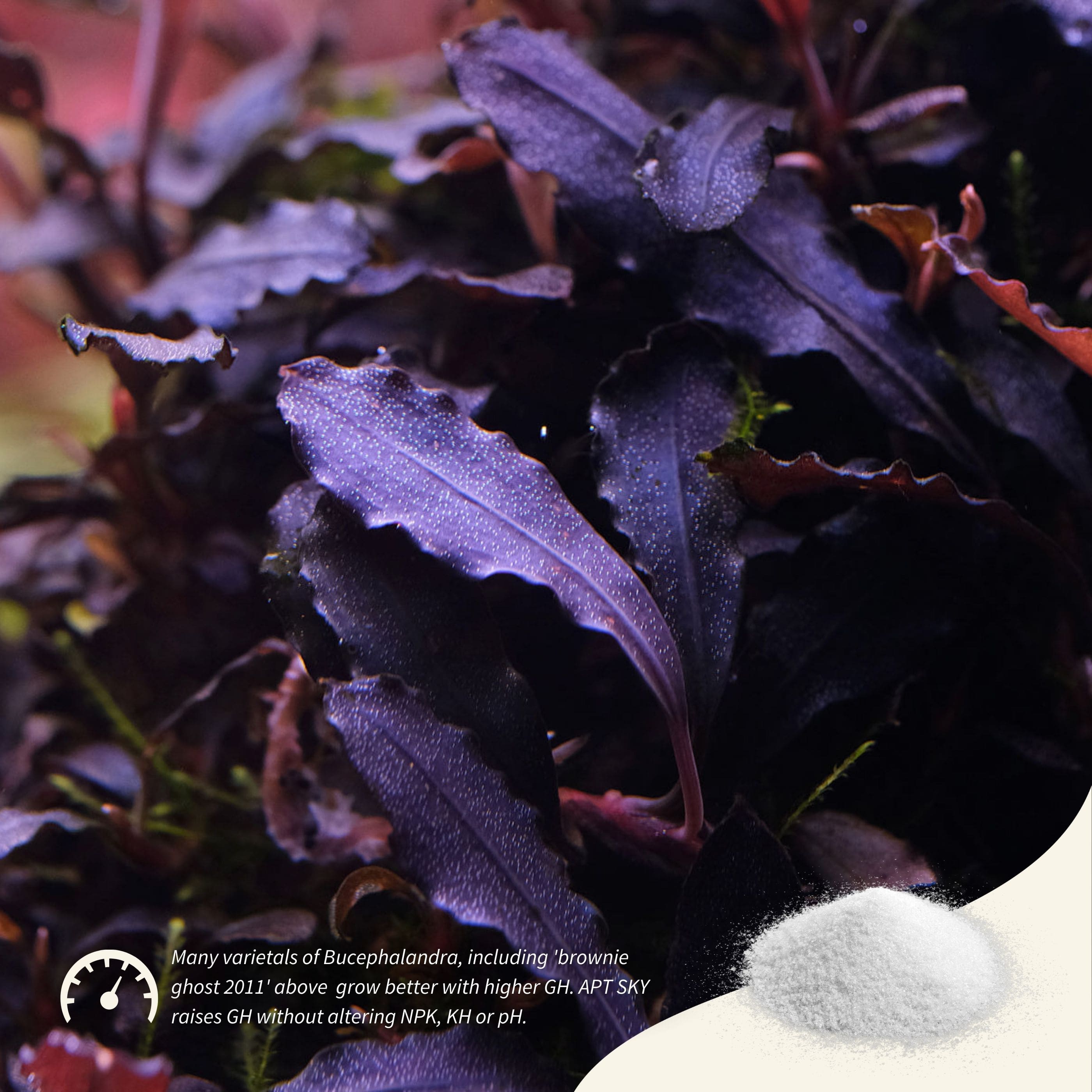
Many species with bluish/purplish leaves such as Brownie ghost 2011 stand out among the usual green and red plants in the aquarium. The clump above is grown in aquasoil.

Many micro varieties of Bucephalandra exist, such as these mini coin species.
Why is my Bucephalandra melting?
Buce is often sold in emersed form, while converting to submerged growth, they shed those old emersed leaves and push out new submerged shoots that are usually more colorful. Losing a few old leaves in this changeover is expected. Widespread melt is different: that is the plant telling you tank conditions are wrong.
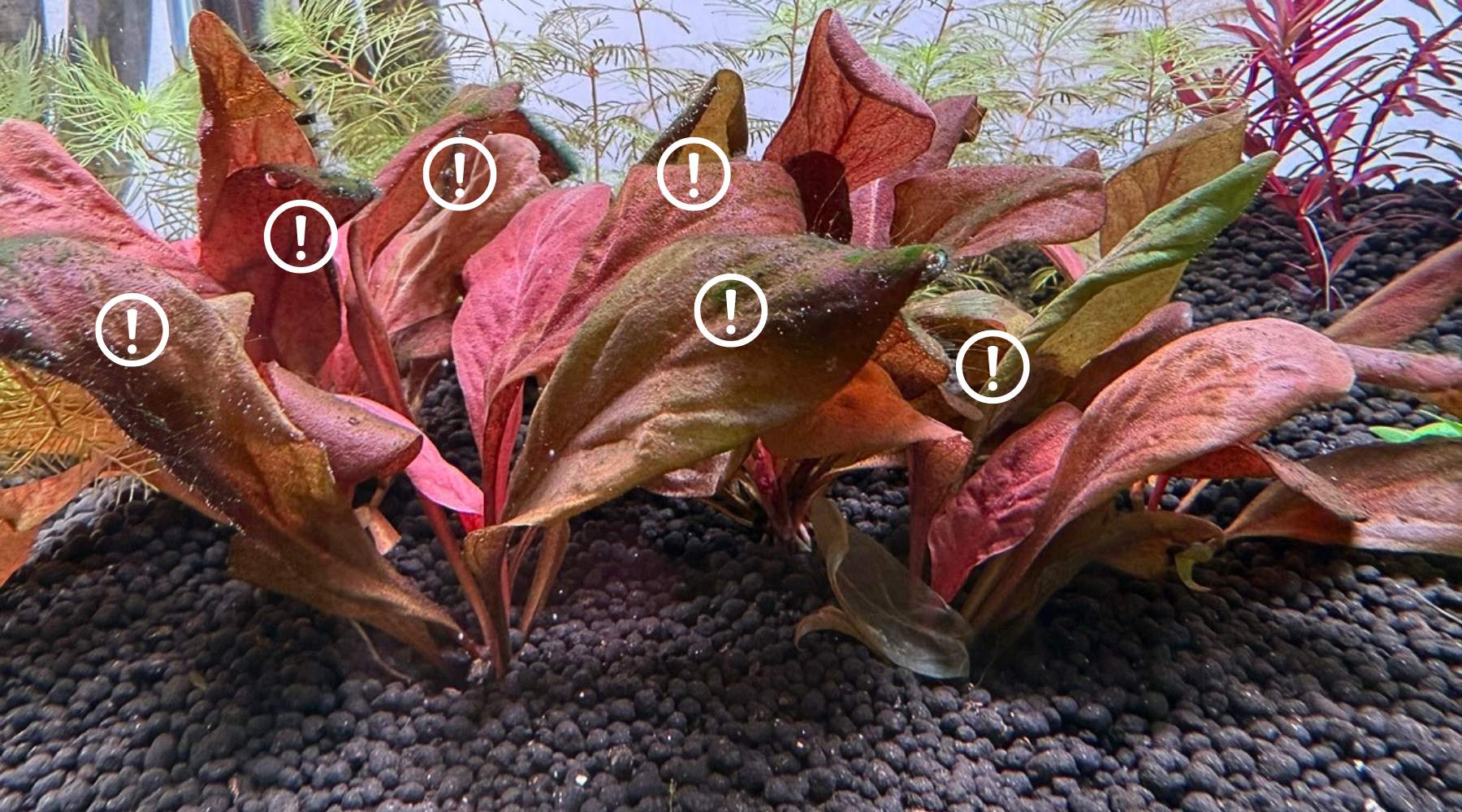
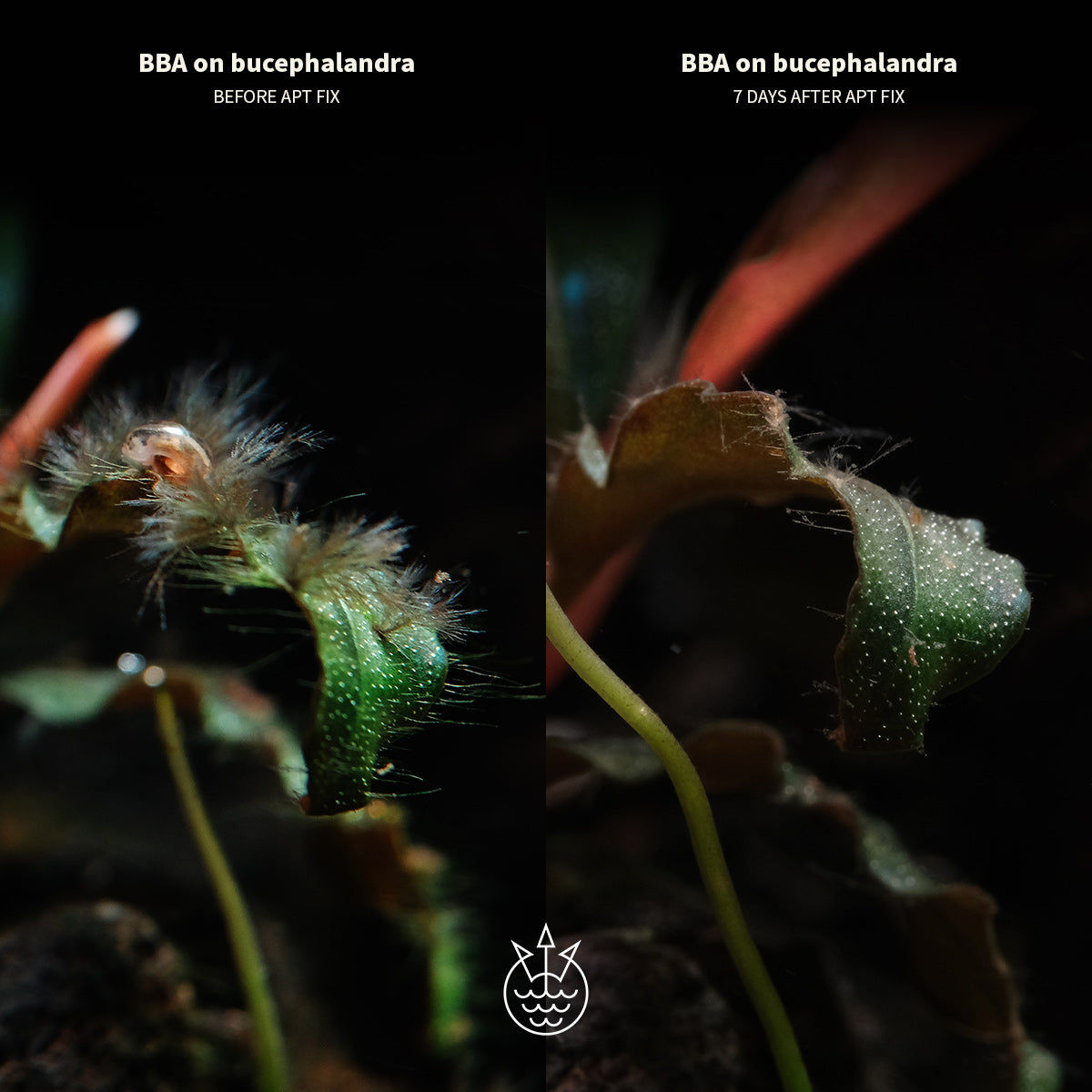
Despite their easy growth requirements, many folks lose Bucephalandra to algae and melting. This largely has nothing to do with nutrients, but is closely connected to tank maintenance and tank maturity. Poorly maintained aquariums with poor water quality and high levels of organic waste gives rise to pathogenetic microbes that attack weakened plants. Many beginners think that water quality and tank cleanliness only affects livestock, but it also has a significant impact on more sensitive plant species. Regular water changes, with siphoning off excess detritus during water changes make a big impact on the tank environment.
Bucephalandra should not be planted into new aquariums when they are first started. Waiting a few weeks for tank maturity to set in before planting prevents many of the melting and transitioning issues.
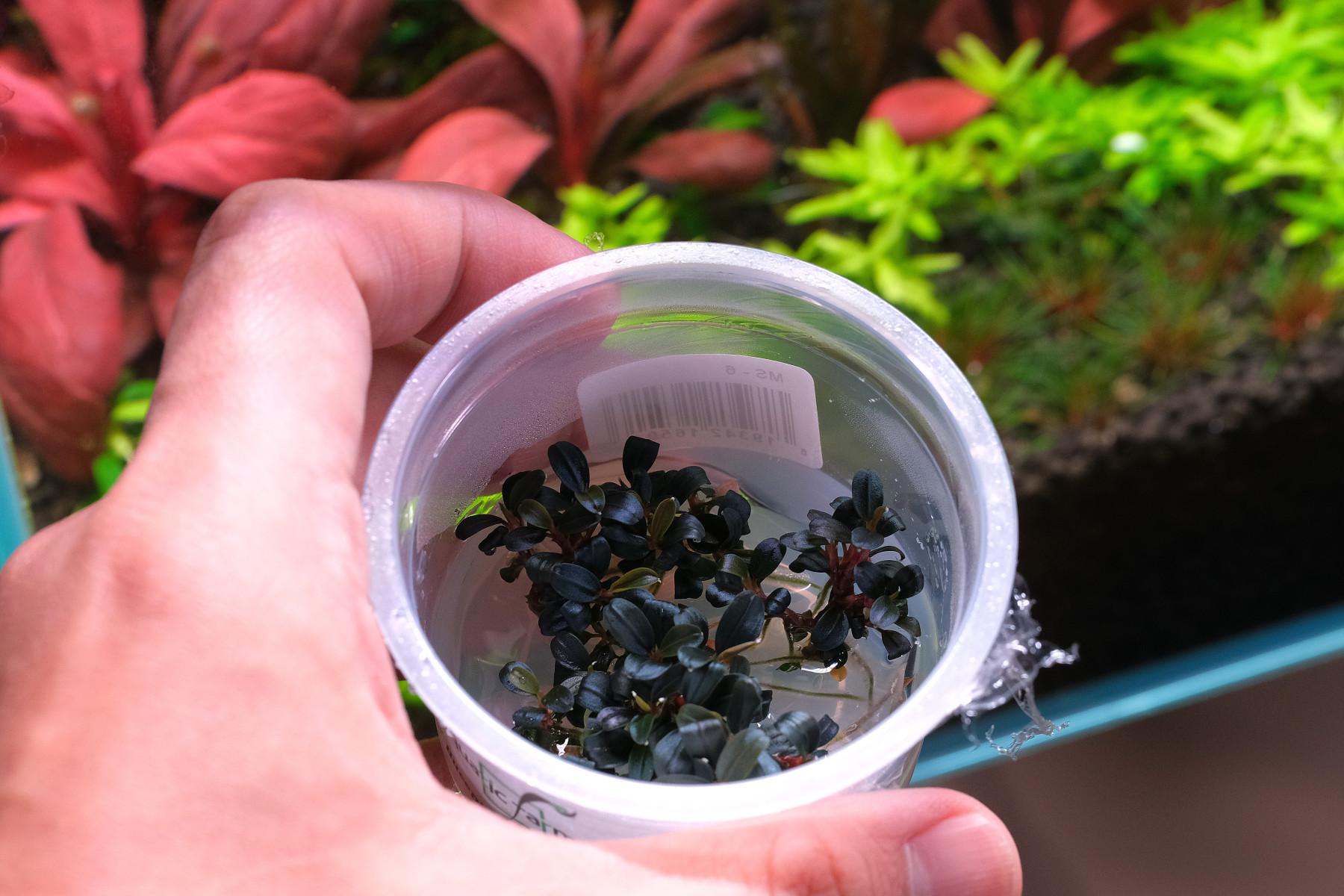
Tissue culture Bucephalandra species are sensitive to new tank environments. They should be planted after the aquarium has become biologically matured.
Is Bucephalandra a low light plant?
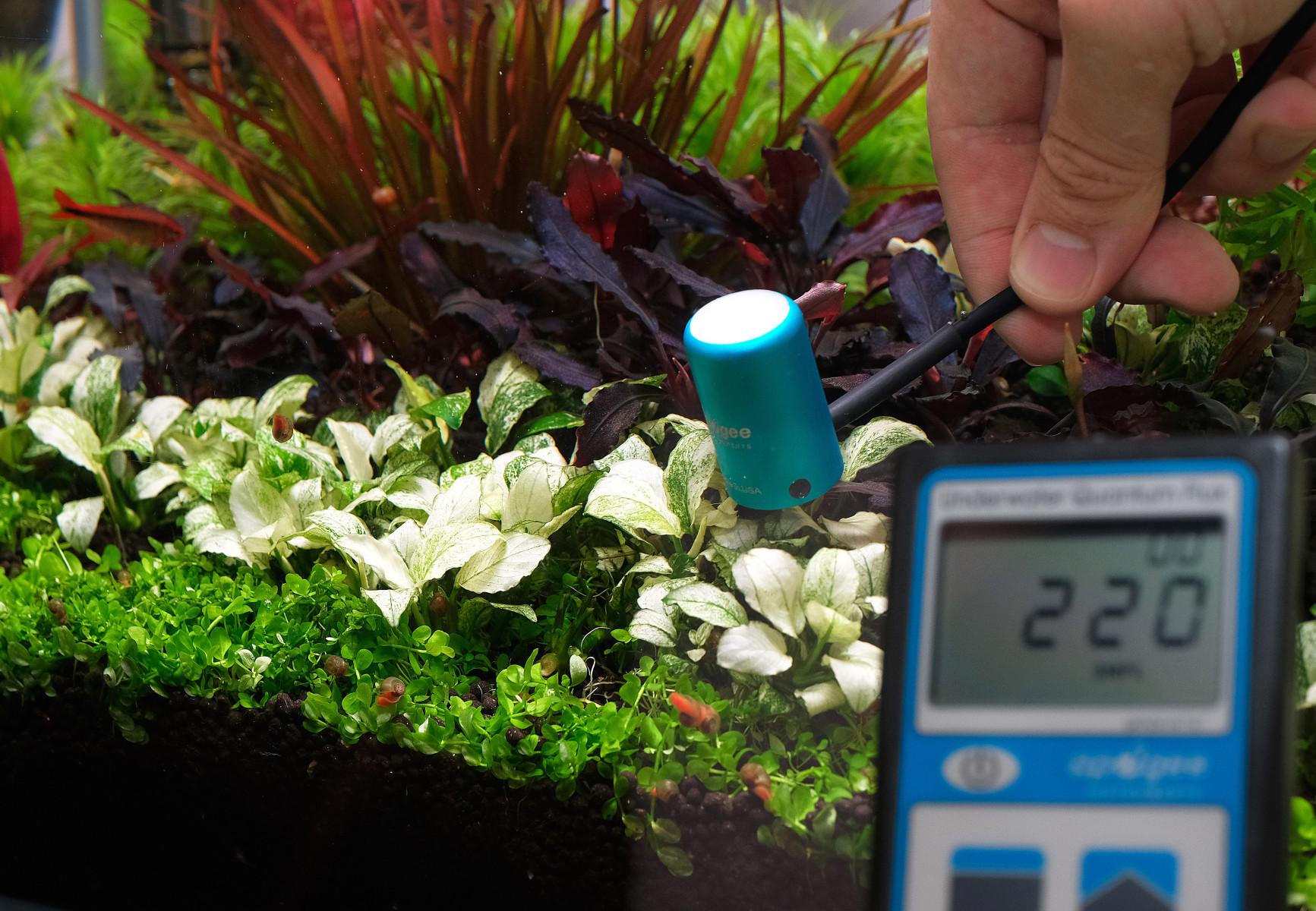
Bucephalandra grow well under low light (40-60umols of PAR), and low to medium light is the easy way to keep them, but calling them a strict "low light plant" misses the mechanism. Under subdued lighting they are easy to manage. Growing them in higher light, 100+ umols PAR, is possible and can look spectacular, but it demands strong growth parameters and a well maintained tank environment.
Here is the misconception worth correcting. Many hobbyists believe high light is what causes algae on Bucephalandra. However, light alone is not the trigger. High light paired with stressed or adapting plants or a tank environment high in organic waste is what triggers algae. If the tank environment is kept clean, and the plants are in a good state of health, they can be grow in high light without being affected by algae. This concept also applies to other slow growers such as Anubias and Java fern species. Healthy plants are algae resistant and unhealthy plants are algae magnets. This concept applies all aquatic plants including Bucephalandra species.
How to Bring Out Colors
Not every type of Bucephalandra is colourful. However, most Bucephalandra have reflective leaves, which allow them to reflect ambient colors. Having slightly more bluish or purplish lights can alter the visual color of Bucephalandra a lot. Even the same plant can show different colors when viewed at different light angles.
This makes buying Bucephalandra species tricky, as it can be difficult to discern whether the plant is colorful because of reflected light or because the plant has innately colorful leaves. Buying from a knowledgeable dealer matters, especially for expensive varietals. Also, Bucephalandra species are generally green when grown emersed, and the colorful leaves only show up in submerged leaves.
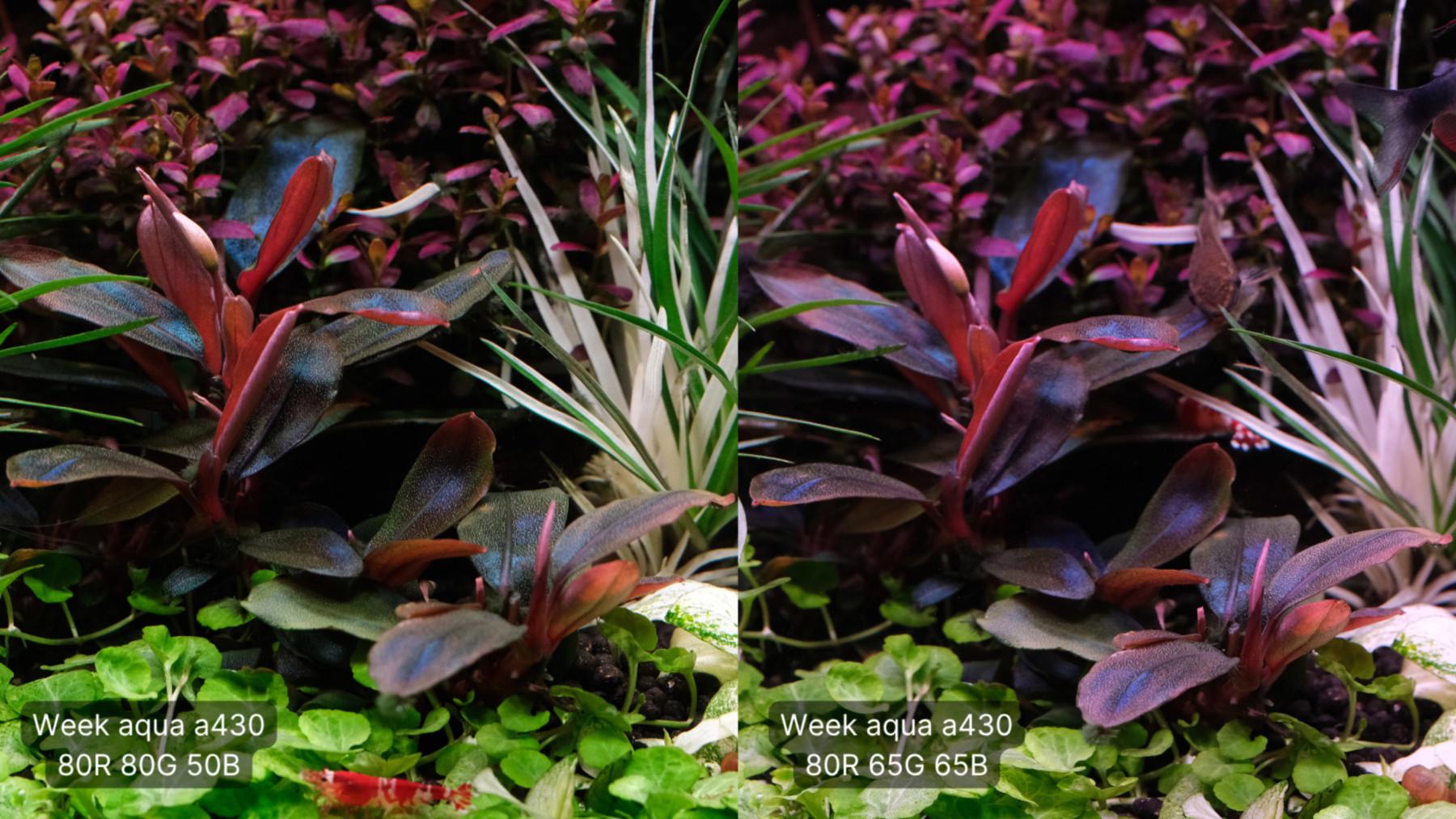
(Above) Bucephalandra sordidula blue under different light settings. In bluish light (above right) the plant appears a lot more purplish.
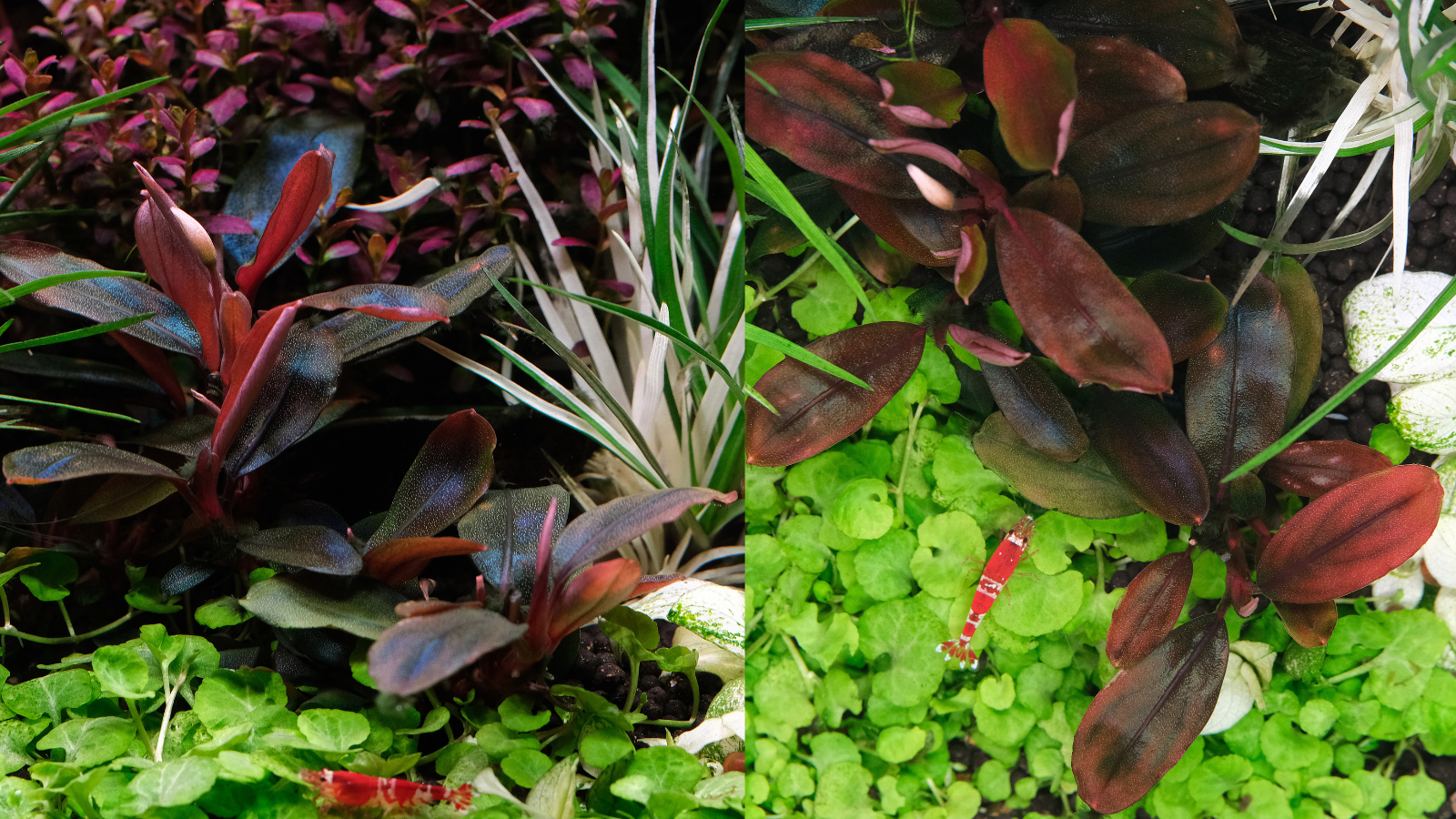
(Above) The same plant under the same light settings look different from side vs top view. When viewed from the top the plant looks more reddish while looking more bluish green from the side view.
For some species colourful leaves is mainly featured in new growth. For these species, the trick is to grow the Bucephalandra in clumps where there are many growth heads so that at any one time there are new leaves being produced everywhere. Trimming away old growth regularly to make space for new leaves is also important.
For species that do show colorful leaves, they are more colorful when the plant is growing in good health. This means providing adequate Carbon and fertilization to the plant and having a good growth environment. Bucephalandra in optimal health will have obvious leaf shine on their leaves. This leaf shine disappears when the plant is stressed or nutrient or Carbon deficient.
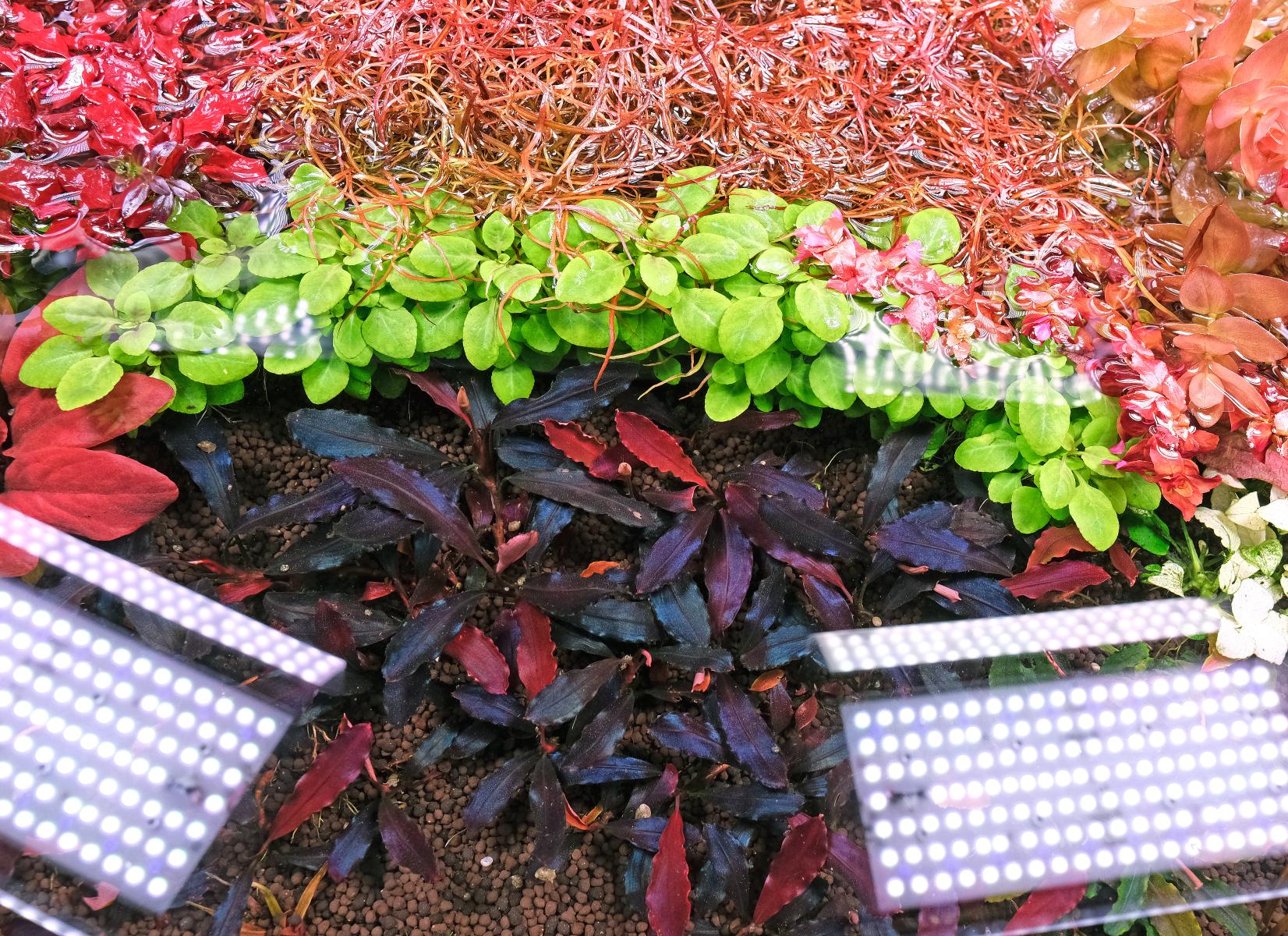
(Above) Shiny leaves are an indication that the plants are in good health.
Bucephalandra feed through both their roots and their leaves, so a liquid fertiliser dosed into the water column works well. CO2 is the other half of the equation. While it is not strictly required to keep most Bucephalandra species alive, it is what pushes them to the form and colour you see in our tanks. Bucephalandra grown without CO2 injection tend to have more faded colouration, and less leaf shine.
Which are the most colorful Bucephalandra species?
Some colourful varieties worth seeking out:
-
Brownie ghost 2011/2012: red new leaves that deepen to purple. Looks purple no matter the light conditions.
-
Neo-pink has reddish leaves.
-
Helena 2014, Helena 'Xuan wu hai', Black angel, all have reflective purplish leaves.
-
Sordidula blue is a varietal produced by Tropica that has bluish green leaves.
How do you plant Bucephalandra in aquariums?
There are two good ways to grow Bucephalandra, and one popular myth to drop. The myth, shared with Java fern and Anubias, is that these rhizome plants must never touch the substrate or the rhizome will rot. The opposite is closer to the truth: Bucephalandra often grow better planted in clean aquasoil, where the roots get direct access to nutrients, than mounted on bare hardscape. The rhizome can be slightly buried in aquasoil without issues. Rhizome rot occurs when it is planted in substrate that is choked with organic waste and detritus, where high populations of decomposer microbes can attack weakened plants. In good, well-maintained aquasoil, Bucephalandra roots well and grows more quickly compared to plants grown just on hardscape.
Tying or gluing Bucephalandra to hardscape is the more popular method: fix the rhizome to a rock or piece of wood with a dab of cyanoacrylate gel glue, or tie it on with thread until the roots grip. The plant will anchor itself after a few weeks. As Bucephalandra is shade tolerant, this allows very flexible plant placement.
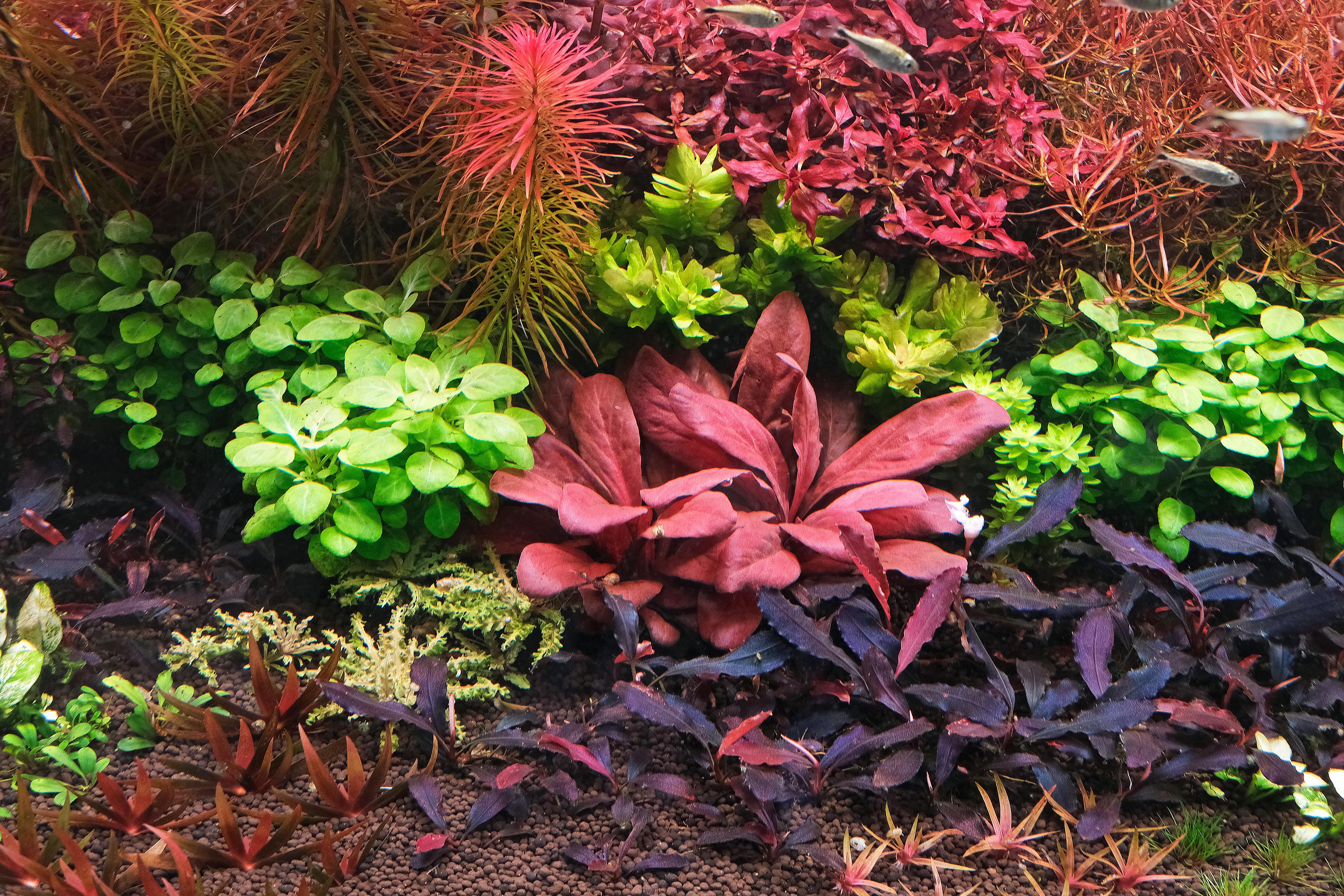
Bucephalandra are great as slow growing foreground and midground plants.
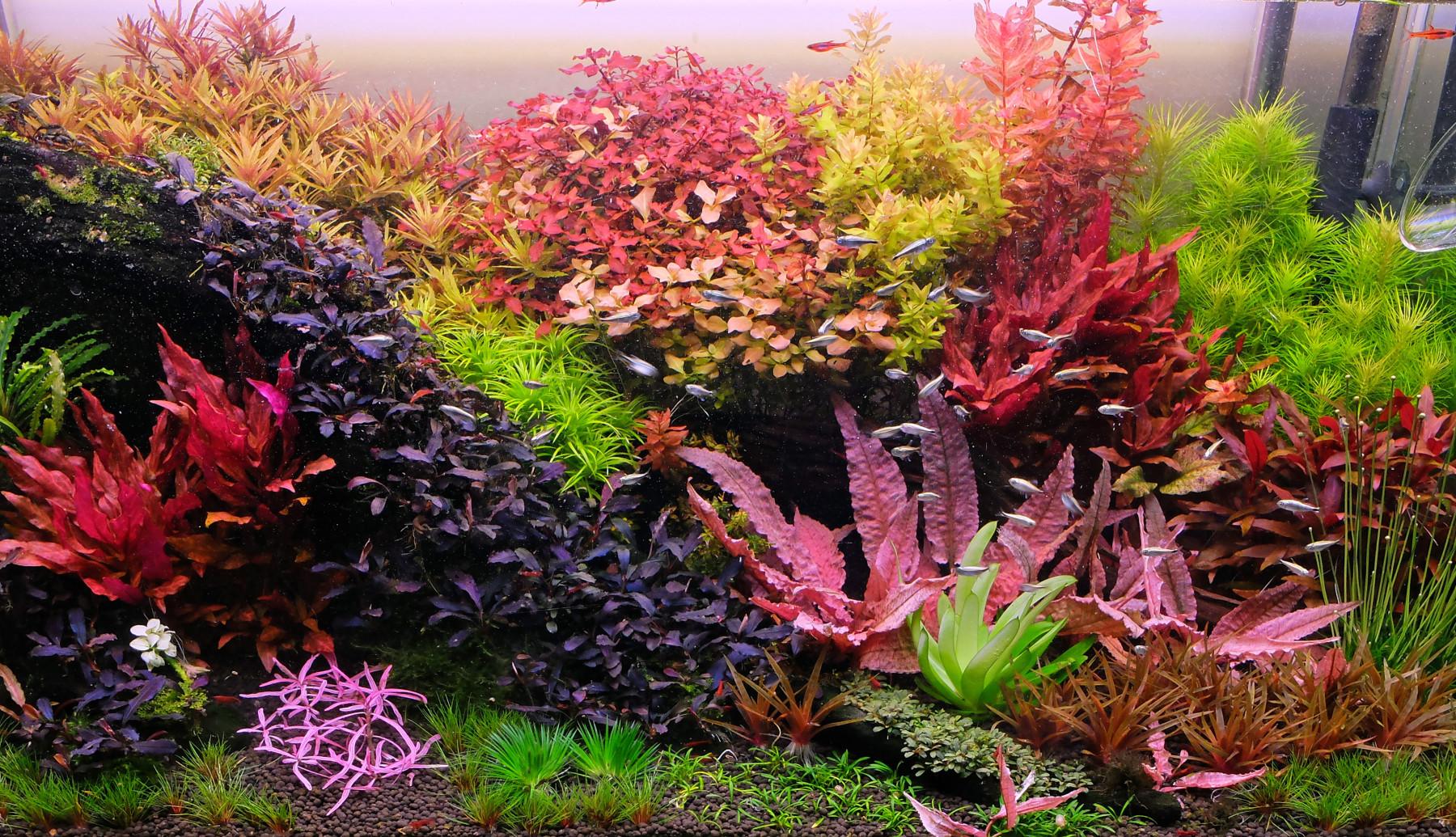
Bucephalandra BG2011 on wood shows off its stunning purple leaves.
Bucephalandra varietals- Allan Lau
Here is why the trade name count dwarfs the roughly 31 formally described species: most trade buce have never been given a formal scientific name. Reputable dealers keep good accuracy with trade names based either on the collection region or river, such as Lamandau or Sintang, or on leaf colour and shape, such as Dark wave, Super blue or Brownie purple. The photos below show sample varieties from dealer Lau Allan, shot under plain white bulbs. Because white light lacks the red spectrum that makes buce colours pop, the plants usually look more colourful in a well-lit tank than these reference shots suggest.



















Share:
How to Grow Rare Aquarium Plants: The Exotic Fantasy Style
How to grow Ludwigia sp. 'Super red'