

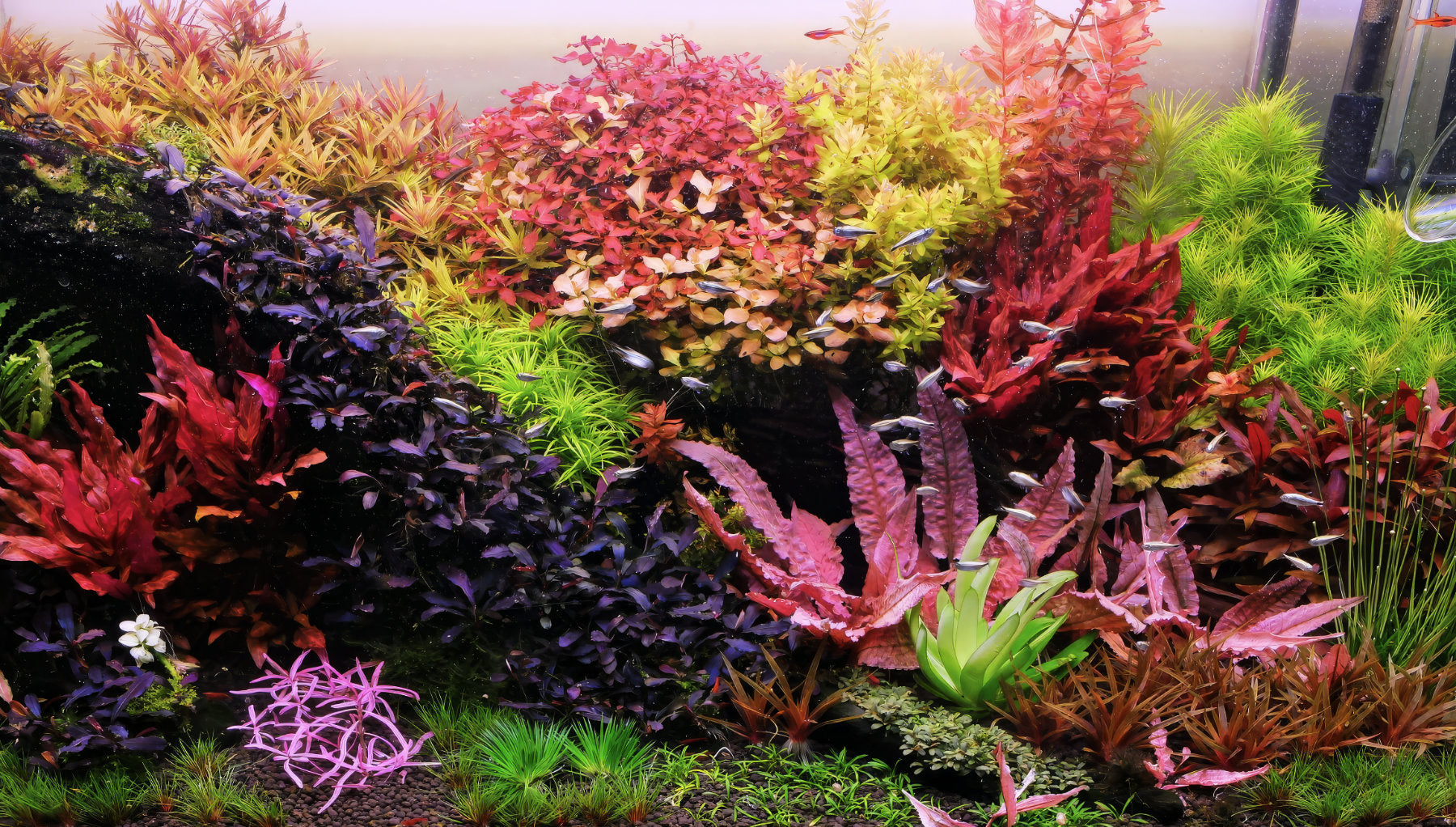
There is a level beyond eye-watering colour. A level where the plants themselves become the obsession - rare aquarium plants with unusual colours, textures and growth forms, and names that sound like something from a botanical expedition journal. Centrolepis drummondiana "Blood Vomit." Eriocaulon quinquangulare. Tonina "Lotus Blossom." Rotala florida. Xyris difformis. Many come from the blackwater systems of South America; others from the rivers of Borneo and Southeast Asia. Many species are laboratory cultivars. Most are barely known outside a small circle of collectors. This is Exotic Fantasy - the 2Hr Aquarist term for a tank that collects and showcases less common plant species. This guide for aquarium hobbyists highlights the key differences between more common planted aquarium setups and one that is focused on growing more exotic/difficult plant species.
It borrows the Dutch aquascaping style's concepts: plant groups, contrast and a focus on showcasing plants. Where the Nature Aquarium style builds a landscape, this builds a collection. What it adds is difficulty. These are the species the aquarium hobby files under "expert only," and growing them well is less about buying the right bottle than about understanding exactly what each one needs - and then holding those conditions steady.
It is deeply rewarding, genuinely difficult, and completely addictive. Here is how to approach it.
What Water Hardness Do Difficult Aquarium Plants Need?
In a standard planted tank, being roughly right with parameters is often good enough. In an Exotic Fantasy tank, precision is the whole game. Demanding species have specific - and sometimes conflicting - requirements: some want near-zero KH, others want elevated calcium and magnesium to unlock their full growth potential. Getting them to thrive side by side is the puzzle.
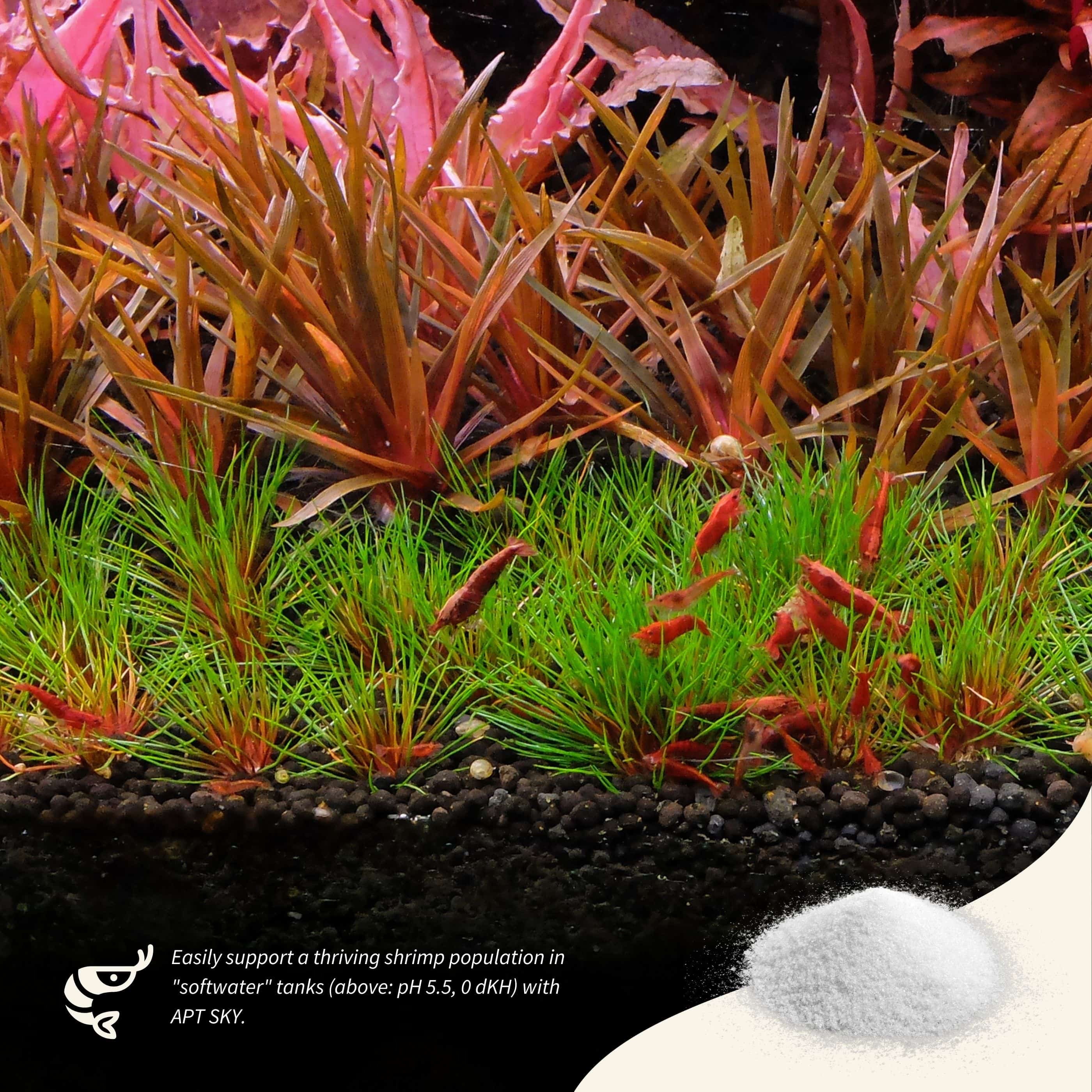
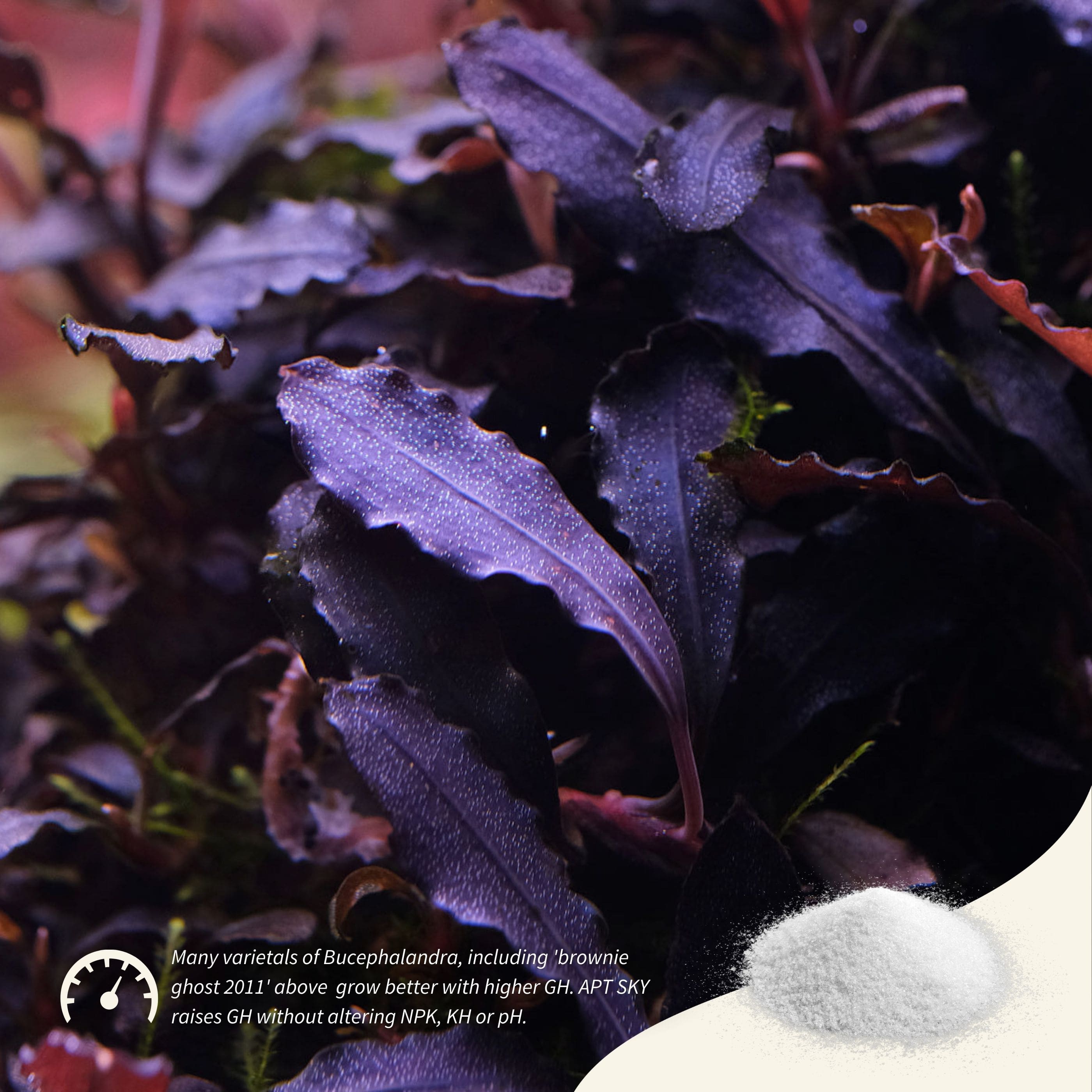
The key distinction, and the one most hobbyists miss, is that water hardness is two components, not one. GH (calcium and magnesium) and KH (bicarbonates/carbonates) are separate values. In nature, water that is termed "hard water" is often water that has passed through limestone layers and is high in both GH and KH as limestone is made up of calcium carbonate that contributes both to GH (the Calcium part) and KH (the Carbonates part). However, it is possible to have water that has high GH and low KH, and also to have water that is low GH and high KH. The two components can be separated cleanly.
Sensitive soft water aquatic plants require low KH (low alkalinity), and are not so sensitive towards higher GH values. On the opposite end of the spectrum, there are some plant species that prefer higher GH values, and can grow well with high GH even when KH is low. So the combination that grows the most number of difficult plant species well is one that has moderate GH, paired with low KH.
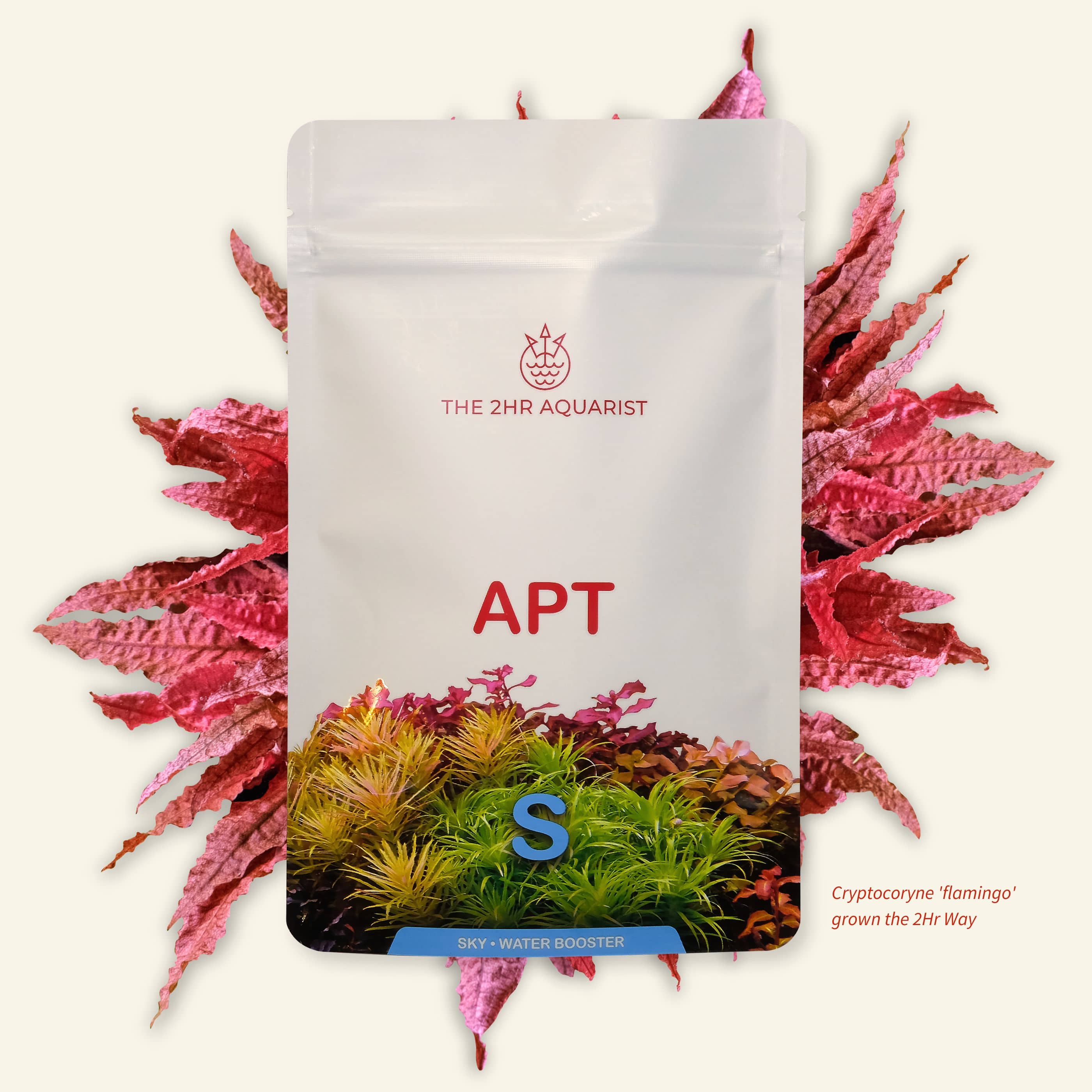
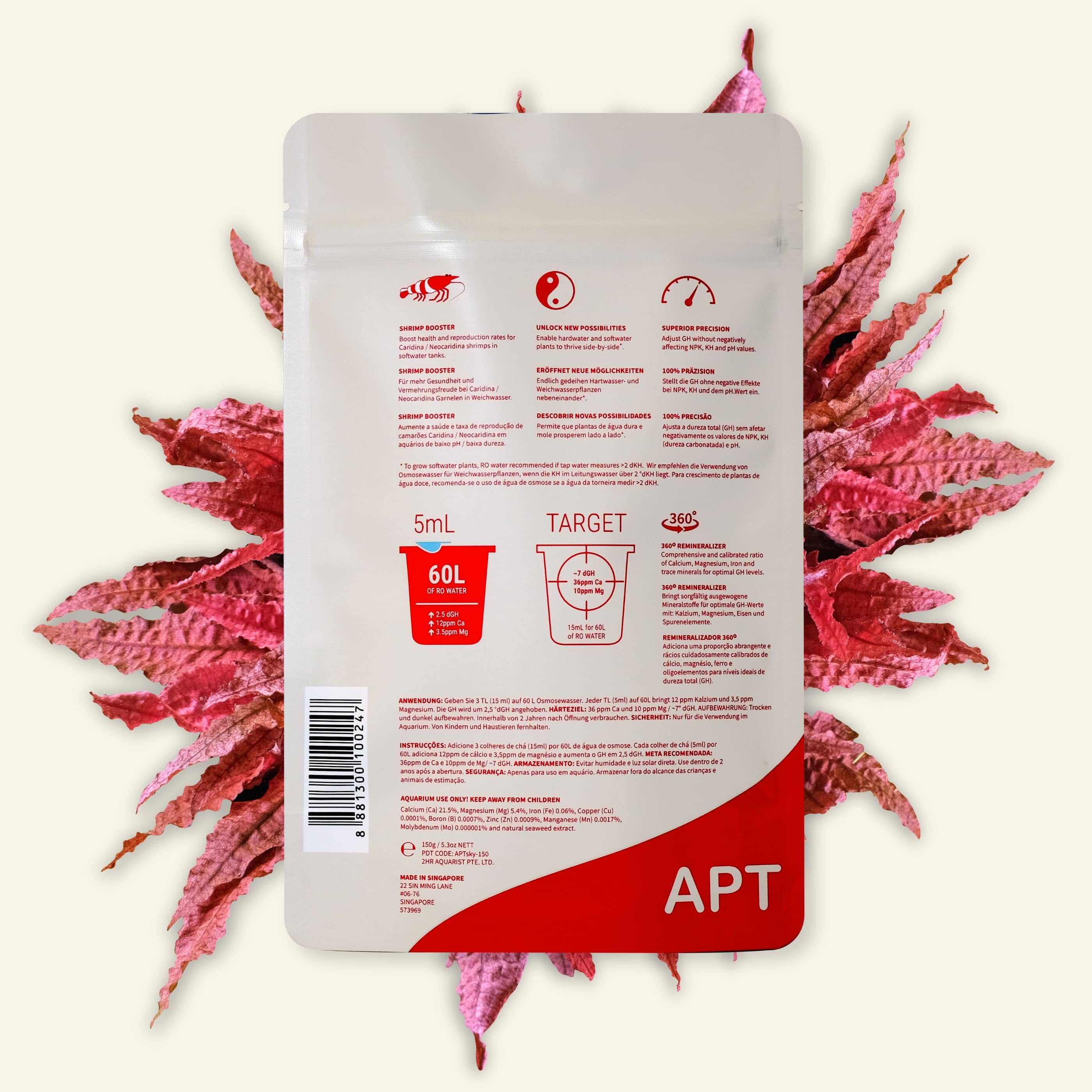
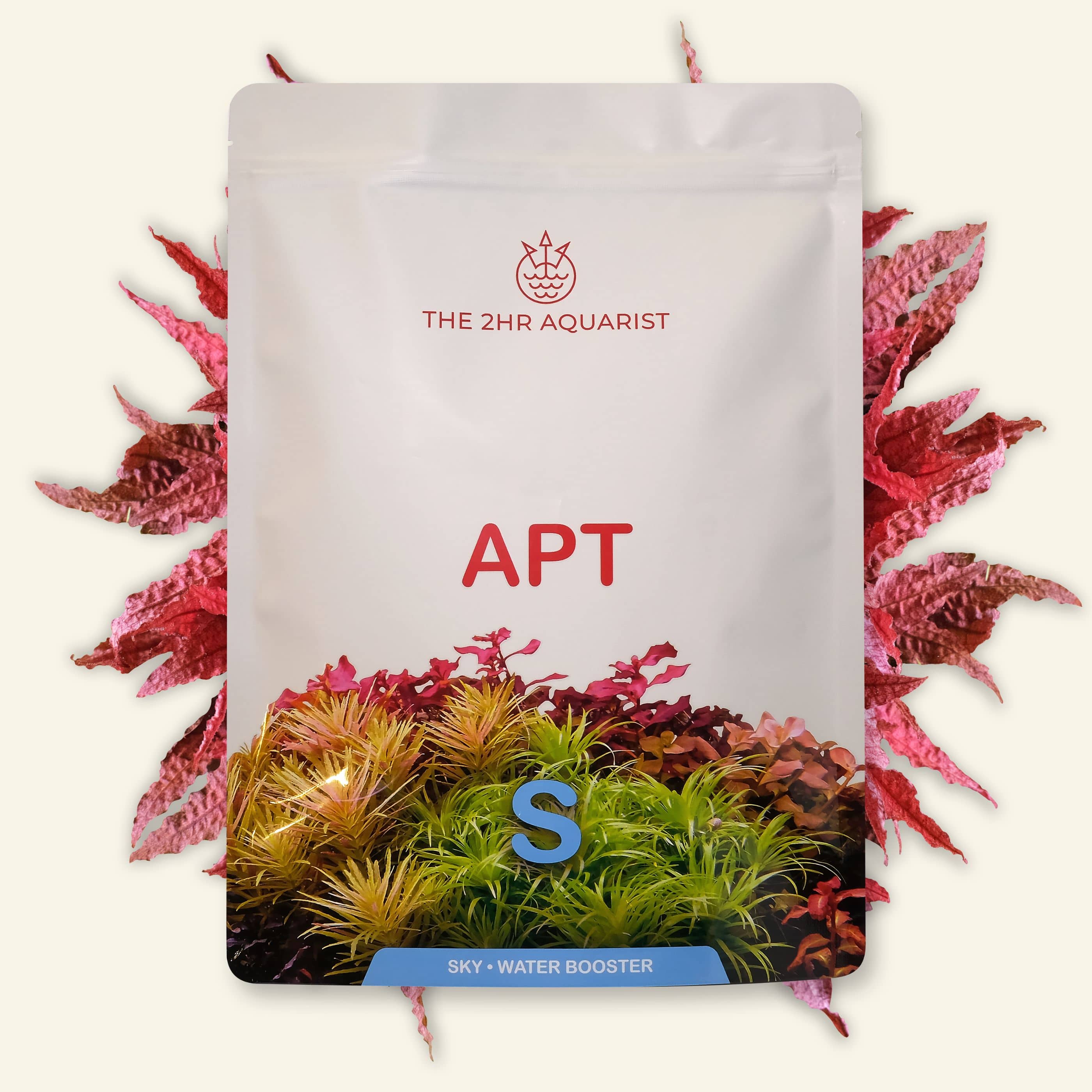
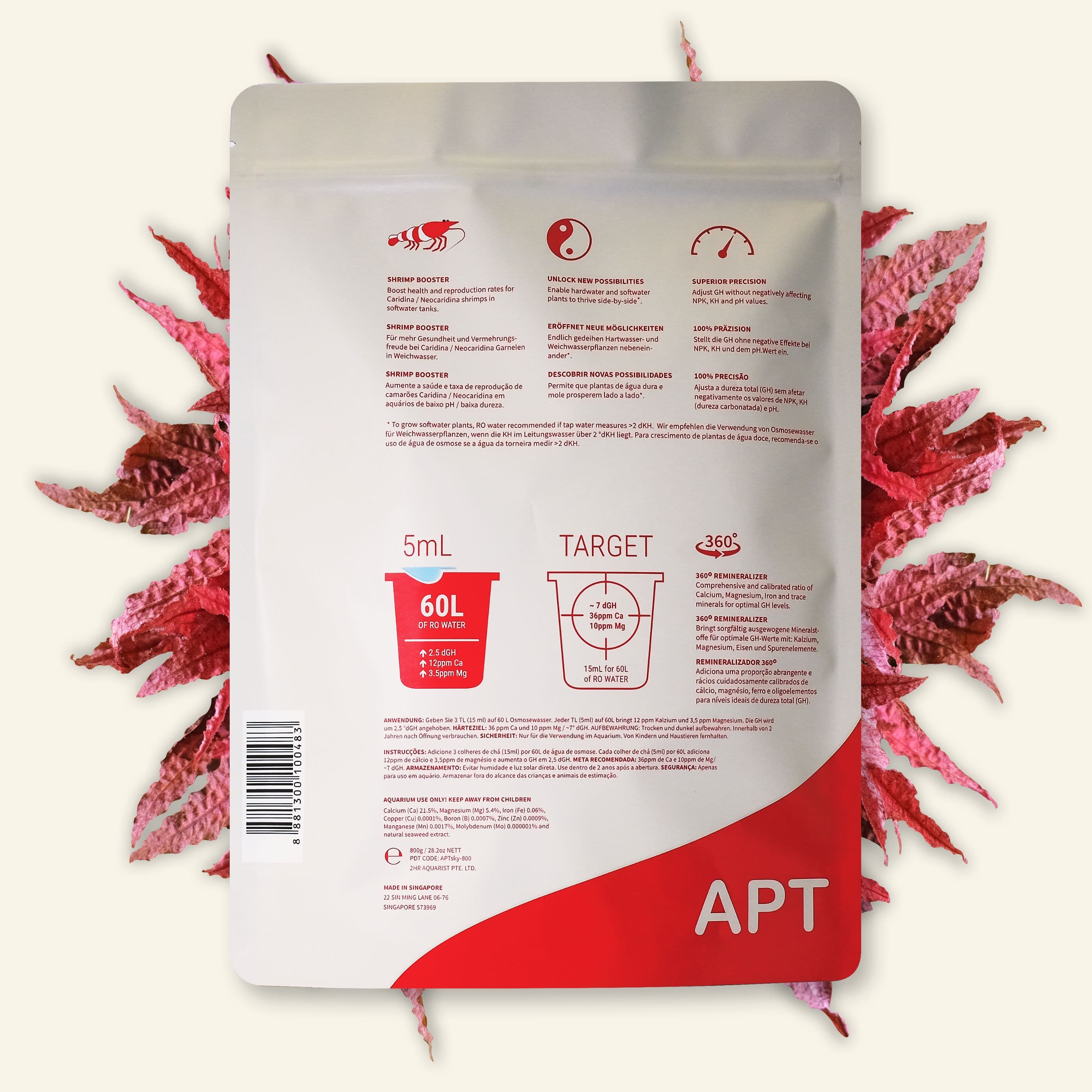
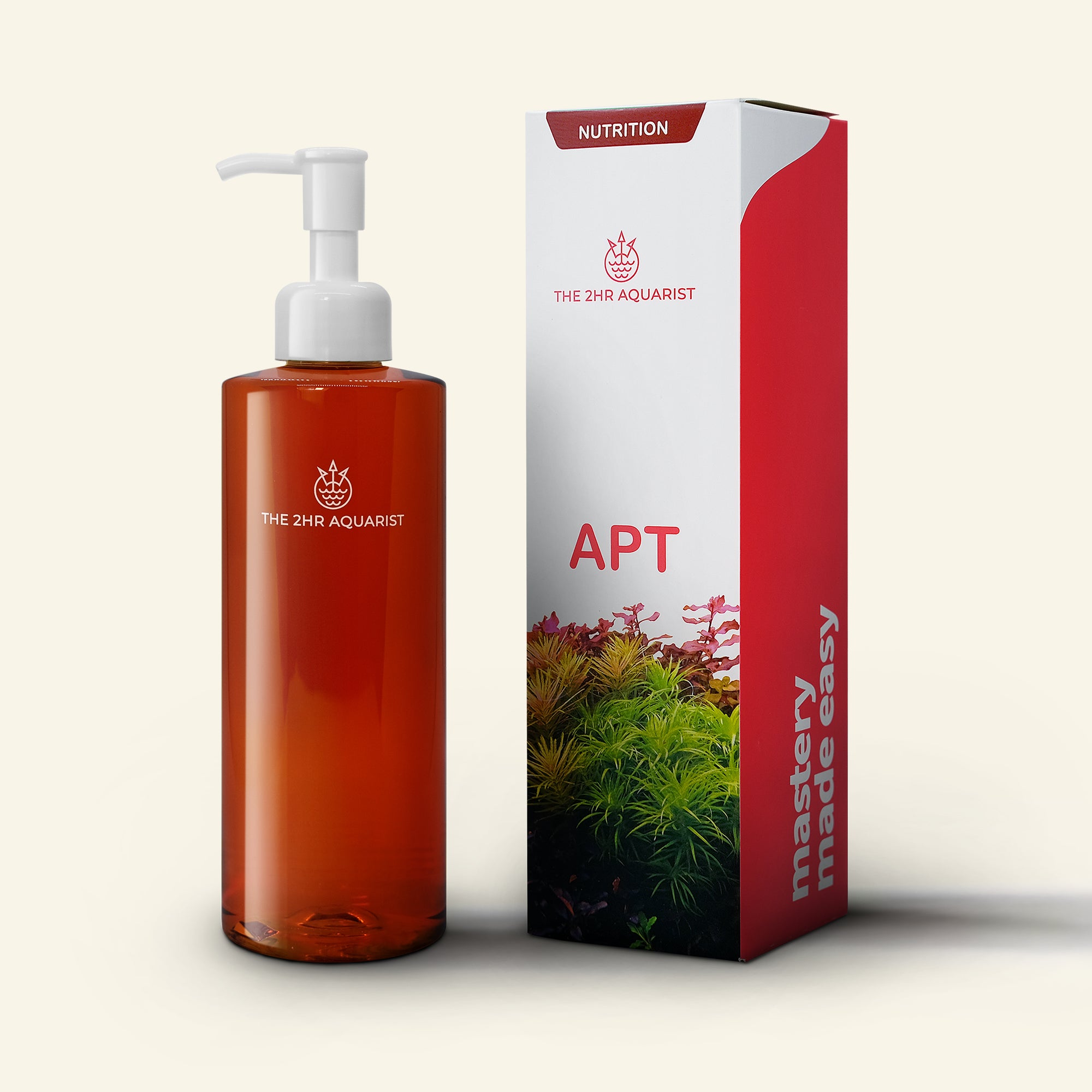
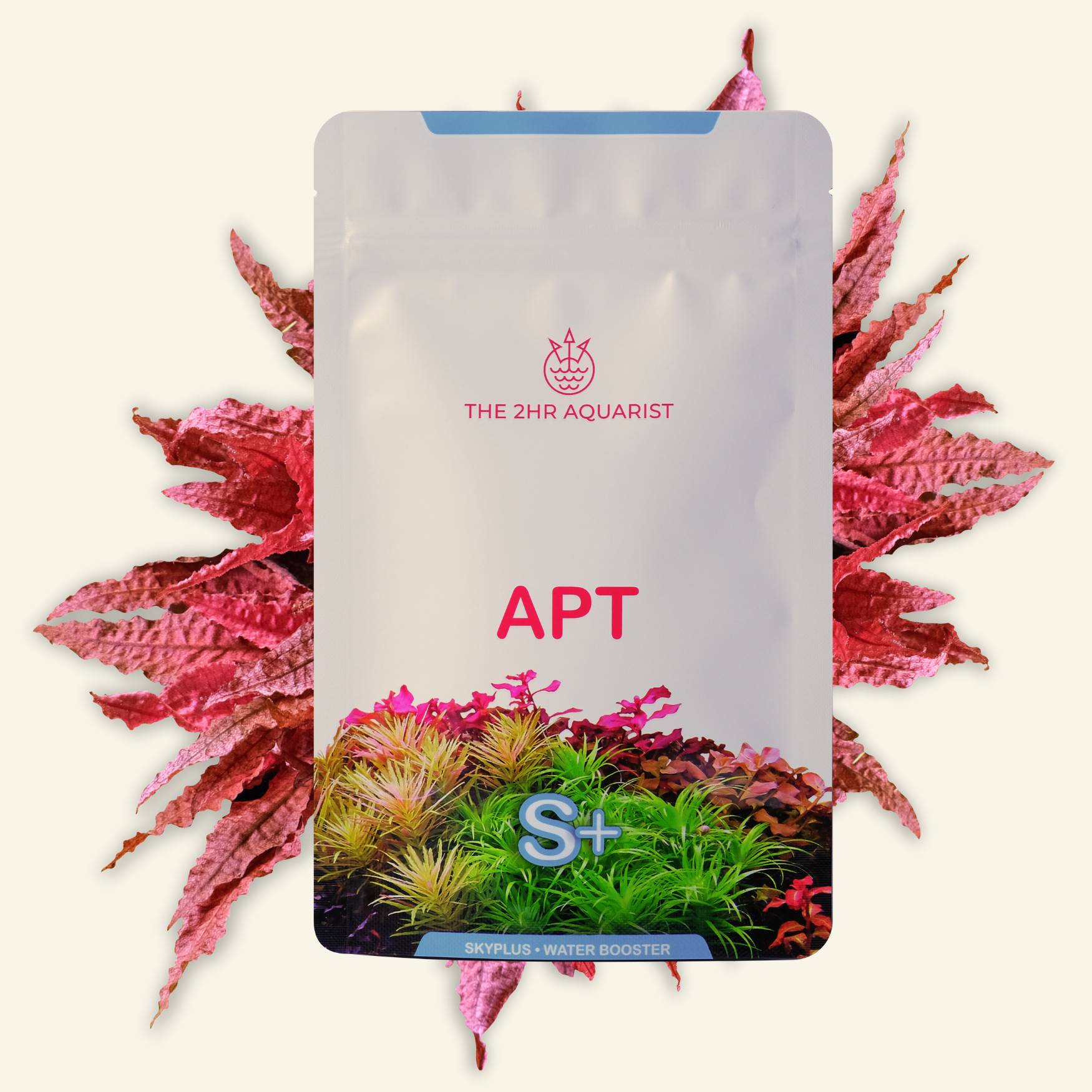
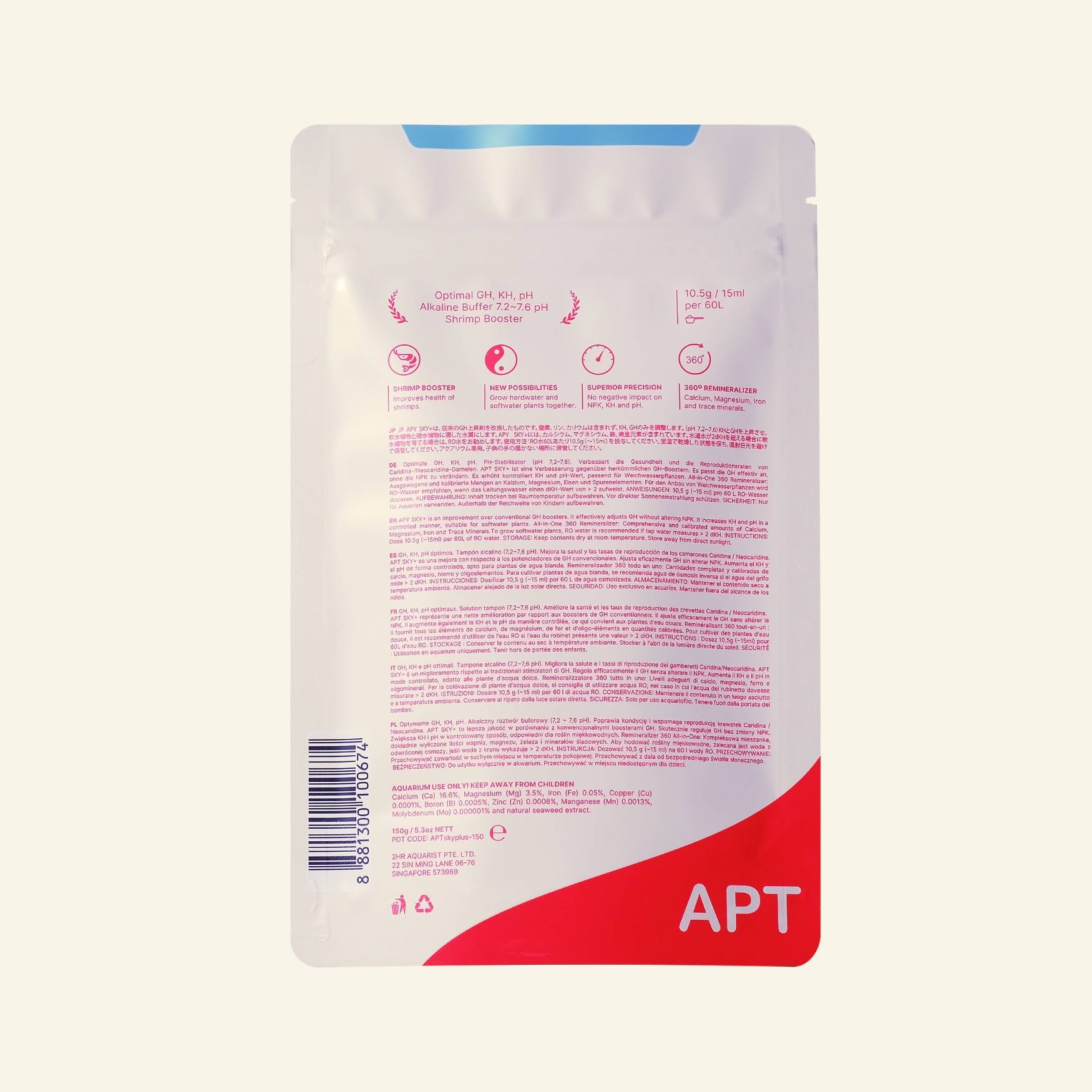
In our aquariums, we target 5 dGH and a KH <1. This is where the APT suite comes in. APT SKY raises GH without altering KH or pH, which is what allows soft water lovers like Blood Vomit and Syngonanthus species to coexist with GH-appreciating species like Cryptocoryne flamingo and Rotala florida in the same tank.
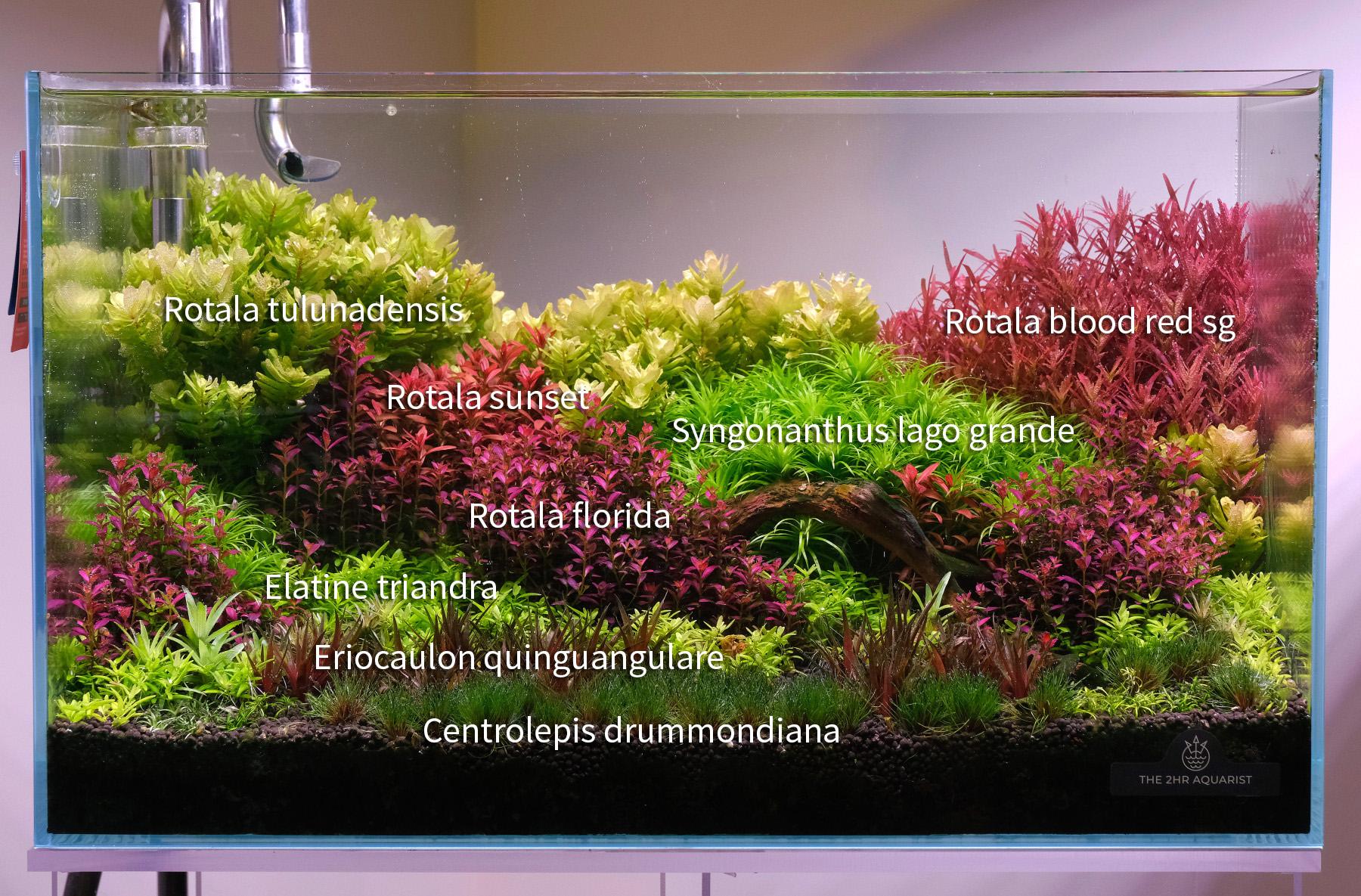
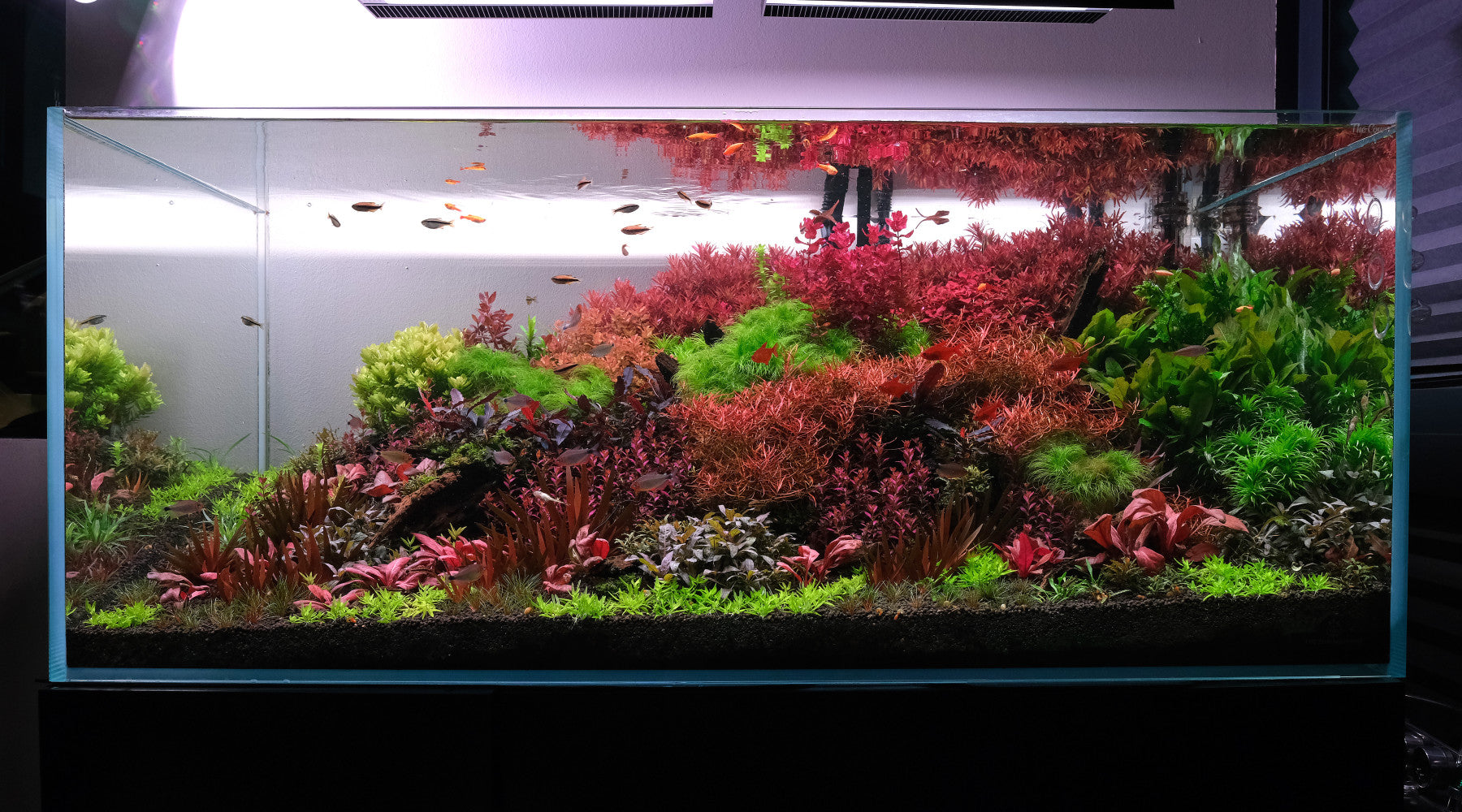
For a working reference, our own 4ft Rotala florida showcase tank runs at 5 dGH, <1 dKH, with pH sinking from 6.4 to 5.0 at peak CO2 saturation. Tap water goes in at 3 dGH; APT SKY brings GH up to 5. No KH buffer is added at all, and pH is allowed to find its natural low point.
How Much CO2 Do Demanding Aquarium Plants Need?
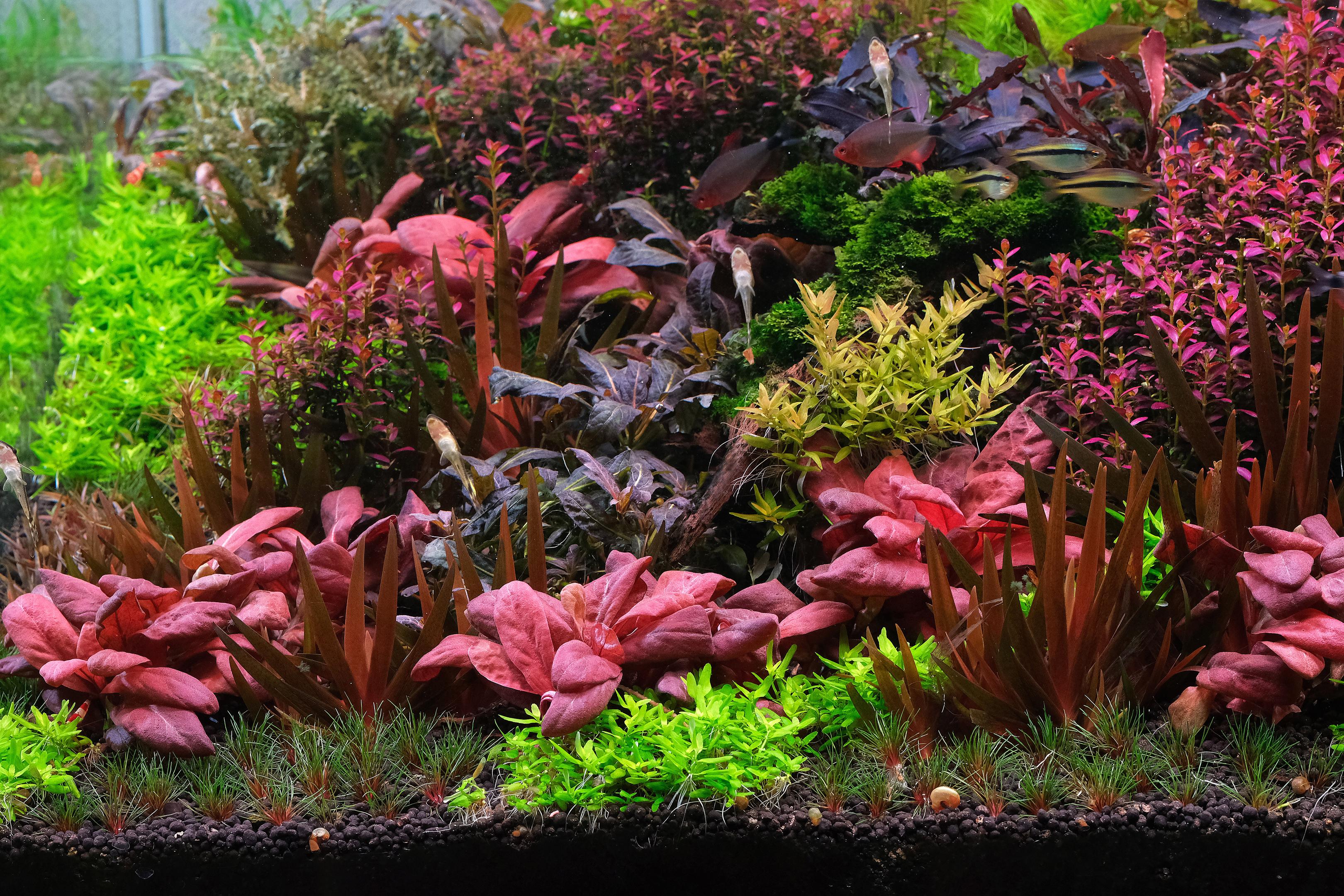
Carbon dioxide (CO2) injection is not only mandatory, it is central to growing difficult aquatic plant species. Blood Vomit (Centrolepis drummondiana) and the red Eriocaulon (Eriocaulon quinquangulare) will not grow at all in a non-injected tank, and both grow markedly better at 40 ppm+ than at 30ppm.
Why a Drop Checker Is Useless Above 30ppm
You can throw away your drop checker - it turns green from as low as 15ppm of CO2 and it is not useful for aquascapes targeting higher CO2 levels.
You will be instead aiming for a 1.2 to 1.4 pH drop to get levels between 40-50ppm of CO2. CO2 test kits such as those sold by Hanna Instruments also work well to test for higher CO2 levels.

In practice, reaching and holding that range is genuinely difficult. Using inefficient diffusion methods such as in-tank diffusers would require a crazy high injection rate. Using inline atomizers or reactors is highly recommended, and they can be 40-70% more efficient than in-tank diffusers. Maintaining good circulation, a clean water surface and sufficient surface agitation helps off-gas excess CO2. This is mandatory for aquariums with high CO2 injection rates.
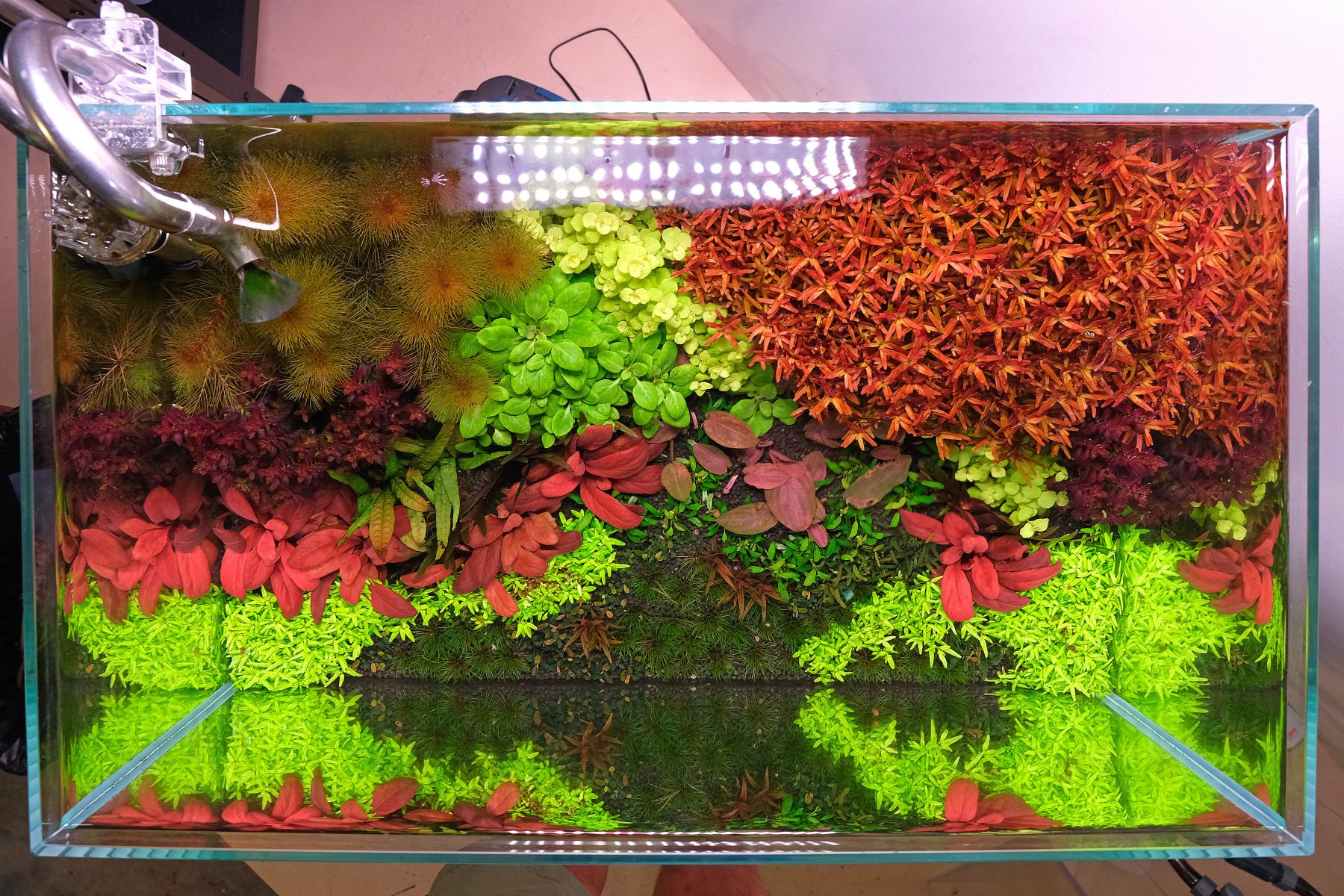
We use surface skimmer intakes for our filters to maintain a clean water surface.
Can Fish and Shrimp Live at 40-50ppm CO2?
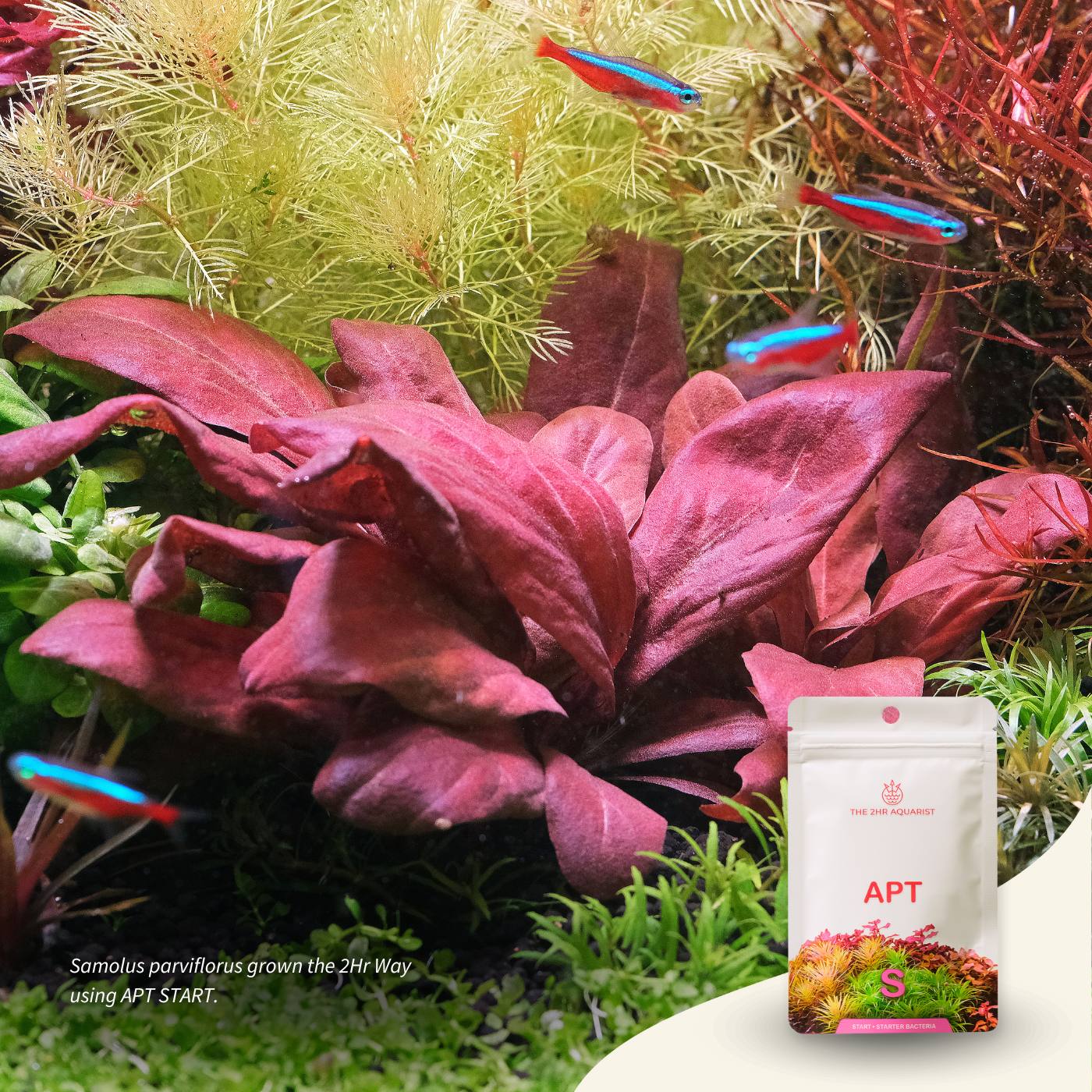
CO2 tolerance is species-dependent, and more forgiving than most people assume. Fish from stagnant, low-oxygen pools handle elevated CO2 far better than those from fast-flowing rivers. Cardinal Tetras have shown normal feeding behaviour at 60ppm of CO2 in our tanks. Many tetras tolerate high CO2 levels well. Discus are one of the fish species more sensitive towards CO2 and dislike levels above 40 ppm. Neocaridina shrimps do well into the 50ppm range and will continue breeding readily at this level.
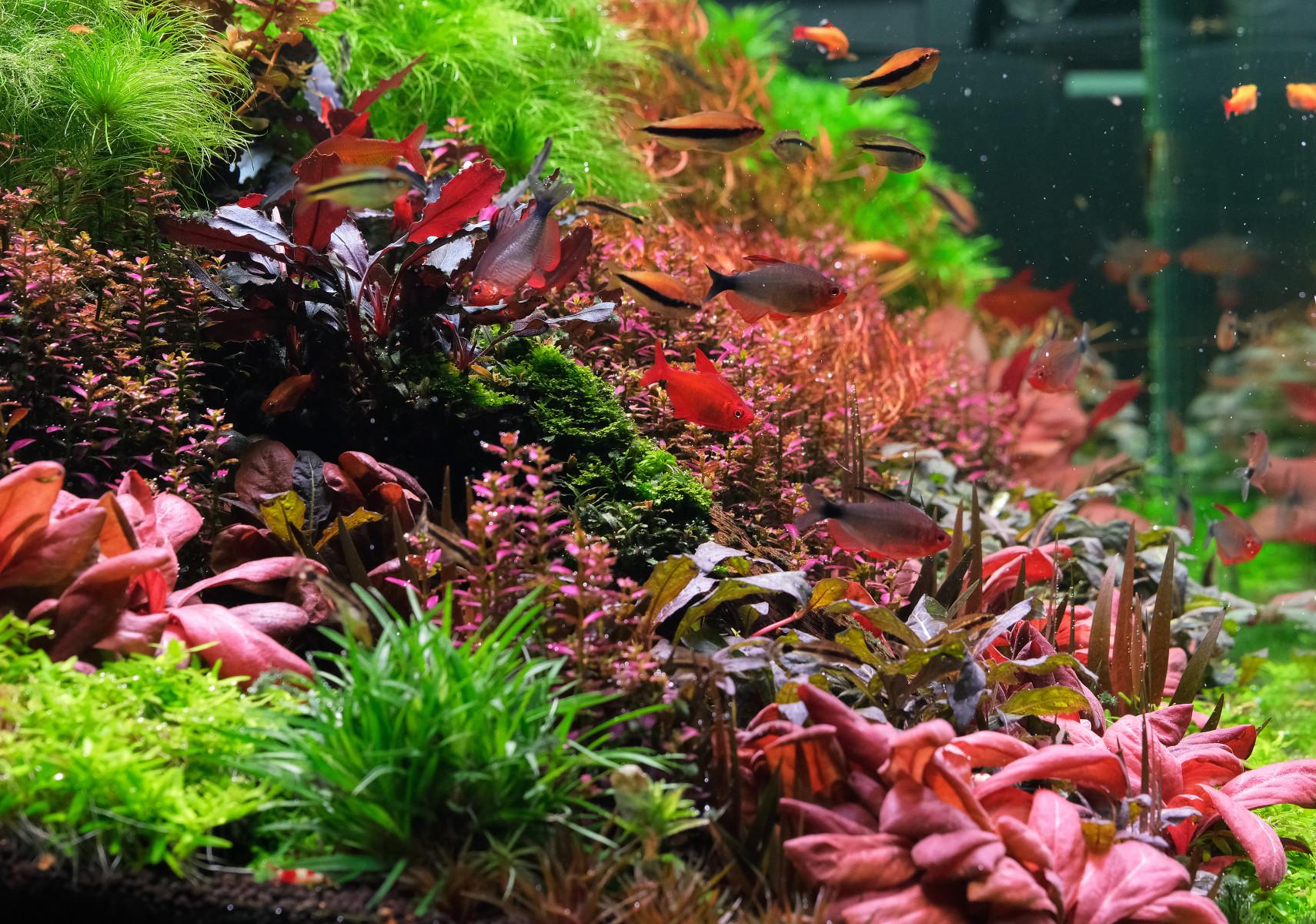
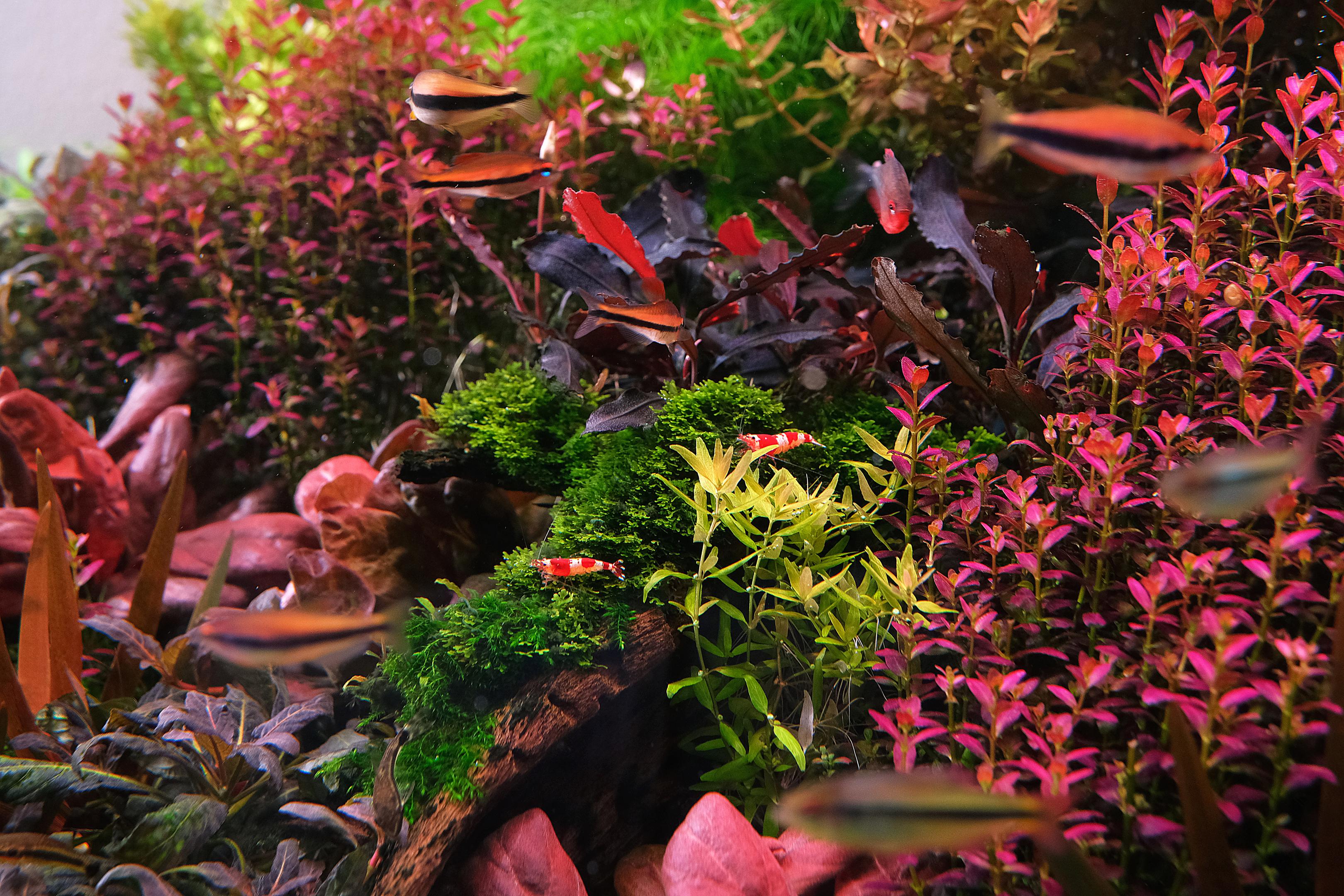
Higher CO2 levels do not limit fish choices greatly. This aquarium runs close to 50ppm of CO2 with many Hyphessobrycon species and CRS shrimp.
How Much Light Do Rare Aquarium Plants Need?
At this level, a high-end professional LED with full spectrum adjustability isn't optional; it's the instrument through which all the colour you've worked to produce actually becomes visible. 150-200 PAR at the substrate is a good zone to target. This will be enough light to grow even the most difficult of plant species, and gives good coloration and compact growth forms. For aquarists without PAR meters, the best solution is to copy light settings from aquarists using similar lights.
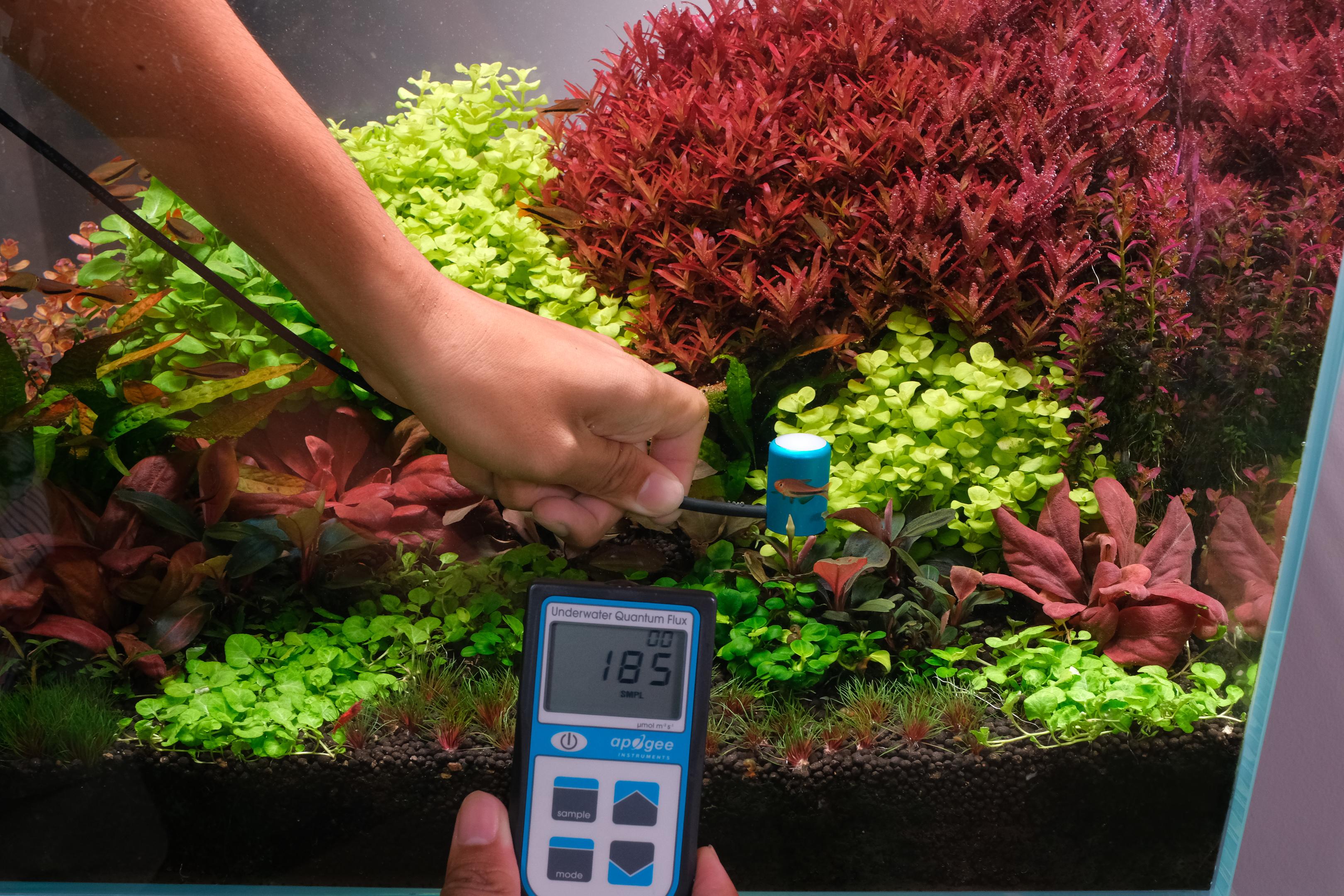
This 60x36x36cm aquarium (above) runs a Week aqua a430 30cm above the tank at 100% power. Light settings: 80R 80G 42B.

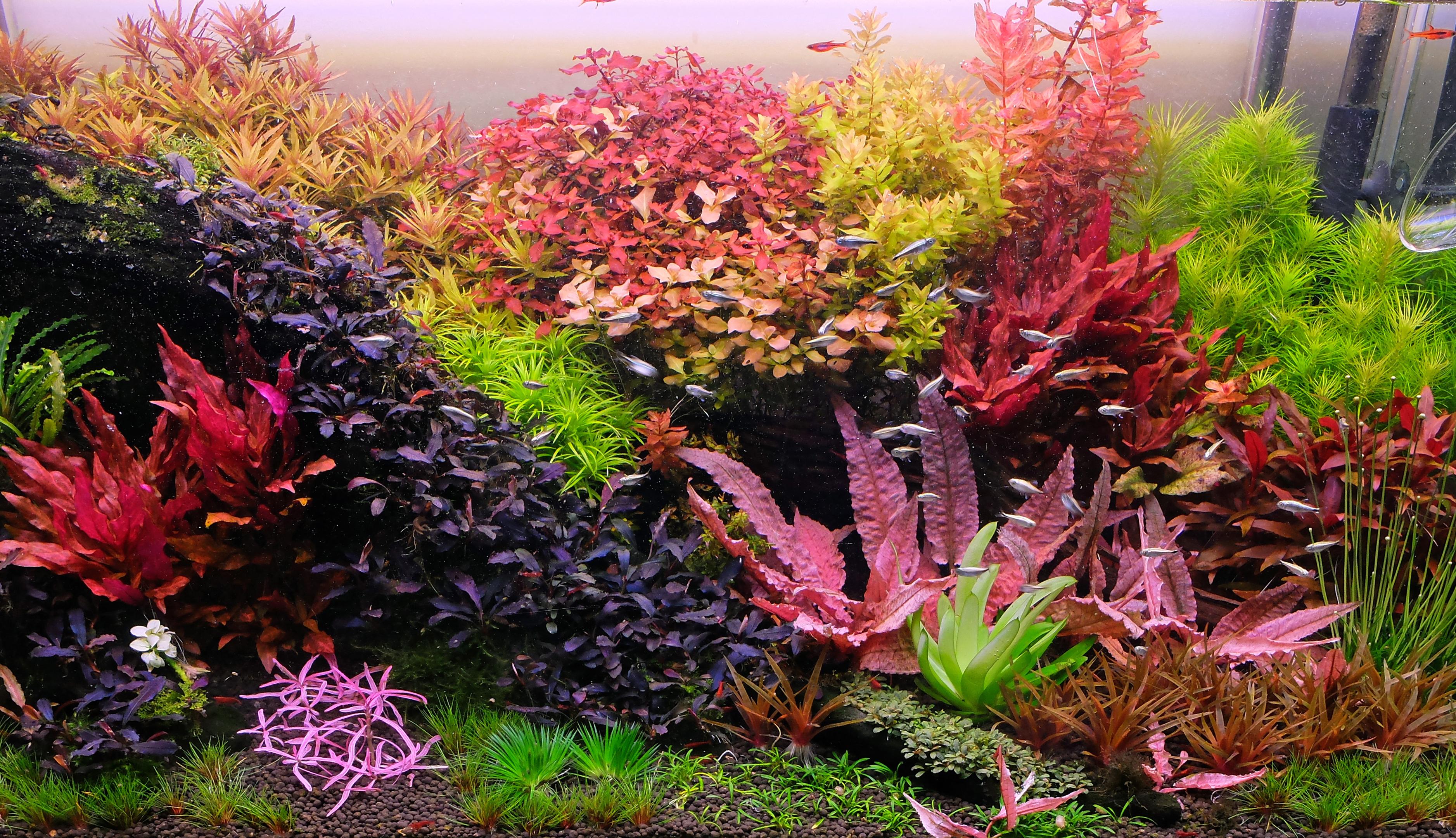
Spectrum matters as much as intensity. A good spectrum profile showcases red and purples better. The same aquarium plants lit by a 6500k Industrial spotlight (above) shows washed out colors compared to a planted aquarium specific LED: Netlea AT5 set to 45R 32G 25B (below).

Twinstar, Week aqua, Netlea, Chihiros, Hyperspot, LEDstar all produce high PAR LED lights that have good color saturation. With regards to photoperiod, seven to eight hours is ample, and at 200 PAR a shorter day is a legitimate tool rather than a compromise. You can run longer hours if there are no serious algae issues. Longer hours can sun-tan some species and give deeper reds.
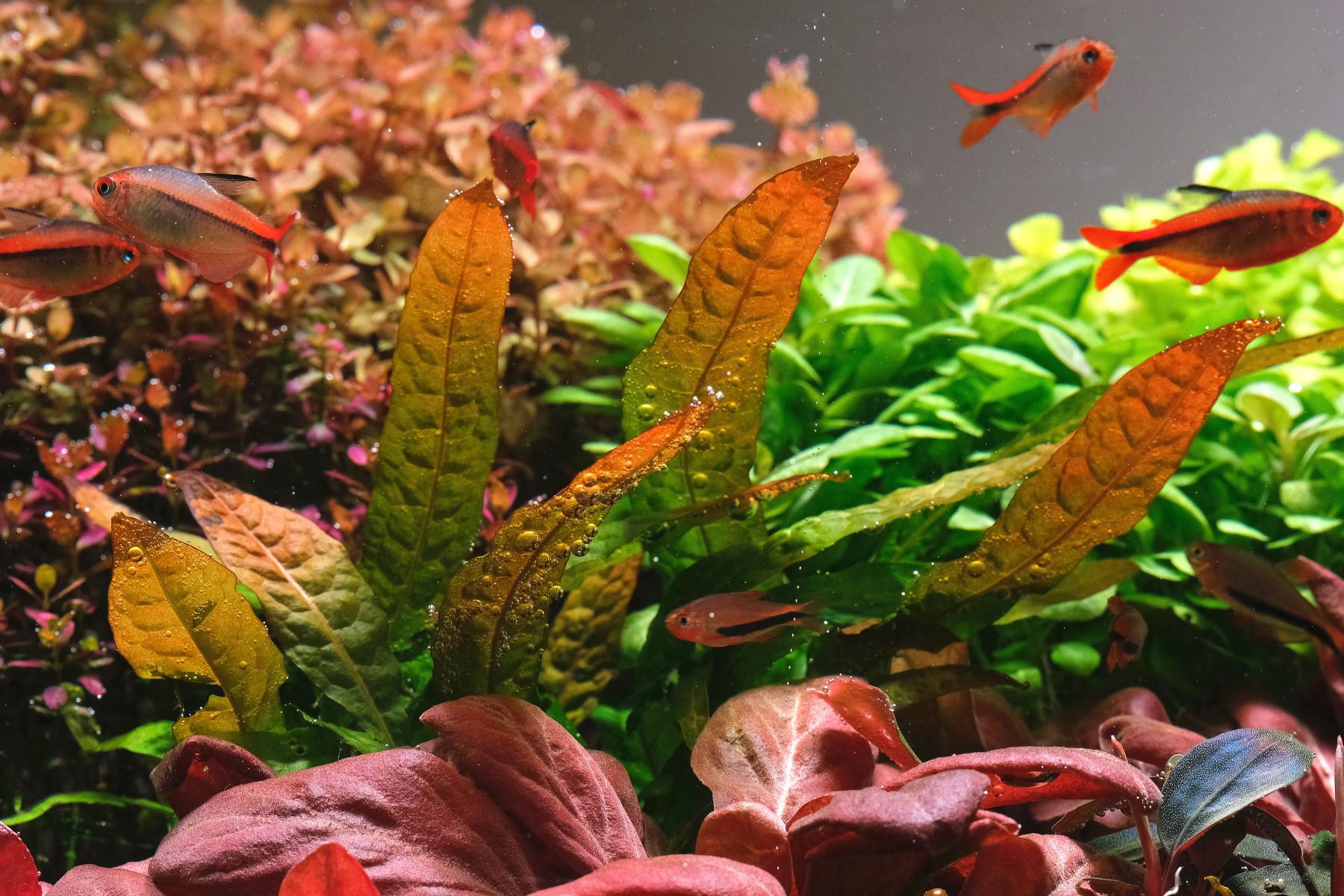
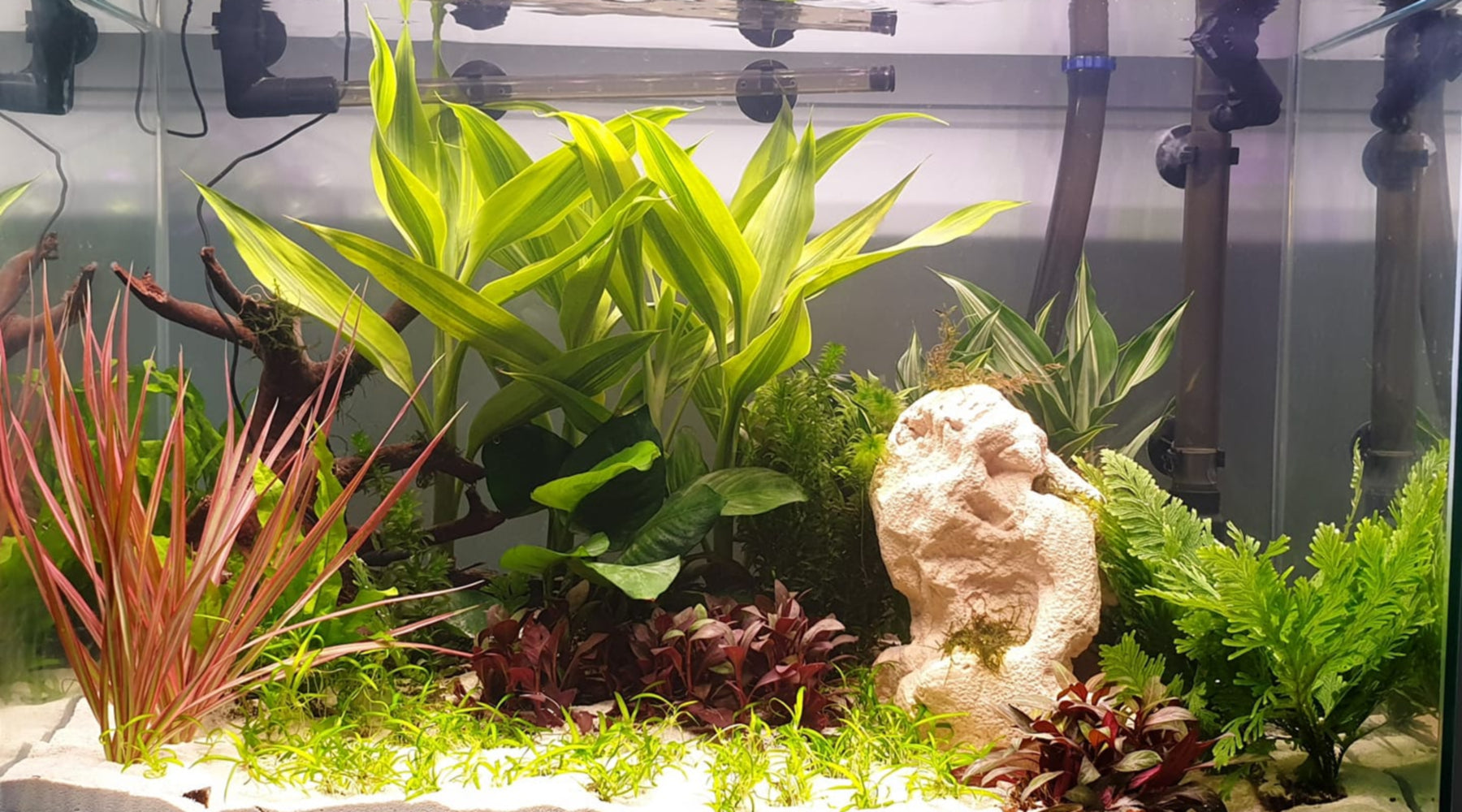
Java fern 'Orange narrow' needs higher light levels and new growth to showcase its stunning orange leaf tones.
Which Substrate Grows Difficult Aquarium Plants Best?
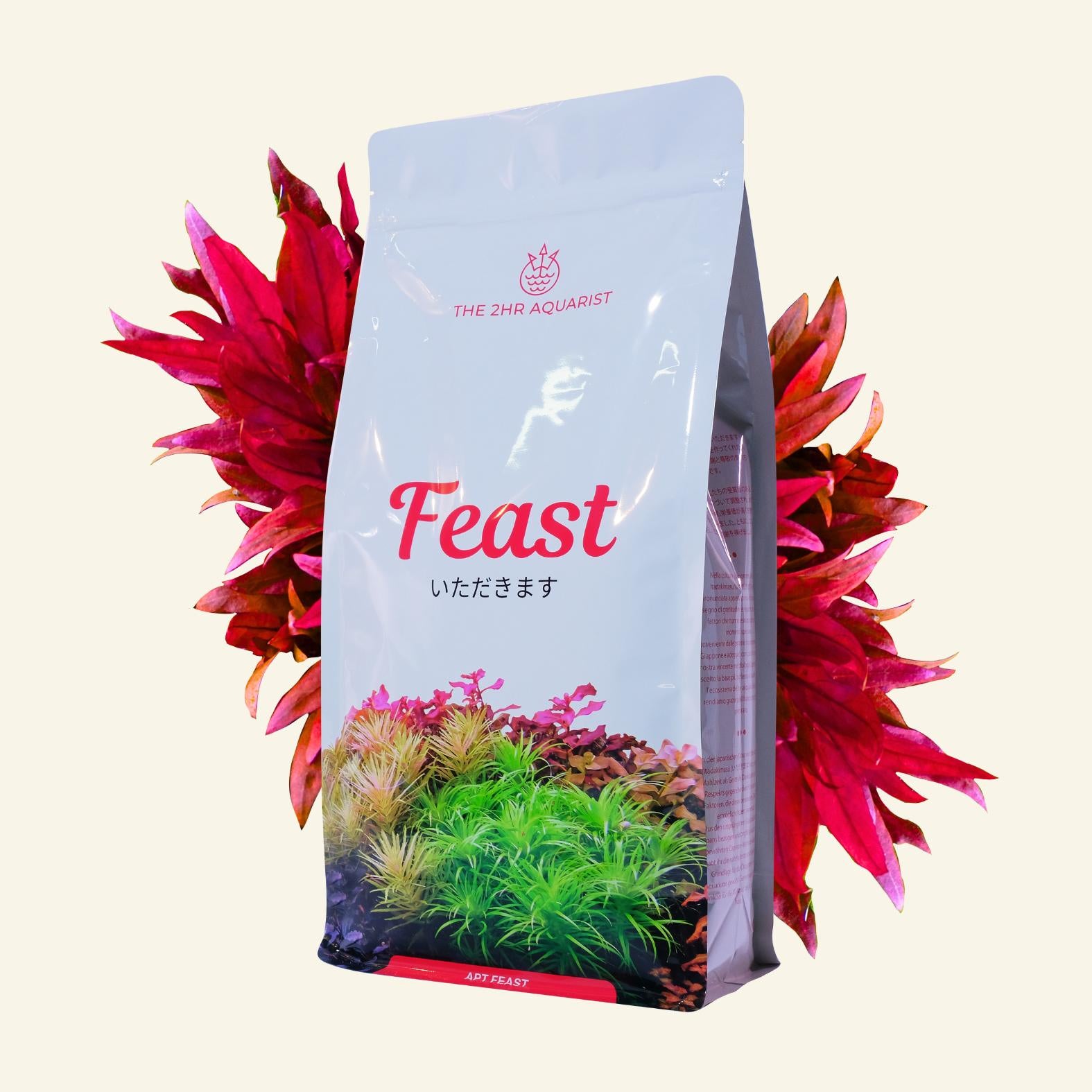
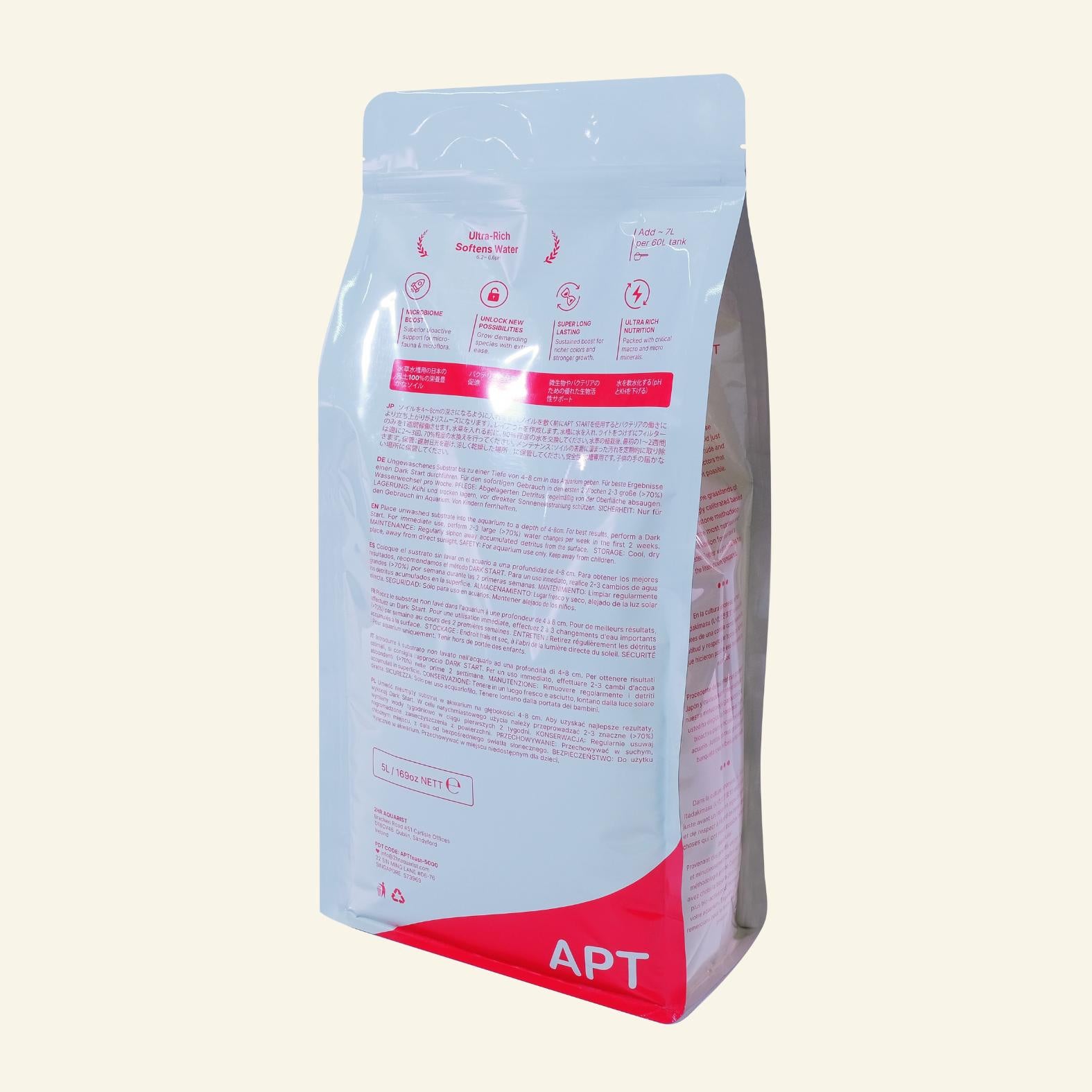
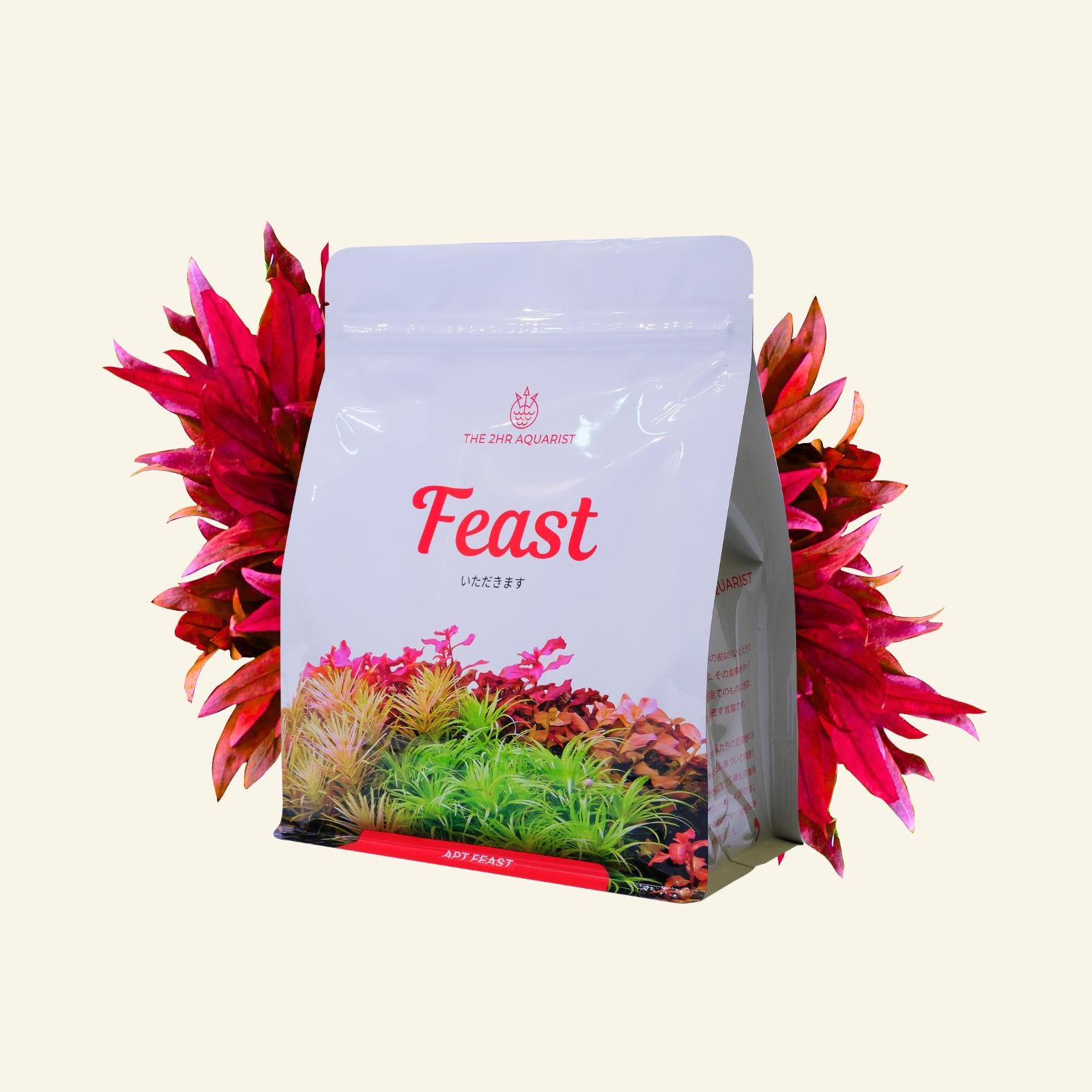
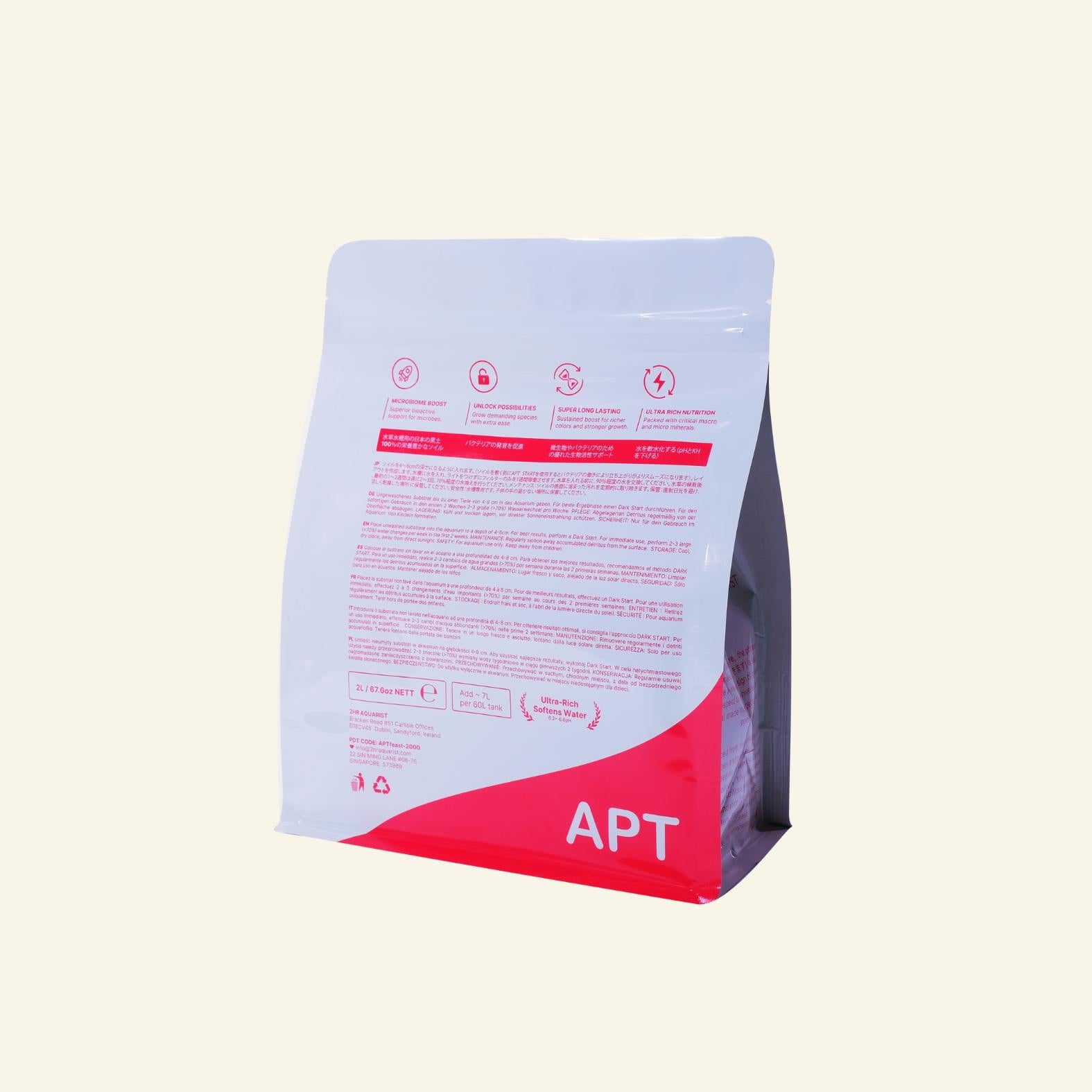
APT Feast aquasoil's high organic content and ammoniacal nitrogen makes a measurable difference for demanding rosette plants like Blood Vomit and Eriocaulon species; plants that feed well from the root zone and reward a rich substrate with compact, vigorous growth with better colors. While most plant species can be grown using water column fertilization alone, aqua soils give an edge in growing difficult plants.
Recharging Depleted Aquasoil: Root Tabs vs Fresh Soil
All aquasoils deplete their nitrogen stores over time, and the way you recharge them depends on the plant. For clusters that stay undisturbed: epiphytes, slow growing plants, established rosettes- APT Jazz root tabs can be pushed deep into the substrate to restore root-zone richness. For plants you uproot regularly, such as stem plants and Blood Vomit, mixing fresh aquasoil in as you replant is more effective. In our showcase tank, roughly 1% new aquasoil is added per month, a few spoons at a time.
Why Stable Nitrate Levels Matter More Than High Ones
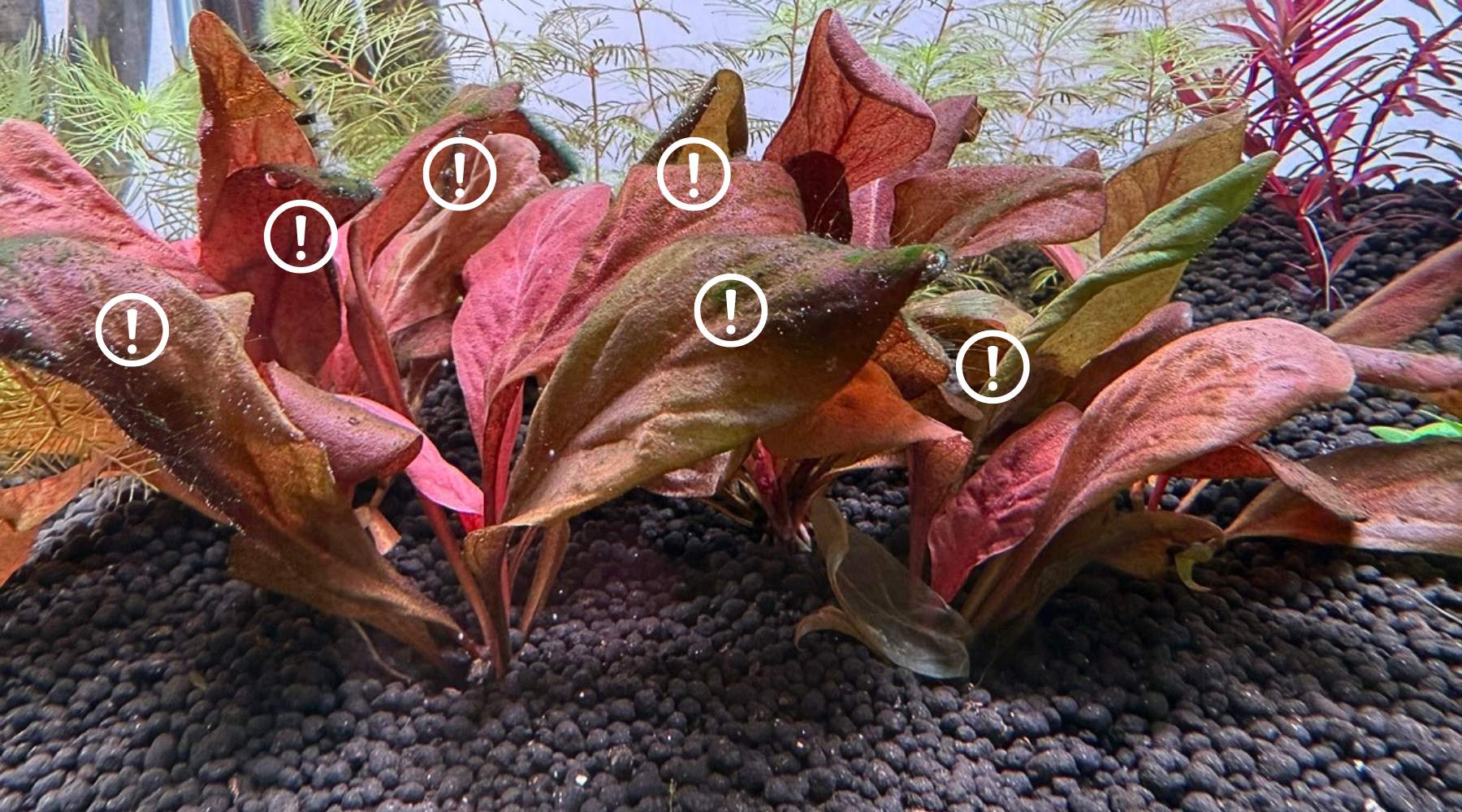
Water column dosing complements substrate feeding and is important. Many picky species grow more steadily in slightly richer water column nutrient levels, rather than super lean levels. However, keeping water column nutrient levels stable is key. Testing to check uptake and accumulation rates is important. For example, if you start the week with 5ppm of nitrates in the water column, and end the week with 20ppm of nitrates - this presents a substantial change in nitrate availability in the water column that will cause plant reprogramming. Fluctuating water column nutrients cause tip stunting and algae on older leaves. So it is not only important that plants get adequate nutrients, but nutrient levels, especially nitrogen, should be kept consistent throughout the week.

How to Test Weekly Uptake and Adjust Daily Dosing
The only way to know how much you need to adjust dosing is by doing regular testing of water column nutrient levels and recording the accumulation rates over time. For exotic collector tanks, you would want to aim to have some residual nitrate in the water column; this can range from 5 to 20ppm+, however, you should aim to have this level be stable across the week.
 With hobbyist test kits, the color of the test results should remain consistent across the week. If it shows accumulation - then daily dosing should be reduced. If the reverse happens instead - that the test kits become lighter by the end of week, then daily dosing should be increased.
When large water changes are performed, nutrients need to be added back in to keep nutrient levels stable.
-
Dosing after water change to match the nitrate level target of the aquarium.
-
Daily dosage targets daily uptake rates as closely as possible.
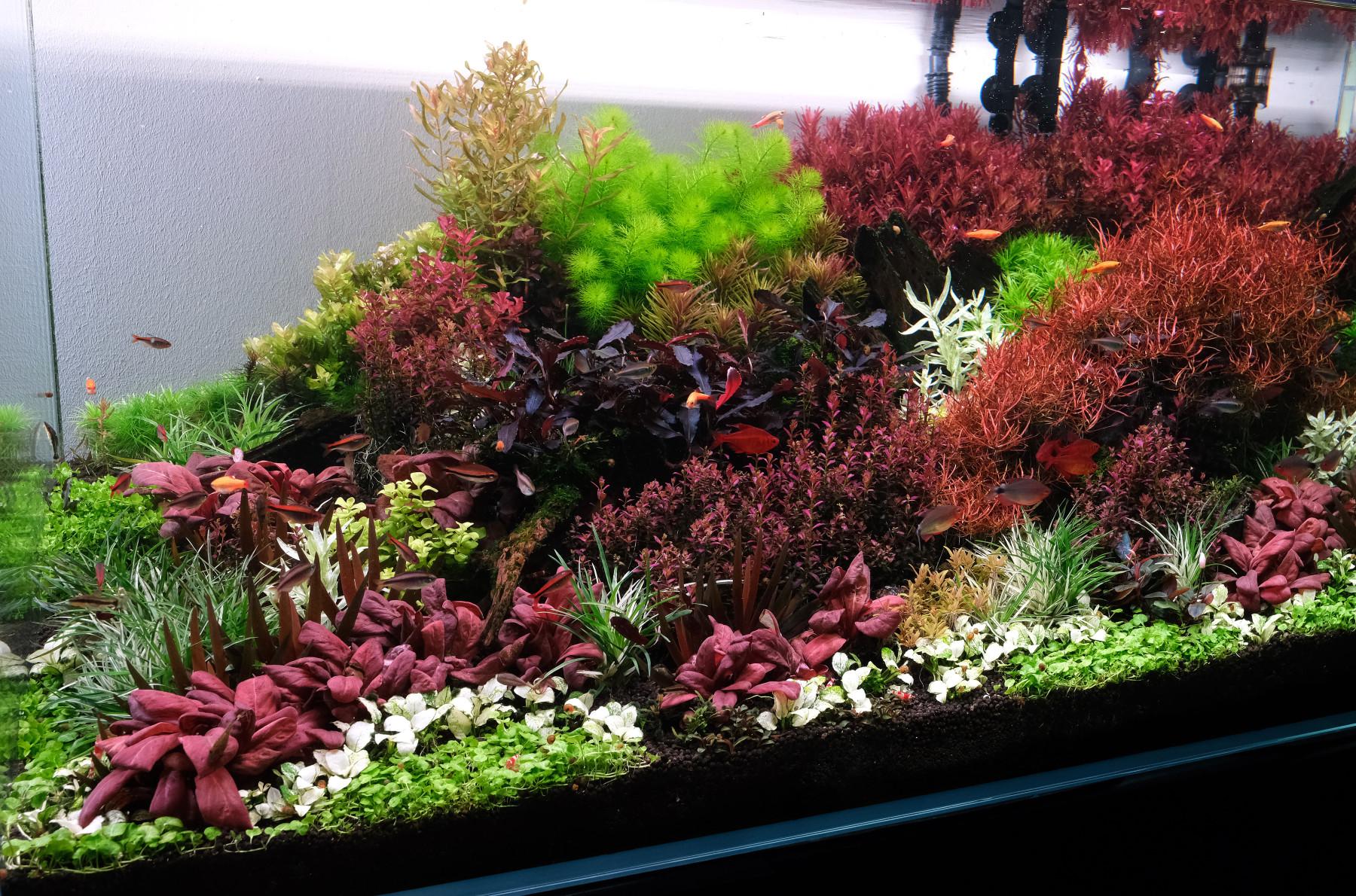
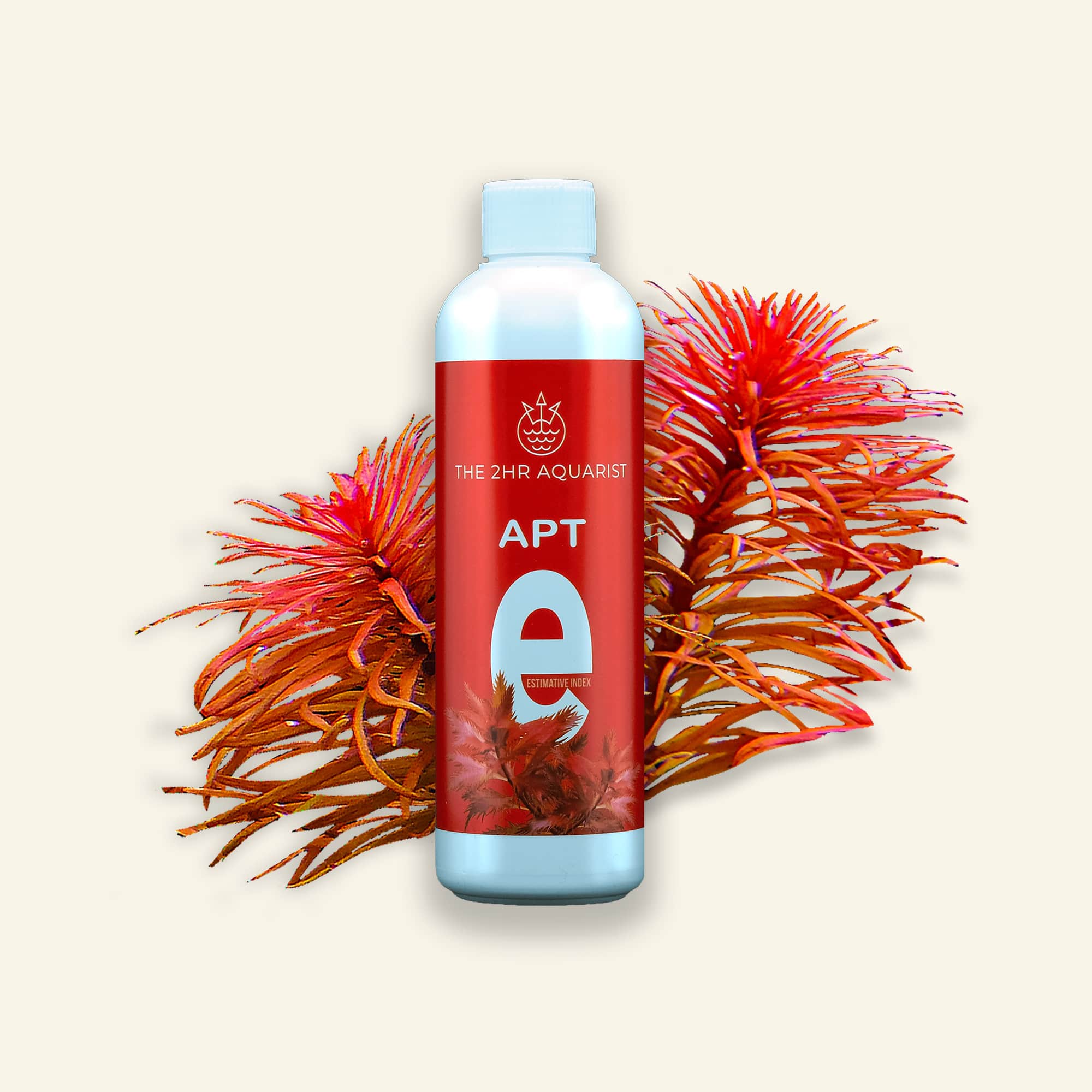
For the 65gallon aquarium below for example, 22ml of APTe is dosed after the weekly 50% water change, to target 15ppm of nitrates in the aquarium. The daily dosage is 5ml of APTe - this maintains nitrate levels at 15ppm for this aquarium.
Rarity and Difficulty Are Different Things
Worth understanding before you spend anything: rarity is a fact about supply, not about biology. The two get conflated constantly, and it costs people money.
Plenty of rare plants are easy, while some common plants can be difficult to grow well. Rare Java fern variants like Microsorum pteropus 'Orange Narrow' ask no more of you than the common one. Unusual Anubias cultivars are still, at heart, Anubias and are easy to grow. Whereas Eriocaulon sp. 'Vietnam' is an undemanding plant that simply doesn't turn up in many shops.
Baby tears carpets look like beginner fare but do not grow well without CO2.
Exotic Fantasy lives in the hard quadrant — rare and demanding — but you don't have to start there. Building a collection of rare-but-easy species is a legitimate and beautiful way into this, and it teaches you the sourcing side of the hobby before you risk anything fragile.
Many rare species are slower-growing than the commercial standards. That reads as a drawback and is really an asset. Slow growers mean fewer trimming and replanting cycles, and a tank that holds its form for longer. Using more slow growers means lower maintenance.
Rarity also shifts, and the reasons are more interesting than they look. It often reflects commercial fashion rather than any difficulty in cultivation — Elatine triandra was widely traded decades ago and is now hard to find simply because farms stopped propagating it.
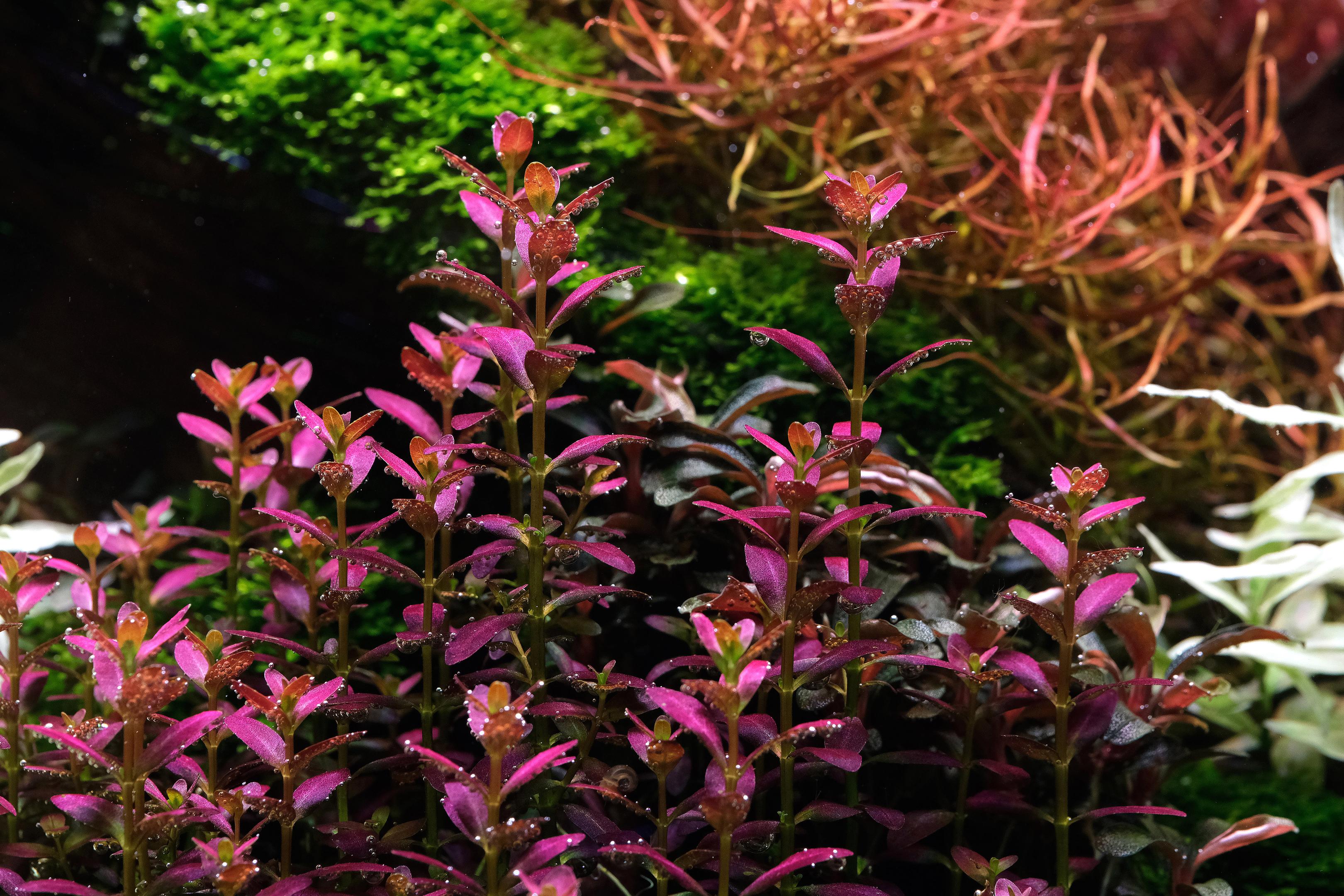
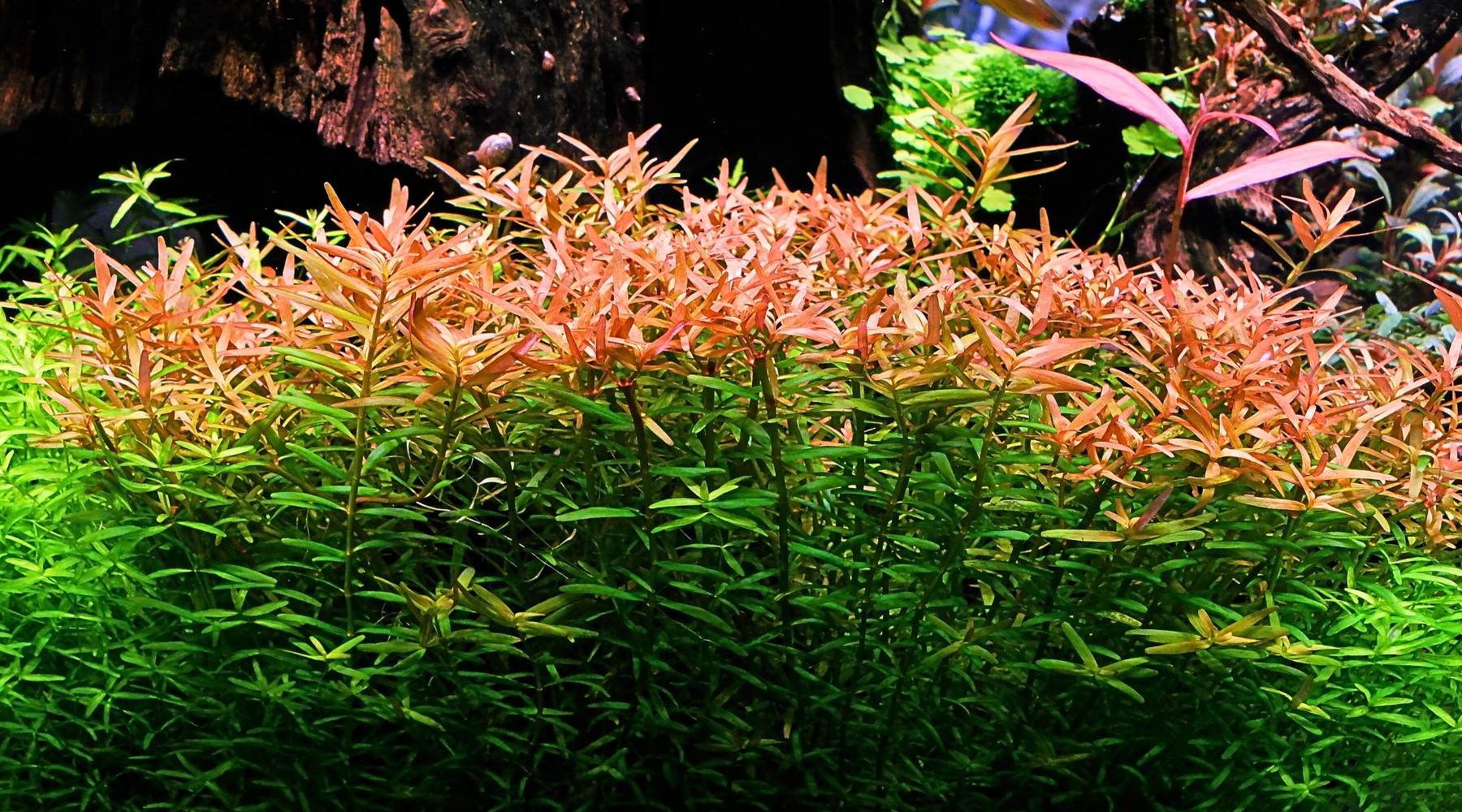
Rotala florida is not hard to find today as it is propagated emersed by large commercial farms. However, it still takes good tank conditions to fully showcase its beautiful form.
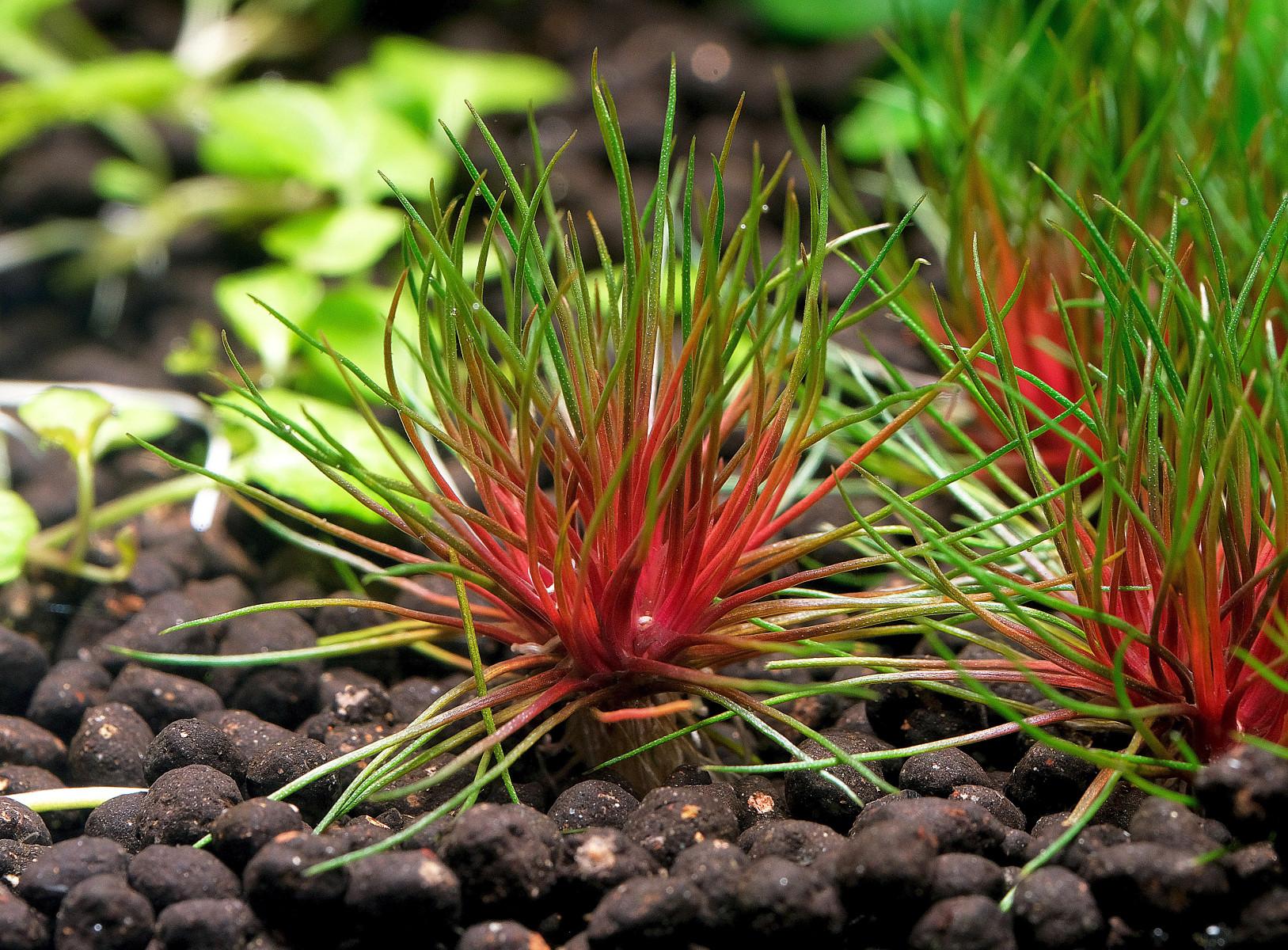
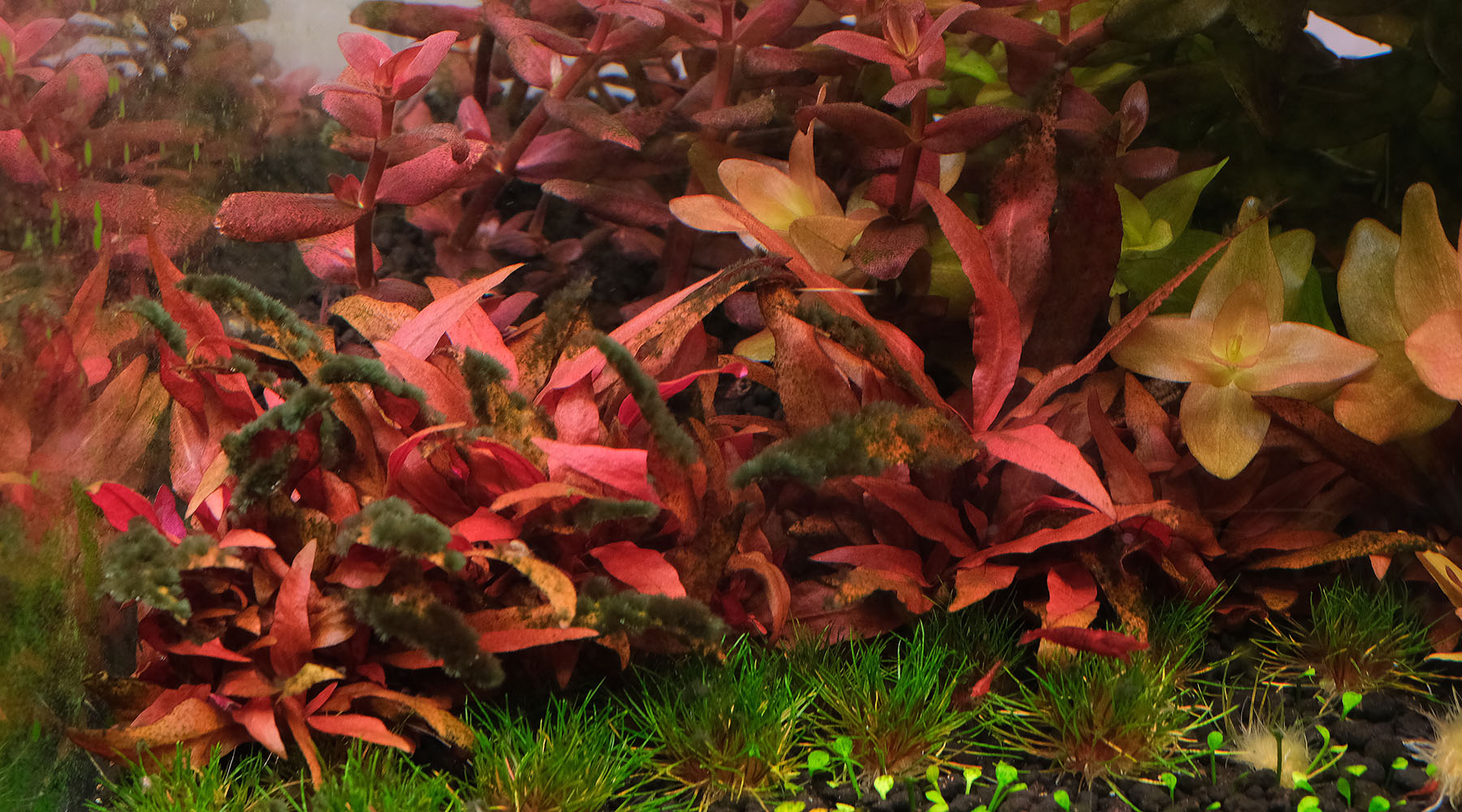
Blood vomit (Centrolepis drummondiana) used to be a difficult plant to cultivate in planted aquariums. With modern techniques, it is becoming an increasingly common foreground plant.
How to Lay Out a Rare Plant Collection Tank: Borrowing Concepts From Dutch Aquascaping
Exotic Fantasy is a plant-focused, hardscape-free style, and it borrows concepts from traditional Dutch aquascaping. Planting in defined groups gives a repeated leaf pattern that stands out for showcasing a species. Force contrast between neighbouring groups- light green plants against dark green plants, fine leaves against bold and large plants, a bright plant beside a dark one.
Contrast by Leaf Shape, Colour and Size
Think of contrast in 3 ways: Different leaf shapes, different colors, and different sizes.
Terrace the heights: spreading foreground plants at the front, mid ground plants and rosette plants behind, tall background plants forming the dense curtain at the rear. Keep the bushes trimmed to a smooth line- untidy plant bushes read as neglect no matter how rare the species in them. Neatly trimmed bushes allow light to reach plants evenly and also allow us to check whether the plant is growing well. Chaotic arrangements often mask plant growth problems and overcrowding.
Difficult plants often need time and space to grow - they can be crowded out fast by more aggressive, fast growing plants. This can be handled manually by cutting back species that intrude upon the territory of more sensitive plants. However, it is better to address this issue from the start by avoiding planting invasive plants beside more delicate species.
Avoid having more species than you can keep track of. A smaller number of well grown plant groups will look more impressive than a chaotic aquascape where too many species compete for attention. A good layout showcases plants better aesthetically.
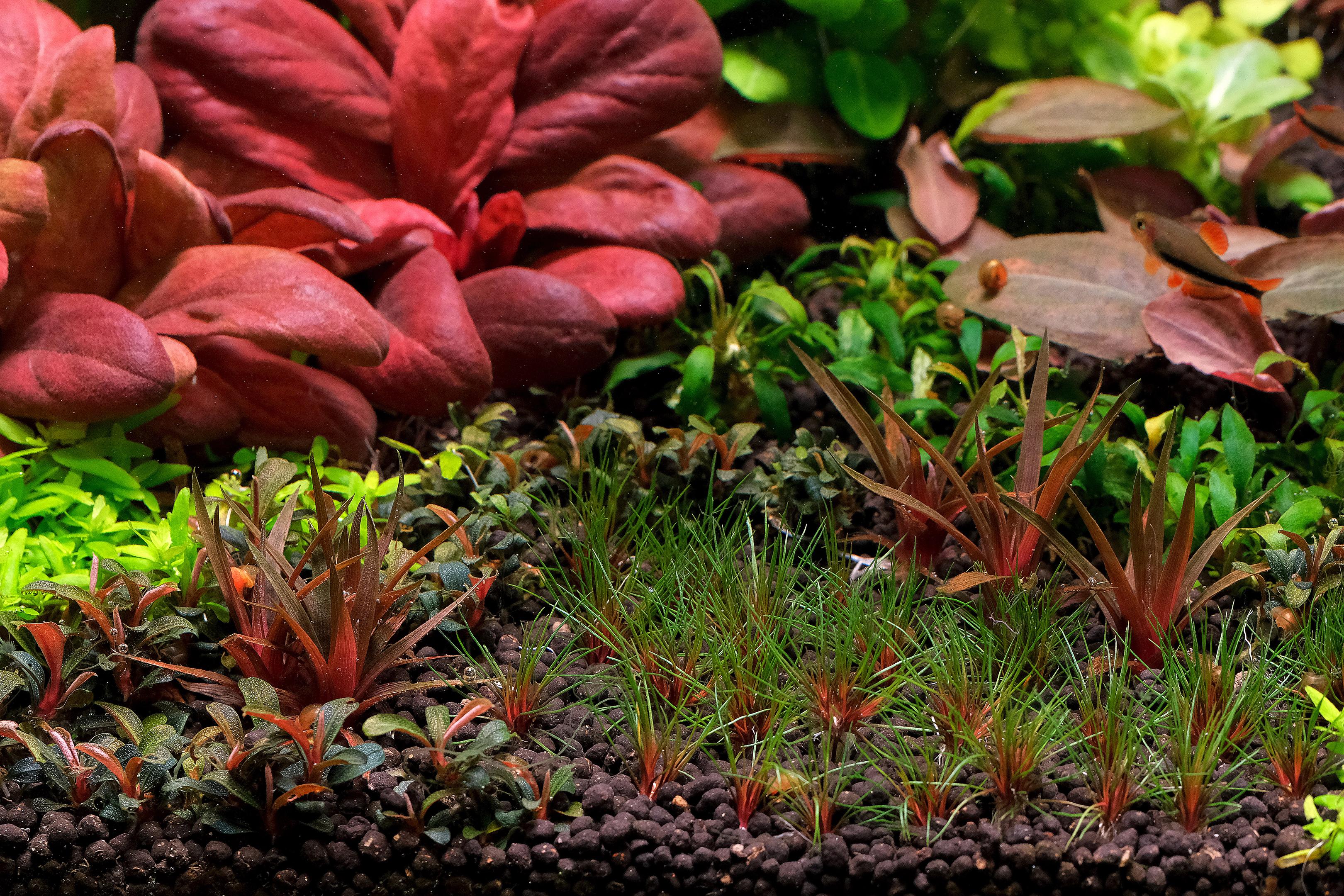
Stopping Fast Growers Crowding Out Delicate Species
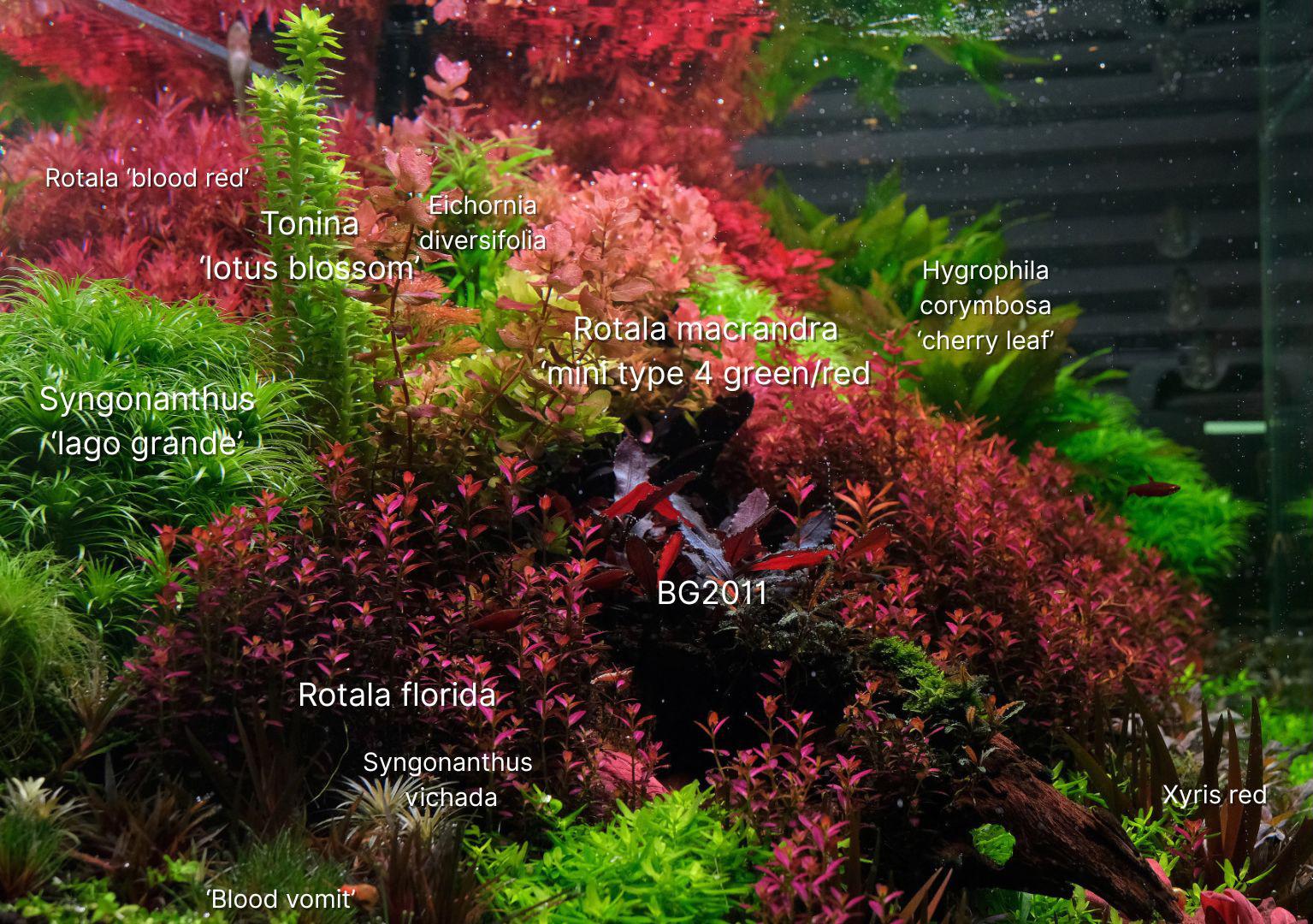
Delicate species such as Centrolepis drummondiana and Eriocaulons easily get shaded and overcrowded by faster growing, taller species. In this aquarium, we grow slower growing Bucephalandra beside them to prevent this.
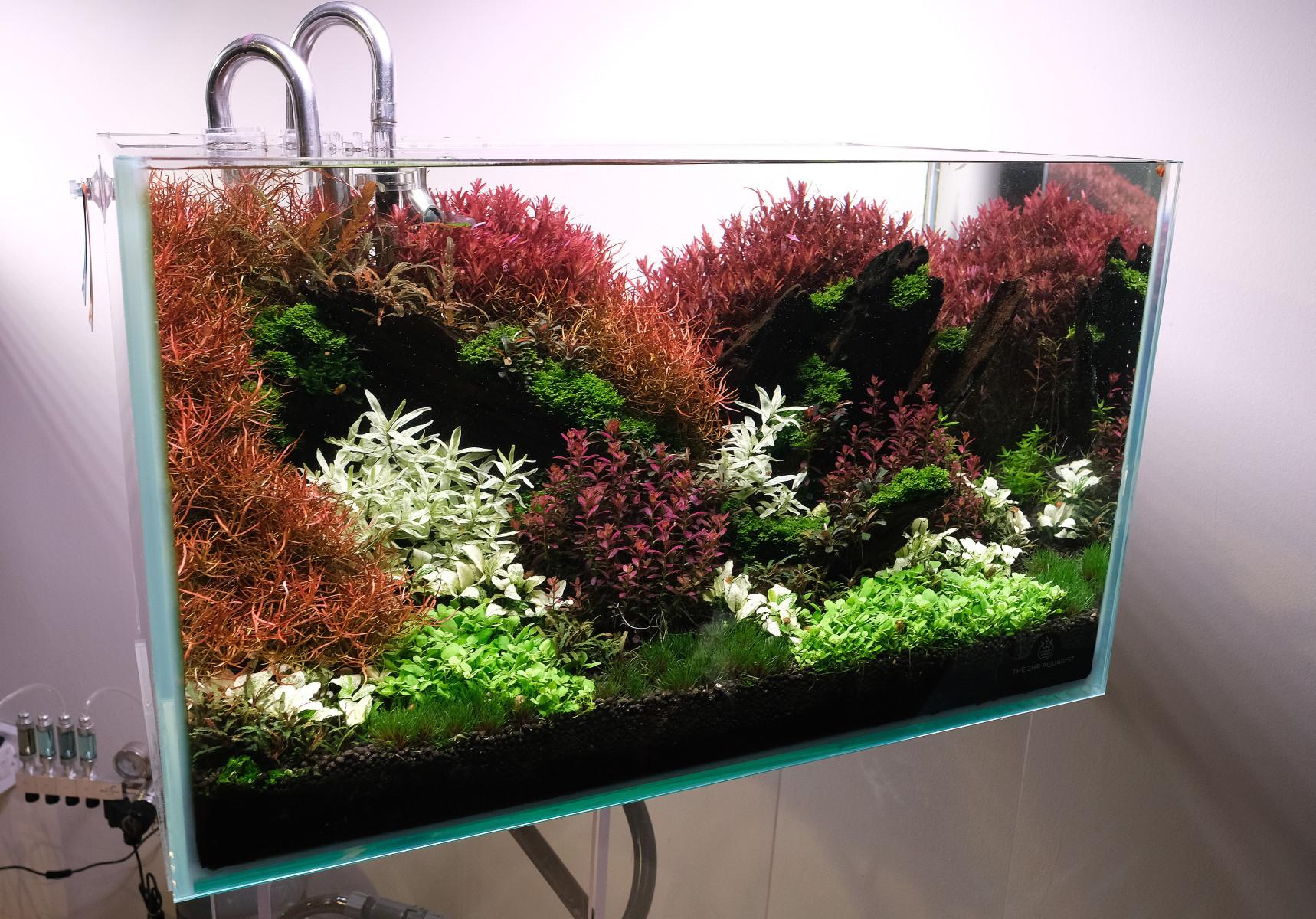
In this aquarium, the faster growing stem plants - Rotala blood red sg and Ludwigia arcuata are partially held back by wood hardscape, which prevents them from over-crowding slower growing species such as Rotala florida and Hygrophila polysperma white. Hardscape can be a useful divider to wall in more aggressive growers.
Do Heavily Planted Tanks Need Fewer Water Changes?
High light, high CO2, high nutrient levels in the water column. Without a clean environment and positive microbial balance, algae blooms in such aquariums can truly be spectacular.
You will read that a heavily planted tank acts as a natural filter and therefore needs fewer water changes. Be careful with that idea. Healthy plants do consume ammonia the moment it appears, but ammonia is not the only pollutant that matters in the aquarium. Decaying organic matter - dead leaves, and livestock waste will quickly trigger algae when coupled with high light levels.
Weekly water changes of 50–80% - combined siphoning debris off the substrate surface, makes a huge difference in algae outcomes.

Rejuvenating growth through trimming and replanting is important to prevent overcrowding.
How to Trim and Replant Difficult Aquarium Plants
Trim precisely. Cut the tallest shoots off individually where they meet the main stem, rather than shearing all the tops at one height. It is far less damaging and it keeps the bottoms of the bush alive for longer. Some species such as Syngonanthus and Tonina species do not recover well if their only apical bud is removed; always leave a couple of growth heads behind.
Replant on a rolling cycle. Uproot and discard deteriorating lower stems, replant healthy tops. Intervals vary enormously by species: Rotala rotundifolia can be trimmed for months without replanting, while Rotala macrandra Mini Type 4 needs replanting after a couple of trimming cycles. Aquatic stem plants are herbs, not trees — they thrive on renewal. Many difficult species thrive on more frequent replanting.

Why Xyris difformis and Other Rosettes Need Splitting, Not Trimming
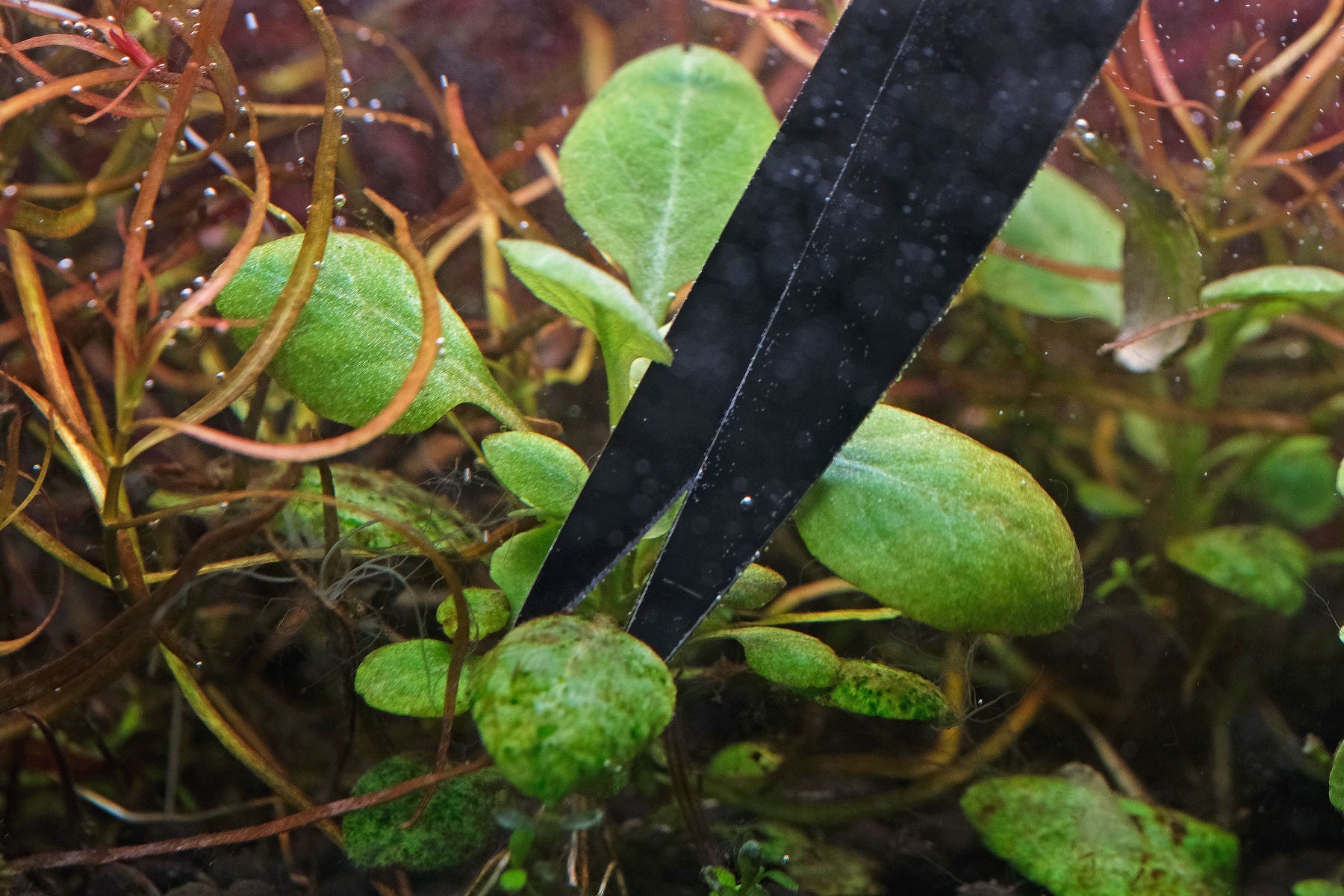
Split the rosettes. Blood Vomit, Xyris difformis and Lysimachia parvifolia don't gain height; they produce plantlets at the base. Left alone they overcrowd, lose colour and attract algae. Uproot the clump, divide it manually, replant.
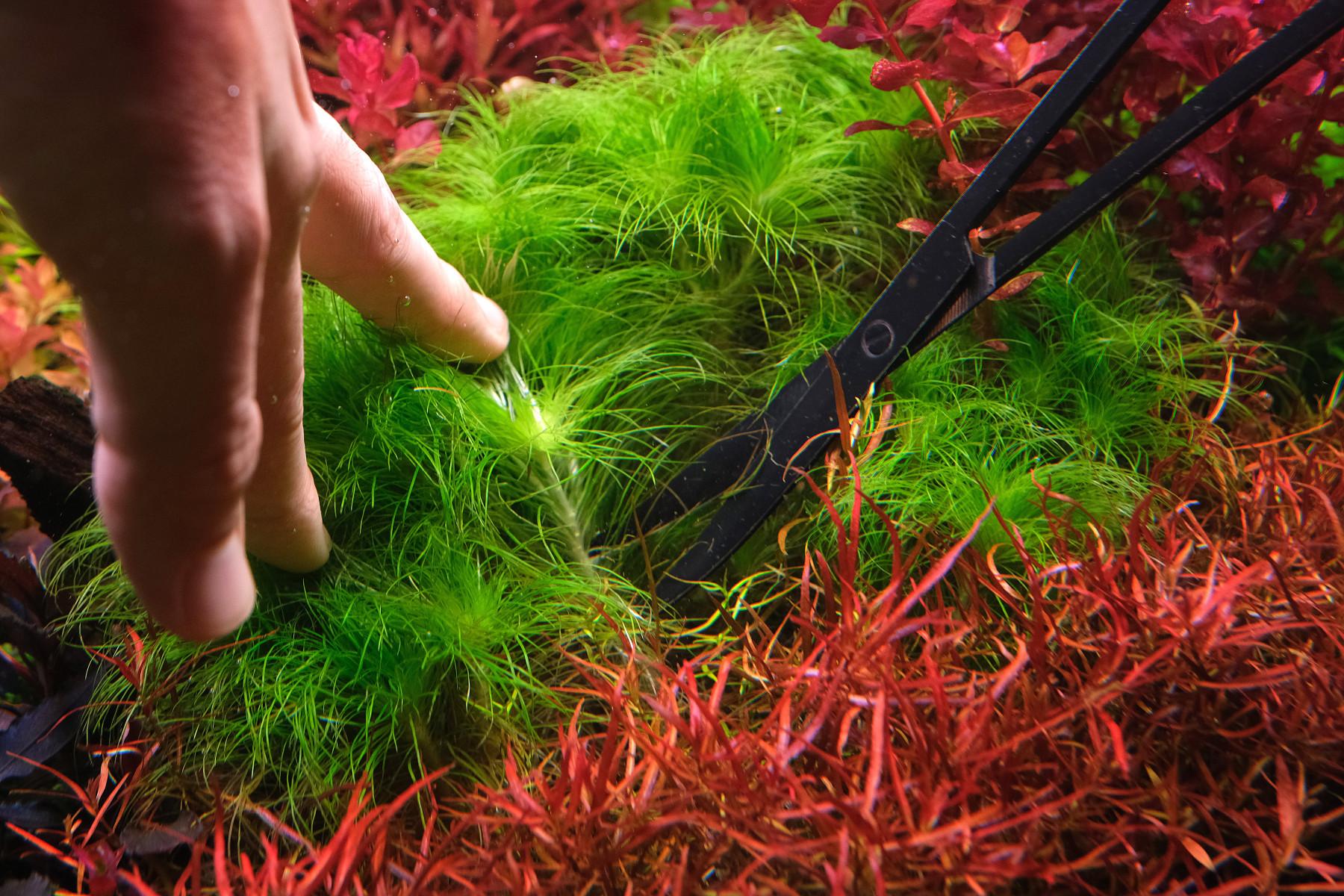
Trim stem plants by cutting off secondary growth heads one by one, and leaving at least a couple of tops to regrow. Shearing off all the tops at one go leads to slow recovery for many species.
Fish: Yes, Actually
There's a persistent belief that tanks built for difficult species are hostile to livestock: too much CO2, too many fertilisers, too much disturbance. It isn't true, and we set out to prove it. Our 4ft Rotala florida tank carries pencilfish, Muzel 'Cherry red' tetras, Hyphessobrycon melanostichos and Inpaichthys kerri alongside a breeding population of crystal red shrimp. Dense plantings help here: the bushes give shrimp and shy fish the hiding places they need.
The rules are the ordinary ones. Choose small schooling fish and stock one species in a proper group rather than several in twos; a dozen is a sensible minimum. Stock lightly; the plants are the subject here. And pick species whose CO2 tolerance suits the numbers you're running.
Where to Buy Rare Aquarium Plants
Nobody walks into a local fish shop and finds Xyris difformis. Rare plant species move through different channels, and knowing them is half the hobby.
Specialist online retailers carry what general shops won't. These shops usually propagate rare species themselves or purchase from smaller hobbyist growers. Some import rarer species from overseas farms.
Clubs, plant swaps, aquascaping forums and Facebook trading groups are where most of this actually changes hands - the largest rare-plant groups run thousands of members, a sale post can clear in minutes, and aquatic plant conventions remain one of the best places to find species that have not reached commercial farms. Special aquatic plant forums such as www.scapecrunch.com has many rare plant sellers.
Why Trade Names Are Unreliable
Trade names are chaos. The same plant is offered under half a dozen labels, and incorrect names make it genuinely hard to know what is available and what you are buying. Verify against photographs of submerged growth rather than trusting the seller's label; and ask other experts whether the correct plant is being sold.
Why Plants Never Look Like the Seller's Photo
Finally, calibrate your expectations. Plants almost never show their true form or colour in a shop, a cup or a seller's photo. Commercial farms grow emersed, and every emersed leaf your plant arrives with will eventually be discarded as it builds submerged foliage. Good colour appears only after a sustained period of optimal growth in your tank- that is the whole point, and it is where your efforts actually show. Combining a few rare specimens with a backbone of familiar, reliable species is the sane way to start: you get the collection without betting the entire layout on it.
Is an Exotic Fantasy Tank Worth the Difficulty?
An Exotic Fantasy tank is the dream sports car of the hobby: unbelievably exhilarating when everything clicks, demanding of attention and skill at every turn. Algae risk is high due to high light levels. CO2 and nutrient management require more precision than other styles that grow easier plant species. Parameters that drift by even a small amount can stall or reverse months of careful cultivation.
But when it all comes together: rare growth forms no one else in the room has ever seen, colour that stops people mid-sentence- there is nothing else in freshwater aquarium keeping quite like it.
Read next
- 4ft Rotala florida community aquarium: full parameters, plant list and maintenance regime
- How to grow soft water plants
- How to measure CO2 levels in an aquarium
- Why nutrient level stability matters for planted aquariums
- The best LED units for planted tanks
- How to grow Centrolepis drummondiana (Blood Vomit)
- Propagating Eriocaulon species




Compartir:
Cómo cultivar Rotala Rotundifolia
Cómo cultivar Bucephalandra