

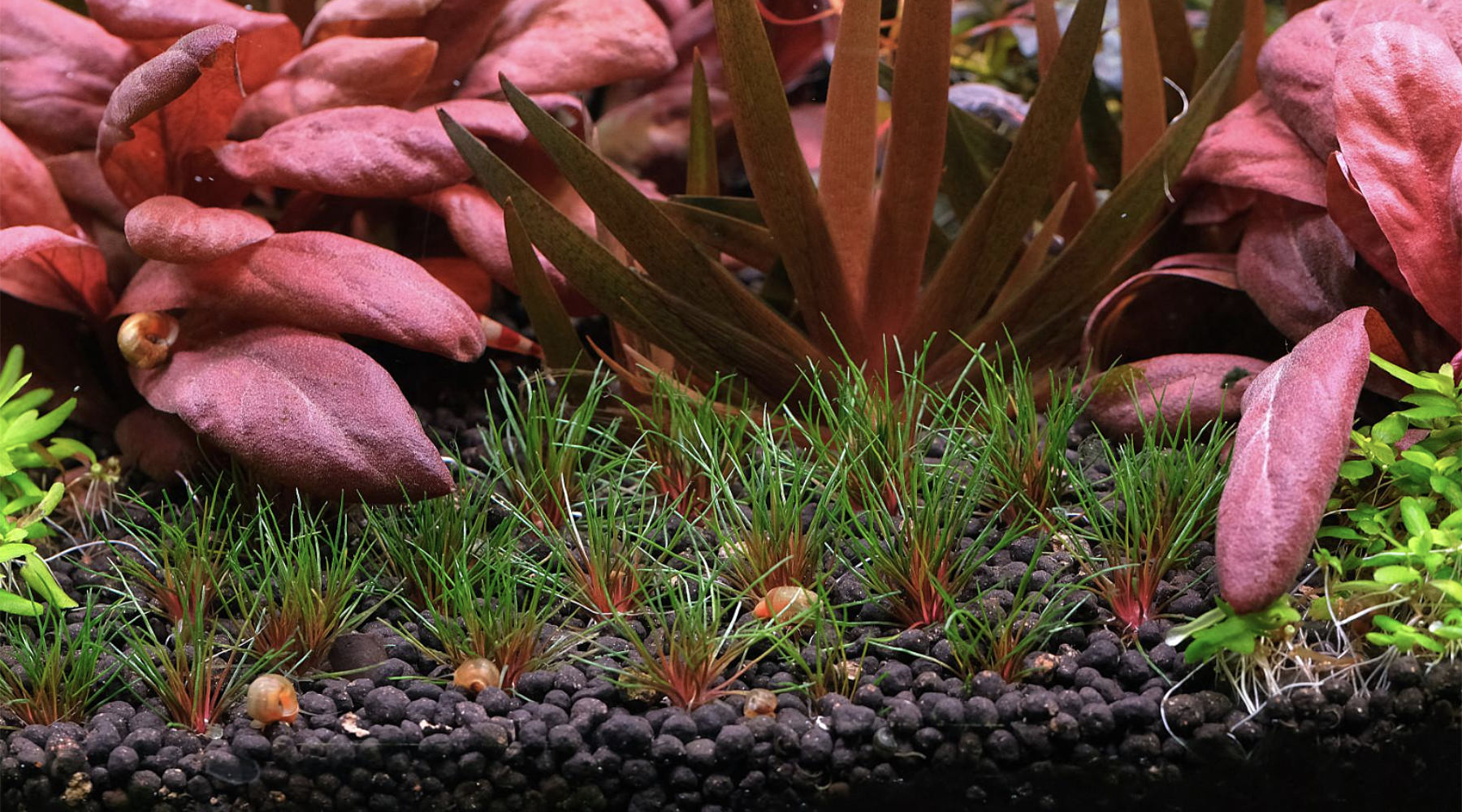
Every planted aquarium starts with a substrate decision, and in freshwater tanks that decision falls into two main camps: active substrates (aquarium soil, aqua soil) that contains organic material, are nutrient rich, alter water chemistry, generate Carbon and fuel plant growth; and inert substrates (sand, gravel, fired clay) that anchor plants but contain no meaningful nutrients. Your planted tank substrate shapes everything from pH to root development to how much maintenance you will be doing six months from now. This article will examine the differences between Active and inert substrates so that hobbyists can make a better choice after knowing the tradeoffs of each substrate type.
New to planted tanks? Start with our complete planted aquarium substrate guide for the full overview of substrate types and product reviews, then use this article to go deeper on the active versus inert decision.
-
Soil based substrates, also known as active substrates, contain organic materials and peat, they are also often enriched with nutrients that bind to soil particles. They typically lower pH/KH, keeping it below 7, which benefits many soft water aquatic plants, shrimp, and tropical fish. However, active soil degrades over time, and require more maintenance to keep it performing well.
-
Inert substrates are derived from rock minerals or hard fired clay. They contain no significant amounts of nutrients, but the organic detritus that builds up over time adds some organic content. They do not alter water chemistry. Inert substrates are easier to manage for replanting and rescaping compared to nutrient-rich substrates. Inert substrates are cheaper and do not degrade with time.
-
Both inert and nutrient-rich substrates can support plant growth, but active substrates generally provide better results for planted aquariums.
-
Both types require maintenance to perform well across long horizons, especially if growing plant species that are picky about root zone conditions.
-
Active substrates become depleted of nutrients over time and require replenishment through root tabs or through adding new soil. No substrate choice eliminates the need for water column dosing. Inert substrate aquariums need more precision in managing water column nutrient levels.
-
For inert substrates, grain size between 2-4 mm is ideal. Very fine sand compacts and traps debris. Pea gravel is too coarse for delicate root systems to anchor and only works for hardy plant species.
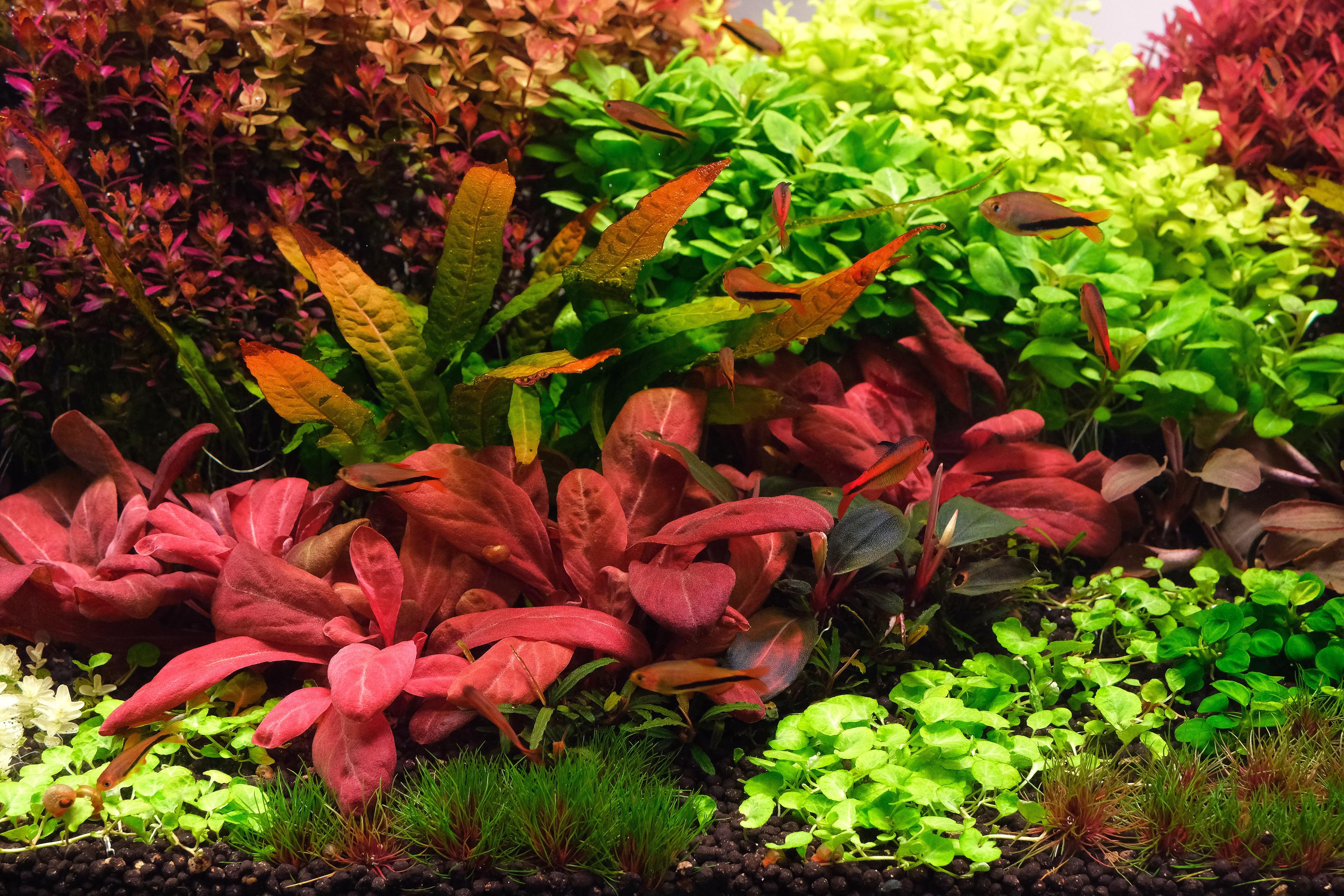
Does Aquarium Substrate Choice Matter for Planted Tanks?
You have fourteen browser tabs open. One says ADA Aqua Soil. Another says pool filter sand. A third is a forum thread where someone swears by organic soil from the garden center, capped with cosmetic sand and a prayer. Meanwhile a YouTube thumbnail is screaming that aquarium gravel will murder your live plants and only volcanic rock can save them. You are now staring at your empty tank like it personally betrayed you.
Here is the reassurance: substrate choice matters, but not in the catastrophic way the internet implies. It is not a life-or-death gamble. It is a management decision. Get it roughly right and your plants grow. Get it very right and your plants grow faster with less fuss. Get it wrong and you compensate with more effort, not a funeral. So take a breath. We are going to walk through the biology, the materials, and the trade-offs.
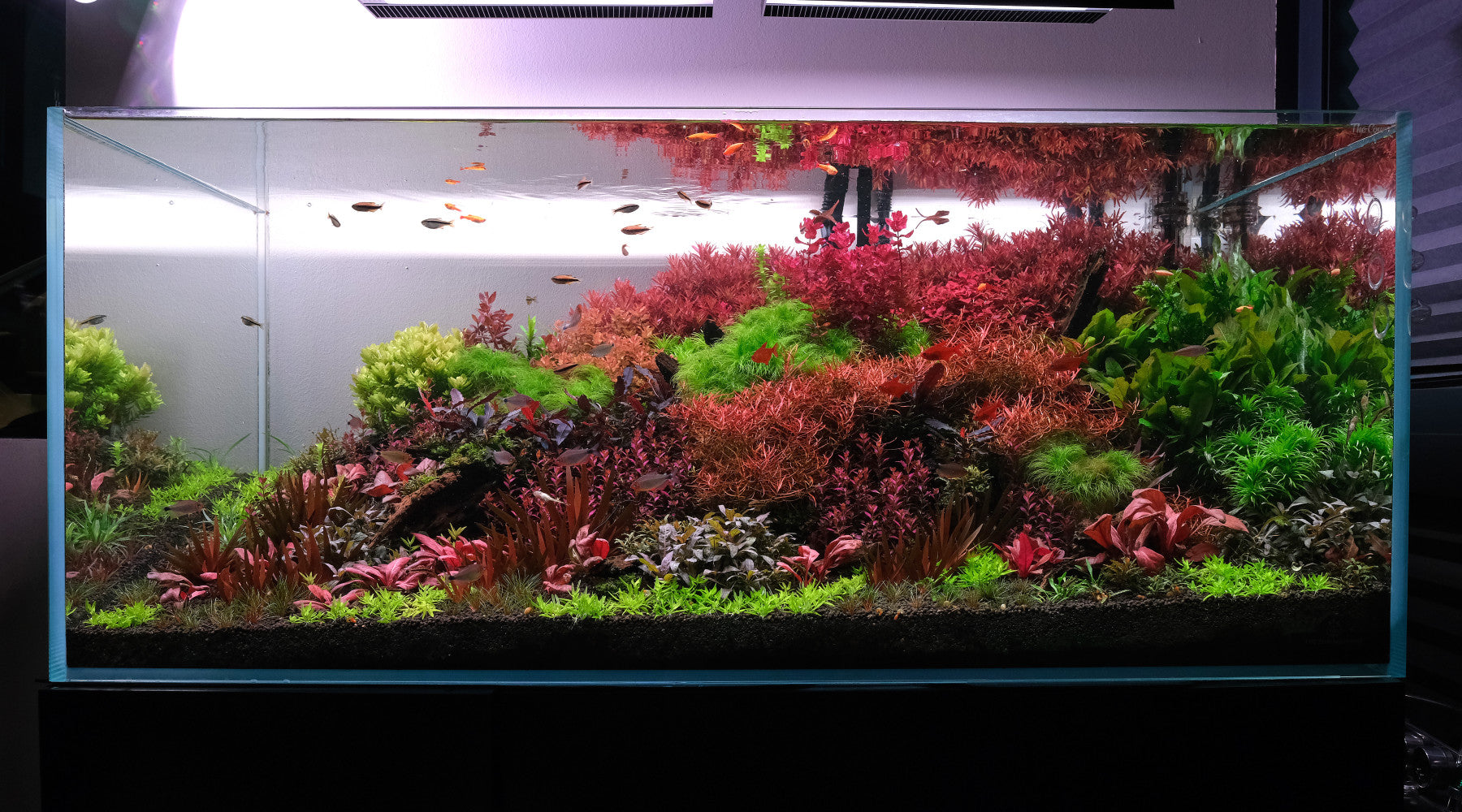
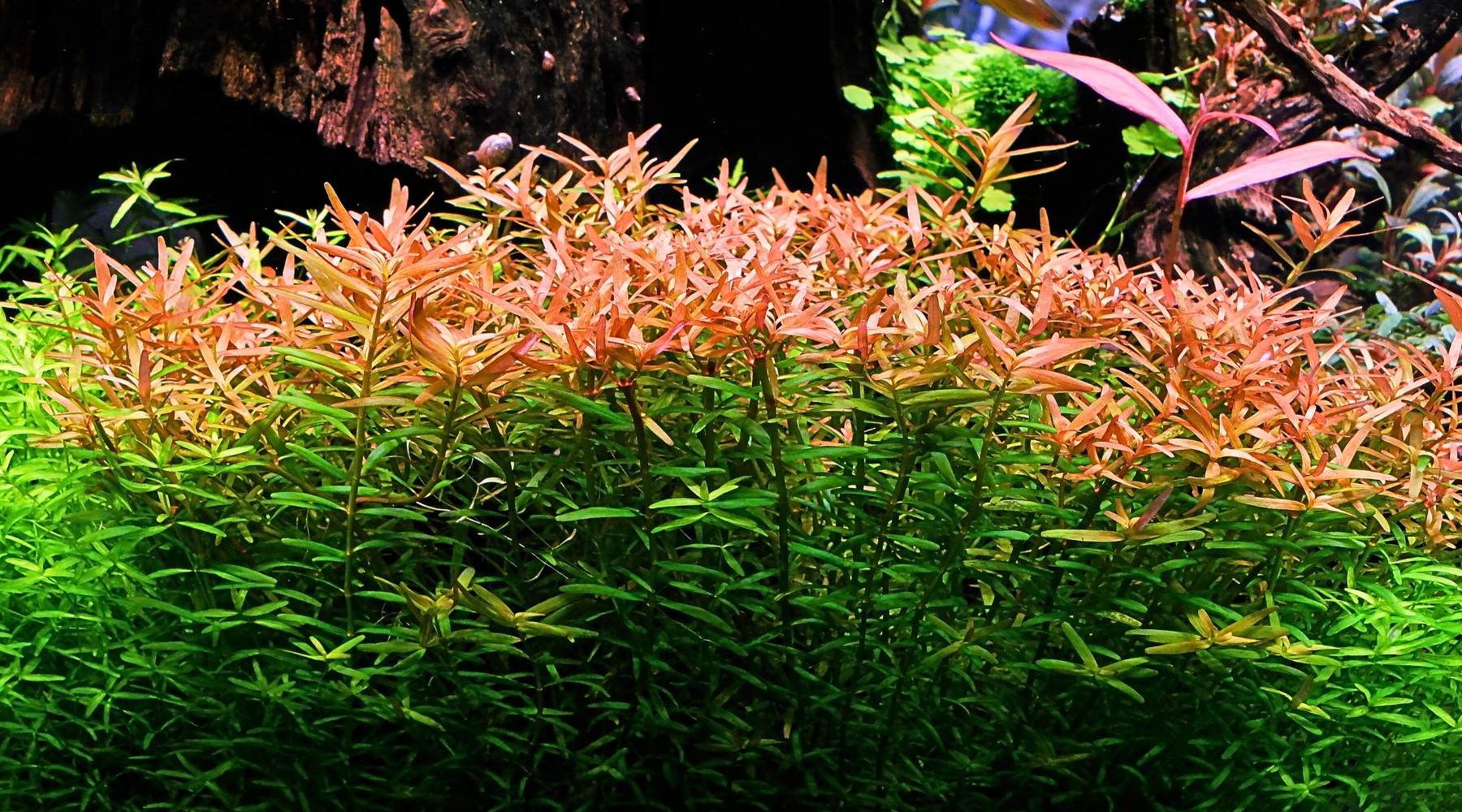
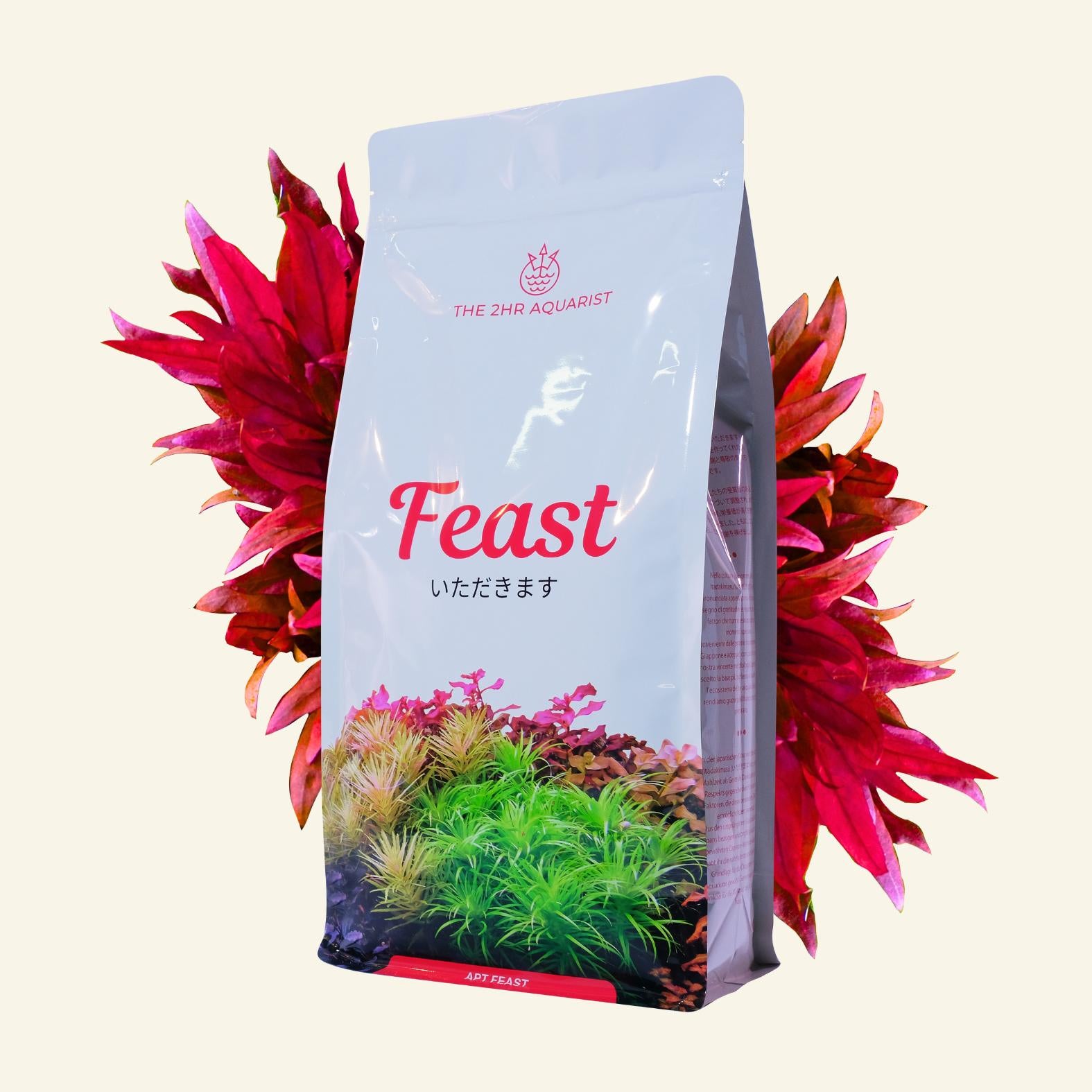
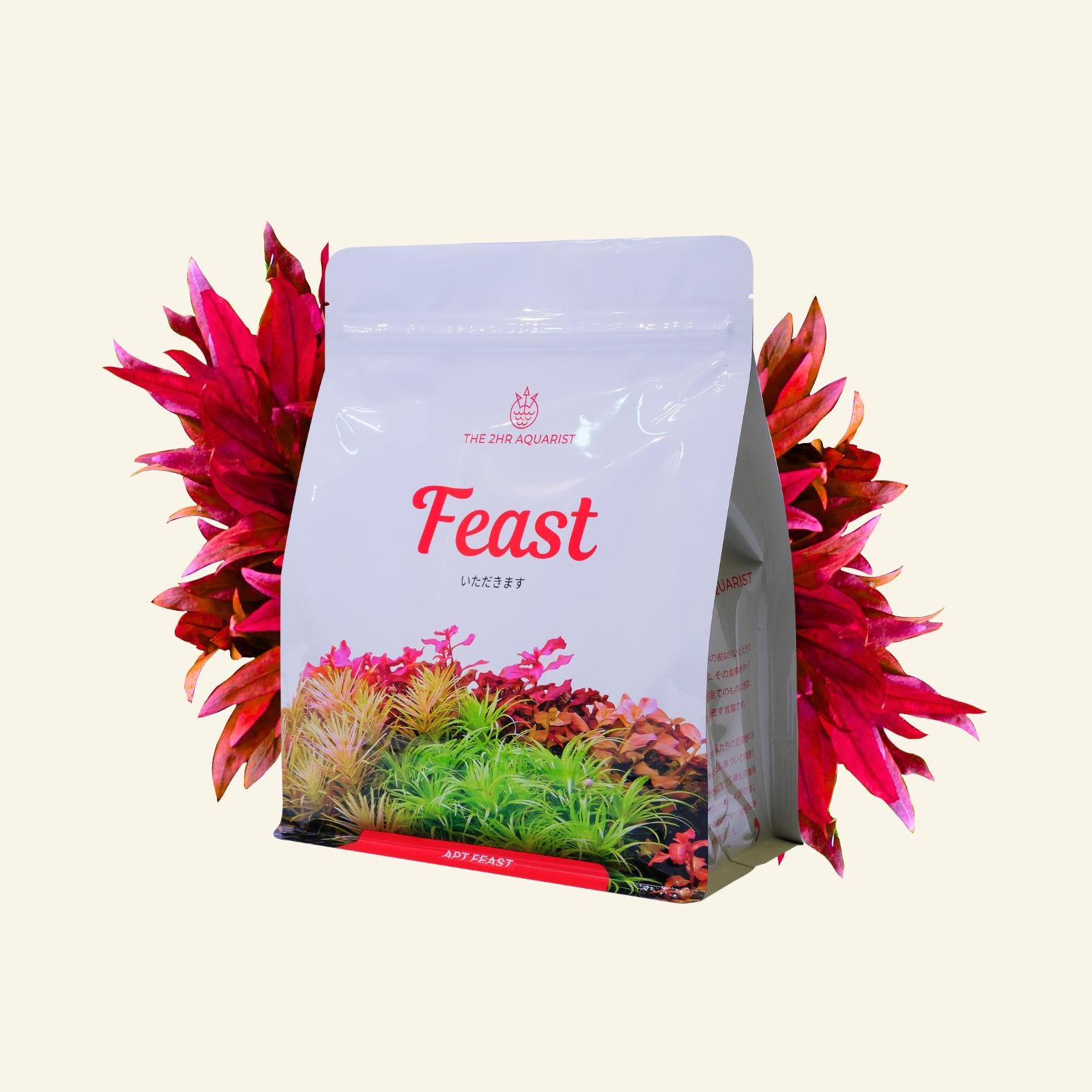
With good maintenance techniques, aqua soil substrates can be used indefinitely until they break down completely. Without proper maintenance and enrichment, they become compacted messes that results in algae and poor plant growth. The above aquarium is still using the same APT Feast aqua soil after 2 years.
What Are the Key Differences Between Aquasoil and Inert Substrates?
What Is Cation Exchange Capacity (CEC) in Substrate?
The underlying process here is called ion exchange, and it is the reason substrate choice has real consequences for plant growth. The substrate's ability to hold and release nutrient ions is measured by its cation exchange capacity, or CEC. Think of CEC as how sticky the substrate is for nutrients. High CEC means nutrients stay parked in the root zone where plants can grab them.
Active substrates such as soils have naturally high CEC because they are clay-based and rich in organic matter. These particles have a net negative charge, they attract and hold positively charged nutrients. These bound nutrients act as a slow-release savings account, preventing them from washing away while remaining accessible to plant roots. Plant roots release hydrogen ions into the surrounding substrate and in return pull in nutrient ions: ammonium, iron, trace elements, off the substrate particles and into their root cells.
Aquarium soil is made from soil molded into small hard granules, making it far easier to handle than raw soil. Many aqua soils are enriched with ammonia and other nutrients, which makes them very effective for root feeding plants. Many difficult and picky plant species grow more easily in aquasoils. A nutrient rich substrate also means more leeway in water column dosing, which is a huge advantage when growing demanding species.
Inert substrates, by contrast, have minimal CEC. Smooth quartz sand does not absorb nutrients. However, over time as organic detritus builds up in inert substrates, inert substrates do gain some CEC. For larger grain inert substrates, whatever you add through root tabs will slowly leach into the water column rather than stay in the root zone.
This is why root tabs in inert substrates are generally far less effective than root tabs in soil: soils actually binds the nutrients and holds them for plants, while root tabs just slowly (or more often, quickly) leach out into the water column. Maintaining adequate water column nutrient levels is the main way to feed plants in aquariums with inert substrates. As inert substrates do not change water parameters or nutrient levels, water column dosing can be done with great precision in aquariums with inert substrates.
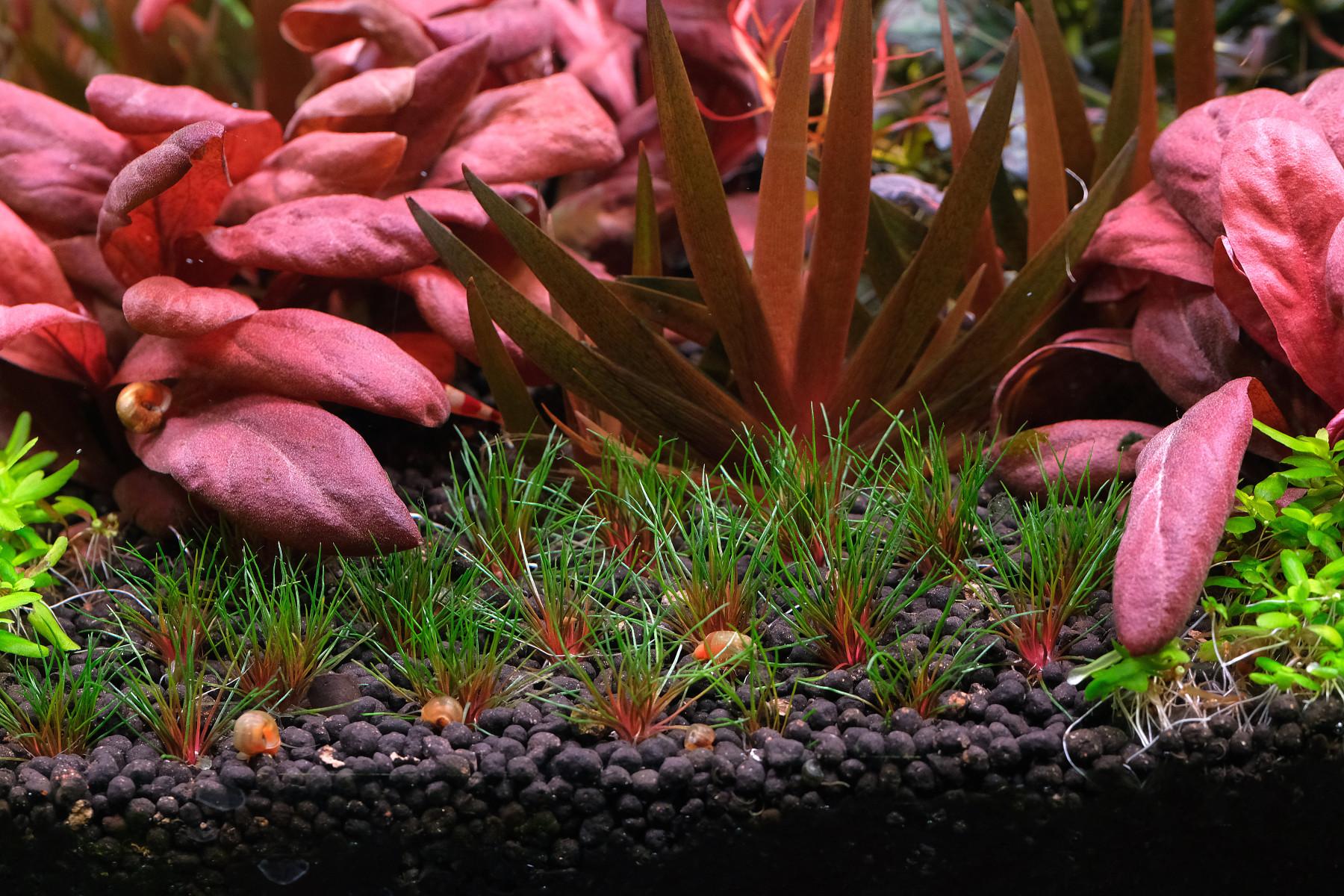
Aqua soils are soil rolled into soft pellets. Higher quality aqua soils are infused with nutrients and their soft texture allow roots to easily penetrate.
Which Substrates Provide Ammoniacal Nitrogen to Plant Roots?
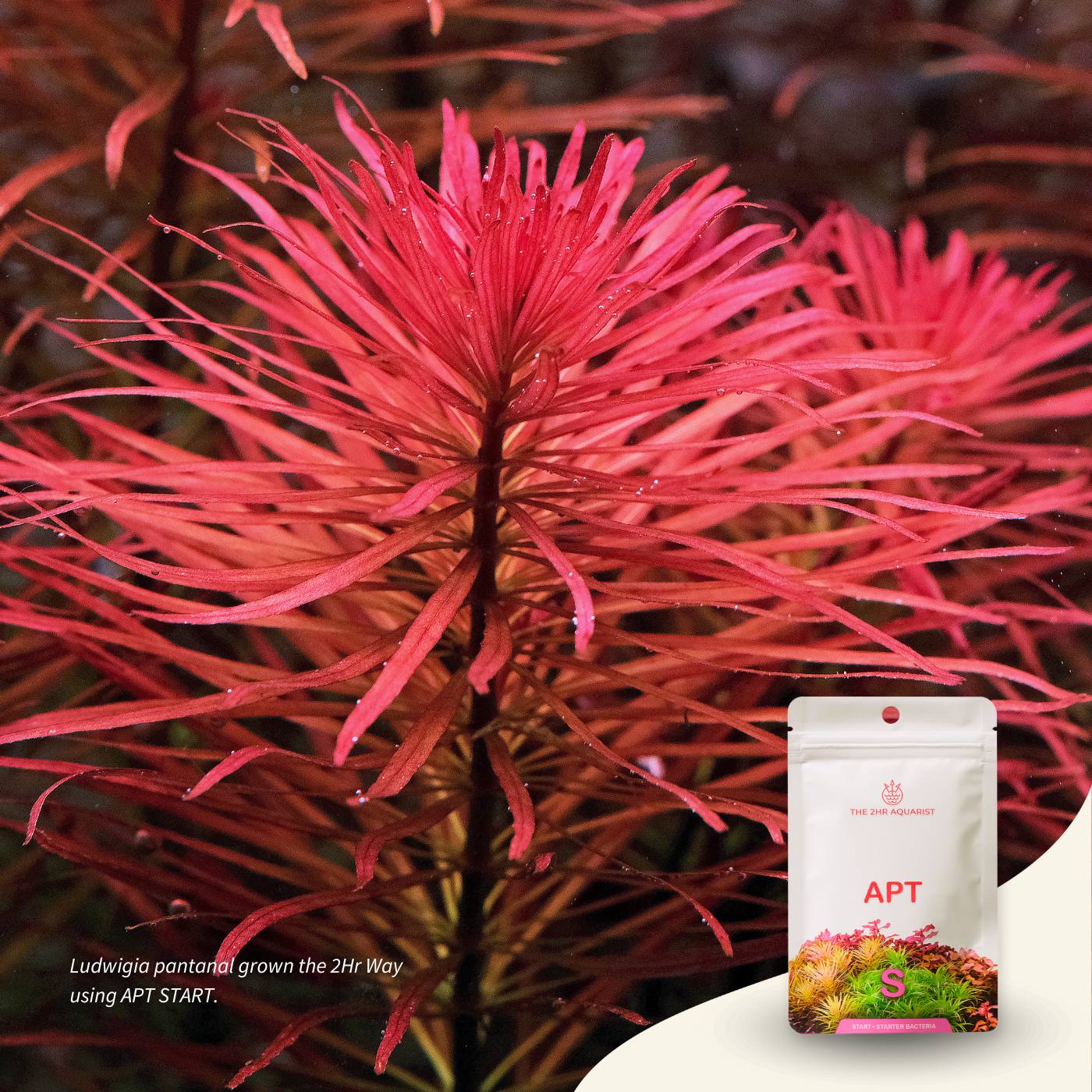
Nitrogen is the main nutrient that stimulates plant growth and plants use more nitrogen than any other macro nutrient. While plants can uptake nitrates as a nitrogen source, it is much more efficient for them to utilize ammonium, and being able provide plants ammonia boosts their vigor and growth significantly. While ammonium is easily oxidized in the water column by microbes, soil particles can bind and hold it, making it available to plant roots. Eriocaulon species, Rotala macrandra, Ammania species, Centrolepis drummondiana, Ludwigia pantanal all grow measurably better with access to ammoniacal nitrogen in the root zone.
The nutrient content of aqua soils depletes with time and plant uptake, and needs to be replenished with root tabs or by adding fresh aqua soil. Without regular replenishment, aqua soils lose significant effectiveness. The ability to provide ammoniacal nitrogen is specific to soils/aquasoil substrates. Inert substrates and baked clay substrates do not bind or provide ammonia.

Ludwigia pantanal with stunted crowns grown in a tank with high nitrate in the water column (20+ppm) but no ammoniacal nitrogen (left picture) VS Ludwigia pantanal grown in a tank with limited nitrate (0ppm residual in the water column) but with ammoniacal nitrogen in the substrate zone (right picture).

Rotala macrandra mini type 4 grown with access to ammoniacal nitrogen (left) vs without (right).
Does Substrate Generate CO2 in Low-Tech Tanks?
In low tech aquariums, Carbon availability is the main bottle neck to plant growth. Low tech aquariums depend on natural carbon generation to fulfill plants carbon needs and carbon release from the substrate through microbial action makes a significant difference in CO2 levels for low tech tanks.
Soils/aqua soils contain organic material that give rise to active beneficial bacteria communities. Decomposition and bacteria respiration releases Carbon dioxide. This may not be significant for high tech tanks, but it makes a big impact in low tech, non CO2 injected aquariums.
Inert substrates also build up microbial colonies over time as detritus builds up. However, inert substrates are significantly less effective at carbon generation due to the lack of organic content and colonizable surface area.
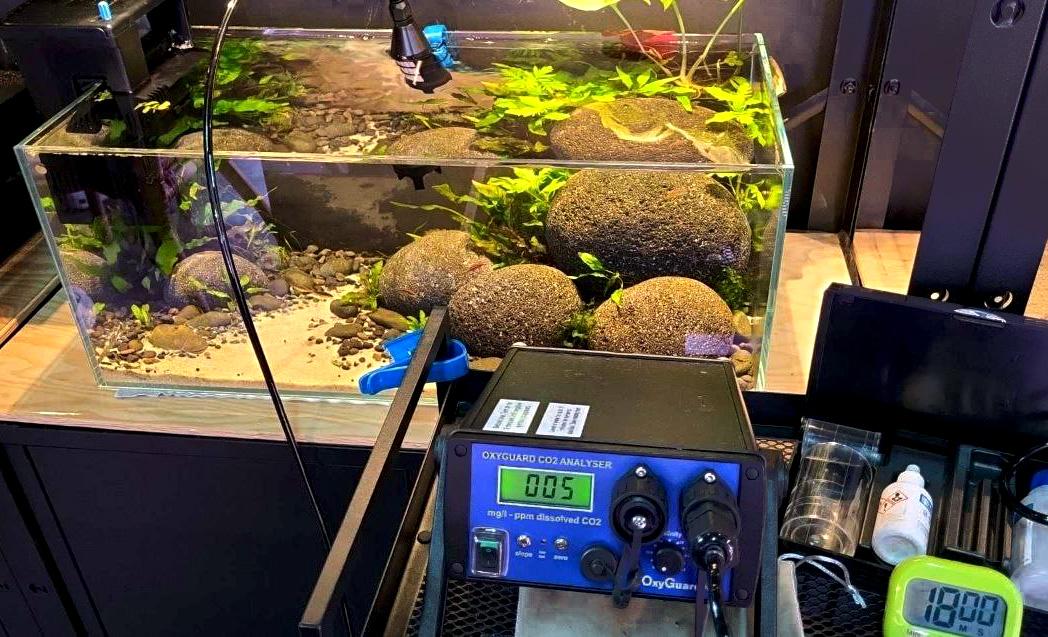
How Does Peat in Aquasoil Lower pH and KH?
Most aqua soils contain peat which is acidic and absorbs carbonates over time. This reduces the carbonate hardness (KH) and pH of the water column, typically keeping pH below 7, which benefits soft water fish, plants and shrimp. This can be counter productive in aquariums that keep hard water fish instead (such as African cichlids). Peat also releases humic acids and acidifies the substrate zone, making certain essential nutrients such as Iron and Trace elements more readily available in the root zone. The buffering of peat does deplete over time, so this effect is not perpetual. However, aqua soils can be refreshed by periodically mixing new aqua soil into the substrate.
Inert substrates do not alter water chemistry, making it easier for aquarists to adjust water parameters to what they want.
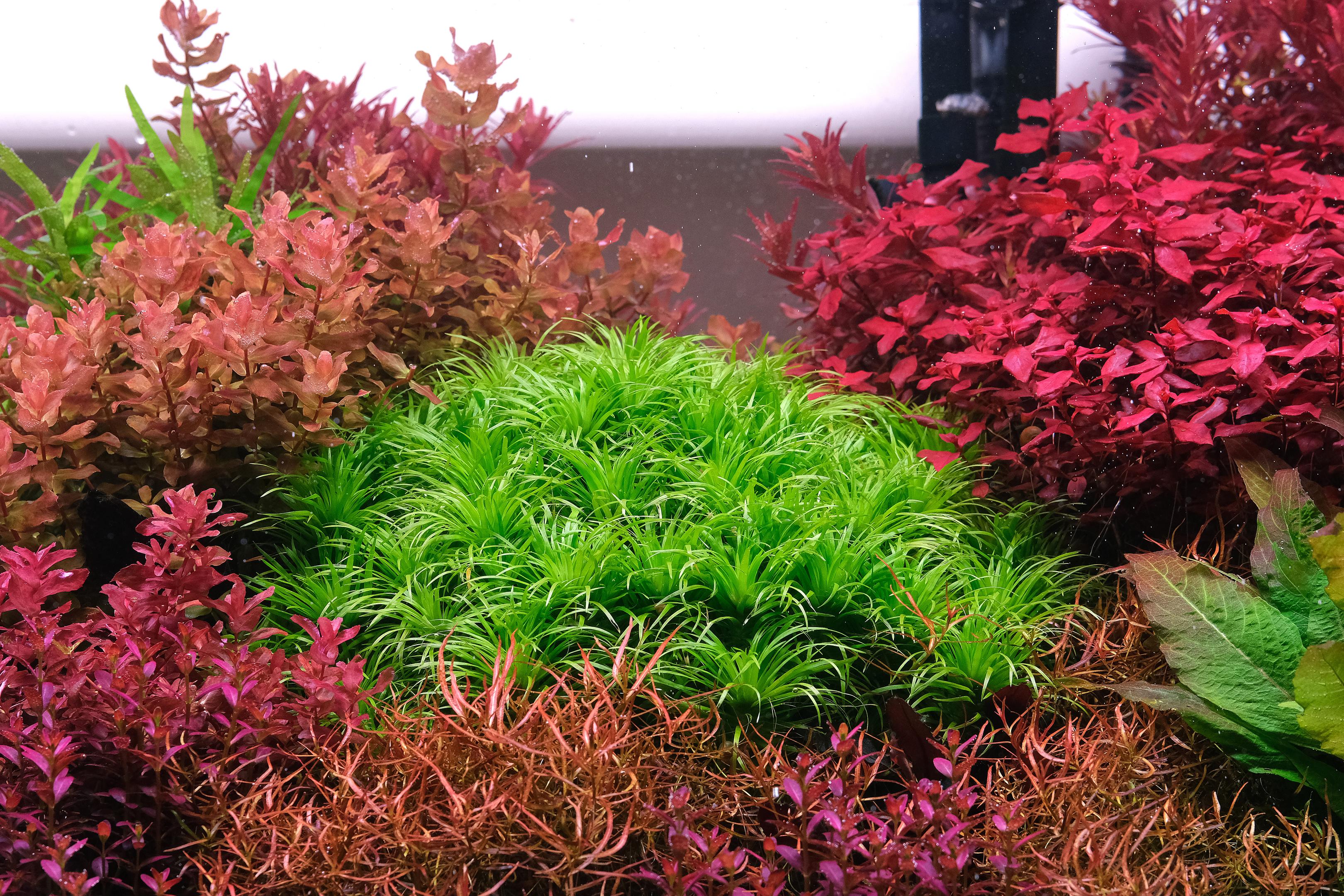
Many soft water species such as Eriocaulon and Syngonanthus species prefer acidic substrates and low KH water.
Aquasoil vs Inert Substrate: Cost and Maintenance
Aqua soils seem to offer tremendous benefits, so why consider inert substrates at all? Many of the benefits that aqua soils offer deplete with time.
Ammonia rich aqua soils leach a lot of ammonia in the first few weeks, and require large frequent water changes to stabilize the tank. Hobbyists that do not reset the system with enough large water changes see large spikes in nutrient level and organics that often lead to serious algae blooms.
Ammonia rich aqua soils provide a tremendous growth boost, however, this diminishes over time. In fast growth tanks with high uptake rates, this can occur in a few months. Ammoniacal nitrogen needs to be replenished through root tabs or regular additions of small amounts of fresh aquasoil in order for aqua soils to perform optimally over time.
Poorer quality aqua soil also breaks down after some time, and can created compacted areas which kick up a lot of fine particulate matter when uprooting is done. Aqua soils also cost significantly more than inert substrates. Choosing to use aqua soil is like buying a performance car - the benefits come with a fair bit of increased maintenance and cost.
Inert substrates last forever, and do not deteriorate with time, and do not need to be supplemented. They cost a lot less and function in a more predictable manner. They are easier to clean, and easier to manage as a whole.
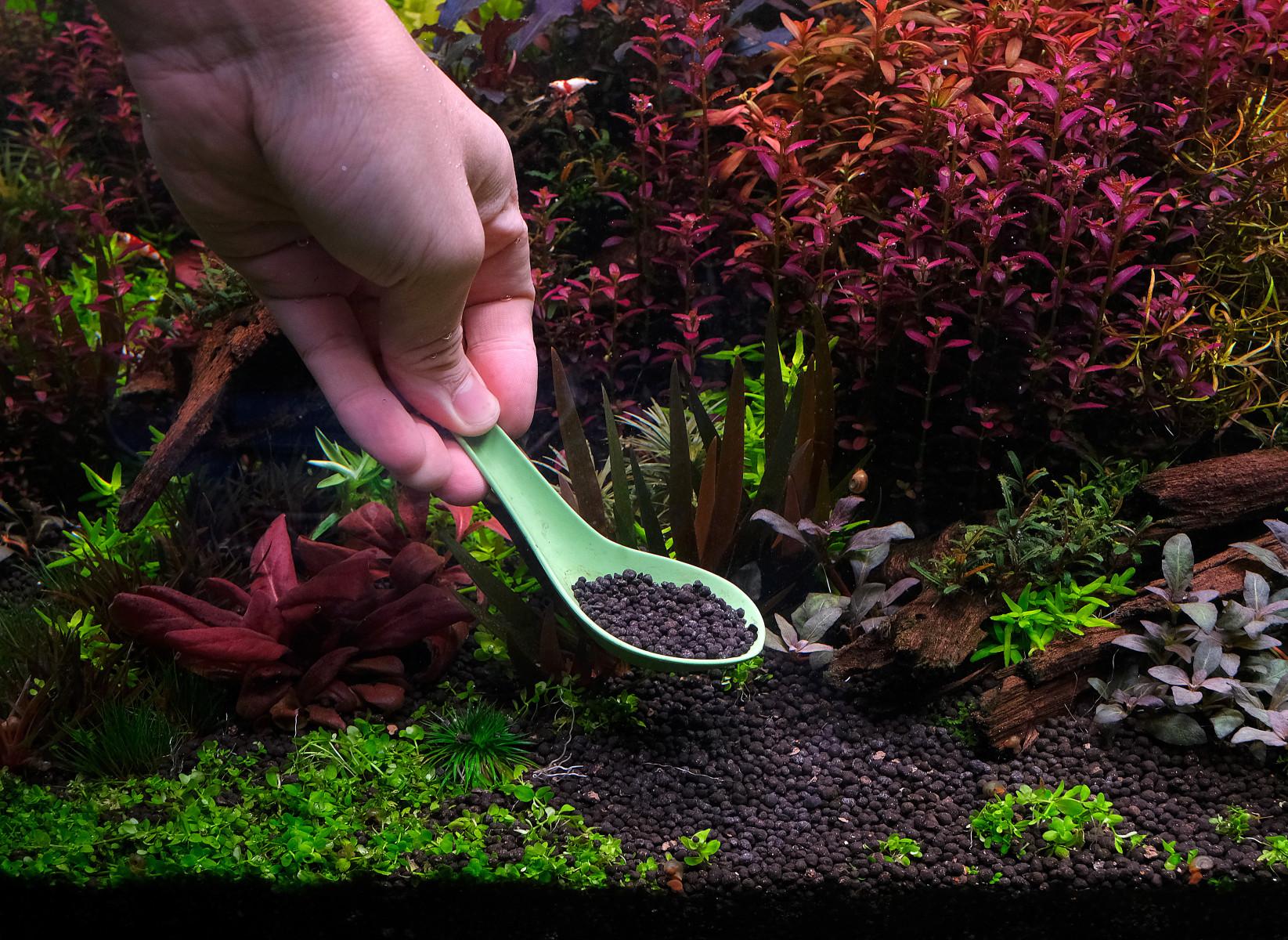
Periodically adding fresh aqua soil when plants are uprooted to be replanted refreshes the ammoniacal nitrogen content of the substrate.
How Do You Use Inert Substrate in a Planted Tank?
What Grain Size Is Best for Inert Substrate?
Around 2-4 mm is ideal. Super fine sand compacts and gets disturbed by fish and shrimp. Pea gravel is too coarse for smaller plants with fine roots. Most materials are chemically inert. Avoid coral sand or limestone chips unless you specifically want to raise KH. This can be done by acid-testing any unknown substrate. Very lightweight aquarium substrates such as Eco-complete are difficult to plant in. Delicate plants and short-rooted species need a substrate that holds them in place.
What Are the Common Inert Substrate Options?
Common inert options run from plain sand, pool filter sand and aquarium gravel to fired clay products like Seachem Flourite, CaribSea Eco-Complete, Turface and Safe T Sorb - all composed of rock minerals or baked clay that stay largely unchanged over time. Despite the long element lists on the bag, these materials do not supply meaningful nutrients: those elements are locked in the mineral crystal lattice and are not plant-available, so feeding comes from water column dosing. For side-by-side photos and reviews of every inert substrate, see our inert substrate reviews.
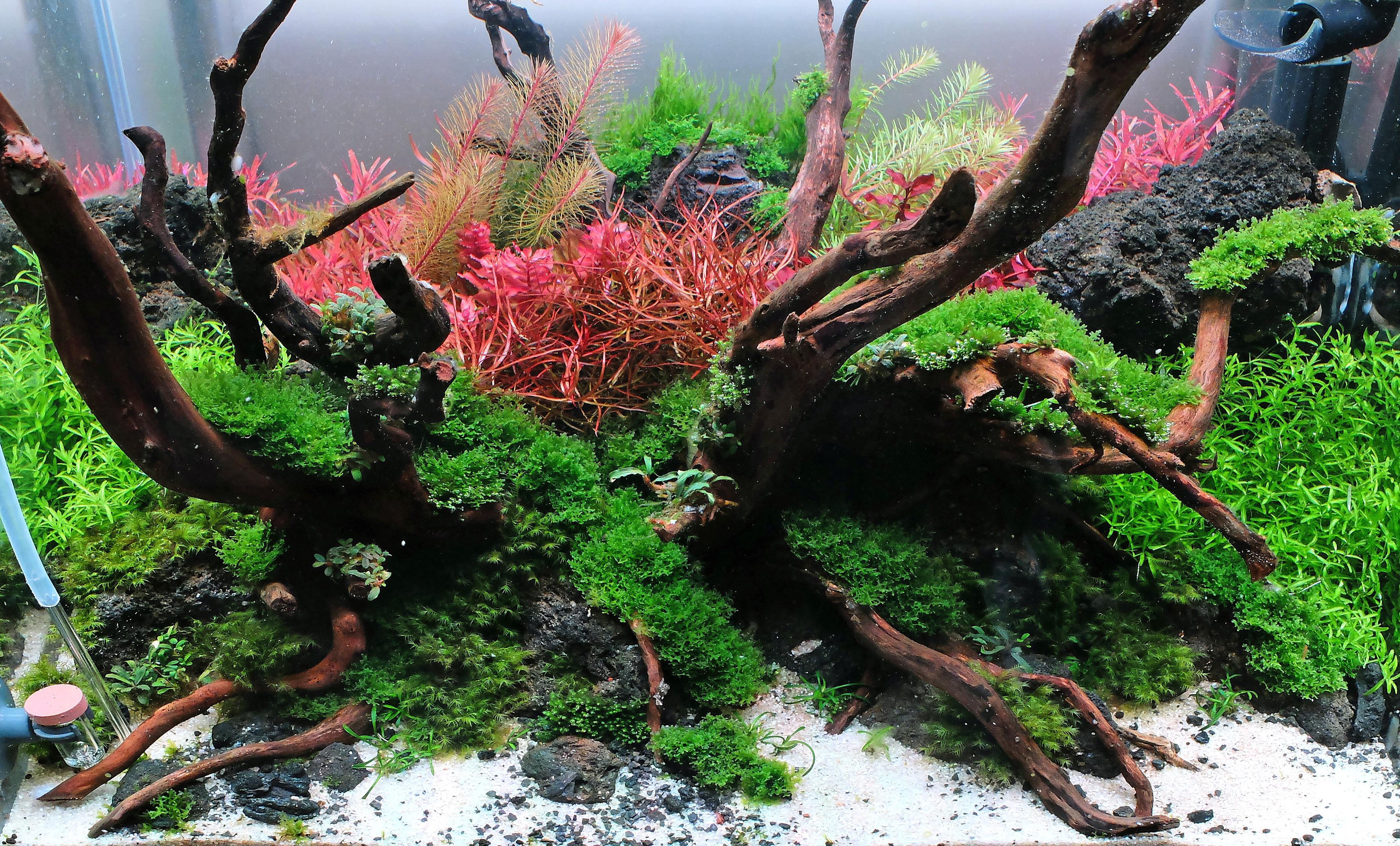
Inert substrates are often used for their aesthetics. Aquascapes can also divide sections using aqua soil from sand using hardscape as a divider.
How Do You Dose Nutrients with an Inert Substrate?
Most plant species take in nutrients readily from the water column, and will grow well as long as water column nutrients are managed well. Aquatic plants have various adaptations that allow them to take in water column nutrients more effectively, including reduced cuticle formation on leaves and growing finely divided leaves that give greatly increased surface area. Dosing an all-in-one liquid fertilizer regularly will provide nutrients for plants.
The level of nutrient saturation in the water column to target depends on the type of plant species grown. Hardy species scavenge nutrients aggressively, and can grow even when nutrient levels are hardy detectable by hobbyist test kits. Pickier species such as Ludwigia Pantanal, or species that rely more heavily on water column nutrients such as Tonina and Syngonanthus species will prefer higher nutrient levels (5-10ppm+ of nitrate for example).
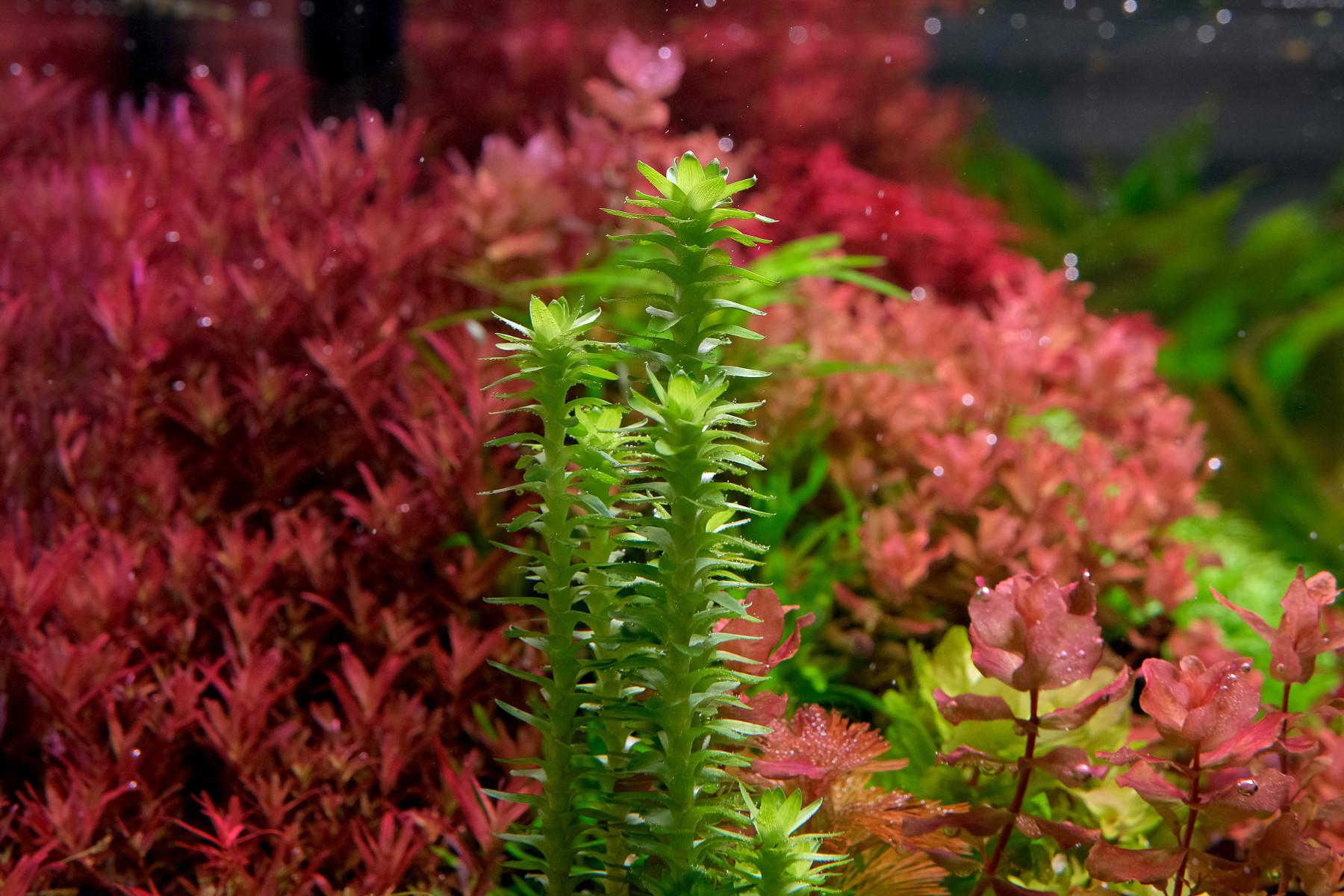
Tonina species prefer a higher saturation of water column nutrients.
How Do You Maintain an Inert Substrate?
Inert substrates do not alter water chemistry, making it easier for aquarists to manage water parameters. Replanting and rescaping is much simpler because uprooting plants releases less trapped organics and soil particulate matter. For beginners experimenting with layouts, or Dutch-style aquascapes that require very regular replanting, inert substrates are a practical choice.
Accumulated fish waste and organic debris should still be cleared, as excessively labile substrates interfere with the delicate root systems for some plant species. Detritus introduces a large amount of organic waste into the system that triggers algae, while contributing poorly to nutrient levels. The weight of inert substrates allow them to be vacuumed lightly at the surface - avoiding disturbing the deeper layers of the root zone.
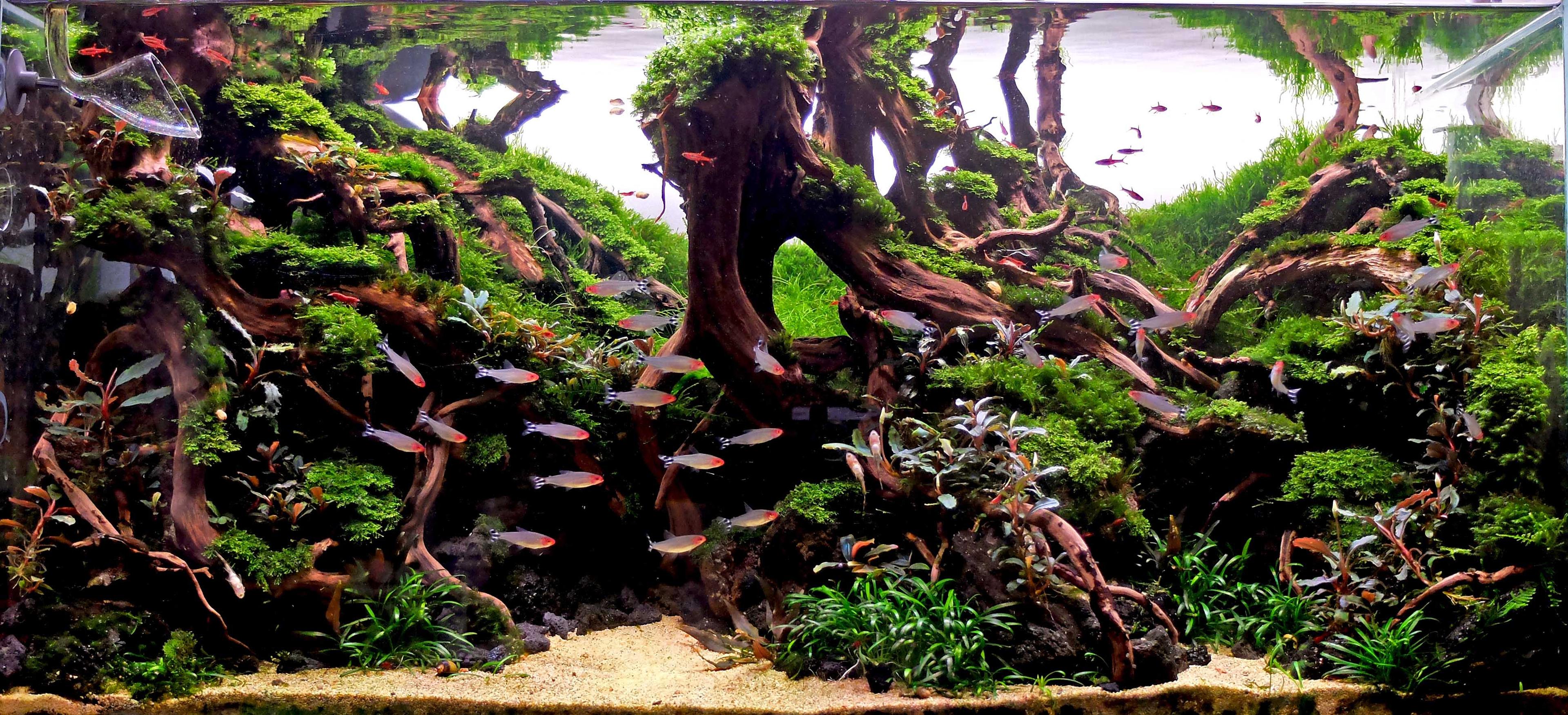
For aquascaping layouts, mix materials deliberately. Use aquasoil in planted zones and cosmetic sand in open pathways or foreground areas. You can create slopes by building up substrate depth at the back. Brown and pale sands give a more natural look alongside rocks and wood. Whatever you choose, make the substrate work for the tank you are actually going to maintain, not the one you daydream about.
How Do You Use Active Substrate (Aquasoil) in a Planted Tank?
How Deep Should Aquasoil Be?
How much substrate to use depends the plant selection. Smaller carpeting plants only need 2-3cm of substrate depth while larger plants such as large Cryptocoryne species and Sword plants have root zones that easily penetrate 10cm+ of substrate. For most medium sized aquarium plants that are suitable for aquariums 60-300 litres, 5cm would be the minimum substrate depth required while 8cm+ would provide more depth for plants to stretch their roots. For a better front visual, planted aquariums should generally have substrates that slope to the rear.
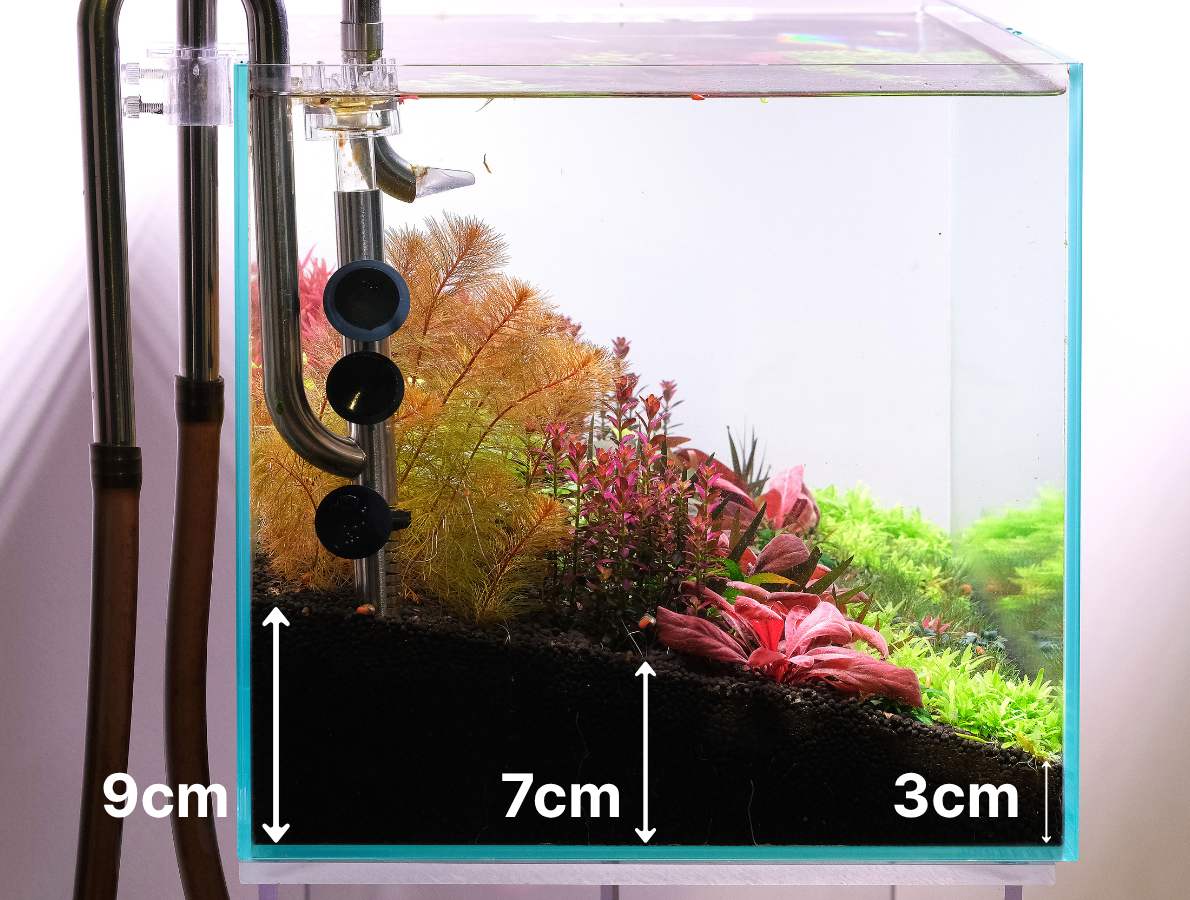
In this 60x36x36cm planted aquarium, the soil starts at 3cm depth and is sloped to 9cm at the rear.
How Many Water Changes Does New Aquasoil Need?
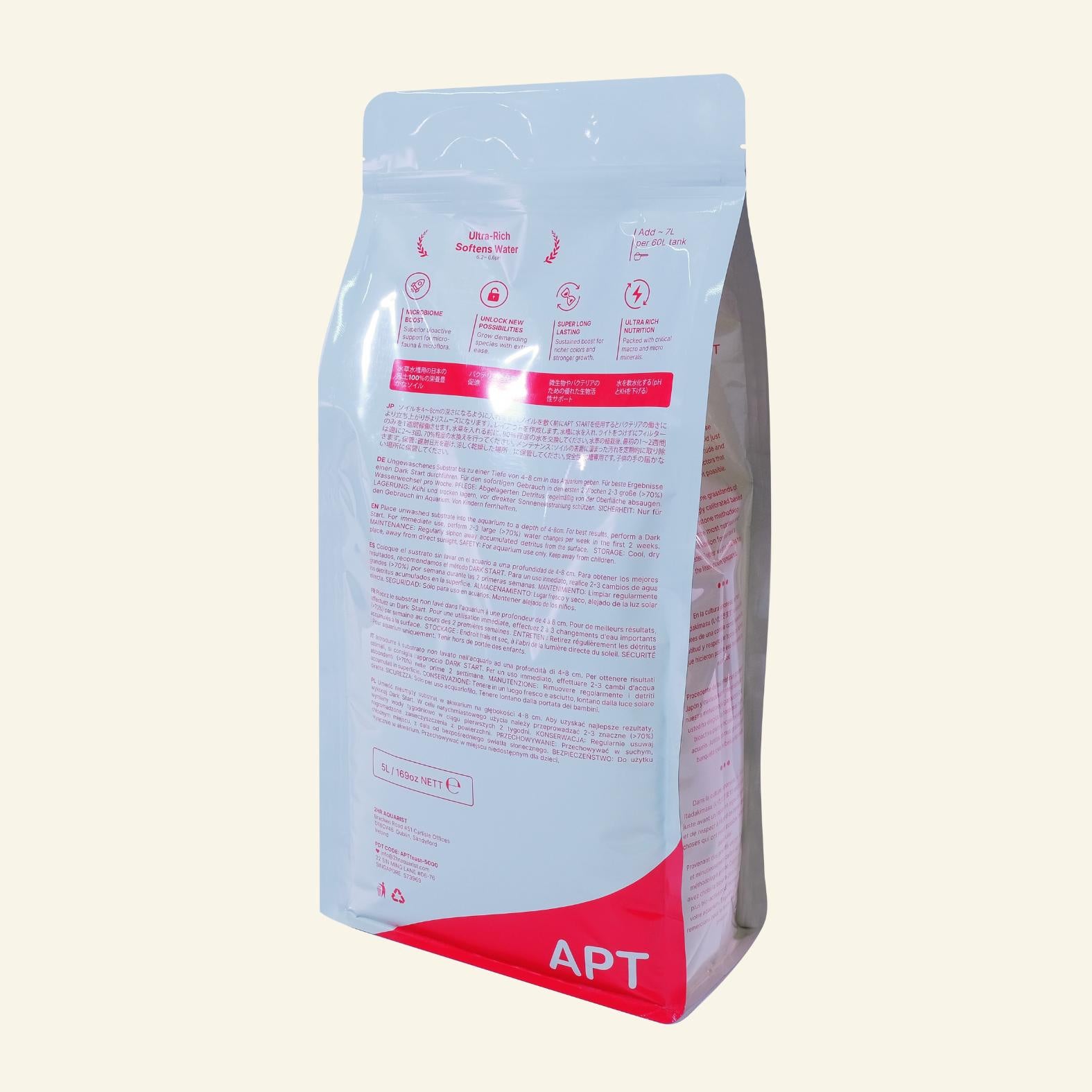
High ammonia aquarium soils grows plants better in the long run but will leach high levels of ammonia when first submerged. In high ammonia aquasoils such as ADA Amazonia or APT Feast, ammonia levels will reach 10+ppm within the first couple of days of submerging the aqua soil. The ammonia spikes cause algae and other plant adaptation issues in newly planted aquariums unless very large frequent water changes are done for the first few weeks. After settling in, ammonia rich aqua soils boost growth speed and quality significantly - making it a top choice for aquarists focused on growing difficult plants to show quality. Recommended water change schedule:
-
Change 90-100% of the tank water every other day for the first two weeks.
-
50-70% weekly water change for the fourth week onwards. More often if there are algae or plant growth issues.
For beginners that have not yet set up efficient water change systems, handling high ammonia aqua soils can be difficult during the initial weeks - for these folks, doing a dark start instead will reduce the need for so frequent water changes during the initial weeks.
Lower ammonia content aqua soils are popular among aquascapers that want aquariums to settle in with less work. They are easier to use in aquariums where the plant selection is forgiving and maximizing plant growth is not a priority. Even with aqua soils that do not emit so much ammonia, larger water changes during the first few weeks still prevent algae and help plants settle into the aquarium, so aquarists that have efficient water change systems should still do large water changes when the aquarium is first planted.
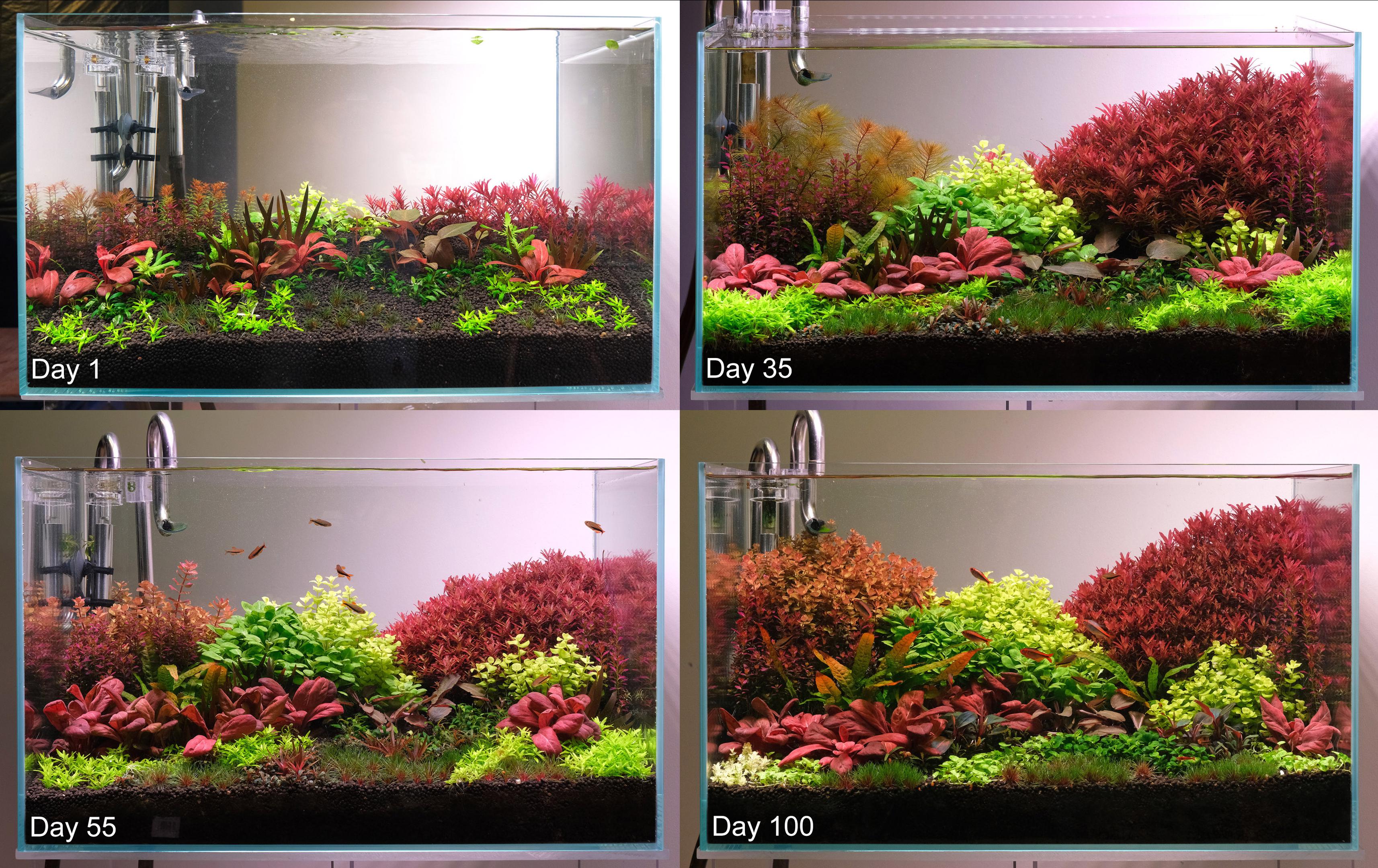
Large water changes in this aquarium using APT Feast aquasoil helps skip diatoms and Green dust algae phases, allowing a speedy, smooth grow in period.
Does Aquasoil Still Need Water Column Dosing?
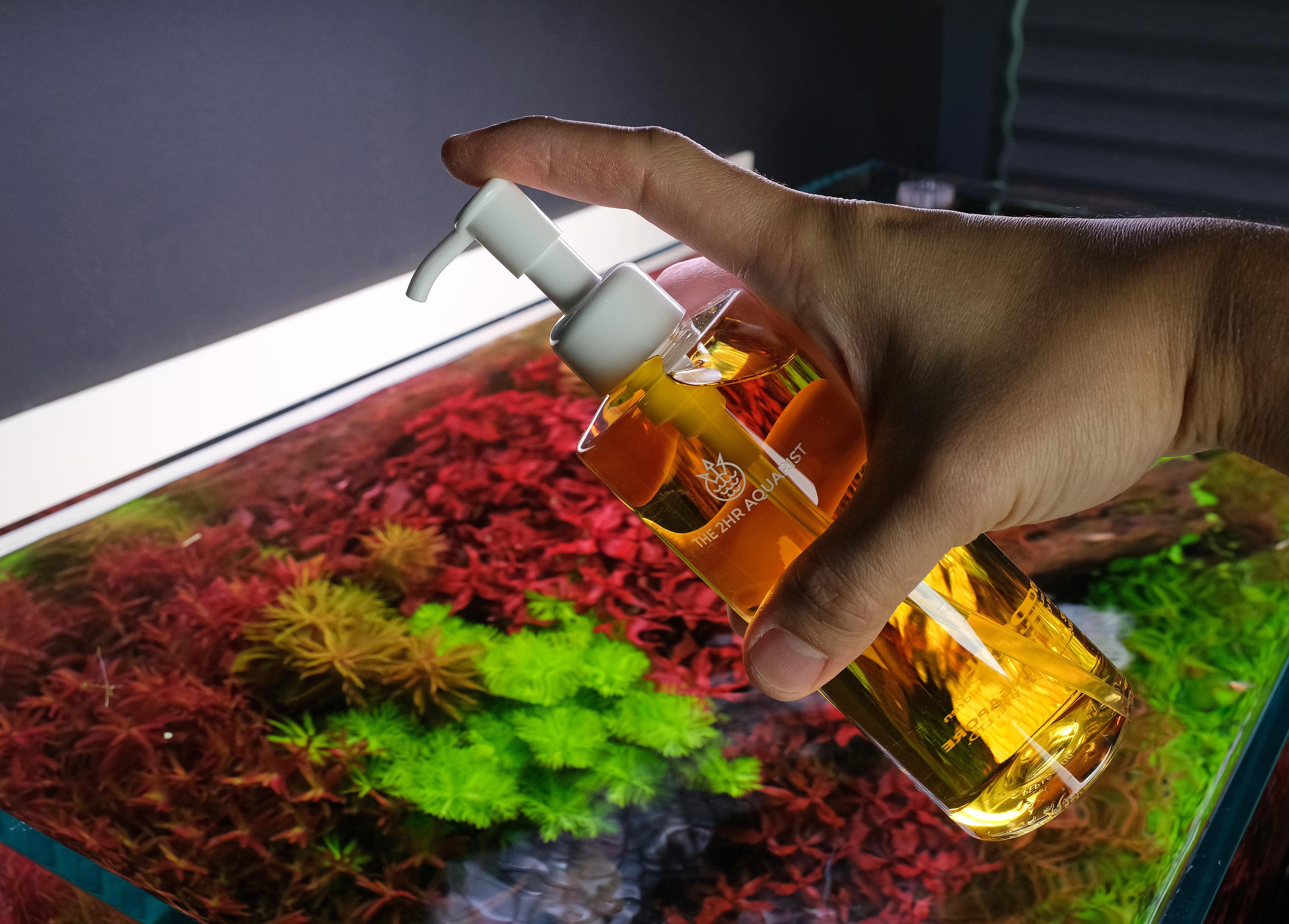
Most aquariums make use of shallow soil layers that do not allow plants to run deep root systems that constantly explores new pockets of soil for nutrients. This system has some similarities to bonsai in this aspect. While rich aqua soils can grow most plant species well for an extended period of time, water column dosing extends aqua soil longevity by feeding plants directly through the water column. Using a comprehensive water column fertilizer also makes up for the short comings of lean aqua soils.
Aquarium plants absorb water column nutrients efficiently and water column dosing paired with nutrients in the substrate results in more optimal growth form and speed compared to just feeding nutrients from one angle. Some water column nutrients also bind to soil particles and become available to plant uptake through that route.
Water column feeding also bypasses root zone issues - this is especially so for newly added plants that have not yet grown a root system. In aquascapes that grow plants on hardscape such as wood and rock rather than substrate, plants also need to draw nutrients from the water column to grow well. For all these reasons, water column dosing can still have a large impact on plant growth in aqua soil aquariums.
Does Aquasoil Need Cleaning and Maintenance?
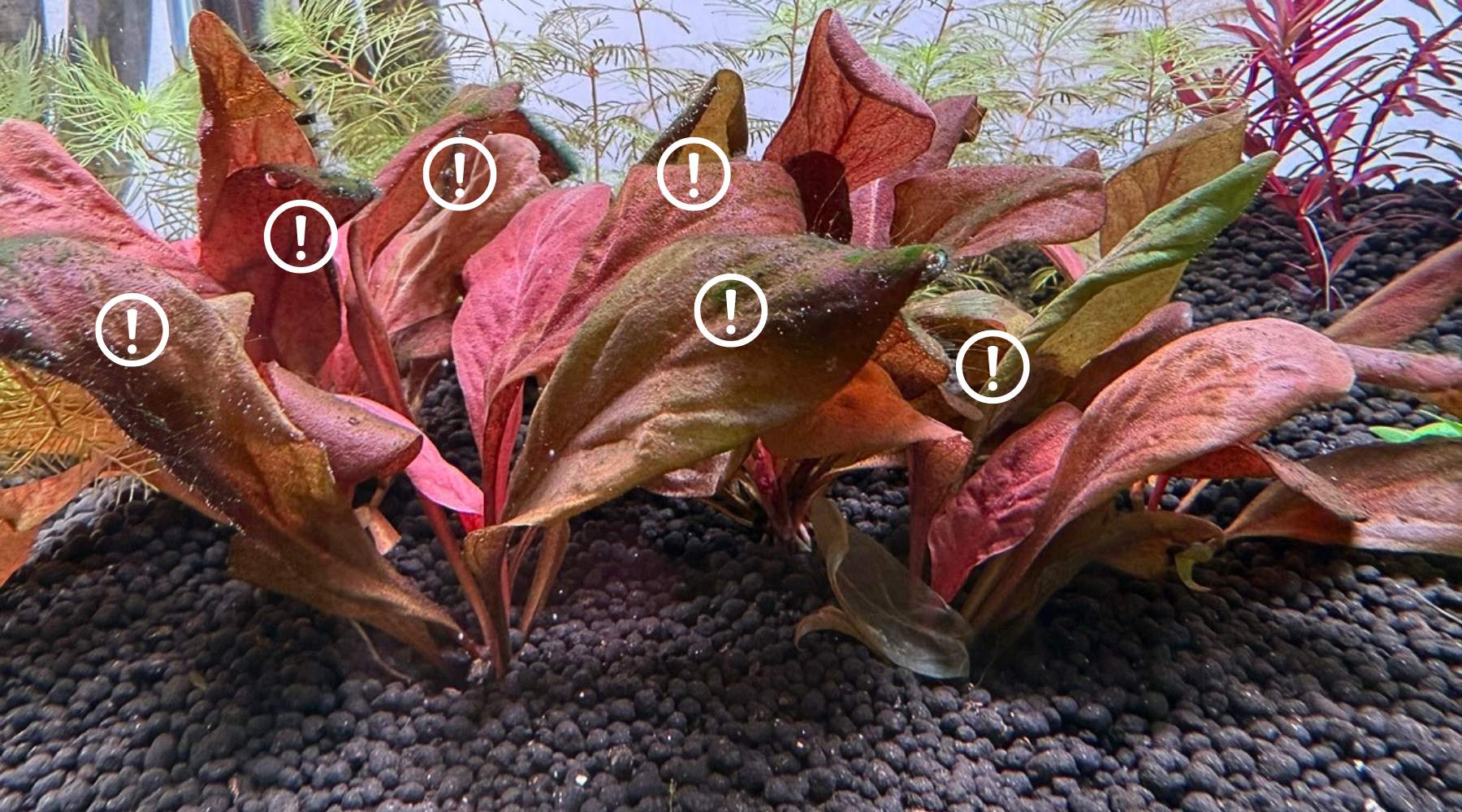
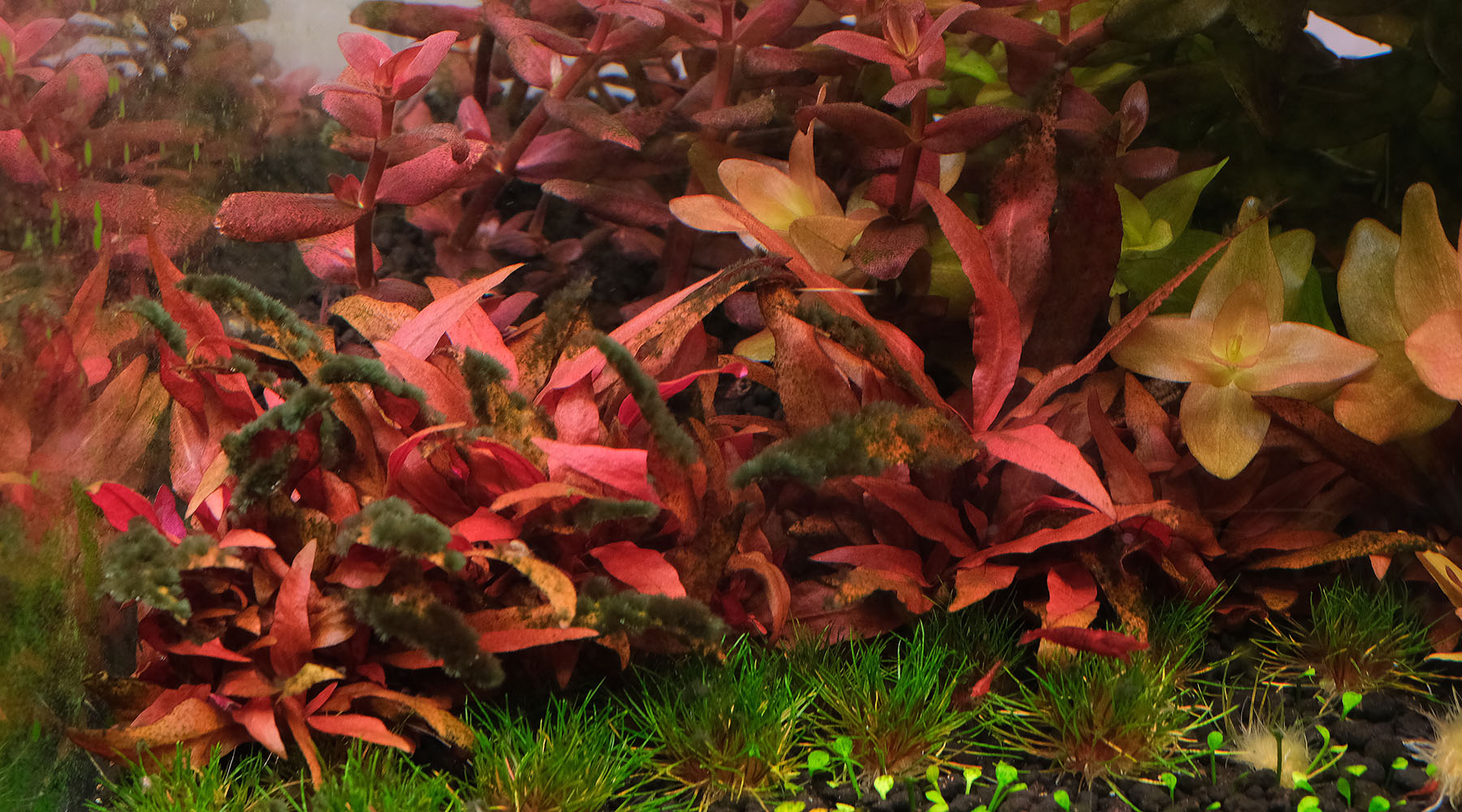
One of the biggest myths in the aquarium industry is that aqua soil does not need cleaning and maintenance. Many folks claim that organic detritus that collects at the substrate level adds nutrients to the substrate - there is a modicum of truth in that statement. In reality excessive detritus introduces a large amount of organic waste into the system that triggers algae, while contributing poorly to nutrient levels. No fish poops out chelated iron or meaningful amounts of trace minerals that are impactful to plant growth. However, organic detritus is the one key factors that can trigger algae blooms when combined with high light levels.
Excess organic detritus also interferes with root growth of delicate plant species. This is again counter intuitive as terrestrial gardens often add compost to enrich their soil - doesn't adding organic debris to aqua soil work similarly? It does not - in submerged environments, organic debris often results in overly labile soil conditions that can drive down oxygen levels, compact substrate, and propagate pathogenic microbes that attack root systems of less robust plants.
Excess organic debris on the substrate surface should be siphoned regularly during water changes.

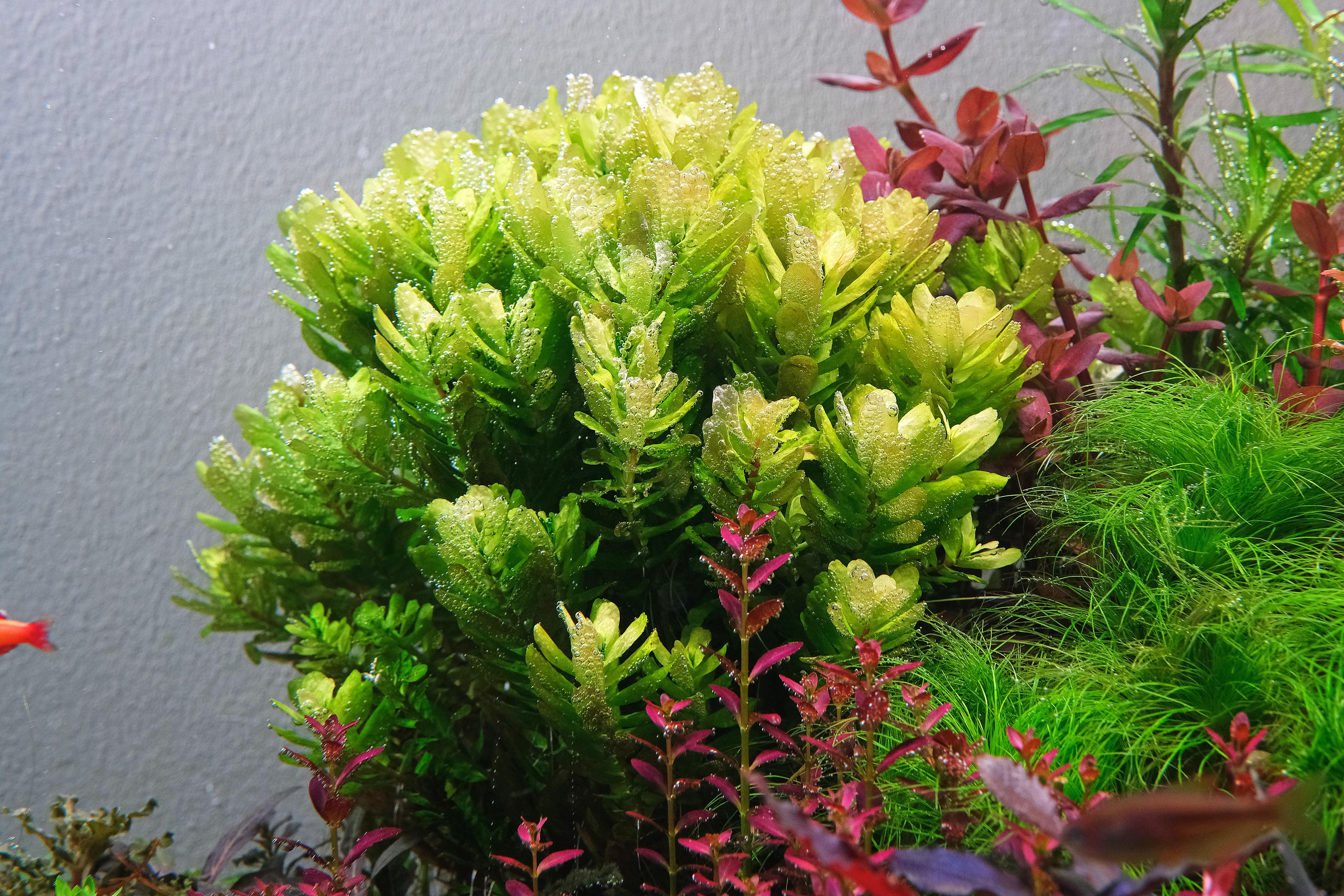
The idea of a "clean" soil substrate is mind blowing. However, many plant species such as Rotala tulunadensis (above) have a preference for aqua soils that are not choked up by organic debris, and having clean soil is key to growing them well long term.
Substrate enrichment Aqua soils all deplete their nutrients over time. While a small amount of nutrients from the water column will bind to soils, the overall concentration of nutrients in the water column is not saturated enough to truly "enrich" the soil. In aquariums growing lower demand plants at a slower pace, this is not a significant issue. Aqua soils can be used indefinitely till they break down.
However, for aquariums growing more difficult plants or aiming for optimal plant growth forms, enriching the substrate with root tabs or adding fresh aqua soil makes a big impact. The main compound that significantly powers plant growth and vigor is ammonium, so adding root tabs that contain ammoniacal nitrogen or ammonia enriched aqua soils makes the biggest impact.
Fresh aqua soil can be added when plants are uprooted to be topped and replanted. In areas where plants are not moved/uprooted regularly, root tabs can be inserted instead.
Aquasoil Cycling and Ammonia Behaviour by Brand
Aquasoils differ most in how much ammonia they leach and how long they take to cycle. Here is how the major brands behave on that axis; for the visual review gallery and more brands, see our aquasoil brand reviews.
|
Product |
Key Traits |
|---|---|
|
2hr Aquarist APT Feast |
Highly enriched with ammonia, requiring frequent water changes during the initial weeks. Takes 3-4 weeks to cycle. Excellent product for plant growth. |
|
ADA Aqua Soil (Amazonia) |
Popular among serious aquascapers. Highly enriched with ammonia, requiring frequent water changes during the initial weeks. Takes 3-4 weeks to cycle. Excellent product for plant growth. |
|
Tropica Aquarium Soil |
Popular European brand. Not as rich in ammonia compared to ADA Aquasoil. Easy to use for beginners. |
|
Fluval Stratum |
Minimal ammonia leaching. May be a little light for planting and low nutrient load. |
|
UNS Controsoil |
Known for not leaching ammonia after being added and is less messy than other aquarium soils. |
Does DIY Soil Substrate Work in a Planted Tank?
Garden or topsoil capped with coarse sand is the budget route: use a balanced loam of low organic content (10-15%), a soil depth of one to three inches, and as thin a sand cap as you can manage. It grows plants well and saves money, but is messier, harder to troubleshoot, and less consistent than commercial aquasoil - which exists precisely because raw soil underwater is effective but unpredictable.
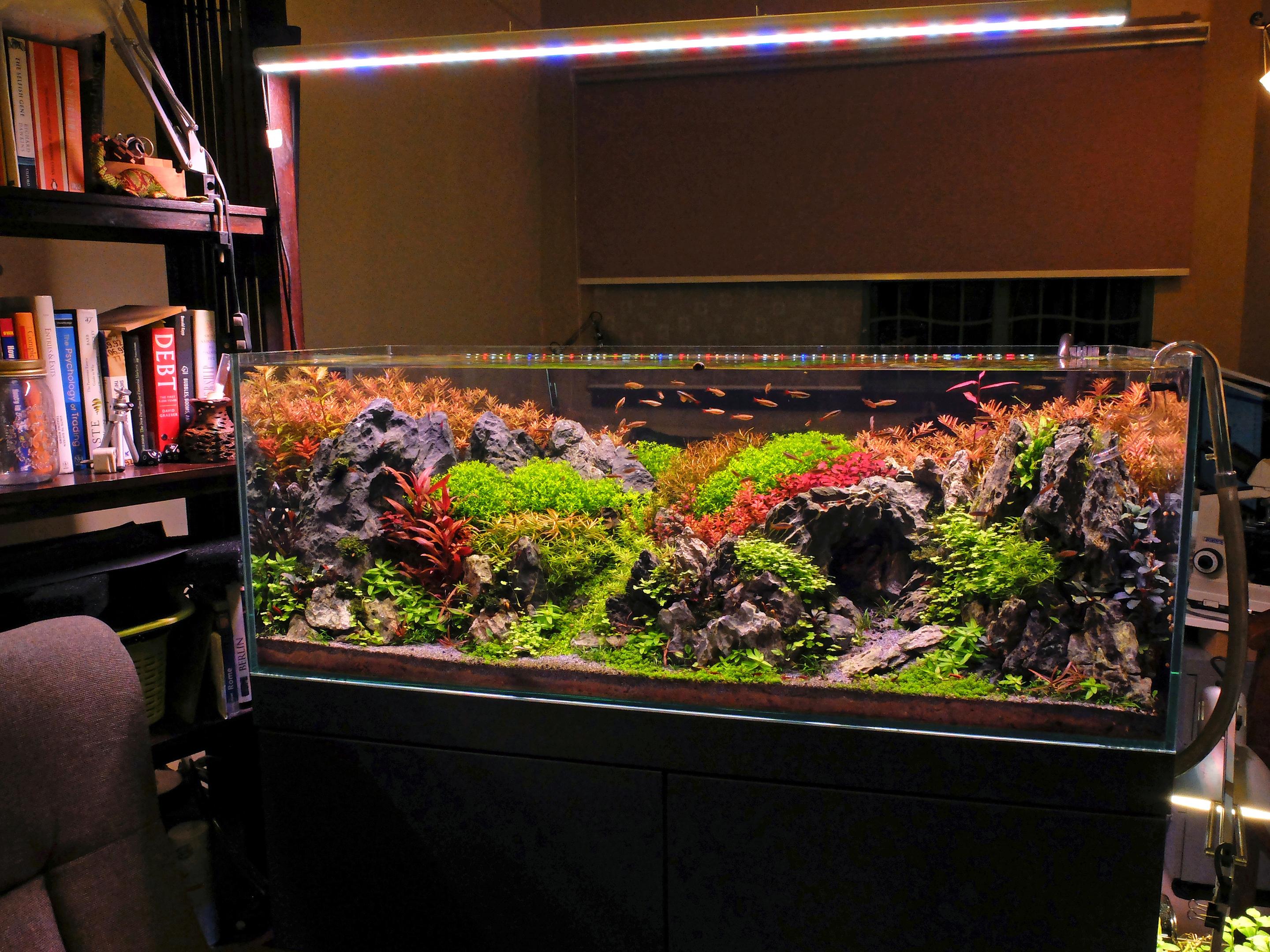
Should You Buy Aquasoil or CO2 Injection First?
For hobbyists on a limited budget this is actually an important question - Does inert substate + CO2 injection grow plants better or Aqua soil + No CO2 injection. The answer is clear - CO2 injection wins over aqua soil by a large margin if one was made to pick only one of the two choices. Aquarists can grow a larger variety of plants to great shape and health with CO2 injection and inert substrate than the best substrate and no CO2 injection. From a plant growth optimization point of view, there is no point spending money on aqua soils before obtaining a CO2 injection system.
The only reason to forego CO2 systems and yet spend on aqua soil is if the aquarist does not want to manage the technicalities of a CO2 system. This is a valid reason, as CO2 injection systems take up space, wiring, and effort to calibrate well.
Buying large amount of aqua soil for larger aquariums is costly - as much as CO2 systems would cost. Good quality CO2 systems last forever, and the costs of injecting CO2 into a large aquarium does not increase significantly compared to a smaller aquarium.
Carbon limitation is the main bottle neck of planted aquariums, and plants can take in nutrients from the water column. Plants use more Carbon than all nutrients combined after all, and carbon sufficiency affects overall plant growth tremendously. Most aquatic plants can grow in inert substrates as long as water column nutrient dosing is comprehensive. This includes all carpeting plants as well, such as Dwarf hair grass or Monte carlo - CO2 is more critical for carpeting plant success than soil substrates.
The difference comes when one attempts more difficult/picky plant species. It takes quite a bit of effort to balance water column fertilization to match the needs for demanding plant species in inert substrates, whereas aqua soil grows them more easily. However, the baseline prerequisite of growing more demanding species is having a CO2 system.
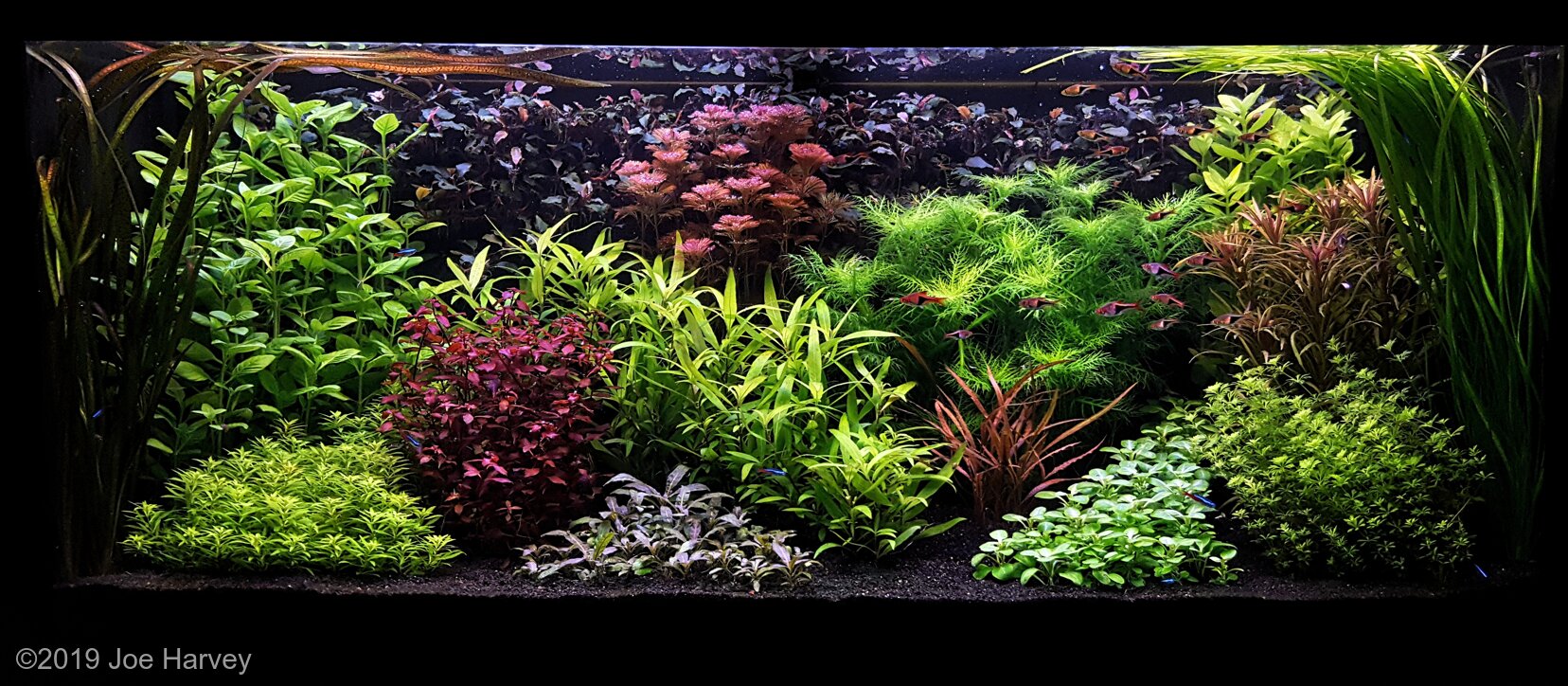
Above: A competition aquascape using inert black diamond blasting sand by Joe Harvey.
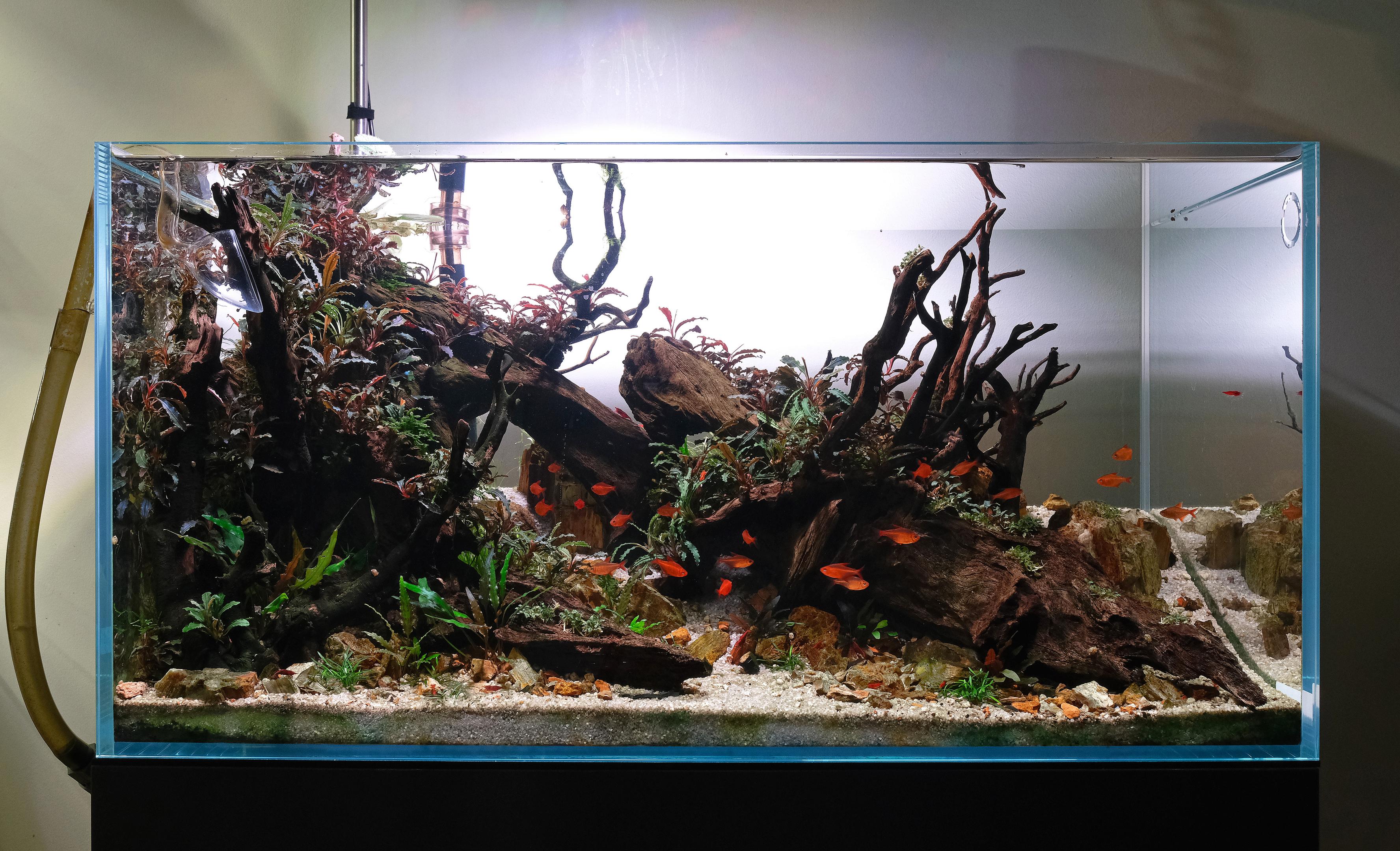
Spending money on impactful hardscape, combined with easier plant species grown well with CO2 injection delivers aesthetically pleasing aquascapes that are low maintenance.
For the deeper dive, head to the 2Hr Aquarist guides on choosing substrate for specific tank styles, root versus water column fertilisation, and long-term aquasoil maintenance.

Compartir:
¿Debe sifonar su sustrato aquasoil? ¿Cómo mantener los sustratos aquasoil?
How to Start a New Aquarium with APT Feast Aquasoil: Two Paths to a Stable Tank