

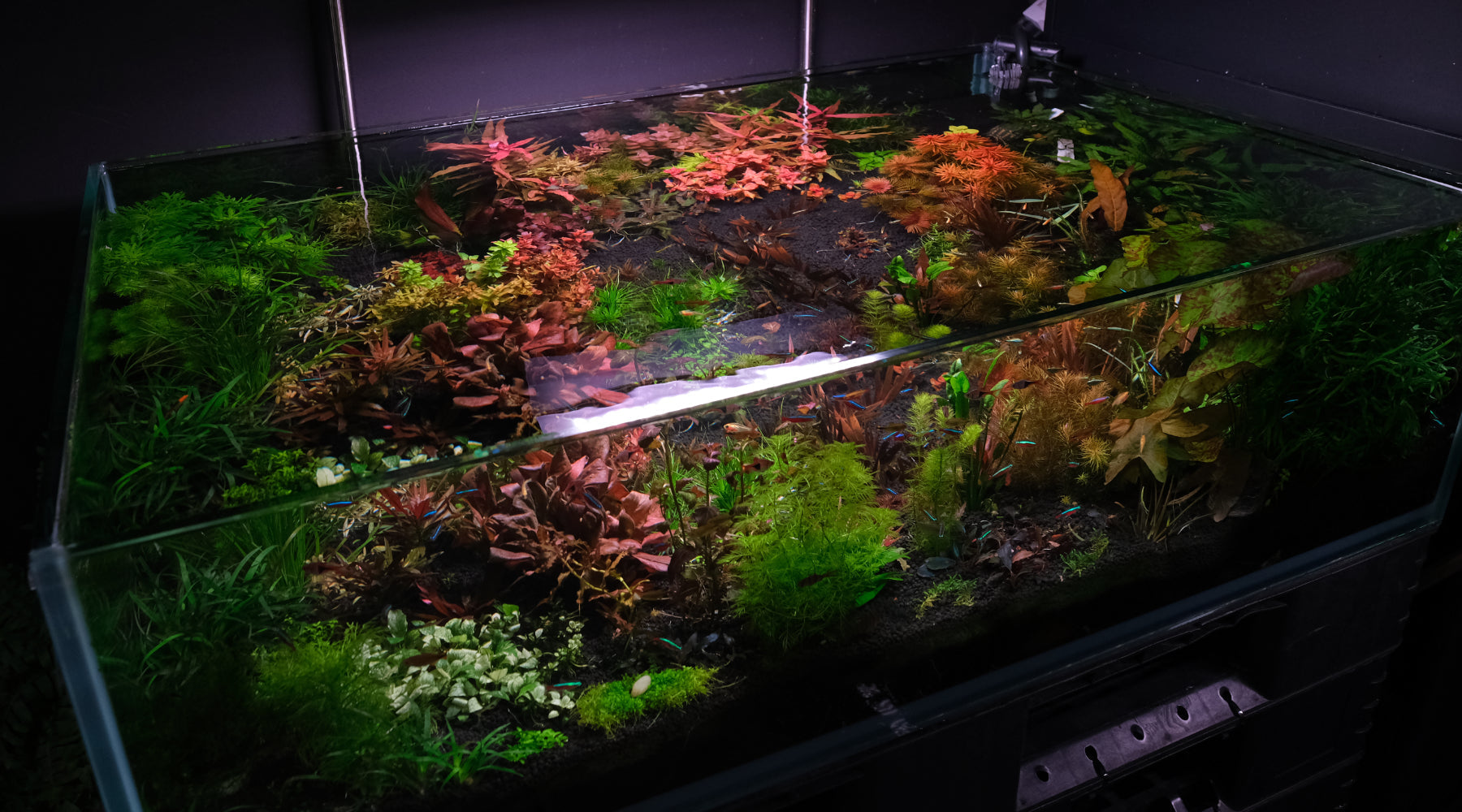
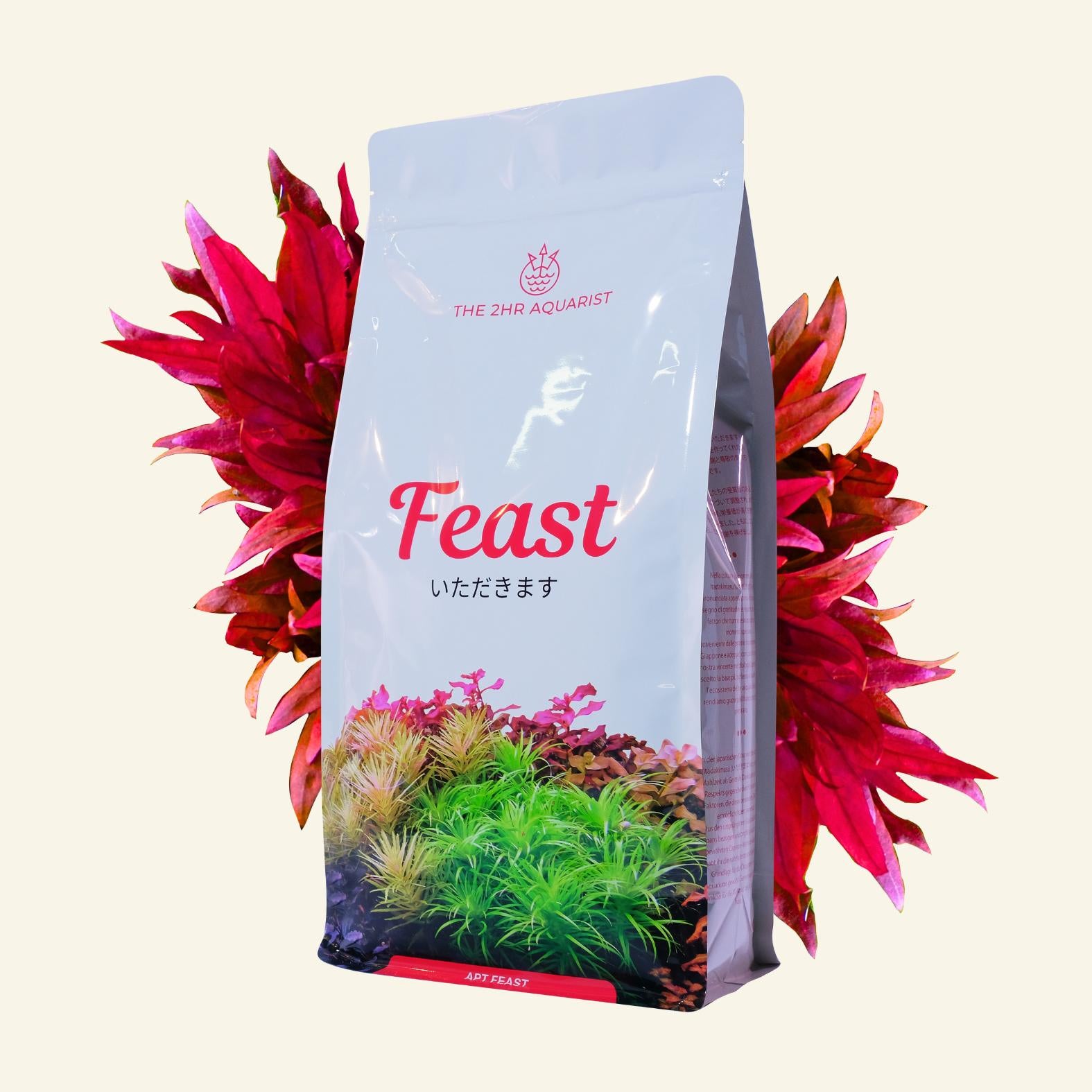
Starting a new planted aquarium with APT Feast aqua soil requires one clear decision at the beginning: either cycle the fish tank for two to three weeks before planting, or plant on Day 1 and commit to 100% water changes every other day for the first two weeks. Both paths work. APT Feast is a natural soil, exceptionally rich in organics and providing more than twice the nitrogen of conventional substrates, but freshly submerged, it releases a lot of ammonia and volatile compounds. With rather simple steps taken, planted aquarium plants using APT Feast can grow in extremely quickly, reaching full maturity in weeks while skipping diatoms and other algae cycles. This article will describe how to manage planted aquariums using APT Feast aqua soil to achieve fast, algae free results.
Quick Answer
-
APT Feast releases high ammonia and organics the moment it is submerged - this is normal, not a defect.
-
Path 1: Run the filter for 2 to 3 weeks before planting (dark start) so beneficial bacteria establish and the ammonia cycling microbes matures. Do a 100% water change after the dark start, then plant.
-
Path 2: Plant on Day 1, but do 100% water changes every other day for two weeks minimum. Large water changes remove algae spores, ammonia and pathogenetic microbes before the aquarium matures biologically. Beneficial microbial colonies attach to surfaces, and continue to develop well even with large water changes.
-
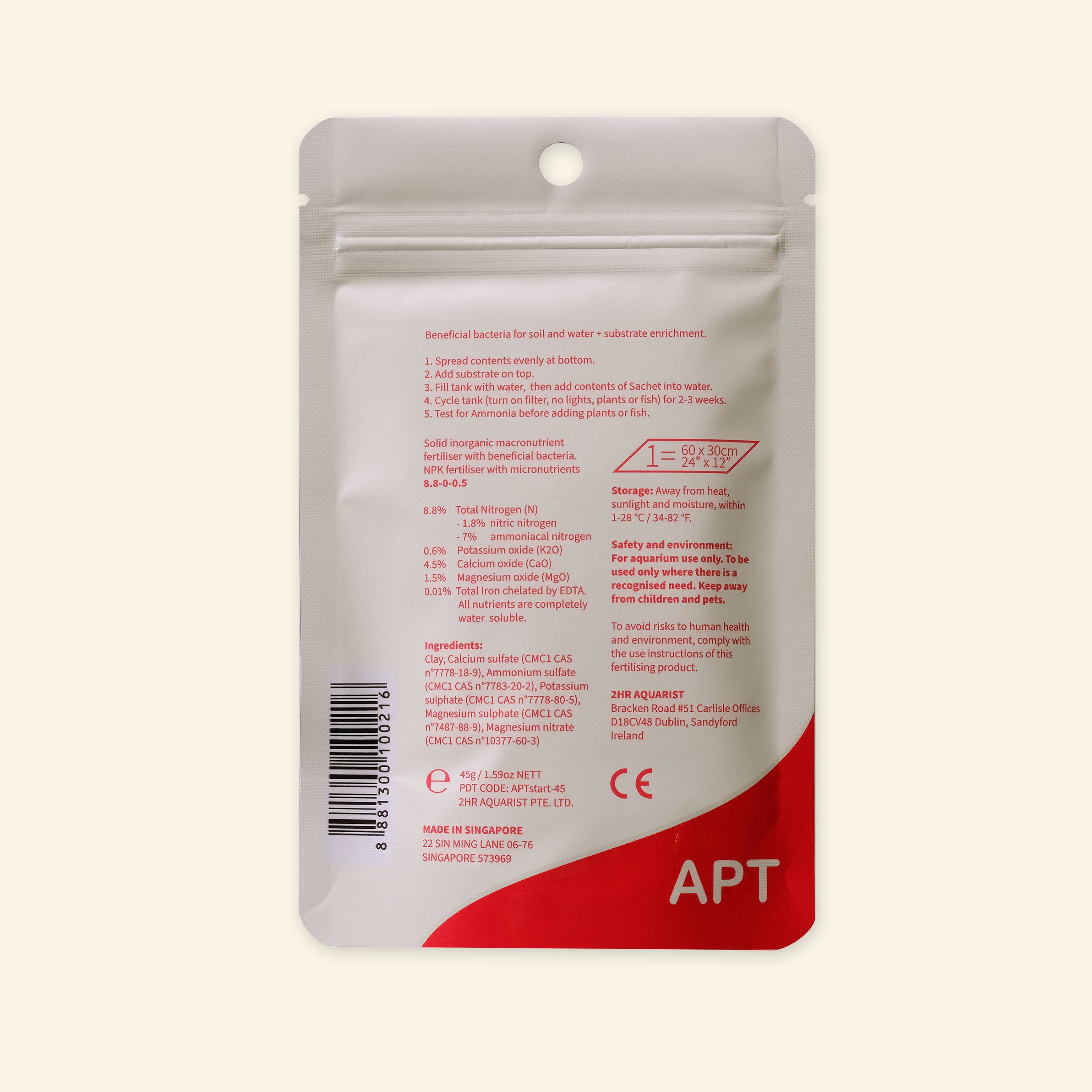
Both paths require seeding the filter with starter bacteria or mature filter media from an established tank to speed up biological maturity.
-
Liquid fertilizer dosing can start once plants are planted. Before roots are established, plants will take in nutrients from the water column.
-
Planting densely from the start helps to stabilize the tank and make it algae resistant faster.
How is Plant Growth Different With APT Feast Aqua Soil in a Planted Aquarium?
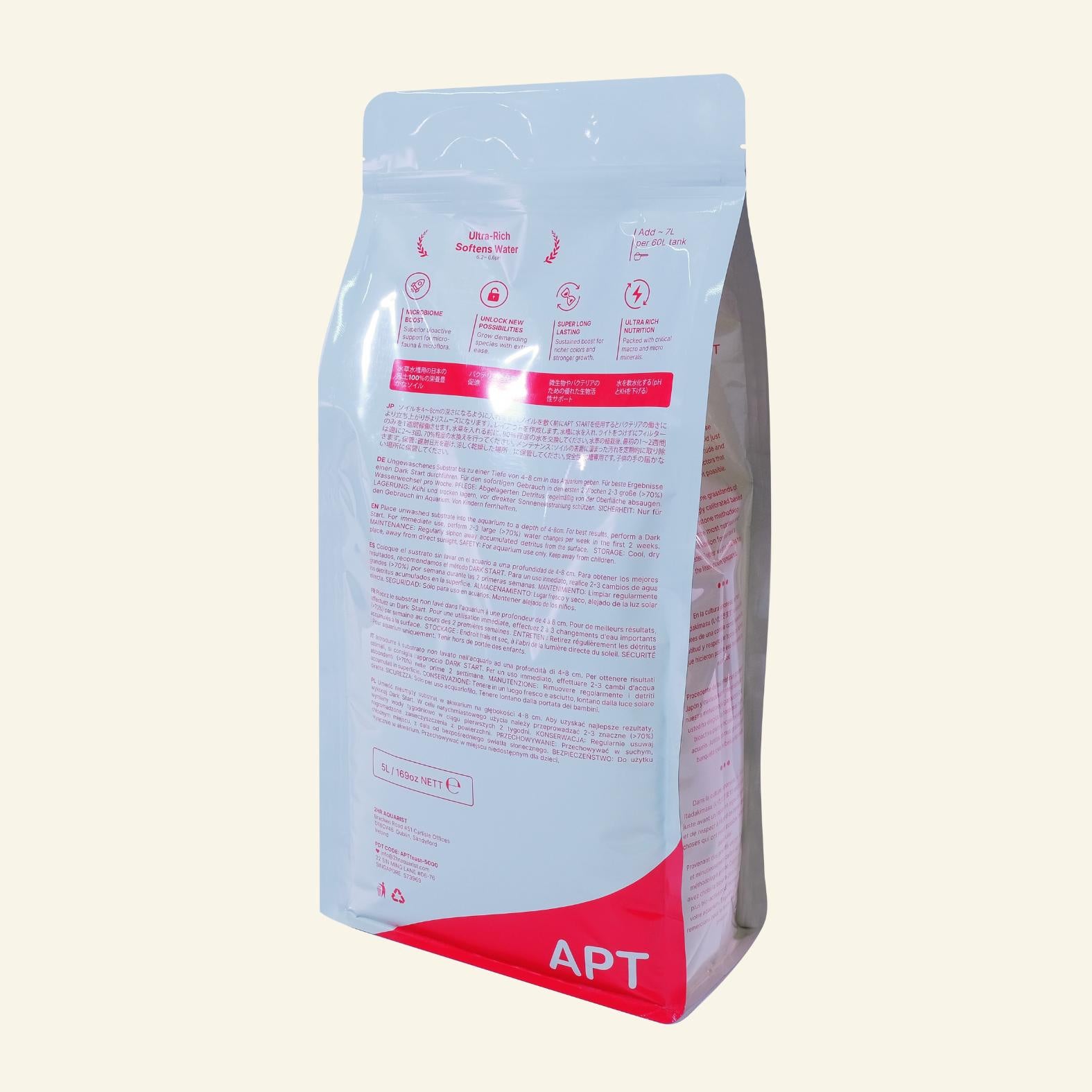
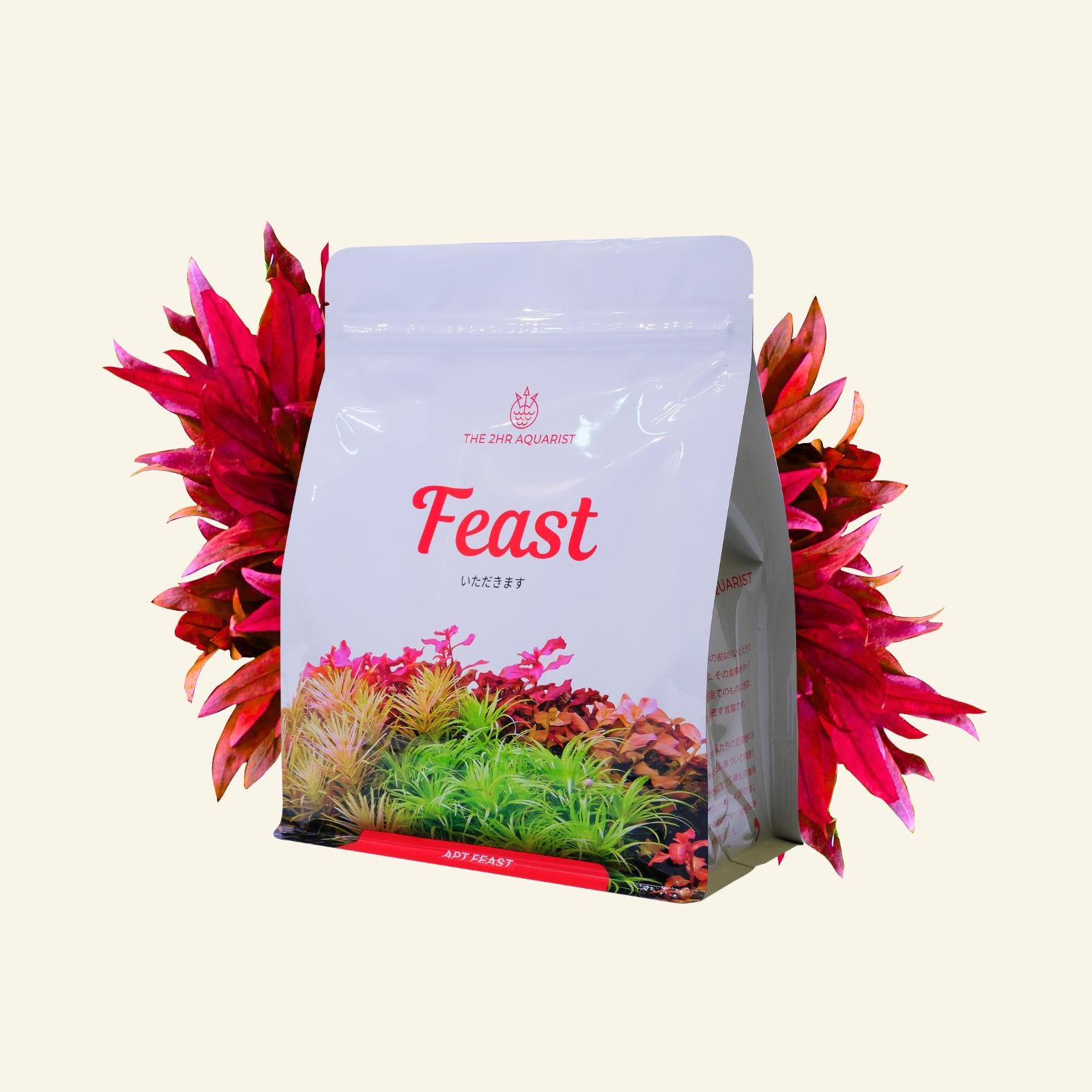
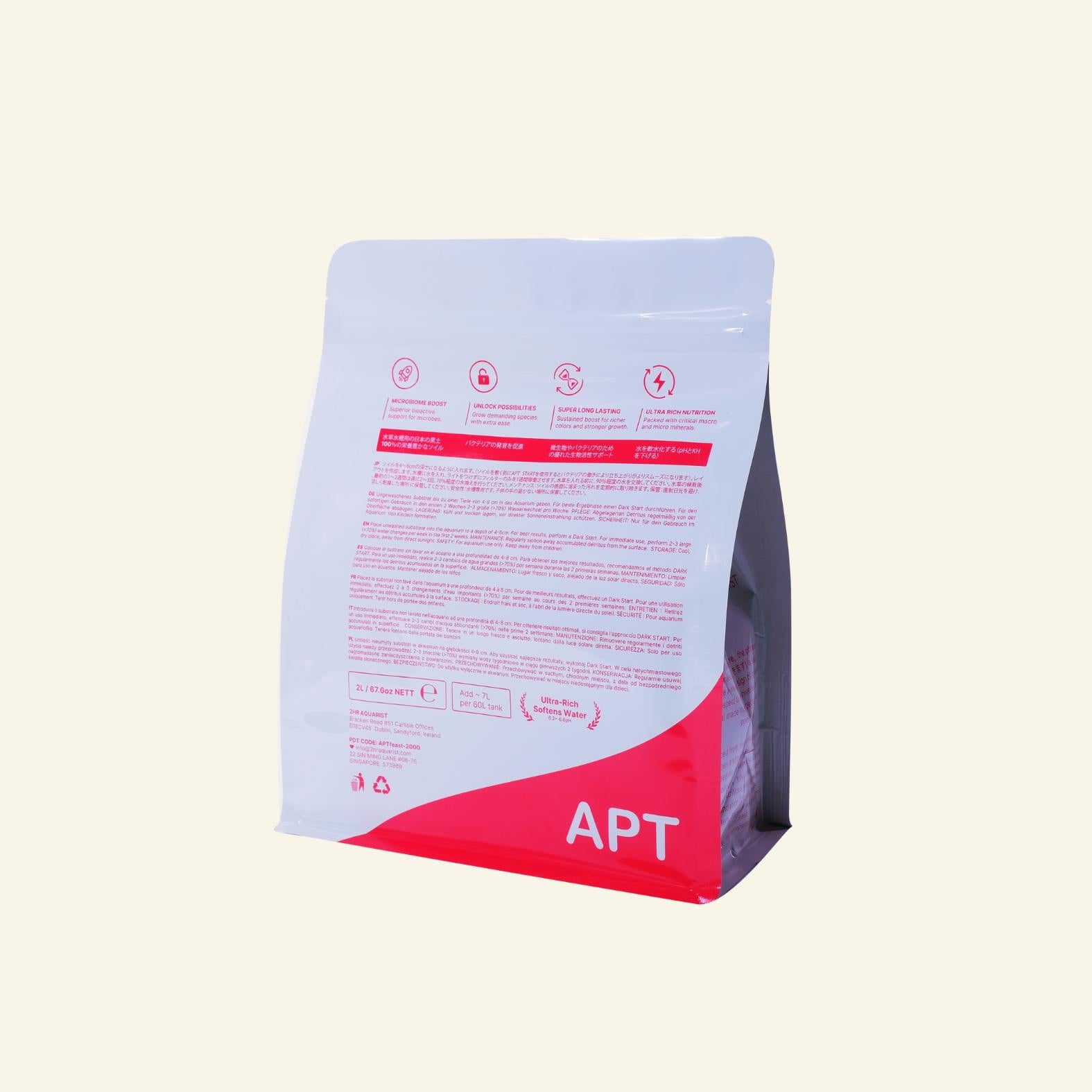
APT Feast was developed over three years with agronomists in Japan. Like most quality aqua soils, it is designed to hold its shape underwater, has a porous granular structure that allows good water circulation around plant roots, and behaves like a sponge with high cation exchange capacity - absorbing nutrients and delivering them to the roots over time. It contains peat, softening water parameters slightly for better plant growth. That much APT Feast shares with the broader category of aqua soils.
Here is where we have to correct a popular claim you'll see in shop descriptions and customer reviews. A lot of marketing says brand X aqua soil is "nutrient rich", yet releases minimal or no ammonia upon submergence. The truth is that aqua soils that have high nitrogen content are all enriched by adding some form of ammoniacal fertilizer in the grain formation process. Ammoniacal nitrogen is what gives the growth boost to plants and it bonds to soil particles. Nitrates leach out to the water column readily. Aquarium soil can also contain nitrogen from organics but manufacturers cannot spike organic content too high due to the biology of submerged soils - overly high organic content gives rise to overly labile soils that are problematic. So all aqua soils that are actually rich will leach ammonia significantly - the richer the soil, the more ammonia leaches during the initial weeks.
This applies to ADA Amazonia Ver 1 and also to APT Feast. Our aqua soil is one of the richest mixes on the market, and correspondingly, will leach the most ammonia compared to other brands. There is no truly rich soil that does not produce ammonia.
Can you grow plants well in lean aqua soils ? Yes, and you can also grow plants in inert substrates with water column dosing. However, a lot of the benefit of using aqua soils become from the presence of ammoniacal nitrogen - plants can get most of the other nutrients from the water column just fine. Ammoniacal nitrogen is difficult to dose through the water column, but makes a big impact on growth form and the robustness of plants.

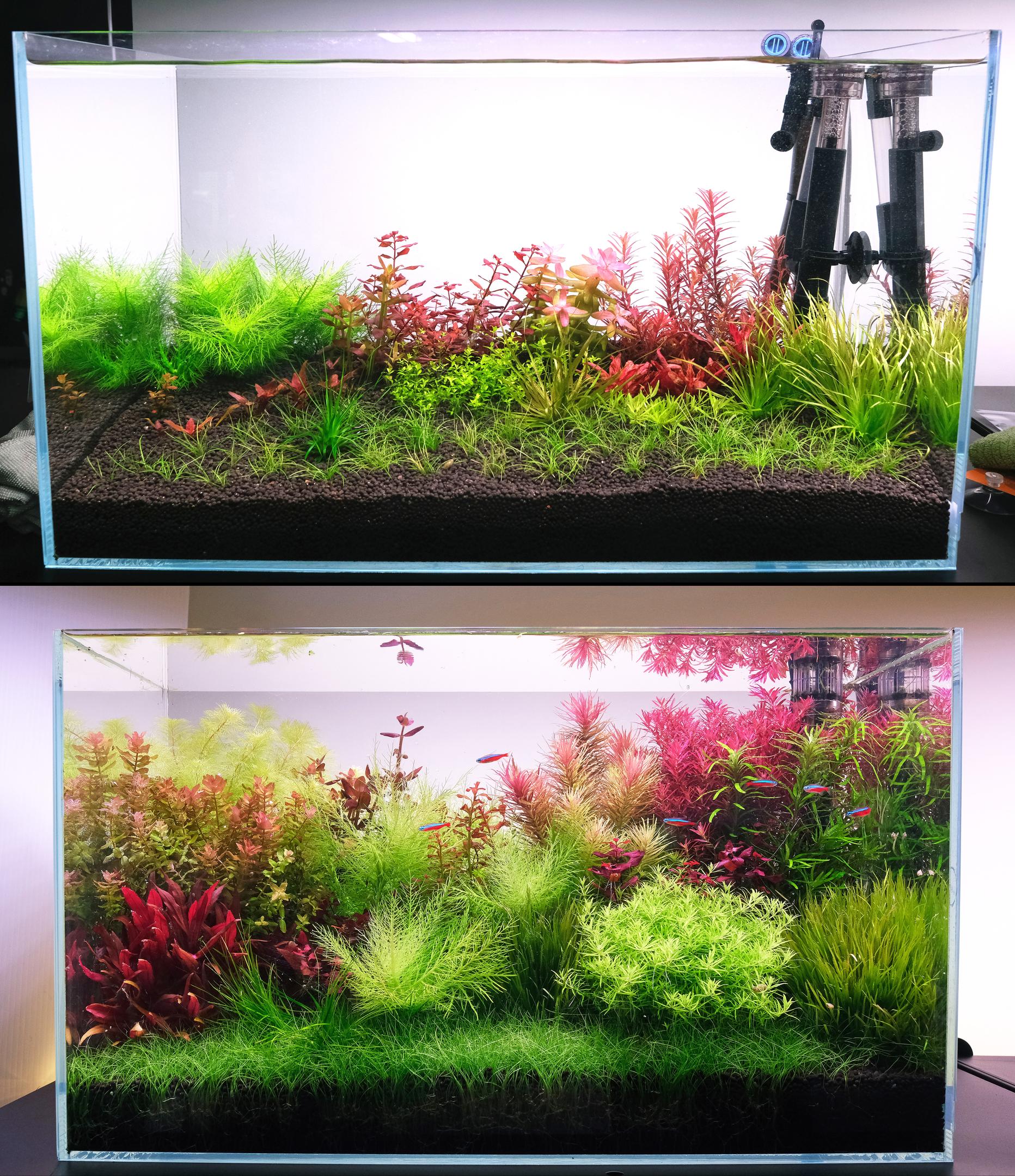
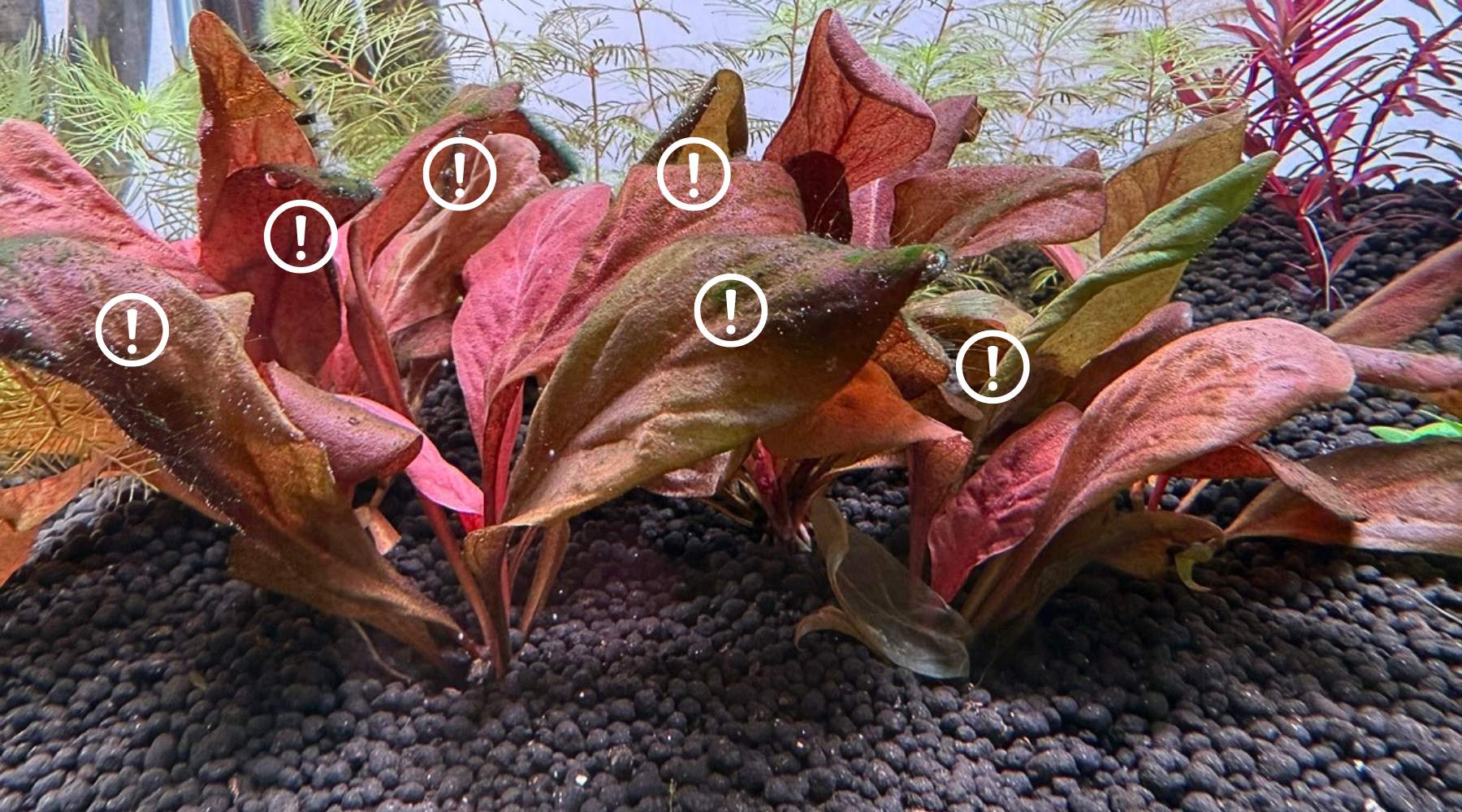
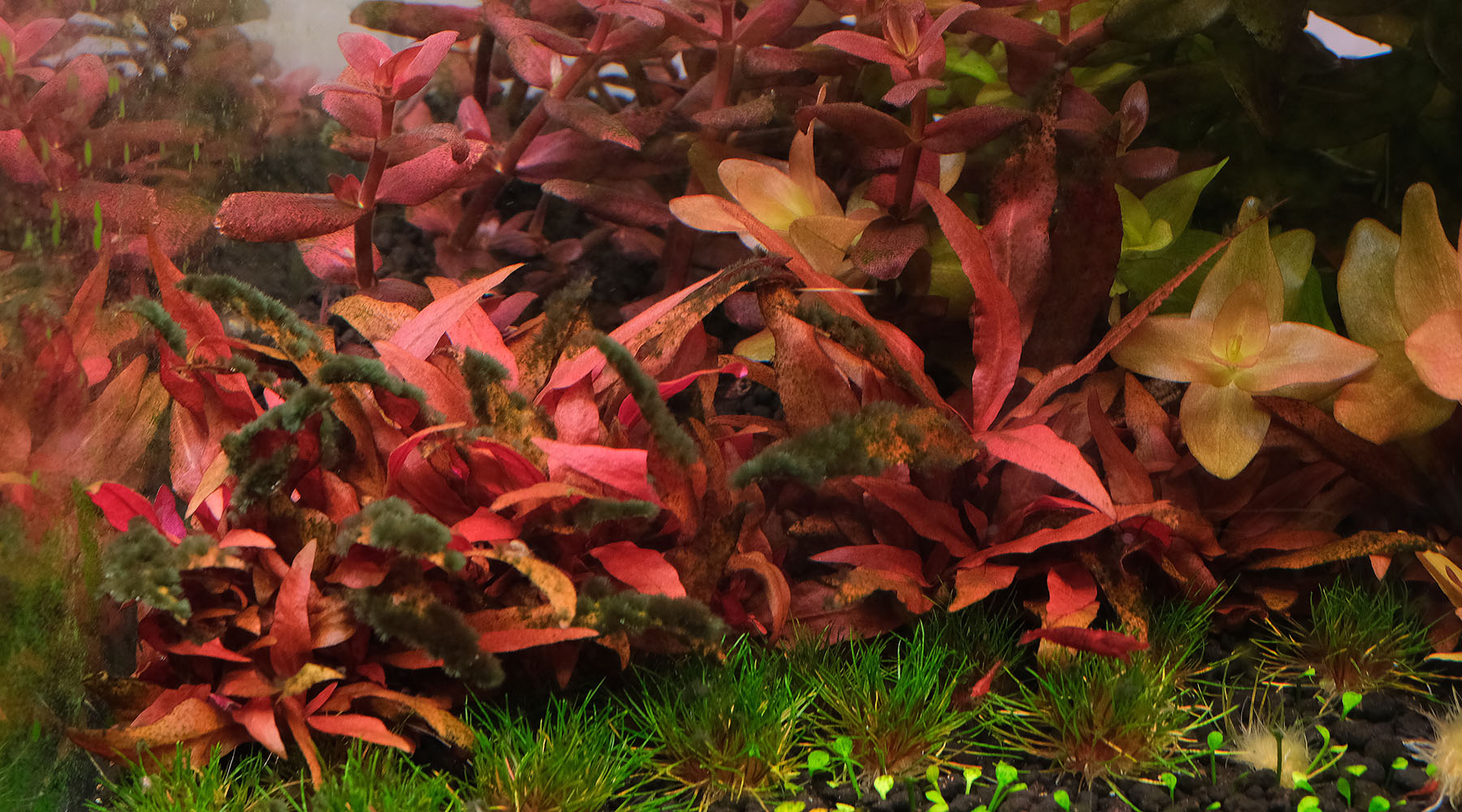
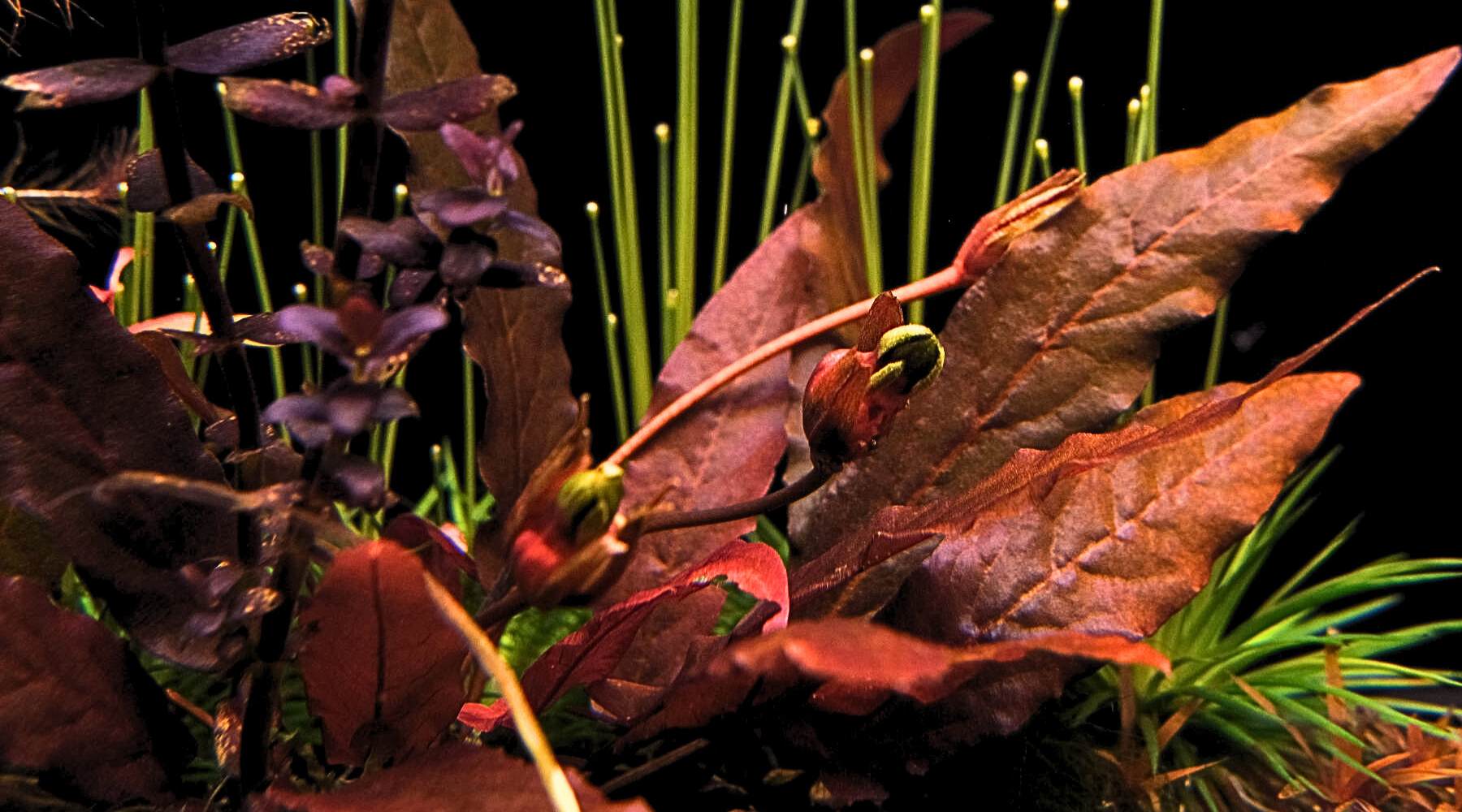
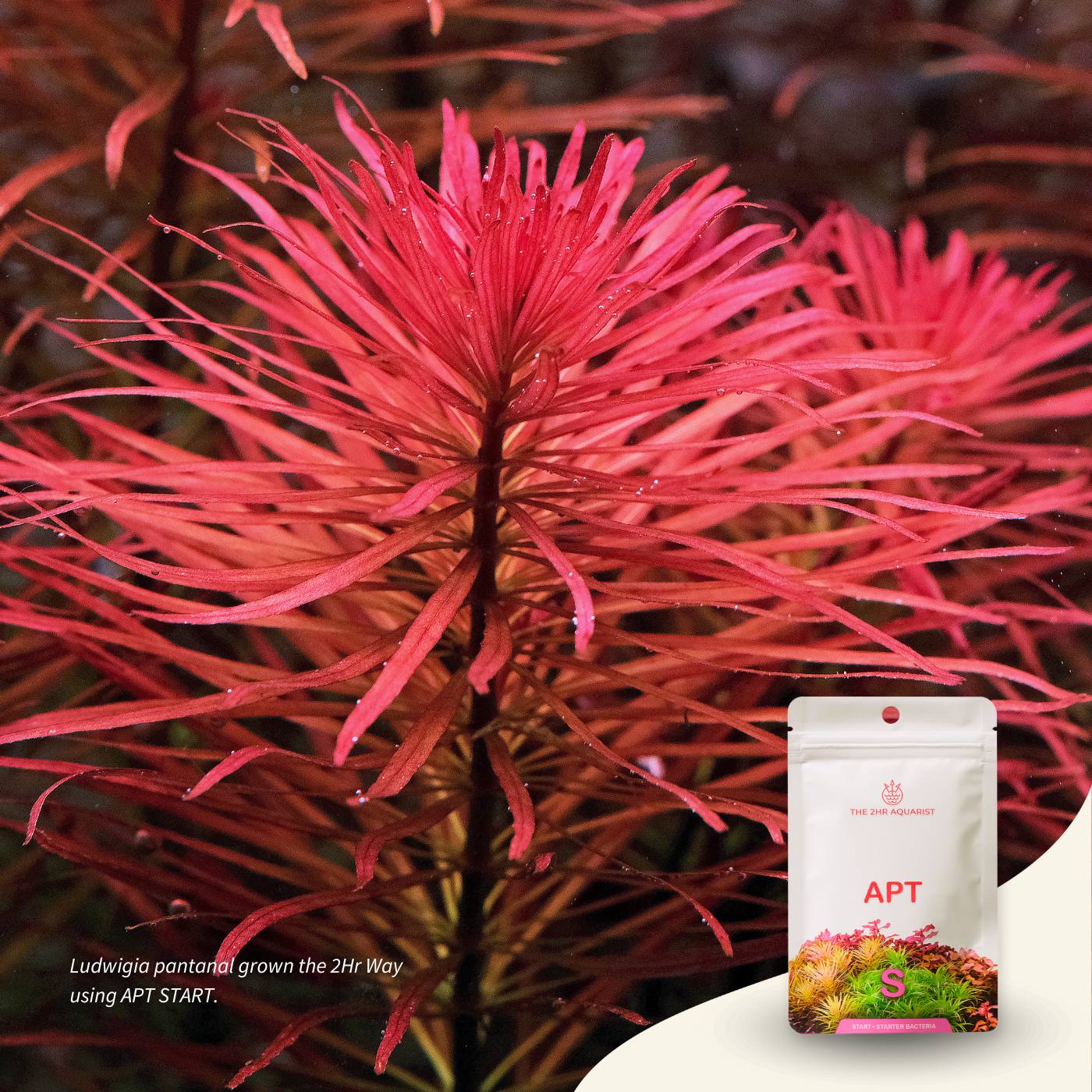
Ludwigia pantanal with stunted crowns grown in a tank with high nitrate in the water column (20+ppm) but no ammoniacal nitrogen (left picture) VS Ludwigia pantanal grown in a tank with limited nitrate (0ppm residual in the water column) but with ammoniacal nitrogen in the substrate zone (right picture).

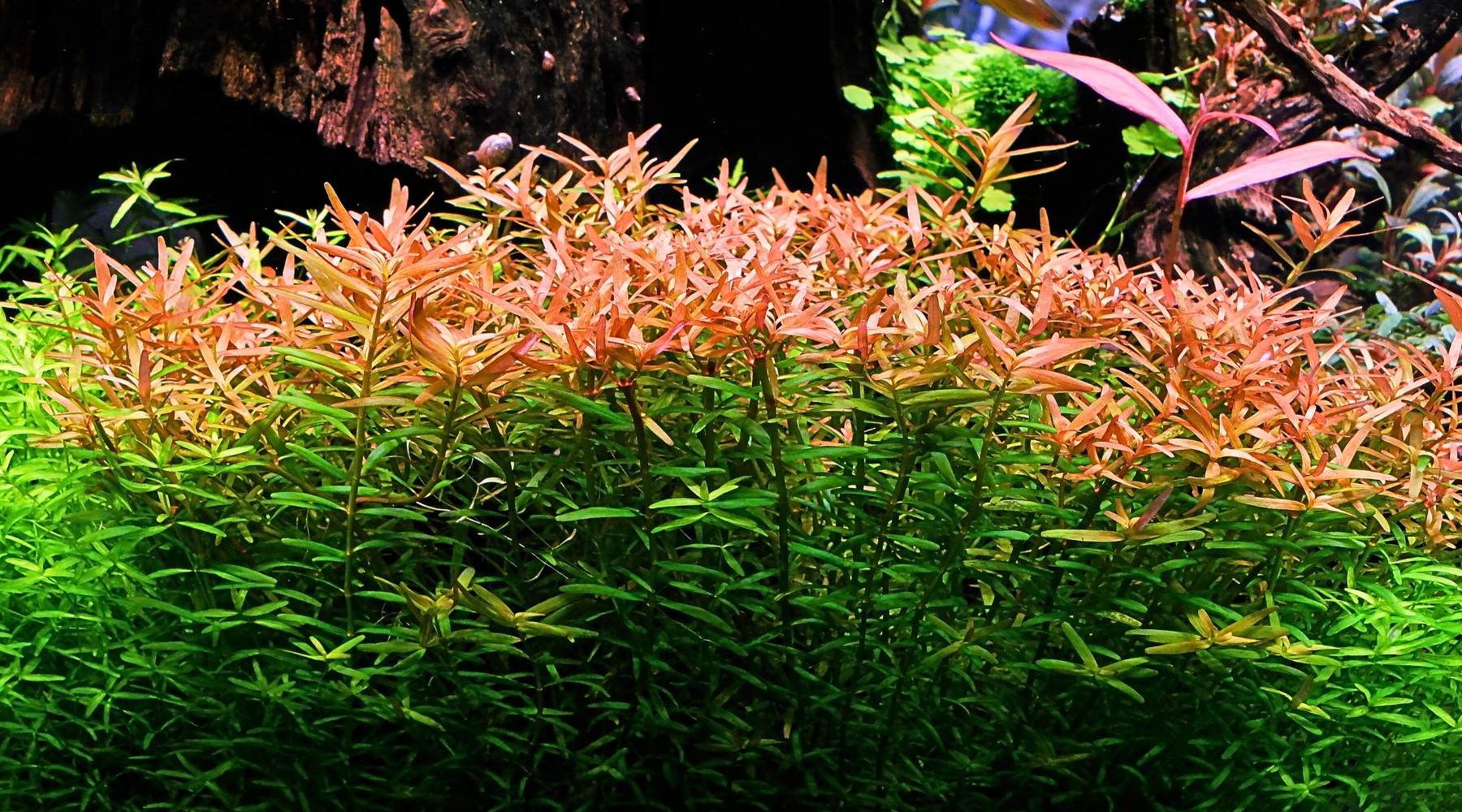
Rotala macrandra type 4 grown with access to ammoniacal nitrogen (left) vs without (right).
What Actually Happens in a New Aquasoil Tank?
When you submerge aquasoil for the first time, a number of changes happen. Ammonia and other soluble organics are leached out from the soil, and the soil's microbiology needs to convert to submerged conditions. In matured ecosystems, algae and pathogenetic microbes are consumed and kept in check by other beneficial microbes. Aquasoil provides excellent habitat for beneficial bacteria, but these microbes take time to develop after the soil is submerged. Before the microbial communities develop, algae blooms can easily run out of control and decomposer microbes that are not kept in check attack vulnerable plants. This is why algae blooms and melting/stressed plants are common in new aquariums.
High ammonia aqua soils add another variable to the mix. Ammonia is the ideal food source for many types of algae. Without algivorous microbes and plant competition to keep algae in check in new aquariums, fast growing algae such as diatoms can bloom spectacularly.
There are two paths that can mitigate this. The first is by letting the microbial system mature before even planting. The second path is by doing very large water changes to remove algae spores and pathogenic microbes while aiming to settle in the plants quickly.
Path 1: Cycle APT Feast Aqua Soil Before Planting
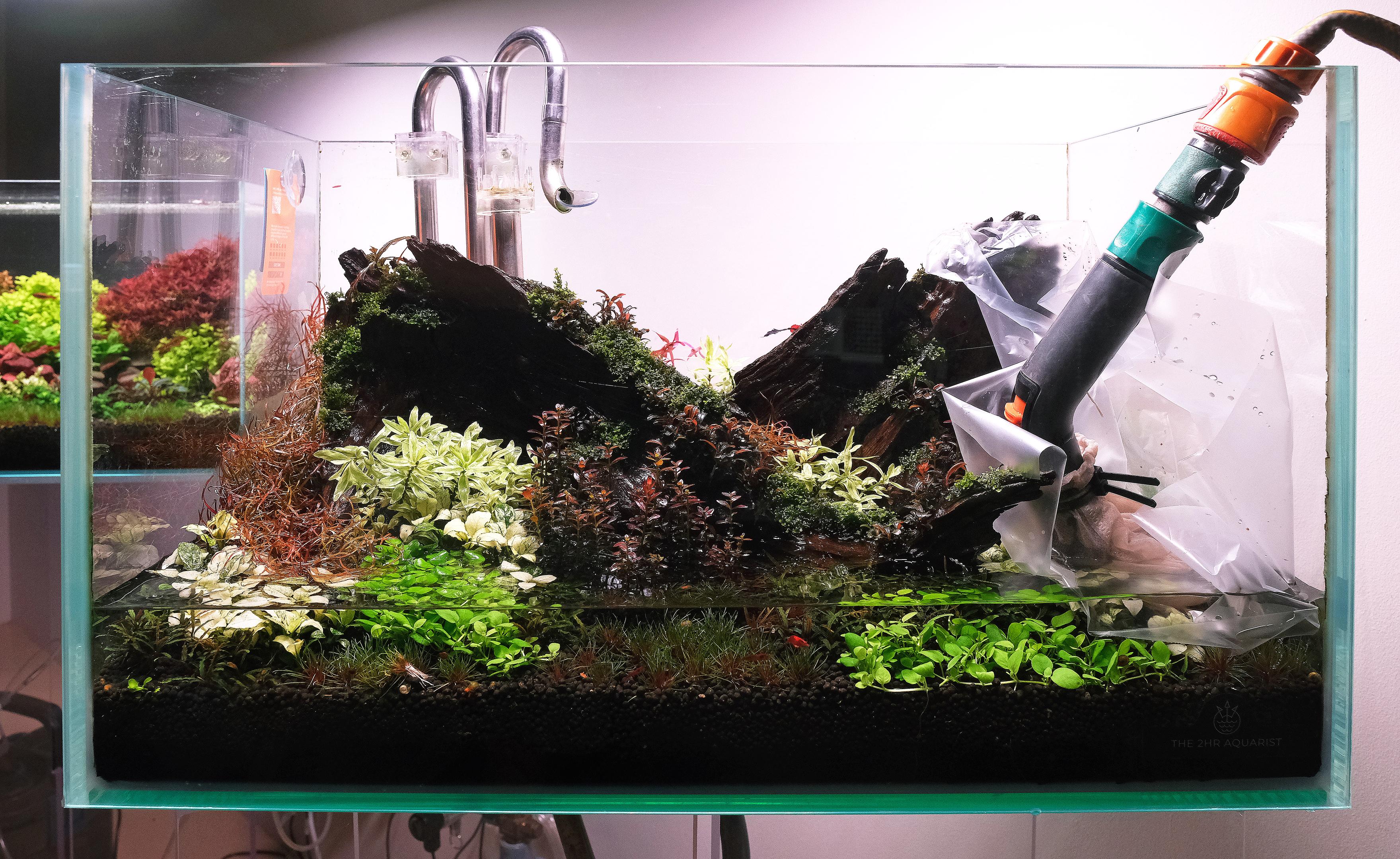
The dark start method is simple. Lay the hardscape - and if you're building elevation, lava rocks under the soil are a tidy way to save money on aqua soil while supporting good structure - then fill the tank and run the filter. No lights, no plants, no fish. Some hobbyists let the tank soak for a day or two first, then do a 100% water change before starting the filter to clear dust, dirt and sugars leached from wood. This prevents filling the new filter with debris. After starting the filter, dose your starter bacteria into the filter intake. Alternatively, add mulm or reuse old filter media from matured setups.
Take this time window to test out your CO2 injection and tune your CO2 levels so that once plants are added in, no more adjustments are necessary. Run the aquarium in the dark for 2 to 3 weeks to allow the microbial communities to develop. After this period, do a 100% water change, then plant.
After planting, if there is significant algae build-up in the form of diatoms or green dust algae on the glass, continue doing large water changes until the plants settle in fully. Dark starts gives a more stable starting environment but it alone does not guarantee that the aquarium will grow in algae free straight away. Ammonia cycling may or may not be completed after the dark start, and it is not necessary for the ammonia reading to be zero for the plants to start growing in smoothly. However, if ammonia levels are significantly elevated, do large water changes to bring down levels.
Path 2: Plant in APT Feast Aqua Soil Straight Away
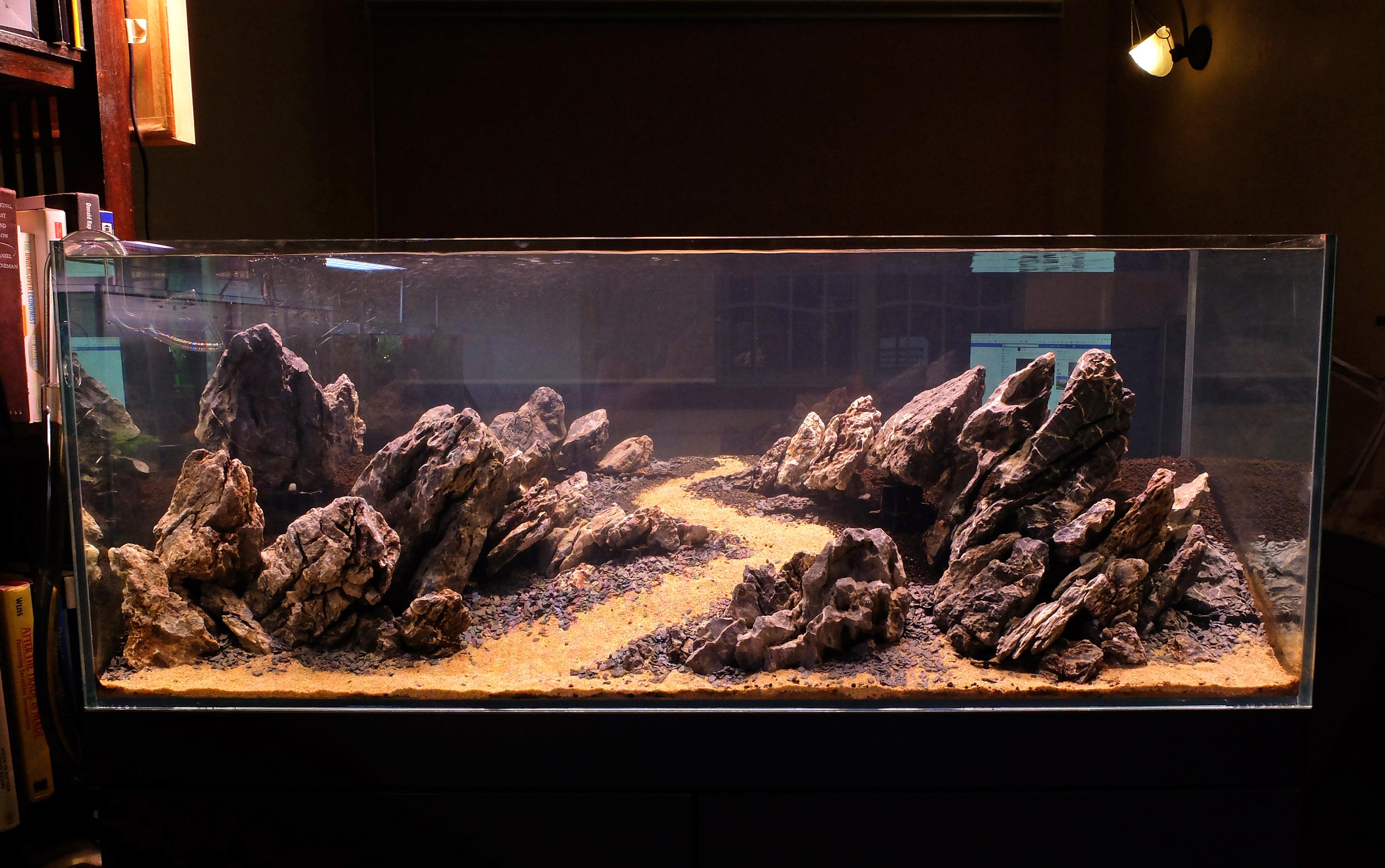
This is the fast start, and it works - but it is not passive approach. The protocol: 100% water changes every other day for the first two weeks. This reduces to twice a week for the third week. Then normalizing to 50% water changes from the fourth week onwards.
Why 100% water changes? If dilution of organics, removal of detritus and algae spores is the goal of large water changes during the initial weeks, why stop at 50% or 80%? If new aquasoil release 10ppm of ammonia, an 80% water change still leaves 2ppm of ammonia behind, along with only removing 80% of the algae spores. In new aquariums where problematic algae reproduces exponentially before algivorous microbes populate the system, every little bit remaining counts. APT Feast still releases enough ammonia that the aquarium filter will cycle with time even with frequent 100% water changes.
One caveat before you commit to this. It assumes your tap water is reasonably close to your tank water. Aquasoil softens water, so if your tap runs much harder, a 100% change swings KH sharply every single time - and some tap sources carry heavy metals or ammonia that a large change concentrates rather than dilutes. If any of that applies to you, work out your ceiling first: see how much water to change.
The secondary effect is that draining the tank exposes plants to air, which saturates their tissues with oxygen and carbon dioxide and lifts periphyton off the leaves. That extra oxygen is channelled down to the rhizosphere, where it accelerates the substrate microbial community - a strong anti-algae effect that is easy to miss because none of it is visible. The mechanism is set out in full in water change the 2Hr Way. Microbes that populate surfaces are not significantly affected by large water changes, so microbial maturity is not set back.
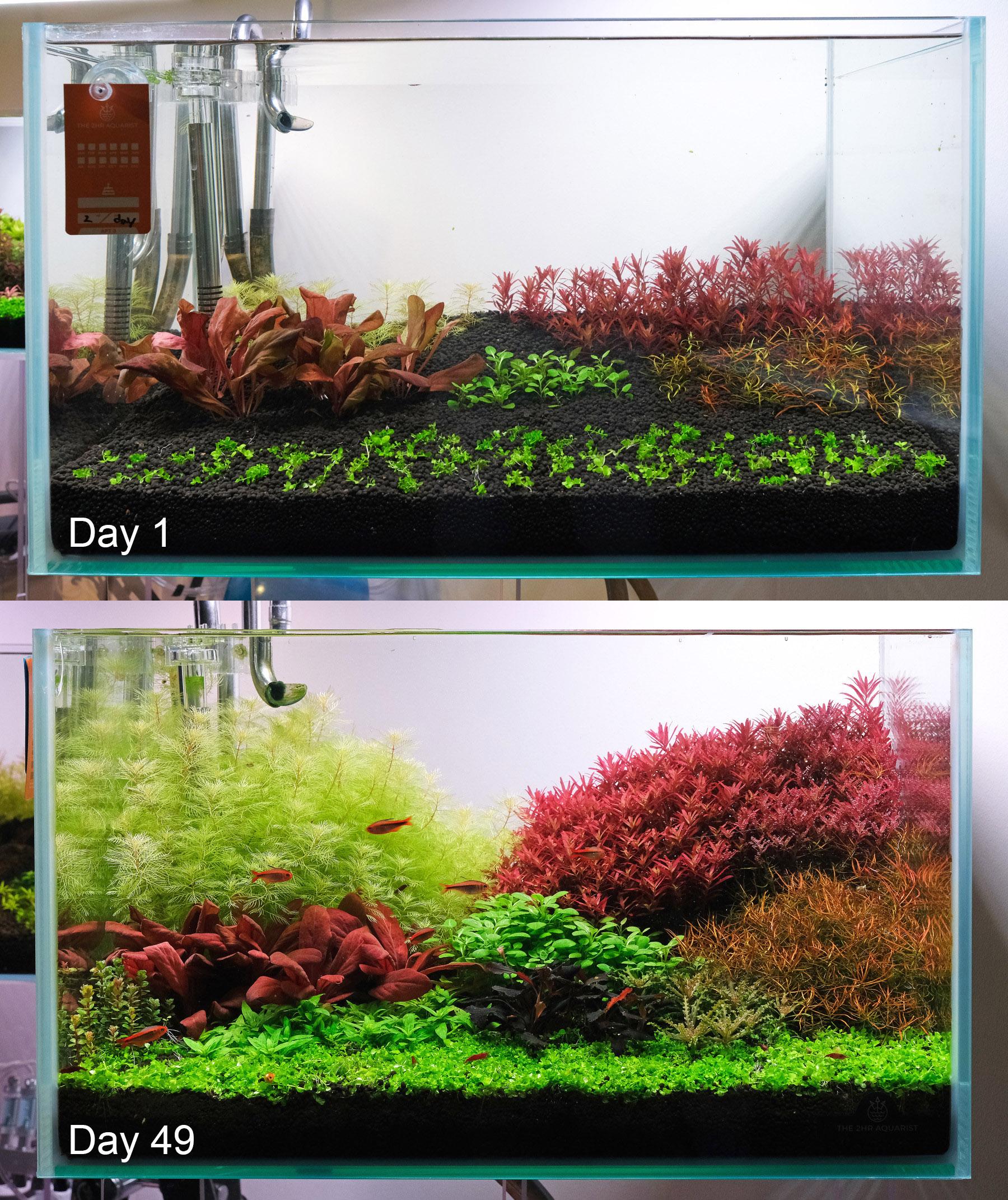
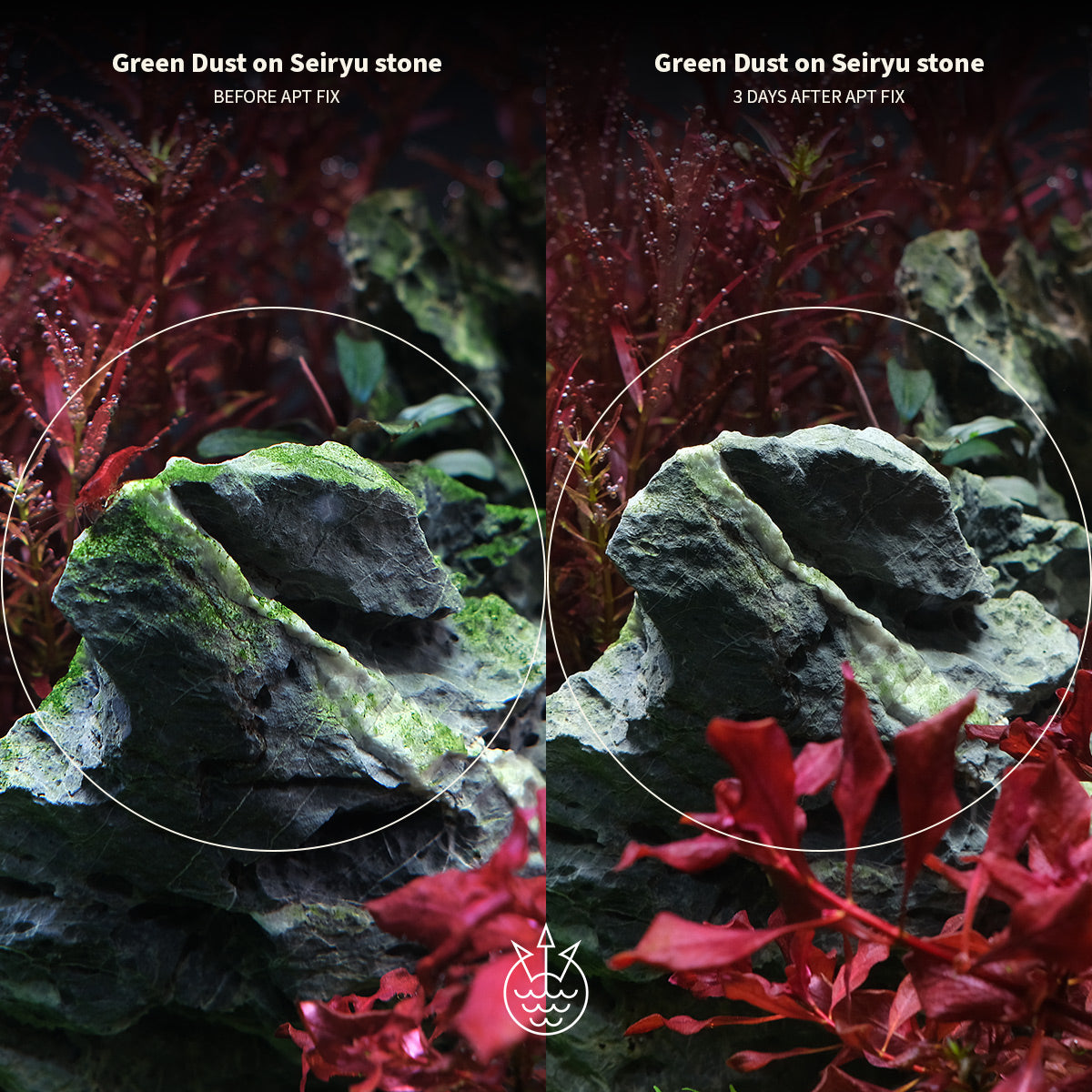
This is the approach we use to skip Diatoms and Green dust algae completely in new planted tanks, and grow in tanks quickly and smoothly every time.
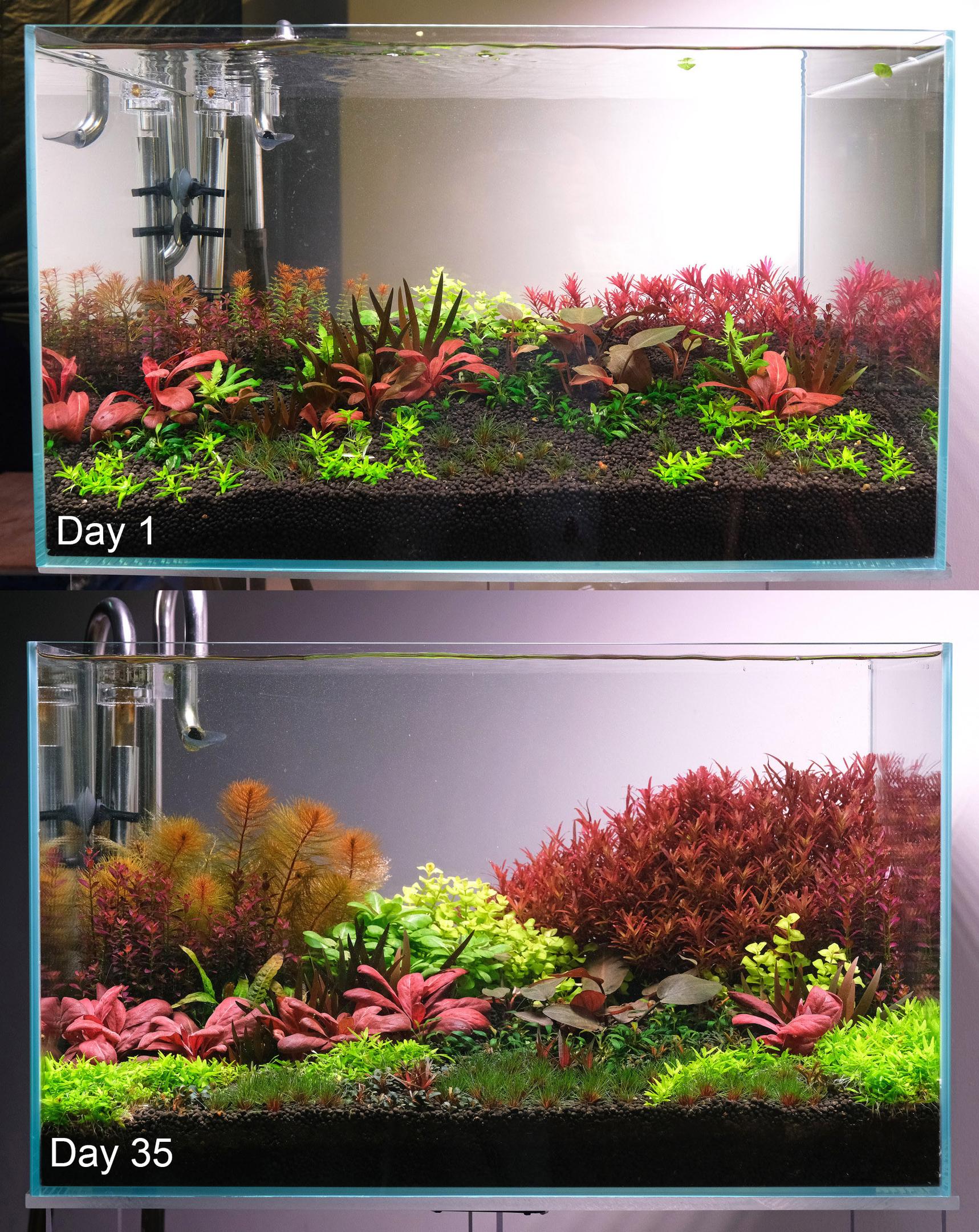
Plants thrive with large water changes. Contrary to popular belief, there is nothing magical about aged aquarium water. Beneficial microbes adhere to surfaces, and the highest concentration of microbes can be found in bio-films that are created on surfaces. Removal of pathogenic microbes and algae spores makes a huge impact on avoiding plant melt and algae and that is why the large water changes work.
When Can I Add Fish or Shrimp?
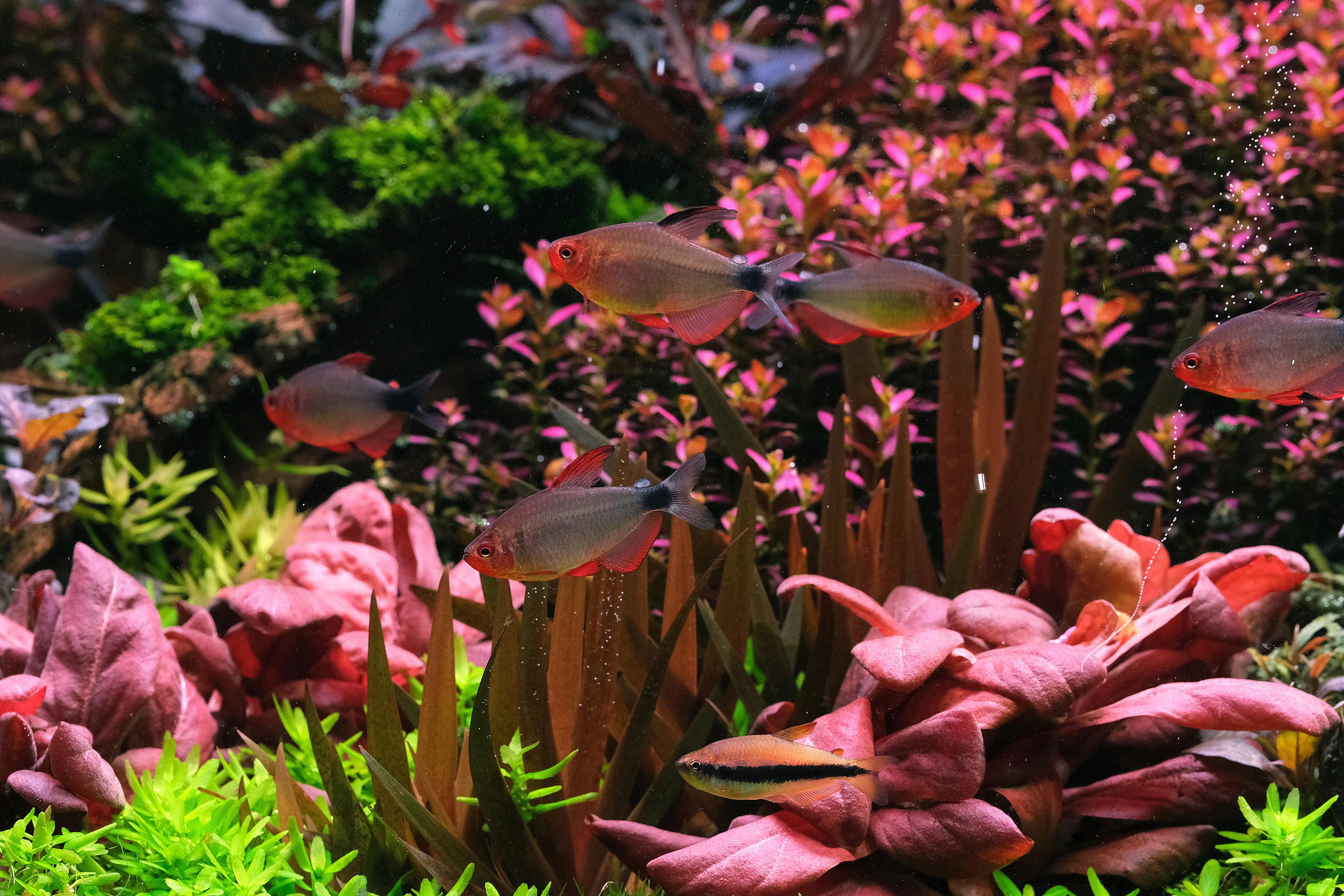
Our general recommendation is to wait 3 weeks to 1 month before adding fish/shrimp to planted tanks. Plants would have settled in by and this also gives time for beneficial microbes to really mature and stabilize the ecosystem. Ammonia cycling alone is only one part of the ecosystem, and should not be used solely as the determinate of whether it is safe to add livestock to the system. Fishes are quite long lived and should be viewed as long term pets, not impulse buys, waiting a few additional weeks for the overall system to mature and stabilize makes a big impact on their well-being.
Your Action Plan
-
Seed the filter immediately - add mulm from a mature tank into the filter inlet, or a quality starter bacteria product; without microbial seed, tanks take much longer to mature. Using old media from established tanks will work well also.
-
Choose your path and commit - dark start means lights off, no plants, filter running 14 to 21 days before planting; fast start means 100% water changes every other day for 14 days if planting is done immediately.
-
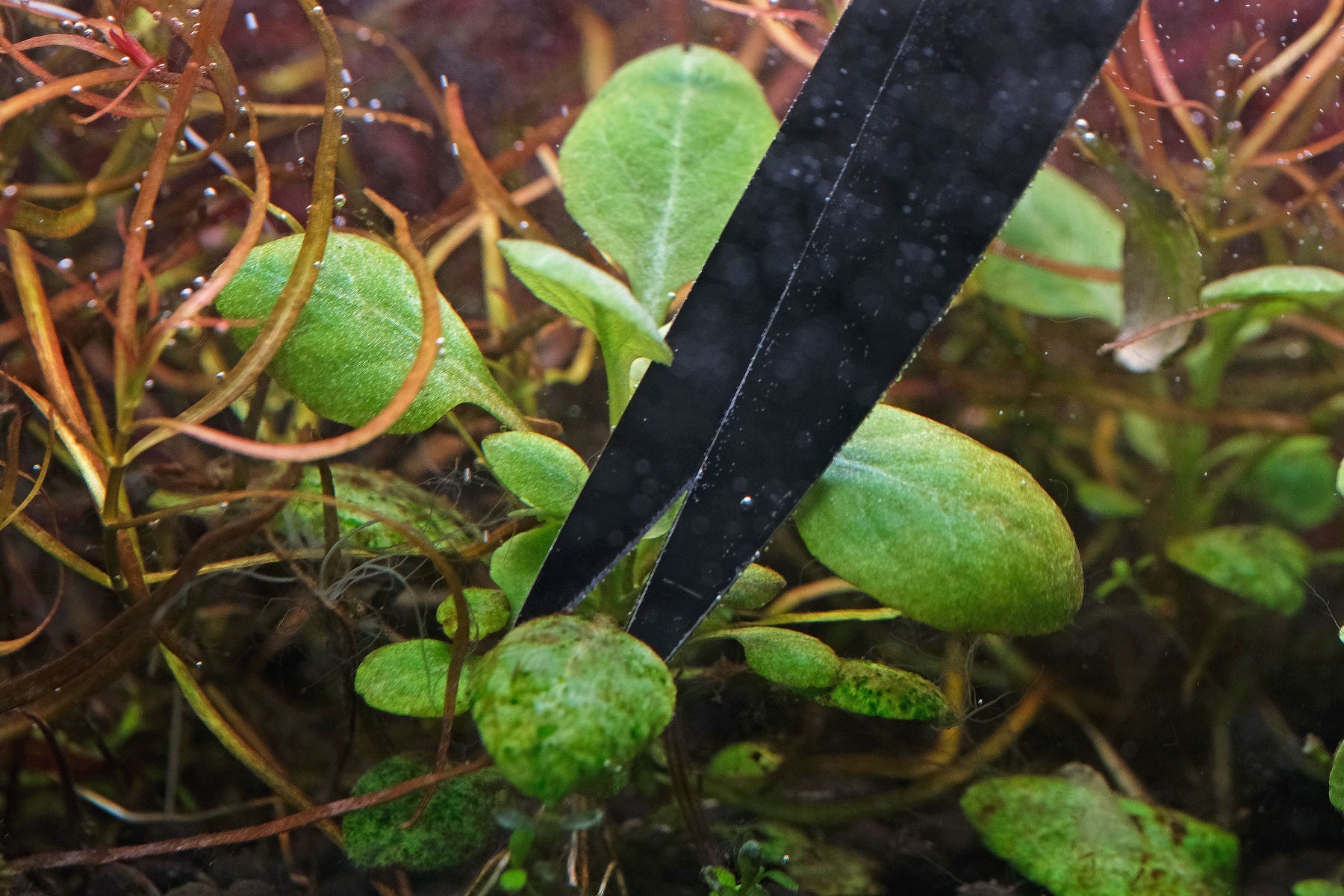
Trim and siphon organic waste - remove any melting plant matter and detritus at every water change; decomposing organics are fuel for algae. Use large water changes to reset the tank environment as plants are settling in.
-
Plant densely - a plant dominant aquarium deters algae much more effectively than a sparsely planted tank.
-
Dose liquid fertilizer - This can start once plants are added.
For the biology behind all of this - what biological maturity actually means and why it matters more than a zero ammonia reading - see tank cycling and biological maturity. For the cycling methods compared side by side, see how to cycle a planted tank. And if your tank is already planted and fighting diatoms, the fastest way to stabilize a new planted tank is the recovery route.


Compartir:
Planted Aquarium Substrate: Active vs Inert Substrates Explained
Is APT Feast Aquasoil Only for Advanced Aquarists?