
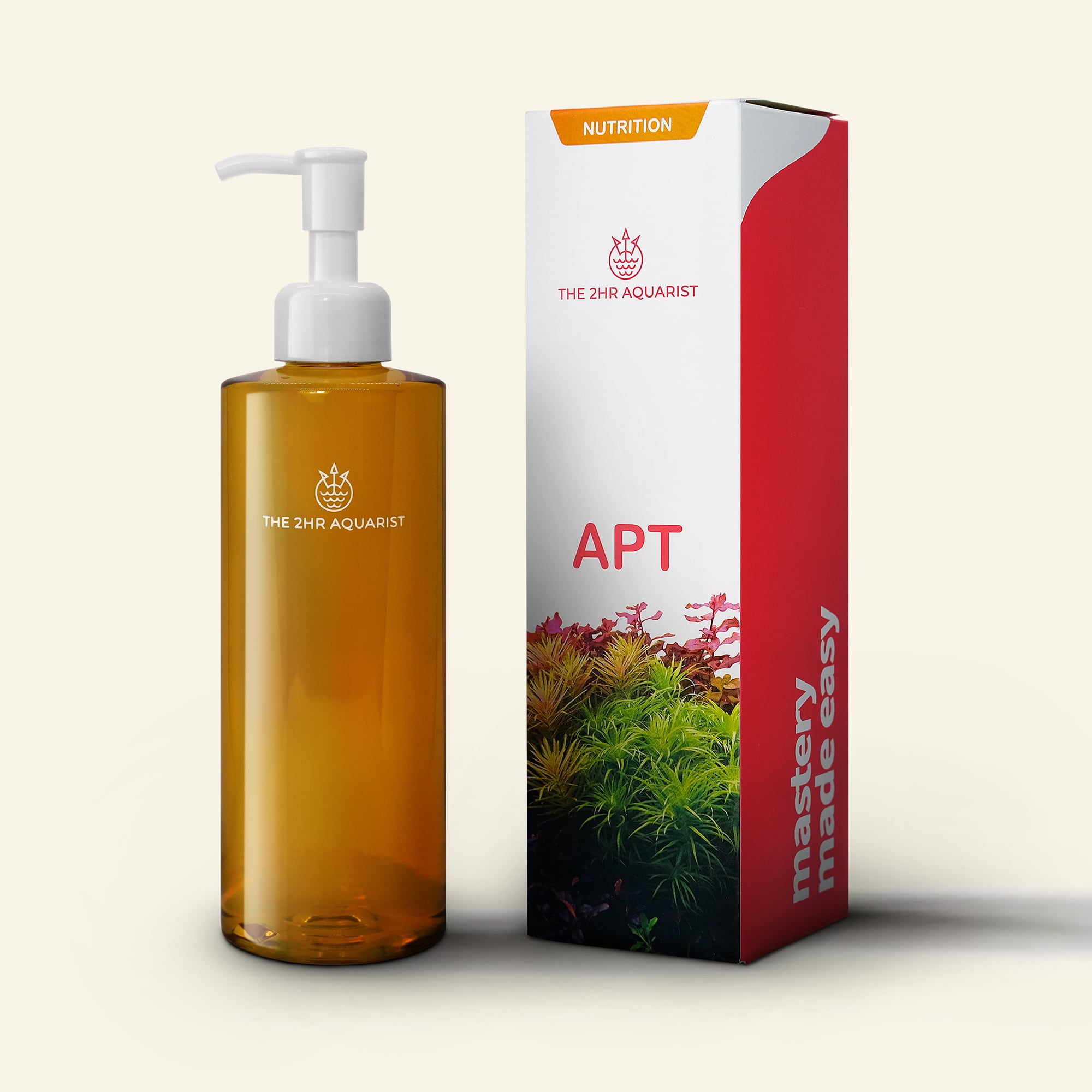
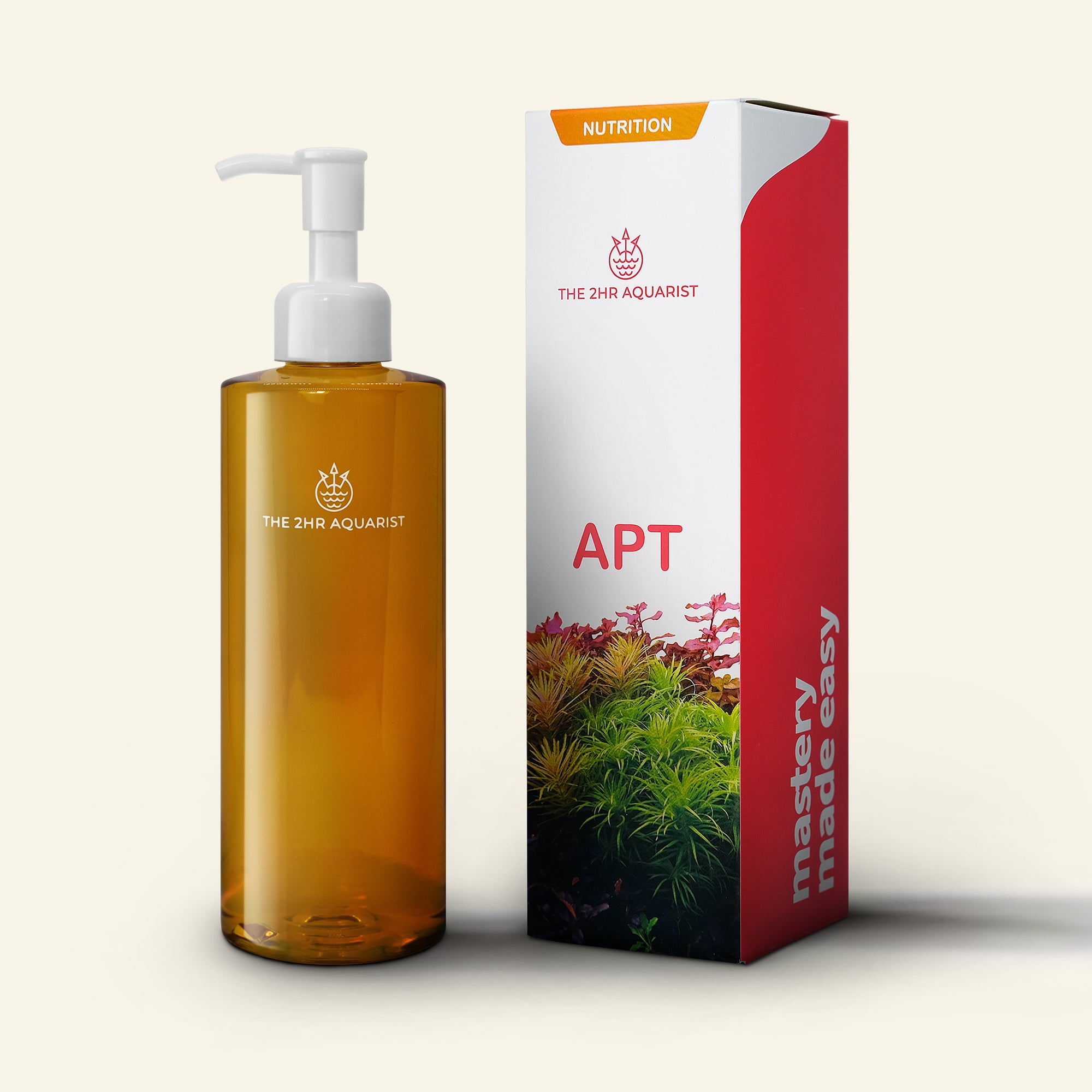
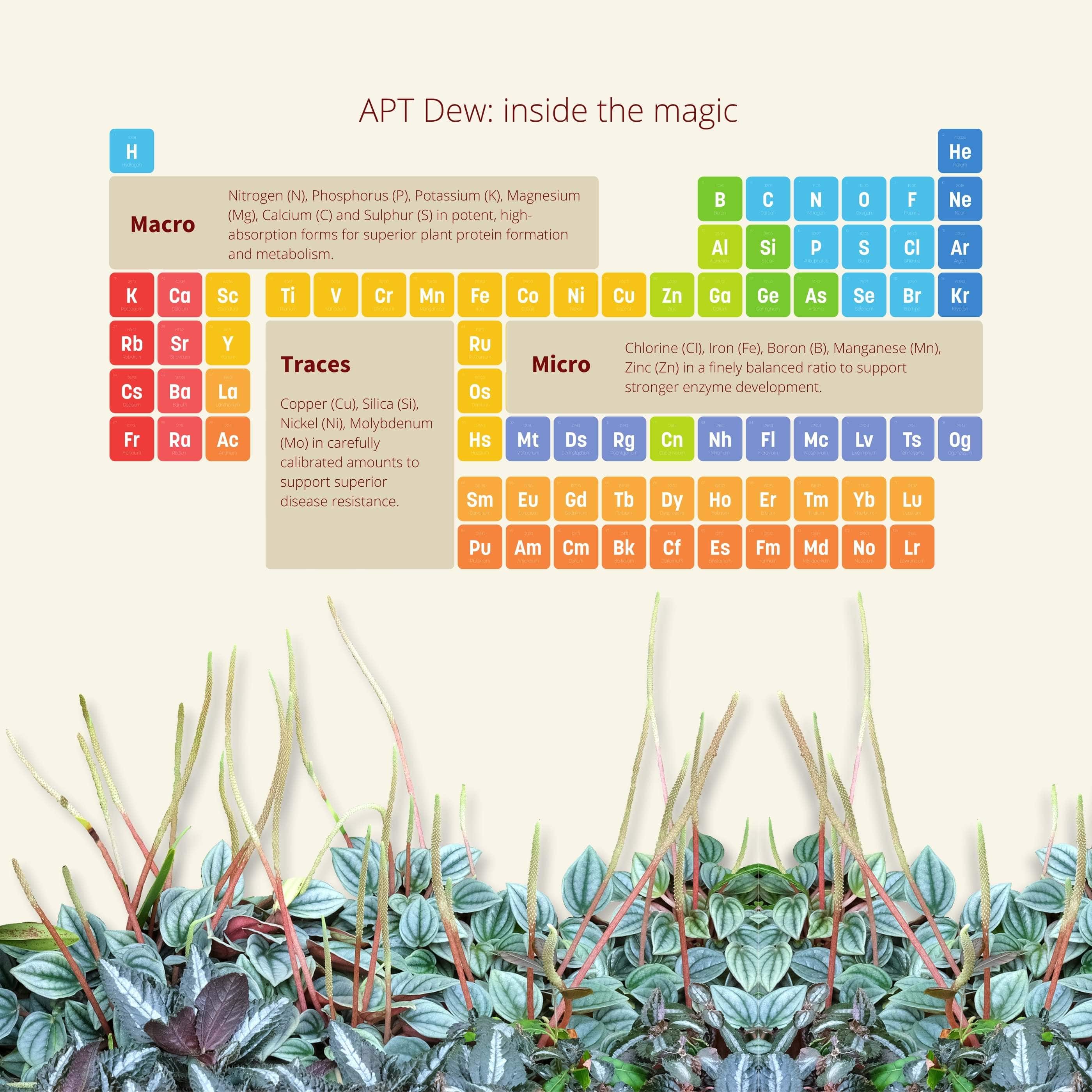
An aquarium plant fertiliser supplies the macro, micro and trace nutrients that plants cannot obtain in sufficient quantity from fish waste and tap water alone. What separates one fertiliser from another is not strength but ratio - the proportions in which those nutrients are supplied. APT's Capstone formulation is calibrated to the proportions a modern planted tank actually consumes.

4 productos

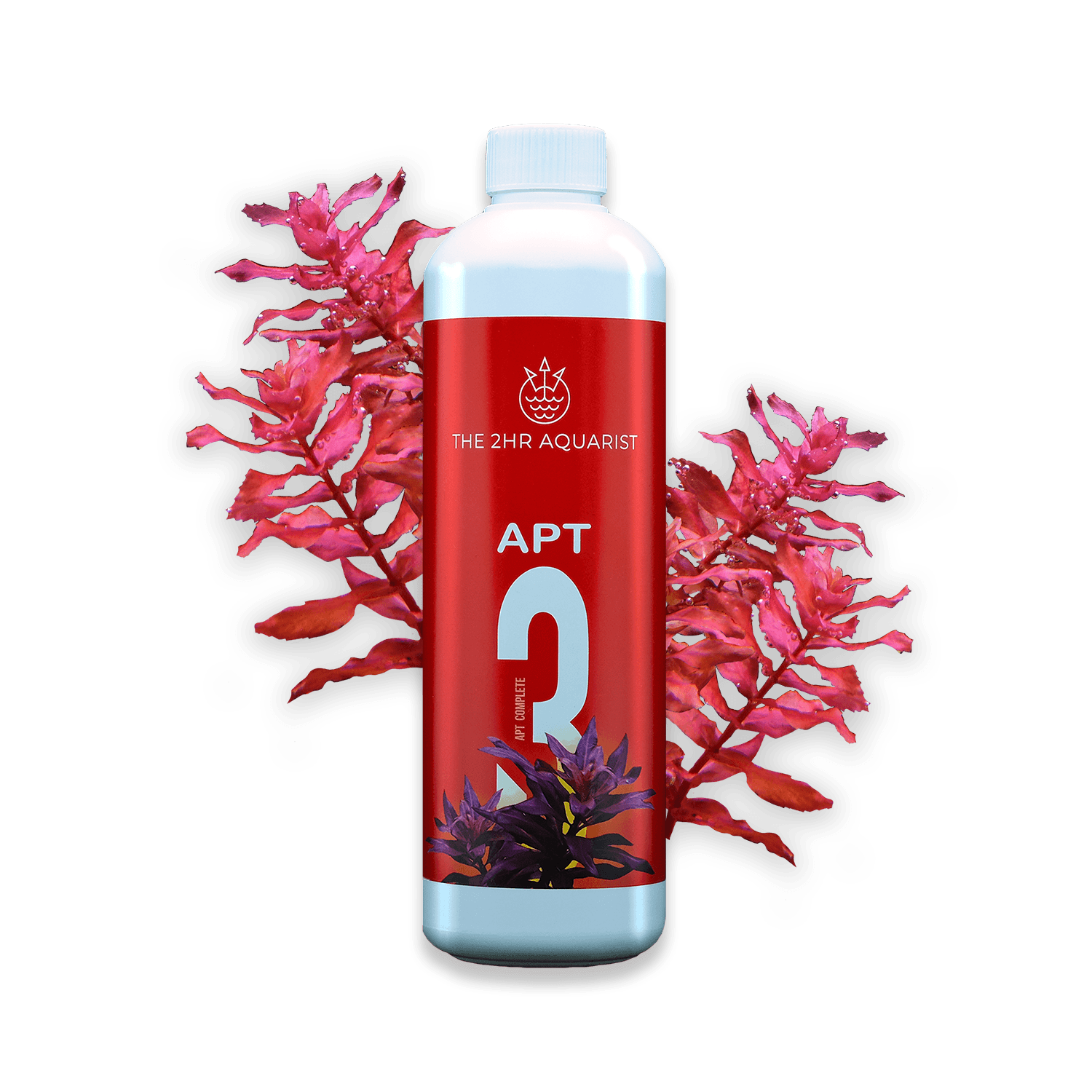
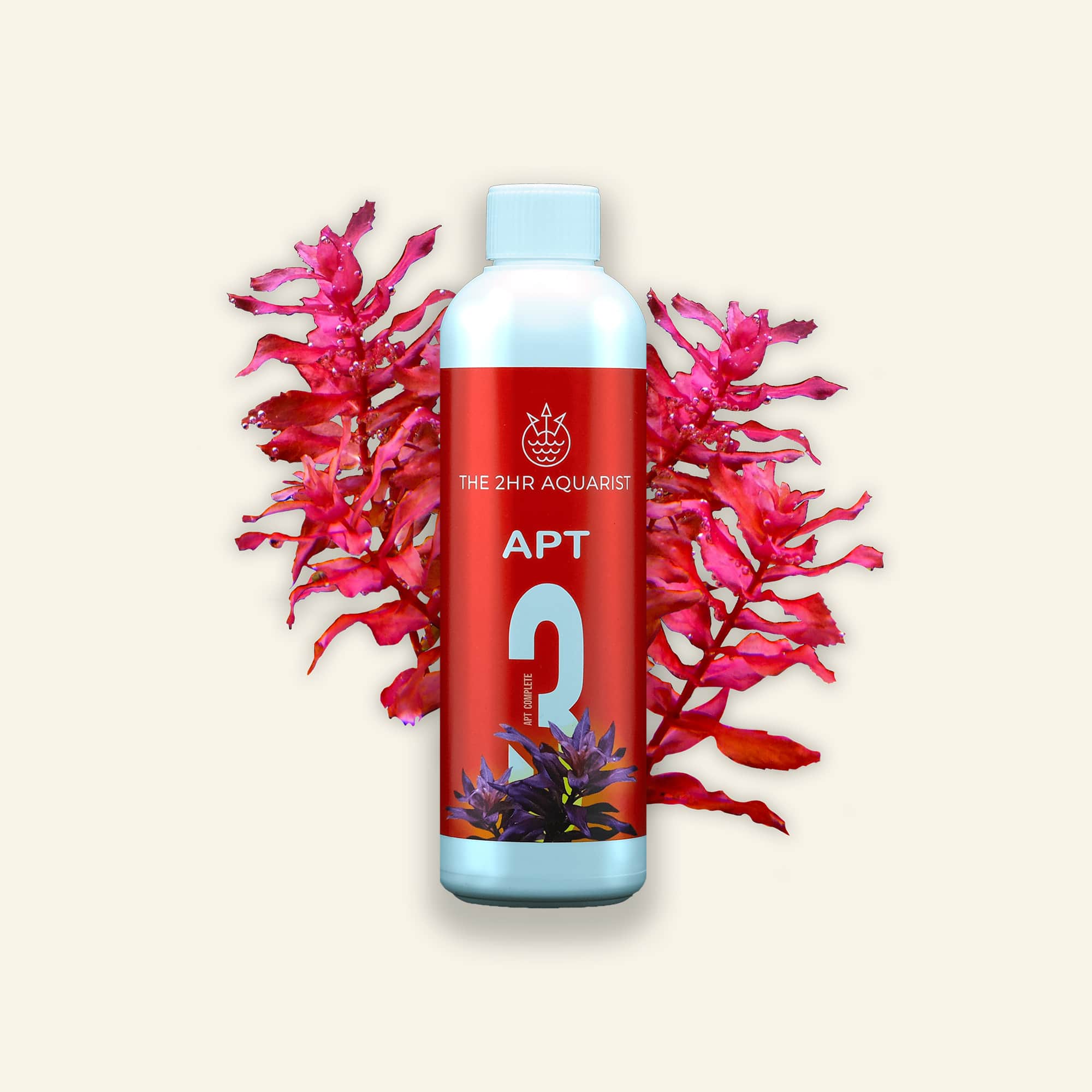
2Hr Aquarist APT3

A partir de $11.80

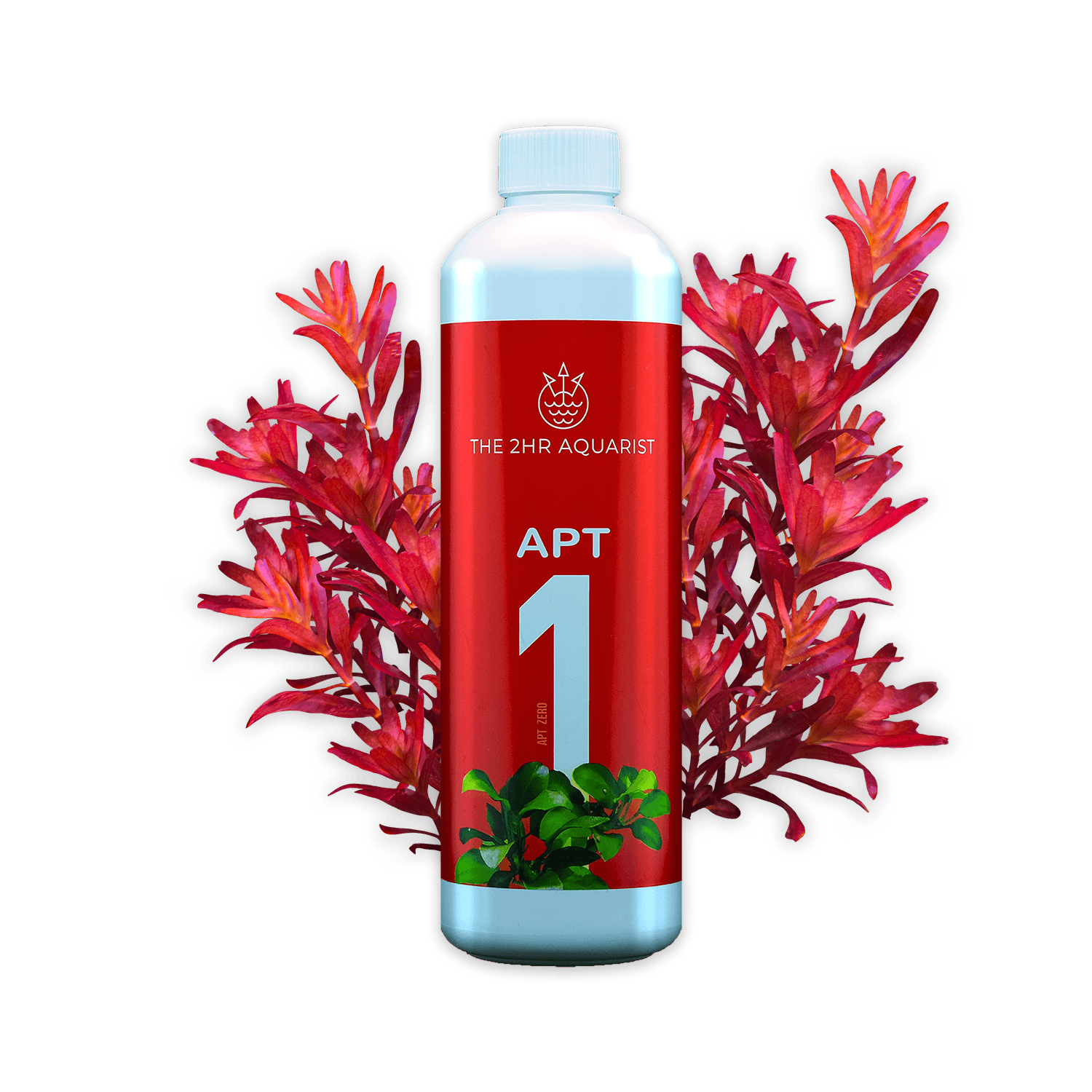
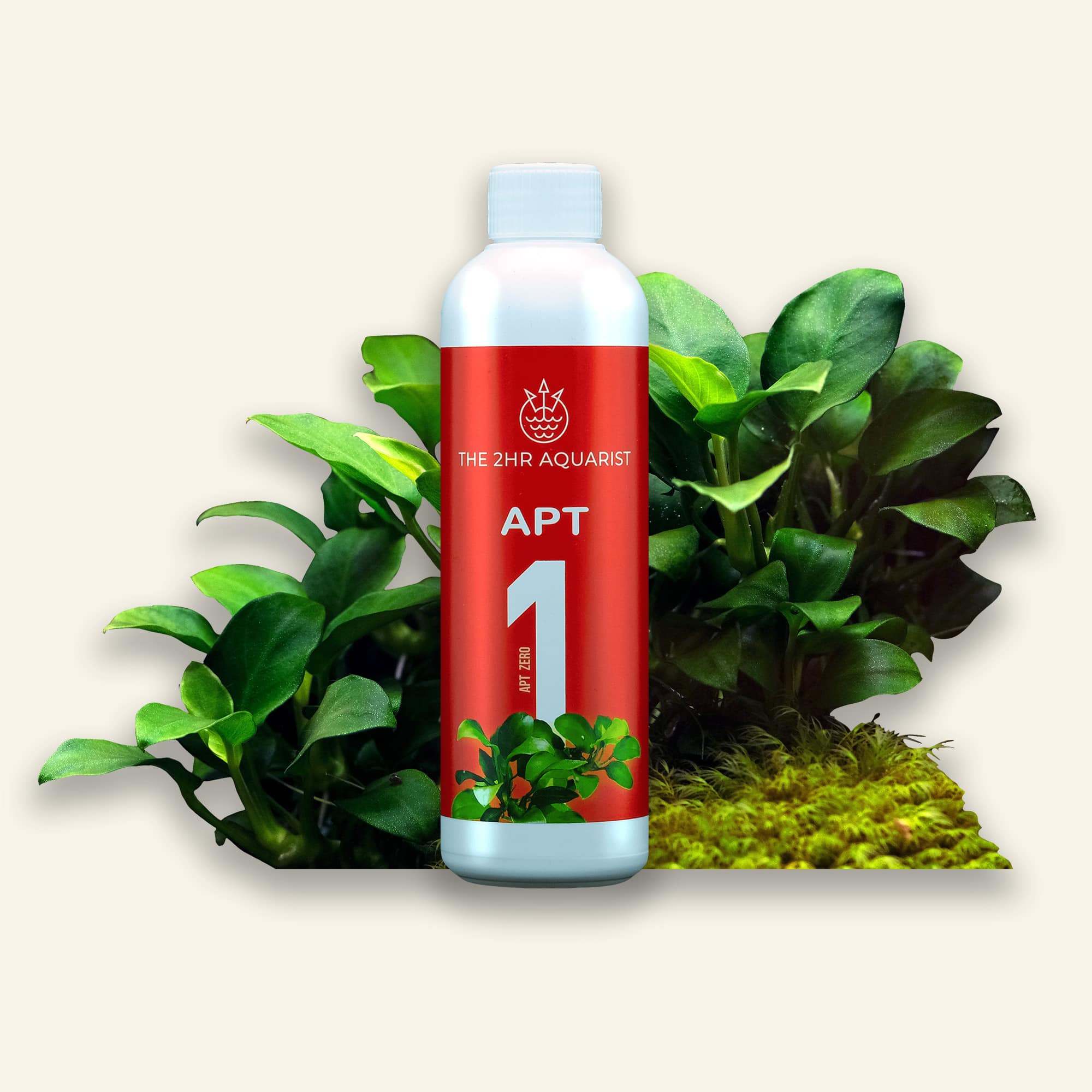
2Hr Aquarist APT1

A partir de $11.80

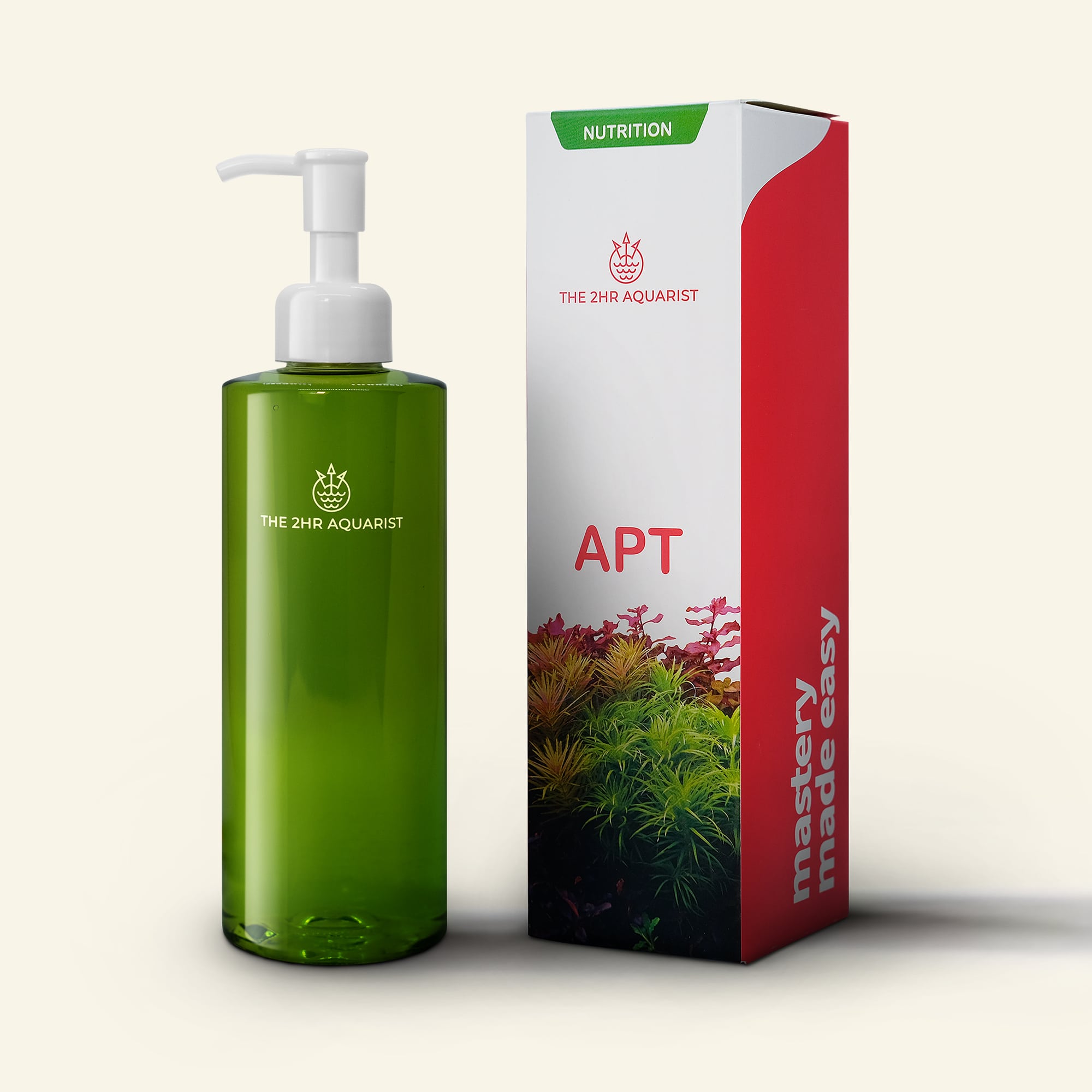
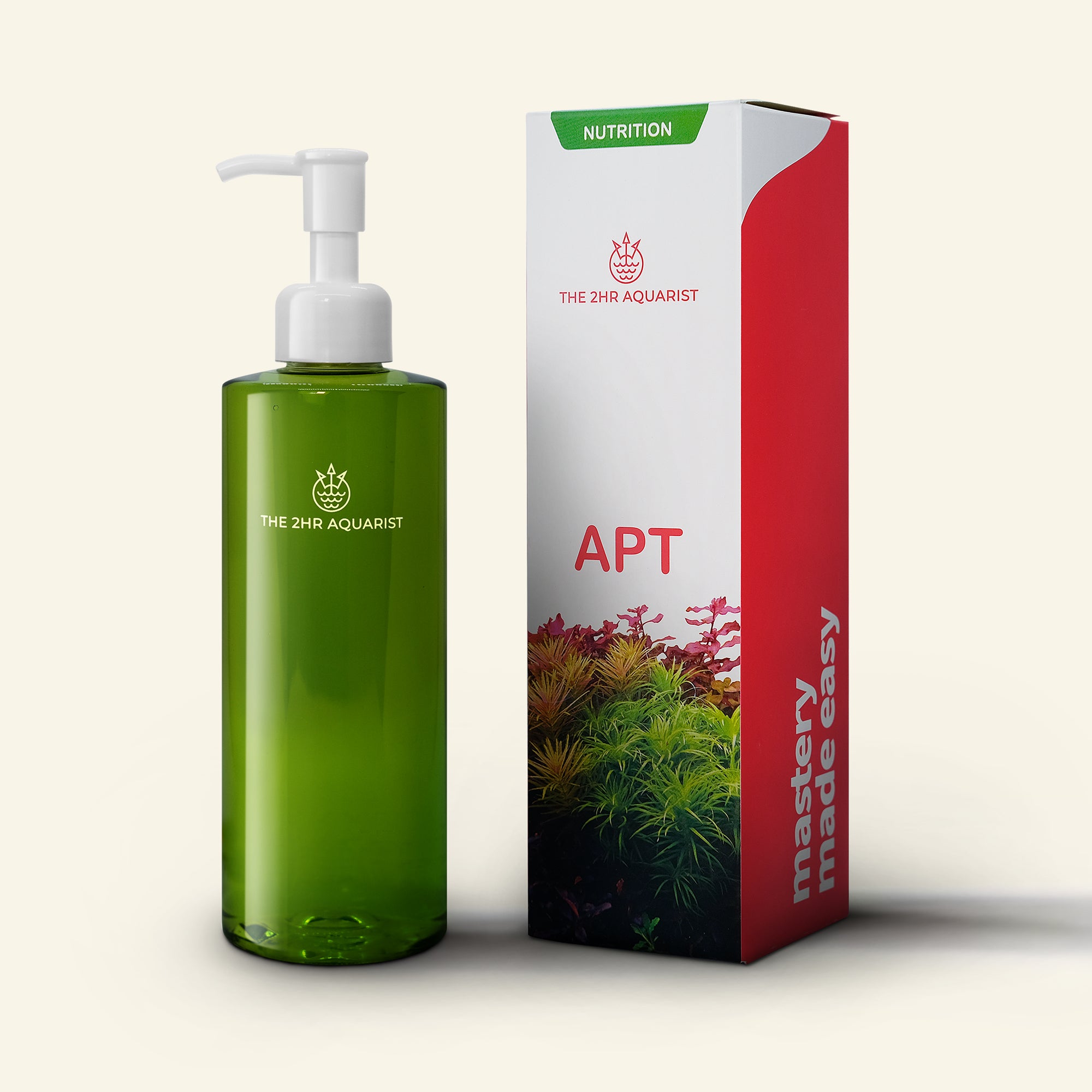
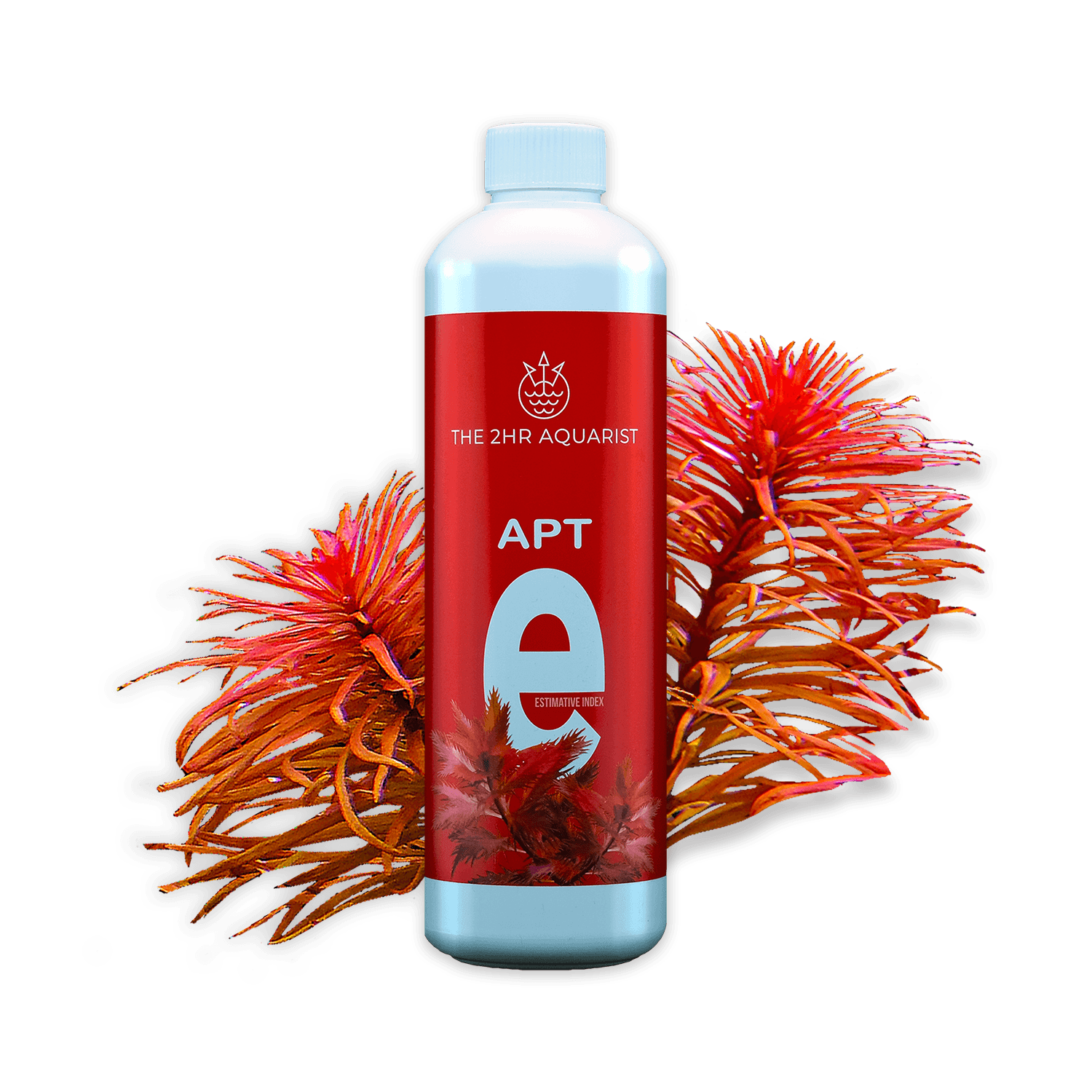
2Hr Aquarist APT e

A partir de $16.90

2Hr Aquarist APT Dew

A partir de $12.80

FAQs

Which APT fertiliser should I use?

Choose by the balance of plants to fish in your tank. APT 3 suits tanks with more plants than fish, and is the standard choice for a planted aquarium. APT 1 carries the same formula with zero nitrate and phosphate, for tanks with a heavier fish load - where food and waste already supply both - and for new tanks in their first one to three months, when algae pressure is highest.

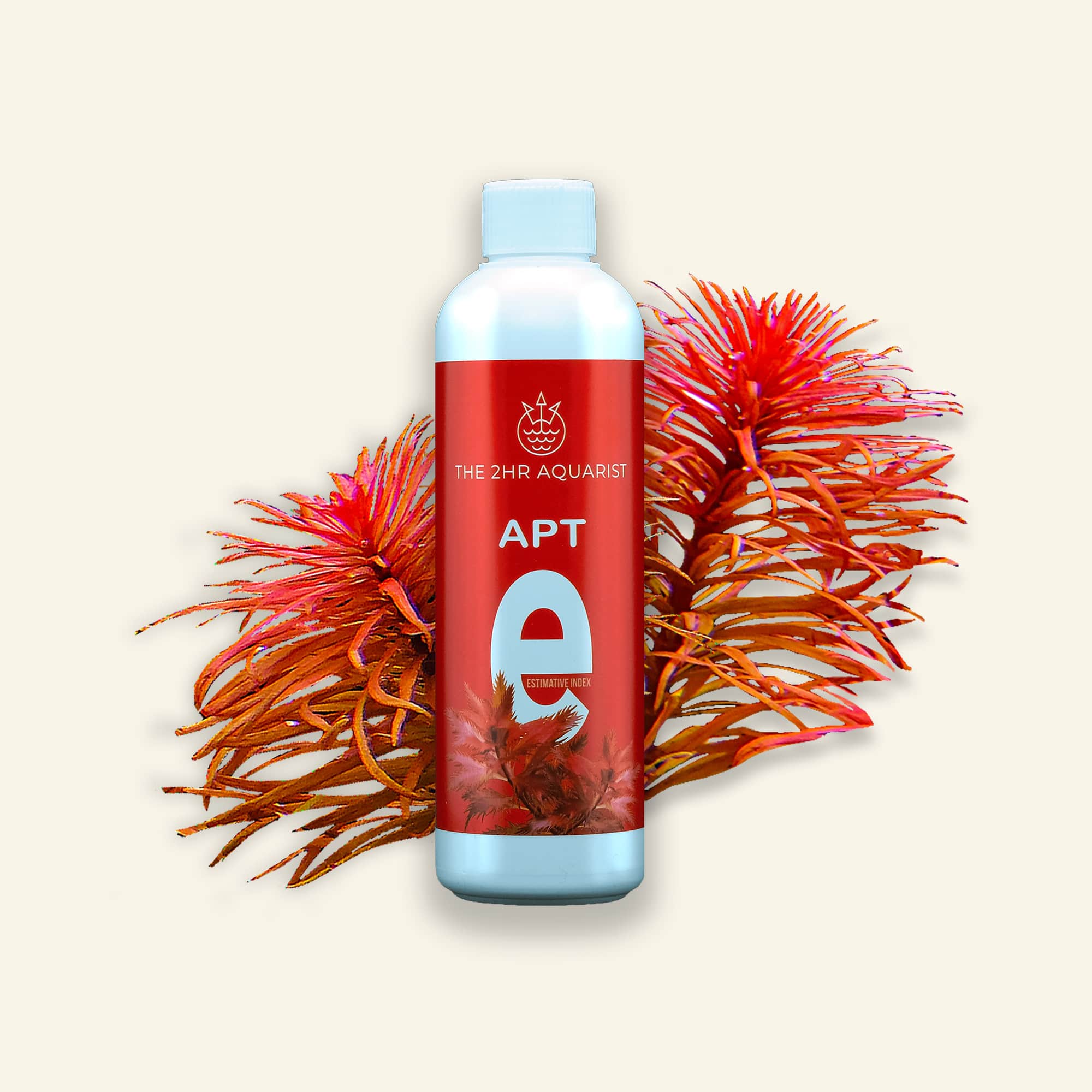
APT e is a ready-made, calibrated version of the Estimative Index approach, for heavily planted Dutch-style tanks and hobbyists who dose to EI logic.

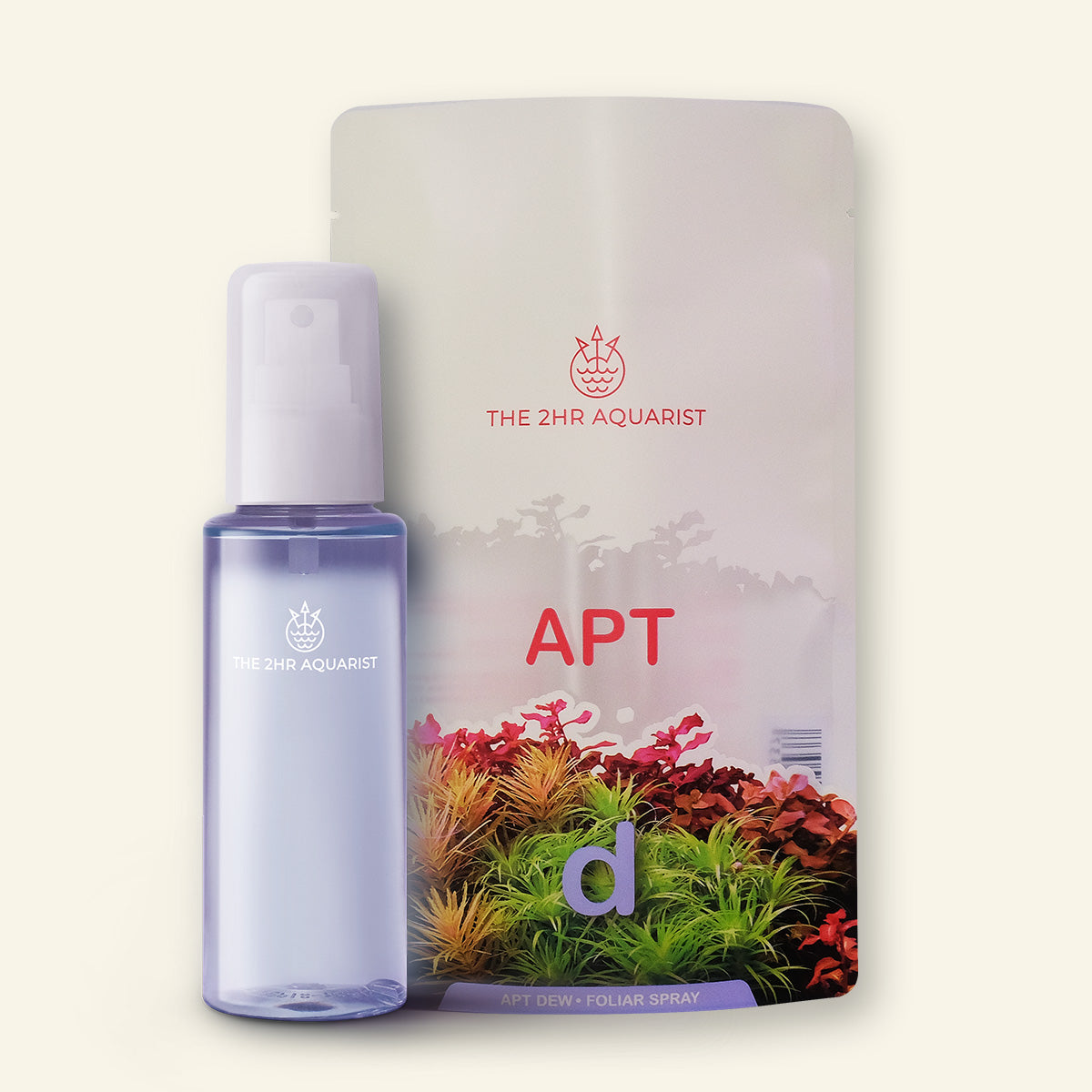
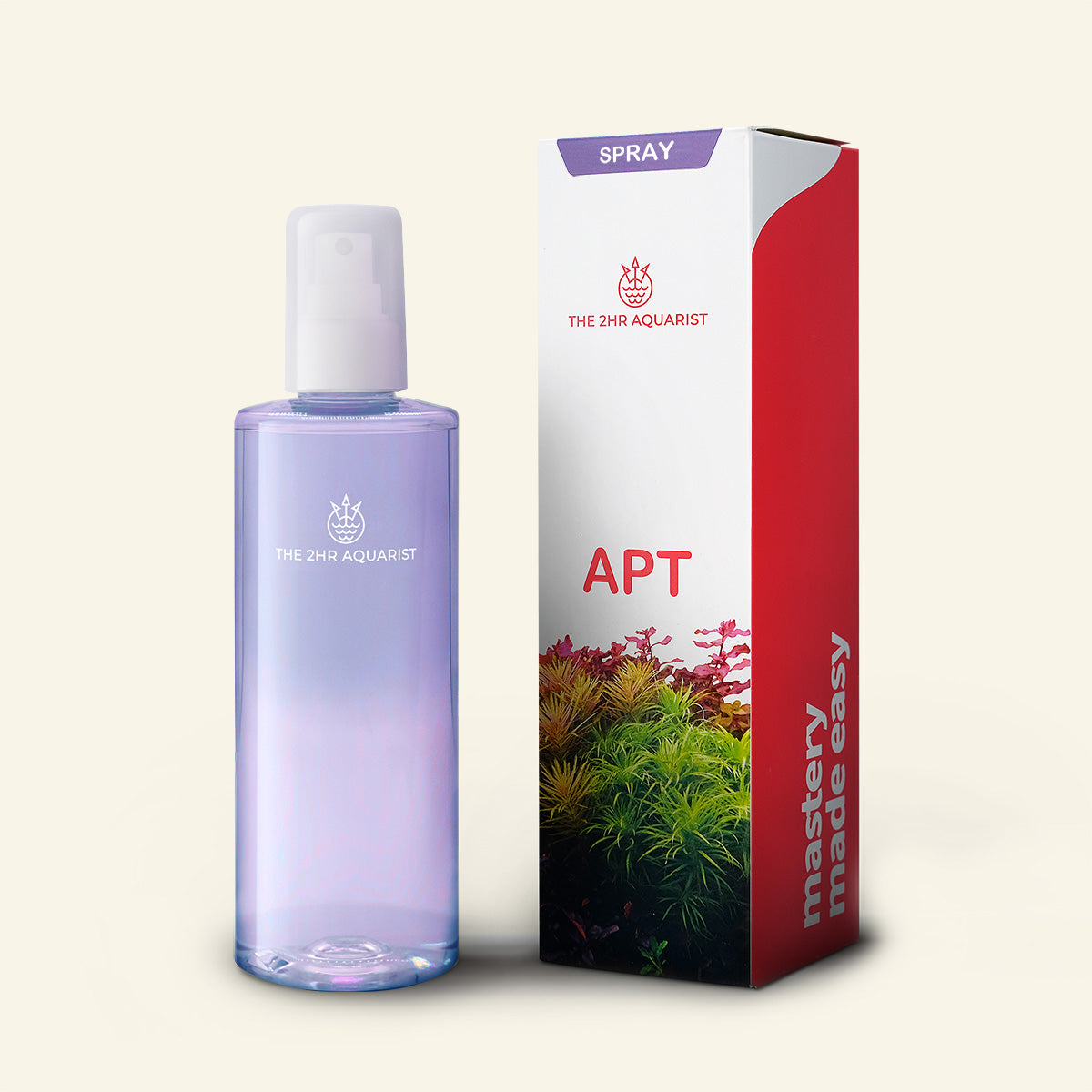
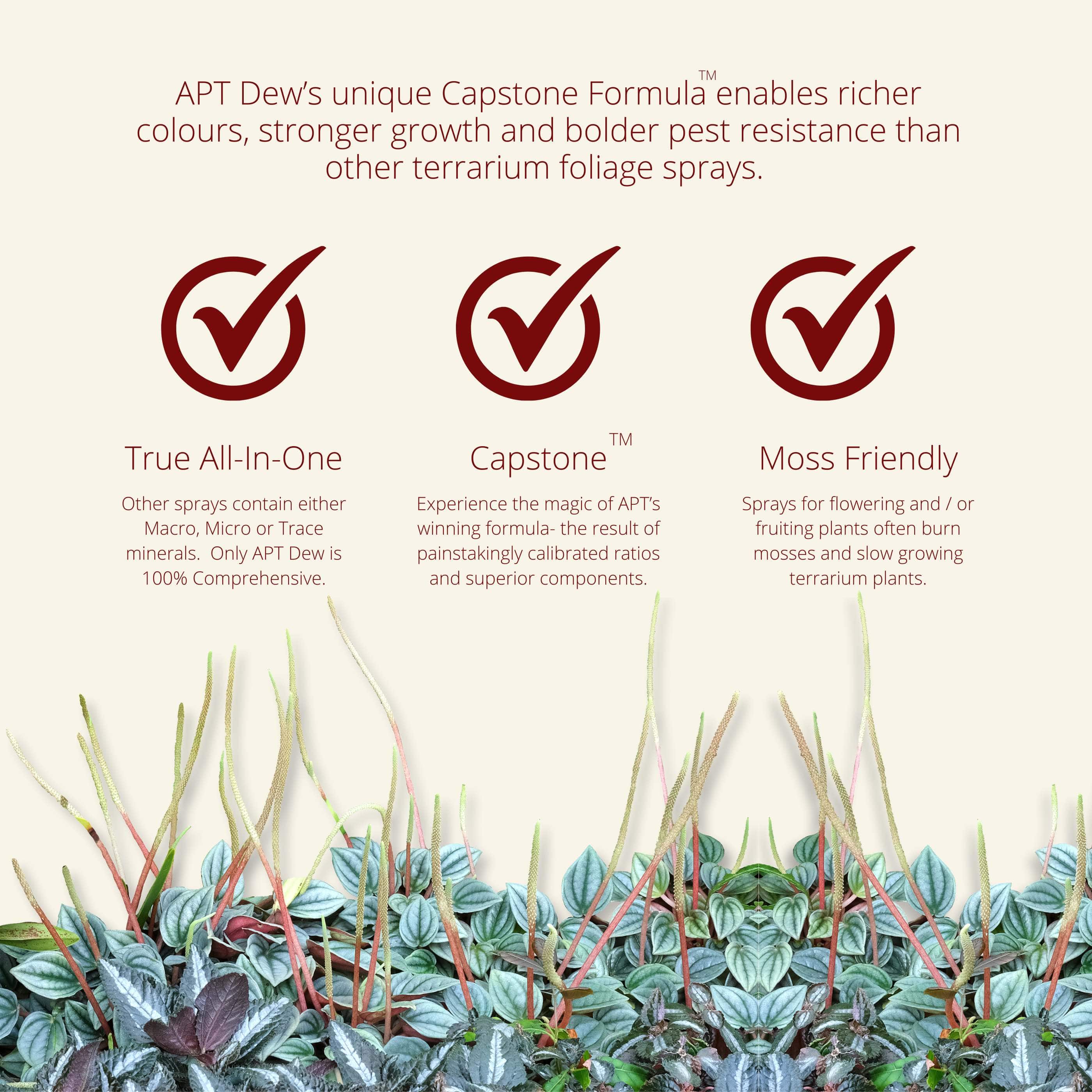
APT Dew is a foliar spray rather than a water-column dose: it is for mosses, ferns and emersed foliage in terrariums and paludariums.

Does dosing more fertiliser grow plants faster?

No. Plants absorb nutrients in fixed proportions, and anything supplied beyond that ratio does not accelerate growth. It stays in the water column, where algae can use it. Nitrogen works in the opposite direction to intuition: lower nitrogen deepens red pigmentation, up to a point. APT's Capstone ratio is calibrated to sit at that point - maximum colour before diminishing returns.

How much should I dose?

Roughly 3ml per 100L daily, at any consistent time of day. Consistency matters far more than precision; when in doubt, dose slightly less rather than more. Use the dosage calculator for tanks without CO2, or those dominated by slow-growers and shade plants. Minor sedimentation in the bottle is normal.

I'm switching from another fertiliser. Anything to watch?

Changing fertiliser can briefly shock a system, and in rare cases trigger algae. Introduce APT incrementally over two weeks rather than switching overnight. Do this by using a half-dose of your existing fertiliser + a half-dose of APT, for 2 weeks. After that, switch to APT completely.

Insights

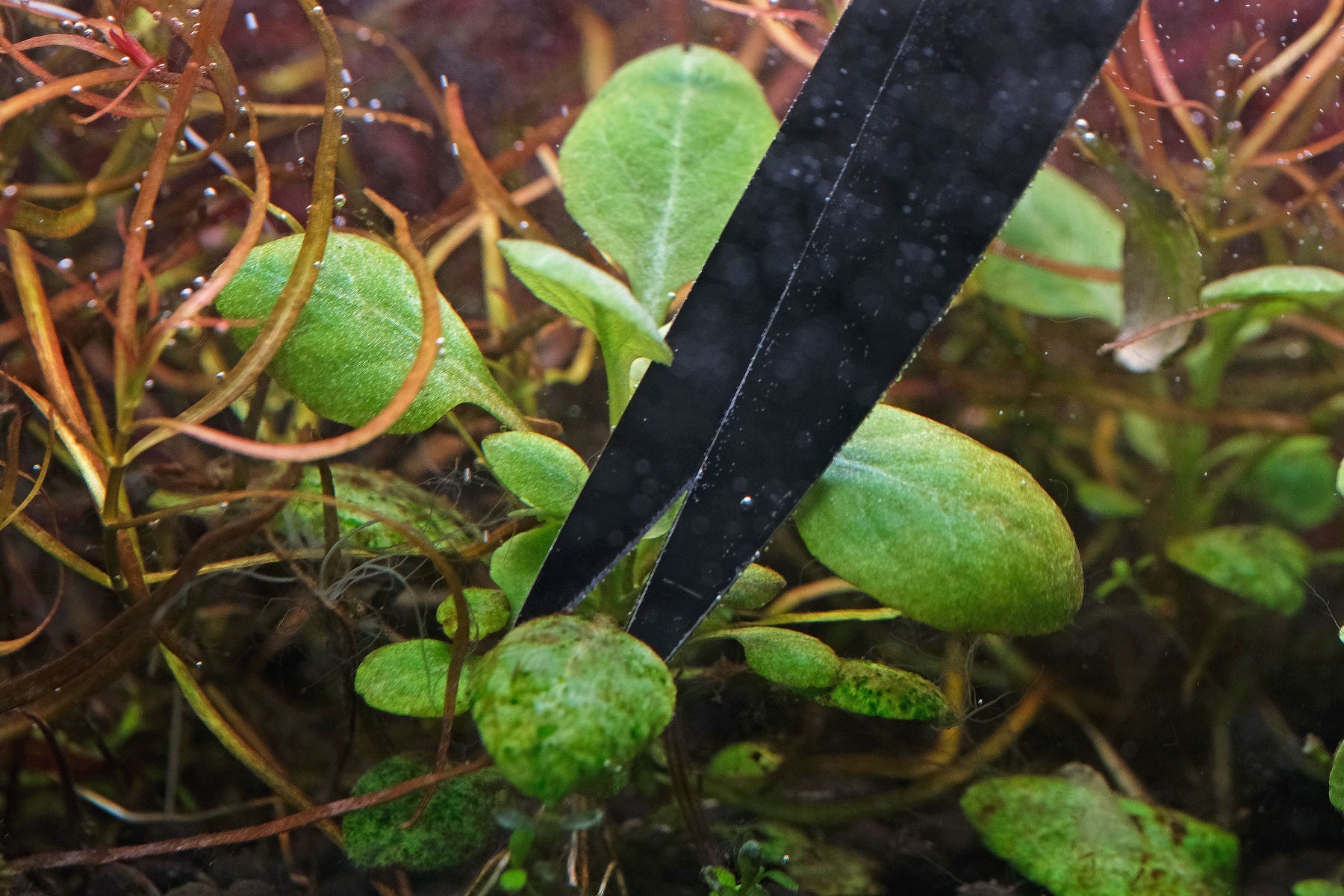
Close up photo of algae on older aquatic plant leaves

¿Qué deterioran las hojas? Comprender el ciclo de renovación de las hojas en las plantas acuáticas

Este artículo profundiza en el tema de cómo las plantas se renuevan continuamente mediante la producción de hojas nuevas.
Leer mássobre ¿Qué deterioran las hojas? Comprender el ciclo de renovación de las hojas en las plantas acuáticas

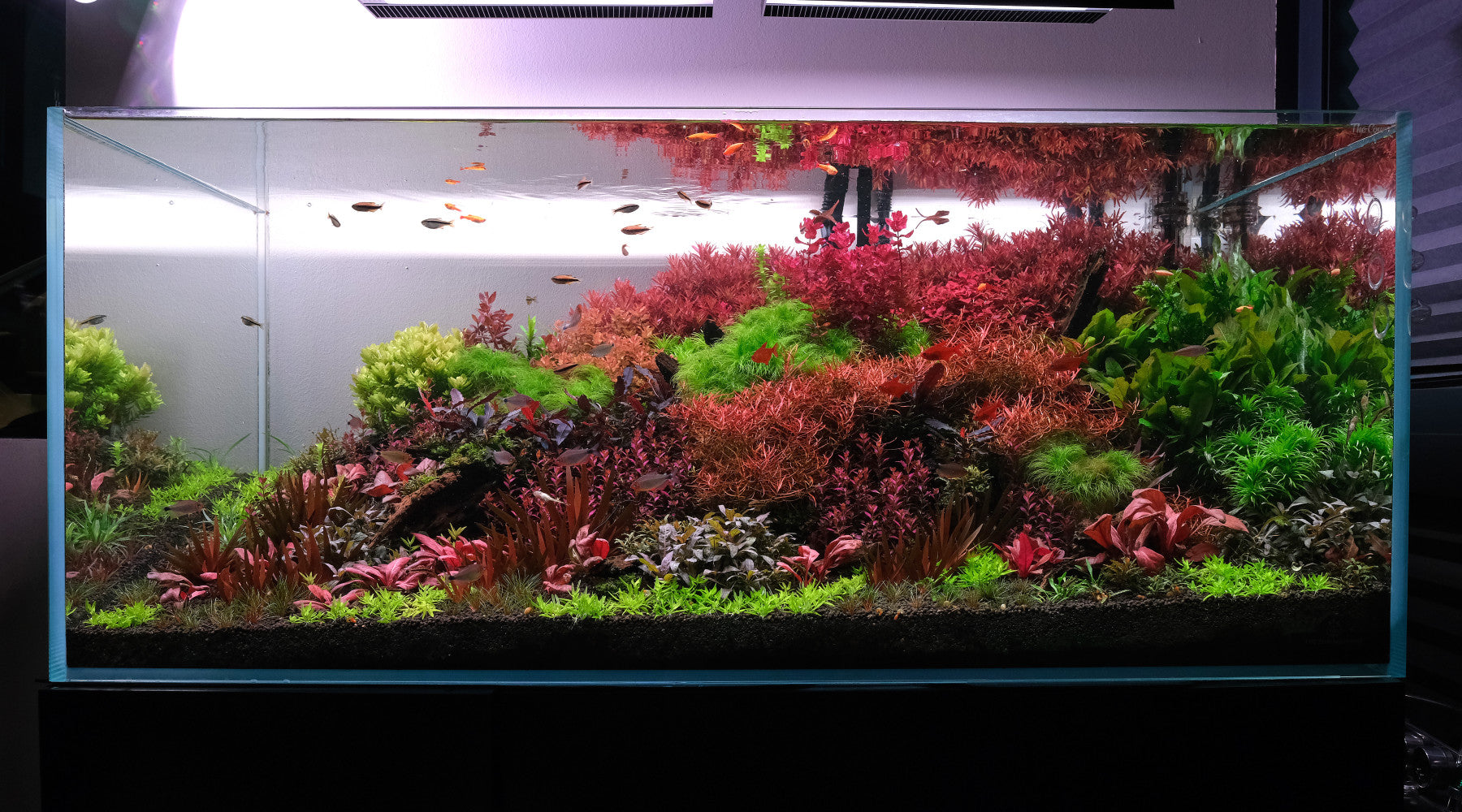
4ft Rotala florida community aquarium: Showcasing the 2hr Way

Acuario comunitario de 1,20 m con Rotala florida: Presentación del método 2hr Way

Aquí se describen todos los detalles sobre los parámetros del acuario, las plantas y las especies de peces, así como el régimen de mantenimiento del paisaje acuático de Rotala florida de 1,20 m.

Leer mássobre Acuario comunitario de 1,20 m con Rotala florida: Presentación del método 2hr Way
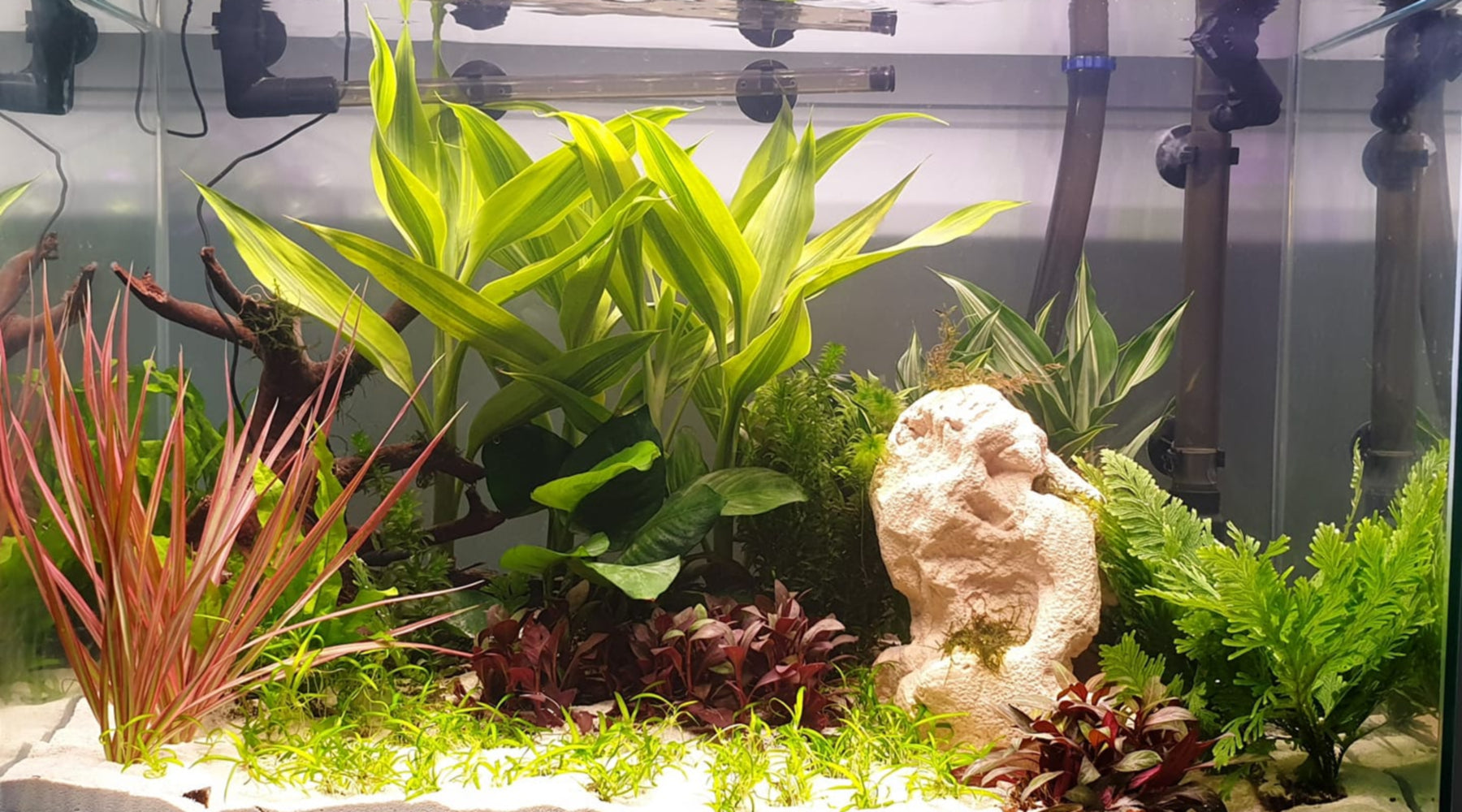
Non-Aquatic Aquarium Plants: A Beginner's Buying Guide to Avoid Them

Guía para principiantes para evitar las plantas no acuáticas en las tiendas

El mayor escollo para los principiantes es que las tiendas de acuarios suelen tener especies de plantas no acuáticas que no crecen bien en el acuario a largo plazo. Esta guía destaca algunas especies no acuáticas comunes que los aficionados deben evitar, y también muestra la diferencia entre las formas emersas y las formas de crecimiento sumergidas para especies de plantas acuáticas comunes.

Leer mássobre Guía para principiantes para evitar las plantas no acuáticas en las tiendas