

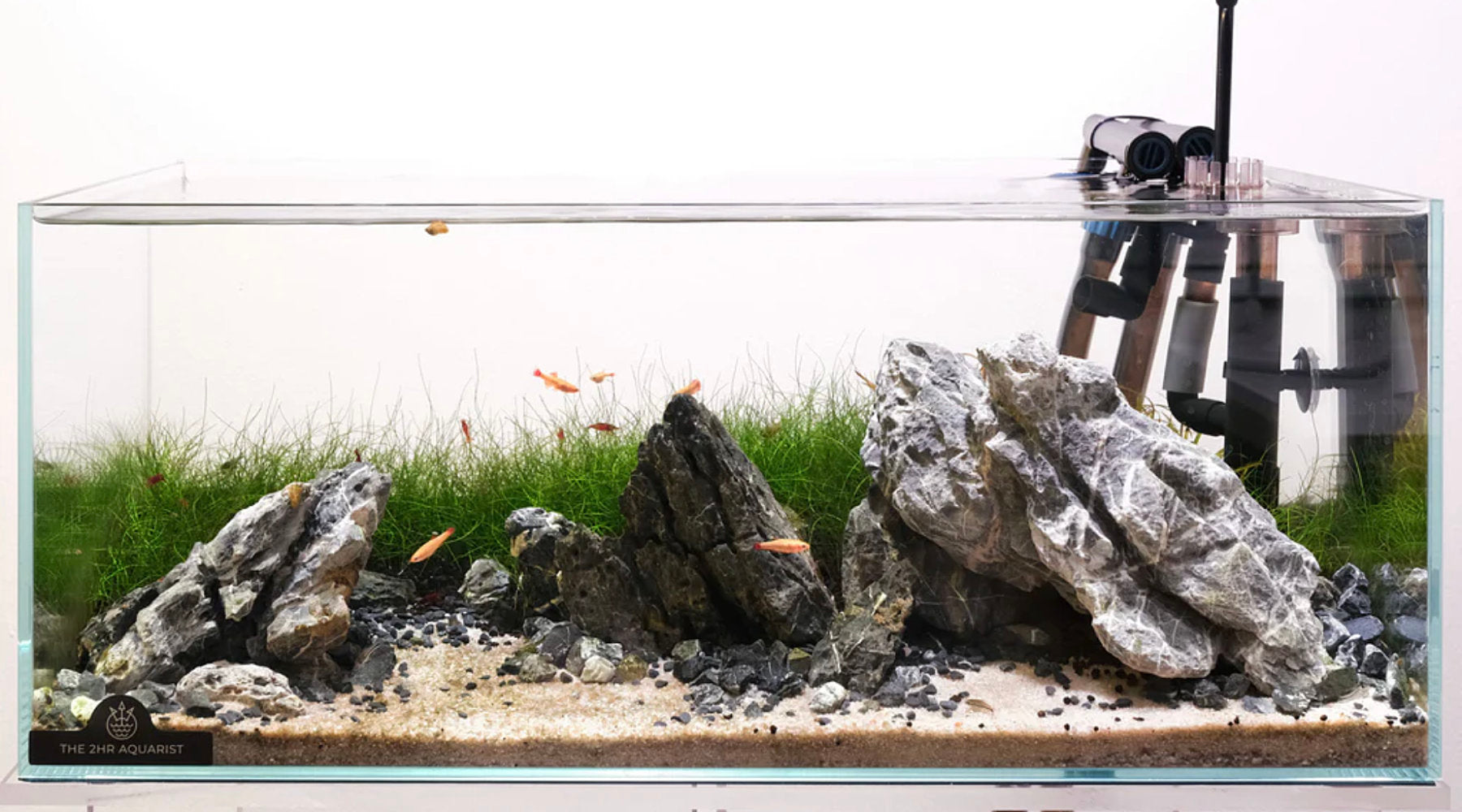
There's something uniquely compelling about an Iwagumi. Stones rising from a seamless green carpet, minimal yet alive - it's one of the most striking styles in the planted tank hobby. An Iwagumi aquascape is a minimalist planted aquarium style built around stones. It is characterised by restraint: one or two carpeting plants, no driftwood, and generous open space. The name comes from Japanese garden design - Iwagumi means "rock formation" - and the rock arrangement principles are far older than the aquarium hobby. Takashi Amano brought Iwagumi aquascapes into aquariums in the 1980s, and the Iwagumi style has been regarded as a benchmark of aquascaping discipline ever since.
It is also the style most likely to end in frustration if you don't understand why things go wrong. The good news: the 2Hr Way makes it surprisingly achievable. This article will explain how to execute an Iwagumi aquascape for beginner aquarium hobbyists.
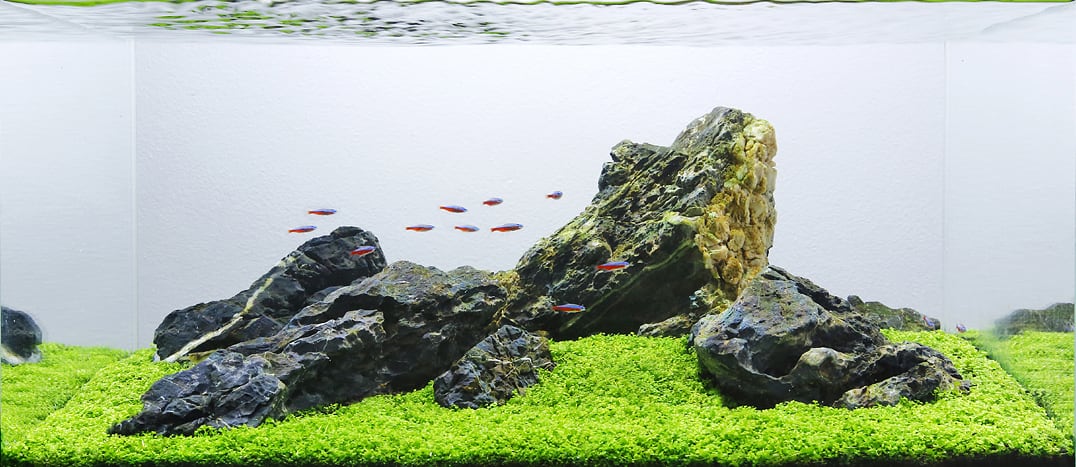
(Above) A traditional Iwagumi aquascape from George farmer.
Traditional Iwagumi aquascapes use an odd number of carefully selected rocks (3,5,7), and a single carpeting plant. A main stone is usually the center-piece, and the other rocks play a supporting role by echoing characteristics of the main stone in manner that provides subtle contrast, through the use of textures, size, and angle of rock placement.
The modernist approach is more complicated - main rocks are mixed with smaller rocks to create a more naturalistic transition from larger rocks to substrate. Instead of individual rocks, larger rock formations and ridges can be created. Instead of planting all the substrate, areas can be planted with cosmetic sand, and instead of just a flat substrate, the landscape can be sculpted into hills and slopes. Even the choice of plants can be more varied - using a mix of plants rather than a single species.

Do You Need CO2 Injection for an Iwagumi Aquascape?
The signature of a great Iwagumi is the carpet, and carpeting plants grow dramatically better with Carbon dioxide (CO2) injection. You can attempt one without it - Dwarf hair grass is the most forgiving candidate - but it's a bit like crossing the ocean on a small boat: possible in theory, hard in practice, with failures far out-numbering successes. With the application of CO2 Injection, Iwagumi aquascapes are very easy to achieve, as carpeting plants are among the easiest aquarium plants to grow as long as CO2 is available. Aquatic plants use more Carbon than all nutrients combined, and once this carbon bottleneck is surpassed, many species that are supposedly "difficult" for beginners are actually pretty easy to grow.
With CO2, the keyword is stability. Fluctuating CO2 levels are one of the most common triggers for system shocks - sudden algae outbreaks and plant deterioration that seem to come from nowhere. We recommend an inline atomizer or reactor connected to a quality regulator with a solenoid timer. This is the one piece of equipment worth spending properly on. Pressurized CO2 injection delivers far more consistent results than yeast-based DIY systems, which should be treated as an introductory experiment rather than a long-term solution.
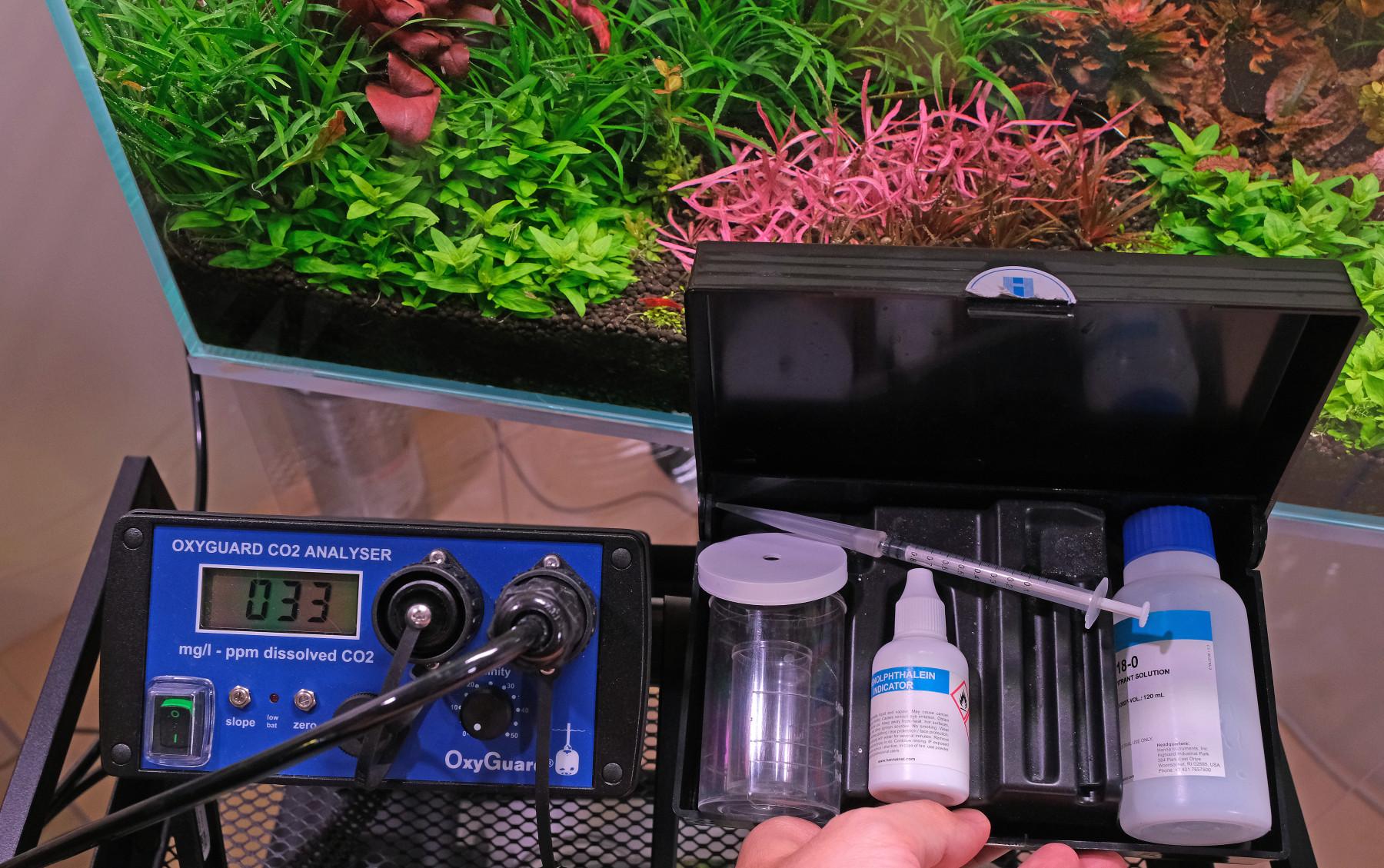
Target a 1 pH drop from your baseline as your guide - this should put you at approximately 30 ppm of dissolved CO2 (degas a water sample to get your baseline). CO2 test kits such as the one from Hanna instruments are also available and offer better accuracy than drop checkers. Turn CO2 on 2–3 hours before the lights, and off near the end of the light period.
How Much Light Does an Iwagumi Aquascape Need? Why More Light Means More Algae
Excessive light intensity is number one reason for failure in Iwagumi aquascapes. This is perpetrated by the myth that carpeting plants require high light to grow well and spread. High light accelerates algae growth tremendously and is counter-productive in Iwagumi aquascapes as using higher light levels tends to lead to algae growth on the rocks. Showcasing the aesthetics of the rocks is paramount in Iwagumi layouts and keeping algae minimized is important.
Part of this problem is that higher end LED lights in the aquarium hobby have become increasingly more powerful, with each brand trying to outdo the previous. While these powerful lights are useful to showcase difficult to grow aquatic plant species, they are far over tuned for
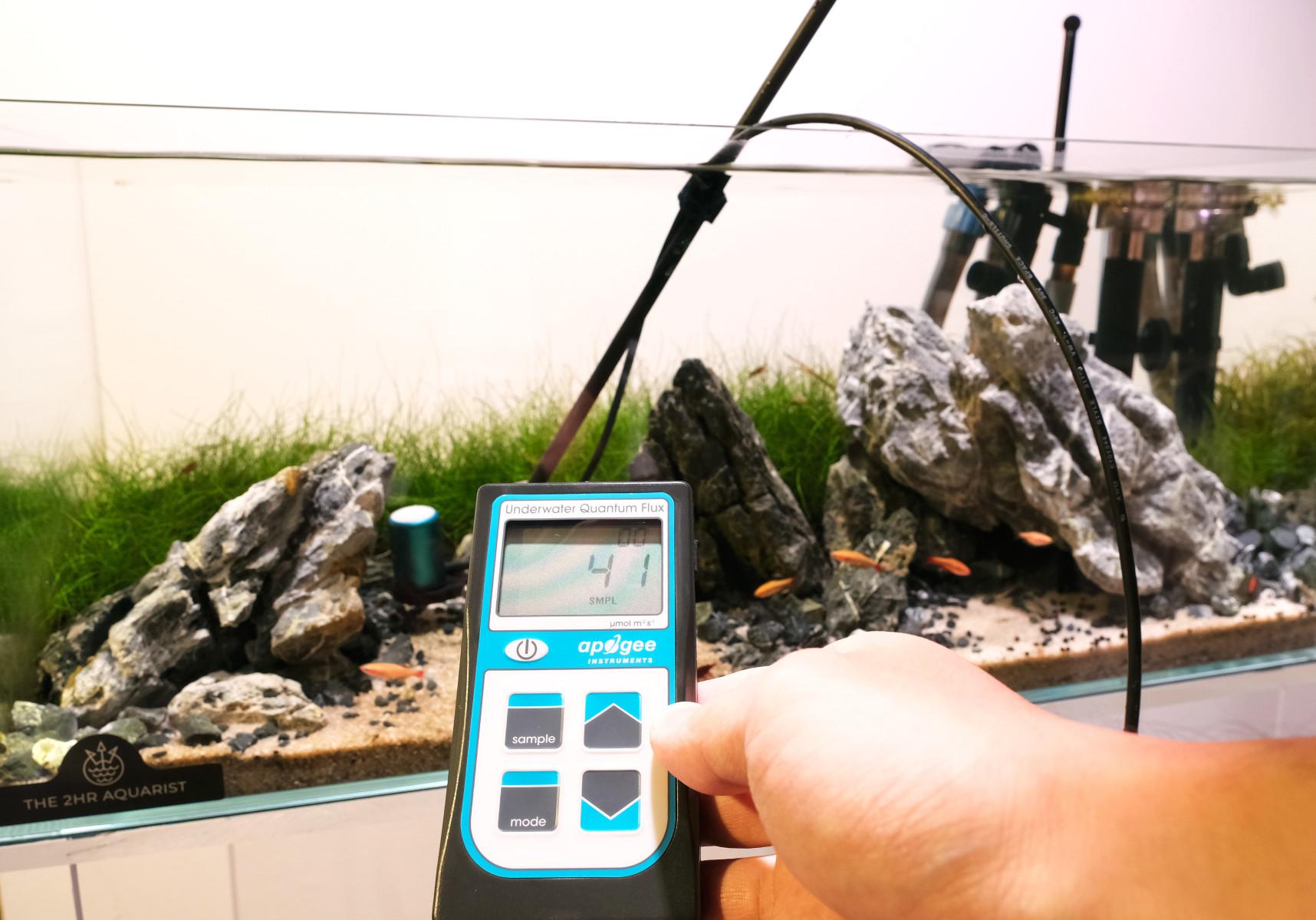
Target 30–60 PAR at the substrate. If your rocks start turning green, the light should come down before any other adjustment is made. Carpet plants will spread reliably at these levels as long as CO2 levels are good.

What Is the Best Substrate for an Iwagumi Planted Tank?
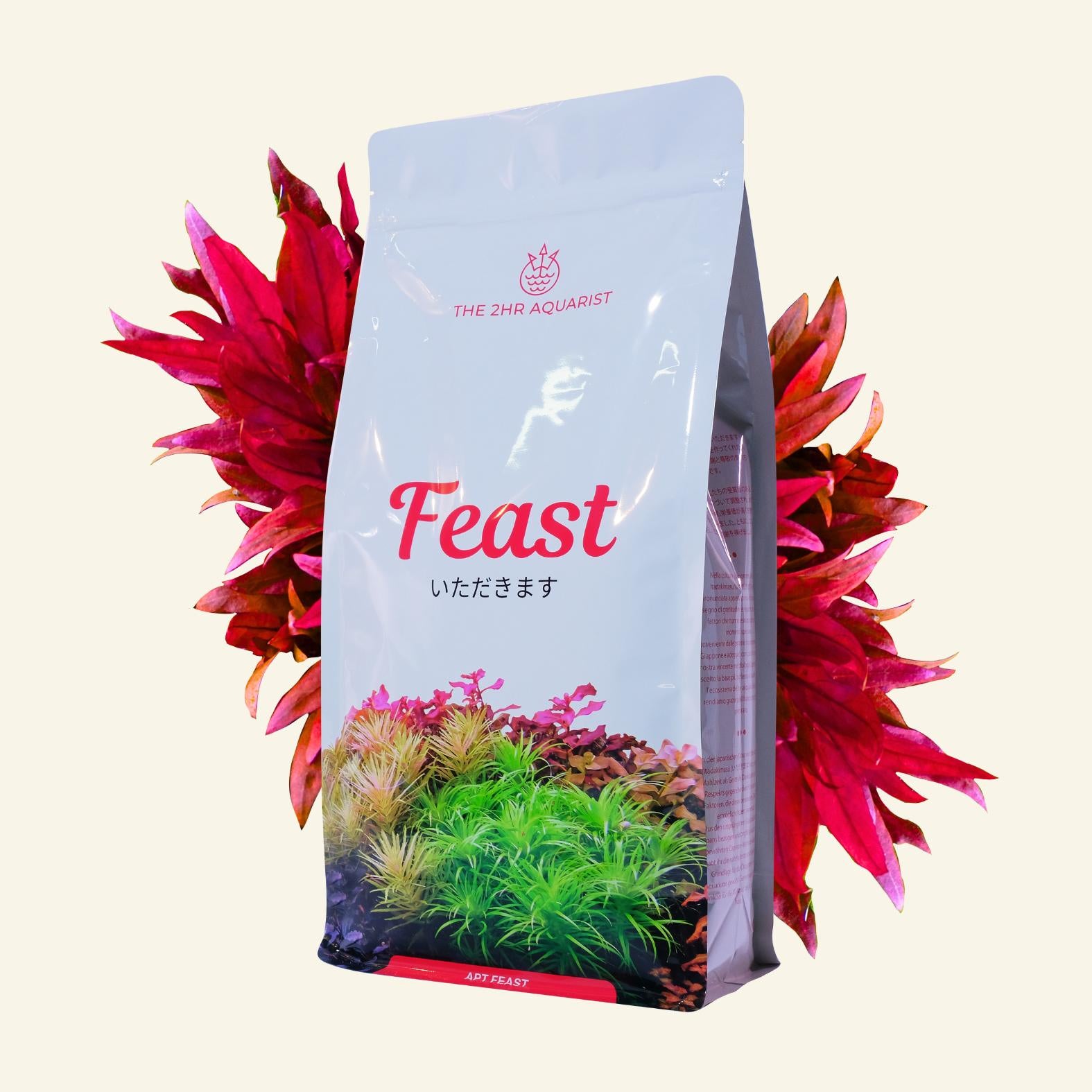
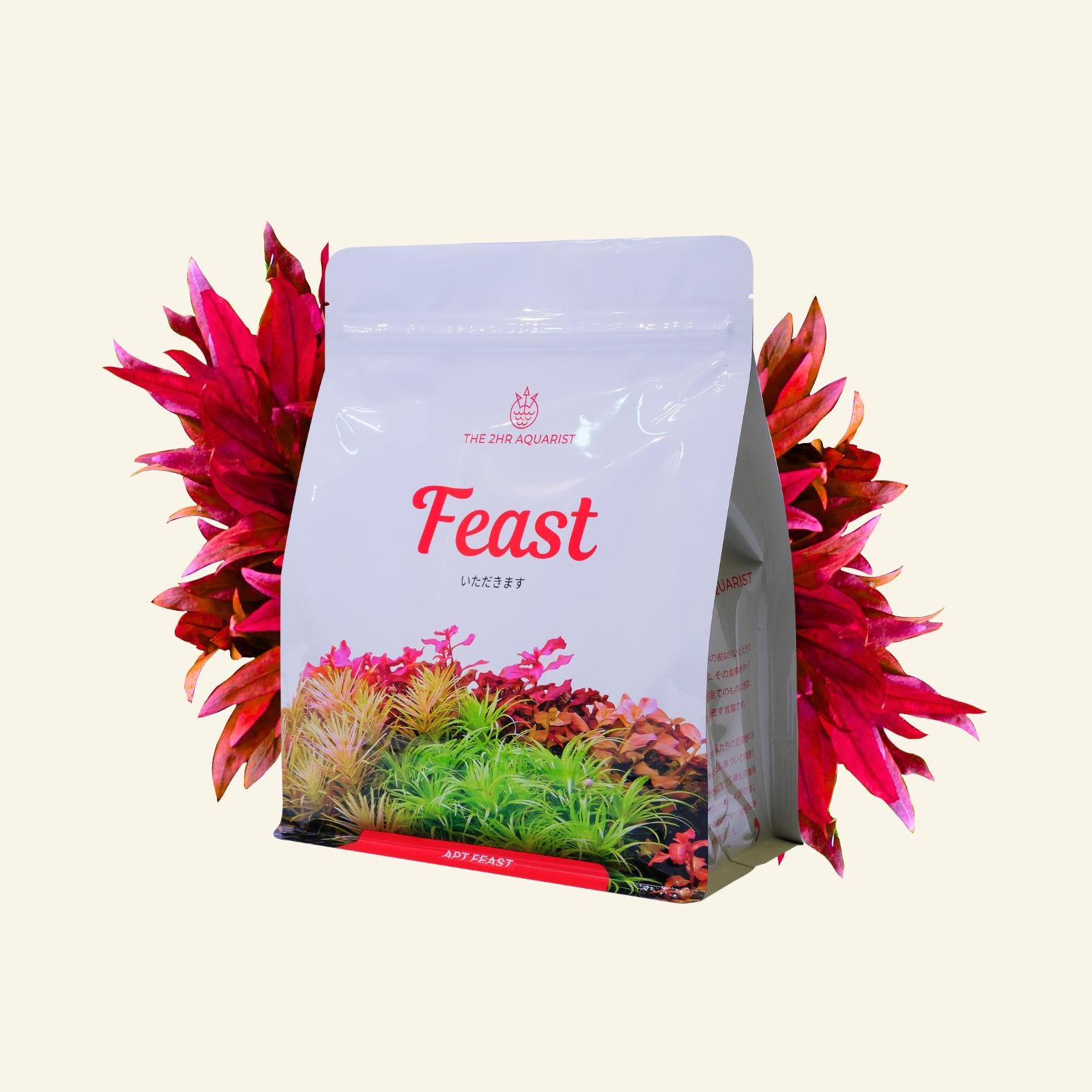
A nutrient-rich aquasoil substrate is one of the most effective tools in an Iwagumi setup. Carpeting plant; by supplying their nitrogen and phosphorus from the substrate, you can keep water column N and P levels low - which keeps stones, sand and glass free from algae more easily. This is why a nitrogen/phosphorus-free fertiliser like APT 1 pairs naturally with a rich substrate here.
Inert substrates can grow all carpets as long as there is adequate water column fertilization. However, nitrogen and phosphorus in the water column is a free for all buffet. In plant dominant aquariums, high plant mass can keep algae at bay even with high nutrient levels in the water column. In lightly planted Iwagumi aquascapes, once the ecological balance is off, or algae spores are triggered to bloom, high water column nutrient levels make algae issues more severe and harder to solve. Feeding carpeting plants through the rootzone is an easier approach. If using inert substrates + water column dosing to grow in carpets, tank cleanliness and other algae triggers must be well managed.
A substrate slope is also important. Substrate in an Iwagumi typically runs low at the front and rises towards the back, which exaggerates depth and gives the impression of a much larger landscape than the tank actually holds.

Iwagumi aquascapes that use too much light and/or have high nitrate/phosphate levels in the water are more likely to get green algae on the hardscape. Carpeting plants will spread more quickly in a high light, high water column nutrient tank, but at the expense of hardscape cleanliness.
Which Carpeting Plants Work Best in an Iwagumi Aquarium: Monte Carlo, Eleocharis acicularis or HC Cuba?
Iwagumi aquascapes commonly use just one type of plant, and rarely more than three. Restraint is not laziness - it keeps focus on the stones, and it is the whole point of the style.
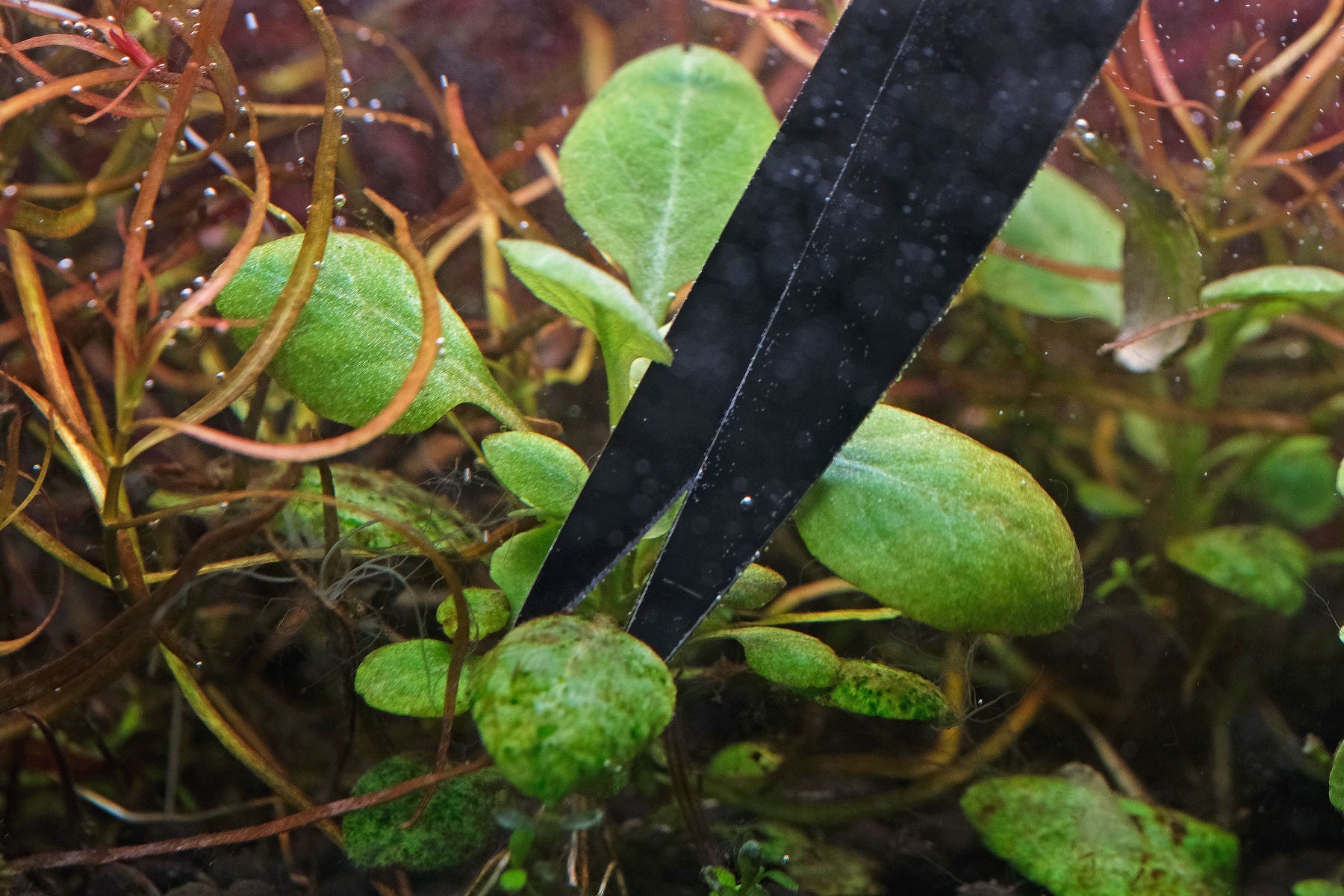
Dwarf Hairgrass (Eleocharis acicularis / parvula) is reliable, and its upright growth naturally conceals the base of the stones. It is also the most forgiving - hardy, moderate-growing, and the best candidate if CO2 is not yet fully dialled in. Monte Carlo (Micranthemum tweediei 'Monte carlo') is easy to grow, with moderate growth speed. It hugs substrate tightly and form dense carpets. Glossostigma (Glossostigma elatinoides) spreads fast but the runners can propagate very aggressively. HC Cuba (Hemianthus callitrichoides 'Cuba') is beautiful but significantly more demanding - thin-stemmed, sensitive, and delicate to handle.

Monte carlo left top and HC bottom right. HC has smaller leaves.


Utricularia gramminifolia is another attractive carpeting plant, but is slightly pickier to grow.
One important distinction: minimal planting means few species and generous open space. It does not mean starting the tank with very few plants. Get a good amount of plants to start with, divide the plant samples into as small portions as you can handle and make sure each portion is well planted with some space to expand into.
And whichever species you choose, cut and pull off older deteriorating portions and allow new growth space to spread. As a carpet thickens, the shaded lower layer dies back and the mat loses its grip on the substrate, eventually lifting off in sheets. Regular trimming keeps it thin, dense and anchored. This is ongoing work, not a one-off.
Variations, and what they cost you. Many aquascapers soften a strict Iwagumi with Rotala sp. or Eleocharis vivipara planted as a background, Riccia fluitans tied to the stones, a little Java Moss at the rock bases. All are legitimate, all are common, and all move you further from the pure form. They may also shade the carpet, compete for nutrients and add maintenance: Riccia in particular needs relentless trimming or it detaches and floats. Staurogyne repens and Blyxa japonica two popular accents to carpets.
How Do You Arrange the Stones in an Iwagumi Aquascape?

Use an odd number of stones - three, five or seven. Even numbers invite symmetry, and symmetry is what makes an Iwagumi look static and boring rather than natural. The traditional roles are worth knowing:
-
Oyaishi - the main stone. The largest and most prominent, tilted slightly, placed off-centre.
-
Fukuishi - the second stone, which balances the Oyaishi and echoes its character.
-
Soeishi - a supporting stone that reinforces the relationship between the first two.
-
Suteishi - small "throwaway" stones, often buried up to half their height, present only to add naturalness. They should not draw the eye.
Position the Oyaishi off-centre using the rule of thirds or golden ratio - roughly a third of the way across the tank. Centering the main stone is the most common beginner mistake in Iwagumi layouts, and the one that flattens an otherwise good scape.
Use one type of stone throughout, with consistent grain and texture. Mixing different types of hardscape materials breaks the illusion that these rocks came from the same place. And no driftwood: Iwagumi designs exclude wood and roots by definition - the moment you add a branch, you're building something else.
Leave the open space alone. Negative space is not empty space; it enhances the sense of scale and tranquillity that defines the style.
One practical note that connects back to Section 1: calcareous stones such as Seiryu will slowly leach carbonates, raising KH and GH over time. An Iwagumi carries more rock per litre than any other style, so the effect is more pronounced here. It's not a problem - carpet plants tolerate moderate KH well - but it does mean your degassed pH baseline drifts upward. Re-measure it periodically rather than reusing an old number, or your 1 pH drop target will quietly stop meaning what you think it means.
How Big Should Iwagumi Stones Be?
The largest pieces of rock in a tank should be at least 3/4 of the height of the tank, if not more, to create a strong impression. The bottom few inches of large rocks are usually buried in the substrate to give the impression that the rocks are rising naturally out of the ground. Tilting rocks to get a more aesthetic angle also reduces the final height of the rock. Most hobbyists use rocks that are far too small - underestimating the size needed to make the hardscape stand out in the tank.
Smaller pieces of rock can also be joined together to form a larger rock formation. However, this process can be tedious and requires a fine eye for matching the textures of individual rocks.

In this example, we use a rock about half the height of the tank. The rock will visually shrink after being placed in the pool. The hardscape will continue to shrink as the carpet grows and covers the bottom of the rock. The final hardscape is far too small for this size of pool.

In this example we are replacing the rock with another piece that is 3/4 of the height of the tank. When placed in the tank, the rock is large enough to make an impact - but after the carpet has grown in, the hardscape will probably be just large enough to hold its own. What looked like a huge piece of rock outside the tank will appear to be of average size when used in the aquascape.

We try to replace the rock with an even larger piece that is about 80% of the height of the tank. Tilting the rock to create an attractive shadow reduces its final height considerably. However, this rock will still carry good weight in the final layout and will still stand out when the tank is fully grown in.
What Angle Should Iwagumi Stones Be Placed At?
Not all views of the same rock are equally aesthetic. The rock may also look best at an angle other than its natural resting angle, and smaller rocks can be used to support rocks to expose their best face to frontal view. Cracks, interesting rock textures and other aesthetic features make good focal points.
More significant pieces of rock should be tilted at an angle so that the downward facing face is in shadow. This shadowed surface contrasts well with the brighter surfaces directly facing the light and gives the rock a more three-dimensional appearance in photographs. Shadows will also contrast well with sandy areas and more open areas - and such contrast is important in an aquascape. Rocks with flat faces that are evenly lit will look flat and unattractive in photographs. Diagonal lines created by angled rocks in an aquascape give a sense of movement and excitement, whereas square rocks look stable and boring.
Smaller pieces should match the larger pieces somewhat so that the aquascape comes together as a whole. This can be done by creating a pattern that runs through the whole layout - for example, by tilting all rocks at a similar angle or using rocks with similar textures.
Example:

These rocks look rather boring, don't they? The faces are all flat and unexciting. They look like a set of very uninteresting rocks, unworthy of a sophisticated Iwagumi aquascape.

The same set of rocks tilted at an angle after choosing the most aesthetic surface for each rock. The lightly shadowed bottoms contrast nicely with the light textures on top. Tilting the rocks in a similar way brings unity to the three separate rocks.

Add another smaller rock (on the far left) to complement the main rocks. Now the main rocks are united by a similar angle of inclination and the smaller rocks echo the shape of the larger ones, bringing the structure together as a whole. More smaller rocks are added to give a more natural transition in the size of the rocks and to provide a contrasting texture to both the sand and the larger rocks.

Finer pieces of rock are added at the base of the larger rocks to ensure that the whole rock structure blends well with the substrate. Here we have a good naturalistic gradation of rock sizes from large to smaller pieces. Strong shadows contrast with both the sand and the lighter rock faces.
Are Iwagumi Tanks Low-Maintenance? Why Sparse Planting Means More Algae, Not Less
Here is the uncomfortable truth about Iwagumi: the sparse plant mass that makes it beautiful is also what makes it demanding. A densely planted tank more algae-resistant, as healthy plants occupy the space and outcompete algae through an effective we call plant dominance. Without plant mass to hold algae at bay, a combination of light and nutrient control, and good maintenance is required to keep the aquarium algae-free.
Good maintenance here means regular water changes to remove dissolved organic waste and to also siphon off detritus on the substrate surface. Aquariums that accumulate organic waste tends towards algae. The idea that fish waste contributes nutrients to plants is a myopic one - it creates far more troublesome than it is worth as livestock waste does not decompose cleanly or quickly into usable nutrients for plants.
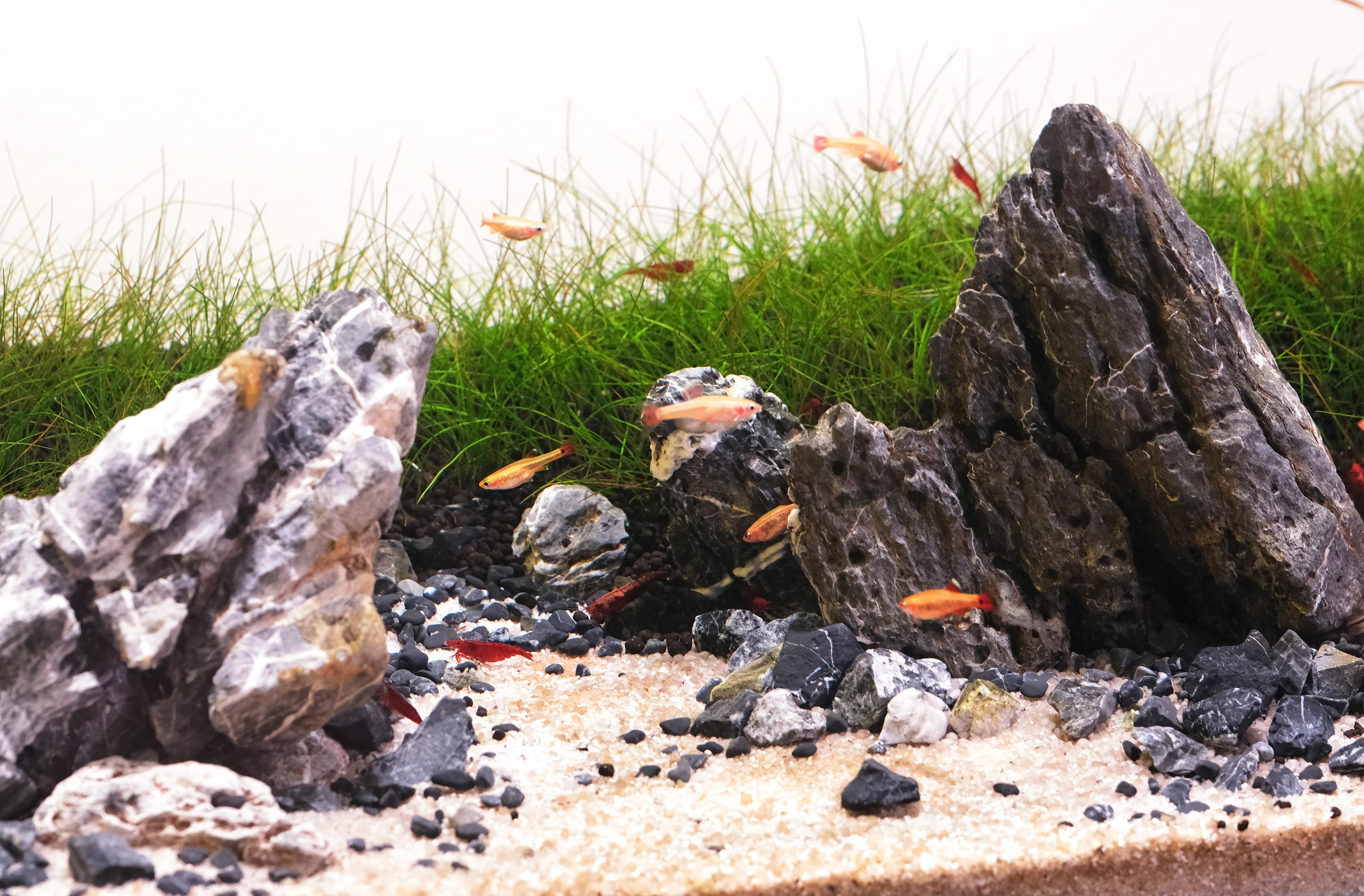
How Do You Keep Iwagumi Stones Free of Algae? Flow, Lean Dosing and Algae Eaters
Light control. Light is the key driver for growth of both algae and plants. The sweet spot for Iwagumi aquascapes is 30-60umols of PAR on the substrate. Carpets grown in this range well with minimal algae spawning on surfaces.
Flow. Detritus collecting at the base of the stones is the primary driver of hardscape algae. Good circulation keeps it moving.
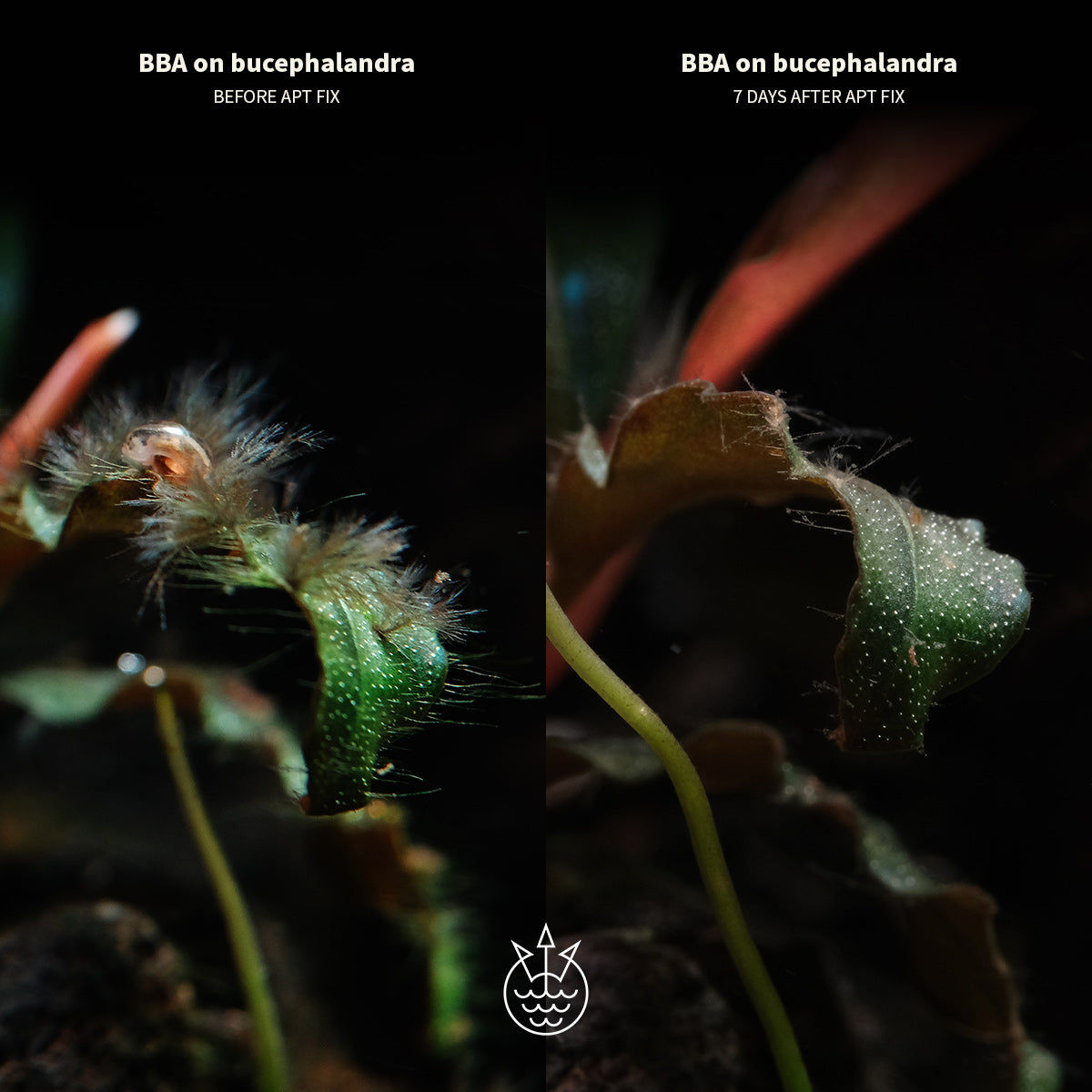
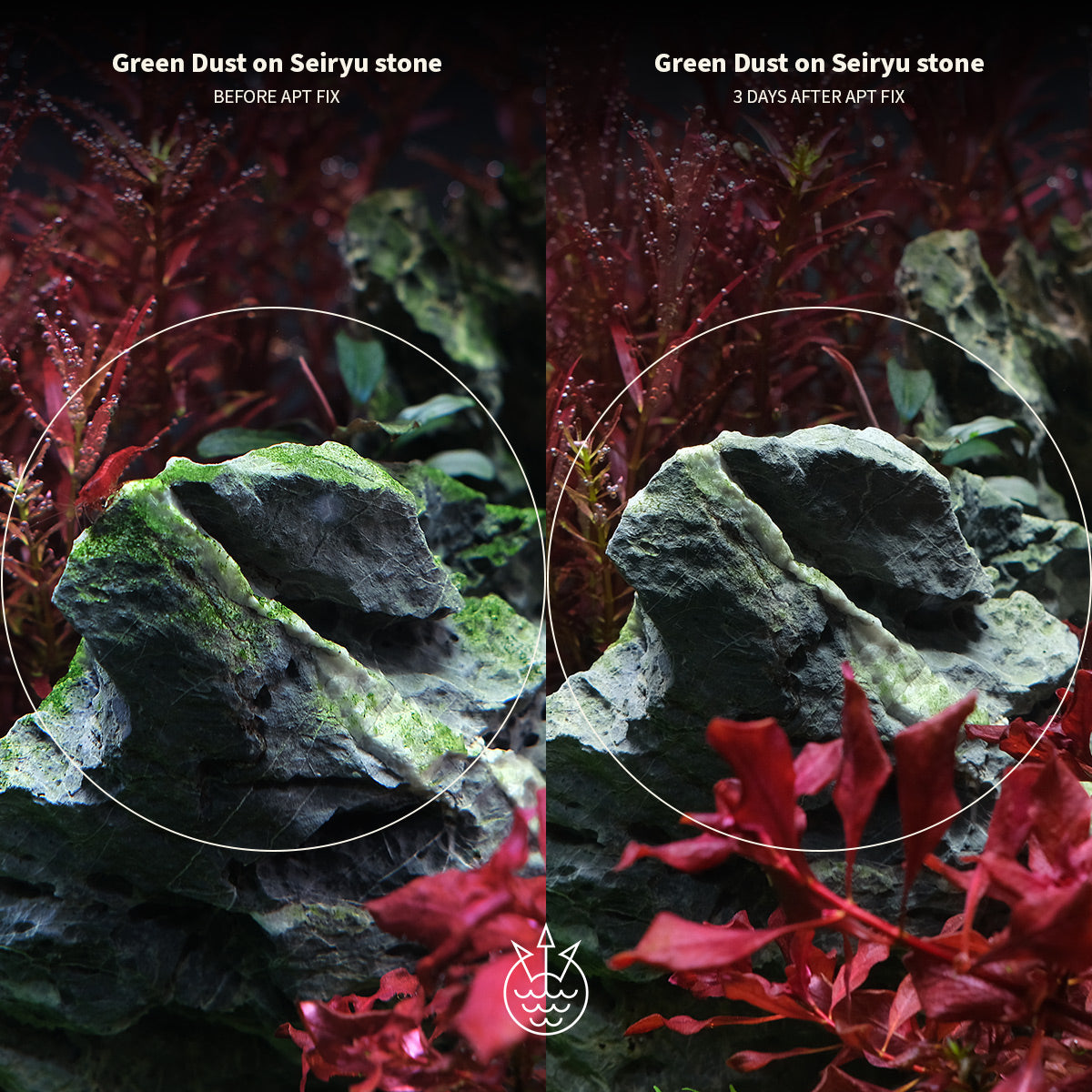
Spot-treatment. During weekly water changes, a targeted drip of APT FIX or APT FIXLITE directly onto exposed rock surfaces may help stop algae establishing, particularly in the early weeks while the tank is still maturing.
Grazers. Amano shrimp (Caridina multidentata) and other dwarf shrimp such as Cherry shrimp (Neocaridina davidi) or CRS (Caridina cantonensis) pick at algae continuously and can be useful for breaking down detritus and keeping hardscape clean.
Water changes. Regular weekly water changes, with siphoning detritus off the substrate surface keeps organic detritus away. Use a turkey baster to stir up detritus while siphoning with the water hose.

Which Fish Suit an Iwagumi Aquascape?
In most aquascapes fish are inhabitants. In an Iwagumi they are part of the composition - the open water above the carpet is deliberately empty, and a single tight school moving through it is what brings the layout to life.
Choose one species of small, peaceful schooling fish and commit to a proper group: cardinal or neon tetras, or rasboras, in a dozen or more. One species, one group, one direction of movement. Two or three competing species undermine the simplicity you worked so hard for.
Nothing large, and nothing boisterous. Fish that dig or barge will lift a young carpet and shift smaller stones before it has rooted.
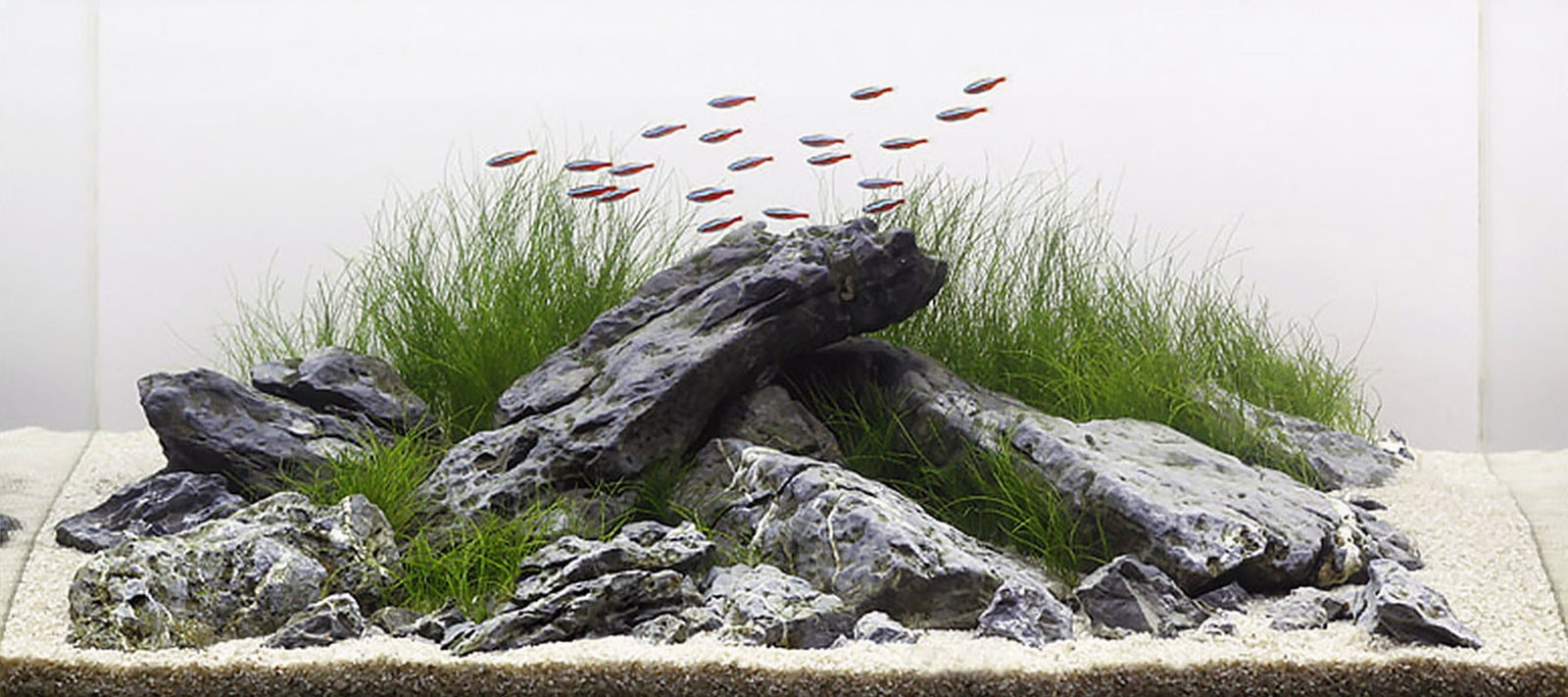
This modern approach to Iwagumi by George farmer shows effective use of Cardinal tetras.
How Should You Cycle an Iwagumi Tank: Dark Start or Dry Start?
We recommend a Dark Start: set the hardscape and substrate, fill the tank, and run the filter for 3–4 weeks with lights and CO2 off. You plant into a biologically mature environment, and the aquasoil's initial ammonia release is spent before a single leaf goes in.
We do not recommend the dry start method. Dry starts results in a lot of emersed plant growth that may face issues with conversion to underwater forms when the tank is eventually submerged. Dry starts are also not problem free or fast or necessary. The failure rates of hobbyists trying dry starts is higher than growing the carpets submerged from the start with proper approach. Carpeting plants are easy to grow submerged with modern methods. For long term maintenance of Iwagumi aquascapes, learning how to manage and continually grow submerged carpeting plants is key, and trying to skip this step through using the dry start method is not a long term solution.
Explore our full deep-dive guides on CO2 setup, carpet plant selection, Iwagumi hardscape and algae control on The 2Hr Aquarist.




Share:
Dutch Aquascape: A Beginner's Guide to the Dutch Style Planted Tank
Nature Style Aquascape: A Complete Setup Guide (The 2Hr Way)