
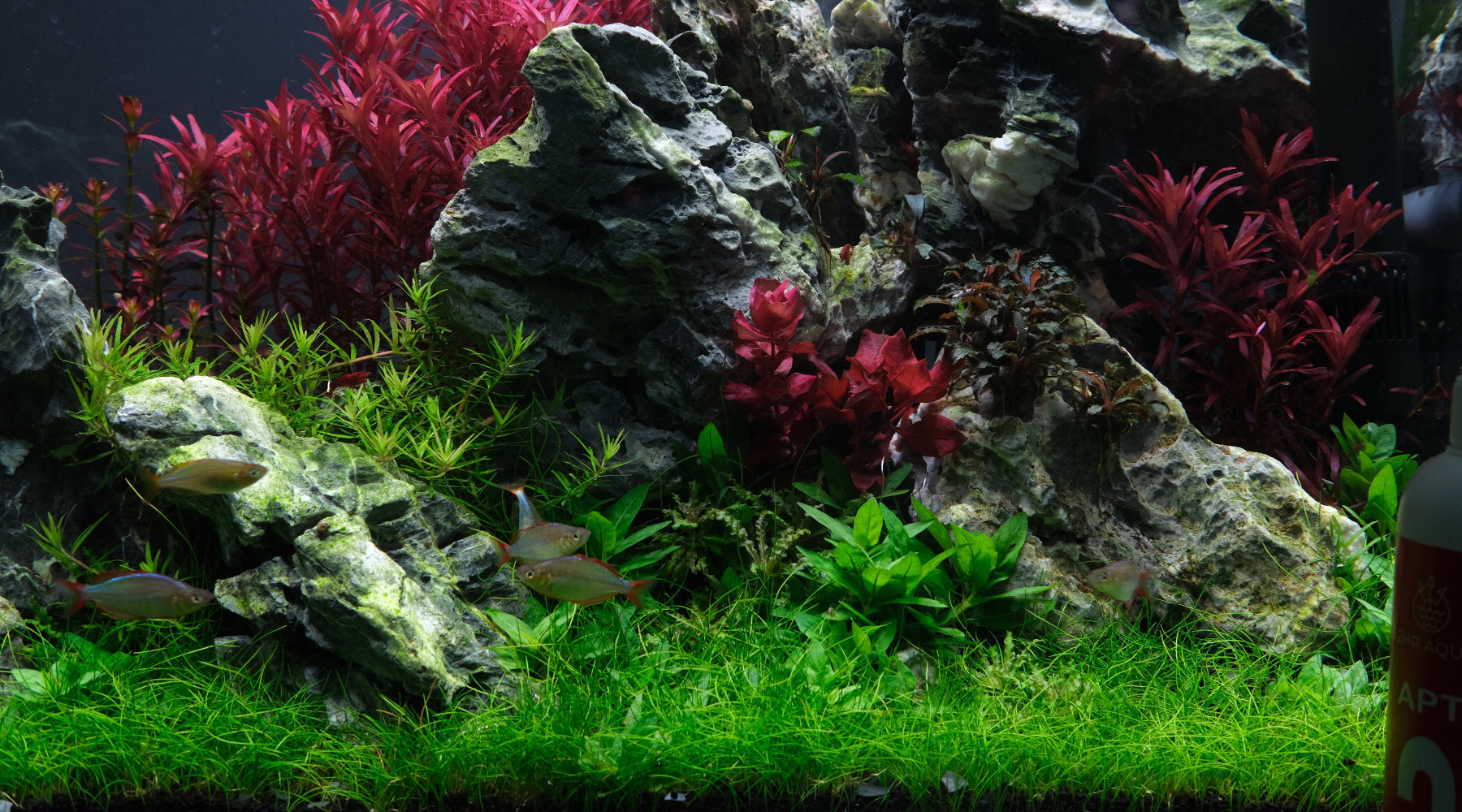
A successful beginner planted tank needs four things working together: a nutrient-rich substrate, a properly sized filter, modest aquarium lighting, and aquatic plants matched to your setup. Get those four right from day one, and you avoid most of the problems that make beginners give up on their first planted aquarium.
Here is what you need to know before spending a single dollar:
-
Use an active, plant-focused substrate (aquasoil) instead of plain gravel or sand.
-
Size your filter for roughly 6–10x your tank volume in hourly turnover.
-
Start with low or medium light and a short photoperiod: 5 to 6 hours a day in a brand‑new tank.
-
Choose hardy plant species that do not need CO₂ – Java fern, Anubias, Cryptocoryne, mosses.
-
Cycle the tank before adding fish; this is the foundation of an established aquarium.

Simple planted aquarium with just Micro swords on the substrate and US Fissidens on the wood work.
Does a Planted Tank Need Aquasoil or Can You Use Regular Gravel?
If you want healthy plant growth and less drama, yes.
Most live plants grow better in soil or aquasoil than in plain inert gravel. Soils provide Carbon dioxide (CO2) through slow decomposition and microbial activity, and this is critical in aquariums that do not utilized CO2 injection. Plants use more carbon than all nutrients combined, and the ability to generate carbon dioxide naturally through microbial respiration and decomposition is key to success in low tech aquariums.
The secondary effect is that aquasoils contain nutrients that plants can draw from. Contrary to popular belief, most aquarium plants can also draw nutrients from the water column, so using a rich substrate is not the only way for plants to get nutrients. The main difference is that with a rich substrate, there is less work to balance water column nutrient levels, and this makes it far easier for beginner aquarists.
Running leaner water column nutrients and using a rich substrate to feed plants also runs less risk of algae, especially in planted aquariums that use more light.

(Above) Low tech aquarium using a sand cap over garden soil.
Substrate basics for a first planted tank
-
Depth: Aim for 2–3 inches (5–7 cm) of substrate so roots can spread and support the plants.
-
Type: Active substrate is clay-based and nutrient‑rich. It is ideal for rooted plants and will often make the water slightly acidic due to their peat content, which many aquatic plants prefer. A pH range of 6 - 7 is normal.
-
Grain size: An ideal grain size is about 2–5 mm. Larger gravel makes it hard for roots to anchor; ultra‑fine sand compacts and can suffocate roots.
-
Layout tip: Create a slope in the substrate – thicker at the back, thinner at the front. This helps both plant growth and the final result of the aquascape, adding natural depth to the layout.
For rooted plants, there are three main substrate routes:
|
Substrate Type |
Plant Growth |
Management |
Notes for Beginners |
|---|---|---|---|
|
Inert gravel / sand |
Works only for the easiest of plant species due to inability to generate Carbon. Carbon bottle neck tends to result in poor quality growth. |
Easy to re‑scape. |
Cheap, but plant growth depends heavily on managing water column nutrient levels and fish waste is not enough by itself. |
|
Commercial aquasoil (active substrate) |
Excellent, due to its ability to generate some CO2 naturally. Allows more leeway in managing nutrients. |
Easy to handle. |
More expensive, but ideal for a first serious planted aquarium. |
|
DIY soil with sand cap |
Excellent if done right. |
Messier and harder to tune. |
Not recommended for absolute beginners. |
How Much Light Does a Planted Tank Need? PAR, Spectrum and Photoperiod
The key to success with aquatic plants is using sufficient light energy without overdriving algae growth.
Modern practice is to talk in photosynthetically active radiation (PAR) instead of the old “watts per gallon” rule. That old rule – 2 to 4 watts per gallon for standard fluorescent bulbs – was a rough guide when everyone used similar bulbs. With today’s LEDs, it is misleading because different fixtures turn watts into PAR very differently.
Practical lighting guidelines for beginners
-
Spectrum: Plant specific LEDs give much better visual presentation to aquariums. Plants are not super picky about what spectrum is necessary. "Full spectrum" is a marketing term that holds little value - any commercial brand can tag their light with the term with no legal consequences. Judge the light instead by how much PAR it produces.
-
Intensity (PAR):
-
Low light: 20–40 PAR at the substrate – good for shade plants like Java fern, Anubias, Cryptocoryne, mosses and Buce plants.
-
Medium light: around 40–60 PAR – good for a low‑tech first planted tank.
-
-
Photoperiod: For a brand‑new setup, use 5 to 6 hours per day. After the system develops and plants are clearly growing strongly without significant algae issues, you can extend it to 7 to 8 hours, and to 8 to 9 hours in a stable high-tech tank.
Traditional advice suggests 7–10 hours of light and a 12‑hour dark period. In practice, with modern LEDs and nutrient‑rich substrates, too much light energy drives algae growth. 5 to 6 hours is a more conservative safe zone, rather than 10+ hours.
A simple, beginner‑friendly tip: put your light on a timer for 5 to 6 hours and do not keep turning it on and off manually. The aquarium will adjust to the amount of light as it matures.

What Filter Does a Planted Tank Need- and How Much Flow?
In a beginner planted aquarium, filtration does three jobs at once:
-
Removes visible particles (fish food, plant debris, mulm).
-
Provides surface area where beneficial bacteria live and break down fish waste.
-
Moves water so oxygen and carbon dioxide are exchanged at the water surface.
How big should the filter be?
A good rule for a planted tank is a filter that turns over the tank’s volume about 6–10 times per hour. For a 20‑gallon tank, that means 120–200 gallons per hour (or roughly 450–750 L/h). Many canister filters in this range work very well.
Position the filter outlet near the water surface so it creates light surface ripple, not a washing machine. That ripple improves oxygen exchange and helps plants and fish thrive.
What to put inside the filter is a separate question from how big it is: see our guide to filter media for what to buy, and filter media layout and sequence for what order to stack it in.
Other essential equipment
-
Heater: Keep tropical fish and aquatic plants around 20–26°C. A small heater in smaller tanks and a stable, appropriately sized heater in larger tanks are essential.
-
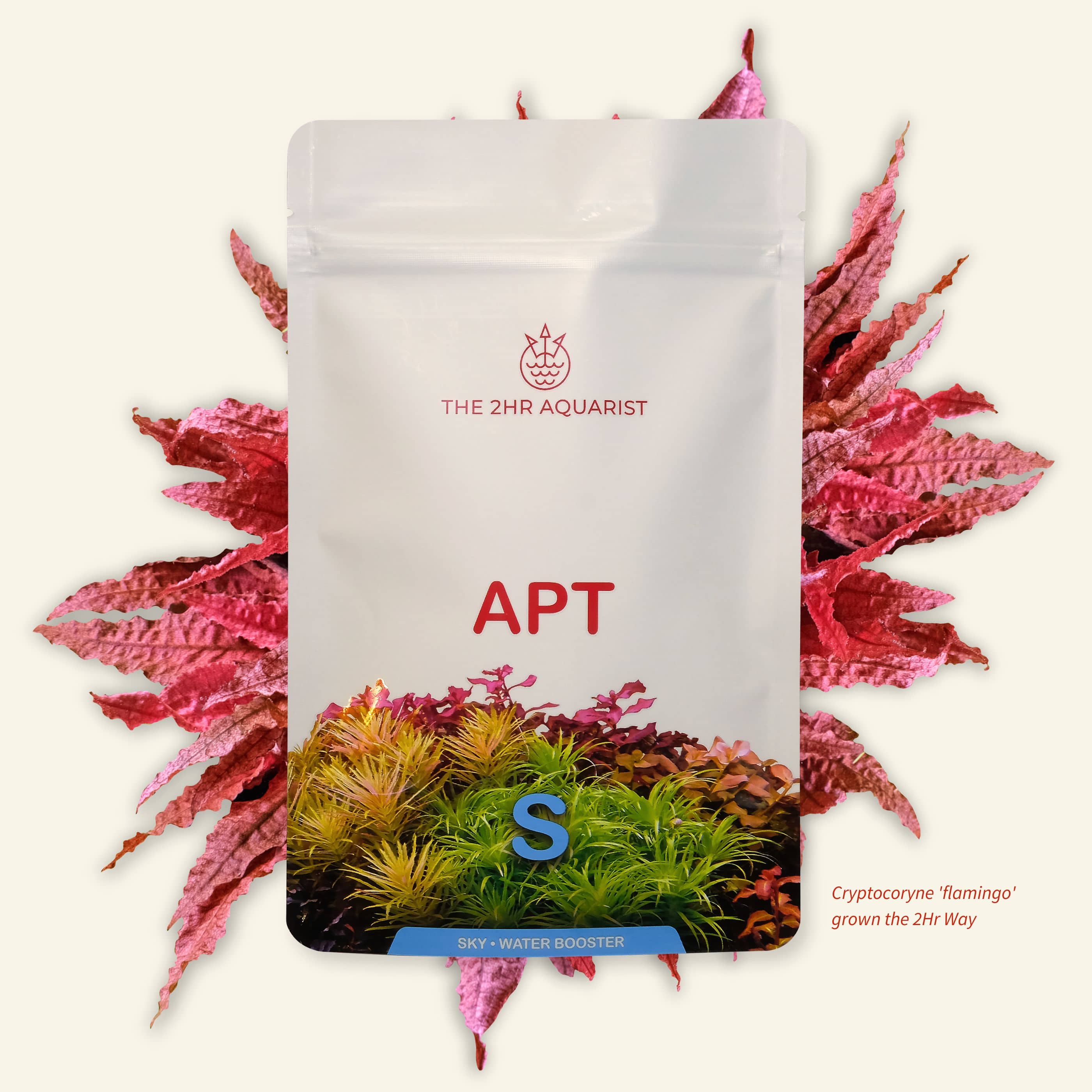
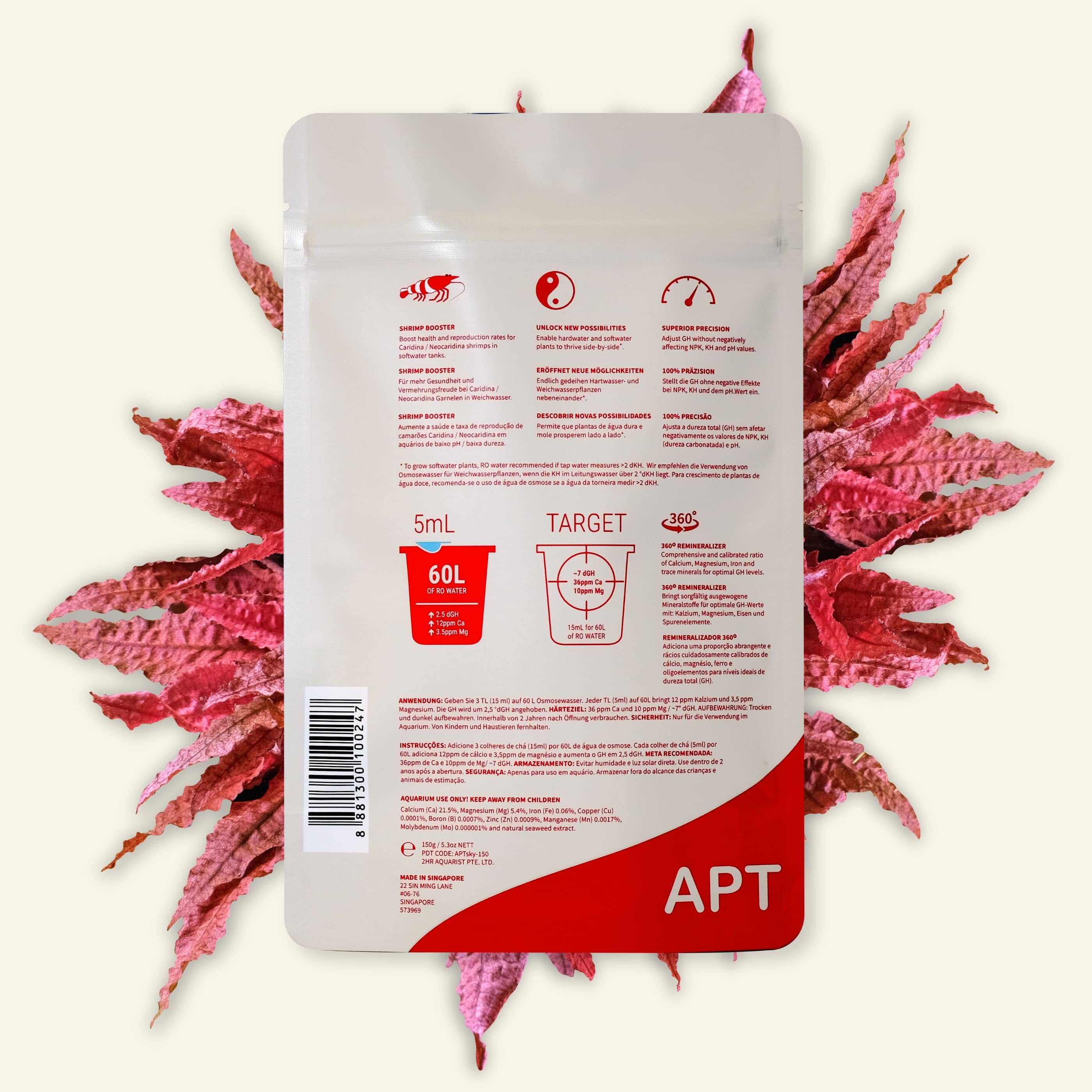
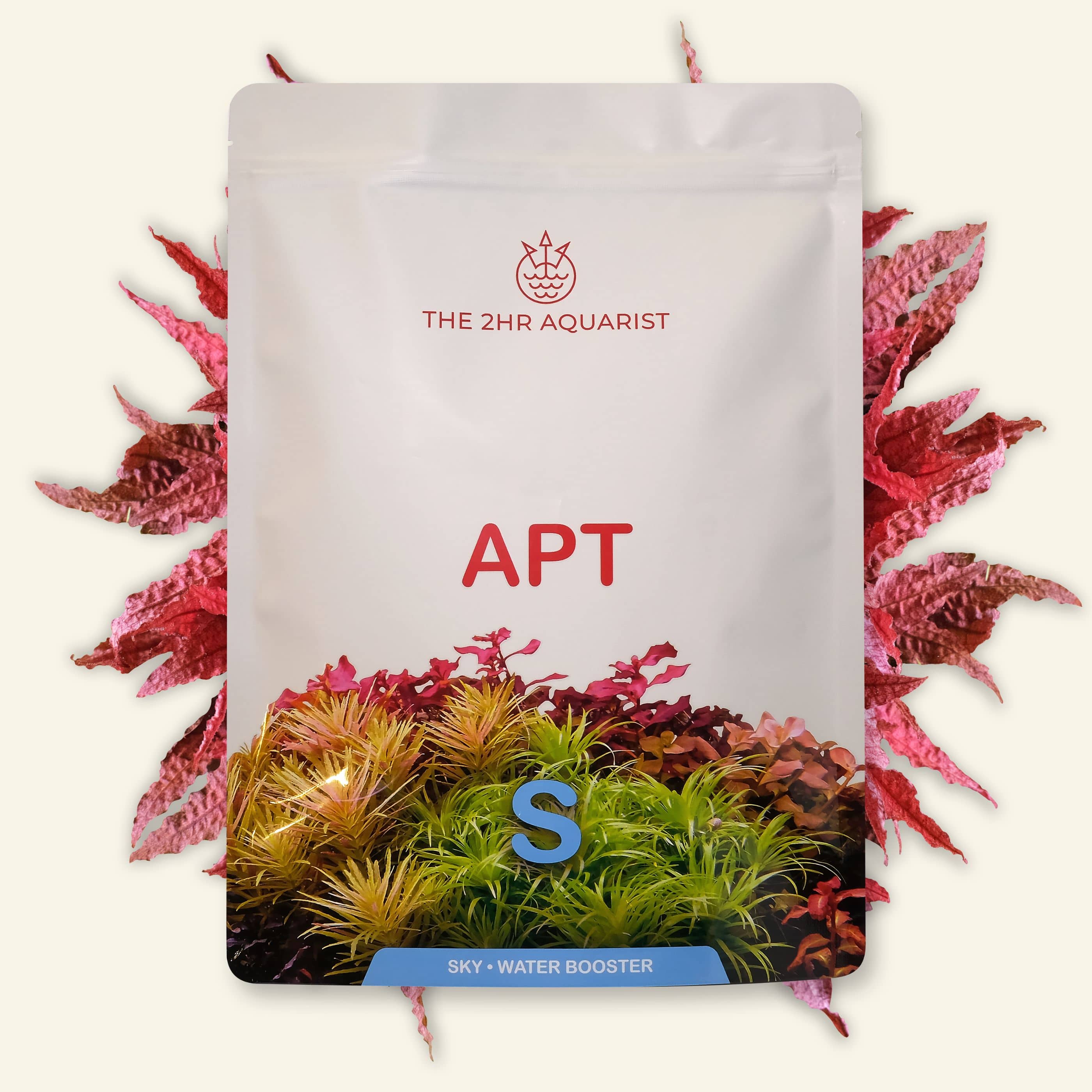
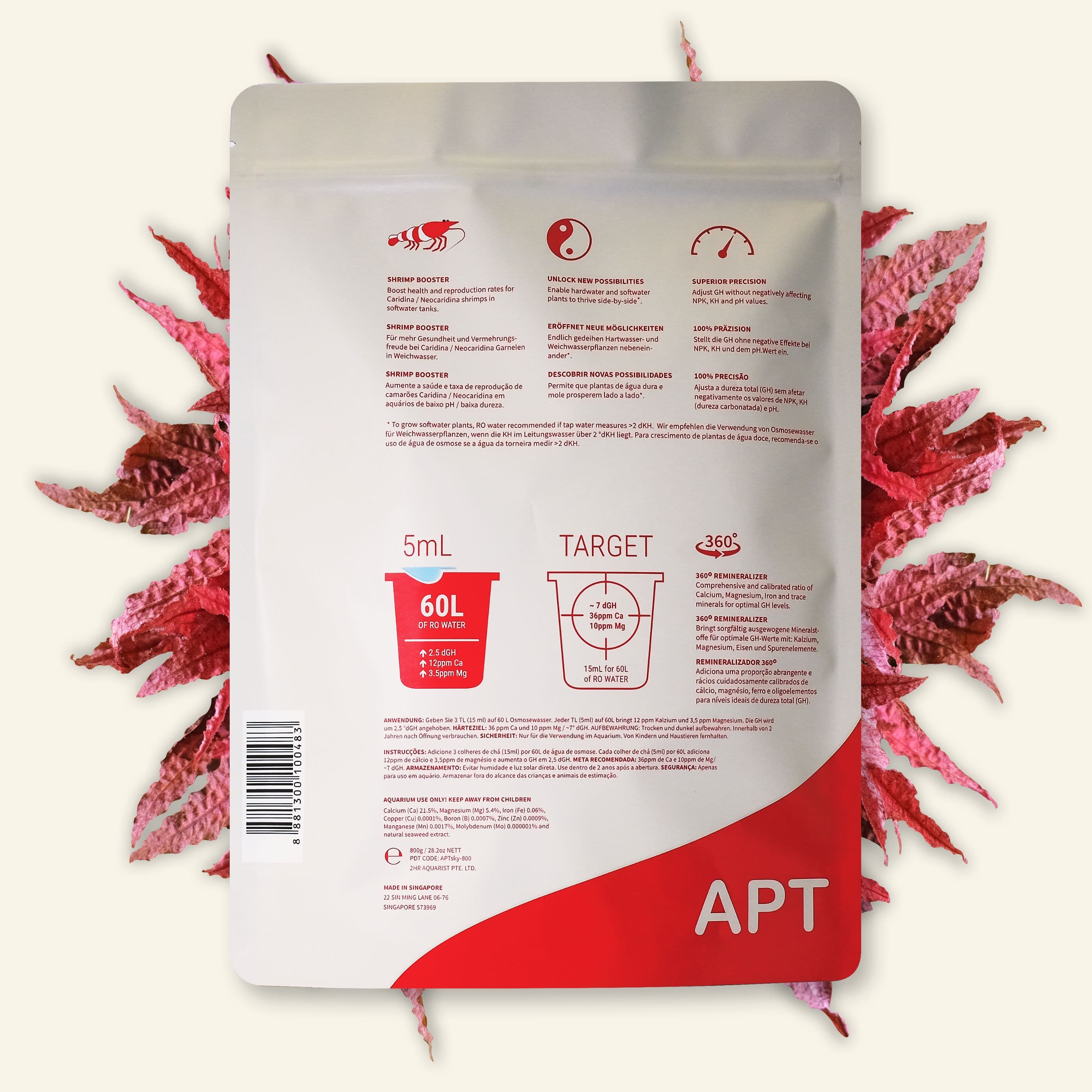
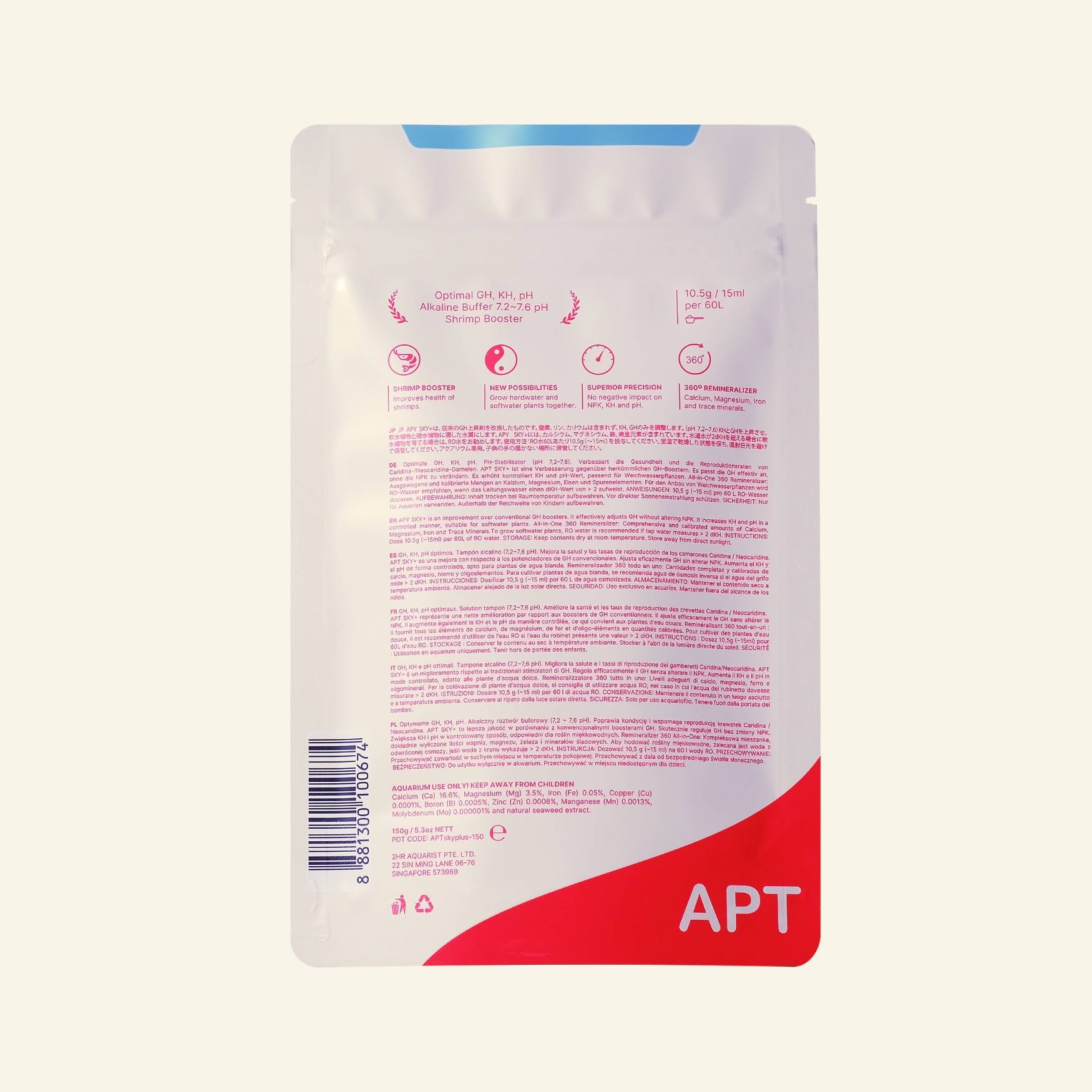
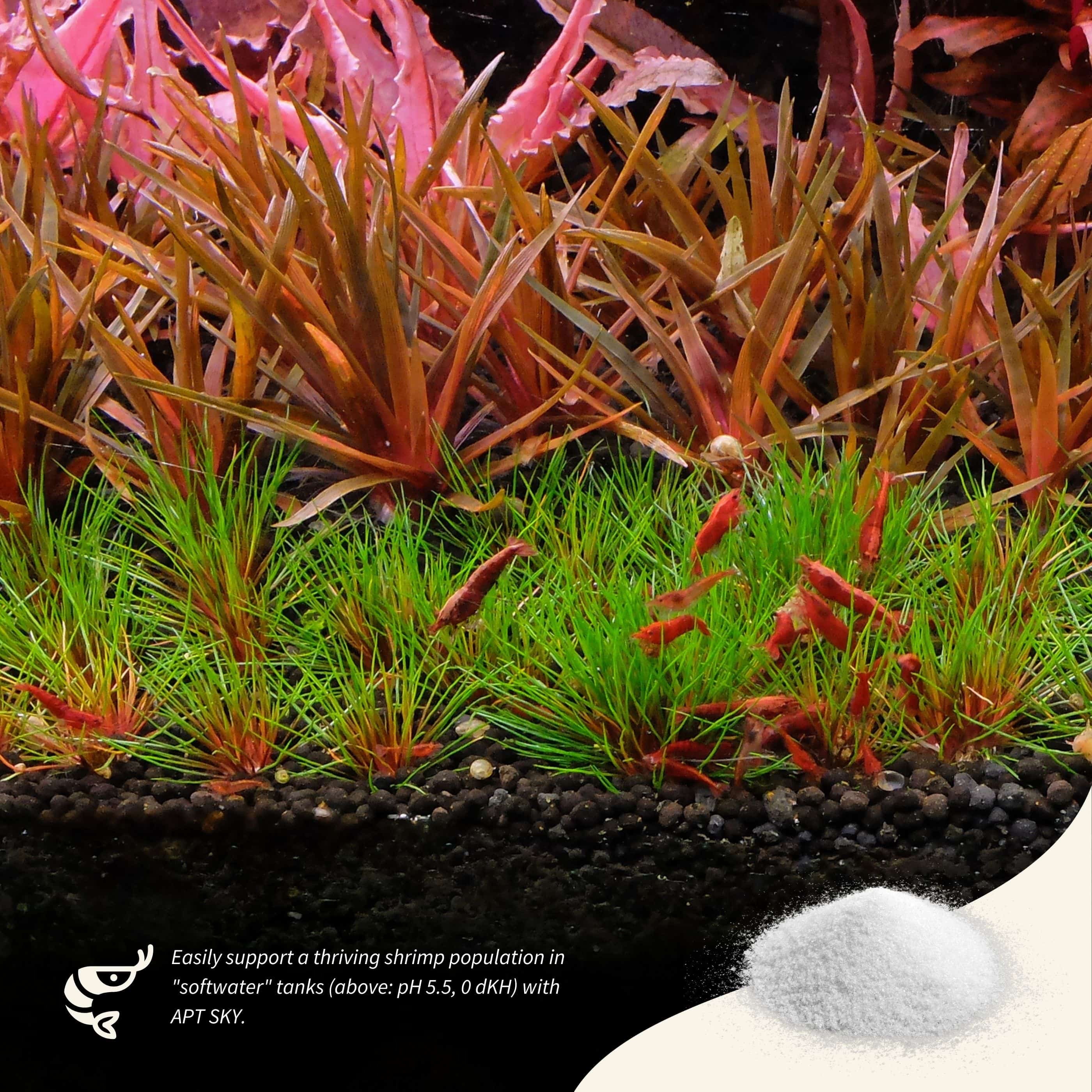
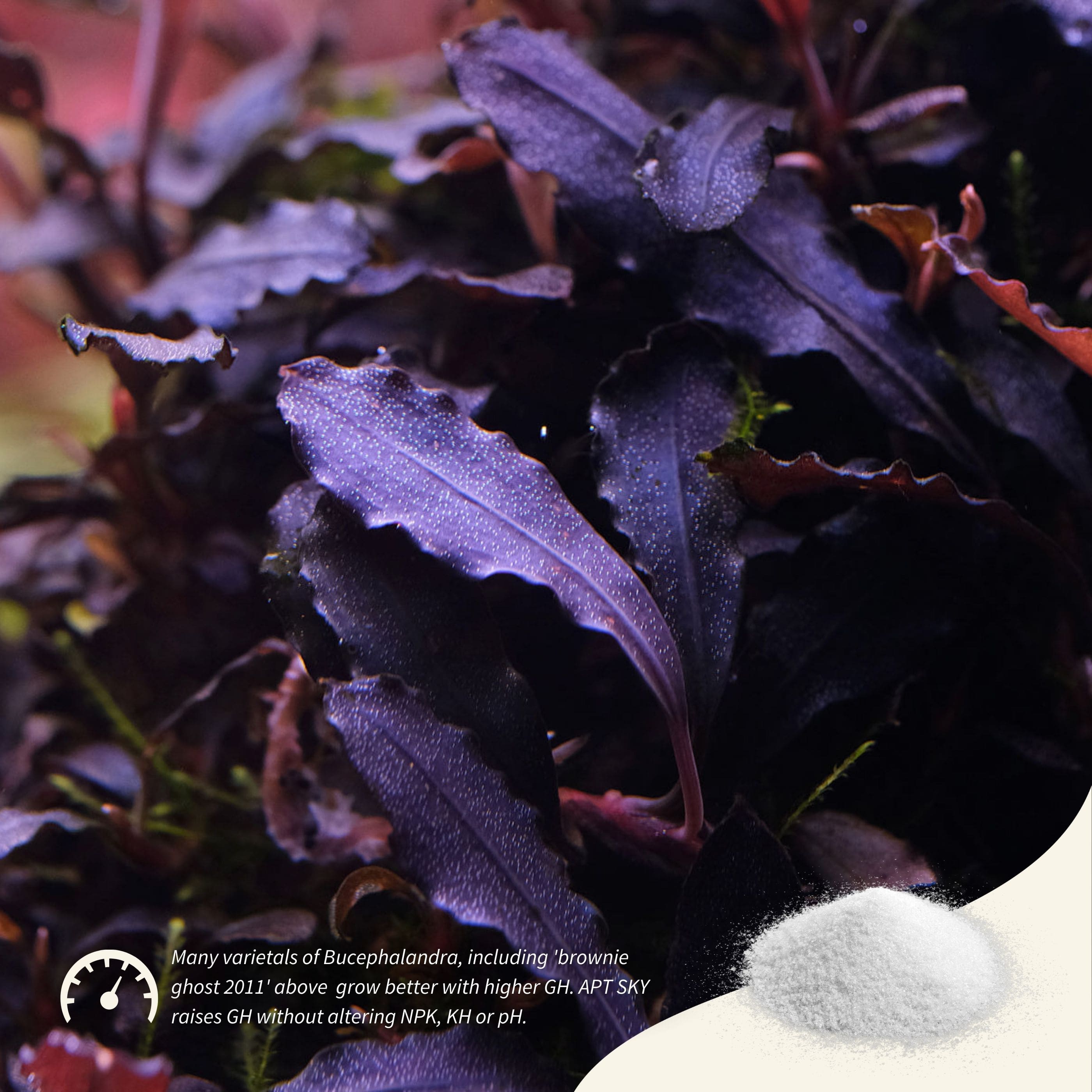
Reverse osmosis (RO) unit (optional): In areas with very hard tap water, aquarists sometimes use RO water as a blank slate, remineralised with products like APT SKY. This is not required for a first planted tank, but useful to know.
-
Surface skimmer (nice to have): Keeps the water surface clean, which improves oxygen exchange and overall system health.

How to Cycle a Planted Tank Before Adding Fish
Before adding fish, a planted aquarium must develop a biological filter. This process is called cycling. In a cycled tank, beneficial bacteria and microbes break fish waste and excess food down into less harmful compounds. Skipping this step is one of the fastest ways to kill both fish and plants.
Dark start vs “cycle after planting”
The 2Hr Way strongly favours a dark start for aquasoil systems:
-
Setup and fill: Arrange rocks, wood and substrate. Fill the tank, run the filter only, no light, no plants.
-
Seed the system: Add bottled “quick start” bacteria or filter media from an established aquarium. This turbocharges the development of beneficial bacteria.
-
Let it run: For 2 weeks, perform a couple of large water changes (50–80%) to control the initial ammonia from the soil, especially during the first few days.
-
Plant: After 2 weeks the microbial communities have developed and the initial ammonia spike has passed, you can plant the aquarium.
Once you plant, it is still wise to wait at least another 3 weeks before adding fish, so the plants settle in and the filter matures further.
The full cycling options, and the numbers behind each, are in how to cycle a planted tank. If you are starting on fresh aquasoil specifically, starting a new aquasoil tank covers the two paths in detail.
What Tank Size Is Best for a First Planted Aquarium?
You will see many recommendations for 10–20 gallon tanks as “beginner size.” They are widely available and feel manageable, but smaller tanks change water parameters faster and can be less forgiving of mistakes.
The 2Hr Way view:
-
Smaller tanks (10–15 gallons): Require more precise control of lighting, nutrients, and filtration because everything shifts faster. Great for experienced aquarists and as shrimp tanks, but not necessarily easier.
-
Medium tanks (20–40 gallons): Offer more stability, space for a convincing hardscape, and room for schooling fish. These sizes are more forgiving and give you time to react when something goes wrong.
If space and budget allow, aim for the 20–40 gallon range for your first planted tank setup. The tank is easier to design, filtration has more room, and plant growth appears more “natural” instead of cramped.

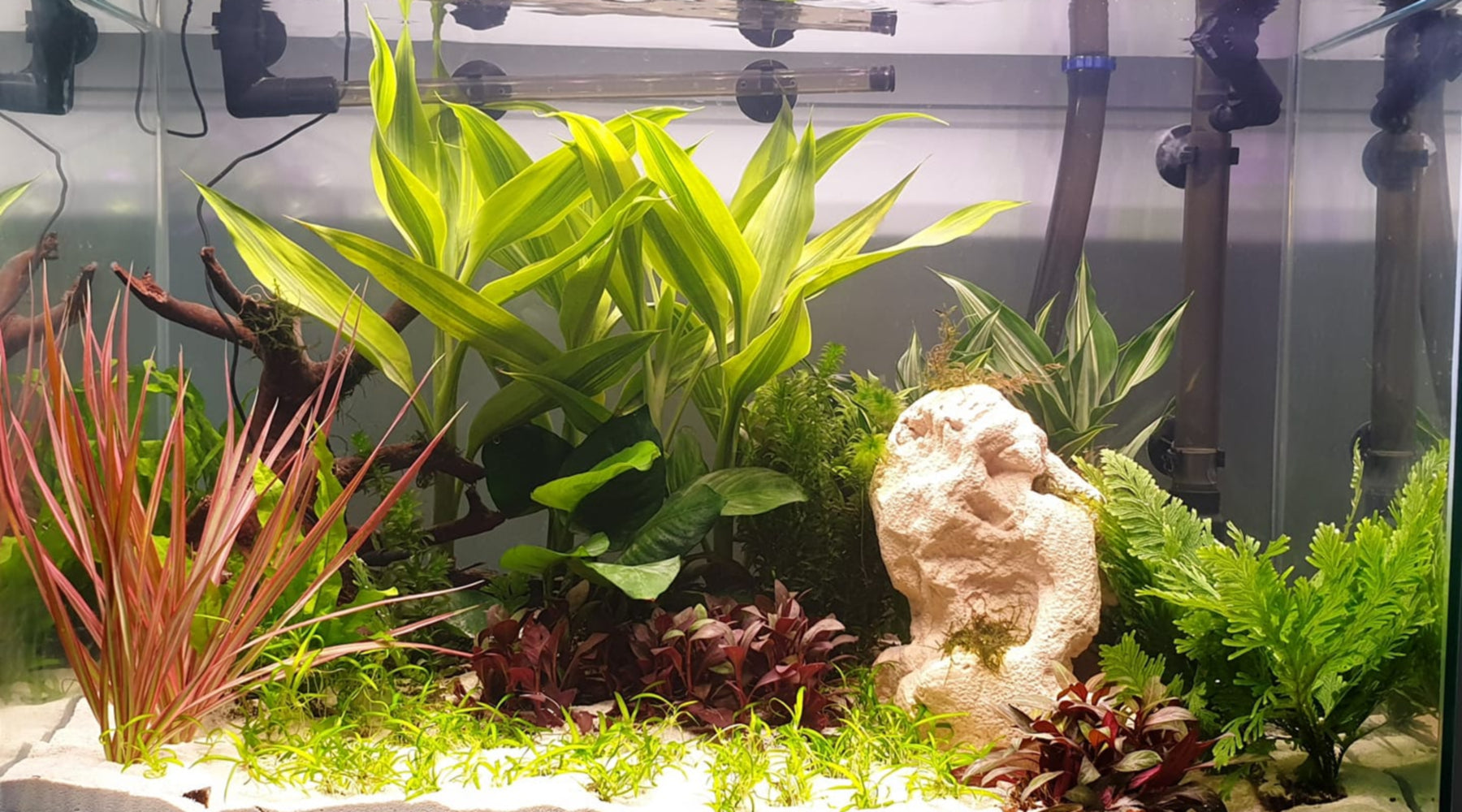
A 20 gallon aquarium is a good starting size.
What Are the Best Aquarium Plants for a First Planted Tank?
Choosing the right plants is crucial. Beginners should start with hardy species that do not require injected CO₂ and that can handle medium light and normal tap‑water conditions.
Rock‑solid beginner choices
-
Java fern (Microsorum pteropus):
-
Grows attached to rocks and driftwood, but can also be planted in aquasoil substrates.
-
Tolerates a wide range of pH and water hardness.
-
Forgiving with regards to nutrients.
-
Does not require high light levels to grow well.
-
-
Anubias (e.g., Anubias barteri nana):
- Similar to Java fern, it can be grown on hardscape or planted on substrate.
-
Another rhizome plant that is shade tolerant.
-
Shade tolerant – thrives under medium light or even low light.
-
Excellent for smaller tanks and slower layouts.
-
Cryptocoryne species (Crypts):
-
Slow growing but adaptable and hardy.
- Shade tolerate.
-
Can melt during the first month as they adjust to new water conditions; this is normal. New leaves will emerge from the roots when the plant adapts.
-
Many shapes and colours, great for the middle and foreground.
-
-
Mosses (Java moss, Christmas moss, etc.):
-
Can be glued to rocks, driftwood or even filter intakes.
-
Provide shelter and biofilm for shrimp.
-
Easy to trim and maintain when light and nutrients are moderate.
-
-
Easy stems plants (Rotala rotundifolia, Rotala blood red, Pearl weed, Water wisteria):
-
Stem plants grow faster and can fill in an aquarium quickly.
-
Useful for aquariums that need some taller plants at the background.
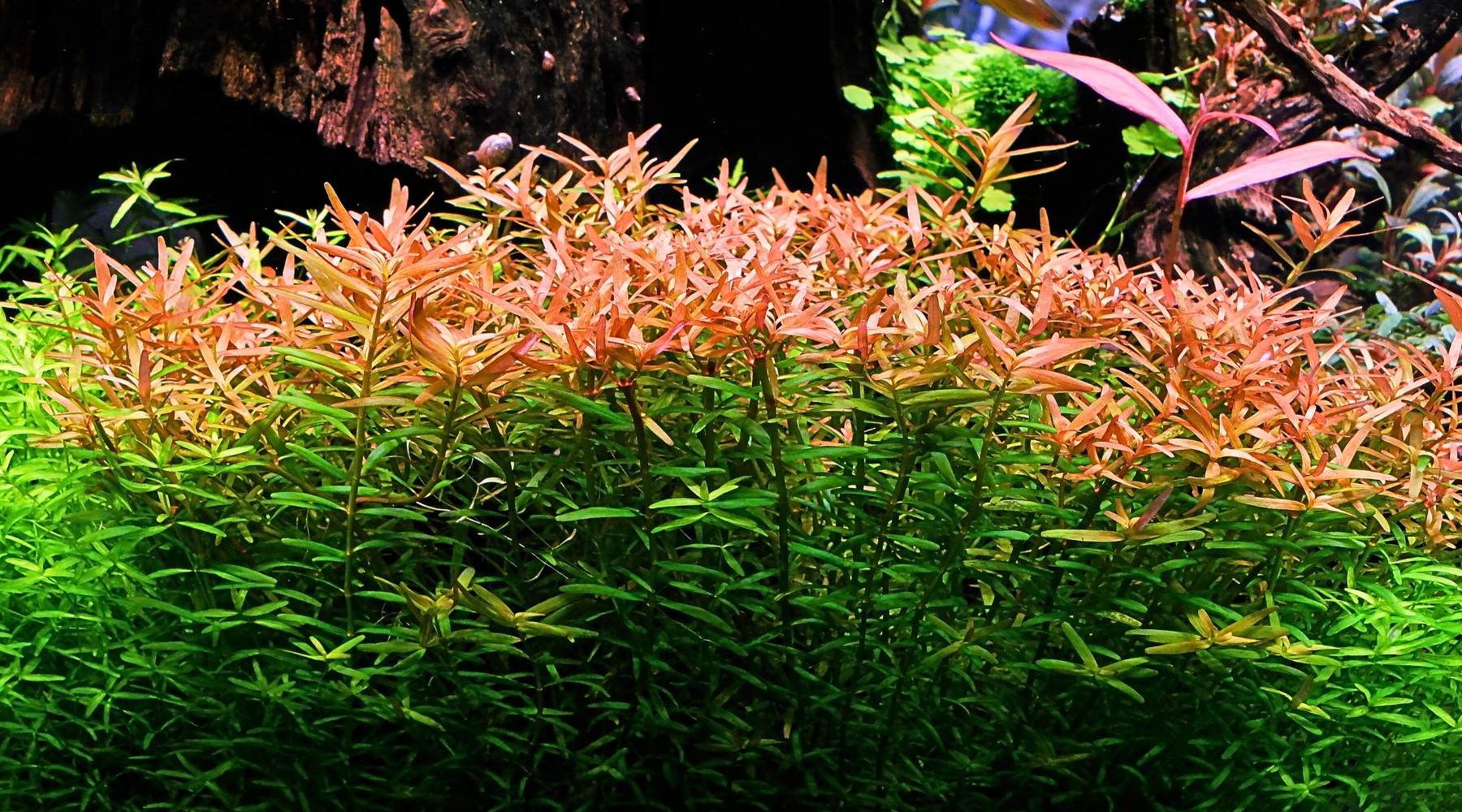
- Rotala rotundifolia and Rotala blood red provides some color and are easy to grow.
- Water wisteria is very hardy and fills up space easily.
-
Hardy plant species like these can tolerate a wide range of water conditions without an expensive CO₂ system. Once your system is stable and you understand how plant growth and algae respond to your routine, you can experiment with more demanding stem plants, Bucephalandra plants and red coloured species.

Anubias species come in various sizes. Anubias nana petite has leaves around the size of a child's thumb and is great for smaller aquariums.

(Above) Java fern and Pearlweed are both easy to grow.
Fish and Shrimp: Livestock That Plays Nice With Plants
Choosing fish species that are compatible with plants is just as important as choosing the plants themselves.
Good fish choices for planted tanks
-
Schooling fish for smaller tanks: Neon tetras, ember tetras, rasboras, small barbs that do not nip fins. They produce modest fish waste and rarely dig or uproot plants.
-
Larger, more demanding fish for big tanks: Discus and angelfish can work beautifully in larger, well‑filtered, established aquariums (often 40 gallons and up), but they need higher temperatures and stable parameters.
-
Shrimp and snails: Cherry shrimp and other dwarf shrimp and small snails help clean biofilm and leftover food, and they generally do not harm plants.
Fish species to avoid in a planted aquarium
Avoid large herbivores like Tinfoil Barbs and Silver Dollars. They see aquatic plants as salad, not scenery. Goldfish and many cichlids are also notorious for digging up substrate and chewing on plant leaves.
The rule: your plants should be the backdrop, not the fish’s main food source.
When Should You Start Fertilising a New Planted Tank?
In any planted tank, nutrients must match plant growth.
Plants need macronutrients (nitrogen, phosphorus, potassium – NPK) and micronutrients (iron, magnesium, trace elements). Fish waste does provide some nutrients, especially nitrogen and phosphorus, but on its own it is incomplete and unreliable.
Simple fertilizing strategy for a first planted tank
-
Low‑tech, hardy plants, moderate fish stock:
-
Use a comprehensive liquid fertilizer at the recommended dose.
-
Many “complete” fertilizers contain trace elements, iron and balanced NPK.
-
-
Using a rich substrate:
-
Aquasoils and garden soils feed rooted plants well. However, root tabs should be added over time to supplement substrate nutrient levels.
-
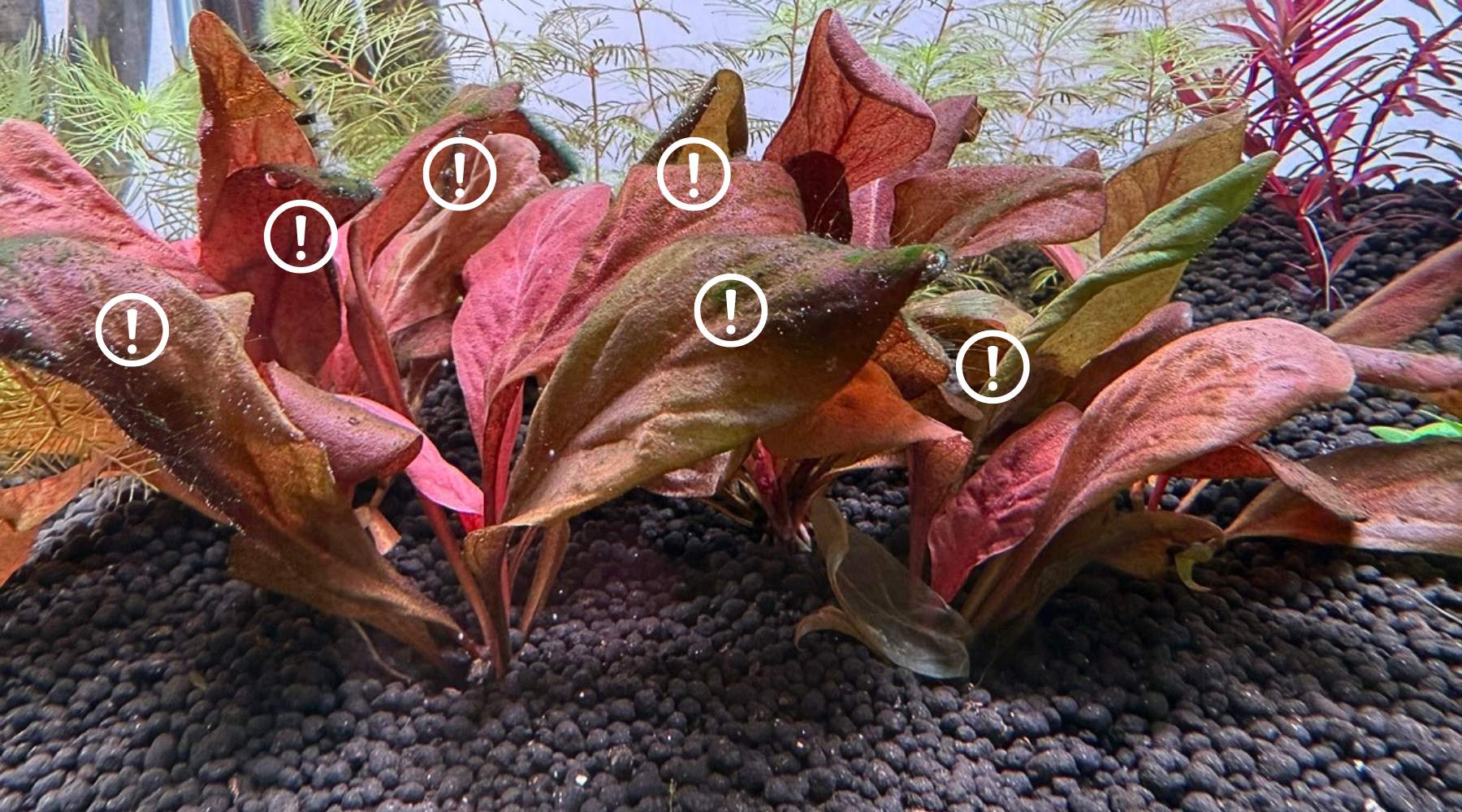
Signs of "nutrient deficiency" in low tech aquariums are due to a lack of CO2, not nutrients per se. Plants use more carbon than all nutrients combined, and a lack of Carbon availability leads to growth problems that look like nutrient deficiency symptoms - pale/yellowing leaves and general poor growth:
“Liquid carbon” bottles are often sold as a CO₂ replacement. They are not CO₂ – they are a glutaraldehyde‑based carbon source and mild algaecide. They will not provide results that CO2 injection does.

Does a Beginner Planted Tank Need CO₂ Injection?
No if you keep plants that do not require CO2 to grow. However, even easier species grow much better with CO2 injection.
How Often Should You Do Water Changes in a Planted Tank?
Water changes are not just about “diluting nitrates.” They are about removing organic waste and free‑floating algae spores, and rebalancing water parameters and nutrient levels.
How often and how much?
The 2Hr Way focuses on large weekly water changes, typically 30–70% depending on tank intensity and stocking. High‑light, high‑growth tanks benefit from the larger end; slower low‑tech systems can get by with less but still benefit from consistency.
Some generic guides recommend 50% every few days in a brand‑new tank. That level of intensity can be helpful in extreme cases, but in practice, with a dark start and proper planting, a weekly schedule combined with good substrate cleaning is sufficient in most first planted tank setups.
During every water change:
-
Use a siphon to hover over the substrate, gently lifting detritus from the top 1 cm or so without digging up the aquasoil.
-
Remove decaying leaves and trim overgrown stems.
-
Clean glass and hardscape to strip away algae before it spreads.
This approach – often called “water change the 2Hr Way” – keeps the system clean so plants can thrive and algae struggles to gain a foothold.
How much to change depends a good deal on your tap water - how much water to change works through the cases where large changes are the wrong call.
Why Do New Aquarium Plants Melt or Die - and Is It Normal?
During the first month, many aquatic plants experience “melt” as they adapt to new water conditions. This is particularly true for Cryptocoryne, tissue‑culture plants, and species that were grown emersed (with leaves in air) at the farm.
From the plant’s point of view:
-
Old leaves were built for different light, pH, hardness and flow.
-
The plant reallocates energy to develop new leaves that match the new conditions.
-
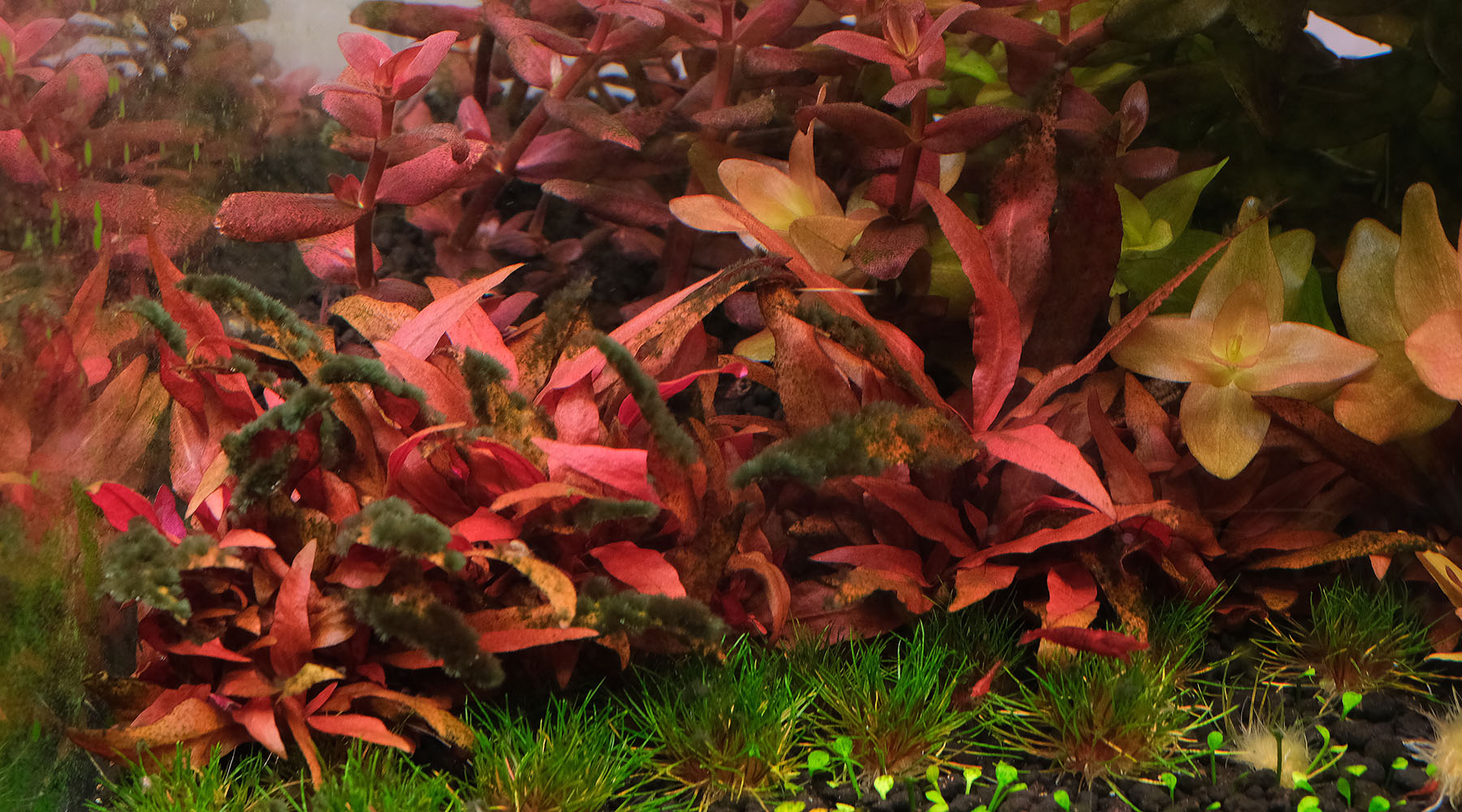
Older leaves are allowed to die off; algae takes advantage of the decaying tissue.
This is adaptation stress, not failure.
Your job during this phase is to:
-
Keep parameters stable – do not constantly change equipment, fertilizers, or layout.
-
Maintain modest light and avoid heavy pruning of new growth.
-
Watch for new, healthy leaves emerging from the centre of each plant.
-
Trim away badly decayed leaves only once new ones have clearly taken over.
Stop staring at the ugly older leaves. Focus on new growth instead. That is the real health indicator of your planted tank.
If melt and algae have already taken hold and the tank is not settling, the fastest way to stabilize a new planted tank is the recovery route.

First Planted Tank Setup Checklist: Substrate, Light, Plants and Maintenance
To recap your first planted tank setup:
-
Tank size: 20–40 gallons is a sweet spot for beginners.
-
Hardscape: Use rocks and driftwood to create a natural layout with depth, sloping the substrate higher at the back.
-
Substrate: 2–3 inches of active, nutrient‑rich substrate, grain size 2–5 mm.
-
Filtration: A filter rated for about 6–10x tank volume per hour, with outlets near the water surface.
-
Lighting: Aim for 40-60 PAR, medium light intensity, 5 to 6 hours per day at the start.
-
Plants: Fill at least half the tank with hardy live plants – Java fern, Anubias, Crypts, mosses, plus a few easy stems.
-
Cycling: Dark start + bottled bacteria or media from an established aquarium before planting; then wait another 3 weeks before adding fish.
-
Livestock: Small schooling fish and shrimp that do not eat or uproot plants.
-
Fertilizers: Simple complete liquid fertilizer; root tabs for root feeders if using inert substrate.
-
Maintenance: Weekly water changes, substrate cleaning, light trimming and observation.

Compartir:
Do I Need CO2 to Grow Plants? An Honest Answer
Plant Melt in New Aquariums: Why Aquarium Plants Die