

Introduction
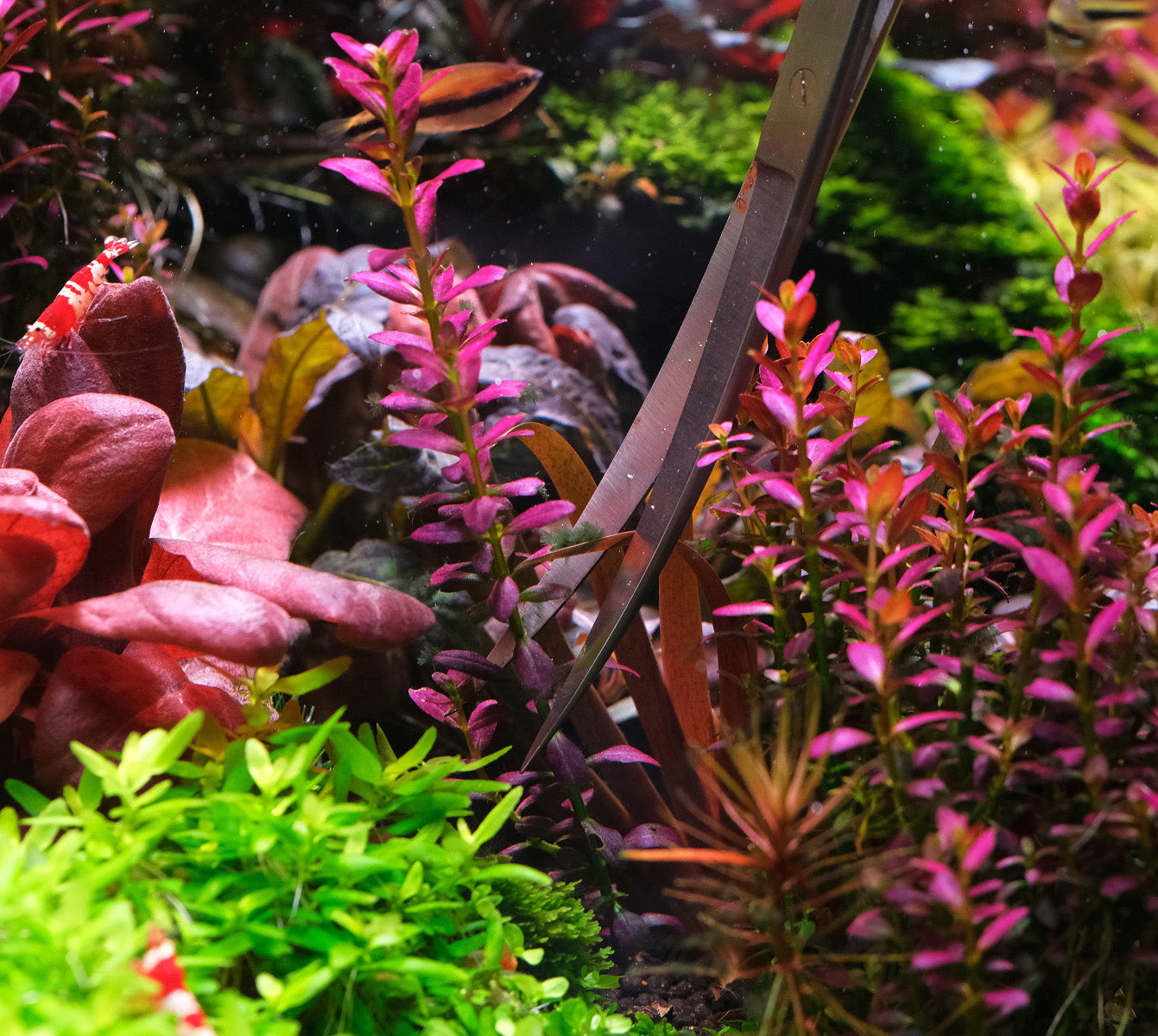
Healthy plants are algae resistant, and the basis of creating an algae resistant aquarium comes from having an aquarium with dominant plant mass that denies algae a home. However, even in a well maintained aquarium like this one there still can be localized trouble algae spots. The appearance of algae in such spots have nothing to do with light or nutrients, but are instead due to other environmental factors as we will see.
Tweaking light, nutrients or CO2 levels will not solve the algae issues in such scenarios.

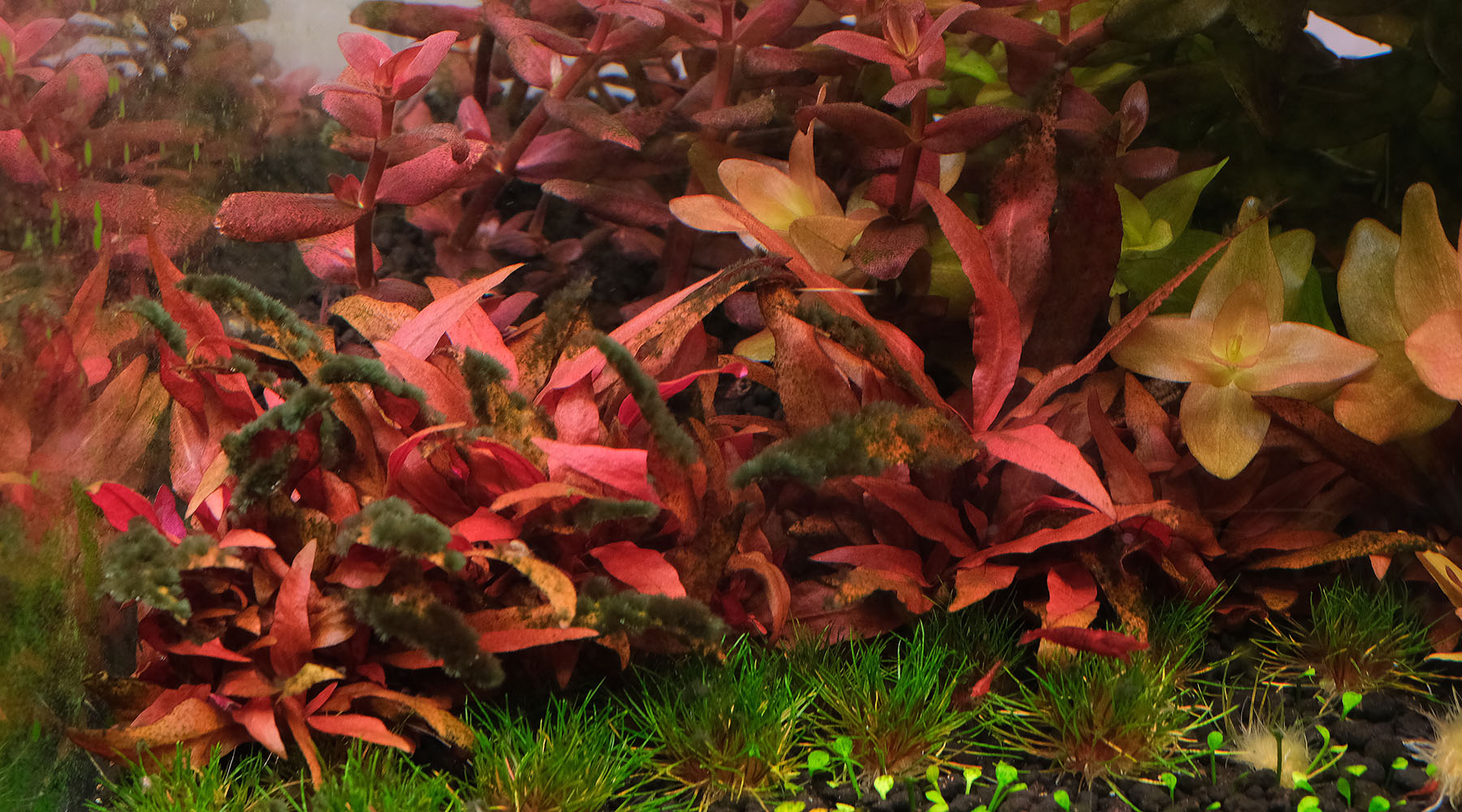
Black beard algae (BBA) hot spot example
The teal colored arrows above represents the flow pattern in this tank. The water flow from the outlets near the top of the tank hit the aquarium front and washes downwards. Some flow will be channeled to the left side. Due to the short plant wall formed by the Xyris difformis and Rotala florida there, the current forms a small eddy current which debris such as broken leaves collect. I will often find broken leaves and detritus attached to the bottom portions of the Rotala florida growing here.
We know that turbulent current can trigger BBA, and it seems that the eddy current combined with debris accumulation in this area is enough of an environmental stress factor to cause persistent BBA in this batch of Rotala florida.

This is a scenario where BBA is triggered in this specific location even though the plants themselves are growing well, with good form and coloration and the overall tank upkeep is excellent. This is just one example where local environmental variables can give rise to algae spawning, and this has nothing to do with CO2, light or nutrient levels.
For this particular scenario, the solution to the BBA was simple. I removed the Rotala florida and replaced it with a more hardy plant species in that location.
How to know whether an algae issue is localized or not ?
Localized algae issues tend to be focused in fixed areas, and algae in those areas do not spread to other areas in the aquarium easily. If a planted aquarium has algae problems in many areas, it tends to hint that the issue is tank wide rather than localized.
Here are a couple more guidelines on whether the algae issue could be a localized problem:
Algae attaches only to hardscape/substrate in an area where there are no plants.
This is usually caused by dead spots, eddy currents or overly turbulent flow in an area. Dead spots tend to attract blue green algae (BGA) and Cladophora algae, debris often gathers in this area as well. Fast flow areas and eddy currents trigger Black beard algae. Introducing flow to dead spots and making violent flow more gentle in fast flow areas respectively can help the problem. Moving hardscape around to redirect flow can work also. Covering the hardscape/area with hardy, aggressive growing plants to outcompete the algae can also work.
Sometimes pieces of decaying wood will keep triggering BBA to attach. You can move the wood piece to a different location in the aquarium to see what happens. If BBA continues spawning on the wood regardless of where the wood piece is placed in the tank, then the wood itself is the issue and needs to be replaced.
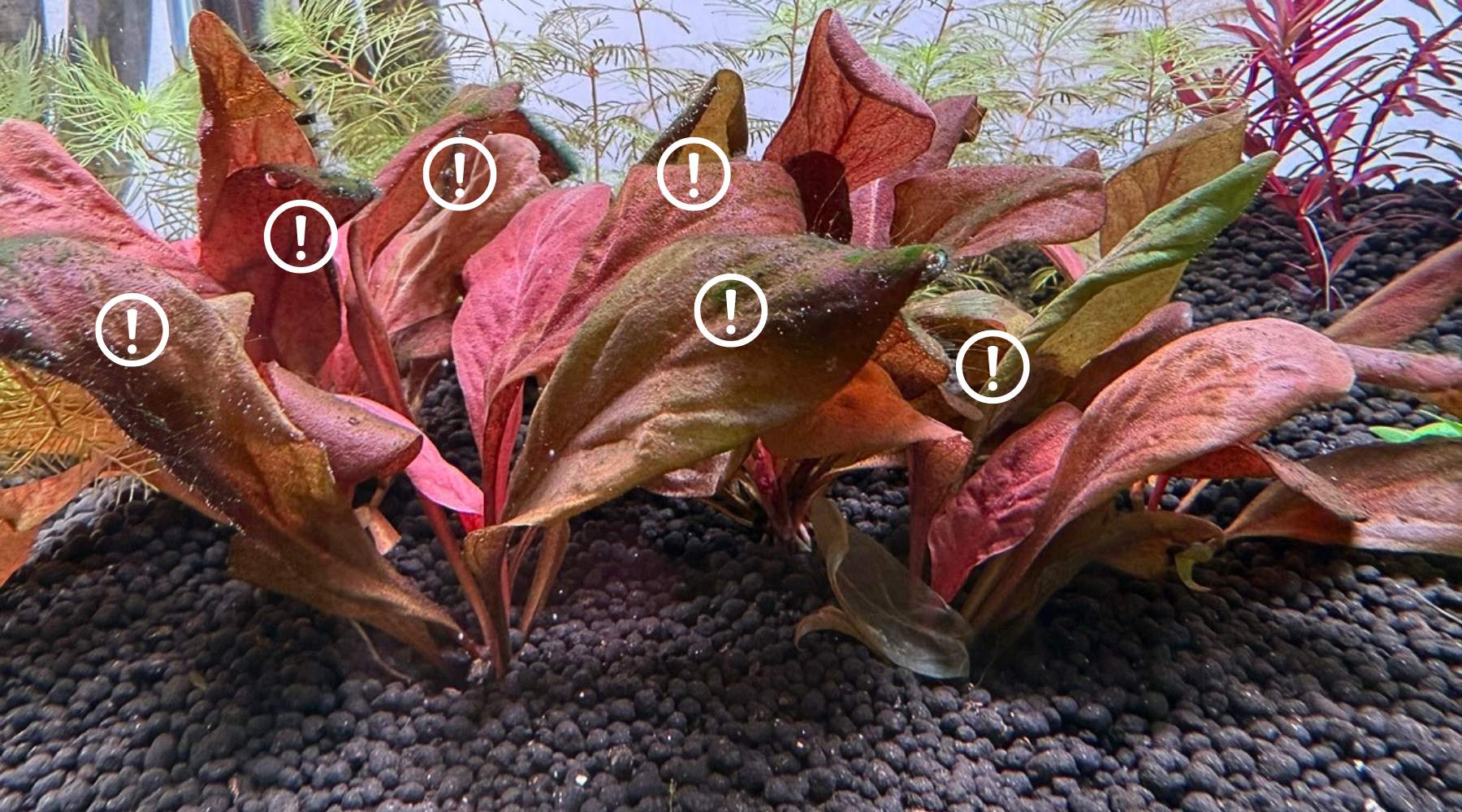
Algae attaches to plants in a certain area but not to the same plant species in other areas.
Plants sometimes grow well in one spot and do not grow well in another spot in the same aquarium. This is especially so for more delicate plant species that may be sensitive to flow, debris or substrate quality of the immediate surroundings. Plants also compete and crowd out one another, weaker species will suffer when more aggressive growing species shade them and block their access to flow. Moving problematic plants to different spots in the same aquarium can often solve such issues.

Substrate problems sometimes cause algae in top growth
Some plant species are sensitive to substrate conditions, and compacted substrates or substrates where too much organic waste has gathered can give rise to stressed plants that attract algae. This is quite common for many species. Uprooting the affected patch of plants and doing maintenance on the substrate, then replanting the fresh portions of plants will usually solve the issue.
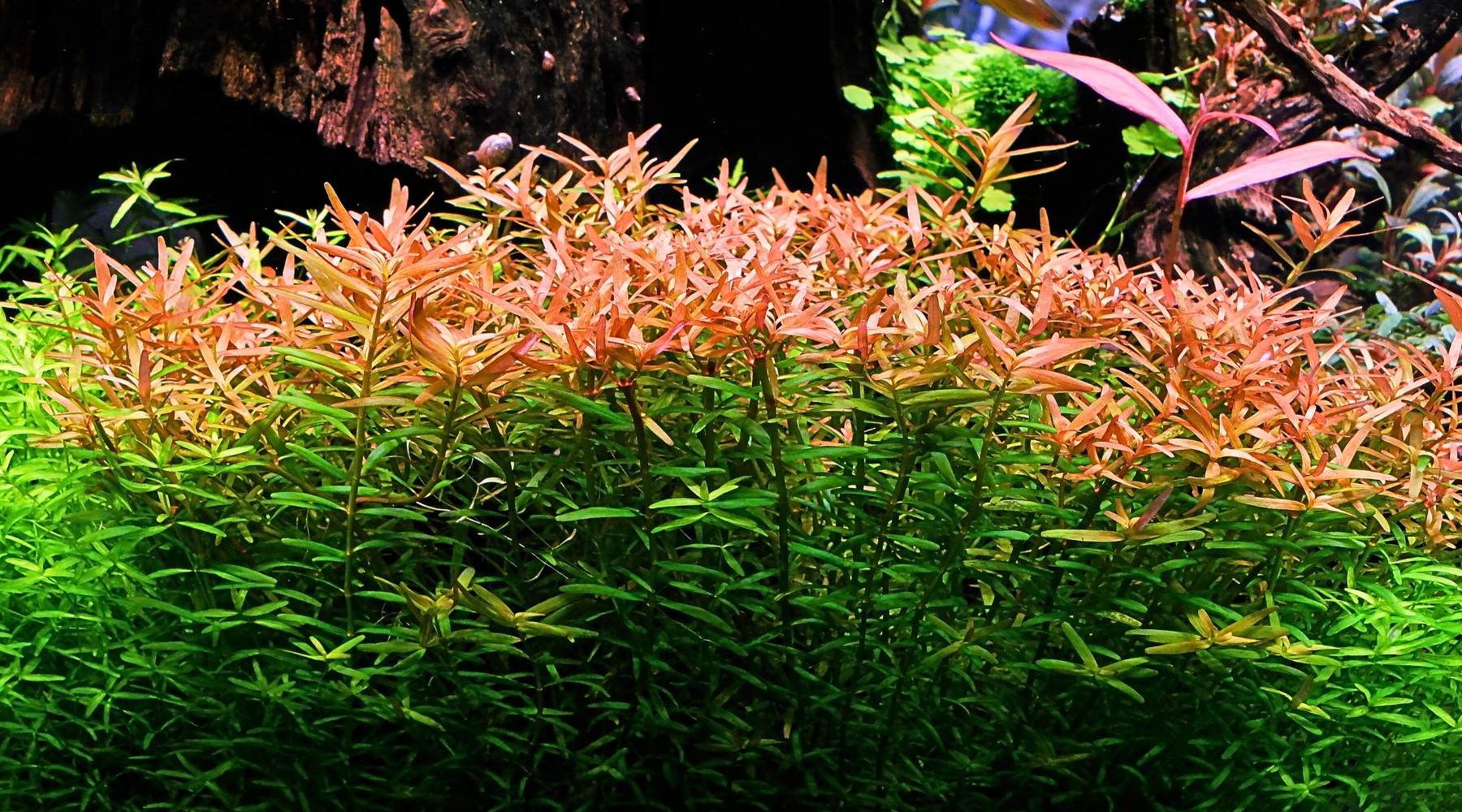
Many species such as Rotala tulunadensis are sensitive to substrate conditions.




Share:
Cómo controlar las algas pardas (diatomeas)
Green Hair Algae, Fuzz Algae, and String Algae in Planted Tanks: Causes and Fixes