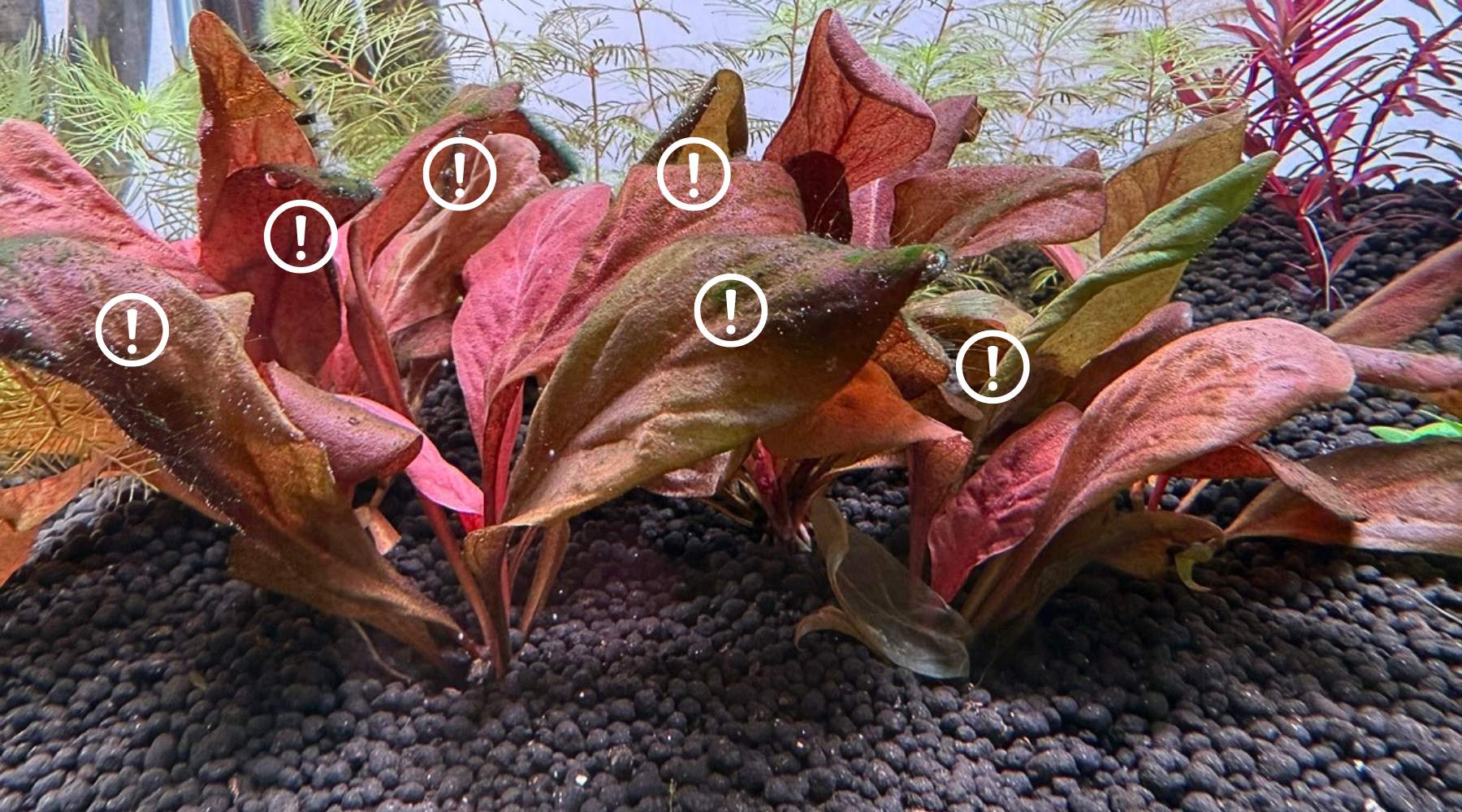
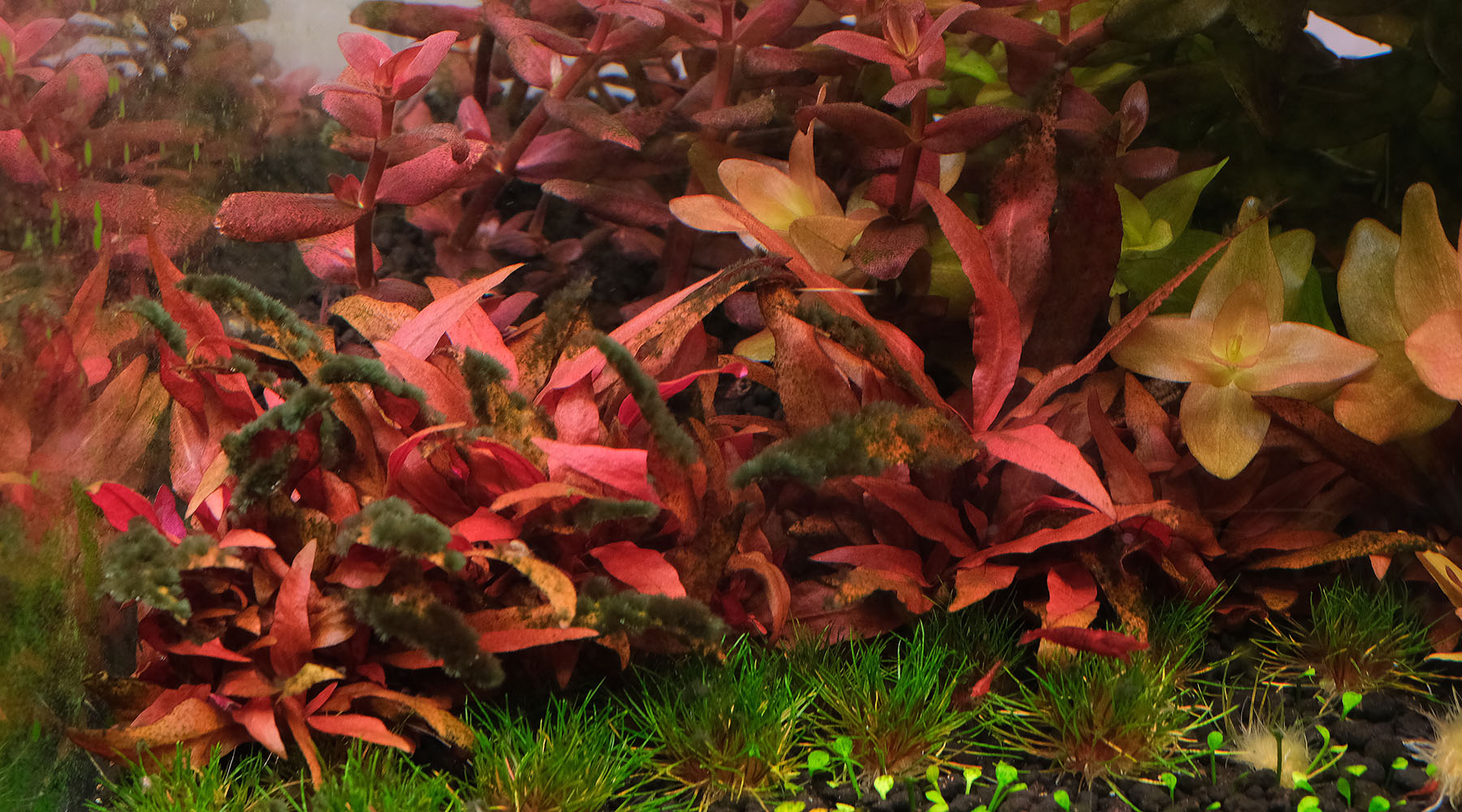
Above- newly planted Lysimachia parvifolia | Samolus parviflorus red showing all the classic signs of adaptation stress- observe the algae-infested leaves. Did we do anything wrong? What must we do now? These are common questions.
In the classic children's story, The Ugly Duckling, a young duckling was ridiculed by her siblings because she looked strangely different from them. She felt ashamed, but endured their taunts and jeers as best she could. In time, it was revealed that she was not a duckling at all, but a beautiful swan who eventually surpassed all her siblings in grace and beauty.
New plants in new tanks go through a similar journey. They can look damaged, and be covered in algae. Some leaves may begin to melt. However, all may not be lost. Here, we share what to look out for.
The video shows a one-week old, uncycled tank to which we have added plants. This is never advisable, we recommnd a Dark Start. Unsurprisingly, many leaves are covered by algae. This is a natural phenomenon, as the plant has to expend considerable amounts of energy to adapt to a new environment. In that process, it channels its energy towards growing new leaves that are better suited to the new environment. Older leaves are sacrificed.
In another example, Ludwigia glandulosa was transplanted from another tank. Note the hair algae on the leaves.
This can be frustrating. However, more experienced aquarists quickly recognise the 'hidden swan' in the examples above. Aquatic plants regularly and naturally shed their older leaves as they grow.
The important signal is the presence of new, healthy-looking, algae-free leaves. This is the all-important sign that things are on the right track.

Above: instead of focusing on the algae-covered leaves, a view from the top reveals new information. Notice the few healthy new leaves. If they continue to grow well, this indicates that growth is progressing well.
We cannot save the old leaves - they will decay naturally. At this stage they are a source of stored energy for the plant, so we leave them as they are. We will cut them off when the new leaves are larger and when the old leaves show signs of further deterioration.
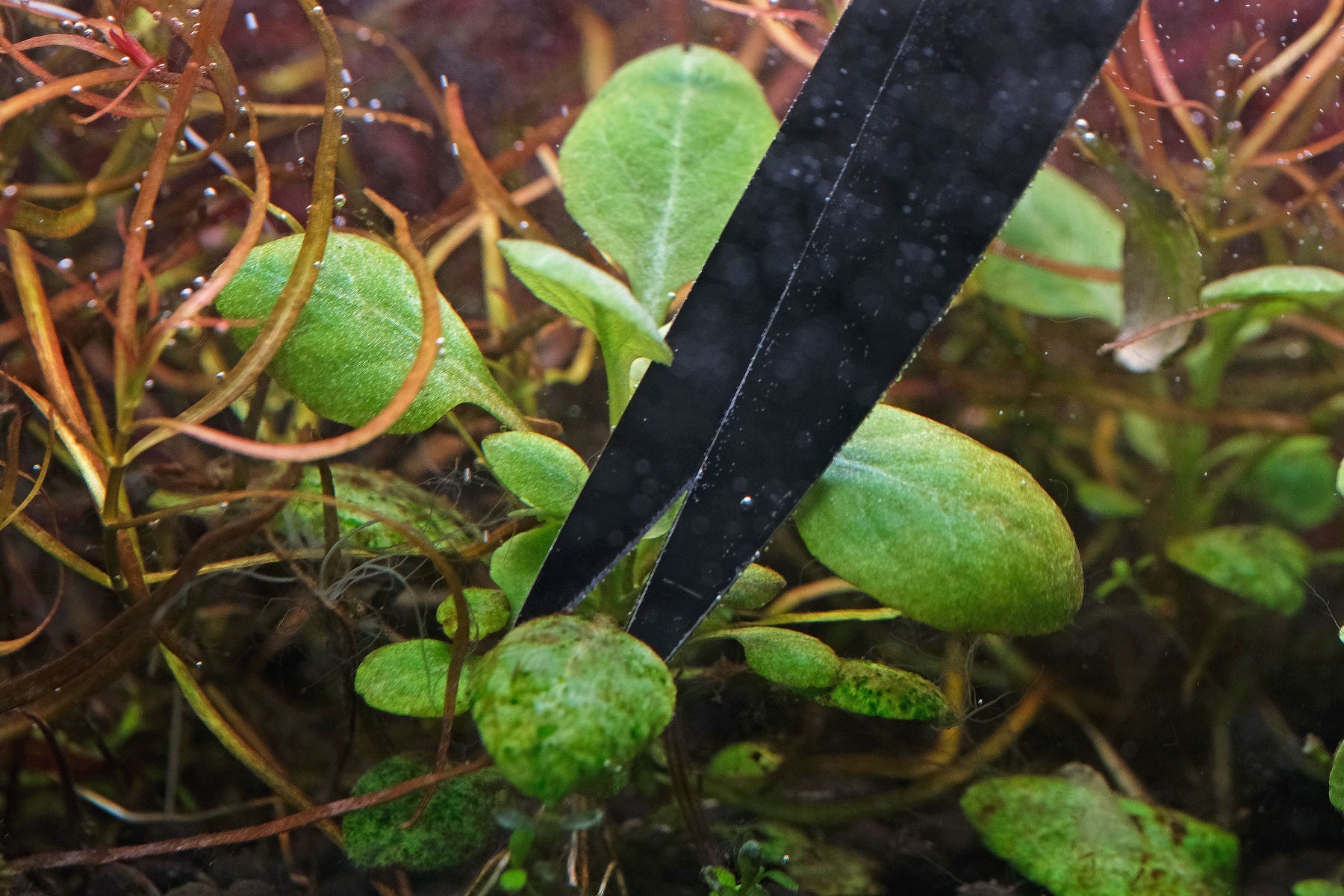
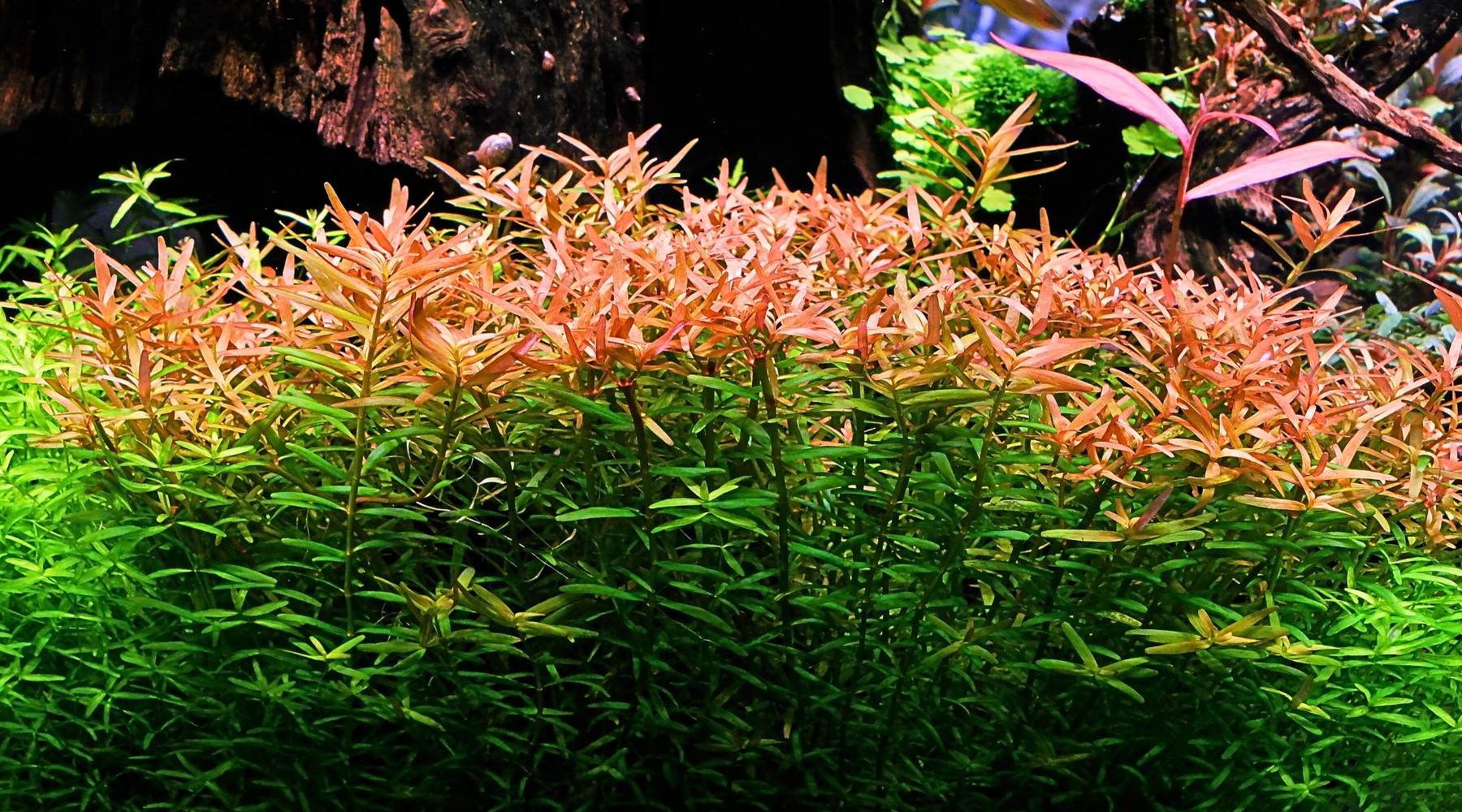
Similarly, observe the plump, juicy new leaves of the Monte Carlo. Planted in an uncycled new tank that is less than a week old, this growth bodes very well for the future. Algae on older growth? This is fully expected, and we will trim those portions away after the new leaves expand.
The first month is the hardest
- Hold steady- keep parameters stable, and allow the tank to stabilise over 4-6 weeks. Yes, it takes time, even in 'high speed' tanks with strong light and tons of CO2. At this stage, the hardest thing to do is to wait.
- After the new, algae-free leaves have grown, we trim the old leaves away.

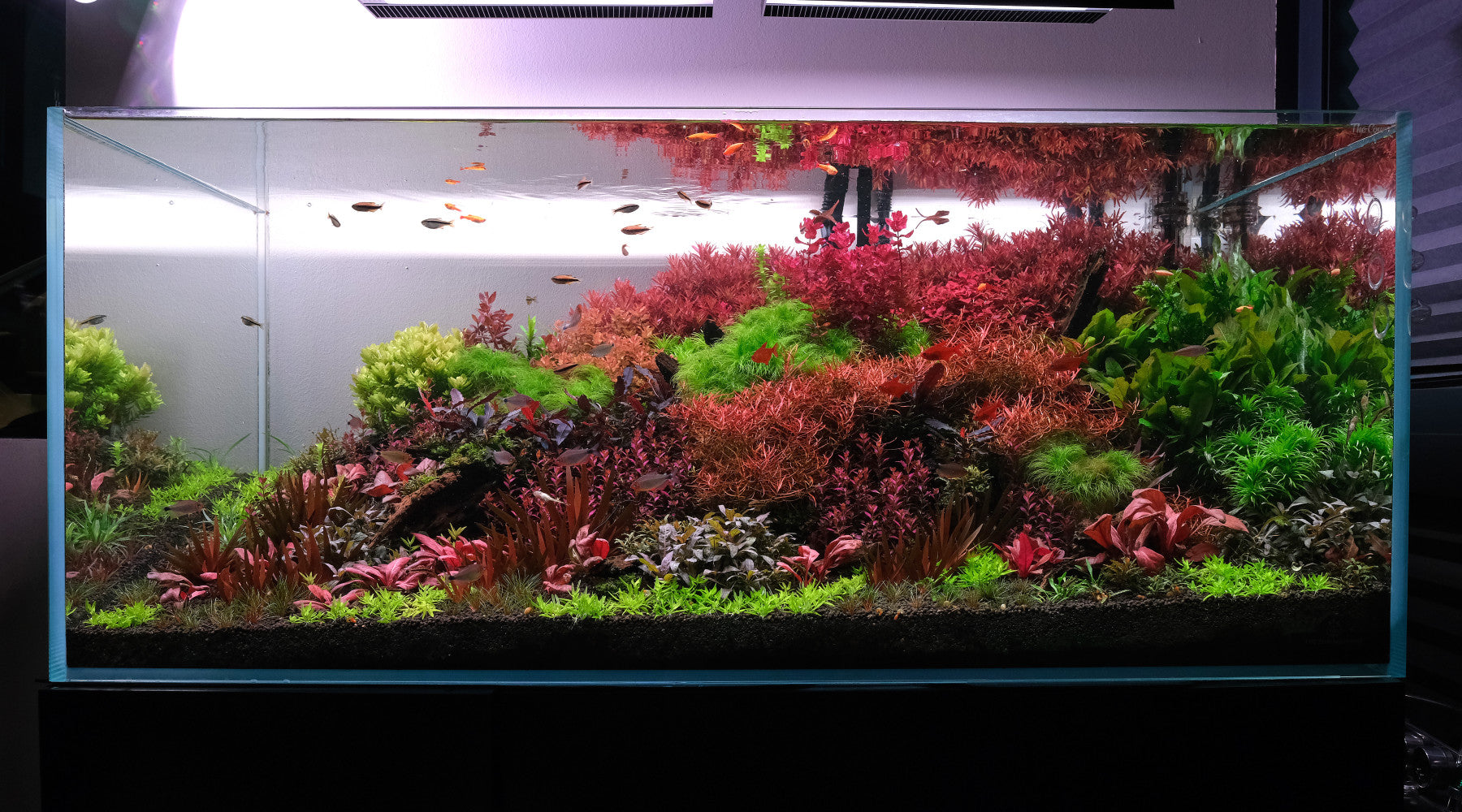
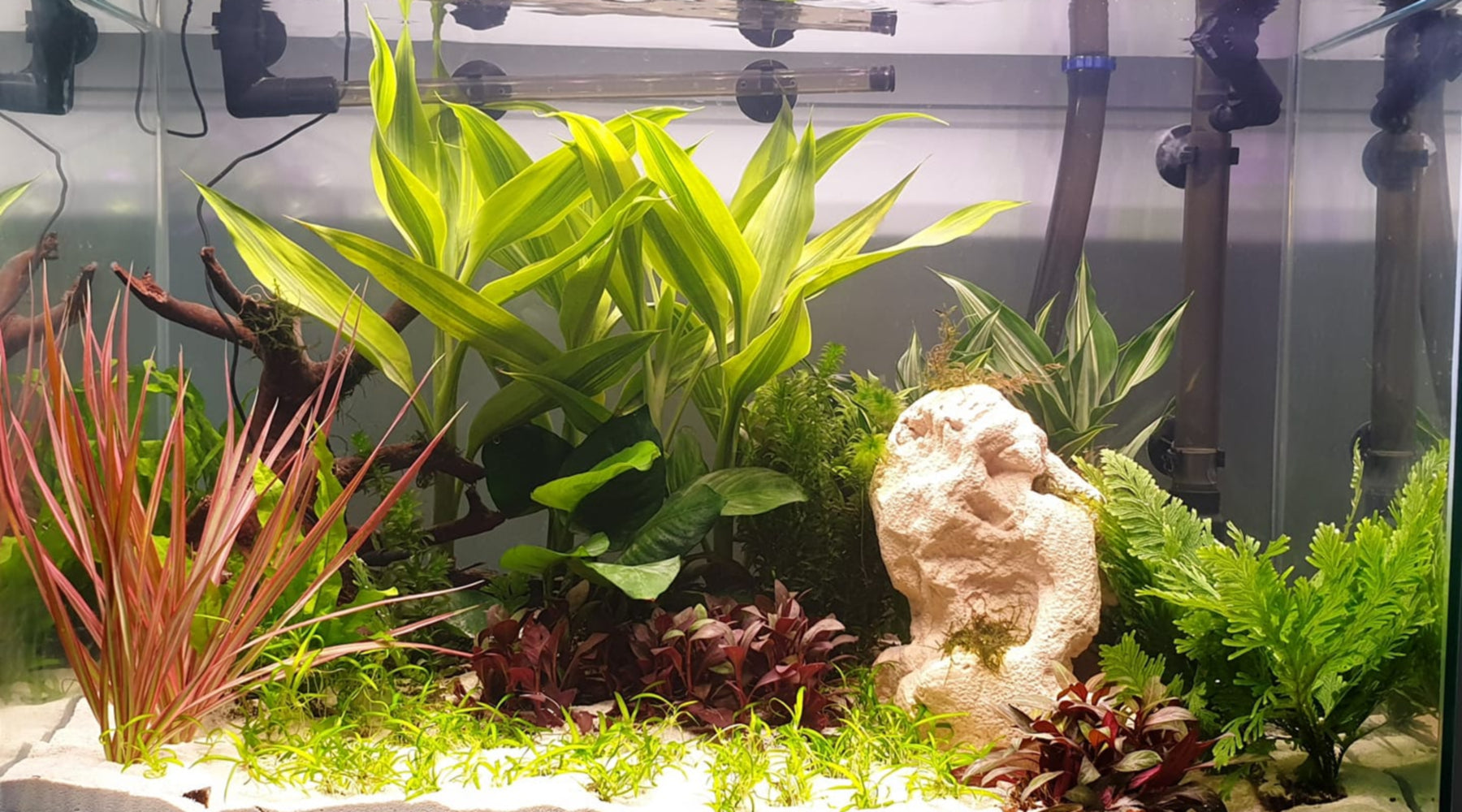
Above: slow metabolism tanks without CO2 injection often avoid this roller-coaster ride. It is one of the aspects that makes 'low tech' tanks enjoyable and enduring. And it is also one of the reasons why folks moving from low tech to high tech often face challenges. If you are wondering whether you should introduce CO2 injection, read this article on "Is it natural?" and the pros and cons of CO2.

Share:
Cuando menos es más
Guía para principiantes para evitar las plantas no acuáticas en las tiendas