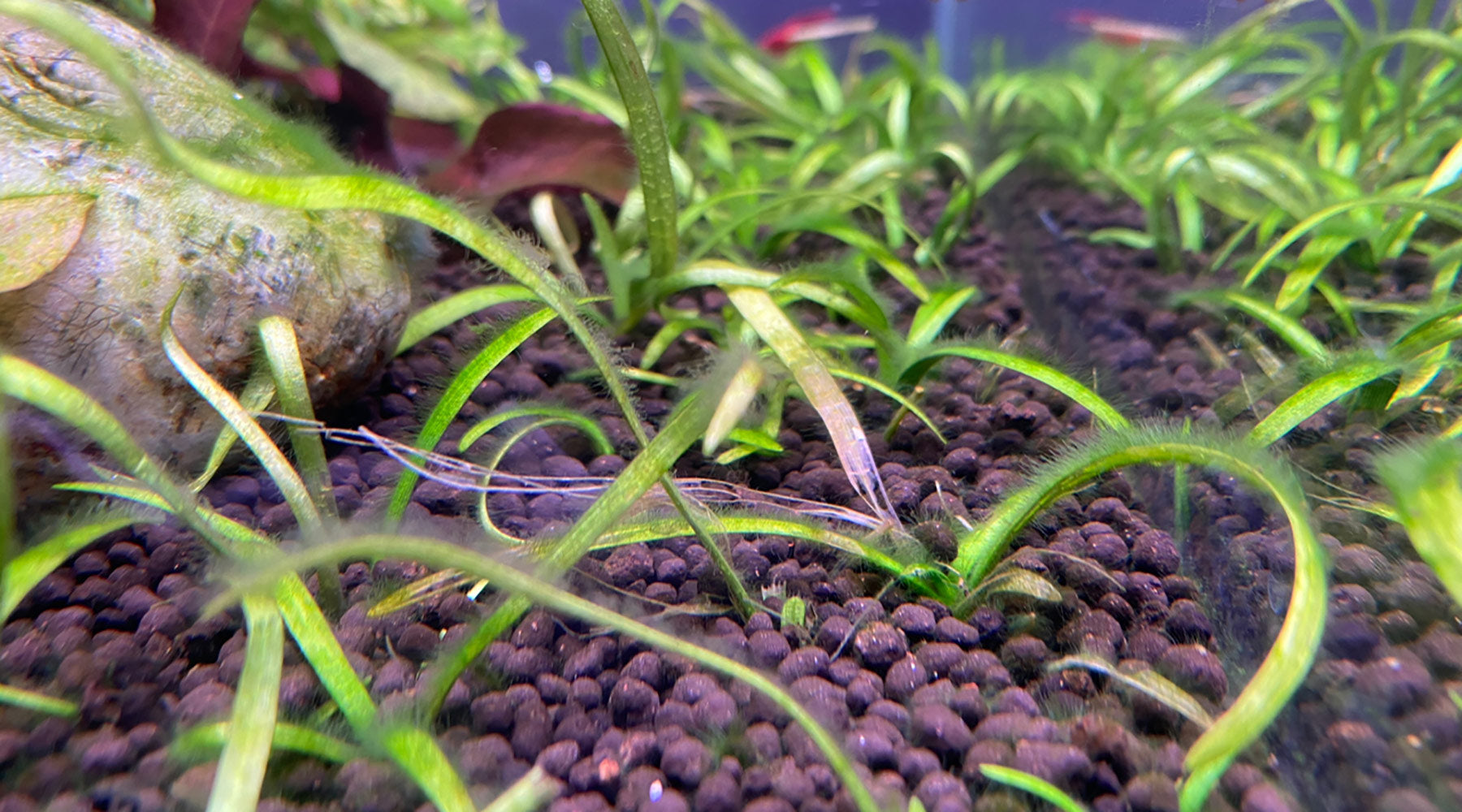
Hair algae, fuzz algae, string algae, and thread algae are loose visual labels, not scientific categories. There are likely thousands of filamentous freshwater algae species in natural lakes and rivers - most have never been properly studied or classified, and the genus most hobbyists encounter, including genus Oedogonium and its relatives, is only a fraction of what is actually out there. This article examines the triggers for filamentous green algae and how aquarists can get rid of it.
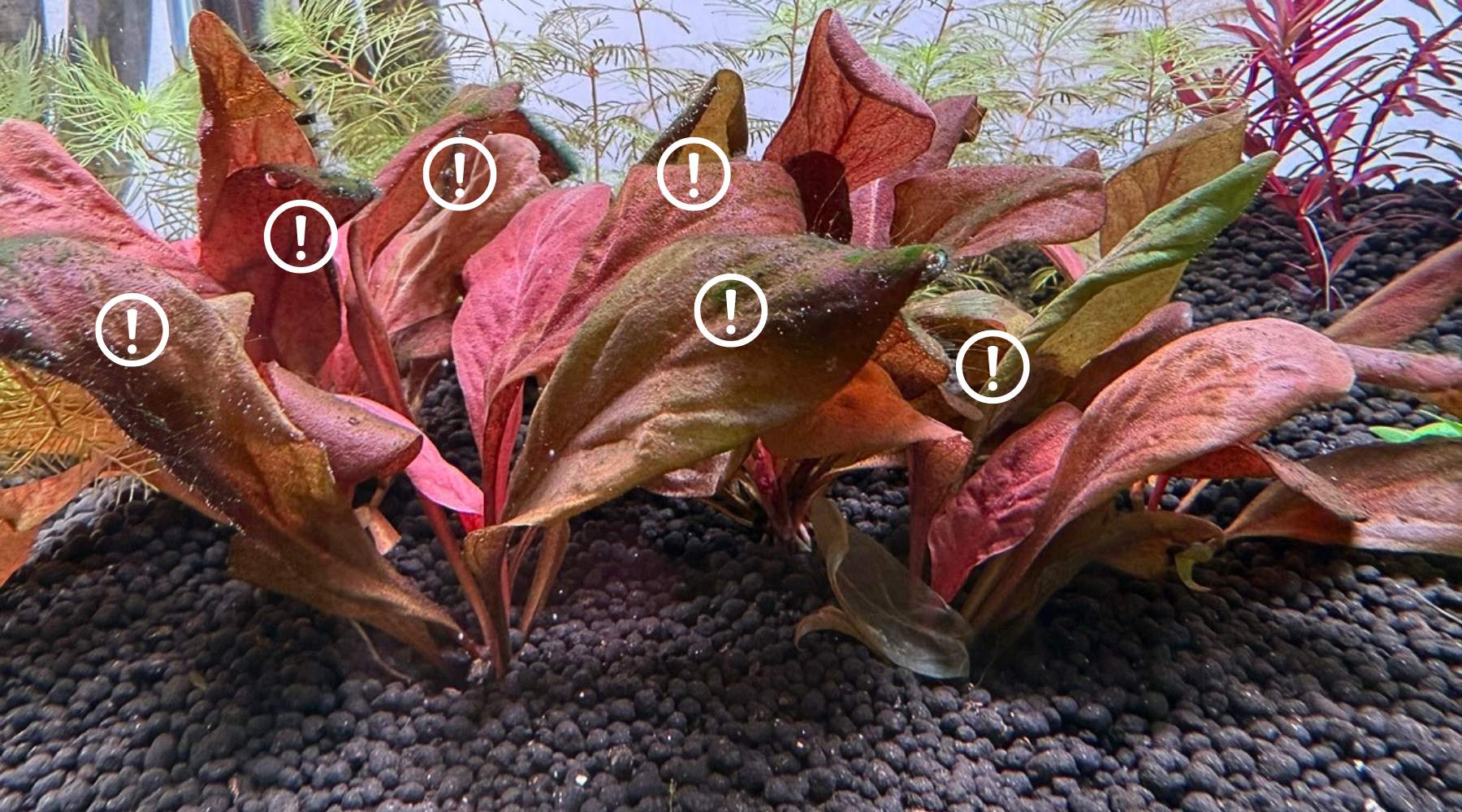
When these algae labels come up in the hobby, they just describe what the algae growth looks like: short and furry, long and tangled, fine and thread-like. When algae attach onto plants, they almost always signal plant adaptation stress - stressed plants eject waste proteins and organics directly from their leaf surfaces, and this triggers algae to attach.
Healthy aquarium plants produce defensive chemicals on their leaves as a deterrence against algae and microbial decomposers.
Spikes in ammonia and organic waste levels, coupled with too much light, also trigger algae spores to bloom. In aquariums with wood, rotting wood can be the trigger. If the plants are healthy and algae-free, but the algae spawns on hardscape and walls of the tank, it often points to organic waste, ammonia spikes, or upsets to the aquarium's microbial balance.
Quick answer:
-
Fuzz algae: short green coating on leaf surfaces.
-
Hair algae / green hair algae: longer tangled green strands on leaves, hardscape, and equipment.
-
String algae/thread algae: very fine single strands, often hanging from leaf tips.
-
Such names are not meaningful biological categories. Hair, fuzz, string, thread - these are visual descriptions invented by hobbyists to describe the same family of filamentous green algae at different growth stages or lengths. The actual taxonomy of freshwater filamentous algae is enormous and mostly unstudied.
-
On plants, all three signal the same problem: stressed plants are the principal cause.
-
Ammonia, and high levels of organic waste coupled with strong lighting, such as sunlight is also common triggers.
-
Such algae can also enter a tank on plants, fish, snails, or through transferring aquarium water.
-
Early treatment helps tremendously. When the algae infestation is severe, nursing the tank back to an algae-free state is much more difficult.
-
The fix is two-fold. Algae removal is just the first step. The second step is stabilising the tank environment, removing excess organic waste through regular water changes, and boosting plant growth to let clean new plant leaves replace older infected leaves.
-
Algae eaters such as Amano shrimp, Ghost shrimp and other dwarf shrimp, Siamese algae eaters (SAE), Mollies graze on algae and can be useful for mild cases.

Why does Hair Algae Grow in a Planted Tank?
The key mechanism is plant stress. Aquatic plants are extremely adaptable organisms. To survive in a wide variety of environments, aquatic plants are continually tuning their internal enzymes and proteins to match what the current environment provides. When there is an increase in Nitrogen availability, for example, the plant adjusts its growth hormones to increase its growth rates. When Carbon dioxide availability dips, the plant does the opposite, downregulating its growth hormones and channels more energy to capturing Carbon instead. These adaptations happen invisibly and seamlessly most of the time. Healthy plants produce defensive chemicals on their leaf surfaces; this chemical defense is what prevents microbial decomposers and algae from attacking healthy leaves. This is also why smaller snails avoid healthy leaves and only go for deteriorating ones.
When the growth environment changes drastically, plants channel all energy to adaptation changes in order to survive, and stop producing such defensive chemicals. Stressed plants also eject waste proteins and organics directly from their leaf surfaces, and this combination triggers algae to attach.
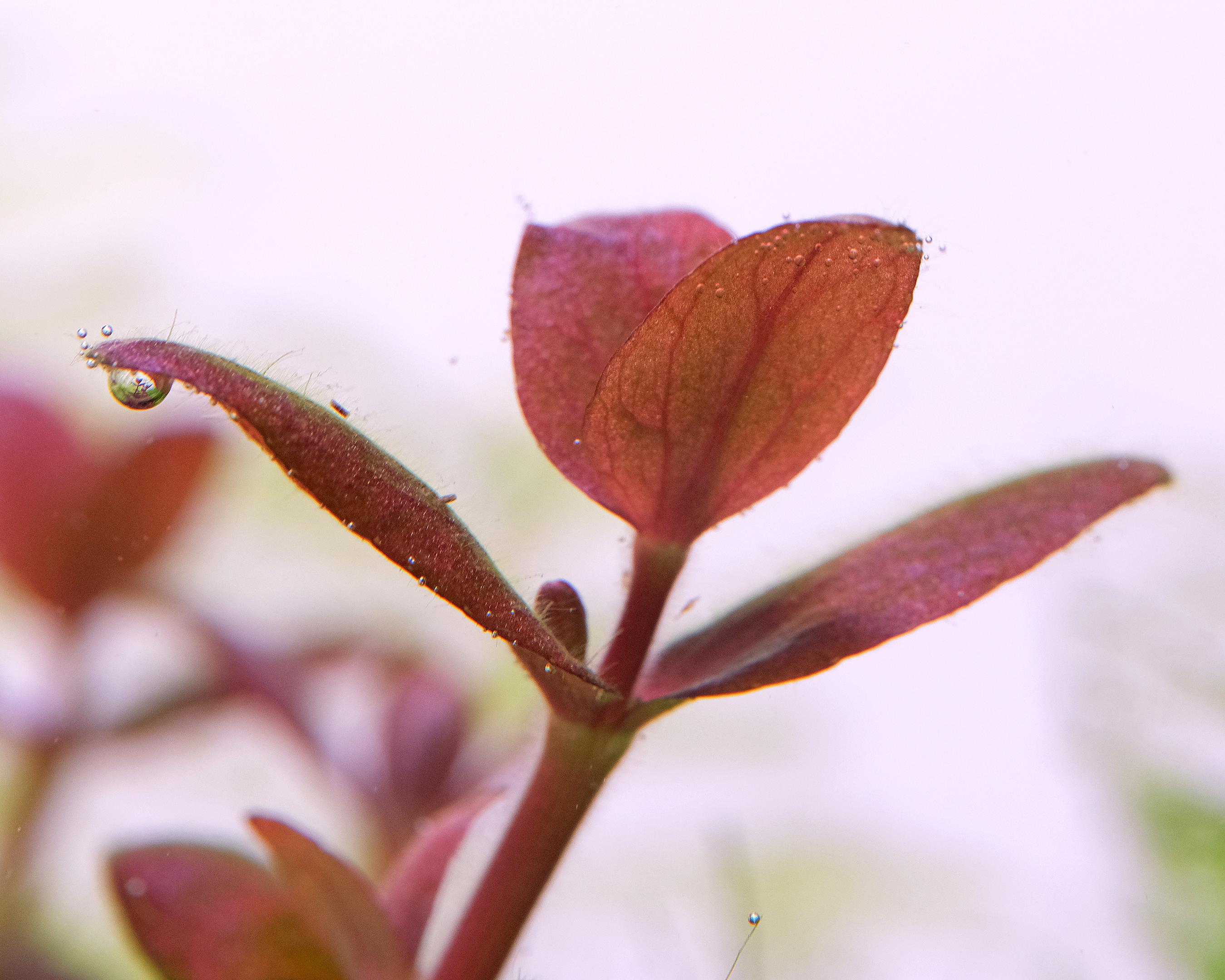
Other disruptions to plant growth include sudden changes in environmental parameters (such as Heat stress during summer months), nutrient fluctuations, or CO2 levels. Plants can be growing and producing new leaves, yet still be in a stressed state.
Ammonia spikes coupled with high light create an ideal environment for filamentous algae and bear special mention. Early detection and remedial action are important to prevent such cases from getting out of hand.
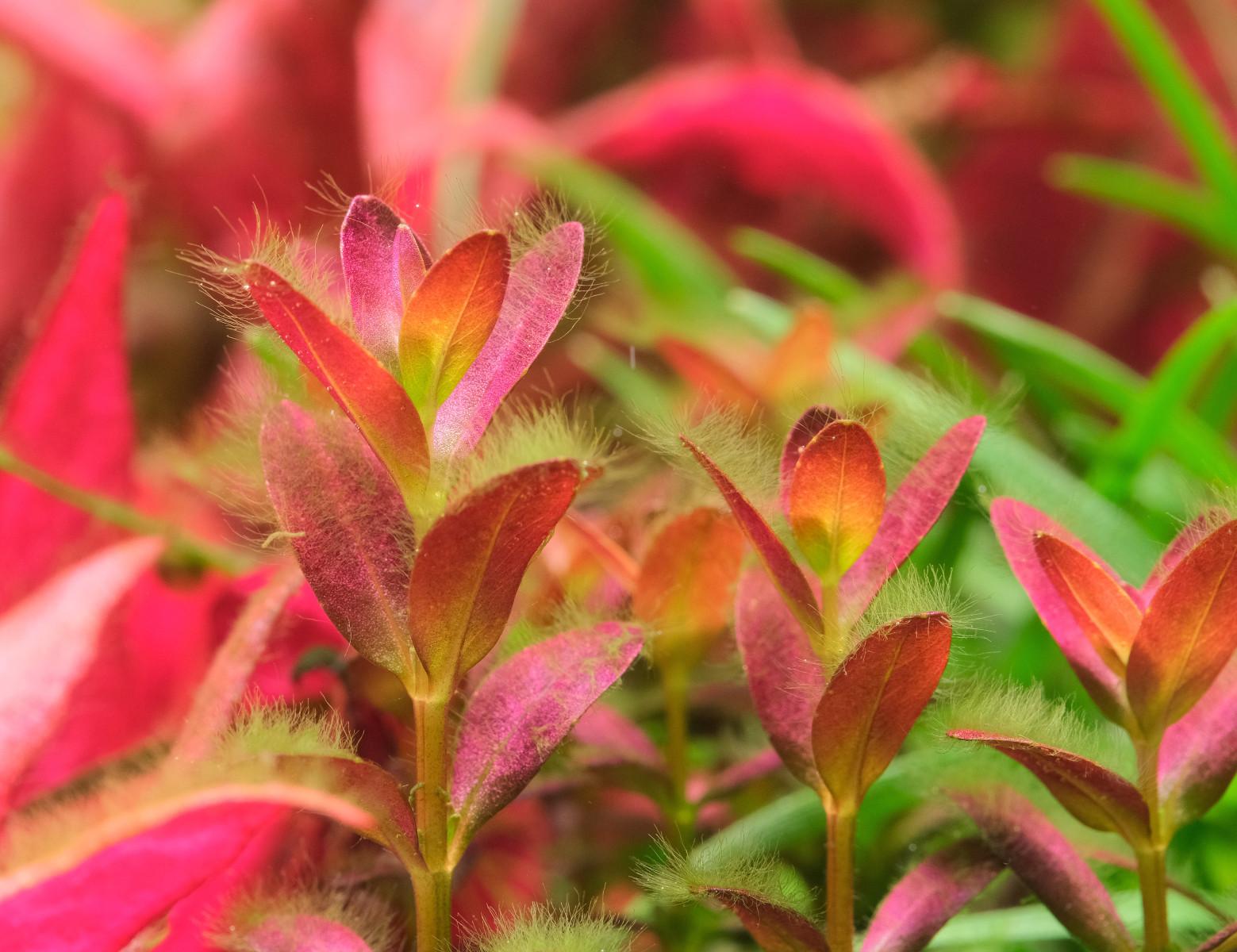
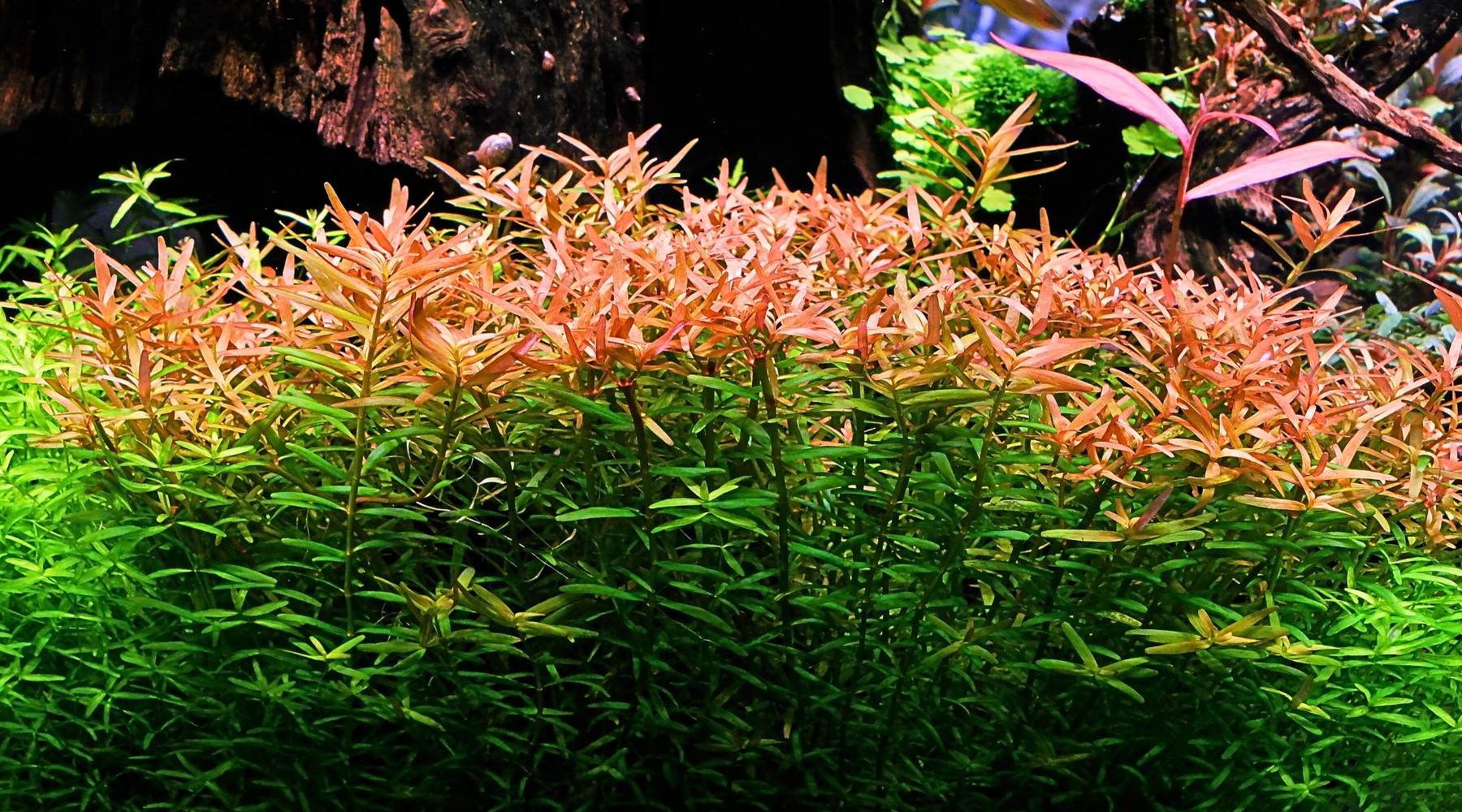
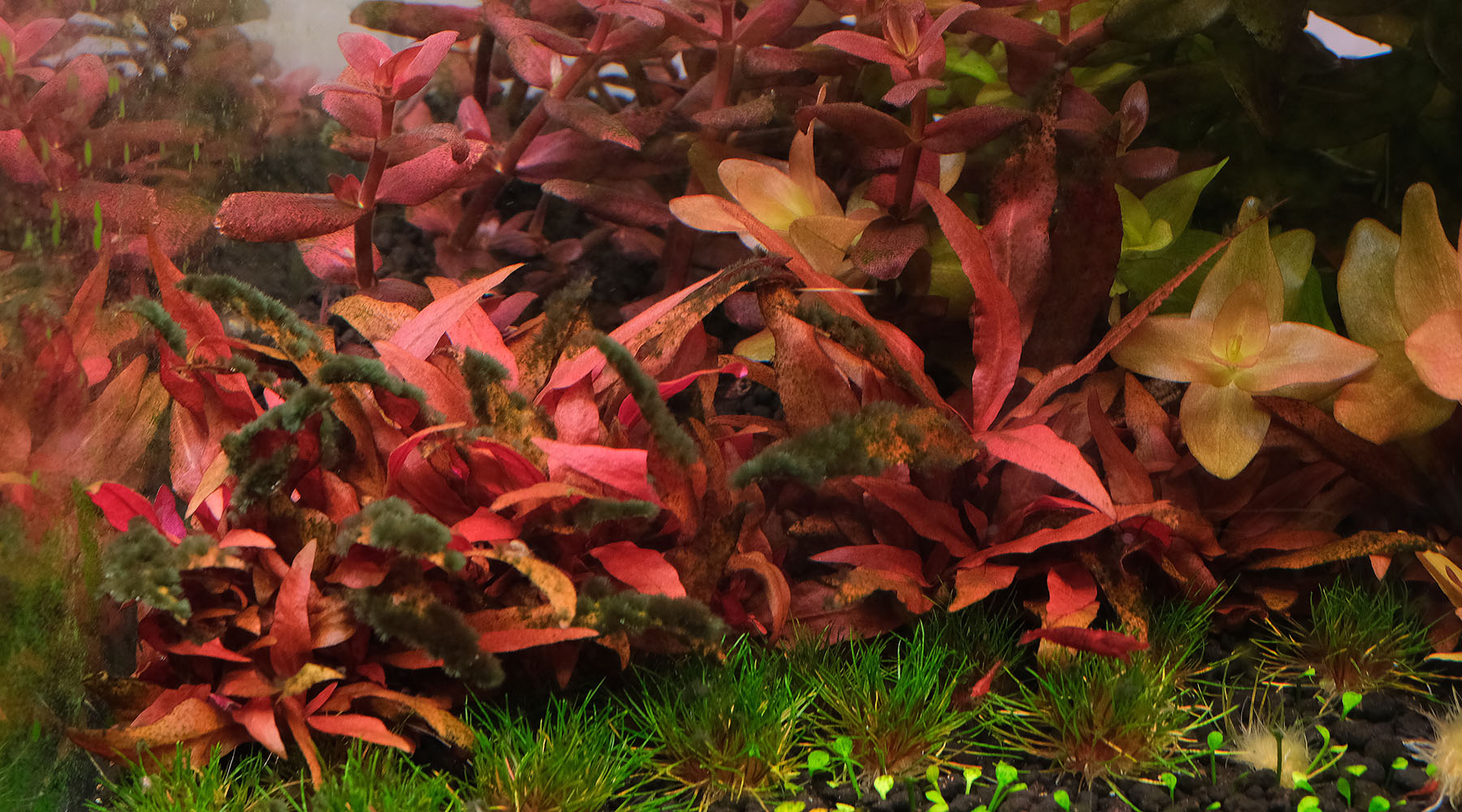
Hair algae is triggered on this Rotala florida due to a sudden spike in Nitrate levels (from 10+ppm to 25+ppm). As nutrients remain stable, plants adapt over time, and such cases tend to resolve on their own.
Instabilities can also build up quietly till a tipping point is reached, where a seemingly stable tank can turn into an algae-infested one within day. Gradual drops in CO2 levels due to clogged diffusers or malfunctioning CO2 devices slow down plant vigor over time. (A clogged diffuser can cut CO2 saturation rates by 50% while still emitting visible bubbles). A gradual reduction in filter flow due to choked filters, and the slow accumulation of organic waste on the substrate, do not present immediate problems till it reaches a tipping point. Overcrowding of plants is also a silent process - as growth stalls due a lack of space, algae invades.
How do You Get Rid of Hair Algae in a Planted Aquarium?
Filamentous algae propagate very quickly when the conditions are right. So the first step is to halt its growth as much as possible. In high-light aquariums (100+ umols) of PAR, reducing the light to 60-70 umols till the situation is resolved is highly recommended. Stressed plants cannot use strong light productively, but algae certainly can. Ammonia feeds filamentous algae well, so run an ammonia test and perform a large water change to reduce ammonia levels if it is present.
Next, identify the possible triggers. Check for CO2 levels (use the 1pH drop method, not just a drop checker), reduced filter flow, or buildup of decaying old growth and substrate mulm. The fix depends on what destabilized the tank. If the trigger is a short-term instability that is intended (such as an increase in nutrient dosing or light), then removing the algae and keeping the system stable so that plant growth can adapt and recover is the correct path.
Stabilise the environment. Hold CO2, fertiliser, light, and flow steady. Plants use significant energy to adapt to changing conditions - constant tweaking extends the stress period and keeps the outbreak going.
Large water changes (up to 70%, two to three times a week during an outbreak) help remove the organic compounds secreted by plants during stress, along with loose algae and spores. Siphon away detritus from the substrate while doing so.
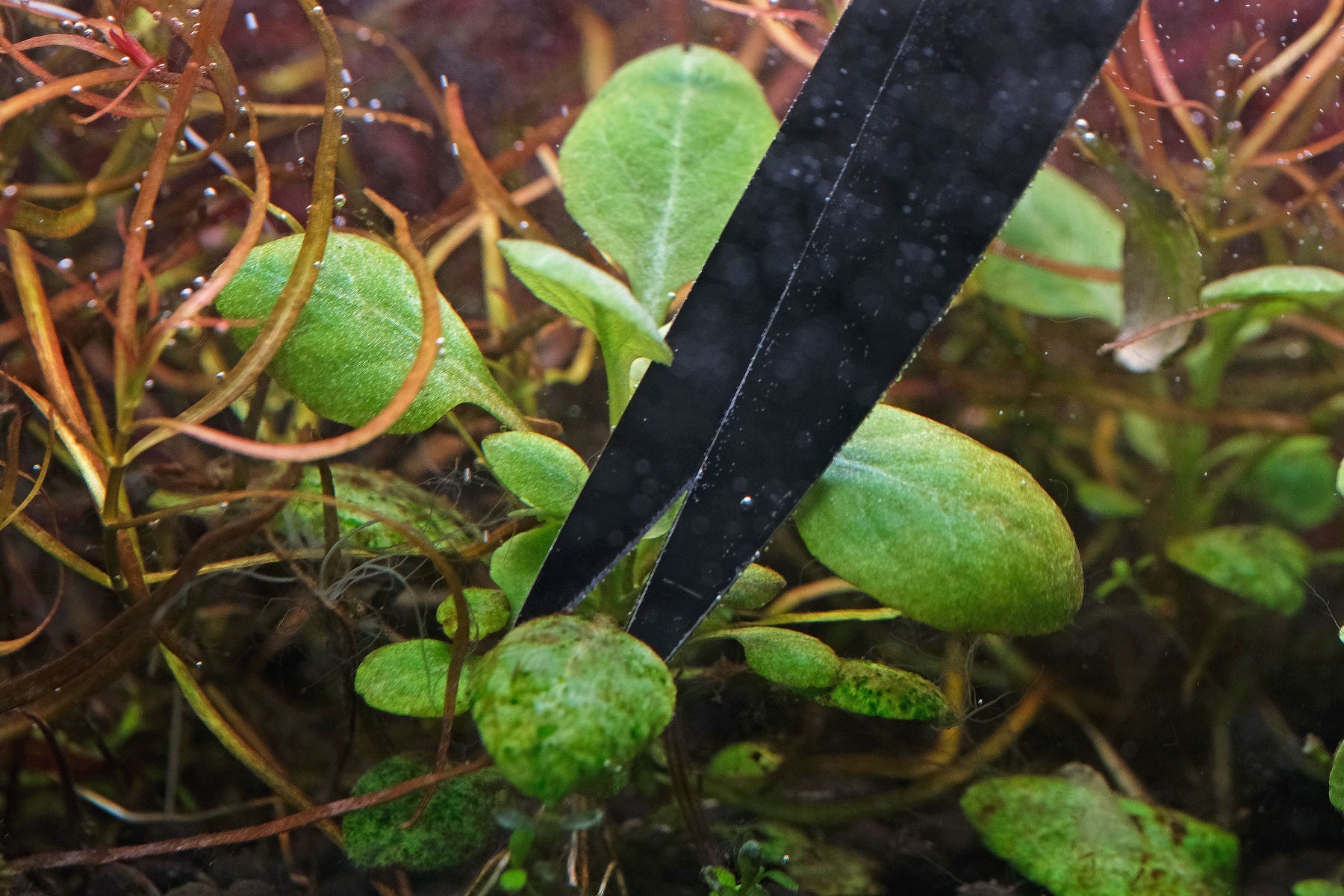
Manually remove what you can. Twirl hair algae onto a soft toothbrush; trim fuzz-covered leaf edges with curved scissors; pluck string algae strands with tweezers. Manual removal cuts the regrowth loop while plant health catches up. Existing filaments are dead structures clinging on - they will not shrink on their own.
Trim heavily infested old leaves and replant healthy tops. Old growth that is already infected badly with algae will not recover. Trim it off, replant clean stem tops, and let new growth replace the damaged tissue. This is how plants rejuvenate themselves over time. In very serious cases, replacing infected plants with new batches of healthy, clean plants is necessary to tilt the balance of the aquarium back to plant dominance.
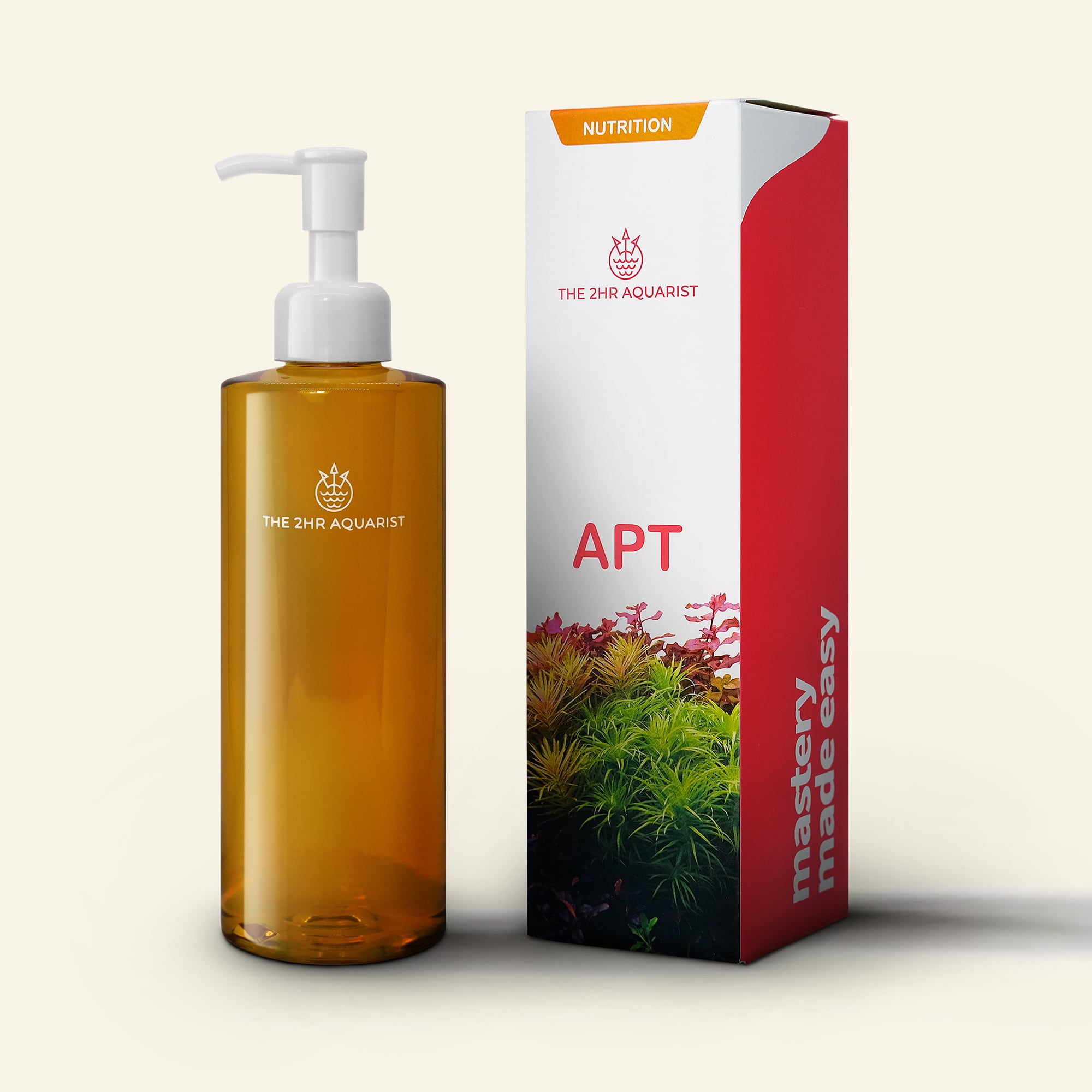
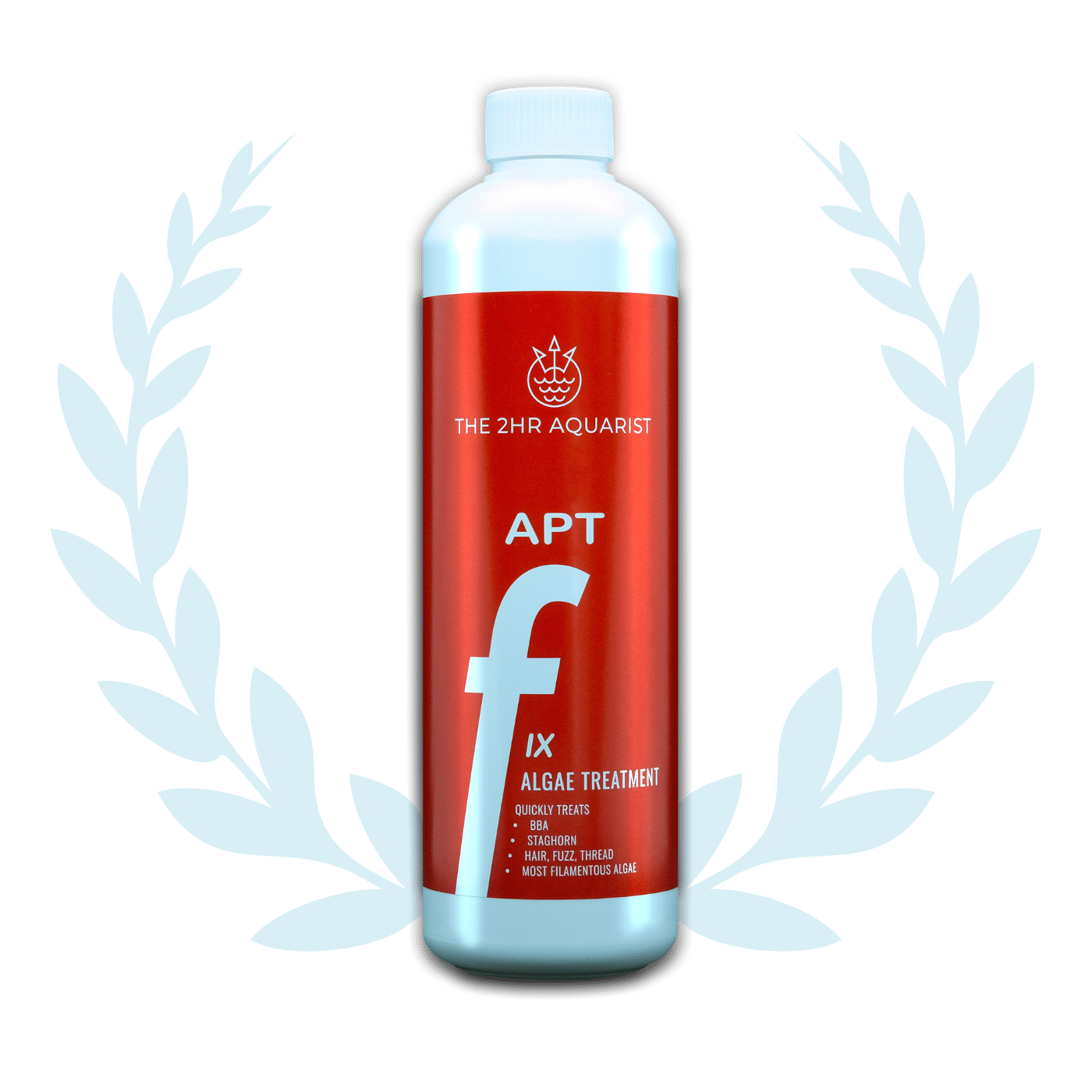
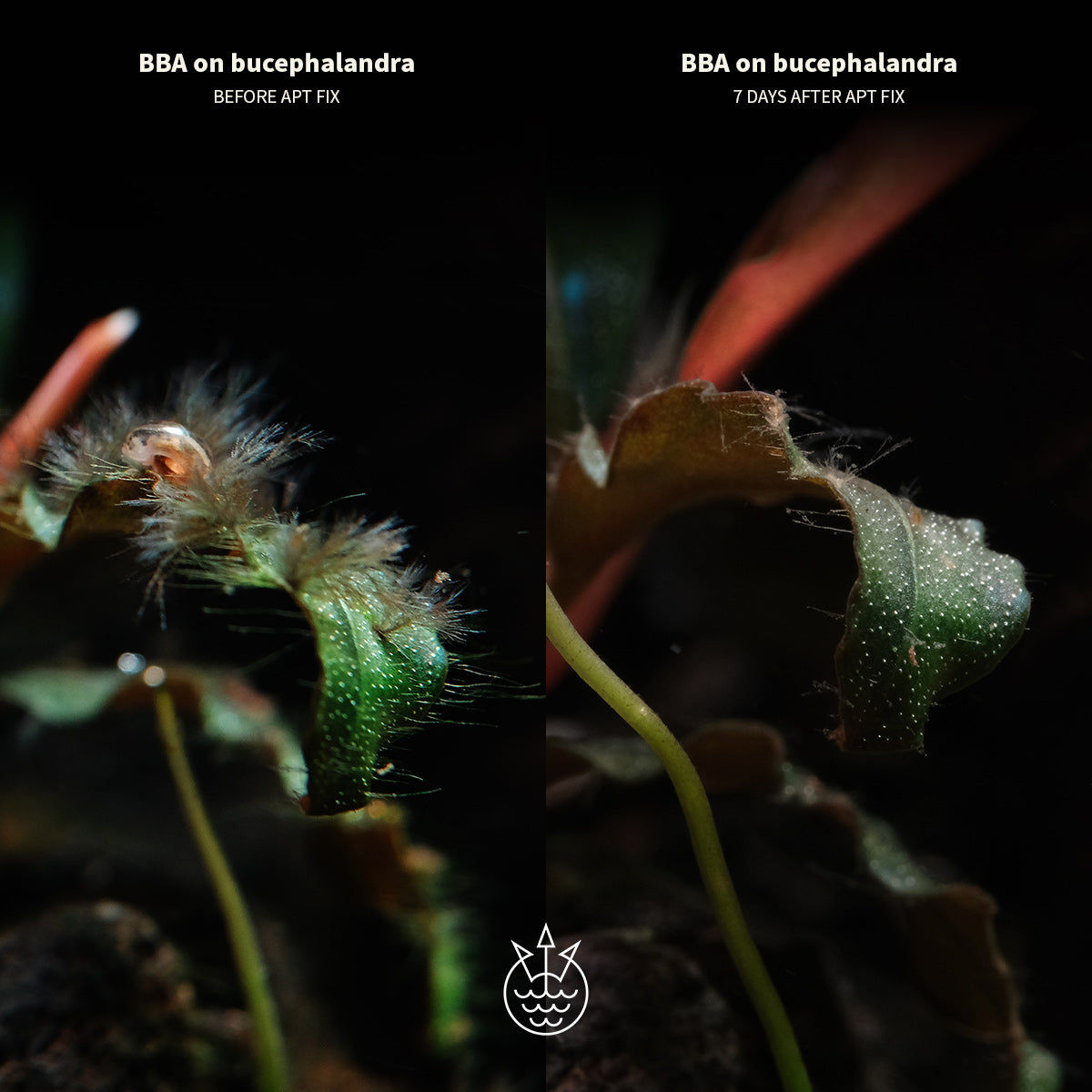
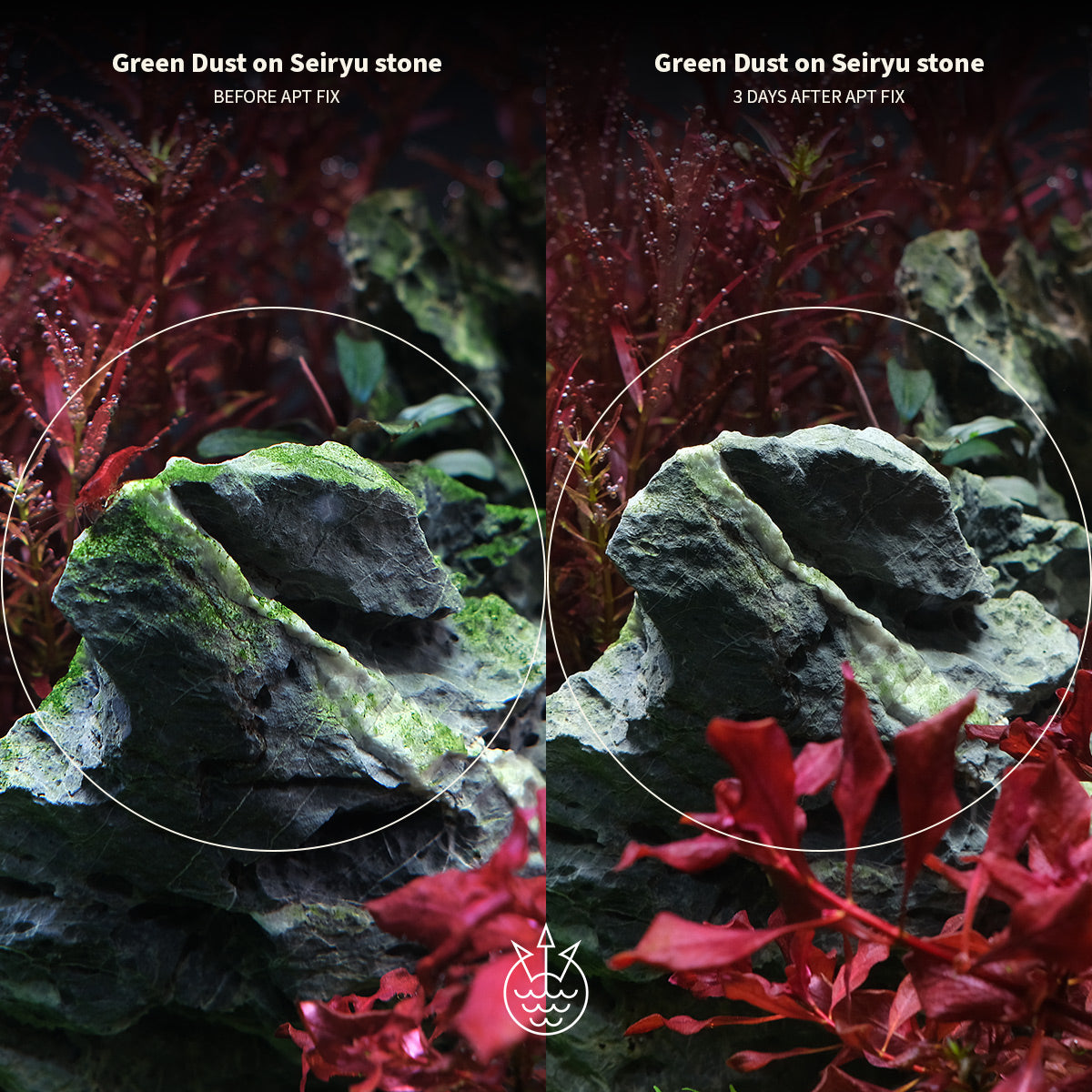
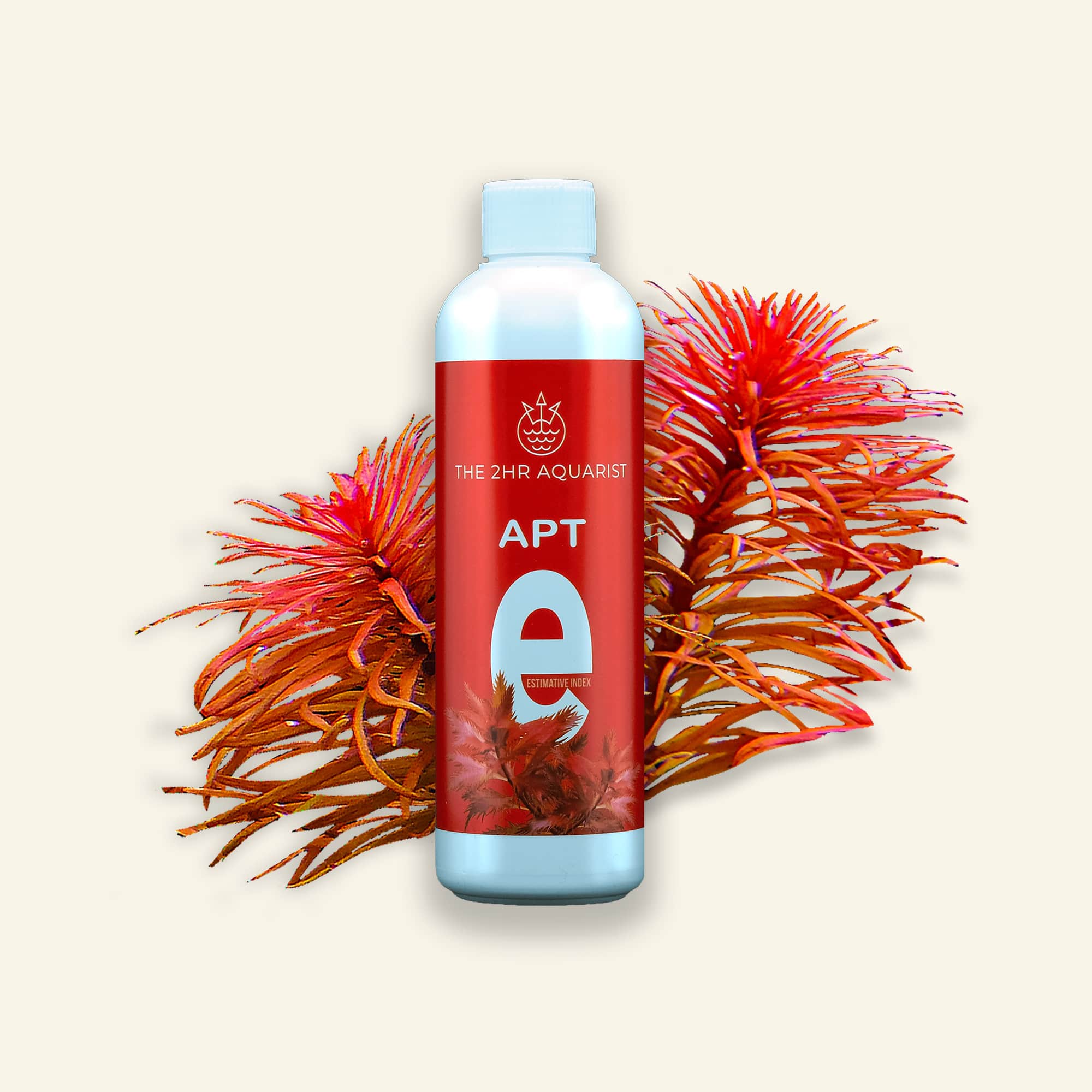
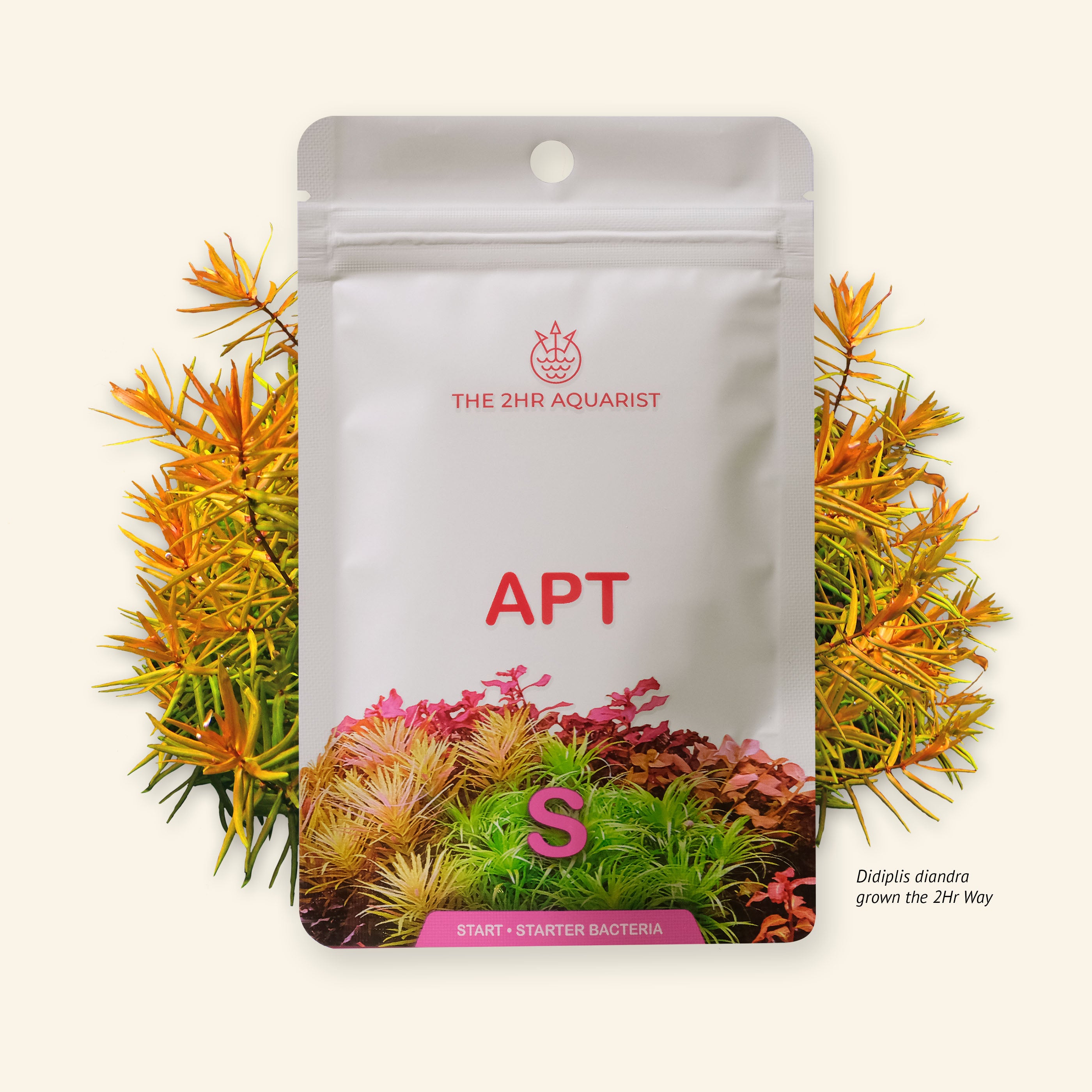
Once most of the algae has been manually removed, the remainder can be killed off with algicide such as APT Fix. Dose up to 1ml per 10L of tank water, repeatable every 24 hours - both APT Fix and APT FixLite biodegrade within 12 to 24 hours. To cover many areas at once you can exceed that, followed by an 80% water change. Hair algae can often be stubborn and regrow quickly, so a few rounds may be necessary to fully resolve the issue. Spot dosing is for mild to moderate cases; a tank already overrun by algae needs a reset rather than an algicide.
If the hair algae infestation is very serious, you can opt to do a blackout. Covering the aquarium completely for several days can eliminate light and help starve hair algae while allowing established plants to survive.
Add algae-eating invertebrates as a cleanup crew. Amano shrimp (Caridina japonica) are the most effective for filamentous algae, consuming a wide variety of hair and string algae, especially fresh growth. Add 2-5 per 38 litres. Neocaridina (red cherry shrimp) help, but need larger numbers for a meaningful impact. Mollies will occasionally eat filamentous algae, but also produce significant waste, which is counterproductive during an outbreak. None of these animals is a cure on their own - they are a maintenance crew that keeps algae regrowth in check while plant health recovers.
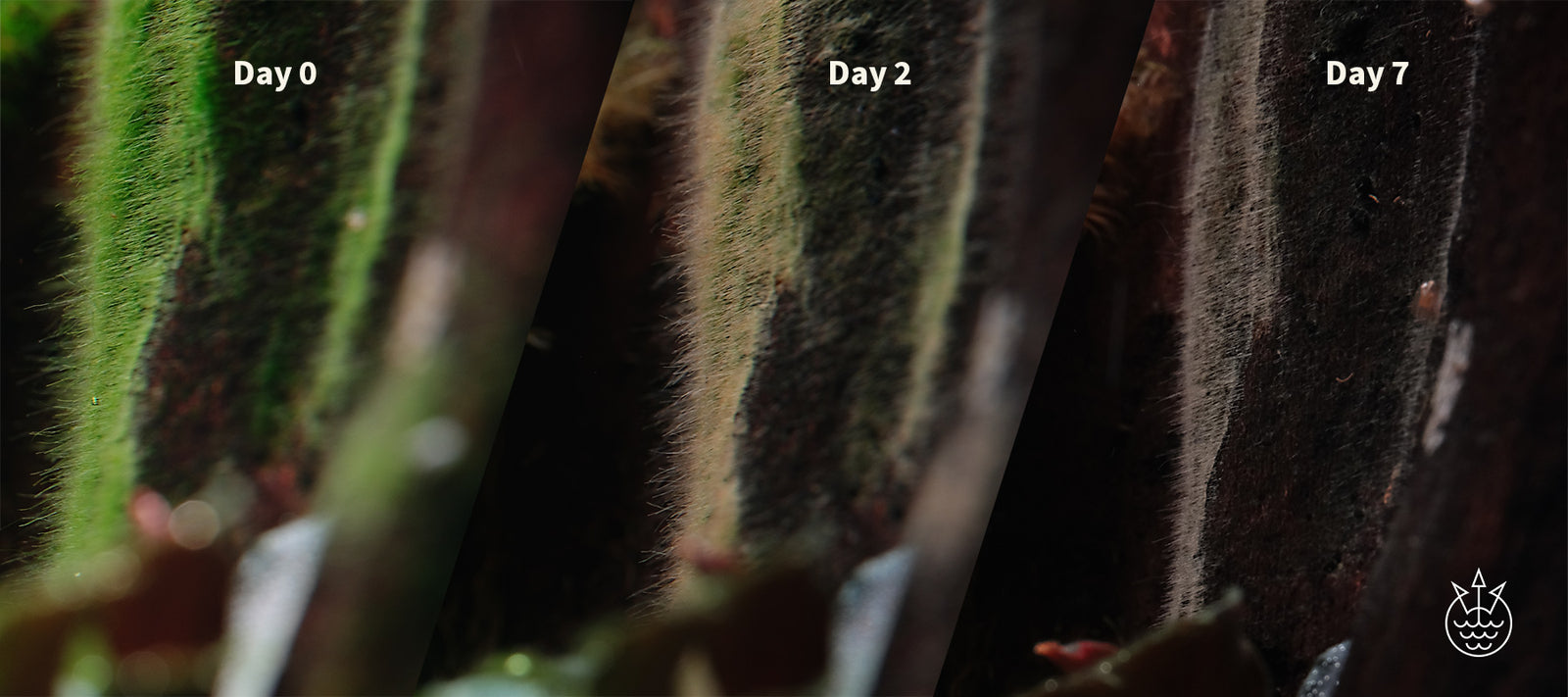
Above: single spot-dosage of APT Fix via the drain-dose method. By Day 2, hair-algae has lost some color. By Day 5, all the hair algae has been deactivated.
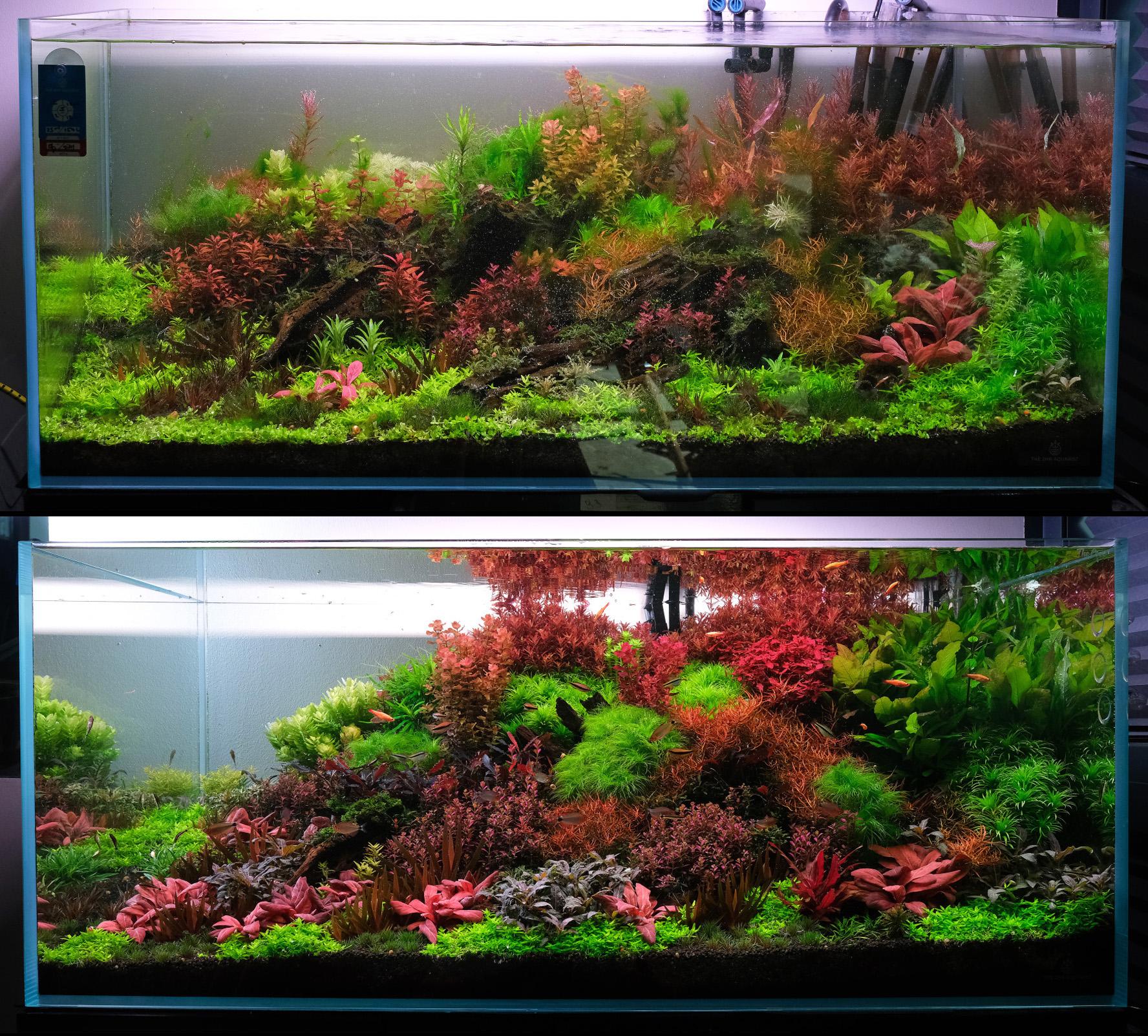
Planted aquariums have a tremendous capacity to recover. Plants regenerate by growing new leaves, while algae-infected older growth can be cut away. Once plants start growing vigorously, the balance of the aquarium can be shifted away from algae.
Does cutting fertiliser fix hair algae?
Here is the myth that needs to die: "green hair algae means too many nutrients - cut your fertiliser."
This gets it backwards. In a tank with healthy, dense plant mass, the plants act as a deterrence to algae. When nutrients drop too low, plants weaken, older leaves go undefended, and hair algae shows up. Cutting fertilizer to starve the algae starves the plants first. Filamentous algae is primarily triggered by dissolved organics and the metabolites leaking from stressed leaves - not by the mere presence of excess nutrients in the water column.
A sudden spike in nutrient levels that causes plant reprogramming is a cause for hair algae. However, there is a big difference between stabilizing nutrient levels (which is helpful) and depriving plants of essential nutrients to grow. Before making the decision to reduce or increase fertilizer dosage, one must determine whether it is a nutrient spike that is causing stress to the plants or if the plants are deficient due to being underfed.
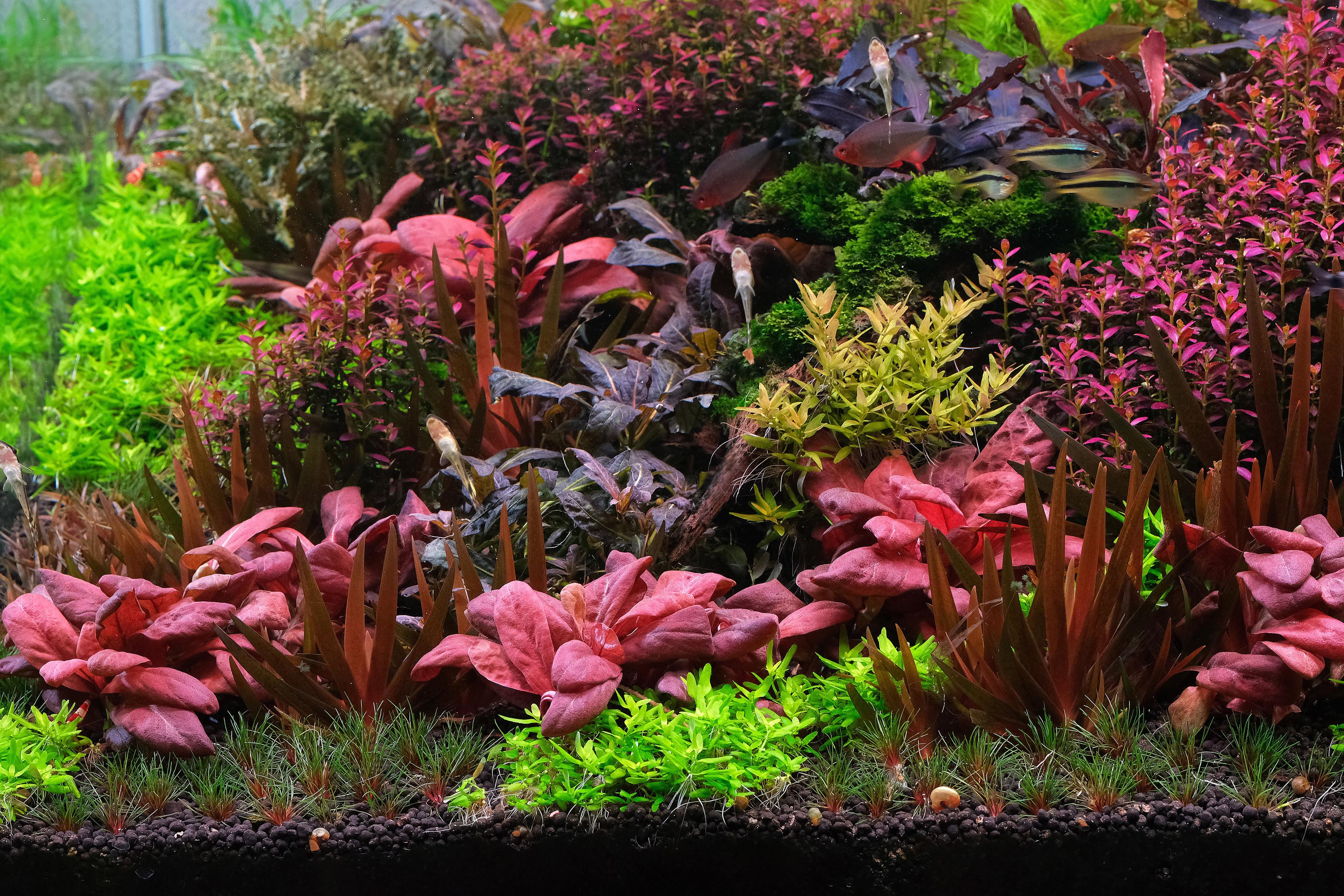
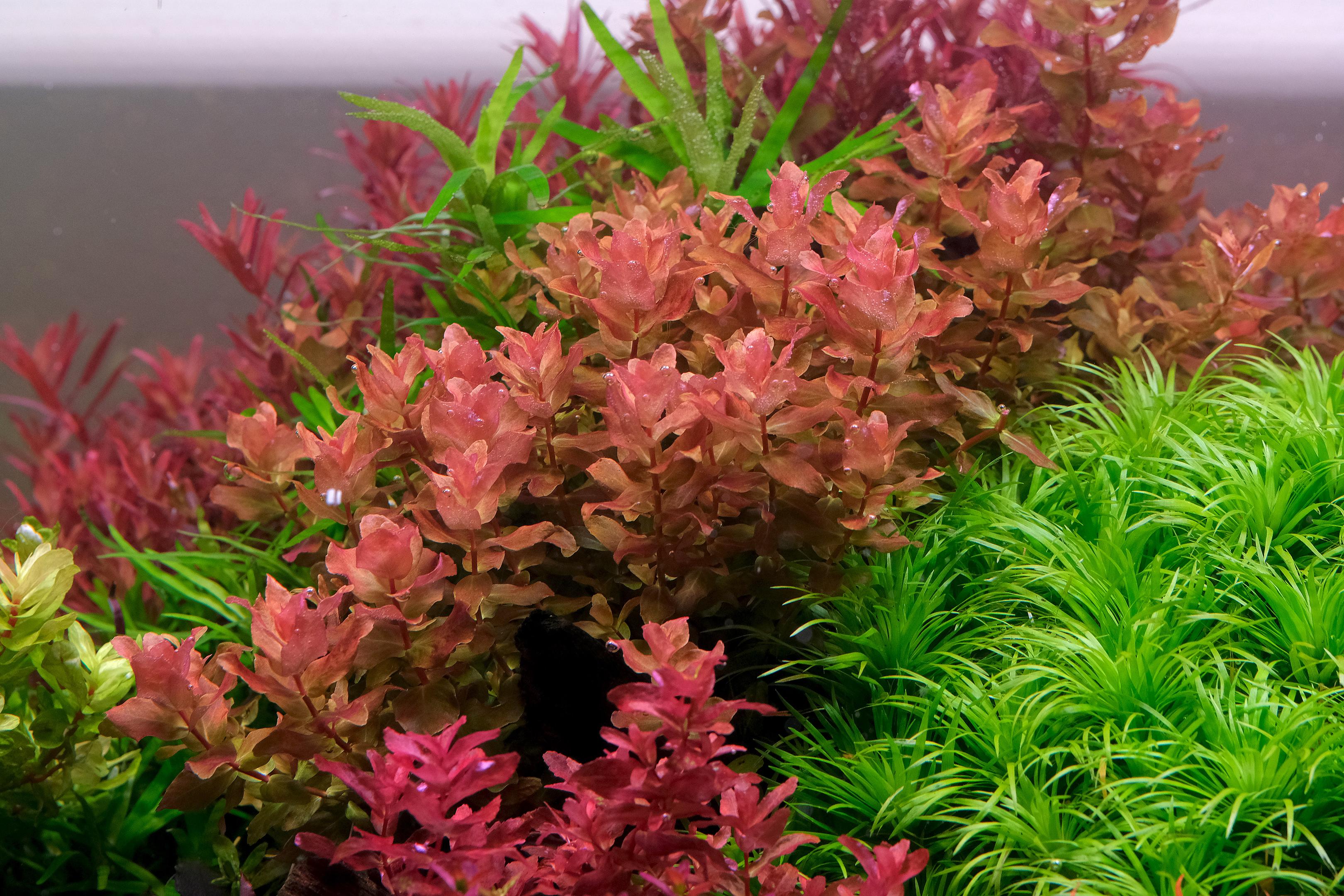
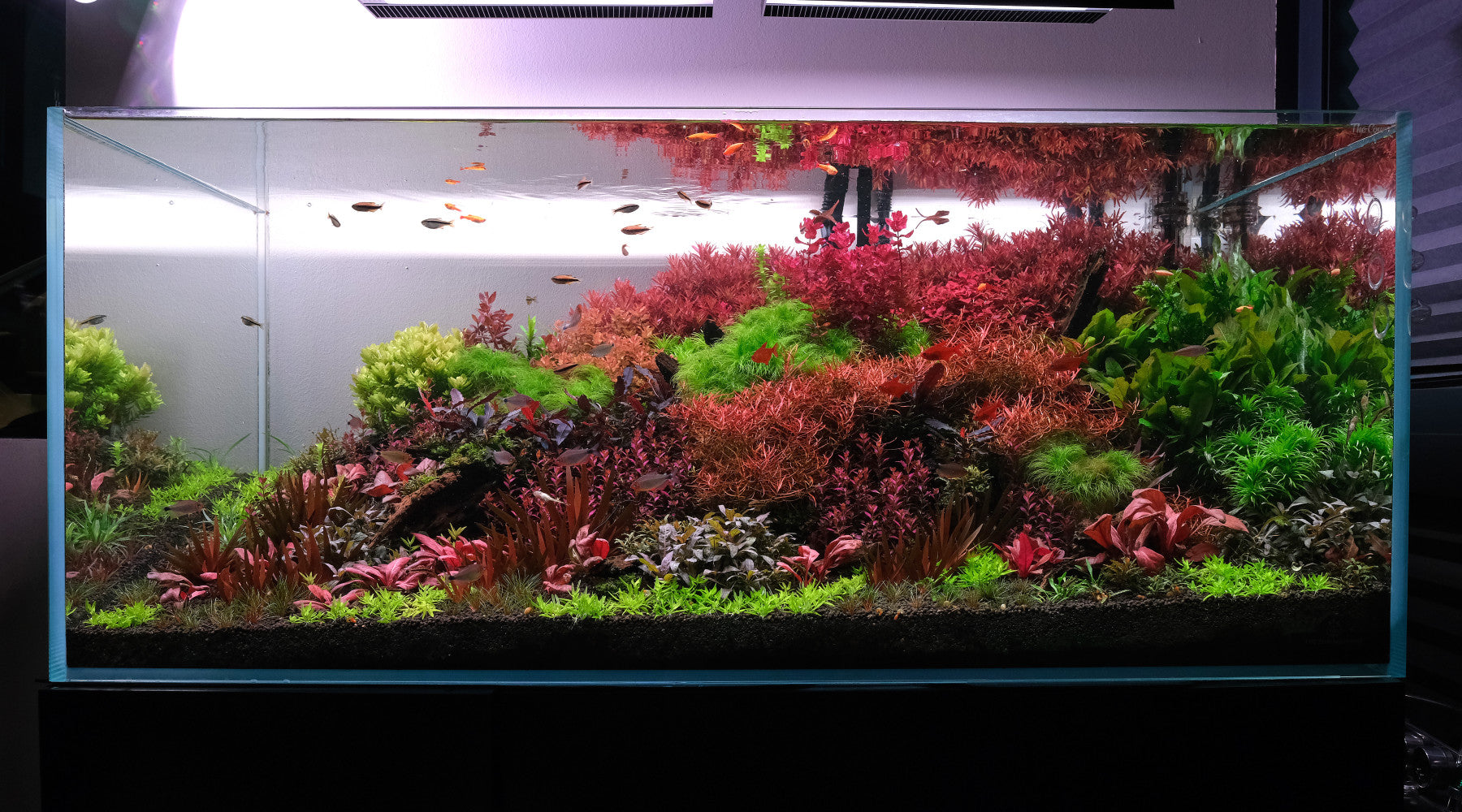
High nitrate and phosphate levels in an aquarium alone do not cause hair or string algae to occur. This aquarium above uses EI dosing - Nitrate/phosphate levels never dip below 15/4ppm over a 24-hour window, but despite the high nutrient availability in the water column, the aquarium remains algae-free due to the principles of plant dominance.
How do you tell hair, fuzz, string algae, and Cladophora apart?
The visual differences are mostly about length and how long the algae has been growing:
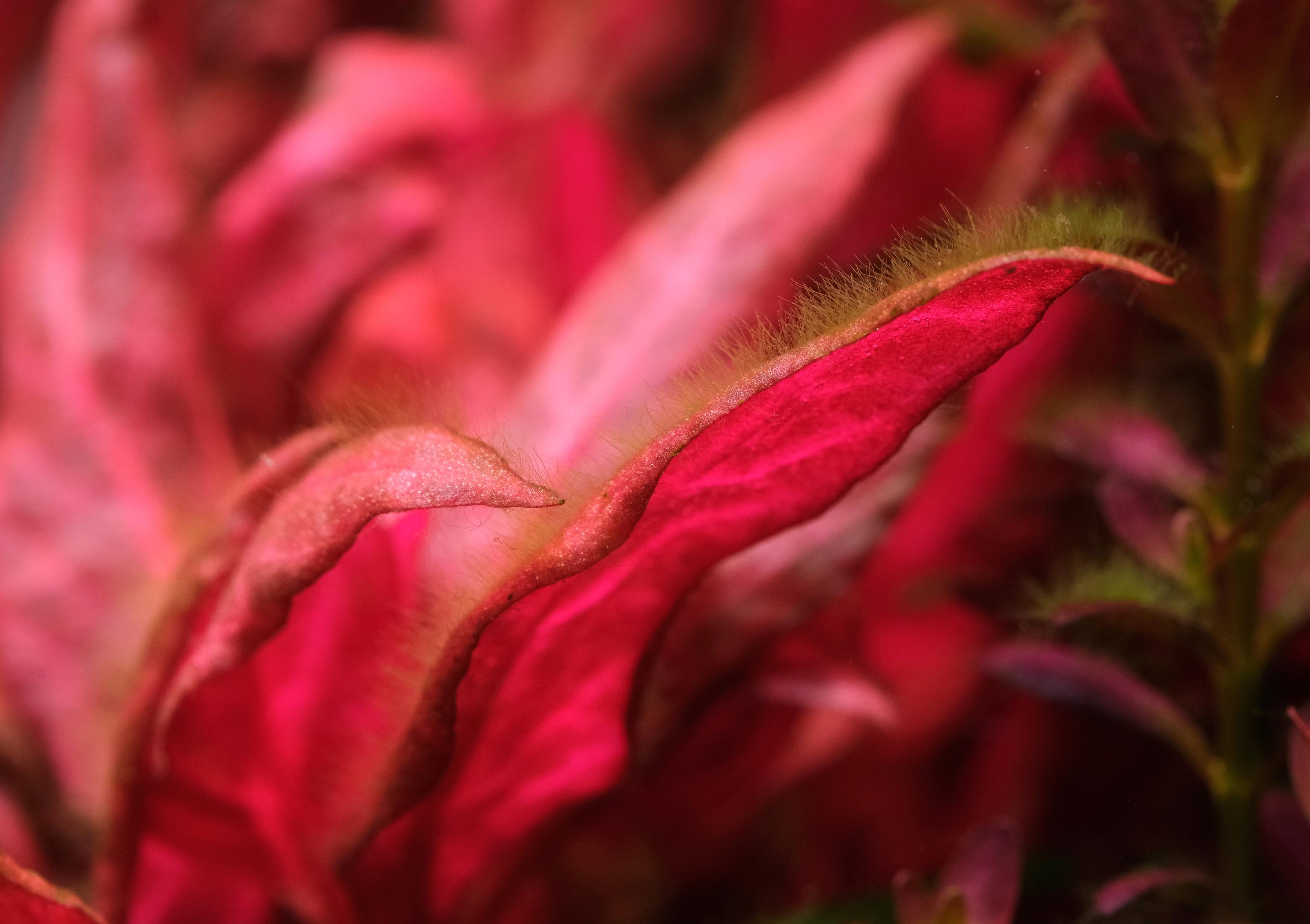
Fuzz algae / green fuzz: Short (1-5mm), dense green coating on leaf edges, especially on new leaves of fast-growing stem plants.
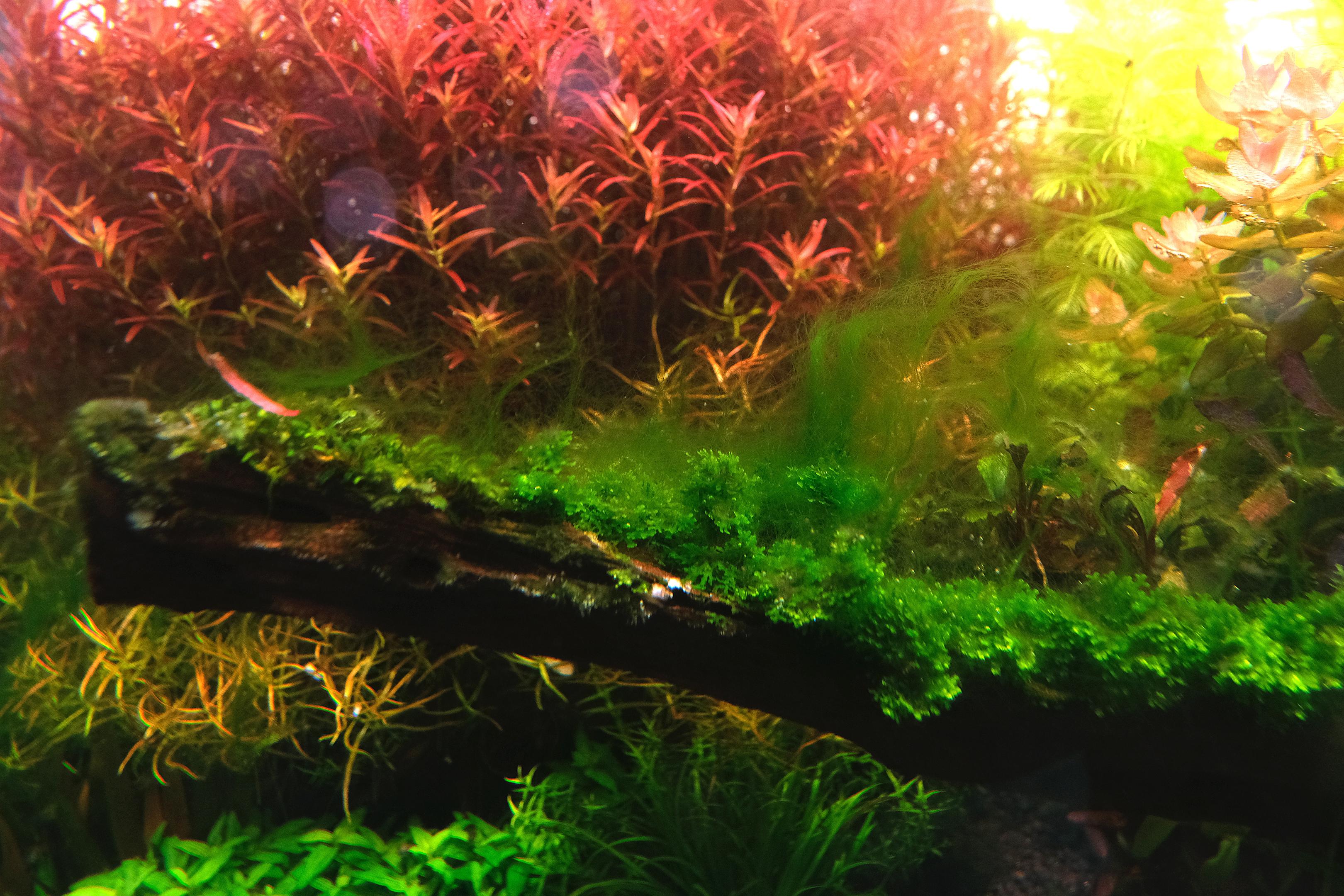
Hair algae / green hair algae: Longer (2-15cm), soft, bright green strands in tangled clumps that wrap around leaves, hardscape, and equipment. Snaps easily when pulled. Often appears during transplant stress, after heavy uprooting. Can be tangled onto a brush to be removed.
String algae/thread algae: Very fine, single strands, often 5-20cm, hanging from leaf tips. Associated with high light and fluctuating CO2, ammonia spikes. Visually less clumping than hair algae, with longer individual strands. Multiplies fast in high light.
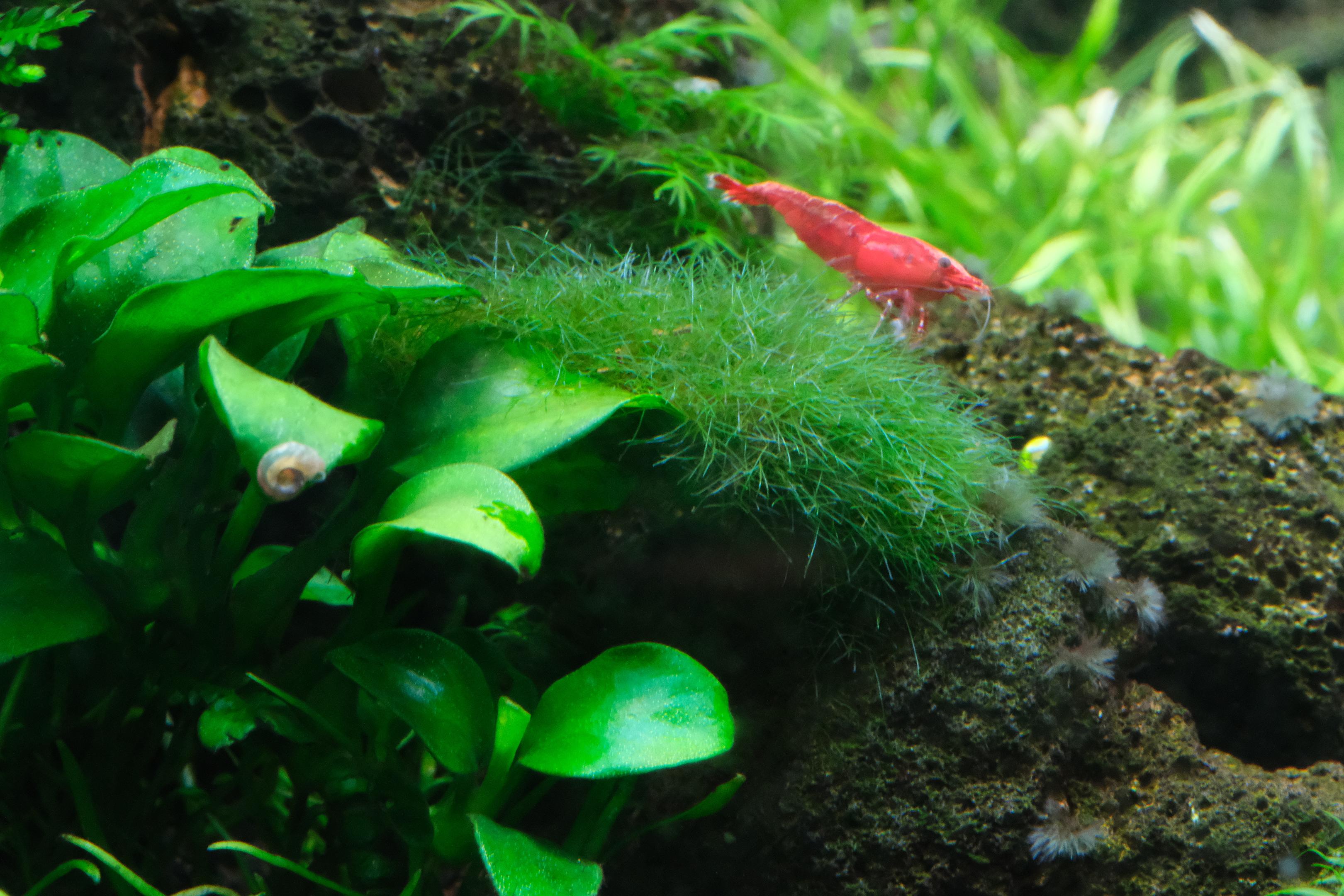
Cladophora is the impostor. It's form looks like hair algae but is structurally tough - you cannot snap it cleanly with a fingernail, it does not pull off in soft clumps, and it does not respond to plant-health improvements the way other filamentous algae does. If the "hair algae" in your tank feels rubbery and resists breaking, treat it directly with spot-dosed APT FixLite. Larger-sized plants can also outcompete it for space and light directly.
How does hair algae differ in low-tech vs high-tech CO2 tanks?
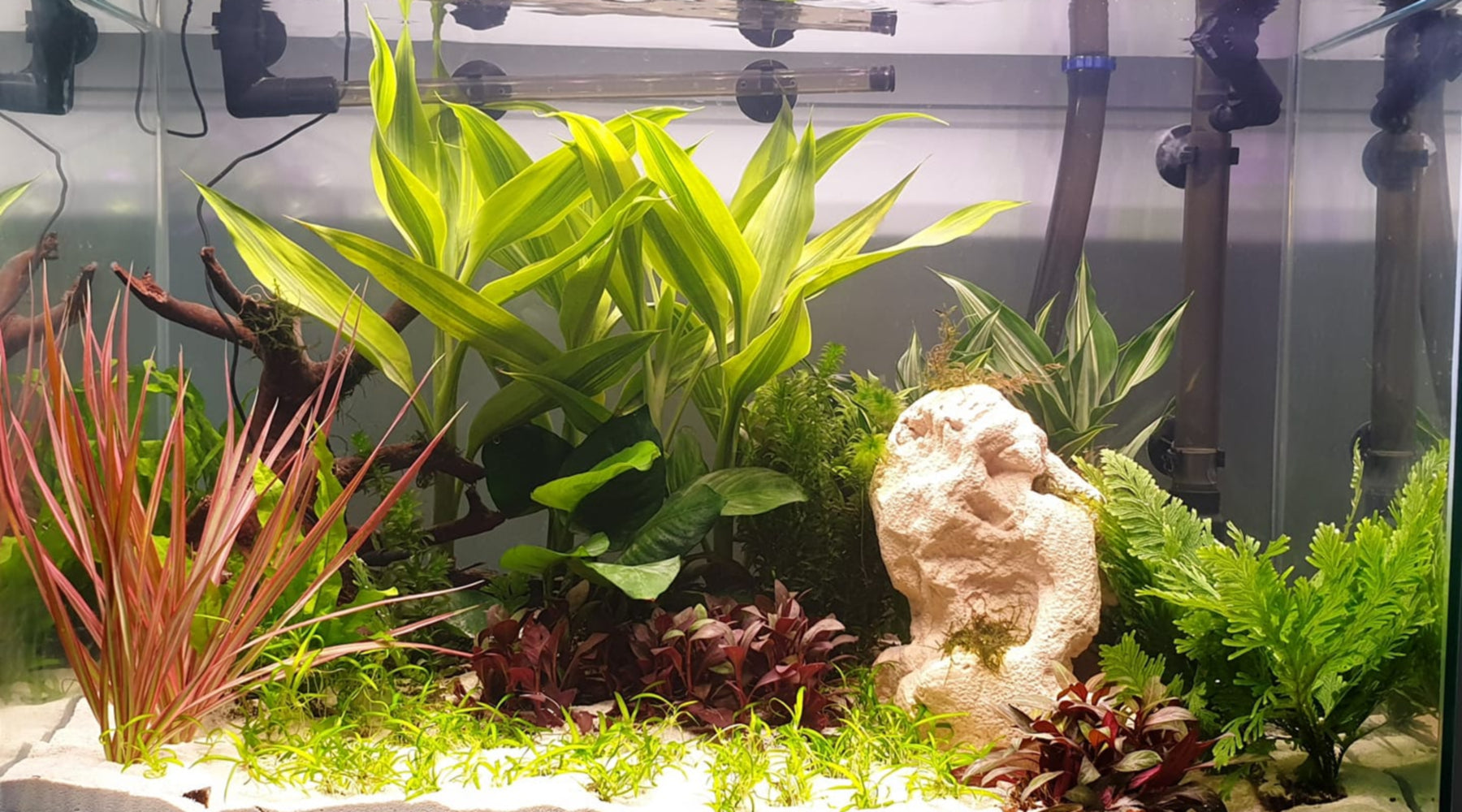
In a low-tech aquarium, the number one culprit tends to be inadequate Carbon (low CO2 levels). Plants use more carbon than all nutrients combined, and many low-tech aquariums do not generate enough CO2 naturally to sustain plant vigor. This is the uncomfortable truth about most low-tech aquariums. There are two ways to alleviate this problem without resorting to CO2 injection. The first is by selecting aquatic plants that grow well even in low CO2 environments - this includes Cryptocoryne, Anubias, Microsorum (Java fern) and Vallisneria species. The second is by setting up the aquarium to generate enough CO2 naturally - this is where aquasoil/soil substrates make a significant impact, as microbial decomposition in such substrates generates small but meaningful amounts of CO2. Liquid CO2 products (such as Seachem Excel)can help marginally; however, they will never give results anywhere close to CO2 injection and cost more in the long run.
Filamentous algae also often show up as a plant-mass problem: too few fast-growing plants and light set higher than the tank can productively use. Add fast-growing stem plants (Hygrophila difformis, Limnophila sessiliflora, Ceratophyllum demersum) or floating plants (Salvinia species, Hydrocharis laevigata, Phyllanthus fluitans) to absorb ammonia and reduce light levels in the tank. Use a comprehensive fertiliser to keep plants healthy, keep PAR modest at 30-60 umols at substrate, and add algae eaters. Recovery in low-tech tanks is slower, but algae also takes more time to set in.
In a high-tech CO2 tank, the trigger is most commonly CO2 instability or a system shock event such as an ammonia spike. Clogged diffusers and malfunctioning CO2 devices are common causes. Verify CO2 is actually reaching the target using the 1pH drop method, not just visual inspection. Once stability is restored, filamentous algae can still be sticky. The remaining traces of hair algae can be burned off with algicide.
For a deeper look at the underlying dynamics, read the 2Hr Aquarist articles on System Shocks, Transition Stress, Algae 101, and the Leaf Renewal Cycle.

Compartir:
Cómo resolver problemas de algas localizados
Clearing algae without algicides example 2