
If you are moving from a fish-only tank to a planted tank, you are not just adding a few aquatic plants as decoration. You are changing how light, nutrients, carbon, water quality and fish load all work together in your aquarium. The seven switches below are what actually need to change if you want good plant growth, minimal algae growth and healthy fish in the same glass box.
Fish Tank to Planted Tank Conversion: Quick-Start Checklist
-
Upgrade aquarium lighting to a proper LED lighting unit with known photosynthetically active radiation (PAR), not just “more bulbs”.
-
Start regular fertilisation: a complete liquid fertiliser in the water column plus root tabs or fertiliser tablets for rooted plant species.
-
Choose a method to break the carbon limitation barrier - either through CO2 injection or by the use of aquasoil/soil substrates to generate CO2 naturally.
-
Decide early if you will remain low-tech (no CO2) or run injected carbon dioxide; the lighting and plant species you choose depend on this.
-
Tighten water quality and maintenance: regular water changes, trimming, and light substrate cleaning to remove excess nutrients and uneaten food.
-
Rethink fish species: avoid herbivores and deep diggers, pick schooling fish and bottom-dwellers that are plant-safe.
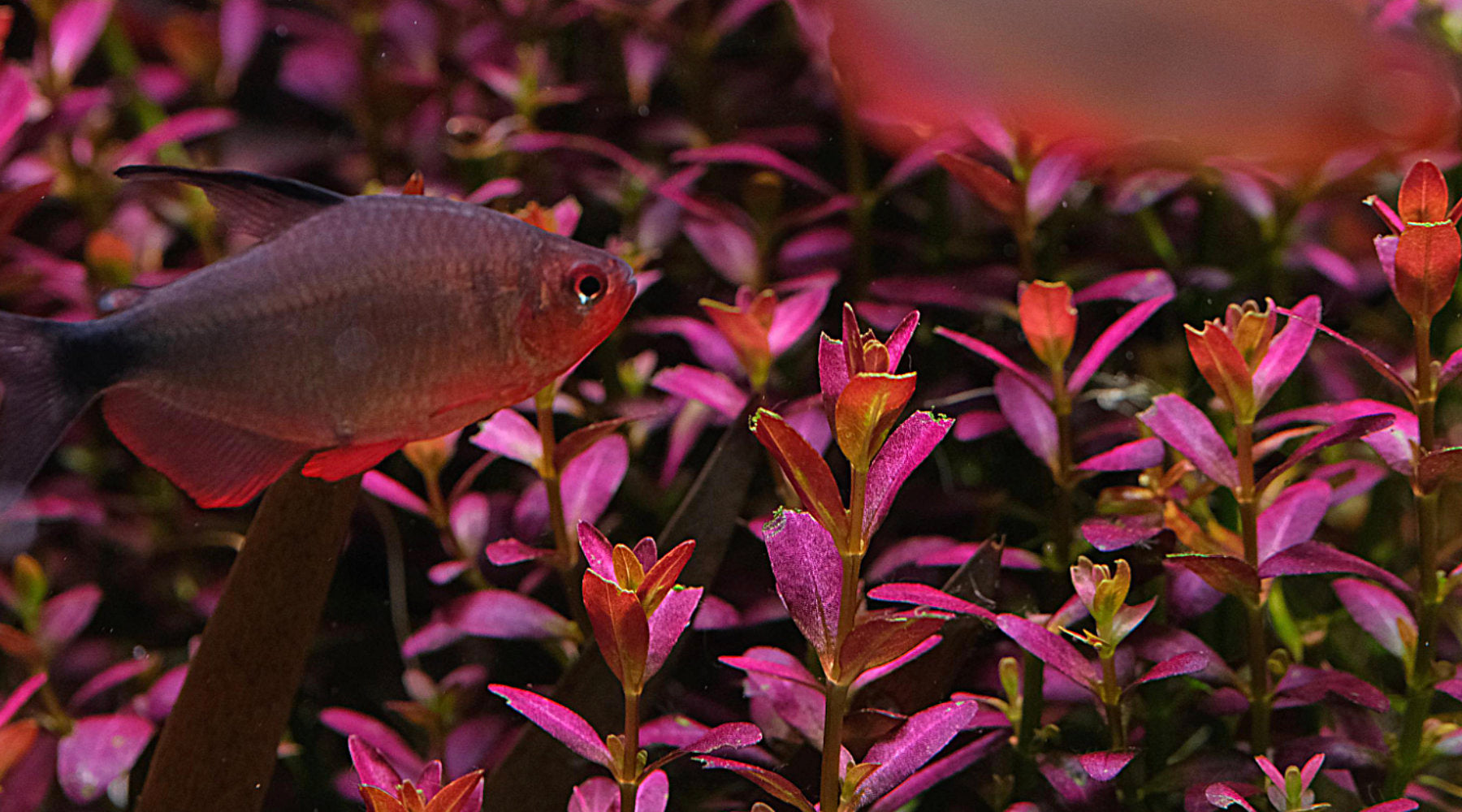
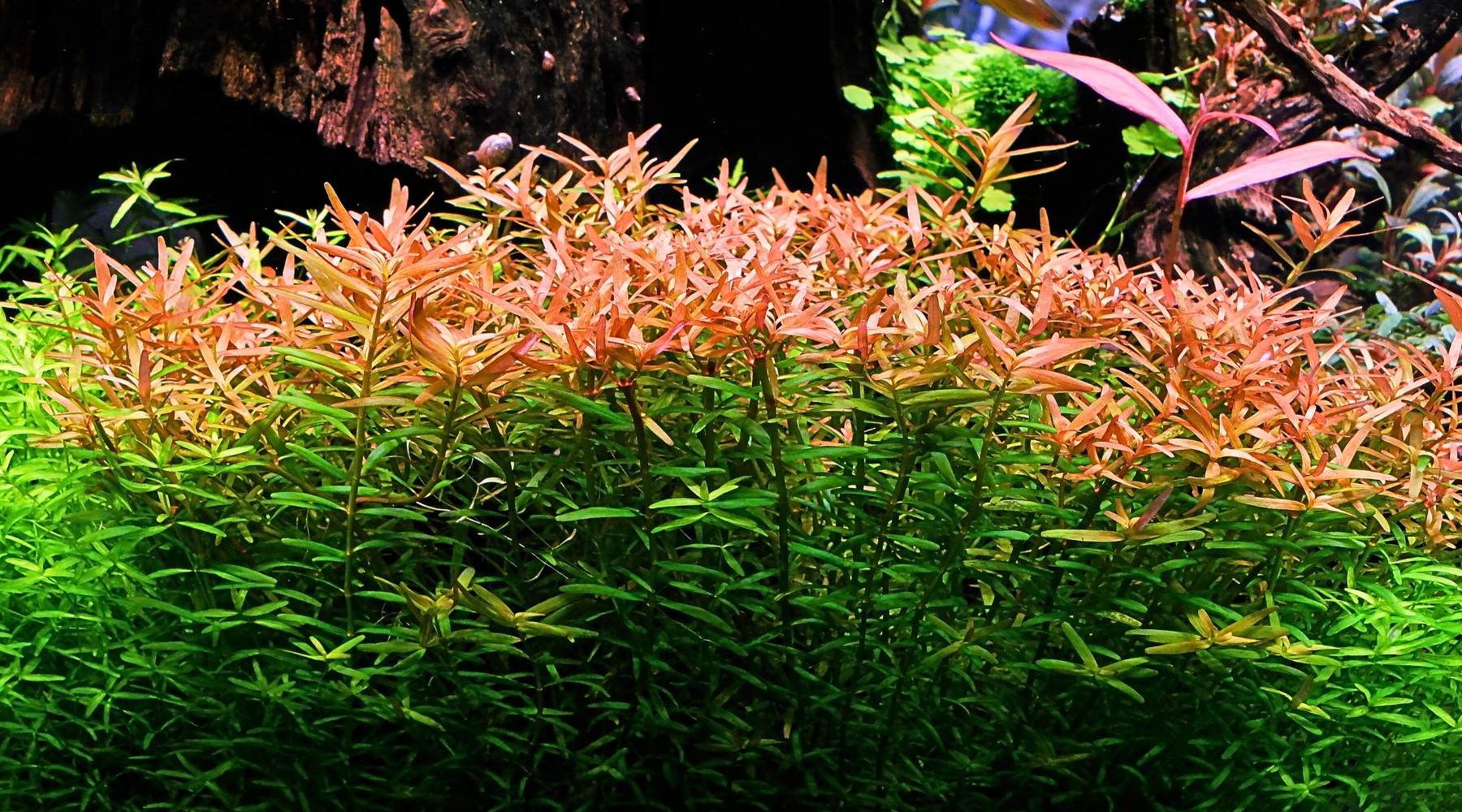
Carpeting plants are very popular. Contrary to popular belief, they do not require a lot of light to grow well. Once CO2 injection is available, they are very easy plants to grow.
Does a Planted Tank Need CO2 Injection, or Can You Stay Low-Tech?
This is the fork in the road that changes everything else you decide. A low-tech planted tank (no CO2 injection) and a high-tech tank (pressurised carbon dioxide) are both valid, but they have different rules.
In a low-tech tank:
-
You rely on carbon dioxide that is produced by fish, microbial respiration/decomposition. The atmosphere contributes negligible amounts of dissolved CO2 (less than 1ppm) to aquarium water due to the way physics work with gas solubility laws.
-
Plants use more carbon than all other nutrients combined, and carbon availability will be the steep limiting factor in low tech tanks. It is the uncomfortable truth that most plant growth issues in low tech aquariums are tied to Carbon availability, and folks do not want to see the truth because adjusting nutrients, lights and parameters are far easier than solving for Carbon availability.
-
A low tech planted tank that is successful is one that can generate sufficient CO2 through natural means through use of aquasoil/soil substrates and thicker microbial beds. Low tech tanks that have no strategy for natural carbon generation have high failure rates, regardless of other optimizations.
-
Light intensity should be modest and plant choices skewed toward hardy, shade-tolerant species like Java fern, Anubias, Cryptocoryne species and mosses.
-
Growth is slower, so trimming and maintenance are lower; this is kinder for beginners.
-
Plant selection is more limited. Carpets, colorful plants and exotic species have far greater success rates in CO2 injected aquariums.
In a CO2-injected planted tank:
-
Carbon dioxide becomes a deliberate input instead of a side effect; remember that 40–50 percent of plant dry mass is carbon. However, most CO2 systems need some tweaking to hit optimal CO2 levels.
-
Light intensity can be higher; plants like carpets and many stem plants will grow rapidly and colour up strongly, and many plant species that refused to thrive in a fish-only tank will suddenly grow rapidly.
-
Growth rates will be 5X to 10X compared to a low tech tank, and require more trimming and maintenance.
-
More tweaking is required in light, CO2 or nutrients to balance a high energy system.
-
Plant selection becomes open. Carpets and many red plants that struggle in low tech aquariums become very easy.
Either way, “liquid carbon” is not how you make the decision. Liquid carbon is not pressurised CO2 in a bottle. If you want the true high-tech behaviour – dense carpets of smaller plants, tightly formed stems that grow rapidly, deeply coloured red plants – you commit to a proper CO2 system and you match light, substrate and fertilisation to that level of plant growth.
A gravel/inert substrate planted aquarium with CO2 injection and cheap lights will grow far more plant species successfully than a low tech aquarium with expensive aquasoil and the best lights and equipment available on the market. Carbon availability in planted aquariums is the greatest impact factor to plant growth by a large margin.
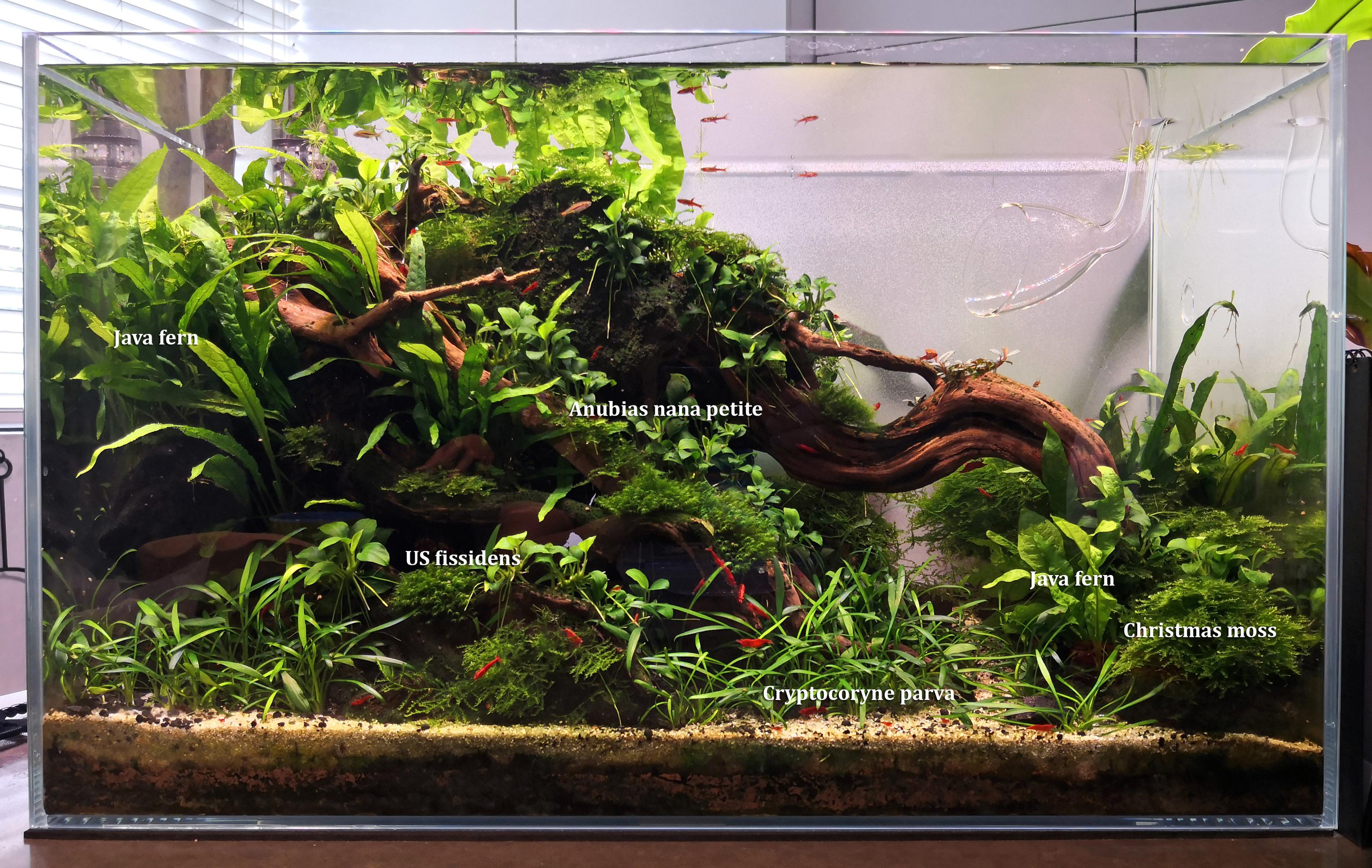
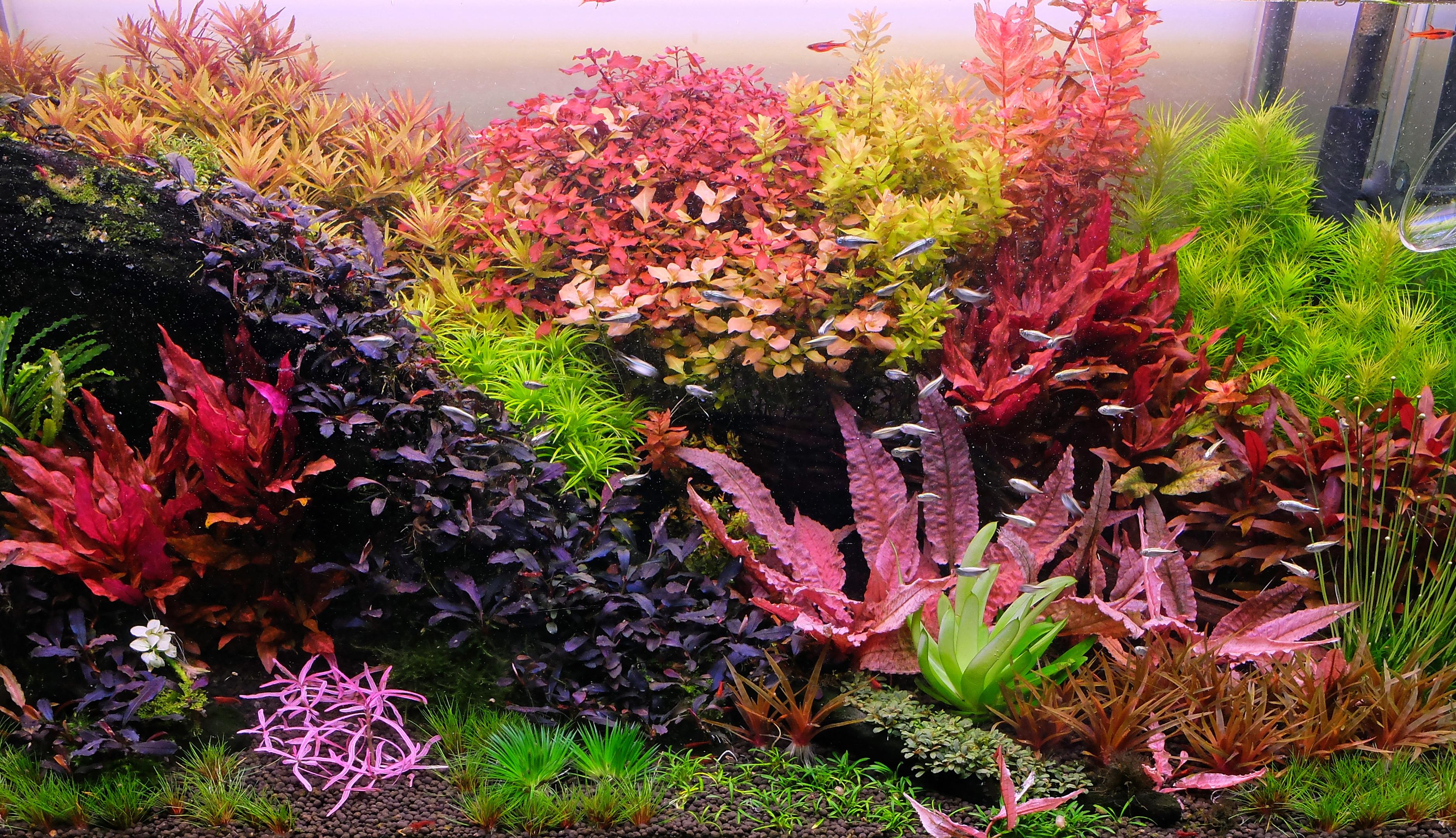
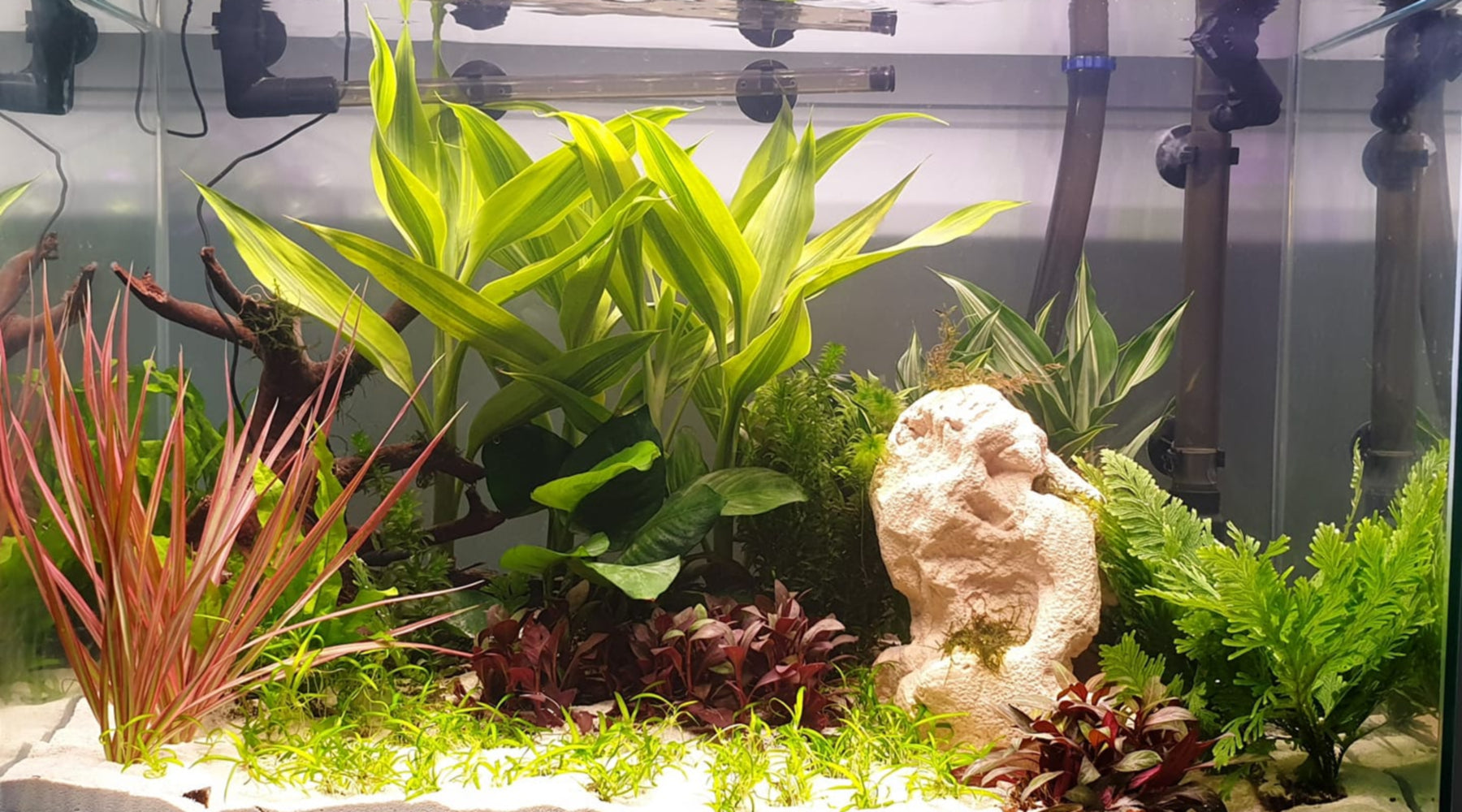
Low tech aquariums (above) can be lush with the correct plant selection and adequate natural carbon generation.
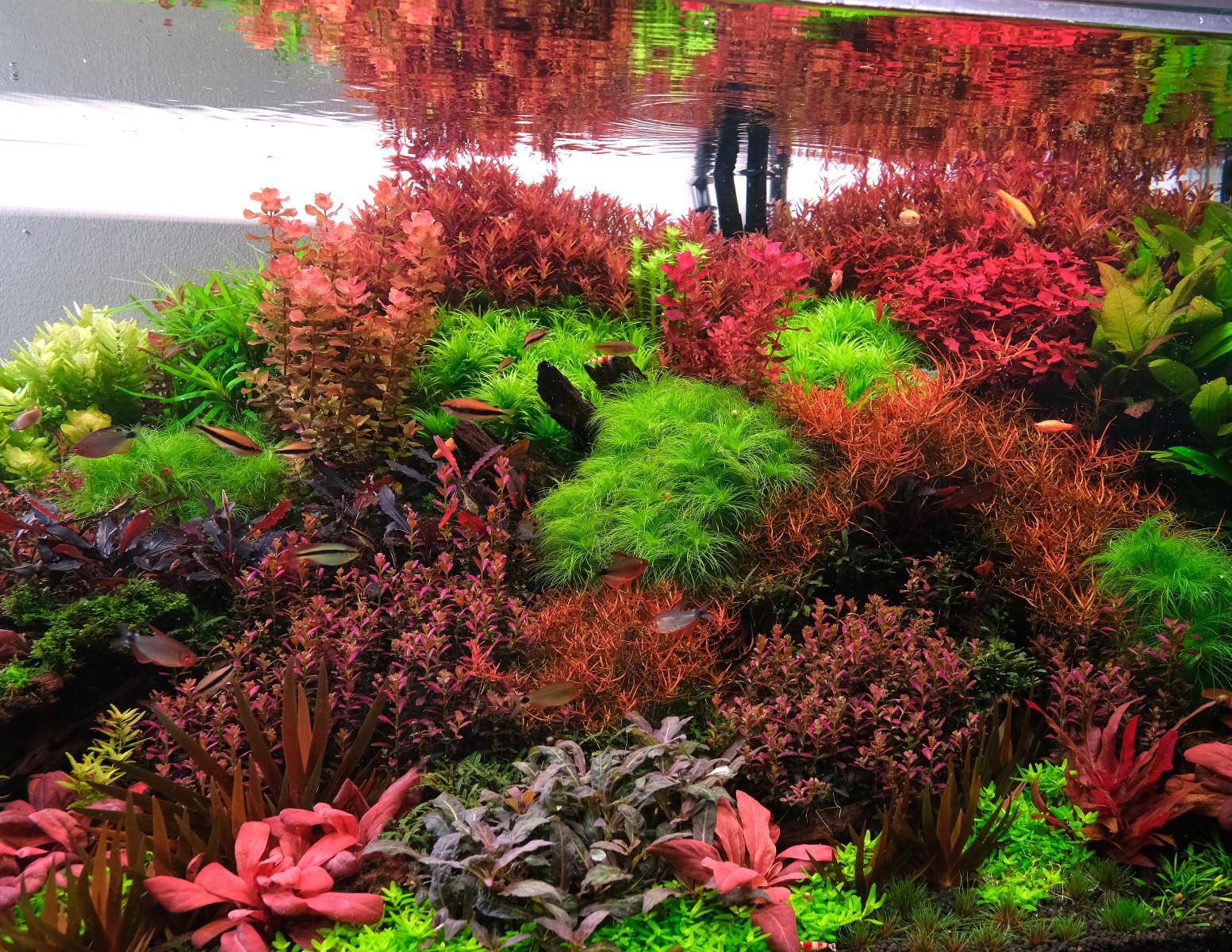
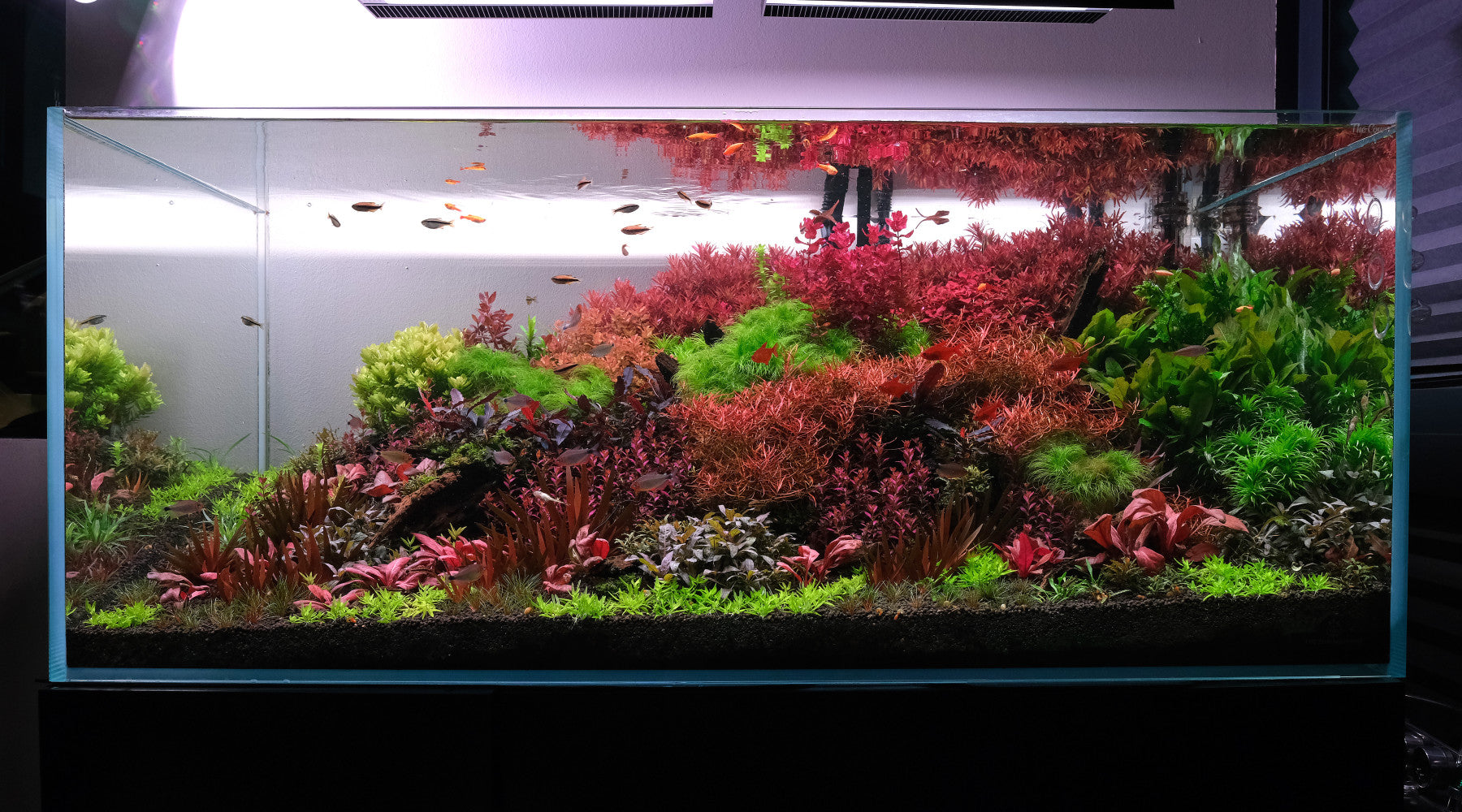
High tech aquariums (above) can grow a much wider range of plant species that will not survive in a low tech planted aquarium.
Does Aquarium Gravel Work as a Planted Aquarium Substrate?
Your old fish tank rules say: any substrate plus fish waste equals enough nutrients. Your new planted tank reality says: inert gravel and sand hold roots in place but do not feed them in any predictable way.
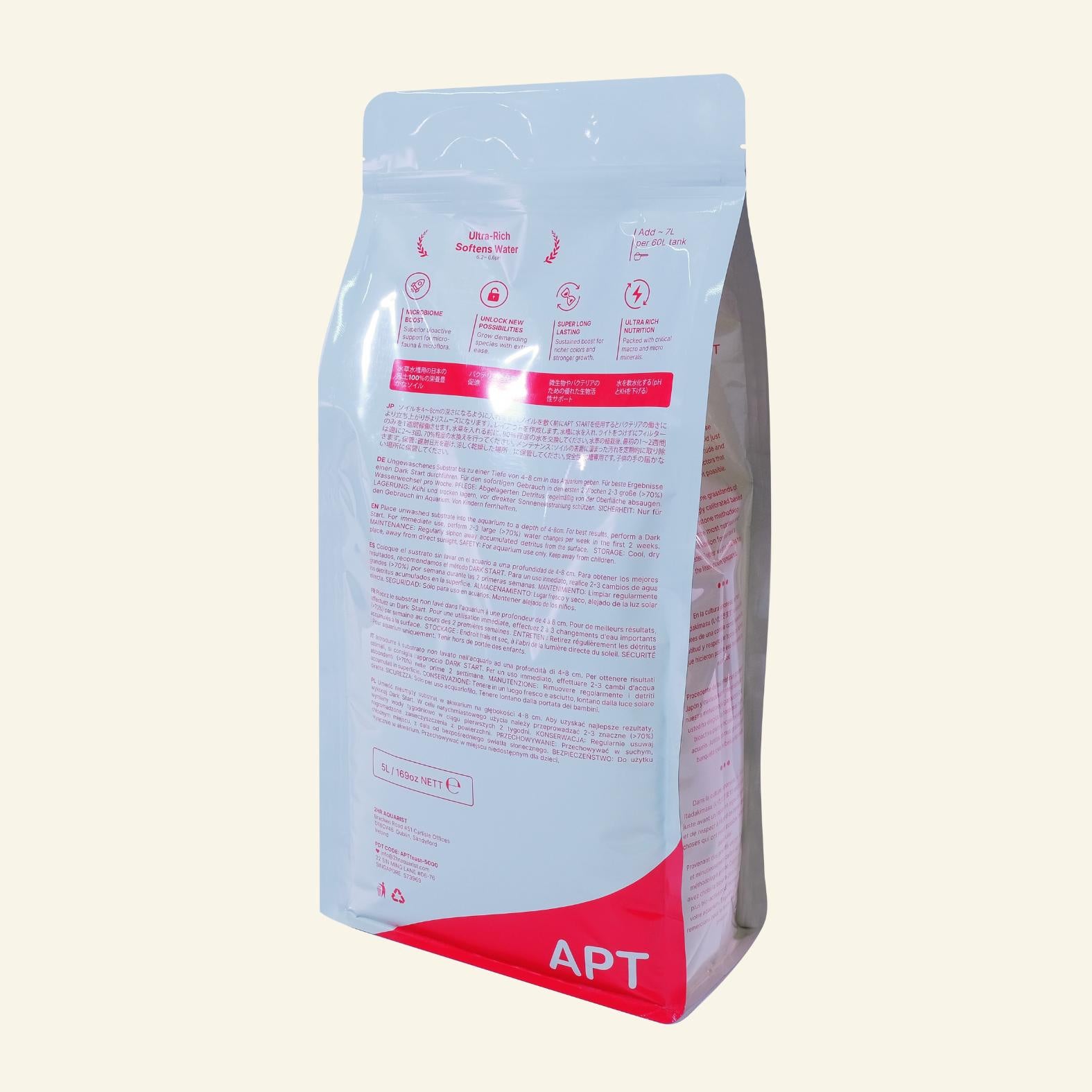
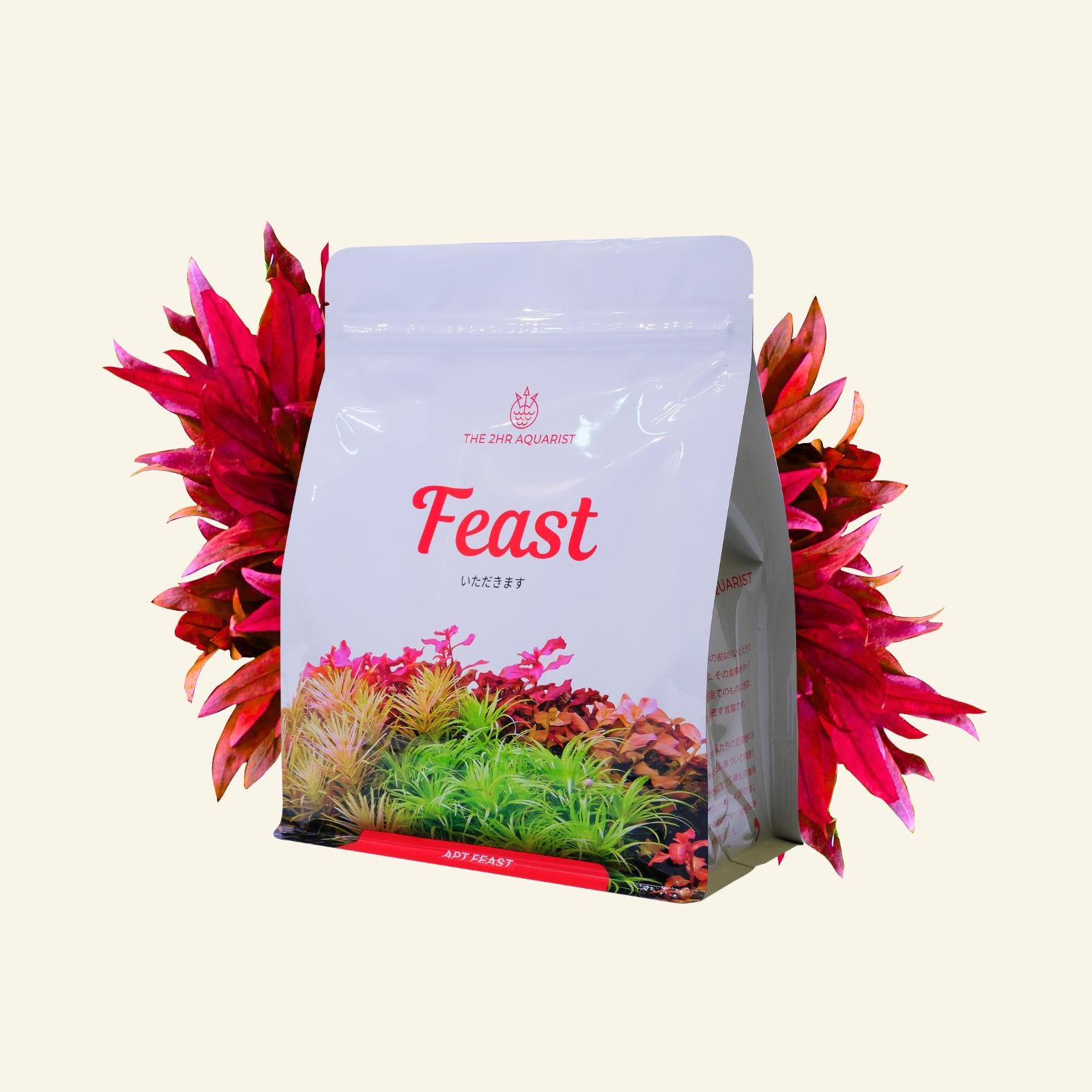
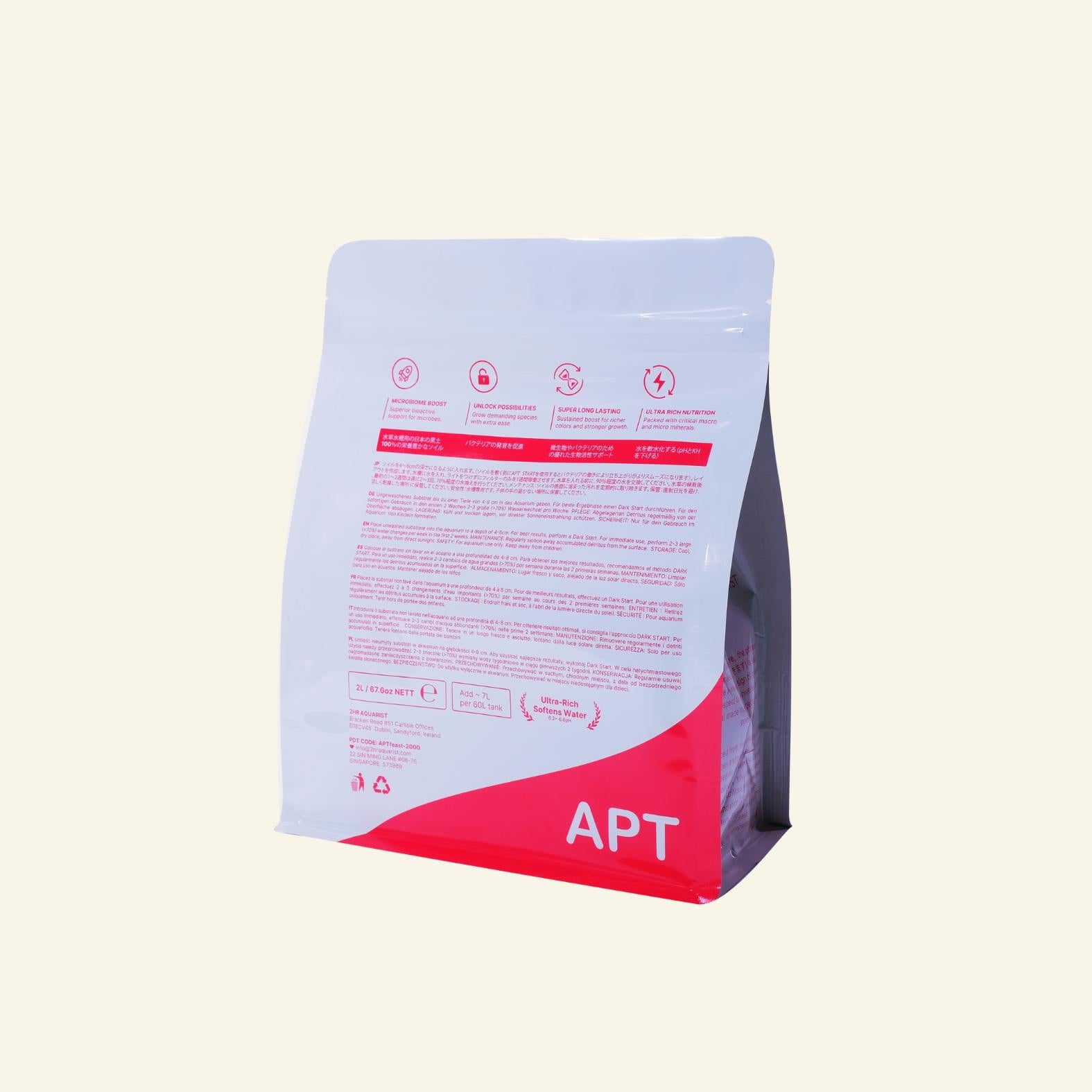
In most fish-only tanks, gravel is there to catch debris and look nice. For a planted tank, substrate becomes a nutrient bank and root zone. Aquatic plants use nitrogen, phosphorus, potassium, magnesium and trace elements. They prefer nitrogen in ammonium form at the root zone because it costs them less energy to assimilate than nitrate from the water column. More importantly, aquasoil and soils generate carbon dioxide naturally through microbial decomposition. In non CO2 injected aquariums, most of the dissolved CO2 will come from Fish/Microbial respiration/decomposition. As plants use more Carbon than all other nutrients combined, raising CO2 levels through natural means is the biggest impact factor in a low tech tank. In other words: a good planted tank substrate does real work. Plain gravel and sand mostly sit there.
A specialised planted aquarium substrate (aquasoil) is soil combined with clay and organic components that bind ammonium, provide cation exchange capacity and release nutrients in a steady way. It gives roots something worth growing into, so plants produce stronger crowns and more robust root systems. You can convert a fish tank to a planted tank by:
-
Fully replacing gravel with aquasoil.
-
Layering aquasoil under a cosmetic cap of sand.
-
Or keeping inert gravel and compensating with heavier water-column dosing.
You do not get extra points for choosing the hardest path. If you want healthy plants and less algae, aquasoil is the sensible default. It also helps buffer pH slightly acidic and reduce carbonate hardness (KH), which many soft water plant species appreciate.
Let us put it plainly: fish waste is not a complete fertiliser. It gives you some nitrogen and phosphorus but leaves big gaps in potassium, magnesium, iron and trace elements.
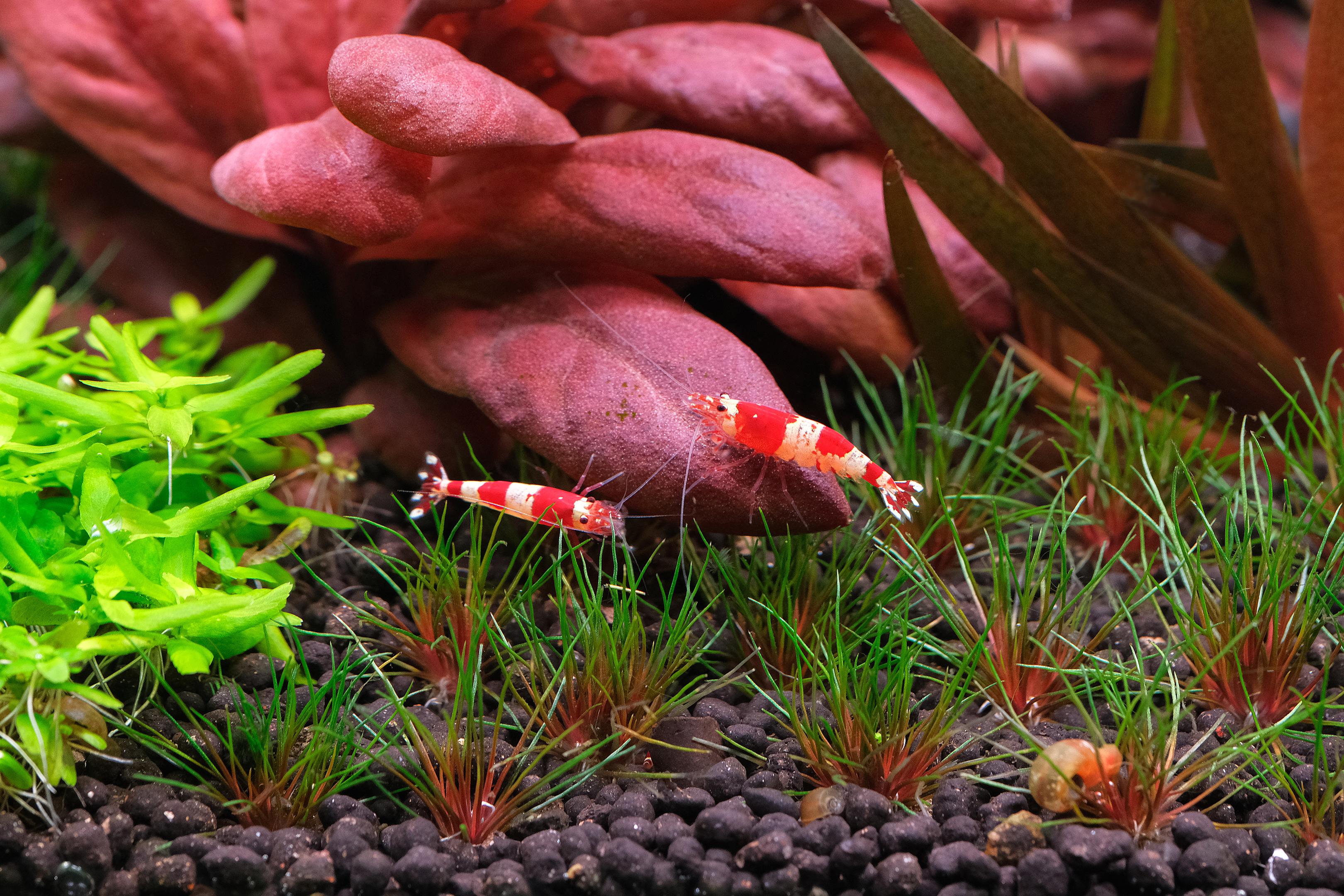
Aquasoils makes moving and uprooting plants much less messy compared to using garden soil.
Why Standard Aquarium Lighting Isn't Enough for a Planted Tank
In a fish-only aquarium, light is for you and the fish’s colours. In a planted aquarium, light is fuel. It sets the speed limit for photosynthesis and drives both plant growth and algae growth.
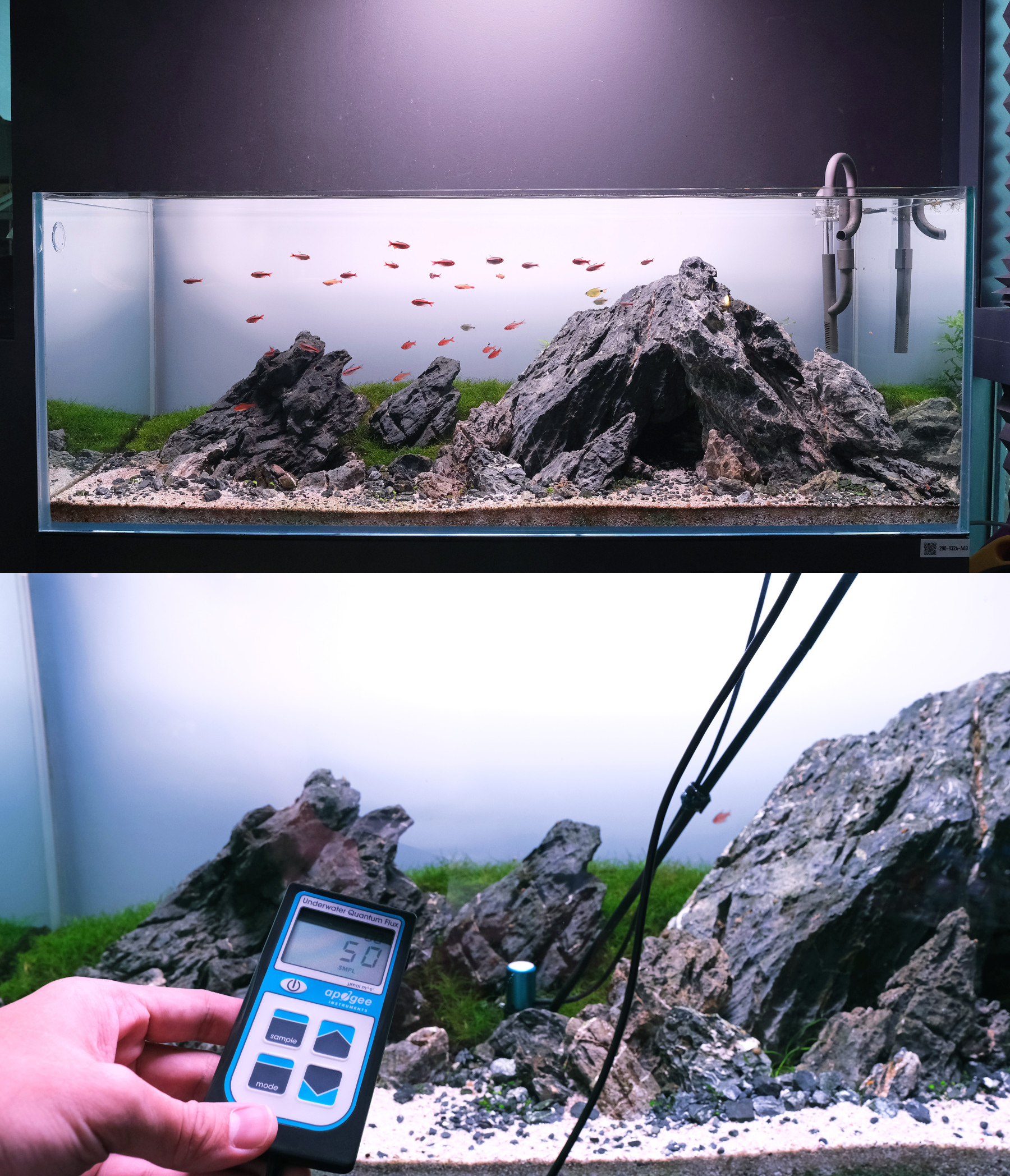
Most “included” aquarium lighting is built for fish-only displays. It might look bright to your eyes but still deliver very low photosynthetically active radiation (PAR) at the substrate. What plants care about is the number of photosynthetically useful photons hitting their leaves per second, not how white the light looks or how many watts per gallon the box claims.
For a fish tank to planted tank conversion, a realistic PAR target at the substrate is:
-
Around 20–40 µmol/m²/s: low light. Hardy plants like Java fern, Anubias, mosses and hardy crypts can survive and grow slowly.
-
Around 40–90 µmol/m²/s: medium light. Carpets and most of the green plants in the aquarium hobby will grow well at these levels.
-
Above about 90 µmol/m²/s: high light. Red plants will grow rapidly and colour strongly, and stem plants will gain better density. However, algae will punish sloppy maintenance.
Forget the old “2–5 watts per gallon” line. Different LED lighting units convert watts to PAR very differently. What you want is a modern LED fixture that publishes PAR numbers or has a proven track record on planted tanks your size. Colour temperature around 6500–8000K is fine visually, but it is not “what makes plants grow”. Spectrum and PAR do that. Kelvin is mostly cosmetics.
Aquatic plants also divide naturally into low, medium and high light-requiring groups. Shade plants like Java fern and Anubias are suitable for low light. Many stem plants and larger rosette species are happier in medium light. Carpets like baby tears and dwarf hair grass do not require high light, but they do much better with CO2 injection. Choose plant species to match the light intensity you can realistically maintain, not the light intensity you wish you had.
As for photoperiod, a consistent 7–8 hours of light energy per day is usually plenty in a planted tank. Longer windows simply give algae more time to use excess nutrients if your balance is off. If your old habit was 12 hours of light because “the fish seemed to enjoy it,” that habit ends now.
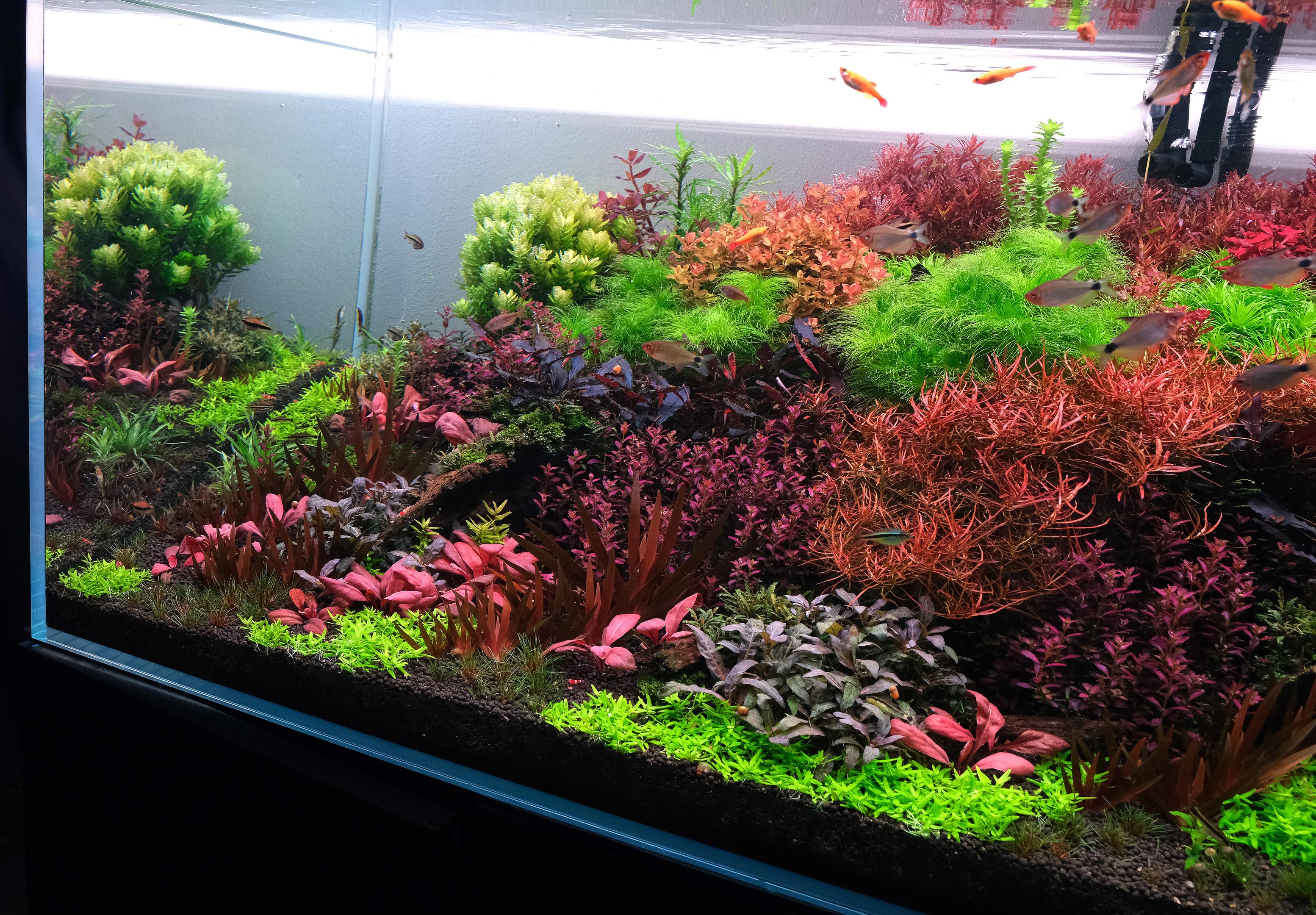
High end LED lights not only provides enough PAR to power photosynthesis, but also come with an attractive light spectrum profile to render colors well visually.
How Fertilisers Change Once You add Live Plants
In a fish-only tank, you have spent your whole life trying to remove nutrients from the water. In a planted tank, you deliberately add nutrients to feed plant growth while controlling algae growth through letting plants out-compete algae.
Aquatic plants need:
-
Macros: nitrogen, phosphorus, potassium, magnesium.
-
Micro nutrients / trace elements: iron, manganese, boron, molybdenum and others.
Fish waste plus tap water rarely cover this completely or in the ratio plants prefer. That is why planted tanks use:
-
Liquid fertilisers in the water column (macro + micro nutrients), typically dosed weekly or several times a week in low tech tanks and daily in high tech aquariums.
-
Substrate fertilisers like root tabs or fertiliser tablets for plants that feed well through their rootzones (Amazon swords, larger crypts, many bulb and rosette plants).
One persistent myth: “Just add more iron for red plants.” Stronger reds and richer colours are not achieved by dumping iron indiscriminately. Once your iron and other trace elements are at adequate levels, coloration is driven far more by light intensity, nutrient balance (especially nitrogen) and carbon dioxide availability. Excessive iron and overly rich water columns simply become more fuel when algae finds an opening.
You will also see “liquid carbon” bottles marketed as a substitute for CO2 gas. Treat those as what they are: mild algaecides with some limited carbon content. They are not a true replacement for carbon dioxide injection and they do not change the fundamental carbon limitation in a tank with strong light intensity.
Start with a complete fertiliser system designed for planted tanks, dose consistently, and err slightly lean rather than overly rich while you are learning. Dense, healthy plants pulling nutrients from both substrate and water column are what actually prevent algae growth in the long run, not starving the tank.
How Does Water Flow and the Nitrogen Cycle Change in a Planted Tank?
In a fish tank, the filter is there to manage ammonia and keep oxygen high at the water surface. In a planted tank, the filter and flow pattern also move carbon dioxide, oxygen and nutrients around the plant mass.
In a planted tank:
-
Flow helps distribute carbon dioxide so plants can use it for photosynthesis across the whole tank, not just near the diffuser.
-
Flow carries fertiliser and trace elements to leaves.
-
Flow keeps the water surface clean for better gas exchange, in CO2 injected aquariums, adequate off gassing is necessary to prevent excessive CO2 buildup.
Dead spots around stems and behind hardscape are where you see Black Beard Algae and other nuisance algae appear. They are also where organic detritus accumulates and slows plant growth. You want a filter and pump arrangement that turns the volume of the tank several times an hour and actually sweeps water through the plant mass.
In healthy, well planted aquarium, plants use ammonia and nitrate as nutrients. However, when plants are stressed, they shed older leaves and also leak metabolites and ammonia into the water column. The microbial community acts as backup to the plants.
The filter still has a role to play in a planted aquarium. It captures larger particulate matter from the water column, preventing debris from collecting on plant leaves and having an active community of beneficial microbes will keep pathogenetic bacteria in check.
The 2Hr way is simple: protect biological maturity.
-
Keep your mature filter media wet and running during the swap.
-
Avoid washing it under regular water; tap water chlorine damages the microbes that process ammonia.
-
If resetting the aquarium to fill it with new aquasoil/soil, expect the nitrogen cycle to wobble for a week or two and use larger, regular water changes to keep ammonia diluted while the new system settles.
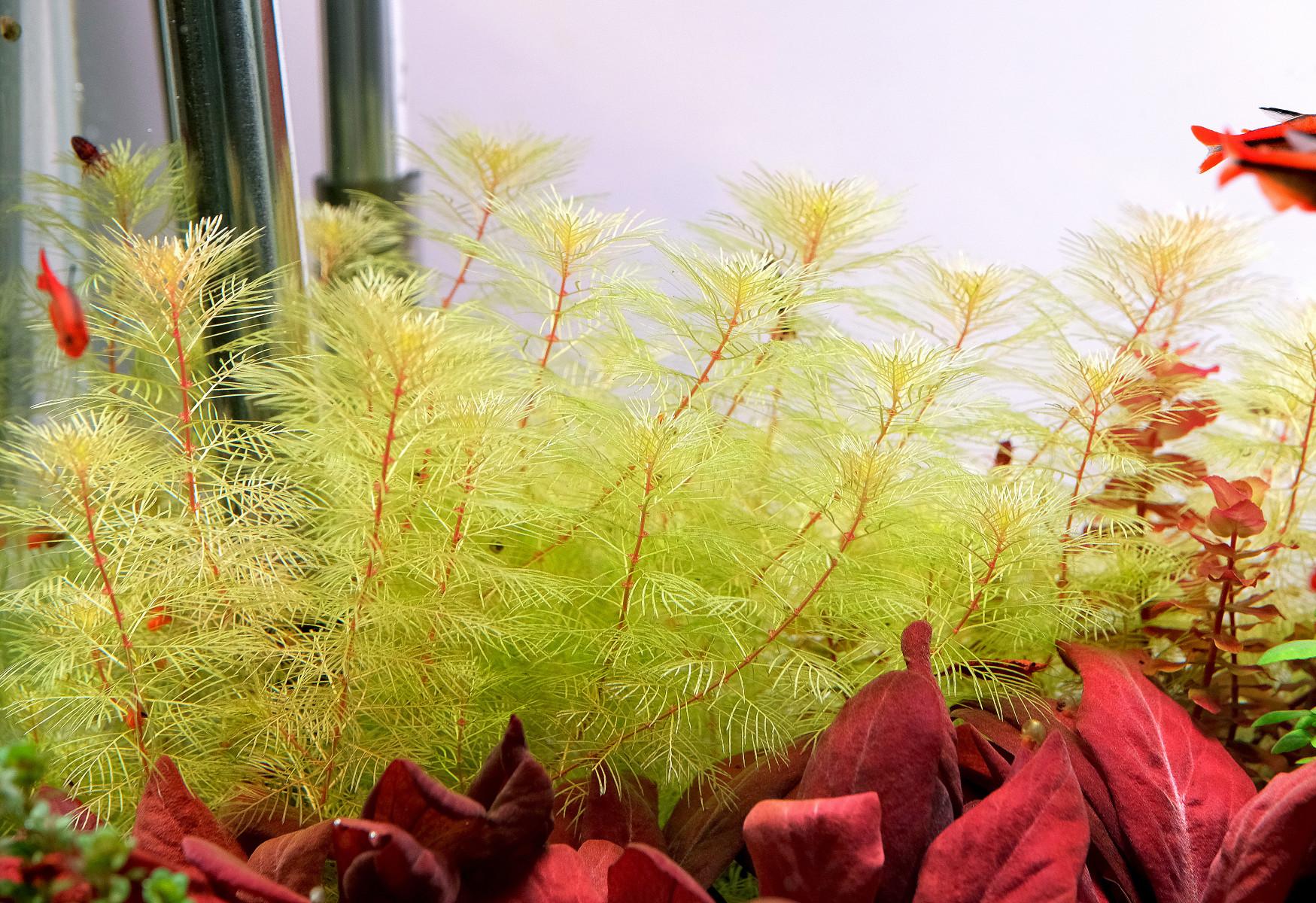
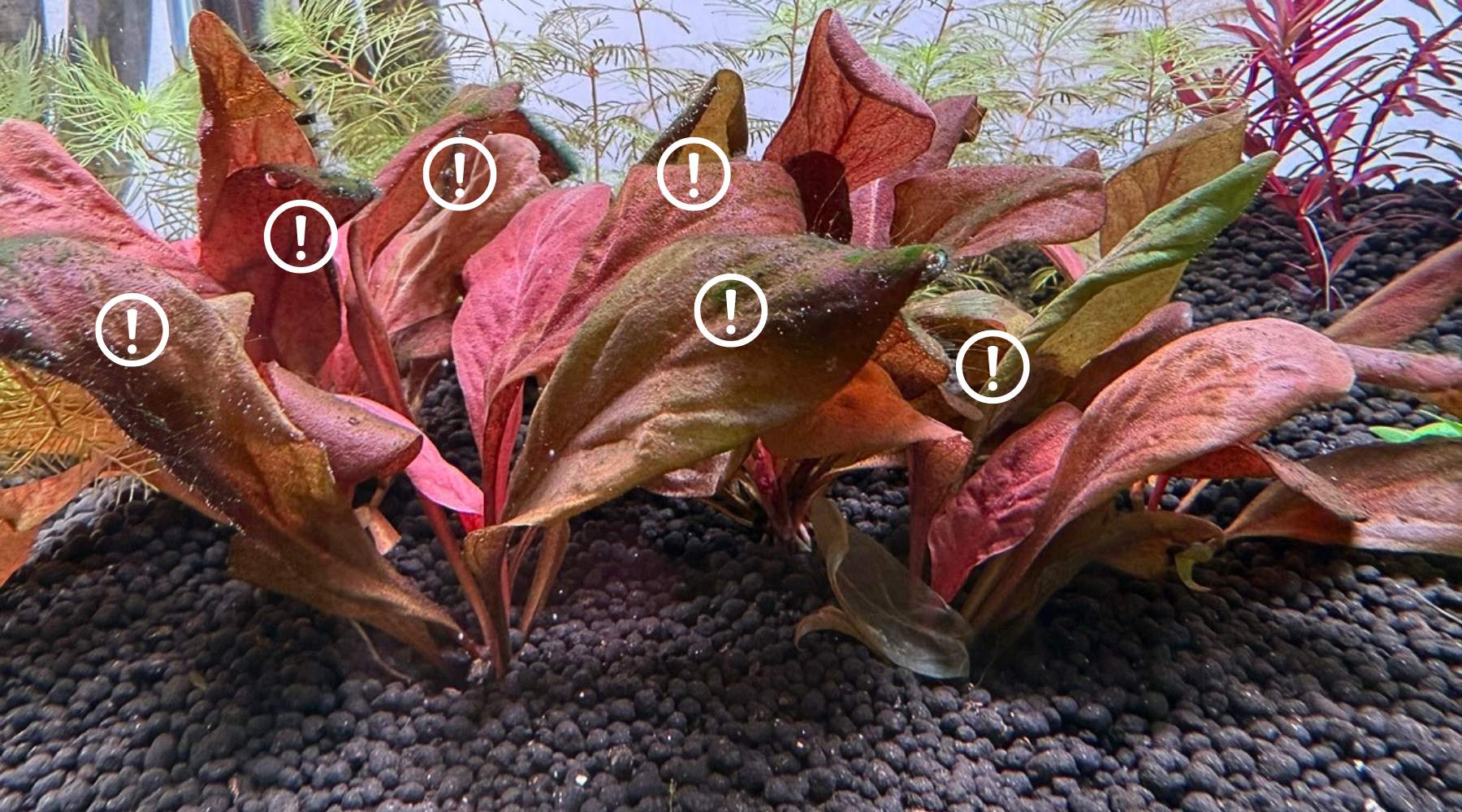
Having good flow and filtration can prevent debris settling on plants with fine leaves, which can attract algae.
Which Fish Species Are Safe for a Planted Tank?
Bad ideas for most planted tanks:
-
Large herbivores like Silver Dollars, Tinfoil barbs, Goldfish – they eat live plants and shred soft stems. Smaller herbivorous fish such as Platies and larger tetras such as Congo tetras may bite leaves on finer plants, but leave plants with tougher and larger leaves untouched.
-
Big diggers and bulldozers like some cichlids – they uproot smaller plants and carpet plants constantly.
-
Oversized plecos that rasp leaves, not just algae, once they get big.
Good choices for a planted aquarium:
-
Small schooling fish like tetras and rasboras; they create movement and scale without heavy bioload.
-
Corydoras catfish, which are gentle bottom-feeders that sift sand and fine gravel without destroying roots.
-
Shrimp and other invertebrates, which break down uneaten food, graze biofilm and help reduce excess nutrients that would otherwise feed algae growth.
Live plants also provide natural hiding spots and break up sight lines, which reduces fish stress and improves colouration. A planted tank with healthy plants is often a better environment for fish than a bare fish tank, as long as you do not push CO2 so hard..
When you choose plant species and fish species, choose them together. The size, dimensions and gallon capacity of the aquarium, plus your tap water hardness, will narrow the reasonable combinations. Soft water, low carbonate hardness and aquasoil open up many delicate plant species. Very hard water is better kept for hard water livebearers and tough plants like Vallisneria and some swords.
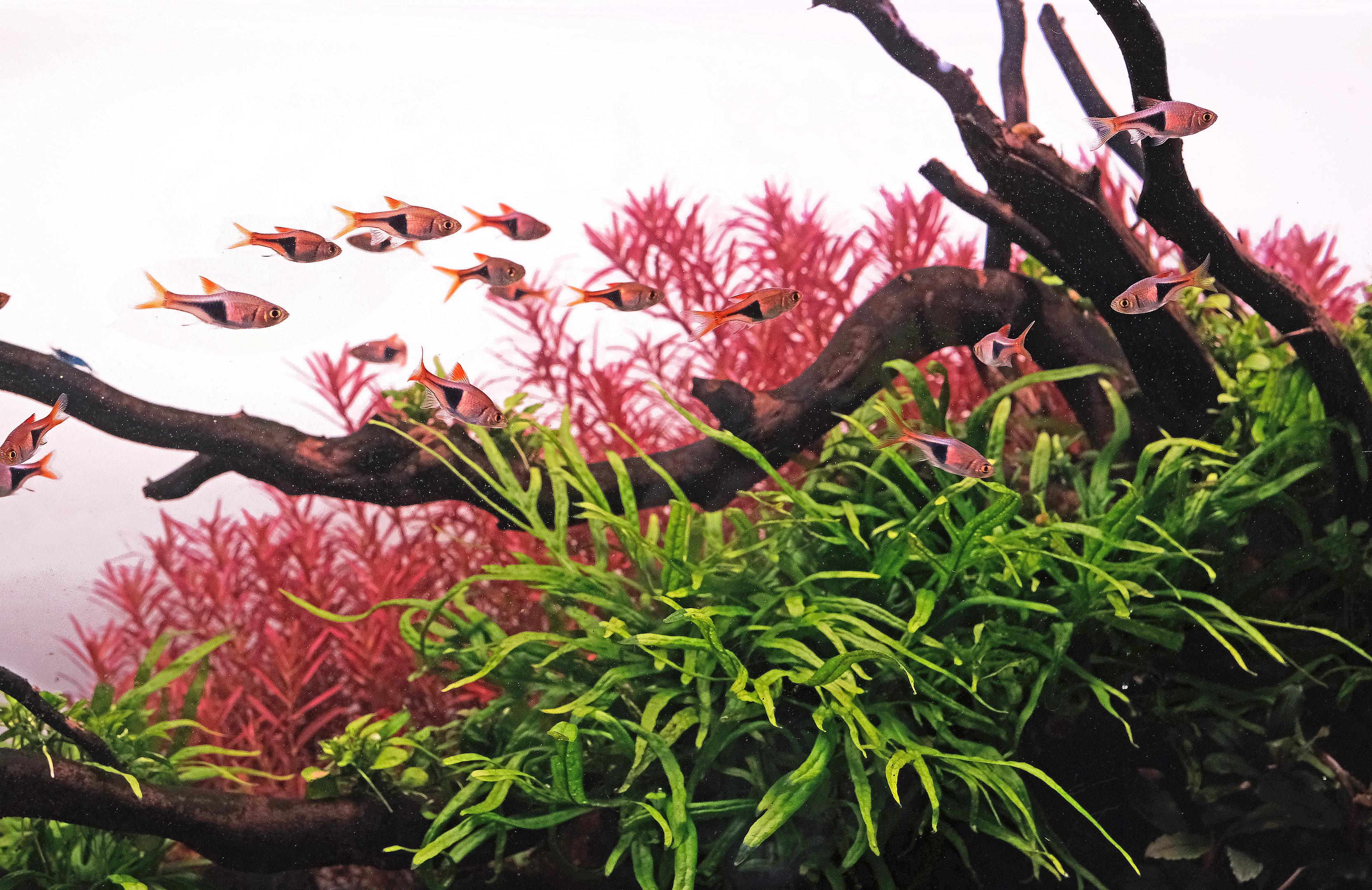
Smaller sized fish such as Cardinal & Neon tetras, Harlequin rasboras and Corydoras generally leave plants alone.
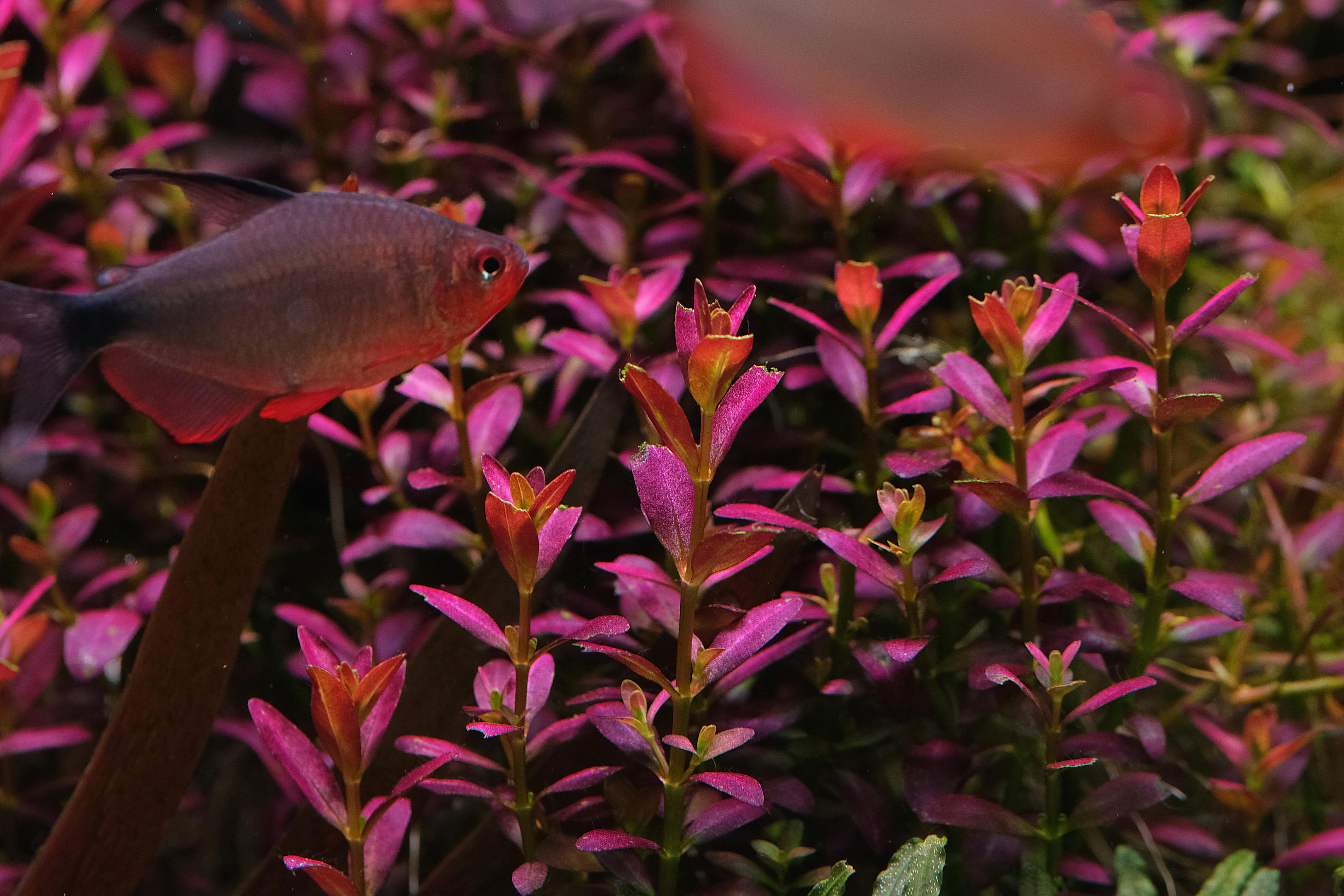
Many larger tetras such as Congo tetras and Hyphessobrycon Peugeoti (above) will snack on plants with tasty or finer shaped leaves. Feeding them often to keep them full may prevent/reduce such damage.
How Does Aquatic Plants Maintenance Differ from a Fish-Only Tank?
This is where a lot of fish-only keepers get blindsided. A planted tank replaces some old jobs with new ones. You still do regular water changes to maintain water quality and rebalance water parameters. But now you also:
-
Trim and replant stem plants regularly to prevent tall stems shading out smaller plants. Older, deteriorating leaves that have been discarded by plants attract algae and should be trimmed away. As plants age and rootzones get overcrowded, many species benefit from being uprooted, divided and replanted.
-
Lightly vacuum the substrate surface to remove detritus, fish waste and uneaten food that collect on or between aquasoil grains or sand. You do not deep-vacuum like a bare gravel fish tank, because you do not want to regularly disturb the natural stratification of deep substrate microbial layers and root systems. Surface detritus can be kicked up and siphoned away using a turkey baster.
-
Watch new plant growth rather than obsessing over old leaves. Old leaves do not heal, and are abandoned by the plant when tank conditions change significantly. Plants renew themselves by producing new leaves instead, and this cycle of renewal is consistently on-going. Look for healthy, algae-free new leaves at growing tips of stems and crowns as a sign that growth parameters are good.
-
Control algae growth by plant density and stability, not by stripping fertiliser to zero. A high density of healthy plants is what actually outcompetes algae. Healthy plants produce defensive chemcials that prevent algae from attaching to them. An aquarium filled with healthy plants is a naturally algae resistant tank. Too little fertiliser simply starves plants first and hands algae the advantage when something else goes wrong.
Adding more and more “algae cure” products while ignoring problems from overfeeding, poor flow, too long a photoperiod and neglected detritus is how people end up chasing algae for months. In a properly run planted tank, once plants establish themselves, healthy plants produce defensive chemicals on their leaves that keep algae away. A plant dominant tank is one that is naturally algae resistant.

Many hobbyists believe that organic detritus provides a source of nutrients for the plants. While this is partly true, the decomposition process is not clean and excess organic debris combined with high light levels triggers algae spores to bloom.

Planted Tank Conversion: Step-by-Step Action Plan
-
Upgrade light the right way. Choose LED lighting based on PAR at substrate level, not watts per gallon or Kelvin; this matches light intensity to plant species and keeps photosynthesis in line with your carbon dioxide supply.
-
Feed plants properly. Start a simple fertiliser routine that combines a complete liquid fertiliser with root tabs for heavy root feeders; this avoids nutrient gaps that stunt plants while still letting them outcompete algae.
-
Respect the microbes. Keep your existing filter media wet and in use through the conversion, and do not “reset” the nitrogen cycle with harsh cleaning; stable bacteria and archaea populations protect both fish and plants from ammonia spikes.
-
Pick fish that play nice. Rehome or avoid large herbivores and heavy diggers and add schooling fish, Corydoras catfish and shrimp that fit your tank dimensions and water hardness; this reduces plant damage and keeps the bottom clean.
-
Think about your Carbon generation strategy. Replacing plain gravel with aquasoil or add a soil layer under your existing sand; this will require a soft tank reset. Investing in a CO2 injection set will give far greater impact, plant-growth wise, than changing inert gravel to aquasoil/soil. It may be the easier route in countries where cost of aquasoil is expensive.
Fish Tank vs Planted Tank Comparison Table
Fish Tank Lighting |
Planted Tank Lighting |
|
|
Fish Tank Dimensions |
Planted Tank Dimensions |
|
|
Fish Tank Substrate |
Planted Tank Substrate |
|
|
Fish Tank Filter |
Planted tank Filter |
|
|
Fish tank Maintenance |
Planted tank Maintenance |
|
|
Fish tank WATER PARAMETERS |
Planted tank WATER PARAMETERS |
|
|
Fish tank Aeration |
Planted tank Aeration |
|
|


Compartir:
Plant Melt in New Aquariums: Why Aquarium Plants Die
Neocaridina Cherry Shrimp: The Complete Beginner's Guide