
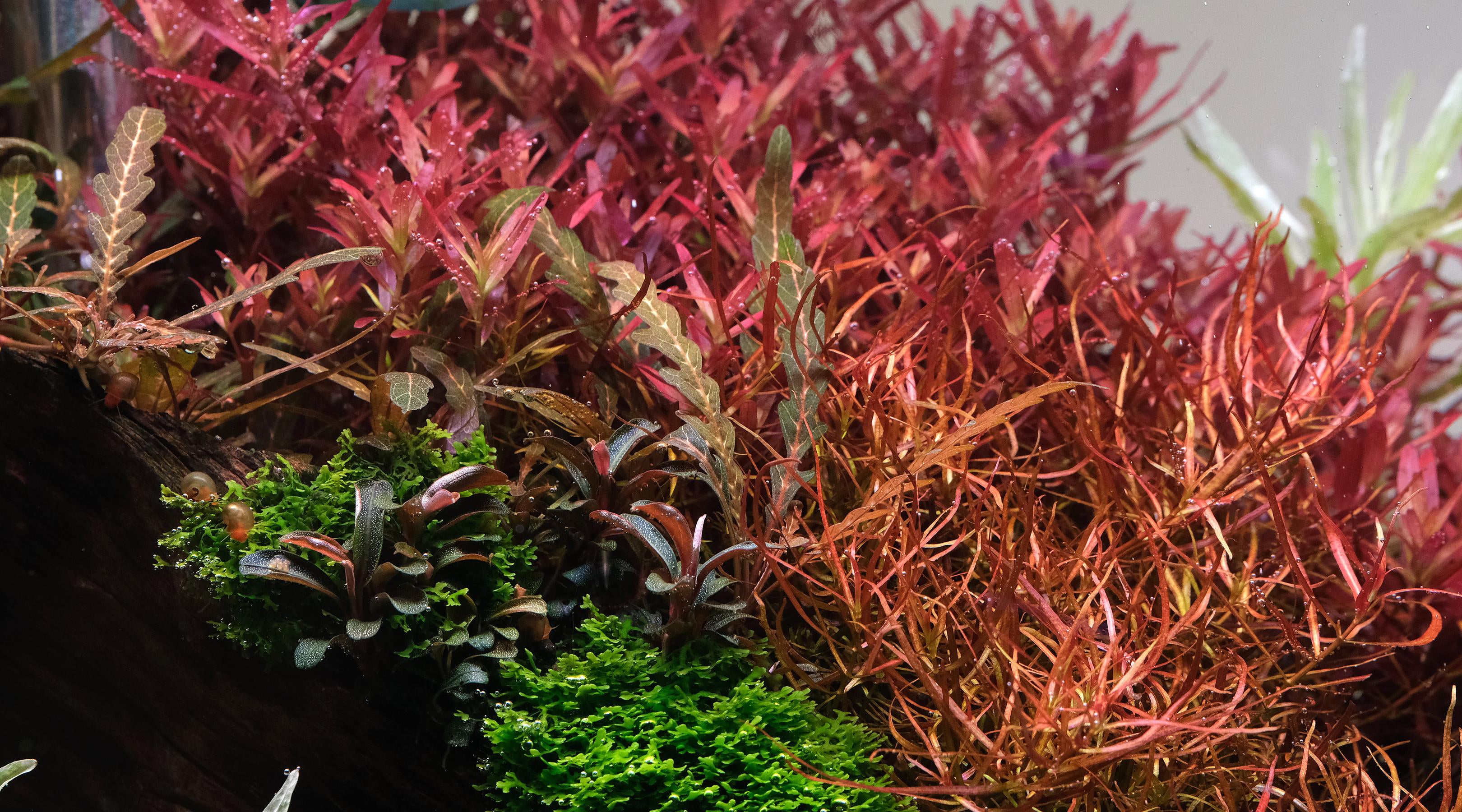
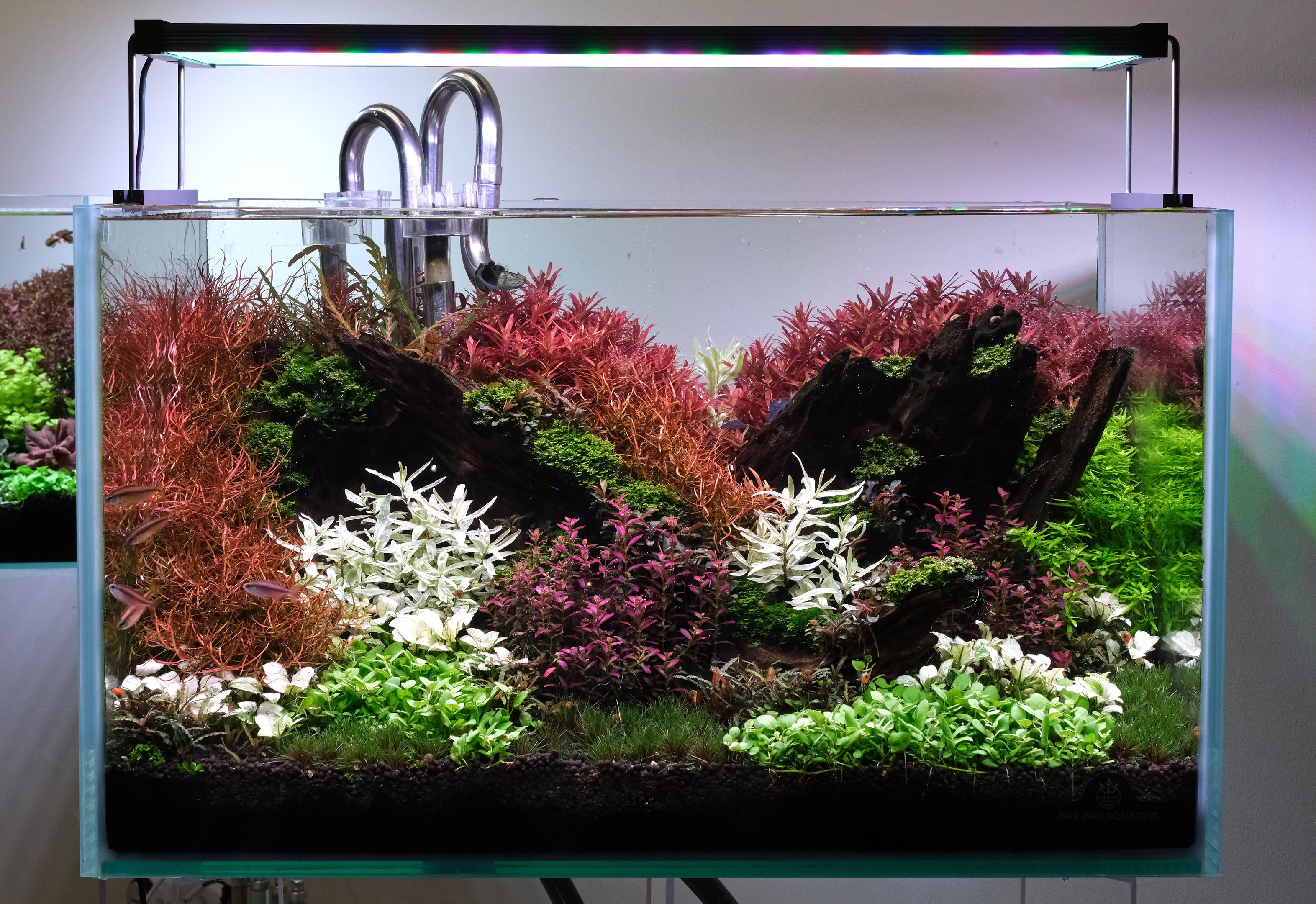
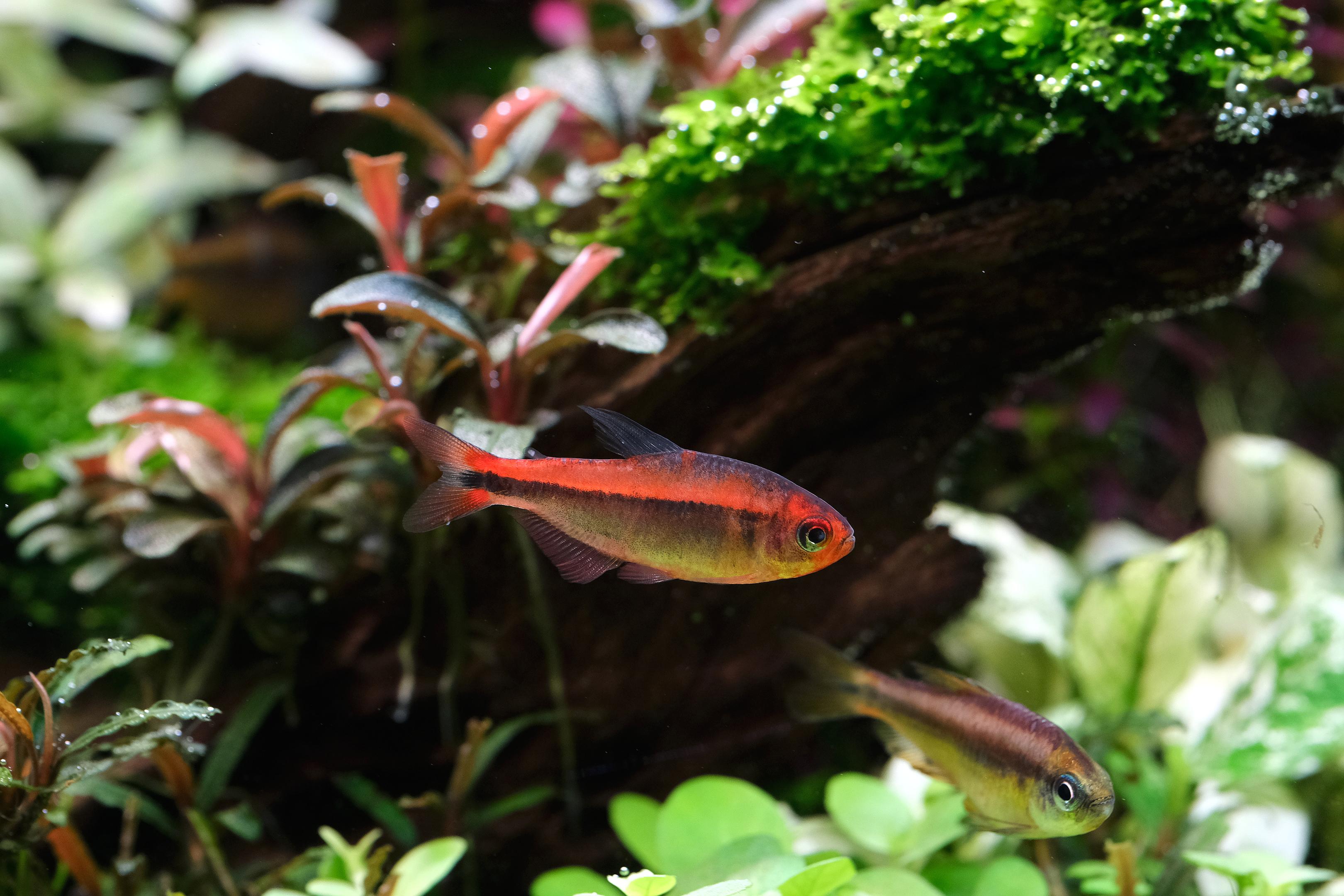
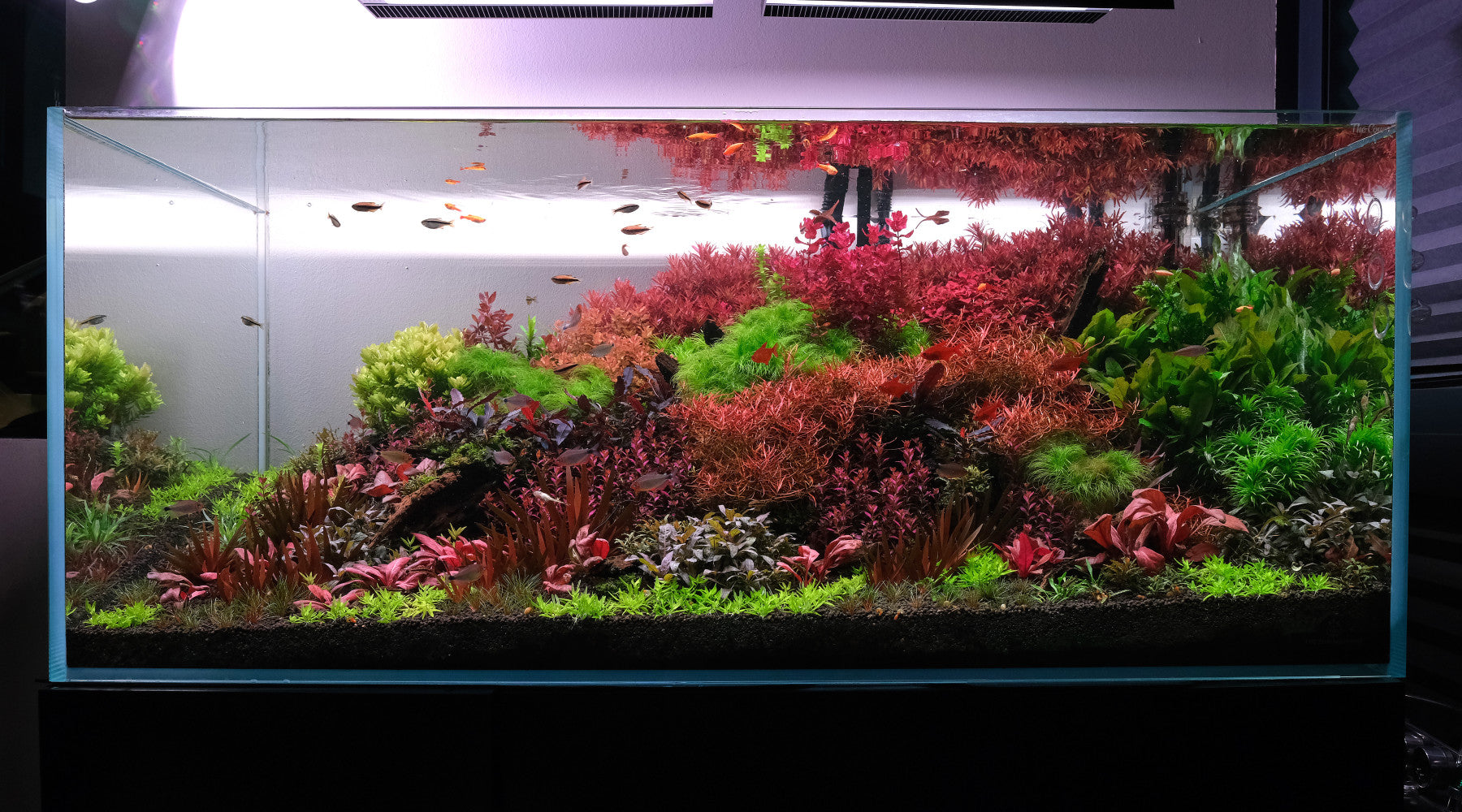
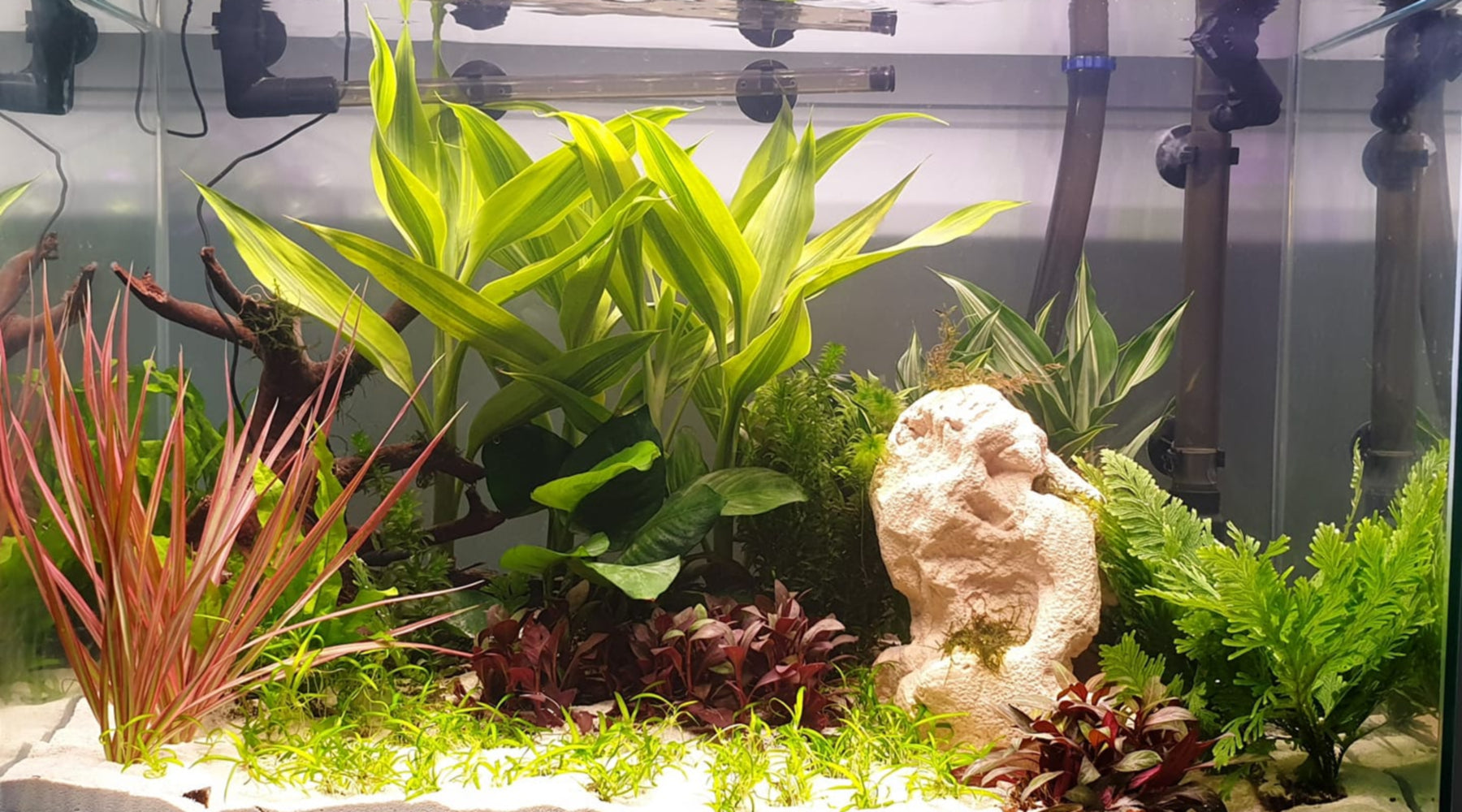
Above: Twinstar S series III has a cooler color rendition tone, similar to ADA Solar RGB.
The Twinstar aquarium light is a South Korean WRGB LED fixture that sits at the performance end of Twinstar's lineup. It tends to be discussed mainly in terms of aesthetics and spectrum quality - less often in terms of raw output. This article looks at both, along with a practical PAR reference table based on our own measurements.
What Is Twinstar? Brand History, Product Range, and Market Position
Twinstar is a South Korean brand founded in Busan. It originally gained fame for its electronic Twinstar Sterilizer device, before expanding into LED aquarium lighting in 2015. That year, it developed an early WRGB (White-Red-Green-Blue) LED format for aquarium use, incorporating multiple coloured diodes rather than relying primarily on white LEDs.
Twinstar now offers a range of LED aquarium lights spanning several series - the B Line, C Series, E Series, A-Line, and S Series - to cover everything from nano fish tanks to large aquatic world setups. The S Series is the brand's performance line and the version most referenced in serious planted tank and competition aquascaping contexts. The S Series III is the 4th-generation iteration, which preceded the 2025 V Series launch.
In terms of market positioning, Twinstar competes directly with Chinese brands Chihiros and Week Aqua. These brands are widely associated with strong output in hobbyist discussions, and this perception is broadly accurate - Chihiros WRGB II produces roughly 300+ µmols at 30 cm depth in measured comparisons for comparable models, and Week Aqua's higher-end P Series reaches considerably more. What is less commonly noted is that the Twinstar S Series III, at higher dimmer settings, also reaches output levels firmly in the "very high light" category. This aspect tends to get underreported.
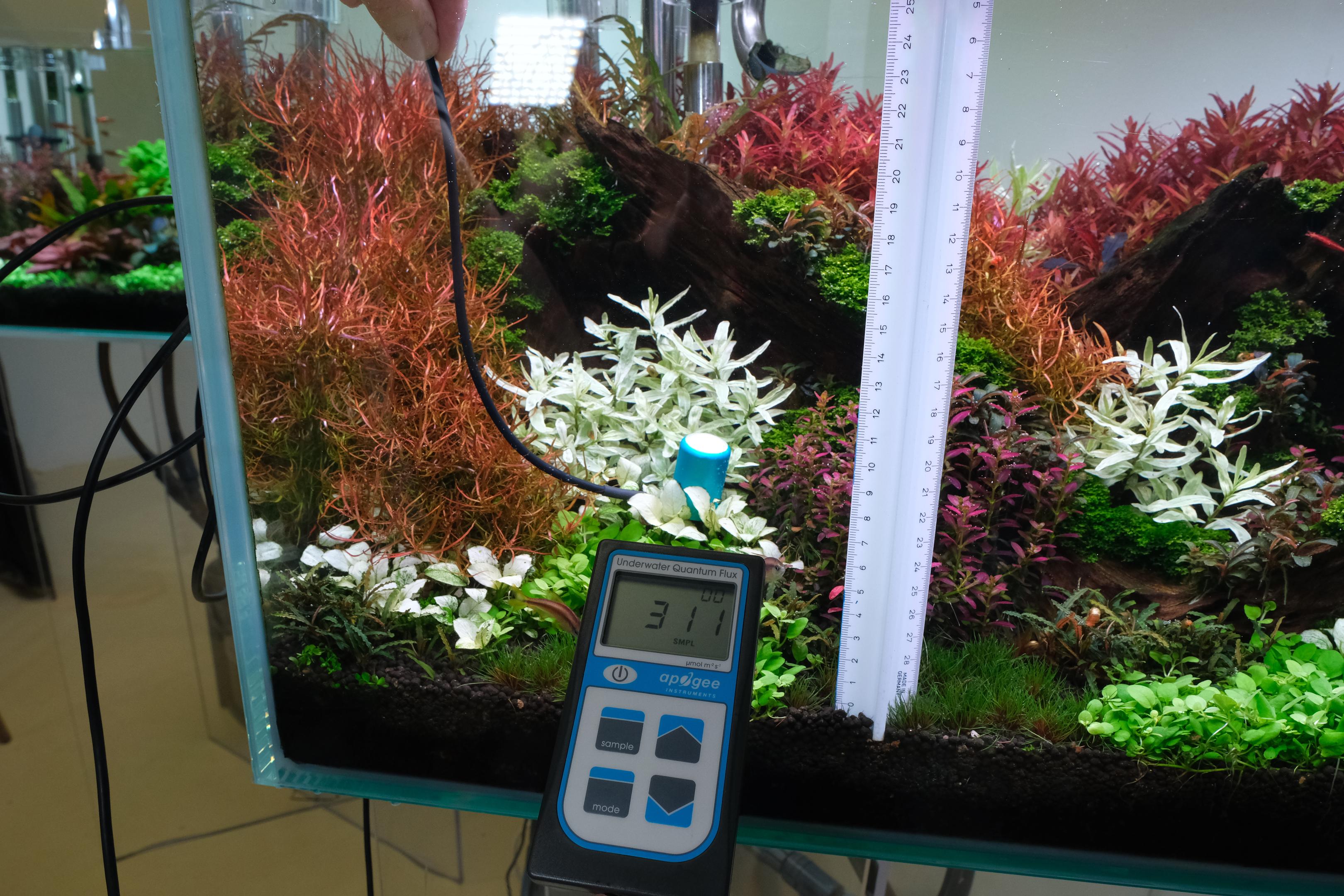
Above: Twinstar S Series III at 'Max' Brightness Setting 7 (Max) - 300+ umols of PAR at 30cm depth directly below the light.
What Makes Twinstar WRGB Technology Different from Standard Aquarium LEDs?
Twinstar lights mixes White with Red, Blue, Green LEDs to give strong color saturation and contrast. The light spectrum covers the entire photosynthetically active wavelengths span 400 nm to 700 nm. The brand's factory-tuned balance of diode wavelengths give a crisp color profile on the side of cooler red/green/blue tones, similar to ADA's Solar RGB. Chihiros and Week aqua by comparison have slightly warmer color diodes.
The light renders coloured plants well without appearing purple or oversaturated. For tanks where a neutral background tone is important - particularly Dutch-style layouts where subtle colour differentiation between plant species matters - this is a relevant consideration.
As with any light, the spectrum is one part of the picture. CO2 levels, nutrient availability, plant selection, and overall tank management will determine whether the potential of the light is realised in practice. Reviews from experienced hobbyists consistently note that the Twinstar LED delivers on spectrum quality and build durability, but the light is a tool, not a solution by itself. Add it to a well-managed system and you will see results. Add it to a poorly managed one and you will simply see more of the same problems, faster.
Twinstar lights are effective for both high-tech and low-tech planted tanks. High-tech aquariums running pressurised CO2 can push the S Series to higher PAR settings for demanding coloured species. Low-tech setups benefit from the predictable, consistent output at lower dimmer positions, where the lights remain stable without requiring RGB adjustment.
Which Twinstar Light Series Is Right for Your Tank?
Twinstar's range covers a wide span of tank sizes. The A-Line lights fit tanks ranging from 8" to 48", making them one of the more versatile options in the lineup for standard aquarium setups. Some Twinstar models feature adjustable legs to fit various tank sizes, which is useful when a specific length does not match your glass thickness or tank rim dimensions precisely.
Here is a brief overview of the key series:
-
B Line - Affordable and sleek in design. Suitable for low maintenance plants such as Anubias, Java Fern, and Cryptocoryne. Ideal for beginners or anyone setting up a low-tech nano tank who does not want to invest heavily before understanding their needs.
-
C Series - A mid-range option sitting between the entry-level B Line and the performance-oriented S and E Series.
-
E Series vr. V - Features Advanced Spectrum 3.0 technology. This updated spectrum configuration is Twinstar's more recent answer to tunable RGB competitors, offering a preset optimised for plant pigmentation and clarity.
-
EA Series vr. IV - Includes an in-line dimmer for brightness control, allowing straightforward output adjustments without requiring a separate controller module.
-
S Series III - The flagship performance line, discussed in detail throughout this article.
The E Series and S Series are the most commonly purchased options among hobbyists who have already worked through a starter setup and want to enhance their results.
Twinstar S Series III PAR Output at Each Dimmer Setting
We measured the Twinstar S Series III using a standard light stand at a fixed height above a rimless tank. Because this light uses a built-in dimmer with discrete fixed positions rather than a tunable RGB interface, PAR readings at each setting are consistent and reproducible across the same light model and mounting height. This is the PAR data at 30cm water depth.
|
Setting |
PAR (µmol/m²/s) |
Notes |
|---|---|---|
|
7 |
~320 |
Very high; primarily useful for photography |
|
6 |
~220 |
High; sufficient for demanding species and rich colouration |
|
5 |
~160 |
High; suitable for experienced hobbyists with active plant management |
|
4 |
~99 |
Moderate-high; a practical starting point for planted Dutch-style tanks |
|
3 |
~60-70 |
Medium; suitable for mixed nature-style layouts with shade and stem plants |
|
2 |
~40 |
Low-medium; appropriate for Iwagumi, sparse scapes, and carpet setups |
|
1 |
~22 |
Low; suitable for low-tech tanks with shade-tolerant species |
For reference, the general guidelines used by the aquatic plant community place 40-90 µmol as medium light (suitable for most common plants with adequate CO2), 90-150 µmol as high light (good for coloured species and demanding plants), and above 150 µmol as very high light, where algae management becomes more critical. By these benchmarks, settings 5 through 7 fall into the high to very high range.
Setting 7 at ~320 PAR exceeds the setting we use on this particular tank (180 PAR). It is noted here for completeness, but is not a practical everyday setting for most setups.
Which Twinstar S Series III Dimmer Setting Is Right for Your Tank?
Twinstar lights provide better and more uniform lighting across an aquarium when mounted at the correct height and matched to the right dimmer setting. The PAR data maps reasonably well to the standard light-level guidance used in the planted tank hobby:
-
Setting 1 (~22 PAR): Low-tech tanks, shade-tolerant plants (Anubias, Java Fern, Cryptocoryne, mosses), no CO2 injection required
-
Setting 2 (~40 PAR): Iwagumi layouts, open hardscape with sparse planting, carpet-heavy setups, minimal maintenance approaches
-
Setting 3 (~60-70 PAR): Nature-style tanks with a mix of slow growers and some stem plants; manageable long-term but not suited for dense stem plant cultivation
-
Setting 4 (~99 PAR): A reasonable starting point for planted layouts with stem plants, including beginner Dutch-style tanks; colouration should be adequate for most common species without creating high algae pressure
-
Setting 5 (~160 PAR): Suitable for experienced hobbyists growing demanding coloured species; active plant management and good CO2 control become important at this level
-
Setting 6 (~220 PAR): A high output setting where plant density and colouration may be strong, but algae management becomes the primary challenge; not recommended as a starting point
-
Setting 7 (~320 PAR): Not a practical everyday running setting for most tanks; most useful for photography or short-duration use
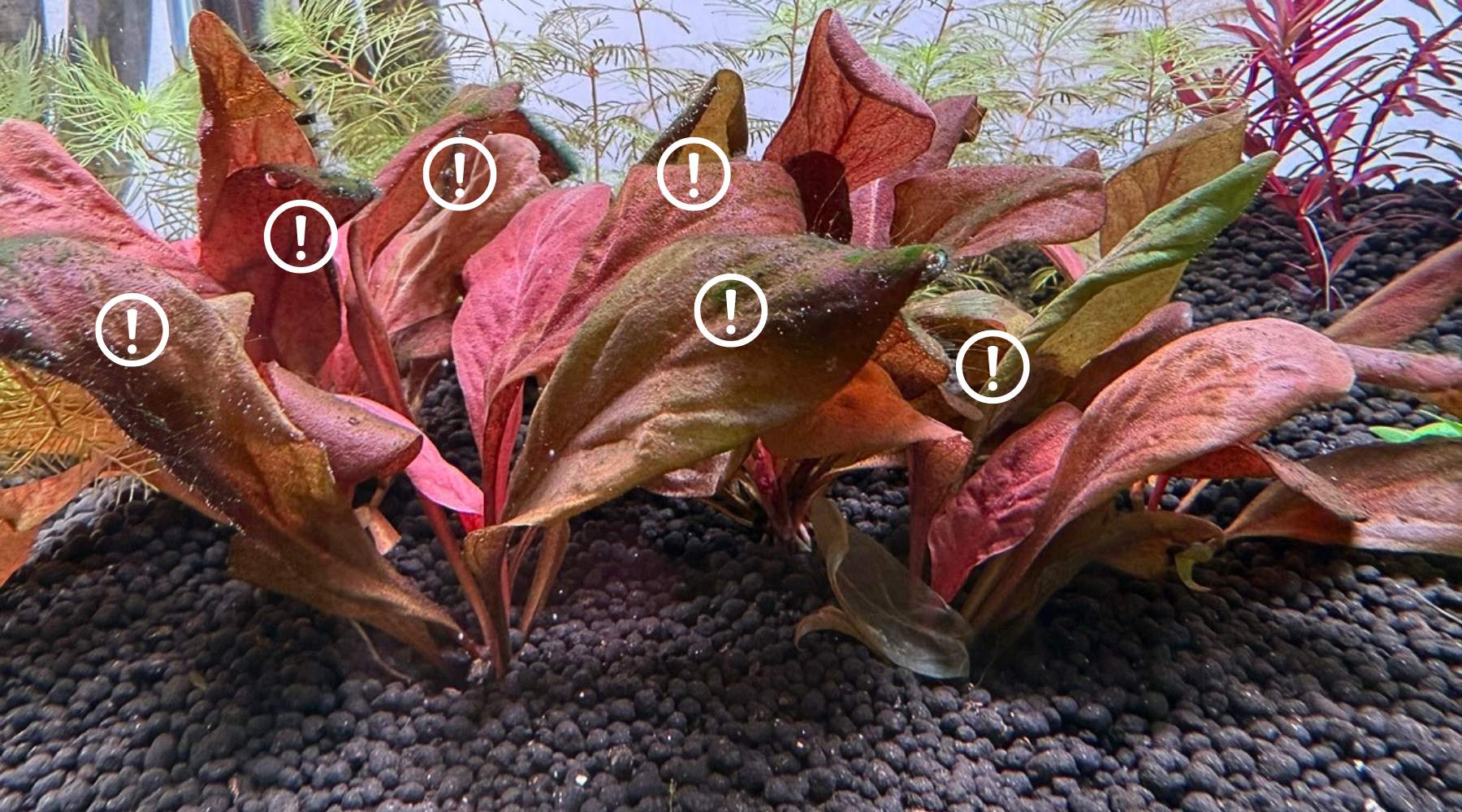
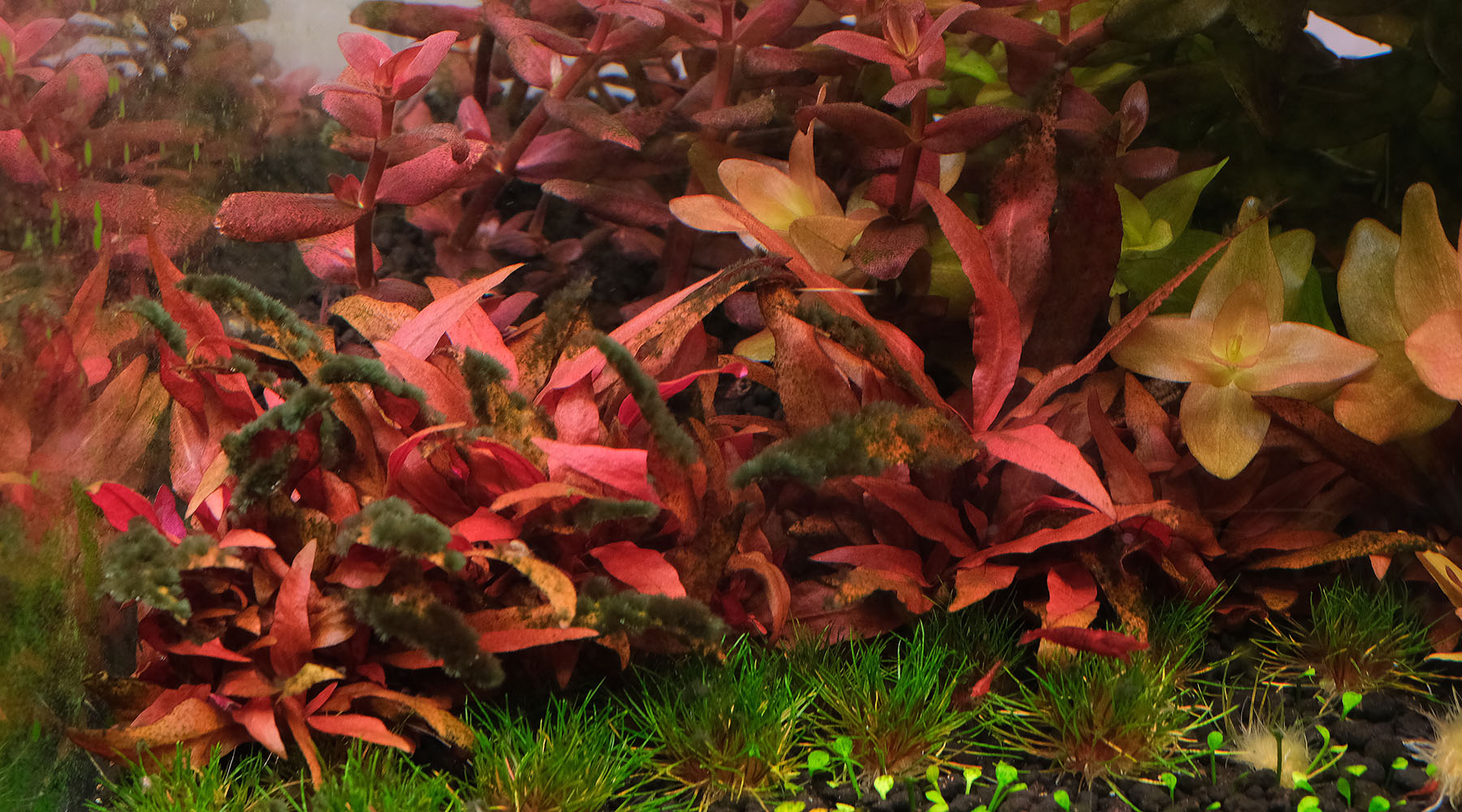
For sparsely planted tanks, layouts with significant open space or exposed hardscape, staying at or below Setting 2 (40 PAR) is advisable. The risk of algae on hardscape and glass increases substantially when light levels exceed what the plant biomass can process.
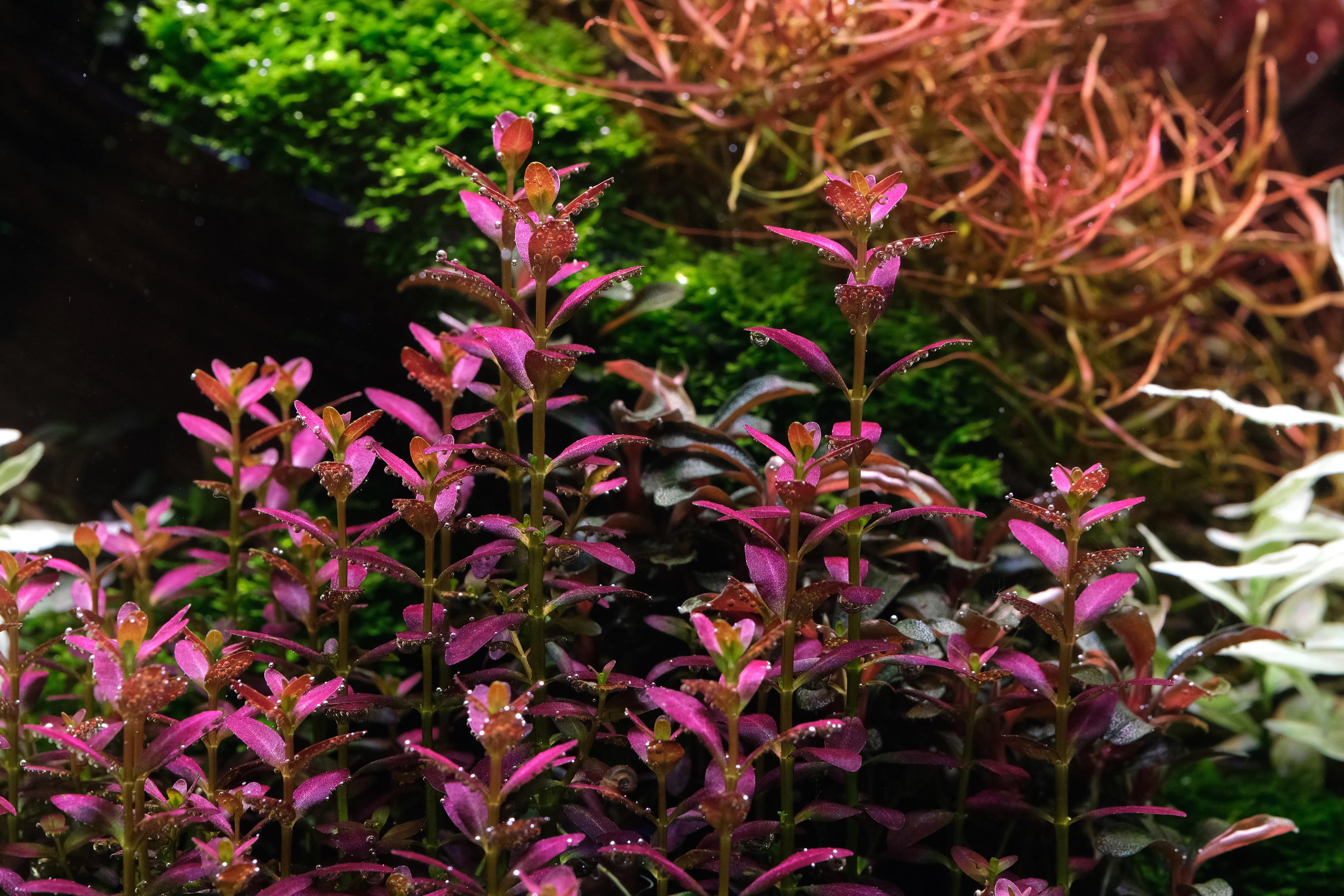
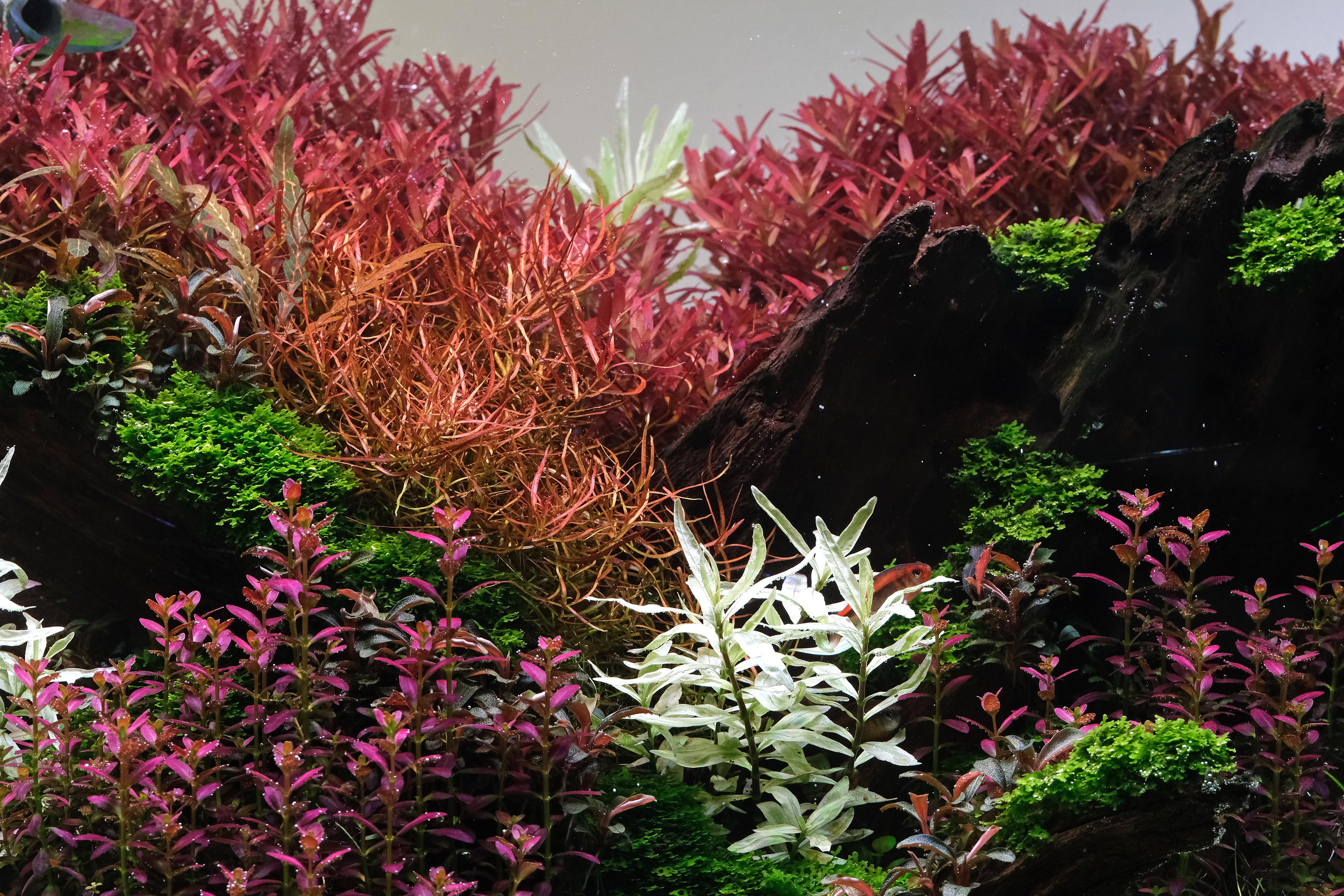
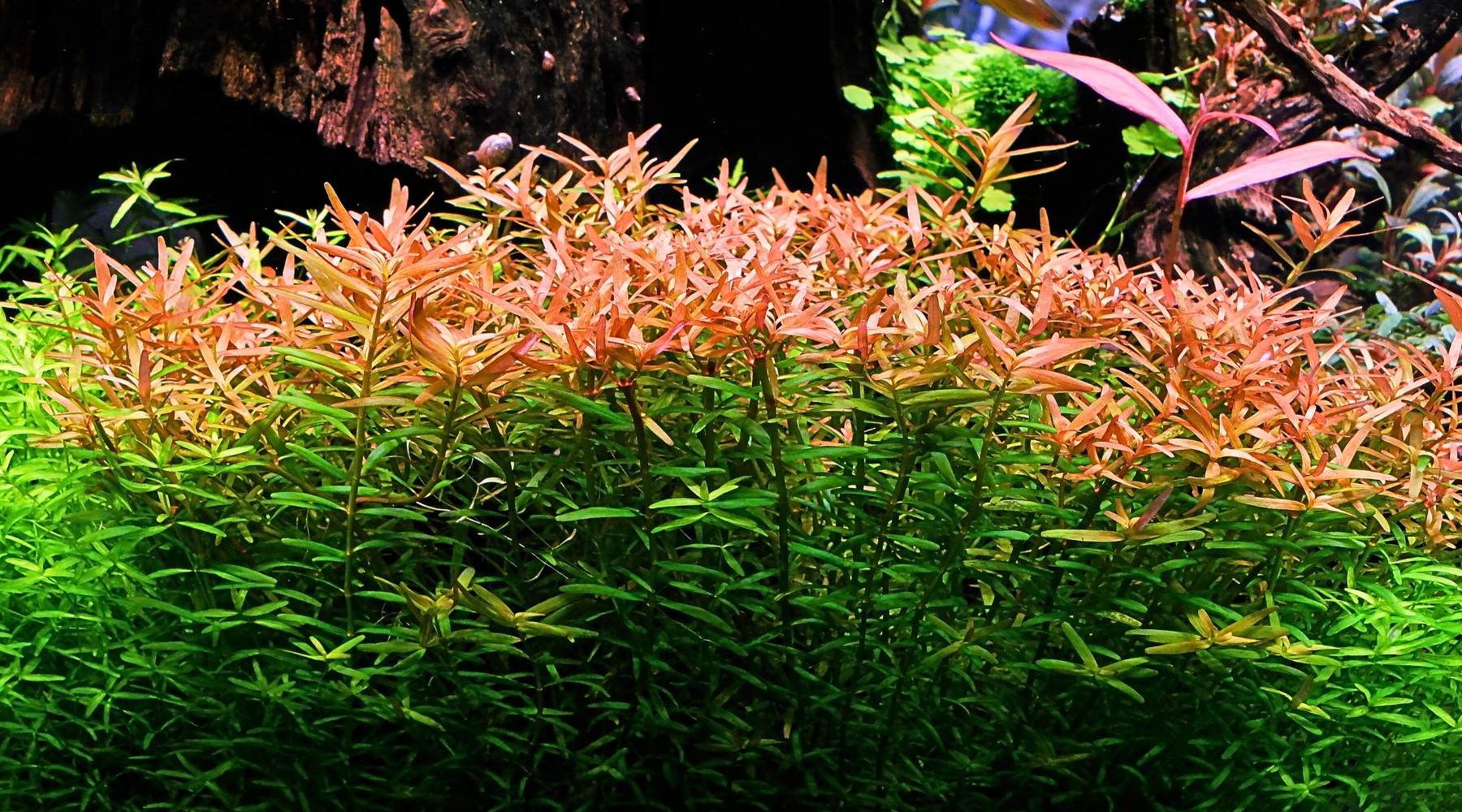
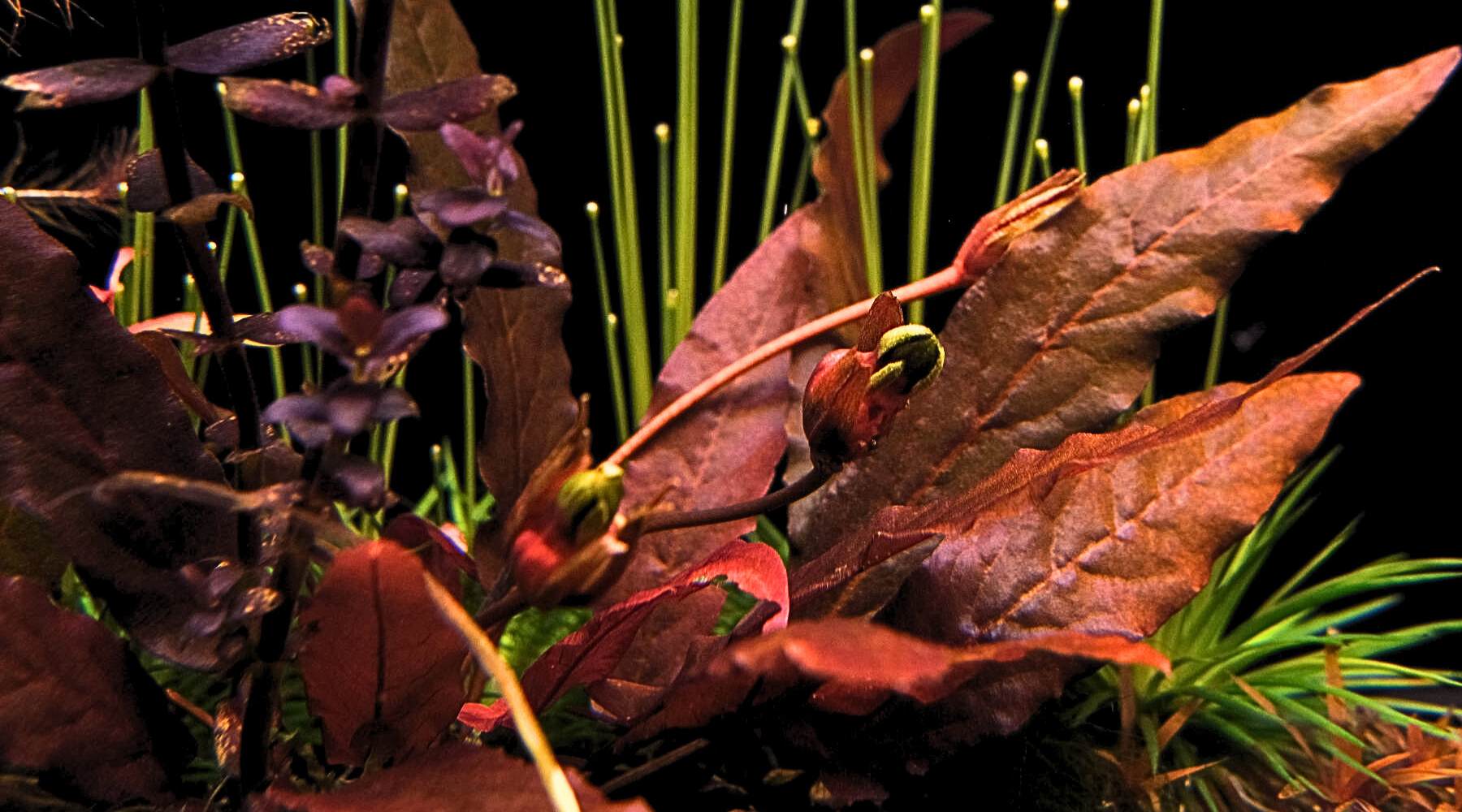
Rotala florida is one species that benefit from higher PAR levels.
Why the Twinstar S Series III Uses a Fixed Physical Dimmer
The dimmer on the Twinstar S Series III is a physical button- a standalone module that connects between the LED panel and the power adapter. It has no app dependency, no Bluetooth pairing, and no channel-level controls. Each press corresponds to a fixed, measurable PAR output.
For hobbyists without a PAR meter, this is a meaningful practical advantage. The measurements in the table above were taken under controlled conditions and can be applied directly to any Twinstar S Series III setup at the same mounting height. This level of predictability is harder to achieve with tunable fixtures, where the relationship between RGB dial positions and actual PAR output is not straightforward without measurement.
Build reliability is also relevant context. Customer feedback notes that Twinstar units are rarely returned under warranty, with the analogue simplicity cited as a contributing factor. The fanless all-aluminium construction and minimal electronics have historically made the light durable over multi-year use.
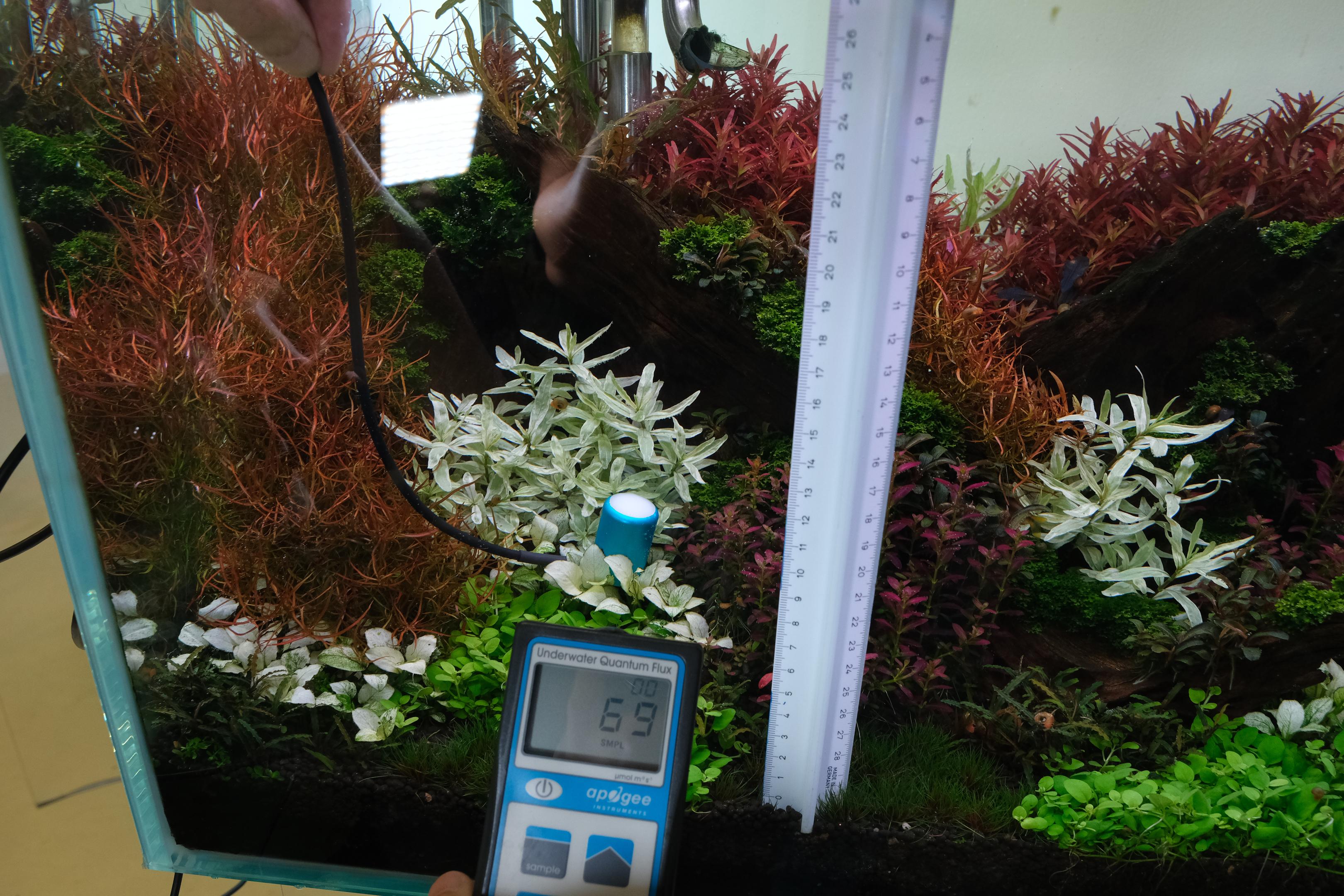
Above: Twinstar S Series III at Brightness Setting 3
Fixed Spectrum VS Tunable Spectrum profiles:
The Twinstar S Series III uses a fixed, factory-tuned WRGB spectrum rather than offering user-adjustable RGB channels. Lights with tunable RGB channels - such as the Chihiros WRGB and Week Aqua series - allow the user to independently adjust red, green, and blue diode output. This introduces flexibility, but it also means that every adjustment changes the total output. Without a PAR meter, there is no straightforward way to know the actual photosynthetically active radiation reaching your plants at a given RGB combination. The Twinstar's fixed-spectrum dimmer avoids this problem: the PAR at each step is known and consistent.
Does Blue LED Spectrum Cause More Algae in Planted Tanks?
On the blue-algae myth: There is no established correlation between a blue-shifted spectrum and increased algae risk in planted aquariums. Algae occurrence is consistently related to overall plant health, organic load, and tank management - not to spectral distribution within the photosynthetically active range.
Does More Red Light Actually Produce Faster Plant Growth?
On red light and growth: More red light does not straightforwardly produce more growth or greater plant density. Plants use the full visible spectrum (400-700 nm) for photosynthesis. Green light, which older textbook diagrams suggested was largely reflected, is now known to contribute meaningfully to photosynthesis in living leaves. Research published by the University of Tokyo demonstrated that at higher light intensities, green light penetrates deeper into leaf tissue and can drive photosynthesis more efficiently than red or blue light at those levels.
The practical implication: spectrum tuning has the most visible effect on how the tank looks - colour rendering, saturation, and contrast - rather than on photosynthesis rates or growth speed per se. These are legitimate reasons to care about spectrum, but they are different from the claims sometimes made about growth optimisation.
High-Tech vs. Low-Tech: Which Twinstar LED Light Is Ideal for Your Setup?
For high-tech aquariums running pressurised CO2, the S Series III is the ideal light in the Twinstar range. Settings 4 through 6 are the practical operational range for most experienced hobbyists in this category - enough to enhance plant colouration without creating unmanageable algae pressure.
For low-tech setups - no CO2 injection, lower fish stock, and a preference for low maintenance plants - the B Line is the more appropriate and affordable entry point. It is sleek, well-built for the price, and produces sufficient output for plants like Anubias, Java Fern, and Cryptocoryne without pushing PAR into ranges that create algae problems in unmanaged tanks. You can also use the Twinstar S Series III at setting '1'.
Nano tanks present a separate consideration. Twinstar lights are available in adjustable lengths for various tank sizes, and the A-Line in particular covers the 8" to 48" range. For smaller nano setups, ensure that the model you select fits your glass thickness and rim configuration, particularly if you are using adjustable legs to span a rimless tank.


Compartir:
Cómo elegir la iluminación LED para un acuario plantado
Las mejores unidades LED para tanques plantados en 2025