

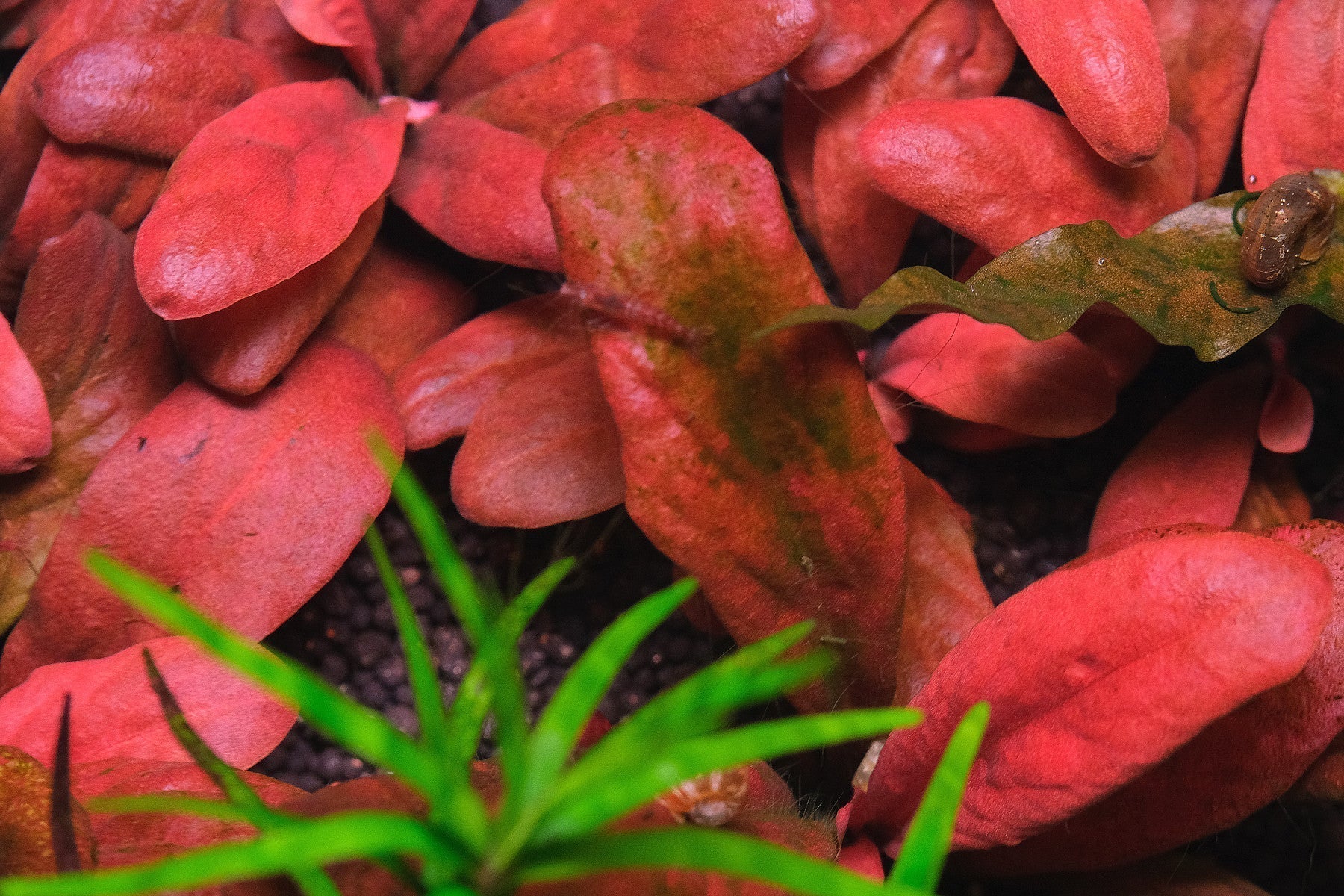
Perfect water parameters alone do not guarantee healthy plant growth or an algae-free planted tank. This is the sobering truth of planted aquariums. Once carbon dioxide, light and nutrient levels are dialed in, most remaining problems come from things a test kit cannot read: overcrowding, poor plant placement, competition from other plants, old growth that was never trimmed, and root zone congestion. Nutrient deficiencies are real, but they are far less common than the hobby assumes, and poor growth due to inadequate CO2 or overcrowding mimics deficiency symptoms. Twisted leaves, pale growth, leaves that turn yellow, pinholes and melting can all caused by non-nutrient related factors such as overcrowding or substrate compaction. Not every yellow leaf means potassium deficiency, and leaf growth is affected by a lot more variables than just nutrients, light or CO2.
In aquariums that receive regular nutrient dosing, non nutrient problems are much more common cause for poor plant growth than true nutrient deficiencies. This article explores some of the most common non nutrient/light/CO2 factors that affect plant growth, and how aquascapers can combat overcrowding by trimming and replanting.
Quick answer for plants that face growth problems:
-
Rule out CO2 first. Aim for stable 20-30 mg/l throughout the light window for high tech aquariums. For low tech aquariums, the ability to generate sufficient CO2 through soil decomposition and microbial respiration is key to success. Low tech setups that generate enough Carbon dioxide naturally through soil decomposition and microbial respiration are the ones to succeed, those that do not cannot grow even the easiest of plants. In low tech aquariums, most symptoms of poor growth in more demanding species is tied to a lack of Carbon dioxide, not nutrients.
-
Rule out essential nutrients next. Run a regular, complete fertilizer so all the nutrients are covered rather than chasing individual nutrients. Plants need stable nutrient levels to grow well, but most are flexible within a large range. You do not need 10ppm of Nitrate in the water column or measure 0.1ppm of Iron in the water column to avoid a nitrogen or iron deficiency. Residual readings of water column nutrients do not directly indicate whether plants have adequate nutrients or not. Learn to read the plants, and observe growth over time, rather than targeting fixed values in the water column. Some species will do much better with higher nutrient levels, while others have low nutrient draw.
-
All aquatic plants that grow become over crowded and age with the passage of time. Trimming is necessary to remove old growth and make space for new leaves. However, trimming does not solve compacted rootzones or the main stem/crown from aging. Plants eventually need to be rejuvenated by replanting new growth, and uprooting and discarding old growth.
-
The faster the growth rates, the faster this happens. For slower growing species like Cryptocoryne and Java ferns, they are grow in the same spot for months/years without needing to be uprooted. However, for fast growing species such as most stem plants age and deterioration of older growth can happen in weeks. When this happen, old growth needs to be uprooted and discarded, compacted rootzones need to be cleared, then the fresh tops replanted. Replanting fixes more "deficiencies" than any bottle.
-
Clear out accumulated organic debris in the substrate that interferes with root formation for more picky aquatic plants species. Livestock waste is a poor source of nutrients, and create overly labile substrate zone conditions that cause poor growth and algae problems.
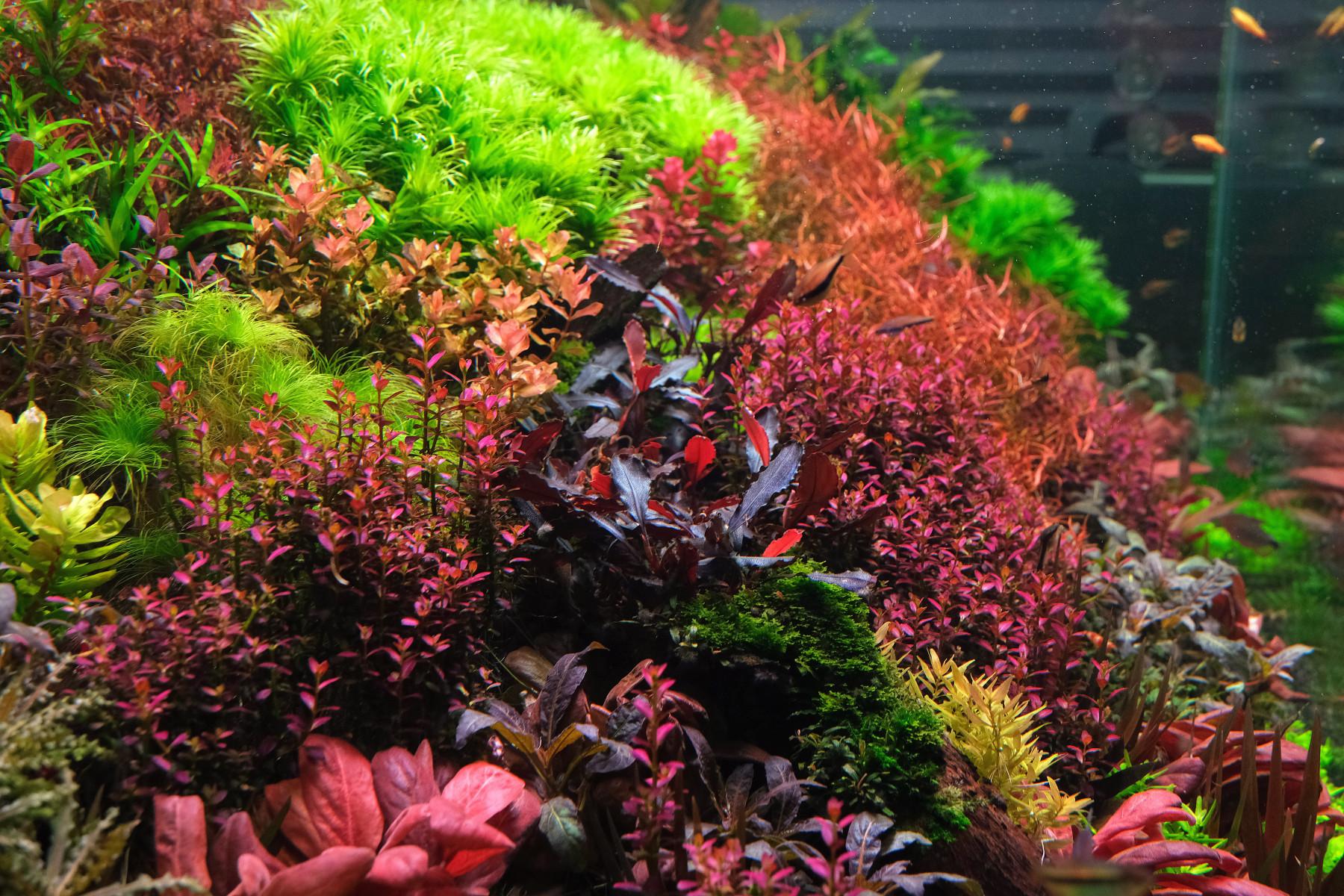
The horticulturist's job it to manage exponential plant growth in a fixed space.
Why Don't Perfect Water Parameters Mean Healthy Plant Growth?
Even when carbon dioxide, light and nutrients are genuinely correct, plants can still throw out dark, melting, mediocre leaves. The culprit is usually overcrowding, old growth and horticulture, not chemistry.

Two groups of Lysimachia parvifolia growing side by side: same water, same CO2, same light, same substrate, same flow. The group on the left has been uprooted, divided and replanted last month produces perfectly formed leaves. The group on the right has been left to grow overcrowded in the same spot without being replanted for months, and the new leaves came out dark, twisted and melting. It is not the lack of nutrients/light/CO2 that caused poor growth for the group on the right. It is simply due to age and overcrowding as the group has never been uprooted and divided on a regular basis. That is the whole lesson in one picture.
Overcrowding above and below the substrate chokes the root zone and forces out poor-quality new growth, no matter how much CO2 and nutrients you pour in. Hobbyists who throw maximum nutrients and light at a planted tank hit the overcrowding wall faster, not slower. Ironically, having fast growth conditions with plenty of nutrients and light means that plants need more trimming and replanting to grow well - not less.

Out of sight, out of mind - rootzone compaction and overcrowding occurs easily in aquariums due to the shallow substrate layers. This causes poor leaf formation and algae issues. Uprooting and replanting work can be tedious. Many hobbyists would rather ignore the problem and focus on tweaking things that are easily adjusted - such as nutrients/light/CO2.
How to Uproot and Replant Aquatic Plants:

To refresh the stem plant bushes, we will replant the fresh tops of the plants, while discarding the older bottom portions.
The first step is to uproot the entire plant bush. To control the mess when pulling up the soil, we recommend using a water siphon to vacuum the area when pulling up plants. The siphon should be held very close to the point where the plant is being pulled up to catch the soil debris.
Try to remove as much of the old root system as possible and also remove any organic debris that has accumulated in the area. While organic debris contributes small amounts of nutrients through decomposition, a build-up of organic debris will interfere with root formation for more delicate plants and will also trigger algae. To stir up the organic debris, we use a turkey baster to spray jets of water onto the substrate while vacuuming with a siphon. The aquasoil should look clean before we start replanting.

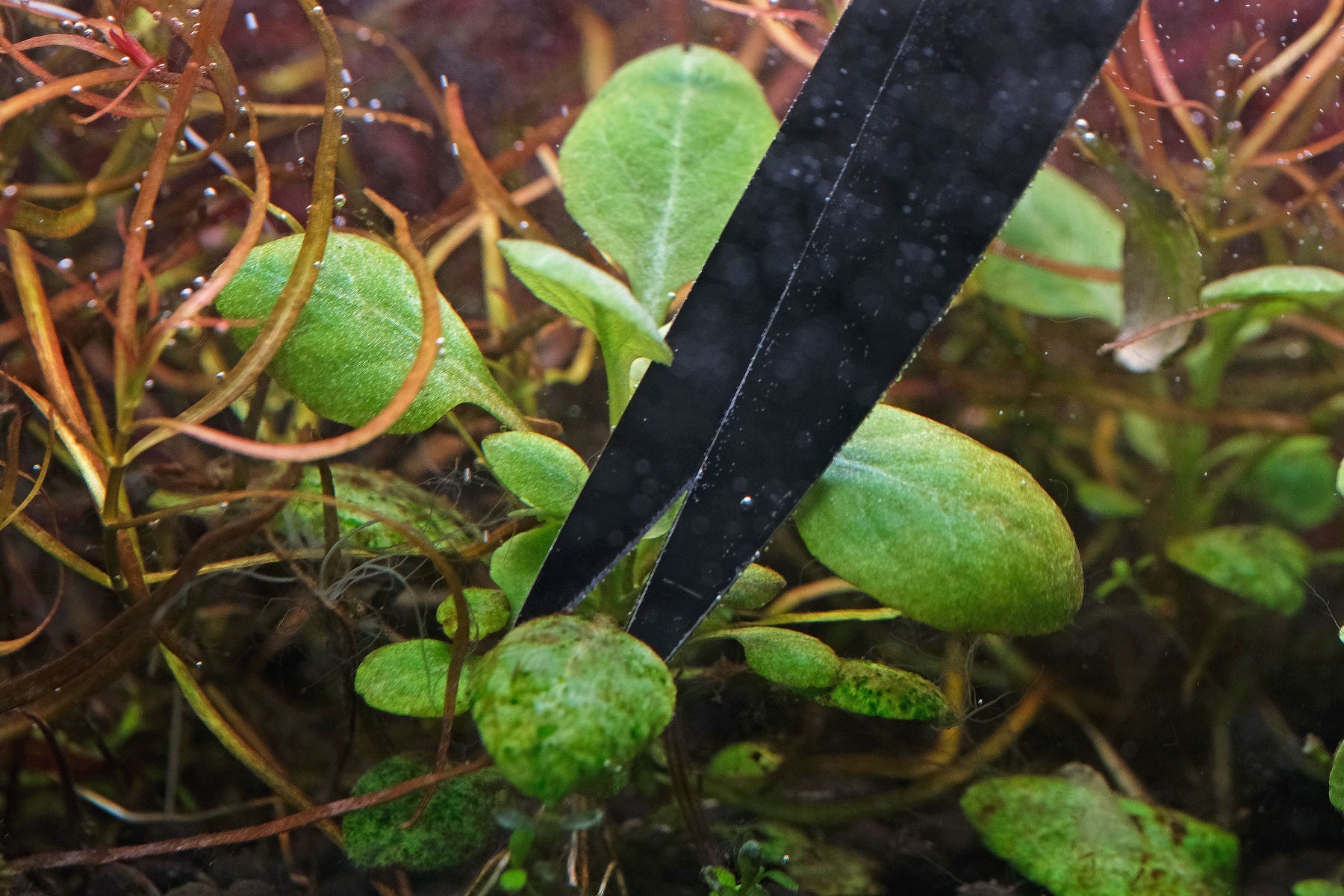
The next step is to sort the uprooted stems and select only the healthiest heads for replanting. (A) is a middle portion and already has several branches. The main stem is already aged. (B) is a weak cutting- observe how thin the stem is, and the lack of colour. (C) is ideal. A thick, singular, healthy top with well formed new leaves. We will only replant tops that look like plant (C) and discard the rest.


How to Enrich Substrate with New Aquasoil
When plants are uprooted, we can take the chance to enrich the substrate. There are two main ways to replenish depleted aqua soils. The first is to use nitrogen-rich root tabs. The second is to add fresh ammonia-rich aquasoil periodically. If using soil, a good rate is adding 1% of new ammonia-rich aquasoil per month. For example, if you have 30kg of aquasoil in an aquarium, adding around 300 grams per month will work well. You can add new aquasoil during plant replanting cycles. Simply remove a portion of old aquasoil with a water siphon or spoon, then add and mix in the new aquasoil. This method may be cheaper than using root tabs in the long run, but requires a rich aquasoil.


With consistent maintenance, aqua soils do not need to be replaced. The aqua soil in this aquarium is 1.5 years old APT Feast. Regular enrichment and clearing of detritus allows the substrate to perform like new. By renewing plant growth continually through replanting, and enrichment, planted aquariums also become more algae resistant.
How Fast does Over-Crowding and Old Growth Occur?
It depends heavily on the plant species selection and the growth rates of the planted aquarium. Slow growing species such as Anubias, Bucephalandra and Ferns take a long time to accumulate older growth, and their leaves persist in good form longer as well. In low tech aquariums with slow growth conditions, overcrowding with slower-growing species can take years to manifest. In high-tech CO2-injected aquariums, the cycle is sped up, up to 10X faster. Many stem plant species face overcrowding and deterioration lower growth in a matter of weeks in fast growth speed tanks.
How often to replant/trim can be discerned by looking at the quality of new growth and how the plant species handle aging. If the plant keeps producing new growth that looks good even if it has been growing in the same spot continually for a long time - then it does not have to be replanted. However, if the plant produces weaker and weaker new growth after repeated trimming cycles, it is likely a species that benefit from more regular replanting.
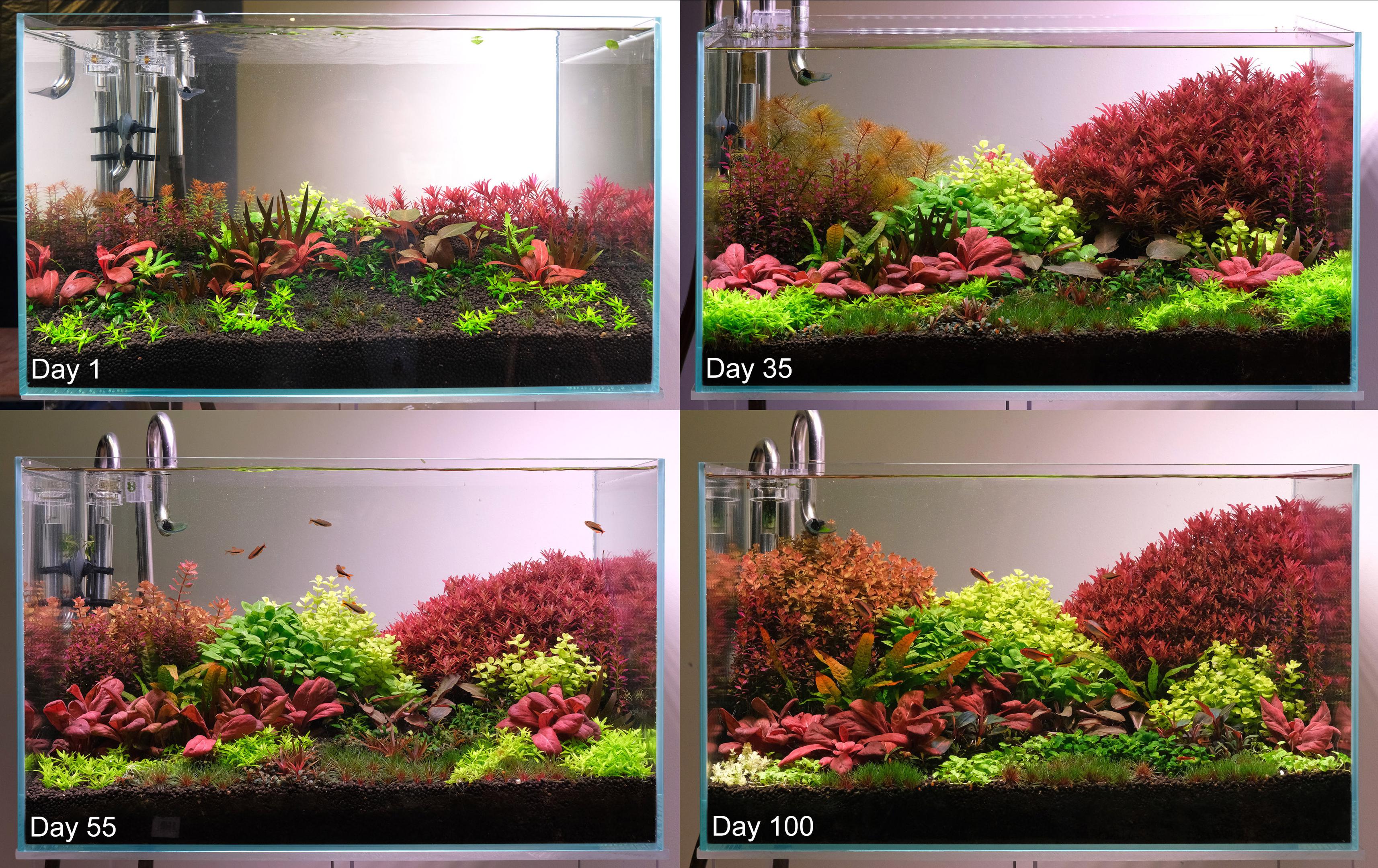
Aquarium plants renew themselves by producing new leaves, while older leaves die and discarded.

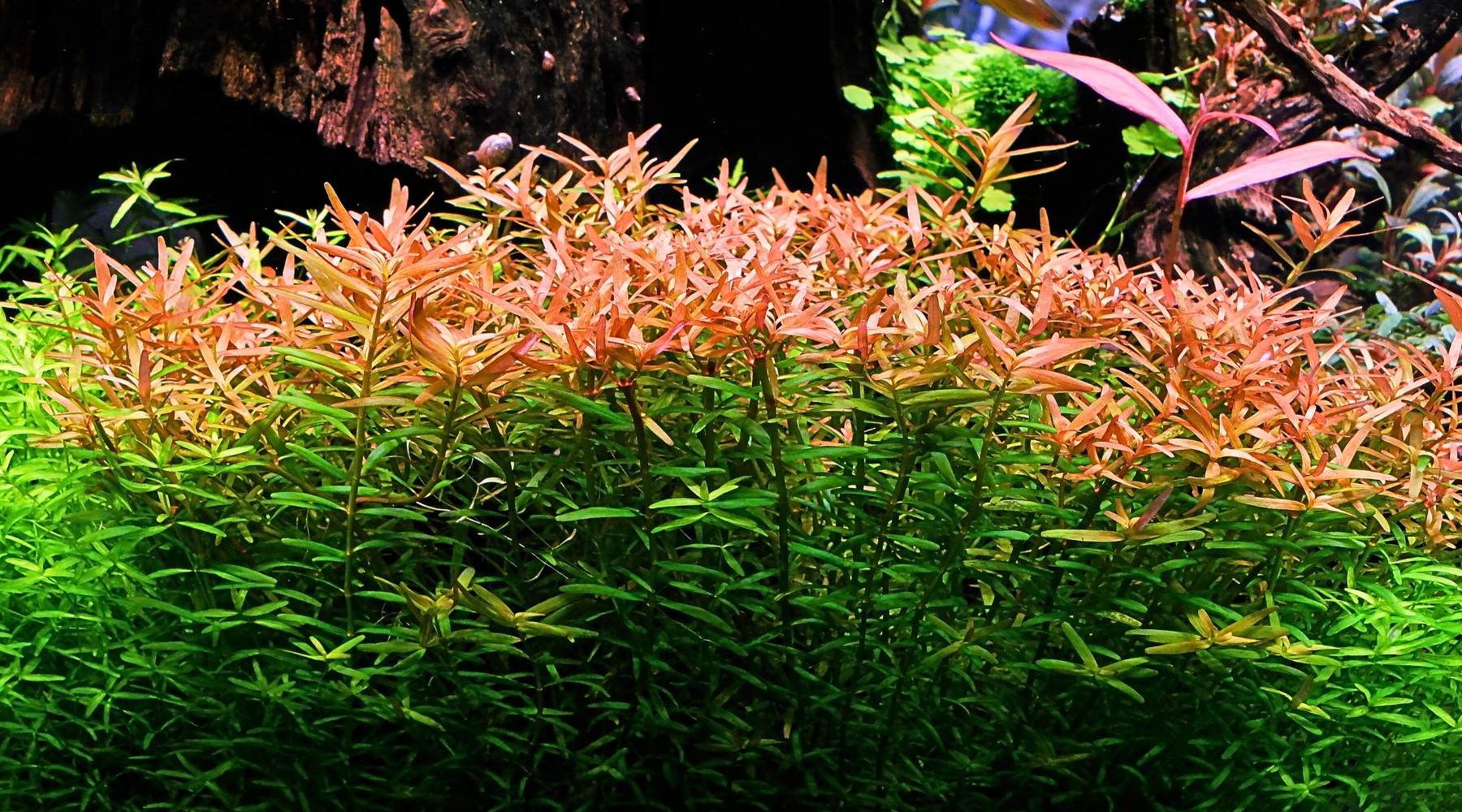
In this 4-month-old aquascape, Rotala blood red sg (1) and Lysimachia nummularia 'aurea' (2) have never been replanted since day 1. These two species are very resilient towards trimming when growth conditions are good, and the bottoms can regenerate good growth even after repeated trimming cycles. They are also less affected by root zone congestion.
However, Rotala macrandra mini type 4 (3) deteriorates quickly after a couple of trimming cycles. In this aquarium, it is uprooted and replanted monthly to keep the canopy in good form. This species thus needs 5X as much replanting compared to Rotala blood red sg to keep it growing in good form.

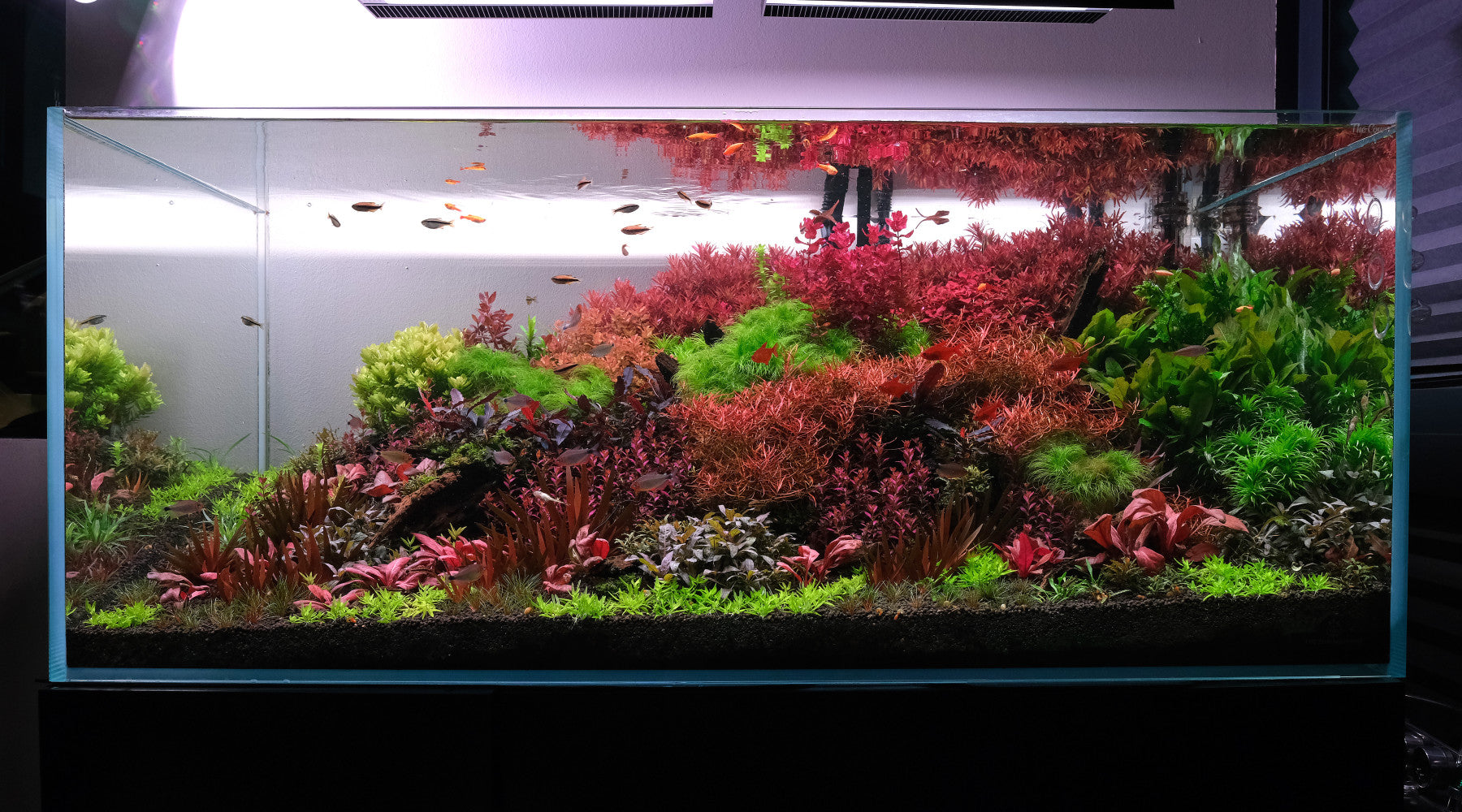
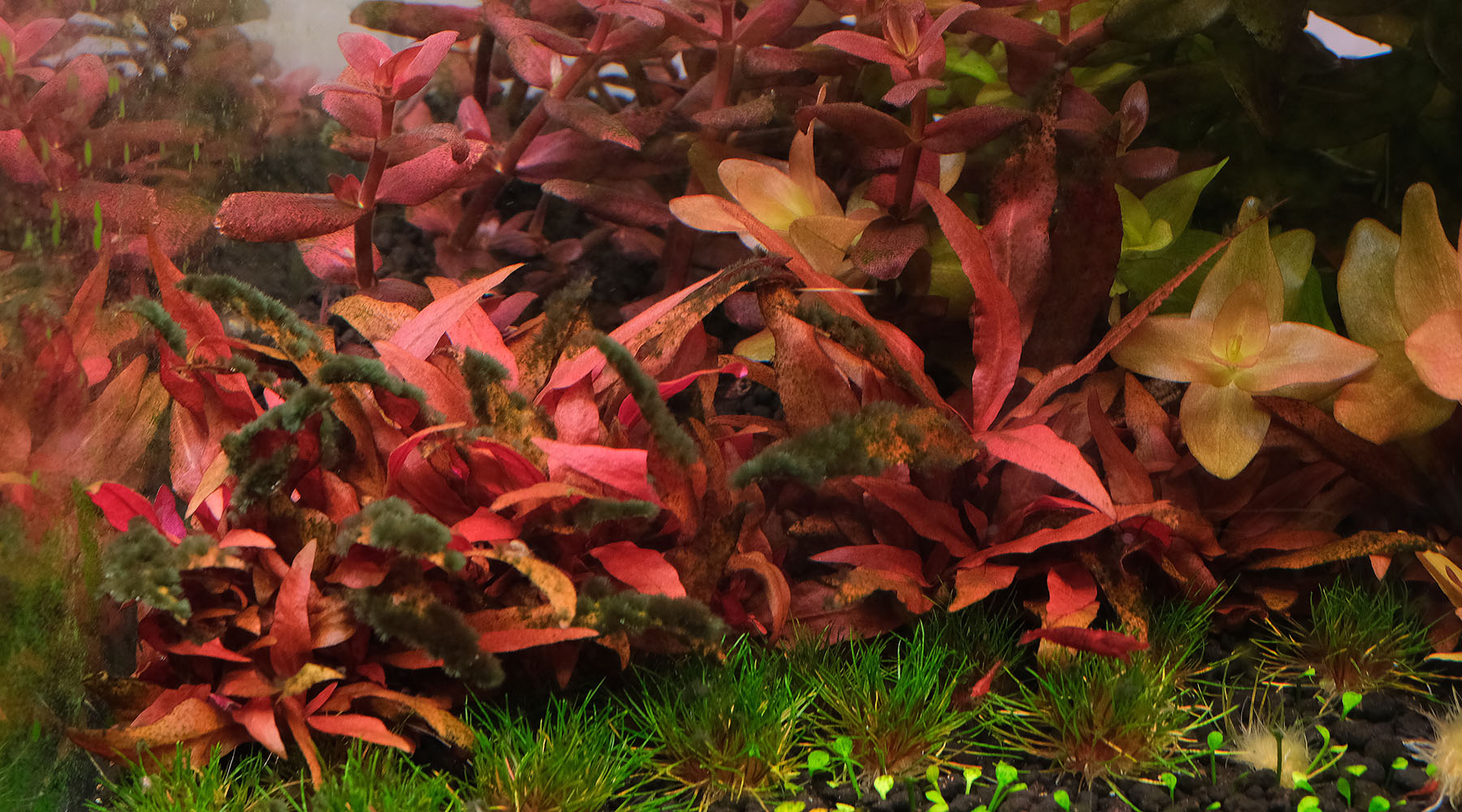
In this stem plant heavy aquascape that is around 7 months old, every single plant cluster has been divided/replanted at least once. The aquarium uses high light intensity and has high nitrate and phosphate levels. However, healthy plants keep algae away.
A sample of the replanting cycle for each species:
Rotala blood red SG - every 4 months
Rotala macrandra mini type 4 - every month
Lysimachia parvifolia - every 2-3 months
Xyris difformis - every 5-6 months
Elatine triandra - every month
Rotala florida - every 3-4 months
Staurogyne purple - every 5 months

What About Slow Growing Plants such as Anubias species?
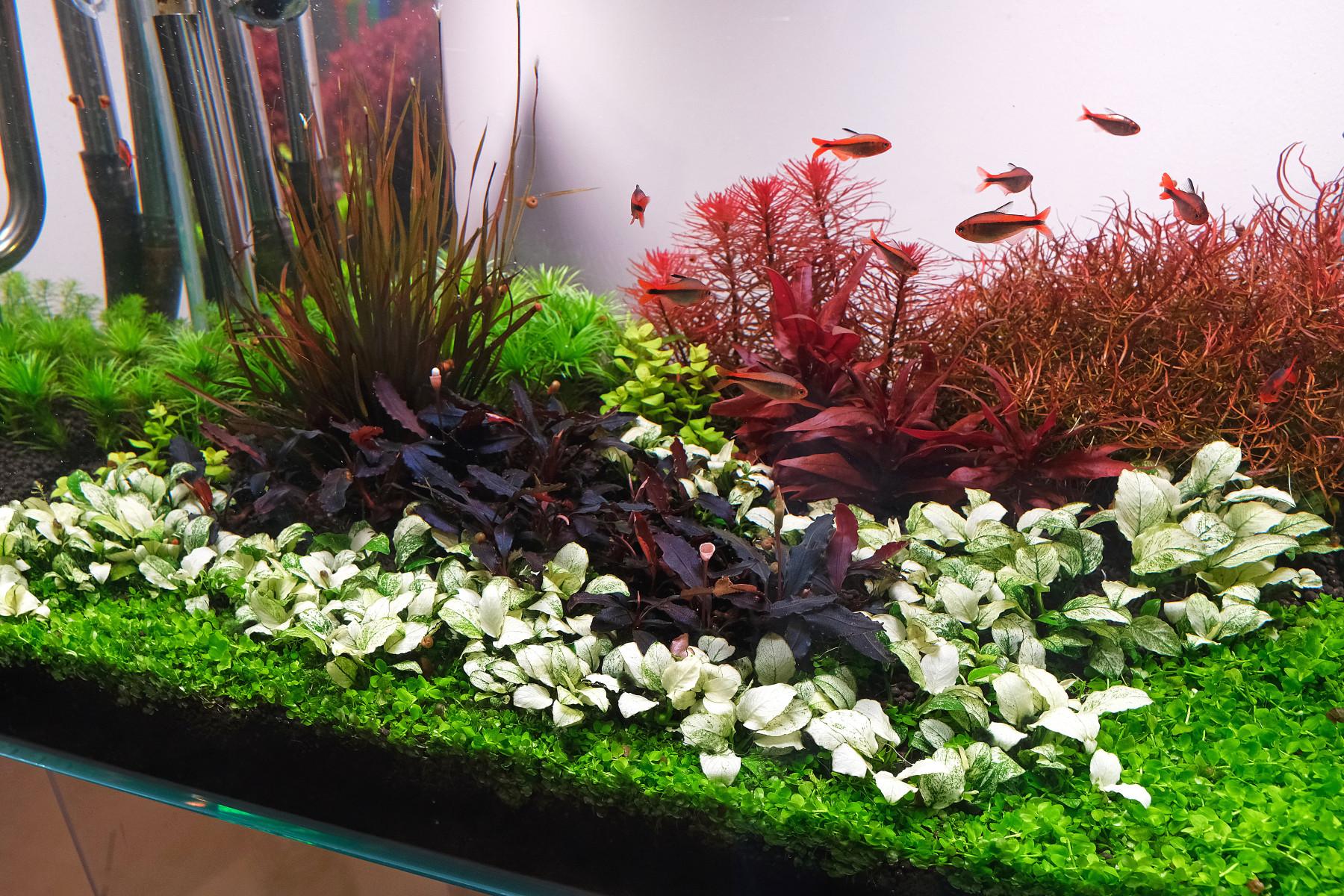
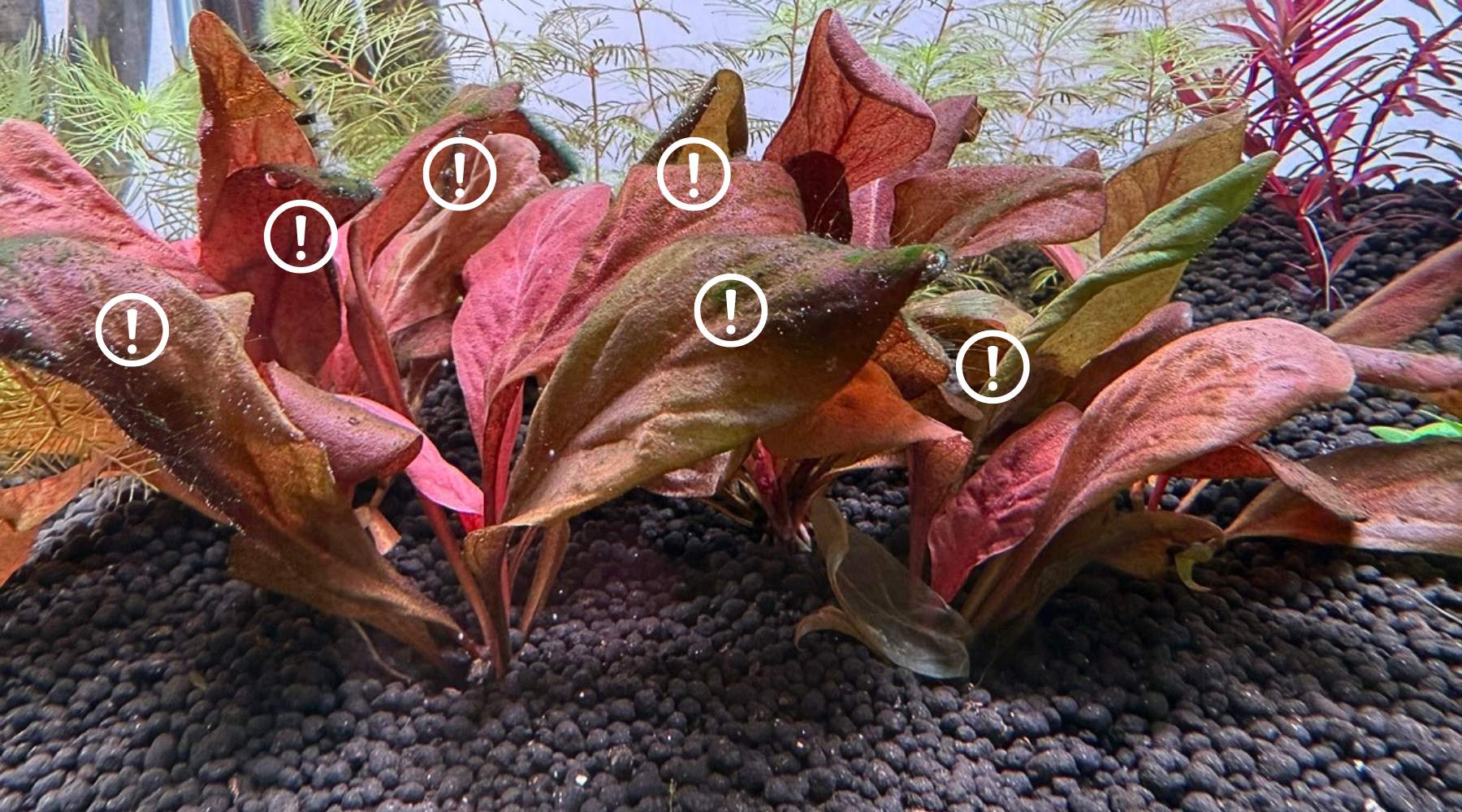
Old, deteriorating leaves have limited capacity heal. Plants renew themselves over time by producing new leaves and abandoning old ones. This applies even to slow growers such as Anubias/Java ferns. Cutting away old growth to make space for new leaves to sprout makes a huge difference in how well these plants grow over the long term. Healthy new leaves are algae-resistant, while deteriorating leaves are algae magnets. Maximize new leaves = better algae resistance, and you can only have new leaves if there is space for them to grow into.
In fast growing aquariums, we trim away up to 10% of the oldest leaves every 2 months, even on slower growers such as Anubias. This allows maximum production of new leaves that gives our Anubias white petite their very white look.
Folks often ask what are our light, nutrient or CO2 levels, thinking that mimicking our aquarium parameters will give them the same quality of plant growth. However, it is often the horticulture approaches of timely trimming and replanting work that gives the consistent look of fresh, optimal growth you see in our planted aquariums.
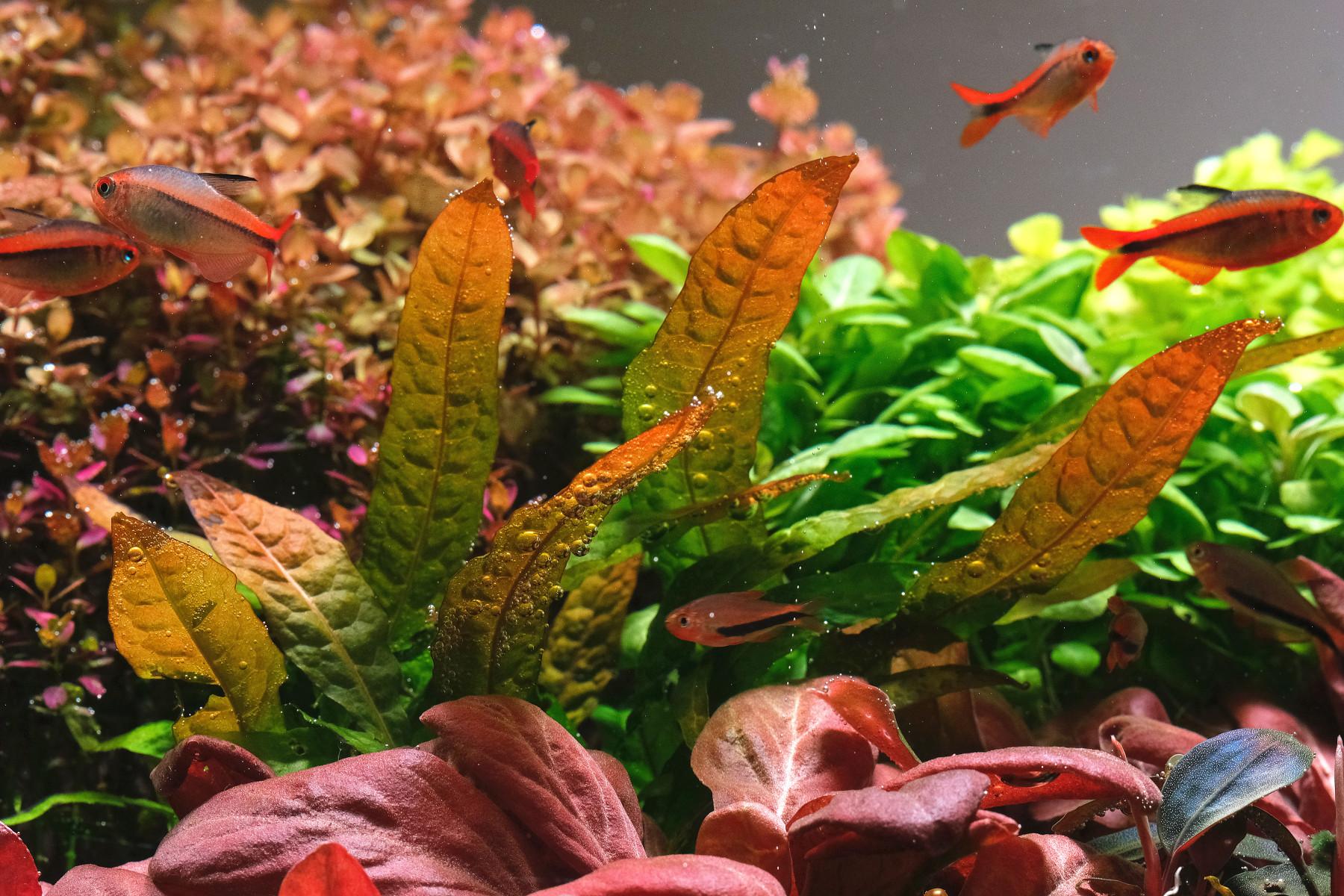
The same trimming techniques apply to Java fern as well. New leaves are maximized when old leaves are cleared. Microsorum pteropus 'orange narrow' produces brilliant orange leaves - the orange tips only display well in new growth under higher light levels.
Reducing Replanting Work
Replanting entire planted aquariums regularly is not feasible for most aquarists. So having an aquascape consisting solely of fast growing stem plants can be a nightmare when overcrowding and age sets in. Aquarists should plant a mix of slower growing species and species that do not need frequent trimming/replanting. Then the fast growing bunches can be replanted on a rotation basis - only one species is replanted during each weekly water change for example.Replanting work requires skill and dexterity. It is often difficult for beginners to manage, until some experience is gained. It becomes much easier with practice and time.
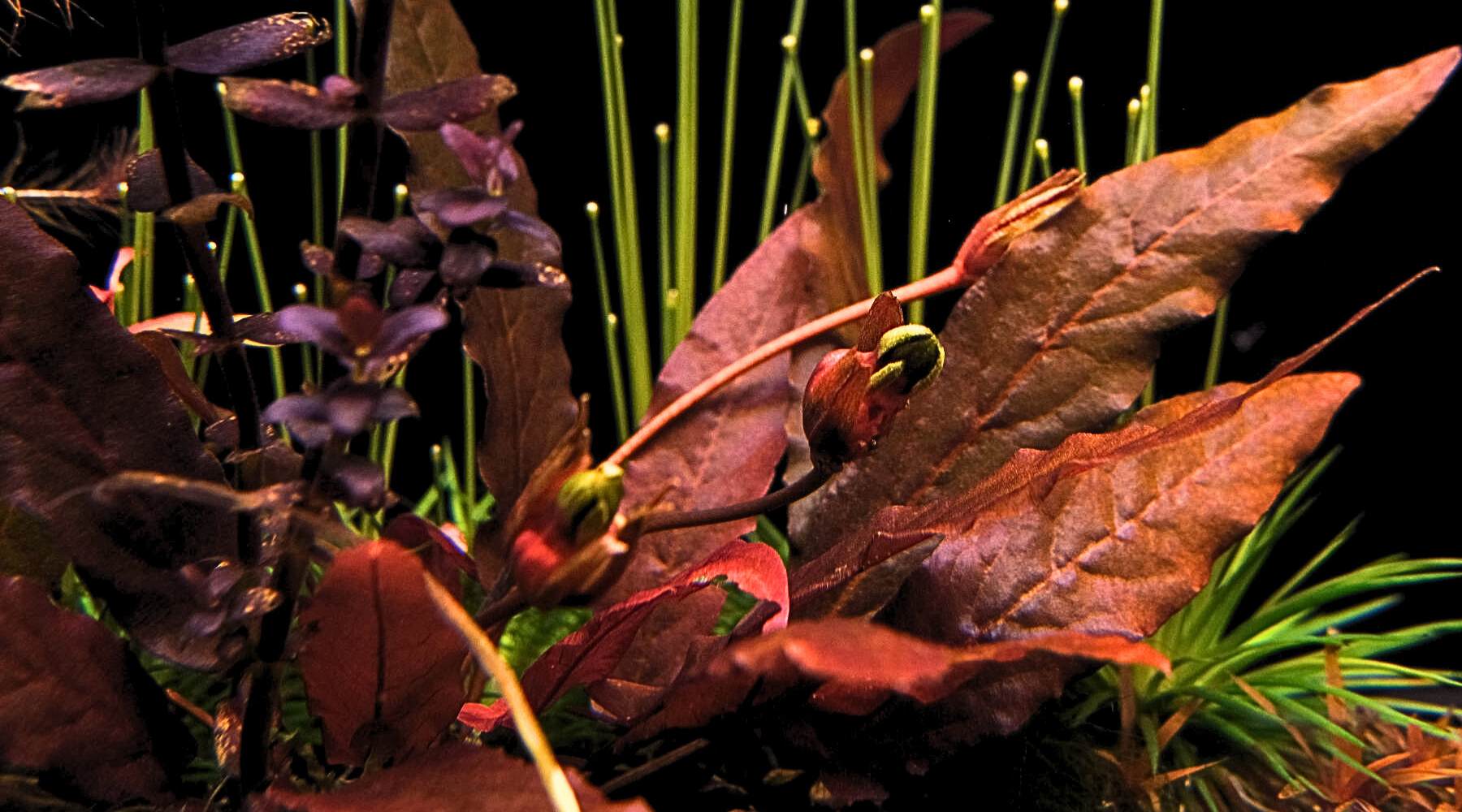
In this aquarium, Rotala florida, Xyris difformis, Syngonanthus species are all plants that can grow for months without replanting.

Avoiding replanting work entirely?
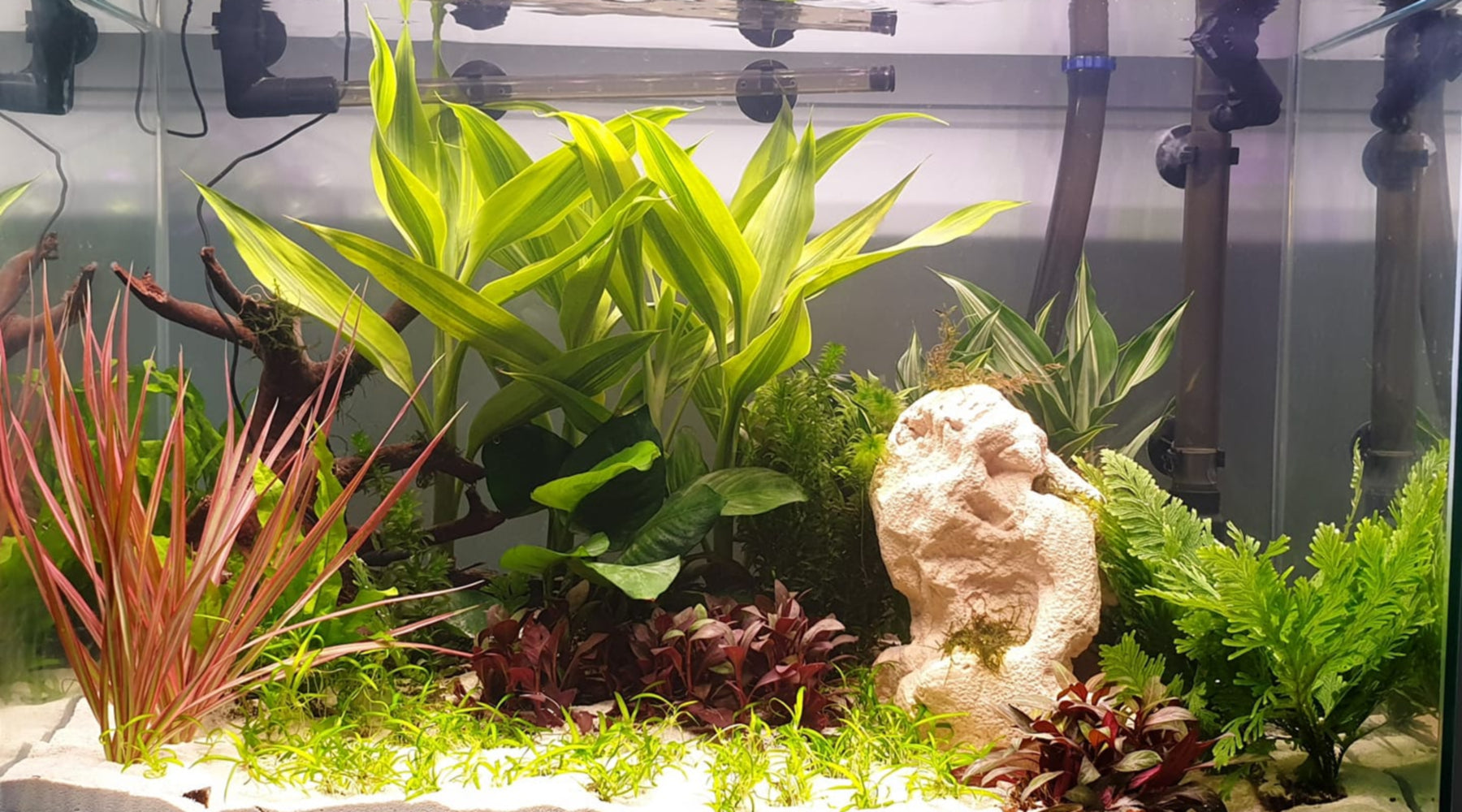
To avoid replanting work completely, aquarists can also focus more on hardscape to carry the aquascape design. Anubias, Bucephalandra, Java fern and Cryptocoryne species are all slow growers that only require occasional trimming. These style of aquarium is much less maintenance intensive and it is a style many long term aquarists eventually settle on.





Share:
Using APTe for EI dosing