

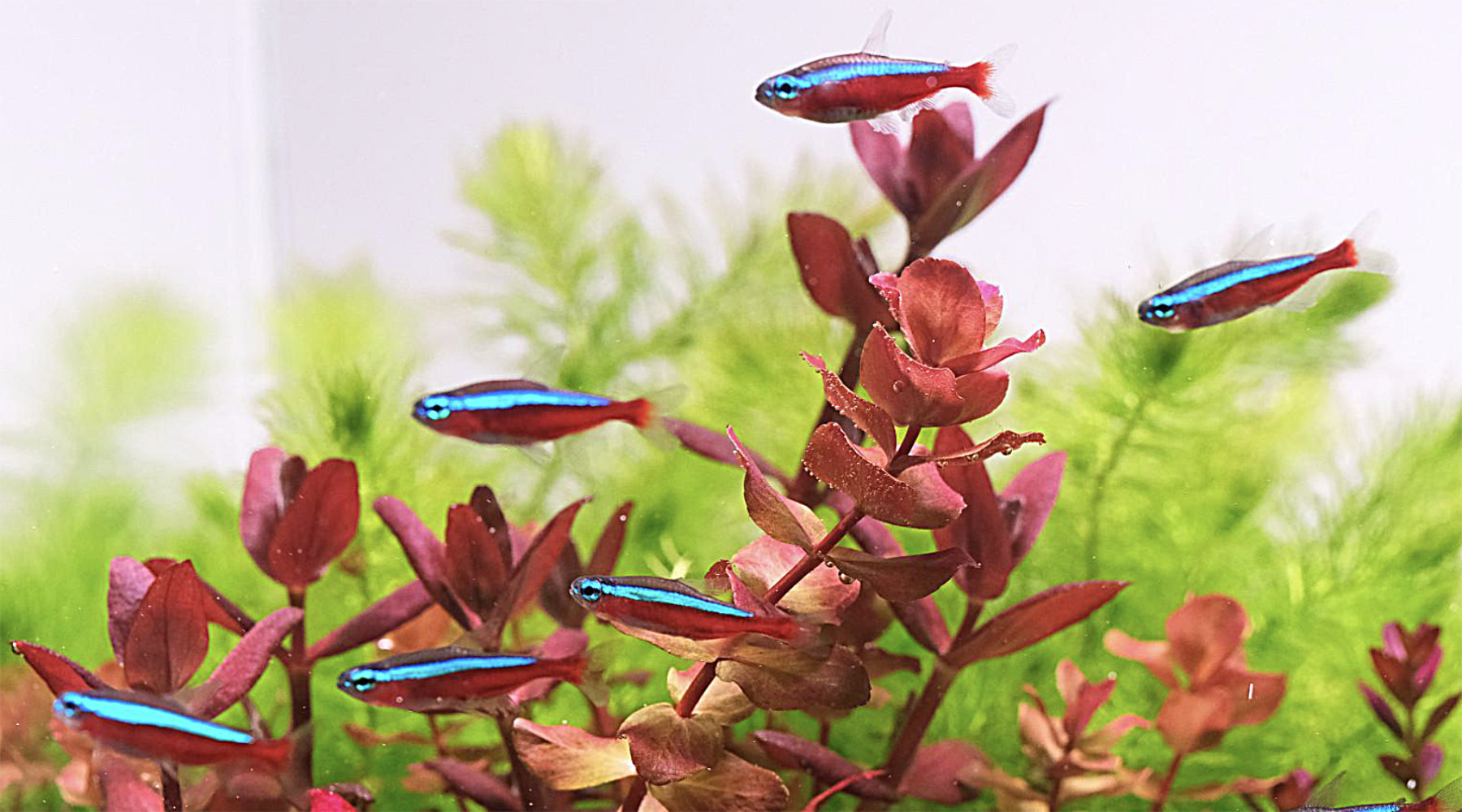
The best fish for a planted aquarium are small, peaceful, plant-safe species that school or shoal, sit in a tropical 22 to 26°C window, and ignore live plants entirely. A heavily planted aquarium does more than look beautiful: plants uptake ammonia and nitrogenous waste and provide hiding places for fish and fry. Planted aquariums also provide great visual backgrounds for enjoying fish. Here are some species that do well planted aquariums:
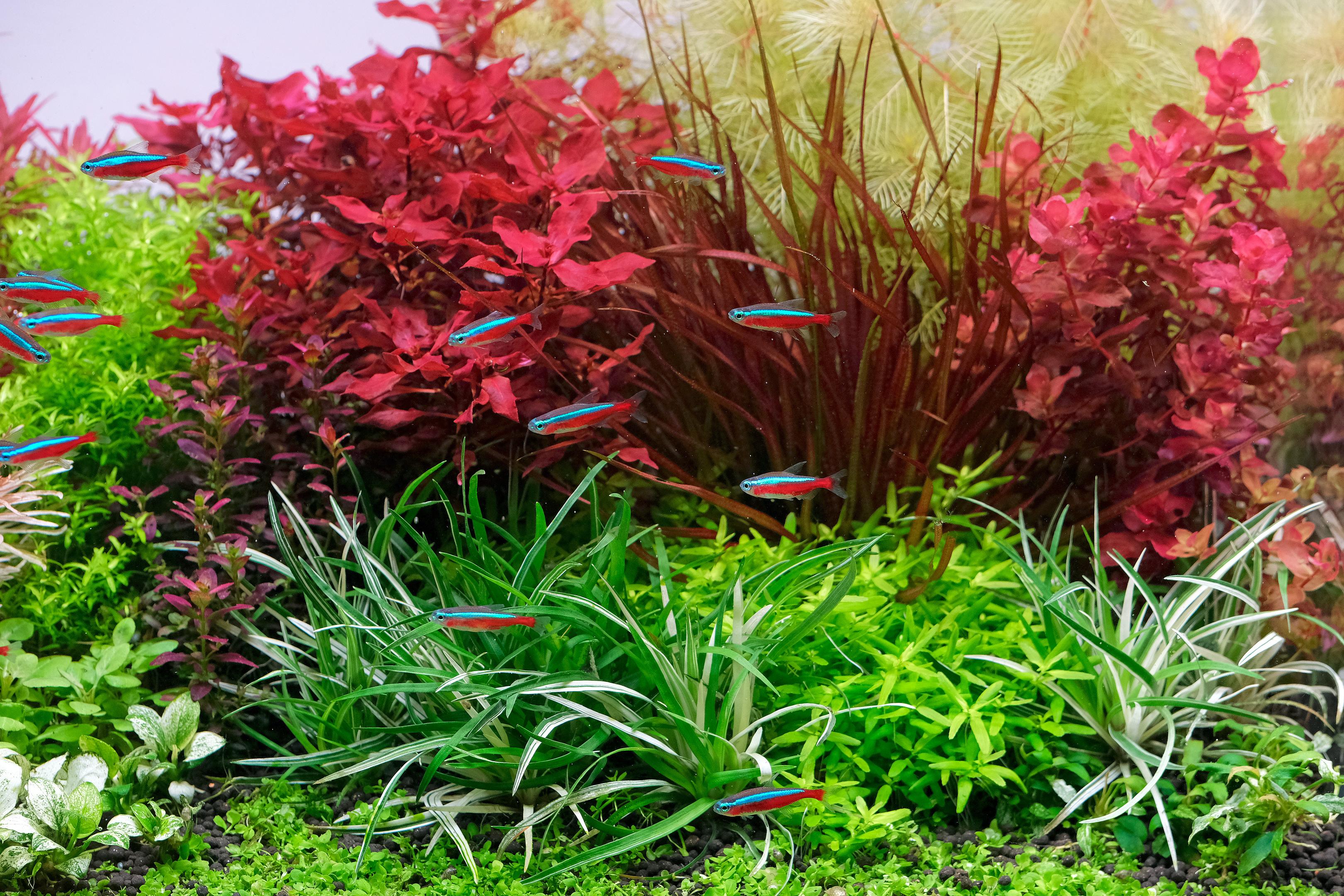
Cardinal tetra (Paracheirodon axelrodi), classic schooler, peaceful and more hardy than Neon tetras.
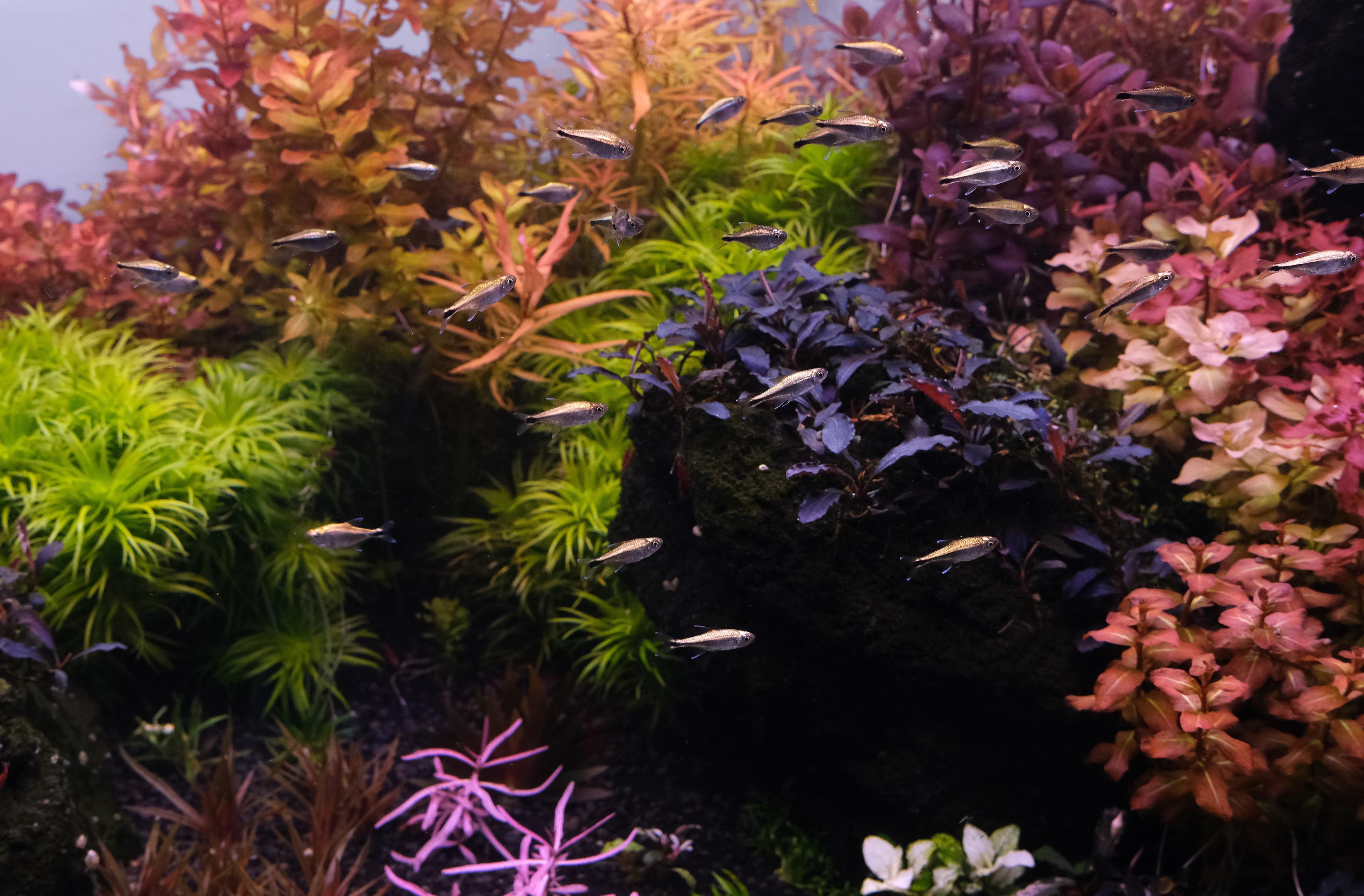
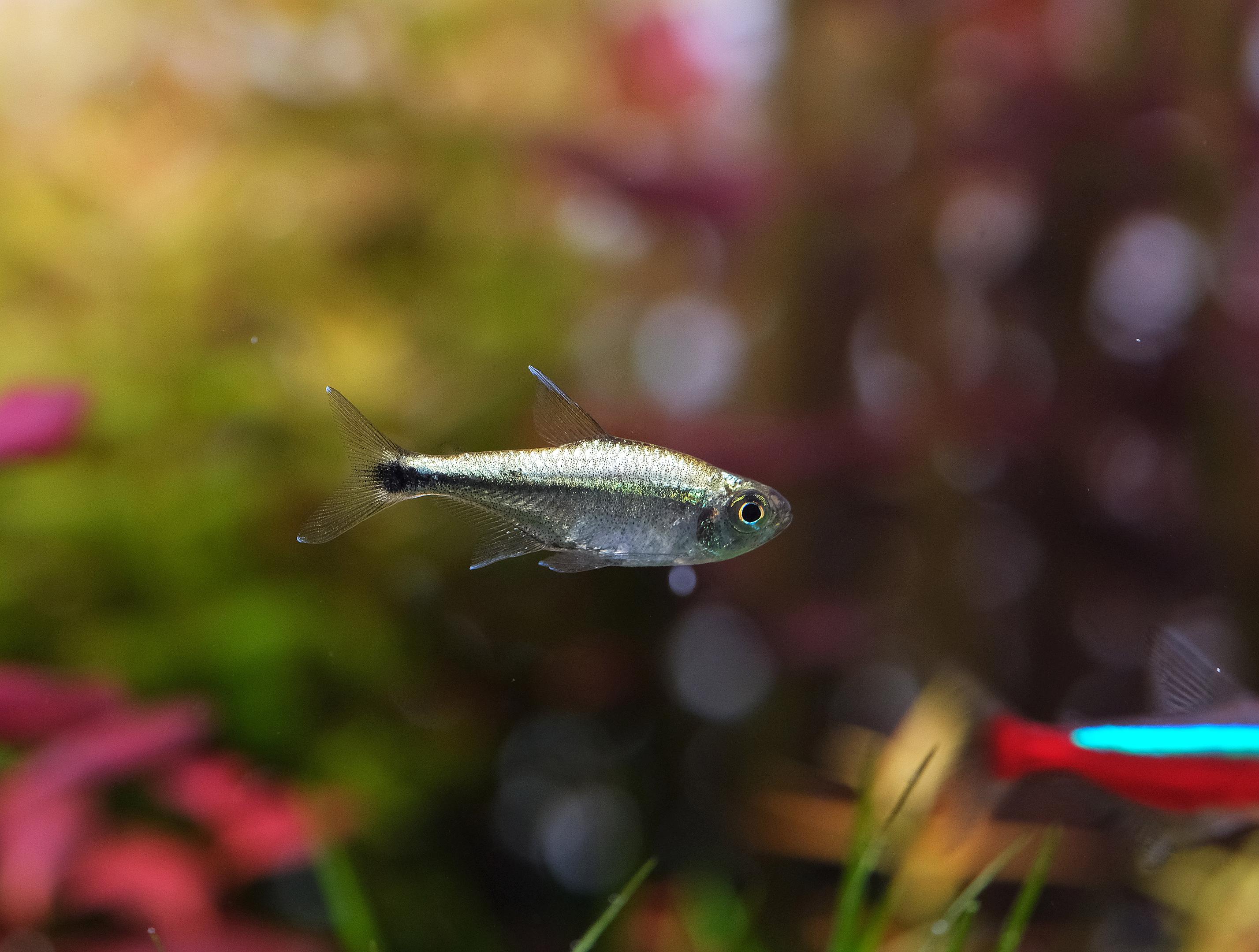
Golden Tetras (Hemigrammus rodwayi) Offers good contrast against any back drop and their body shine gives a stunning display in a good sized shoal. Peaceful and suitable for community tanks.
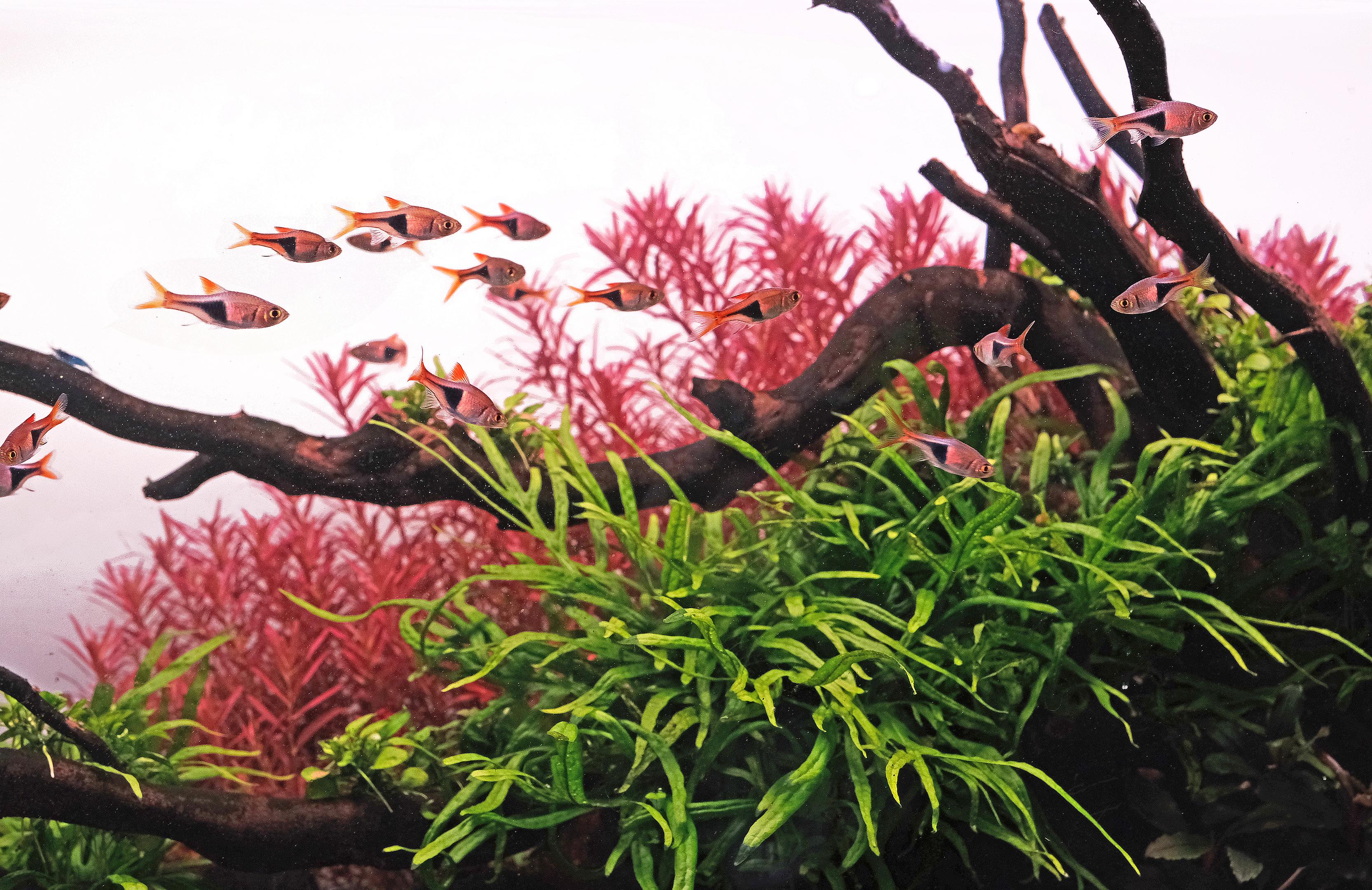
Harlequin rasbora (Trigonostigma heteromorpha), a forgiving shoaler that loves Southeast Asian biotopes.
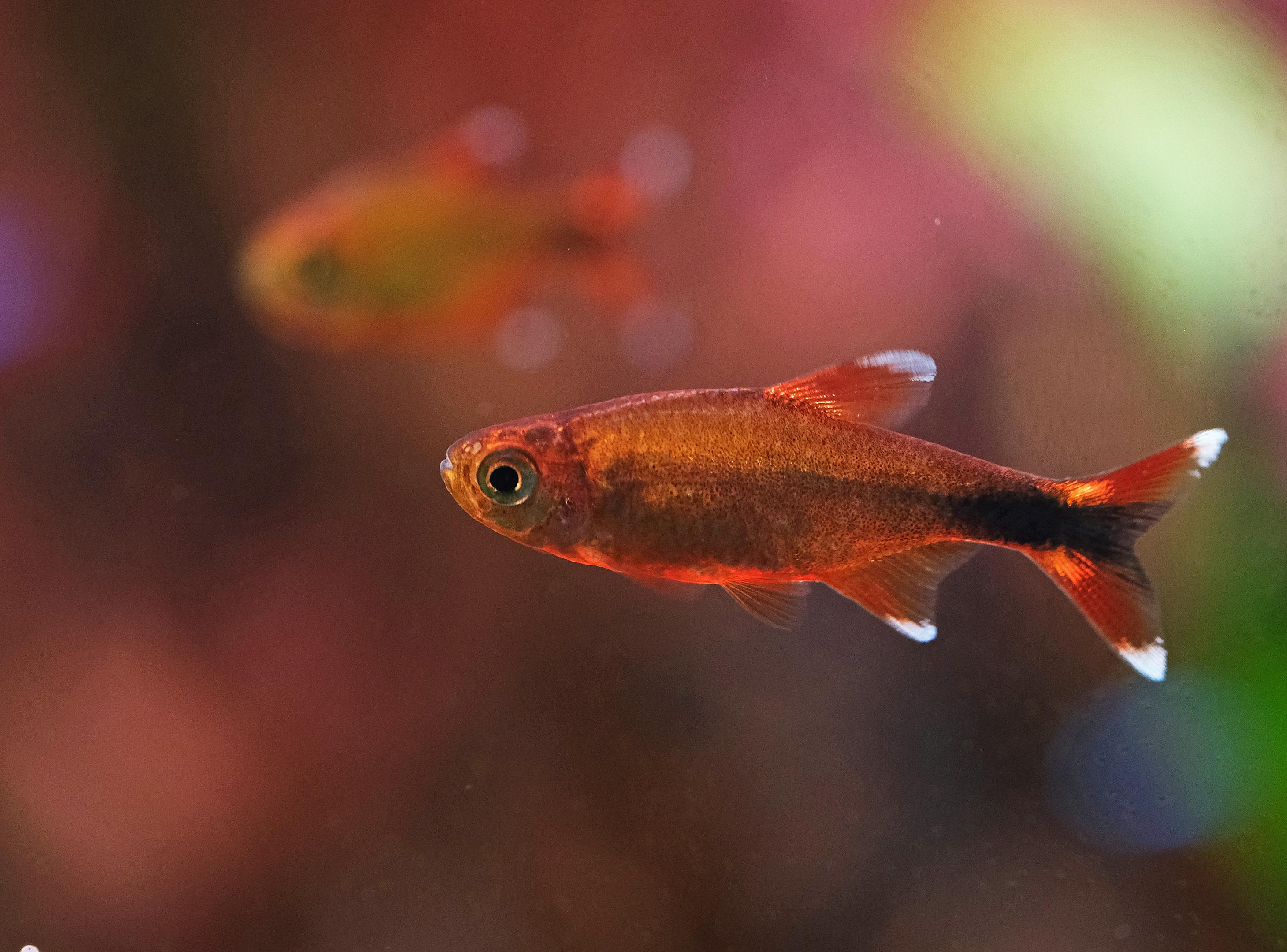
Silvertip Tetras (Hasemania nana), It is lively, quite colourful and peaceful. It’s a good tankmate for smaller fish species.
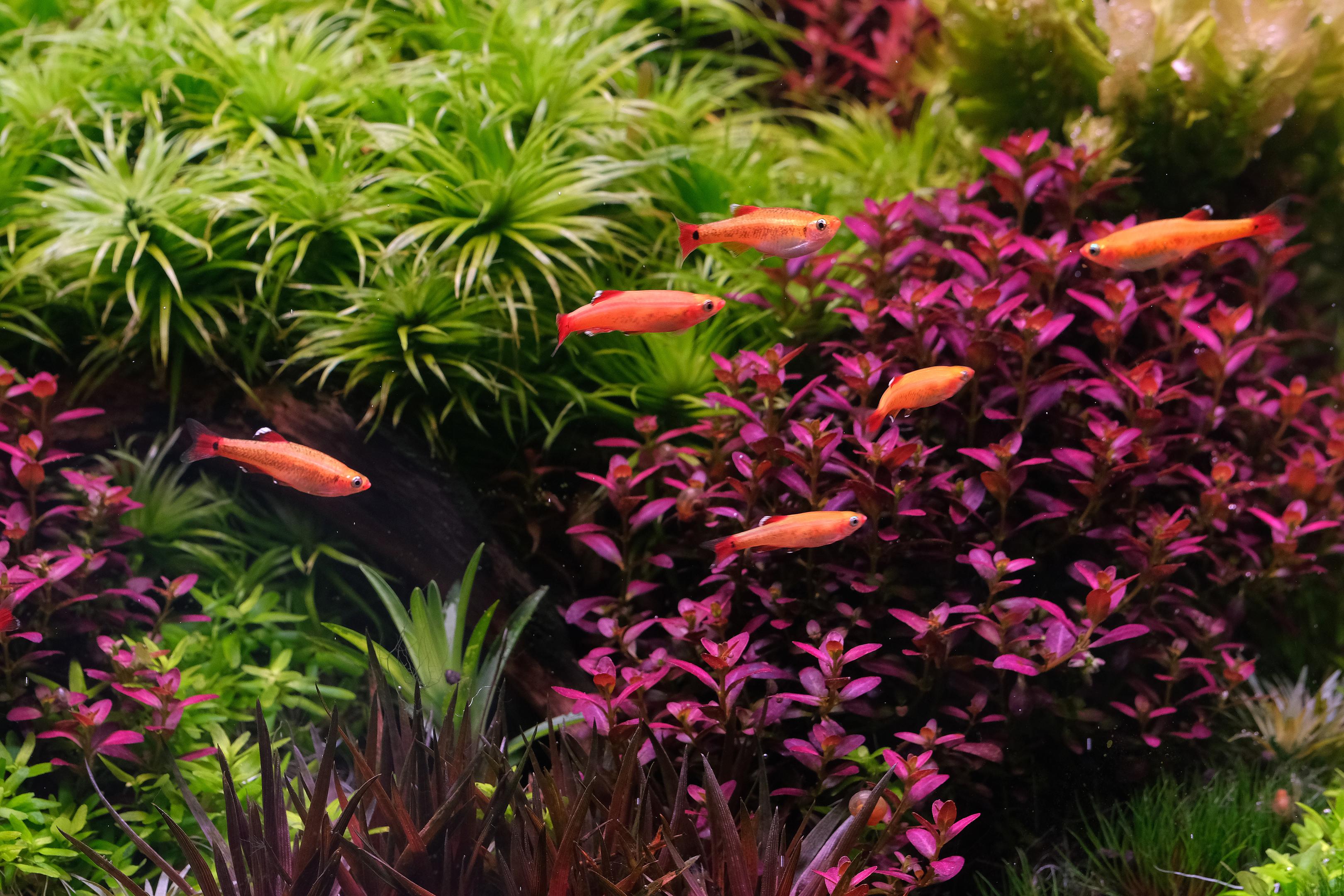
White cloud mountain minnows (Tanichthys albonube), Lively fish that are hardy with attractive coloration. Tank bred strains are very hardy. The ones above are Golden White Clouds that have a yellow body.
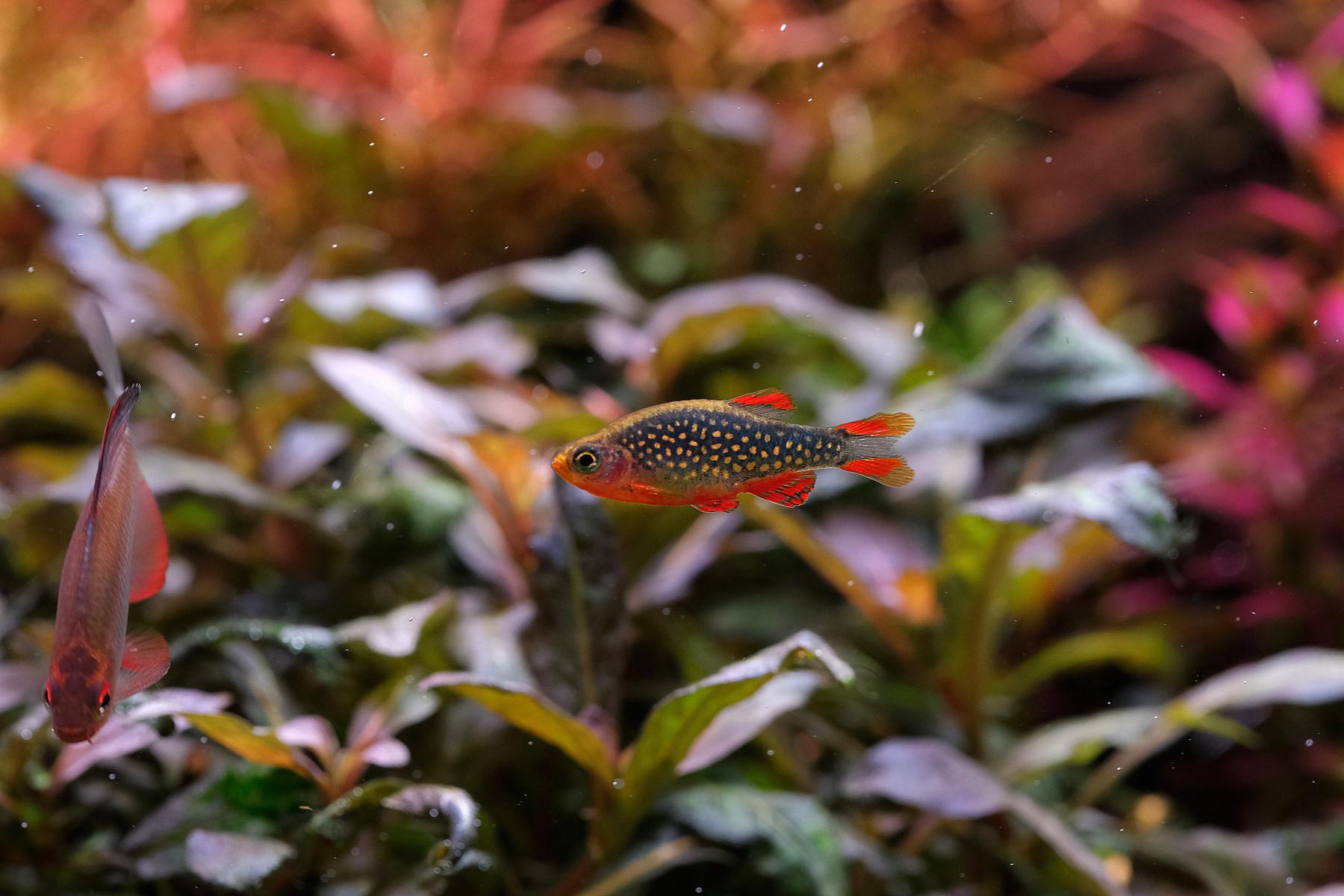
Celestial pearl danios (Celestichthys margaritatus), Striking coloration and peaceful. They are suitable even for smaller sized aquariums. Best kept in groups with dither fish as they can be shy.
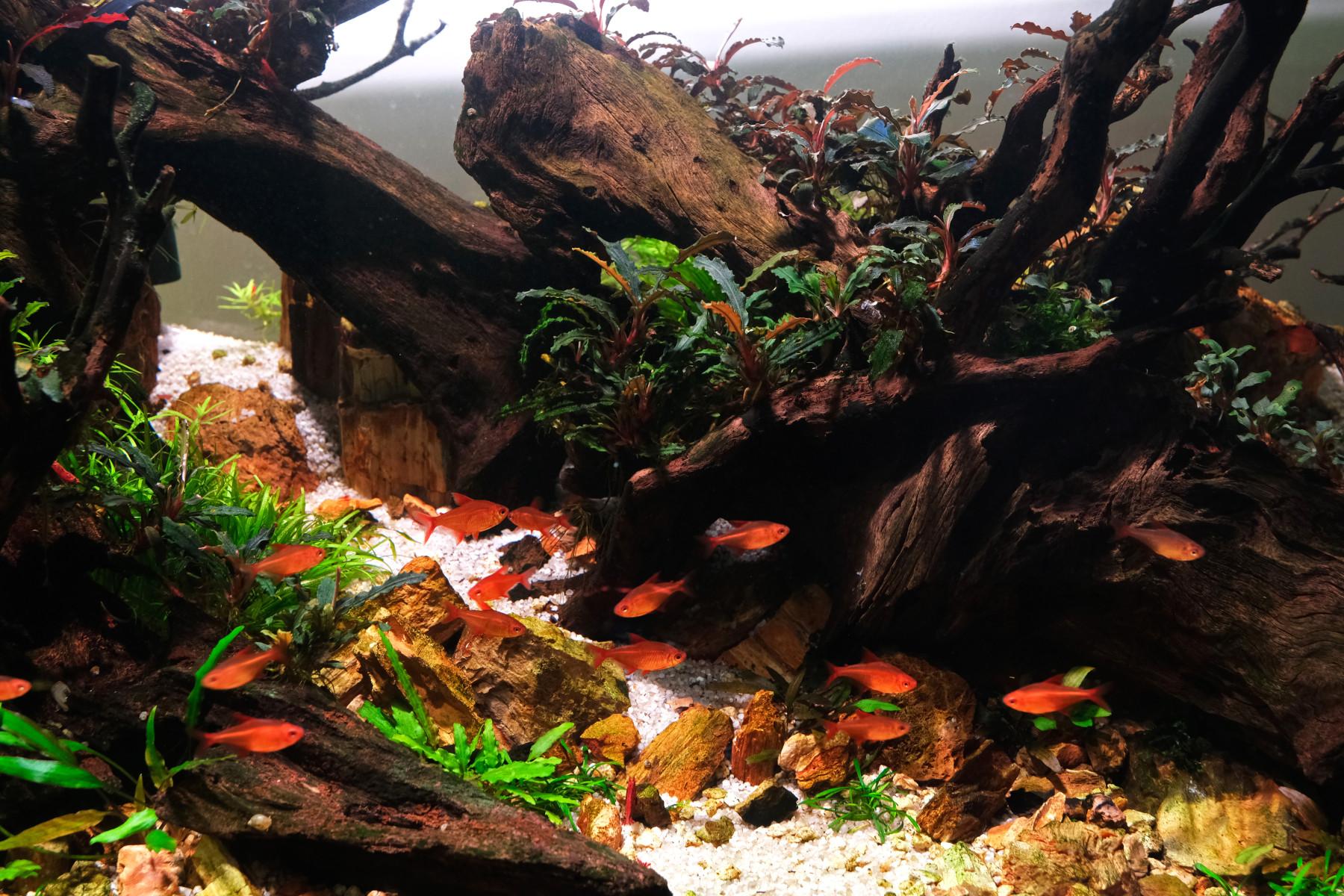
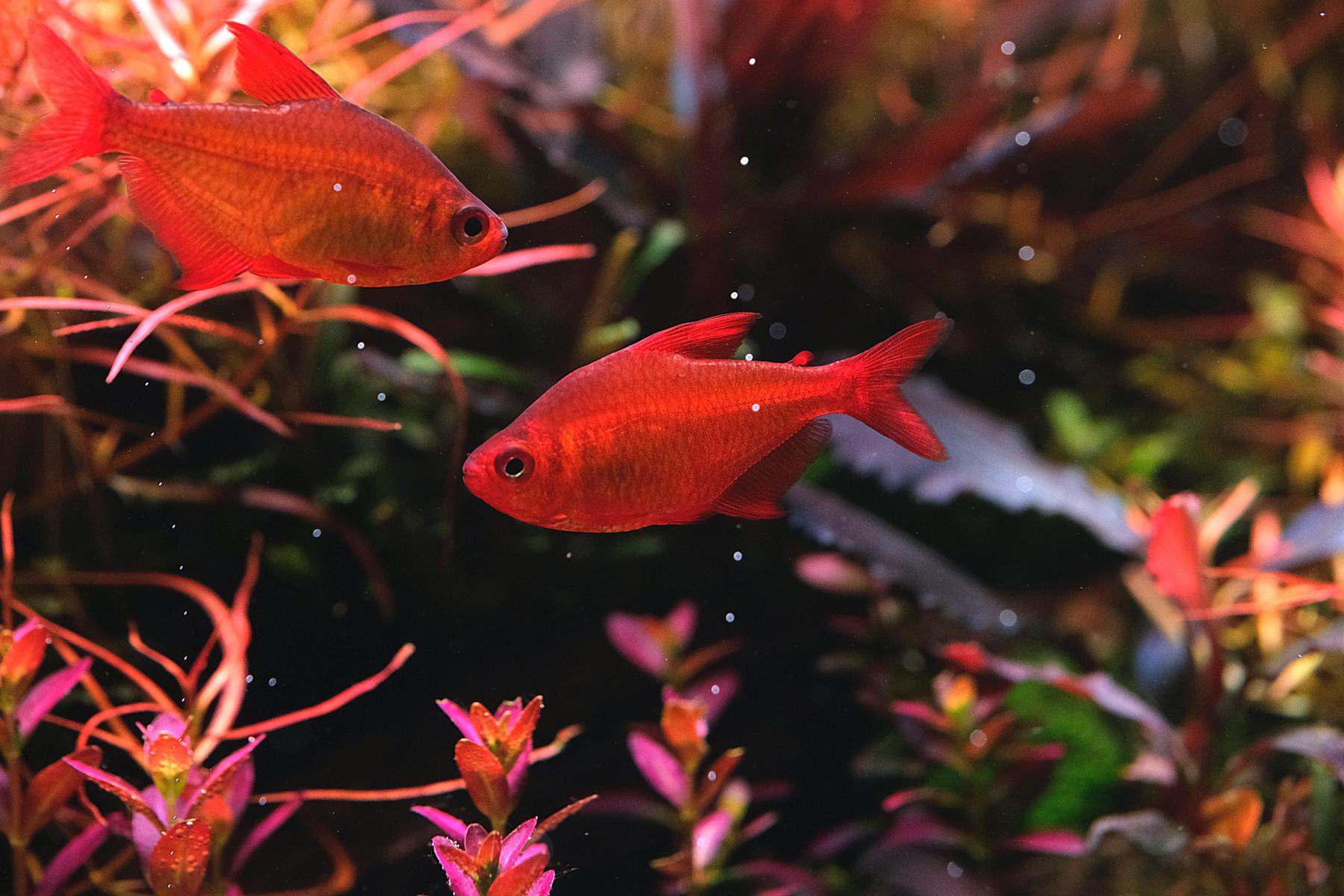
Muzel Red Cherry tetras (Hyphessobrycon sp 'Muzel red cherry) have striking red coloration. They are larger and redder compared to Ember tetras. Since captive breeding has taken place, this species is more regularly available at lower cost.
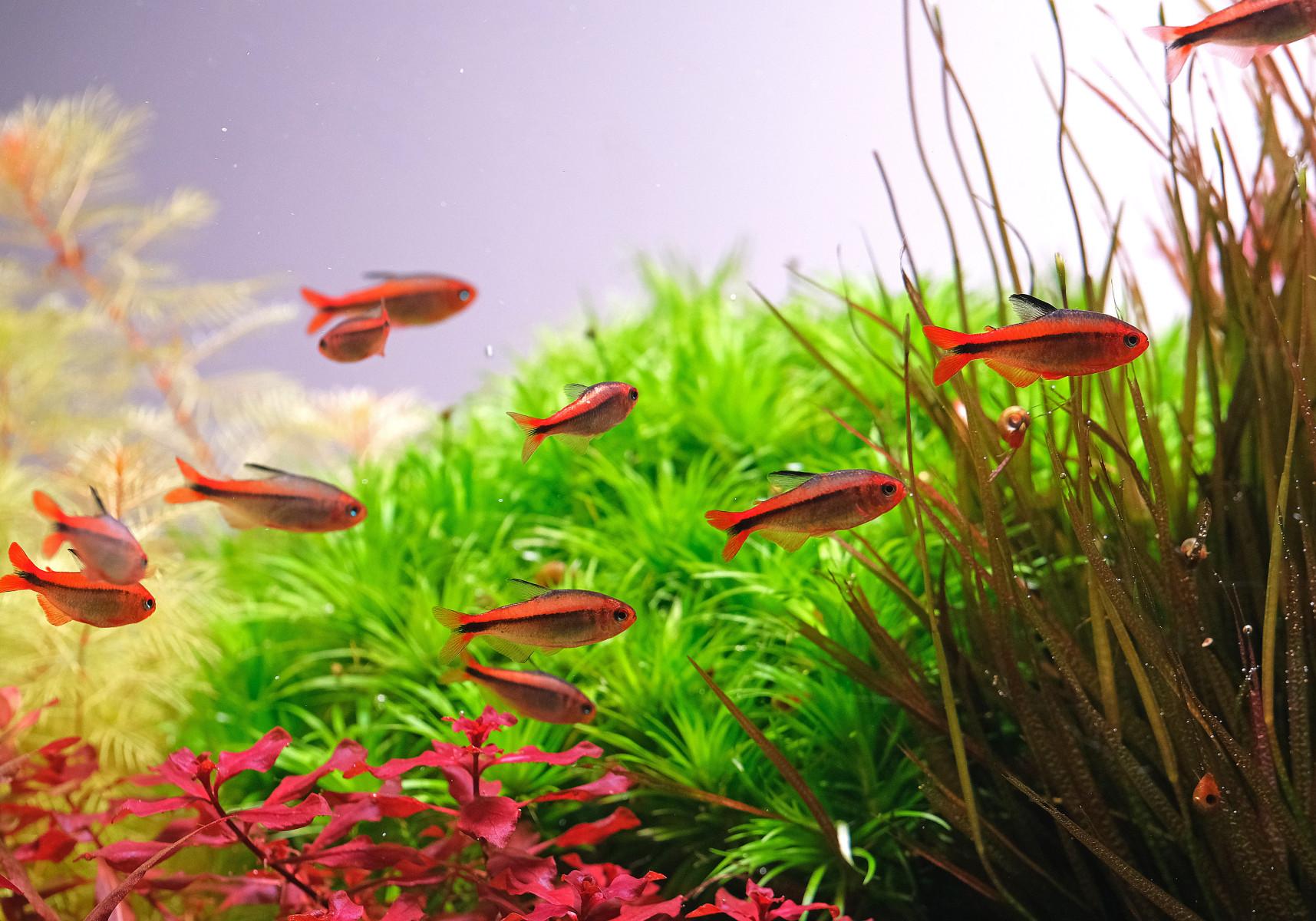
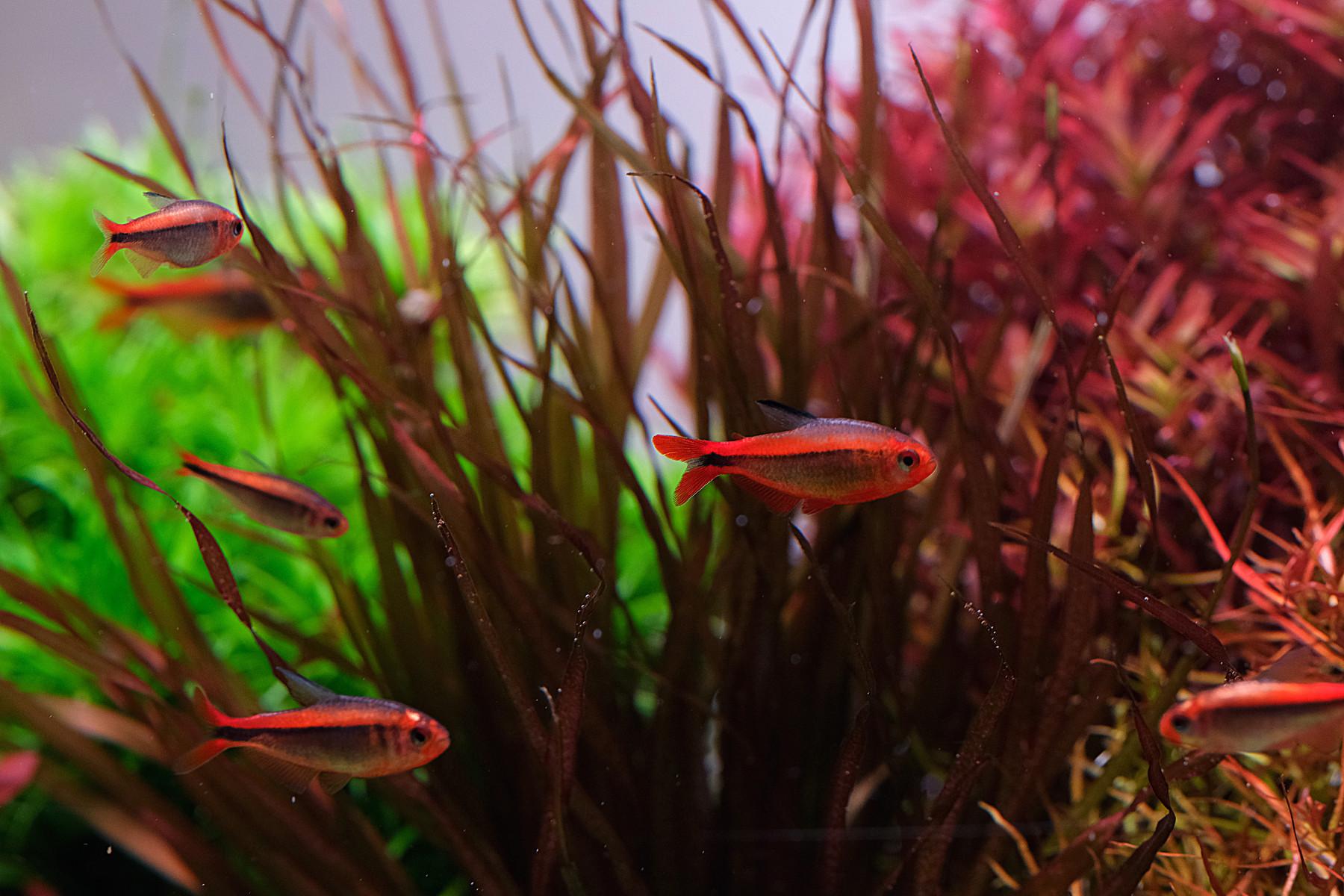
Fire Ant Tetra (Hyphessobrycon myrmex), have distinct red and black patches and are peaceful with other fish species. Active fish that are easy to feed and care for. They cost quite a bit more compared to more common tetras but are becoming increasingly available on the commercial market.
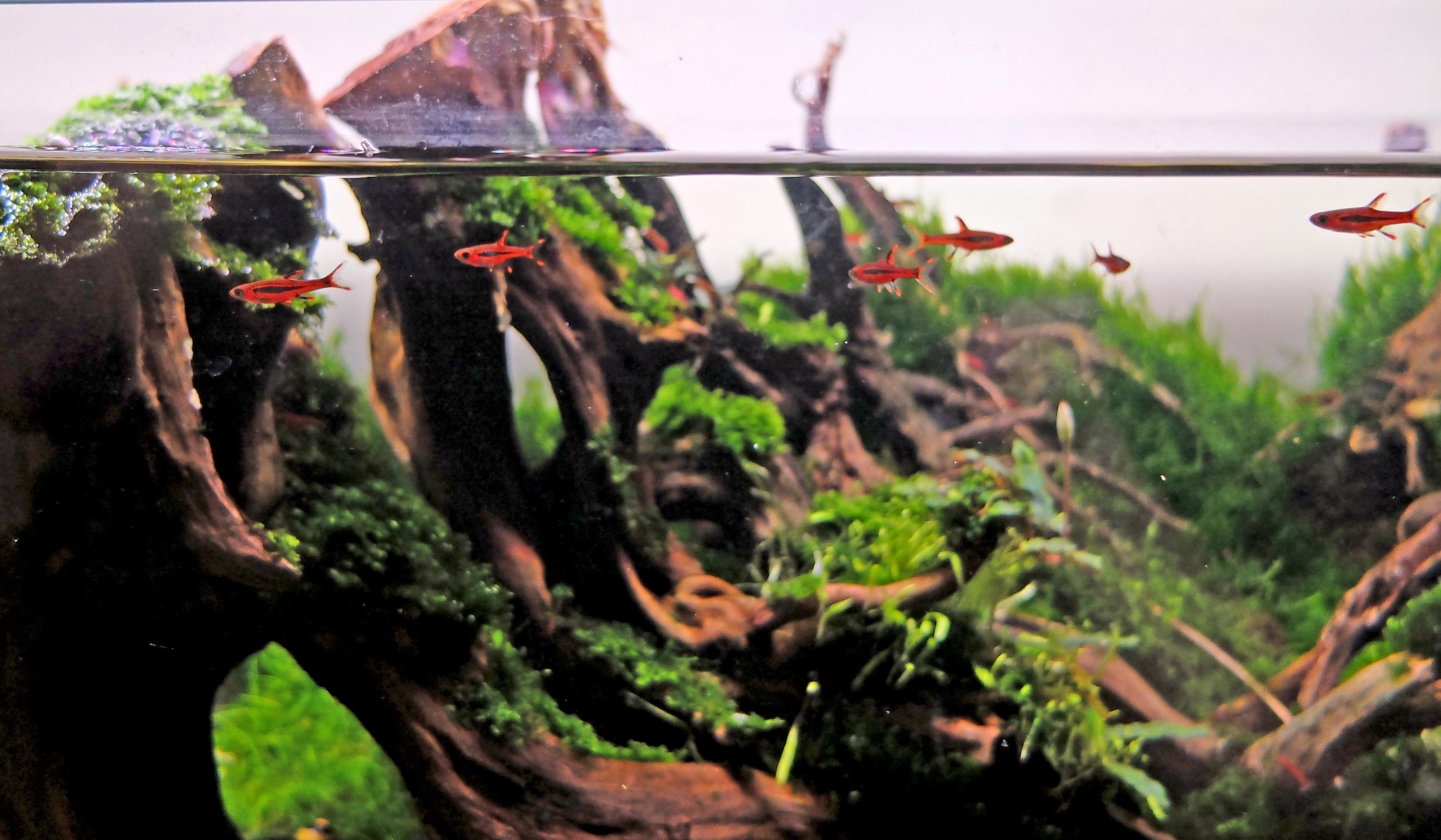
Chilli rasboras (Boraras brigittae), are suitable for nano aquariums due to their tiny size. In larger community aquariums they can be out-competed for food by larger, faster fish. Best kept in a species aquarium.
What makes a fish suitable for a planted aquarium?
Fish-and-plant compatibility is not a single variable. It is three layers stacked on top of each other, and a species that passes two but fails the third still ends in tears.
Axis one: bioload. Every fish exhales ammonia through the gills and adds organic waste to the water column. A heavily planted aquarium takes ammonia directly through the leaves and converts it to growth. The catch is that bioload must match the absorption capacity of the planted mass. A heavily stocked tank with sparse plants leaves residual ammonia and nitrite the plants cannot mop, and algae can reproduce rapidly under those unbalanced conditions - within a fortnight if the plant mass is insufficient. Aim for fish whose total length is roughly one-tenth the volume of the tank in litres, and test ammonia and nitrates after adding each new wave of fish.
Axis two: behaviour. This is where most beginners get blindsided. "Peaceful" is not the same as "plant-safe." Silver dollars are peaceful and uproot every stem they touch. Goldfish are peaceful and treat Vallisneria as salad. Buenos Aires tetras school nicely then graze the carpet down to the substrate. Large cichlids, deep-digging botiid loaches, and any fish large enough to uproot stems while turning belong in an unplanted tank, not here. The planted aquarium is a living structure: protect it.
Axis three: water parameters. Most planted-tank keepers run 20 to 26°C with a pH of 5+ to 7+ once CO2 is dialled in, GH of 3 to 10+, and soft to moderate alkalinity. Tap water works for the vast majority of setups unless it is very soft (GH under 2) or has a very high pH above 7.8, in which case your plant options narrow to specific species like Vallisneria, Egeria, and hornwort that genuinely tolerate alkaline water. Match all three axes, and the fish thrives without special intervention.
Which small fish are the best fit for a freshwater aquarium with plants?
Nano fish earn their reputation for a reason. They carry a low bioload, move beautifully in large schools, and occupy a visual scale that makes even a 20-gallon tank feel like a wild river.
Tetras: The tetra family offers great contrast across swim zones. Cardinals and rummy nose tetras are beautiful fish that school tightly the moment they feel safe - keep them in groups of eight or more, not a few scattered singles. Ember tetras are super cool nano options, warm-orange and barely larger than a thumbnail. Lemon tetras are underrated, bright in mid-water, and pair well with other tetras in larger schools. Note that Buenos Aires tetras are technically tetras but will destroy a planted scape - they are the exception, not the rule.
Rasboras: Tiny and colourful, rasboras are perfect for planted aquariums. Chili rasboras (Boraras brigittae) are the red speck of smaller tanks and love hiding through dense stems. Harlequin rasboras are more forgiving shoalers - one of my favourite fish for a beginner's first planted freshwater aquarium. Keep any rasbora species in groups of six or more to prevent stress.
Corydoras: Pygmy corydoras (Corydoras pygmaeus and C. habrosus) are fun bottom feeders that actually school mid-water as well as along the substrate. Unlike most bottom dwellers, they do not dig. They forage the substrate surface for micro-foods that accumulate around rooted plants and plant debris, which keeps them occupied and the tank cleaner. A smaller school of six to eight pygmy corydoras is enough for most tanks.
Guppies and Endlers: Guppies can thrive in planted tanks and come in unique colour varieties, but research the water parameters before committing - guppies and mollies prefer harder water. Endlers (Poecilia wingei) are beautiful and reproduce quickly in planted tanks; they tolerate softer water better than standard guppies and stay small enough for nano setups. One note: if you have lots of plants to hide fry, expect a population. Fill the tank accordingly.
Pea Puffers: Carinotetraodon travancoricus is one of the most interesting fish species for a planted setup. They require a diet of frozen bloodworms and live snails, and they will eat pest snails off your substrate and hardscape. They shoal in groups in the wild. However, aggressive individuals may also pester tank maters. Best kept in groups with faster, short-finned tankmates - they nip fins with enthusiasm. A well-planted aquarium with plenty of room and visual breaks through rocks and hardscape reduces their aggression significantly.
Amano Shrimp: Not fish, but worth every mention. Caridina multidentata - the Amano shrimp - is one of the most effective algae crew members available. They graze surface algae from hardscape and leaves without touching the plant tissue itself. They do not breed easily in fresh water, so the population stays controlled. In hard water setups, check that your GH is not above 8 before adding them.
How can you tell if a fish is right for your planted tank?
The signals that matter are behavioural and show up within a week. The signals that lie are mostly cosmetic and show up in the bag at the store.
Right signals - watch in the first ten days:
-
Tight schooling within 48 hours. Cardinal tetras and rummy nose tetras shoal up the moment they feel safe. If your cardinals are still drifting solo on day five, the tank is too bright, too open, or too newly stocked. Schooling fish should be kept in groups of six or more as a floor - eight to twelve is where behaviour normalises.
-
Eating with confidence. Ember tetras and chili rasboras tell you everything at the food drop.
-
Use of the designed swim zone. Pearl gouramis at the surface, harlequin rasboras in mid-water, pygmy corydoras along the substrate. If a mid-water fish is glued to the back corner, your flow is wrong - not the fish.
-
Plant condition unchanged at the 14-day mark. Anubias barteri var. nana leaves crisp and clean, Bucephalandra rhizomes untouched, Vallisneria standing straight.
Wrong signals - decorative, weak information:
-
Colour intensity in the store tank. Store lighting is bright. Store water is hard and high in TDS. Cardinal tetras that look electric under store lighting often look pale at home for the first week.
-
"Friendly" label on the store sign. Friendly to humans means absolutely nothing about plant safety or fin-nibbling tendencies.
-
One fish "looking happy" in a group of six. Schooling fish in a group of three or four are not happy. They are surviving.
-
Online compatibility charts that give every fish species a green tick. The charts almost never account for tank size, planted density, or substrate choice.
The myth to slay here is the loudest one on the forums: any peaceful fish works in a planted tank. False. Plant safety, schooling behaviour, and water-parameter match are separate gates. Peaceful is the floor, not the answer.
How should you stock fish in a planted aquarium?
-
Stock schoolers in proper numbers, not a few of each. Cardinal tetras, ember tetras, and rummy nose tetras need groups of at least eight, ideally twelve. Six is not a school. Six is a sad survey group with elevated cortisol. Tight schools reduce stress, increase eating confidence, and look dramatically better in an aquascape than scattered singles.
-
Test ammonia and nitrates after adding fish, not before. A densely planted tank absorbs nitrates efficiently - you may read near 0 ppm at the 24-hour mark, which is normal and healthy. A spike above 5 ppm that persists tells you the plant mass is insufficient for the bioload. Add plants before adding more fish.
-
Skip the herbivores and the diggers, no matter how good they look. Silver dollars, goldfish, large plecos, large cichlids, Buenos Aires tetras, and burrowing loaches all eat or move plants. If you want those species, build a fish-only tank for them. The planted aquarium is not a compromise; it is a specific system design, and large destructive fish break it.
-
Stock in two waves, not one. Add the schoolers first, observe for ten days, then add the bottom dwellers and surface fish. A single large stocking spike - say, fifteen fish at once into a new aquarium - crashes the biofilter even in a planted tank. Plants help, but ammonia from a mass injection moves faster than leaf uptake. Overstocking leads to ammonia and nitrate spikes that algae notice before your test kit does.
-
Quarantine new fish before introducing them to an established scape. Aquasoil, slow-growing plants, and CO2 infrastructure are expensive to expose to ich, columnaris, or velvet from an LFS bag. Two weeks in a bare-bottom quarantine tank at 26°C with a sponge filter saves the whole aquarium.
How does fish selection differ in low-tech vs high-tech planted tanks?
Low-tech tanks with no CO2 injection lean toward the calmer, hardier end of the list. Without CO2, plants grow more slowly, and their nitrate and ammonia absorption rate drops accordingly. Stocking density should sit lower - roughly one centimetre of adult fish per litre as a ceiling. The safe choices here are harlequin rasbora, ember tetra, chili rasbora, neon tetra, sparkling gourami, and pygmy corydoras. Many people also keep discus, large angelfish, and other species require warm, high-oxygen, fast-turnover water, and use a large filter to support the larger fish population.
High-tech tanks with CO2 injection can conceptually hold a higher bioload because plants run faster and absorb waste more aggressively. The discipline, however, is tighter. CO2 levels of 30 to 40 ppm during the photoperiod can stress fish if surface agitation is weak at night - dissolved CO2 displaces oxygen after lights out, and you will lose fish before you understand why. Keep an air stone on a timer for off-photoperiod hours. Cyanobacteria, worth a separate mention, thrive in warm, still water with low oxygen - the exact overnight condition a high-tech tank creates if surface movement is neglected. Good flow and overnight aeration prevent it.
For a deeper read on schooling fish behaviour and aquascaping integration, the 2Hr Aquarist "Best Schooling Fish for Planted Tanks" piece in the freshwater livestock library covers species by zone and biotope. For the tank-design side, the 2Hr Aquarist "Fish Tank vs Planted Tank" article unpacks the structural differences between fish-first and plant-first systems.




Share:
Los mejores bancos de peces para acuarios plantados
What are the best algae eaters for a planted tank?