

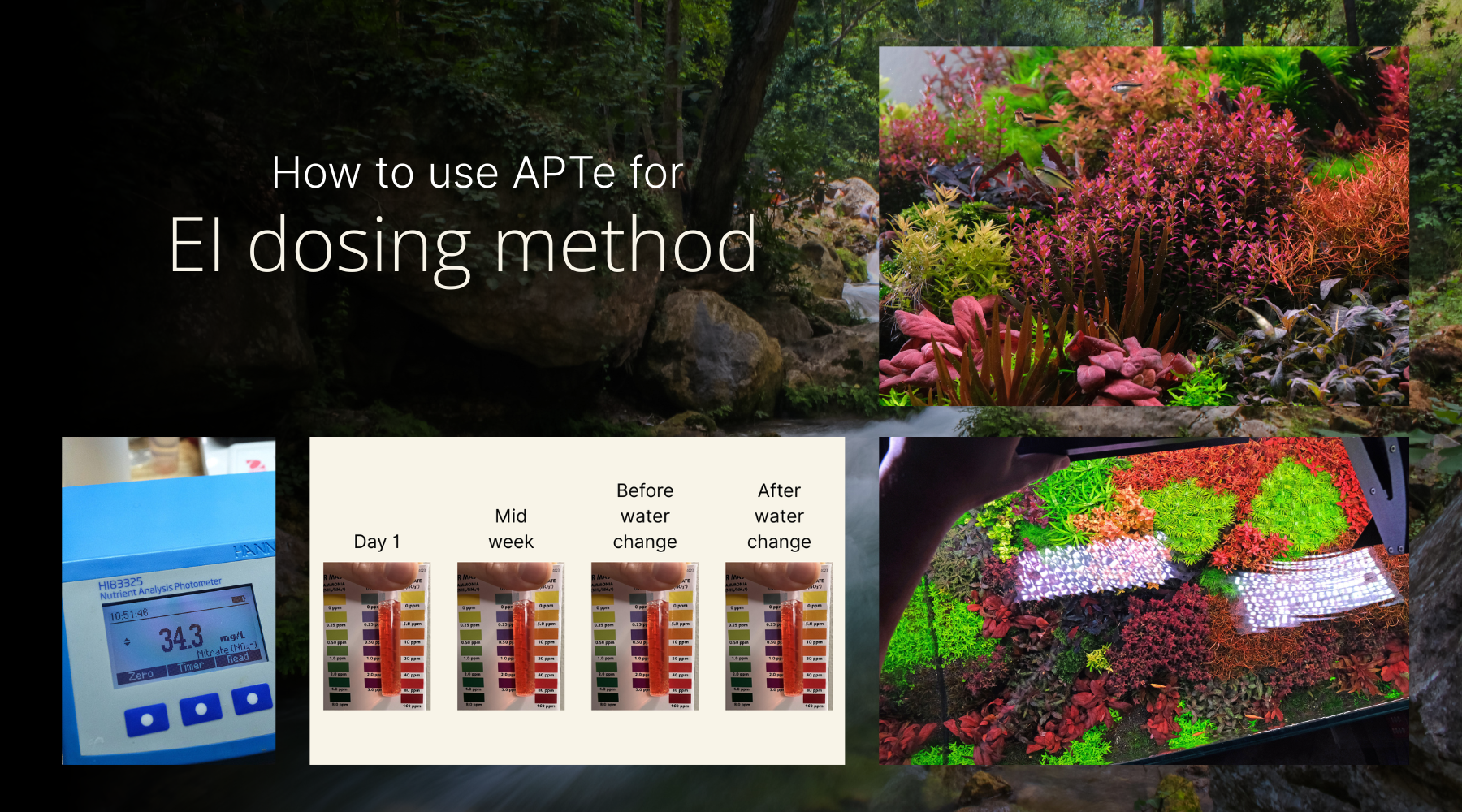
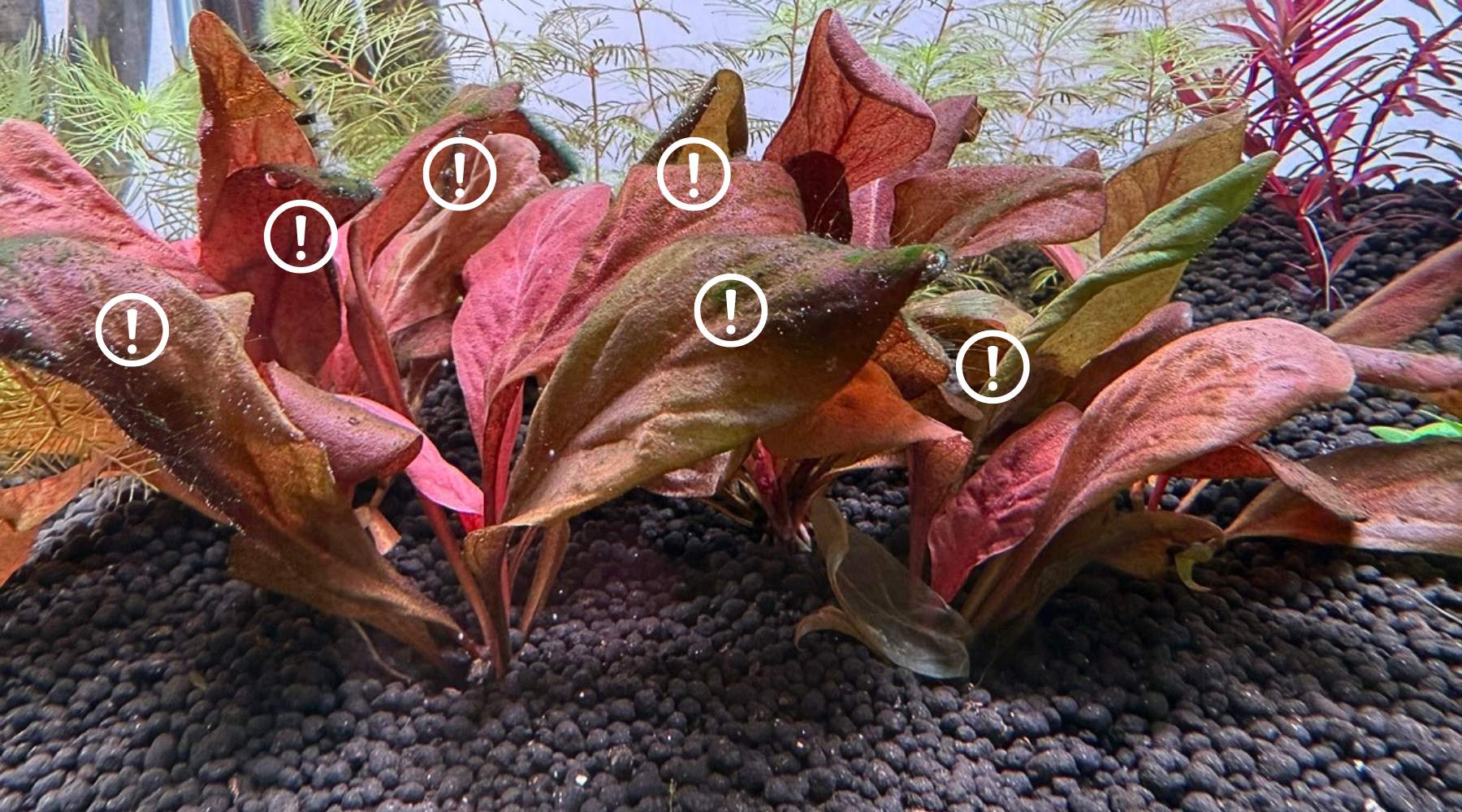
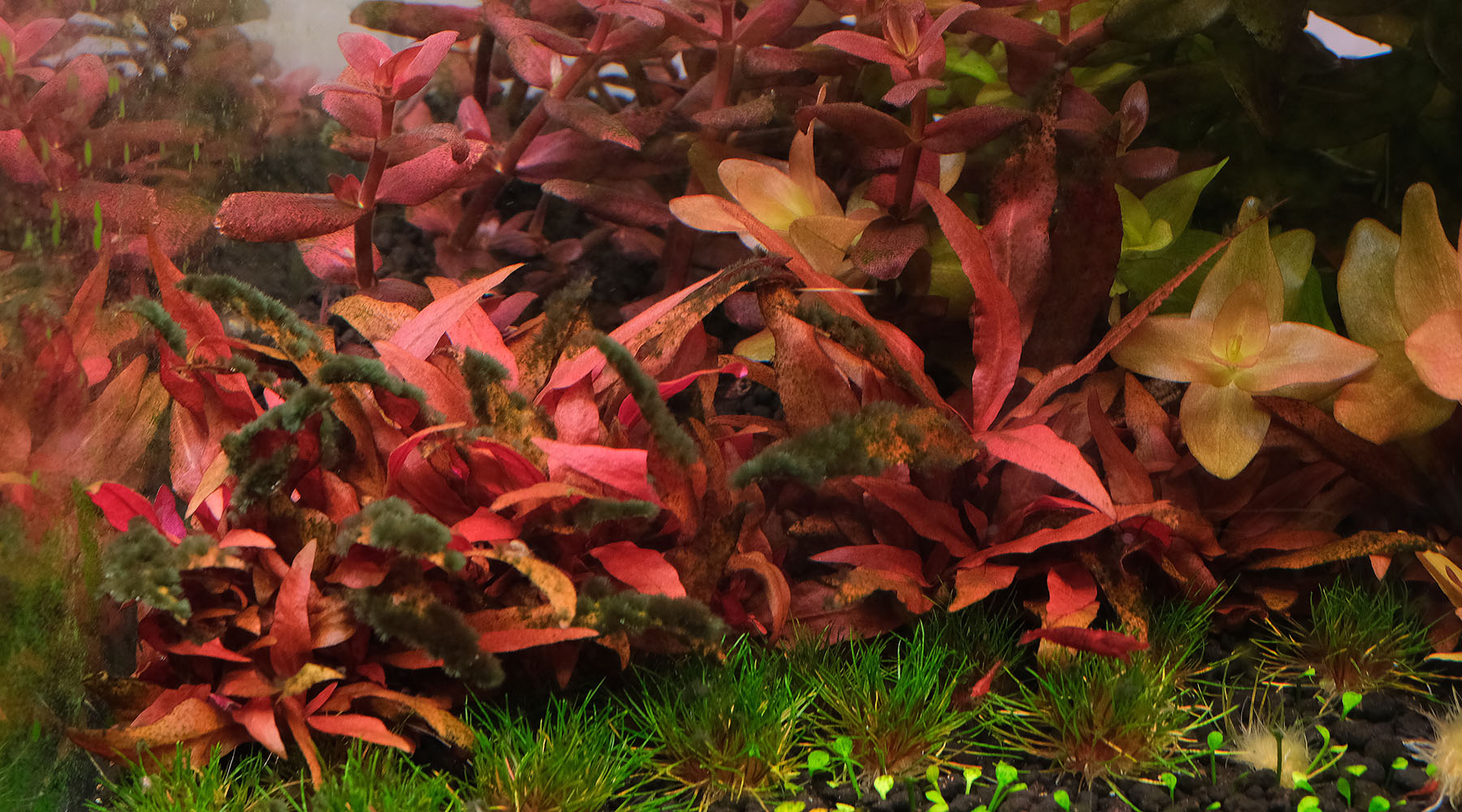
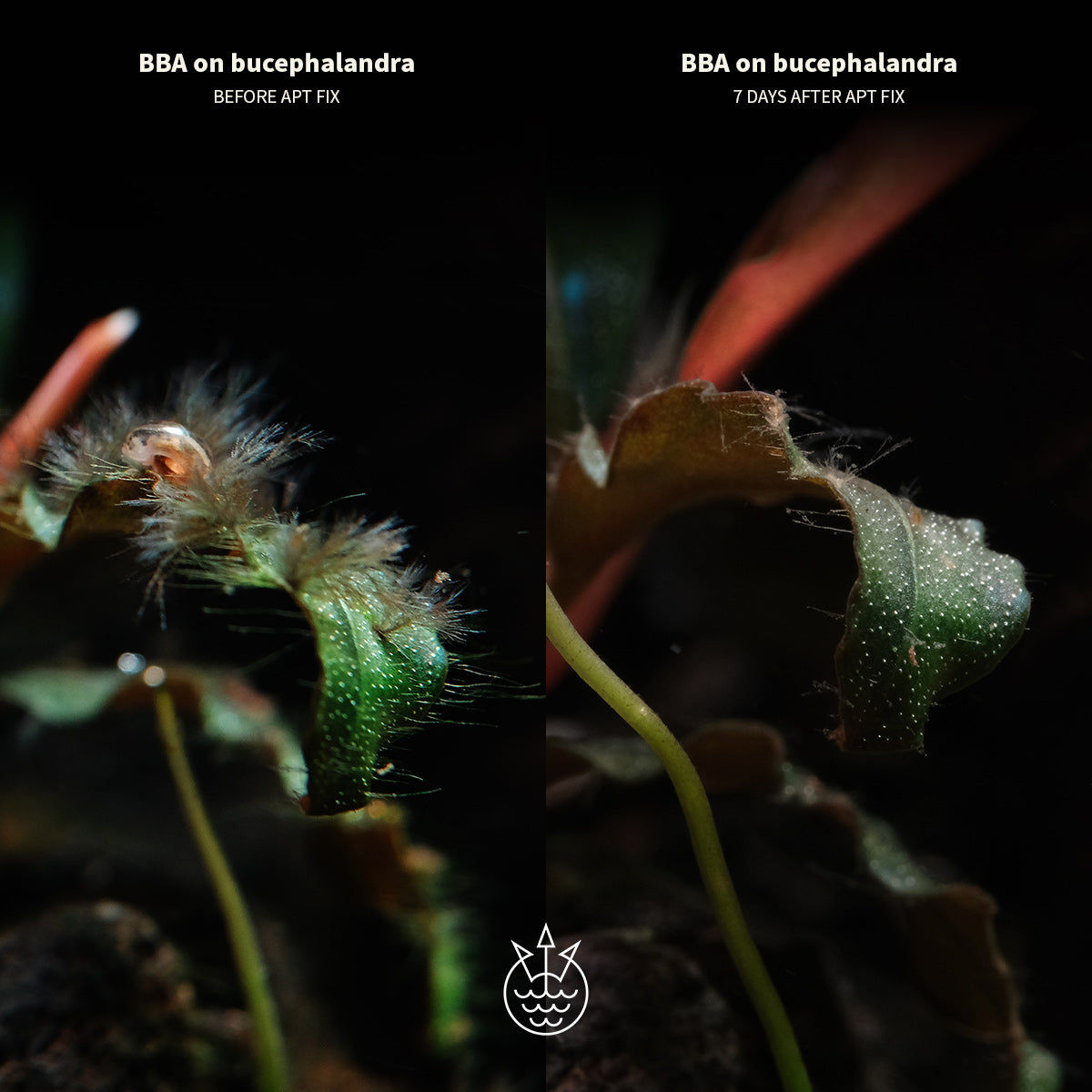
The EI dosing methodology aims to have a high level of residual nutrients in the water column that plants can draw from. This approach allows plants to grow faster and more robust than approaches that rely on a leaner water column. However, the main downside of this methodology is that large nutrient level fluctuations (both upwards and downwards) can cause plant adaptation stress, uneven growth, stunted tips, deteriorating older growth and algae. Keeping nutrient levels stable is critical in growing plants well long term. A upward or downward spike of more than 10ppm of nitrates tend to cause plant reprogramming response among more delicate plant species. This often manifest as algae attaching onto old growth on plants.
Starting EI dosing on a tank that has been running on leaner nutrient levels tend to see a fair amount of plant adaptation stress and algae occur. This can be difficult for aquarists with no experience in solving algae issues.
Click here to read up on plant adaptation responses to parameter changes.

The key element that stimulates plant growth is nitrogen, and we will use Nitrates as a proxy for overall nutrient levels in the aquarium. To execute this method you will need a Nitrate (NO3) test kit. Nitrate test kits with higher accuracy at the ranges of (10-20ppm) will work better. Sera and Salifert nitrate test kits work better than API. For aquarists with money to burn, the Hanna Nutrient Analysis Photometer HI83325 gives very accurate readings.
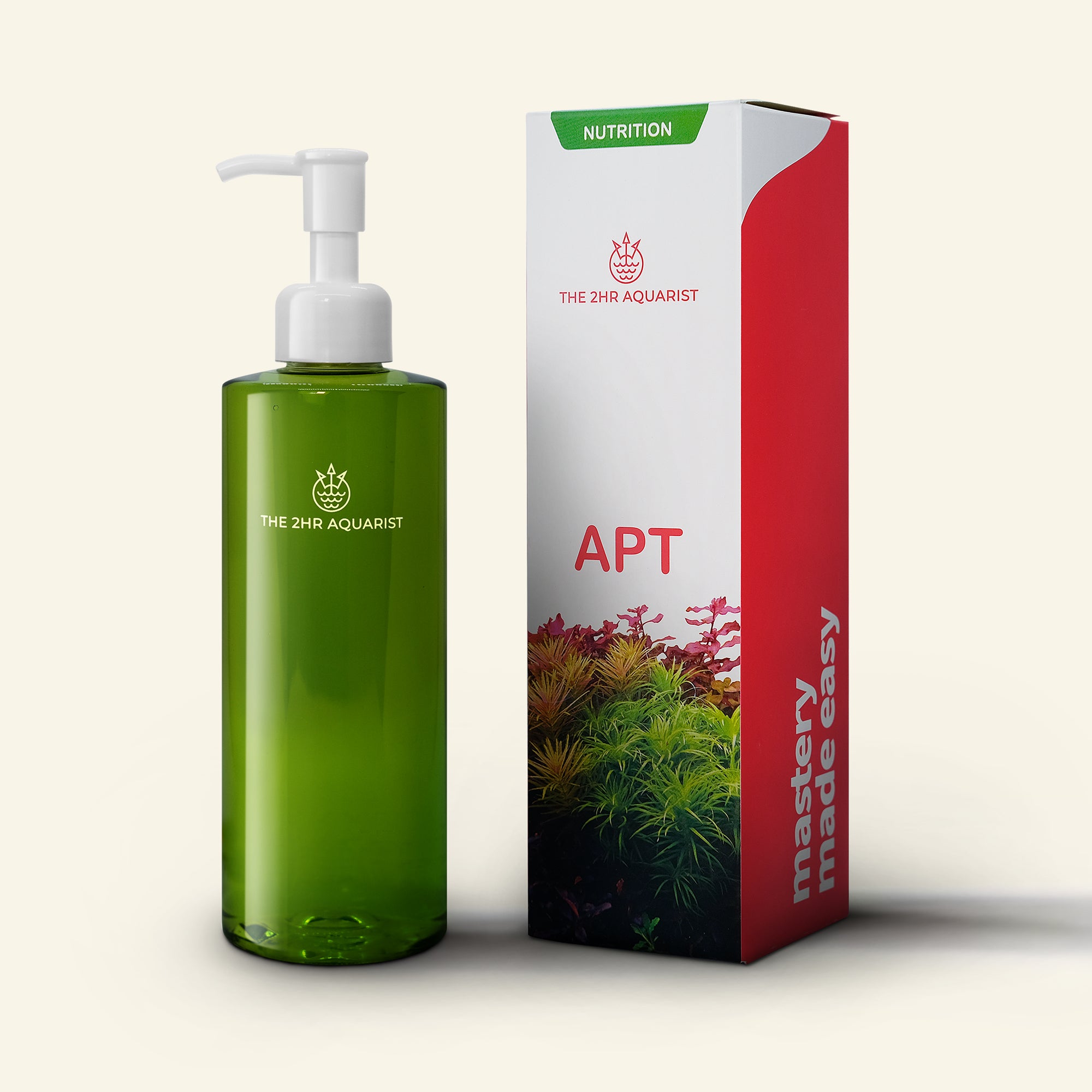
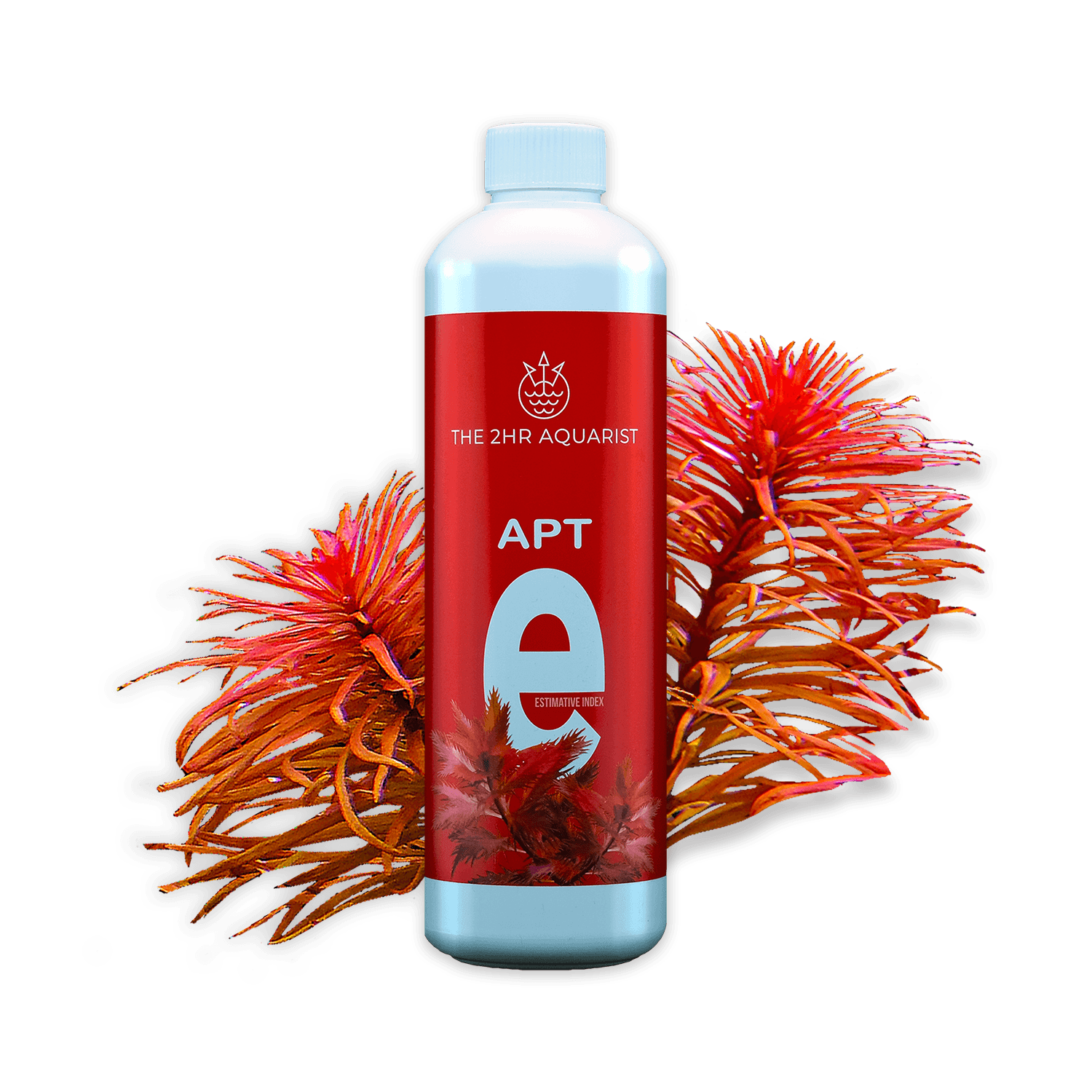
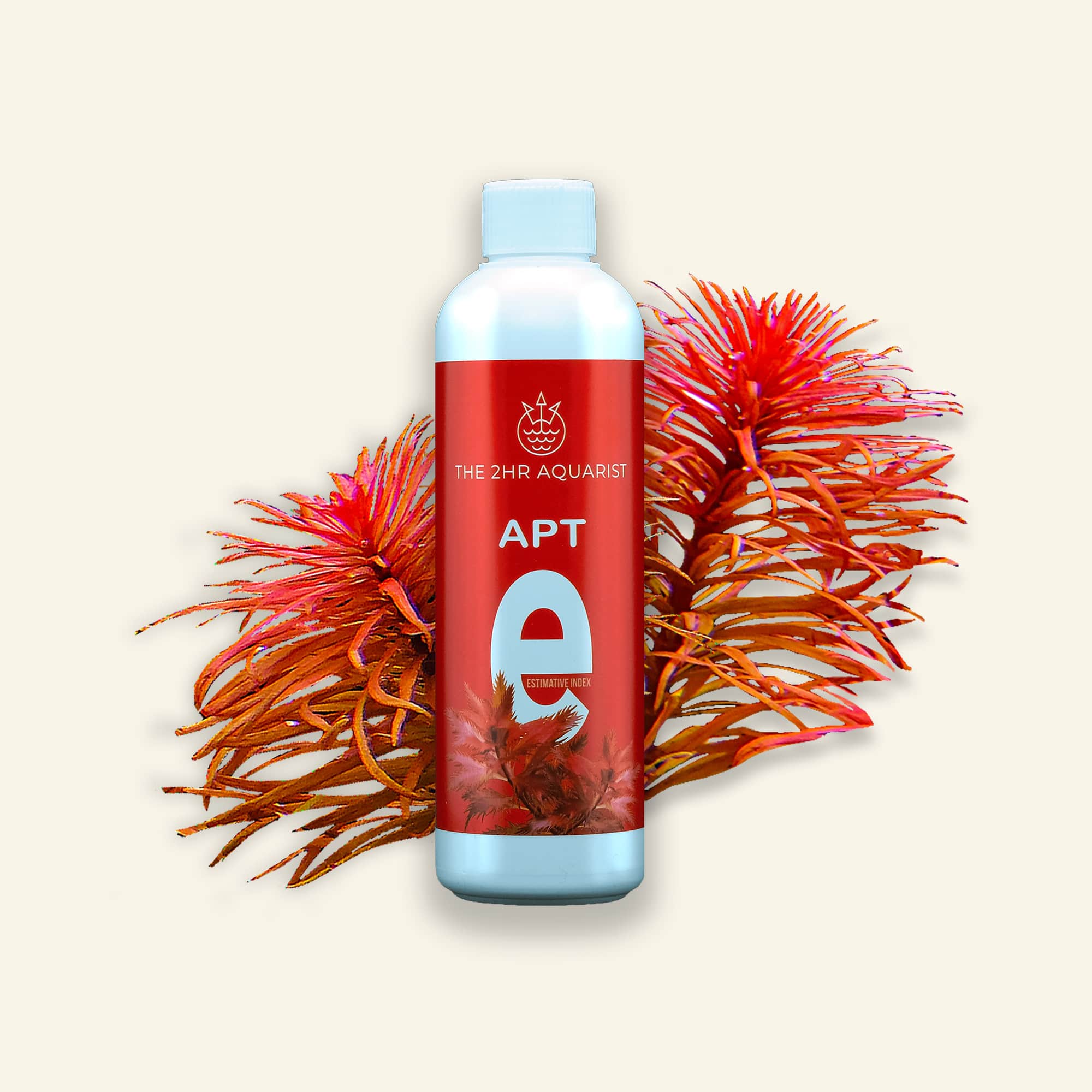
We will describe this approach using APTe dosing.
Equipment you will require:
- APTe, or dosing solution of a known concentration
- Nitrate test kit
- Camera phone/computer to take pictures of nitrate readings

Goal:
The goal of nutrient dosing is to maintain stable nitrate levels in the aquarium across the entire week, targeting saturation levels of between 10-25ppm. We chose this range as the effects of heavier water column fertilization start becoming significant at 10ppm NO3, and many nitrate test kits do not give great solution of results above 30ppm NO3.
In an ideal scenario, when your aquarium dosing is calibrated accurately, the nitrate test at the same time each day will give the same test kit readings, indicating a stable nitrate level across the week.

Starting aquarium at target level:
Choosing a target level. In this example we will use:
- Target nitrate level: 10ppm
- Aquarium size: 300 Litres
- APTe: 1ml Adds 2.3ppm NO3 in 50 Litres of water
If your aquarium starts out at 0ppm of NO3, you will need to add 10ppm of nitrates through APTe.
This results in 10/2.3 X 300/50 = add 26ml of APTe to the 300L aquarium to add 10ppm of NO3.
If your aquarium starts out having 5ppm of NO3, you will need to add 5ppm of nitrates through APTe.
This results in 5/2.3 X 300/50 = add 13ml of APTe to the 300L aquarium to add 5ppm of NO3.
Start daily dosing:
We suggest starting with daily dosing of 1ml APTe per 50 litres. In a 300L aquarium, we suggest adding 6ml~ per day. This will add 2.3ppm NO3. We will be dosing at this rate daily, for the entire week in our example.
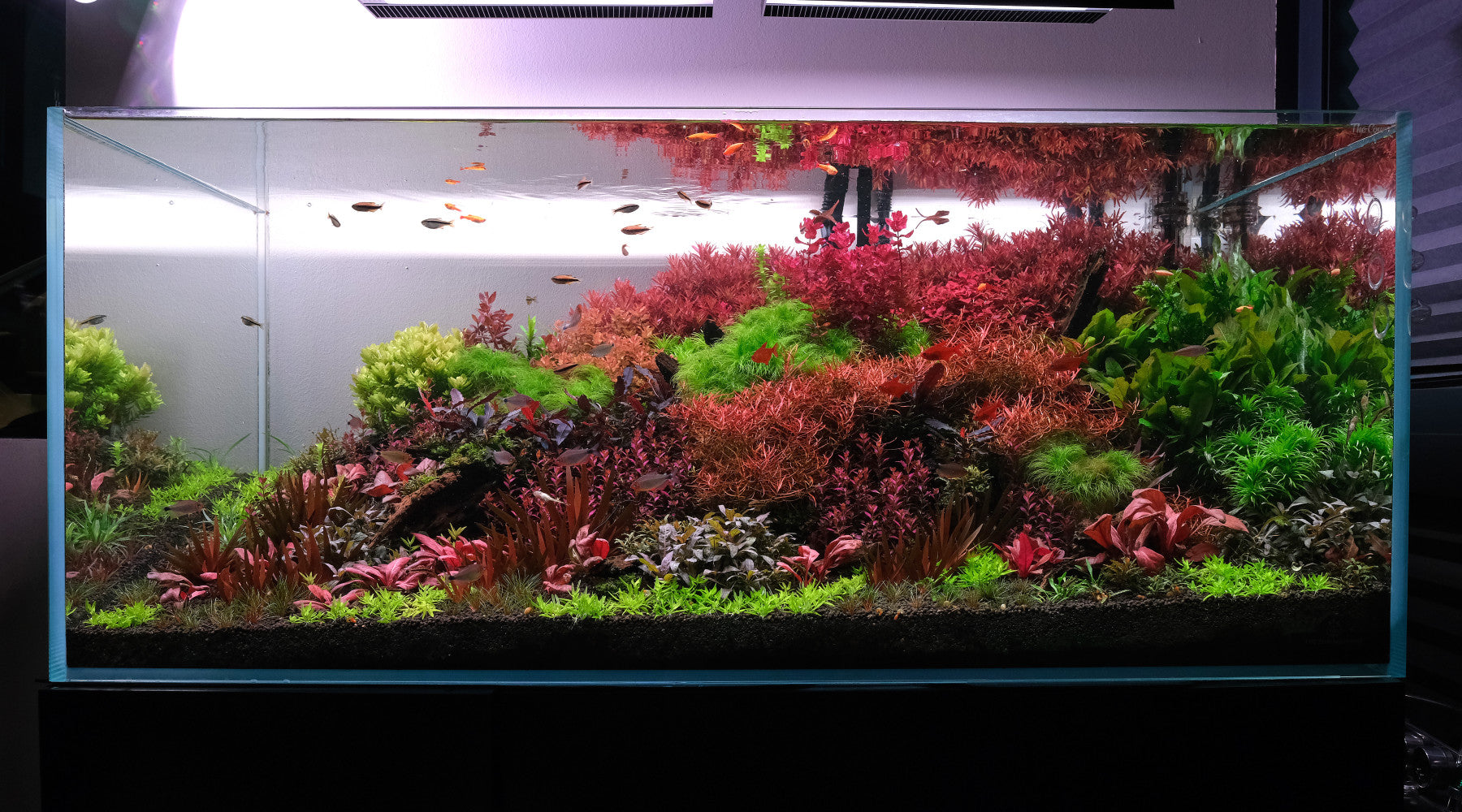
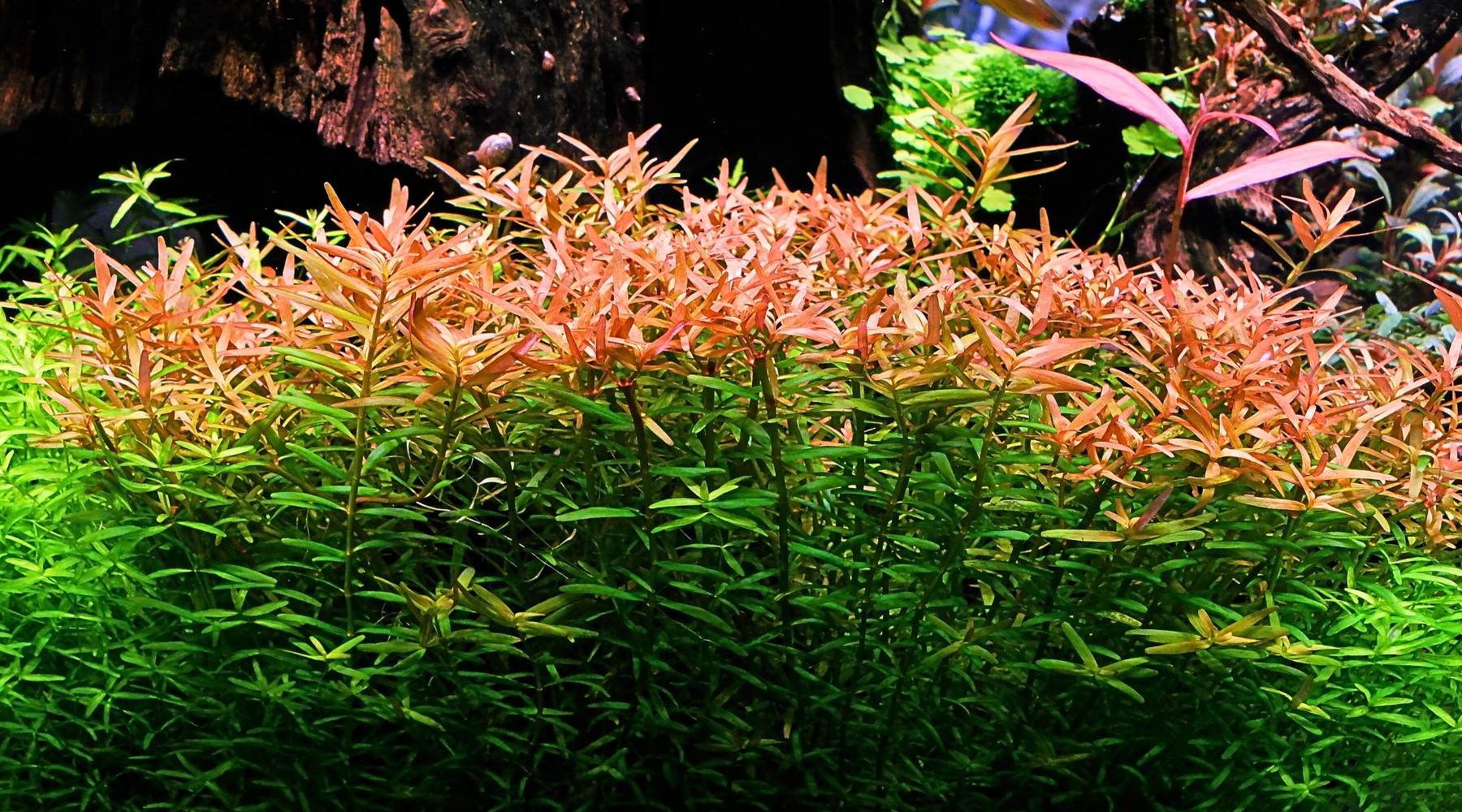
We will be guessing the uptake rate of the aquarium. In the long run, our daily fertilizer dosing should aim to match the uptake rate of the aquarium as closely as possible to have stable nutrient levels across the week. Aquariums can uptake anywhere from 1-5+ppm of NO3 over 24 hours. In our 4ft Rotala florida aquarium, the uptake rate is around 3ppm of NO3 daily.

Checking nutrient levels across the week:
The next step is to check nutrient levels at start of the week, midweek and end of the week using the nitrate test kit. Take pics of the test tube colors in the same location and lighting so that the picture comparisons will be accurate. We recommend taking the pictures every 2 days, say on Monday, Thursday and Sunday for example. Pictures should be taken at the same time of day.

If we are under dosing (uptake rate is more than our dosing rate), we will see the test kit coloration become lighter across the week. If the under dosing is very slightly, we may only see a difference between day 1 and end of the week. If under dosing is the outcome, we aim to increase dosing by 1ml APTe per day for the next week. We will repeat this testing process until the color charts look the same across the week. It may take a few weeks for things to stabilize.

If we are over dosing (uptake rate is less than our dosing rate), we will see the test kit coloration become darker across the week. If the over dosing is very slight, we may only see a difference between day 1 and end of the week. If over dosing is the outcome, we aim to increase decrease fertilizer dosing by 1ml APTe a day for the next week. We will repeat this testing process until the color charts look the same across the week. It may take a few weeks for things to stabilize.
During water change day:
During water change day you will want to replace nutrients lost during the water change. For example, if your tank has 10ppm NO3 before the water change, we will want to target having 10ppm NO3 after the water change.
Using the example above: If the 300L tank above with 10ppm nitrates goes through a 50% water change, we would have removed 5ppm nitrates. To add back 5ppm nitrates, we need to dose 13ml of APTe after the water change. [5/2.3 X 300/50 = 13ml of APTe to the 300L aquarium to add 5ppm of NO3.]
If we do a nitrate test before/after water change, we aim to have the same color appear in the test kit.

Adjustments over time
The uptake rate for planted aquariums change over time as plants mature. Number of fish and changes in feeding also changes amount of nitrate produced by livestock. So even when a stable nutrient regime has been attained, regular monitoring should be done to check on levels.

An aquarium that is freshly planted with low plant mass has much lower uptake rates compared to a more fully grown in aquarium. However, as aquariums reach maturity, and over-crowding sets in, uptake rates also slow down.
Plant observations
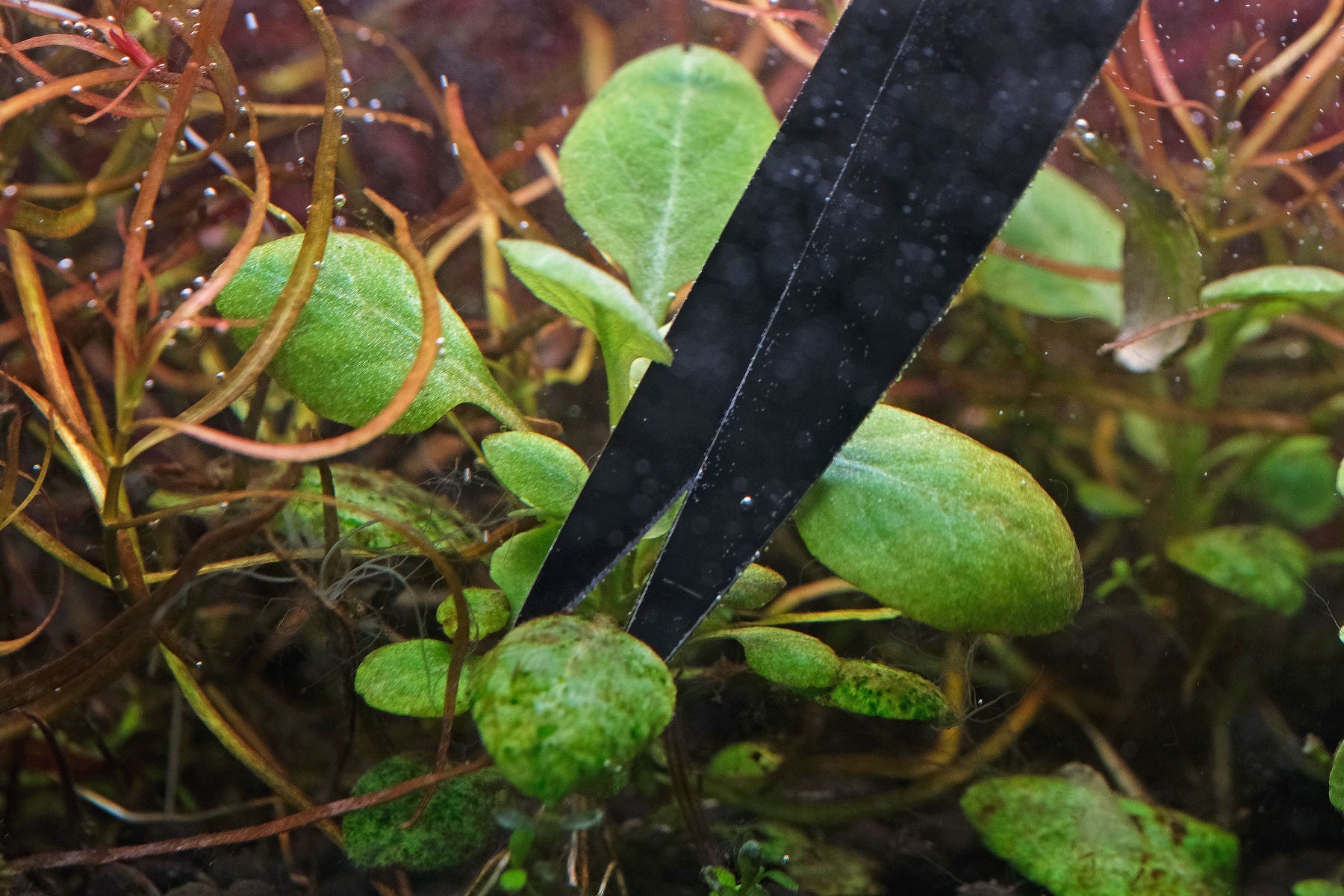
A upward or downward spike of more than 10ppm NO3 tend to cause plant reprogramming response among more delicate plant species. This often manifest as algae attaching onto plants. Unstable nutrient levels in aquariums can also trigger tip stunting in sensitive species such as Rotala macrandra, Rotala tulunandensis and Ammania species.
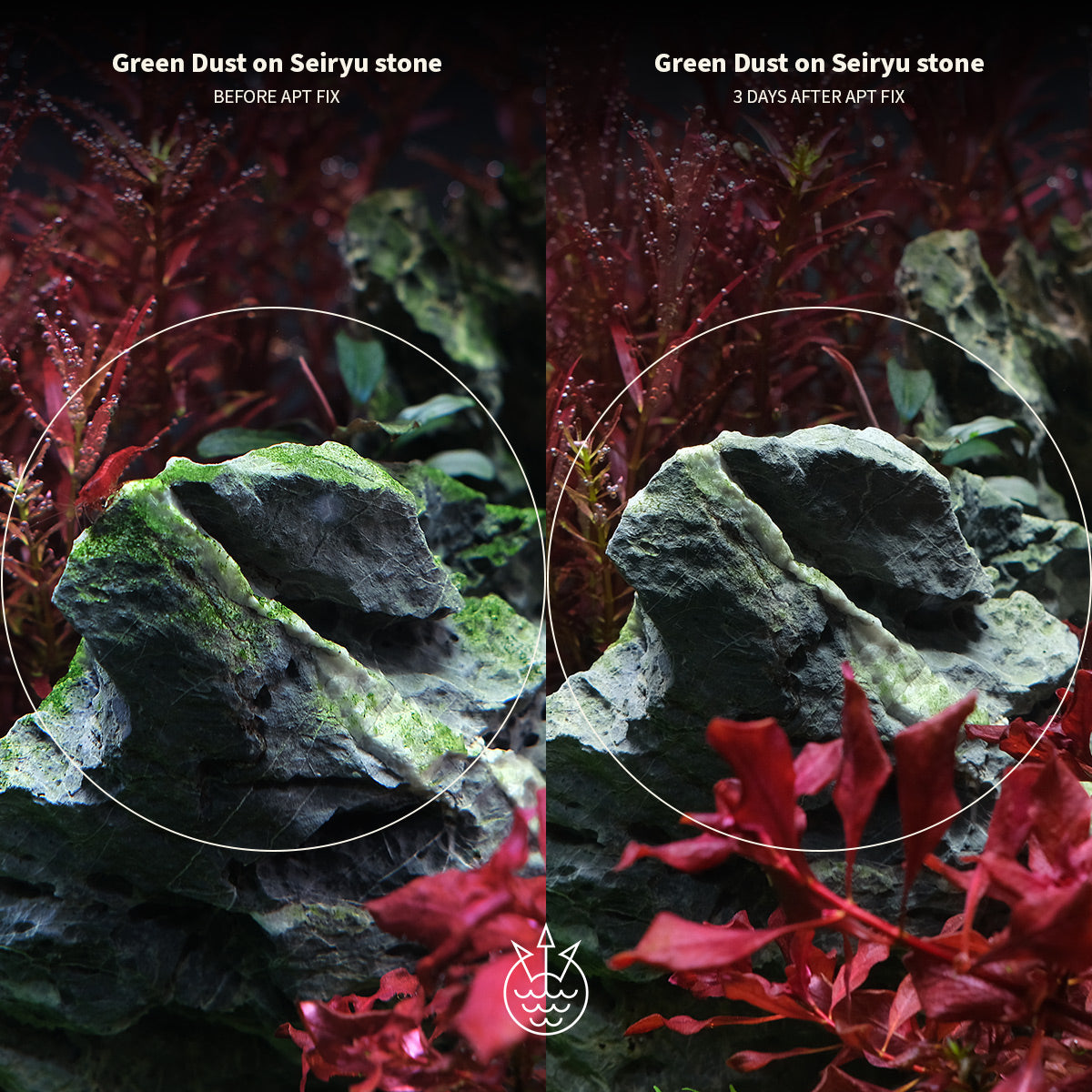
Upward nitrate spikes often also cause Green Dust Algae to spawn on glass. The aquarium's microbial community may take a few weeks to adapt to this change before the GDA stops recurring.


Using rich aquasoil to balance out plant's needs

Using a rich aquasoil allows the substrate to provide another source of nutrients for plants. This gives more leeway for errors in balancing water column dosing. However, aquasoil has to be enriched over time for it to be effective. We recommend adding 1% new ammonia rich aquasoil per month - this can be mixed in with the existing substrate when replanting of plants are done.

Conclusions:
The advantage of having plenty of nutrients in the water column is that all plants grow faster. For new aquarists, this provides faster feedback that they are doing things in the right. When one is certain that plants can draw nutrients freely from the water column, it frees up the aquarist to focus on tuning other aspects such as CO2 levels. Newly transplanted plants will adapt faster, and this can give an edge in the cultivation of difficult species.
The main downside to this approach is that many hobbyists may find it hard to find a dosing approach that maintains stable levels. Hobbyist test kits do not provide great accuracy for dialing in dosing rates. It may take time and a lot of trial and error for most hobbyists to find a dosing regime that works for a particular tank.
Starting EI dosing on a tank that has been running on leaner nutrient levels also tend to see a fair amount of plant adaptation stress and algae occur. This can be difficult for aquarists with no experience in solving algae issues.

To read more on why nutrient stability is important in planted aquariums click here.
To read on how to achieve a high CO2 saturation rate safely click here.










Share:
Por qué es importante la estabilidad del nivel de nutrientes en los acuarios plantados
Good parameters, Good CO2, Good light, Poor plant growth?