
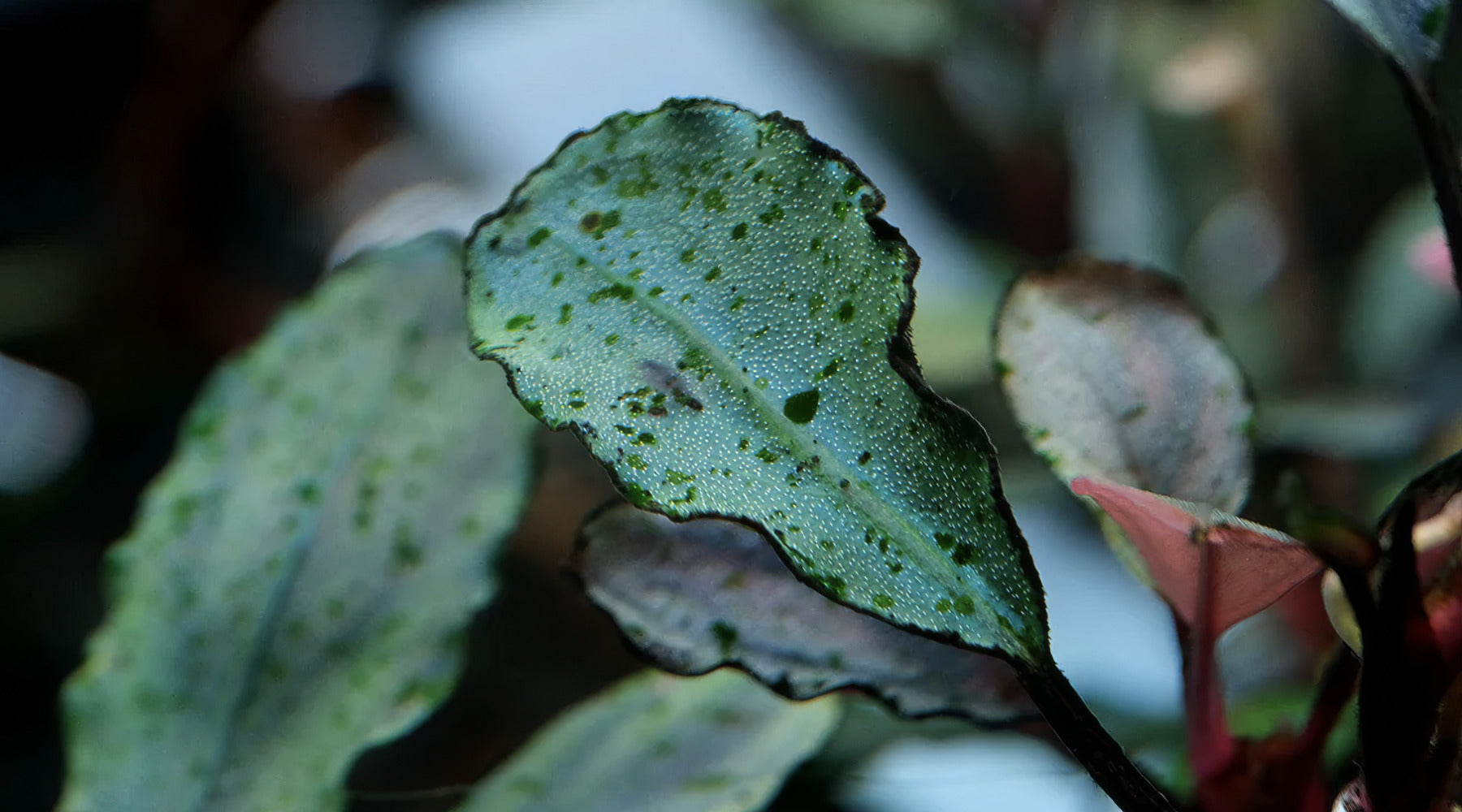
Green spot algae, also known as GSA, initially appears as small dots that can expand into larger spots and may combine with other dots if left untreated. In a planted tank, it most often takes hold on plants with weakened growth due to overly lean nutrient levels. It can also attacked stressed plants through an adaptation phase. If it spawns on hardscape and glass, it can be indicative of a build-up of detritus and organic waste in the aquarium, combined with a lack of plant competition.
Quick answer:
-
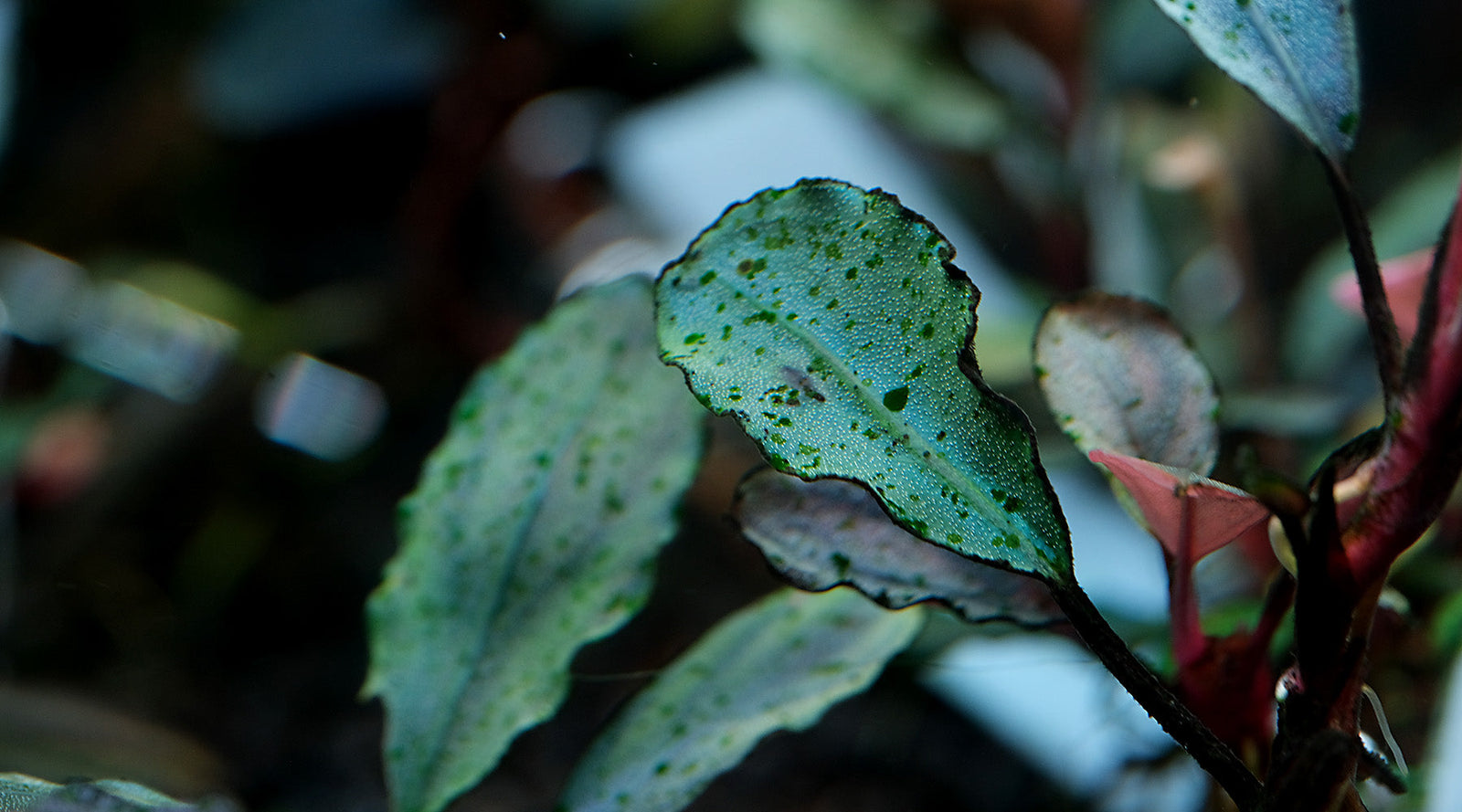
GSA forms hard green dots on glass and on older leaves of slow growers such as Anubias, Bucephalandra, Java fern, and Cryptocoryne species.
-
It is common where strong light hits slower growing plants, especially when plants are not in good health or under going adaptation stress due to environmental changes.
-
In some planted tanks, low phosphate levels also contributes by slowing plant growth and making older leaves easier targets for GSA.
-
The fix is to prune affected old leaves, clear detritus, improve circulation and maintenance, and reduce overly aggressive light.
-
Improve growth parameters and plant health if growth is slow. Add more nutrients in tanks where nutrient levels are overly lean. Healthy leaves produce defensive chemicals that prevent algae from attaching to the leaf surface. Deficient plants become vulnerable to algae and older leaves are abandoned first.
-
Introducing Nerite snails is an effective biological cleanup method for removing GSA, but they are support staff, not management. Most other typical algae eaters such as Amano shrimp ignore GSA.
Why does Green Spot Algae (GSA) Show Up on Plants and Aquarium Glass?
When GSA shows up on hardscape/tank glass it is usually due to organic waste build up and a lack of maintenance. Slow organic waste accumulation and gradual reduction in flow are silent degraders of tank health. As filters clog and circulation weakens, oxygen, nutrients, and general water movement become less evenly distributed. In a planted tank, there can be pockets that become biologically stale long before the whole aquarium looks obviously dirty.
When GSA shows up on plants, it is generally due to 2 reasons
-
Poor plant health due to insufficient Carbon/Nutrients Healthy plants produce defensive chemicals in their leaves that prevent algae from attaching. When nutrient or carbon levels are inadequate, the plant does not have enough energy to sustain all its metabolic functions, plant defenses become weakened. Plants suffering from long term Carbon/nutrient deficiencies grow smaller leaves, take on miniature forms and have slowed growth rates. GSA appears on older leaves first, but also on newer leaves if the plants are deeply deficient.
-
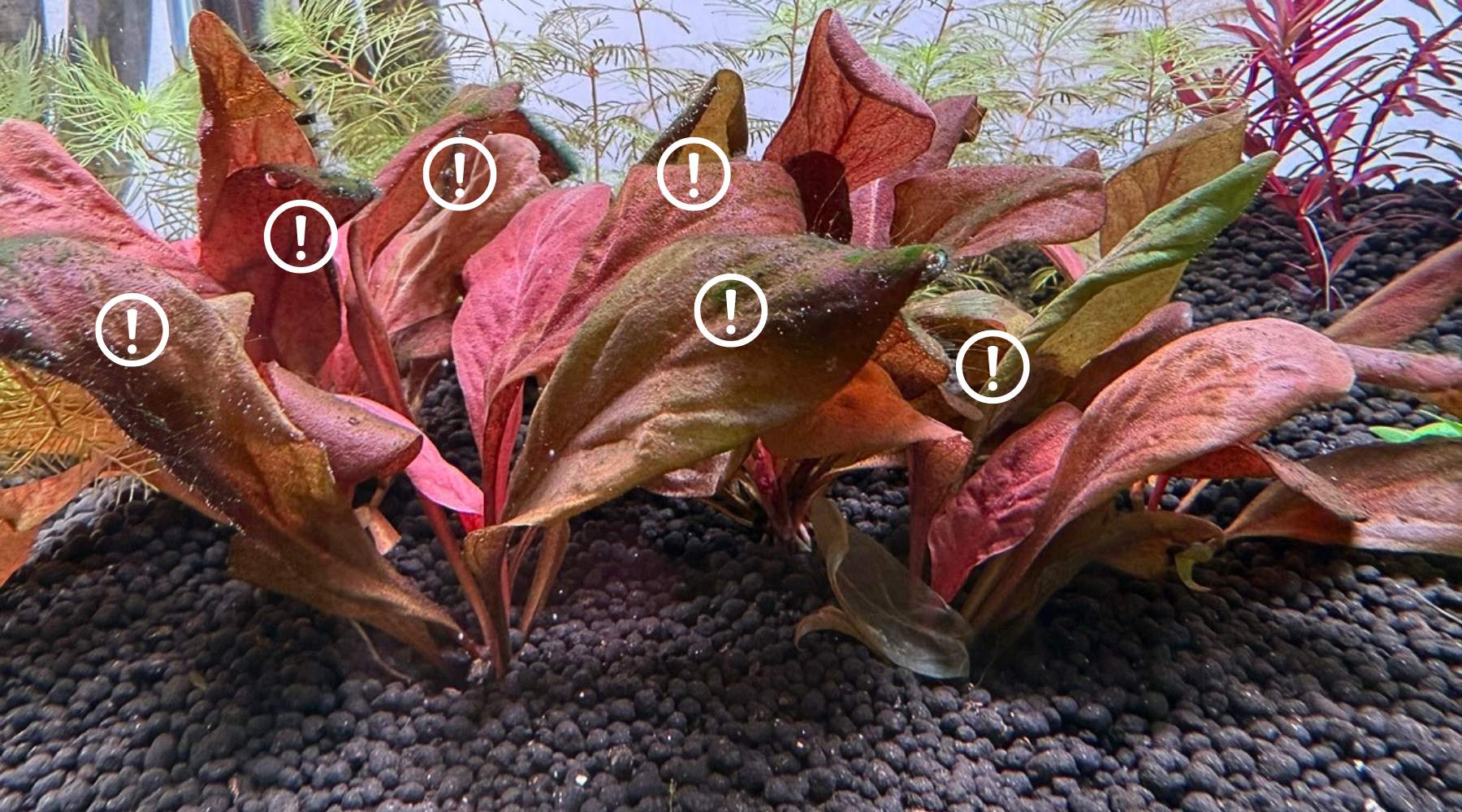
Stressed plant adapting to changing environment or growth parameters When plants under go adaptation stress - such as being transferred into a new tank environment, or when nutrient levels change significantly in the tank. The plant channels energy to new growth and older leaves are often left undefended. GSA infects older leaves, while newer leaves remain clean. New growth is large and well defended against algae.

Green spot algae caused by adaptation stress: Older leaves are affected but new leaves are well formed and clear of algae.
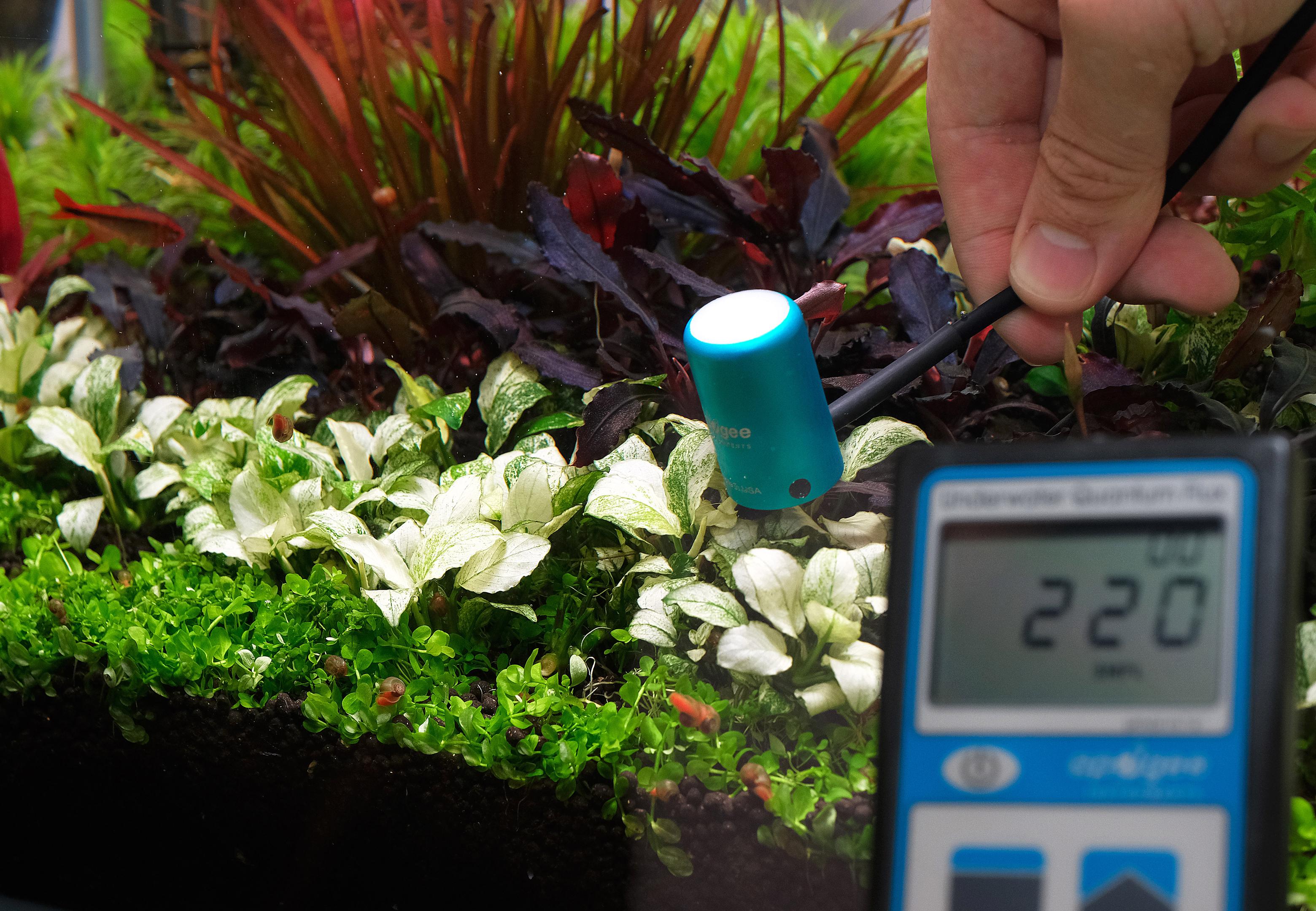
While slower growers are more vulnerable to GSA in high light, high light levels alone is not the cause of GSA. High light merely exposes weaknesses in plant health more quickly.
Does Low Phosphate Cause Green Spot Algae?
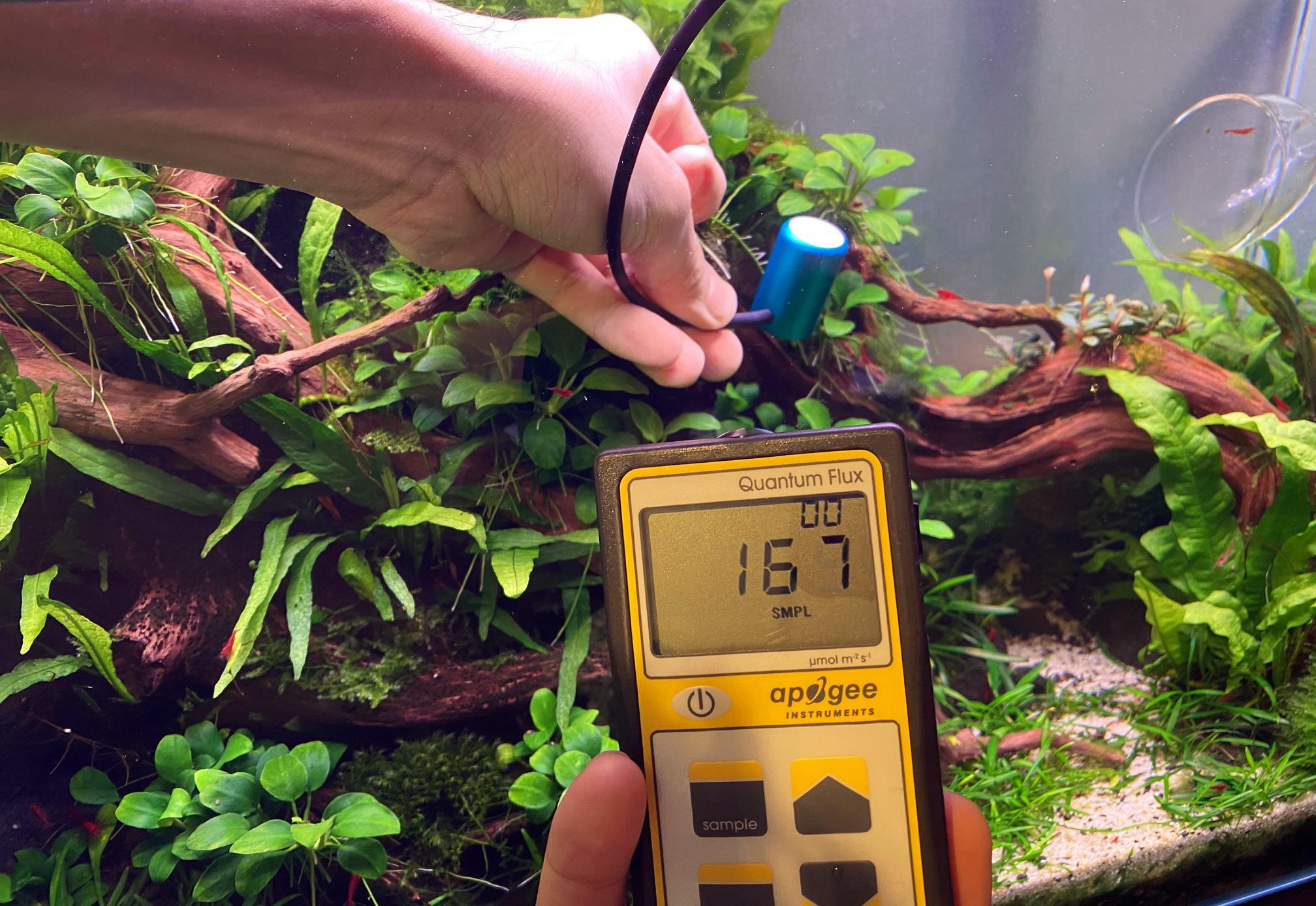
Here is the bad advice: “Phosphate causes algae, so keep PO4 at zero.” No. In planted tanks, plants that become phosphate deficient become more vulnerable to algae. Healthy plants produce defensive chemicals that deter algae attachment, when they are weak, older leaves are left undefended first.
If GSA is the only algae present in a planted tank, and you are not dosing phosphates at all, that may indicate plants are not receiving enough phosphate to be in good health. Keeping phosphates at a sensible non-zero range boosts plant vigor and keeps algae away.
However, low phosphate is not the only cause for GSA. The main mechanism that triggers it on plants is a lack of plant vigor - which can come from adaptation stress or other non-nutrient related angles that affect plant health. If you are measuring positive PO4 levels and are dosing Phosphates regularly, it is likely that GSA on leaves is caused by other factors that affect plant growth (such as compacted rootzones, build up of old growth etc).
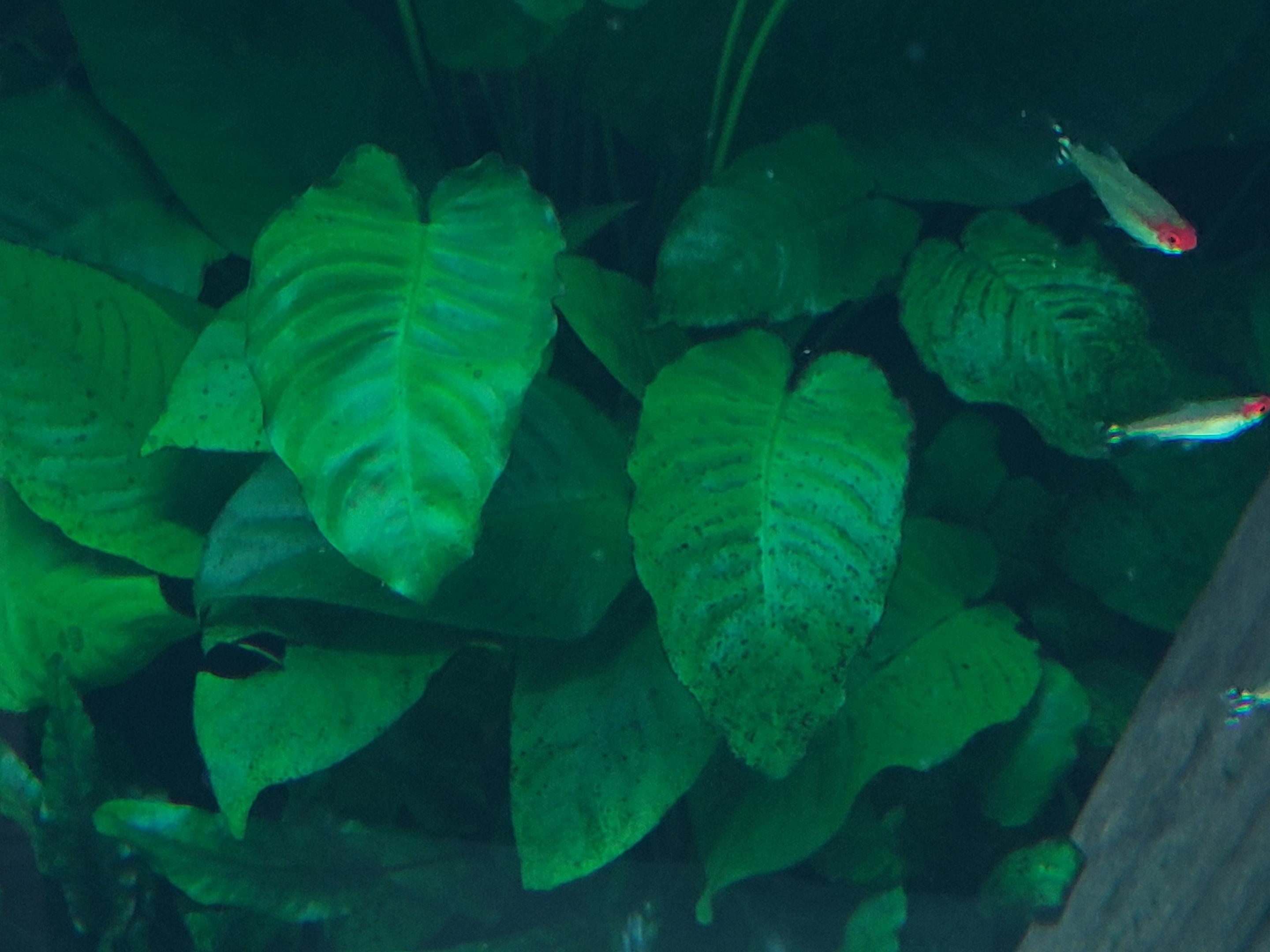
Plants grown in phosphate deficient regimes such as the ADA dosing approach, often get attacked by GSA in the long run.
Green Spot Algae vs Green Dust Algae: What's the Difference?
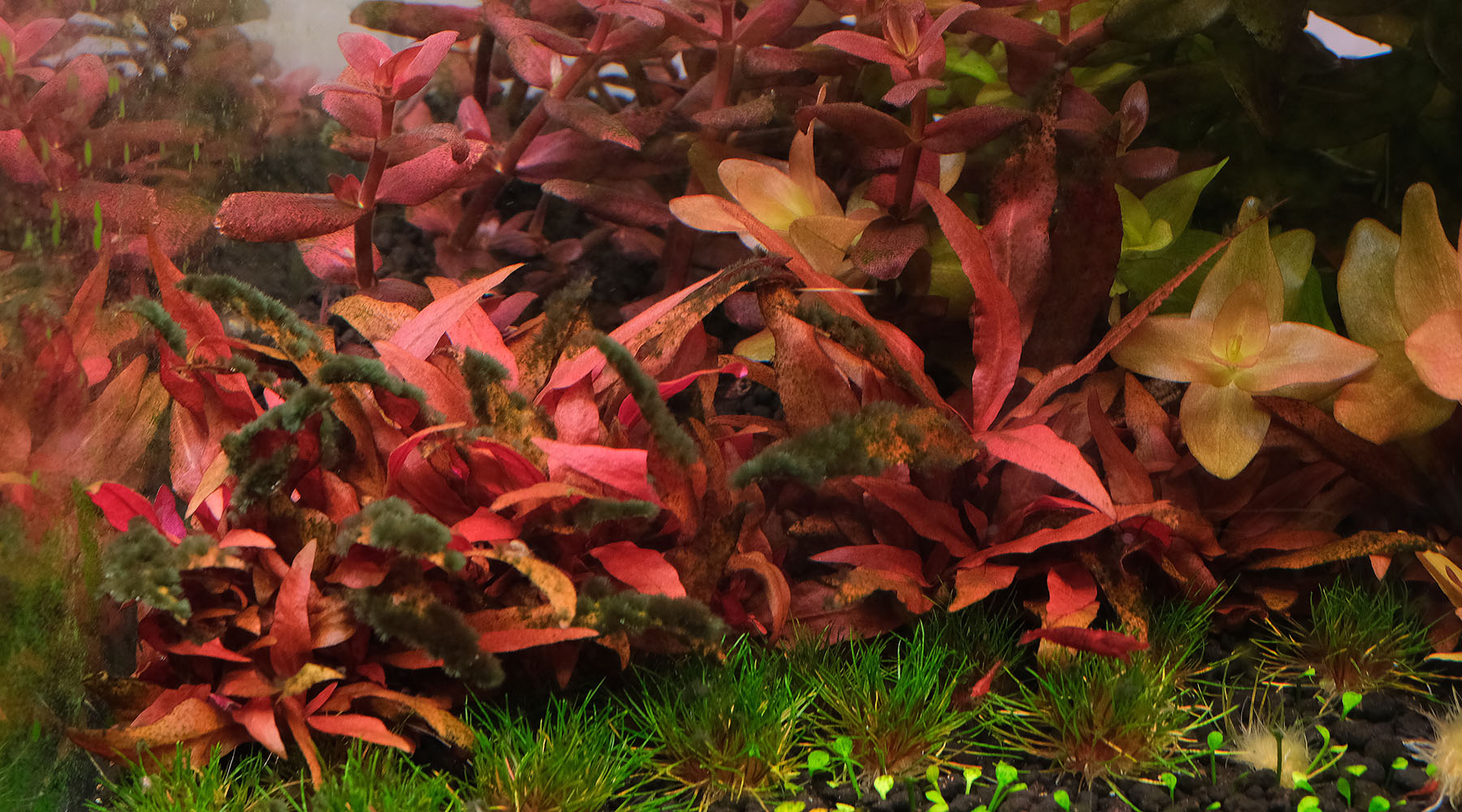
Green spot algae forms small, distinct circular dots that are hard to scrape off. It develops slowly. It often shows up on the brightest patch of aquarium glass and on older plant leaves, especially slow growers. If you need a razor blade on glass, or serious mechanical scraping, that is a strong clue you are dealing with true GSA.
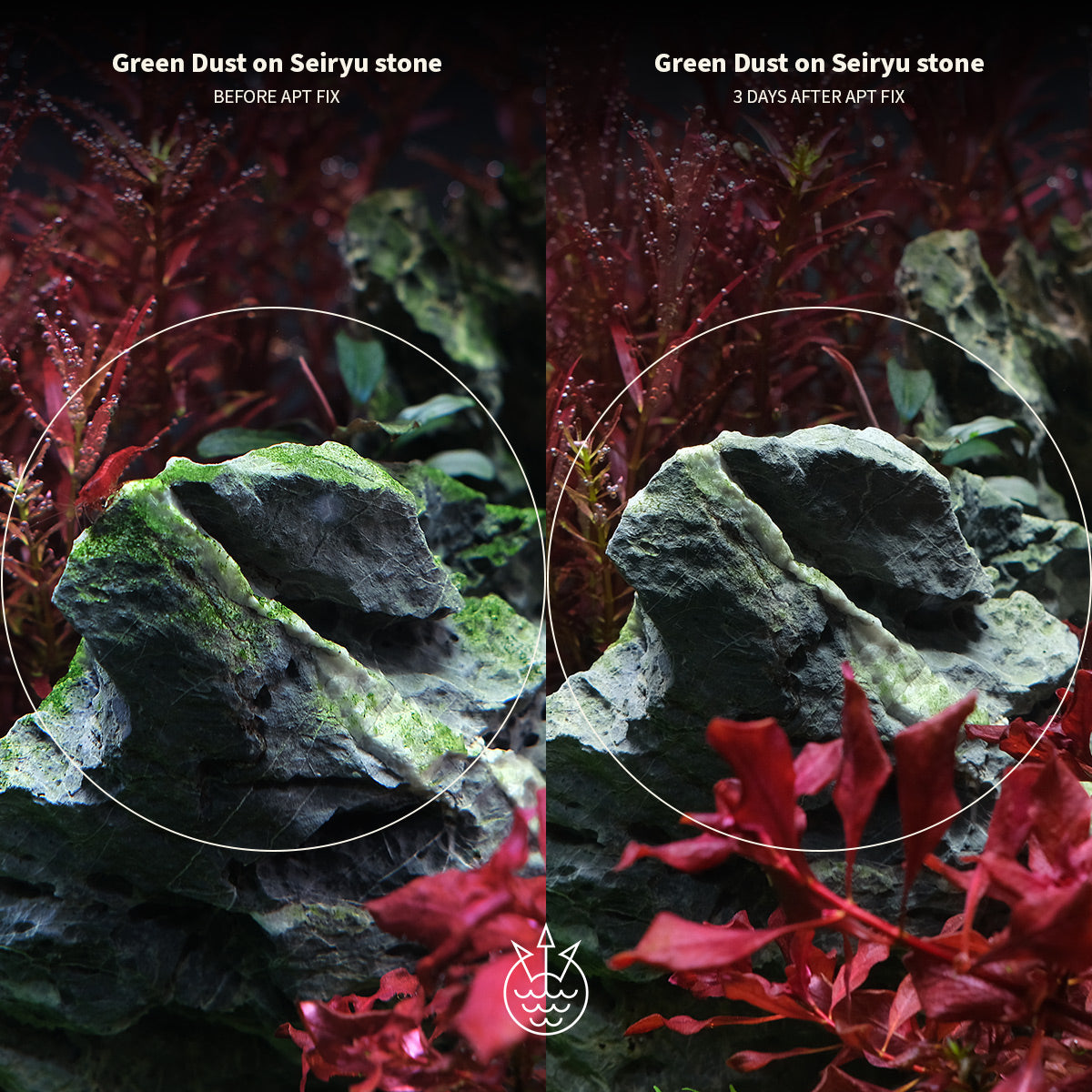
Green dust algae, by contrast, forms a soft green film on the walls of planted tanks. It grows much faster, often within a day or two in high light systems, and it is easy to wipe or scrape off even though it may return quickly. GDA is more tied to biological immaturity, nitrogen waste, nitrate (NO3) spikes, poor oxygenation, and low plant mass. It is not the same problem, even though both make you mutter at the glass.
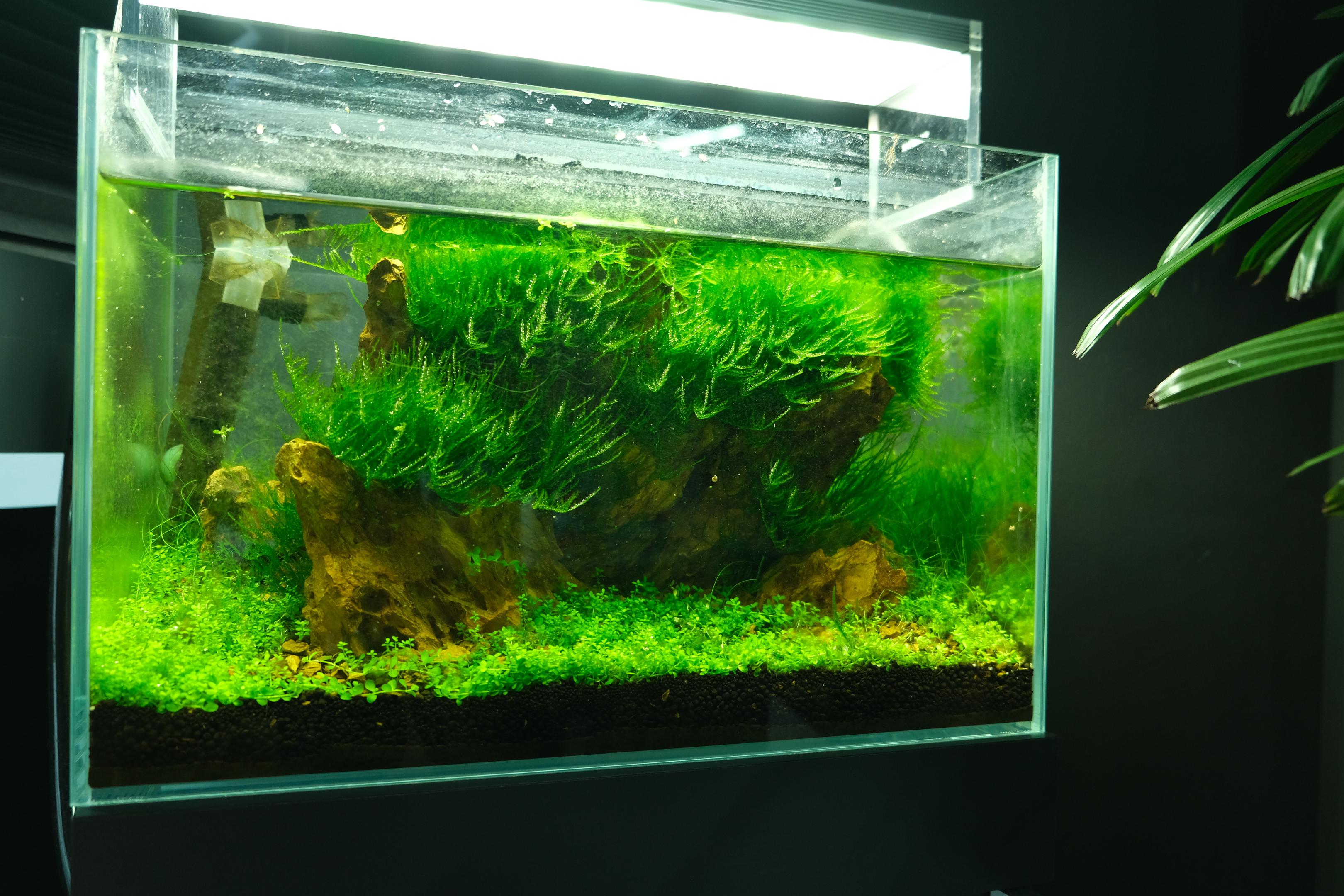
The photo above shows Green Dust Algae (GDA).
How do you Remove Green Spot Algae from Glass and Leaves?
GSA adheres strongly to surfaces and generally cannot be wiped away with a sponge. Physical removal of GSA is difficult and often requires a razor blade for glass tanks or a specialized plastic blade for acrylic tanks. An old credit card also works well as a scraper on flat surfaces when green spot is established. It is not glamorous. It is effective.
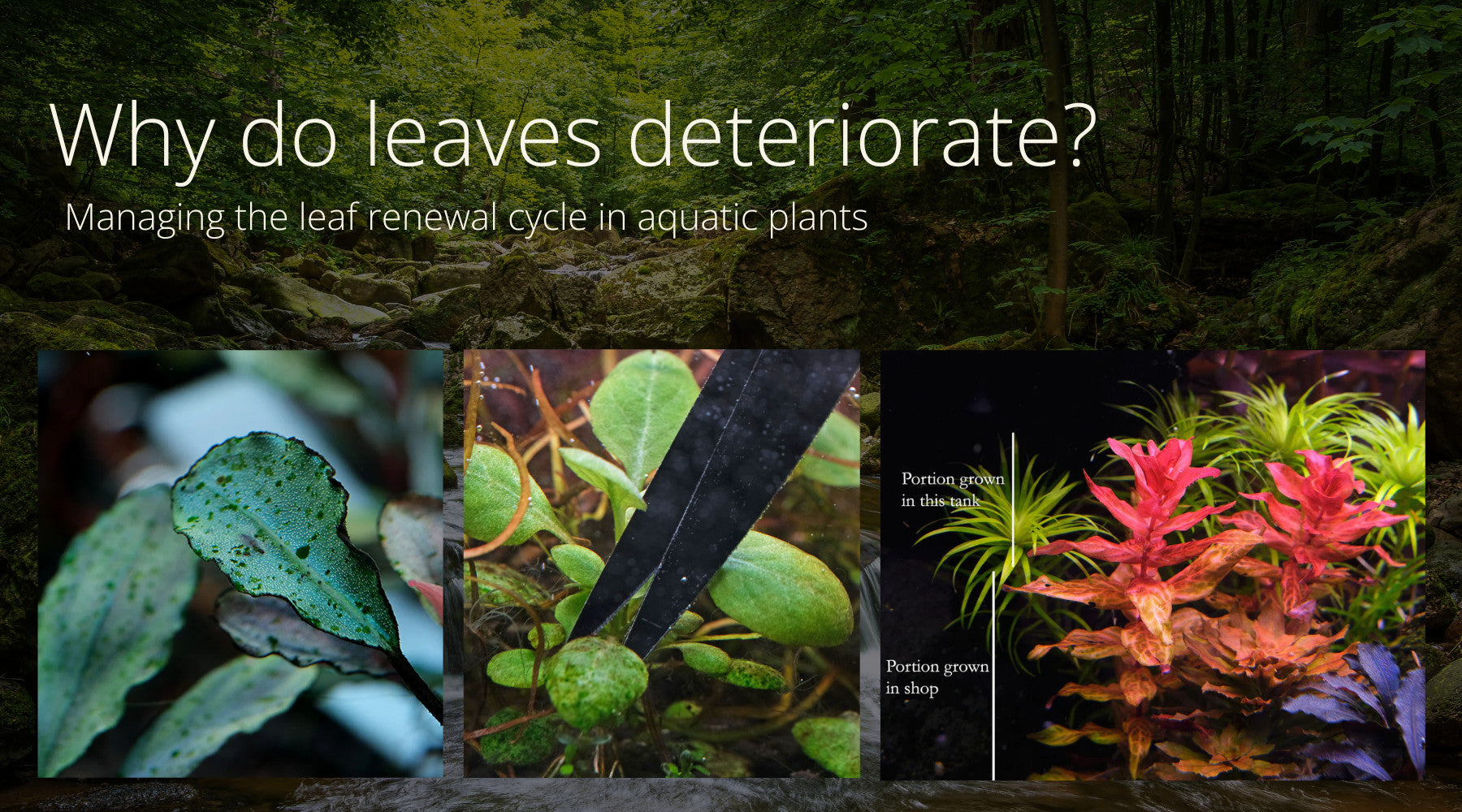
On plant leaves, especially Anubias, Bucephalandra, Java fern, and older crypt leaves, heavy infestation is usually indicates issues with plant vigor and health. Trimming heavily infested older leaves can help the plant channel energy into new growth and reduce GSA. Older leaves have limited plasticity to heal, so even when conditions improve, they are often abandoned by the plant. The plant instead renews itself by producing new leaves.
Do large regular water changes and use a turkey baster to agitate substrate debris while siphoning. Around 50 percent weekly is a good baseline, and during active cleanup many aquarists use 50 to 85 percent water changes to remove floating algae, debris and detritus. Clean the filter if flow has dropped. The point is not ritual. The point is export.
How do you Prevent Green Spot Algae Long Term in a Planted Tank?
The key is about making the environment less welcoming to GSA.
Maintaining a healthy, algae-resistant environment means balancing light, nutrients, cleanliness, and circulation.
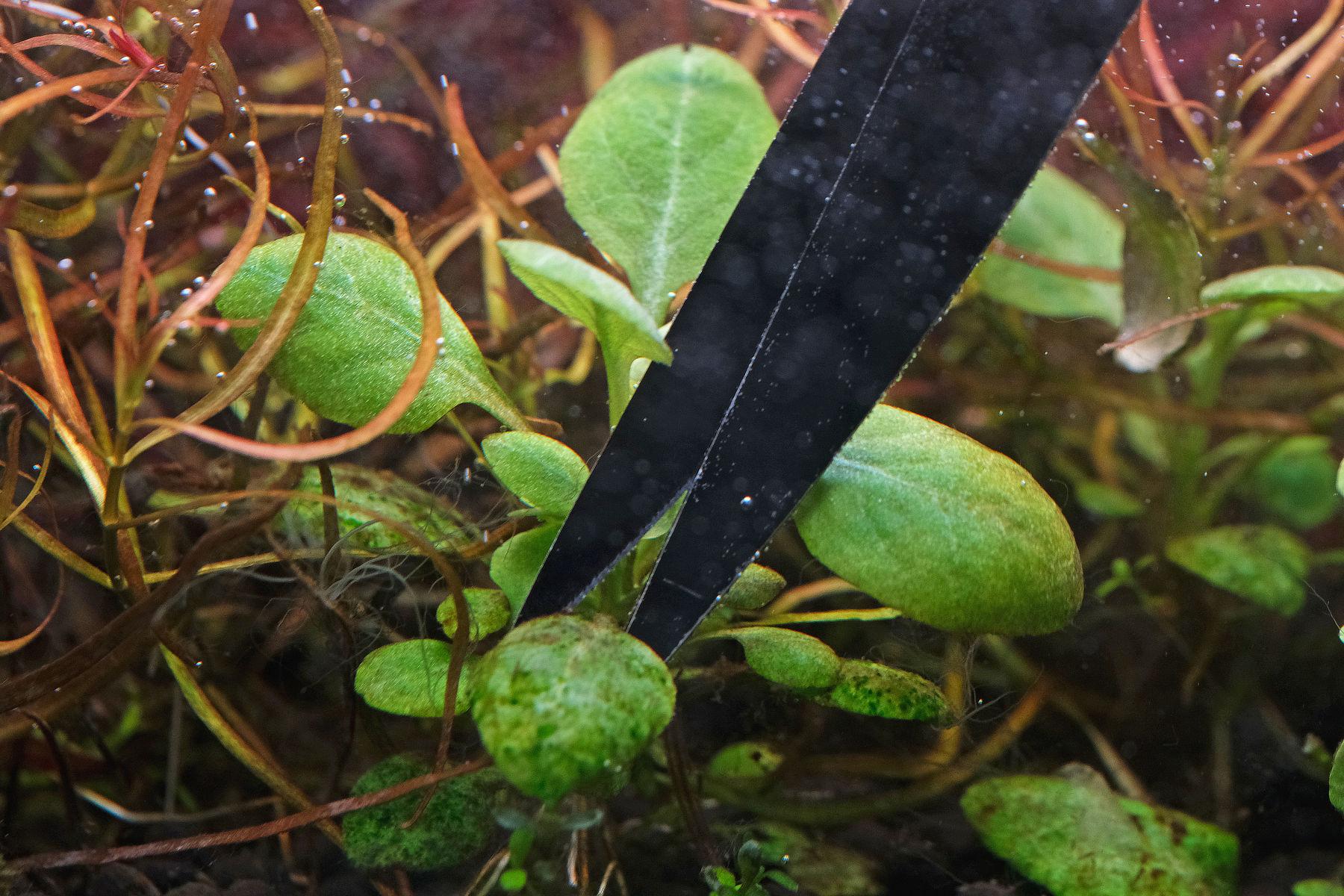
High light intensity or long lighting periods provide excessive fuel for GSA growth. If your tank consist mainly of slower growers and plants that do not require high light, reducing light intensity is very helpful in algae prevention. Reducing light duration to about 6 to 7 hours per day is often a very effective way to control green spot algae.
Plants use more Carbon than all nutrients combined. While test kits are readily available for other nutrients, Carbon dioxide levels are more difficult to measure accurately, and thus the Carbon angle is often ignored even though it plays a critical role in plant health. Poor CO2 levels, especially in planted tanks, encourage GSA growth. For CO2 injected aquariums, properly optimizing CO2 levels is critical to success. Aim for a 1 pH drop, and do not assume that a Green drop checker means that there is adequate CO2 in the aquarium.
Then deal with the parts people skip because they are boring: Cut old leaves. Clear organic detritus. Clean filtration before it degrades so far that waste starts settling everywhere. In many tanks, GSA is less a dramatic nutrient mystery and more a plain old maintenance verdict delivered in green dots. Regular water changes of 50% to 75% can help manage green spot algae by removing floating algae and preventing it from settling back into the tank after scraping.
A cleanup crew can help at the edges. Small snails are one of the better biological options for spot algae on hard surfaces. Dwarf shrimp and otocinclus catfish help with softer algae and general upkeep, but do not impact GSA significantly. No opposable thumbs, no bias. Just plants, parameters, and whatever actually works.
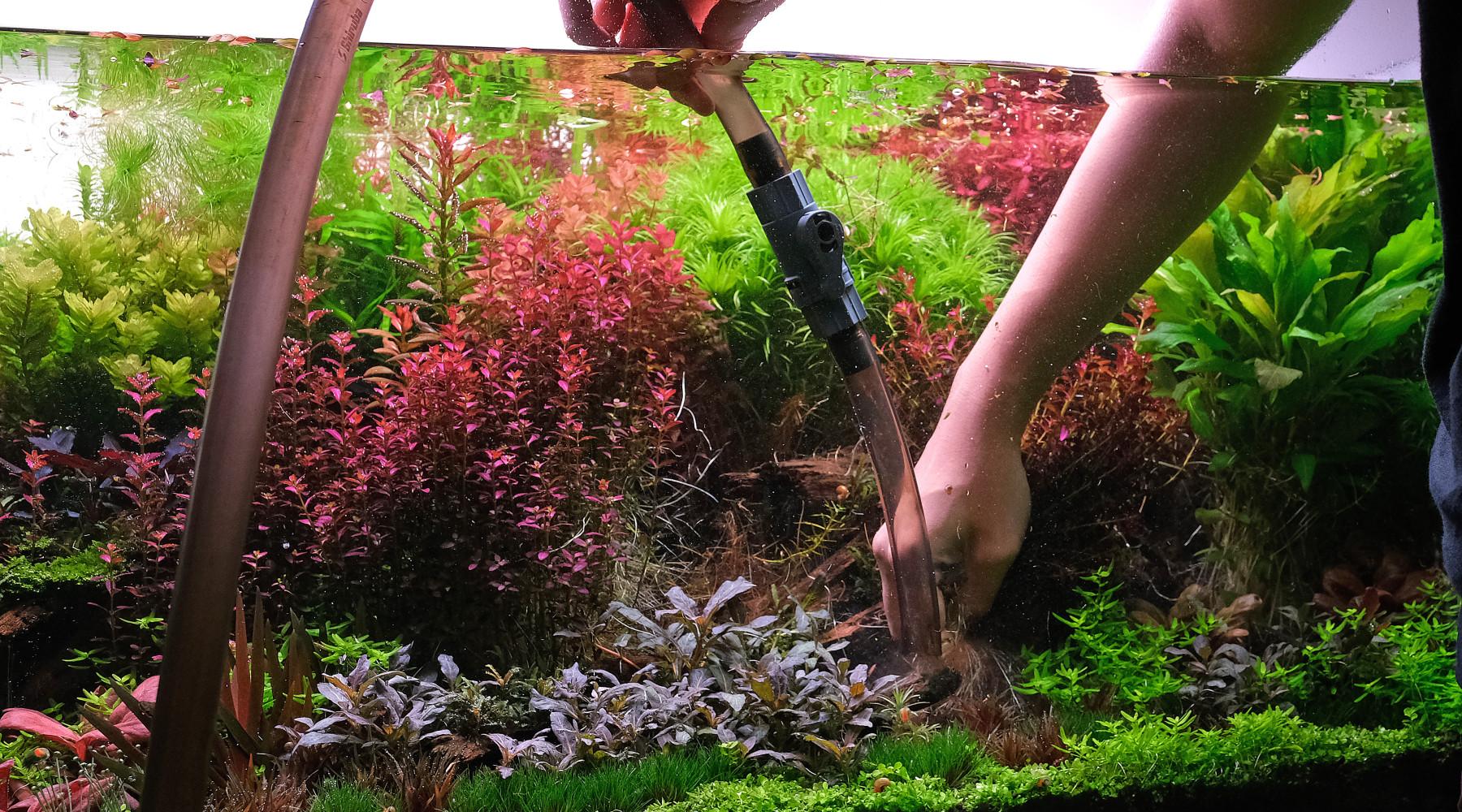
Uprooting and discarding old growth, removing compacted substrate zones, and replanting new growth makes a tremendous impact on renewing plant growth.
How is GSA different in low-tech versus high-tech tanks?
In low-tech tanks, Carbon limitation is the main bottle neck to growth and plant vigor. Slower growth is part of the low tech approach. Do not increase light just because you want things to move faster. That is how you make the same dirty corner greener. Slow-growing species like Anubias and Bucephalandra are particularly vulnerable to GSA due to their ability to provide stable surfaces for algae to grow. In low tech tanks, these plants do not have the vigor deter algae when grown in high light, so growing with less light or in shade areas of the aquarium is highly recommended.
Improving natural CO2 generation through the use of aquasoil/soil substrates can improve plant vigor significantly in low tech aquariums. Choosing plants that do well in low tech aquariums also impact success rates greatly. Plants that cannot tolerate low CO2 levels will slowly deteriorate in a low tech tank, while being an algae magnet at the same time.
In high-tech planted tanks, low CO2 levels can stall plant growth in high-tech planted tanks, allowing GSA to take hold. Sometimes that matters, but just as often the more obvious issue is neglected maintenance under strong light: clogged filtration, reduced flow, old growth left in place too long. High light can work, even for Bucephalandra and Anubias species, but only when the tank stays clean and circulation remains strong enough that leaves are not sitting in stale, waste-heavy water.

Share:
Clearing algae without algicides example 2
Green Water Algae: Why Your Aquarium Looks Like Pea Soup (And How to Clear It)