Local Shipping within US, Canada, EU and Australia

0

Your Cart is Empty

What do leaves deteriorate? Understanding the leaf renewal cycle in aquatic plants

January 12, 2026 8 min read

What do leaves deteriorate? Understanding the leaf renewal cycle in aquatic plants

Plant adaptations to environmental changes

Plants can scavenge nutrients from older leaves. This is most apparent during autumn, when many trees break down chlorophyll in autumn to save nutrients for winter. The existing chlorophyll is degraded, and the valuable nutrients are sent back to the trunk and roots for storage. 

In aquarium plants this recycling of nutrients can be most clearly seen when plants that are grown emersed are planted into an aquarium, the plant will shed its emersed grown leaves over time and channel energy to producing submerged form leaves.

While the change in leaf shapes are obvious between emersed and submerged forms, there are many changes that are more subtle. Submerged leaves develop significantly reduced cuticle layers to allow better gas diffusion. Aquatic plants also produce less dense vascular structures as water can hold the plant's structural weight against gravity- whereas stronger vascular structures are needed for terrestrial plants to hold the plant's weight in air.

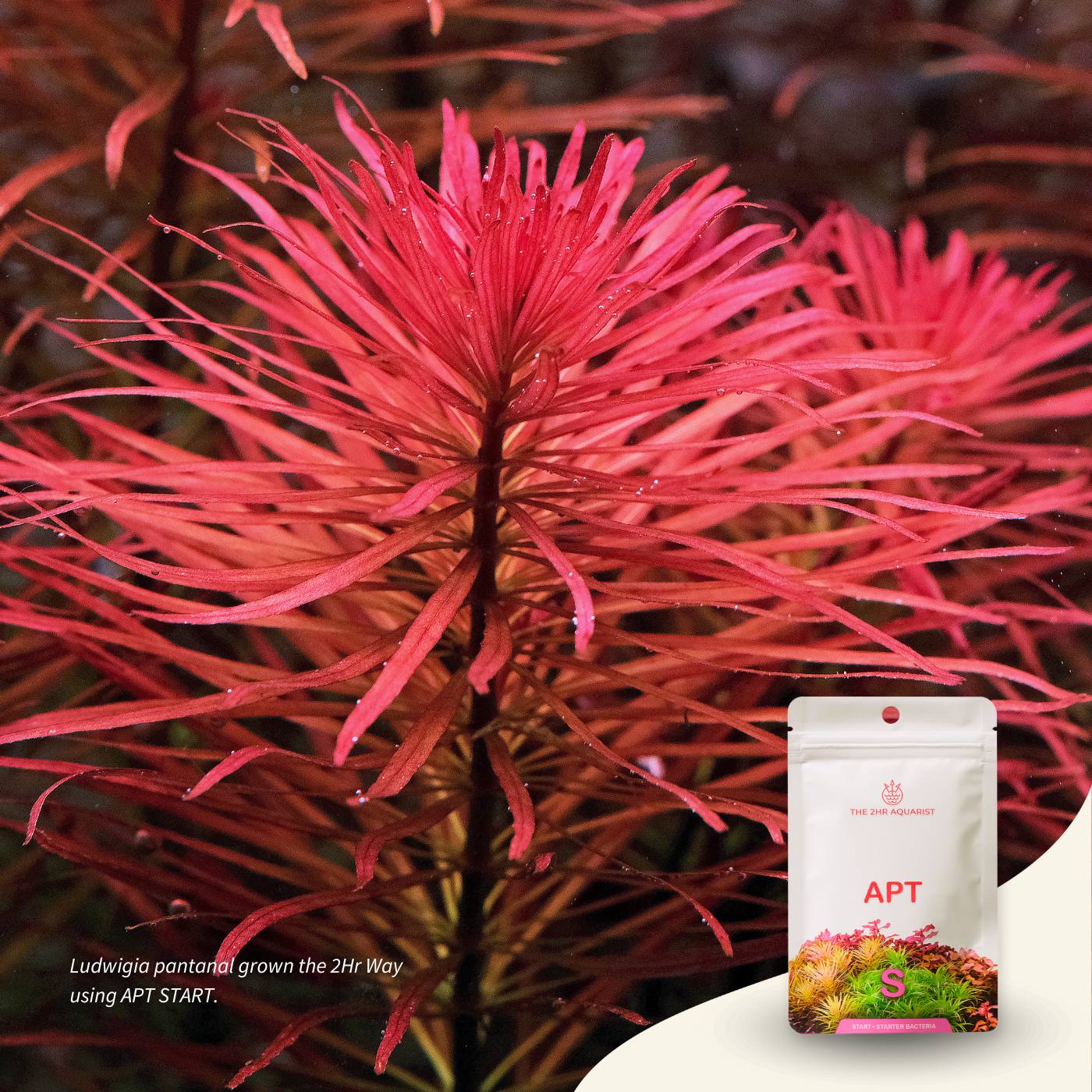
Ludwigia pantanal has broad green leaves and when grown emersed. Its submerged grown leaves look entirely different - finely divided and red. Submerged form leaves typically have greater surface area to improve underwater gaseous and nutrient exchange. 

Myriophyllum golden emersed form
Myriophyllum mattogrossense 'Golden' shows much thicker stems and leaves when grown emersed. In the submerged form, Myriophyllum 'Golden' has very thin structures and will not hold its own weight when lifted out of water.

Besides differences in physical forms, there are also many biochemistry optimizations that are completely invisible to the human eye, such as the tuning of growth enzymes levels to match carbon dioxide and nutrient availability. These changes are equally important to the plant for survival even though they are not easily visible to the human eye.

Leaf renewal cycle

Individual matured leaves have limited plasticity to adapt to environmental changes. How plants adapt to big changes in the environment is by producing new leaves with updated programming. Older leaves are either scavenged for nutrients will deteriorate to algae and decomposers.No leaf lives forever. Plants constantly renew themselves by growing new leaves and abandoning older ones. When the environment is stable with good growth conditions, older leaves can persist for much longer. When the environment keeps changing, the leaf renewal cycle is sped up - older leaves are abandoned more quickly and new leaves that are adapted to the new conditions are produced. 

In this picture we have transferred a Variegated Rotala macrandra from the shop tank to ours. In the shop the leaves are more pale due to less robust growth conditions. After moving the plant to our tank, the new leaves produced are fully red, reflecting the higher light and nutrient levels in the new environment. However the old leaves did not produce this adaptation, they remained largely the same pale color as before - this is because older leaves have limited capacity to adapt. These old leaves will eventually be abandoned by the plant as they are unoptimized for this tank.

After the top portion of the plant has grown out some more, we cut and replant the top portion that is adapted to the current tank environment, and uproot and discard the older growth. This is how plants in the aquarium can be rejuvenated over time - by replanting of new growth and uprooting and discarding old growth.

Samolus red trimming
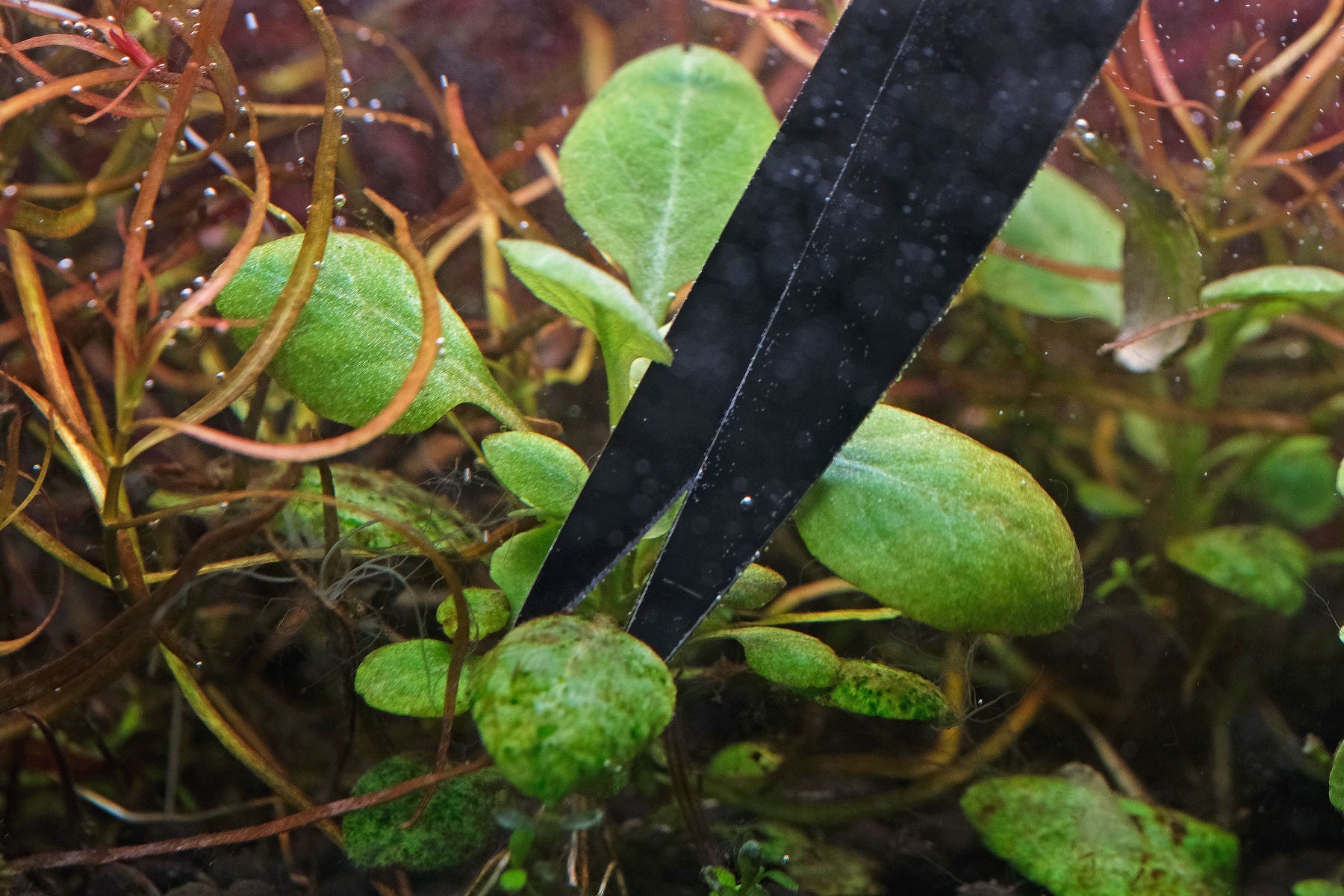
When plants are newly introduced to a tank, old leaves are often abandoned and attacked by algae. Newly produced leaves that are adapted to the tank environment are algae resistant. Old growth that is infected with algae should be trimmed off to allow new growth to take their place. 

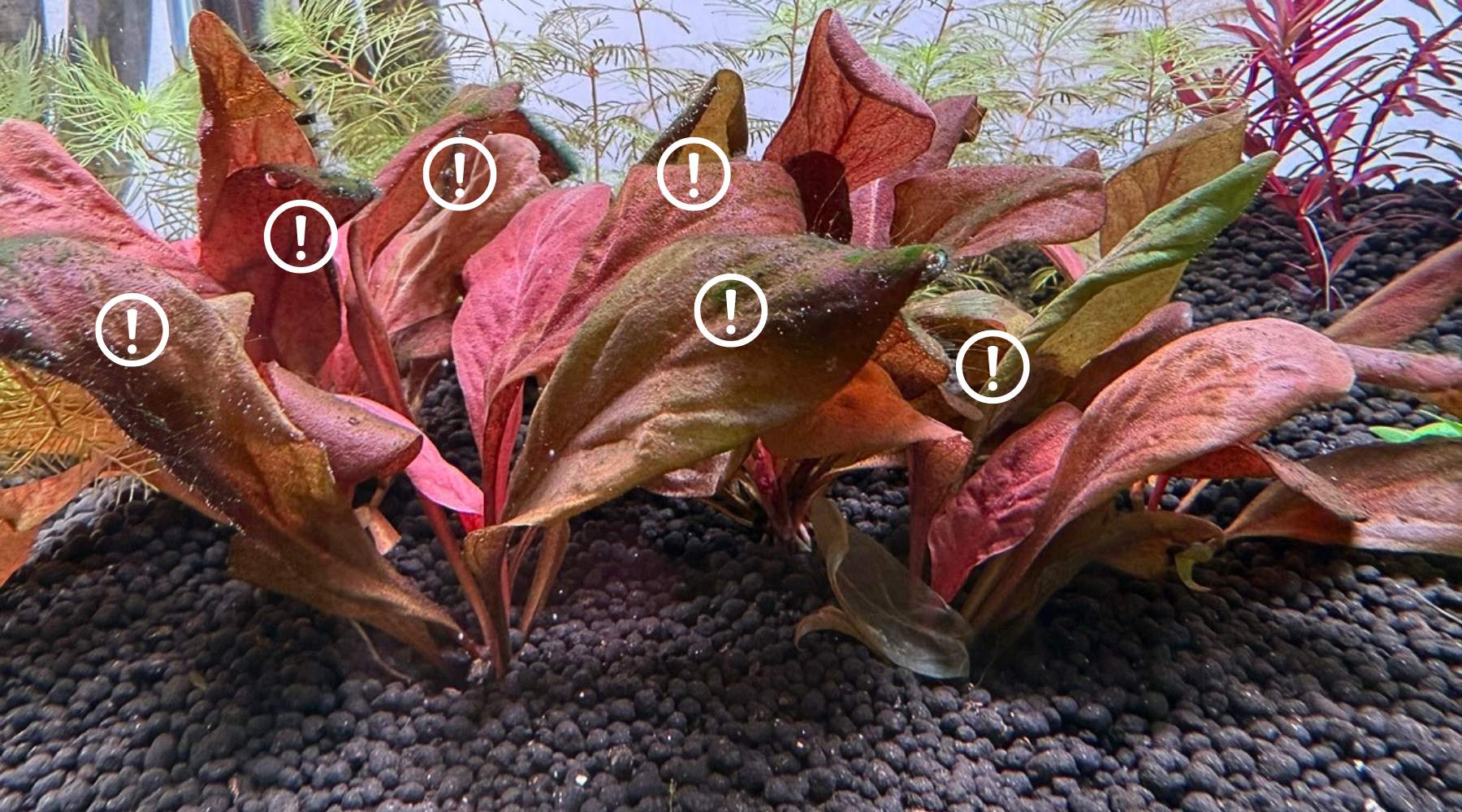
Anubias persistent algae
Persistent algae on older leaves indicate unstable tank environments or poor growth parameters. Algicide can burn off the algae, but it usually returns if the underlying tank conditions continue to be unstable or if growth parameters continue to be inadequate.

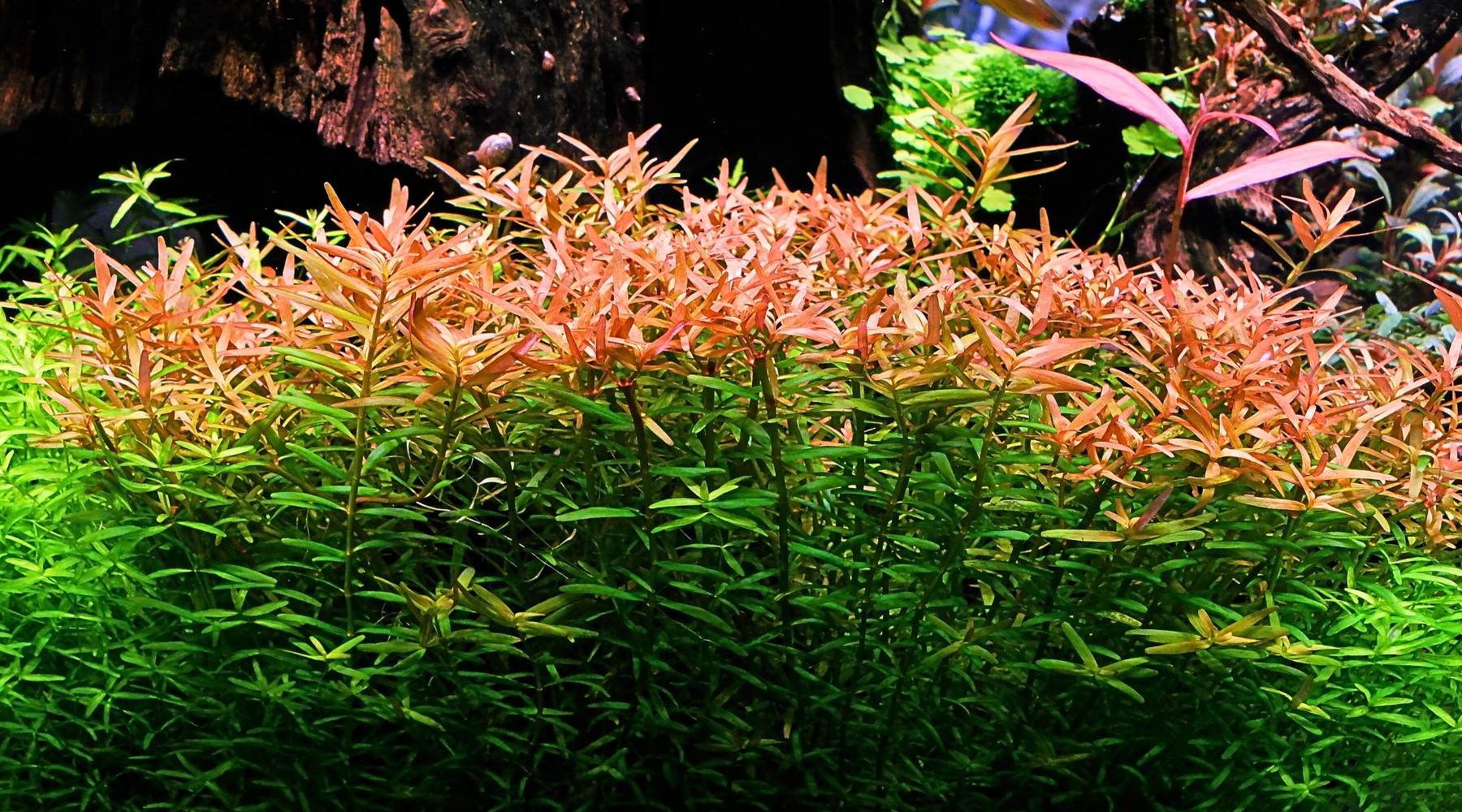
Algae free growth
Healthy leaves are naturally algae resistant, while older deteriorating growth attracts algae. By consistently removing older growth to make space for fresh new growth, the aquarium ecosystem becomes algae resistant as a whole.

Key causes for premature deterioration of old leaves:

Poor growth parameters (Inadequate CO2)

In non CO2 injected aquariums, Carbon scarcity (lack of carbon dioxide) is the prime reason why plants do not preserve their lower leaves. Plants use more carbon than all other nutrients combined, and many low tech plant issues are misdiagnosed as nutrient issues when the primary cause is the lack of carbon. The success of low tech aquariums is closely tied to how effectively they can generate carbon through natural means such as decomposition in soil substrates and microbial respiration.

CO2 from atmosphere is inadequate as a source of carbon - due to gas diffusion physics, only a tiny amount of CO2 from the atmosphere dissolves into aquarium water even when there is a lot of surface agitation or bubbling through air stones. CO2 from the atmosphere generally raises dissolved CO2 levels by less than 1ppm (parts per million). This is far below the levels required for even for easy plant species. Without any other sources of natural carbon generation, the amount of dissolved CO2 in a standing body of water does not exceed 1ppm.

The low tech aquariums that do generate enough carbon naturally are successful and the aquariums that do not generally face persistent algae issues and deteriorating older leaves. The usage of aquasoil/soil substrates, and allowing for the maturity of microbial populations in the tank environment are two ways to generate CO2 naturally. 
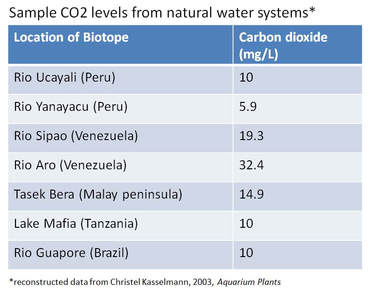
CO2 levels in nature

1mg/L = 1ppm (parts per million). For more information on CO2 levels in nature head to this page.

Rainbow Springs State Park, Florida, USA. CO2 levels at this site are around 18 ppm which allows for lush aquatic plant growth. Many areas in nature where aquatic plant growth is concentrated have elevated CO2 levels due to CO2 enriched spring water. Photo credits: Tom Barr

For aquariums that utilize CO2 injection, the target CO2 levels should match the requirements of the plants. Many high tech tanks choose more challenging plant species and CO2 becomes a key factor determining success. While 30ppm of CO2 is a good target level for most species, demanding species such as Centrolepis drummondiana, picky Eriocaulons or species such as Hygrophila sp Chai and Rotala florida, all do better at 40-50ppm of CO2. 

Click here to read on how to measure and tune CO2 levels accurately.

2hr Aquarist red Eriocaulon

Poor growth parameters (Poor nutrient availability)

When a plant is forced to adapt to new changes, and do not have access to sufficient nutrients, it can scavenge many elements from older leaves. Macro nutrients (N,P,K) and Magnesium (Mg) are mobile elements and plants can draw such nutrients from older leaves to fund new growth. Harsh environments coupled with poor nutrient availability will see plants loose a lot of their old growth.

The nutrient needs of different species can vary. It is a good practice to dose a comprehensive water column fertilizer to cover all bases. Fish waste contributes certain nutrients such as Nitrogen and Phosphates, but are a poor source for Iron, trace elements and other important nutrients.
2hr Aquarist fertilizer
Aquatic plants uptake nutrients readily from the water column. We dose APT3/APTe into our tanks daily to maintain nutrient levels.
Using a rich substrate also allows plants to draw from a readily available source for nutrients. Aquasoils can provide ammoniacal nitrogen which greatly boosts plant vigor and growth forms.

2hr Aquarist stem plants
Plants need sufficient nutrients to show good coloration. The preservation of older leaves allow bushes to thicken out with time. High density plant growth is generally a good marker for plant health.
Click here to read on the nutrient needs for aquatic plants.

Fluctuating growth parameters

Even when plants have sufficient nutrients/CO2 to grow, large swings in nutrients/CO2 levels still causes plant adaptation stress. The most common sign of this happening is algae infecting older leaves. In dramatic cases, algae can attack both new and old leaves even as the plant continue growing vigorously.

If the plants are growing steadily (net gain in mass over time), but continually get attacked by algae, it is highly likely the aquarium is facing fluctuating growth parameters. In such cases, nutrients are sufficient for plant growth, but plants keep re-programming to keep up with the changing nutrient levels. This puts the plants in a stressed state that makes them vulnerable to algae attack.

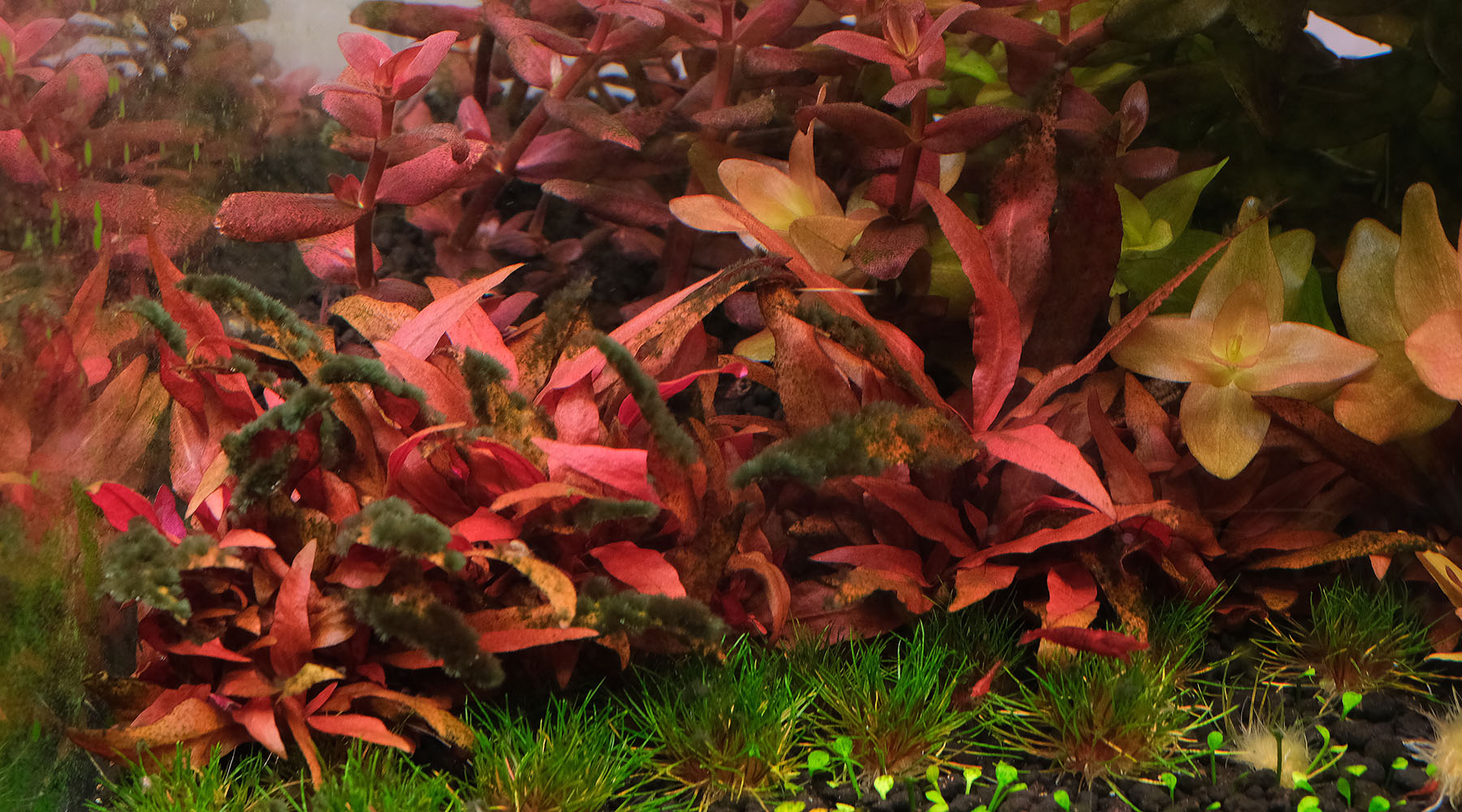
Rotala florida algae
Among the nutrients utilized by plants, Nitrogen availability is the element that stimulates plant growth the most. Keeping nitrate levels stable in the water column in important. In the above picture, a 10ppm up spike in Nitrate levels was enough to cause an outbreak of fuzz algae on Rotala florida. As a very general guide, we recommend keeping NO3 fluctuations below 10ppm.

Nutrient level stability is a topic with many nuances and is covered more in detail in this article.

2hr Aquarist nutrient testing
For our tanks running on the EI-dosing approach, nitrate levels are kept between 15-20ppm, other tanks run on lean levels between 0-5ppm. 

Other forms of plant stress that speeds up deterioration of older leaves

  1. Heat stress - This is common for aquariums in the tropics that are run without chillers. Certain species that are sensitive to heat may shed leaves or brown during heat spikes.
  2. Biological/microbial stability. Folks think that aquarium's microbial community only affects livestock, but in reality it affects both plant growth and the algae outcomes as well. Upsets to the tank's microbial balance will hit more sensitive plants.
  3. Mechanical damage - can be induced from rough handling, poor trimming approaches or boisterous livestock. 
  4. Large changes in GH/KH outside of the plant's natural range.
  5. Over-crowding and shading by neighboring plants.
  6. Poor substrate quality - substrate compaction or accumulation of excessive organic debris affect root formation. This can cause algae to attack leaves as the plant health is affected, even though the problem is at the root zone.
2hr Aquarist heat stress
Heat stress manifests in many ways. Ludwigia senegalensis grown in 31 degree Celsius (left) vs 24 degrees Celsius (right). The plant grown in the hot tank has thinner leaves and longer internodes and is in a poorer state of health compared to the plant grown in the colder aquarium.
Click here to read more on factors other than lights/nutrients/CO2 that can affect plant growth.

Physical damage to leaves

Leaves do not have the ability to heal physical damage such as puncture holes or tears. Cells in the plant tissue will form a callus at the site of the wound to seal it, but the leaf itself will not fully regenerate. If the leaf is not too badly damaged, it can continue to function after the wound has been sealed. If the damage is severe, the plant will divert energy into producing new leaves instead, and the damaged leaf will deteriorate at an accelerated rate.

fish biting plants

These Rotala florida have been snacked on by fish. The leaves will never be whole again. However, the leaves are still functional and continue to power plant growth. As the plant bush is in good health these leaves continue to be defended against algae.


This Anubias leaf has deteriorated too much to be of any use. The plant draws nutrients from the decaying leaf and channels them into new growth. This accelerates the decay of the leaf and makes it a prime candidate for algae. Note how the algae only targets the damaged leaf. Cutting it off would make room for new growth.

What to do to if your plant has deteriorating older leaves

Trim off badly deteriorated leaves and give them plant time to stabilize. Plants are very adaptable organisms but they need time to react to environmental changes. Once you have set targets for your growth parameters, keeping them stable is important. Finicky aquarists that keep tweaking parameters often make things worse. This is why many hobbyists find that their planted aquariums settle in smoothly only AFTER they give up and stop making changes to the aquarium.

For stem plants, replanting the fresh top growth, and uprooting and discarding the deteriorated bottom portion is the way to rejuvenate growth over time. An aquarium is a box with limited space while plants grow continually. Old growth must always be removed regularly to make space for new growth. No leaf lives forever, planted aquariums are kept fresh looking by a continual cycle of trimming and uprooting of old growth to make space for new growth.

Uprooting and replanting

Stem plants need trimming and replanting to maintain their forms, to read more on how to manage stem plants click here.

Hover the water siphon over the spot when pulling up plants to contain soil that is kicked up. 

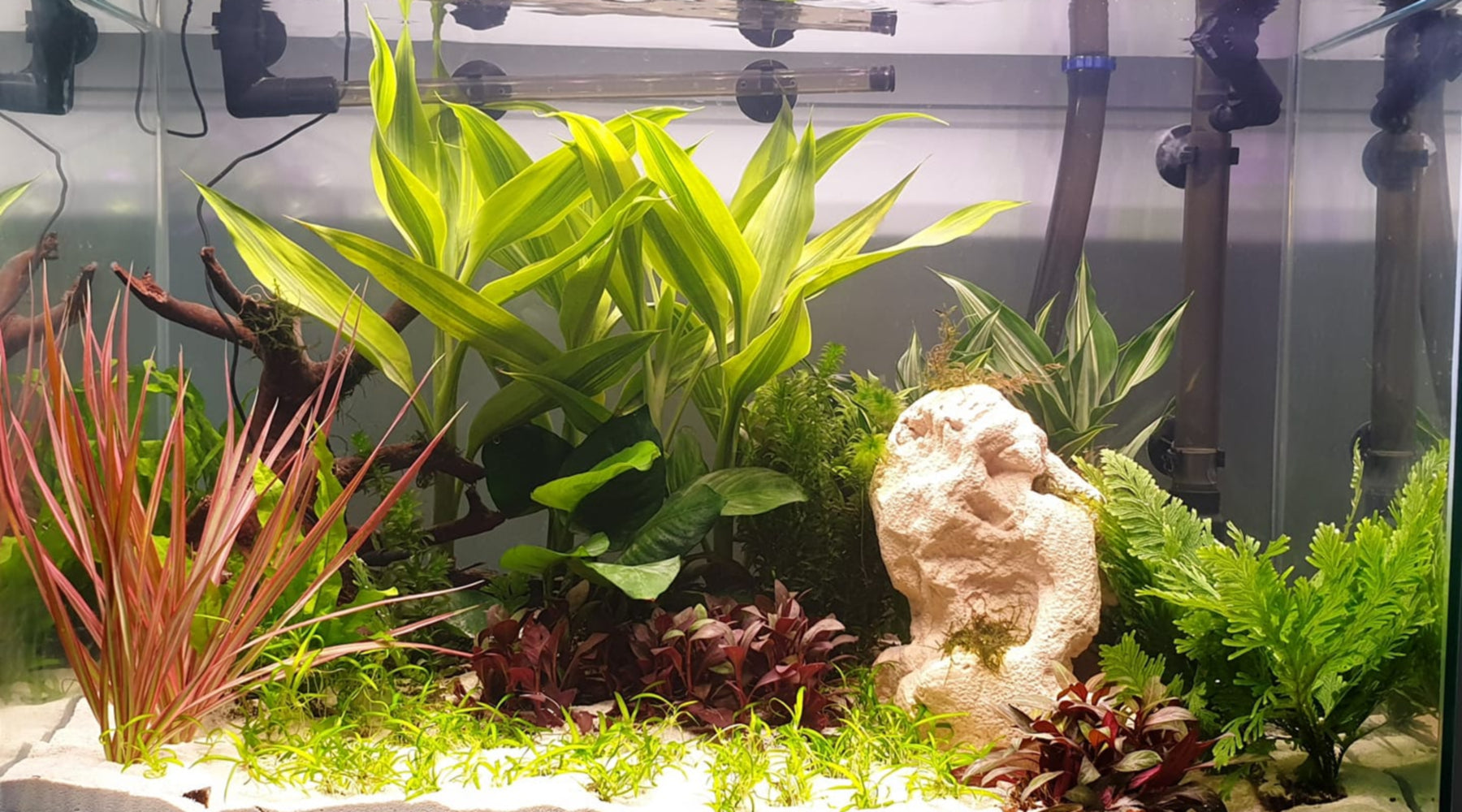
All plants need trimming to remove excess old growth and make space for new growth.

 Click here to see the full maintenance regime of the aquarium above.
Click here to read on how Nutrient level stability affects aquatic plants.
Click here to read on how to tune CO2 injection levels in the aquarium.

Click here to read how to grow red plants.