

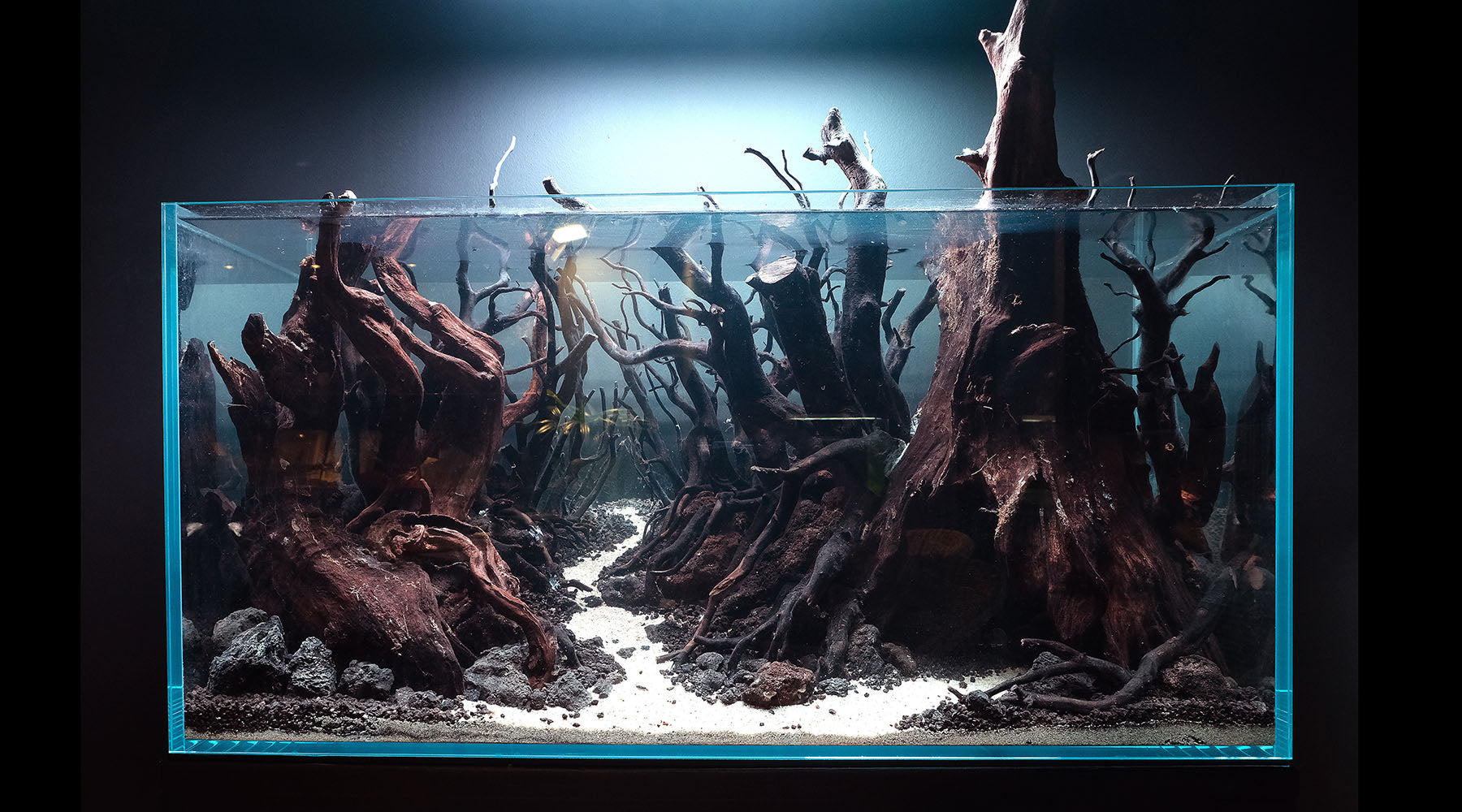
Many types of wood are used in aquascaping.
Most soften after immersion, releasing tannins and sap. These tannins cause the water to turn brown, while the sugars in the residual sap often lead to the growth of fungi/mould.
Although potentially unsightly, neither tannin-stained water nor fungi/mould are particularly harmful. However, these substances can clog filters if present in very large quantities, typically only in aquascapes that use a lot of wood, such as the one shown in the picture above.

Above: White / translucent slimy fungi feed on the tannins and sap released when dried driftwood is submerged. This is normal and will disappear naturally after a few weeks if the aquarium has good filtration and is properly cycled.
When working with wood, the best approach depends on the amount of wood you are using.
A few small pieces
If you are only using a small amount of wood, the easiest way is to leave it in the tank during the cycle phase (lights off, filter on), which should normally take about 3 to 4 weeks (yes, longer than we prefer!).
During this time the water may turn a little brown and fungus may appear on the wood. This is perfectly normal. Just change the water every few days.
The tannin stains and fungi should disappear naturally once the tank has been properly cycled and is ready for planting.
A moderate amount
If you are using a moderate amount of wood, it may be a good idea to soak the wood first, i.e. submerge it in water, either in the tank or in a separate bucket, for a few days or a few weeks (depending on the amount of staining and fungal growth).
If soaking in the tank itself, we would normally keep both lights and filter off during this soaking period.
The water should be changed every few days until the water is much clearer and there are far fewer fungi.
At this stage we switch the filter on and the normal cycling process begins. This prevents the filter from becoming clogged with debris/tannins.
A large amount
If you are using a large amount of wood, it is generally a good idea to soak it first. This means simply soaking it either in the tank or in a separate container, without lights or filters, for as long as it takes for the tannins to leach out and the fungus to clear.
We generally do not recommend boiling the wood as this can break down and soften the internal structures of the wood. For certain types of wood, such as Malayan driftwood, which is very tough, boiling can indeed be a way of accelerating the release of tannins without affecting the integrity of the wood too much.
However, for more delicate woods such as Senggani, boiling the wood beforehand can speed up its degradation.
In most cases it's not necessary to boil the wood.

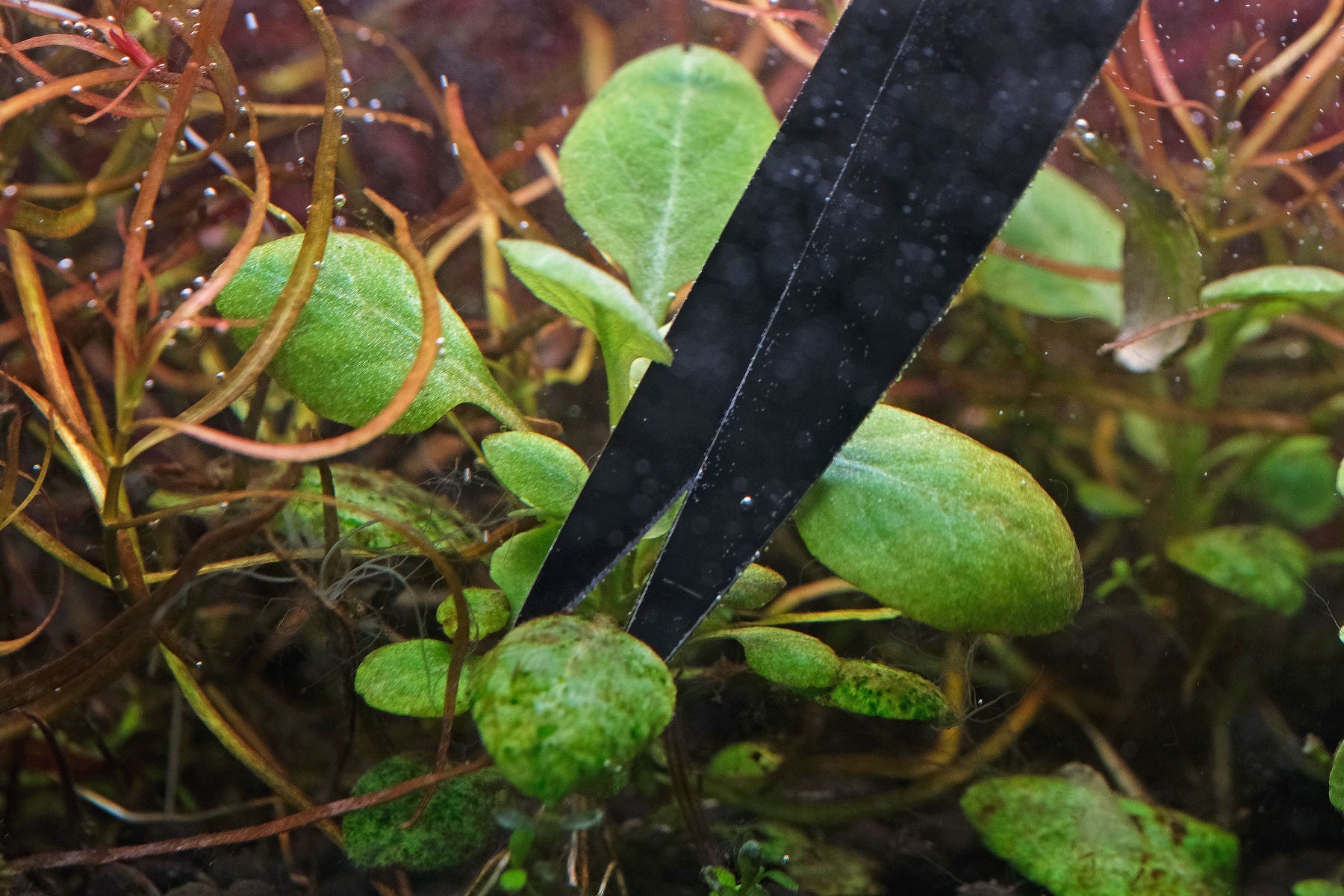
Above: It is common for new tanks to have diatoms. This can be reduced by giving a tank time to cycle before planting, but even then it may occur to some extent. The correct course of action is really to do nothing at this stage. The diatoms would naturally disappear after a few weeks, leaving the plants unharmed. We can speed up the process by changing water the 2Hr Way more frequently during the first few weeks.
In summary:
- Expect wood to release water-staining tannins and trigger fungi growth after being submerged. They can be unsightly, but are relatively harmless.
- If using a moderate or large amount of wood, soaking them to remove excess tannins and sap is a good step before the usual tank cycling process.
- In new tanks, Diatoms are unsightly but relatively benign and generally disappears by itself. You can minimise their occurrence by giving time for the tank to cycle before planting and adding livestock.




Share:
Holes in leaves?
Is it a problem? Deep substrates?