
How to Grow Myriophyllum 'Golden'
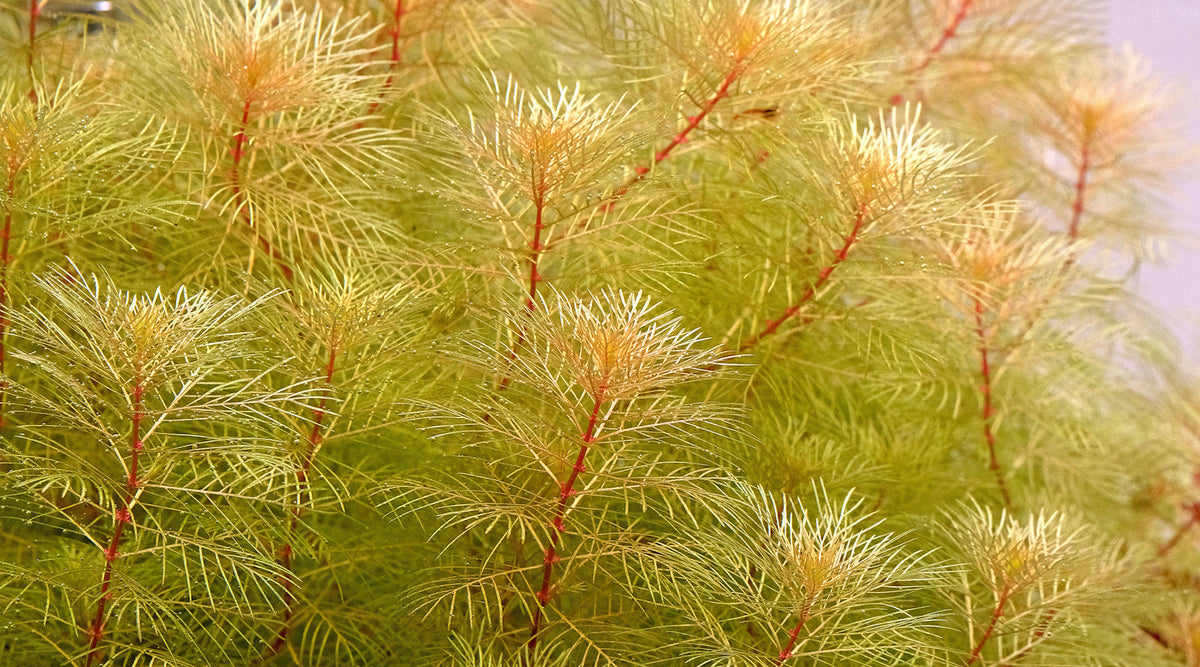
Myriophyllum mattogrossense 'Golden' is a pale, fine-leaved stem plant that grows fast under the right conditions. It grows best in a mature aquarium as it can be very vulnerable to algae in new aquariums. Injected CO2, and regular fertilizer and higher light levels gives nice white leaves. Growing it is the easy part. The main skill is keeping its pale colored foliage clean and free from algae. For this to happen, plant health has to be excellent, and the tank environment must be in good microbial balance and algae free. This article will describe the key conditions for aquarists to aim for in order for this plant to thrive.
Light sets the color. A tank with at least 100umols of PAR at the substrate level will give new growth that turns cream to almost white with reddish tips; in lower light the plant stays green. CO2 boosts growth rates and coloration.
Algae is the main way this plant fails. Unhealthy plants and high organic waste levels attract algae.
Fluctuating nutrient levels that causes plant stress results in hair algae attaching to older growth. Holding stable nutrient levels long term is necessary for the plant to adapt.
For stems that are replanted often, a complete fertilizer in the water column matters more than a rich substrate.
Myriophyllum mattogrossense 'Golden' is a high-maintenance background plant: rapid growth means frequent trimming and periodic replanting. Myriophyllum golden grows rapidly under favorable conditions.
The plant is best suited for mature, well-maintained aquariums.
What Is Myriophyllum mattogrossense 'Golden'?
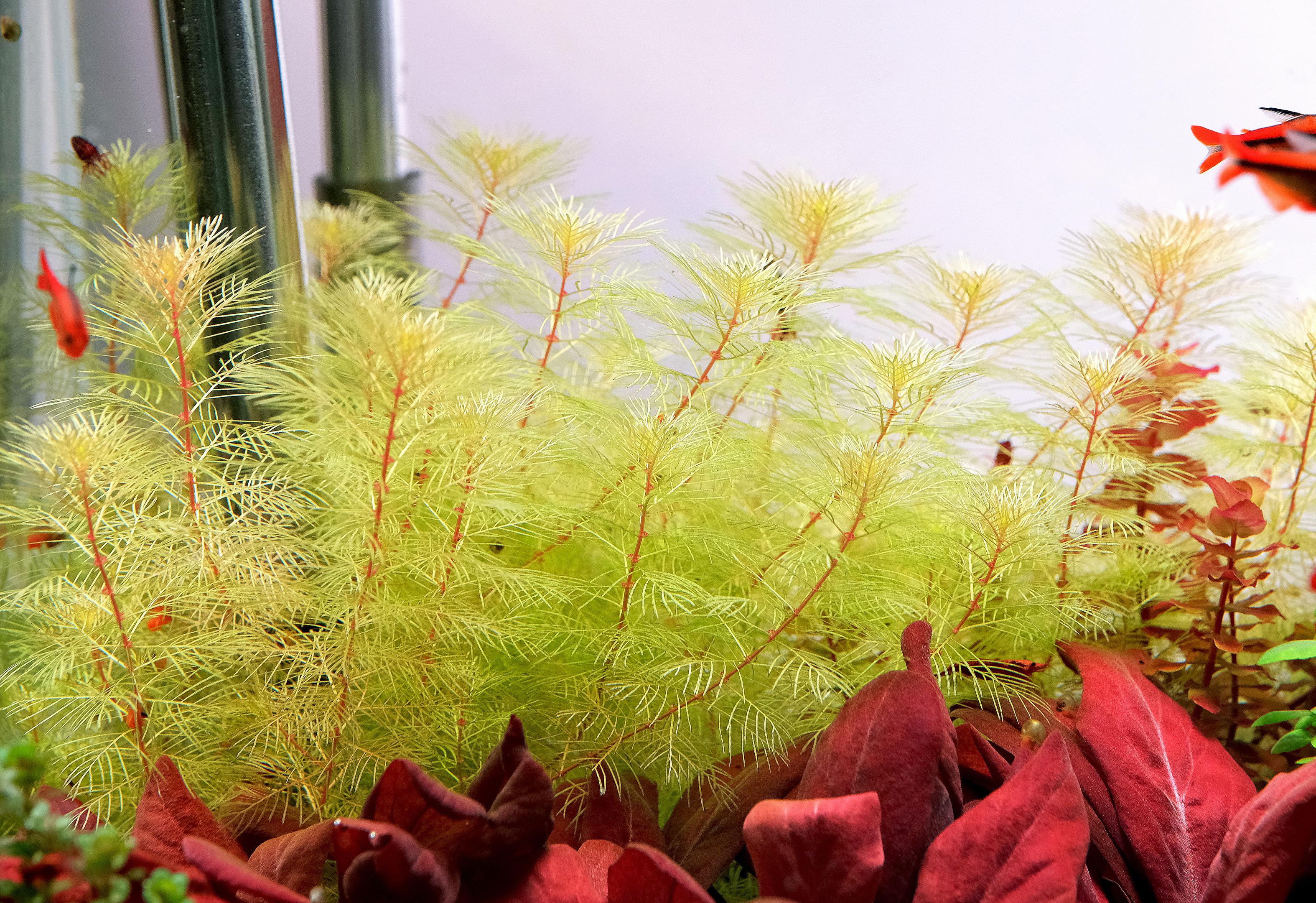
'Golden' is a whitish cultivar of Myriophyllum mattogrossense, a milfoil native to South America, sold as Myrio "Golden," or Myrio "White". It is far more delicate and algae-prone than the easy green parent most care sheets describe.
The plant grows finely divided, feather-like leaves in whorls, and it grows rapidly under favorable conditions. It branches readily and forms dense clusters with tactical pruning, which allows it to be shaped into nice midground or back ground bushes. Its pale, almost white foliage with reddish tips offers good contrast against deep greens, reds and purple-toned plants such as Bacopa salzmannii. The dense foliage provides hiding spots for small aquatic organisms, such as shrimp and fish dry and like any fast-growing stem plant it adds oxygen to the water while it photosynthesizes.
It is flexible with water parameters, and grows well in the temperature range of 20 to 28°C and a pH range of 5.0 to 7.5. Low KH ranges are preferred but not mandatory. Cooler temperatures are preferable: warmer water raises plant metabolism, holds less CO2 and speeds algae growth, all of which narrow the margin of error in maintenance.
Why Is Myriophyllum 'Golden' Especially Prone to Algae?
Color morphs often produce cultivars that are weaker compared to wild specimens. Robust plants produce defensive chemicals that prevent algae from attaching to the plant. Many cultivars such as Myrophyllum 'Golden' that have whitish leaves suffer from reduced chlorophyll production, and subsequently have less vigor in plant defenses. This makes them more vulnerable to changes in the tank environment, and older growth is sacrificed first when things go south. When algae strikes, it almost always target older growth first.
The finely divided leaves can also capture debris, which can trigger algae as well.
This is why Myrophyllum 'Golden' does much better in a matured tank environment. An immature tank environment carries more algae triggers: unsettled microbial colonies, ammonia, and newly introduced plants shedding waste as they adapt. Use our guide to stabilizing a new planted tank to get there faster if you are running a new tank.
How Much Light Does Myriophyllum 'Golden' Need?
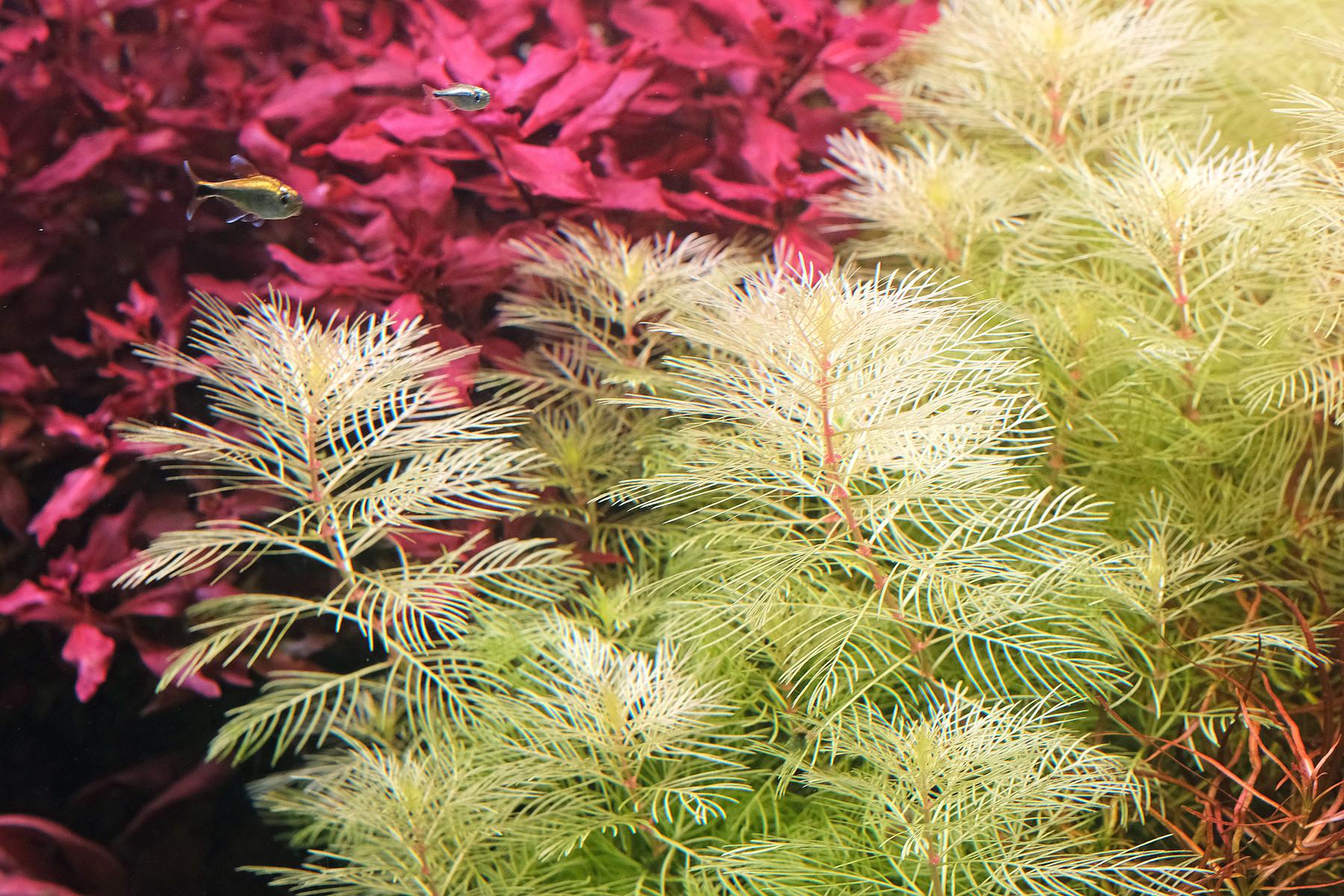
Aim for about 100+ µmol/m²/s of PAR at the substrate surface, and this will provide enough lights to give good coloration at the plant tops. Higher light levels gives whiter leaves and redder stems, and more side shoot formation, which gives denser bushes. However, this comes at increased risk of triggering algae.
More light raises the plant's demand for carbon and nutrients, and in a tank with poor maintenance it accelerates algae faster than it improves color. Stabilize CO2 and maintenance first, then raise intensity in steps.
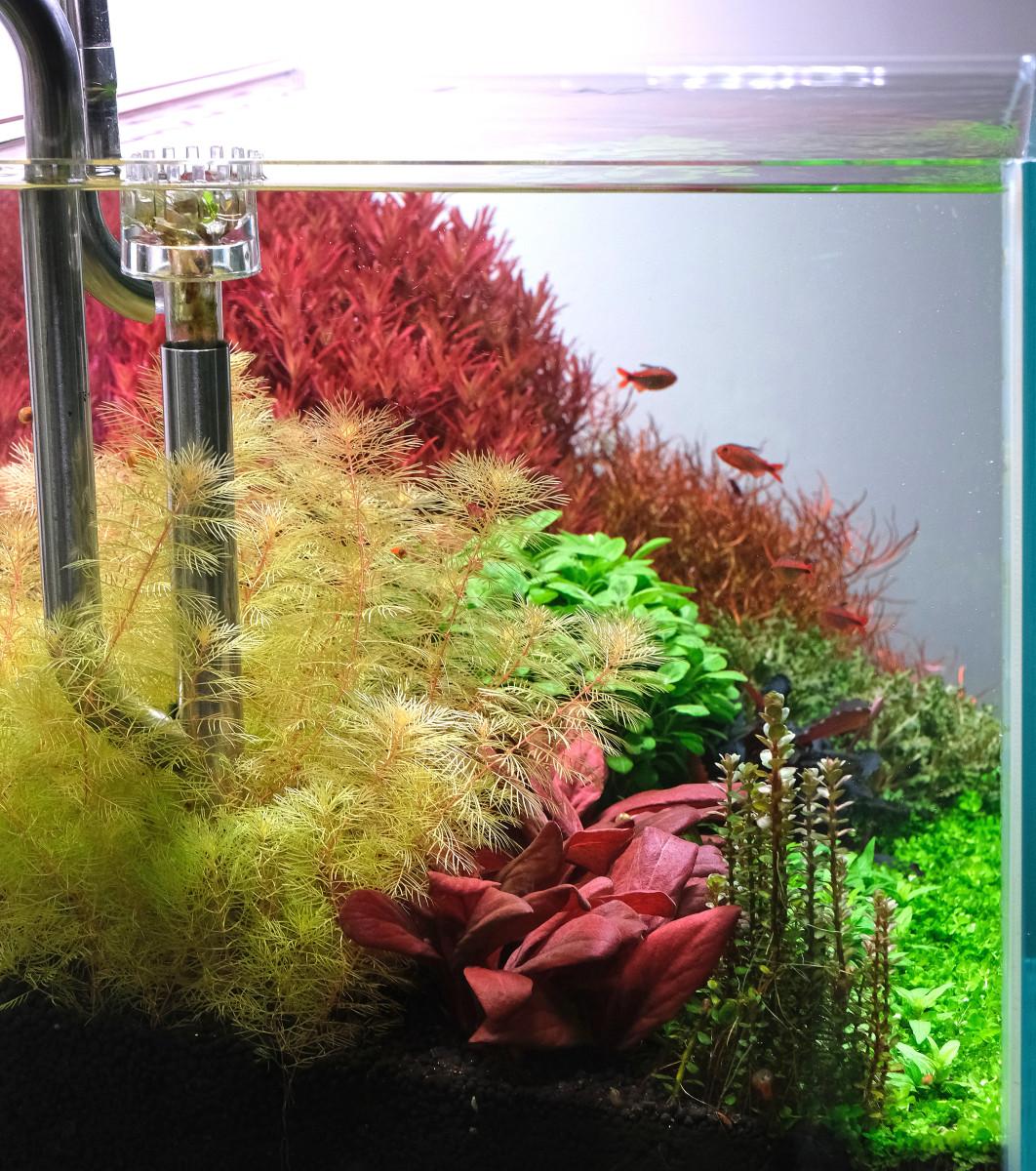
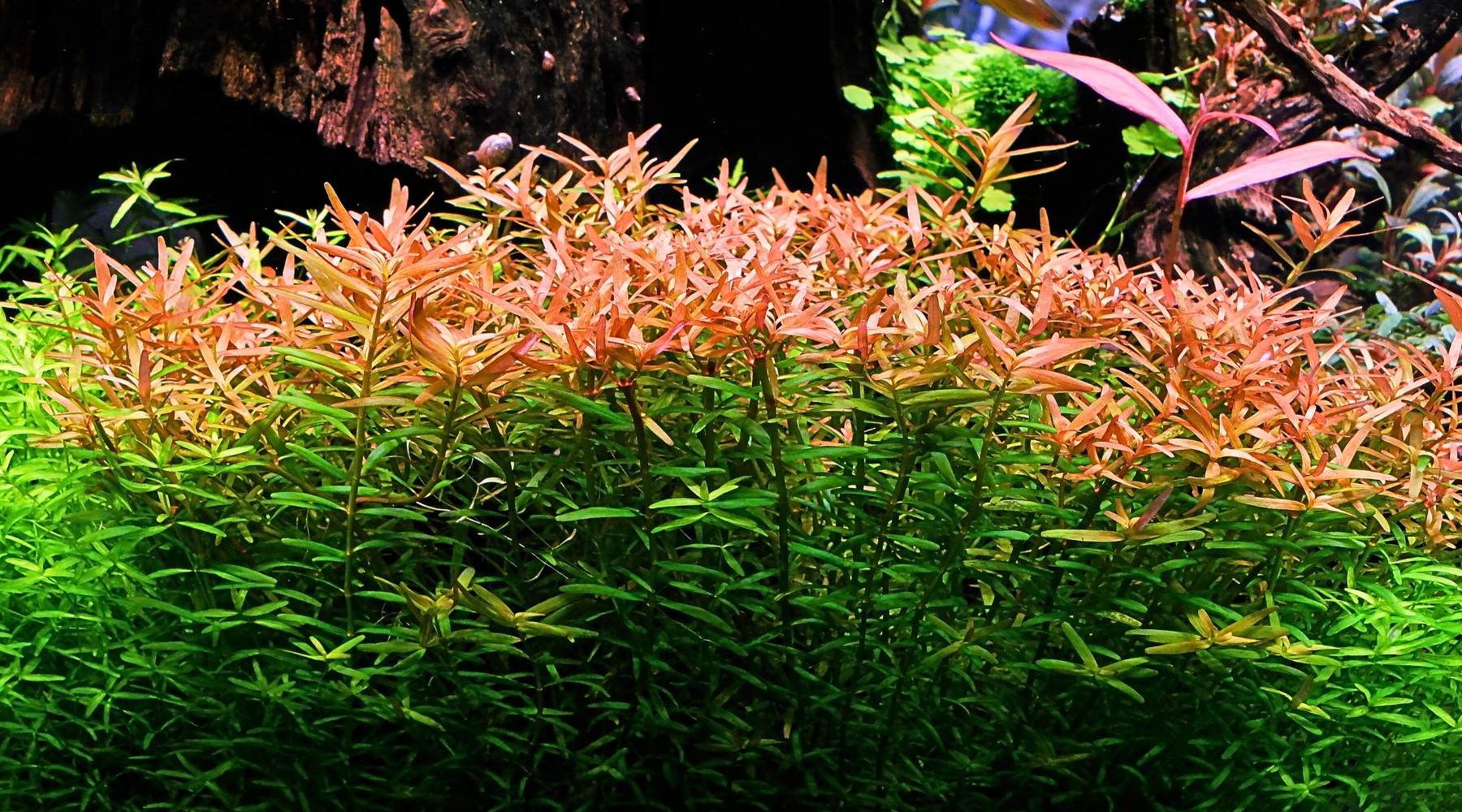
These Myriophyllum mattogrossense 'Golden' are grown in a tank where the substrate PAR measures around 150 umols.
How Much CO2 Does Myriophyllum 'Golden' Need?
Carbon makes up the majority of plant mass, and plants use more than 20 times as much carbon as nitrogen, so no fertilizer regime makes up for a carbon shortfall. Sufficient Carbon improves both plant health and coloration. While this species is not particularly demanding with regards to CO2, the low levels of most low tech aquariums are not sufficient to bring out the coloration in the plant. So if you are targeting clean, milky white leaves, CO2 injection is highly recommended.
Does Myriophyllum mattogrossense 'Golden' Need a Nutrient-Rich Substrate?
Care sheets often state that 'Golden' requires a nutrient-rich substrate. It does not. The plant roots readily and prefers to anchor in substrate rather than float, and a rich aquasoil helps by supplying ammoniacal nitrogen at the root zone and buffering a leaner water column. Combining root and water column fertilization is the simplest, most stable approach.
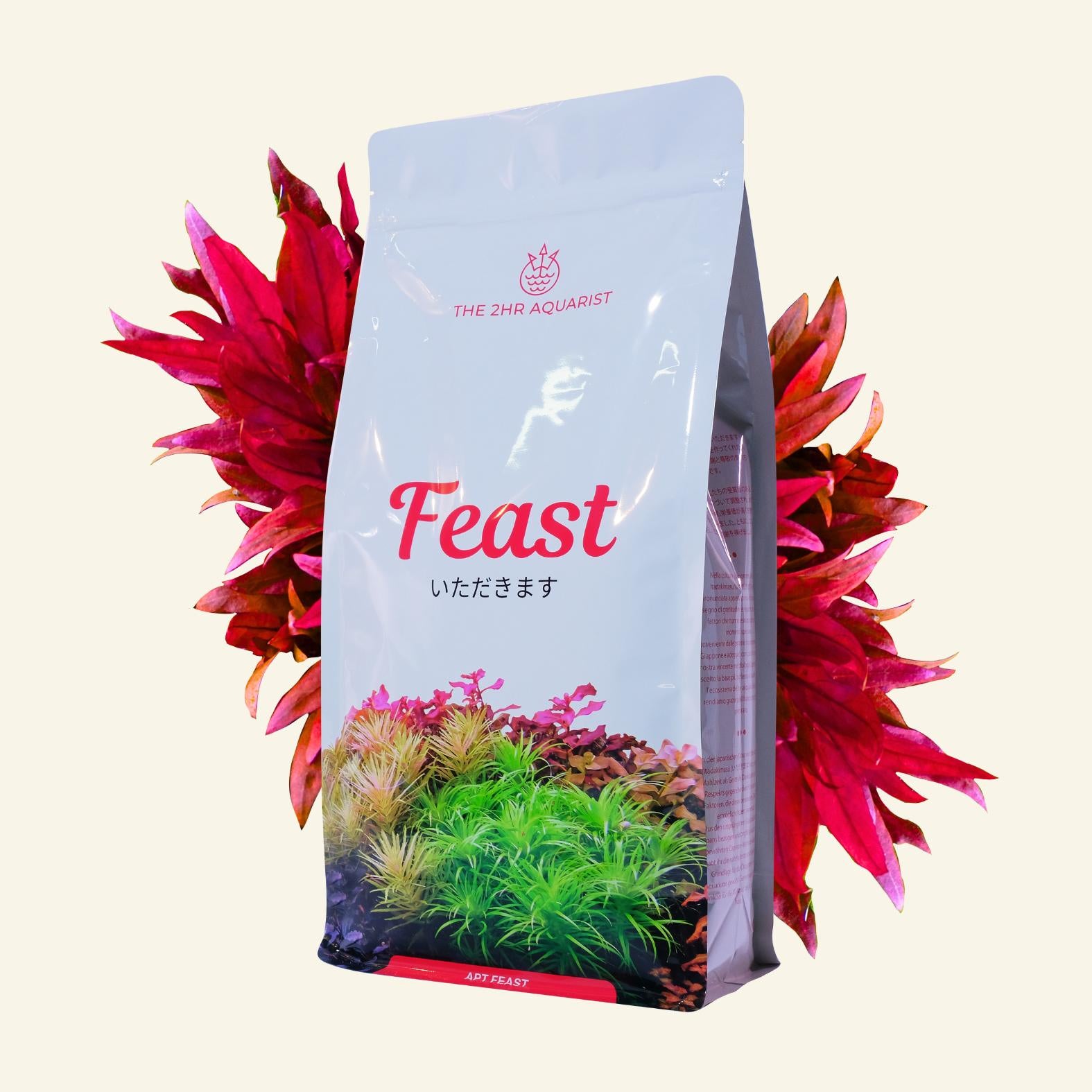
Dose a complete liquid fertilizer on a regular schedule. A plant that is cut and replanted constantly depends on it: fresh tops have few roots, and their fine leaves feed directly from the water column. Our display tank runs APT 3 (formerly APT Complete) in the water column over APT Feast substrate. Some care sheets also pitch 'Golden' as a plant that absorbs excess nutrients and so prevents algae. In a well-planted tank, nutrient levels are rarely the algae trigger; unhealthy plants and organic waste are, and an algae-prone plant is the wrong tool for that job anyway.
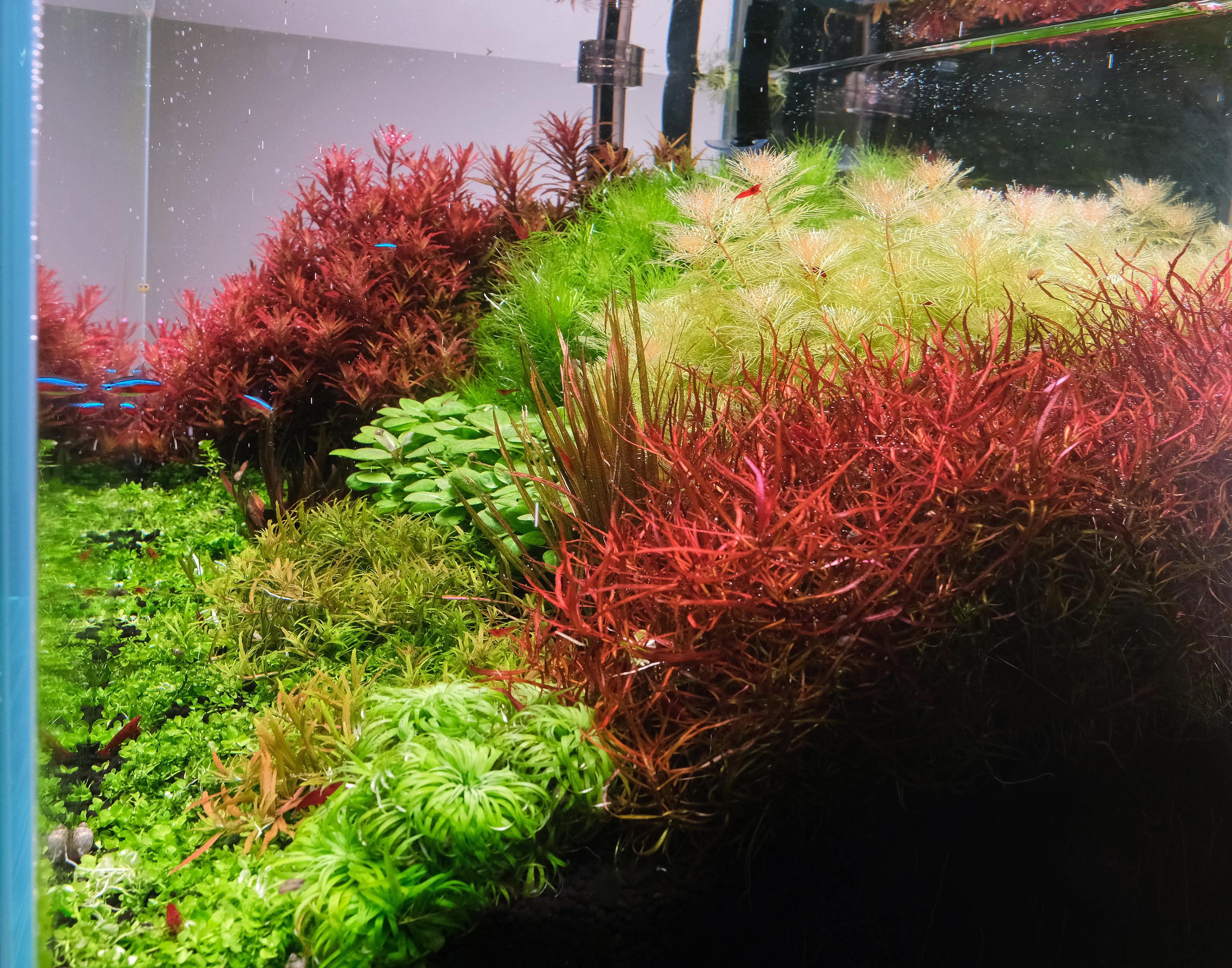
Read the plant by its new growth, not its old leaves:
Healthy plants: full-sized, well-formed whorls, steady branching and clean leaf tips.
Poor CO2 levels: Progressively smaller growth, lack of side shoots, poor plant vigor.
Poor light levels: Greener leaves, stretched growth with wider gaps between whorls.
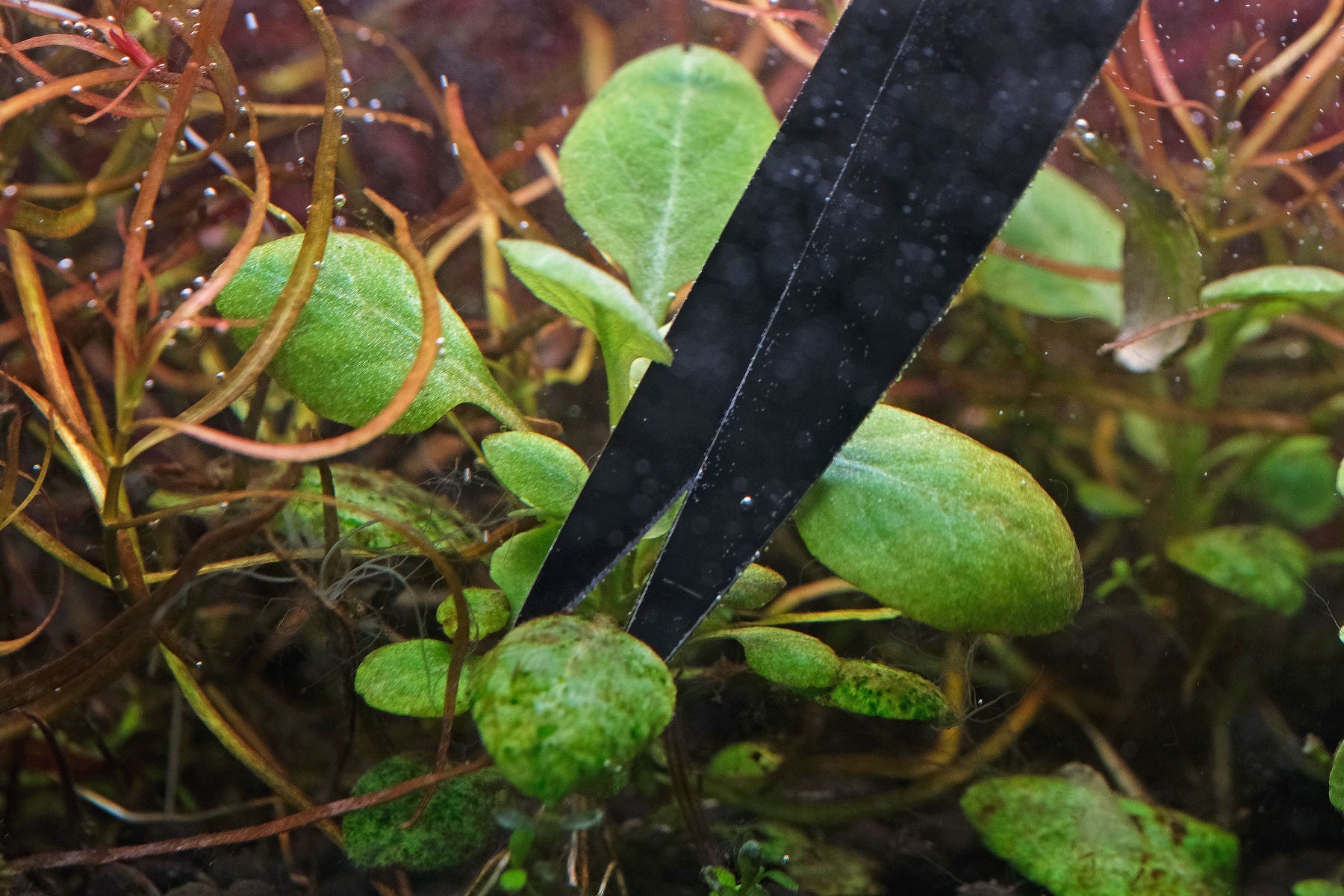
Unstable tank environment or poor maintenance: Algae on old lower whorls while the newest leaves stay clean.
How Do You Trim Myriophyllum 'Golden'?
Trimming promotes bushier growth because the plant branches below each cut. However, a planted tank is a crop field, not a perennial forest. Aquatic stem plants abandon their older stems and roots over time, and 'Golden' is no different. So eventually the plant has to be topped and replanted. Care runs on two operations: frequent shaping and periodic rejuvenation.
Tallest heads that rise above the canopy should be cut off where they connect to the lower stem, and the remaining stem will sprout side shoots to create a denser bush.
Side shoots can be replanted to propagate Myriophyllum golden.
Rejuvenate the entire bush by replanting tops when lower leaves become thin and darken with algae or collect debris. Uproot the entire group, discard the old bottoms, and replant the fresh tops in their place.
Plant clean tops individually into the substrate with space between stems, never as a compressed bunch, so light and flow reach the lower foliage.
Better growth conditions allows you to trim the plant for many cycles before replanting is required.
Are Myriophyllums an Invasive Species?
Several Myriophyllum species are invasive species in natural waterways outside their native range. Eurasian watermilfoil (M. spicatum) and parrot's feather (M. aquaticum) are the best-known introduced milfoils, and both spread from stem fragments.
US regulators have also run a formal weed risk assessment on M. mattogrossense itself. This plant should be kept in aquariums or contained indoor water features. Plant trimmings should be binned or dry them out completely before composting, check local rules on milfoil trade, and never flush trimmings or release the plant into drains, ponds or streams.
Can Myriophyllum 'Golden' Grow Without CO2?
It can survive, but seldom delivers the coloration so desired of this species. Plants use more Carbon than all nutrients combined, and adequate Carbon availability has tremendous influence on both coloration and plant health.


Share:
How to grow Ludwigia sp. 'Super red'