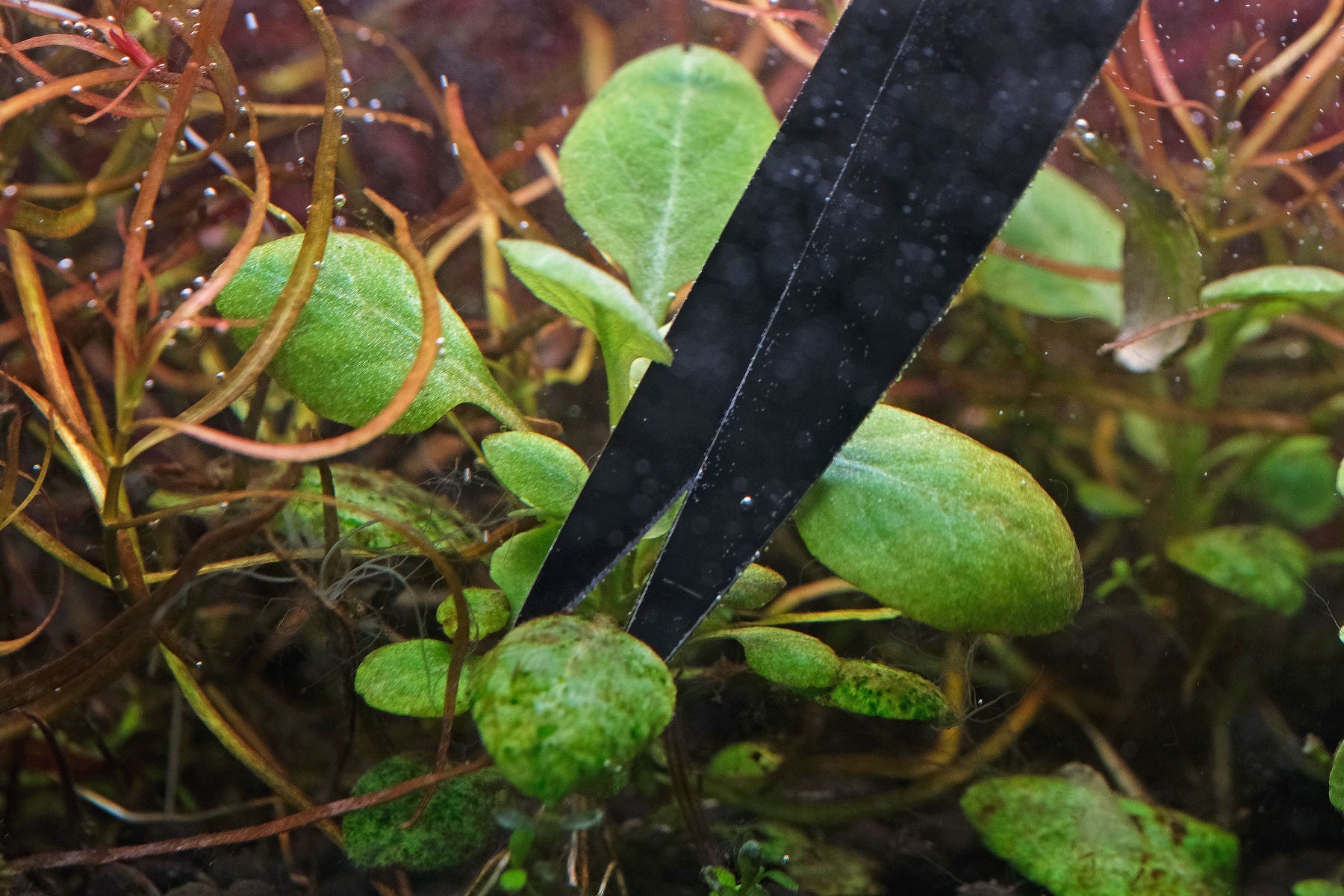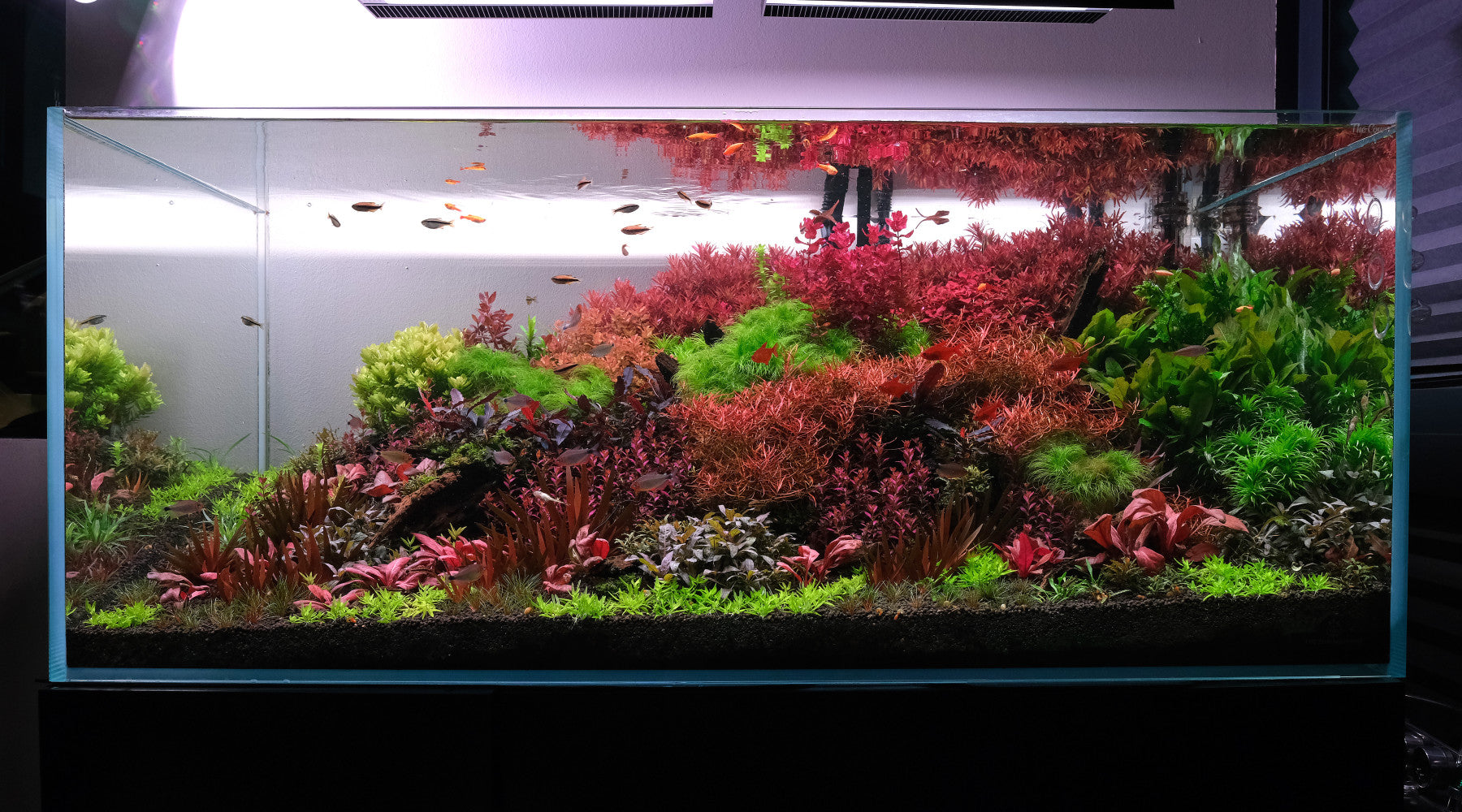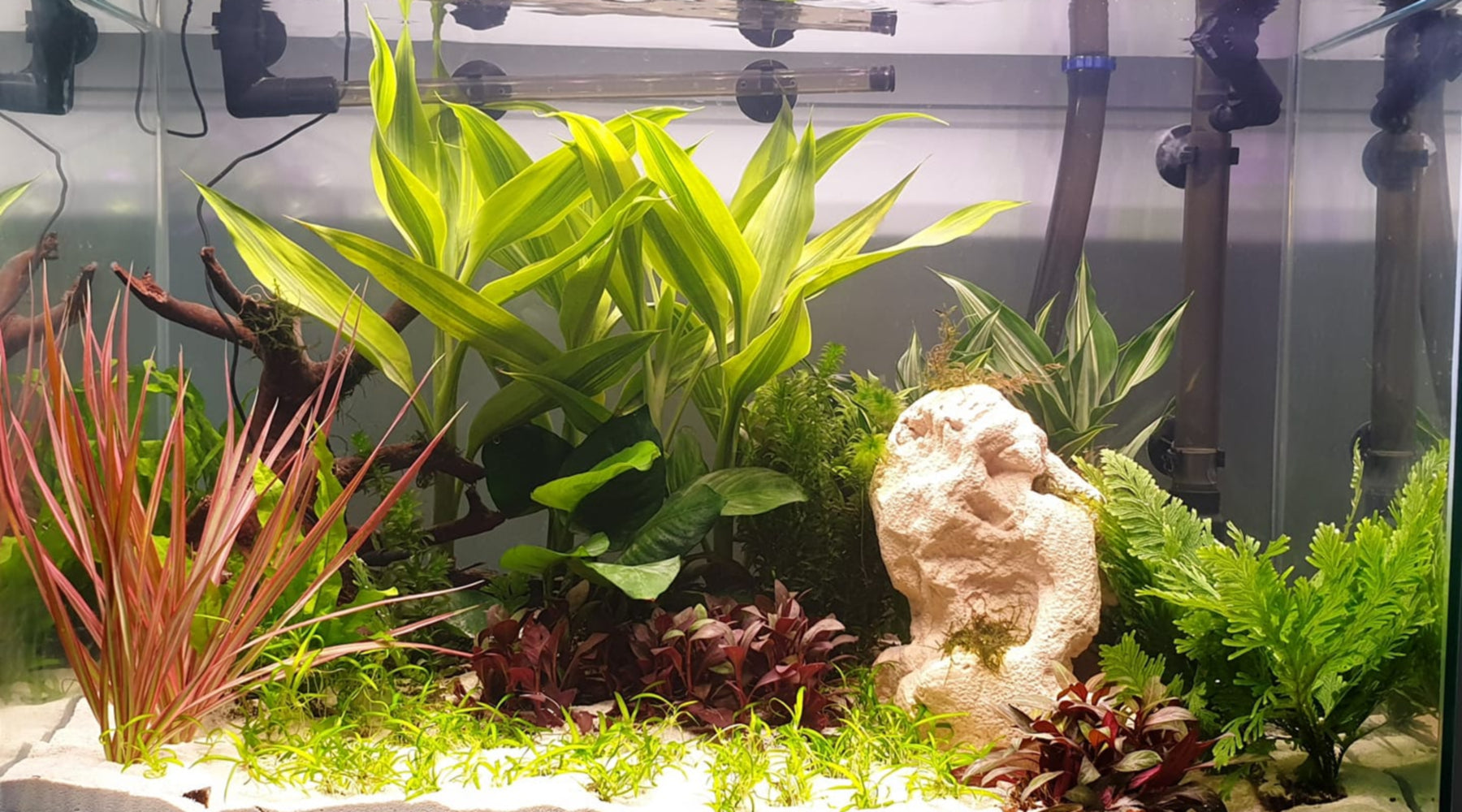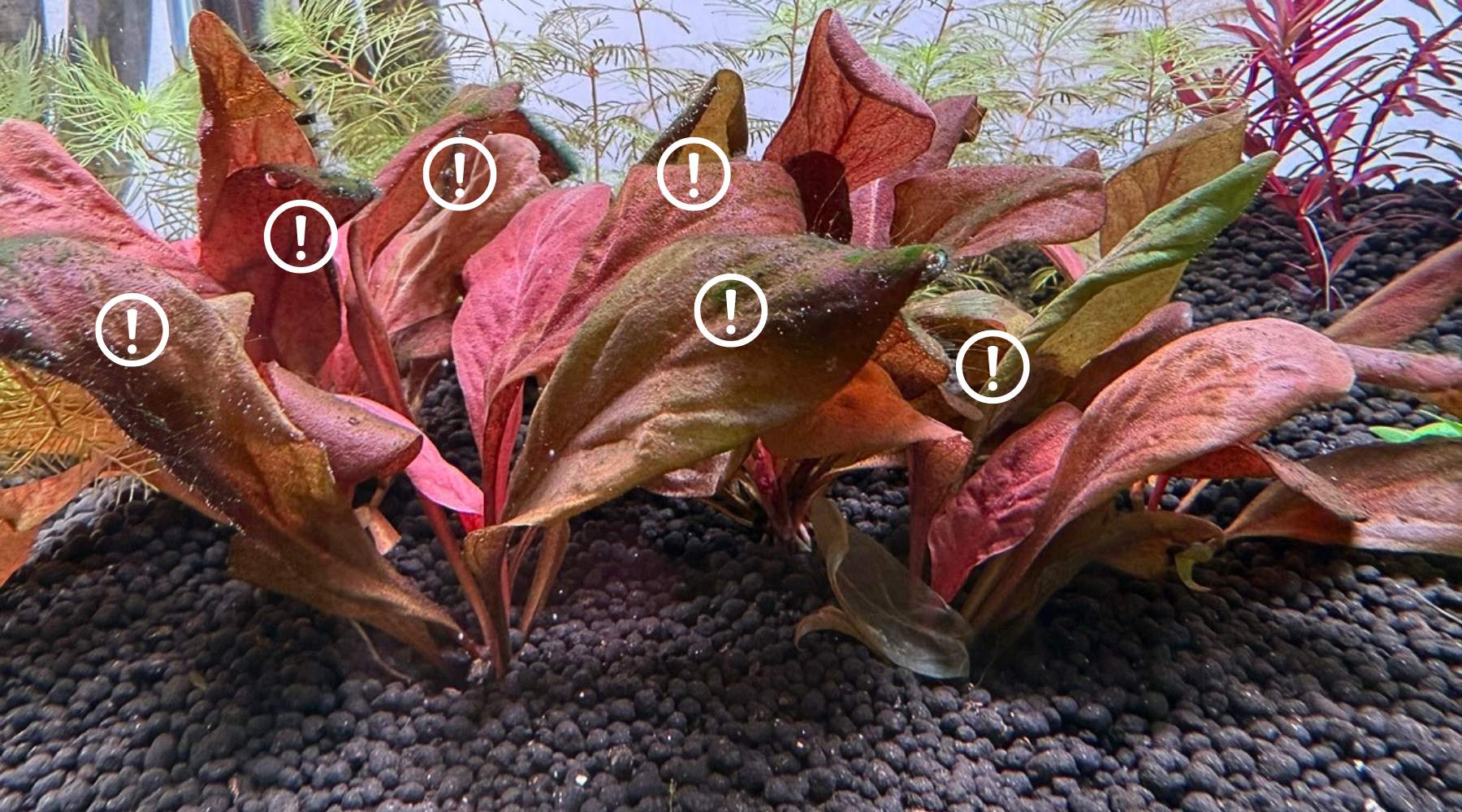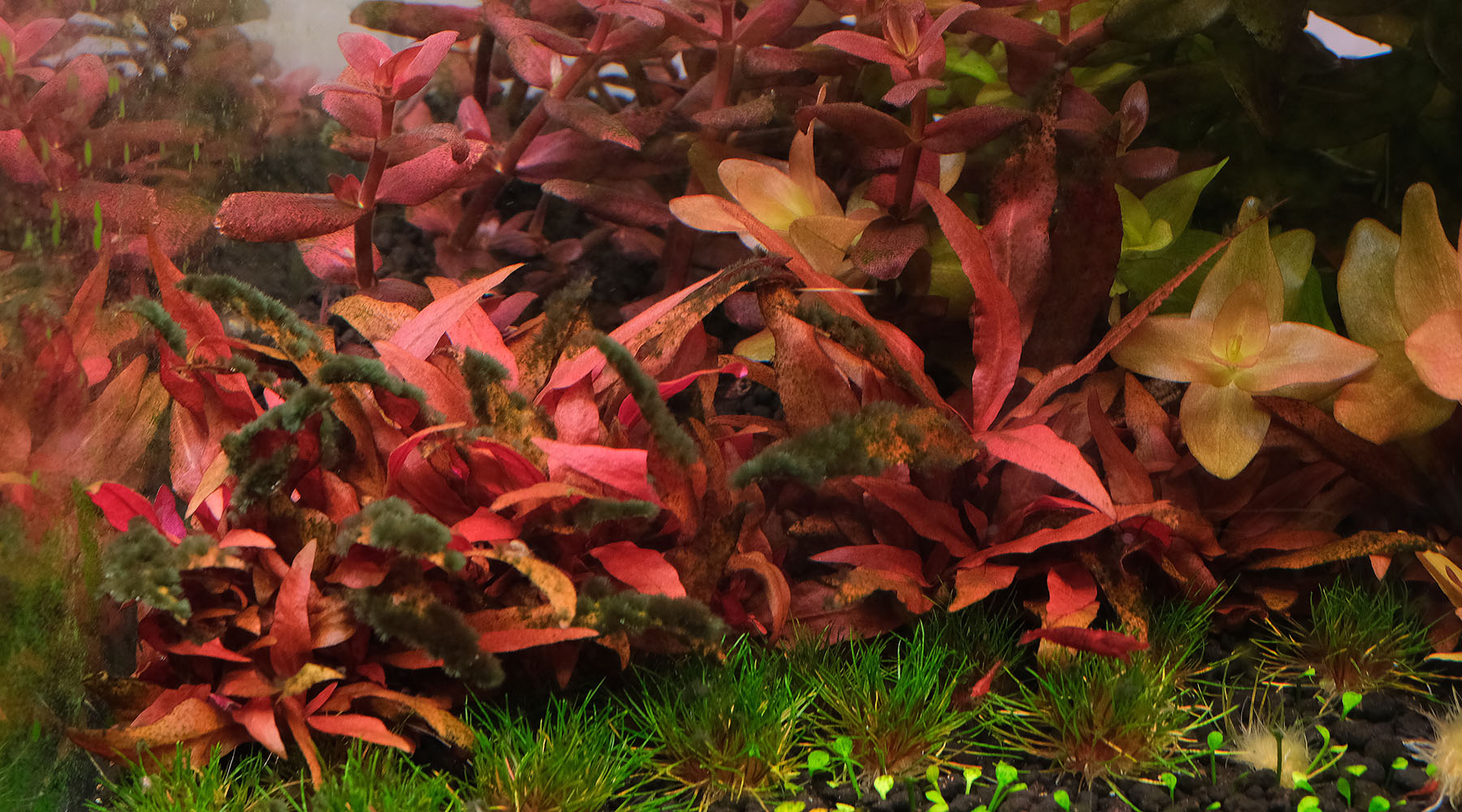

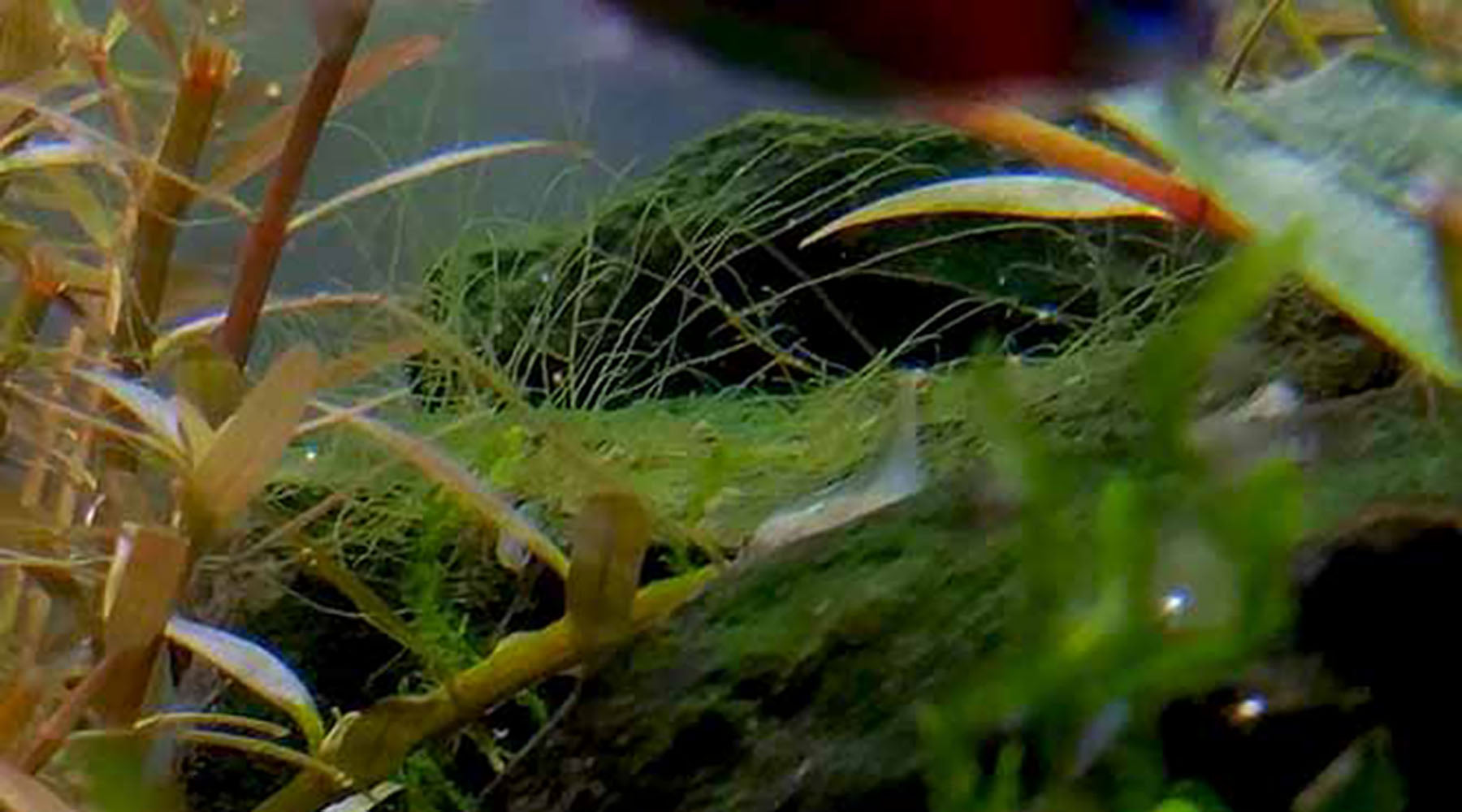
Cladophora appears as tough filaments or green turfs in areas of high light and poor current. They are tougher than ordinary types of 'hair' algae and do not break apart as easily as other filamentous green algae. They can be recognised by their distinctive odour. This is a higher level algae that will not be deterred by healthy plant mass alone - although larger, more robust plants will out-compete it by shading it out. Mosses, fine carpets and slower growing plants are more susceptible overall. Overcrowded areas of old growth are also vulnerable.

Cladophora is often found entangled with smaller plants, such as carpets or mosses, while larger and faster growing plants deny them an anchor point. Changing the type of plants used in spots where the algae stubbornly refuses to go away can be a tactic to deny it a home.


Common Causes

  • Slow flow, high light dead spots

  • Slow growing, over-crowded spots

  • Decaying undergrowth

Solutions

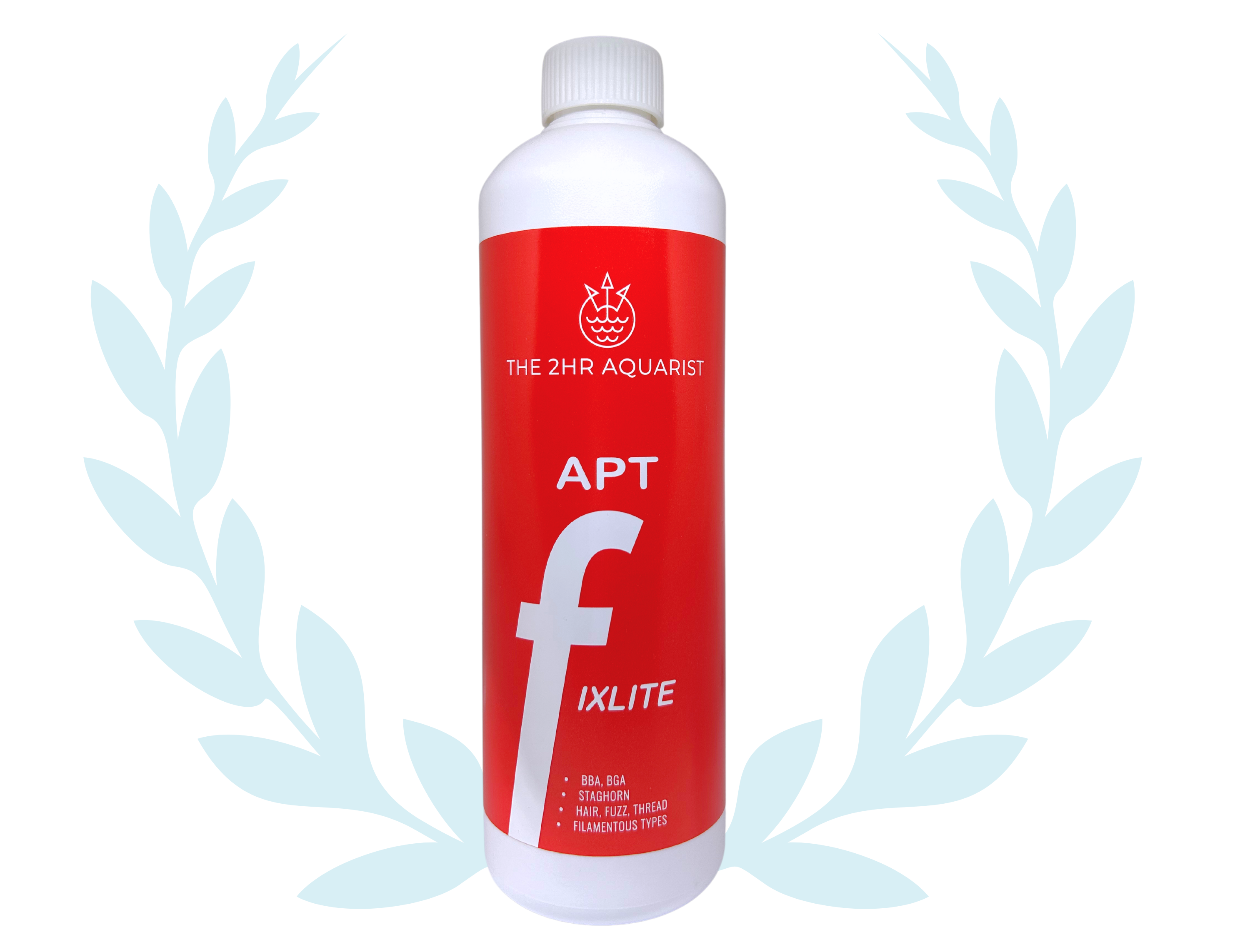
  • Manual removal, spot treat with APT FixLite - up to 1ml per 10L of tank water, repeatable every 24 hours. Mild to moderate cases only.

  • Prune / remove old growth.

  • Improve flow in slow current areas

  • Increase growth rates by optimizing CO2, nutrient levels.

  • Reconfigure problem areas to feature larger, more robust plants.

Additional links:

Click here for information on how to solve algae problems without algicides.

Click here for information on how to do proper water changes for a planted tank.

Click here for information on how to stabilize a new planted tank quickly.

Cladophora

Cladophora algae

Explore

View all

Close up photo of algae on older aquatic plant leaves

Why do leaves deteriorate? Understanding the leaf renewal cycle in aquatic plants

This article delves into the topic of how plants continually renew themselves through the production of new leaves.
Read moreabout Why do leaves deteriorate? Understanding the leaf renewal cycle in aquatic plants

4ft Rotala florida community aquarium: Showcasing the 2hr Way

4ft Rotala florida community aquarium: Showcasing the 2hr Way

Full details of tank parameters, plants and fish species, and the maintenance regime of the 4ft Rotala florida aquascape are described here.

Read moreabout 4ft Rotala florida community aquarium: Showcasing the 2hr Way

Non-Aquatic Aquarium Plants: A Beginner's Buying Guide to Avoid Them

Non-Aquatic Aquarium Plants: A Beginner's Buying Guide to Avoid Them

Some of the most attractive plants on shop shelves are not aquatic at all. They persist for weeks, then rot and feed algae. This guide identifies the common non-aquatic species sold as aquarium plants, shows how genuine aquatics shift form above and below water, and lists what to check before buying..

Read moreabout Non-Aquatic Aquarium Plants: A Beginner's Buying Guide to Avoid Them

New Tank Journey | Ugly Duckling

New Tank Journey | Ugly Duckling

New tanks can be frustrating at the beginning. Here, we describe one important signal that things are actually progressing well, despite plants having algae. 

Read moreabout New Tank Journey | Ugly Duckling

When Less is More

When Less is More

How to get Rotala rotundifolia redder? Interestingly, less can be more in this case.

Read moreabout When Less is More

System Shocks

System Shocks

Sudden widespread algae infestation can take place when changes in environmental parameters induce adaptation stress that weaken plants which become vulnerable to algae.

Read moreabout System Shocks

Flowering Underwater?

Flowering Underwater?

Do aquatic plants flower underwater? Is flowering a sign of good health? Which plants can I grow that will flower easily in my aquarium?

Read moreabout Flowering Underwater?