


Rotala tulunadensis is a soft-water aquatic stem plant from northern Kerala, India, that grows into a dense, light green bush with a pinkish tips under stronger light. It is a temperamental plant that has quite specific growth requirements. It favors very soft water, with low alkalinity levels (<2 dKH) and prefers a clean substrate with low organic waste levels. This plant requires consistency to grow well: it is not super demanding with regards to nutrient or CO2 levels, however, it does require these levels to be held stable. Nutrient level fluctuations causes tip stunting and premature browning of older growth. This article will cover the key success factors for growing Rotala tulunadensis well in a planted aquarium.
-
This plant prefers very soft, low alkalinity water. Aim to have less than 2 dKH. It has more flexibility with GH and grows well in the range of 3 - 10 dGH.
-
It feeds well from both water column and substrate. Rich substrate, lean water column is the easiest combination to grow this plant. If mainly water column feeding, nutrient levels must be kept very consistent for it to grow well.
-
Accumulation of organic detritus in the substrate is the second common failure point, interfering with the roots of this sensitive stem.
-
CO2 injection helps growth even though this plant does not require high levels of CO2 to grow well.
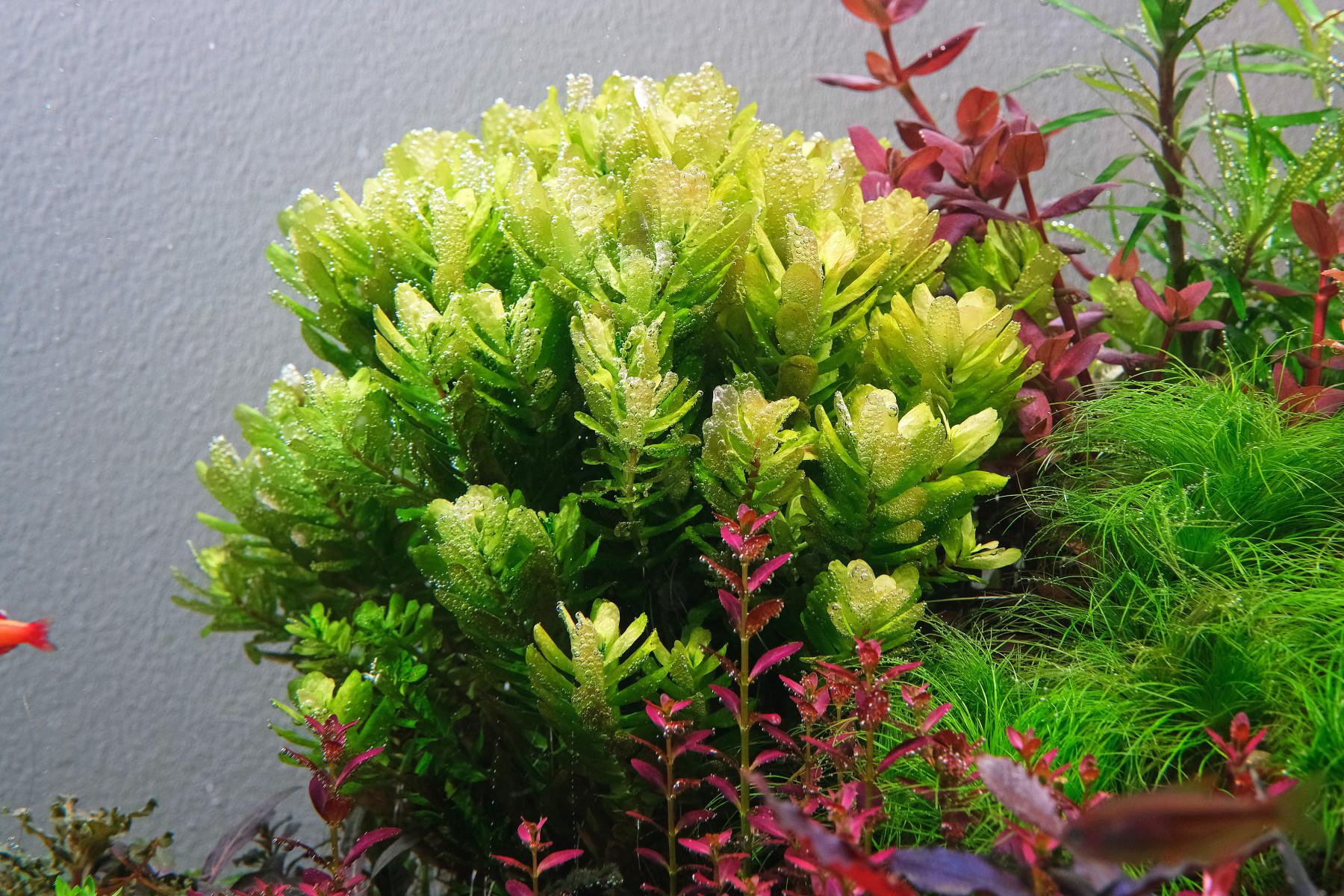
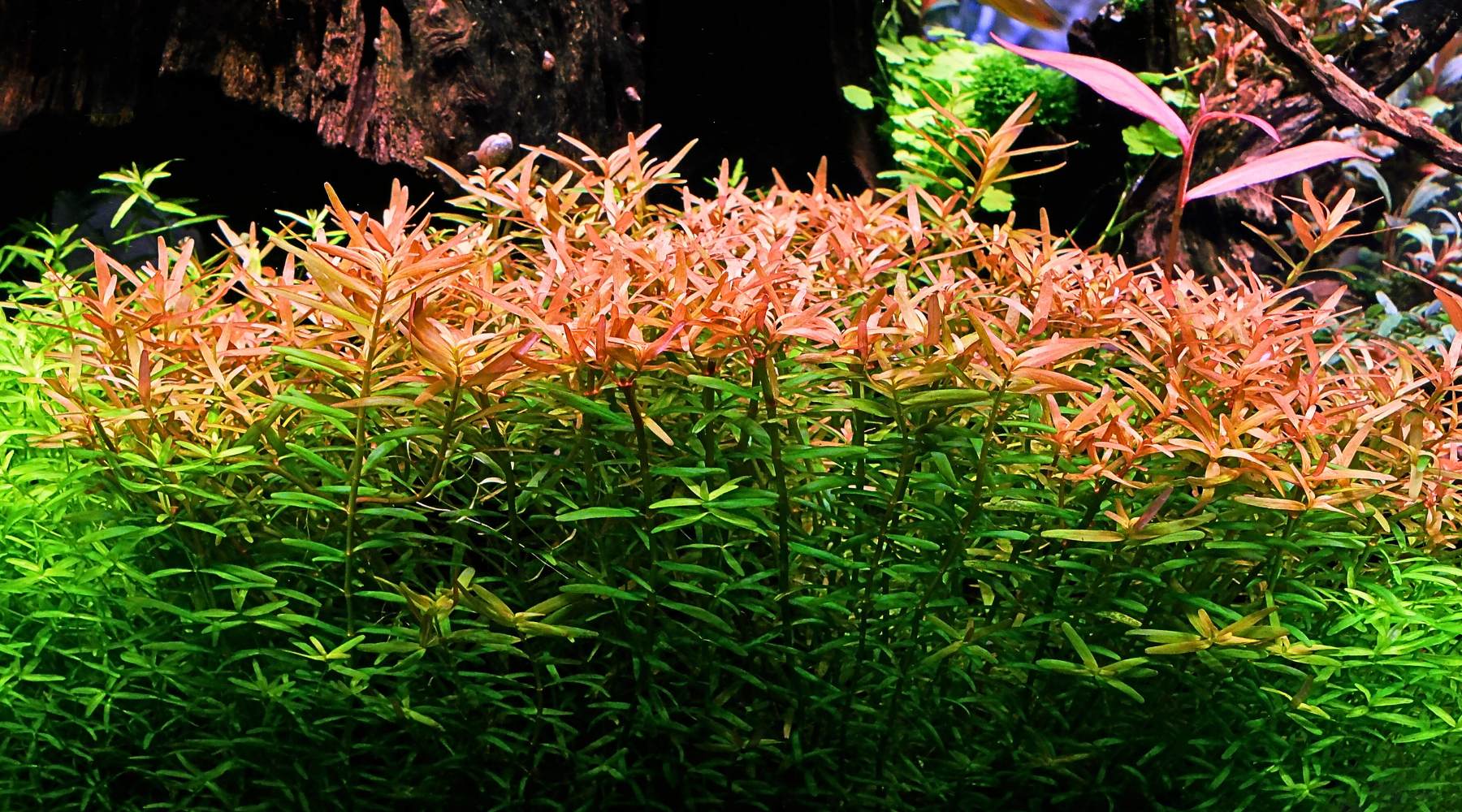
Photo of the aquatic plant Rotala tulunadensis
Where is Rotala tulunadensis from?
A relatively recent addition to the hobby, Rotala tulunadensis belongs to the Lythraceae family. It was formally described in 2012 by Indian botanists, with samples collected from the lateritic plateau at Permude in northern Kerala; the name refers to the Tulu Nadu coastal region. In the wild it grows submerged through the monsoon, emerges as the pools shrink, and persists through rootstock buried in the mud. Its habitat of rain-fed pools on heavily weathered rock are a clue to its preference for soft, low-carbonate water.
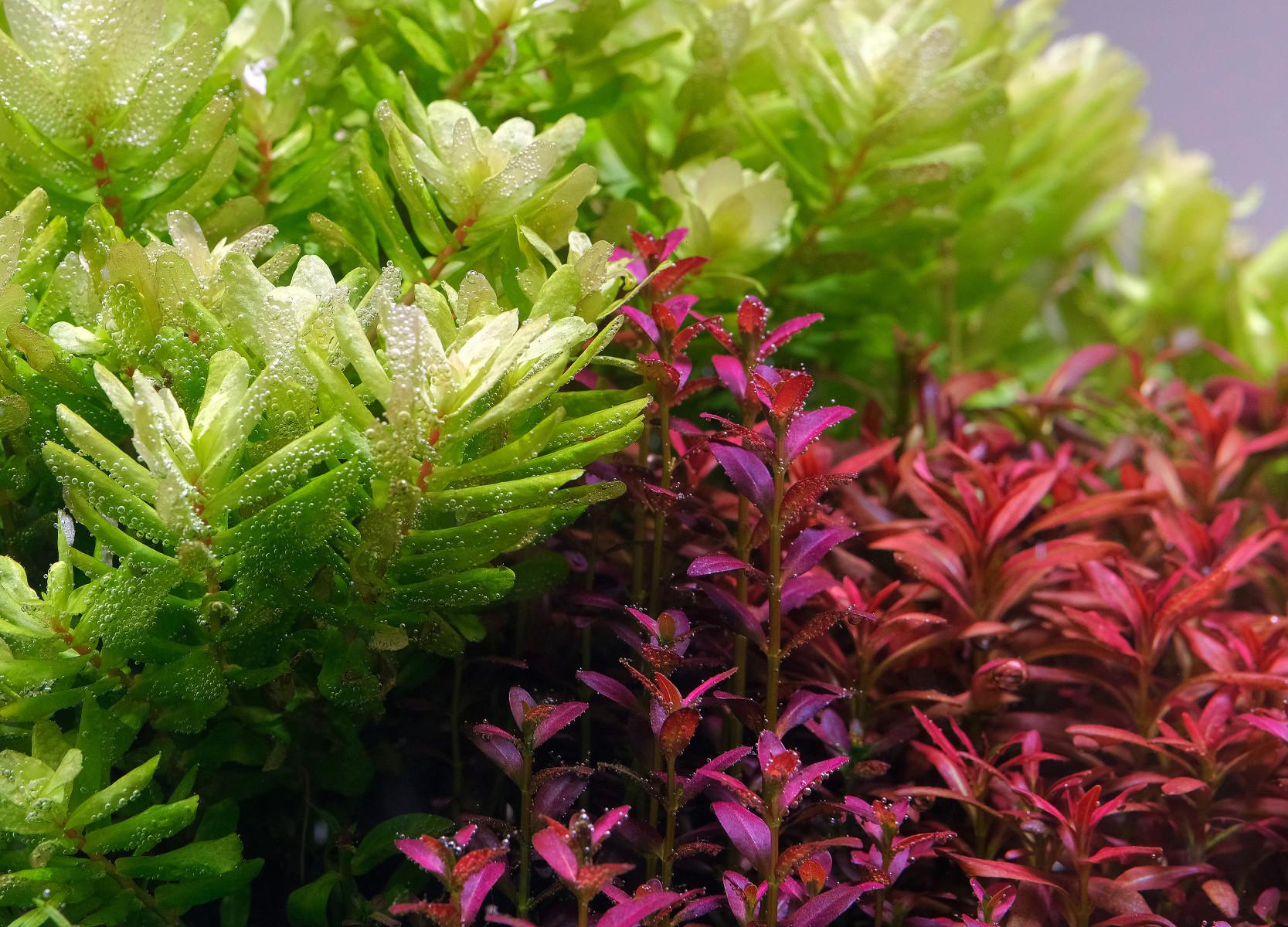
In the aquarium, it produces delicate oval, light green leaves that stack tightly and pick up a slight pink to reddish hue under stronger light. It branches readily into a dense bush and contrasts well against darker greens and red plants. Growth starts slow, but accelerates after the plant settles in. It has moderate speed compared to other faster-growing stem plants. However, it eventually reaches the surface of most home aquariums.
Is Rotala tulunadensis a Demanding Plant?
The usual assumption is that Rotala tulunadensis is a difficult plant, so when it stalls, folks turn up the light, push more CO2 and dose harder. That tends to make things worse. The plant is not especially demanding in light, CO2 or nutrients. However, it is sensitive to changes in the environment, especially large changes in water column nutrient values.
The mechanism at work here is plant reprogramming stress. Plants continuously tune their internal machinery (growth hormones, chlorophyll production, leaf size) to the resources available in the environment. Adaptable species absorb large shifts without symptoms, while sensitive species such as Rotala tulunadensis stunt when growth conditions change too much.
Aim to keep the key growth parameters stable within a small range. The plant can grow in both lean and rich water columns; however, the level should remain consistent. The same goes for CO2. For Nitrates (NO3), aim to keep it within a 5ppm range.
An easy way to grow this plant is through substrate feeding rather than rely on heavy water column dosing. Rich substrate, lean water column dosing allows water column nutrient levels to remain low or zero-bound, which is very stable.
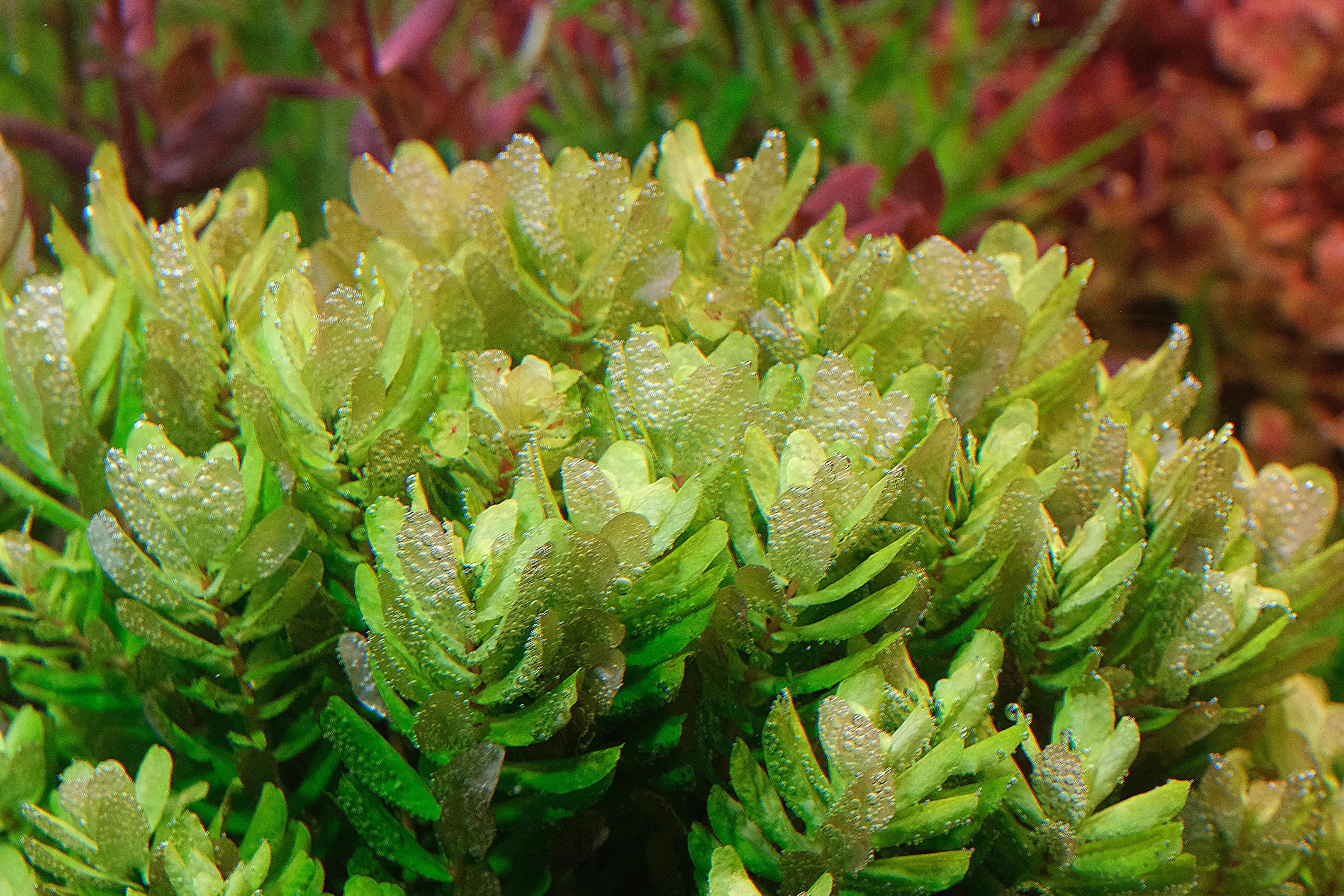
This batch of Rotala tulunadensis is grown with richer water column nutrient levels. NO3 is balanced within 15-20ppm range throughout the week.
How Do You Tell a Nutrient Deficiency From Nutrient Instability?
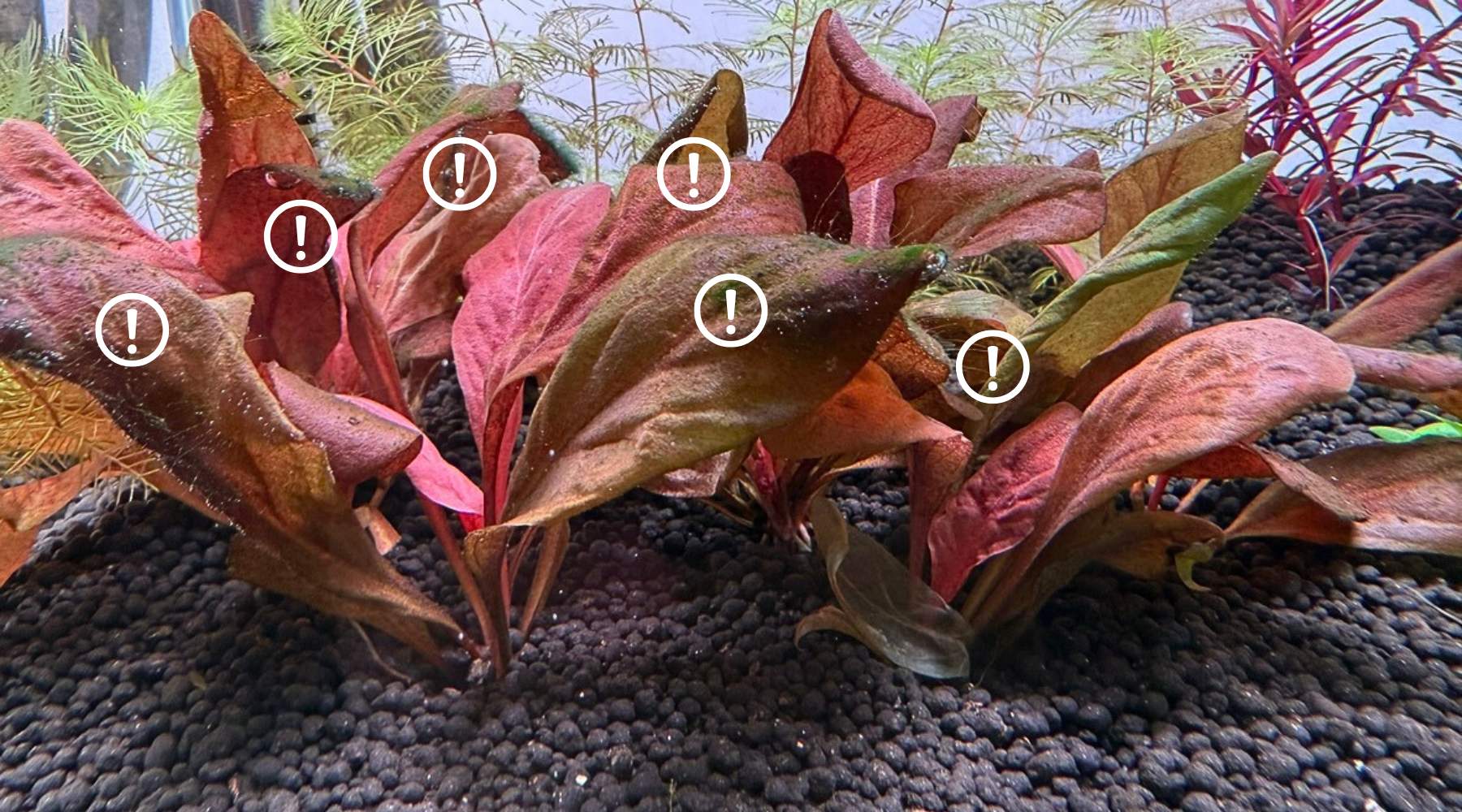
A true nutrient deficiency is gradual and takes time to manifest: growth slows and weakens over weeks. Smaller top growth is produced over time, and the plant will show little to no production of side shoots. The product of nutrient instabilities is quicker: fast growth in a week then tip stunting in the next week. Stunted tips on a plant that was growing well often point to a swing in growth parameters, not a shortage of nutrients. An upward spike in nutrients can also cause stunting, so accumulation of nitrates due to heavy handed dosing is a common way that causes stunting of this species in aquariums.
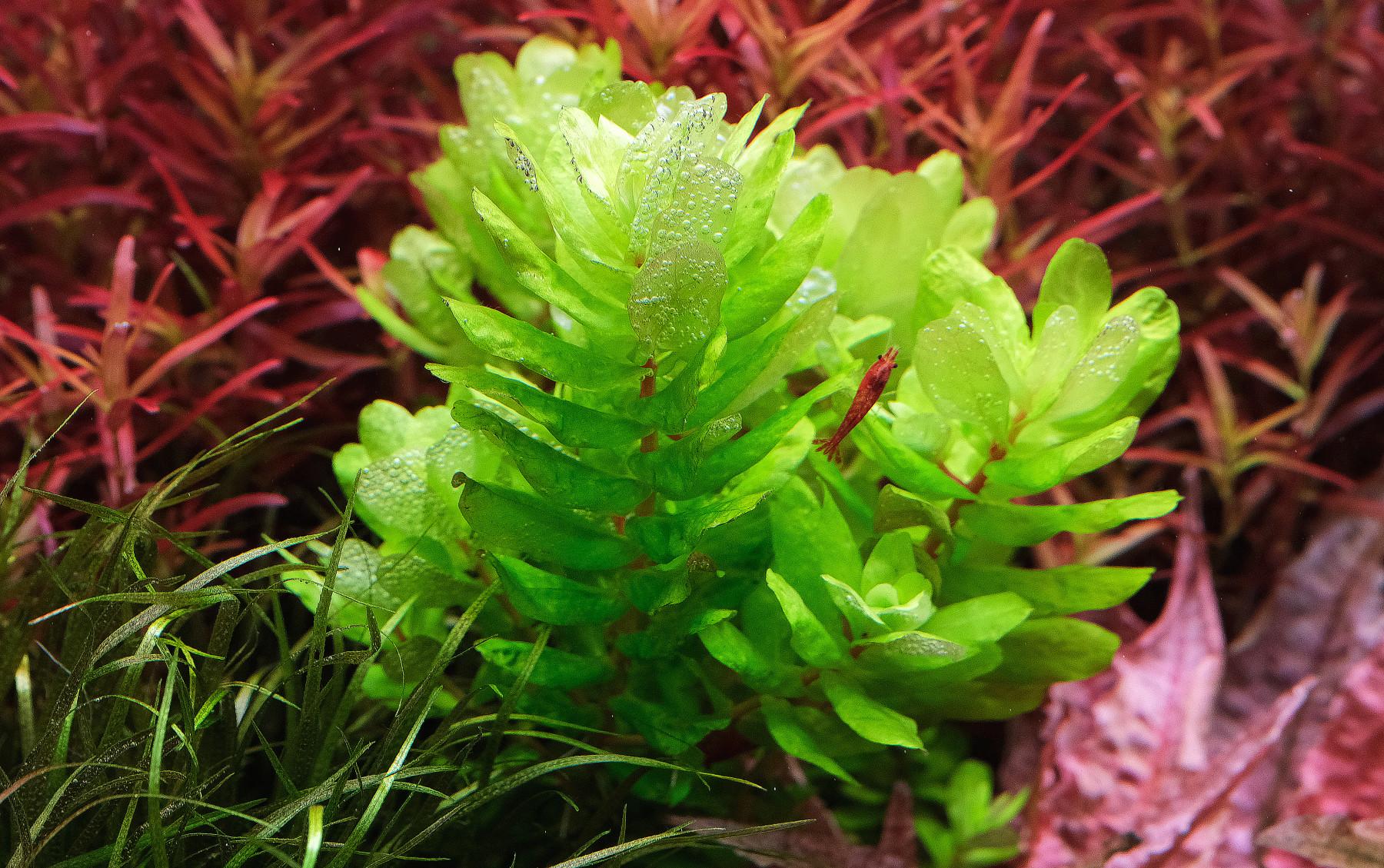
Evenly spaced leaves of similar sizes shows consistent nutrient levels.
How Stable Should Nitrate Levels Be?
Nitrate is the most useful marker of nutrient levels, since nitrogen drives growth more than any nutrient except carbon. Three simplified examples, in parts per million (ppm):
-
Example 1, lean dosing and stable levels: Aquarium starts at 0ppm NO3, 1ppm of Nitrate is dosed daily and 1ppm of Nitrate is taken up daily. Residual nitrate is 0ppm and there is no accumulation. This is zero-bound stability.
-
Example 2, rich dosing and stable levels: Aquarium starts at 15ppm NO3. 3ppm of Nitrates is dosed each day. Plant uptake is also 3ppm daily, this means no accumulation. The aquarium starts the day at 15ppm NO3 and ends the day at 15ppm NO3 as there is no accumulation. This aquarium has high nitrate levels that are stable.
-
Example 3, rich dosing and unstable levels. Aquarium starts at 0ppm Nitrate. 4ppm of Nitrate is dosed each day. However, plant uptake is only 1ppm. There is 3ppm of Nitrate left over each day. Aquarium starts at 0ppm of Nitrate, but after 5 days of accumulation, it has 15ppm of Nitrate. This is an example of unstable nutrient levels due to the accumulation of Nitrate due to dosing that exceeded plant uptake rate.
Rotala tulunadensis can grow well in Examples 1 and 2. It will likely stunt and not grow well in Example 3. In most planted tanks, a nitrate swing of 10 to 15ppm is enough to trigger plant reprogramming and cause stunting of sensitive species such as Rotala macrandra and Rotala tulunadensis.
A rich substrate makes Example 1 easy to run: the water column stays near zero while roots draw ammoniacal nitrogen and other nutrients from the aquasoil. The aquarist simply need to do large water changes and make sure there is no significant accumulation of Nitrates by the end of the week.
Does 0ppm Nitrate Mean the Plant Is Starving?
Is the 0ppm plant starving? A nitrate test reads the residual amount of nitrates left in the water column, and depending on when fertilizer dosing was done, plants may have already taken up what they need. It is not necessary to leave large amounts of left-over nitrates lingering in the water column, in the same way you do not always need to see left over fish food to know that the fish have eaten enough.
The real point of observation is - are the plants growing at good speed with good development of new leaves on a consistent basis? If growth is good, 0ppm Nitrate readings of the water column does not matter much.
Clean aquasoil and Rotala tulunadensis
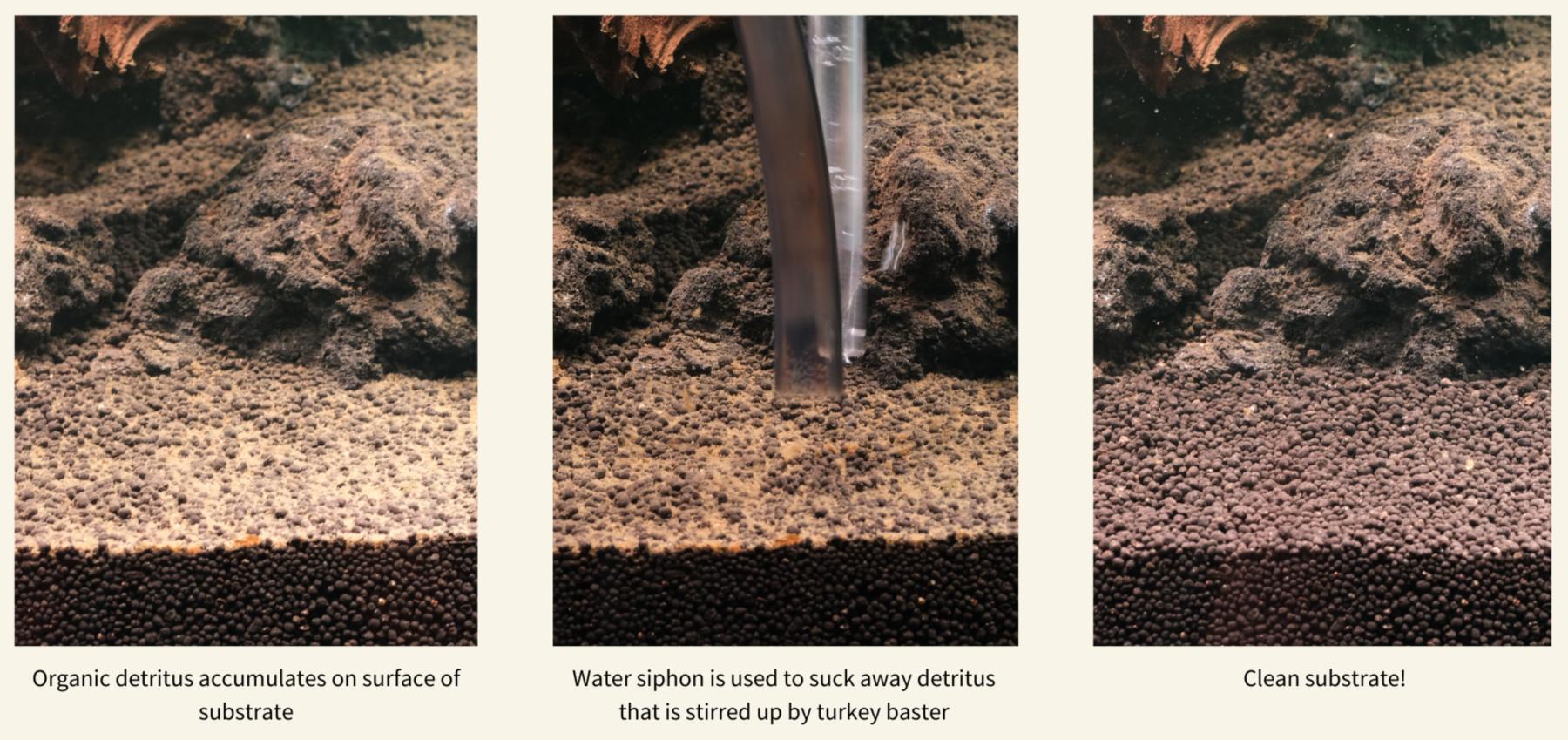
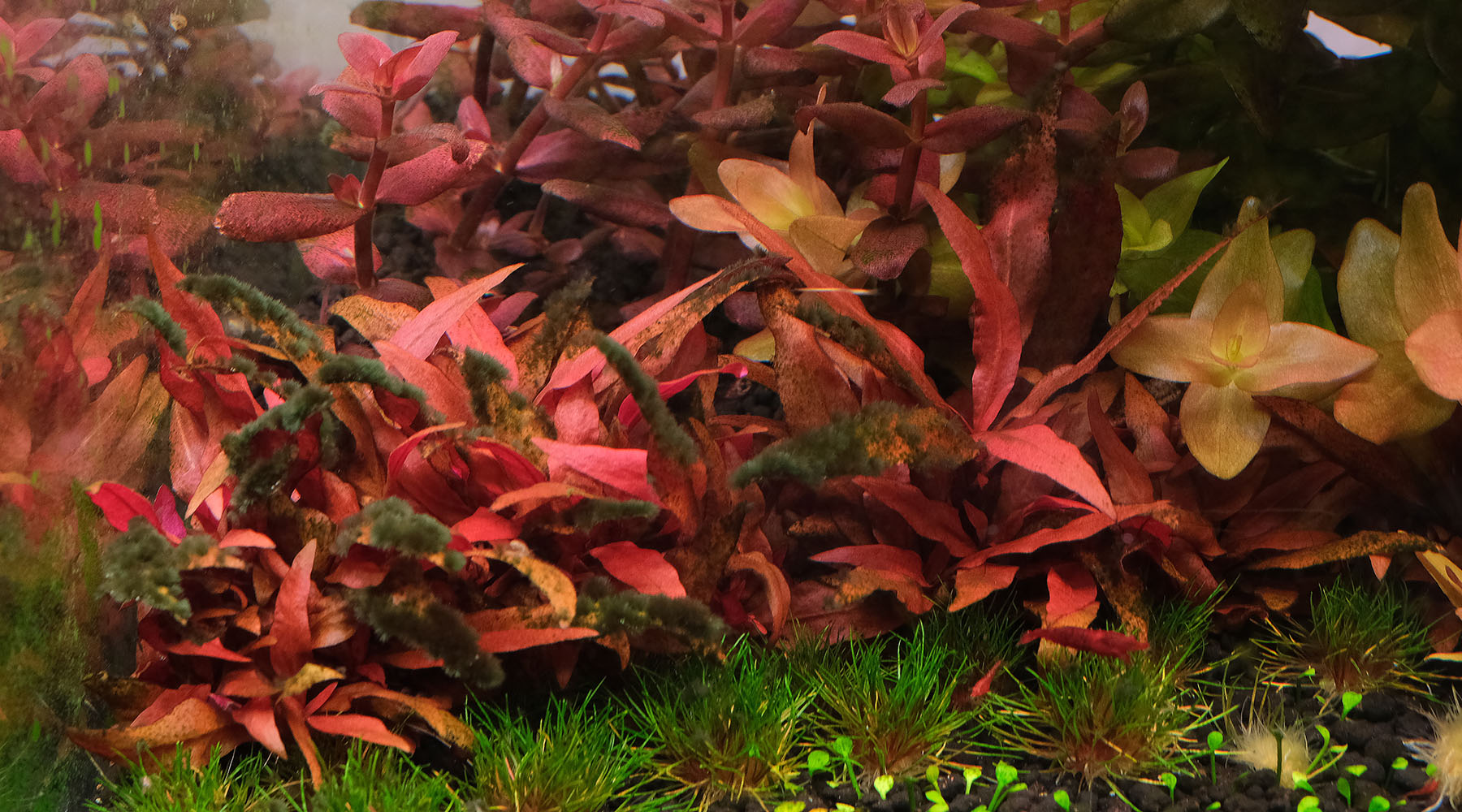
Isn't soil just dirt? The organic waste that builds up on aquasoil is a different material from the aquasoil itself. Gardeners compost kitchen scraps before they go into the bed because raw waste makes soil overly labile: fast-decomposing, microbially unstable and hard on roots.
Most plants never notice. This one does. In our tanks a detritus-choked root zone is one of the most common reasons it grows poorly, and removing that organic layer while leaving the aquasoil grains intact often resolves it. Agitate the top inch or so with a turkey baster to lift loose detritus while hovering the water change hose above the surface to siphon it away. Do this before planting and during water changes around established stems. The aim is remove organic waste at the surface without disturbing the deeper layers in the substrate.
Does Soft Water Mean Low GH or Low KH?
"Soft water" is often read as near-zero GH. Where soft water aquatic plants are concerned, it is the KH number that matters more, not GH. Rotala tulunadensis prefers very soft water, under 2 dKH. GH can be higher from 3-10 dGH range. In higher KH ranges, it has a higher chance of tip stunting. In higher KH ranges, mainly root feeding the plant, while keeping the water column lean is one way to grow the plant.
How to Trim and Propagate Rotala tulunadensis
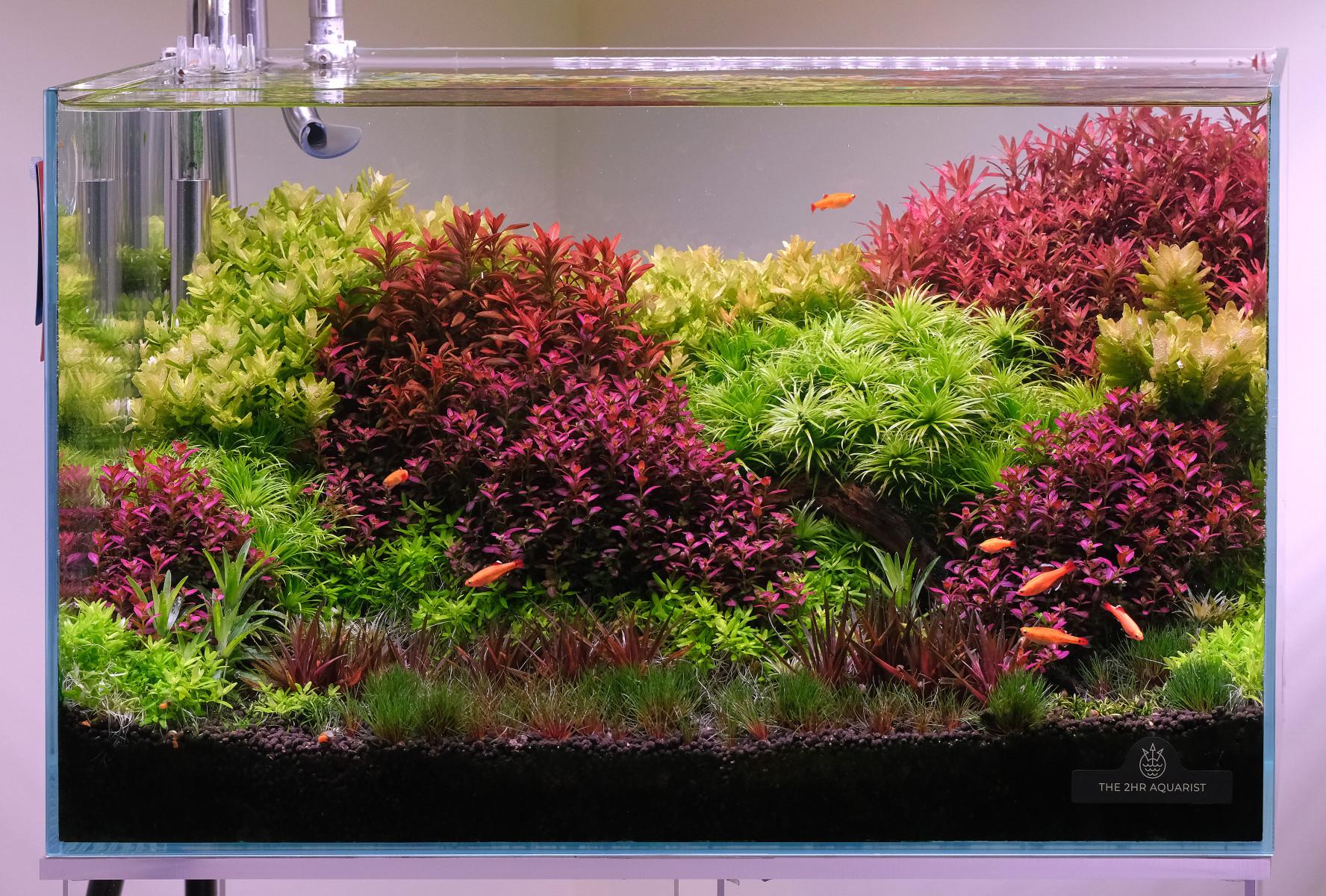
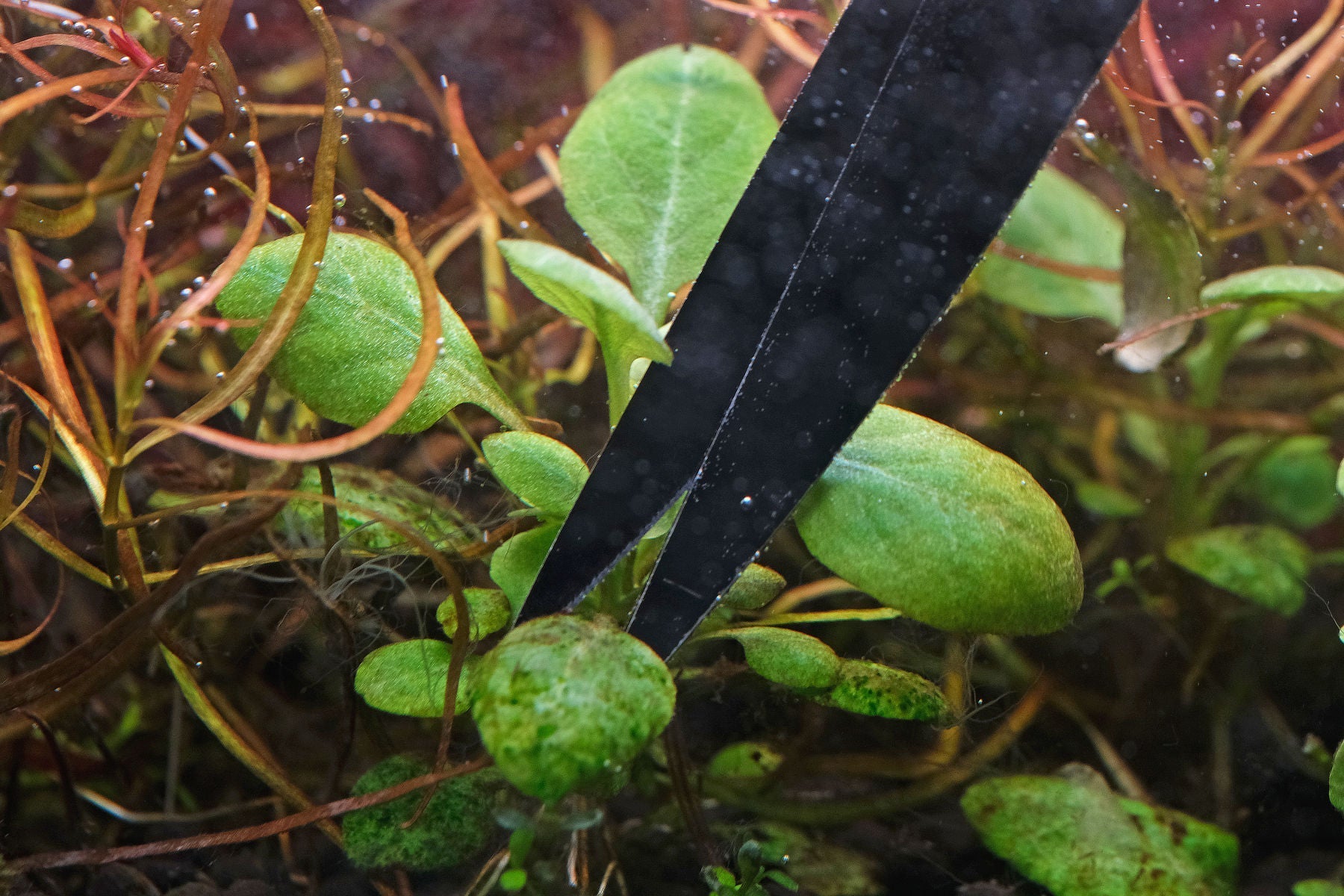
The plant takes trimming well and branches readily from rooted portions. Trim the tallest shoots individually where they join the main stem, and make sure stems have some growth heads remaining at any one time. Straight trimming all the tops at once hits this species hard and typically pauses growth for one to two weeks.
As with any other stem plant, this species is easily propagated by replanting healthy tops. Substrate-fed specimens can stunt briefly after replanting, because a fresh cutting loses its root zone and access to substrate nutrients. Water column feeding does not depend on roots, so tops replanted into a tank with some water column nutrition settle faster. After several trim cycles, lower stems will deteriorate and need to be replaced with fresh top growth..



Share:
How to grow Myriophyllum "golden"
How to grow Rotala ramosior Florida