

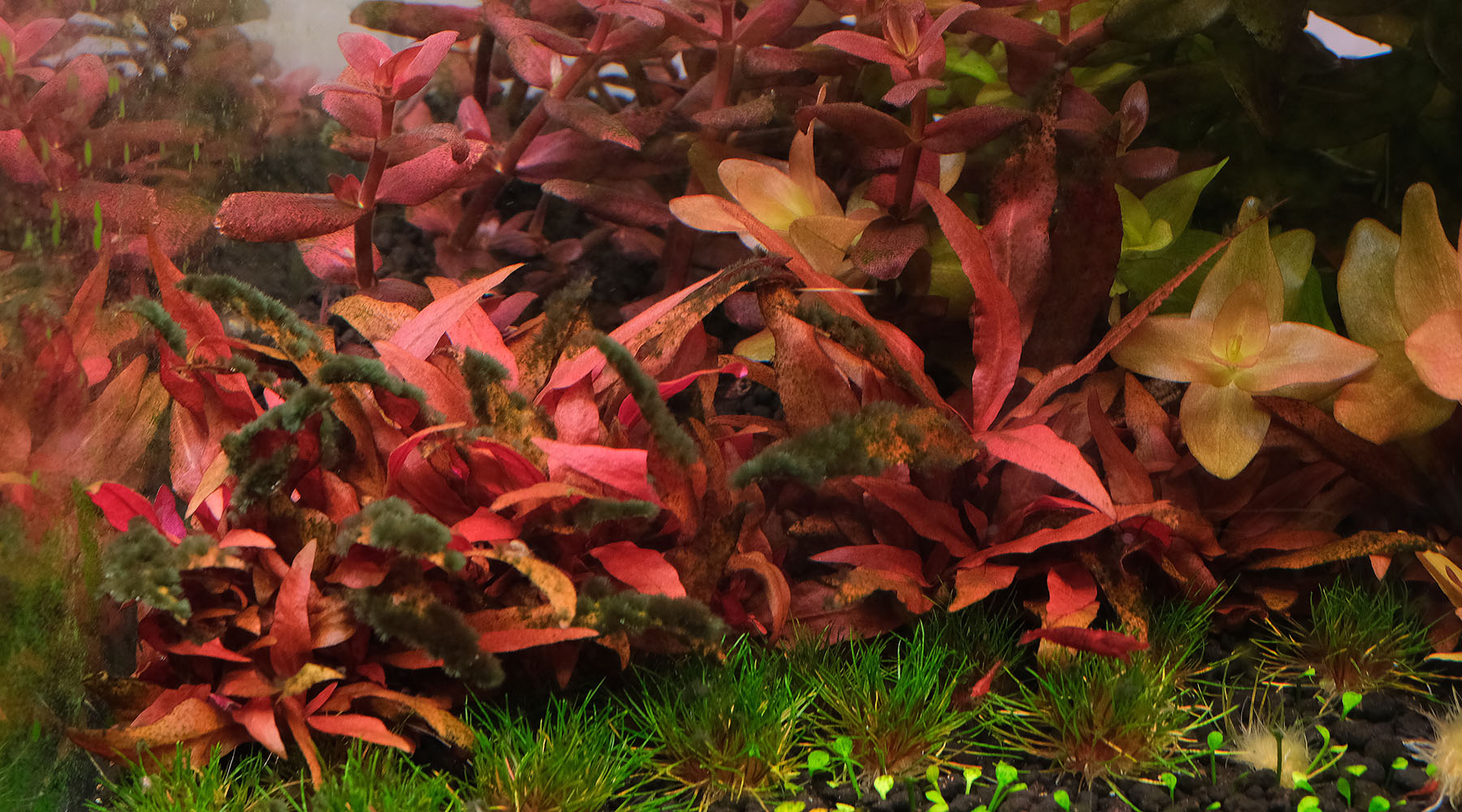
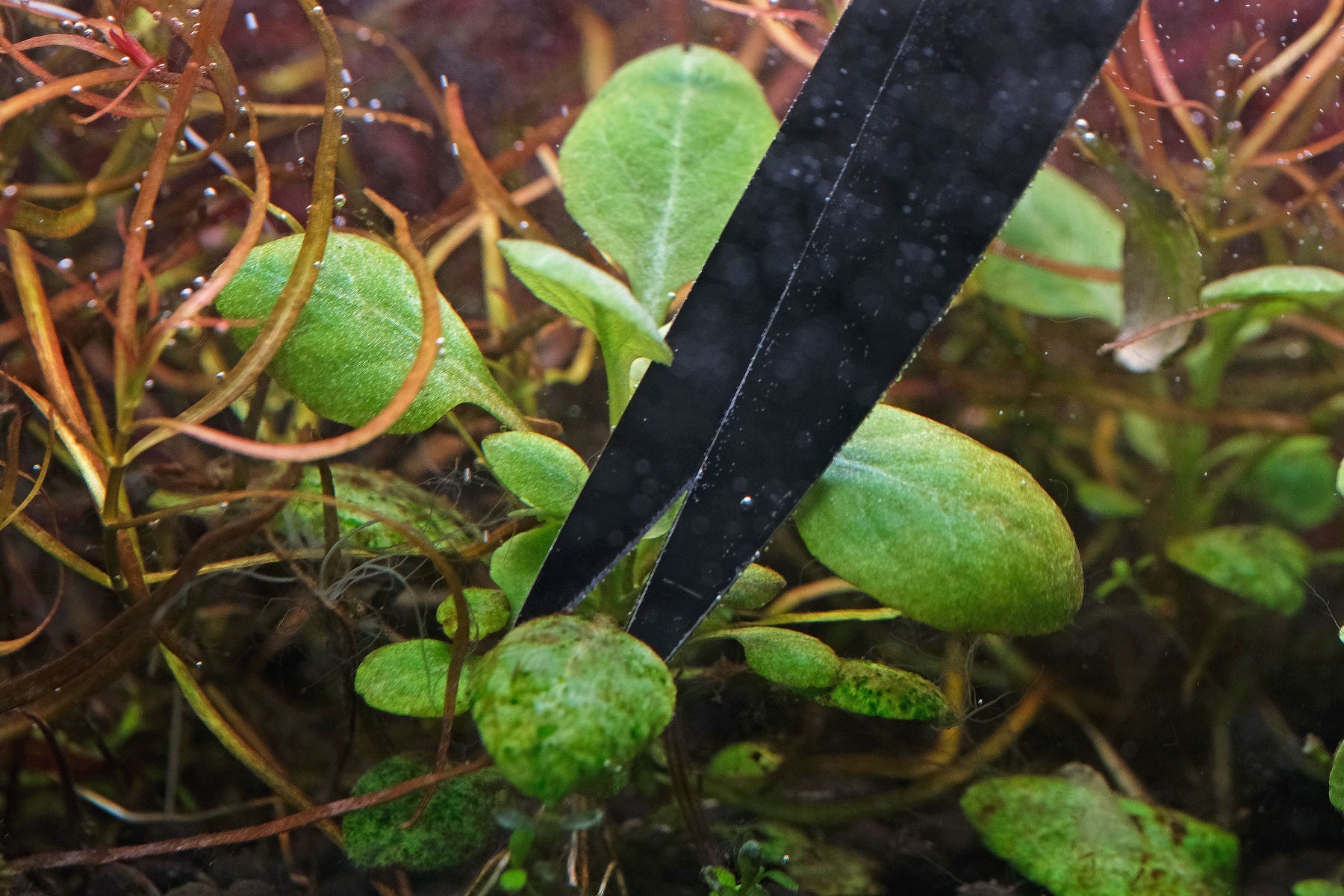
Above: a System Shock from an unexpected drop in CO2 triggered plant melt (above- bottom right) and BBA to spawn on the Alternanthera reineckii.
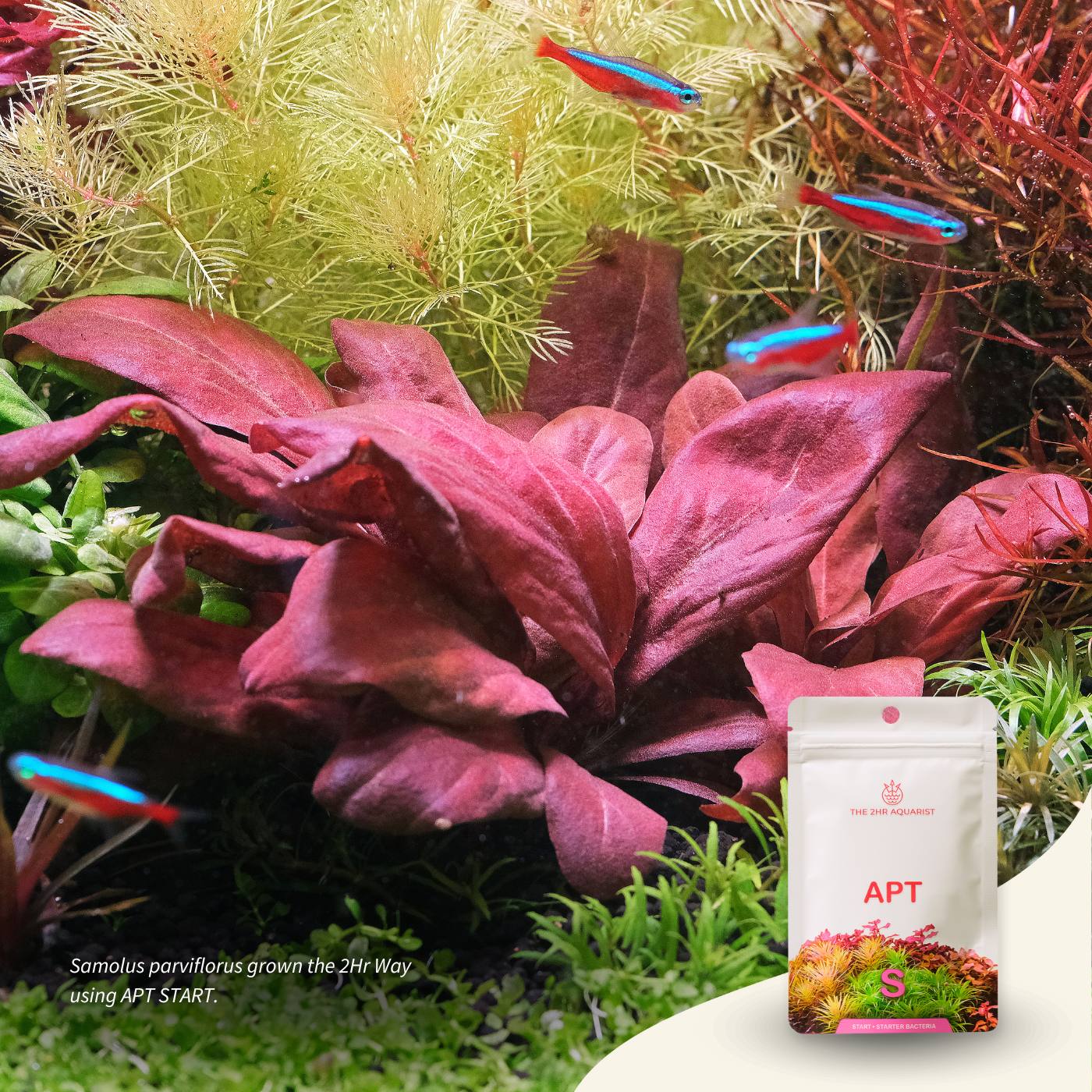
In the picture below, we see the leaves of Samolus parviflorus red- and other plants- suddenly carpeted by fine hair algae- the classic symptom of what we call a 'system shock'.
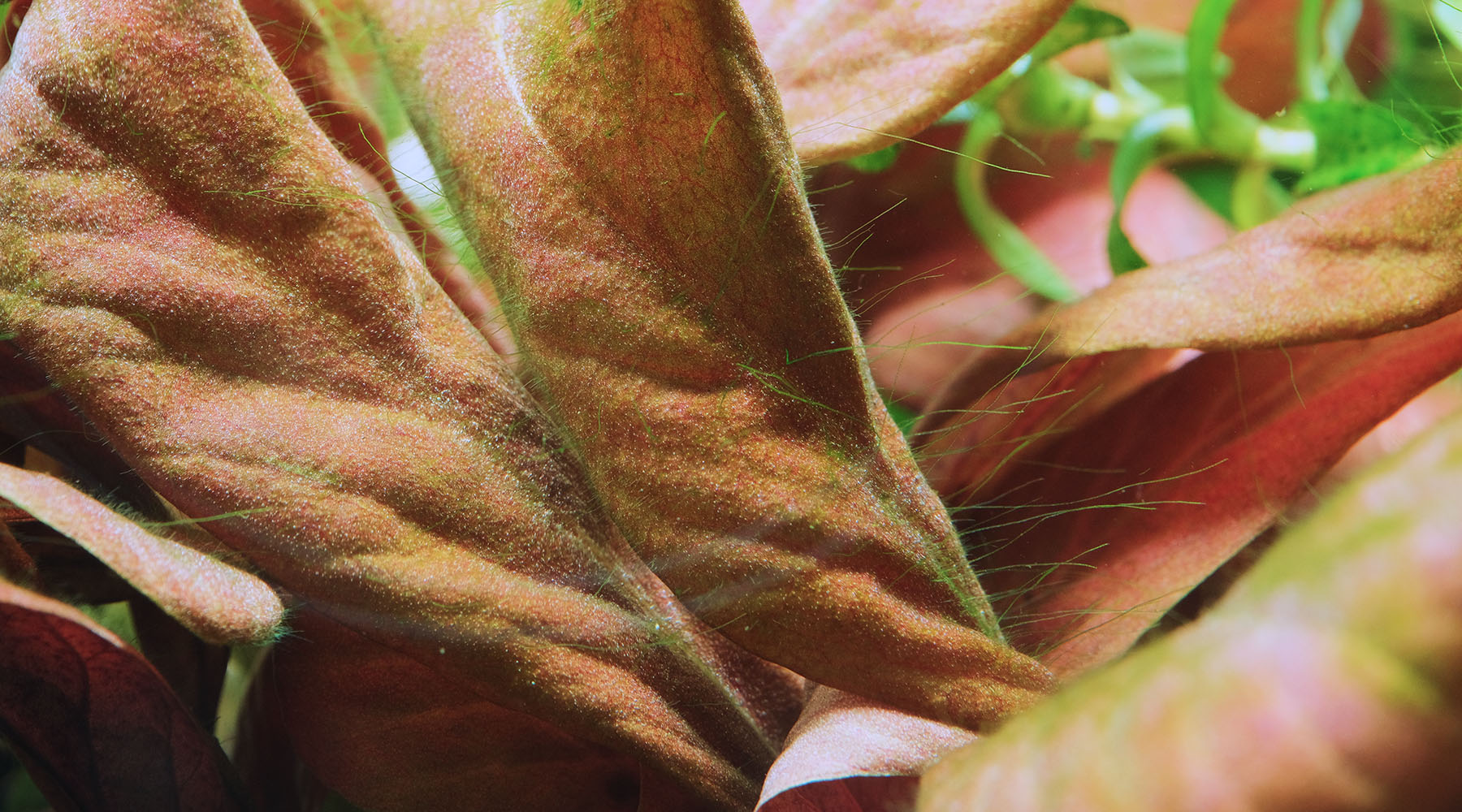
This occurs when changes in environmental parameters induce adaptive stress that weakens plants, making them vulnerable to algae.
But I didn't do anything!?
While the effects of some events are expected: e.g. power outages and the addition of a large school of fish (spike in organic waste), system shocks are often caused by 3 "silent killers".
- Slow organic waste accumulation (to a tipping point)
- Gradual reduction in flow (affects distribution of CO2, oxygen & nutrients)
- Drop in CO2
However, it can also come from changes in fertilisation, light strength, temperature and other water parameters.
Old Growth / Organic Waste
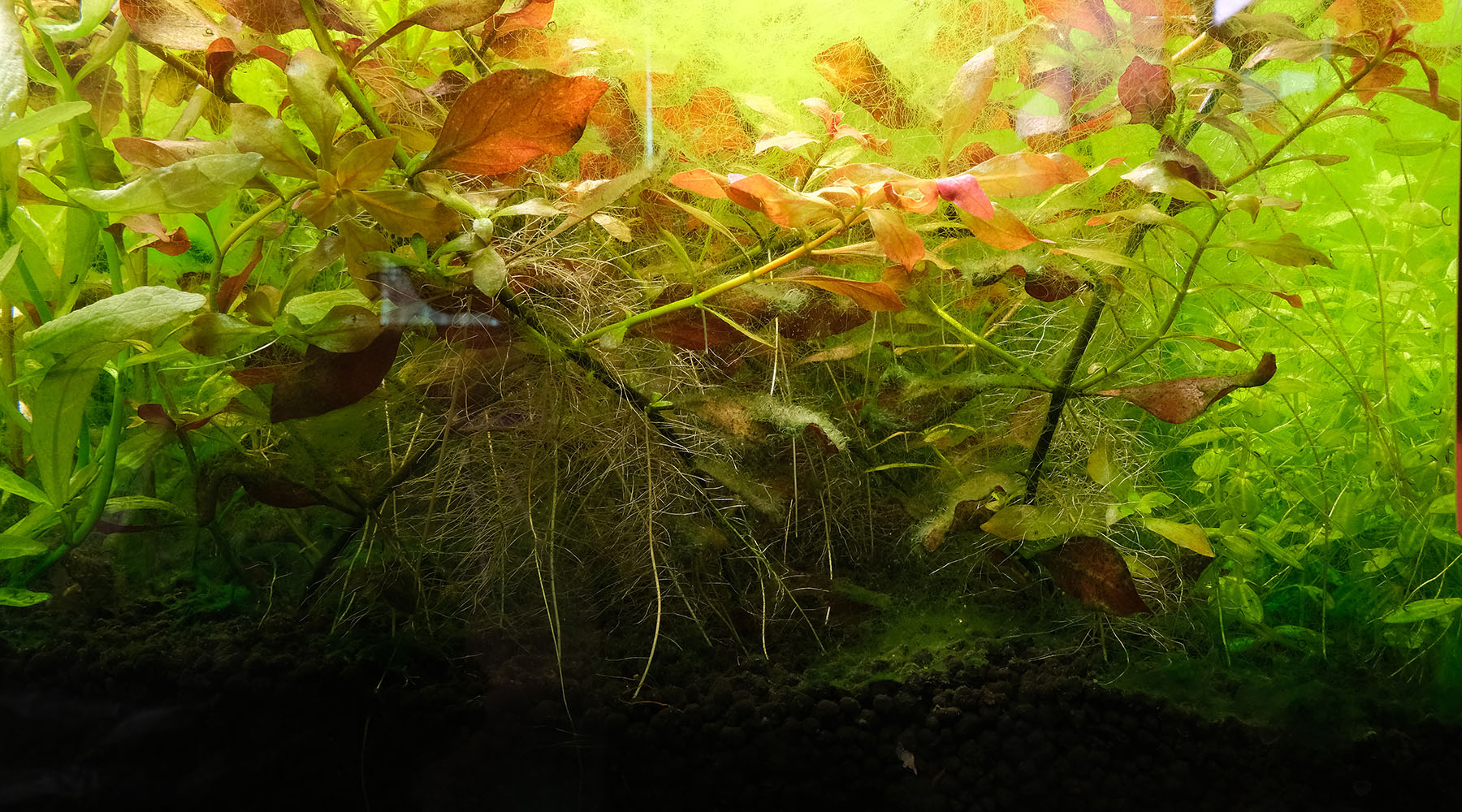
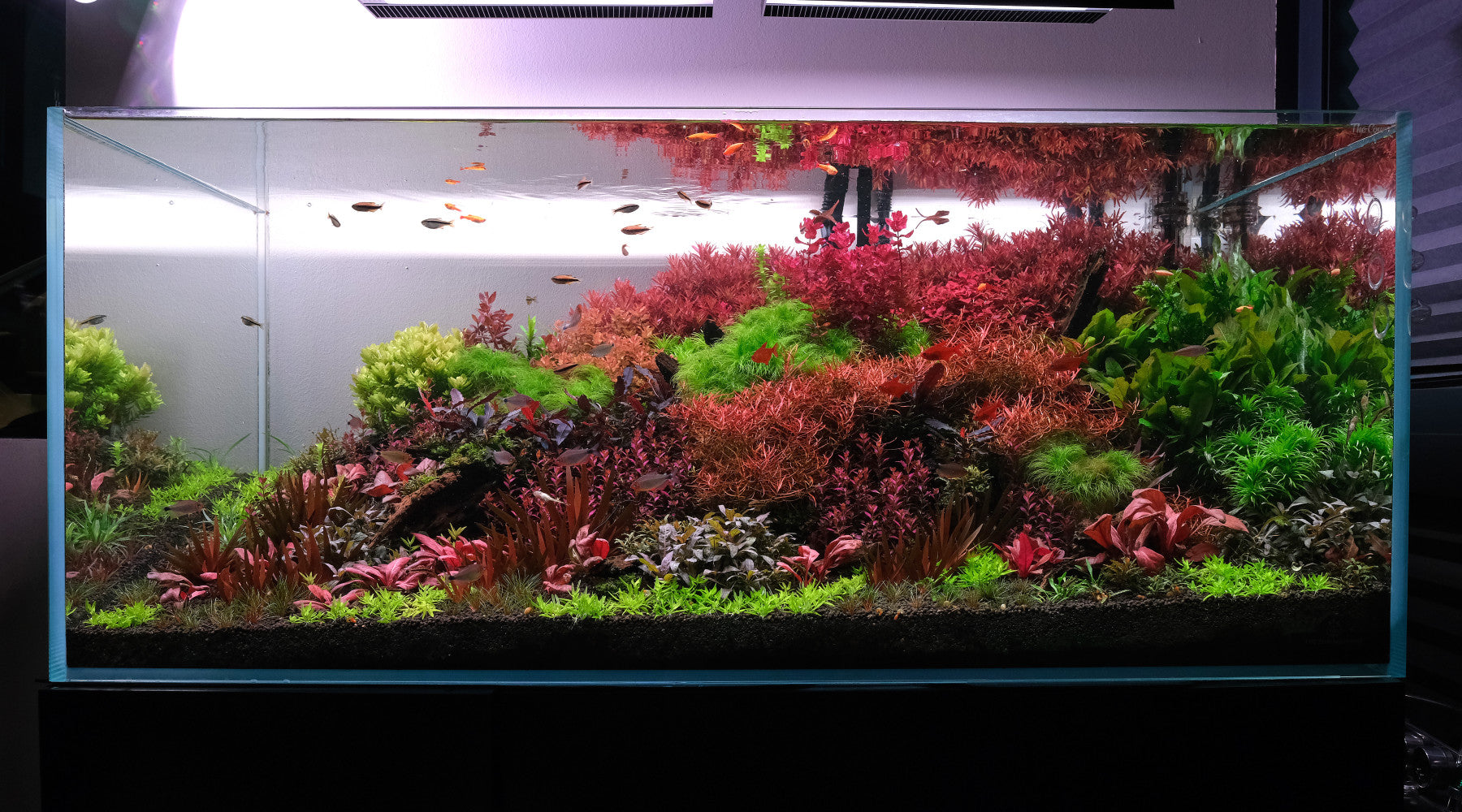
In mature tanks, the accumulation of old growth (decaying shaded stems and leaves, above) and detritus is easily ignored. Tanks look "natural" when grown, and we associate them with the beneficial leaf litter we see in terrestrial parks. In the tiny, enclosed environment of an aquarium, however, old growth and detritus often build up to a tipping point-an ammonia spike, an algae bloom. The cliff fall is deceptively sudden.
We cover a related aspect in a another article on 'Tank Peak'. When a tank is in full bloom or 'Summer' as we call it, it marks the painful but necessary milestone of trimming and often replanting. Aquatic plants are not perennial, and require regular replanting of the healthy tops.
Reduced Flow
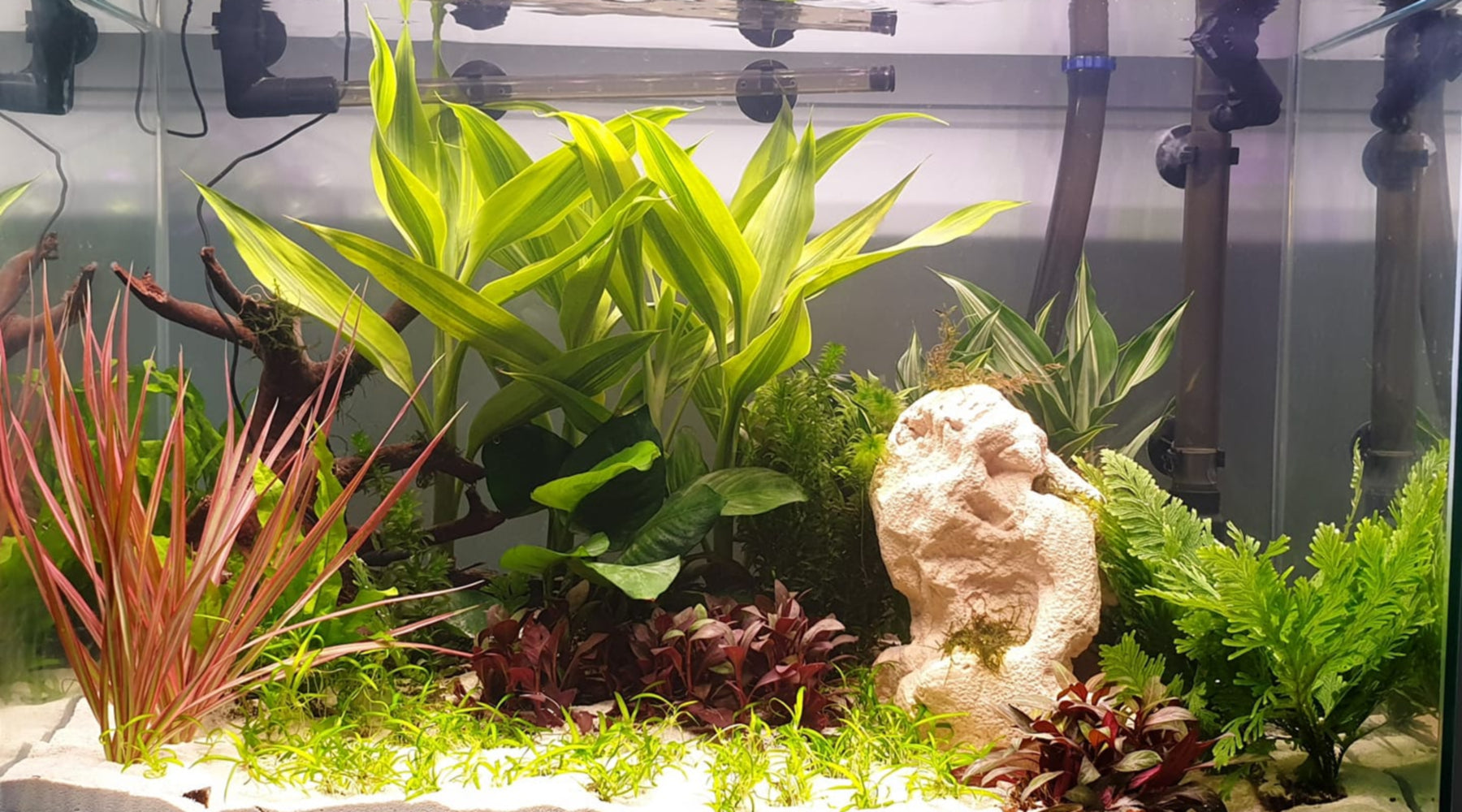
Because plants do not move, they rely on the flow of water to bring oxygen, carbon dioxide, and nutrients to their leaves. Filters naturally clog over time, and reduced flow is both invisible and noticeable.
Drop in CO2
How to recover from a system shock
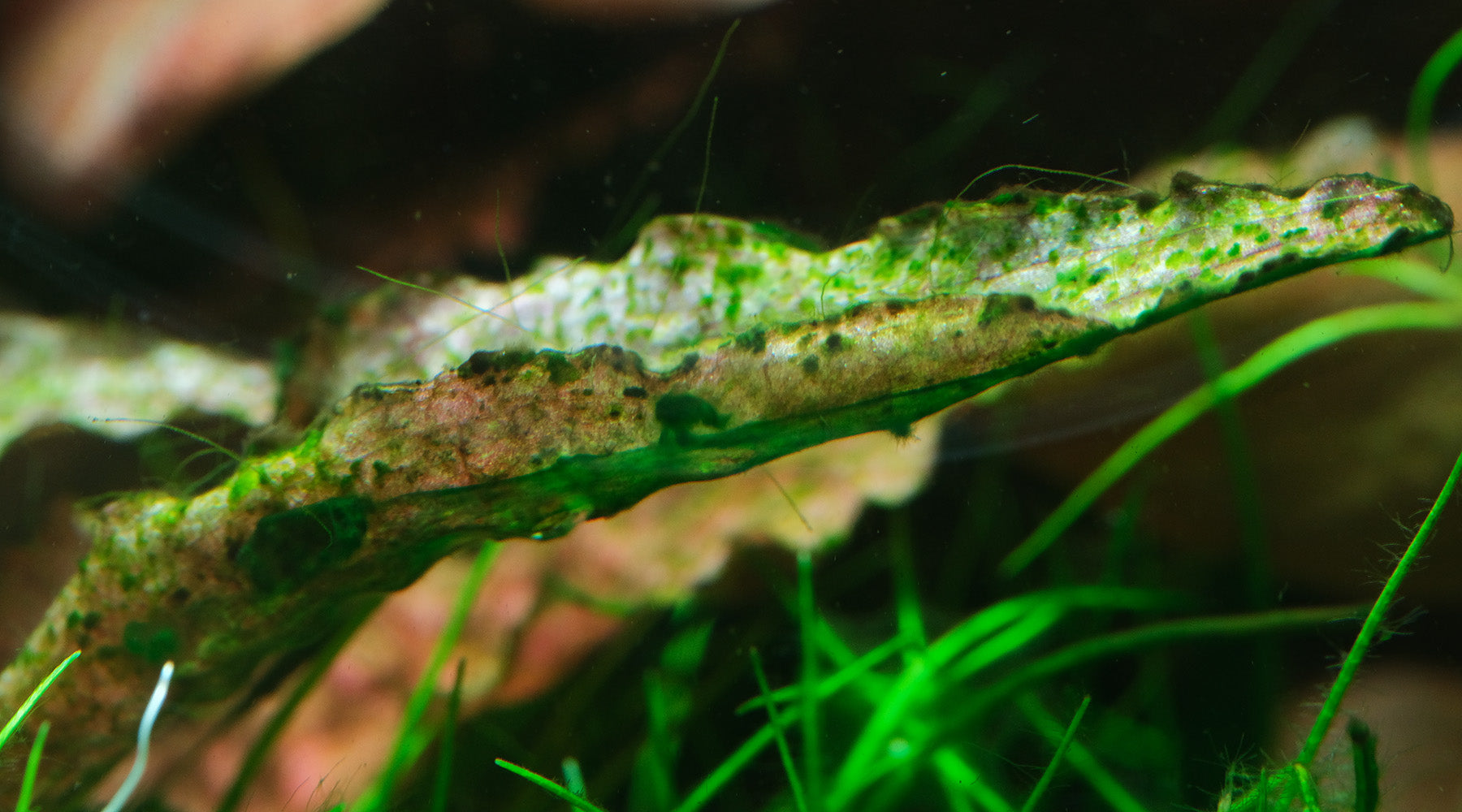
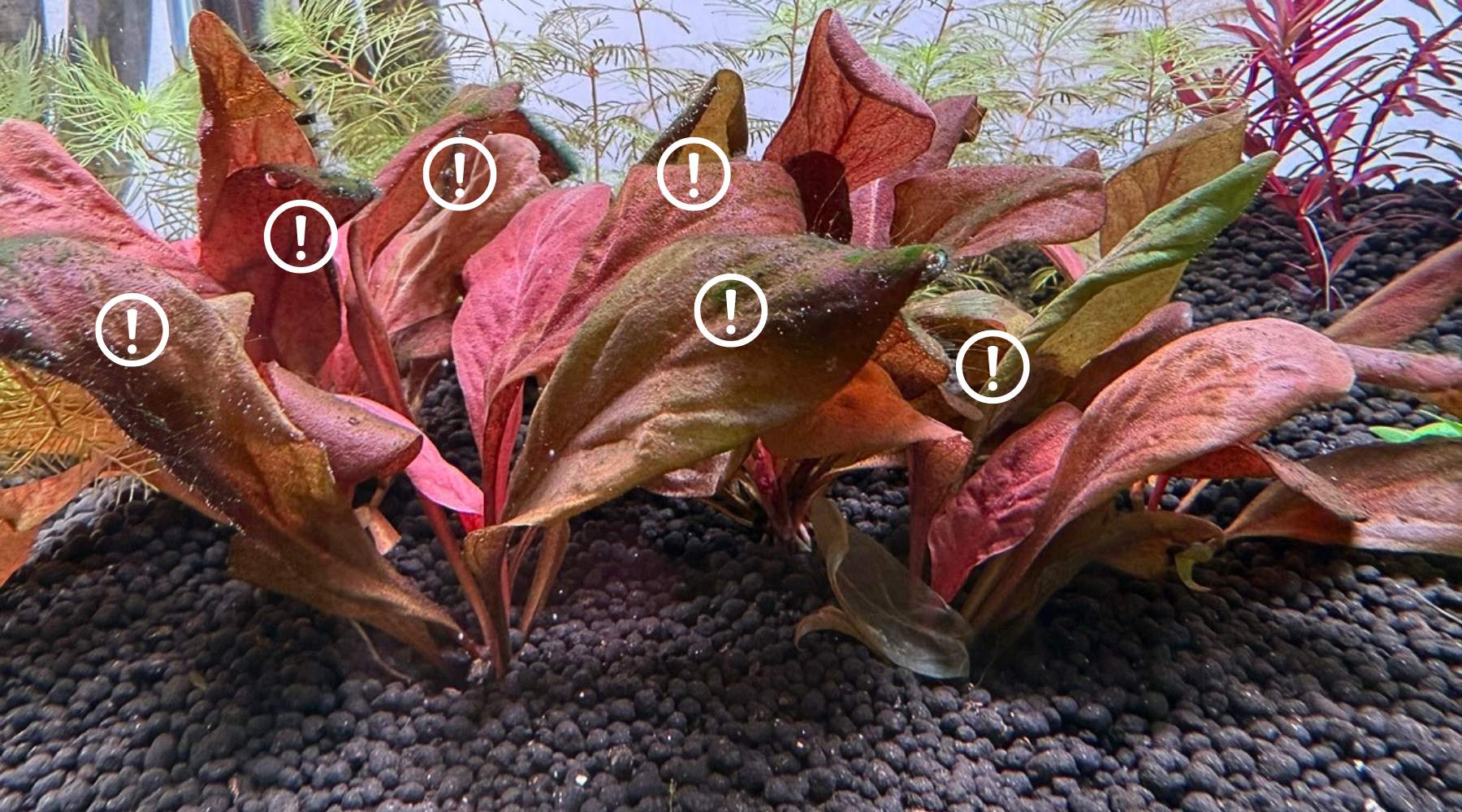
While an algae-infested tank looks irreparable (above- leaves of a Crypt 'flamingo' attacked by BGA, BBA and Hair Algae, it can recover if the plants are fundamentally healthy:
- Keep parameters stable and let stem plants grow tall. Observe the youngest leaves. If they are free of algae, recovery is underway. Replant healthy tops when they are tall. Remember that parts of the older growth generally cannot and will not recover.
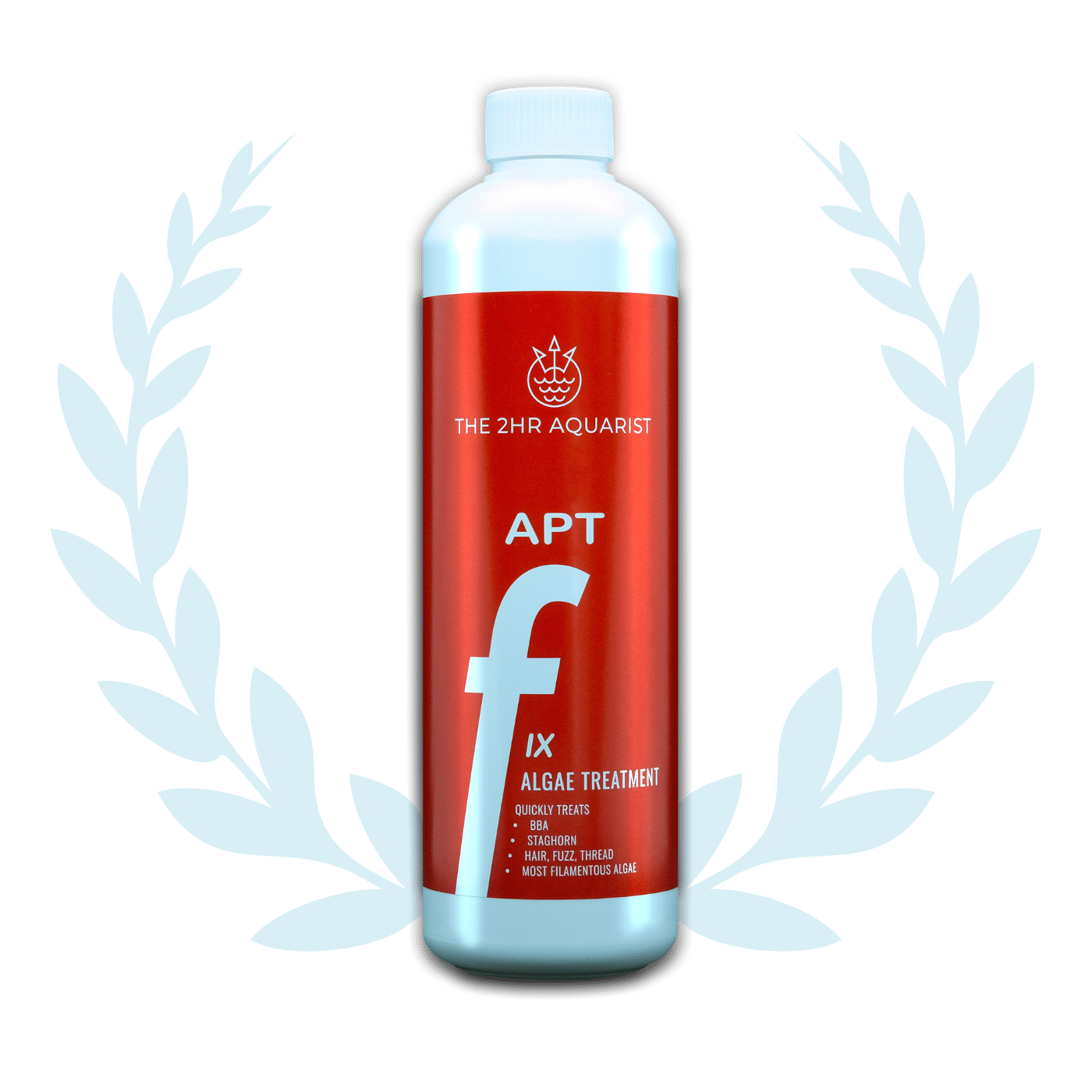
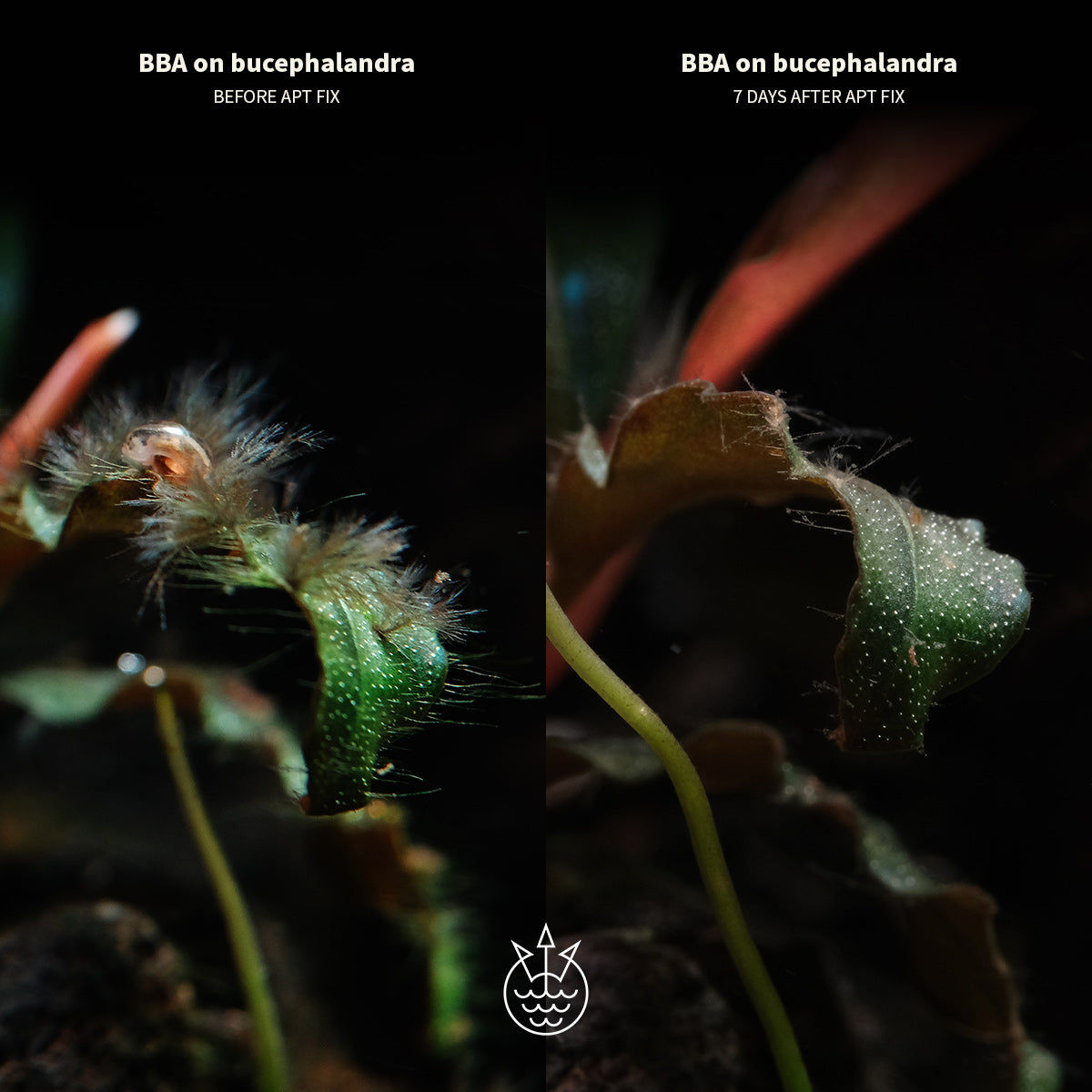
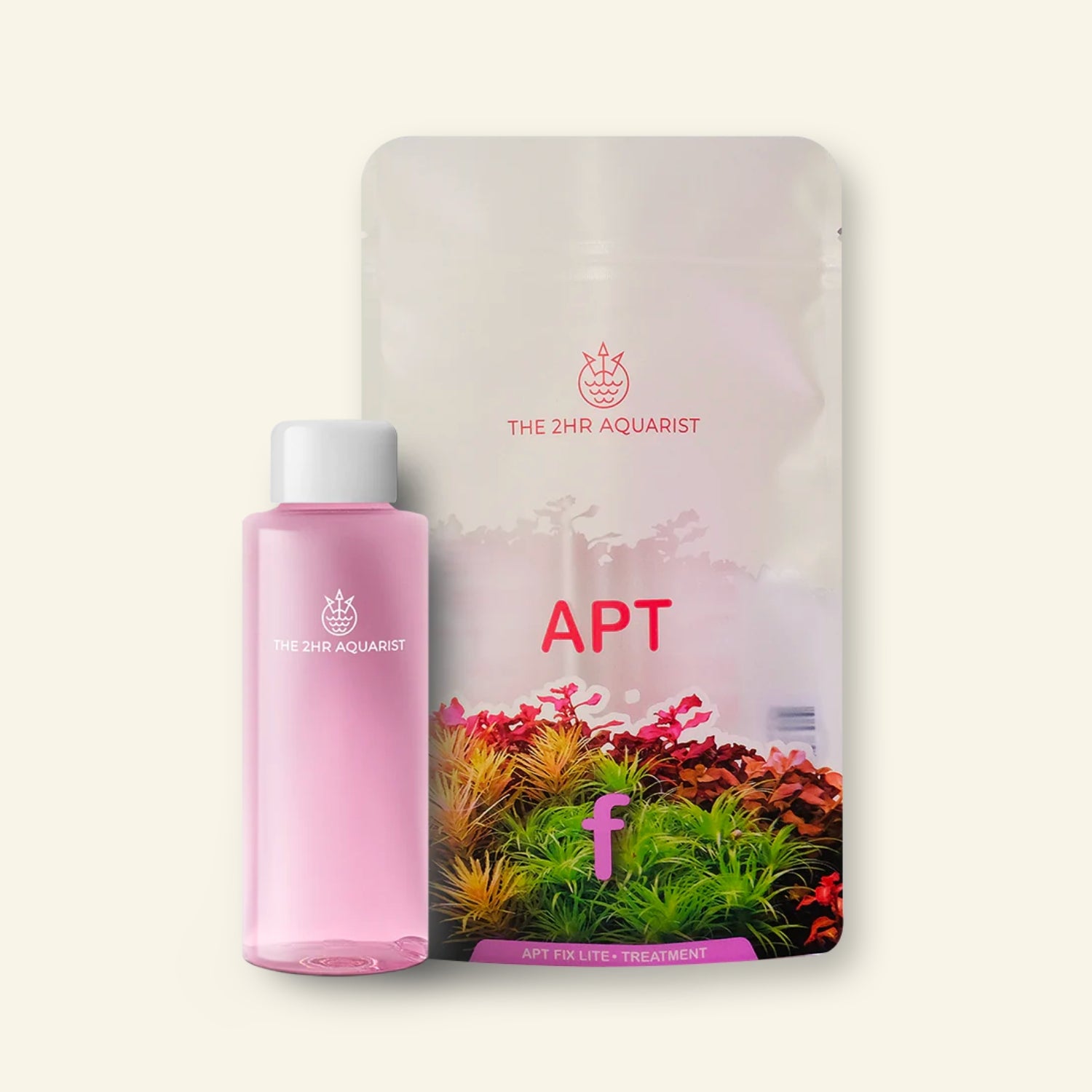
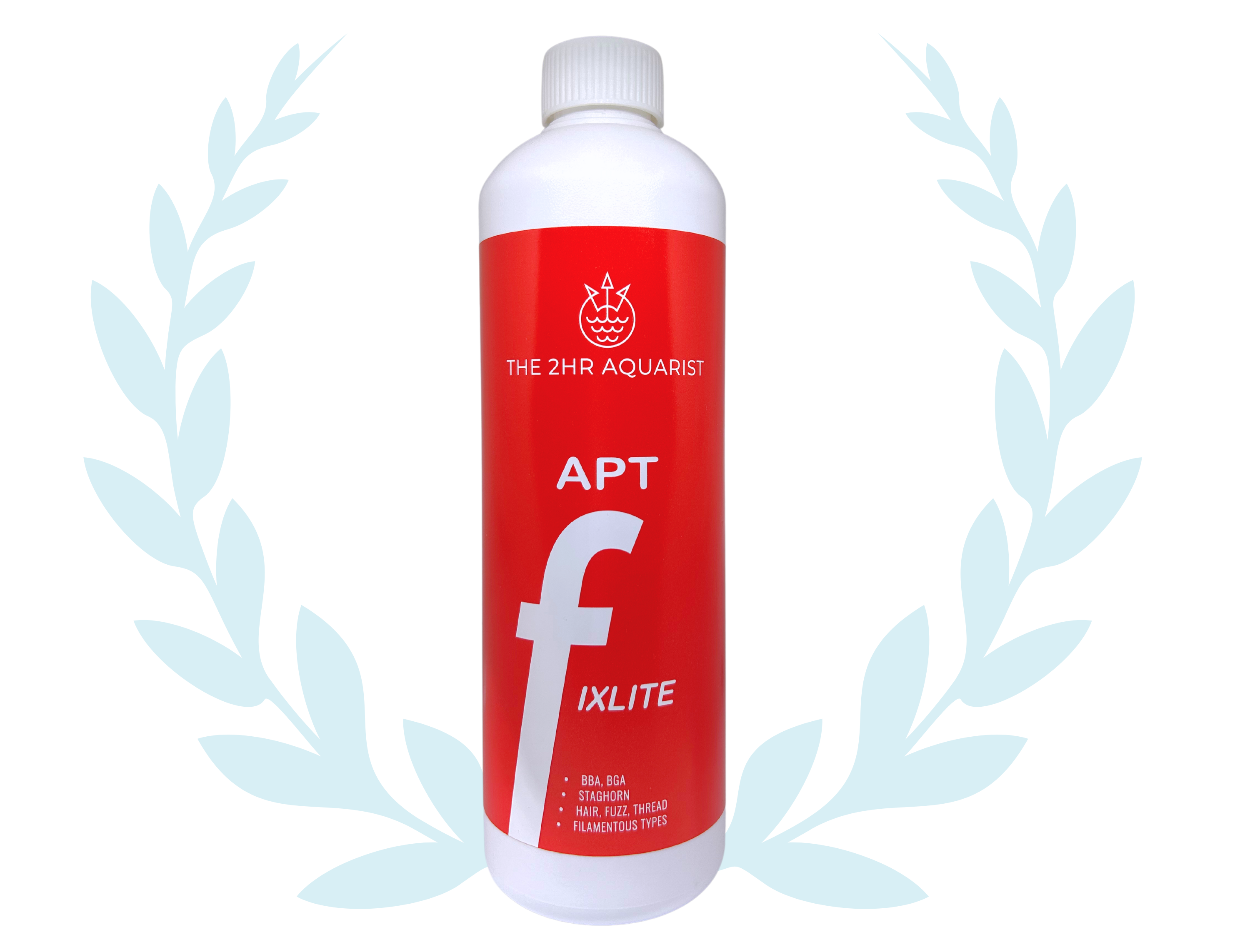
- Slow growers like Anubias, Bucephalanda, Alternanthera reineckii etc often have more plasticity than fast growers (i.e they channel more energy to preserving damaged leaves). In these species, spot-doing with APT FIXLITE or FIX can be helpful.
- If you have stable tap water (or use RO), more frequent water changes after a system shock may help to remove the algae-inducing proteins secreted by the plants during the shock period.
Remember: a well maintained tank with healthy plants can look irrecoverable, but the opposite is true.
How fast can things recover?
Avoid the 3 silent killers
- Pay attention to old growth. Read this article on regular replanting.
- Take extra effort to clean the filter regularly. It is a chore, but like regular exercise, makes a world of difference over time.
- Pay extra attention to CO2. A bubble counter is a must- it tells that the system is running. However, bubble-presence does not mean that CO2 is getting into tank. A clogged diffuser can reduce CO2 by 50% and still emit seemingly normal bubbles. Use the 1pH drop method to gauge CO2 without using test kits. Or invest in a CO2 test kit.

Share:
Flowering Underwater?
When Less is More