
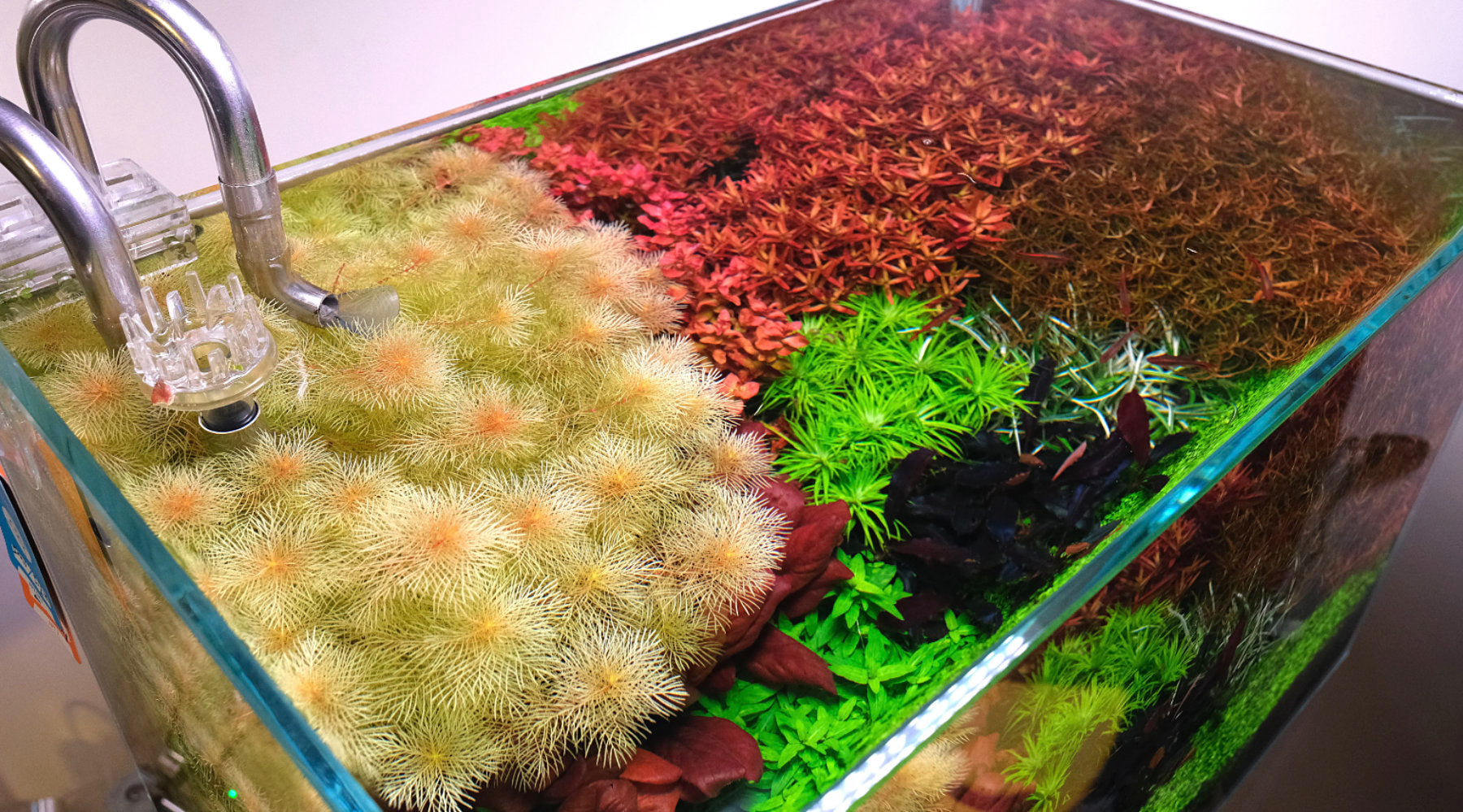
Solar radiation arrives at your aquarium as a continuous sweep of electromagnetic radiation spanning radio waves all the way to gamma rays. Aquatic plants only use the visible part of the electromagnetic spectrum for photosynthesis; capturing energy from solar light and converting it into chemical energy that living organisms can use. The working band is called Photosynthetically Active Radiation, or PAR, covering wavelengths from 400 to 700 nanometers: from deep blue to the boundary of far red. Red and blue light do the heaviest lifting inside plant cells, but green light is not wasted - whole leaves absorb roughly 70% of it, and it can penetrate deeper into photosynthetic tissue than red light under higher light conditions.
For practical aquarium work, the question is never "which light color looks bright?" but rather "how many photons are reaching my plants?" - which is exactly why PAR and Photosynthetic Photon Flux Density (PPFD) matter far more than lumens or any metric calibrated to the human eye.
Quick answers:
-
Aquatic plants use all visible light for photosynthesis, from 400 nm (deep blue) to 700 nm (far red).
-
Red and blue wavelengths are absorbed most efficiently by chlorophyll pigments.
-
Plants reflect green light, but not all - a significant amount is still absorbed and used for photosynthesis. In strong light, green light can contribute to photosynthesis more strongly than red/blue light.
-
PAR and PPFD are the accurate metrics that target plant photosynthesis; lumens measure light strength as it relates to human eye sensitivity, not plant biology.
-
PUR (Photosynthetically usable radiation) is a misleading concept as the photosynthetic efficiency of each light wavelength is not fixed. Efficiency depends on whether certain pigments are already saturated with certain wavelengths and also differ across plants.

Which Photosynthetic Pigments Absorb Light for Photosynthesis?
Picture the scene: you have just discovered that chlorophyll pigments absorbs red and blue light, so you track down a lamp that is aggressively pink-purple, peer into your tank like a scientist checking test results, and wonder why your aquarium looks like a nightclub at a second rate town. You can't even differentiate which plants are yellow or red and you wonder if aquasoil is really meant to be purple colored. You are left wondering if this is what is takes to grow plants well. You have simply walked into one of the most widely misunderstood corners of plant biology, a place where marketing copy, outdated textbook diagrams, and genuine science all collide in spectacular fashion.
The light dependent reactions begin when pigment molecules inside the thylakoid membrane absorb a photon, become energetically excited, and pass that energy through an electron transport chain that ultimately generates the chemical reactions used to convert carbon dioxide into sugars. This is photosynthesis in a nutshell.
Chlorophyll A is the most abundant plant pigment and the primary photosynthetic pigment in green plants. It absorbs light strongly in the blue-violet region (around 430 nm) and the red region (around 680 nm), and it is the molecule at the heart of Photosystem I and the light reactions. Without chlorophyll a, photosynthesis stops.
Chlorophyll B is an accessory pigment that absorbs blue and red-blue light, slightly shifting the absorption peaks relative to chlorophyll a. It broadens the wavelengths absorbed by the plant and passes captured energy on to chlorophyll a for processing. Chlorophyll b extends the working bandwidth of the leaf.
Carotenoids - including carotenes and xanthophylls - absorb light in the blue-green and violet region and reflect the longer yellow, red, and orange wavelengths, which is why carrots are orange and orange peel is orange. In the leaf, carotenoids act as accessory pigments: they harvest light energy at wavelengths where chlorophyll is less active and pass it toward the photosynthetic reaction centers. They also serve a protective function, helping manage excess light energy under high irradiance.
Other photosynthetic organisms have evolved their own solutions. Some prokaryotes use bacteriochlorophyll, which absorbs at very different wavelengths from plant chlorophyll - evidence that the strategy of capturing light energy is ancient and varied. Most photosynthetic organisms have evolved a variety of different pigments precisely so they can absorb energy from various wavelengths rather than depending on a narrow target.

Why Do Old Textbook Diagrams Show Green Light as Wasted?
Here is where old textbook diagrams usually causes the most damage. It shows two neat humps - one at the blue end, one at the red end - and implies that the green middle is essentially wasted. That diagram is based on in vitro data: extracted chlorophyll dissolved in a solvent, examined on a petri dish by shining light through it and seeing what wavelengths are absorbed. Petri dish conditions do not fully mirror what happens inside a living leaf.
Updated textbooks show additional pigments contributing to photosynthesis, absorbing nearly all radiation between 400-700nm.
Absorption Spectrum vs. Action Spectrum: What's the Difference for Planted Tanks?
This is the distinction that most hobbyist articles skip over, and skipping it leads directly to bad lamp purchases and worse advice.
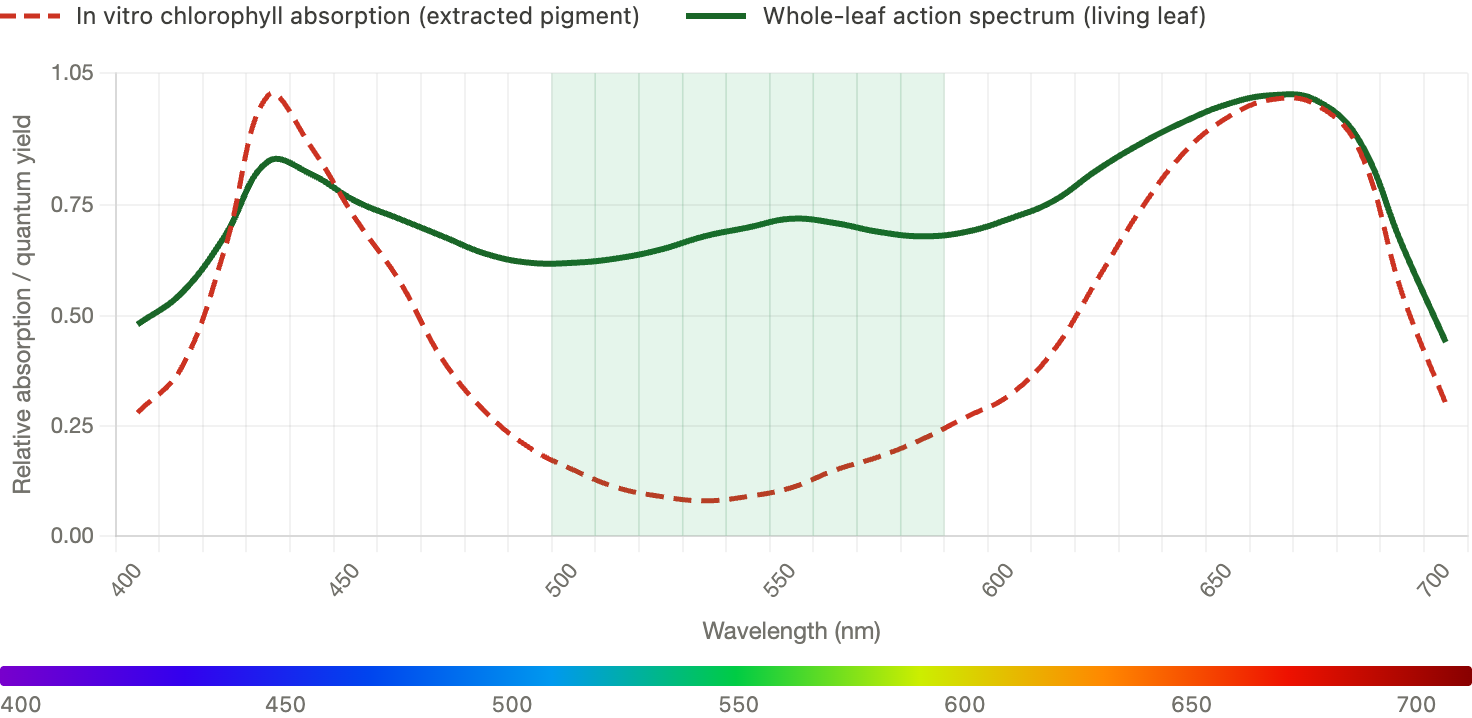
The absorption spectrum of chlorophyll defines the light wavelengths absorbed by chlorophyll pigments - the set of wavelengths absorbed by a pigment. These curves are produced by laboratory measurements on extracted pigments, usually dissolved in acetone or another solvent. They show which photons the pigment molecule will capture. They do not tell you how much of a particular pigment is present in an actual leaf, how pigments are arranged on specific proteins in the thylakoid membrane, or how the complex structure of a whole leaf alters light distribution.
The action spectrum chart is the one that actually matters for photosynthesis. It measures the rate of photosynthesis - usually by tracking oxygen molecules released - across different wavelengths in real, living leaves. The curve is also known as the McCree curve, Yield Photon Flux, or YPF, and it shows which wavelengths produce the most photosynthetic output per photon delivered.
The two charts are quite different, and confusing them leads to the persistent myth that green light is useless. Looking at the extracted chlorophyll absorption graph, green looks like a gap - chlorophyll reflects it, therefore plants ignore it. But looking at a living leaf, whole-leaf light absorption in the green-yellow region is substantial.
Why Does Green Light Drive Photosynthesis Deeper in the Leaf?
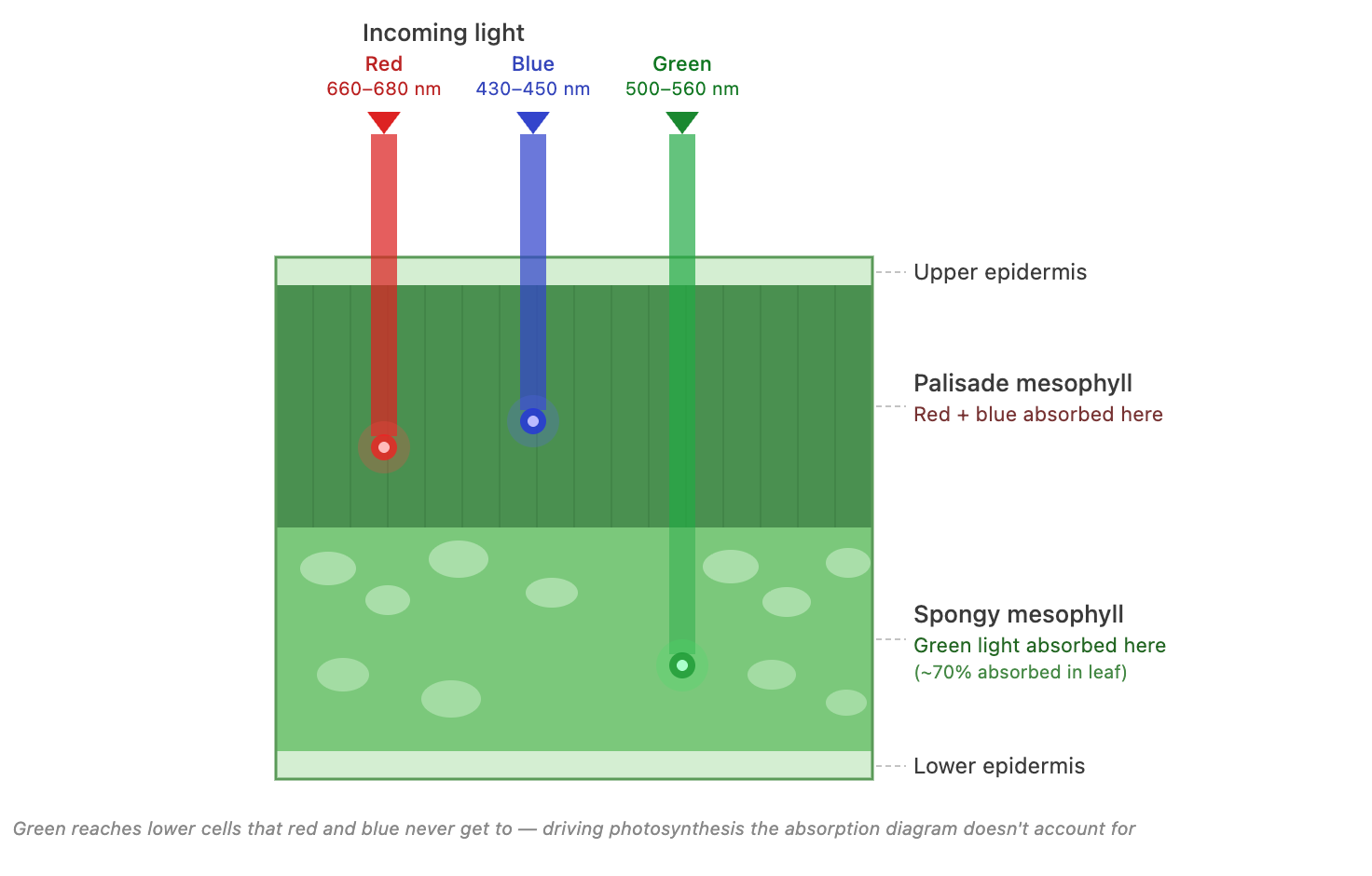
The reason comes down to leaf architecture. Leaves absorb mainly red and blue light in the first layer of photosynthetic cells. However, green light penetrates deeper into the leaf interior and can drive photosynthesis more efficiently than red light at higher light levels, because the upper cell layers are already saturated for red/blue photons. Green light reaches the lower mesophyll cells that red light never gets to. It is doing real work, just in a different part of the leaf. The absorption of green light in intact plants is approximately 70%, and green light plays an important role in photosynthesis. Many plant physiology textbooks have had to update this section precisely because the older in vitro data painted a misleading picture.
The photosynthetic efficiency of each specific wavelength is not a fixed value - it is calculated on a relative basis depending on whether certain pigments are already saturated with certain wavelengths.
All light within the 400-700 nm range contributes to photosynthesis meaningfully, and this is what counts as Photosynthetically Active Radiation (PAR).
What Are PAR and PPFD in Planted Aquariums?
PAR is quantified using Photosynthetic Photon Flux Density, or PPFD - expressed in micromoles of photons per square meter per second (µmol/m²/s). PPFD counts every photon in the 400-700 nm range equally, regardless of color. Beyond 700 nm sits far-red light, from about 700 to 800 nm. Far-red is excluded from the classic PAR definition, but it is not irrelevant; when combined with shorter wavelengths, far-red can enhance the overall rate of photosynthesis in a canopy context.
Different aquatic plants require different amounts of PAR to grow well in the aquarium. While higher levels of PAR are strongly correlated with increased rates of photosynthesis, additional light also causes algae spores to bloom more easily. Since algae is a key concern in planted aquariums, it is important to choose a PAR level that balances the needs of plants while minimizing algae growth.
Shade plants can grow in as low as 10-20 µmols of PAR. Carpeting plants and most common green plants can grow well in the range of 50-70 umols of PAR. High-demand stem plants and red-colored aquatic plants tend to perform better at 90 µmols and above. Aquariums that want the highest density and deepest coloration possible in exotic species can run 200+ umols of PAR. However, PAR is not the only factor that powers plant growth. Carbon dioxide availability, nutrient supply, and other tank parameters all affect plant growth. A tank running at 200 µmols of PAR with poor CO2 levels is not growing faster than a tank at 80 µmols of PAR with sufficient CO2 - it is growing more algae.
Full sun measures about 2000umols of PAR. This is why even incident sunlight can introduce a huge amount of extra light energy into an aquarium.
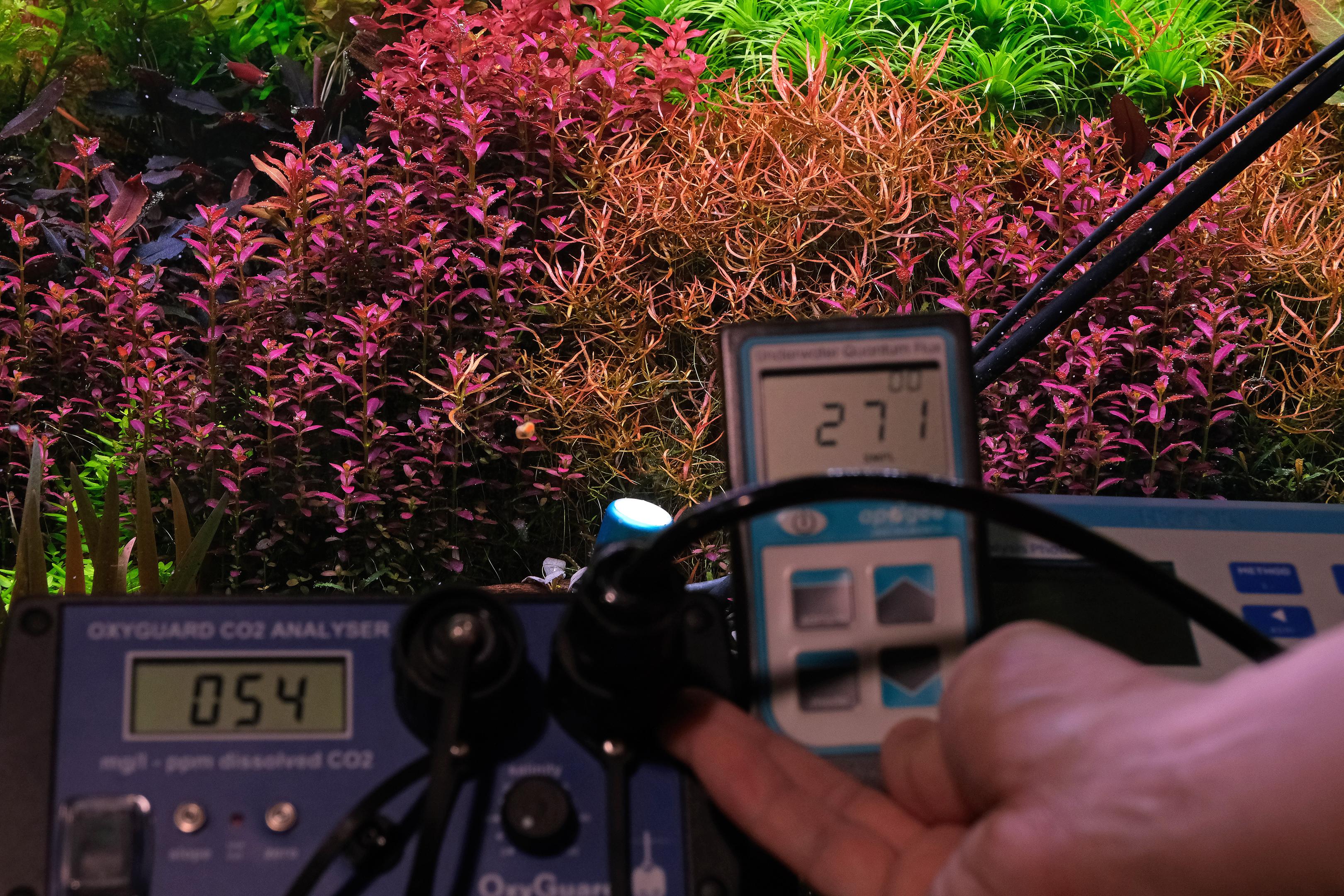
PAR can be easily measured using handheld PAR meters.

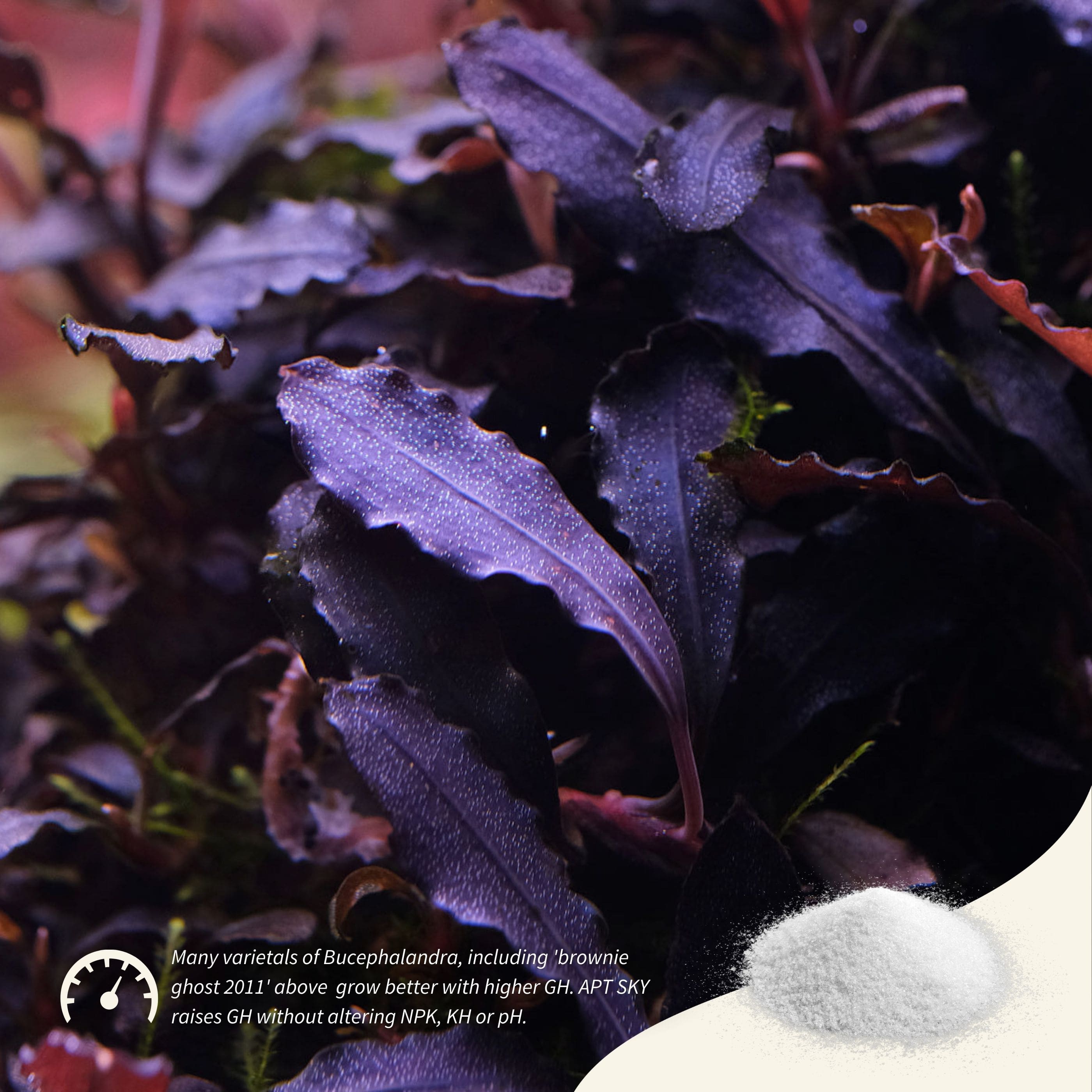
Shade plants such as Bucephalandra (BG 2011 is shown above), easier Cryptocoryne species, Anubias and Java fern species can grow in as low as 10-20umols of PAR.

How Much PAR Do Shade, Carpet, and Stem Plants Need?
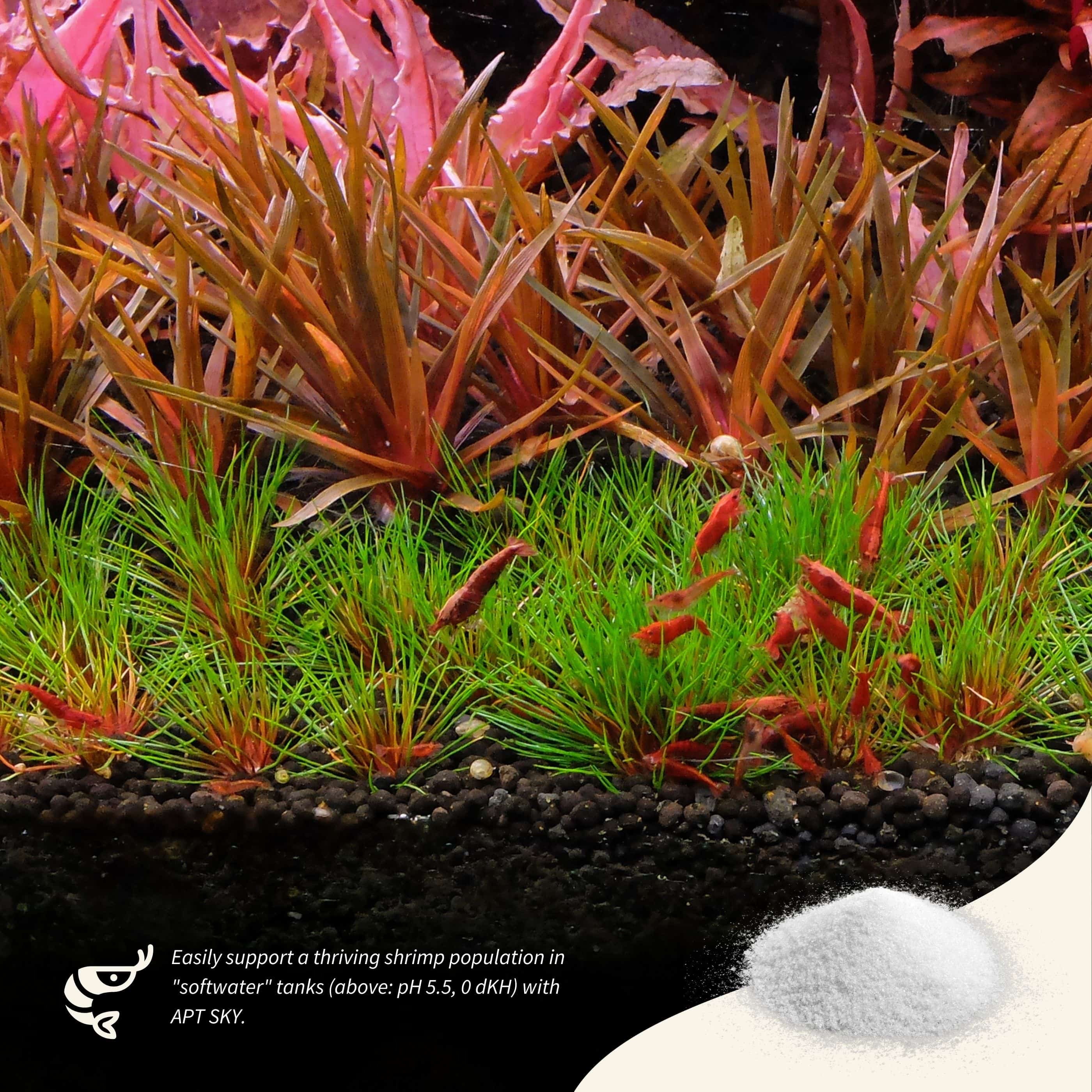
Contrary to popular belief, most carpeting plants do not need "high light" and grow well with 40-60 umols of PAR. This aquascape growing dwarf hair grass measures 40 umols of PAR at the substrate level.

Using less light in Iwagumi aquascapes allows the rock work to remain free from dust algae. This Iwagumi aquascape uses around 50 umols of PAR at the substrate level.

This aquarium uses more energy to get better density with stem plants and induce stronger coloration. 150 umols of PAR is measured at the substrate level.

This aquarium uses even higher energy to propagate difficult plant species quickly. Aquarium maintenance and plant husbandry needs to be in top form to keep algae at bay. Substrate PAR measures 300+umols in this aquarium.
Is PUR (Photosynthetically Usable Radiation) a Better Metric Than PAR?
PUR (Photosynthetically usable radiation) calculations assume higher efficiencies for red/blue wavelengths, making the (by now old) error for assuming that photosynthetic efficiency rates of light wavelengths are fixed and biased towards red/blue light being more efficient. We now know this is not true. This is explained in the landmark paper: "Green light drives leaf photosynthesis more efficiently than red light in strong white light: revisiting the enigmatic question of why leaves are green" by Ichiro Terashima, Takashi Fujita, Takeshi Inoue, Wah Soon Chow, Riichi Oguchi.

Can Lumens Measure Aquarium Light Strength?
Lumens are the clearest example of what not to use when gauging a light: lumens measure light brightness according to how the human eye perceives it. Human eyes are more sensitive to green light, which means green-heavy lamps score very high on lumen counts while lights heavy on red/blue spectrum scores lower. The lumen rating measures the total brightness of the lamp, but it does not take into account how distance and dispersion affects how much light actually enters the tank. Accurate PAR charts take into account light distance from the tank into its calculations to estimate how many photons actually hit a demarcated surface.

The PAR table above (from a Finnex LED unit) shows the amount of light reaching different tank depths for the particular lighting unit. The left axis shows PAR values for areas directly below the fixture. At six inches the value is 186, dropping to 73 at 18 inches.
Why "More Red Light = Better Plant Growth" Is Oversimplified
The McCree curve, which describes the yield photon flux (action spectrum), does give red wavelengths an efficiency advantage over green and blue under certain conditions. The curve was developed from short-term measurements on single leaves in low light - conditions that are quite specific.
At low light intensity, red photons may be more efficient because upper leaf cells are not saturated. At higher light intensity, those same cells are already running near capacity for red absorption, and additional green light reaches deeper tissue and can provide a higher marginal gain to photosynthesis.
Second, there is meaningful variation between plant species. The efficiency benefit of a particular wavelength at a given intensity is not universal - it varies with leaf thickness, canopy structure, and pigment composition.
Third, and most practically: some commercial lamp manufacturers market products based on "more PUR" - a claim that the lamp delivers more photosynthetically useful radiation than competitors. This claim has no standardized basis. PUR is neither linearly measurable nor plant-specific, and it is not possible to give a general numerical value without examining the specific conditions. It is a marketing term, not a measurement.
The honest answer from plant biologists studying whole plants over longer periods is that light quality may have less of an effect on plant growth rate than light quantity. Spectrum matters, but it matters less than total PPFD and CO2 availability for most practical planted tank goals.
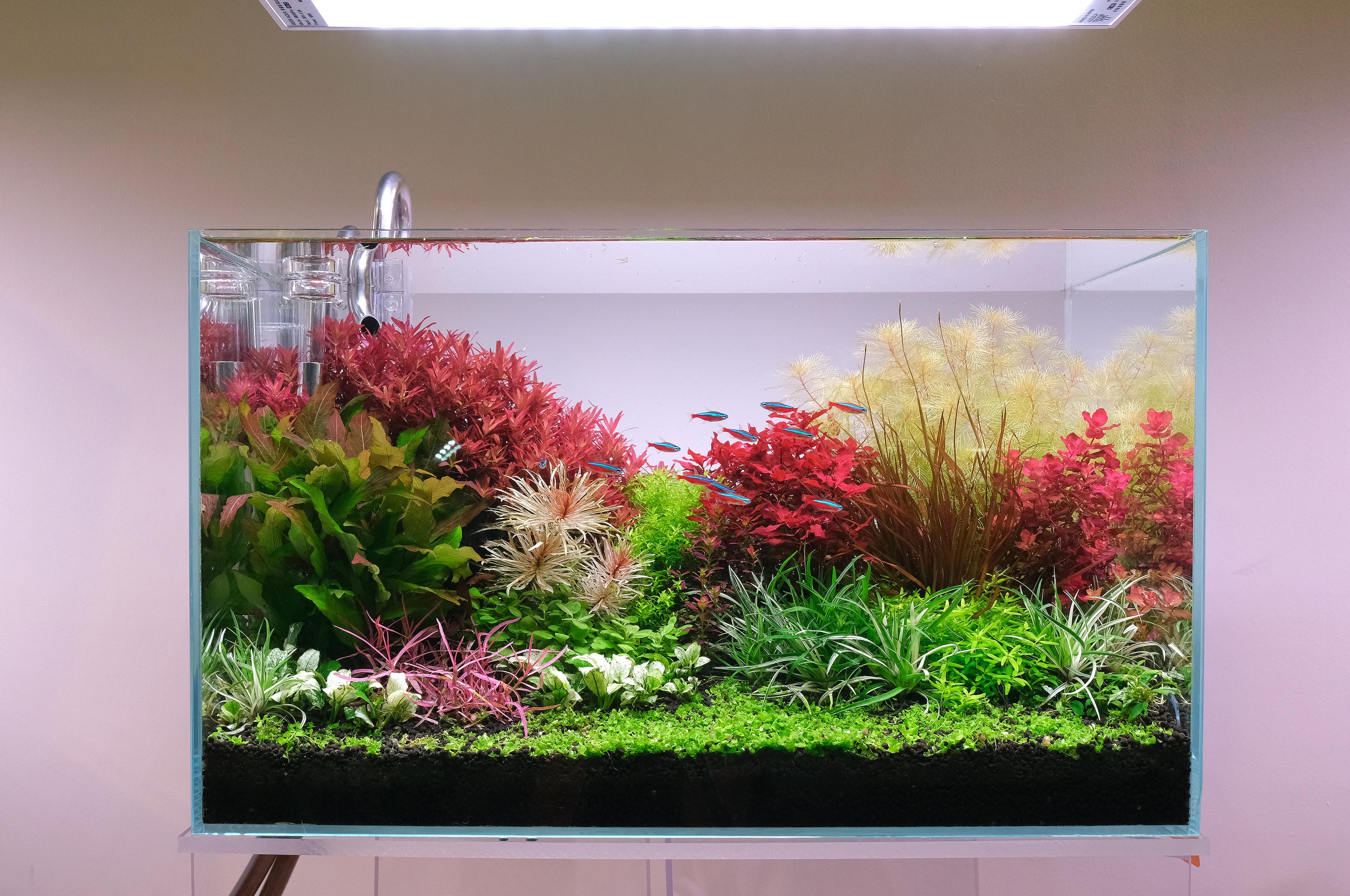
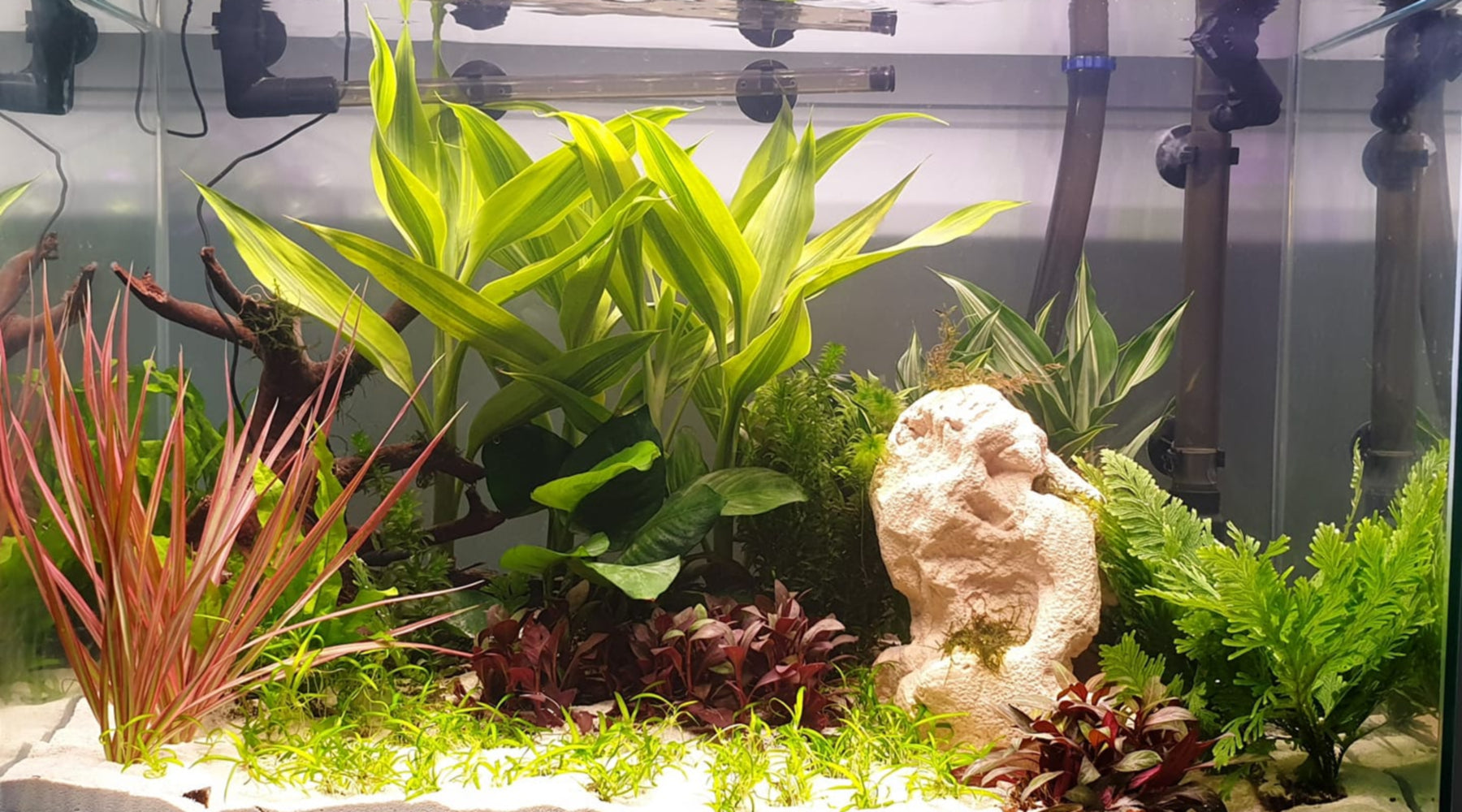
We prefer using a balanced spectrum profile that gives a neutral colour light tone. This displays a large range of plant colors in good contrast.
Does Light Spectrum Affect Aquatic Plant Colour and Morphology Beyond Photosynthesis?
Different wavelengths of light stimulate different hormonal changes in plants, a phenomenon known as photomorphogenesis - light-regulated changes in development, morphology, biochemistry, and cell structure. This is where light quality has effects that go beyond photosynthesis itself.
In terrestrial plants, red light stimulates flowering cycles, while blue light suppresses stem elongation to produce more compact growth forms. Blue light in the 400-500 nm range controls plant morphology including stomatal opening and root development.
Aquatic plants, however, respond to photo morphogenetic cues quite differently from terrestrial plants. Stem elongation in submerged plants is determined more by gas exchange and access to CO2 and O2 than by the blue shift of the light. Similarly, flowering cycles in aquatic plants are typically triggered by access to surface air rather than by red spectrum changes. The photo morphogenetic rulebook used for terrestrial horticulture does not translate directly to a planted aquarium.
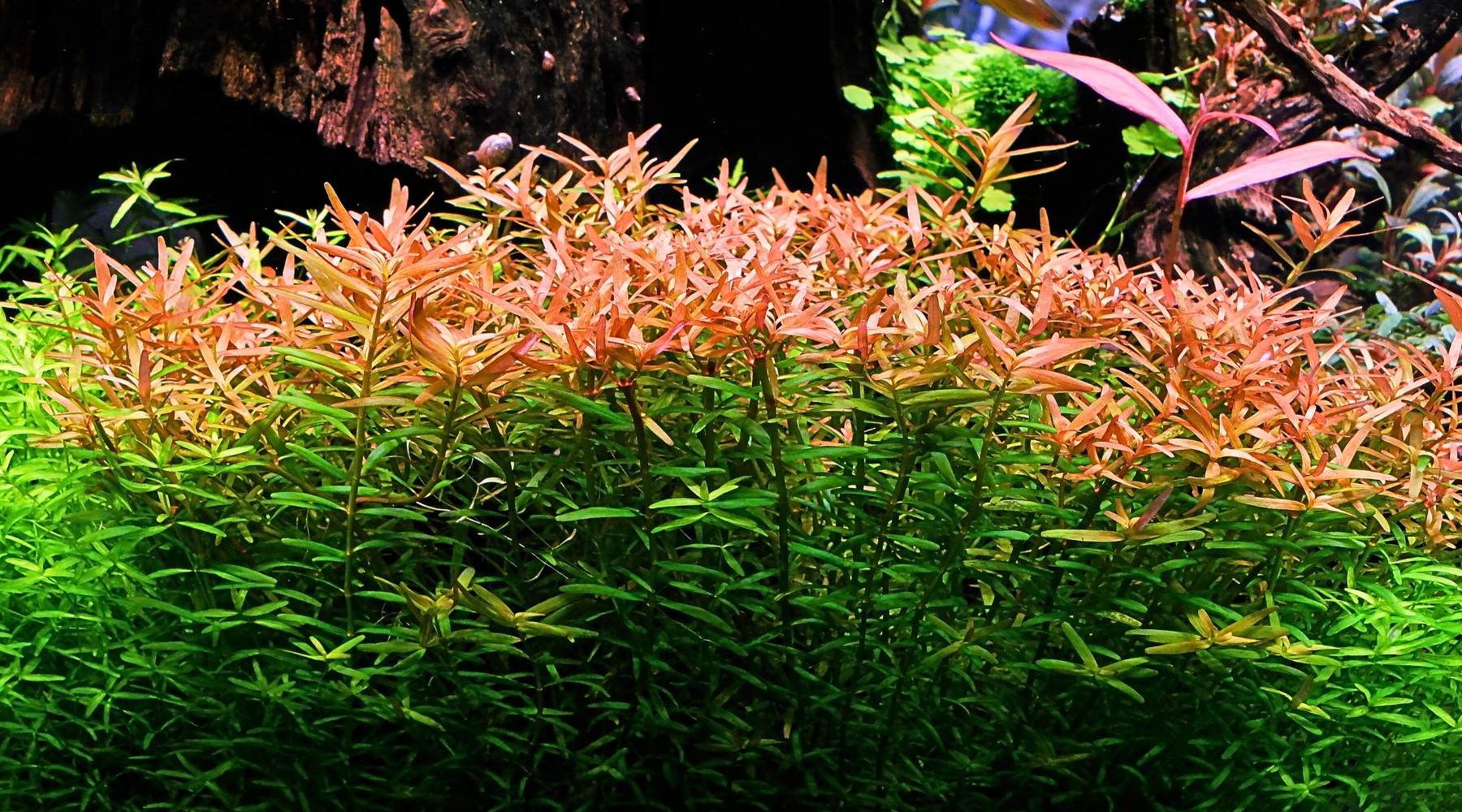
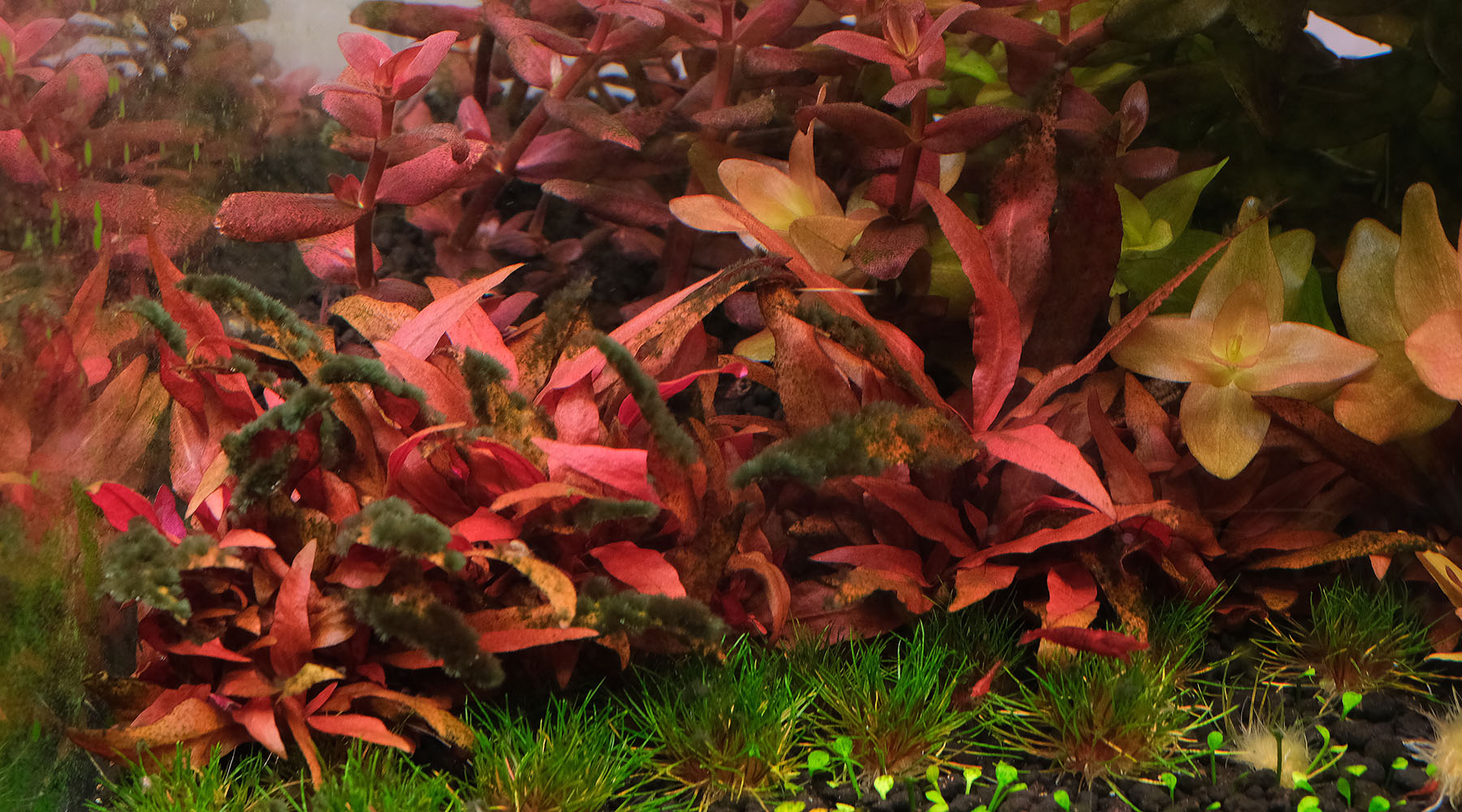
The main practical effect of spectrum on aquatic plants is greater pigmentation in certain species when more red and blue light is used. More red and blue spectrum also gives greater visual color contrast and saturation - which is why it is highly recommended for tanks showcasing colored stem plants, even though the growth rate difference compared to neutral white light may be modest.

Fluval Plant 4.0 LED has a very poor diode selection that renders washed out colors compared to other brands such as Twinstar, Chihiros, Week aqua, or Netlea.
How Does CO2 Injection Change Aquarium Lighting Needs?
How Much Light Does a Low-Tech (Non-CO2) Tank Need?
In a low-tech tank with no CO2 injection, light availability is rarely the primary limiting factor. Carbon availability is. Plant growth is capped by Carbon availability long before the lamp runs out of output. Chasing powerful light systems is less useful than getting a CO2 injection system. The uncomfortable answer is that Carbon limitation in low tech aquariums is largest bottle neck on plant growth and health by far, and any investment towards resolving that bottle neck far outweighs optimizations in lighting, substrate etc.
How Much Light Can a High-Tech (CO2-Injected) Tank Use?
In a high-tech tank with injected CO2, higher PAR can be used more productively. This is where red and blue heavy light sources make a visible difference: they stimulate stronger pigmentation in colored stem plants, improve visual color saturation and contrast, and support denser plant growth at higher PPFD levels.
Substrate PAR levels for this aquarium averages 200+ umols on the substrate level. High light levels give strong pigmentation and density for stem plant bushes.
How to Set Aquarium Lighting Spectrum and PAR for Plant Growth
Measure PAR at the substrate and midwater. PAR and PPFD remain the best available measures of how much light stimulates photosynthesis, precisely because they count photons across the full relevant wavelength range without the distortions of human visual sensitivity.
Match PAR to your plant selection and maintenance capacity. Higher light intensity increases photosynthesis only when carbon dioxide, nutrients, and system cleanliness keep up. Outpacing those factors produces excess energy the plant cannot use and algae you did not want.
Choose a balanced visible spectrum: red, blue, and some green. Aquatic plants absorb energy across all visible wavelengths. Green light reaches deeper cell layers and supports photosynthesis at higher light levels. An all-pink spectrum is not a shortcut to better growth - it is a coloration tool and a visual choice. Blue light by itself does not cause any more algae than other wavelengths of light.
Ignore lumen claims and "PUR magic spectrum" marketing. Lumen counts are calibrated to the human eye's green sensitivity. PUR is not standardized or linearly measurable, and efficiency of different wavelengths shifts with light intensity and plant species. These are marketing constructs, not biological measurements.
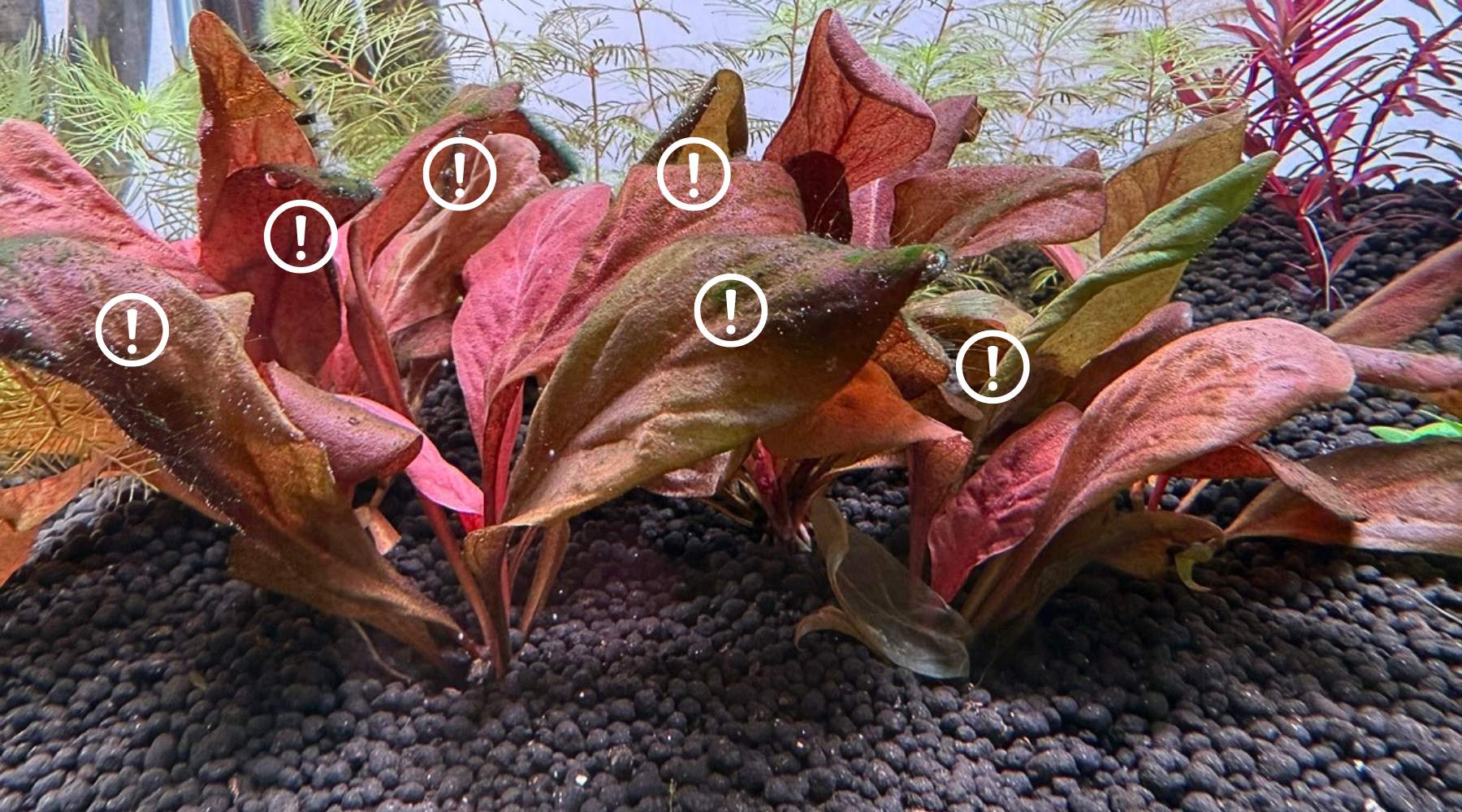
Watch new growth, not old leaves. Fresh leaf size, posture, coloration appropriate to the species, and growth rate are your real diagnostic signals. Old leaves degrade regardless of the spectrum. If new growth is healthy and consistent, the light is working. If new growth is pale, stunted, or algae-coated, check CO2 and nutrient levels before adjusting the lamp.

For planted aquariums, the sane and evidence-backed answer is this: use a good balanced spectrum, measure PAR, keep CO2 and nutrients aligned with your light level, and judge the system by the behavior of the plants. For a full deep dive on how to read PAR tables for specific tank depths and fixture positions, and how to evaluate spectrum charts from lamp manufacturers, the 2Hr Aquarist lighting guides on PAR and spectrum selection are the right next stops.
Intensity and spectrum are only two of the three lighting levers; the third is duration. For that side of the equation, see how many hours of light a planted tank needs.


Share:
The best LED units for planted tanks in 2026