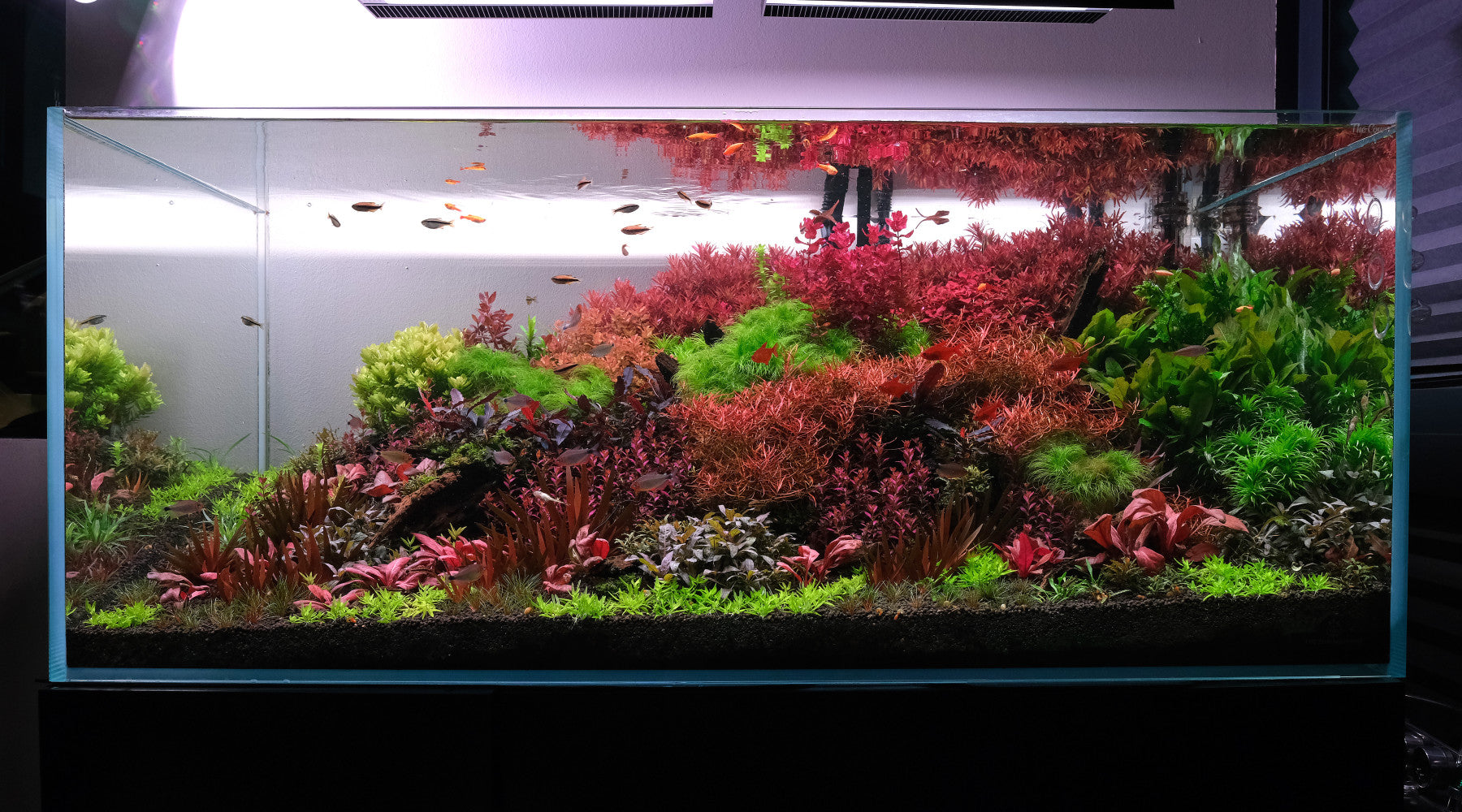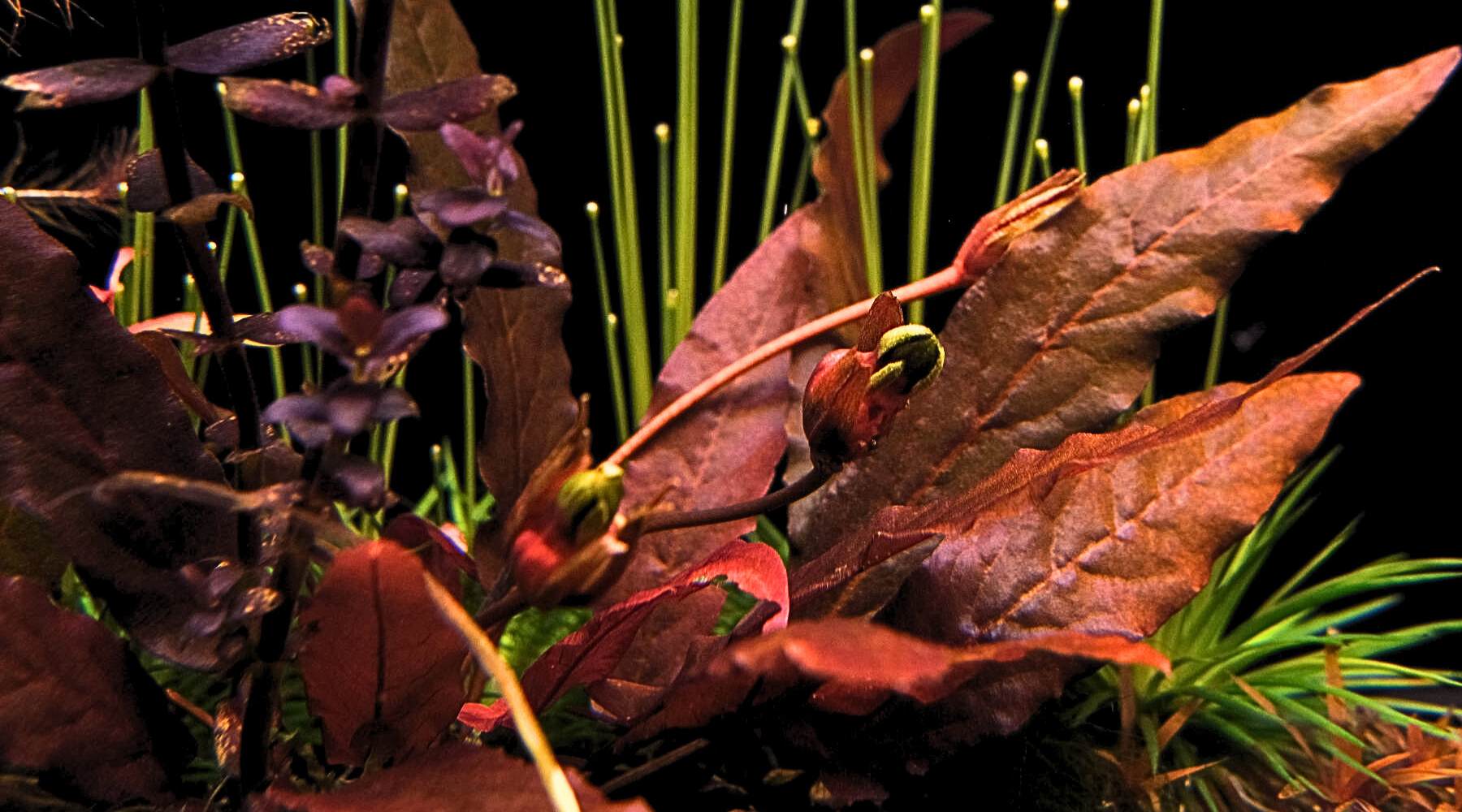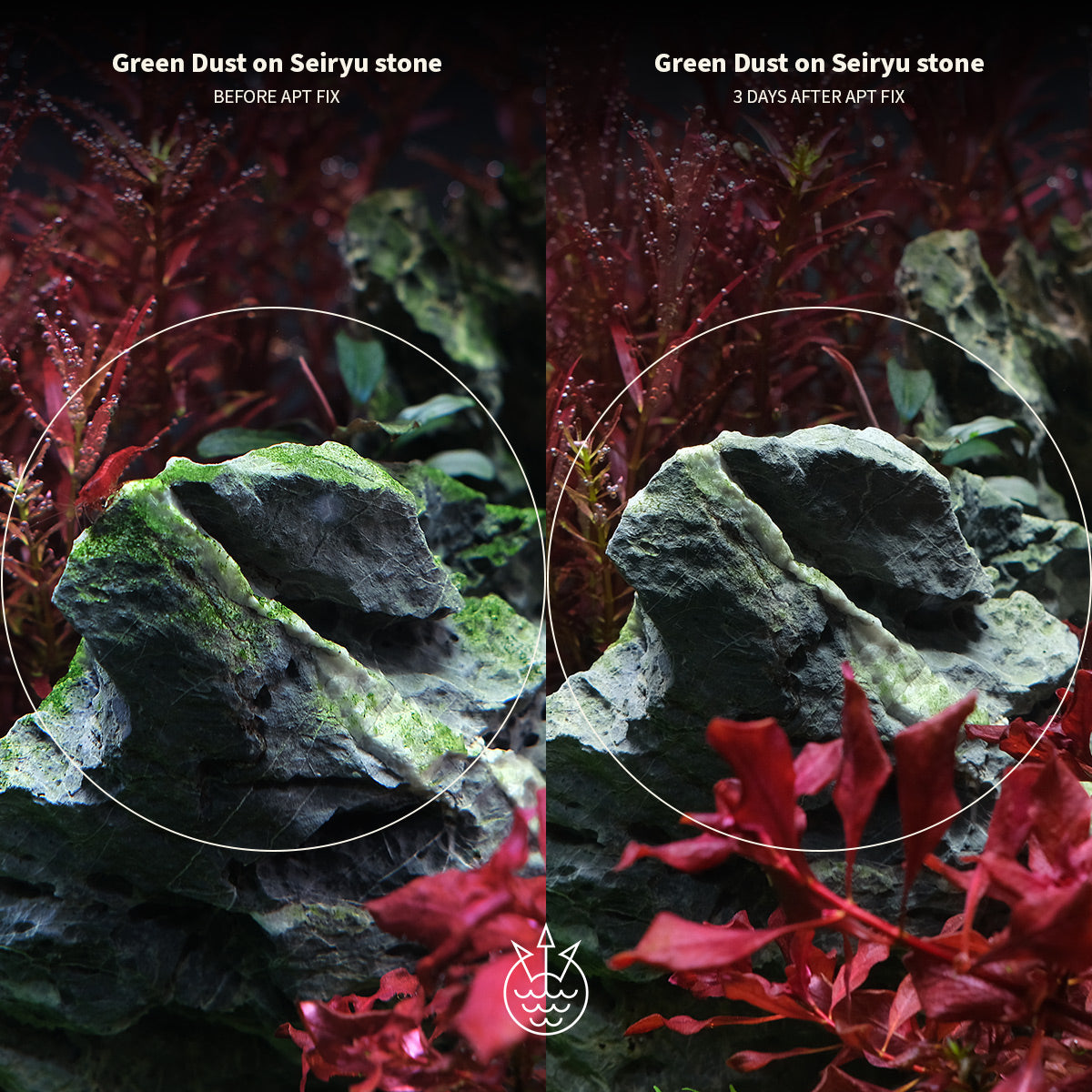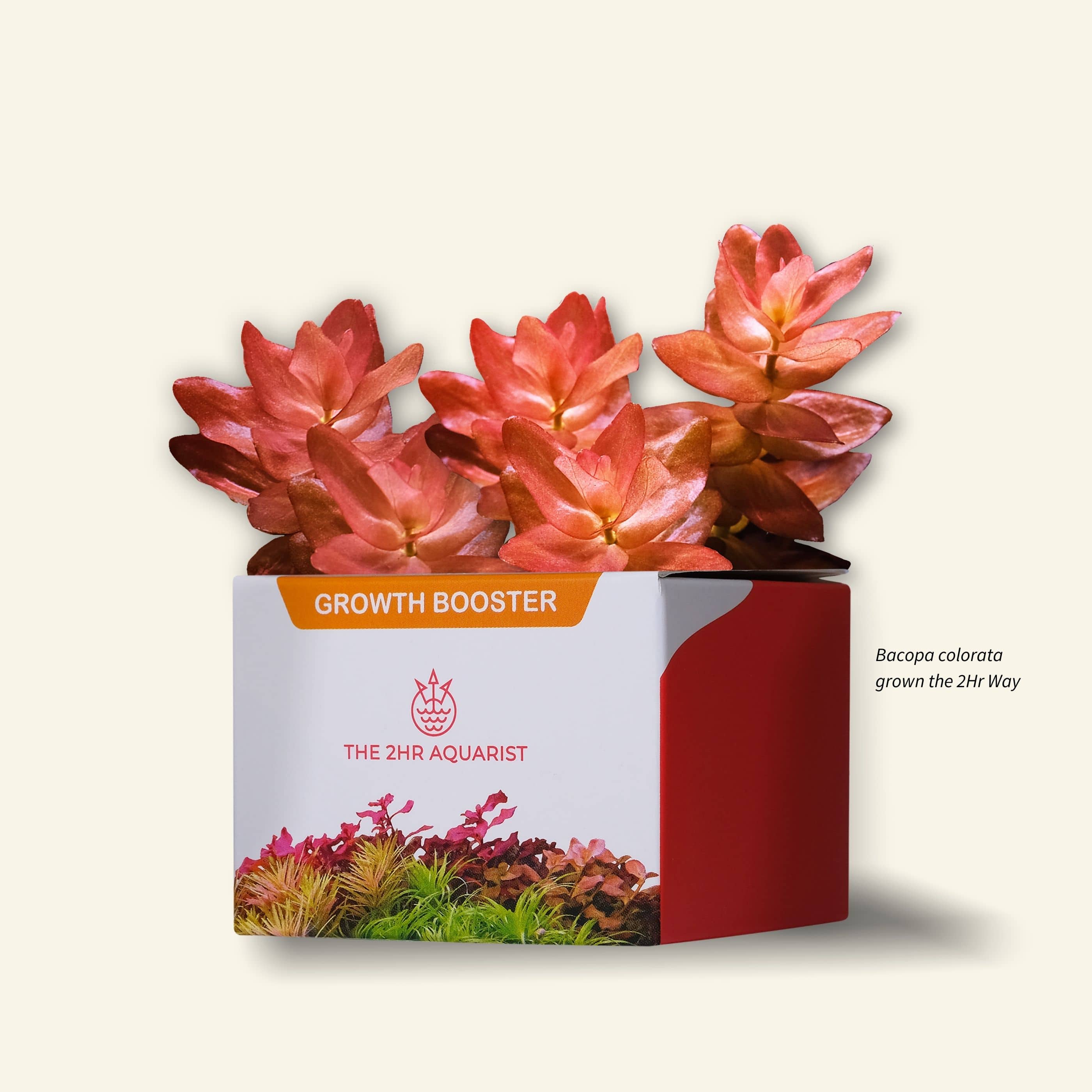
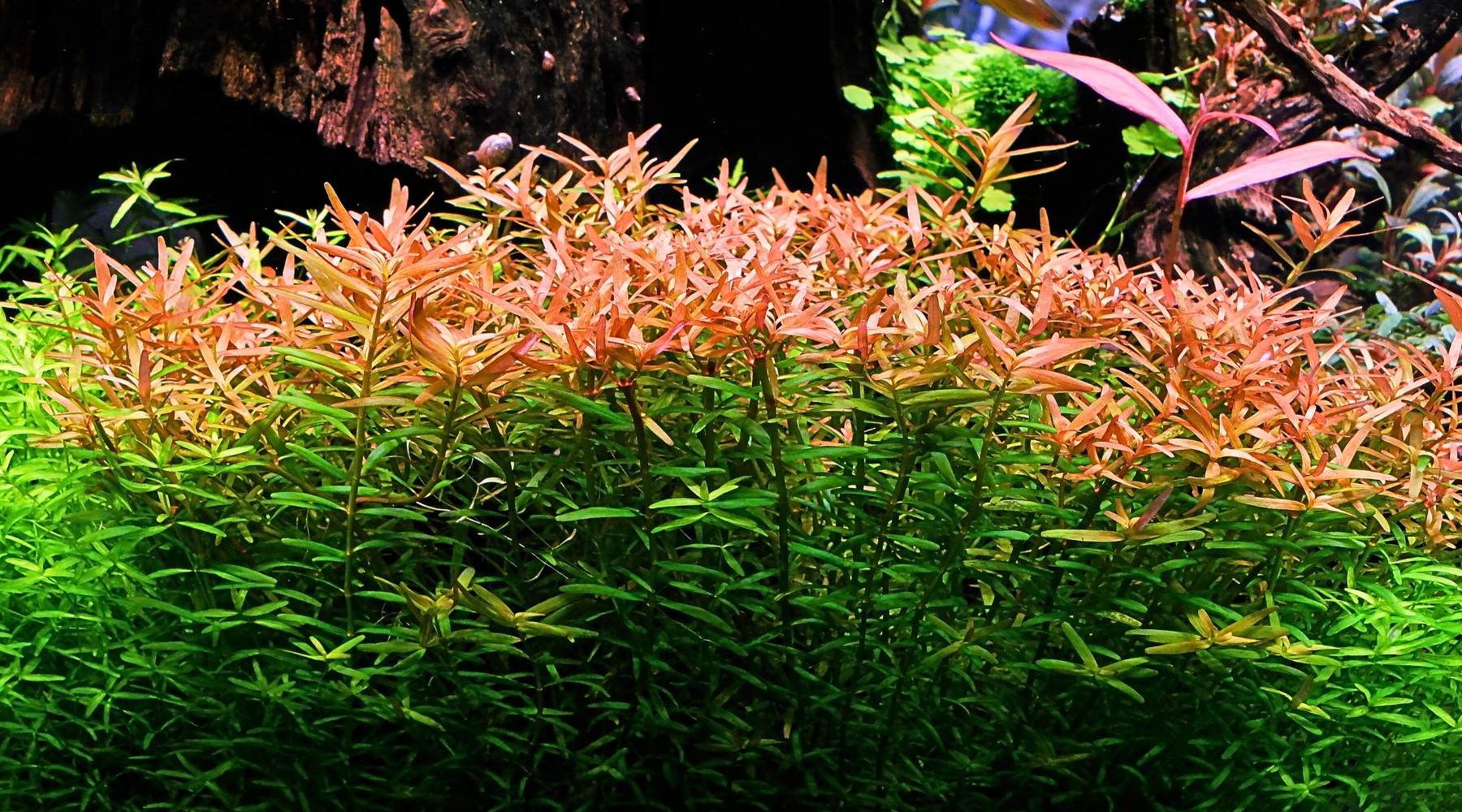
If you are growing red Rotala rotundifolia (or its red relatives: H'ra / Ceylon / colorata) and wondering why it doesn't look as red as it does in the pictures, this may be the reason. The picture above shows the exact transition when we switched from a rich fertiliser to a leaner one.

Let's start with good overall health: no algae, new leaves are well formed and larger than older leaves. Good health is the basis for good colour. While Rotala can grow in tanks without CO2, it takes a lot more skill to keep it healthy in a CO2 limited environment.

Secondly, let's assume that your light is strong enough. You will definitely need medium lighting (70 umols PAR) and above to bring out the colour.

The last aspect is the tricky one. Rotala rotundofolia needs a well rounded diet to be healthy. However, to be truly red, the nitrates in the water should be close to zero. One of those paradoxical 'look before you leap / he who hesitates is lost' puzzles.

 Rotala grown under 0 N

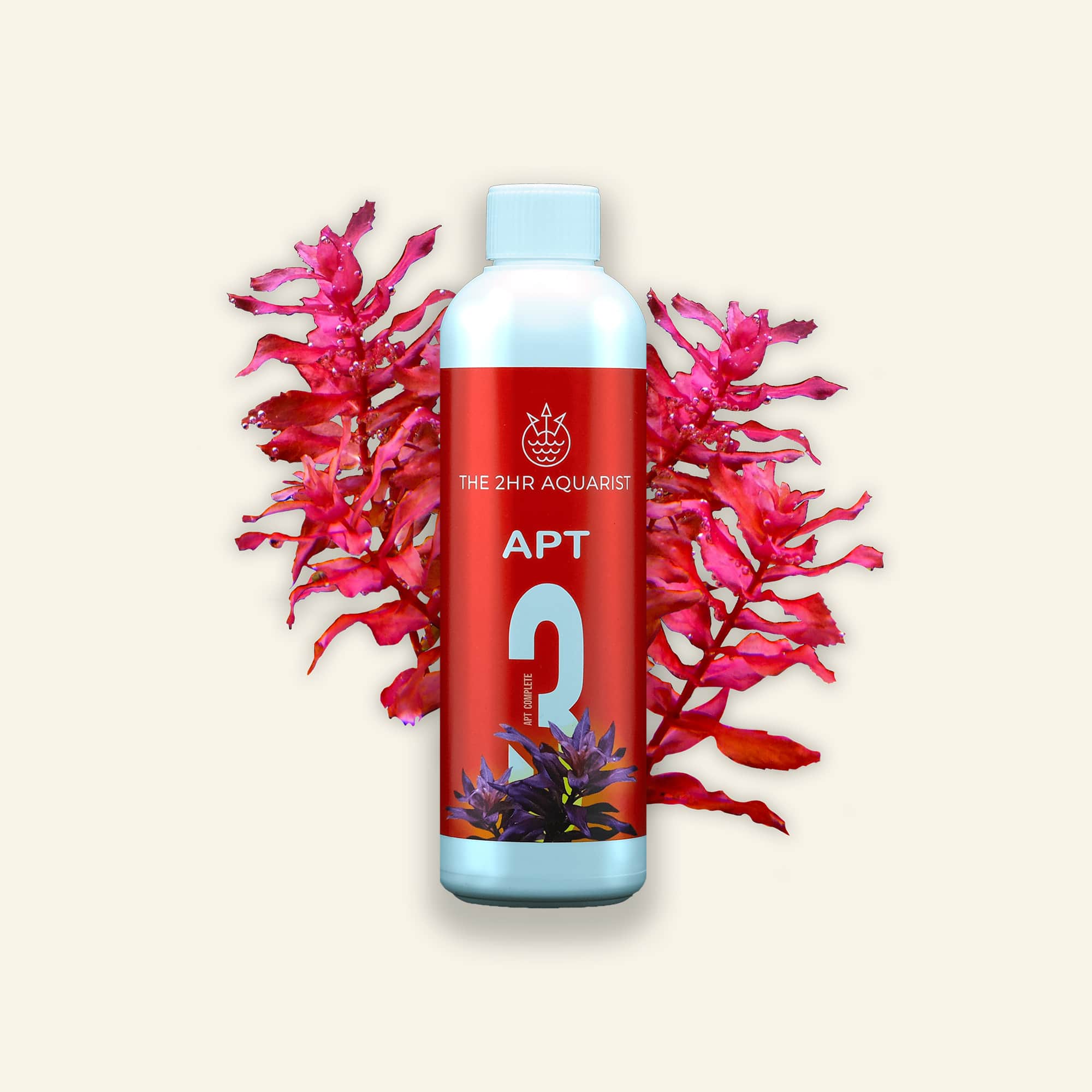
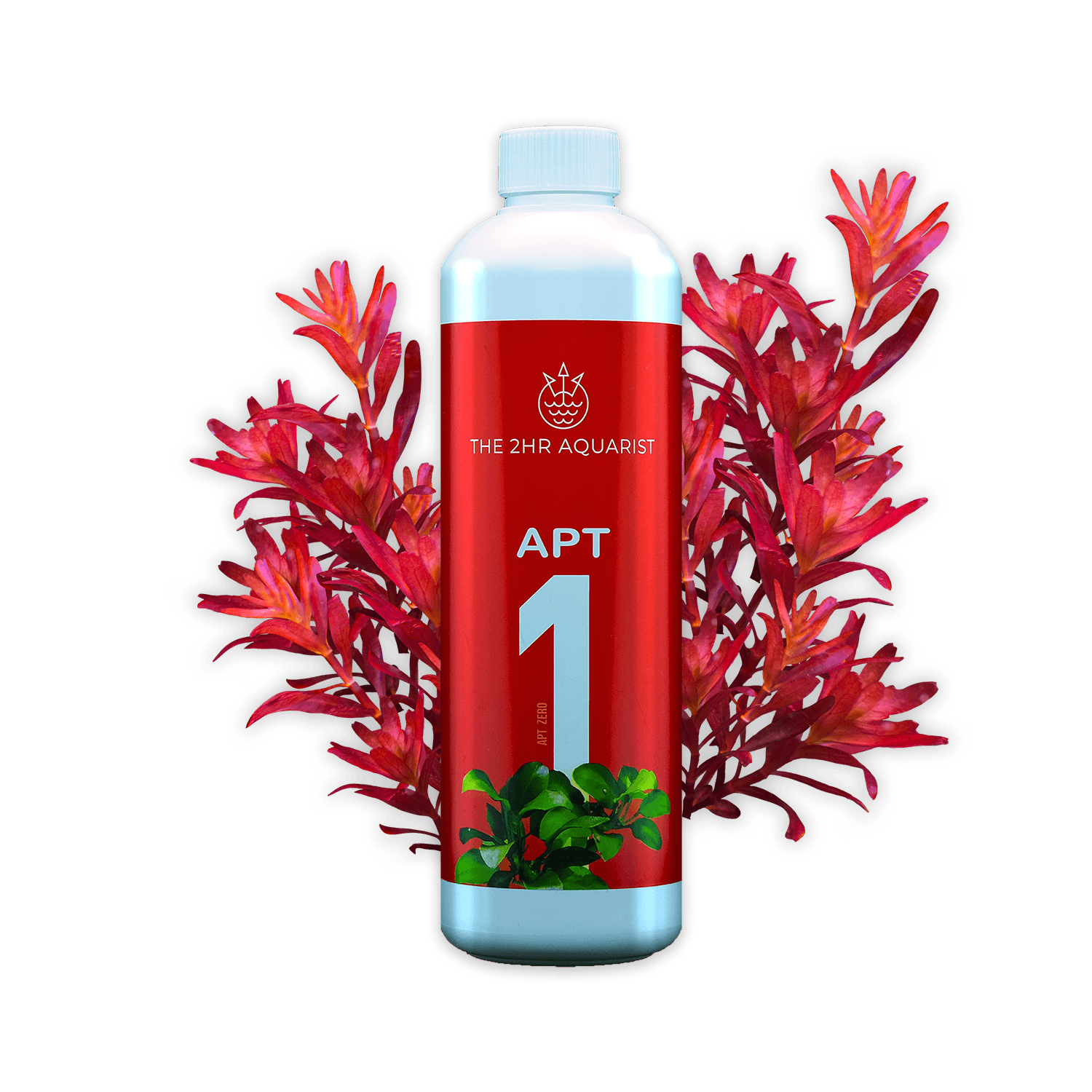
Above we have taken a section of Rotala rotundifolia originally grown on APT 3e (right) and grown it on APT 1 (left), which contains no nitrates. While both are red, the plant on the left is clearly red, while the one on the right is more orange.

Since less is more, can I simply do without ferts?

No. Rotala rotundifolia needs a complete, nutritious diet to be healthy.

So, just remove all nitrates?

No. The total absence of nitrates would result in stunting and poor health (which makes it vulnerable to algae)

So how?

The technique is to use fresh Aquasoil, while adding a fertiliser that contains other nutrients in excess but is more lean on nitrates. Aquasoil acts as a nutrient store, so some nitrogen is always available through the roots. Combine this with a leaner fertiliser and you have the sweet spot.

The stored nitrates in fresh aquasoil become depleted in time At that point, you can either add fresh aquasoil, or enrich the substrate with a root fertiliser such as APT Jazz

Ludwigia arcuata is another plant that becomes more redder with low water column nitrate availability.

So I should NOT use APT Estimative Index?

Exactly. The Estimative Index approach works for plants that thrive in nitrate-rich waters. With APT EI, your red Rotala will most likely be healthy, but not red.

So I should use APT 3?

Probably. If you have a heavily planted tank, the resultant level of nitrates using APT 3 is generally low enough to induce 'nitrate limitation' (think of it as a Ketogenic Diet of sorts) to bring out orange-red tones you see above. However, if you have a small or less heavily planted tank, the nitrate level may still be a little too high. Try lowering the dosage or using APT 1.

So I should use APT 1?

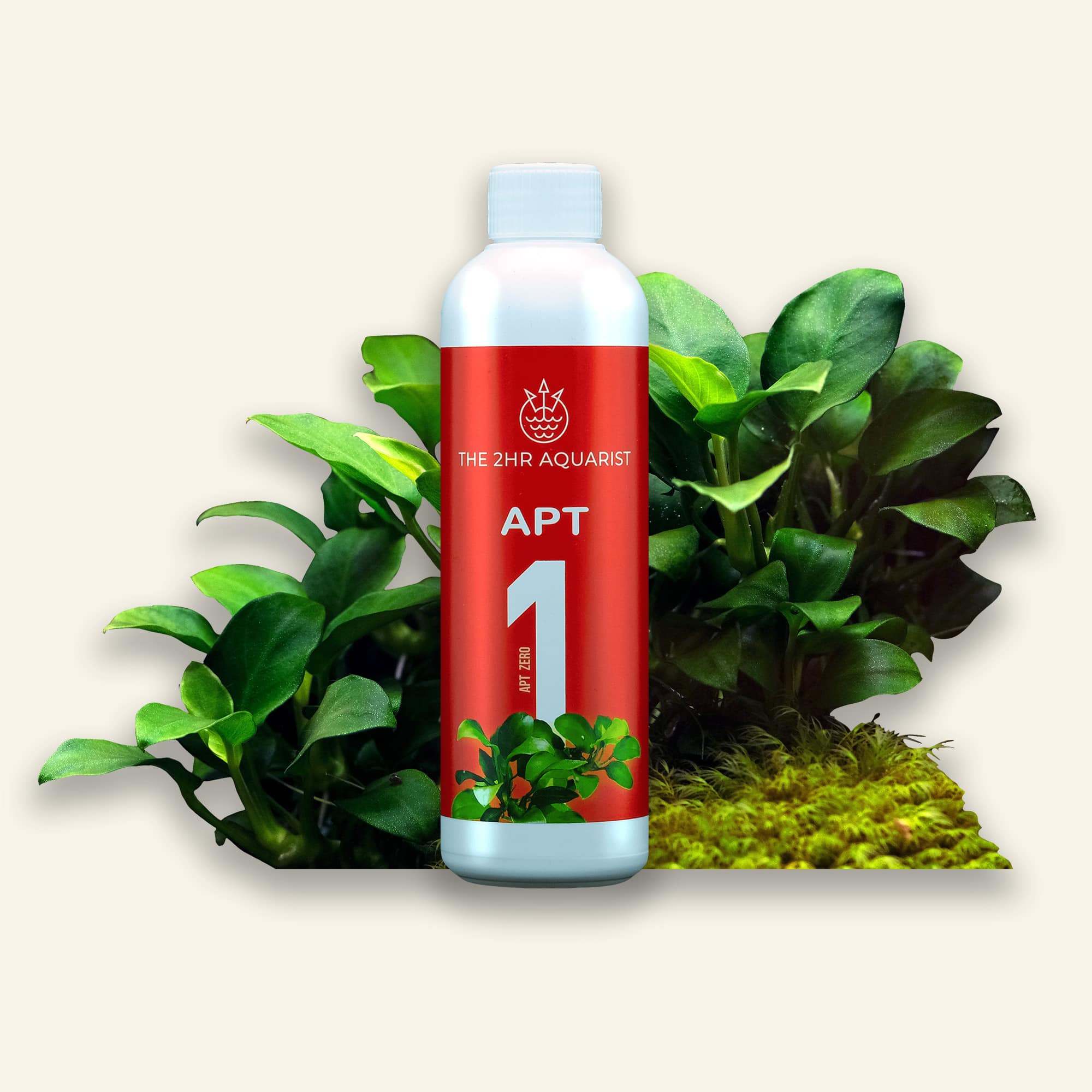
Very likely. When paired with fresh aquasoil, or old aquasoil (> 3 months) that has been enriched using APT Jazz,  APT 1 delivers the 'sweet spot' combination of complete nutrition except nitrates and phosphates (available in aquasoil, and in fish waste). At these levels, you get the reddest possible outcome.

Is there a catch?

The nutrients in new aquasoil get depleted over 3- 6 months. It is best to use APT 1 combined with APT Jazz

Another fine point is that light strength matters, but so does spectrum. To bring out the tones you see below, you need either a T5 array with stronger Red and Blue tubes, or LEDs that have have sufficient red/ blue diodes to bring out the red tones.

 APT Zero

Above: A tank with a variety of red plants using APT 1 in the water and APT Jazz in the substrate. 
Explore

View all

Close up photo of algae on older aquatic plant leaves

Why do leaves deteriorate? Understanding the leaf renewal cycle in aquatic plants

This article delves into the topic of how plants continually renew themselves through the production of new leaves.

Read moreabout Why do leaves deteriorate? Understanding the leaf renewal cycle in aquatic plants

4ft Rotala florida community aquarium: Showcasing the 2hr Way

4ft Rotala florida community aquarium: Showcasing the 2hr Way

Full details of tank parameters, plants and fish species, and the maintenance regime of the 4ft Rotala florida aquascape are described here.
Read moreabout 4ft Rotala florida community aquarium: Showcasing the 2hr Way

Non-Aquatic Aquarium Plants: A Beginner's Buying Guide to Avoid Them

Non-Aquatic Aquarium Plants: A Beginner's Buying Guide to Avoid Them

Some of the most attractive plants on shop shelves are not aquatic at all. They persist for weeks, then rot and feed algae. This guide identifies the common non-aquatic species sold as aquarium plants, shows how genuine aquatics shift form above and below water, and lists what to check before buying..
Read moreabout Non-Aquatic Aquarium Plants: A Beginner's Buying Guide to Avoid Them

New Tank Journey | Ugly Duckling

New Tank Journey | Ugly Duckling

New tanks can be frustrating at the beginning. Here, we describe one important signal that things are actually progressing well, despite plants having algae. 

Read moreabout New Tank Journey | Ugly Duckling

When Less is More

When Less is More

How to get Rotala rotundifolia redder? Interestingly, less can be more in this case.

Read moreabout When Less is More

System Shocks

System Shocks

Sudden widespread algae infestation can take place when changes in environmental parameters induce adaptation stress that weaken plants which become vulnerable to algae.

Read moreabout System Shocks

Flowering Underwater?

Flowering Underwater?

Do aquatic plants flower underwater? Is flowering a sign of good health? Which plants can I grow that will flower easily in my aquarium?

Read moreabout Flowering Underwater?