
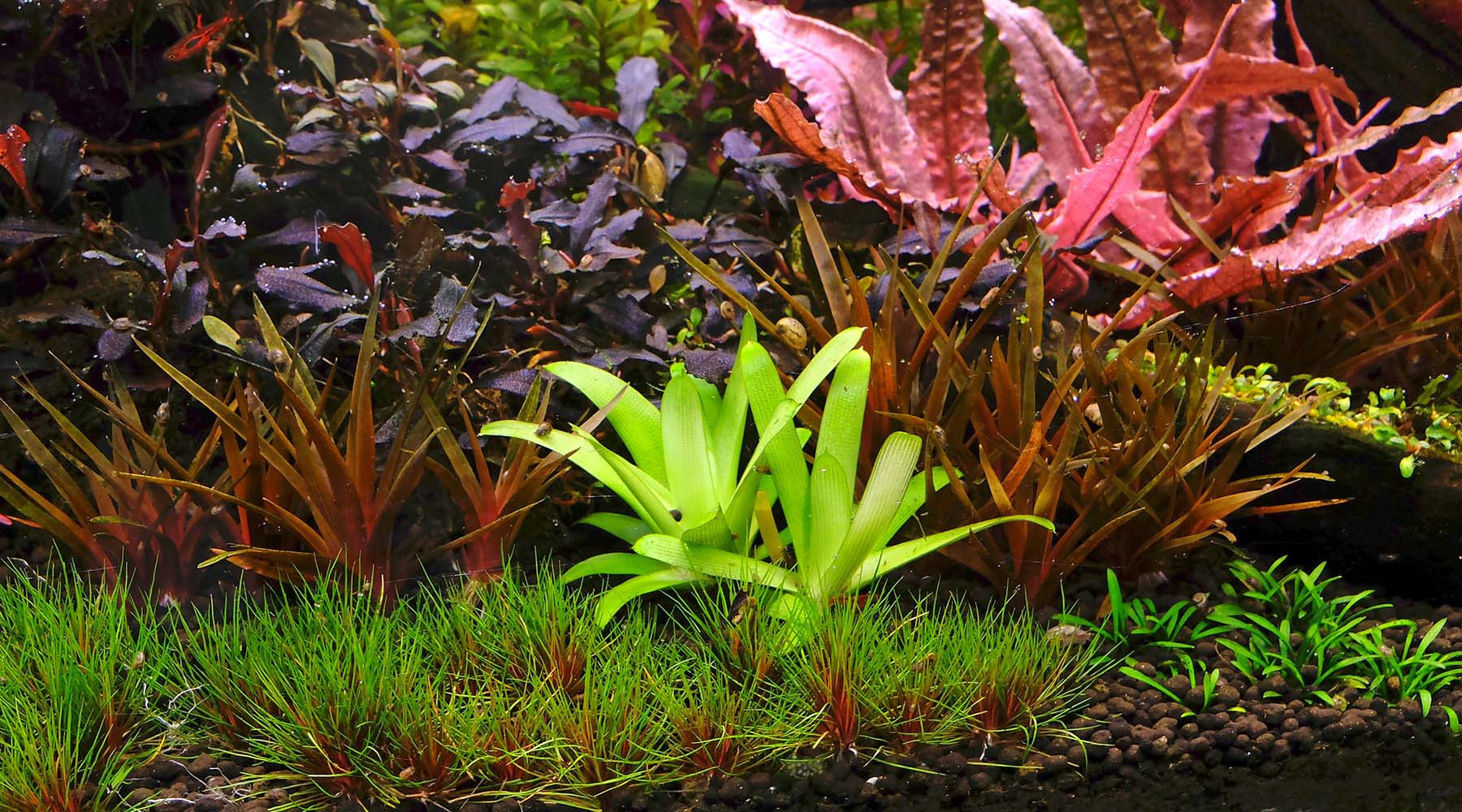
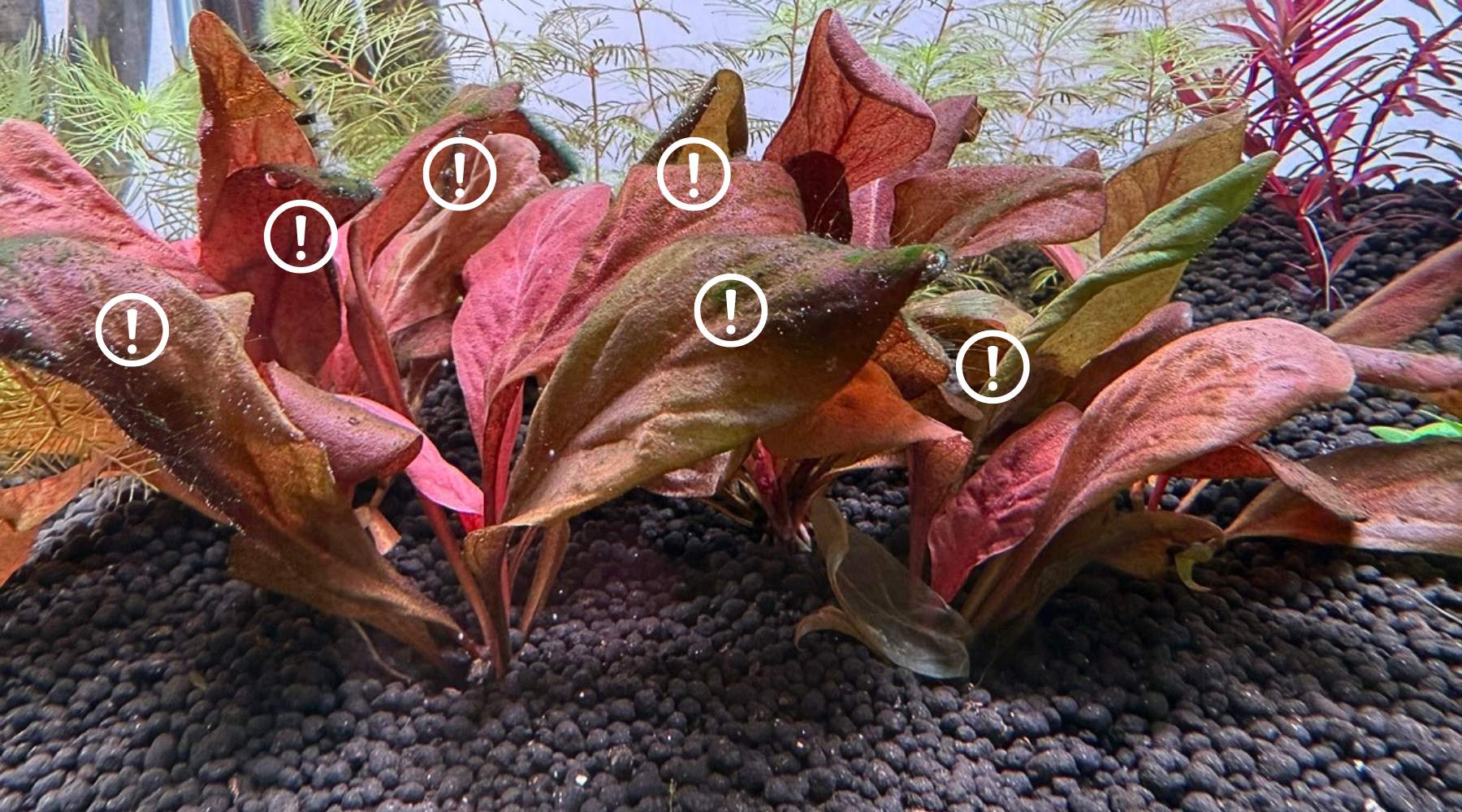
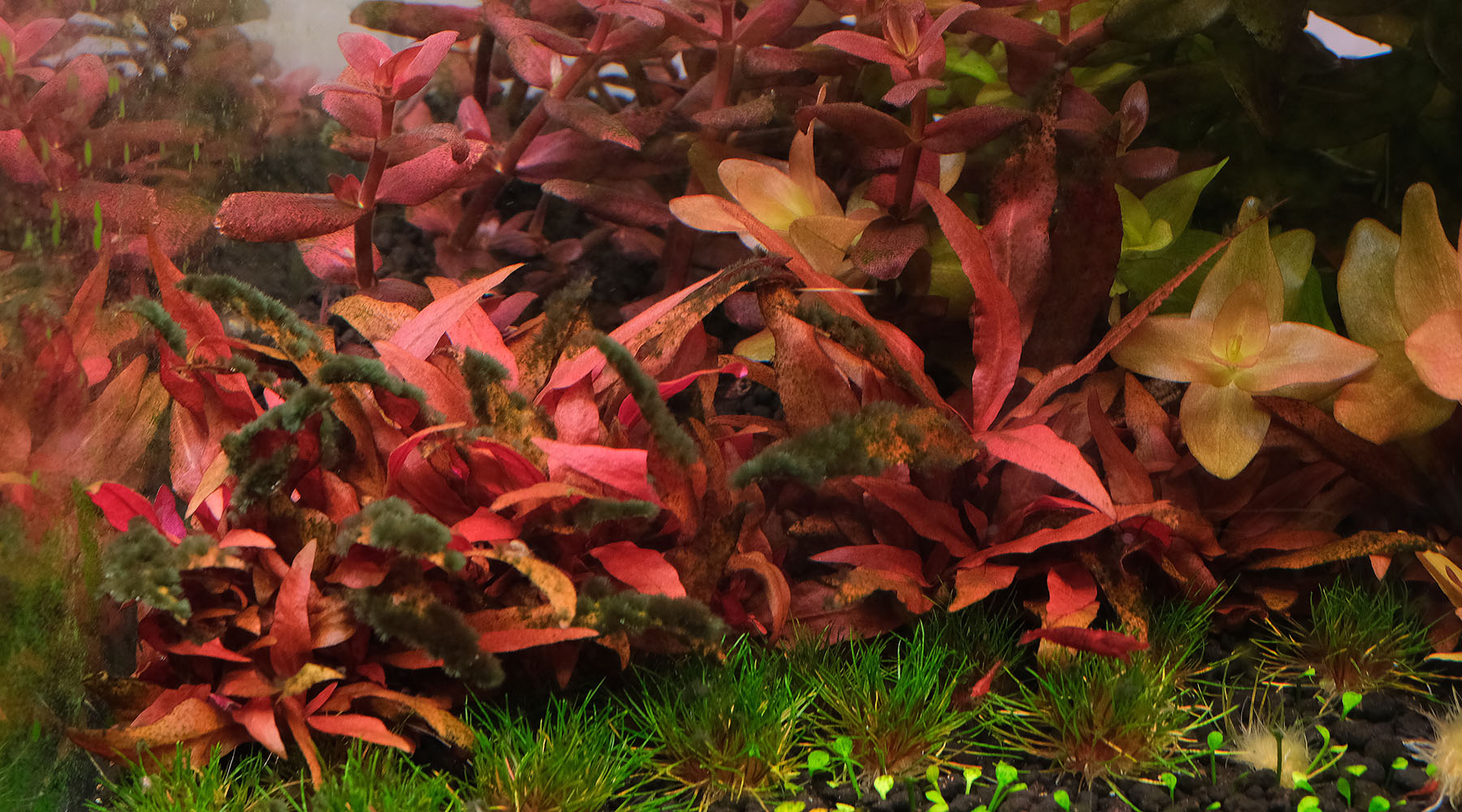
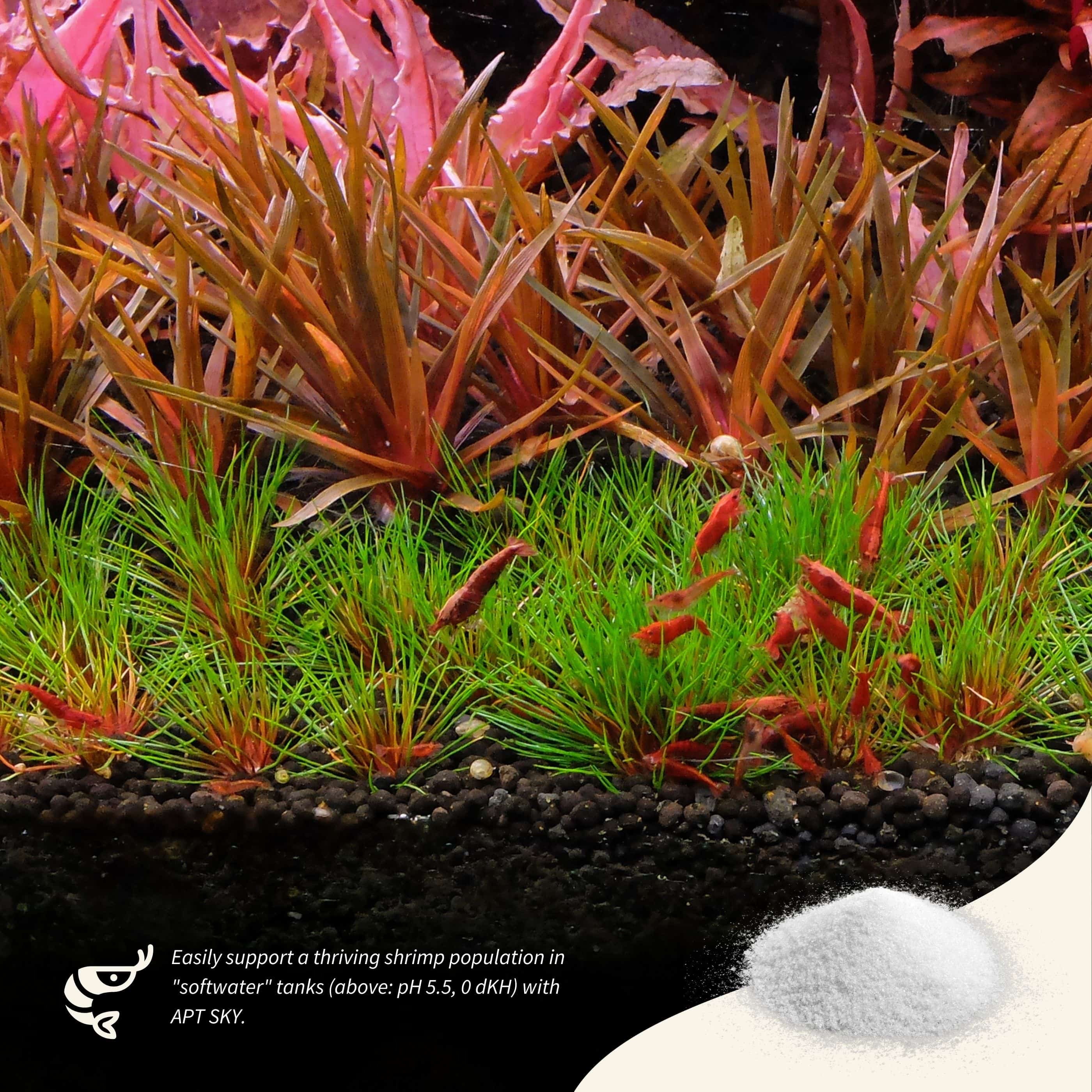
Syngonanthus and Tonina species and some Eriocaulon species such as the red Eriocaulon quinquangulare (shown above) prefer very soft water.
Most soft water plant species are actually sensitive to high KH levels and not to GH per se. It is more accurate to say that they prefer water with low carbonate hardness [low KH].
Most plants are tolerant over a wider range of GH unlike KH.
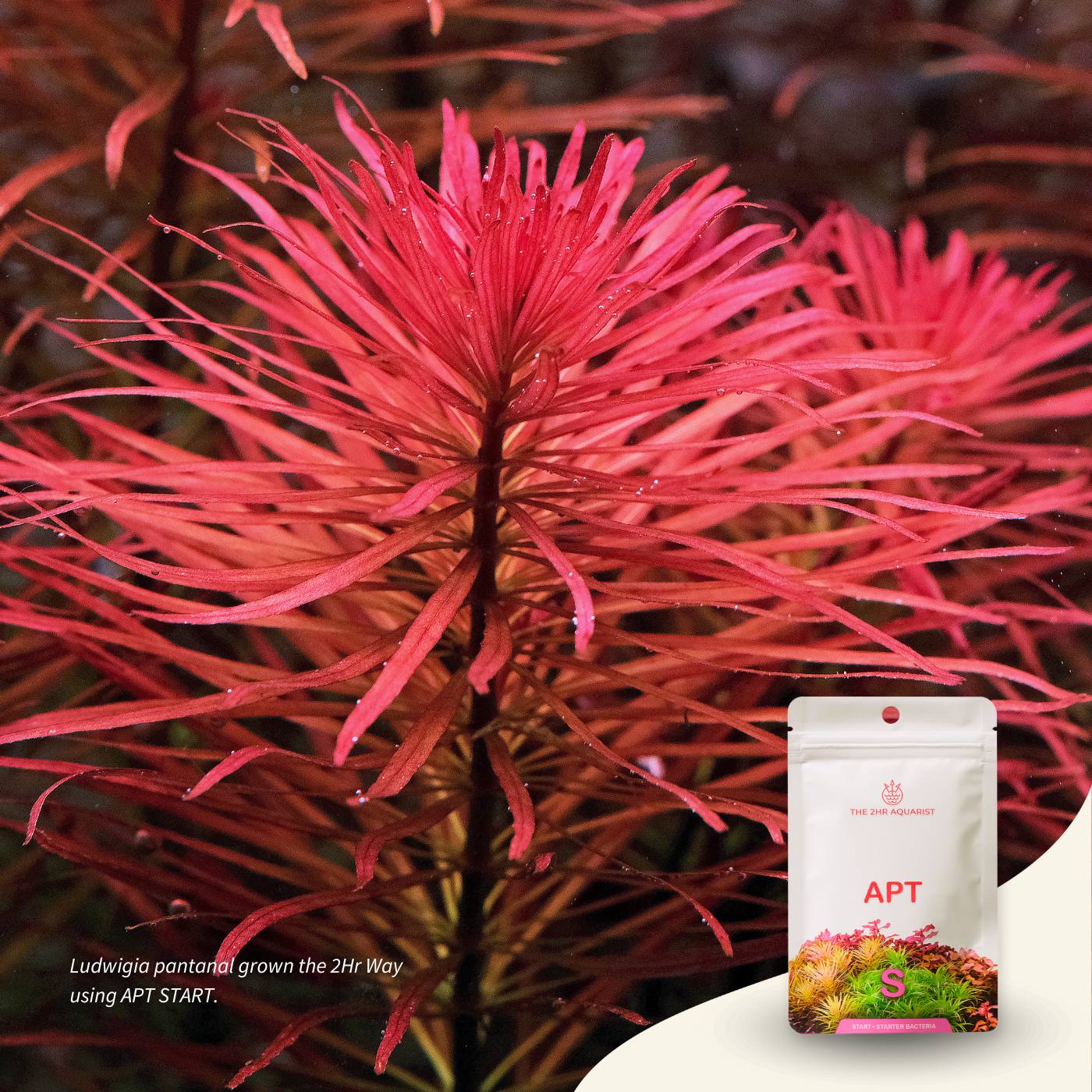
Typical soft water species such as Syngonanthus, certain Eriocaulons can grow well in high GH (10ish) water as long as the KH is kept low; about 3dKH or less. Many aquarists may be less restricted in their plant choices than they think when they have high GH but low KH water. Between 0-2 dKH you can keep sensitive soft water species (Syngonanthus, sensitive Eriocaulons, Tonina, Ludwigia pantanal, 'Blood vomit' etc.).
Between 2-7 dKH you can keep 97% of all commercially available aquatic plants in optimum condition.
8-12+ dKH you can probably grow 95% of species well, but some will be sub-optimal. Above 18 dKH or so, there are more problems with growing plants.

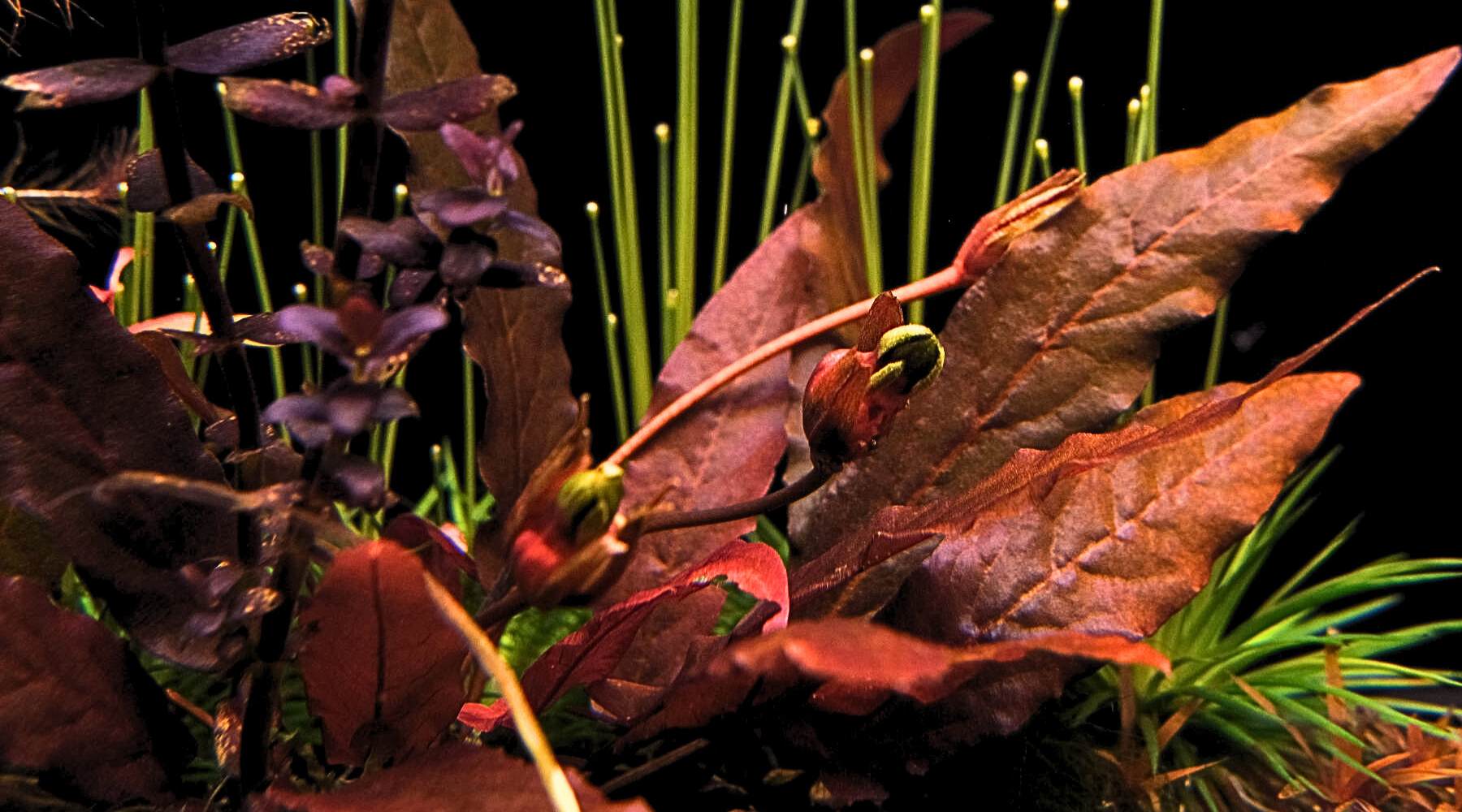
Syngonanthus species tend to favor very softwater and acidic substrates. (less than 3dKH). Ludwigia glandulosa (purple plant above) is much more flexible and takes medium-hard water well.

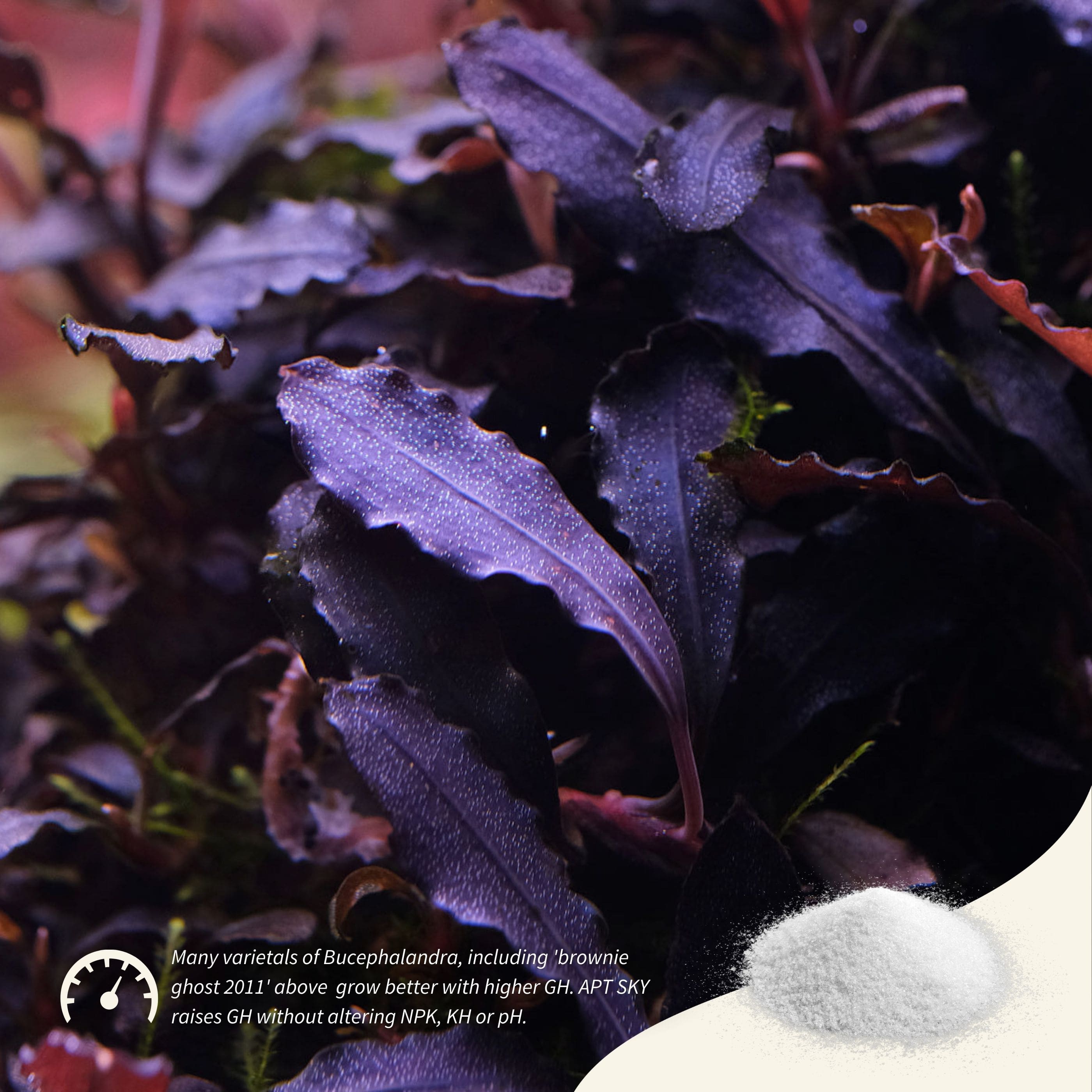
The spiky Centrolepis drummondiana 'Blood vomit' prefers very soft water, while the purple plant above, Bucephalandra 'Brownie ghost', actually does well in hard water. When mixing species, you must give way to the soft water plants.

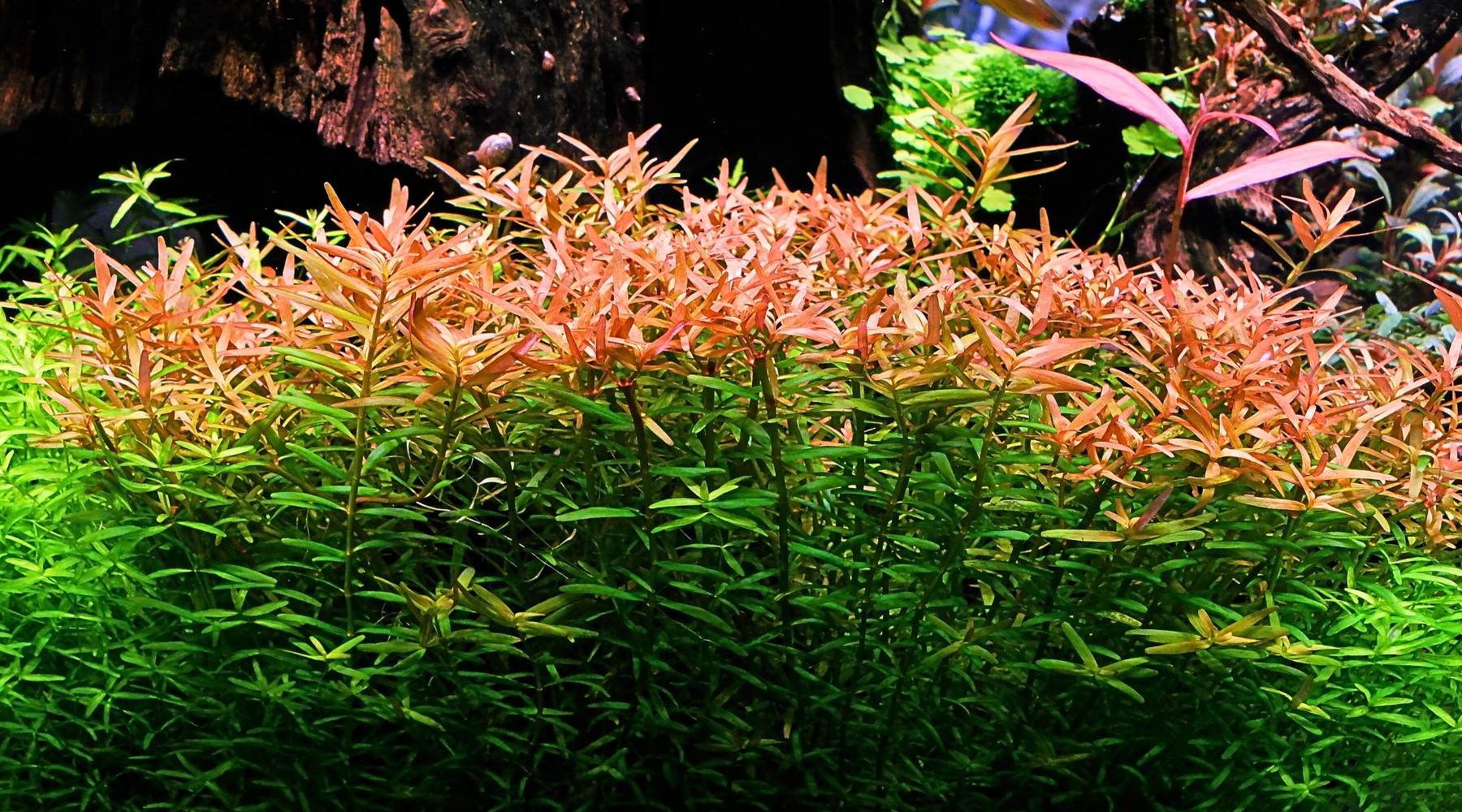
Rotala macrandra (mini type 4 shown here) prefers softwater, but can tolerate well KH values up to 7dKH or so.
Sensitivity of species to heavy water column fertilization in combination with high KH water.
A number of species face stunted tips regularly when combining heavy water column fertilization (i.e. EI method) with alkaline water. This list includes many Rotala species, such as Rotala macrandra and its variants, Pogostemon erectus, and most Ammania species. The higher the KH, and the heavier the water column dosing, the greater the chance of getting stunted tips.
For the above species, they can grow well in more alkaline water tanks (5-8dKH) as long as they are being substrate fed with lean water column dosing (i.e. NO3 levels <5ppm).
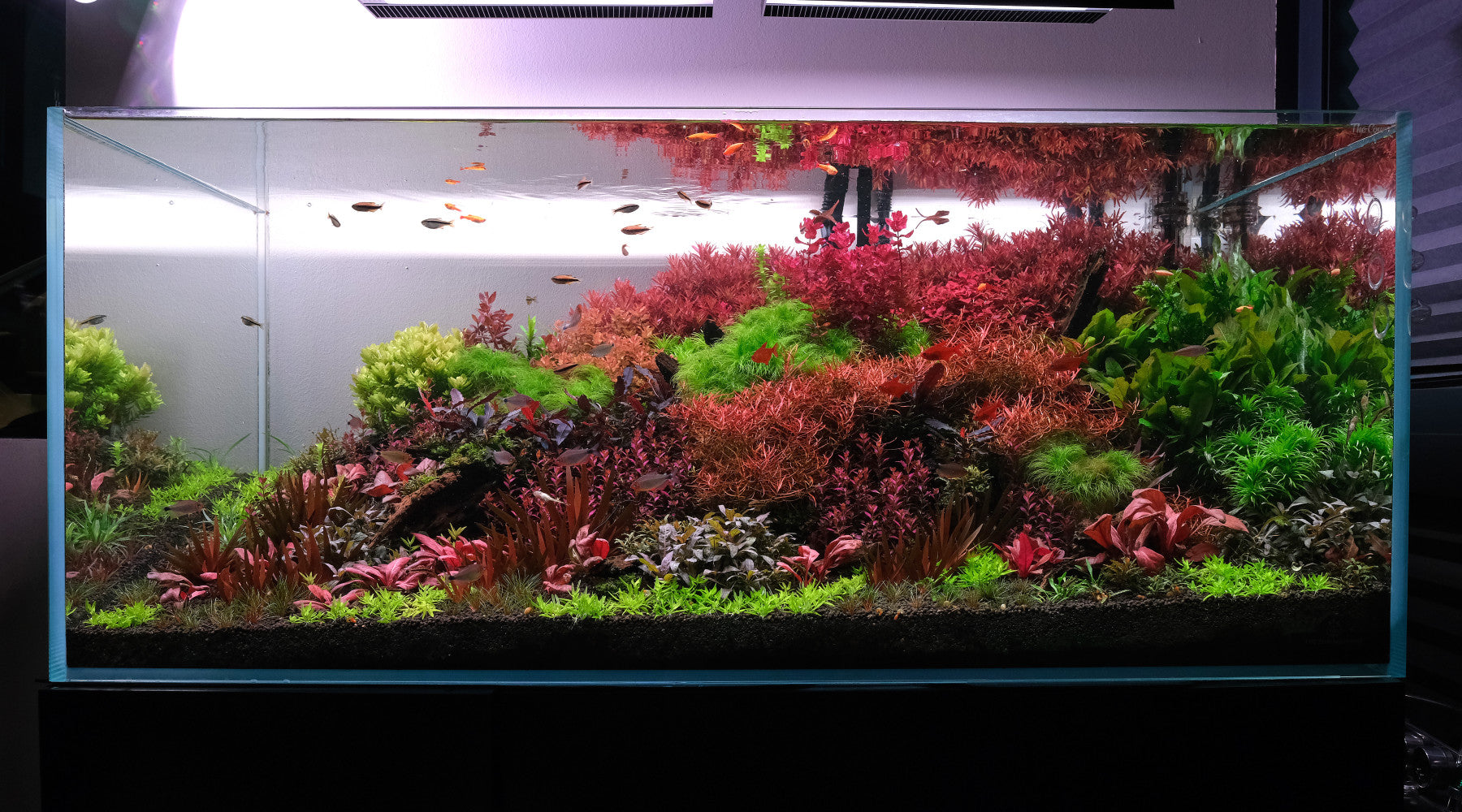
This Seiryu rock scape below has a KH of around 7 to 8. Rotala macrandra (mini type 4) and Pogostemon erectus grow well with rich substrate, lean water column dosing.


How to get softwater
Unfortunately, it is much more difficult to remove dissolved minerals from water than to add them. You can get hard water by adding limestone, coral chips or carbonate salts (such as K2CO3) to the tank.
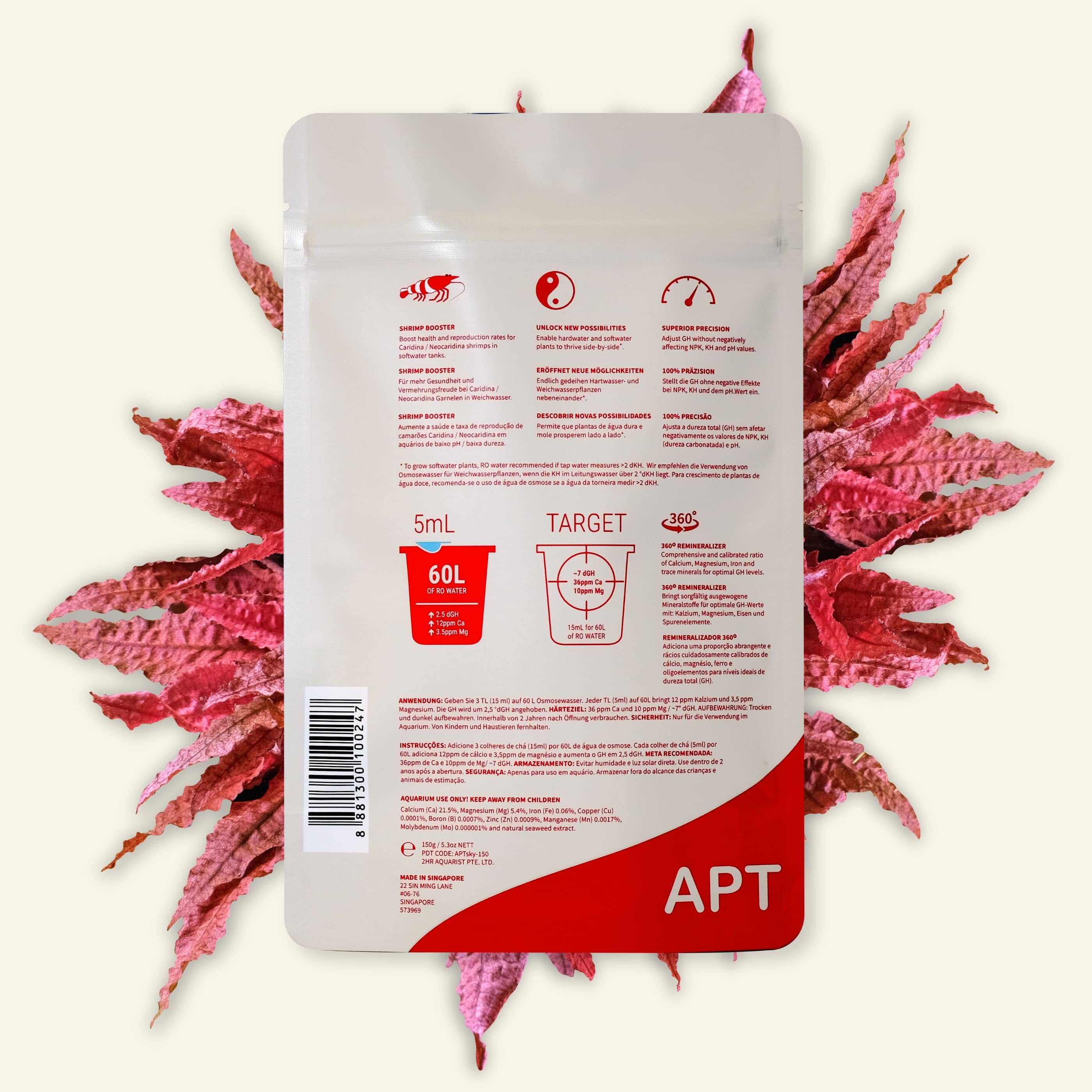
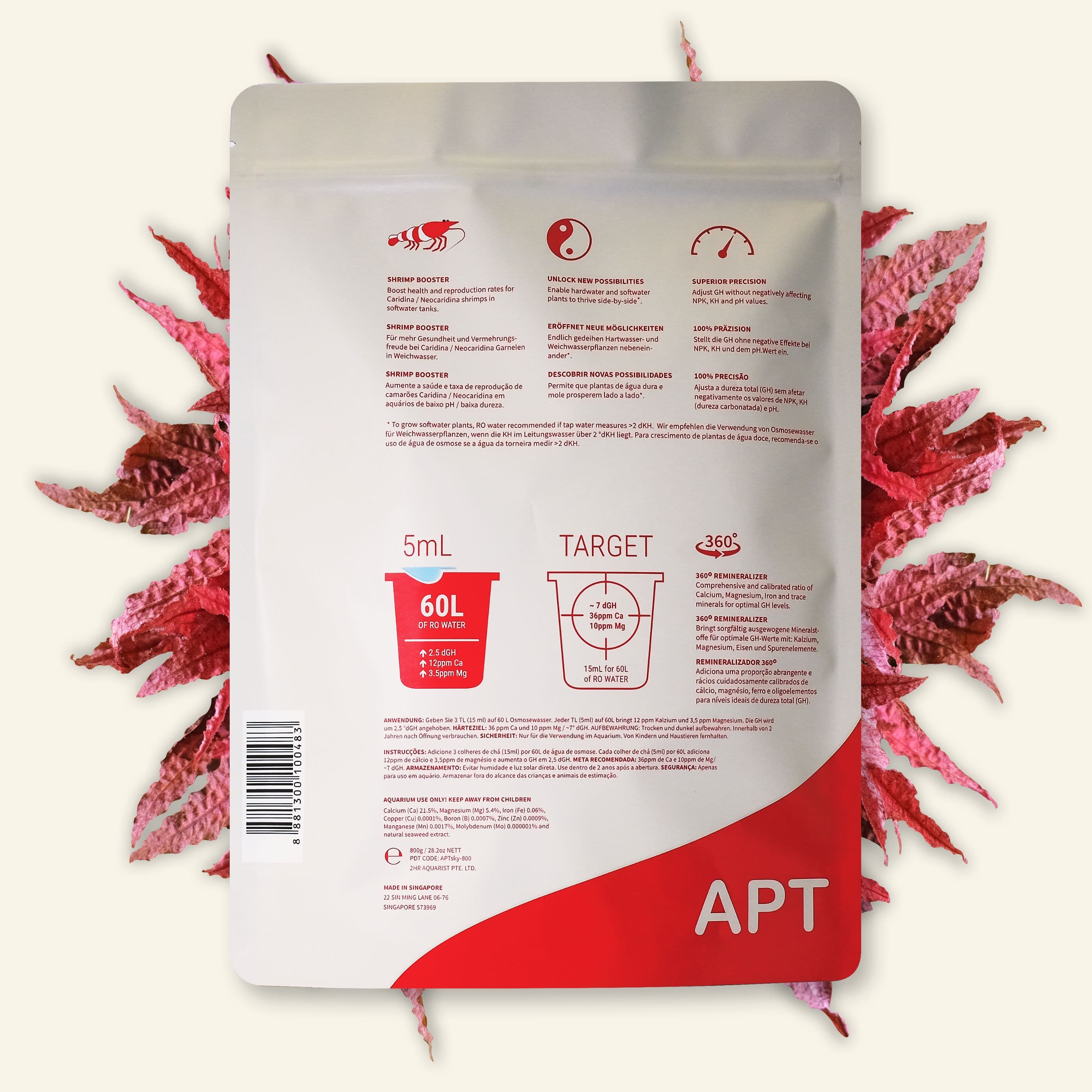
To soften the water you need to remove the carbonate ions. The main way to do this is by using an RO (Reverse Osmosis) filter, which removes all GH/KH by filtering through an ultra-fine membrane. RO water must be remineralised before use.
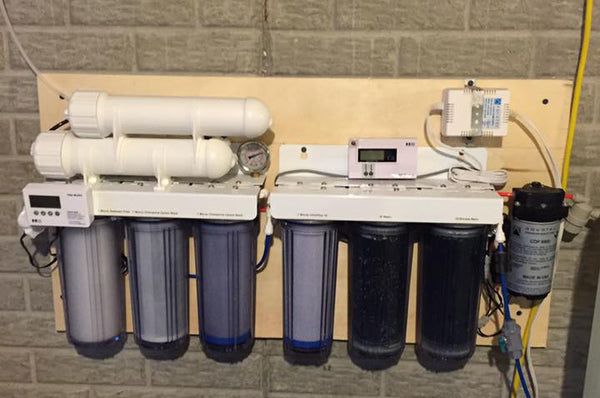
RO filters are a common tool for aquarists who want complete control over their water parameters. It removes all salts/impurities and provides a clean slate for hobbyists to add their own additives.
The alternative method is to add a strong acid such as hydrochloric acid (HCL) to the water before adding it to the tank - this will break down the carbonates in the water into CO2. (but this method has its own risks)
Peat and aquasoils will also reduce the KH and soften the tank water, but only for as long as the buffer capacity lasts. This can work for tanks at the borderline - for example, if your tap water is KH 4 and you want to grow Toninas, using Aquasoils will reduce the KH to near 0. Depending on the peat/aquasoils to lower the KH from very alkaline water, they will deplete their buffering capacity more quickly. These resins will need to be replaced when their buffering capacity is exhausted.
For detailed care guide to the aquarium plants above, click here.


Share:
Understanding TDS
How to introduce livestock into a planted tank