

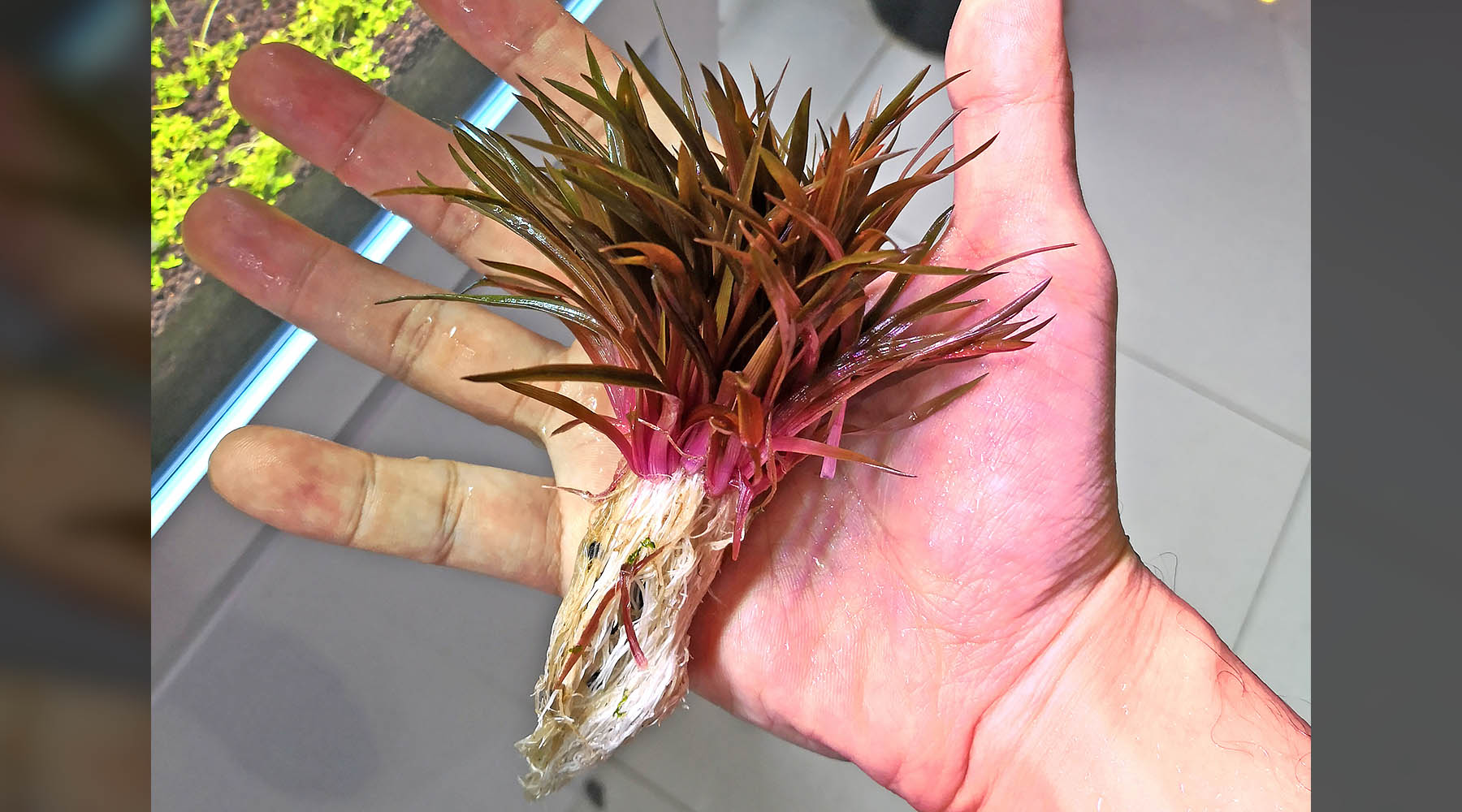
Somewhere along the way, the hobby came to believe that plants with large root systems are "root feeders", while stem plants with smaller root systems feed through their leaves. A common belief is that "swords and cryptocorynes are root feeders and need root fertiliser".
Many plants with large root systems have large root systems because they grow in fast flowing or seasonal waters and the large root systems act as anchors to resist being washed away, for other plants the roots act as a storage system. There is little correlation between the size of a plant's root system and whether it prefers to take up nutrients through the substrate or the water column. While swords and crypts do well with root fertilisation, simpler subspecies can grow well with water column fertilisation alone.
Most aquatic plants have adaptations that allow them to take up nutrients better through their leaves. Submerged leaves often lack the outer protective tissues of terrestrial plants to limit water loss. The epidermal (outermost) layer usually shows little sign of cuticle formation. The surface cells are able to absorb water, nutrients and dissolved gases directly from the surrounding water, while the internal system of tubes (xylem), which normally transports water and nutrients from the roots to all parts of the plant, is often greatly reduced.
Nutrients should also not be lumped together as a whole - the preferred pathway for potassium uptake may be different from the preferred pathway for nitrogen uptake, for example. For example, most plants appear to take up potassium efficiently through their leaves. However, some plants may prefer to take up N in the form of ammonia through the root zone rather than, say, NO3 in the water column.
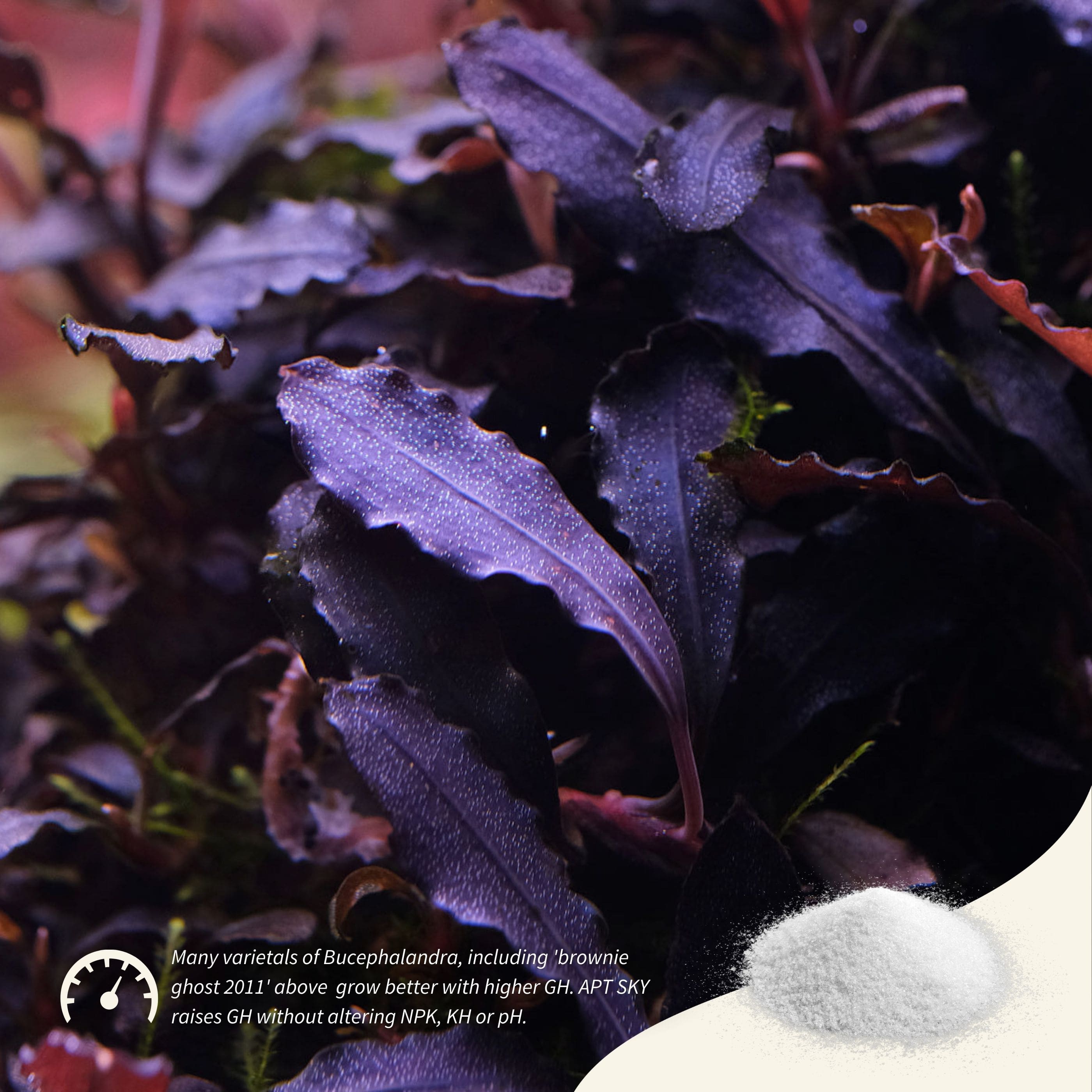
Most of the simpler plants in the hobby can be grown without a nutrient substrate as long as there are sufficient nutrients in the water column (this includes most species of hardy swords and crypts). Pickier species may do better with root fertilisation, where certain nutrients may be more easily assimilated (PO4, NH3, Fe etc). Alternanthera reineckii, Eriocaulons species are examples where they grow more stable and faster with nutrient-rich soils than with water column feeding alone. Pogostemon helferi, which can be grown on bare rock with water column feeding, also grows much faster when rooted in soil. This effect is also true for many plants that are not normally grown in substrate, such as Anubias and Bucephalandra species.

However, root feeding often works well for many plants because we can deliver a higher concentration of nutrients to the root zone via root tabs. This is useful as most hobbyists don't feel comfortable dosing extremely high levels of nutrients into the water column. We may not want to dose ammonia (which is very effective as a nitrogen source for plants) into the water column, but containing it in the substrate works well. Those who do sufficient water column dosing will quickly find that many common "root feeders" such as swords and crypts can grow well on water column dosing alone. Substrates can also hold nutrients in a form available to plants through their Cation Exchange Capacity (CEC); deeper substrates with slightly anaerobic conditions can reduce Fe3+ to the more usable Fe2+ format. These are the many benefits of root fertilisation.

Lythraceae (Rotala, Ammania are included) species have been shown to be sensitive to high water column fertilisation when water KH is high, and therefore more easily grown with rich root fertilisation and lean water column. (Vin, 2019 AGA presentation has the details). For these species, using rich soil is by far the easiest way to grow them if you do not have very soft water. Many Rotala macrandra varieties as well as Pogostemon erectus can be grown well in moderately hard water (KH 6-10) using this approach.
Read this to learn about choosing between root or water fertilization.
Read this section for detailed plant care guides.


Share:
What nutrients do aquatic plants need for growth ?
What nutrients do aquatic plants need for growth ?