
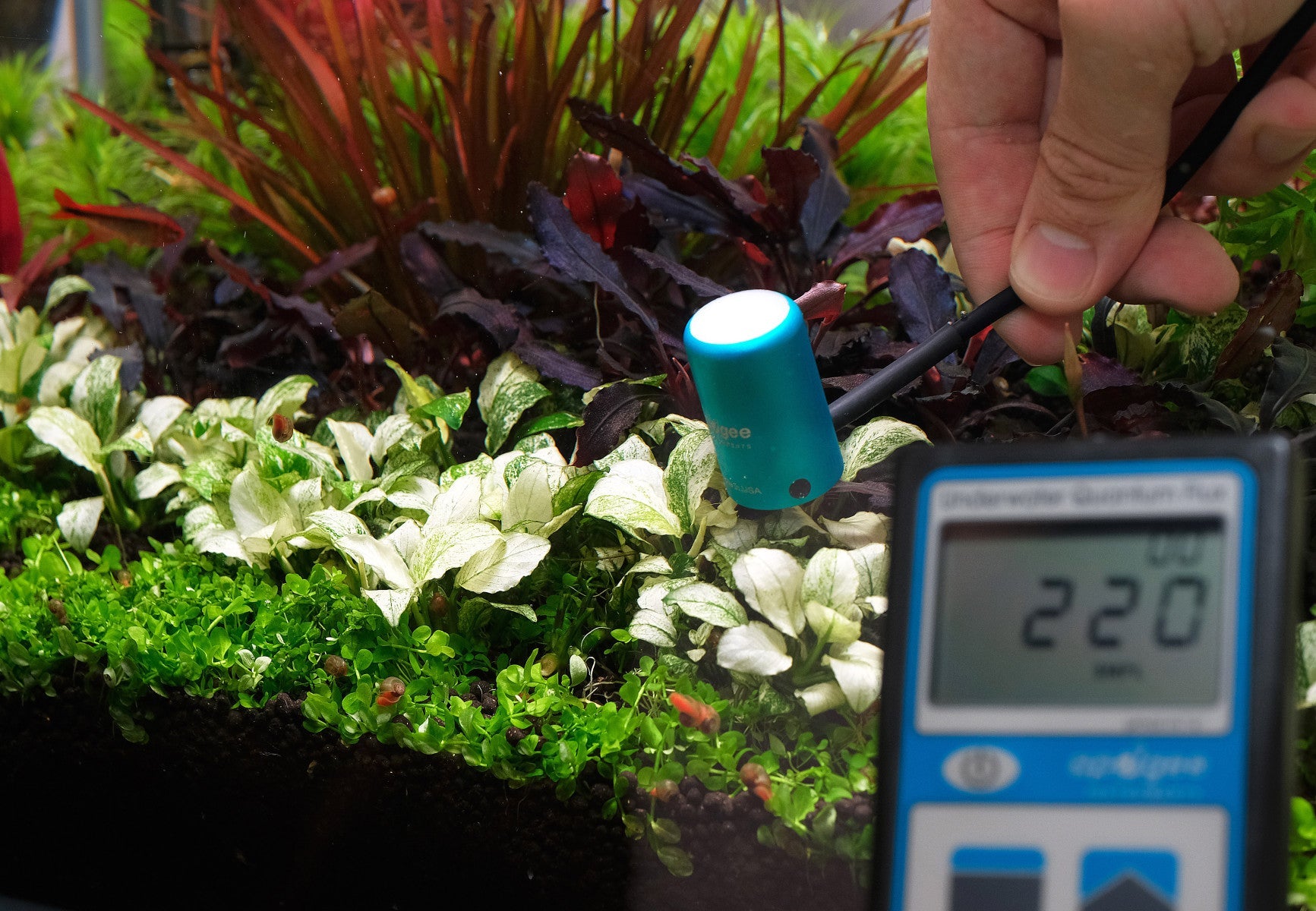
PAR refers to Photosynthetically Active Radiation. As it happens plants use visible light for photosynthesize, so this is the same radiation that enables human sight to function. If you can see the light, plants can use it for photosynthesis. This ranges from deep blue to far red light and is described as wavelengths between 380 nm (nanometers) and 750 nm.
PAR is the most useful measure of the 'strength' of light relevant to plant growth, as it directly measures the amount of light available for plant photosynthesis. This is measured in the number of photons in the 400-700 nm range received by a surface in a given time, or the Photosynthetic Photon Flux Density (PPFD) in units of μmol/second.
PAR value does not distinguish between photons of different wavelengths - so a photon from the red part of the spectrum is counted in the same way as a photon from the green part of the spectrum.
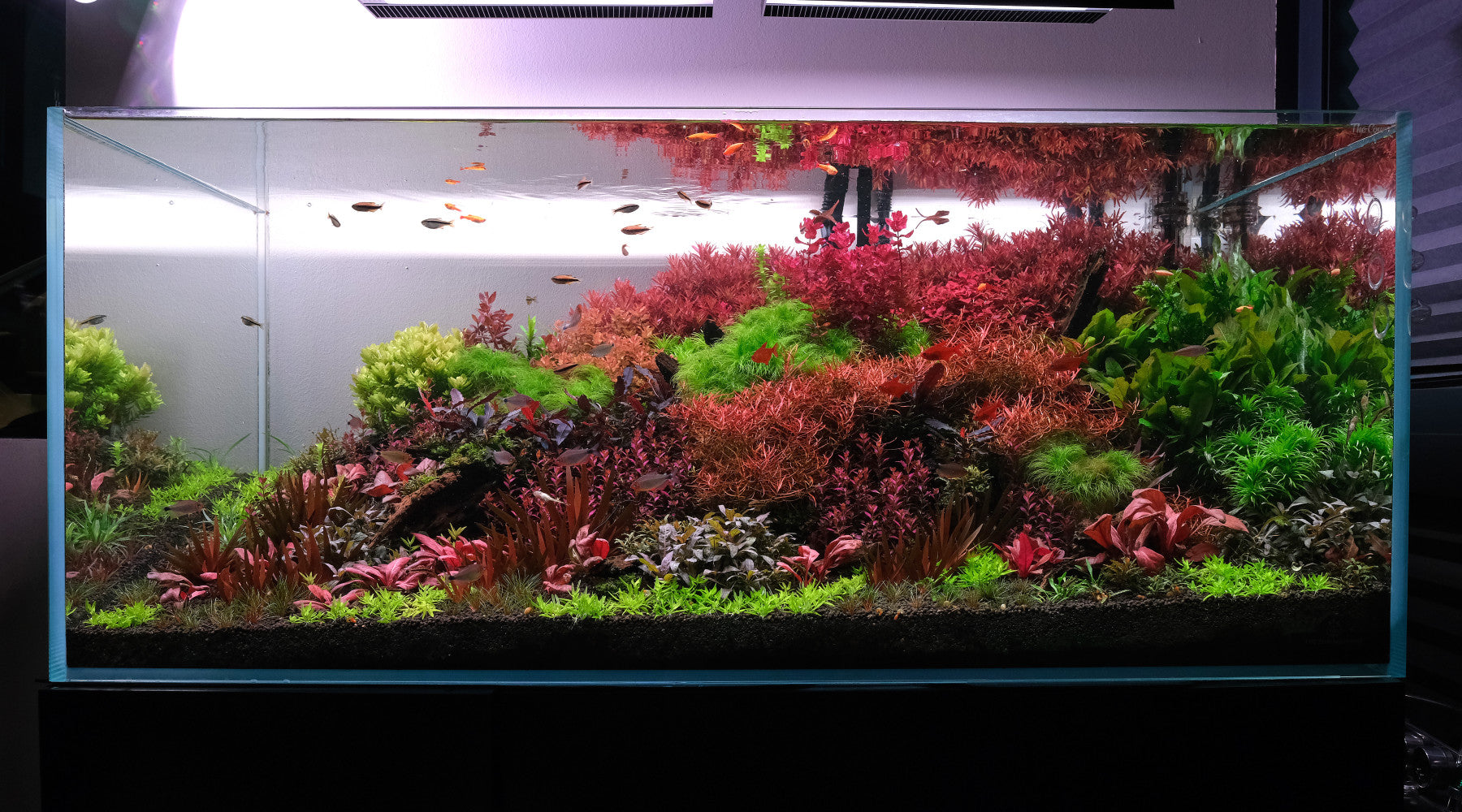
Shade plants can grow in as low as 20-30 umols of PAR. Higher light plants such as many red aquatic plant species prefer upwards of 100 umols of PAR. Above 100 umols of PAR, algae issues in tanks are also greatly exacerbated. At 2hr Aquarist, we run many of our colourful stem plant tanks at around 150-200umols of PAR.

How to read PAR tables
COMMON PAR CHART EXAMPLE

The PAR table above (from a Finnex LED unit) shows the amount of light reaching different tank depths for the particular lighting unit. The left axis shows PAR values for areas directly below the fixture. At six inches the value is 186, dropping to 73 at 18 inches.
Light is strongest directly below the centreline of the luminaire and drops off as the distance from the centreline increases. How much it drops depends on the depth of the tank and the reflectors/lenses of the fixture. Tank manufacturers will normally give readings taken from a full tank.
Doubling the number of fixtures will double the PAR if the light from the fixtures completely overlaps. PAR values are additive in this sense.
3D PAR GRAPH

Above is an example of a 3D PAR chart from Onyx by RapidLED, a marine light. This graph only shows PAR at a fixed depth (24 inches).
In this case the left axis shows the PAR value at 24 inches depth. It shows how quickly the PAR drops from the centre for this particular fixture. A 3 inch radius from the centre of the fixture will give over 200 umols of light at 24 inches depth. This drops to around 100 at 6 inches from the centre.
SIMPLIFIED PAR TABLE

This is a simplified PAR table for the Fluval Fresh & Planted 2.0. LED just gives the PAR value for directly under the lamp. So the A3990 model will have 57 umols of light directly under the light bar at 18 inches of tank depth. The weakness of this type of PAR table is that one does not know exactly how much PAR values fall off from the centerline of the fixture. It takes a bit of guesswork.
Notice that as fixture length increases (the A3992 is twice the length of the A3990) PAR increases - this is common in many lights as longer fixtures have greater internal reflection.
What if there is no PAR data?
Some manufacturers don't publish PAR tables. By Googling and searching plant forums you can often find hobbyist measurements. Another way to judge the effectiveness of a lamp is to find examples of tanks using it. Given the wide variety of lamps available on the market, there is really little reason to buy completely unfamiliar, untested products.
General PAR guidelines for tank
The light should produce sufficient PAR at the substrate depth of your tank. The broad guidelines as commonly used by the aquatic plant community is as follows :
| PAR Values | Suitable for |
| 5 to 30 umols | Low lighting - suitable for shade aquarium plants such as Anubias, Java fern, Cryptocoryne and mosses. If you are growing these, using low lighting just makes life easier - less algae issues to deal with. Less light means slower growth rates and less maintenance overall. |
| ~50 umols | Medium Lighting. With good CO2, you can grow any commercially available plant, but may not get the most intense coloration in colored plants. Good for carpets. Most carpets grow denser with at least medium levels of lighting. |
| 90+ umols | High lighting - Good for red/colored aquarium plants. Higher lighting will bring out coloration more strongly. Allows for greater density and self-shading effects. However, this level of lighting requires good control of tank cleanliness and plant health to avoid algae issues. |

Using a single Maxlite life aqua LED fixture over a 90x45x45cm tank. Substrate level PAR measures at 128umols.

 A 4 tube T5 fixture over a 2 feet tank produces a lot of light for low cost.

 d2 X Chihiros vivids hung high over a 120x50x50cm tank produces very high PAR values (around 145 umols of PAR, after conversion factor of 1.32 for Apogee 502 PAR meter above).


Share:
6500K vs 2700K; what does the kelvin number actually mean?