

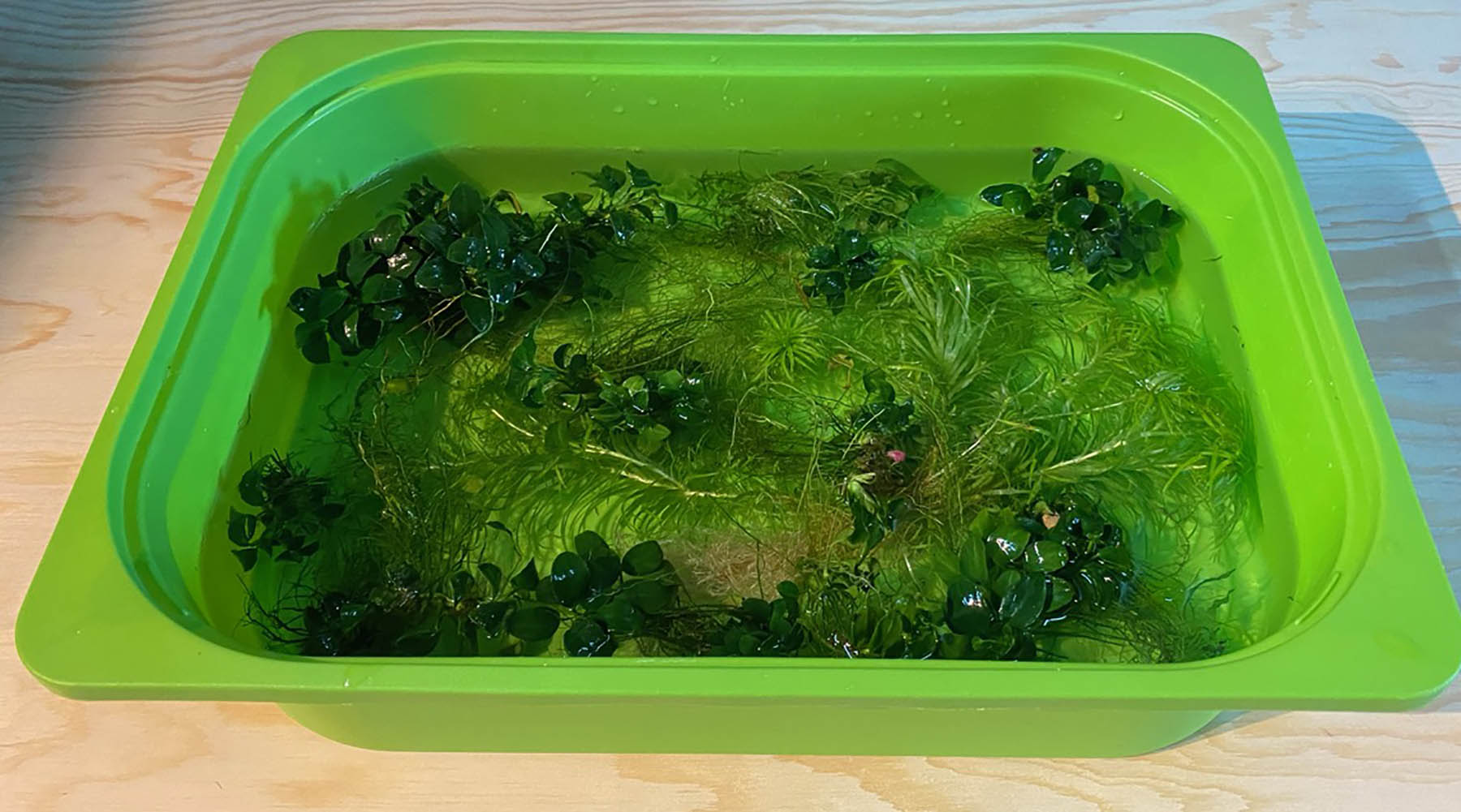
Resetting your planted tank (emptying the tank, replanting/rescaping) can be a big project, especially for larger tanks.
These 3 hacks can help.
Hack 1- Preserve plants this way
If you plan to empty the tank but reuse your existing plants, the most common mistake is to store them by floating them in a bucket of water as shown above.
This is fine for a day or two, but risky as any deterioration can spread quickly and destroy the entire batch. The better technique is to keep them moist (the moisture of baby wipes, with no visible water droplets) in closed zippered bags and place them in a cool, shaded place (16-24 C) Even the most delicate plants can last a week this way, and most plants can be kept this way for several weeks.
If you are looking for new plants, check out out guide the best red plants here.

Hack 2- Re-use aquasoil this way
Aquasoil can be reused to the point that it completely breaks down. However, the nitrogen content of aquasoils deplete over time. To enrich the whole tank at once, new, ammonia rich aquasoil can be mixed in with old aquasoil. Even a 10-20% mixture of new (ammonia rich) aquasoil to old makes a big impact.
Remove the fine dust and retain the whole grains of the old aquasoil. To retain as many beneficial bacteria as possible, add (dechlorinated) water during mixing to keep the mixed soil moist at all times.
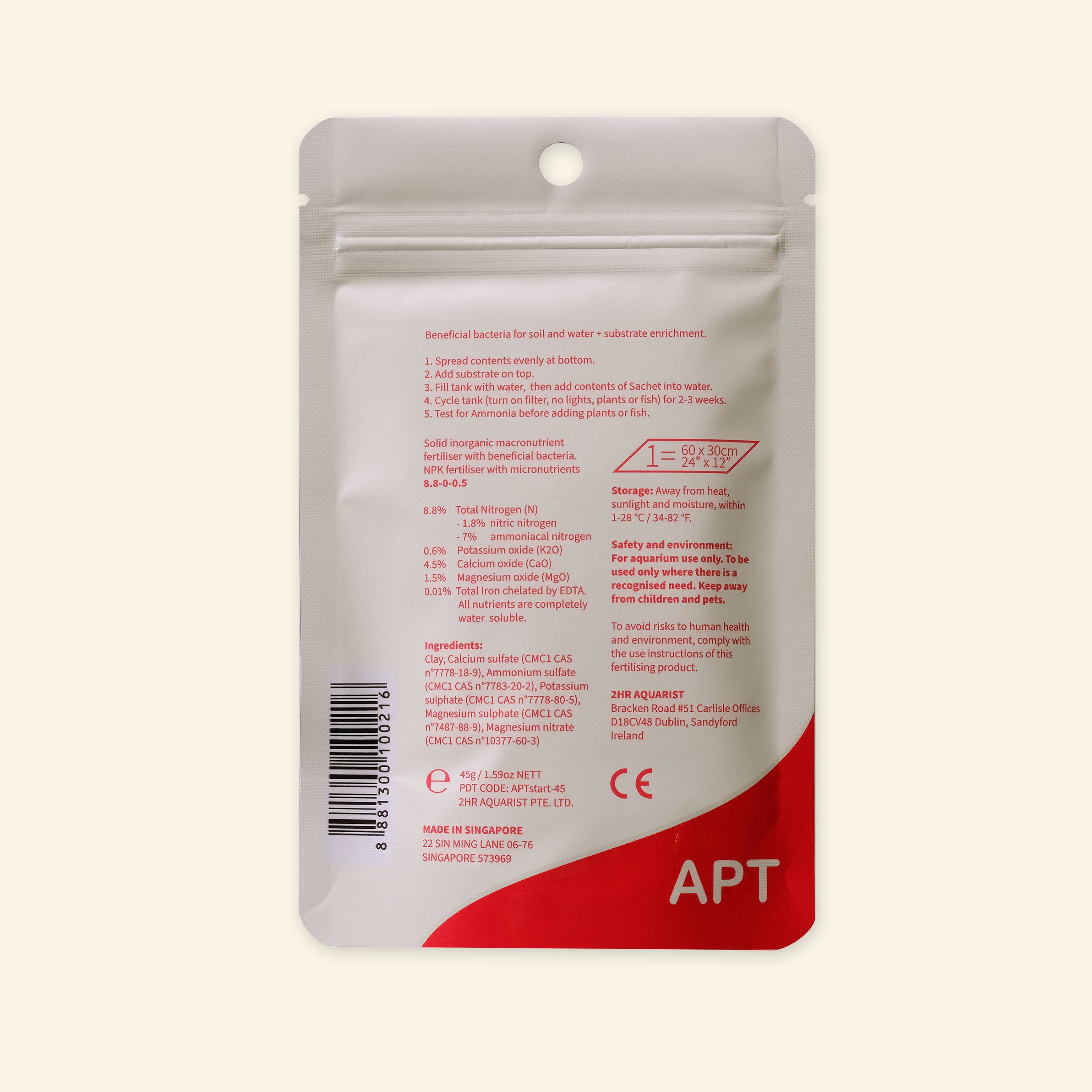
Adding large amounts of substrate may cause the tank to go through a small cycle, so do more water changes in the following week to let the tank settle in smoothly.
Hack 3- Accelerate tank (re)cycling this way.
A mature filter with a healthy microbial population is invaluable. It is best not to clean the filter at this time, but wait 1 or 2 weeks after the tank has been restarted / replanted. This will speed up the cycling process tremendously. If your filter is very clogged, you can do some cleaning, but be careful to use either the tank water or pre-dechlorinated water to minimize damage to the filter's fragile bacterial colony. It is a small point that makes a big difference. If your filter has a pre-filter, then it is ok to clean the pre-filter while leaving the main filter compartment untouched.
Can I re-use my plants?
In general, the healthy, younger parts of stem plants can be replanted (if you want the same type of plant). However, if they have grown out of the water and developed emersed leaves, you must be prepared for temporary non-uniformity as the emersed leaves will look very different from new submerged leaves.


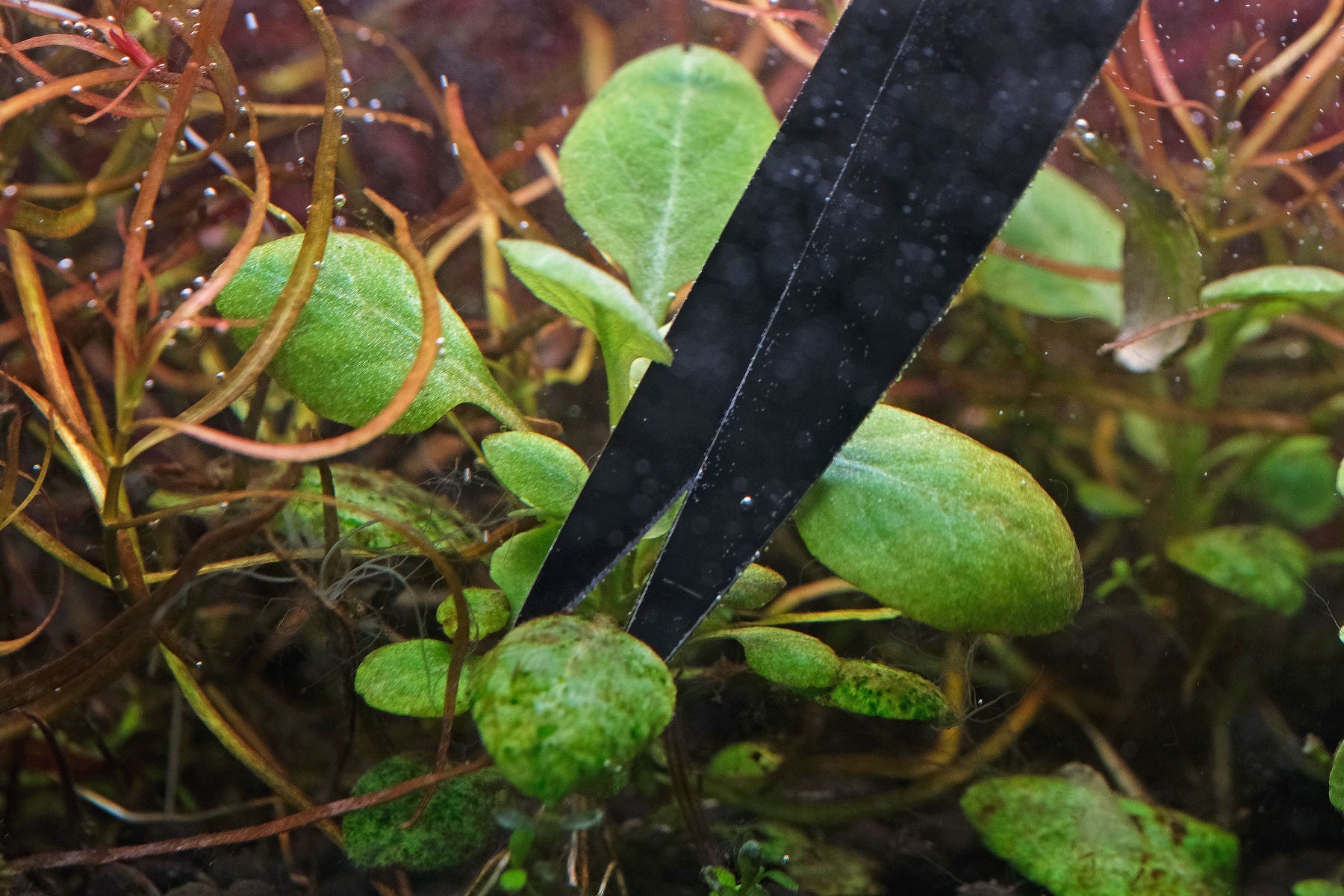
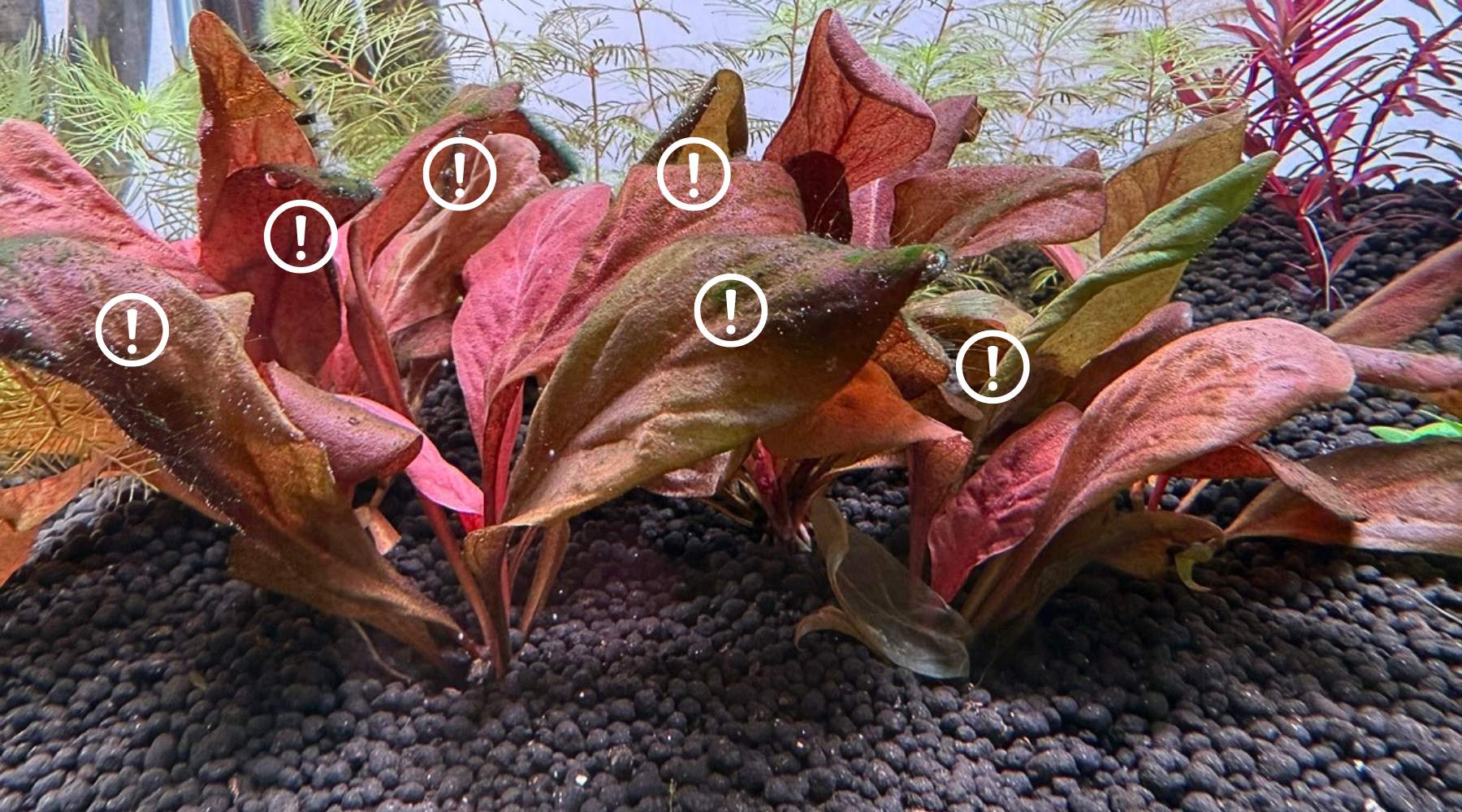
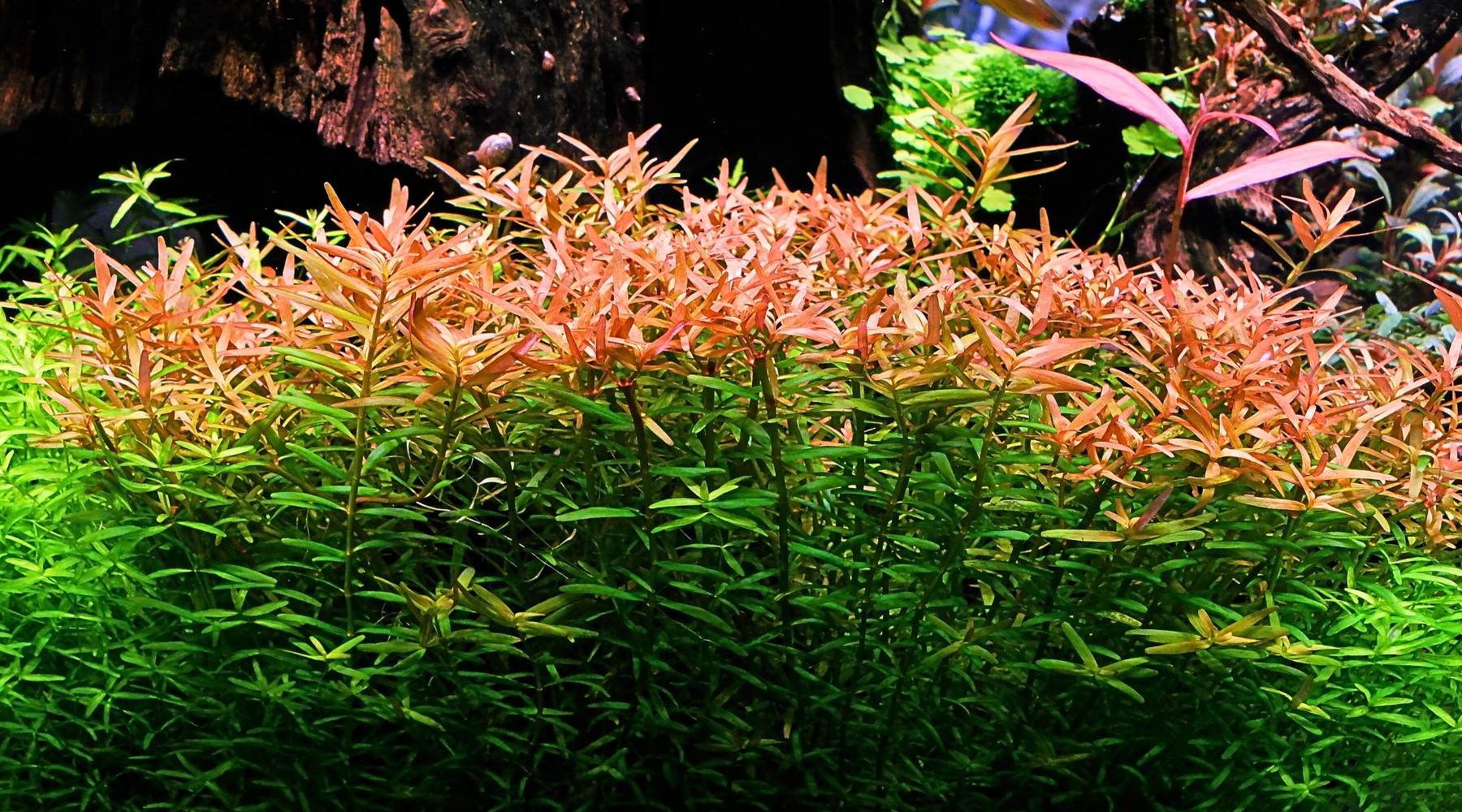
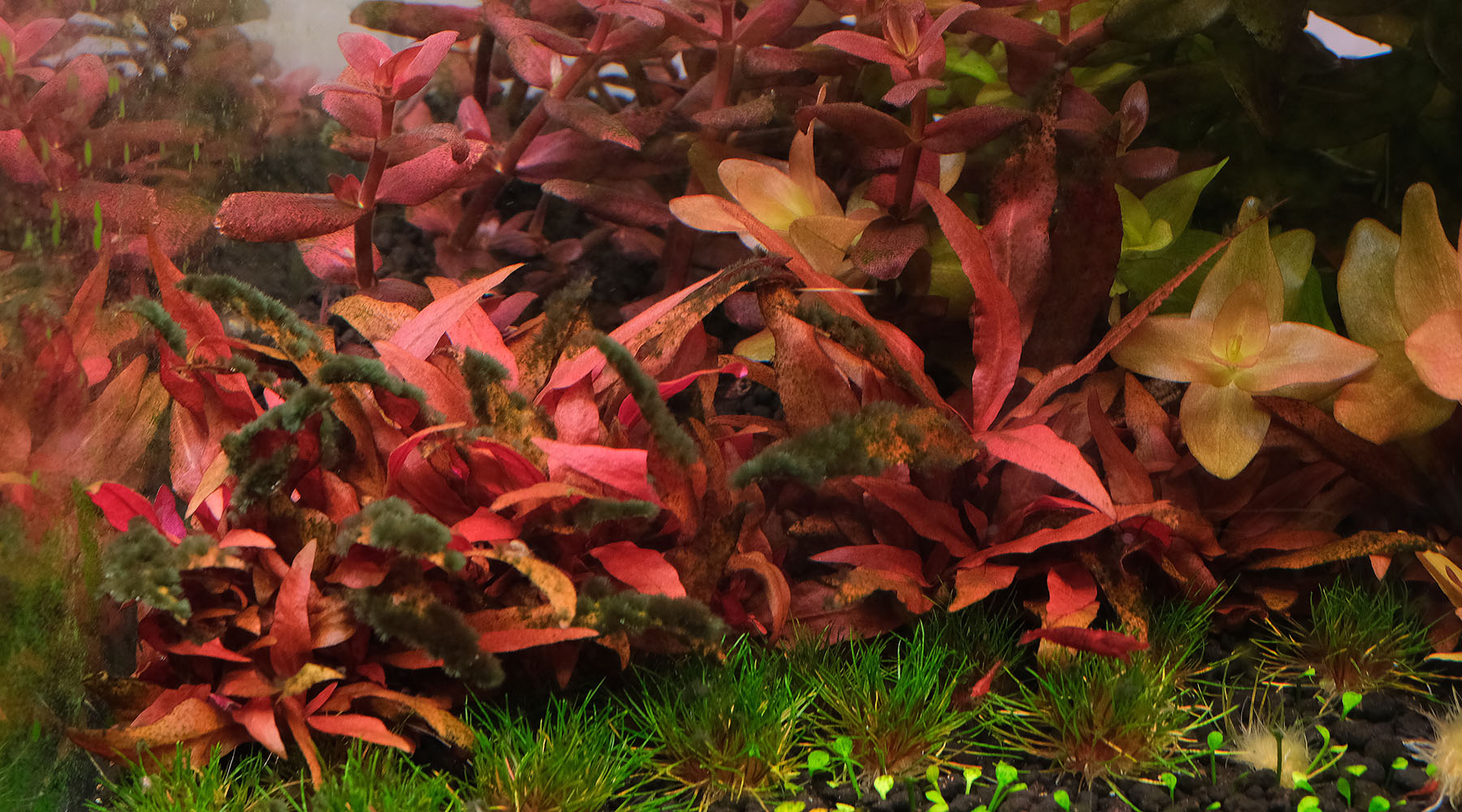
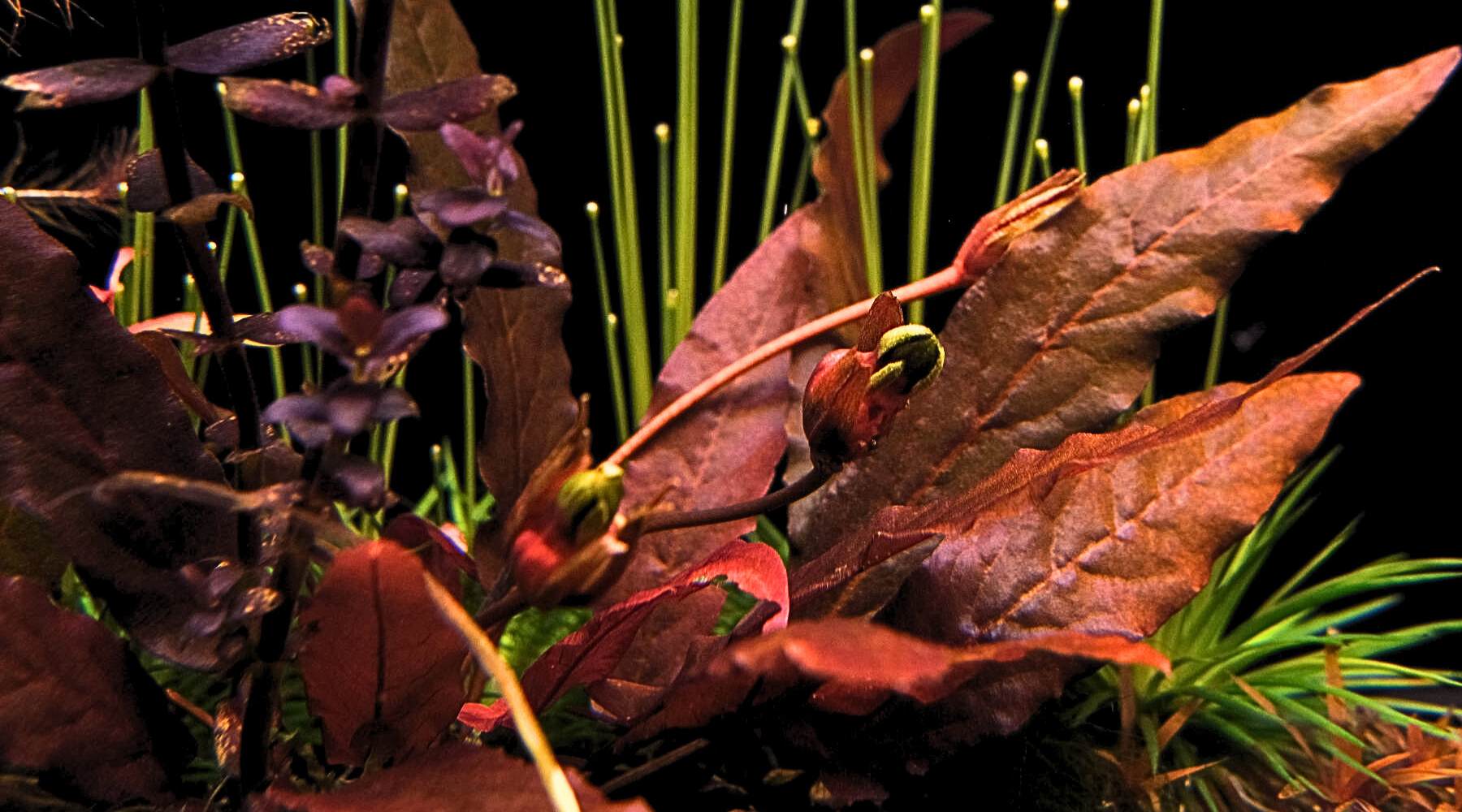
Above: Ludwigia inclinata 'cuba' in 3 different forms. The far left picture shows the emersed form in prolonged dry conditions. The middle picture shows the emersed form when the plant grows above the waterline of the tank. On the right is the submerged aquatic form.
If you replant the emersed form in the middle, the emersed leaves will not simply morph into the submerged form. The technique is to allow new submerged leaves to develop. When they have reached sufficient mass, we then cut away the older emersed portion and replant the now 100% submerged portion.
Can I re-use my substrate if I had algae problems?
Many aquarists worry about retaining algae spores in old gravel. We find that it is generally ineffective to try to avoid algae spores, which can re-enter the tank in a myriad of ways. Basically, if the tank environment is set up to support healthy plant growth, algae growth will be naturally limited/suppressed, just as a thriving lawn makes it difficult for weeds to take hold. Read our complete substrate guide here.
What next?
Stirring the deeper layers of mature substrate alone tends to release ammonia and VOCs that can sometimes kill (weak) livestock and trigger algae. In the case of a major overhaul, it is important to cycle the tank for at least a few days before replanting and adding livestock. To be extra safe, your ammonia test kit should read zero before replanting / adding back livestock. We also recommend the following 3 steps:
1. Start dosing a comprehensive fertiliser, such as APT Complete, immediately after planting. Newly planted plants have under-developed roots and depend on nutrition from the water column. Providing it helps them adapt to the new tank environment faster.
2. Change water The 2Hr Way more frequently for the first week or two. It is normal for some plants to melt or for leaves to drop (as a rule, old leaves do not heal. The plant channels energy to growing new leaves that are optimised for the new tank environment).
3. Replant densely. A tank that is at least 70% planted is very resilient to algae, while sparse, new tanks often face an endless string of algae issues.




Share:
Monte Carlo vs HC Cuba: same same?
Stronger is better?