
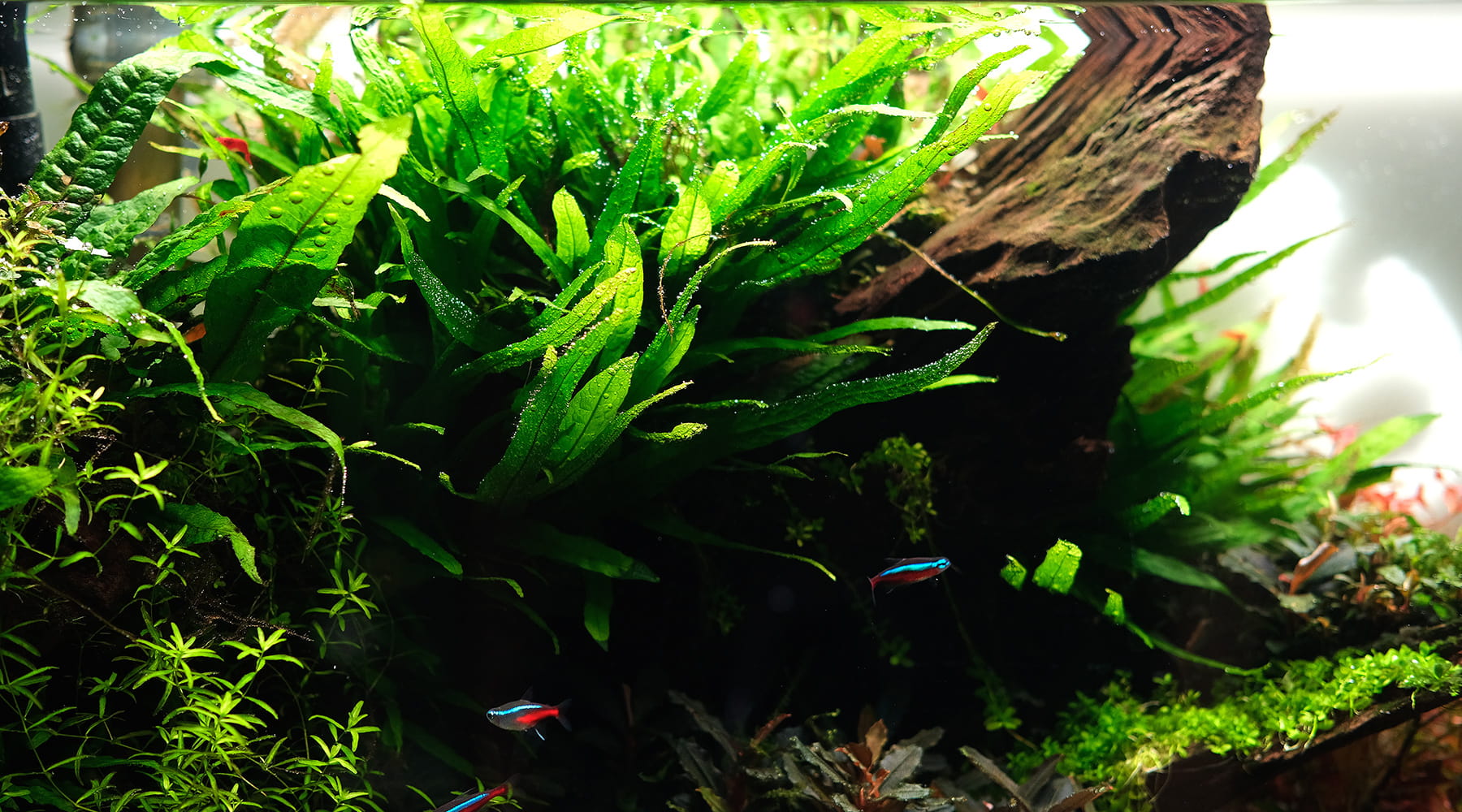
Java fern is a low-maintenance aquatic plant with dark green leaves. It is native to Southeast Asia where it can be found growing on river banks and waterfalls. This article will examine how to grow Java fern well in a planted aquarium and what are some of the interesting varietals that can be found.
Java fern requires minimal maintenance and handles a wide range of water conditions. It thrives in low-light, low-tech aquarium setups and is highly adaptable across pH 5.0–8.5 and 64–86°F (18-30C). Dwarf varietals are suitable for nano tanks, while standard or larger size varietals do well in larger planted aquariums. It is a hardy, versatile plant that is beginner-friendly. It can be flexibly used either on the substrate or attached to hard scape.
-
A long-standing myth is that you cannot plant Java fern into the substrate. You can plant it into the substrate as long as the substrate is well-maintained and not choked with organic waste.
-
Java fern grows faster rooted in rich aqua soils, similar to other plant species.
-
Java fern is more commonly used attached to wood or rock, allowing it merge easily with hard scape. Being attached to hardscape also allows it to be moved around more easily.
-
Use low light as the default; Java fern can grow in very low light and does not need high light to thrive. Lower light levels (30-60umols of PAR) trigger algae less easily compared to high light conditions. However, you can grow Java fern in high-light aquariums if the aquarium is well-maintained.
-
Maintain clean water, gentle but present flow, and regular dosing of a complete liquid fertiliser to prevent slow blackening of leaves. Good water quality reduces incidences of algae and leaf loss.
-
While it is one of the best candidates for low-tech aquariums, it grows faster and healthier with CO2 injection.
-
Keep Trident and other finer varieties out of overcrowded, high-light, high-waste zones to avoid algae.
-
Periodically removing overcrowded old leaves to make space for new growth.
-
Watch new growth and plant posture, not old leaves, as your main signal of health.
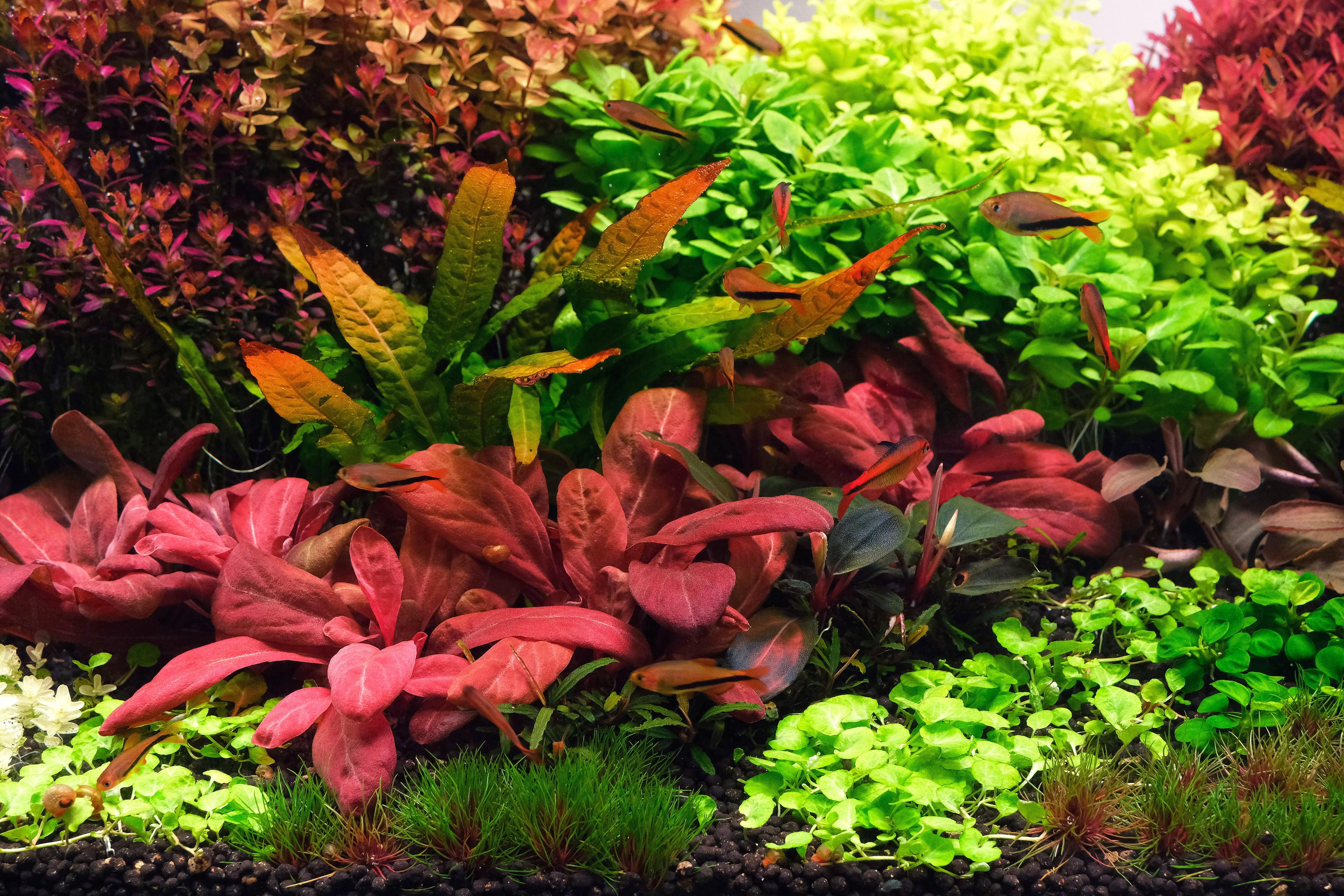
Java fern 'orange narrow' is a Java fern varietal with orange tipped leaves. Unlike standard Java fern, this varietal needs higher light levels to showcase its colors. These are grown under 200+ umols of PAR.
What Causes Black Spots and Browning Leaves on Microsorum pteropus (Java fern)?
Picture this: you bought a clump of Java fern, maybe a nice Narrow Leaf or Java fern Needle Leaf, super glued it onto that hero piece of driftwood, and sat back waiting for a lush, dark green fern forest. Instead, a month later, the old leaves have black spots, algae growth is creeping along the edges, and a couple of fronds are melting. Somewhere on the internet, someone has already told you that “you buried the rhizome, that kills Java fern” or “your light is too weak, crank it up.”
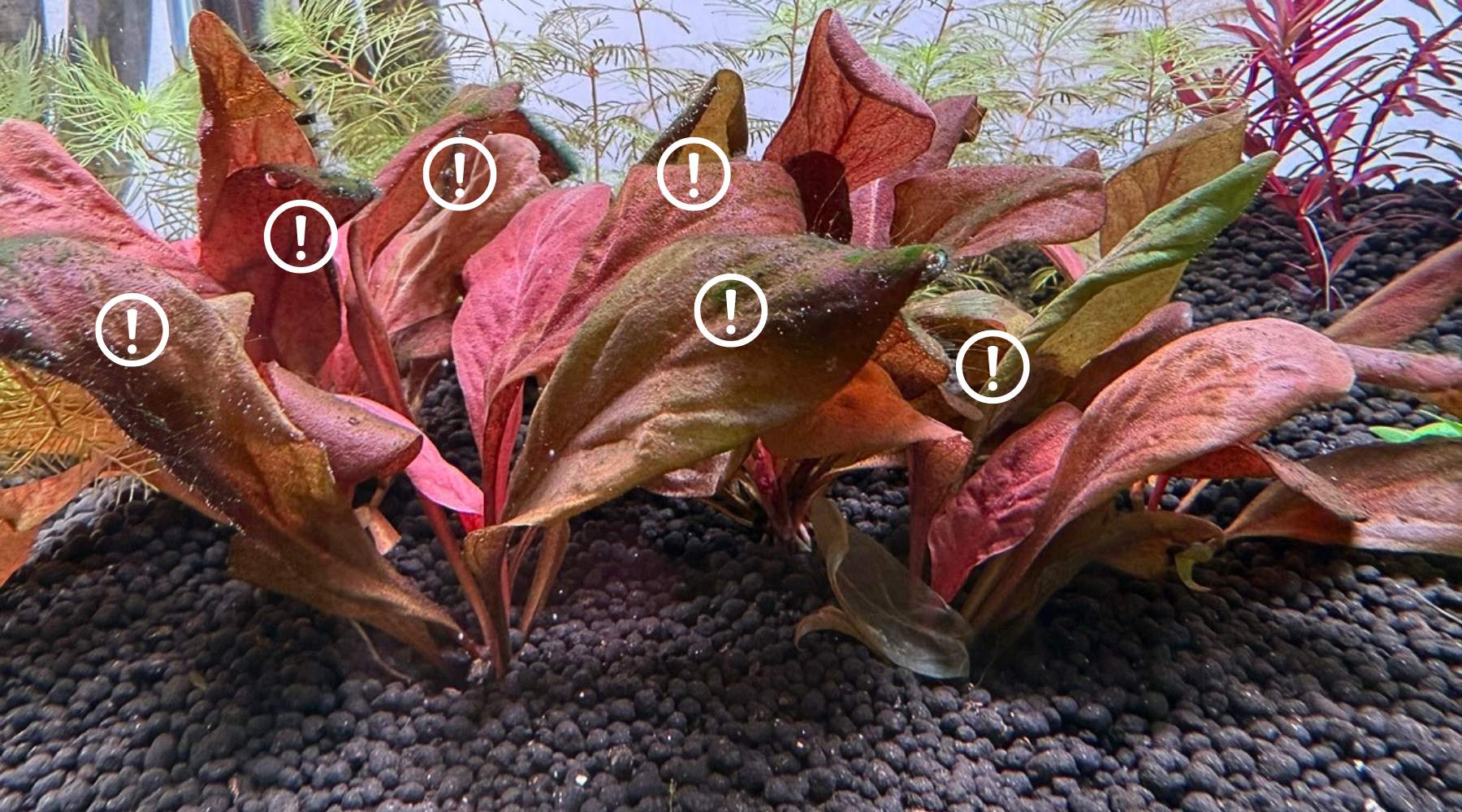
Java fern (Microsorum pteropus) and its varieties are slow growers. Slow growth means two things. First, it does not show nutrient deficiency or poor water conditions immediately; it can sit in “just coping” mode for weeks or months. Second, once damage is done, it takes a long time to reverse, so you often see black spots, dark margins and algae on old leaves at the exact moment you finally decide to improve something.
Similar to all other plants, Java fern needs nutrients and Carbon availability to grow. While it is very effective at scavenging low levels of nutrients and carbon dioxide, and its hardy nature allows it to adapt to a wide range of aquarium conditions, it cannot survive long term without a comprehensive set of nutrients and at least some CO2 in the water. Using strong lighting may actually accelerate signs of deterioration by ramping up the plant's metabolism in the absence of adequate CO2/nutrients.
While livestock waste produces some nitrates and phosphates, and most tap water contains some calcium, many of the other elements required for plant growth may be absent or are at far too low levels even for hardy Java fern to scavenge. Leaching from aqua soils or soil substrates may be adequate for some systems, but dosing a comprehensive water-based fertilizer is the easiest way to guarantee its nutrient needs are met.
In low-tech aquariums, Carbon availability is the key bottleneck to plant growth, even for hardy species such as Java fern. Plants use more carbon than all nutrients combined. Low-tech aquariums that generate more Carbon dioxide (CO2) naturally through the use of soil substrates or thicker microbial beds, are the ones that get better plant growth and health. Ensure good water flow and turnover, as good oxygenation levels allow for more microbial action to produce CO2.
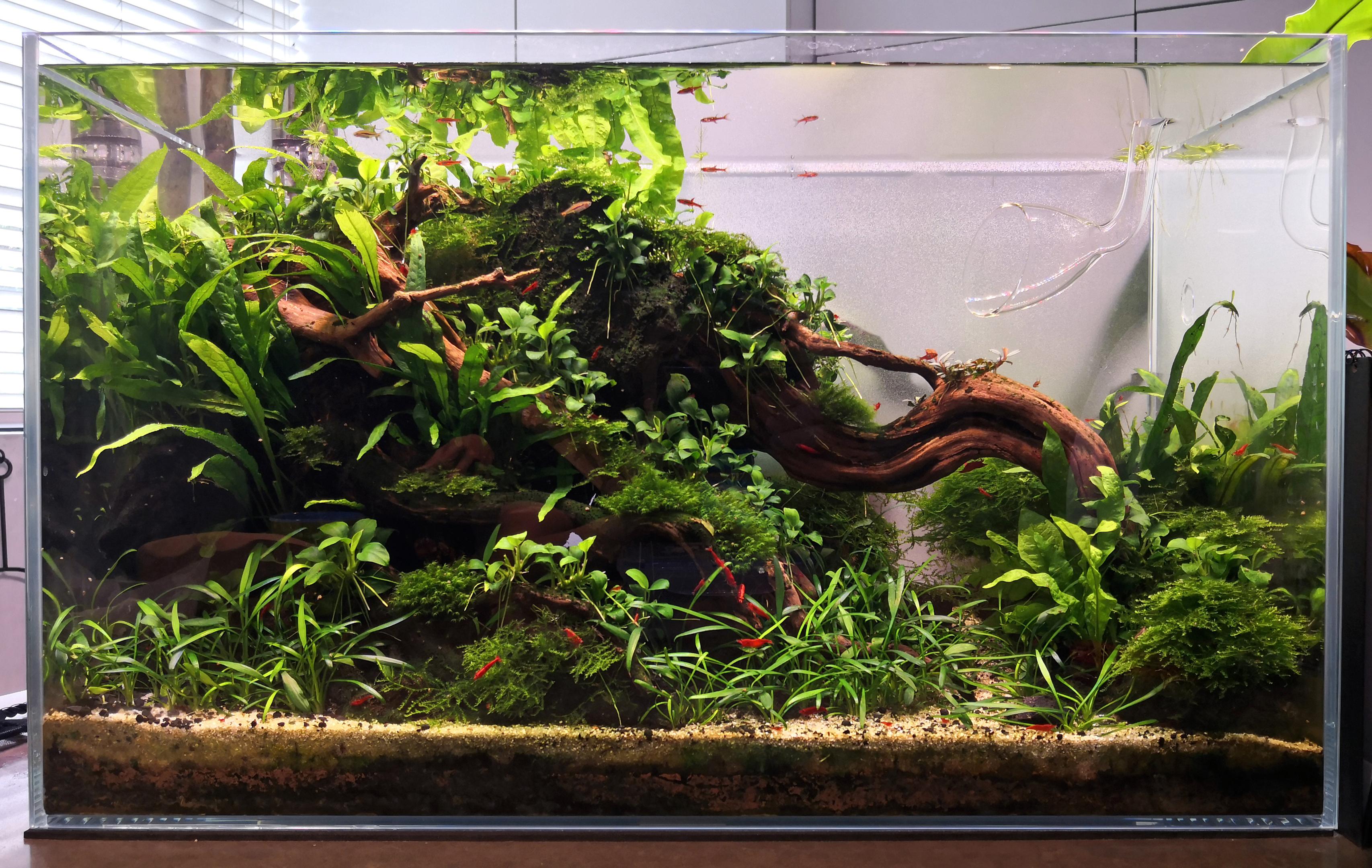
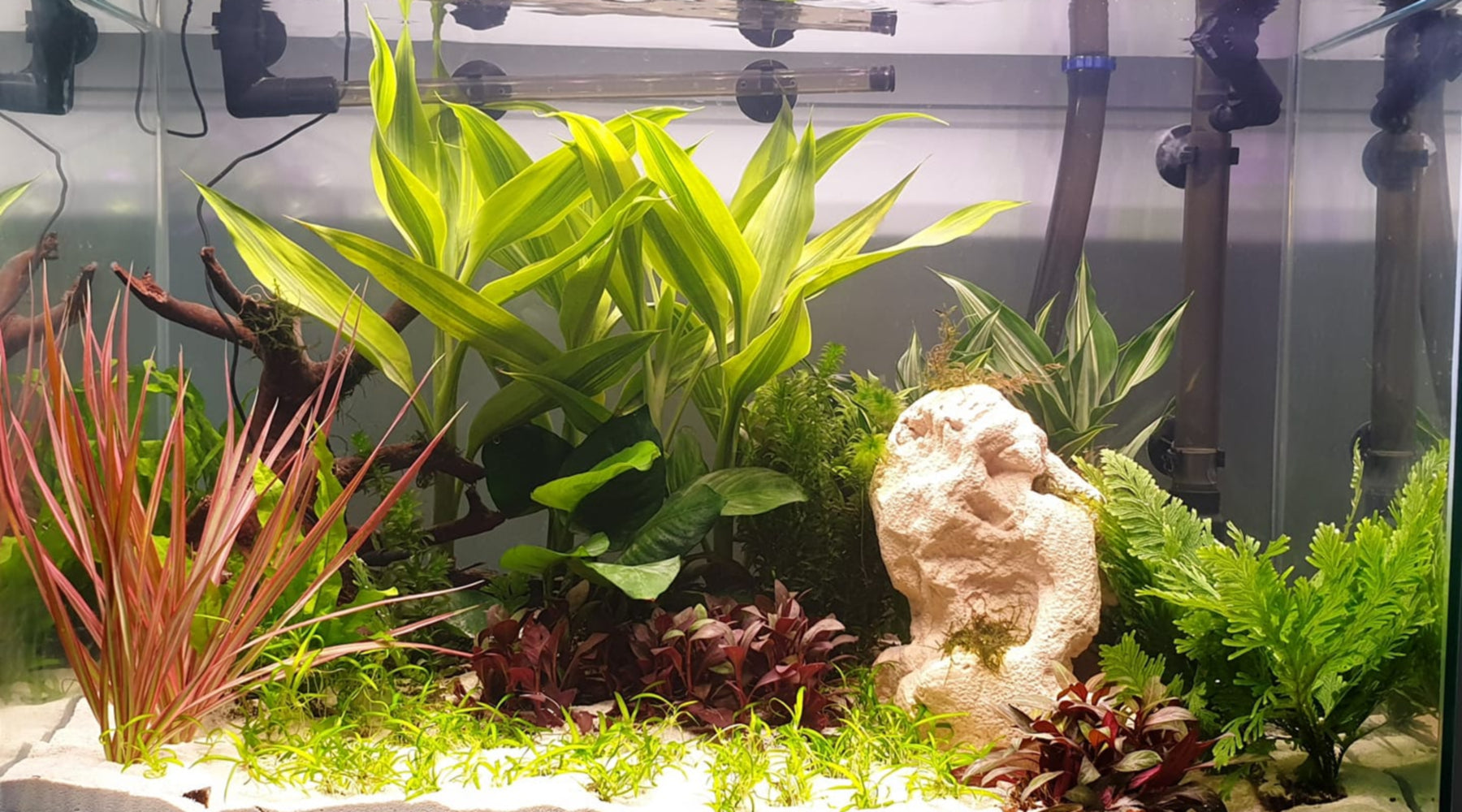
In this low-tech aquarium, a soil substrate is used to generate CO2 naturally through decomposition. Liquid fertilizer (APT1) is dosed regularly to keep plants green.
Care Tips for Growing Java Fern in a Planted Tank
Java fern is a shade fern by nature and adapted for low light conditions. Growing it under strong, high light is possible, but it is like putting forest ferns in a sunflower field: they can cope, but algae has a competitive edge in that environment if the plants are not healthy.
Light/Carbon/fertilization needs:
-
Aim for low to modest light; think “shade plants” level. 30-60umols of PAR is plenty of light. Java fern does not need high light to thrive. The exceptions are the orange varietals, Java fern "orange narrow" and Java fern "sunrise" that develop their red/orange colors better under high light levels.
-
Under higher light, it will grow a bit faster and take on a lighter green tone, but only if plant health and water cleanliness are excellent. In typical community tanks with excess nutrients and detritus, strong light just tilts the field toward algae.
-
It does not require CO₂ injection. In low-tech planted tanks it grows slowly. With CO₂ and a well-run planted aquarium, the plant will be healthier, grow much faster and denser.
-
Regular dosing of liquid nutrient fertilizer is recommended for healthy growth, as they can show signs of nutrient deficiency after several weeks of poor conditions.
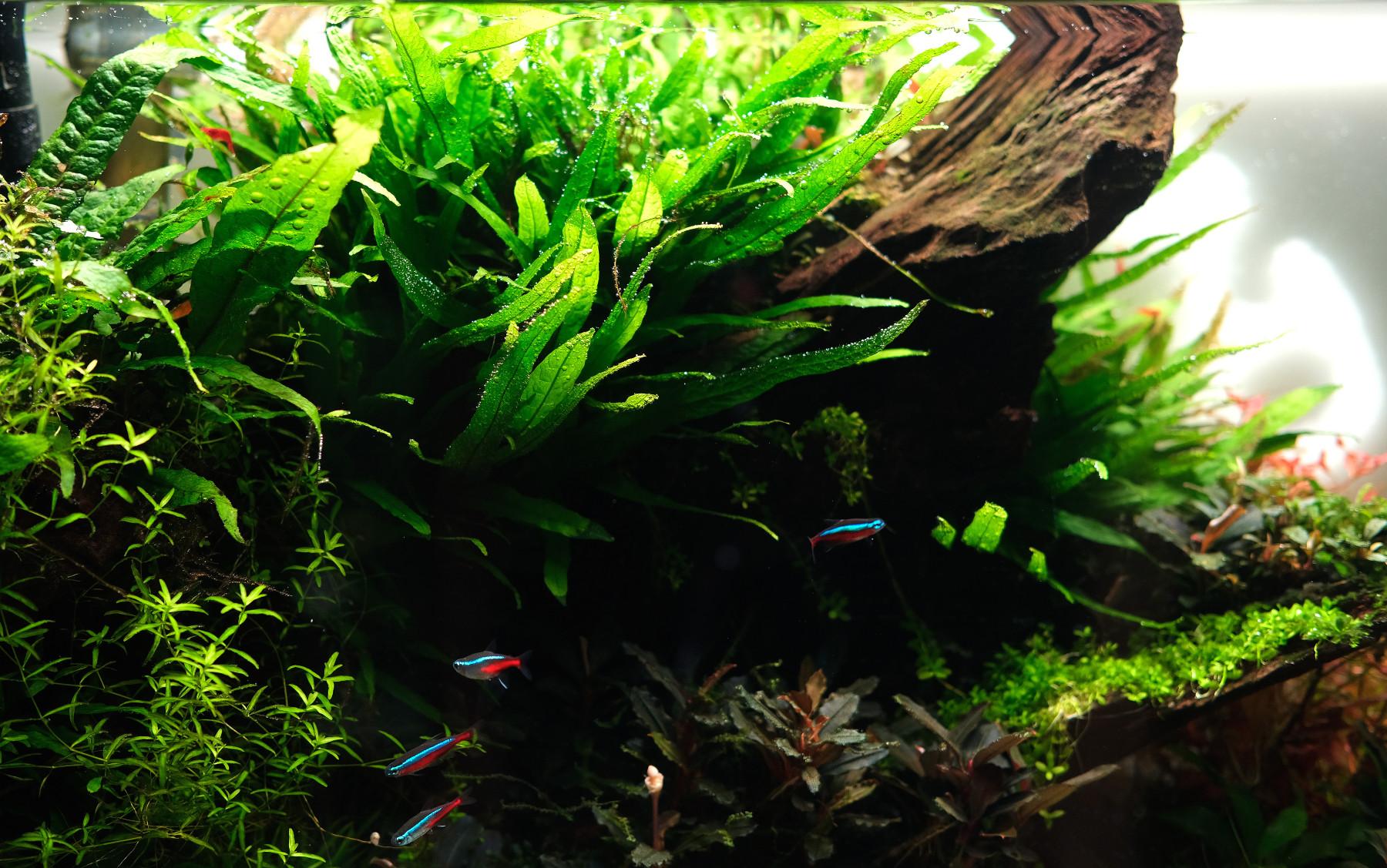
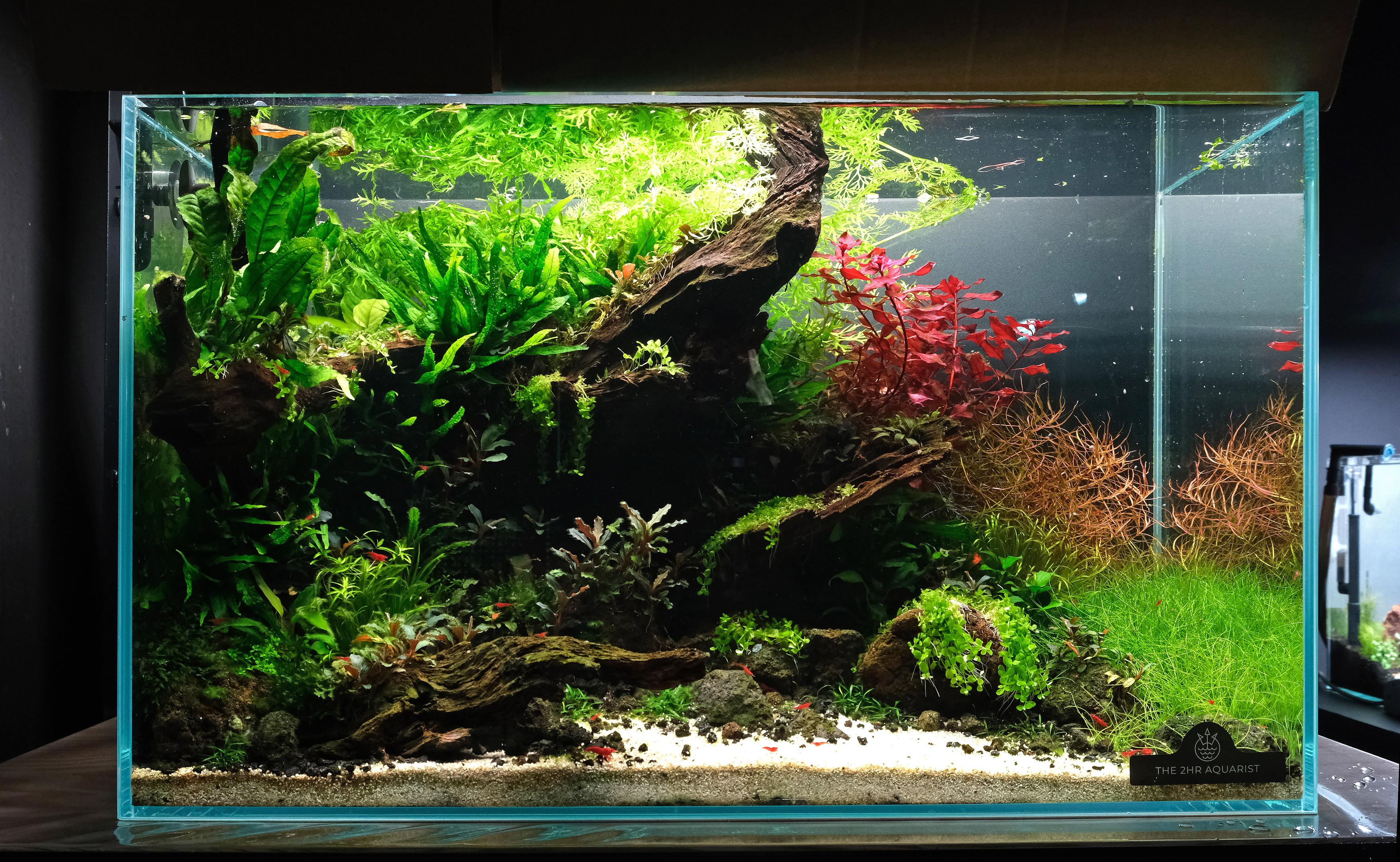
Attaching to hardscape:
-
Java Fern can be attached to hardscape elements like rocks or driftwood using super glue gel, string, fishing line, or zip ties.
Water-wise, Java fern is highly adaptable:
-
It is not picky about pH, KH or GH. Typical pH range around 5.0–8.5+
-
Temperatures between 65–86°F (18-30 °C) cover almost every reasonable tropical community setup.
-
It does fine in soft to hard water and even in mildly brackish conditions. The key is stable, well-filtered water and good oxygen levels, not hitting a magic number.
-
Maintain good water quality by providing adequate filtration.
Tank mates:
-
Java Fern is compatible with a wide range of freshwater fish and invertebrates, including small fish like tetras and guppies, as well as shrimp and snails, which benefit from the plant's dense leaves that provide hiding spots and grazing surfaces.
-
Java Fern acts as a natural filtration system by absorbing waste in the water, contributing to a cleaner and healthier environment for aquatic pets.
-
Most plant-eating fish tend to avoid Java Fern due to its tough leaf structure and unappealing taste, making it a resilient choice for community tanks.
-
Java fern can be kept with goldfish and cichlids due to its resilient leaves, provided it is securely anchored.
-
Aggressive livestock such as Crayfish will still damage Java fern.
Propagation:
-
Java fern propagates naturally by producing daughter plants on mature leaves, which can be detached and replanted when they reach about an inch in size.
-
To propagate Java fern, you can also divide longer rhizomes with scissors or by hand, ensuring that each segment has a few healthy leaves attached.
-
Java fern can also be propagated by allowing its leaves to float in the aquarium, which can lead to the formation of new plantlets that will attach to surfaces.
Think in terms of matching its forest origins: cooler end of tropical, shaded, with steady flow and clean, filtered water.
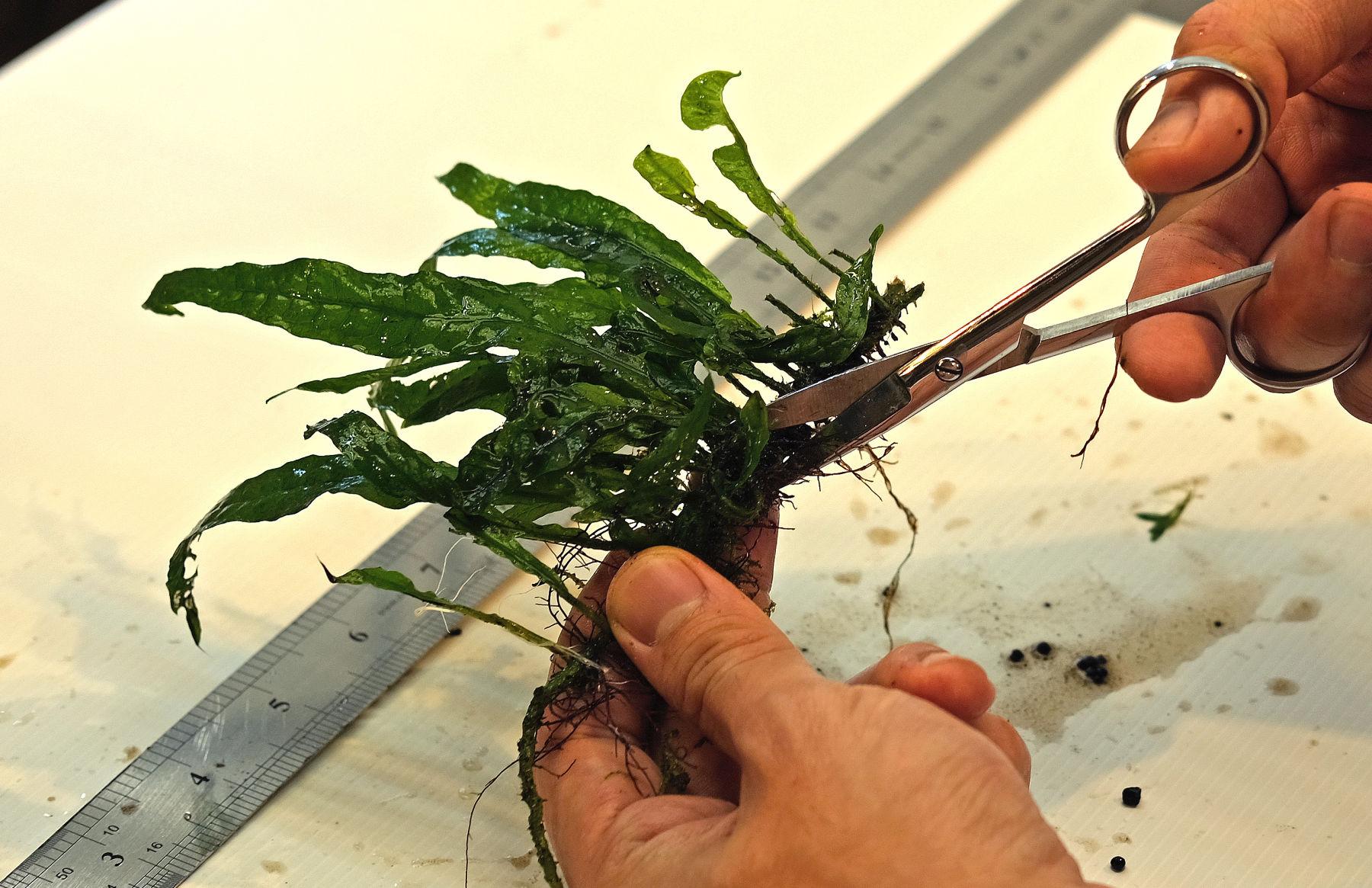
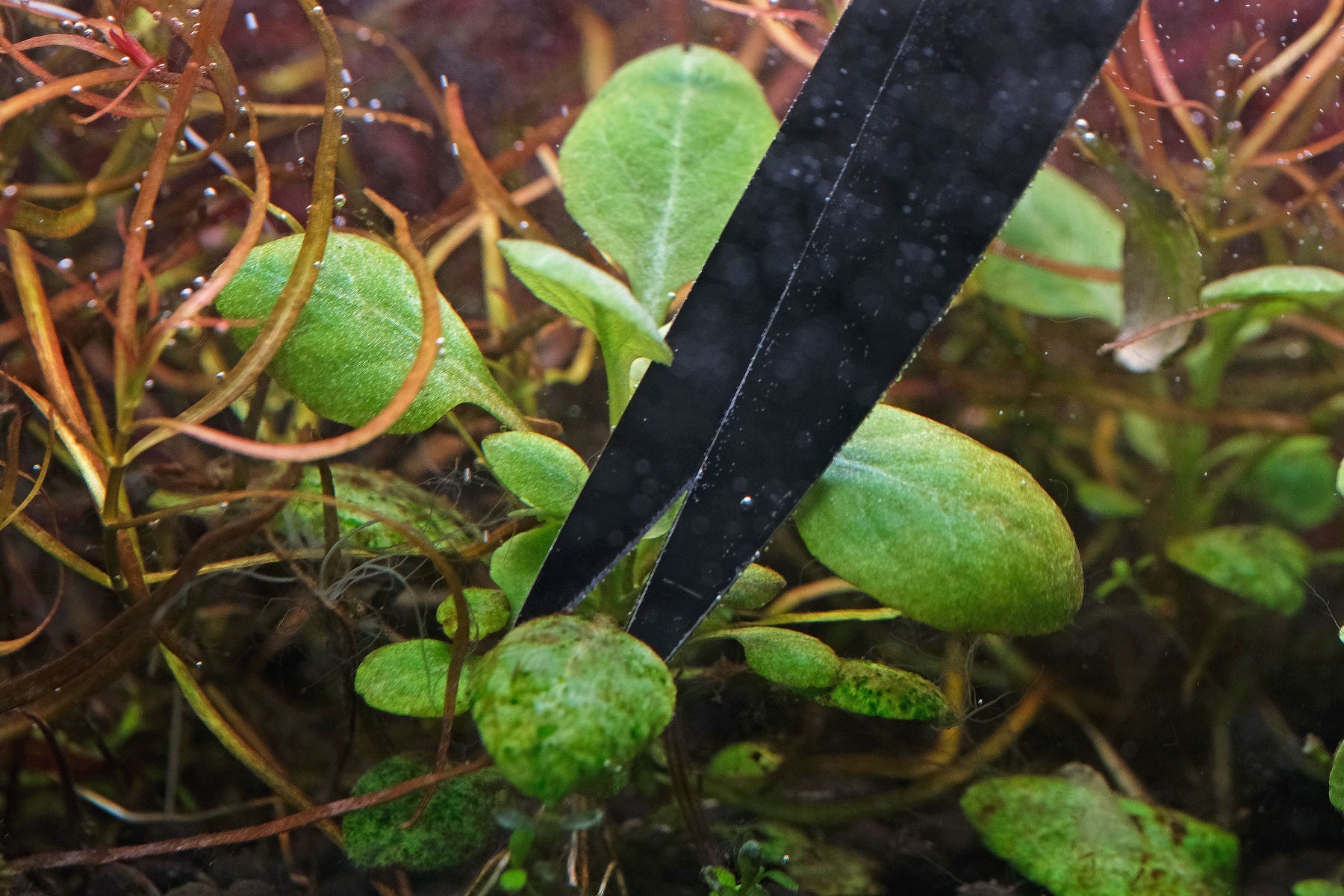
Long Java fern rhizomes can be cut and divided to propagate the plant.
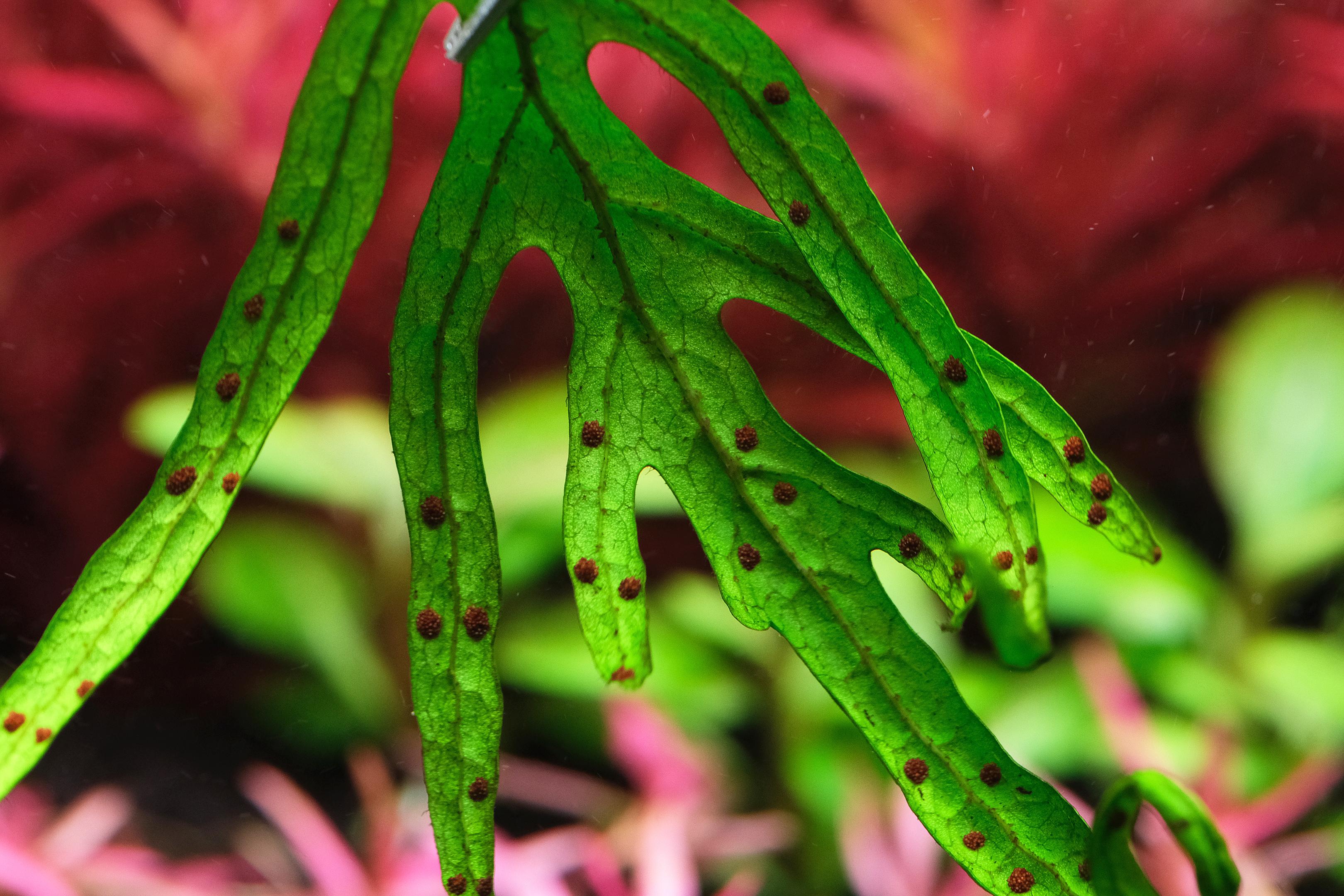
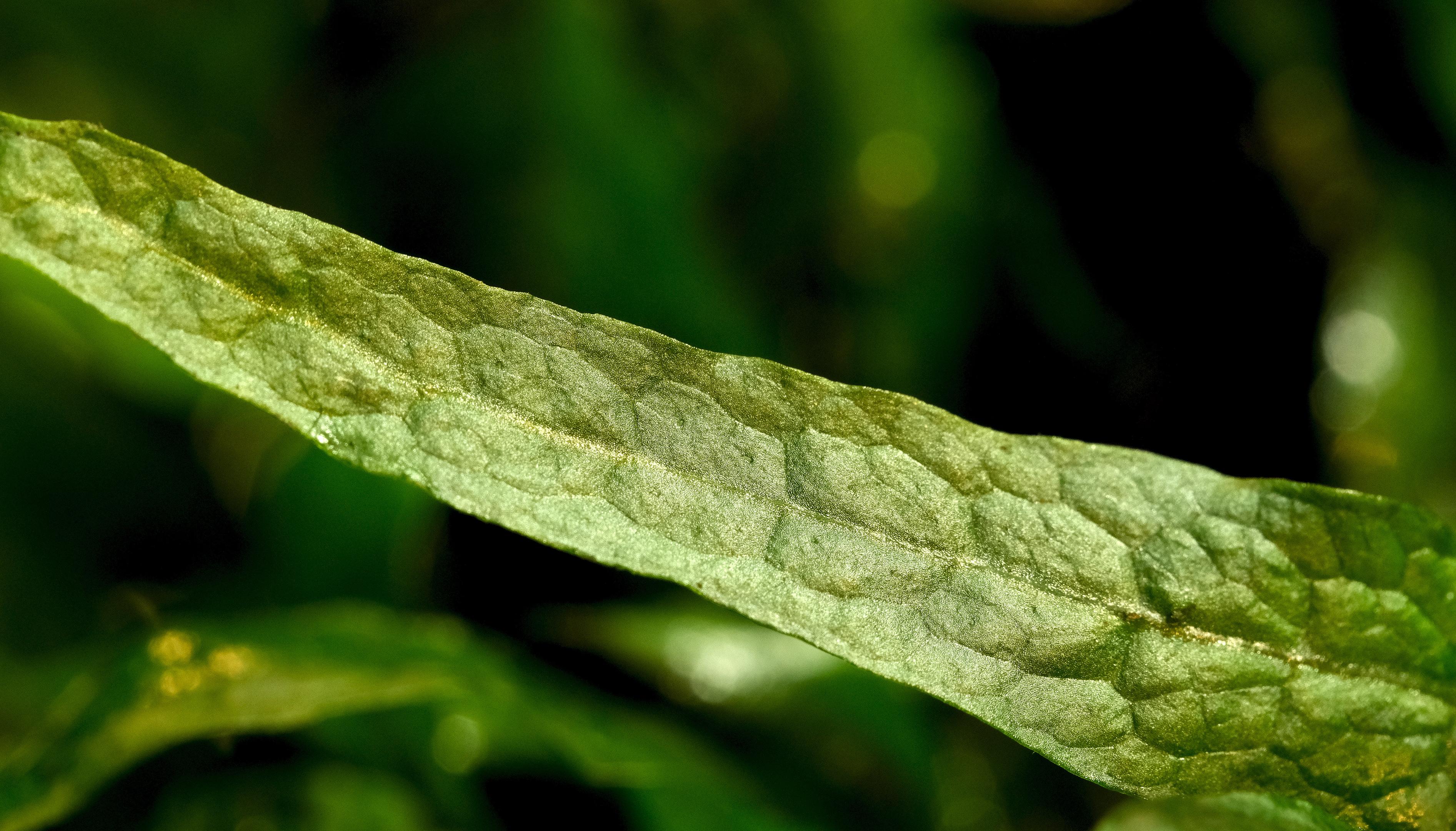
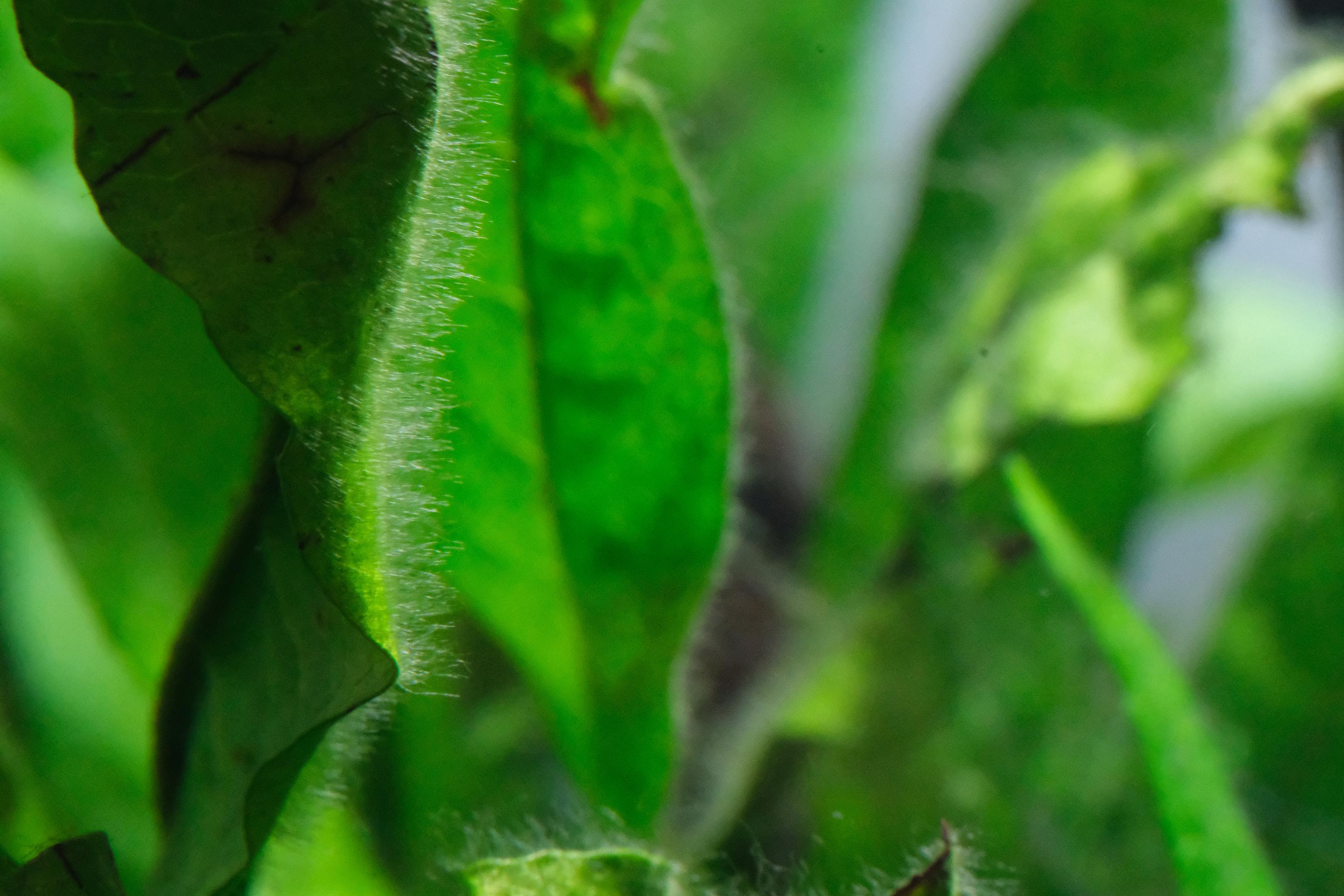
The dots in the picture above are sori found on the underside of Java fern leaves. Each sorus is essentially a tight cluster of spores. The sori will eventually sprout small root-like structures and grow into miniature baby ferns (plantlets) directly on the leaf. This clever survival strategy is called vivipary, allowing the plant to clone itself directly from the existing leaf tissue.
Can You Plant Java Fern in the Substrate?
Java fern is a rhizome plant: its horizontal stem (the rhizome) carries both leaves and roots. The internet myth is that “any burying will kill the plant.”. In reality, Java fern grows in pretty thick mud in the wild, so the plant is not innately allergic to substrate.
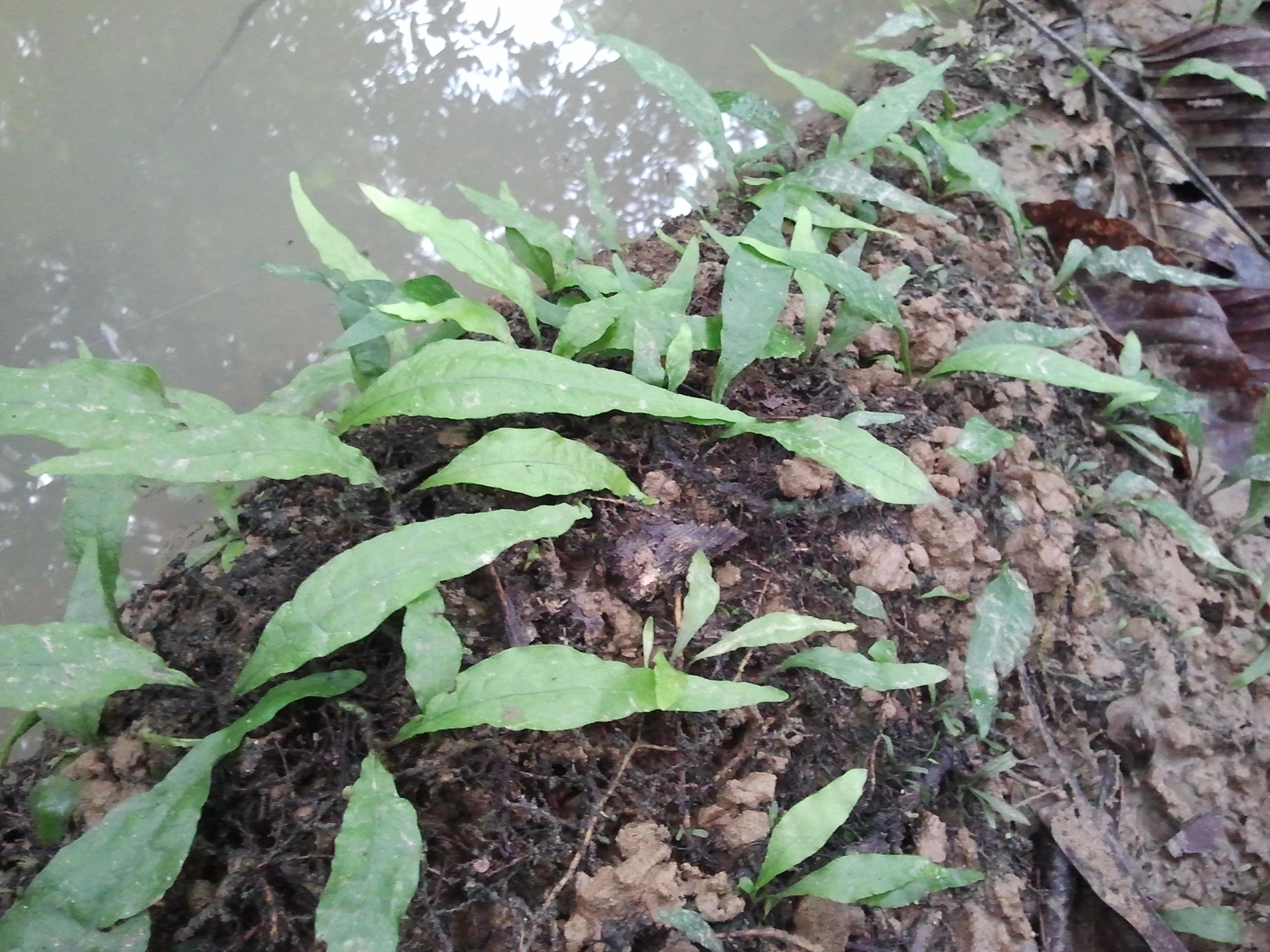
However, not all substrates are equal. Substrates choked full of organic waste can become compacted and anoxic, and attract decomposer microbes that feed off damaged or weakened plants. Planting rhizome plants such as Java fern and Anubias into such substrates can create problems. Healthy, well maintained substrates are an entirely different environment.
Plant species that truly feed mainly from the water column, such as Ceratophyllum demersum and some Tonina species show very little root formation and insignificant root hairs when planted in substrates. By comparison Java fern grows significant root structures that cling tightly to aqua soil grains - it also grows faster when planted, this is especially apparently in younger plants.
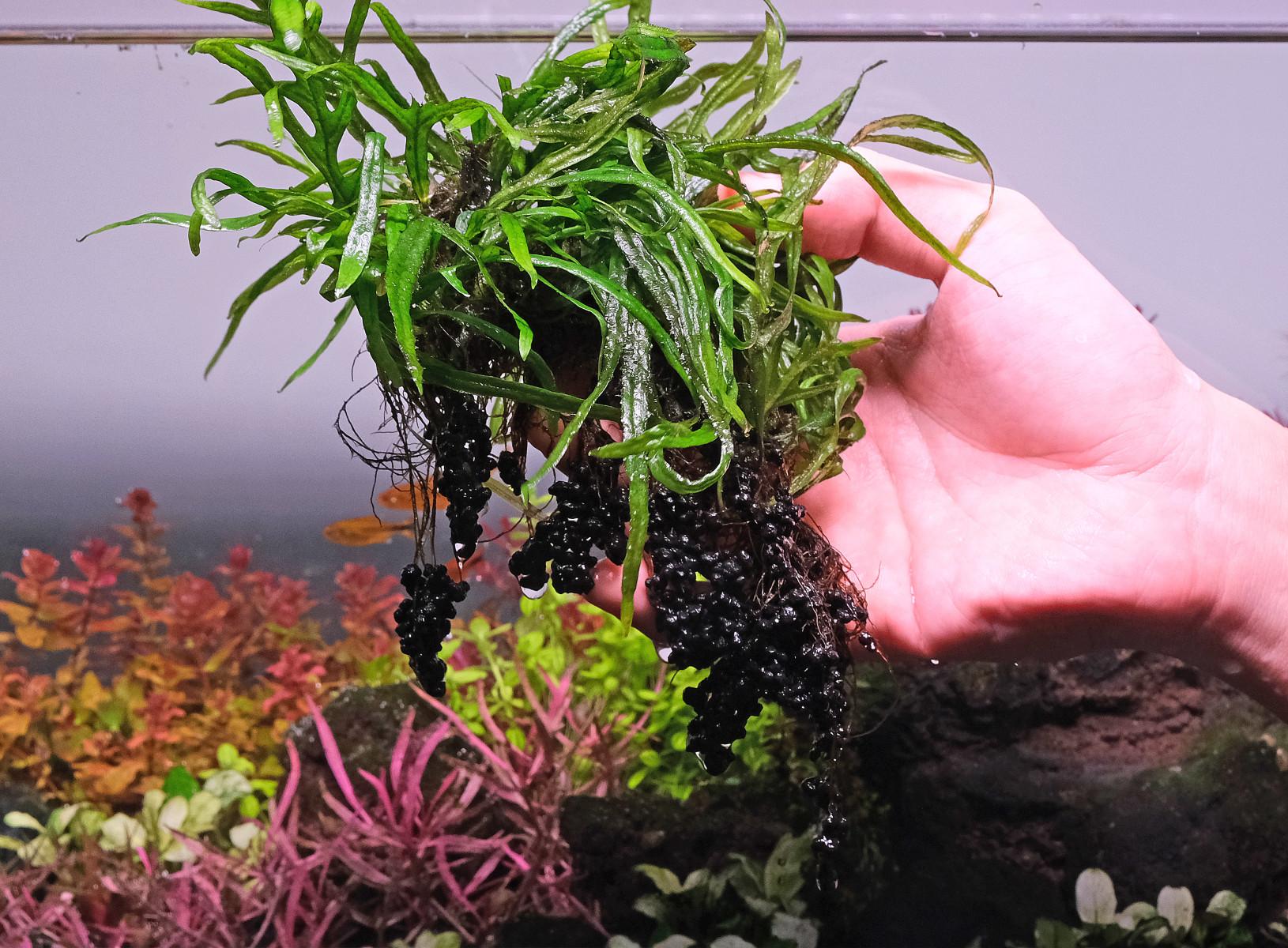
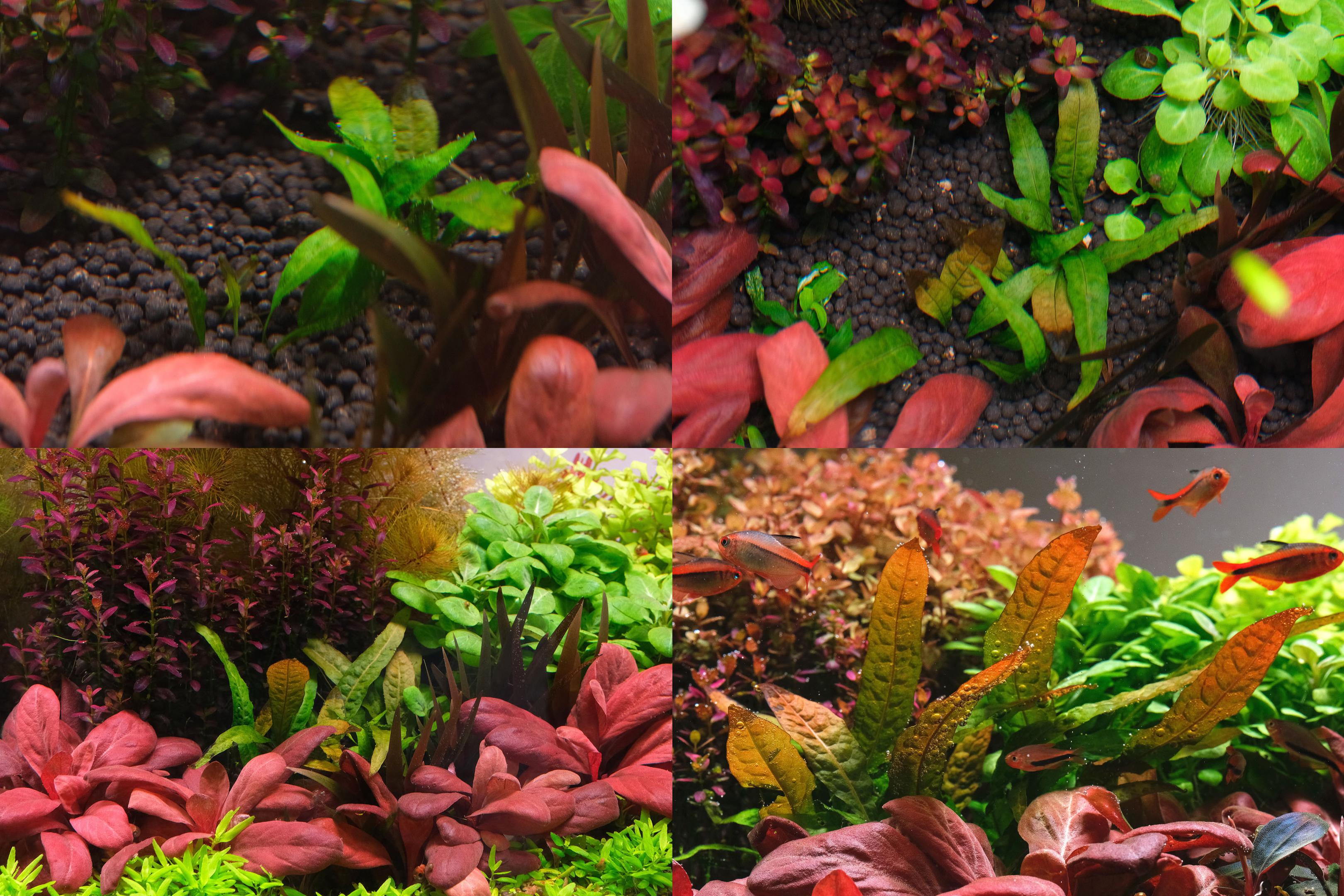
Java fern 'orange narrow' 100 days growth while the rhizome is buried in aqua soil substrate.
How do I avoid algae on Java Fern leaves?
This is where most people go wrong. They add a “low maintenance plant” into a high-light, cluttered, high-waste environment, then blame the plant when algae moves in.
Common triggers for algae growth on Java fern:
-
Detritus and organic waste settle on the wide leaf surfaces, especially in tanks with lots of fish but weak filtration and infrequent water changes.
-
Strong light without matching plant mass or maintenance; algae simply has a comparative edge when light is strong over shade-adapted foliage.
-
Fluctuating nutrient levels or water parameters. Plants make adaptations to match environmental conditions. Unstable environments cause plants to continually try to adapt, and this manifests as plant stress and algae.
Better habits for algae control on Java fern:
-
Use low to medium light that matches shade plants. This reduces how hard algae can push.
-
Keep flow present but gentle; avoid pointing outflows straight at slow growers like Java fern and Anubias.
-
Stir and siphon detritus off the leaves and substrate during water changes. Slow leaves are dust magnets.
-
Maintain regular dosing of a complete fertiliser (NPK plus trace elements) to keep the plant from drifting into nutrient deficiency; starving it does not starve algae, it just weakens the plant.
Algae eaters such as dwarf or Amano shrimp and Siamese algae eaters can feed on filamentous algae. However, solving the root cause of the problem is still important.
Which Java Fern variety is right for my aquarium?
There are several Java fern varieties, all under the Microsorum pteropus umbrella, each with its own look and quirks. Choosing the right one helps your aquascape and your sanity.
-
Standard Java fern (Microsorum pteropus) – Broad leaves about a finger to an inch wide, hand-length or more. Great backbone fern for background areas, driftwood roots and larger planted tanks.
-
Java Fern Philippine - A shorter version of Java fern, suitable for smaller aquariums.
-
Java Fern Needle Leaf (Microsorum pteropus ‘Needle Leaf’) – Long, thin slender leaves that can reach 30 cm or more. Excellent as a background fern in taller aquariums or to create a curtain-like effect behind rocks and wood.
-
Java fern Narrow Leaf (Microsorum pteropus ‘Narrow Leaf') – Long, narrow leaves that can reach 50 cm or more. A longer version of Needle leaf.
-
Java fern Trident (Microsorum pteropus ‘Trident’) – Leaves with 2–5 lobes per side, giving a highly textured, almost feathery look. Visually stunning, but more demanding: more vulnerable to overcrowding and algae and more sensitive to dirty, high-light conditions.
-
Java fern ‘Windelov’ – Leaf tips split into multiple delicate lobes. Great addition for foreground accents, on small rocks, or around the base of driftwood where you want rich texture without height.
-
Java fern 'orange narrow' and 'sunrise'– Orange tips when grown under high light.
If you are a beginner, start with standard Java fern. Needle Leaf and Narrow Leaf versions are suitable for larger aquariums. Keep Trident and Windelov for when you are comfortable keeping algae under control and managing plant density around them.
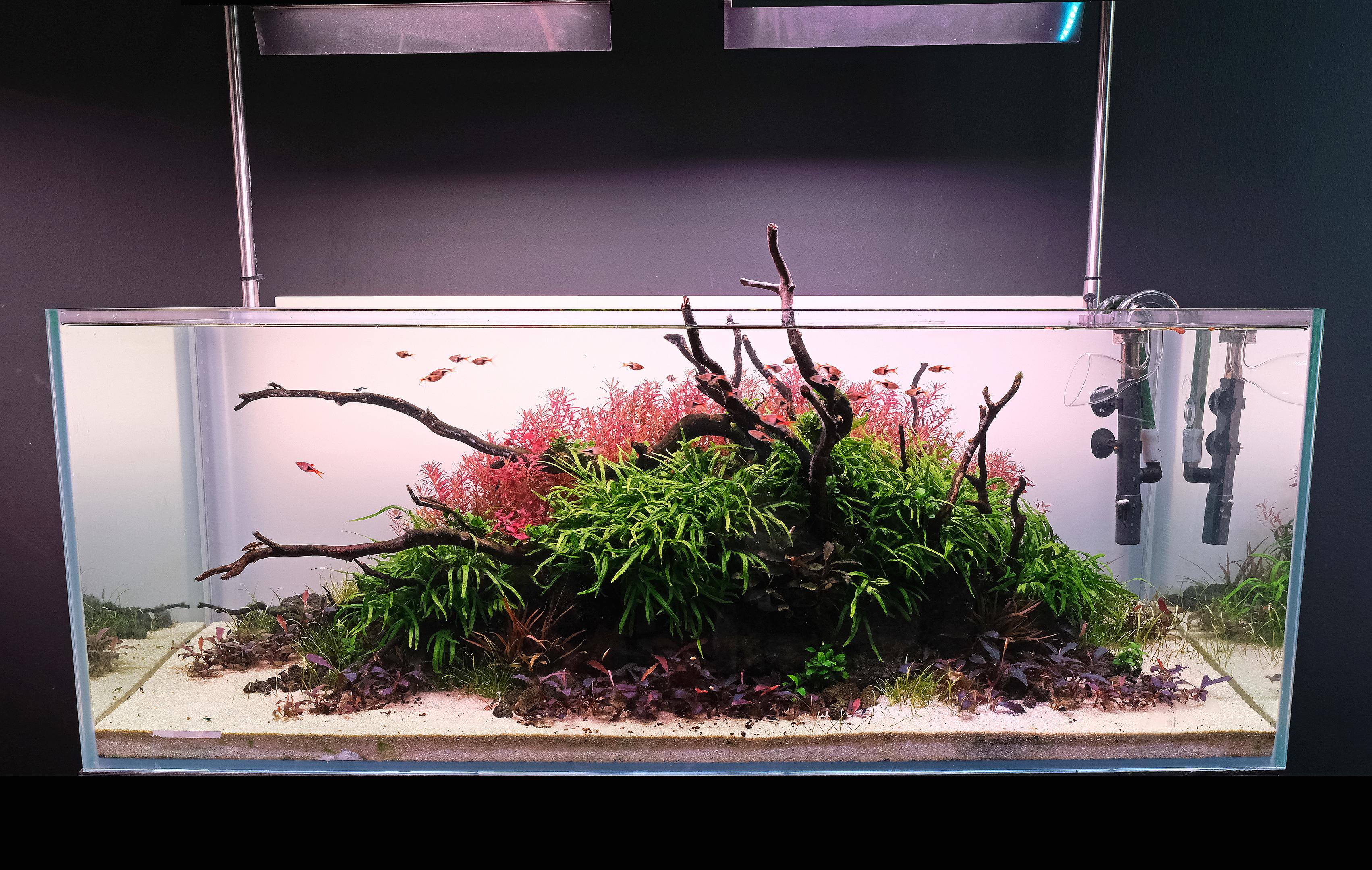
Trident Java Fern (above) drapes elegantly over hardscape.
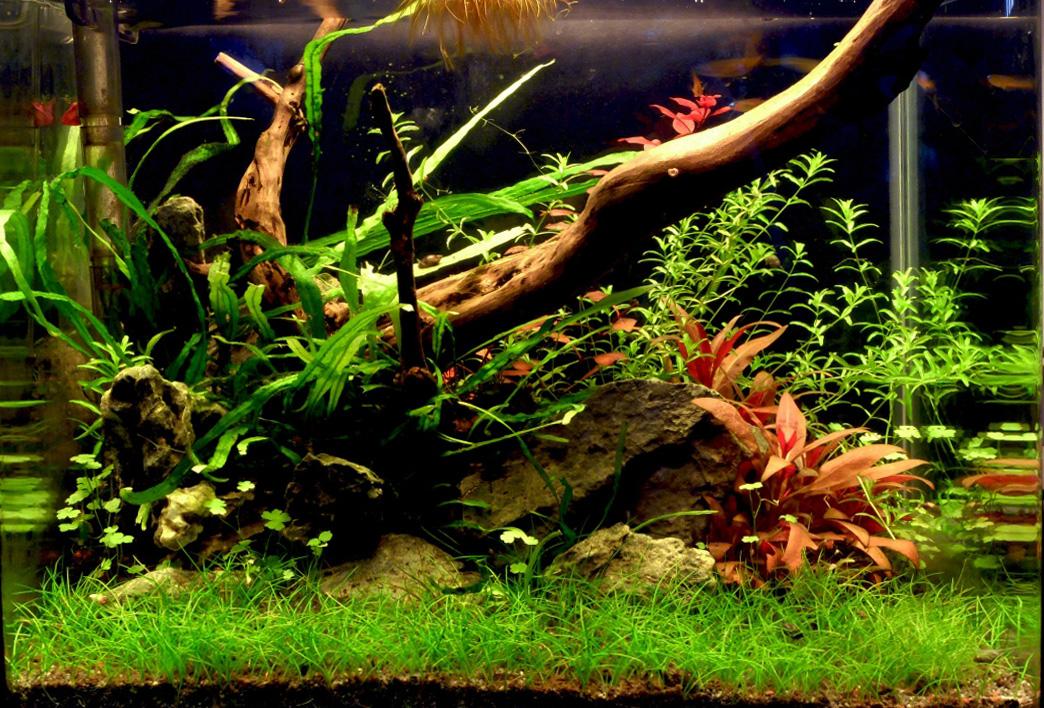
Needle leaf Java fern in a low-tech 4-gallon aquarium.
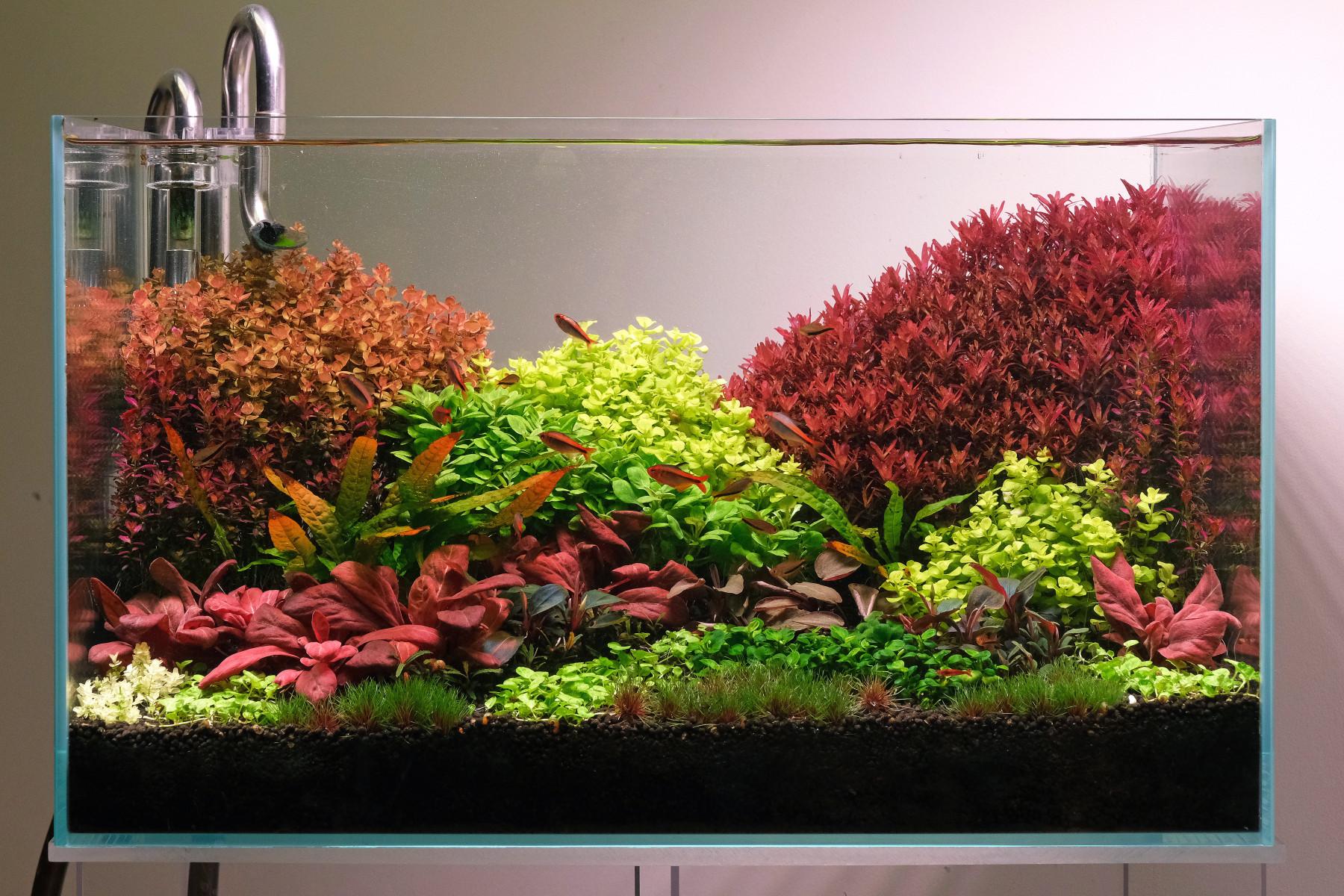
Java fern 'Orange narrow' is a show stealer when grown well.

Share:
Propagating Eriocaulon species
Why are my plants melting? Are plants melting in a new planted tank normal?