

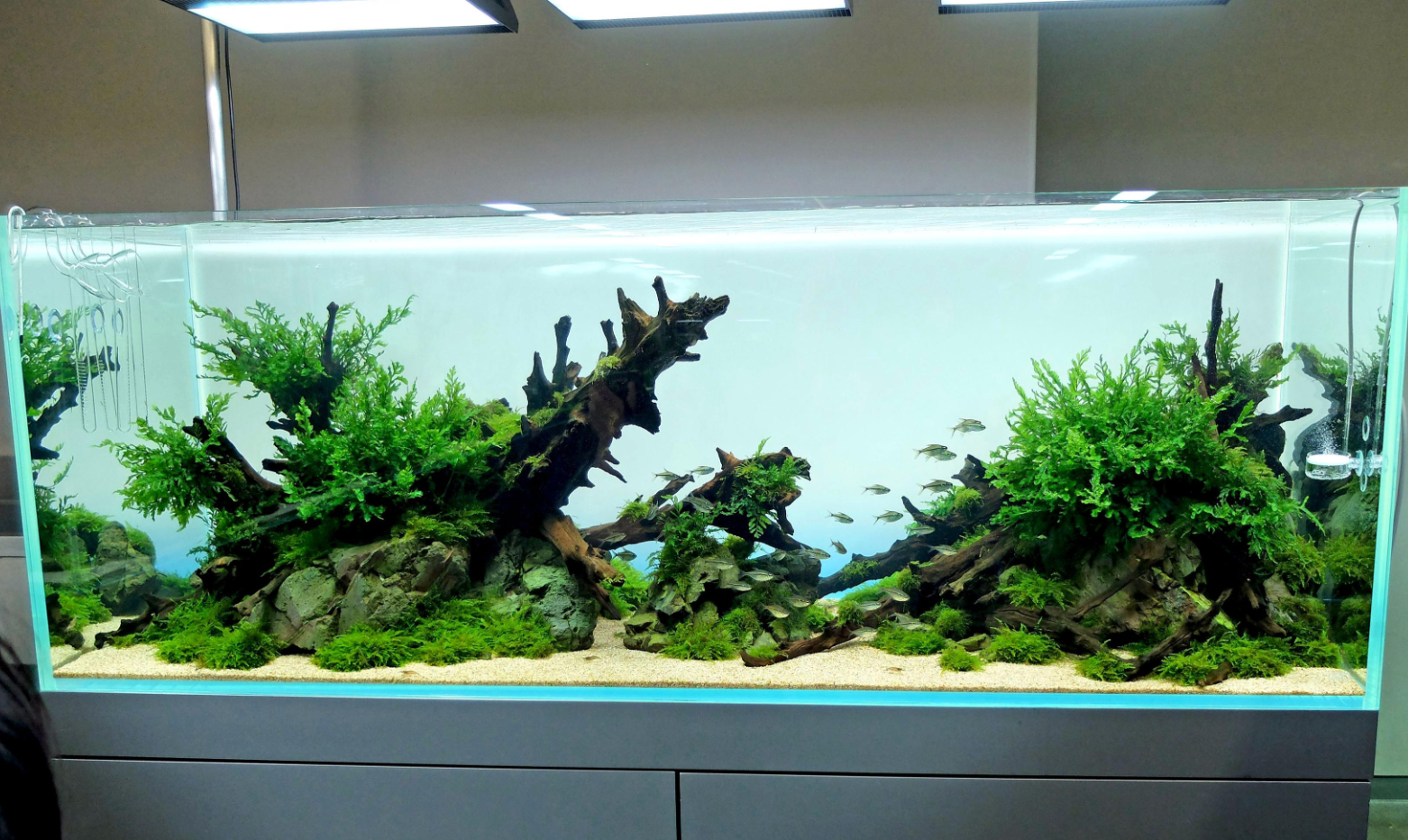
What Is a Nature Style Aquascape?
About forty years ago, Takashi Amano changed the hobby forever. Working from Japan, he developed the Nature Aquarium concept through the 1980s and introduced it to the wider world with his Nature Aquarium World books in the 1990s - and aquascaping has never looked the same since. This article will examine the Nature style aquascape and explain what equipment it takes for a beginner aquarist to start his own Nature style aquascape journey.
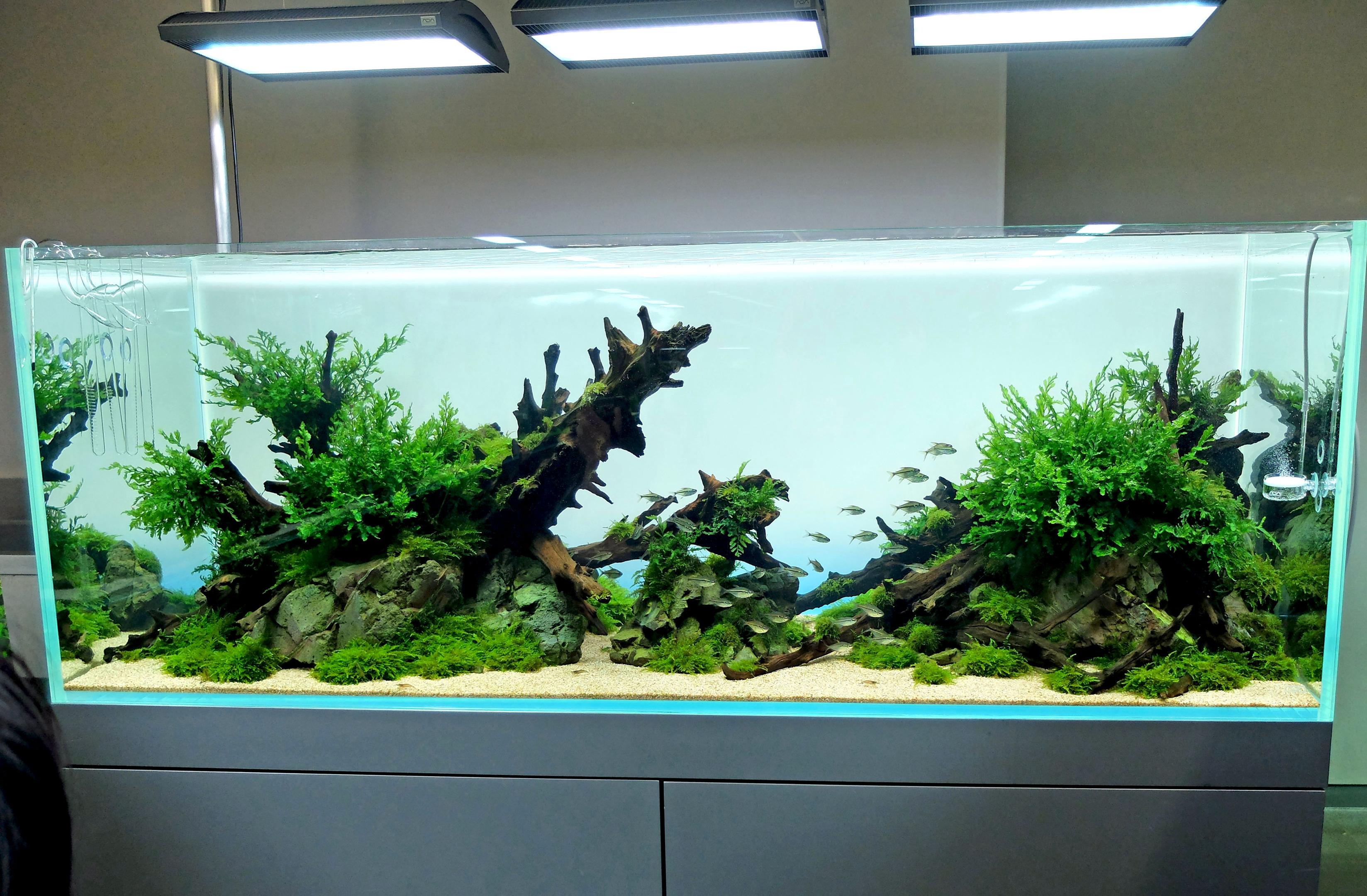
Nature Style vs Dutch vs Iwagumi: What's the Difference in These Aquascaping Styles?
Nature Style draws on Japanese garden philosophy and landscape painting: not the clipped precision of a formal French garden, but the wild, layered depth of a Japanese garden - composed, yet seemingly untamed. Rock and wood carry as much weight as plants. Light falls through dense green canopies. A good Nature Aquarium expresses the textures and feel of real nature scenes - a mountain range, a forest floor, a river bank through the use of naturalistic positioning of wood, rock and plants.
Among the main aquascaping styles, nature style aquascapes have the most flexibility and little rule restrictions. A strictly Dutch tank has pretty defined rules - each plant patch needs to be clearly separated from the next and one species per 10cm of tank length, with no repeating of plant species. An Iwagumi is pure restraint: stones, one carpet, nothing else. Nature Style has tremendous flexibility with hardscape and plant variety, you can use any combination of wood, rock and plants, as long as it expresses the feel of nature well. It is no surprise that it is one of the most popular aquascaping approaches out there.
Do I need Carbon dioxide injection (CO2) for a Nature style aquascape?
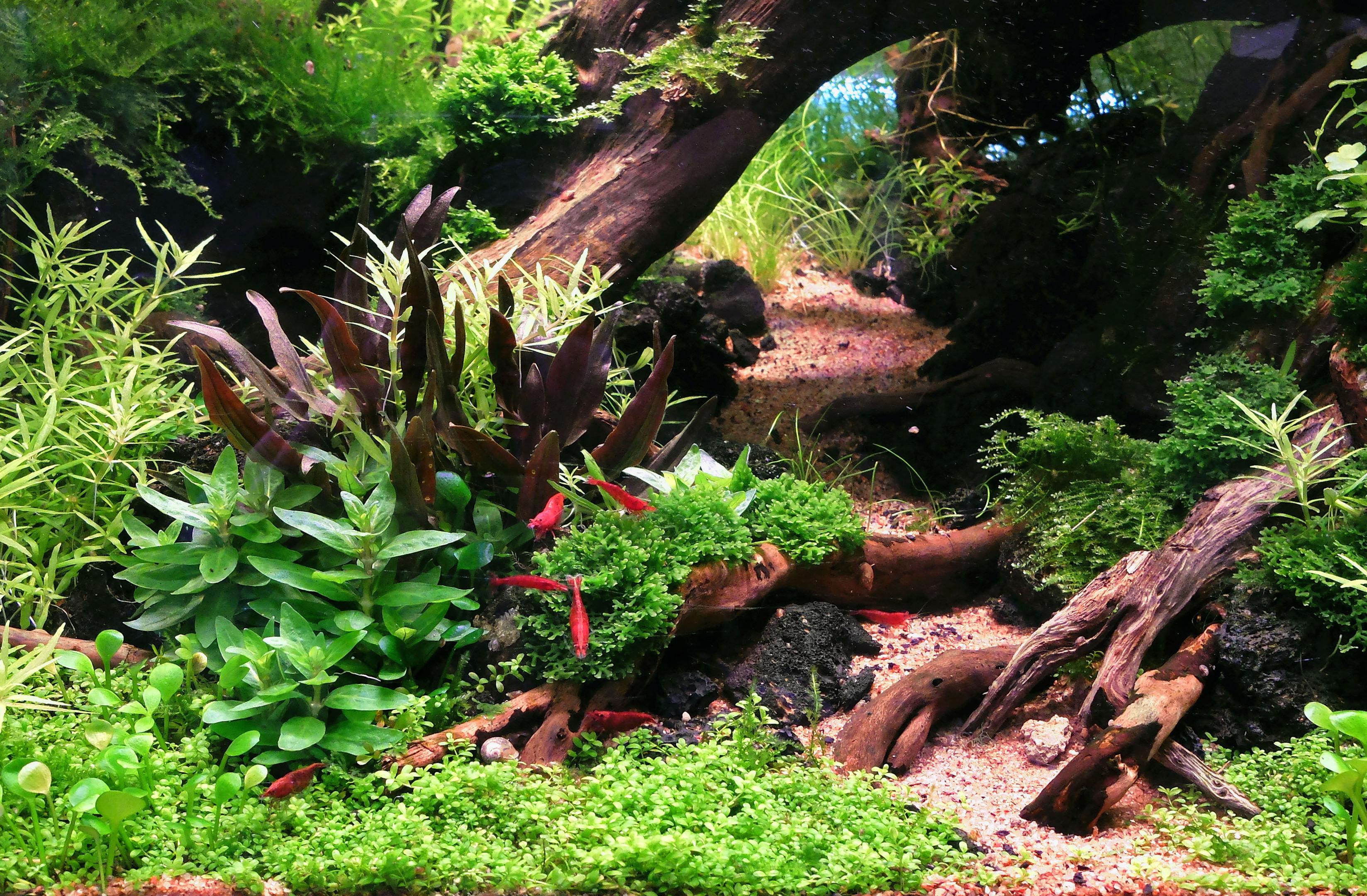
It depends greatly on the plant choices. CO2 injection offers much more predictable success with a large range of plants and plants will grow to better form and density. Density is important for plants to merge well with the hardscape work, and this affects the aesthetics of the aquascape tremendously.
Aquatic plants use more carbon than all other nutrients combined for growth, and the CO2 bottleneck is the number impact factor on plant growth in aquariums. Some species that are difficult to grow well in non CO2 injected aquariums such as carpeting plants, are very easy plants once CO2 injection is available. This greatly expands plant choices, and having a range of varied species blending together well is important in Nature style aquascapes. CO2 allows the plant selection to grow in smoothly and evenly with high success rates.
The key word in CO2 injection is stability. Erratic CO2 levels are a primary cause of sudden algae outbreaks and plant deterioration that seem to arrive from nowhere. We recommend an inline atomizer or reactor connected to a quality pressure regulator with a solenoid timer. These require periodic cleaning to maintain consistent output, but they are far more reliable than yeast-based DIY systems, which are fine for initial experimentation but difficult to stabilize long-term.
Use the 1 pH drop method as your guide: measure your tank's baseline pH before CO2 starts, and target a 1-point drop at peak saturation. This should put you at 30 ppm of CO2 - sufficient to support diverse, colourful aquatic plant growth without stressing livestock. Run CO2 2–3 hours before the lights come on.
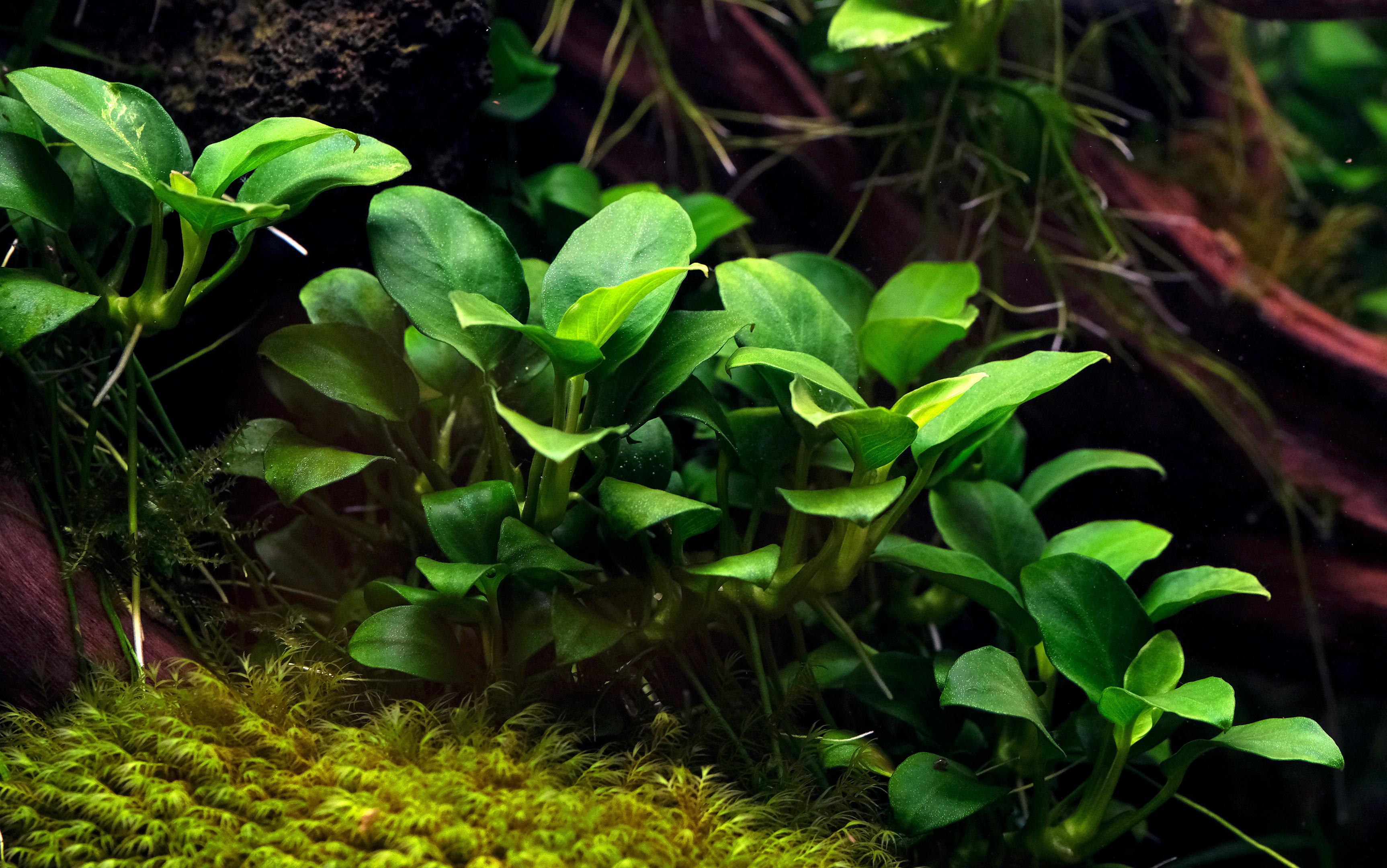
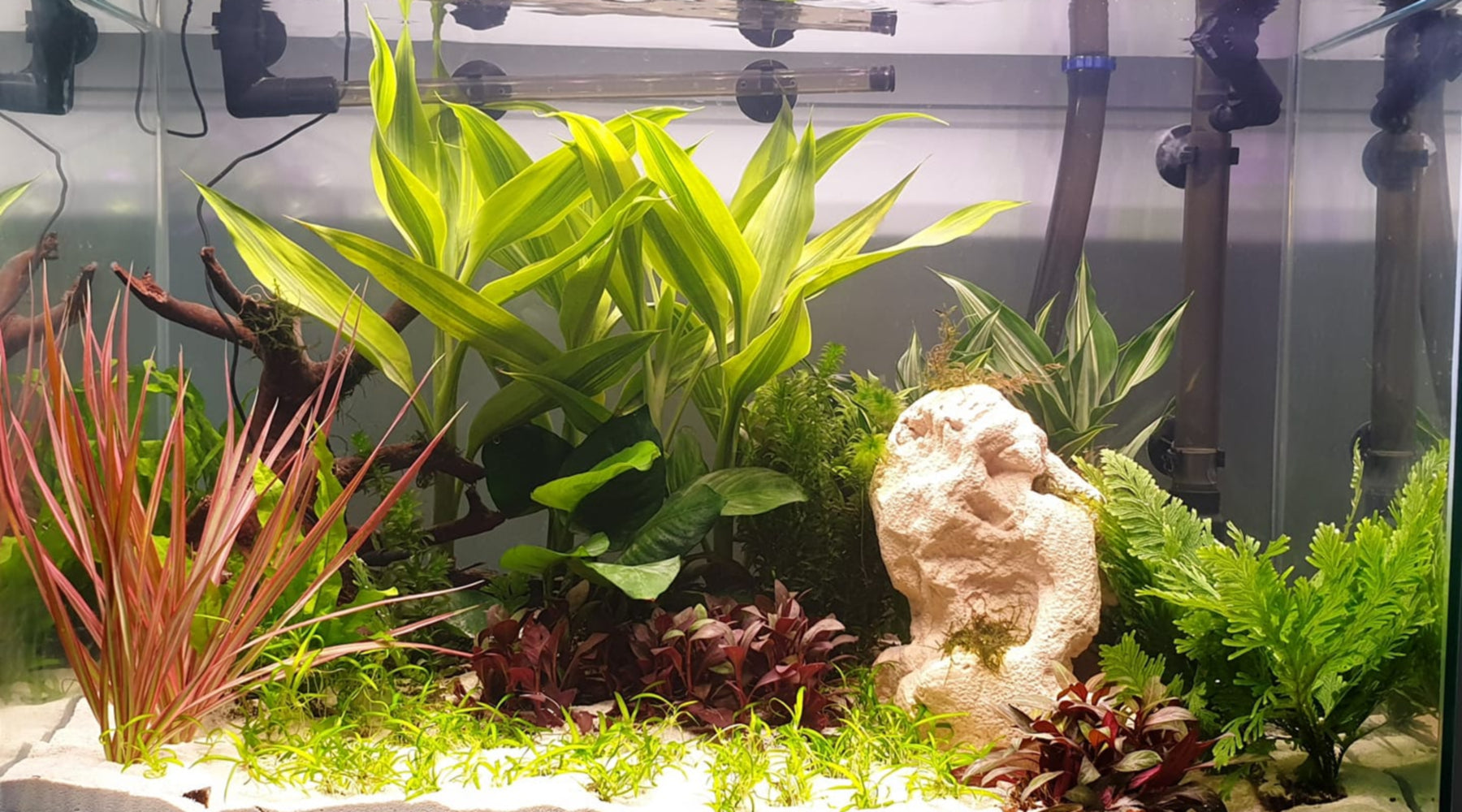
Even hardy species like Anubias nana grow to better form and density with CO2 injection.
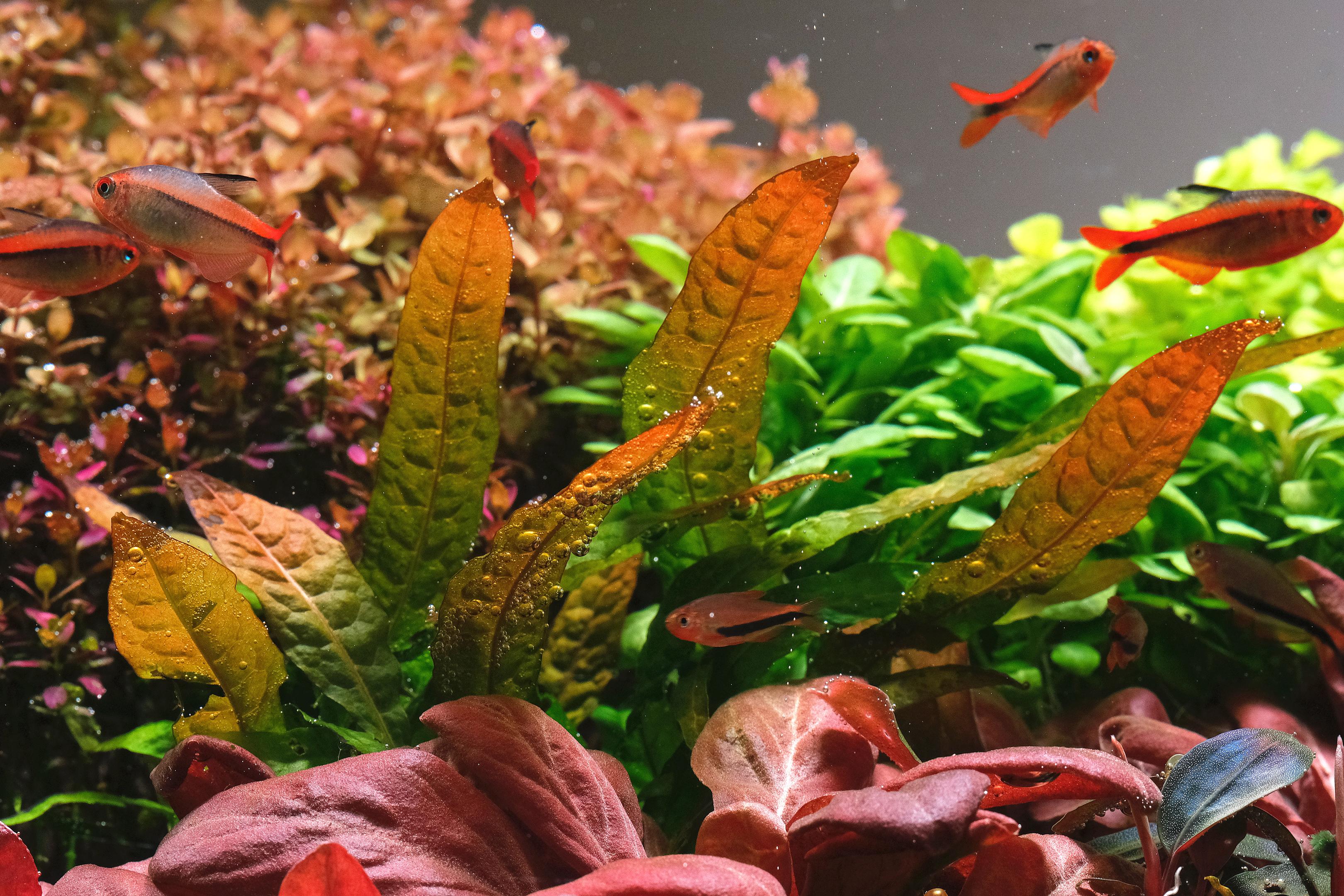
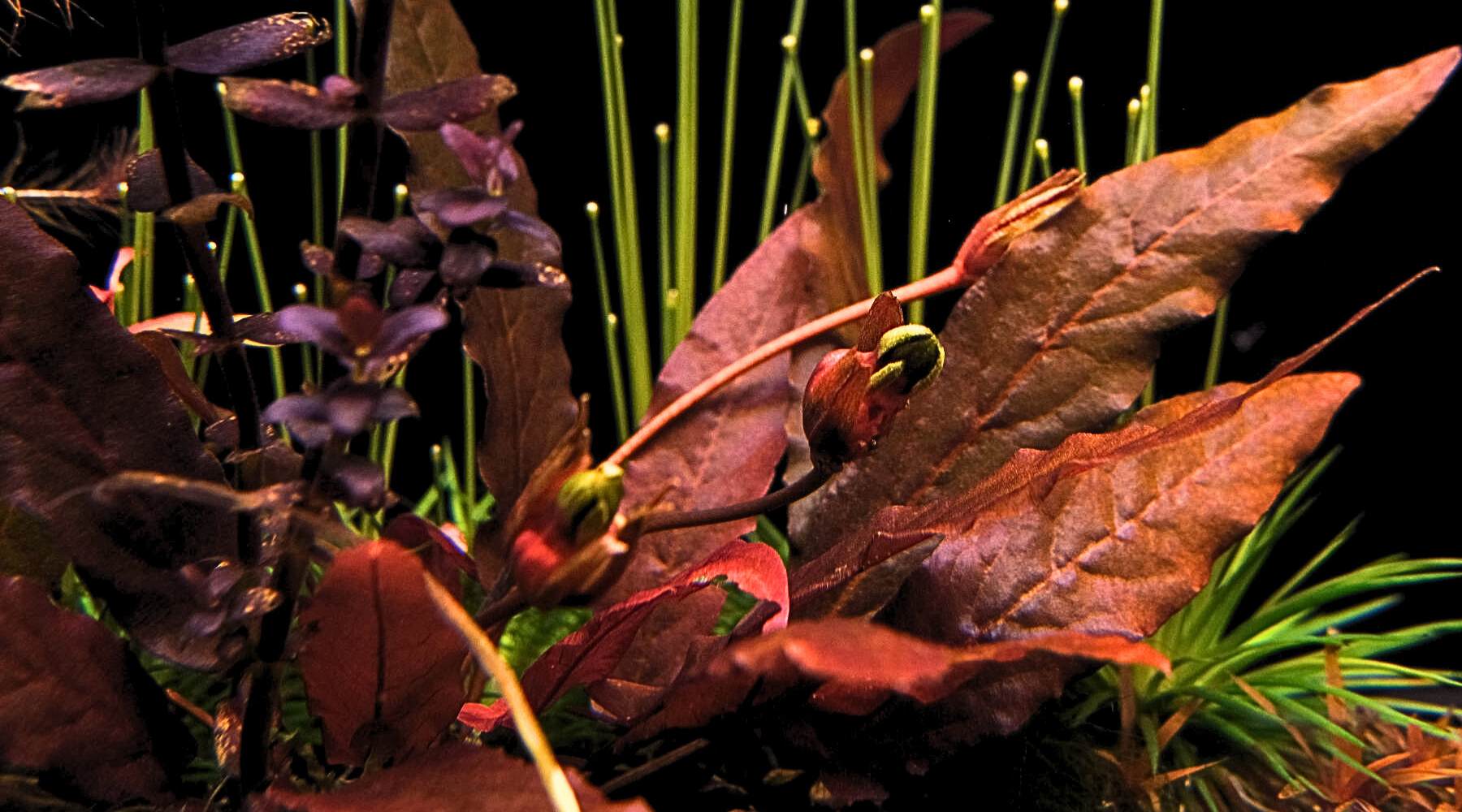
Java fern 'Orange narrow' only shows its true colors when grown under higher light and CO2 injection.
How Much Light Does a Nature Style Aquascape Need?
Here, a quality aquarium LED with an adjustable spectrum is genuinely worth the investment. The right light spectrum- particularly the balance of red, green and blue channels - is what produces the rich, jewel-like greens and intense plant colouration you see in competition tanks. It's the difference between a tank that looks "fine" and one that looks like the photos online.
For Nature style aquascapes that do not focus on red plant species, lower light levels actually work better. Most modern LED fixtures arrive pre-set far too bright. Excess light feeds algae and bleaches out the natural aesthetic. Target under 90 PAR at the substrate for a Nature Style setup. Use the light's spectrum controls to enhance colour before reaching for higher intensity. A light with an attractive visual spectrum at 60–90 PAR will work better than a light with poor spectrum profile at higher PAR levels. For LEDs with attractive visual spectrum profiles we recommend the following brands: Twinstar, Week aqua, Netlea, Chihiros, Hyperspot, LEDstar.
Photoperiod is your secondary lever, not your first. Six to eight hours daily is ample, and shortening it is a reasonable early response to algae - but intensity is the dial that actually matters. Pull that one first.
Finally, acknowledge shadows. Amano used it deliberately: dark recesses beneath overhanging wood, shaded pockets behind stone. Contrast is what gives a scape depth and a sense of place. A tank that is lit evenly and bright everywhere becomes flat and lacks contrast.
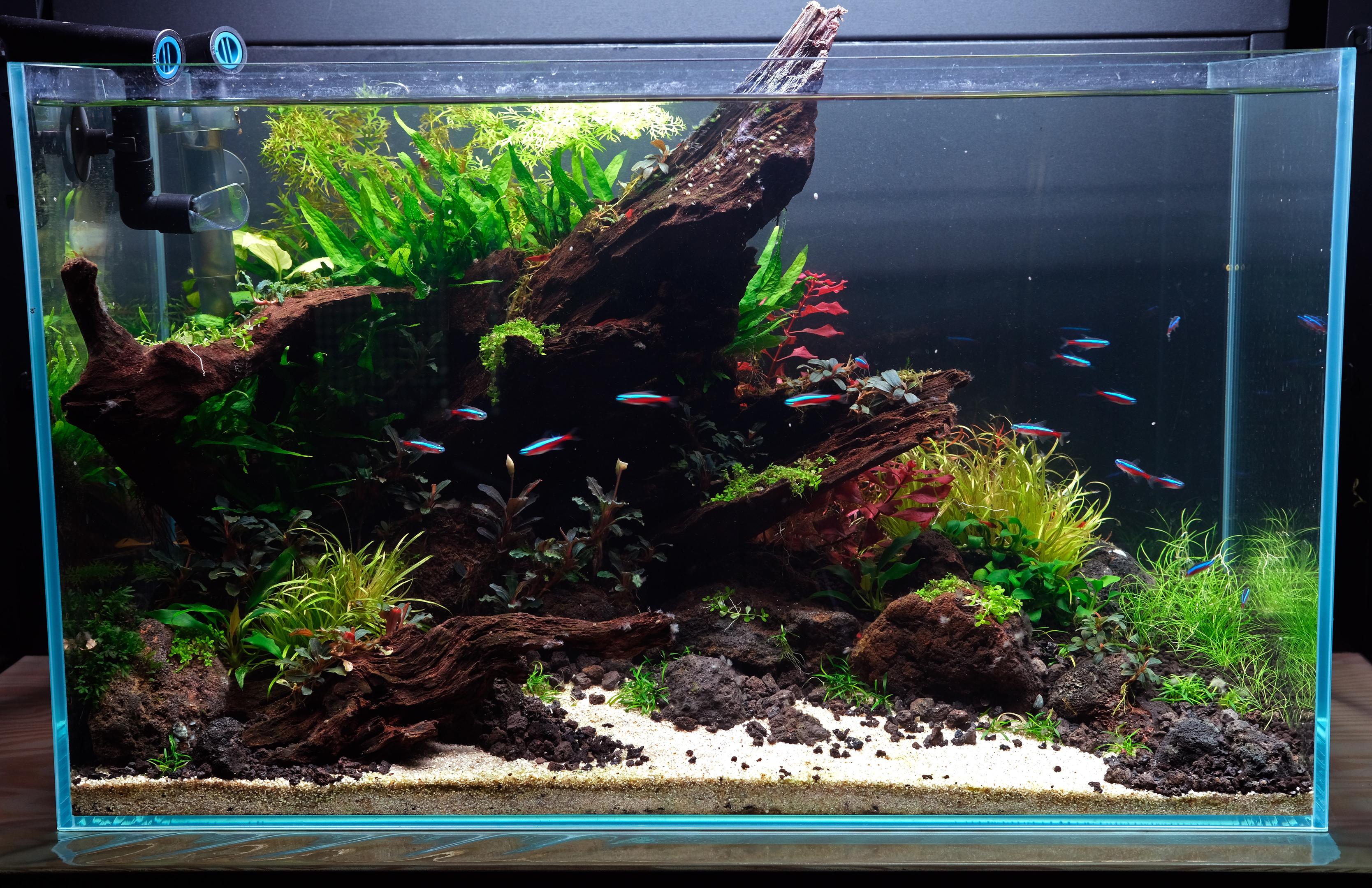
(Above) The dark shadows cast by the wood work here contrasts sharply against the white sand bank. The deep shadows emphasize the three dimensional structure of the wood and also contrasts well against the brightly colored Cardinal tetras.
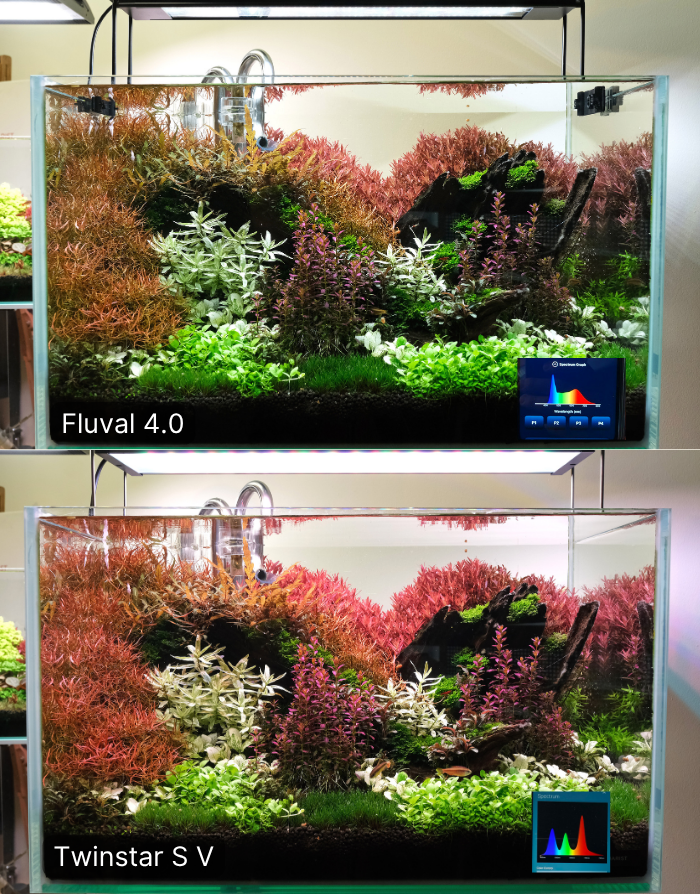
The Fluval Plant 4.0 has a more dull visual color rendition compared to a Twinstar S V. The fixture lacks sufficient red diodes to give a balanced visual spectrum, and the reds appear more washed out. Aquarists try to compensate for poor spectrum by running higher PAR or longer hours to get better coloration in their plants, but this often causes algae issues, and does not really solve the problem of poor spectrum.
Do You Need Aquasoil for a Nature Style Aquascape?
Nature style aquascapes can do without aquasoil by water column feeding the plants. If a more easy plant selection is used, the plants can feed from the water column easily and do not require the support of aquasoil substrates.
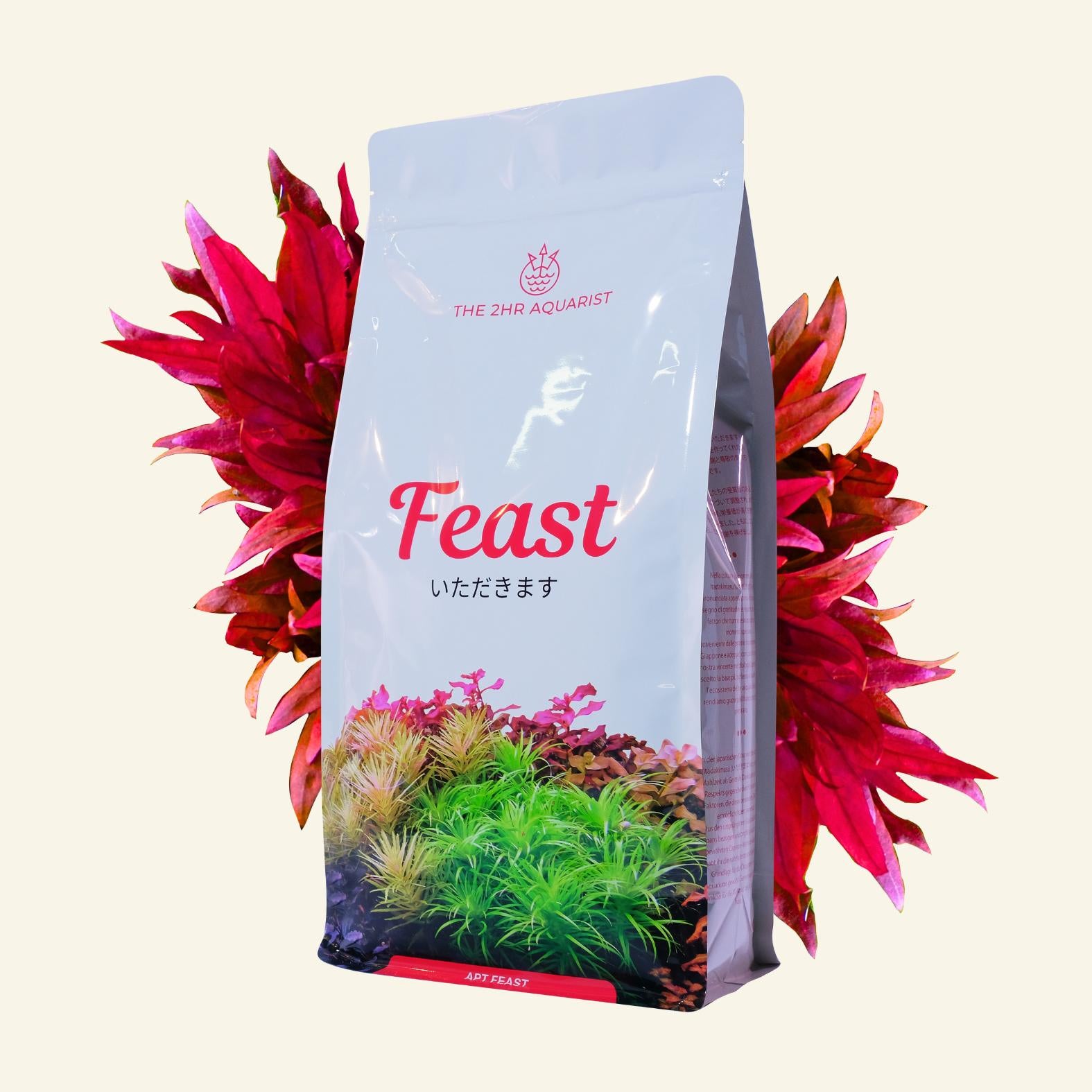
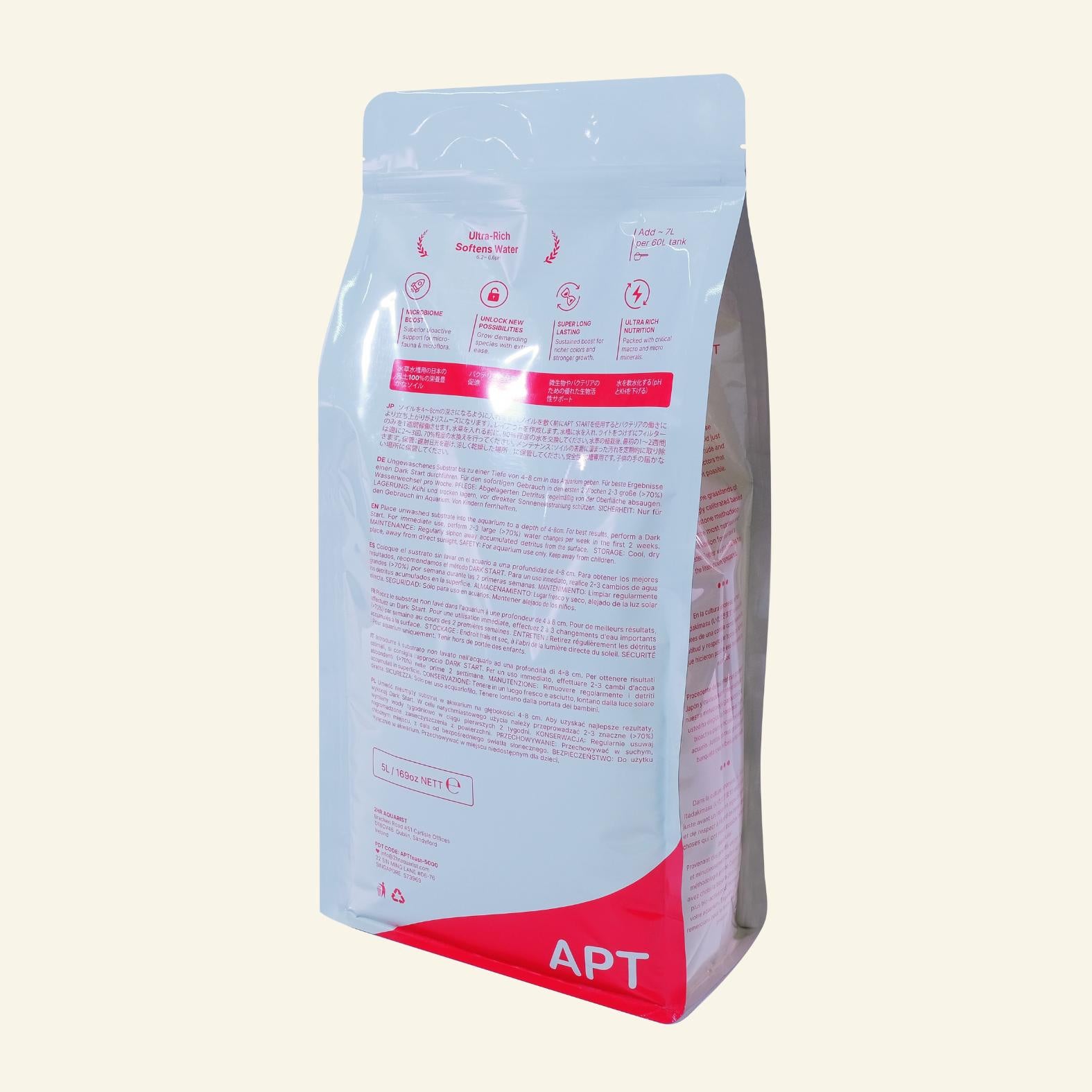
However, aquasoils provides many advantages. A nutrient-rich substrate feeds plants from below, which may allow you to keep water column nutrient levels lean. This is significant: lower water column nitrogen and phosphorus means less encouragement for algae on hardscape and glass. The plants still get fed; the algae gets less. Aquasoil also supports faster root establishment, contributes to biological stability, and over time releases trace minerals into the water column. It's a foundational investment that pays dividends throughout the tank's life. Thought not strictly necessary to have a successful Nature style aquascape, it does make things easier.
How to Arrange Hardscape in a Nature Aquarium
Start with a focal point. One dominant element - a commanding piece of driftwood, a principal stone - with a couple of secondary elements supporting it. Focal points guide the eyes and the overall structure of the aquascape is built around them. Position the main focal point off-centre using the rule of thirds or the golden ratio; a centred focal point is often too predictable and stable, and tends to divide the aquascape too symmetrically. The secondary focal points should complement the main focal point by echoing similar characteristics of the main focal point - these should be distributed around the aquascape to highlight different clusters of interests.
Use odd numbers, and embrace asymmetry. Three stones, five branches. The principle here is that even numbers pull the eye towards symmetry and stability, and nature tends to have a bit of randomness mixed in.
Commit to one type of material. All the rocks from the same quarry; wood of a consistent character. Mixed hardscape materials break the illusion that these things came from the same place. And let the shape of your stone define the landscape you're evoking: angular, craggy rock reads as mountain and cliff; rounded, water-worn stone reads as riverbed. Choose the story, then choose the rock. Bury the bases - a stone sunk to half its height looks like it grew out of the ground; a stone resting on top of the substrate looks like an ornament.
Layer for depth. The substrate is your canvas: build front to back - foreground, middle ground, background - with hardscape and plants both rising in height as they recede. Layering is what turns a flat tank into a three-dimensional scene. A pale sand or fine gravel path narrowing towards the rear is one of the oldest tricks in the book, and it still works: it creates the impression of a much larger world than the glass contains.
Leave space. Open water and open substrate are not wasted; negative space is what gives the planted mass its scale. A tank filled corner to corner has nothing to breathe against.
The difference between natural beauty and visual chaos is composition. Nature Style should look untamed, but it is never unplanned. Amano's own layouts remain the master reference - though the better source of inspiration has always been the landscape itself.
Which Plants for a Nature Style Aquascape? The 70% Rule
This is the most overlooked element of Nature Style planting, and the one most responsible for frustrating maintenance spirals. Many hobbyists use too many species of stem plants, which grow fast, require frequent pruning, shade everything below, and start to look ragged quickly without regular attention. While stem plants represent a huge number of species in the aquarium trade, they require special attention and maintenance to look good.
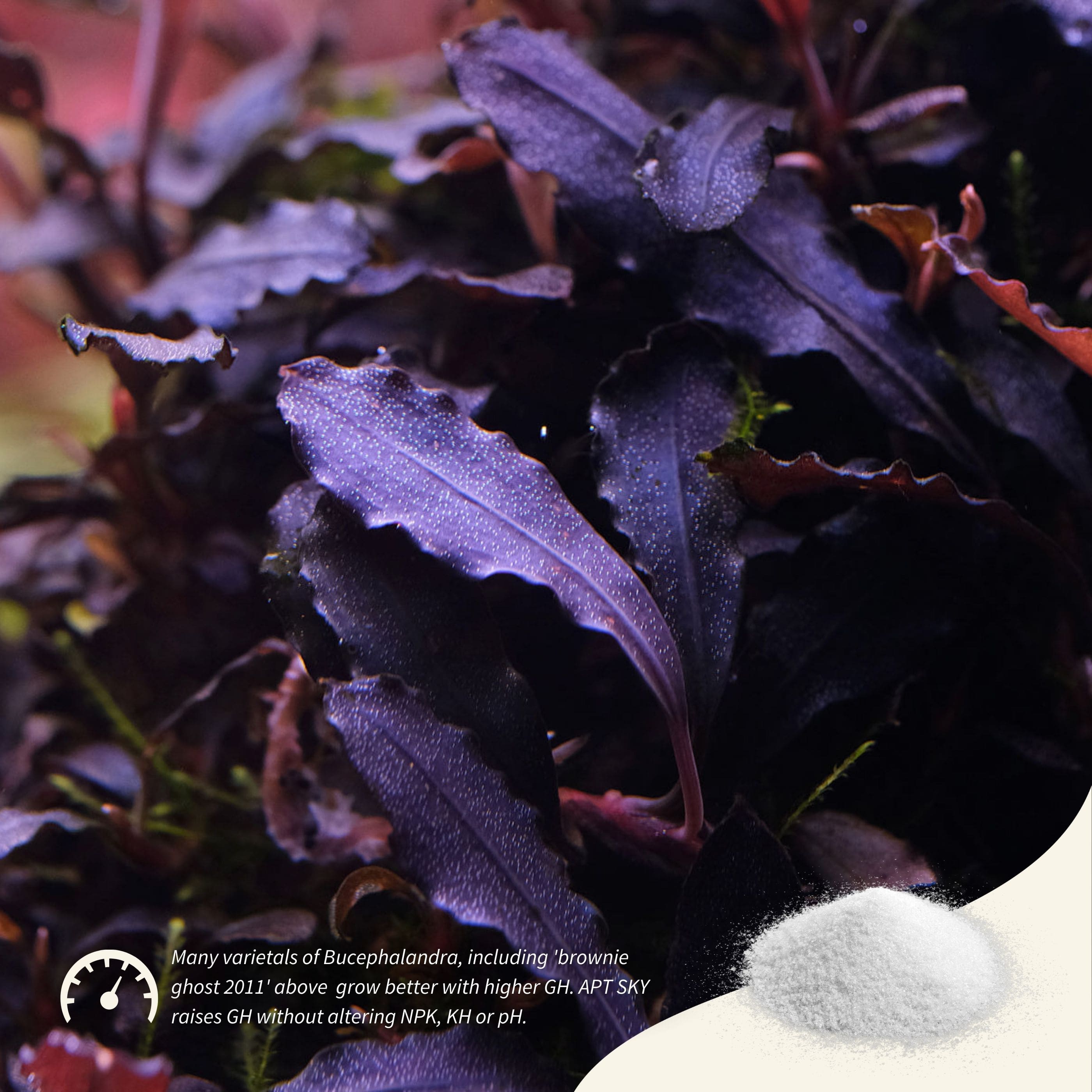
The 2Hr Way recommendation: build approximately 70% of your plant mass from non-stem plant species. This greatly reduces maintenance work. Java Fern, Anubias, Bucephalandra and Cryptocoryne all bring texture, structure and lasting visual interest with far less maintenance overhead. Many attach beautifully to hardscape, which integrates them naturally into the layout. Slower growing stem plants such as Blyxa japonica, Eriocaulon vietnam and Staurogyne repens can also be used strategically.
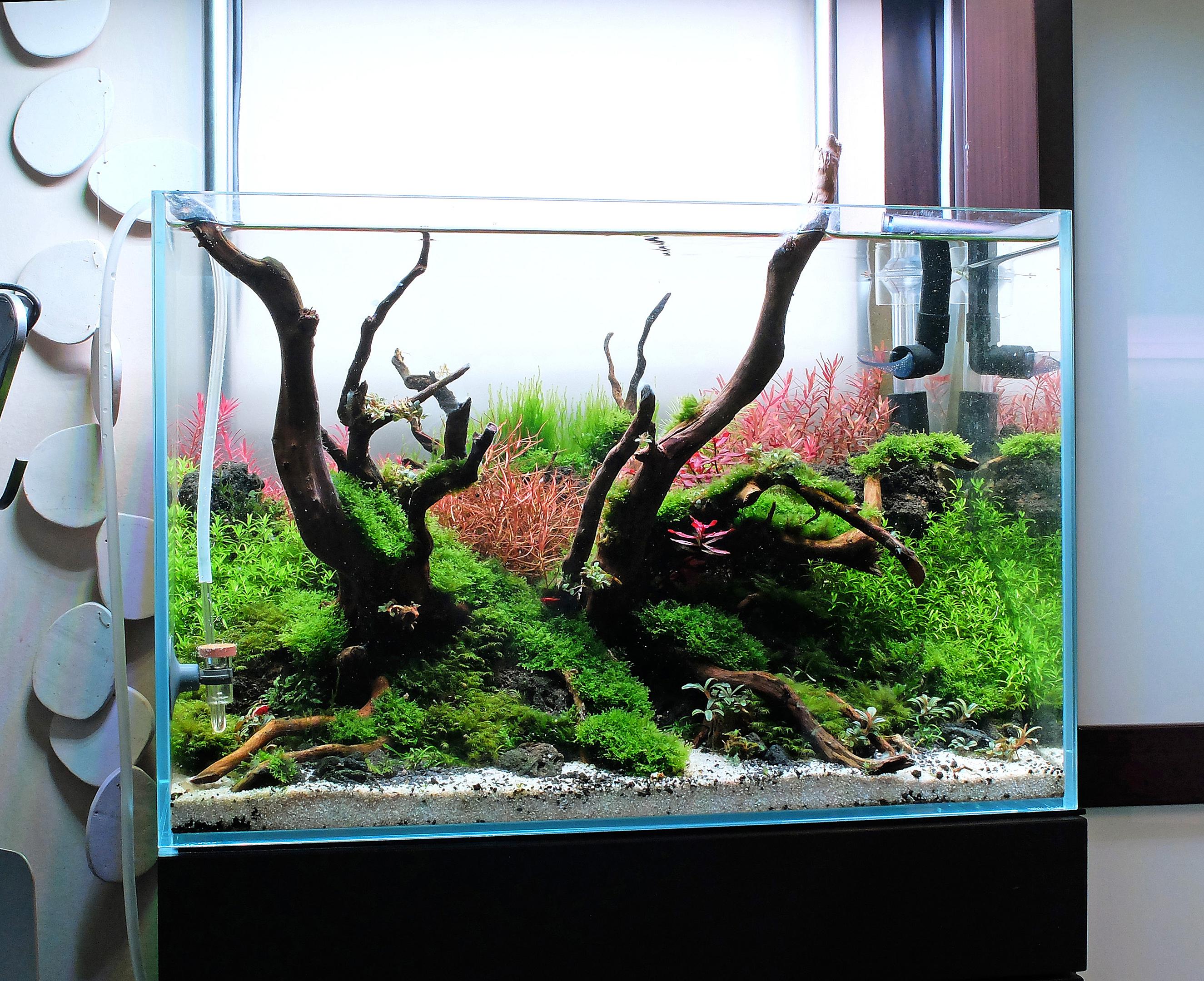
Mosses on hardscape work great in Nature style aquascapes. Mosses blend very naturalistically with hardscape work, and give the hardscape an instant look of matured agae.
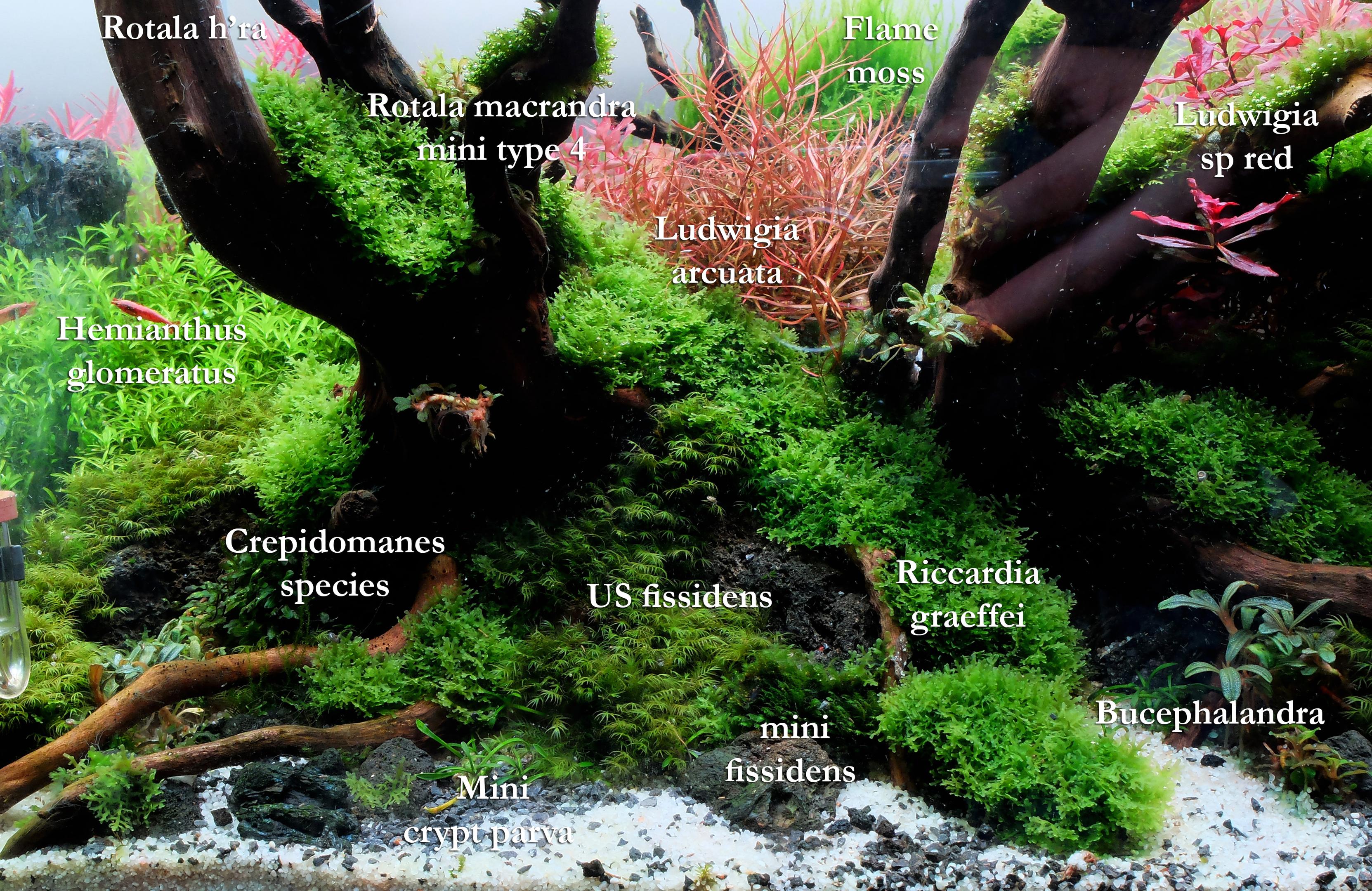
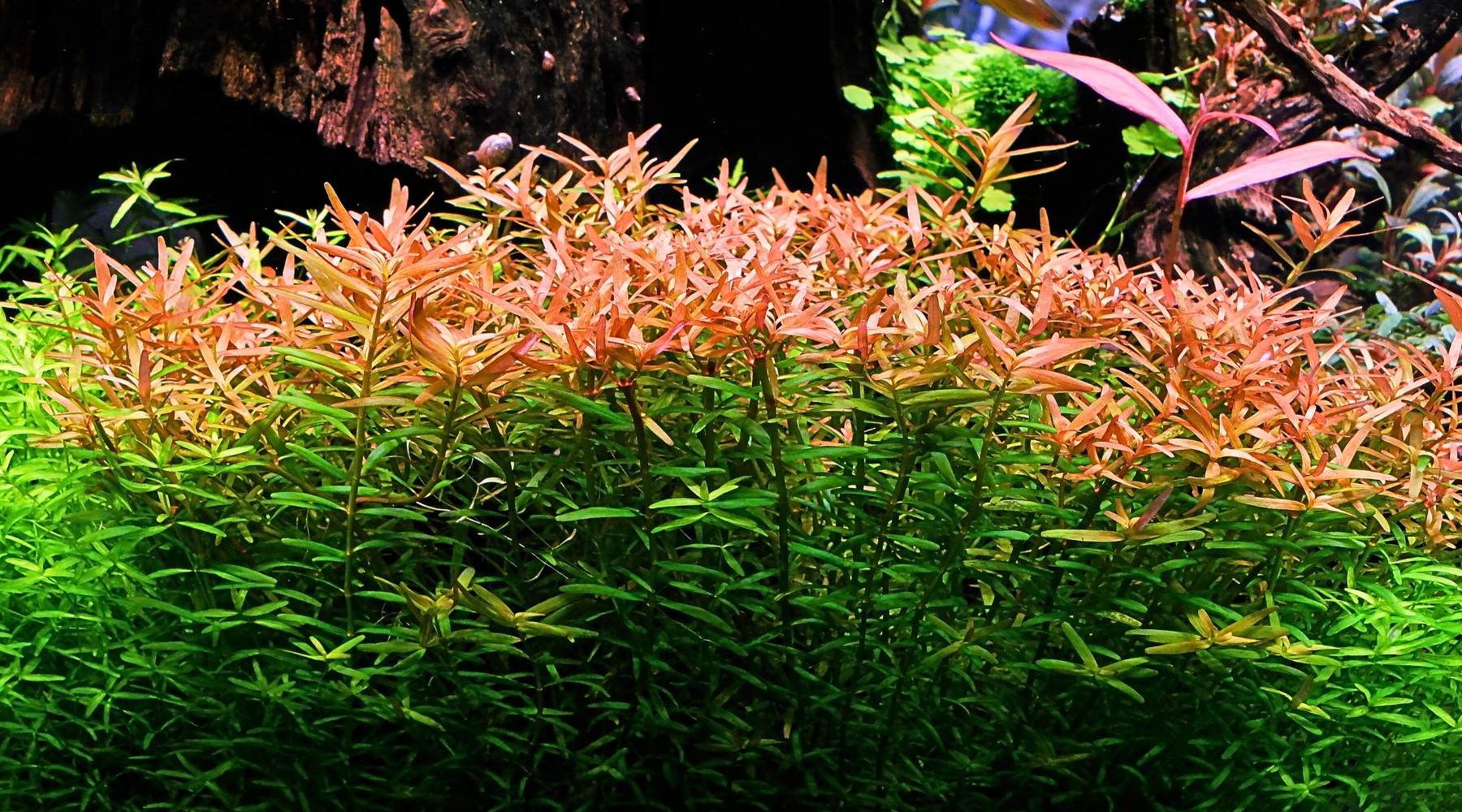
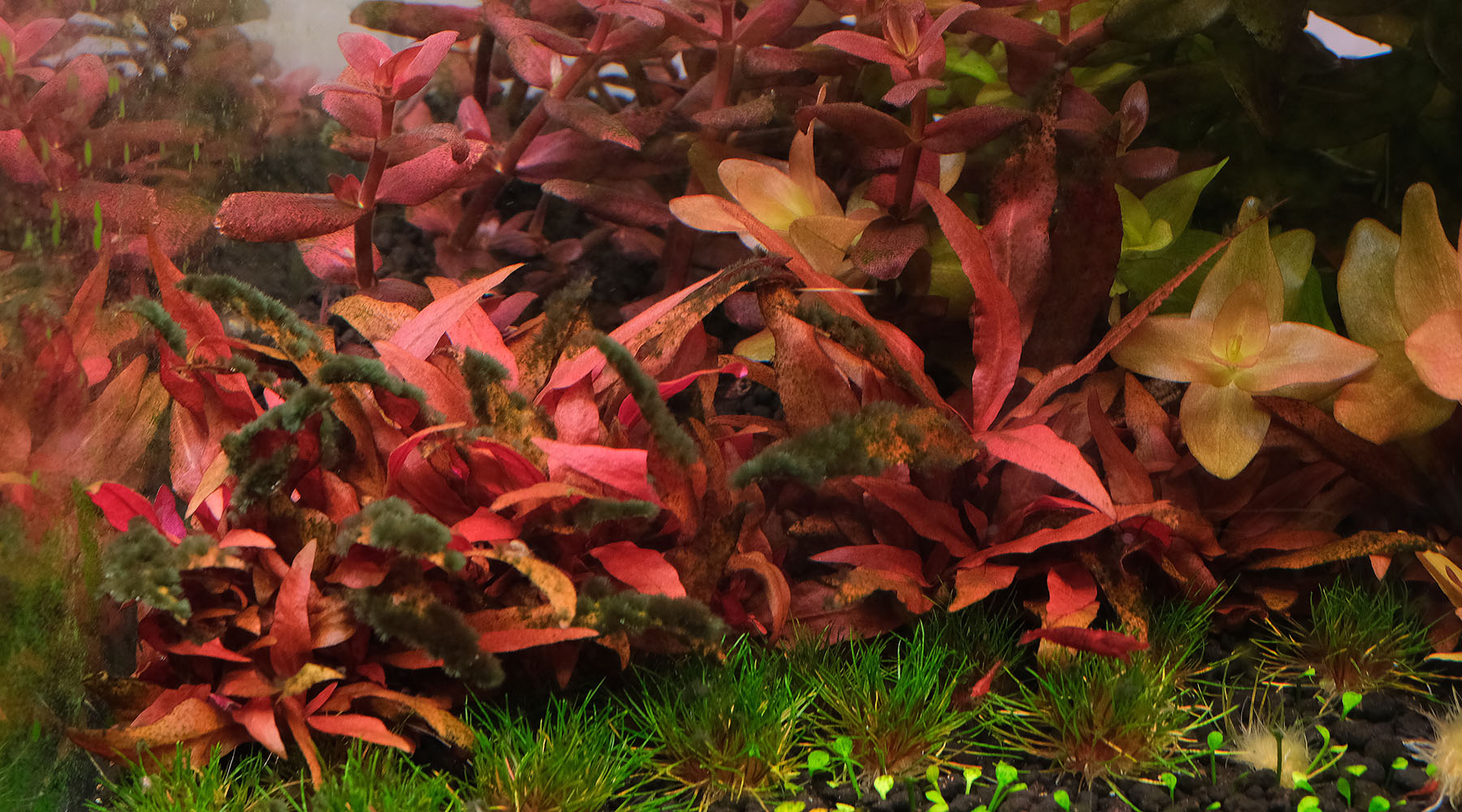
If using stem plants - Rotala rotundifolia and its variants are ideal - for accent colour and background warmth, but keep them as supporting cast rather than the lead. Position them towards the back or elevated on hardscape so they receive more light without shading the slower growers below. Rotala rotundifolia variants take trimming well, and are easily pruned into nice background bushes.
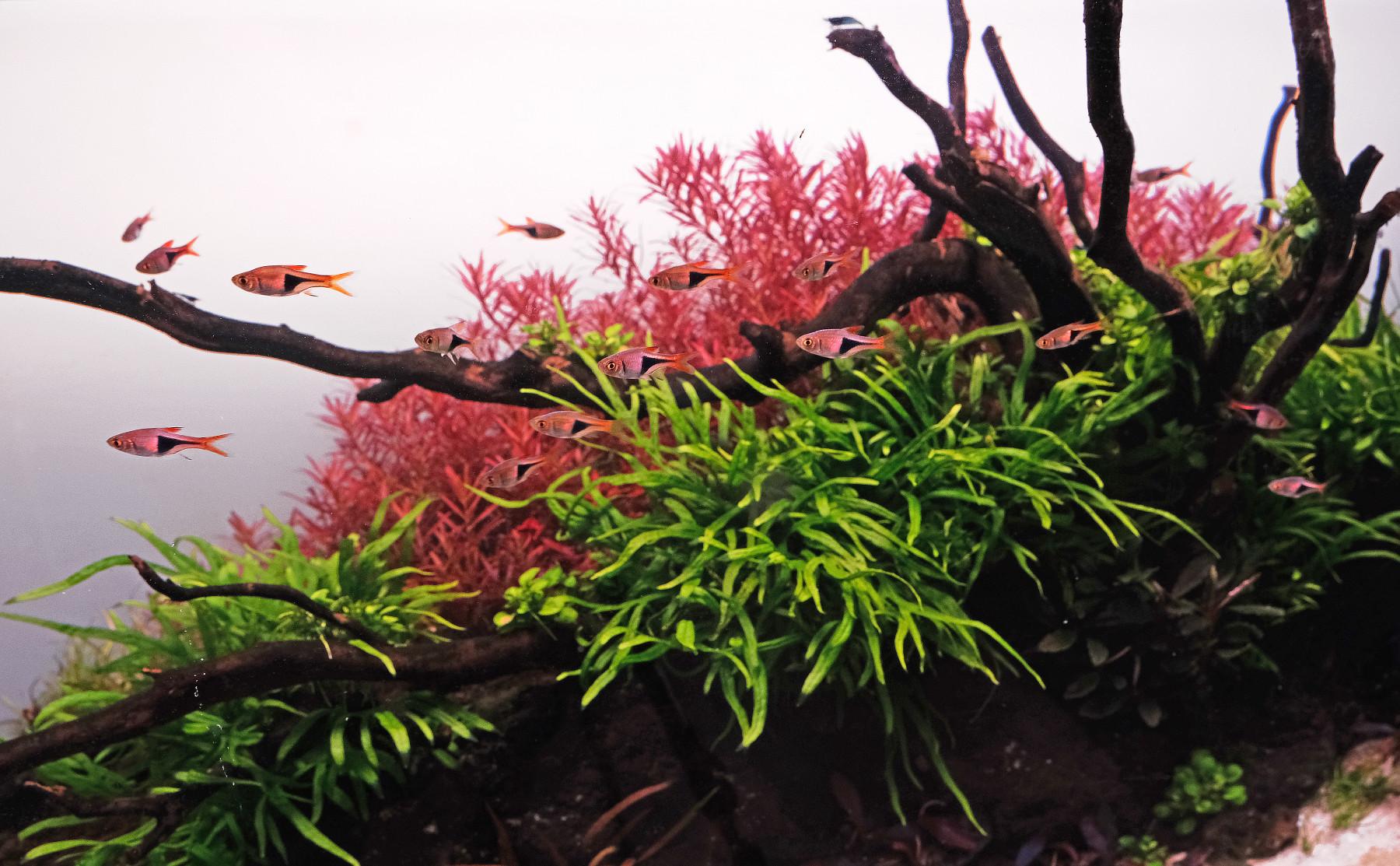
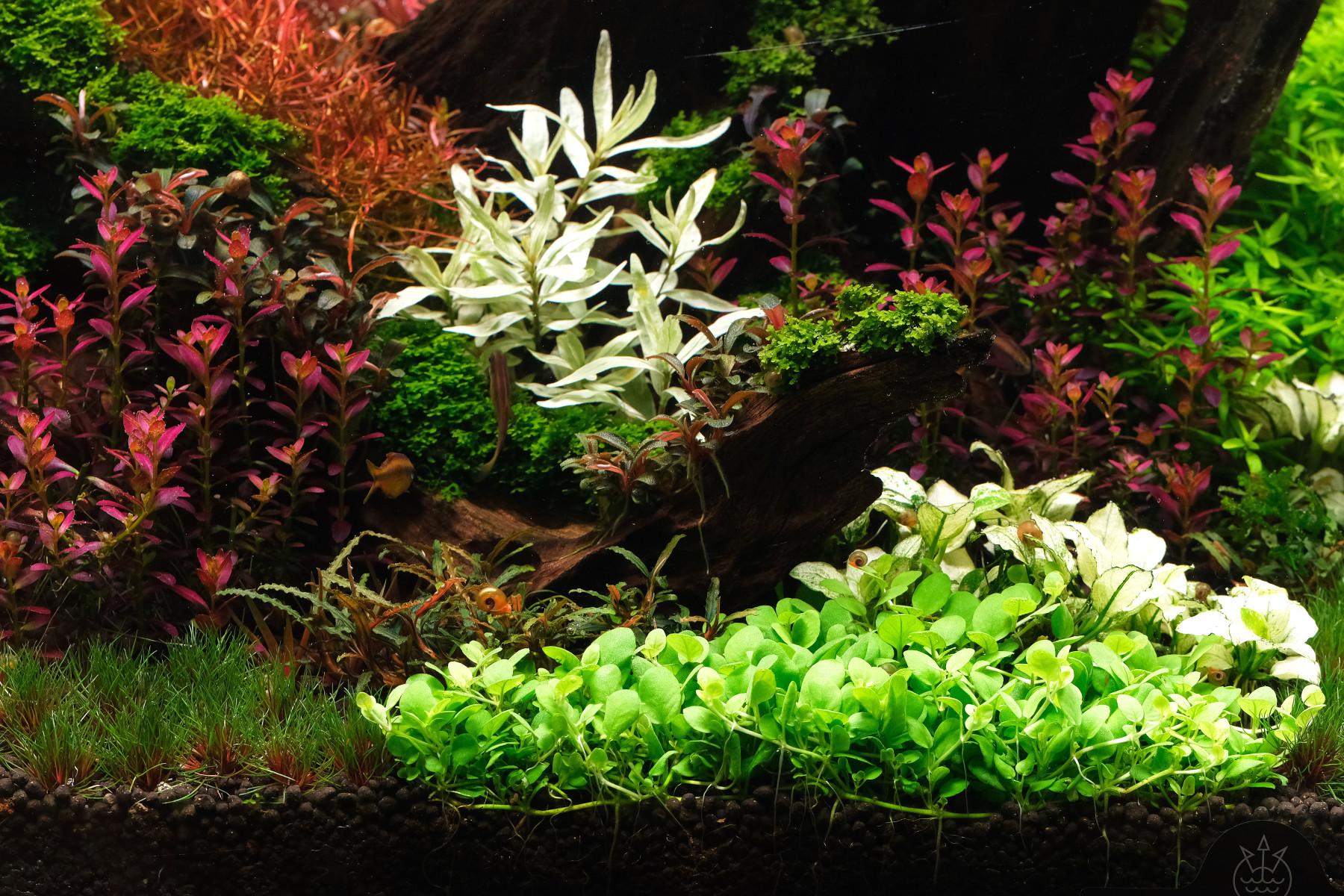
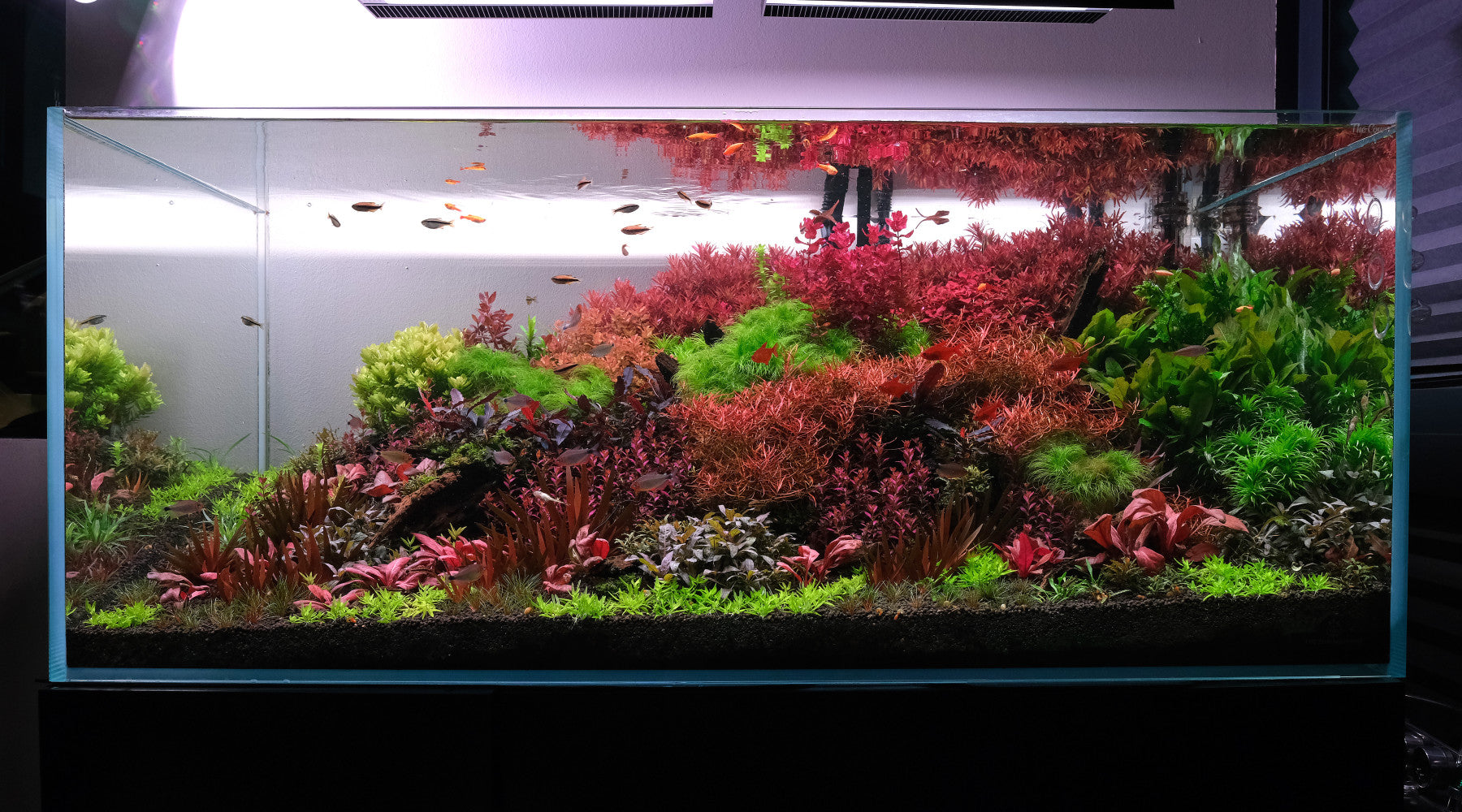
Rotala blood red is used as background plant here.
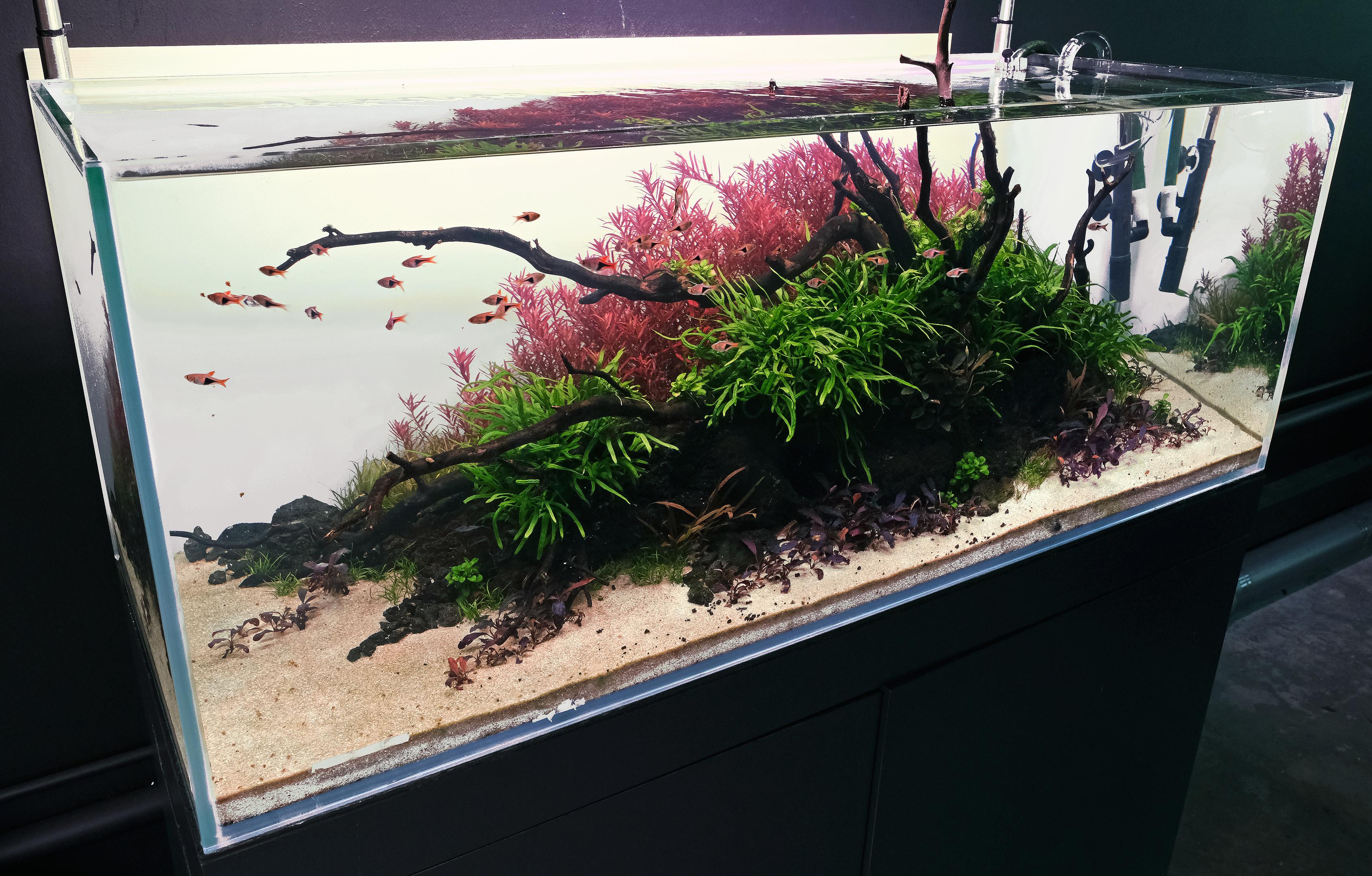
Bucephalandra and Java fern are used on the rock work and substrate, while Rotala blood red is used in the background for this aquarium.
Does Nature Style Use Only a Few Plant Species?
There should be discipline is in the grouping and placement of plants. In nature, plants do not grow randomly. Each species will tend to prefer certain environments. For example, shade plants can grow in shaded areas where other species do not thrive, and mosses cling more easily onto horizontal branches than vertical surfaces. Moisture loving species tend to hug depressions on the ground while species that prefer well draining soil occupy higher areas of a slope. In Nature style aquascapes, we try to imitate this natural order of plant growth in the way we combine plants and hardscape by following a uniform planting logic throughout the aquarium.
For example, if we use plant A in the shade areas of the aquarium and plant B in the open areas, we will want to do this throughout the whole aquascape. Another rule might be that one species occupy the lower areas of the hardscape while another species occupy the higher areas. By having a uniform planting logic across the whole tank, the aquascape looks more consistent as a whole as it was grown in by nature's rules.
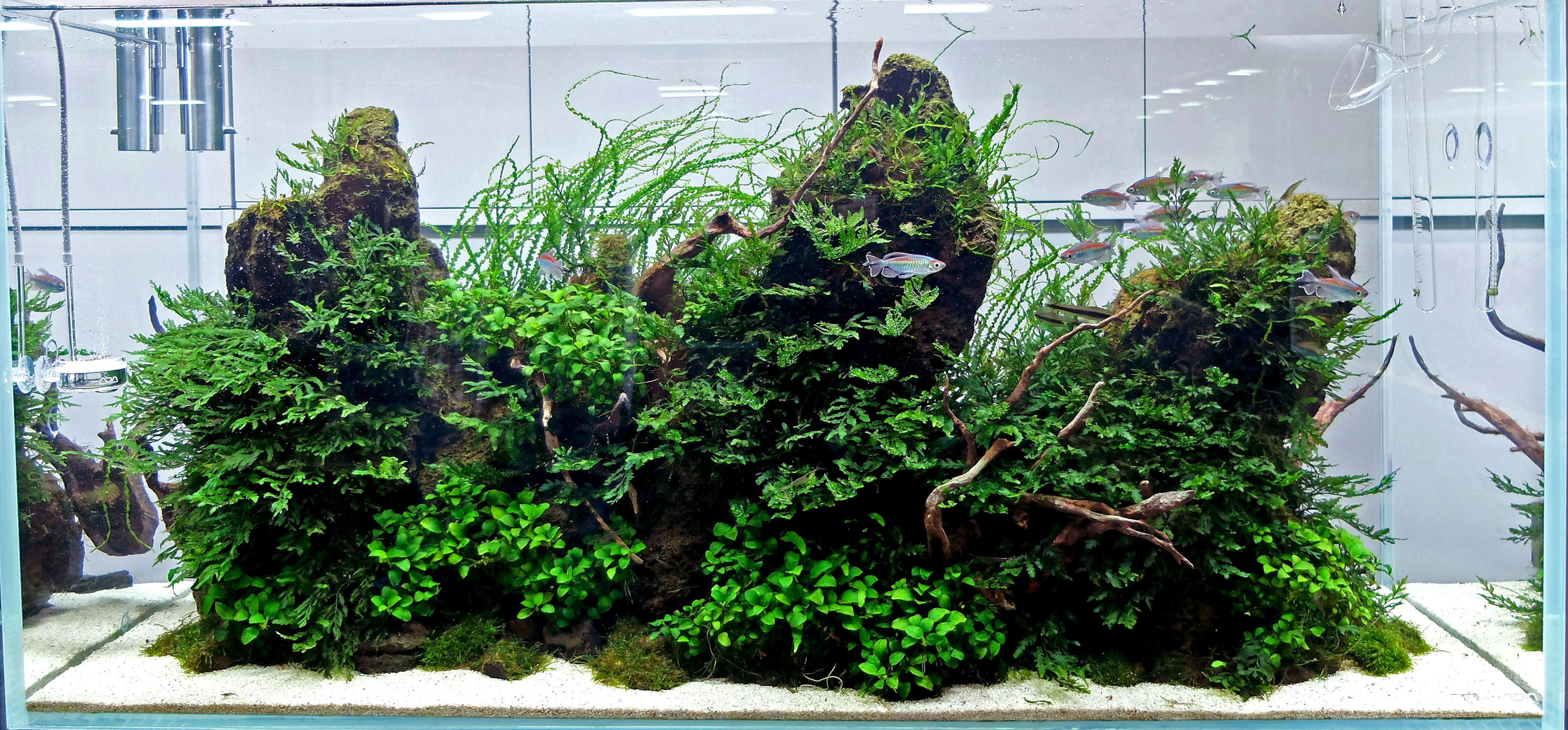
While having some rules will give structure to the aquascape, in nature there is always room for some natural variation. Nature style aquascapes are a mix of order and chaos. What may look too chaotic is to have one species of everything, scattered across the aquarium with no rules to their placement. While having just 2 species placed in a very uniform manner may look stiff.
Think of each species as a patch of shape and color that can contrast or blend in with other groups. Contrast gives more layers and depth to the aquascape while blending species together give harmony and a sense of naturalness to groups. An aquascape needs both.
Bucephalandra, Anubias, Java fern and Hygrophila pinnatifida all work very well on wood/rock and do not require a substrate to grow well. Moss can be glued onto wood and naturally attach by themselves to the wood after a period of growing in.
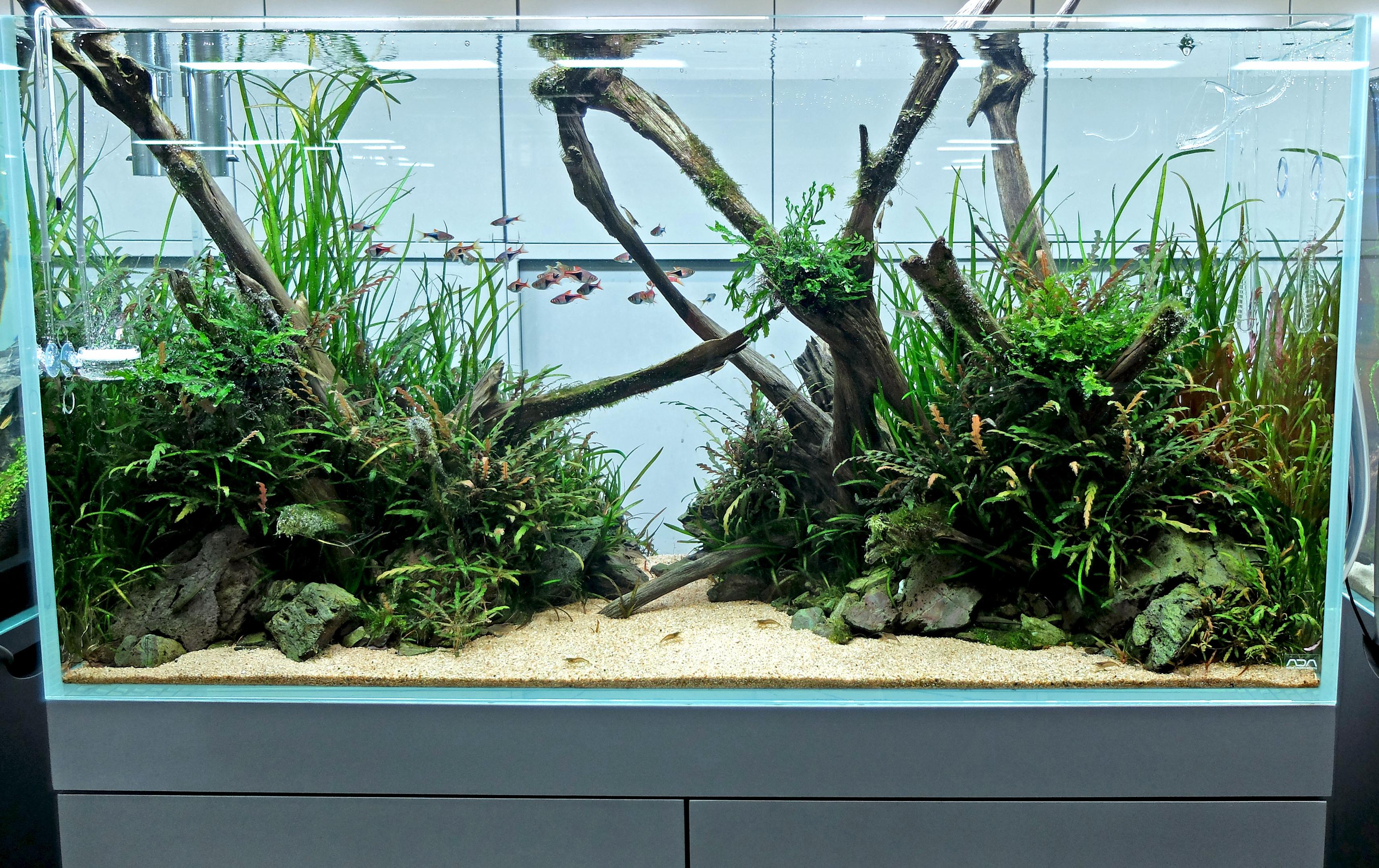
For the foreground you have options. A small carpeting species is the classic choice, but low rosette plants such as Cryptocoryne species, a moss-covered stone or a simple open patch of sand all work - and all cost far less maintenance than a carpet.
How Often Should You Change Water and Trim?
Keep a rhythm. A regular weekly water change - around 30-50% in a CO2-injected tank - removes accumulated organic waste before it has the chance to feed algae. Water changes should not only be about changing out water. It is an opportunity to siphon detritus off the substrate, uproot and replant old growth and also to rebalance water parameters. New aquarists think that aquasoil substrates should not be cleaned as it is soil. However, accumulated detritus on aquasoil should be siphoned away: hover the siphon over the substrate surface while stirring up detritus using a turkey baster works well.

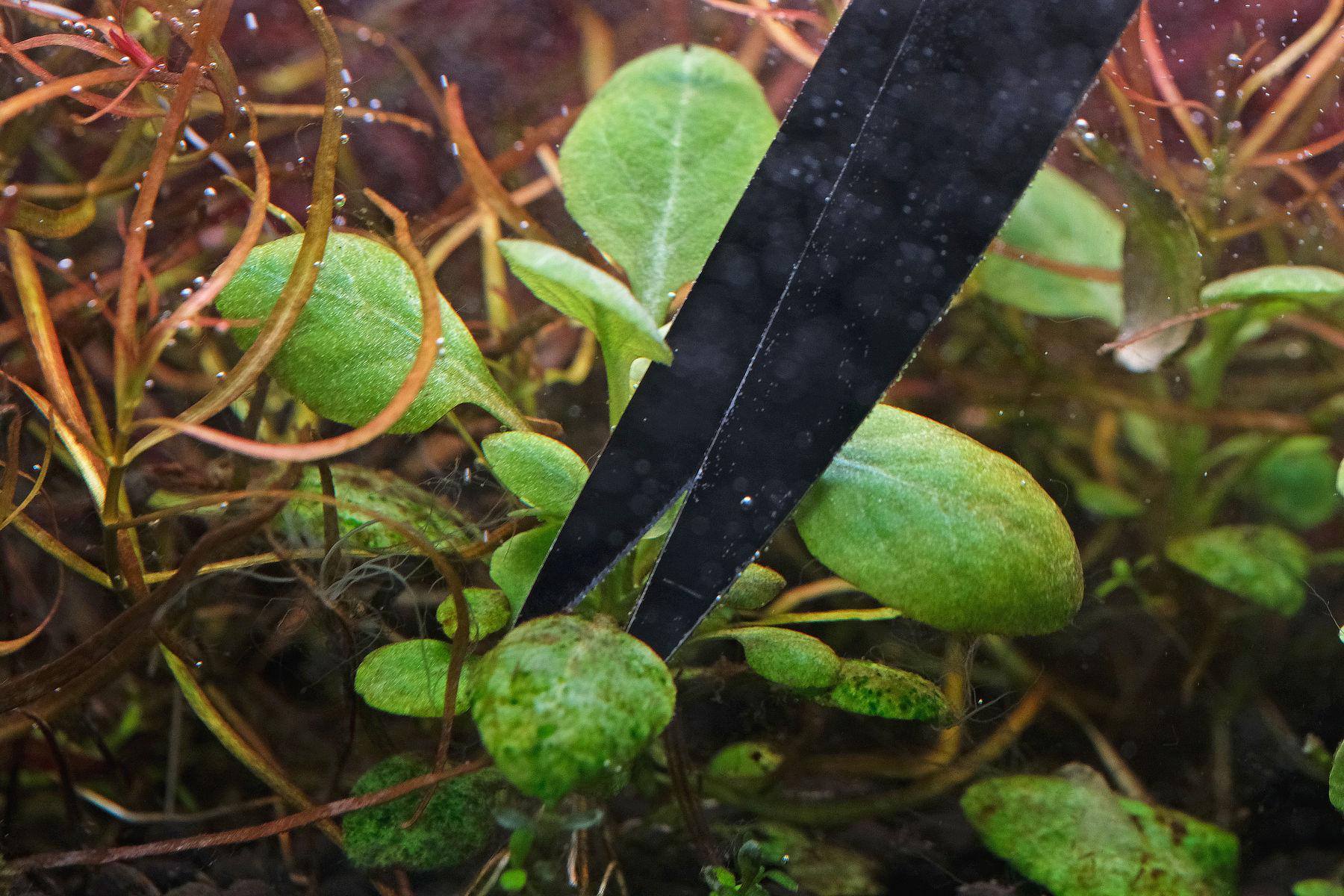
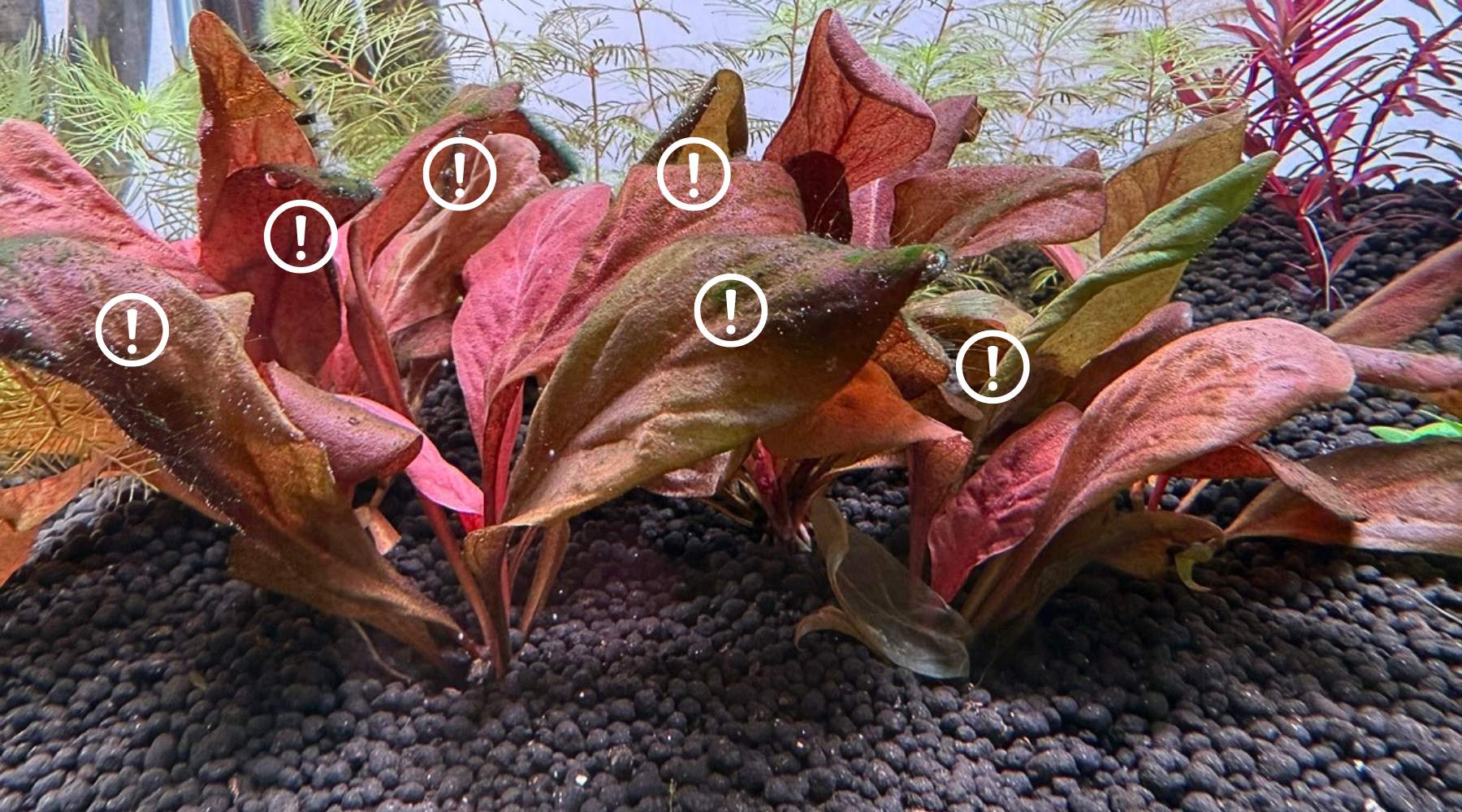
All plant leaves age and deteriorate with time. Plants renew themselves by producing new leaves and shedding old ones. In planted aquariums where plants are going through adaptation stress, this happens at a faster rate. Old, deteriorating growth attracts algae. Regular trimming of old growth is not just housekeeping, it's algae prevention. Clearing old growth gives plants space to produce new leaves.
What Fish Suit a Nature Style Aquascape?
Choose fish that belong in the landscape you've built. Small schooling species - cardinal or rummynose tetras, harlequin rasboras - move as one and animate the open water without competing with the scape for attention. One species in a proper group beats a mix of random species.
Fish should complement the tank's theme and not disrupt plants. Avoid anything large, boisterous or fond of digging: it will uproot plants and shift hardscape faster than you can replant. And be careful with livebearers such as guppies. Many livebearer species favour harder, more alkaline water, while a fresh aquasoil tank runs soft and acidic.
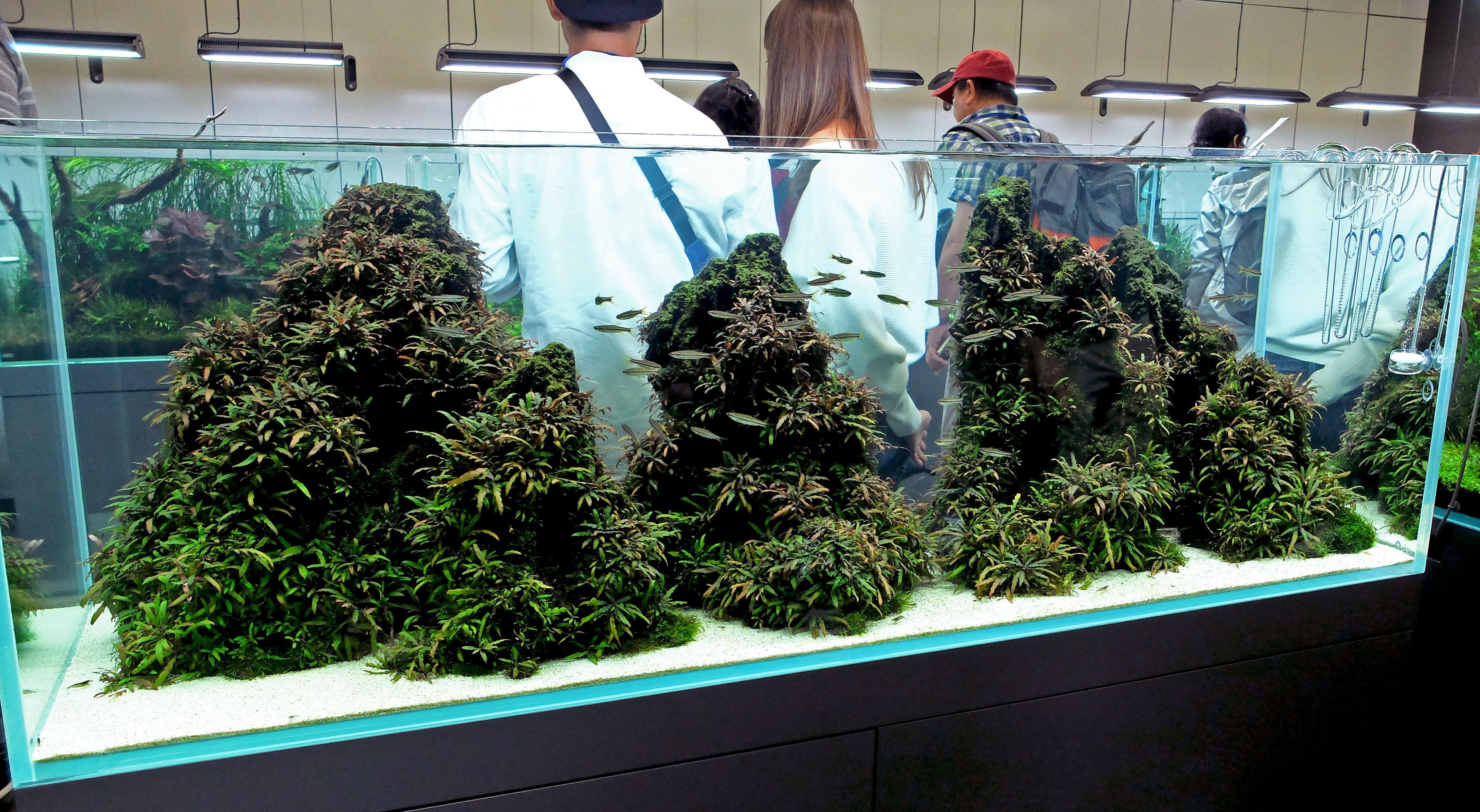
For deeper dives into CO2 setup, hardscape composition, plant species selection, substrate layering and flow configuration, explore The 2Hr Aquarist's dedicated guides.




Share:
How to Set Up an Iwagumi Aquascape: The 2Hr Way