
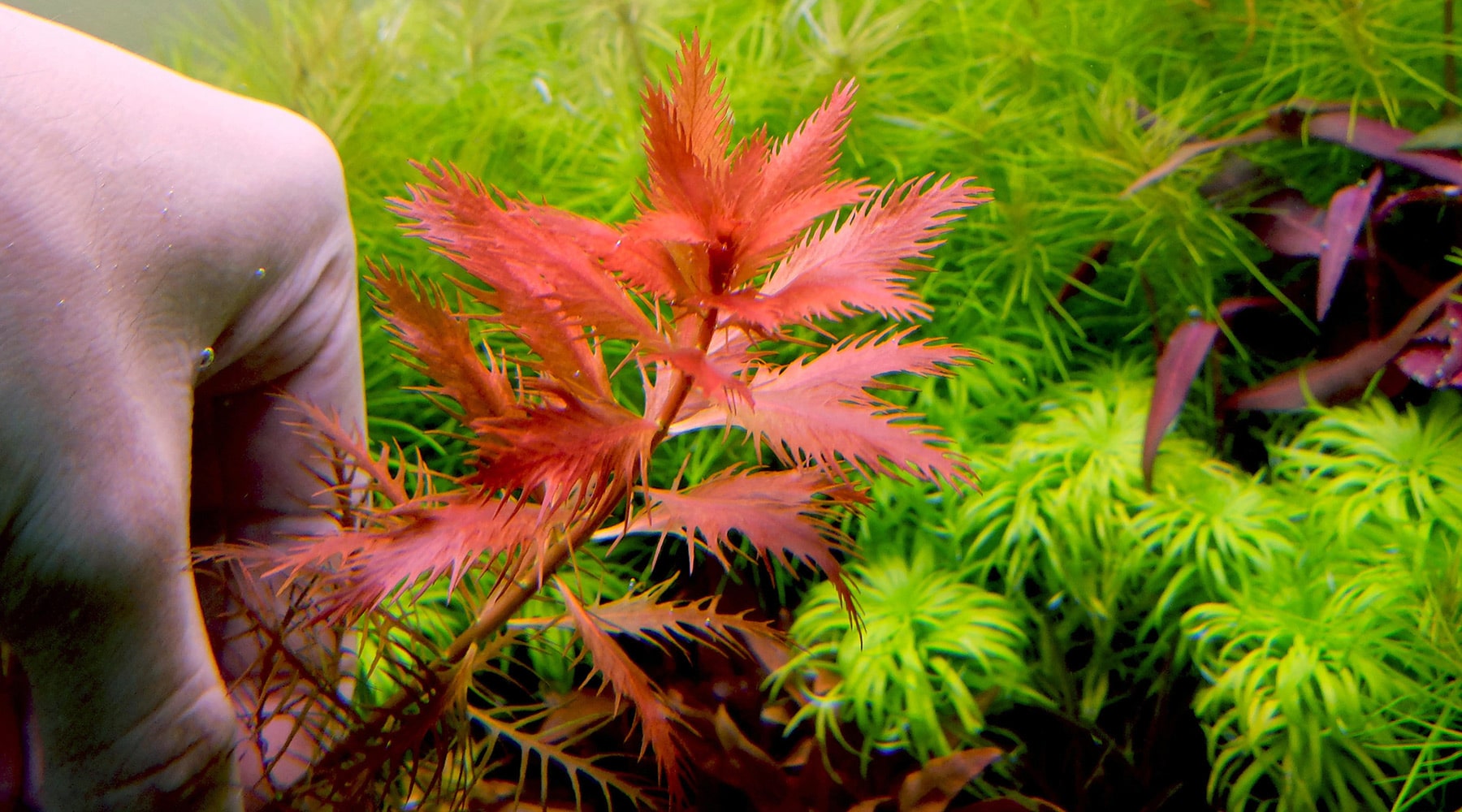
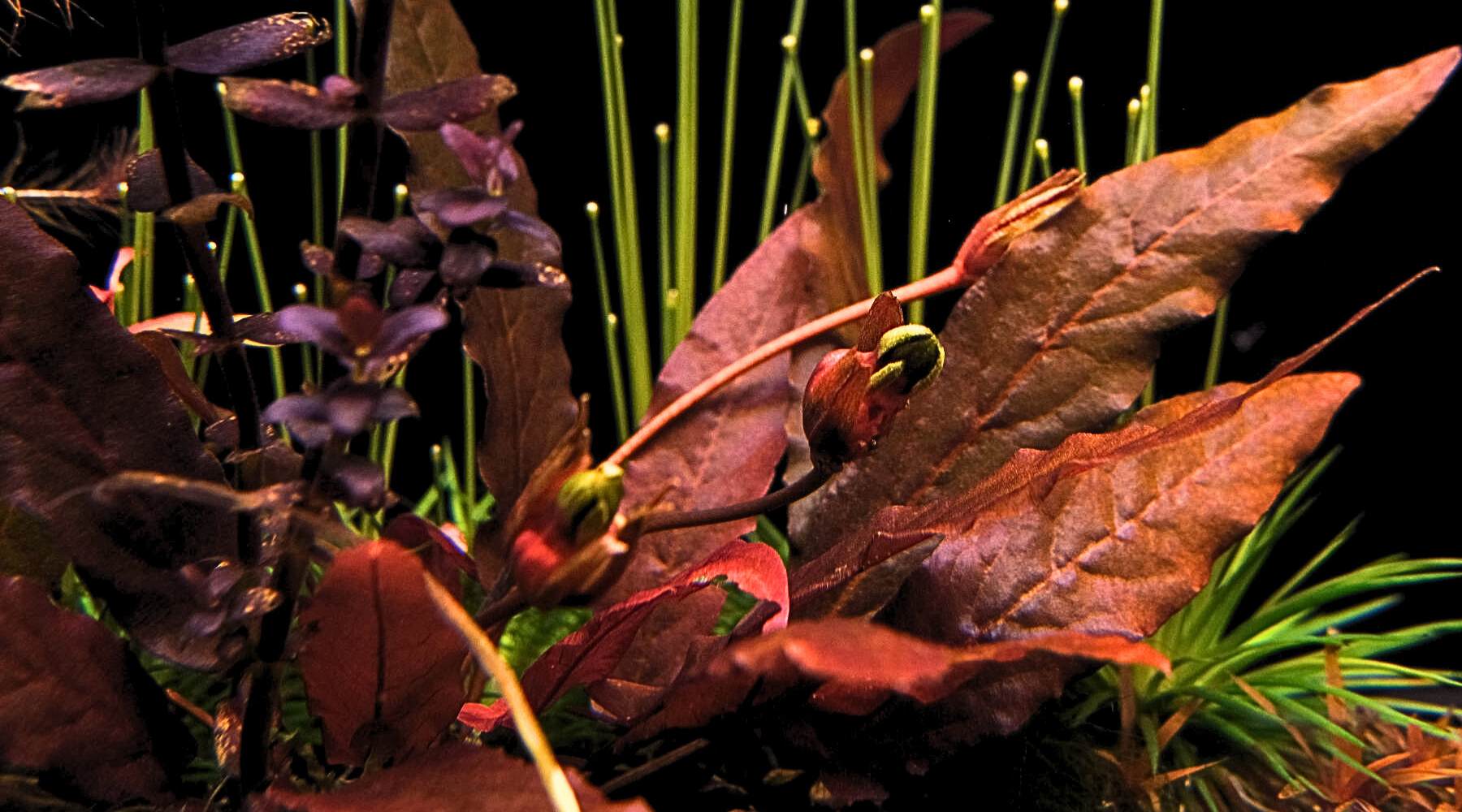
Proserpinaca palustris, commonly known in the trade as mermaid weed, is found in nature in both North and South America. Although it has been in the hobby for a long time, it has never been very popular with hobbyists - perhaps due to its large size or the difficulty of getting it to grow well.
Proserpinaca palustris ranges in colour from greenish to orange-red. It is a stalked plant that will grow as tall as large aquariums, with a circumference of around 3 to 4 inches at full size. It has distinctly serrated leaves which give the plant's leaves an attractive sawtooth appearance. It can be used as an attractive mid-ground or background plant. Its large size when mature makes it more suitable for larger tanks. Its broad canopy means that it will shade the surrounding areas.

Varietal differences partly explain why some plants have more finely divided leaves. In general, well-fed plants with access to high CO2 levels have thicker leaves.
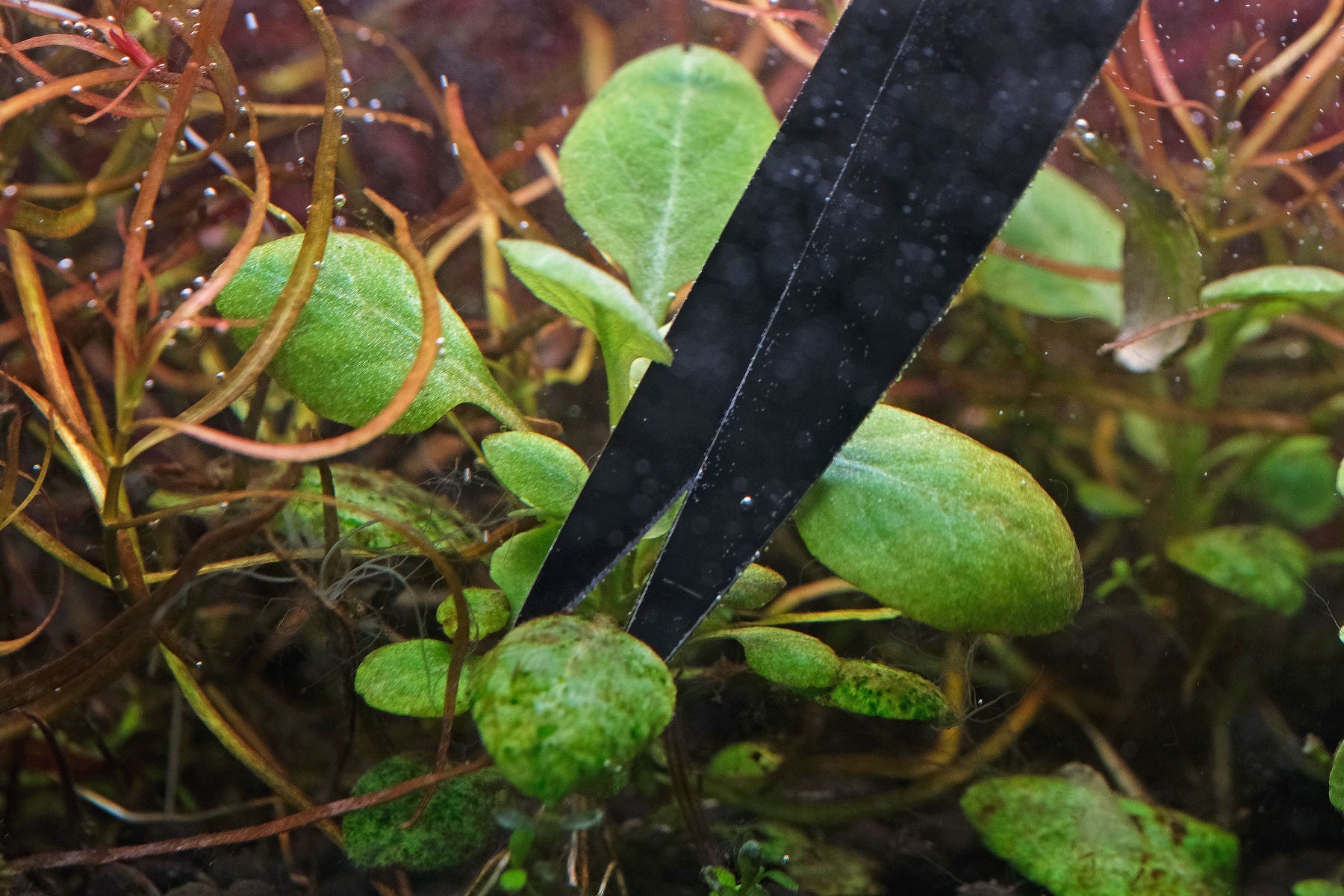
Fortunately it is not a fast grower, it grows at a moderate rate, although it will become large in time. Unlike many other stems, this plant does not produce many side shoots as it grows. Whilst it can be pruned straight, discarding the top and allowing the lower part of the stem to produce side shoots, it is usually neater to cut the top and replant, discarding the bottom. This plant will start to look very messy if repeated straight pruning is done. Cutting and replanting the top and any side shoots that sprout will generally result in a tidier bush.
Mermaid weed prefers a tank with plenty of light. Higher PAR (100+ umols) coupled with a stronger red/blue spectrum is necessary to bring out its best colours. It also prefers high levels of CO2 and nutrient availability - lack of these will make the plant thinner and smaller. There is a close correlation between CO2/nutrient availability and overall plant size, making it a good indicator plant for these factors.
It can grow in low tech tanks with higher light levels, but the plant will be thin.

Key success factors
- Intense light required to have good form and coloration.
- Prefers higher CO2 and nutrient levels (rich substrate or higher levels of water column dosing).
- Not picky about water hardness, can be grown in hardwater.

How to propagate
Cut off the top and replant, leaving the lower rooted part to grow new shoots. The plant will naturally produce side shoots as it grows taller. These can be cut off and replanted elsewhere.
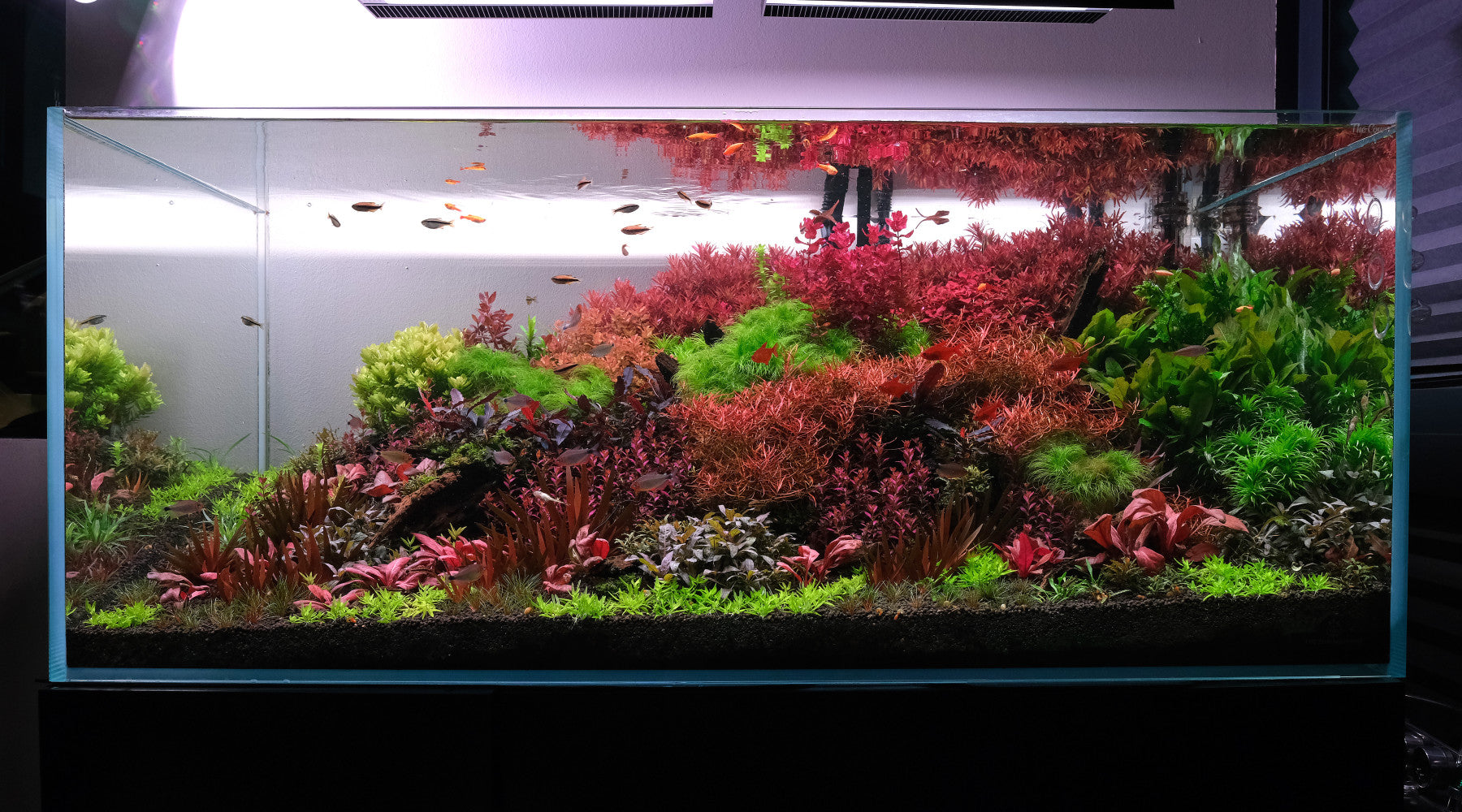
Click here to find out how to grow red aquarium plants.
Click here to read on how to optimize CO2 levels
Click here to browse more plant growing profiles
Click here to read on how to stabilize a new planted tank


Share:
How to grow Alternanthera reineckii "AR"
How to grow Alternanthera reineckii "AR"